

Explore Any Narratives
Discover and contribute to detailed historical accounts and cultural stories. Share your knowledge and engage with enthusiasts worldwide.
Cryptocurrency mining is the foundational process that powers and secures many blockchain networks. This comprehensive guide explains the basics of mining, exploring how it functions, the essential hardware involved, and the critical factors determining profitability. Understanding cryptocurrency mining is key to grasping the mechanics behind digital assets like Bitcoin.
Cryptocurrency mining is the process of using computing power to secure a blockchain, validate transactions, and create new coins. Miners are rewarded with newly minted tokens and transaction fees for their critical work.
At its core, cryptocurrency mining serves two vital purposes for proof-of-work (PoW) blockchains. It creates new coins through a controlled, algorithmic process and secures the network by validating transactions. This dual function makes miners the backbone of decentralized networks.
Most mining occurs on networks using the Proof-of-Work consensus mechanism. In this system, miners compete to solve extremely complex cryptographic puzzles. The first miner to find a valid solution earns the right to add a new block of transactions to the blockchain.
This process makes attacking the network computationally prohibitive. Changing any transaction would require re-mining that block and all subsequent blocks, an effort that demands more electricity and hardware than any single entity typically possesses. This is what provides blockchain technology with its renowned security and immutability.
Miners receive two types of rewards for their computational effort: the block reward and transaction fees. The block reward is a set amount of newly created cryptocurrency, like Bitcoin, issued to the successful miner. This is the primary method of introducing new coins into circulation.
Transaction fees are small amounts paid by users to have their transactions prioritized and included in the next block. As block rewards decrease over time—through events like Bitcoin's halving—transaction fees become an increasingly important part of a miner's total revenue.
Your choice of hardware is the most critical decision in mining. The landscape is dominated by specialized equipment, each suited for different algorithms and scales of operation. The evolution of hardware has progressed from simple CPUs to powerful, dedicated machines.
The three primary hardware types are CPUs, GPUs, and ASICs. Each offers a different balance of flexibility, power, and efficiency. Your mining goals and budget will dictate which path is most suitable for your operation.
ASIC miners are specialized machines designed solely for mining a specific cryptocurrency using a particular algorithm. For instance, Bitcoin ASIC miners are built to run the SHA-256 algorithm with maximum efficiency. They offer unparalleled hash rates but lack flexibility.
Due to their high cost, noise, and immense power consumption, ASICs are primarily used in professional, industrial-scale mining farms. They represent the pinnacle of mining specialization but are a significant capital investment.
GPU mining utilizes the powerful processors found in modern graphics cards. GPUs are far more versatile than ASICs, capable of mining a wide variety of altcoins that use different mining algorithms. This flexibility is their key advantage.
This makes them ideal for miners who wish to switch between different cryptocurrencies based on profitability. A single rig with multiple GPUs can be a very effective small-to-medium-scale operation. Many popular Ethereum Classic, Ravencoin, and Ergo miners rely on GPU setups.
GPU miners retain crucial relevance for altcoins and flexible workloads, allowing miners to adapt to changing market conditions and algorithm profitability.
CPU mining uses a computer's standard processor. While it was the original method for mining Bitcoin, it is now largely obsolete for major coins due to incredibly low efficiency. CPUs simply cannot compete with the raw power of ASICs or GPUs.
However, CPU mining still has a niche. Some privacy-focused coins, like Monero, intentionally use CPU-friendly algorithms to promote decentralization and resist ASIC domination. For beginners, CPU mining can be a low-cost way to learn the process without major hardware investment.
Mining is a business, and profitability is not guaranteed. It hinges on a delicate balance between several volatile and fixed factors. A successful miner must constantly calculate and monitor these variables to ensure their operation remains in the green.
Failure to accurately account for all expenses can lead to significant financial losses, especially in a bear market or during periods of rising energy costs. Let's break down the most important profitability drivers.
Your hardware's hash rate—its speed in solving cryptographic puzzles—directly impacts your potential rewards. A higher hash rate increases your odds of finding the next block. However, this is balanced against the network's mining difficulty.
Mining difficulty automatically adjusts based on the total computational power on the network. As more miners join, difficulty rises to ensure blocks are produced at a consistent rate. This means your individual share of the rewards can decrease even if your hash rate stays the same.
Electricity consumption is almost always the largest ongoing operational expense. Mining hardware runs 24/7, consuming substantial power. Your profit is essentially the value of the coin mined minus the cost of the electricity used to mine it.
Electricity is frequently the largest operational expense for miners. Profitability calculations always require per-kWh energy cost as a primary input.
This is why large mining operations seek locations with cheap, reliable, and often surplus electricity. A difference of just a few cents per kilowatt-hour can be the difference between profit and loss. Miners must calculate their power efficiency, often measured in joules per terahash (J/TH).
The market price of the coin you are mining is the ultimate determinant of your revenue's value. A sharp drop in price can wipe out margins instantly. Furthermore, you must factor in pool fees (if you join a pool), initial hardware costs, cooling expenses, maintenance, and any applicable taxes or regulatory fees.
Advanced miners use online profitability calculators to model these variables. They input their hash rate, power consumption, local electricity costs, and the current network difficulty to estimate potential returns. This modeling is essential before making any significant hardware purchase.
Solo mining—competing alone against the entire network—has become virtually impossible for major cryptocurrencies like Bitcoin. The odds of a single miner finding a block are astronomically low, leading to highly unpredictable and infrequent payouts.
To create a steadier, more predictable income stream, the vast majority of individual miners now participate in mining pools. A pool combines the hash power of all its participants to increase the collective chance of finding a block.
When the pool successfully mines a block, the reward is distributed among all participants. The distribution is proportional to the amount of work each miner contributed to the effort. This system smooths out income variance, providing smaller, more frequent payments.
Choosing a reputable pool with fair fees and a reliable payout structure is a critical step for any new miner. The pool's size, location, and transparency should all be considered.
Selecting which cryptocurrency to mine is a strategic decision that directly impacts your hardware needs and potential returns. This choice is inseparable from the underlying mining algorithm the coin uses. Different algorithms are optimized for different types of hardware, creating distinct mining ecosystems.
Your hardware dictates your options. An ASIC miner is locked to one algorithm, while a GPU rig offers the flexibility to mine various coins. Researching algorithm trends and coin longevity is a fundamental part of a miner's due diligence.
Each algorithm has unique characteristics that favor certain hardware. Understanding these differences prevents costly mismatches, such as trying to mine a GPU-optimized coin with an ASIC.
Profitability calculators are essential tools, but smart miners look beyond today's numbers. They consider the expected lifetime of the coin’s profitability. A new, small-market-cap coin might show high short-term returns but carries significant risk of price collapse or network abandonment.
More established coins offer greater stability but often have higher network difficulty, squeezing margins. Many miners use a portion of their hash power to mine promising new altcoins while keeping the majority on reliable, proven networks.
Miners often target ASIC‑resistant or newer altcoins when GPU capacity is available. Selection depends on algorithm, network difficulty, and the coin’s expected longevity.
The right mining software acts as the crucial bridge between your hardware and the blockchain. It manages your hardware, connects you to a mining pool or the network, and monitors performance. Choosing reliable software is key to stable, efficient operation.
For large-scale operations, management extends far beyond software to include sophisticated infrastructure for power, cooling, and remote monitoring. Industrial mining is as much about industrial engineering as it is about cryptocurrency.
Software options range from simple all-in-one programs to highly configurable command-line tools. Your choice depends on your technical skill and mining setup.
Moving from a single rig to a multi-unit operation introduces complex logistical challenges. Power distribution and cooling become the primary constraints. Industrial mining farms are often built near power substations and utilize advanced immersion cooling or custom ventilation systems.
Reliable internet connectivity, security, noise mitigation, and detailed performance dashboards are all critical components. Many guides emphasize that successful scaling requires meticulous planning around these physical and operational realities.
The cryptocurrency mining industry faces intense scrutiny over its energy consumption and environmental impact. This has spurred a significant shift within the sector towards greater efficiency and sustainable practices. Understanding this landscape is crucial for both miners and observers.
The economic model of mining is inherently tied to energy markets. Miners act as a global, flexible energy buyer, constantly seeking the cheapest megawatt-hours. This dynamic has profound implications for local grids and global energy consumption patterns.
In recent years, a major industry focus has been the push toward cleaner energy sources. Large mining companies are increasingly publicizing their use of hydroelectric, solar, wind, or otherwise stranded energy. This trend is driven by both public relations and economic factors, as renewable energy can offer lower long-term costs.
Parallel to this is the relentless drive for hardware efficiency. Manufacturers compete on metrics like joules per terahash (J/TH), with each new generation of ASICs delivering more hash power for the same or less electricity. This natural technological progression reduces the energy footprint per unit of work.
There is a continued push toward cleaner energy, efficiency improvements, and relocation to low‑cost, low‑carbon power sources, reflected in modern industry guidance.
Mining activity heavily concentrates in regions with cheap and reliable power. Historically, this has included parts of China, the United States, Canada, Kazakhstan, and Russia. However, this landscape is fluid and reacts quickly to regulatory changes.
National and local policies can rapidly alter a region's attractiveness. Some jurisdictions offer incentives for miners to stabilize grids by consuming surplus power, while others impose outright bans or punitive energy tariffs. Operators must navigate a complex and shifting regulatory environment.
Not everyone can or wants to manage physical hardware. Alternative methods like cloud mining offer a way to participate without the operational hassle. Meanwhile, hobby mining focuses on education and small-scale participation rather than significant profit.
Each alternative comes with its own set of trade-offs, risks, and rewards. They represent different points on the spectrum of accessibility versus control and potential return.
Cloud mining involves renting hash power from a company that owns and operates the hardware. You pay a fee (often upfront) and receive a share of the mined coins proportional to your rented power. The appeal is simplicity—no hardware noise, heat, or maintenance.
However, most beginner guides urge extreme caution. The space has been rife with scams and fraudulent schemes. Even legitimate services often struggle to be profitable for customers after their fees are subtracted. It is critical to research the provider's transparency, track record, and physical mining operations before committing funds.
Hobby mining is pursued for learning, supporting a network, or as a tech enthusiast project—not as a primary income source. It typically involves using existing computer hardware (a spare GPU or CPU) to mine altcoins.
The joy of hobby mining comes from participating directly in a decentralized network and understanding the technology from the inside out. It is a powerful educational tool that demystifies the process of blockchain validation.
The economics of mining are not static; they evolve according to a predictable but impactful lifecycle. This is governed by programmed events like block reward halvings and the natural increase of network difficulty. A successful miner must plan for these long-term trends, not just immediate profitability.
As the block subsidy for minting new coins decreases over time, the economic model for miners must adapt. Transaction fees and relentless efficiency gains become the pillars of sustainable operations in a mature network.
Approximately every four years, the block reward for mining Bitcoin is cut in half. This scheduled event reduces the rate of new coin supply, a core feature of Bitcoin's deflationary design. For miners, it instantly slashes a major portion of their revenue stream unless compensated by a significant rise in Bitcoin's price.
As block rewards halve and the block subsidy declines, transaction fees and efficiency gains become more critical for long-term miner economics.
Halvings test the resilience of the entire mining industry. Less efficient hardware becomes unprofitable and is turned off, causing a temporary drop in network hash rate before difficulty adjusts. This cyclical process pushes the industry toward ever-greater efficiency and consolidation.
In the distant future, when the block reward eventually approaches zero, network security will rely entirely on transaction fees. This transition is already beginning. During periods of high network congestion, fees can temporarily surpass the block reward in value.
This future model incentivizes miners to prioritize network health and transaction throughput. It also means that a coin's long-term security is directly tied to the economic activity and fee market on its blockchain. Miners must factor this eventual transition into their long-term strategy for the coins they support.
The mining industry in 2024-2025 is characterized by rapid professionalization and technological specialization. Key trends are shaping where the industry is headed, focusing on financialization, regulatory clarity, and technological advancement beyond pure hash rate.
Understanding these trends is essential for anyone involved in or reporting on the space, as they indicate the maturation of mining from a niche hobby into a significant global industry.
Mining has attracted substantial institutional capital. Publicly traded mining companies, complex financing deals for hardware, and the use of mining operations as financial instruments are now commonplace. This brings greater capital and stability but also ties the industry more closely to traditional financial markets.
The regulatory environment continues to be the single largest variable for mining geography. Nations are developing frameworks that categorize miners as either desirable high-density data centers or undesirable energy burdens. This classification dictates policy.
Regions with clear, supportive regulations are winning major investments. This includes legislation around energy usage reporting, tax treatment of mined assets, and operational licensing. The era of purely seeking the cheapest power without regard for legal stability is ending for large-scale operators.
While chip efficiency gains continue, innovation is branching out. Immersion cooling and other advanced thermal management techniques are becoming standard in data centers to improve hardware longevity and density.
Furthermore, the concept of useful proof-of-work is gaining traction. This research explores whether mining computation can solve useful scientific or mathematical problems beyond securing the blockchain, potentially addressing criticisms of energy "waste."
Taking the first step into mining requires careful planning. This practical roadmap breaks down the process from initial research to your first mined block. Following a structured approach prevents costly mistakes and sets realistic expectations.
Remember, the most important tool for a new miner is not a powerful ASIC, but detailed research and patient calculation. Rushing into a hardware purchase is the most common beginner error.
Before spending any money, immerse yourself in the concepts covered in this guide. Then, use online profitability calculators religiously. Input realistic numbers for:
Model best-case and worst-case scenarios for coin price and difficulty increases. If the numbers are borderline at today's prices, the operation is likely too risky.
Based on your model, choose your hardware path: ASIC for Bitcoin, GPU for altcoins, or CPU for specific projects. Purchase from reputable vendors with clear warranties. Consider the noise and heat output for your planned location (e.g., a home garage vs. a dedicated facility).
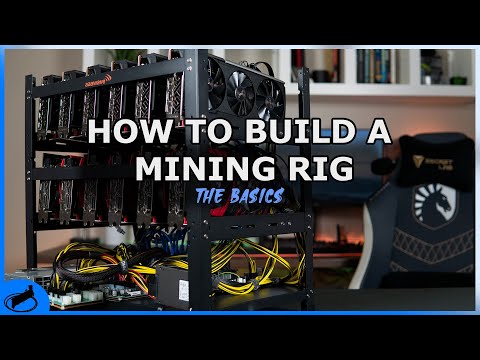
For GPU mining, factor in the cost of a rig frame, a reliable power supply unit (PSU), riser cables, and cooling. For ASICs, ensure your electrical circuit can handle the immense, constant load safely.
Download and configure your chosen mining software. You will need to input your mining pool address and your personal worker credentials. The pool's website provides detailed setup guides. Start with a well-known, established pool with a fair fee structure and transparent statistics.
Optimize your software settings for efficiency, not just maximum hash rate. Undervolting your GPU or tuning your ASIC's frequency can reduce power consumption significantly for a minimal performance hit, greatly improving profitability.
Set up a secure digital wallet to receive your mining payouts. A hardware wallet is highly recommended for storing significant earnings. Implement monitoring tools to track your rig's performance, temperature, and uptime remotely.
Advanced operations require planning for power distribution, cooling, and redundancy. Industrial mining is as much about infrastructure as it is about cryptocurrency.
Finally, consult a tax professional to understand how to report your mining income and keep detailed records of all expenses, including hardware purchases, electricity bills, and internet costs.
Cryptocurrency mining is a complex, dynamic, and capital-intensive industry that serves as the engine for proof-of-work blockchains. This comprehensive guide has outlined the foundational technology, the critical economic drivers, and the practical steps involved.
The landscape is one of constant evolution, shaped by hardware advances, energy markets, and global regulations. Success in this field requires a blend of technical knowledge, financial acumen, and operational discipline.
The future of mining points toward greater institutionalization, deeper integration with global energy markets, and continuous technological refinement. While the romantic era of mining on a laptop is long gone, the industry remains a fascinating and critical pillar of the cryptocurrency ecosystem. For those who approach it with rigorous research, careful planning, and managed expectations, mining offers a unique way to engage directly with the foundational layer of the digital asset revolution.



Your personal space to curate, organize, and share knowledge with the world.
Discover and contribute to detailed historical accounts and cultural stories. Share your knowledge and engage with enthusiasts worldwide.
Connect with others who share your interests. Create and participate in themed boards about any topic you have in mind.
Contribute your knowledge and insights. Create engaging content and participate in meaningful discussions across multiple languages.
Already have an account? Sign in here

La cryptographie derrière la machine Enigma : comment des mathématiciens ont brisé le code nazi et changé l'histoire.
View Board
1996 research debunks the samurai Tabata myth, exposing the scientific creation of a four‑minute, eight‑round interval p...
View Board
Max Verstappen en 2023 : une domination sans précédent en F1 avec 19 victoires, 575 points et une symbiose parfaite entr...
View Board
Julian Baumgartner: The Alchemist of Art's Past, Shaping Its Present The hushed reverence of the museum gallery is shat...
View Board
Google LiteRT redefine IA em dispositivos pequenos, com execução local, baixa latência e eficiência energética em smartp...
View Board
KI findet 25 neue Magnete für die nächste Generation der Elektromobilität Der Motor eines Elektroautos surrt fast unhör...
View Board
The open AI accelerator exchange in 2025 breaks NVIDIA's CUDA dominance, enabling seamless model deployment across diver...
View Board
Agenti AI: L'Ascesa dei Sistemi Autonomi e Integrati Il sistema di controllo del magazzino ha inviato un avviso alle 3:4...
View Board
L'IA crée en quelques minutes des milliers de molécules ciblées, diminue de dix le délai pré‑clinique et valide rapideme...
View Board
Archaeologists uncover a 3,500-year-old Egyptian fortress in Sinai, revealing advanced military engineering, daily soldi...
View Board
Depthfirst's $40M Series A fuels AI-native defense against autonomous AI threats, reshaping enterprise security with con...
View Board
AI-powered cancer screening transforms early detection, with clinical trials showing a 28% increase in cancer detection ...
View Board
Ariel Rebecca Martin: Digital Starlet Shaping Modern Culture The Genesis of a Digital Trailblazer On June 12, 1998, a ...
View Board
MIT researchers transform ordinary concrete into structural supercapacitors, storing 10x more energy in foundations, tur...
View Board
Project Nekton's 2016 expedition reveals Bermuda's hidden rariphotic zone, uncovering ancient black coral forests, over ...
View Board
Tensor unveils Robocar at CES 2026: a Level 4 autonomous SUV with retractable wheel, 10 GPU clusters, and agentic AI, ta...
View Board
AI's explosive growth forces a reckoning with data center energy use, as new facilities demand more power than 100,000 h...
View Board
Hội An : L'Archéologie d'une Âme Vietnamienne La lumière décline sur la rivière Thu Bồn. Une par une, comme obéissant à...
View Board
Pancreatic cancer's sugar-coated shield uncovered: Researchers reveal how tumors exploit sialic acid to deceive immune c...
View Board
AI-driven digital twins simulate energy grids & cities, predicting disruptions & optimizing renewables—Belgium’s grid sl...
View Board
Comments