


The Emperor Trajan Legacy and Greatest Achievements
The Roman Emperor Trajan reigned from 98 to 117 CE and is widely celebrated as one of Rome's greatest rulers. Known as Optimus Princeps, or "the best ruler," he expanded the Roman Empire to its maximum territorial extent through ambitious military campaigns. His legacy is a powerful blend of military conquest, monumental public works, and compassionate social welfare policies.
Trajan's Early Life and Path to Power
Marcus Ulpius Traianus was born in 53 CE in Italica, a Roman settlement in modern-day Spain. His provincial birth made him the first Roman Emperor born outside of Italy, signaling the empire's growing inclusivity. Trajan hailed from a prestigious senatorial family; his father served as a distinguished governor and military commander.
Military and Political Ascent
Trajan’s career followed the traditional Roman cursus honorum, beginning with military service. He rose swiftly through the ranks, demonstrating exceptional capability and loyalty. Key moments in his early career include:
- Military Tribune: Served in Syria under his father's command.
- Legion Commander: Led the Legio VII Gemina in Spain.
- Consul: Achieved the esteemed position of consul in 91 CE.
His reputation as a capable leader was solidified when he aided Emperor Domitian in suppressing a revolt in 89 CE. This military prowess made him a natural choice for succession during a time of crisis.
Becoming Emperor: The Succession from Nerva
The assassination of Emperor Domitian in 96 CE created political instability. His successor, the elderly Nerva, faced immediate challenge from the powerful Praetorian Guard. To secure his throne and appease the military, Nerva made a strategic decision that would shape history.
In 97 CE, amid military unrest, Nerva adopted the popular general Trajan as his son and heir.
This adoption ensured a smooth transfer of power to a leader with strong army support. Trajan succeeded Nerva upon his death on January 28, 98 CE. He began his 19-year reign with widespread approval from both the Senate and the military, a rare and advantageous position for a new emperor.
Establishing the Reign of Optimus Princeps
From the outset, Trajan cultivated an image of humility and dedication to the state. He entered Rome on foot, displaying modesty, and immediately fostered harmonious relations with the Senate. His leadership style, which combined aristocratic tradition with military discipline, earned him the esteemed title Optimus Princeps.
The Dacian Wars: Conquest and Treasure
One of Trajan's most significant military achievements was the conquest of Dacia, a kingdom north of the Danube in modern-day Romania. The Dacians, under King Decebalus, were a persistent threat to Rome's borders and controlled vast resources.
First Dacian War (101-102 CE)
Trajan launched his first campaign against Dacia to neutralize this threat permanently. The war was hard-fought, but Roman military discipline ultimately prevailed. King Decebalus was forced to submit and became a client king of Rome, though this peace was short-lived.
Second Dacian War (105-106 CE)
When Decebalus broke the treaty and resumed hostilities, Trajan responded with overwhelming force. The Roman army besieged the Dacian capital, Sarmizegetusa, leading to its destruction. Decebalus committed suicide rather than be captured.
The victory was monumental. The annexation of Dacia provided Rome with immense wealth, primarily from its rich gold and silver mines. This treasure would later fund Trajan's ambitious public building programs throughout the empire.
Commemorating the Victory: Trajan's Column
To immortalize his victory, Trajan ordered the construction of a monumental column in his forum in Rome. Trajan's Column stands over 30 meters tall and features a continuous spiral relief depicting scenes from the Dacian Wars.
- Detailed Narrative: The reliefs show over 2,500 figures in intricate detail.
- Historical Record: It serves as a priceless visual record of Roman military tactics and equipment.
- Engineering Marvel: The column remains a masterpiece of Roman art and engineering.
The conquest of Dacia marked a peak in Roman military expansion and financial prosperity, solidifying Trajan’s reputation as a great conqueror.
Trajan's Parthian Campaign and Imperial Zenith
Following the success in Dacia, Trajan turned his ambition eastward toward the Parthian Empire, Rome's long-standing rival. This campaign would become the emperor's final and most expansive military endeavor, pushing the Roman frontiers to their absolute peak. The Parthian campaign began in 114 CE and demonstrated Trajan's relentless drive for conquest.
The Invasion of Armenia and Mesopotamia
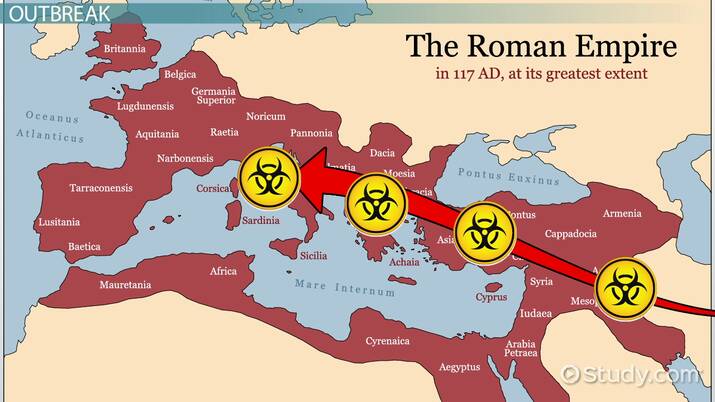
Trajan first moved to annex the Kingdom of Armenia, a buffer state between the two empires. He deposed the Parthian-appointed king and made Armenia a Roman province. This decisive action sparked full-scale war with Parthia. The Roman legions then advanced into Mesopotamia, achieving a series of stunning victories.
- Capture of Ctesiphon: The Roman army seized the Parthian capital in 116 CE, a symbolic triumph.
- Creation of New Provinces: Trajan established the provinces of Assyria and Mesopotamia.
- Reaching the Persian Gulf: Legend states Trajan stood on the shore, lamenting he was too old to follow Alexander's path further east.
By 117 CE, the Roman Empire had reached its greatest geographical size, encompassing an estimated 5 million square kilometers. This moment represented the territorial peak of ancient Rome's power.
Revolt and Strategic Retreat
However, Trajan's overextension soon became apparent. Widespread revolts erupted in the newly conquered territories, including a major Jewish uprising in the Eastern Mediterranean. Simultaneously, the occupied Parthian lands proved difficult to hold against persistent guerrilla warfare.
Trajan's eastern gains were vast but ultimately unsustainable, revealing the limits of Roman logistical power.
Facing these insurrections and falling ill, Trajan began a withdrawal. He died from a stroke in August 117 CE in Selinus, Cilicia, while returning to Rome. His successor, Hadrian, would make the strategic decision to abandon most of the eastern conquests, consolidating the empire's borders.
Domestic Policy: Building a Better Rome
While famed as a conqueror, Trajan's legacy within Rome itself was equally profound. He used the immense wealth from Dacian treasure to fund an unparalleled series of public works and social programs. His domestic policies aimed to improve the lives of Roman citizens and strengthen the empire's infrastructure.
The Alimenta: A Roman Welfare System
One of Trajan's most innovative policies was the expansion of the alimenta program. This state-funded welfare system provided financial support for the upbringing and education of poor children in Italy. Funds were distributed as loans to landowners, with the interest used to support children.
- Social Stability: The program aimed to bolster the Italian citizen population.
- Economic Stimulus: Loans to landowners encouraged agricultural investment.
- Estimated Reach: Historians estimate it supported approximately 5,000 children annually.
The alimenta is often viewed as an early form of social security, reflecting Trajan's concern for the empire's long-term health and his benevolent reputation.
Monumental Public Works and Architecture
Trajan's reign transformed the physical landscape of Rome and its provinces. His building projects were both practical and propagandistic, showcasing Rome's power and his personal generosity.
Trajan's Forum and Market
The centerpiece of his architectural program was Trajan's Forum, the last and largest of the Imperial Fora. This vast complex included a monumental basilica, libraries, and an open plaza. Adjacent to it, the innovative Trajan's Market is considered the world's first covered shopping mall.
Infrastructure Across the Empire
Beyond Rome, Trajan invested heavily in vital infrastructure that improved trade, sanitation, and communication.
- Roads and Bridges: He built and repaired key roads and bridges, like the famous bridge across the Danube during the Dacian Wars.
- Aqueducts: New aqueducts, such as the Aqua Traiana, brought fresh water to Rome.
- The Harbor at Portus: He enlarged the harbor at Ostia to improve Rome's grain supply.
- Public Baths: He constructed the massive Baths of Trajan on the Oppian Hill.
These projects provided employment, stimulated the economy, and left a lasting physical legacy of his rule.
Trajan's Leadership Style and Personal Modesty
Trajan's popularity stemmed not only from his successes but also from his perceived character. He cultivated an image of the "soldier-emperor" who shared the hardships of his troops and the virtues of a simple Roman aristocrat.
Relations with the Senate and Army
Unlike his paranoid predecessor Domitian, Trajan maintained respectful and cooperative relations with the Senate. He involved senators in governance and treated them as partners, which earned him genuine loyalty. His famous title, Optimus Princeps, was voted to him by a grateful Senate.
His bond with the army was even stronger. Having risen through the ranks, he understood military life. He was known to march on foot with his legionaries and eat the same simple food. This camaraderie ensured the military's fierce loyalty, which was the ultimate foundation of his power.
A Model of the "Good Emperor"
Trajan’s personal conduct became a model for future rulers. The Roman historian Pliny the Younger, in his "Panegyricus," praised Trajan for his modesty, justice, and piety. Key aspects of his model rule included:
- Respect for Law: He freed many unjustly imprisoned under Domitian.
- Accessibility: He made himself available to citizens and petitioners.
- Financial Prudence: Despite lavish public spending, he avoided crippling personal extravagance.
Trajan set a standard for imperial behavior that later historians would use to judge his successors, cementing his place among the "Five Good Emperors."
His death in 117 CE was met with genuine mourning. His ashes were interred in the base of Trajan's Column, forever linking his memory to his greatest military achievement.
Historical Legacy and Modern Interpretation
Trajan's legacy extends far beyond his 19-year reign, influencing perceptions of Roman imperial power for centuries. He is immortalized as the second of the Five Good Emperors, a model of successful rulership. His death marked the beginning of a gradual shift, as his successor Hadrian prioritized consolidation over expansion.
Trajan in Ancient and Medieval Memory
Ancient historians like Cassius Dio celebrated Trajan as a ruler who excelled in both war and peace. His reputation for justice was so enduring that later Roman emperors were honored with the wish "Felicior Augusto, melior Traiano" (be more fortunate than Augustus and better than Trajan). This sentiment persisted into the Middle Ages, where Dante Alighieri, in his Divine Comedy, placed Trajan's soul in Heaven, a rare honor for a pagan figure.
- Imperial Benchmark: He became the standard against which future emperors were measured.
- Christian Tradition: A medieval legend claimed Pope Gregory the Great prayed for Trajan's soul, leading to his posthumous salvation.
- Symbol of Justice: His reign was mythologized as a golden age of fair governance.
This long-lasting positive reputation underscores the profound impact of his achievements and character on Western historical consciousness.
Scholarly Debates and Re-evaluations
Modern scholarship offers a more nuanced view of Trajan's reign. While his accomplishments are undeniable, historians actively debate the long-term consequences of his policies, particularly his aggressive expansionism.
The Question of Overextension
A primary focus of modern analysis is whether Trajan's conquests, especially in the East, weakened the empire. The Parthian campaign stretched Roman military and logistical resources to their limit.
Many historians argue that Trajan's territorial gains were strategically unsustainable, creating volatile frontiers that future emperors struggled to defend.
Hadrian's immediate withdrawal from Mesopotamia, Armenia, and Assyria is often cited as evidence that these conquests were a costly overreach. This perspective views Trajan's expansion as the apex of Roman power but also the point where overextension began to strain the imperial system.
The Alimenta and Socio-Economic Policies
Trajan's alimenta program is also a subject of study. Some scholars interpret it as a pragmatic solution to population decline among Italian citizens. Others view it as a form of proto-socialist policy, highlighting the state's role in providing for its vulnerable citizens.
- Motivation: Debate continues on whether it was driven by genuine benevolence or political calculation.
- Effectiveness: Its long-term demographic and economic impact is difficult to measure precisely.
- Historical Significance: It remains a key example of ancient state-sponsored welfare.
These debates enrich our understanding, portraying Trajan not just as a legendary figure, but as a complex leader whose decisions had lasting and sometimes contradictory consequences.
Trajan in the Modern World: Archaeology and Digital Reconstruction
Interest in Emperor Trajan remains vibrant in the 21st century, fueled by ongoing archaeological research and cutting-edge technology. These modern explorations provide new insights into his reign and make his world accessible to a global audience.
Contemporary Archaeological Focus
While no major new discoveries have been reported since the early 2020s, scholarly attention continues to focus on existing monuments. Trajan's Column is a perennial subject of study, with its spiral reliefs offering a detailed visual narrative of the Dacian Wars. Archaeologists and historians meticulously analyze these scenes to understand Roman military tactics, equipment, and the portrayal of the enemy Dacians.
Research also continues on the extensive remains of Trajan's Forum and Markets in Rome. These sites are central to understanding urban development, Roman engineering, and the economic life of the ancient city during its peak.
The Digital Revival of Trajan's Rome
Technology is playing a revolutionary role in bringing Trajan's era to life. Projects like those by Ancient Rome Live use 3D modeling and virtual reality to create immersive digital reconstructions.
- Virtual Tours: Users can explore a digitally reconstructed Trajan's Forum, experiencing its original scale and grandeur.
- Educational Tools: These models are invaluable for education, allowing students to visualize ancient structures.
- Detailed Analysis: Digital tools enable scholars to study architectural techniques and spatial relationships in new ways.
Digital archaeology allows us to walk through Trajan's Rome, offering an unprecedented connection to the ancient world.
This fusion of history and technology ensures that Trajan's architectural legacy continues to educate and inspire future generations.
Conclusion: The Enduring Legacy of Optimus Princeps
Emperor Trajan's reign represents the zenith of the Roman Empire in nearly every measurable dimension. His era was defined by a powerful synthesis of military conquest and civilian benevolence, a combination that earned him the legendary title of Optimus Princeps. The empire reached its greatest territorial extent under his command, fueled by the treasures of Dacia and the boldness of the Parthian campaign.
Yet, his legacy is equally cemented by the monuments that reshaped Rome and the social programs that supported its people. From the towering Trajan's Column to the innovative alimenta system, his impact was both literally and figuratively concrete. He demonstrated that imperial power could be exercised with a sense of duty and respect for tradition, setting a standard that would be revered for millennia.
Today, Trajan stands as a pivotal figure in world history. He symbolizes the peak of Roman ambition and administrative capability. Modern scholarship continues to debate the sustainability of his expansions, but his reputation as a capable, energetic, and largely benevolent ruler remains intact. Through ongoing archaeological study and digital reconstruction, the world of Trajan continues to reveal its secrets, reminding us of a time when one man's leadership shaped the destiny of the Mediterranean world and left an indelible mark on human history.


:max_bytes(150000):strip_icc()/bronze-statue-of-augustus-the-roman-emperor-at-the-entrance-of-the-reconstructed-saalburg-the-roman-fort-limes-taunus-hesse-germany-150964537-589a394c3df78caebc6facb5.jpg)






Comments