

Explore Any Narratives
Discover and contribute to detailed historical accounts and cultural stories. Share your knowledge and engage with enthusiasts worldwide.
Hayden Adams, a mechanical engineer laid off from Siemens in 2017, taught himself Solidity by building a toy decentralized exchange. He deployed it to the Ethereum mainnet in November 2018. That simple, audacious act did not just create a new trading venue. It dismantled the fundamental architecture of financial markets. Uniswap, the protocol Adams launched, replaced order books, market makers, and corporate intermediaries with a few lines of immutable code and a mathematical constant. Today, nearly five million unique wallets have interacted with its contracts. Its lifetime trading volume has eclipsed one trillion dollars. It operates without a CEO, a headquarters, or a customer service desk. It is the silent engine powering a revolution.
Walk into the corporate lobby of any traditional exchange. You will see security, badges, and layers of compliance. Uniswap has no lobby. Its interface is a website, but its heart is a collection of non-upgradeable smart contracts on the Ethereum blockchain. Access is universal, anonymous, and instantaneous. A trader in Caracas, a farmer in Kenya, and a developer in Seoul face the same protocol, governed by the same rules. This is the core innovation: censorship-resistant, permissionless exchange. There is no account signup, no Know Your Customer check, no withdrawal limit, and no intermediary to freeze your assets. You connect a wallet. You trade.
The mechanism that makes this possible is the Automated Market Maker. Before Uniswap, decentralized exchanges struggled with illiquidity, attempting to replicate the order book model of their centralized counterparts. Uniswap discarded the order book entirely. Instead, it relies on liquidity pools. Users, acting as liquidity providers, deposit pairs of tokens—Ethereum and a stablecoin, for instance—into a smart contract. This pooled capital forms the market's backbone.
"The constant product formula, x * y = k, is the protocol's genius. It's a self-balancing equation that determines prices algorithmically based on the available reserves in a pool. It ensures there is always a market, always a price, no matter how large the trade," explains a technical architect who has audited the code.
When a trader wants to swap Token A for Token B, the contract executes the trade against the relevant pool. The formula automatically adjusts the price based on the ratio of the tokens remaining, imposing a small fee that is distributed to the liquidity providers. This creates a virtuous, automated cycle. More trading activity generates more fees, attracting more liquidity, which in turn enables larger trades with less price impact. The entire system is trustless. You are not trusting Uniswap Labs or Hayden Adams. You are trusting mathematics that is publicly verifiable on-chain.
The ascent was not overnight. For its first year, Uniswap was a niche tool for Ethereum enthusiasts. The catalyst was the "DeFi Summer" of 2020, a period of explosive growth in decentralized finance. As yields skyrocketed, a frenzy of farming and speculation erupted. Uniswap, with its open listing policy, became the primary venue for launching and trading new tokens. Anyone could create a liquidity pool for any ERC-20 token, providing instant, global access. This was a radical departure from the gated, slow-moving processes of centralized exchanges.
The protocol's governance token, UNI, launched in September 2020. In a controversial but defining move, it was distributed via an airdrop to past users of the protocol, a retroactive reward for early adoption. Overnight, thousands of users found themselves holding a valuable asset simply for having used the software. This act seeded a vast, committed community of stakeholders. UNI holders gained the right to vote on proposals that would steer the protocol's future, formalizing a shift from a project to a decentralized autonomous organization.
"The UNI airdrop wasn't just marketing. It was a political statement. It declared that the users, not a corporate entity, owned the network's value and its destiny. It set a precedent that every major DeFi protocol has since followed," says a researcher from a crypto-focused think tank.
Growth became parabolic. By early 2025, driven by another major DeFi resurgence, Uniswap's daily volume routinely measured in the billions. It expanded beyond Ethereum's often-congested and expensive mainnet, deploying on Layer 2 scaling solutions like Optimism and sidechains like Polygon. This multi-chain strategy was critical. It allowed users to swap tokens for a few pennies in fees instead of hundreds of dollars, opening the protocol to a mass audience priced out by Ethereum gas fees.
The statistics tell a story of staggering adoption. Nearly five million unique wallet addresses have interacted with the protocol. Its all-time cumulative trading volume roared past the one trillion dollar mark. At times, its daily volume has rivaled that of major, century-old stock exchanges. And it achieved this with a team that, relative to its financial footprint, remains minuscule.
For years, a central tension existed within the Uniswap ecosystem. The protocol generated enormous fees—0.3% on most swaps, amounting to millions of dollars daily—but all of it was directed to the liquidity providers. The protocol itself, and by extension its UNI token holders, captured none of this value. UNI was a governance token with no cash flow, a vote with no dividend. This changed decisively in late 2025.
After years of debate, the Uniswap governance community approved the "UNIfication" proposal. This activated the long-dormant "fee switch" for versions two and three of the protocol on the Ethereum mainnet. The mechanics are straightforward but profound: a portion of the swap fees generated in liquidity pools is now diverted from liquidity providers and routed to a new mechanism. A fraction is allocated to a budget for Uniswap Labs' growth initiatives. The remainder is used to buy and permanently burn UNI tokens, removing them from circulation.
This is a fundamental pivot. UNI is no longer just a governance token; it is now a deflationary asset with a direct economic link to the protocol's usage. The more trading that occurs on Uniswap, the more fees are generated, and the more UNI is burned, theoretically increasing its scarcity. The proposal also folded the independent Uniswap Foundation's functions back into Uniswap Labs, streamlining operations with a 20 million UNI per year budget for ecosystem development.
The move was not without its critics. Some liquidity providers viewed it as a dilution of their rewards. Purists worried about the centralizing influence of a better-funded Uniswap Labs. Yet, the market's initial response was one of validation. It signaled that the decentralized collective could execute complex economic upgrades and was focused on creating sustainable, accruable value for its stakeholders. The era of "real yield" in DeFi had come to Uniswap's door, and the community answered.
What does it mean when a piece of software, governed by its users, can autonomously redirect billions in cash flow and redesign its own tokenomics? It means the rules of the game are no longer written in corporate charters but in code that is voted on by a global, pseudonymous collective. The silent engine just found a new gear. The question is no longer how it works, but what its relentless, permissionless innovation will build—or disrupt—next.
The numbers defy conventional finance. $3.45 trillion. That is Uniswap's cumulative trading volume as of late 2025, a figure that places it in the league of the world's largest financial institutions. In October 2025 alone, it processed $116.6 billion. For a week in early 2026, the tally was $26.463 billion. These are not metrics for a tech startup; they are the vital signs of a global financial utility. Yet, a paradox sits at the center of this behemoth. The price of its governing token, UNI, has languished. It hovers around $5, a fraction of its all-time high, with a market capitalization of roughly $3.6 billion. How does a protocol facilitating over a trillion dollars in annualized volume command a valuation that would be a rounding error for a mid-tier bank?
"Uniswap... facilitated nearly $1 trillion in trading volume over the past year... highlighting the platform’s continued significance in the DeFi sector." — Token Terminal, January 28, 2026 report
The answer lies in the unresolved tension between usage and value capture. For years, Uniswap was a phenomenal piece of infrastructure that generated immense fees but directed all of it to liquidity providers. The protocol itself, and the UNI token, captured zero. The "UNIfication" upgrade of late 2025 was a direct assault on this disconnect. By activating the fee switch, the protocol began siphoning a portion of swap fees to buy and burn UNI. The initial data is telling: an estimated $26 million in annualized protocol fees now funds the mechanism, leading to the burning of roughly 4 million UNI per year. To date, over 100 million UNI—more than 10% of the original supply—has been incinerated, representing over $557 million in realized value destruction.
A seismic shift in user behavior explains the volume surge. The era of trading exclusively on the expensive Ethereum mainnet is over. Today, over 65% of Uniswap's daily volume occurs on Layer 2 networks like Arbitrum, Optimism, and Base. These scaling solutions reduced swap fees from crippling three-figure sums to mere pennies, unlocking retail-scale trading that was previously impossible. This migration didn't just increase volume; it fundamentally altered Uniswap's demographic. It became a tool for frequent, small trades, not just large, institutional-sized swaps. The protocol's dominance in the broader DEX market, commanding a 60% share, is now built on this L2 foundation.
While retail traders flocked to L2s for cheap fees, large investors made a calculated bet on the core asset. Data from January 17, 2026, reveals a telling accumulation. The top 100 UNI wallets bought 12.41 million additional tokens over the preceding eight weeks. This whale activity is a cold, hard signal in a noisy market. It suggests sophisticated capital sees the fee switch not as a gimmick, but as the beginning of a fundamental rerating. These entities are betting that linking UNI's supply directly to protocol revenue will eventually close the absurd gap between utility and price.
"UNI’s market value of $5.4B to roughly $26M in annualized protocol fees... suggests a revenue multiple of roughly 207x, placing it closer to a high-growth tech asset." — Talos Insights, citing Coin Metrics data
That multiple—207x—is the single most important number for any UNI investor. It is astronomically high, even by Silicon Valley standards. It prices in decades of flawless, exponential growth. The entire deflationary thesis hinges on trading volume not just maintaining its trillion-dollar run rate, but accelerating dramatically. A modest downturn in volume would expose that multiple as pure speculation. The burn rate of 0.4% of supply per year is meaningful, but it's a slow drip against a vast ocean. Is it enough to move the needle for a $3.6 billion asset? Only if that drip becomes a torrent.
Technological evolution continues apace. Version 4 of the protocol, launched in mid-2025, represents its most ambitious architectural leap since the introduction of concentrated liquidity in V3. It introduces "hooks"—plug-in smart contracts that allow for customizable pool logic, enabling features like dynamic fees, time-weighted orders, and complex derivatives built directly into liquidity pools. By mid-2025, V4 had already processed $100 billion in volume and secured $1 billion in Total Value Locked. Yet, in a curious twist, it still only handles about 30% of all Uniswap trades. The inertia of established liquidity in V2 and V3 pools is immense, demonstrating that in decentralized finance, network effects are even stickier than in traditional software.
This innovation cycle fuels a cottage industry of price prediction. Models spit out a dizzying array of figures. One AI forecast from January 8, 2026, projected a 2026 high of $22.13, a low of $6.54, and an average of $11.77. These predictions are less a science and more a Rorschach test for market sentiment. They reveal a market torn between the undeniable scale of the protocol and the nagging uncertainty about its token's economic design. Technical indicators add to the confusion. Some point to a "Rise" stance with a low RSI, while longer-term forecasts still signal "Sell." The 200-day moving average was once projected to hit $10.23 by July 2025—a forecast rendered obsolete by the market's stubborn consolidation.
"The recent rebound from a low of $2.8 to $3.5 on February 8, 2026, occurred amid continued seller dominance, indicating a fragile recovery." — CoinMarketCap Analysis
The price action tells the real story. After crashing to a low of $2.80, UNI managed a rebound to $3.50 by February 8, 2026. Analysts noted this bounce happened even as sellers controlled the market, a classic sign of a dead-cat bounce rather than a sustainable reversal. The current price, wobbling around $3.45, reflects a market in a state of profound indecision. The monumental volume is bullish. The high revenue multiple is bearish. The deflationary mechanism is innovative. Its current impact is modest.
Looming over this entire scene is the specter of traditional finance. The registration of a Uniswap ETF Trust by asset manager Bitwise is a landmark event. It is a bureaucratic filing that whispers a radical idea: that a decentralized protocol's governance token could one day sit in a retirement portfolio alongside shares of Apple and Microsoft. This institutional interest validates the asset class but also threatens to import traditional market dynamics—volatility, correlation with Bitcoin, regulatory scrutiny—into a ecosystem founded on rejecting those very things.
Herein lies Uniswap's core contradiction. It is a radically decentralized, permissionless, and automated system. Yet its value accrual mechanism and future growth now depend on concepts straight from corporate finance: revenue multiples, shareholder (tokenholder) value, and stock (token) buybacks. The community's governance decisions increasingly resemble boardroom negotiations about capital allocation. The "UNIfication" proposal allocated a 20 million UNI annual budget to Uniswap Labs for growth—a centralized operational team funded by a decentralized treasury. Is this a pragmatic evolution or a slow-mission drift?
"The deflation mechanism is a huge risk. The entire valuation now depends on perpetual trading growth to justify the burn and support the price. It's a high-wire act with a $5.4 billion net below." — DeFi Analyst, commentary on fee switch mechanics
The criticism is valid. The fee switch transforms UNI from a governance utility into a leveraged bet on crypto trading volume itself. If volume plateaus or declines, the deflationary narrative collapses, and the 207x multiple becomes an anchor. Furthermore, the very success of Layer 2s, while driving volume, also commoditizes the swapping function. When fees are pennies everywhere, what is Uniswap's moat? Its brand and its liquidity are formidable, but they are not invincible. The protocol must innovate beyond simple swaps—into areas like Unichain and on-chain limit orders—to build new revenue lines. The future isn't just about processing more trades; it's about capturing more value from each one. The trillion-dollar machine must now learn to monetize its own dominance, and the market is watching, skeptical that a piece of decentralized infrastructure can master the brutal arithmetic of public markets.
Uniswap’s significance transcends cryptocurrency. It is a case study in institutional disruption through code. Before November 2018, the concept of a global, 24/7 trading venue that could be launched by a single engineer was pure fantasy. Uniswap made it mundane. Its legacy is the normalization of the Automated Market Maker, a model so effective it has been copied by every competitor and integrated into the backend of traditional finance’s own experiments. The protocol proved that complex financial machinery—market making, price discovery, fee distribution—could be automated, trust-minimized, and owned by its users. This is not a incremental improvement on the stock exchange. It is a philosophical rejection of its very architecture. The cultural impact is visible in the language: “pooling liquidity,” “impermanent loss,” and “governance proposals” are now part of the financial lexicon, terms born not in Wall Street boardrooms but in Ethereum’s developer forums.
"Uniswap didn't just build a better exchange. It proved that the most critical market infrastructure could be run as a public good, governed by a global collective of stakeholders who may never meet. That idea is more disruptive than any price chart." — Financial Cryptographer
The protocol’s historical impact is cemented in its role as the primary liquidity layer for the entire digital asset ecosystem. From memecoins to trillion-dollar stablecoin settlements, countless transactions find their path through a Uniswap pool. It has become the plumbing, often invisible but utterly essential. This role as foundational infrastructure grants it a paradoxical stability amid crypto’s volatility. Bull runs and bear markets come and go, but the need for a permissionless swap remains a constant. Uniswap, by fulfilling that need with ruthless efficiency, has embedded itself into the ecosystem’s DNA. Its influence is measured not in quarterly earnings, but in the thousands of projects, DAOs, and traders who organize their economic activity around its immutable contracts.
For all its brilliance, Uniswap is not a perfect system. Its model carries inherent, sometimes brutal, economic trade-offs. The phenomenon of “impermanent loss” is a permanent risk for liquidity providers. When the price of one asset in a pool diverges sharply from the other, LPs can end up with a portfolio value less than if they had simply held the assets. This isn’t a bug; it’s a feature of the constant product formula. But it acts as a tax on volatility, discouraging provision in the very pools that need liquidity the most during market turmoil. The protocol’s health relies on a constant inflow of yield-seeking capital willing to shoulder this risk, a fickle foundation.
Furthermore, the march toward greater efficiency and value capture creates centralizing pressures that clash with the decentralized ethos. The “UNIfication” upgrade, while economically rational, concentrated more operational power and budget in Uniswap Labs. The development of v4 with its proprietary hooks could create a two-tier ecosystem: a standardized, commoditized front-end for simple swaps and a complex, capital-efficient back-end dominated by sophisticated players and the Labs team. The governance process itself, while democratic in theory, often suffers from low voter turnout, allowing well-funded delegations and the Labs team itself to steer major decisions. The greatest threat to Uniswap may not be a competitor, but the gradual, pragmatic erosion of the radical decentralization that made it revolutionary in the first place.
Security remains a sword of Damocles. While the core contracts are battle-tested, the expanding surface area—through new chains, v4 hooks, and front-end integrations—multiplies the attack vectors. A critical exploit is not a matter of “if” but “when” in DeFi; Uniswap’s scale would make such an event a systemic catastrophe. And for all its permissionless glory, the protocol is not immune to regulatory siege. The SEC’s ongoing scrutiny of the UNI token as a potential unregistered security looms. A successful enforcement action wouldn’t break the smart contracts, but it could cripple the legal entities supporting development and accessibility, driving the protocol entirely underground.
The coming year will be defined by concrete tests. The performance of the fee switch and burn mechanism will be scrutinized against every monthly volume report from CoinGecko and Dune Analytics. The integration of Unichain, aiming to create a dedicated blockchain for the ecosystem, represents a bold bet on sovereignty but also a massive technical and community coordination challenge. All eyes are on the progress of the Bitwise Uniswap ETF Trust filing with the SEC; a decision, expected by the second half of 2026, could provide a seismic legitimacy shock or a harsh regulatory rebuke.
Hayden Adams’s experiment has grown into a trillion-dollar engine. It redefined what a market could be. Now, it faces the harder task: proving that a decentralized, community-owned protocol can navigate the treacherous waters of sustainable economics, relentless innovation, and real-world regulation. The silent engine must now learn to speak the language of legacy finance, not to join it, but to forever change what it means to trade. The final code has yet to be written.
In conclusion, Uniswap's decentralized protocol has fundamentally overhauled traditional finance by automating market-making and removing intermediaries. As this silent engine continues to power a new era of open finance, one must consider what other entrenched systems could be redesigned through similar cryptographic ingenuity.




Your personal space to curate, organize, and share knowledge with the world.
Discover and contribute to detailed historical accounts and cultural stories. Share your knowledge and engage with enthusiasts worldwide.
Connect with others who share your interests. Create and participate in themed boards about any topic you have in mind.
Contribute your knowledge and insights. Create engaging content and participate in meaningful discussions across multiple languages.
Already have an account? Sign in here
Demystifying cryptocurrency! Explore the different types of cryptocurrencies, from Bitcoin and Ethereum to stablecoins a...
View Board![Crypto Tokens: A Comprehensive Guide [2026]](https://a-us.storyblok.com/f/1016390/1600x900/cf864e2066/types-of-crypto-tokens.svg)
Unlock the world of crypto tokens! Learn about utility, governance, stablecoins, and DeFi tokens. Discover the latest tr...
View Board
Discover Tezos, a self-amending blockchain with Liquid Proof-of-Stake (LPoS) for energy efficiency and seamless upgrades...
View Board
Explore DigiByte (DGB), a fast, secure, and scalable cryptocurrency. Learn about its innovative features, blockchain tec...
View Board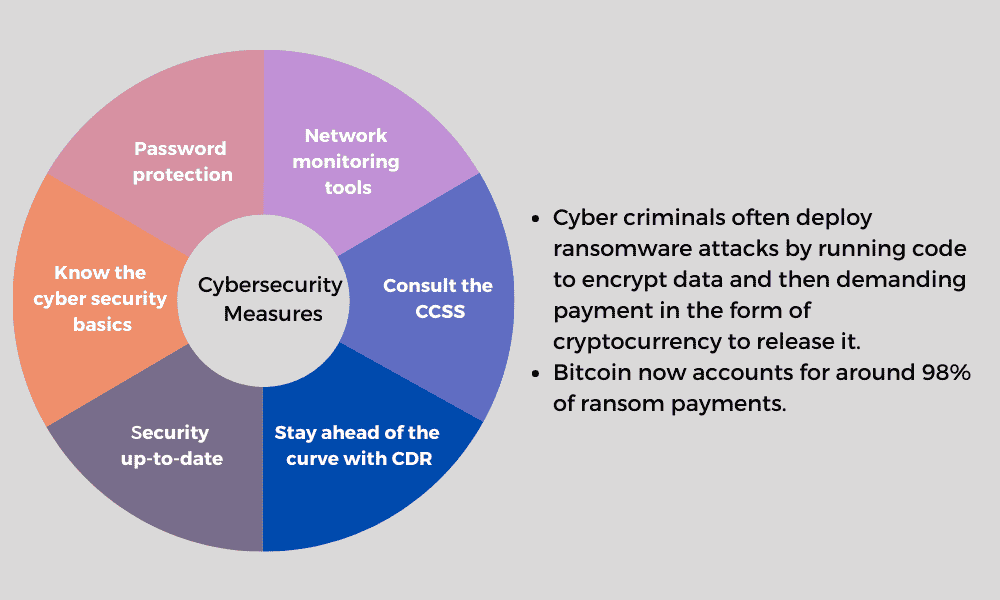
Explore the benefits of using cryptocurrencies in 2026: faster payments, lower costs, financial inclusion, and tokenized...
View Board
Discover the essentials of cryptocurrency mining: how it works, hardware choices, and profitability factors. Start your ...
View Board
Explore Filecoin, the blockchain-based decentralized storage network. Learn how it leverages IPFS, FIL tokens, and crypt...
View Board
Hyundai's Atlas robot debuts at CES 2026, marking a shift from lab experiments to mass production, with 30,000 units ann...
View Board
MIT’s 2026 breakthroughs reveal a world reshaped by AI hearts, gene-edited embryos, and nuclear-powered data centers, wh...
View Board
Rich Benoit, an IT manager, rebuilt a flooded Tesla Model S from scratch, proving that electric vehicles can be repaired...
View Board
Descubre Tron, un ecosistema blockchain descentralizado líder para dApps, DeFi y stablecoins. Explora sus ventajas, usos...
View Board
Μάθετε για τον Πολ Μίλερ, τον Ελβετό χημικό που ανακάλυψε το DDT και έλαβε Νόμπελ. Η ιστορία του, η ανακάλυψη και η συμβ...
View Board
The Architects of 2026: The Human Faces Behind Five Tech Revolutions On the morning of February 3, 2026, in a sprawling...
View Board
Explore o futuro das criptomoedas em 2026! Descubra as perspectivas de valorização, desafios regulatórios e as criptos c...
View Board
CES 2025 spotlighted AI's physical leap—robots, not jackets—revealing a stark divide between raw compute power and weara...
View Board
Charli D’Amelio, 21, now 155.8M TikTok followers, reshaped celebrity culture from a Connecticut bedroom,
View Board
Google LiteRT redefine IA em dispositivos pequenos, com execução local, baixa latência e eficiência energética em smartp...
View Board
Explore the devastating global impact of film piracy. Understand the economic losses, geographical hotspots, and latest ...
View Board
Unlock the power of SHA-256 hashing! This guide explains the algorithm's inner workings, security features, and real-wor...
View Board
Ryder Carroll e il Bullet Journal: la storia di un sistema analogico nato per gestire l'ADHD che ha conquistato milioni ...
View Board
Comments