Explore Any Narratives
Discover and contribute to detailed historical accounts and cultural stories. Share your knowledge and engage with enthusiasts worldwide.
The coastal fortress of Kyrenia Castle stands as an indomitable sentinel over one of the Mediterranean's most picturesque harbors. This monumental Venetian fortress is a palimpsest of military architecture, built upon layers of Byzantine and Crusader history. For over eight centuries, its walls have witnessed the ebb and flow of empires, from Richard the Lionheart to the Ottoman fleet.
Today, this iconic landmark is northern Cyprus's premier historical attraction, housing the famous Ancient Shipwreck Museum. Its formidable silhouette tells a story of strategic necessity, cultural layering, and evolving warfare that shaped the entire island's destiny.
Kyrenia Castle's profound importance stems directly from its unparalleled location. The town of Kyrenia itself enjoys a human history stretching back an astonishing 7,800+ years to the Neolithic era. Its natural harbor, nestled against the rising Kyrenia mountain range, offered a rare and safe anchorage on Cyprus's northern coast.
This made it a vital port for successive civilizations. Greek settlers were present by the 7th century BC, and it flourished under Roman administration. However, its strategic value also made it a target, necessitating the very fortifications that define it today.
The tranquil harbor was perpetually threatened by maritime raids. From the 7th century AD onward, Arab naval forces posed a constant danger to Byzantine Cyprus. Its position on key sea routes between Anatolia, the Levant, and the wider Mediterranean meant control of Kyrenia was often synonymous with control of regional trade and military logistics.
This geographic imperative established the core function of the site: harbor defense. Every subsequent architectural modification, from Byzantine walls to Venetian bastions, served this singular, enduring purpose.
The structure we see today is the culmination of a millennium of architectural adaptation. Each ruling power left its mark, responding to new military technologies and threats. The castle's form is a direct physical timeline of Mediterranean conflict.
The castle's story begins with the Byzantine Empire's response to escalating Arab incursions. In the 7th century AD, they constructed the first fortified enclave on the site. This early fort was relatively modest, designed as a garrison point and refuge for the local population against sudden coastal attacks.
Its primary role was to deny a foothold to raiders and protect the economic heart of the town. The foundations of this Byzantine work lie buried within the later, colossal stonework, with the possible exception of the Church of St. George enclosed in the castle's courtyard.
A pivotal moment arrived in 1191 with the capture of Cyprus by Richard the Lionheart during the Third Crusade. The castle fell to his forces with relative ease, highlighting the need for modernization. After Richard sold the island, the Frankish Lusignan dynasty undertook the first major rebuild.
Between 1208 and 1211, they significantly enlarged the fortress. Key Lusignan additions included:
This transformed the site from a Byzantine redoubt into a formidable Crusader castle, serving as a central administrative and military hub for the Frankish kingdom.
The most dramatic alterations came with the Republic of Venice. As the Ottoman Empire rose, the Venetians recognized the castle's outdated design was vulnerable to modern cannon warfare. From the late 1400s through the 16th century, they completely overhauled the defenses.
The Venetian redesign created the iconic square-shaped fortress with massive, sloped walls that characterize the castle today. They incorporated parts of the medieval town into its western bulwark for added strength.
The upgrades were specifically engineered for artillery: thick walls to withstand bombardment, specially designed cannon ports on three levels, and long, sloping ramps to drag heavy guns into position. Most notably, they constructed immense circular bastions at each corner, designed to deflect cannonballs and provide overlapping fields of fire.
Despite these extensive Venetian fortifications, the castle's ultimate military test would soon arrive.
Beyond the castle walls lay its first line of maritime defense: the innovative harbor chain system. This was a common but critical medieval and early modern defensive tactic employed in ports like Constantinople, Genoa, and later Kyrenia.
The system consisted of a massive iron chain that could be stretched across the harbor mouth, blocking enemy vessels from entering. One end was secured at the castle itself. The other end was anchored to the Round Tower, a standalone fortification built in the early 14th century (circa 1300s) on a small mole across the harbor.
Similar defensive chains could be enormous; a documented example in Padua, Italy (1516) was 36 meters long. The Kyrenia chain was a physical embodiment of the castle's extended defensive reach.
In times of siege, the chain would be raised, forcing approaching ships to halt under the devastating fire of the castle's and tower's artillery. This system turned the harbor from an asset into a trap for would-be invaders.
Recent archaeological studies have brought new understanding to this feature. In 2020, researchers conducted a detailed photogrammetric survey of the Round Tower. This "structure-from-motion" photography creates precise 3D digital models, allowing historians to analyze the tower's construction and its integration with the chain mechanism without invasive procedures.
This work highlights ongoing preservation efforts and the value of digital technology in unraveling the castle's complex defensive engineering, even amidst the political complexities of modern Cyprus.
Kyrenia Castle's history is marked by moments of dramatic transition, often reflecting wider regional power shifts.
The castle first entered the historical spotlight during the Third Crusade. King Richard I of England captured it as part of his swift conquest of Cyprus. This event marked the end of Byzantine rule on the island and ushered in centuries of Western European influence, fundamentally linking Cyprus's fate to Latin Christendom.
The castle's most significant military test occurred during the Ottoman invasion of Cyprus. While the Venetians had poured resources into modernizing the fortress, the overall defense of the island was faltering. After the fall of Nicosia in 1570, Kyrenia was isolated.
Despite its formidable upgrades, the Venetian garrison—reportedly as few as 50 soldiers—surrendered in 1571 without a major battle after learning of Famagusta's fate. This anti-climactic end demonstrated that even the strongest fortress is subject to the broader tides of war and politics.
Stepping through the castle's robust gatehouse is a journey into a self-contained world. The interior layout reflects its evolution from a cramped Byzantine fort to a sprawling Venetian citadel. Visitors navigate a labyrinth of vaulted halls, barracks, prisons, and chapels that served the needs of its many inhabitants across the centuries.
The Venetian modifications are dominant, with wide courtyards designed for maneuvering troops and artillery. However, careful observers can spot the older, Norman and Byzantine masonry embedded within the later walls. This architectural layering provides a tangible, walkable history lesson.
At the heart of the castle's central courtyard lies the Church of St. George. This small, cruciform church is one of the site's most historically significant structures. Archaeologists believe its origins are likely 11th or 12th century Byzantine, predating much of the surrounding fortress.
Its architecture features a central dome and semi-circular apses, typical of the middle Byzantine period. Inside, one can see reused marble columns from earlier Roman or early Christian buildings, a common practice that speaks to the site's long continuity of sacred use. The church served the spiritual needs of the castle's garrison and nobility throughout the Lusignan period.
On the castle's southern side, visitors can explore the remains of the Lusignan royal quarters. These rooms, with their Gothic-style pointed arches and windows, offer a glimpse into the domestic life of the Frankish rulers. They contrast sharply with the purely military functionality of the later Venetian spaces.
Beneath these halls lie the castle's infamous dungeons and prison cells. Dark, damp, and desolate, these chambers were used for centuries, from the Lusignan era through the Ottoman period. They stand as a stark reminder of the castle's role not just as a defense but also as an instrument of control and punishment.
The Venetians prioritized military efficiency above all else. Their additions include extensive barracks for soldiers and large, vaulted magazine rooms designed to store gunpowder, cannonballs, and provisions for a sustained siege.
The design of these magazines, with thick walls and careful ventilation, highlights the critical importance of gunpowder management in Renaissance warfare. A single accident could doom the entire garrison, so these spaces were engineered with safety as a paramount concern.
One of the strongest reasons to visit Kyrenia Castle today is to witness its remarkable interior museum. The Ancient Shipwreck Museum houses one of the oldest and best-preserved Greek merchant vessels ever recovered, transforming the fortress from a military relic into a sanctuary of underwater archaeology.
The story begins in 1965 when a local sponge diver, Andreas Cariolou, discovered the wreck off the coast of Kyrenia. Archaeologists from the University of Pennsylvania, led by Michael Katzev, conducted a full excavation between 1967 and 1969. The ship lay at a depth of about 30 meters, preserved in the soft sandy seabed.
Dating analysis confirmed the vessel sank around 300 BC, during the Hellenistic period. Its preservation was extraordinary, including much of its wooden hull structure, cargo, and even the personal belongings of its crew. The find provided an unprecedented snapshot of ancient maritime trade.
The museum's main hall displays the reconstructed hull of the ship, a powerful and evocative sight. Its cargo reveals the nature of 4th-century BC Mediterranean commerce:
The vessel itself was small, about 14 meters long, and built using the ancient "shell-first" method. Its hull shows evidence of extensive repairs, suggesting a long working life of 15-20 years before its final voyage ended in the Kyrenia harbor.
Preserving the waterlogged timbers was a monumental task. The conservation process involved treating the wood for years with polyethylene glycol (PEG), a wax-like substance that replaces water and prevents shrinkage and warping. This painstaking work allowed for the ship's full reassembly.
The Kyrenia Ship is more than an artifact; it is a time capsule. It provides unparalleled data on ancient shipbuilding, trade networks, and daily life at sea, making it a landmark discovery for global archaeology. Its home within the castle walls perfectly marries Cyprus's maritime and military histories.
With the castle's surrender in 1571, a new chapter began. The Ottoman Empire would control Kyrenia and its fortress for the next three centuries. Their use of the site continued its military function but added new cultural layers characteristic of their rule.
The Ottomans maintained Kyrenia Castle as a garrison fortress. They made fewer structural changes than their predecessors, as the Venetian defenses were already supremely robust. Their primary additions were related to the needs of an Ottoman military outpost.
This included converting certain spaces, like the Church of St. George, for alternative uses, and likely adding elements like baths (hammams) and prayer spaces for the Muslim garrison. The castle also continued its grim role as a prison. For over 300 years, the Ottoman flag flew from its ramparts, symbolizing Cyprus's integration into a vast eastern empire.
Following the Cyprus Convention of 1878, administrative control of Cyprus passed to the British Empire, though sovereignty remained Ottoman until 1914. The British also used the castle as a police station and prison. During World War II, they housed German prisoners of war within its walls.
This period saw less martial use and the beginnings of the castle's modern identity as a historical monument. The British authorities undertook some of the earliest preservation work to stabilize the ancient structure, recognizing its archaeological and touristic value as the colonial era drew to a close.
Today, Kyrenia Castle has transitioned fully from a military asset to a cultural one. It is the cornerstone of cultural tourism in northern Cyprus, drawing hundreds of thousands of visitors eager to walk its ramparts and delve into its layered past.
The castle's appeal is multifaceted. Visitors are drawn by the spectacular panoramic views of the harbor and mountains from its towers, the fascinating Ancient Shipwreck Museum, and the atmospheric exploration of its medieval and Renaissance halls. Its location on Kyrenia's vibrant harbor front places it at the center of the town's tourist economy.
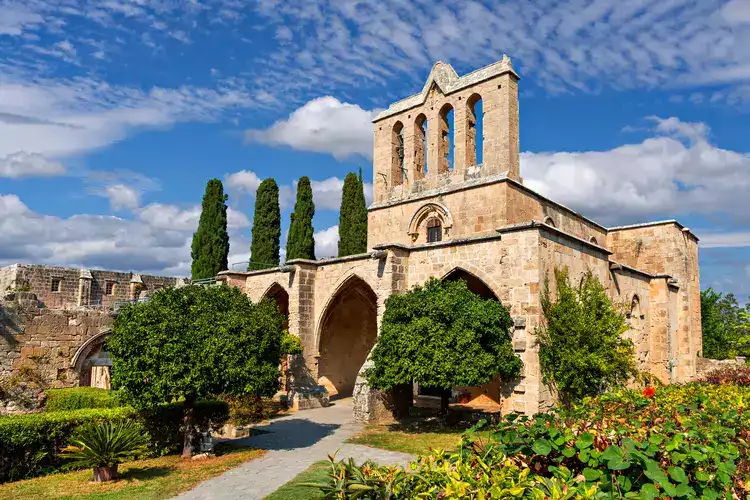
It is commonly visited in conjunction with nearby historical sites, forming a circuit of Frankish and Venetian heritage. This includes the stunning Bellapais Abbey in the hills and the mountaintop ruins of St. Hilarion Castle, another iconic Crusader fortress.
Maintaining a monument of this age and complexity presents constant challenges. Stone erosion from sun, sea salt, and wind requires ongoing attention. The political division of Cyprus since 1974 adds a layer of complexity to large-scale international conservation funding and academic collaboration.
Despite this, dedicated work continues. As noted in Part 1, modern digital techniques like 3D photogrammetry are now standard tools. These non-invasive surveys create a permanent, precise record of the structure, monitor decay, and aid in virtual reconstruction studies for educational purposes.
The castle's partner in harbor defense, the 14th-century Round Tower, continues its own journey. Having served as a dormitory, storage depot, and restaurant, it now operates primarily as a popular souvenir shop and café for tourists.
Its preservation ensures the harbor's historical defensive ensemble remains visually intact. Standing on its mole, the tower offers visitors a perfect photo opportunity with the full sweep of the main castle in the background, physically connecting the present to the medieval harbor chain that once linked them.
Kyrenia Castle stands not merely as a monument of stone but as a profound cultural symbol. Its continuous occupation has created a unique architectural legacy that influenced fortification design across the Eastern Mediterranean. The castle represents a perfect case study in the adaptation of military architecture to changing technologies and political landscapes.
The Venetian modifications, in particular, became a template for defending coastal enclaves against Ottoman naval power. The integration of massive, angled bastions designed to withstand cannon fire was replicated in other Venetian holdings, demonstrating the strategic thinking that emanated from this crucial Cypriot outpost.
Perhaps the castle's greatest legacy is its embodiment of cultural layering. Within its walls, one finds Byzantine religious architecture, Frankish Gothic halls, Renaissance military engineering, and Ottoman utilitarian adaptations. This physical stratification tells the story of Cyprus itself—an island at the crossroads of continents and civilizations.
The preservation of the Church of St. George alongside later structures speaks to a history of cultural coexistence and succession. Each ruling power did not always erase the past but often built directly upon it, creating a palimpsest of history that is rare in its completeness and visibility.
To fully appreciate Kyrenia Castle's significance, it is helpful to compare it with other major Crusader-era fortifications in Cyprus and the broader Levant. While sharing common features, its specific geographical context and evolution give it a distinct character.
Kyrenia Castle was the coastal anchor of a triangular defensive system that included two spectacular mountain castles: St. Hilarion and Buffavento. These three fortresses provided mutual support and defense in depth.
This system allowed the Lusignan kings to control the entire Kyrenia range and coastline, making a coordinated attack from the sea extremely difficult.
When compared to other famous waterfront castles, Kyrenia's design priorities become clear. Whereas a fortress like Bodrum Castle in Turkey was built by the Knights Hospitaller primarily as a land-based stronghold, Kyrenia was fundamentally designed for naval engagement.
Its harbor chain system finds parallels in the chain used to protect the Golden Horn in Constantinople and later in Venetian-controlled ports like Chania, Crete. However, the combination of this system with the castle's immense artillery-focused bastions makes Kyrenia a unique hybrid of medieval and early modern defensive technology.
For those planning a visit, understanding the castle's layout and offerings enhances the experience significantly. As the premier historical attraction in northern Cyprus, it is well-equipped for tourism while retaining its authentic, monumental atmosphere.
With so much to see, visitors should prioritize several key areas to appreciate the full scope of the castle's history. A logical route helps navigate the extensive complex.
The castle is generally open to the public daily, though hours can vary seasonally. Early mornings or late afternoons offer the best light for photography and are often less crowded. Comfortable walking shoes are essential, as the terrain is uneven and involves many stairs.
Combining a visit to the castle with a stroll along the Kyrenia Harbor waterfront and a trip to the nearby Round Tower creates a perfect historical day trip. Many local tour operators offer guided tours that provide deeper historical context not available from placards alone.
The work of preserving and understanding Kyrenia Castle is ongoing. As techniques in archaeology and conservation advance, new discoveries about the site continue to emerge, ensuring its story is never fully complete.
The use of ground-penetrating radar and LiDAR scanning holds potential for revealing buried structures from the earliest Byzantine phases of the castle. These non-invasive methods can map foundations and walls hidden for centuries without the need for disruptive excavation.
Furthermore, ongoing analysis of artifacts from older excavations, coupled with new scientific dating techniques, may provide more precise timelines for the castle's construction phases. Research into the castle's quarry sources could also reveal trade routes and economic networks used by its builders.
The primary challenge remains combating the relentless effects of time and the marine environment. Future preservation efforts will likely focus on:
The goal of modern conservation is not to rebuild the castle but to stabilize it as a ruin, preserving its authenticity and historical integrity for future generations while ensuring visitor safety.
Kyrenia Castle's journey from a 7th-century Byzantine fort to a 21st-century cultural treasure is the story of Cyprus in microcosm. Its walls have witnessed the island's triumphs, defeats, and perpetual role as a strategic Mediterranean crossroads. Each stone carries the imprint of the empires that shaped it: Byzantine, Frankish, Venetian, Ottoman, and British.
The castle's significance is multifaceted. It is an architectural masterpiece showcasing the evolution of military engineering over a millennium. It is an archaeological treasure chest, safeguarding the world-renowned Kyrenia Ship. Most importantly, it is a living monument that continues to educate and inspire all who walk its ramparts.
Standing guard over the azure waters of the harbor, Kyrenia Castle remains an undeniable symbol of resilience and historical continuity. It is not a static relic but a dynamic narrator of history, inviting us to explore the layers of human ambition, conflict, and creativity that have defined this remarkable island for centuries. A visit to Kyrenia Castle is more than a tourist excursion; it is an essential passage through the heart of Cypriot history.
Your personal space to curate, organize, and share knowledge with the world.
Discover and contribute to detailed historical accounts and cultural stories. Share your knowledge and engage with enthusiasts worldwide.
Connect with others who share your interests. Create and participate in themed boards about any topic you have in mind.
Contribute your knowledge and insights. Create engaging content and participate in meaningful discussions across multiple languages.
Already have an account? Sign in here
Discover the enigmatic heritage of Famagusta, a walled medieval port city in Cyprus. Explore its rich history, from anci...
View Board
Discover the historical and cultural marvels of Erbil, the vibrant capital of the Kurdistan Region of Iraq, where ancien...
View Board
Discover Jericho, the world’s oldest city, with 9,000 years of history. Explore its ancient walls, Neolithic tower, and ...
View Board
Discover Persepolis, the ceremonial capital of the Achaemenid Empire. Explore its grandeur, history, and architectural m...
View Board
Discover how 2025's archaeology boom is reshaping history with groundbreaking finds like Karahantepe's amphitheater & Th...
View Board
Explore the captivating blend of ancient history and vibrant modernity in Athens, the cradle of Western civilization and...
View Board
Bagan: A Living Legacy of Myanmar's Past The Enchanting Heritage of Bagan Bagan, also spelled Pagan, is a sprawling ar...
View Board
Discover the complex legacy of Andronikos III Palaiologos, one of the last influential Byzantine Emperors, in this insig...
View Board
"Explore Greece's 18 UNESCO sites & ancient traditions in 2025. Discover cultural heritage, preservation efforts, and ti...
View Board
Sulaymaniyah, a city in northern Iraq, is a cultural and historical gem with a rich heritage, unique blend of Kurdish, A...
View Board
Discover Siem Reap, the captivating gateway to Cambodia's Angkor Archaeological Park, brimming with rich history, vibran...
View Board
>**Meta Description:** Discover Florence, the cradle of the Renaissance, with its iconic art, historic landmarks, and cu...
View Board
**Meta Description:** Discover Benghazi—Libya’s historic second city—from its ancient Greek roots to its modern strugg...
View Board
Discover the lost tomb of Pharaoh Thutmose II, a monumental find in Egypt's Valley of the Kings. Uncover secrets of the ...
View Board
Discover Caracalla, Rome's ruthless emperor who reshaped history with brutal purges and groundbreaking reforms like the ...
View Board
Explore the lost biographies of Marius Maximus, uncovering vivid imperial lives from Nerva to Severus Alexander. Discove...
View Board
Explore the legendary Kadmos & Cadmeia citadel of Thebes—mythic founder, heroic deeds, and ancient ruins. Discover how m...
View Board
Discover the ancient wonders of Sidon, a coastal gem on the Mediterranean Sea known for its rich tapestry of history and...
View Board:focal(1134x648:1135x649)/https://tf-cmsv2-smithsonianmag-media.s3.amazonaws.com/filer_public/49/26/4926c5f7-b1c9-4b5c-842c-cfe6cdb13a1d/panoramica_1.jpg)
Explore the intriguing and controversial reign of Nero, one of Rome's most infamous emperors, in our comprehensive artic...
View Board
Discover the rich history of Nazareth, the ancient city in Galilee, renowned as Jesus Christ's childhood home. Explore N...
View Board
Comments