Explore Any Narratives
Discover and contribute to detailed historical accounts and cultural stories. Share your knowledge and engage with enthusiasts worldwide.
The phrase Stoixeia-Istorias-toy-Sebero-Oxaoy represents a complex transliterated term from Ancient Greek, sparking curiosity about its origins and meaning. While no direct historical matches exist for this exact phrase, its components reveal profound connections to classical linguistics, philosophy, and cosmology. This article unpacks the term’s roots, exploring how stoicheia—meaning “elements” or “principles”—intersects with history and scholarly discourse.
The term divides into three key segments: stoixeia, istorias, and Sebero-Oxaoy. In Ancient Greek, stoixeia refers to fundamental components, such as letters, philosophical principles, or material causes. Istorias translates to “of history,” positioning the phrase within historical or narrative contexts. The final segment, Sebero-Oxaoy, lacks clear historical references but may allude to distortions of names like Severus or linguistic misinterpretations.
Scholars note that Severo-Oxaoy could stem from transcription errors, potentially linking to Roman Emperor Septimius Severus (r. 193–211 CE) but without concrete evidence. The term remains a puzzle, inviting analysis through its classical roots rather than specific events.
Derived from stoichos (“row” or “line”), stoicheia entered Attic Greek around the 5th–4th centuries BCE. Plato and Aristotle used it to describe language basics (sounds versus letters) and cosmological elements (earth, water, air, fire). Aristotle’s Metaphysics contrasts stoicheia with formal causes, emphasizing material fundamentals.
Contemporary academia revives stoicheia through interdisciplinary studies. Linguistics examines it as phonemes, while cosmology ties it to Aristotelian elements. Mathematics interprets it as axioms, echoing Euclid’s Elements. The term’s flexibility fosters ongoing debate across disciplines.
“Stoicheia remains a bridge between ancient thought and modern analysis.”
Aristotle references stoicheia approximately 10 times in Metaphysics, framing it as material causes. His works contrast stoicheia with formal and final causes, shaping Western philosophical discourse. These uses underscore its role in defining foundational principles.
The pronunciation of stoicheia shifted dramatically over centuries. In 5th BCE Attic Greek, it sounded /stoi̯.kʰêː.on/, evolving to /styˈçi.on/ in 4th CE Koine. This shift reflects broader phonetic changes in ancient dialects and regional speech patterns.
The term stoicheia appears frequently in works by Plato, Aristotle, and later classical thinkers. Plato uses it in Theaetetus and Statesman, while Aristotle references it across five-plus texts, including Metaphysics and On the Heavens. Diogenes Laertius mentions it once in the 3rd century CE, highlighting its enduring philosophical relevance.
Ancient Greek scholars often paired stoicheia with other pivotal phrases. One notable example is ὅπερ ἔδει δεῖξαι (ΟΕΔ), abbreviated OED and later adopted as QED (“quod erat demonstrandum”) in Euclidean proofs. This phrase appeared in Aristotle’s logical structures and Euclid’s geometric arguments, reinforcing the rigor of classical reasoning.
“The interplay between stoicheia and OED shaped foundational principles in both philosophy and mathematics.”
Contemporary scholarship treats stoicheia as a cross-disciplinary concept. Linguists analyze it as phonetic elements, cosmologists link it to Aristotelian four elements, and mathematicians view it as axiomatic foundations. A 2022 Scribd document titled The Idea of Stoicheion in Grammar and Cosmology explores these intersections, emphasizing its role in ancient grammar.
In modern Greek, στοιχεία retains its classical meaning of “elements” or “basic facts.” It appears in scientific contexts (e.g., chemical elements) and general discourse. Directory listings, such as those on ellatha.com, categorize it generically under educational resources, reflecting its broad applicability.
Aristotle’s Metaphysics contains approximately 10 uses of stoicheia, primarily in discussions of material causes. These references underscore his emphasis on physical constituents versus formal or final causes. The term’s frequency in his works highlights its philosophical weight.
The pronunciation of stoicheia evolved significantly over millennia. In 5th BCE Attic Greek, it pronounced as /stoi̯.kʰêː.on/, shifting to /styˈçi.on/ in 4th CE Koine. This change mirrors broader phonetic shifts in ancient dialects and regional speech patterns.
The following table summarizes key data points on stoicheia usage:
These statistics illustrate the term’s enduring presence in classical literature and its adaptation across linguistic eras.
The phrase Stoixeia-Istorias-toy-Sebero-Oxaoy serves as a gateway to understanding Ancient Greek linguistics, philosophy, and cosmology. While the term itself lacks direct historical references, its components—stoicheia, istorias, and the ambiguous Sebero-Oxaoy—reveal profound connections to classical thought. This analysis underscores the enduring influence of Aristotelian principles and Platonic dialogues on modern scholarship.
Contemporary academia treats stoicheia as a multidisciplinary concept. Linguists examine its role in phonetics, cosmologists tie it to Aristotelian elements, and mathematicians view it as axiomatic foundations. A 2022 Scribd analysis emphasizes its grammatical significance, while philosophical circles debate its material versus formal cause distinctions.
In modern Greek, στοιχεία retains its classical meaning of “elements” or “basic facts.” It appears in scientific terminology (e.g., chemical elements) and everyday discourse. Directory listings, such as those on ellatha.com, categorize it broadly under educational resources, reflecting its pervasive utility.
The exploration of Stoixeia-Istorias-toy-Sebero-Oxaoy illuminates the resilience of Ancient Greek thought in shaping modern intellect. From Aristotle’s material causes to Euclid’s geometric proofs, the term’s components anchor interdisciplinary dialogues. As scholarship evolves, stoicheia will likely remain a cornerstone for analyzing language, philosophy, and cosmology.
“The principles of stoicheia continue to unlock timeless insights across academic boundaries.”
This phrase, though enigmatic, invites ongoing investigation—bridging past wisdom with future discovery.
Your personal space to curate, organize, and share knowledge with the world.
Discover and contribute to detailed historical accounts and cultural stories. Share your knowledge and engage with enthusiasts worldwide.
Connect with others who share your interests. Create and participate in themed boards about any topic you have in mind.
Contribute your knowledge and insights. Create engaging content and participate in meaningful discussions across multiple languages.
Already have an account? Sign in here

Discover the enduring legacy of Philolaus, a visionary Pre-Socratic philosopher who transformed ancient Greek philosophy...
View Board
"Discover the meaning of 'Alfrento-Nompel-O-An8rwpos-Pisw-apo-ta-Brabeia-kai-th-Dynamith'—its Greek roots, philosophy, a...
View Board
Unravel the mystery of Tyxo-Mprax-O-Prwtoporos-Astronomos-ths-Anagennhshs. Explore its origins, interpretations, and why...
View Board
Uncover the mystery of O-Aghs-IV-O-Epanastaths-Basilias-ths-Sparths, a Scythian-Spartan enigma. Explore its origins, lin...
View Board
"Uncover Phgh-Istorias-Myrwn: Ancient Greek bee symbolism, myrrh's history & cultural legacy. Explore its rich etymology...
View Board
Explore Sophocles' timeless tragedies, *Antigone* and *Oedipus Rex*, uncovering themes of fate, morality, and resilience...
View Board
Discover Prodikos of Keos, the ancient Greek philosopher who shaped ethics and language. Explore his groundbreaking theo...
View Board
Explore the remarkable legacy of Sallust, Rome's pioneering historian, in our in-depth article. Discover how his works, ...
View Board
Discover the enigmatic life of Aspasia of Phocis, an influential yet overlooked figure in ancient history. Unveil her su...
View Board
Delve into the enigmatic legacy of Macrobius in late antiquity, a scholar whose works bridged the wisdom of classical an...
View Board
Ka8hkon-Sta-By8a-h-Maria-Koyri: Decoding the Term Understanding the Ka8hkon-Sta-By8a-h-Maria-Koyri Term The term Ka8hko...
View Board
Discover Callimachus, the revolutionary poet-scholar of ancient Alexandria. Explore his 800 works, the first scientific ...
View Board
Uncover the timeless allure of Homer, the legendary bard whose epic narratives "The Iliad" and "The Odyssey" have profou...
View Board
Discover the enigmatic quest of Enrike Moreno Espejo, the Seeker of Scientific Truth. Explore ancient Greek philosophy, ...
View Board
Explore the impactful life of Auguste Comte, the father of sociology and pioneer of positivism, whose visionary ideas la...
View Board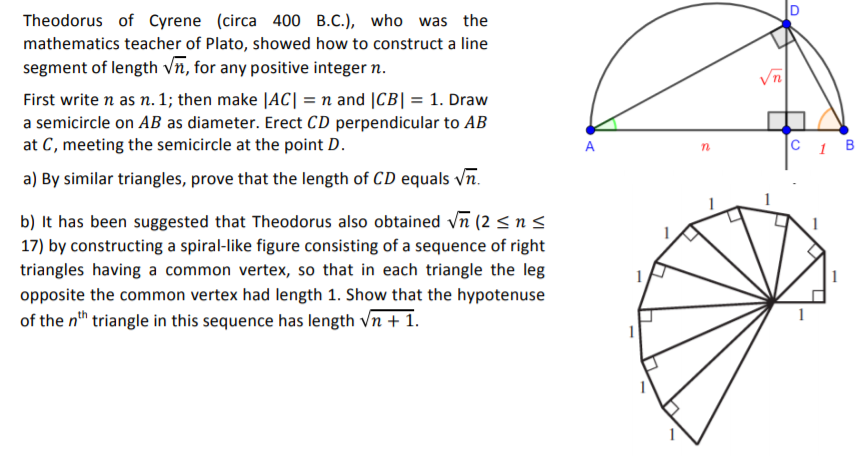
Theodorus of Cyrene, the ancient Greek mathematician and Plato's teacher, revolutionized geometry with his work on irrat...
View Board
Explore the intellectual legacy of Prodicus of Ceos, the Sophist philosopher known for linguistic precision, ethical all...
View Board
Mithridates VI Eupator, the Poison King, was a formidable ruler of Pontus who expanded his kingdom and fought against Ro...
View Board
Explore the profound impact of Samuel Johnson, an 18th-century literary giant known for his groundbreaking work, "A Dict...
View Board
Explore the profound legacy of Scott Buchanan, a pioneering thinker in philosophy and liberal arts education. Discover h...
View Board
Comments