Exploring the Legacy of Sallust: Rome's Pioneering Historian
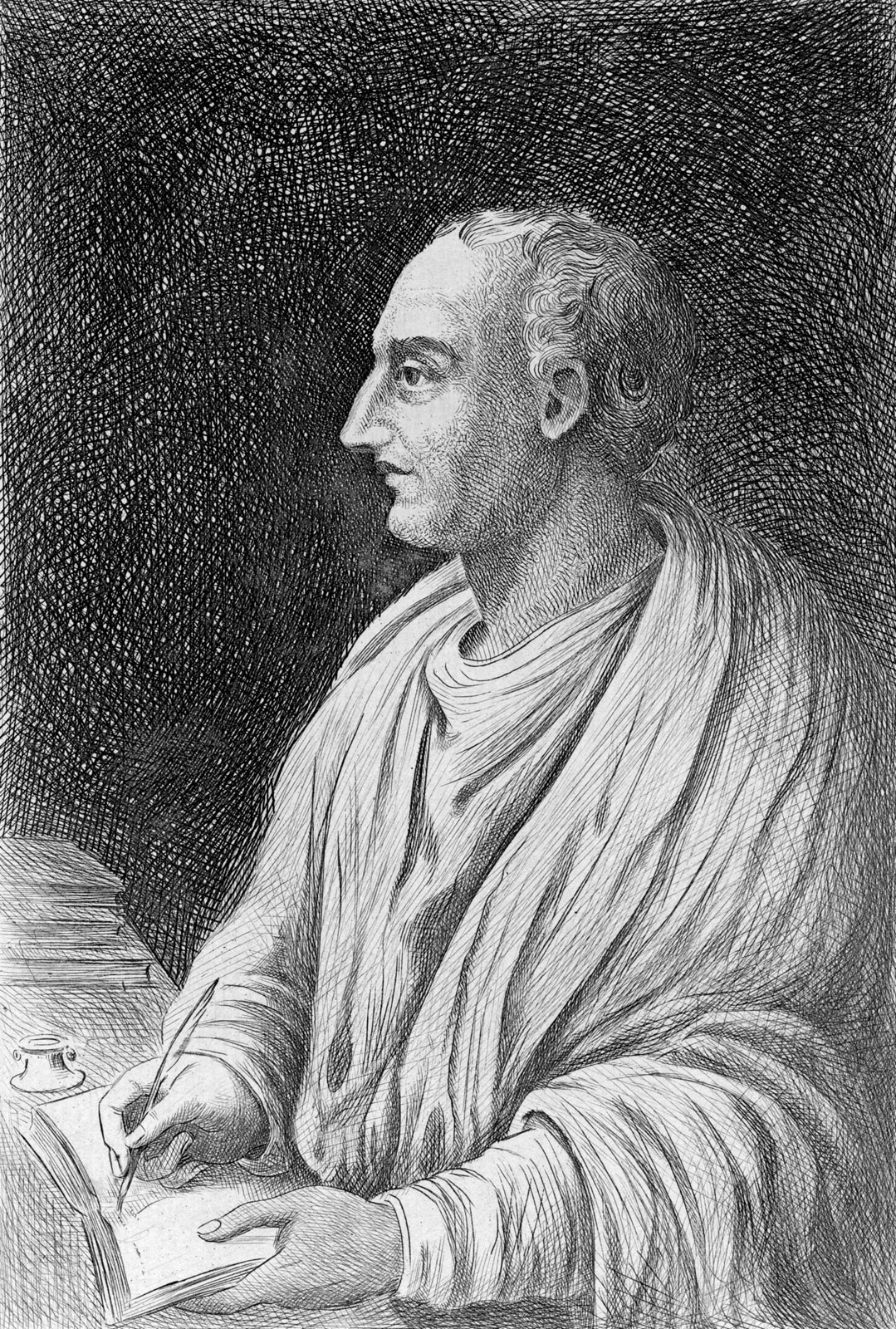
The history of Rome is a tapestry woven with grand narratives of conquest, leadership, and intrigue. Among the many figures who have contributed to the understanding of this ancient civilization, Gaius Sallustius Crispus, commonly known as Sallust, stands out as a unique and insightful chronicler. Born in 86 BCE, in the Sabine town of Amiternum, Sallust rose from humble beginnings to leave an indelible mark on the world of Roman historiography. This article delves into the life and works of Sallust, exploring his background, his contributions to historical writing, and the impact he left on subsequent generations.
Early Life and Political Ambition
Sallust emerged at a tumultuous period in Roman history, marked by social upheaval and civil wars. Coming from a plebeian family, Sallust was not of noble birth, which, in a society fixated on status, was both a limitation and a unique perspective. This background played a significant role in molding his views and the tone of his writings, often characterized by a critical stance towards the aristocracy. From a young age, Sallust demonstrated a keen interest in politics and the societal dynamics of Rome. He entered the political arena by taking the traditional route of cursus honorum, a sequential order of public offices held by aspiring politicians during the Roman Republic.
Despite his ambitions, Sallust's political career was fraught with challenges. His personal life was marred by scandal, including accusations of corruption and alleged involvement in debauchery, which eventually led to his expulsion from the Senate in 50 BCE. However, Sallust's career took a turn during the power struggles of the Roman Republic, aligning himself with Julius Caesar. With Caesar's support, Sallust was reinstated and appointed as governor of the newly formed province of Africa Nova in 46 BCE, after participating in Caesar's campaigns against the supporters of Pompey.
The Craft of Historiography
Forced into early retirement from politics due to the fluctuating fortunes of the Roman Republic, Sallust turned his focus to literature and the documentation of history. His transition from a career marred by controversy to one of scholarly pursuit allowed him to reflect on the socio-political fabric of Rome with a critical and often skeptical lens. Sallust's approach to historical writing was innovative at the time, emphasizing moral lessons and the underlying motivations of individuals rather than merely recounting events.
He is celebrated for his two major works, "The Conspiracy of Catiline" and "The Jugurthine War." These historical monographs are notable for their brevity and incisive analysis of character, deviating from the traditional annalistic style that predominated Roman historiography. Instead of chronologically recording events, Sallust sought to explore the themes of ambition, corruption, and moral decline in Roman society. His narratives were rich with philosophical musings, often pondering the inherent flaws in human nature and the cyclical patterns of history.
"The Conspiracy of Catiline"
In "The Conspiracy of Catiline," Sallust chronicles the attempted coup led by the senator Lucius Sergius Catilina in 63 BCE. Through this narrative, Sallust exposes the moral decay and political chaos within the Republic, highlighting the dangers posed by unchecked ambition and the breakdown of virtue. His portrayal of Catiline as a charismatic yet malevolent figure intent on overthrowing the government serves as a cautionary tale of the vulnerabilities within the Roman political system.
Moreover, Sallust used this work as a platform to critique the Roman nobility, depicting them as corrupt and self-serving. His own experiences and disillusionment with the political class likely informed his perspective, lending a personal touch to his analysis. By delving into the motives and actions of key figures, such as Cicero, who played a pivotal role in thwarting the conspiracy, Sallust offered a multifaceted view of the events.
"The Jugurthine War"
"The Jugurthine War" focuses on Rome's protracted conflict with Jugurtha, the King of Numidia, during the late 2nd century BCE. Sallust used this historical episode to showcase the corrosive influence of greed and ambition on Rome's once virtuous character. Jugurtha's ability to manipulate Roman officials through bribery and deceit is presented as symptomatic of a larger moral decline within the Republic.
Sallust emphasized the theme of political corruption and the erosion of traditional Roman values. His work served as a critique not only of contemporary affairs but also as a reflection on Rome's historical trajectory. The narrative underscored the tension between personal ambition and the common good, a topic that remains relevant in historical discourse to this day.
As a historian, Sallust's emphasis on the causes and consequences of political actions, rather than merely their chronological occurrence, set a new standard for historical writing. His works provide more than a retelling of events; they offer insights into the human condition and the perpetual struggle between virtue and vice. As we continue our exploration of Sallust's legacy, we will delve into the broader impact of his works and the influence they wielded over future historians.
The Intellectual Legacy of Sallust
Sallust's approach to historiography diverged significantly from his predecessors and contemporaries, favoring analysis and interpretation over exhaustive detail. His narratives, punctuated by moral and philosophical reflections, offered a novel lens through which to view historical events. Unlike the historian Livy, who presented a more traditional, year-by-year account of Roman history, Sallust's concentrated monographs were designed to illuminate underlying truths about human nature and governance.
Sallust's stylistic choices played a crucial role in setting the tone for his historical narratives. His Latin prose was characterized by its conciseness, the use of archaic expressions, and a degree of rhetorical flourish that lent urgency and gravity to his accounts. This style was not without critics in his own time, some of whom considered it overly complex. However, his distinct voice ensured that his works resonated with readers who sought more than mere entertainment from historical texts.
His emphasis on the moral and psychological aspects of his characters offered a different sort of historical narrative, one that strived to delve into the minds and motivations of the figures involved. Sallust painted characters like Catiline and Jugurtha in shades of moral ambiguity, inviting readers to grapple with the complexities of their personalities and the political contexts they navigated. Through these portraits, readers are led to question the very nature of power, ambition, and human failings.
Sallust’s Influence on Later Historiography
Sallust’s innovative style and thematic focus had a profound impact on the development of Roman historiography. His exploration of character and morally charged narratives paved the way for later historians such as Tacitus, who adopted and expanded upon his analytical approach. Tacitus, known for his incisive insights into the character and motives of individuals, built upon Sallust’s legacy, weaving moral philosophy into his historical accounts of the Roman Empire.
Sallust’s works were also revered during the Renaissance, a period when classical texts were rediscovered, translated, and studied with fervor. Humanist scholars, captivated by Sallust’s exploration of political morality, incorporated his perspectives into their understanding of history and governance. The themes of virtue, corruption, and the cyclical nature of history resonated with thinkers grappling with their own societies’ challenges, making Sallust's writing particularly relevant amid the political and social changes of the time.
His influence extended even into the realm of political thought, where his narratives of moral decline and societal decay provided cautionary tales for statesmen and philosophers alike. Figures like Machiavelli found inspiration in Sallust’s works as they pondered the dynamics of power and the complexities of statecraft. The intertwined destinies of ambition and ethical governance, as portrayed by Sallust, offered timeless lessons that transcended the bounds of Roman history.
A Complex View of Morality
Sallust’s writings captured the duality of virtue and vice inherent in human nature, reflecting both on the personal and collective scale. He held an astute mirror to Roman society, unapologetically highlighting its susceptibility to moral erosion. His works seem to suggest that the Republic’s struggles stemmed not only from external threats but from internal moral failings as well—greed, ambition, and the erosion of civic duty.
His narratives are infused with a profound sense of nostalgia for the lost virtue of Rome's earlier days, a recurring motif that echoes through his works. Sallust lamented the moral decay of his times, attributing the Republic's decline to the abandonment of ancestral values that had once united and invigorated Roman society. Through characters like Catiline and Jugurtha, Sallust exemplified the dangers inherent in prioritizing personal ambition over the common good.
Although Sallust’s depictions could be viewed as overly pessimistic, they also acknowledge the complexity of human motivation and the multifaceted nature of virtue. Rather than portraying his subjects as unequivocally evil, he depicted them as products of an environment conducive to moral compromise. By doing so, Sallust encouraged readers to reflect on their societal values and consider the potential for reform and renewal, even in the midst of decline.
The Enduring Relevance of Sallust
As historians and scholars continue to navigate the complexities of ancient Rome, Sallust's works remain a cornerstone for those seeking to understand the philosophical underpinnings of historical events. His insights into the interplay between personal ambition and societal collapse echo beyond the context of his own time, offering lessons that resonate with the dilemmas of contemporary societies.
Sallust's legacy extends beyond his detailed and compelling narratives; it lies in his ability to provoke thought and reflection on the enduring themes of human nature. His exploration of the moral dimensions of power, corruption, and governance remains pertinent to any era grappling with similar issues. Sallust demonstrates that the past is not merely a collection of events but a realm for contemplation and understanding, where lessons learned can guide the present and shape the future.
In continuing our exploration of Sallust's impact on the study of history, we delve into how his groundbreaking approaches and narratives continue to inspire historians and thinkers, perpetuating a dialogue across generations on the moral structures underpinning human civilization.
Sallust’s Philosophical Underpinnings
Central to Sallust's work is a deep philosophical inquiry into the nature of power and its corrupting potential. His writings reveal a profound concern with the notion of moral decay and the consequences of abandoning traditional virtues. Sallust, like many Roman intellectuals of his time, was heavily influenced by Stoicism and its emphasis on virtue, reason, and the common good. This philosophical backdrop is evident in his critiques of political ambition and the moral lapses of Rome's ruling class.
His narratives often suggest that the prosperity and stability of the Republic were closely tied to the integrity and virtue of its leaders. By illustrating the exploits and eventual downfalls of characters like Catiline and Jugurtha, Sallust prompts readers to consider the ethical dimensions of leadership and the societal contract between rulers and the ruled. His works thus serve as both historical accounts and moral treatises, offering reflections on the balance between personal ambition and public responsibility.
Through his philosophically laden narratives, Sallust warns of the cyclical nature of history, where periods of moral high ground inevitably succumb to periods of decline. This cyclical view served as a reminder of the fragility of societal structures and the perpetual need for vigilance and ethical governance—a message that continues to resonate and inspire dialogue in political and philosophical circles.
Modern Interpretations and Critiques
In contemporary academia, Sallust's works are subject to diverse interpretations and critiques that explore both their historical context and philosophical depth. Scholars often debate the accuracy of his accounts, considering his political biases and personal grievances. Sallust's alignment with Julius Caesar, for instance, has led some to view his writings as partly propagandistic, designed to justify Caesar's ascent and critique his adversaries.
Yet, despite these debates surrounding his objectivity, Sallust’s works are valued for their rich narrative tapestry and insightful commentary. They serve as both documentation of historical events and windows into the socio-political landscape of a struggling Republic. Modern historians appreciate his critical examination of the motivations behind political maneuvering and societal change, finding in his works a precursor to modern political analysis.
Sallust's ability to weave together factual recounting with moral introspection invites readers to question the nature of politics and ethics, encouraging a holistic understanding of historical processes. As a result, his writings remain relevant today, offering not only a historical understanding of Rome but also a broader philosophical inquiry into human behavior and governance.
Sallust’s Enduring Cultural Significance
Sallust's cultural significance extends beyond his contributions to historiography and political thought; his works have permeated various cultural and artistic expressions through the ages. His vivid portrayals of historical figures and events have inspired literature, theater, and even modern media. Artists and authors have drawn upon Sallust’s narratives, attracted by the timeless themes of ambition, morality, and the rise and fall of power.
In the literary world, Sallust’s tales of political intrigue and ambition have echoed in works that explore similar themes. The moral dilemmas faced by characters in novels, plays, and films often parallel those he described, reaffirming the universal nature of human struggles. His stories are reminders that despite the passage of centuries, the core challenges of political life, ethics, and the quest for power remain largely unchanged.
Moreover, Sallust's insights into the complexity of human nature and governance have made their way into educational curricula, where students are encouraged to unpack the ethical and historical layers of his writing. In academic settings, his works serve as a basis for interdisciplinary exploration, bridging classical studies, history, philosophy, and political science.
Concluding Reflections on Sallust’s Impact
Sallust's extraordinary contribution to the tapestry of history and philosophy is undeniable. His daring exploration of the moral dimensions of power and decay offers a dual narrative—one of historical events and the other an exploration of ethical contemplation. Through his works, Sallust has presented legacies of individual ambition and societal collapse, urging readers across millennia to engage in a dialogue on virtue, leadership, and the timeless dance of politics.
For historians, Sallust provides an essential lens through which to view the waning years of the Roman Republic, capturing the complexities and contradictions of an era marked by transformation and turmoil. His narratives, rich in both factual detail and philosophical reflection, continue to illuminate the path for historians and lay readers alike, offering timeless wisdom on the enduring challenges faced by humanity.
Today, Sallust’s legacy thrives not only in the realm of classical studies but in the ongoing conversations about governance, ethics, and the responsibilities of leadership. His incisive observations encourage a reevaluation of historical narratives, prompting us to reflect on the lessons of the past and their relevance to modern societal dilemmas. As such, Sallust remains a pivotal figure, whose works transcend the confines of his era, offering a profound inquiry into the core of human nature and the art of historical understanding.
Haporium is a revolutionary platform that lets you organize your web browsing experience with customizable dashboards and boards. Create, manage, and share your favorite content collections.








:focal(1134x648:1135x649)/https://tf-cmsv2-smithsonianmag-media.s3.amazonaws.com/filer_public/49/26/4926c5f7-b1c9-4b5c-842c-cfe6cdb13a1d/panoramica_1.jpg)






Comments