
Explore Any Narratives
Discover and contribute to detailed historical accounts and cultural stories. Share your knowledge and engage with enthusiasts worldwide.
John Logie Baird stands as a monumental figure in technological history. He is widely hailed as the Father of Television. The Scottish engineer demonstrated the world's first working television system. His pioneering work laid the foundation for the global media landscape we know today.
The journey of John Logie Baird began with a mechanical scanning system. This invention proved that transmitting live, moving images was possible. His story is one of relentless innovation, commercial struggle, and visionary foresight. It encompasses far more than just the birth of television.
Baird's first public demonstration of televised moving objects occurred on January 26, 1926. This landmark event for mechanical television took place in London.
John Logie Baird was born on August 13, 1888, in Helensburgh, Scotland. His early education took place at the Royal Technical College in Glasgow. He began studying electrical engineering there in 1906. This formal training provided a crucial technical foundation for his future inventions.
Baird's career path before television was notably unconventional. He did not follow a traditional engineering route after graduation. Instead, he worked in diverse industries to gain practical experience. These roles included a truck factory, engine design, and electrical switchboard manufacturing.
John Logie Baird possessed an innate entrepreneurial spirit from a young age. His health was often fragile, which directly inspired one of his first business ideas. In 1917, he founded a company to sell "Baird's Undersocks."
This product was designed to help with his own chronically cold feet. The venture achieved only limited commercial success. However, it demonstrated his willingness to create solutions and bring them to market. This mindset would define his approach to television development.
John Logie Baird's work on television was systematic and groundbreaking. He conducted most of his early experiments in a makeshift laboratory. His initial goal was to prove the concept of transmitting images via a mechanical scanning method.
The core of his system was the Nipkow disk. This spinning, perforated disk scanned scenes and converted light into electrical signals. A similar disk at the receiving end would reconstruct the image. This mechanical process formed the basis of all his early breakthroughs.
Baird's progress throughout the mid-1920s was rapid and well-documented. Each experiment built upon the last, increasing complexity and fidelity.
By 1927, Baird transmitted moving images over 438 miles of telephone wire. This connected London and Glasgow, proving television's potential for long-distance communication.
Following his private success, John Logie Baird moved to publicize his invention. He founded the Baird Television Development Company in 1927. This company was crucial for funding and promoting his technology. It marked the start of television as a commercial prospect.
Public demonstrations generated immense excitement and media attention. People were astounded by the ability to see live, moving images transmitted from another room. These events were pivotal in convincing investors and the public of television's viability. They transformed the invention from a laboratory curiosity into a world-changing technology.
John Logie Baird was not content with basic monochrome transmissions. His ambition drove him to achieve several world-first milestones in rapid succession.
In 1928, he accomplished the first transatlantic television transmission. Signals were sent from London to a receiving station in Hartsdale, New York. This spectacular feat captured global headlines. It proved that television could become an international medium.
That same year, Baird gave the world's first public demonstration of color television. His mechanical system used rotating color filters in front of the scanning disk. While primitive, it established the foundational principle for all future color TV technology. His work on color continued to evolve for nearly two decades.
Baird's inventive genius extended far beyond the television broadcast system itself. He understood that a complete ecosystem was needed for the medium to thrive. His research and development efforts were remarkably broad in scope.
One of his most significant ancillary inventions was video recording. Beginning in 1928, he developed a system to record television signals onto phonograph discs. This early device, called "Phonovision," was the precursor to modern video tape and digital recording. It addressed the critical need for pre-recorded content and time-shifting.
Baird also experimented with transmitting images in complete darkness. In 1926, he invented the "noctovisor," an early form of infrared night vision. This system used infrared light, invisible to the human eye, to illuminate a scene. A television camera sensitive to these wavelengths would then transmit the image.
His work also involved early fiber optics. He used bundles of glass rods to transmit images for close-up television scanning. This approach avoided the limitations of camera lenses in tight spaces. It showcased his holistic approach to solving the practical problems of imaging.
John Logie Baird's legacy from this early period is profound. He moved television from theoretical concept to practical reality. His mechanical system, though ultimately superseded, proved the fundamental concept of television. This paved the way for the electronic systems that followed.
The partnership between John Logie Baird and the British Broadcasting Corporation marked a pivotal chapter. The BBC began experimental broadcasts using Baird's 30-line mechanical television system on September 30, 1929. These initial transmissions were a landmark, creating the world's first regular television service. They featured simple programming like interviews and variety acts.
To receive these broadcasts, the public needed a Baird "Televisor." This combined a radio receiver for sound with the mechanical Nipkow disk apparatus for pictures. The images were small, flickering, and required viewers to look through a lens. Despite these limitations, it was a revolutionary home entertainment device. It made television a tangible reality for early adopters.
The BBC's experimental television service broadcast for approximately 30 minutes each morning. Programming resumed in the late afternoon, creating the first broadcast schedule.
John Logie Baird knew the low-line definition of his system was a major limitation. He worked relentlessly to increase the scan lines and improve picture quality. By the early 1930s, he was demonstrating 120-line television. This was a significant improvement over the original 30-line standard.
His ultimate goal was a high-definition system that could compete with emerging electronic methods. Baird Television Ltd developed a 240-line mechanical system for this purpose. In 1936, this system went head-to-head with the Marconi EMI electronic system. The BBC conducted a historic side-by-side trial from Alexandra Palace in London.
The competition, known as the "London Television War," lasted several months. Each system was used on alternate weeks for the BBC's new high-definition service. While Baird's mechanical pictures were an engineering marvel, the electronic system was more reliable. It offered a superior, flicker-free picture and did not have moving mechanical parts.
The fundamental limitations of mechanical scanning became increasingly apparent. The spinning disks required precise engineering and were prone to wear and synchronization issues. There was also a physical limit to how many lines could be resolved mechanically. This ceiling on picture quality posed an existential threat to Baird's approach.
In contrast, all-electronic television systems used cathode ray tubes. These systems, pioneered by companies like Marconi EMI and inventors like Vladimir Zworykin, had no moving parts. They were capable of scanning many more lines, promising far greater picture clarity and stability. The future of television was clearly electronic.
In February 1937, the BBC made a decisive announcement. It would adopt the Marconi EMI 405-line electronic system exclusively. This decision effectively ended the era of mechanical television for public broadcasting. It was a major professional setback for John Logie Baird and his company.
Baird Television Ltd continued its operations, focusing on alternative applications and niche markets. The company explored uses for television in theaters and for specialized purposes. However, the loss of the BBC contract was a severe financial blow. The outbreak of World War II and the subsequent shutdown of the BBC television service in 1939 led to the company entering receivership.
Despite commercial challenges, Baird's inventive output never ceased. The 1930s and 1940s saw him file numerous patents and explore dazzling new concepts. His work during this period proved he was far more than the inventor of a single, obsolete system. He was a visionary persistently ahead of his time.
One of his most remarkable later achievements was in three-dimensional television. Baird patented and first demonstrated a 3D TV system in 1941. He used a spinning disk with alternate lenses to present different images to each eye. This early stereoscopic system achieved an impressive 500-line definition.
In 1942, Baird gave a demonstration of his 3D television to the press. Reporters watched a programme featuring a BBC pianist, experiencing a convincing illusion of depth.
John Logie Baird made his final and perhaps most technologically significant breakthrough during World War II. On August 16, 1944, he demonstrated the world's first practical fully electronic color television display. This system represented a complete departure from his earlier mechanical methods.
The 1944 system was a marvel of engineering for its time. It used a cathode ray tube with a 600-line sequential color system. This involved triple-interlacing of red, green, and blue images at a high scanning rate. The demonstration proved that high-definition electronic color TV was technically feasible. It laid the groundwork for all modern color television technology.
His wartime research also extended into radar and communications technology. Baird held several patents related to radio location and signaling. His deep understanding of signal transmission made his insights valuable. While much of this work remains less documented, it highlights the breadth of his expertise.
The sheer volume of John Logie Baird's intellectual property is staggering. Throughout his career, he was granted a total of 178 patents. These patents covered an astonishing range of technologies far beyond basic television transmission. They are a testament to his prolific and fertile inventive mind.
By 1930 alone, Baird had already secured 88 patents. This early burst of innovation protected his core television systems and related ideas. His later patents delved into color systems, 3D imaging, fiber optics, and electronic display methods. Each patent represents a solved problem or a novel concept.
Baird's technical contributions often occurred at the component level, driving entire systems forward. One critical area was his pioneering use of specific materials in photoelectric cells. He extensively experimented with thallium sulfide as a photosensitive material.
This substance was far more sensitive to light than earlier materials like selenium. It allowed his television cameras to function in much lower light conditions. This improvement was crucial for capturing usable images outside of intensely lit studios. His work advanced the entire field of electronic imaging sensors.
Furthermore, Baird designed and built his own custom wide-band video amplifiers. These amplifiers were essential for boosting the weak video signals without distorting them. The technology for such wide bandwidth amplification was in its infancy. His solutions in this area were innovative and directly enabled the practical transmission of television pictures.
John Logie Baird continued to work and invent until the very end of his life. Even after his company's collapse, he maintained a private laboratory. He remained passionately engaged with the future of television and electronic communication. His health, however, had always been fragile, and it began to decline significantly in 1946.
Baird suffered a stroke in February 1946 and passed away a few months later on June 14, 1946, in Bexhill-on-Sea, England. He was 57 years old. His death came just as television was poised to re-emerge from its wartime hiatus. The post-war boom would be led by the very electronic technologies he had helped pioneer in his final projects.
The legacy of John Logie Baird is complex and multifaceted. He is rightly celebrated as the tenacious pioneer who gave the world its first practical television system. His mechanical television was the proof of concept that ignited a global industry. Without his public demonstrations and relentless advocacy, the development of television may have been delayed for years.
Following his death, John Logie Baird's contributions were gradually reassessed within the broader narrative of technological history. Early accounts often framed his mechanical system as a historical dead-end. Modern scholarship recognizes his role as the crucial pioneer who proved television's practical feasibility.
Numerous honors and memorials have been established in his name. Streets, schools, and university buildings across Scotland and the UK bear his name. Perhaps the most fitting tribute is the John Logie Baird Award presented by the Royal Television Society. It honors outstanding innovation in the television industry, keeping his inventive spirit alive.
Baird's original workshop in Hastings, where he created his first television, is now a visitor attraction. It preserves the humble beginnings of a technology that reshaped global culture.
The story of television's invention is often one of parallel development. While John Logie Baird was perfecting mechanical scanning in the UK, other inventors were working on electronic systems. Key figures include Philo Farnsworth in the United States and Vladimir Zworykin working for RCA.
Baird's unique contribution was his ability to demonstrate and popularize the concept first. He brought television out of theoretical papers and into the public eye. His relentless publicity efforts created the demand and excitement that fueled further investment and research. In this way, he accelerated the entire field's development, even for his competitors.
Historians now view these efforts not as competing narratives but as interconnected threads. Baird's mechanical system provided the immediate, tangible proof. The electronic systems, influenced by his work, provided the scalable, long-term solution. His early adoption of electronics for color TV further blurs the line between these two technological paths.
The influence of John Logie Baird's work extends far beyond the specific apparatus of the mechanical televisor. His problem-solving approach led to foundational advancements in several key areas of modern technology. These contributions are embedded in devices we use every day.
His pioneering work with infrared imaging for the "noctovisor" directly contributed to night-vision technology. Modern military, security, and scientific applications all stem from this early research into non-visible light imaging. He demonstrated that images could be constructed from signals beyond human sight.
Similarly, his experiments with fiber optic bundles for image transmission were decades ahead of their time. While not developed into a commercial product by Baird, the principle of guiding light through glass rods is core to today's fiber optic communications. He envisioned using light to carry complex image data.
John Logie Baird's invention of video recording, or "Phonovision," is perhaps his most underrated legacy. The concept of storing television signals on a physical medium was revolutionary. It addressed the fundamental need for time-shifting and content preservation.
His relentless pursuit of color and 3D television also established the research trajectories for future generations. Every advancement in high-definition, color-accurate, and immersive display technology stands on the foundation he helped build. He proved these experiences were not just fantasies but achievable engineering goals.
The story of John Logie Baird serves as a powerful case study in perseverance and applied innovation. He is frequently cited in educational contexts as an example of the tinkerer-inventor model. His journey from a makeshift lab to global recognition inspires students in science, technology, engineering, and mathematics (STEM) fields.
His approach combined theoretical knowledge with hands-on experimentation. Baird was not a solitary genius in an ivory tower. He was a practical engineer who built, tested, failed, and iterated. This "maker" mentality is highly encouraged in modern engineering pedagogy.
Furthermore, his experience highlights the complex relationship between invention and commerce. He successfully proved a technology but faced challenges in its commercialization and adoption. This provides valuable lessons in business, patent strategy, and navigating competitive technological shifts.
Original Baird Televisors and related equipment are preserved in museums worldwide. Major collections exist at the National Science and Media Museum in Bradford, UK, and the Science Museum in London. These artifacts provide a tangible link to the dawn of the television age.
Preservation efforts also include his vast archive of patents, notes, and correspondence. These documents offer unparalleled insight into the inventive process. Scholars continue to study them to understand the technical challenges and creative solutions of the early 20th century. They reveal a mind constantly exploring the boundaries of the possible.
The BBC's written archives contain extensive records of its dealings with Baird Television Ltd. These documents chronicle the fraught but formative partnership that launched the world's first broadcast TV service.
John Logie Baird's life and work embody the spirit of discovery that defines the modern technological era. He took a speculative idea and through sheer force of will made it a reality witnessed by the world. His first public demonstration of television in 1926 remains one of the landmark moments in communications history.
While his specific mechanical system was ultimately replaced, his broader contributions are indelible. He pioneered the very concept of broadcasting live moving images. He invented color television, 3D TV, and video recording. He secured 178 patents across a stunning range of imaging and transmission technologies.
In the final analysis, John Logie Baird was more than the "Father of Mechanical Television." He was a father of the visual media age. The televisions in our homes, the video streams on our devices, and the immersive displays of the future all connect back to his attic workshop in Hastings. He transformed a dream of distant vision into a fundamental pillar of human connection, information, and entertainment.
His story is a testament to the power of perseverance in the face of technical obstacles and commercial competition. It reminds us that today's cutting-edge technology is built upon the foundational work of yesterday's pioneers. John Logie Baird's flickering, gray, 30-line image was the first spark in a revolution that continues to illuminate our world.



Your personal space to curate, organize, and share knowledge with the world.
Discover and contribute to detailed historical accounts and cultural stories. Share your knowledge and engage with enthusiasts worldwide.
Connect with others who share your interests. Create and participate in themed boards about any topic you have in mind.
Contribute your knowledge and insights. Create engaging content and participate in meaningful discussions across multiple languages.
Already have an account? Sign in here
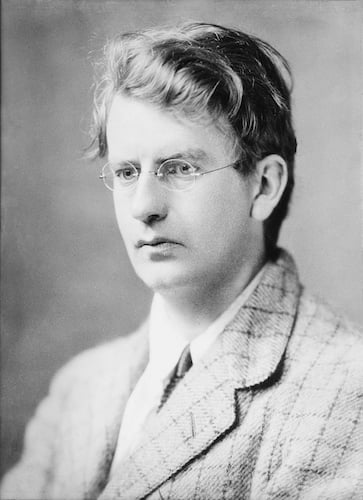
John Logie Baird, the Scottish inventor who pioneered mechanical television in 1925. Explore his early experiments, firs...
View Board
Discover how Édouard Branly's coherer revolutionized communication as the first practical radio wave detector, paving th...
View Board
Discover Hero of Alexandria, the ancient genius behind the first steam engine and vending machine. Explore his groundbre...
View Board
Discover the fascinating legacy of Alexander Bain, the inventive genius and often overlooked pioneer of telegraphy. This...
View Board
Discover how Werner von Siemens electrified the world with his groundbreaking dynamo and telegraph innovations, shaping ...
View Board
Explore the life and legacy of Walter Brattain, a pivotal figure in semiconductor history and co-inventor of the point-c...
View Board
Discover Ctesibius, the pioneering engineer of Alexandria, whose groundbreaking hydraulic and pneumatic inventions shape...
View Board
Antonio Meucci pioneer behind the telephone whose work and innovations significantly contributed to early telephony deve...
View Board
Explore the profound legacy of Thomas Edison, a pioneering inventor who transformed society with over 1,000 patents. Fro...
View Board
Explore the pioneering legacy of Charles Babbage, the visionary often regarded as the "father of the computer." From his...
View Board
Discover how Michael Faraday, the father of electromagnetic technology, rose from humble beginnings to revolutionize the...
View Board
Walter Brattain: The Transistor Pioneer Who Changed Electronics Early Life and Education of Walter Brattain Walter Hous...
View Board
**Meta Description:** Hedy Lamarr: Η θρυλική ηθοποιός του Χόλιγουντ και πρωτοπόρος της τεχνολογικής επανάστασης. Ανακα...
View Board
Explore the remarkable life of Werner von Siemens, a pioneer of modern technology whose innovations in electrical engine...
View Board
Explore the evolution of cinema through the groundbreaking techniques of cinematography pioneers like the Lumière brothe...
View Board
Μάθετε για τη ζωή της Ιρέν Ζολιό-Κιουρί, μίας κορυφαίας επιστήμονα του 20ού αιώνα, ενισχύοντας την επιστήμη και την κοιν...
View Board
Discover the legacy of Michael Faraday, the self-taught genius hailed as the Father of Electromagnetism. From his humble...
View Board
Discover the genius of Michael Reeves, a YouTube sensation blending humor with technological innovation. Explore his ecc...
View Board
Discover how Luis Alvarez revolutionized modern science with his Nobel Prize-winning bubble chamber and groundbreaking d...
View Board
Discover Hedy Lamarr's journey from Hollywood star to tech pioneer. Explore her frequency-hopping patent's impact on Wi-...
View Board
Comments