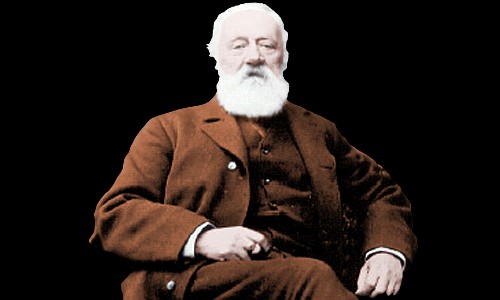
Antonio Meucci: The Pioneer Behind the Telephone
In the annals of technological history, many names stand out as pivotal figures who played crucial roles in shaping our modern world. One such individual is Antonio Meucci, whose contributions and untimely dismissal from the public record have only recently begun to receive the recognition they deserve.
The Early Life and Background of Antonio Meucci
Antonio Meucci was born on April 18, 1808, in仁里塔诺波利斯(Castelnuovo di Sicilia),一个小城位于意大利西西里岛东南部。他的家族来自普利亚地区,他的祖父是一位铁匠。Mecci家族在当时已定居在西西里岛达两百年之久,为当地带来了丰富的技术和工艺传统。在Meucci年幼时,父亲的不幸去世使得家庭陷入了贫困之中,但这也促使他在艰难环境中成长,并展现出对科学和技术的浓厚兴趣。
At a young age, Meucci showed a natural affinity for science and technology. His family's struggles after his father's death likely played a significant role in fostering his determination and resourcefulness. Despite the hardships, he managed to secure some form of education, which laid the foundation for his future endeavors.
The Development and Invention of Early Telephony
In 1834, at the age of 26, Antonio Meucci immigrated to the United States to work as a stage technician for Teatro della Pergola. This move brought him into contact with American scientific circles, where he became particularly interested in telegraphy and electricity, two nascent fields of science that would later prove instrumental in his groundbreaking work.
While working in New York City, Meucci experimented with various methods to transmit voices over wires. In 1849, he developed a device known as the "telettrofono," which used a platinum wire and sulfuric acid battery to transmit human voice electrically. Meucci’s telettrofono was capable of transmitting speech from one room to another, marking a significant step forward in early telecommunications technology. However, the limited resources and lack of widespread interest in his work meant that Meucci could not obtain a patent for his invention during this period.
The Birth of the Telephone
Despite the setback, Meucci continued to refine his device. Between 1850 and 1853, he conducted numerous experiments and made improvements to the telettrofono. He patented several related inventions, including improvements to wax as a sound-dampening material, which were essential for clear communication over longer distances. These advancements contributed to the development of a more practical telephonic system.
In 1857, Meucci demonstrated his invention to potential investors and supporters, including his colleague Elisha Gray. This event was crucial as it showcased the viability of his work and laid the groundwork for broader acceptance and further development of telephony.
Patent Controversies and Legal Battles
Meucci's struggle to gain recognition and protection for his invention was both lengthy and complex. By the late 19th century, Alexander Graham Bell gained significant attention for what is now widely regarded as the invention of the telephone. However, the truth is far more nuanced. Meucci had been documenting his work since 1849 and had even held a public demonstration as early as 1871 – long before Bell filed for his famous patent in 1876.
Legal challenges ensued, with Meucci attempting to protect his rights through various means. In 1872, he filed for a patent application under the Italian name 'Filofofalo,' a phonetic rendering of his own name. The patent examiner eventually dismissed his case, possibly due to incomplete documentation or lack of financial backing. This outcome left Meucci without the legal leverage necessary to assert his claims effectively in the rapidly evolving landscape of technological patents.
Life Post-Invention: Teaching and Community Building
Despite his unsuccessful legal bid, Meucci continued to contribute to the scientific community through teaching and community-building initiatives. He established himself as an influential figure in New York City, particularly among Italian-American immigrants. His teaching activities not only enriched local communities but also provided him with additional opportunities to develop and refine his telephonic devices.
Meucci's influence extended beyond technical innovation. He played a key role in establishing several organizations aimed at supporting the Italian-American community. These efforts included founding the Mutual Improvement Association, which aimed to educate and empower Italian immigrants. His dedication to community development underscored his belief in the importance of both scientific progress and social responsibility.
A Rediscovered Legacy
Rediscovered Legacy
Following his struggles and the loss of his patents, Antonio Meucci’s legacy remained almost forgotten for many decades. It was not until the late 20th century that his contributions began to be recognized. In 1979, the Italian government posthumously awarded Meucci with the title 'Inventor of the Telephone' and honored him on October 3, 1985, which is now known as 'Antonio Meucci Day' in New York City.
Despite these honors, the broader recognition of Meucci's work faced obstacles. A significant factor was the public's perception of the telephone's inventor. By the time Meucci's contributions were being acknowledged, many had already associated the telephone with Bell, who had been widely celebrated for his invention. This association was not only due to the timing of patents but also to the extensive marketing and popularization efforts by Bell and his associates.
In 1991, the U.S. House of Representatives passed a resolution acknowledging Meucci’s contributions to the invention of the telephone. The resolution, H. Res. 256, stated, "The Congress recognizes the contributions of Antonio Meucci to the development of the telephone and commends him." This was a significant milestone, as it marked the beginning of a gradual reevaluation of historical accounts. The resolution highlighted Meucci’s experimental work, noting that it was conducted before and after Bell's patent filings. It also recognized that Bell made modifications and enhancements to Meucci's early devices after purchasing them from Thomas Dolbear, who had taken over the patents from Meucci.
Meucci's story continued to unfold, with numerous academic and scholarly works coming to light. Researchers and historians began to delve deeper into Meucci’s papers and experiments. Dr. Svetlana B. Barish, a historian, conducted extensive research on Meucci, leading to the publication of her book "Antonio Meuci (Meucci): The Story of Invention." Her work provided valuable insights into Meucci's life and the technological advancements he made.
Another significant event took place in 2002 when the U. S. House of Representatives passed a second resolution, HR107, acknowledging Meucci’s prior claims to the invention of the telephone. This resolution stated, "the Congress acknowledges the contributions of Antonio Meucci to the development of the telephone for the benefit of the American people." The U. S. House acknowledged that Meucci had created the device and conducted the public tests. Congress recognized the need to correct the historical record and to give proper credit to the inventor of the telephone.
Impact on the Italian-American Community
Antonio Meucci's contributions had a significant impact on the Italian-American community and the broader cultural landscape. His work in establishing community organizations and promoting education played a crucial role in the integration and empowerment of Italian immigrants. The Mutual Improvement Association, founded by Meucci, was instrumental in providing resources and support to new arrivals, helping them navigate the challenges of life in a new country.
Beyond the direct impact on the Italian-American community, Meucci's legacy has inspired a new generation of inventors and innovators. His story serves as a testament to the importance of persistent innovation, especially in the face of adversity. Meucci's contributions have been recognized in various ways, including the naming of streets, schools, and public monuments in his honor.
Recognition and Honor
The recognition of Meucci's work has not just been in the form of resolutions and honors but also in the educational sphere. Schools and universities have adopted his story as part of their curricula, helping to educate students about the true history of the telephone. Educational institutions have also established awards and scholarships in his name, recognizing young inventors and innovators whose work shows similar dedication and perseverance.
Moreover, Meucci's legacy has been preserved through various exhibits and museums. The Meucci Museum in New York City is dedicated to showcasing his life and work. The museum features a collection of Meucci's original patents, inventions, and personal items, providing a comprehensive look at his life and the challenges he faced. Another notable exhibit can be found at the Bell Science Museum in Canada, which honors Meucci and Bell, highlighting the contributions of both inventors.
The Debate Continues
While Meucci's contributions have been officially recognized, the debate over who truly invented the telephone continues among scholars and historians. Some argue that Meucci had the initial idea, while others maintain that Bell made the crucial enhancements. This ongoing debate highlights the complexity of innovation and the often collaborative nature of scientific progress.
Despite the controversies, Meucci's story continues to gain traction. Various initiatives are dedicated to furthering his research and ensuring that his legacy is fully recognized. The Antonio Meucci Society, established in 1991, is one such organization that aims to promote awareness of Meucci's work and the broader context of early telecommunications. This society organizes conferences, workshops, and educational programs to ensure that Meucci's contributions are not forgotten.
Meucci's journey also serves as a reminder of the challenges faced by immigrant inventors. His story highlights the importance of supporting and acknowledging the contributions of individuals who may come from different backgrounds but share a common passion for innovation. It underscores the value of perseverance and the role of community in supporting scientific endeavors.
Conclusion
Antonio Meucci’s legacy is a testament to the power of persistence and innovation in the face of adversity. Despite not receiving immediate recognition during his lifetime, Meucci’s contributions to the development of the telephone are now widely acknowledged. His story continues to inspire new generations of inventors and to remind us of the importance of recognizing and honoring the true pioneers in science and technology. As we continue to explore the rich history of telecommunications, Meucci’s name will undoubtedly remain a central figure in this fascinating chapter of human progress.
Legacy and Inspiration
The recognition of Antonio Meucci’s contributions has led to a broader understanding of the historical context of the telephone and the diverse array of inventors involved. His story has become an inspiration for aspiring inventors and scientists, particularly those from marginalized communities. The rediscovery of Meucci’s work has brought attention to the importance of acknowledging a full spectrum of contributions to technological advancement.
Today, Meucci’s legacy continues to influence various fields, from telecommunications to education. Schools and universities emphasize the importance of learning about Meucci’s pioneering work, encouraging students to think critically about the history of invention and the role of collaboration and community support in scientific progress.
Influence on Modern Technology
Antonio Meucci’s innovations did not just lay the groundwork for the modern telephone but contributed significantly to the broader field of telecommunications. His work in early electrical signaling paved the way for developments in data transmission, wireless communications, and even modern internet technologies. Meucci’s experiments with signal amplification and transmission techniques have relevance in contemporary fields such as digital signal processing and electromagnetic wave theory.
The principles of early telephony that Meucci explored, such as the use of conductive materials and signal modulation, have evolved into advanced technologies that underpin much of today’s digital infrastructure. For instance, the principles behind amplifying and modulating signals are central to modern radio and television broadcasting, cellular networks, and satellite communications. Meucci’s foundational work continues to inspire researchers and engineers to push the boundaries of technological innovation.
Public Recognition and Commemoration
The acknowledgment of Meucci’s contributions has led to several public commemorations. Statues and monuments have been erected in various cities, honoring his life and work. Notable examples include statues in New York City and Trento, Italy, which stand as enduring tributes to his legacy. These monuments serve not only as physical reminders but also as educational tools, sparking discussions about the importance of inclusivity in science and technology.
Cultural events and festivals celebrating Meucci’s achievements have also become common. The annual Antonio Meucci Day in New York City, for instance, features exhibits, lectures, and community gatherings, attracting visitors from around the globe. These events promote the story of Meucci and encourage a broader appreciation of his contributions to technological progress.
Contemporary Innovations Inspired by Meucci’s Work
The impact of Meucci’s work goes beyond telecommunications and extends to various technological fields. Innovations inspired by his principles of electrical signaling and signal processing are evident in fields such as robotics, medical devices, and cybersecurity. For example, the principles of signal amplification and noise reduction that Meucci explored are fundamental in modern ultrasound technology, which relies heavily on precise electrical signals to produce high-quality images of internal body structures.
In the realm of artificial intelligence and machine learning, the concepts of signal processing and modulation, which Meucci helped pioneer, play a critical role in developing algorithms that process and interpret complex data. These technologies enhance everything from voice recognition systems to autonomous vehicles, contributing to the seamless integration of digital technologies into everyday life.
Funding and Research Initiatives
To further support research and education in honor of Meucci’s legacy, several funding and research initiatives have been established. Organizations such as the Antonio Meucci Foundation and the Antonio Meucci Society provide grants and fellowships to support emerging scientists and entrepreneurs. These initiatives aim to foster a new generation of inventors who draw inspiration from Meucci’s story and work towards innovative solutions to pressing global challenges.
Research institutes and universities have also incorporated Meucci’s legacy into their curricula, offering courses and workshops that focus on the history and significance of early telecommunications technologies. These educational opportunities not only honor Meucci’s contributions but also inspire current and future scientists to pursue groundbreaking research.
Acknowledgment Beyond Technology
Meucci’s legacy extends beyond the technical and scientific realms. His commitment to community building and education has become a model for social engagement and inclusivity. Meucci’s work with the Mutual Improvement Association exemplifies how technology and community can be intertwined, providing support and resources to marginalized groups.
His approach to fostering mutual aid and collective improvement is increasingly relevant in today’s world. Community-based projects and initiatives inspired by Meucci’s philosophy aim to create more equitable and supportive environments. This community-focused approach is particularly important in addressing issues such as access to technology and digital literacy, ensuring that underserved communities have the tools and resources necessary to participate fully in the digital age.
The Continuing Journey
The rediscovery and celebration of Antonio Meucci’s legacy represent a significant step forward in the recognition of historical facts and the importance of inclusive storytelling. As we continue to advance technologically, it is crucial to acknowledge and honor all contributors to this progress. Meucci’s journey from a stage technician to a trailblazer in telecommunications demonstrates the transformative power of persistence and community support.
His story reminds us that true innovation often emerges from diverse backgrounds and experiences. By recognizing and learning from Meucci’s life, we can foster an environment where all individuals feel empowered to contribute to scientific and technological advancements. The recognition of his work is not just about honoring the past but about shaping a brighter, more inclusive future.
Antonio Meucci’s legacy continues to inspire and guide us, urging us to value diversity, collaboration, and continuous learning in our pursuit of progress.
:max_bytes(150000):strip_icc()/thoughtCo_pin_img_default-58a21e1638e9b32984d5b865.png)

Alexander Bain: The Pioneer of Telegraphy and Inventive Genius
Introduction
Alexander Bain, a name less recognized in the modern world, deserves a special place in the annals of science and technology, particularly in the realm of telegraphy and early electrical inventions. Born in the early 19th century, Bain was an inventor defined by his innovative spirit and a relentless drive to push the boundaries of technological capabilities. While his contemporary, Samuel Morse, is often credited with pioneering telegraphy, Bain’s own contributions have been equally vital, although sometimes overshadowed by his more famous peer.
Early Life and Education
Alexander Bain was born on October 12, 1810, in the small village of Watten, in Caithness, Scotland. Raised in a farming family with limited educational resources, Bain's initial exposure to the world of science and technology was minimal. Despite these humble beginnings, he harbored a natural curiosity and an affinity for mechanics. Working with his hands as a clockmaker’s apprentice in Wick, he began to nurture his love for technology and invention.
The candor and diligence Bain exhibited during his apprenticeship became the cornerstone of his future success. While working in the clockmaking industry, he encountered the complexities of timekeeping mechanisms, which would later inform several of his inventions. Bain’s self-driven education was profound; he learned from books he borrowed and irregular evening classes he attended.
Journey to London and Encounter with Eminent Figures
Bain’s desire to explore and expand his knowledge eventually led him to London in 1837. In the bustling capital, Bain managed to secure a living as a journeyman clockmaker. London in the 19th century was a hub for scientific and industrial innovation, and it was here that Bain’s career truly began to flourish. He frequented lectures and exhibitions, which were instrumental in shaping his scientific endeavors.
Crucially, it was during this period that Bain met and exchanged ideas with prominent figures, such as Sir Charles Wheatstone and William Fothergill Cooke. These individuals were pioneers in telegraphy and were deeply involved in pushing electrical communication technologies forward. Bain's interactions with such luminaries stirred his imaginations and sharpened his focus on devising novel telecommunication solutions.
Innovations in Electric Clocks and the Electric Telegraph
One of Bain's first major contributions to technology was in the field of timekeeping. Inspired by his work as a clockmaker, he devised the electric clock in 1841. Unlike traditional mechanical clocks, Bain's electric clock incorporated electromagnetism to drive its mechanisms using a pendulum and a small electric motor. This invention hinted at the potential of a more precise understanding and application of electricity, reinforcing Bain's reputation as a forward-thinking inventor.
However, the electric clock was just the beginning. The same principles that drove this invention were extended to Bain's work in telegraphy. In 1846, he patented an early version of the fax machine—the “Electric Printing Telegraph,” a precursor to the modern facsimile machines. His design facilitated the transmission of images and text over a wire, a groundbreaking step in long-distance communications. Bain's work introduced the concept of converting text into electrical signals, a technique that revolutionized communications in his era.
The Telegraph and Legal Challenges
The advent of the telegraph marked a revolutionary departure from traditional methods of communication, shattering the constraints of geography and distance. Bain's innovations in this domain, such as his automatic chemical telegraph, were groundbreaking. His design employed a chemical solution to record messages sent over telegraph wires, enabling faster transmission than systems available at the time.
Despite the ingenuity behind his inventions, Bain’s journey was not devoid of disputes and legal challenges. He became embroiled in a patent controversy with his contemporary, Sir Charles Wheatstone, over telegraph technologies. Wheatstone, a well-connected academic, possessed superior resources and influence, leading to Bain's relative obscurity in historical narratives. This legal skirmish overshadowed Bain's rightful claim to some of the foundational principles of telegraphy.
Legacy and Impact
Although Bain's name may not be as prominent as others in the field of telegraphy, his legacy is undeniable. His inventive spirit and contributions spurred countless other developments that followed suit. By converting visions into practical inventions, Bain paved the way for future technological advancements in electrical engineering and telecommunications. His work laid important groundwork for inventions like the telephone and subsequently, the global communications network we rely upon today.
In recognizing Alexander Bain, we celebrate not only the specifics of his inventions but also an ethos of curiosity and resilience. His journey from humble beginnings to becoming a pioneer in telegraphy is a testament to the human drive for innovation and improvement. Bain's story is a powerful reminder of the sometimes unsung heroes who shape the fabric of scientific advancement.
Technological Contributions Beyond Telegraphy
Alexander Bain’s impact on technology extended beyond his remarkable work in telegraphy. Among his diverse portfolio of inventions, he is credited with innovations in areas such as recording devices and early computing mechanisms. Bain's commitment to experimentation and his ability to devise overlapping technology applications revealed his versatility as a thinker and inventor.
One of his notable inventions was the chemical telegraph, which used an electrochemical process to record incoming telegraph signals onto paper. This method was more efficient compared to contemporary mechanical solutions, as it allowed faster transmission speeds and required less manual intervention. Bain’s chemical telegraph demonstrated the potential for recording telecommunication signals, which later influenced the development of technologies like the ticker tape machine and other recording devices used in stock exchanges.
The Impact of the Electric Clock
Bain's electric clock was another foundation for future innovations. His development of timekeeping devices introduced new ways to think about precision and automation—two attributes that would become critical in industrial and scientific contexts. The electric clock’s design, utilizing electromagnetic principles, anticipated modern battery-operated clocks and timekeeping systems, integrating electricity as a primary operational component.
The implications of Bain’s work with electric clocks were profound in fields such as navigation, astronomy, and later, computing. Accurate time measurement became vital for ships at sea, where understanding longitude required precise timekeeping. Similarly, astronomers benefitted from more exact timing to track celestial events. Although Bain did not commercialize his clocks to their full potential, his ideas informed generations of timekeeping advancements.
Challenges and Overcoming Adversity
Throughout his career, Bain faced considerable adversity, chiefly due to the highly competitive environment of the 19th-century technological scene. While his inventions were innovative, they were often contested or co-opted by contemporaries with greater resources and connections. Bain, lacking formal education and social ties, struggled against entrenched power structures within the scientific community.
Despite these challenges, Bain's persistence and resolve were unwavering. His inventions frequently found niche applications even if they did not dominate the market. In a testament to his character, Bain continued to invent throughout his life. He sought not only commercial success but also the intellectual satisfaction of exploration and discovery.
Bain’s legal battles, particularly with Wheatstone, were emblematic of the era’s competitive patent landscape. These disputes, while detrimental to Bain’s standing at the time, highlighted issues of intellectual property that continue to be relevant today. His experiences underscored the need for robust systems to protect innovation, a legacy that has informed modern patent laws.
Recognition and Rediscovery
In recent years, efforts have been made to resurrect and appreciate the contributions of Alexander Bain. Historians and technologists have revisited his work, seeking to acknowledge the pioneering nature of his inventions and his influence on later developments in telecommunications and electrical engineering.
Several exhibitions and biographies have underscored Bain’s natural inventiveness and his foundational role in telegraphic technology. Some enthusiasts have compared Bain to figures like Tesla, who similarly experienced significant contributions followed by periods of relative historical obscurity. In Scotland, Bain is celebrated as a national figure of ingenuity and tenacity, with local museums and educational programs holding up his life’s work as an example of Scottish innovation.
Modern electrical engineering and telecommunication studies often revisit Bain’s methodologies to understand the evolution of technology. These academic pursuits continue to place his work in the broader historical context of technological advancement, ensuring that Bain’s legacy remains vibrant and influential for future generations.
Conclusion: The Unsung Hero of Telegraphy
Alexander Bain remains, in many ways, an unsung hero. Although his name is not as familiar as some of his contemporaries, his contributions have left indelible marks on communication technology. His work not only served as a catalyst for other innovations but also paved the way for the transformative communications era that followed. Bain represents the profound impact a single individual’s curiosity and determination can have on society’s technological trajectory.
By continuing to explore and appreciate the past, we gain insights into the origins of modern technology, learning from the successes and struggles of pioneering figures like Bain. His story emboldens the innovators of today to persist in the face of challenges, reminding us that even underrecognized contributions can ultimately shape the world in unimaginable ways. Bain's legacy continues to inspire, serving as a guiding light for all who strive to bring about change through invention and discovery.
Impact on Modern Technology and Telecommunications
Alexander Bain's pioneering work laid the groundwork for numerous technological advancements that continue to shape our world today. His exploration of converting messages into electrical signals was a precursor to digital communications—a field that underpins contemporary telecommunication infrastructures. Devices and networks that facilitate instant communication across the globe owe a debt of gratitude to the early principles established by Bain and his peers.
Furthermore, Bain's efforts in creating efficient timekeeping systems have had long-standing implications. The precision of modern clocks and the synchronization of global time zones are rooted in the advancement of accurate and reliable clocks. His electric clock foreshadowed the development of quartz and atomic clocks that are crucial for both civilian life and scientific research, demonstrating how foundational concepts can evolve into indispensable tools for modern society.
Enduring Lessons from Bain’s Journey
Bain’s journey as an inventor offers several enduring lessons for modern innovators. Here are three key takeaways from his life and work that continue to resonate:
1. **Persistence in the Face of Adversity:** Bain's numerous challenges highlight the importance of resilience. Despite frequent setbacks, Bain's determination to follow his intellectual pursuits ensured his contributions would ultimately come to light. In today’s fast-paced world, where new challengers and barriers continually emerge, his tenacity inspires current and future innovators to persevere.
2. **Interdisciplinary Thinking:** Bain successfully crossed disciplinary boundaries, drawing upon his experience in clockmaking to influence his work in telegraphy and other electrical inventions. This interdisciplinary approach is increasingly crucial in solving complex problems in our interconnected world. Bain’s creativity in blending mechanics, chemistry, and electricity is a prime example of how broadening one's expertise can lead to groundbreaking innovations.
3. **Impact Without Immediate Fame:** Bain’s story is a powerful reminder that significant contributions to technology can occur without immediate recognition. Often, societal recognition and popularity do not accompany genuine innovation contemporaneously. Bain shows us that impactful work will eventually find its audience, underscoring the value of focusing on innovation rather than immediate fame.
Modern Commemorations and Relevance
Today, the recognition of Alexander Bain is more profound for those within the field of telecommunications and engineering. Various institutions remember and honor Bain, ensuring his work stays relevant in the educational landscape. Technical schools and engineering programs often incorporate his life and achievements into their curricula, emphasizing the historical context of modern technologies.
There is also a growing interest in revisiting and reassessing the contributions of underrepresented figures in the history of science and technology. Bain serves as a compelling case for broader historical inquiry, pulling overlooked contributions into the spotlight and enriching our understanding of how past innovations influence contemporary achievements.
Bain’s birthplace, Watten, and the wider Scottish community have taken steps to enshrine his memory in public museums and scientific talks. Local historical societies and museums have held exhibitions dedicated to Bain’s work, showcasing replicas of his inventions alongside informative displays that contextualize his life’s work.
The Unseen Influence on Future Technologies
As we look forward to the continued evolution of technology, Bain’s influence remains embedded in the DNA of modern communication systems. His early adoption of transforming mechanical signals into electrical impulses provided a blueprint for much of today’s electronic and digital landscapes.
In the realms of data transmission and information processing, Bain's foresight echoes through the technological ages. Modern devices like smartphones, wireless communications, and even emerging technologies such as the Internet of Things (IoT), all owe a measure of their development to the foundations laid by Bain’s groundbreaking ideas. His concept of electrical transmission laid groundwork that allows these technologies to interconnect, communicate, and process information at unprecedented speeds and scales.
Alexander Bain’s story is both a lesson and a beacon for those who dare to innovate. He completed his journey not as a figure driven by accolades, but by the quest to push technological boundaries. In honoring his contributions, we connect with the spirit of ingenuity that fuels scientific progress, underscoring the notion that today's innovations are often built upon the visionary efforts of our predecessors. By examining Bain's remarkable life, we not only pay tribute to his legacy but also nurture the seeds of curiosity and determination required for the next generation of breakthroughs.


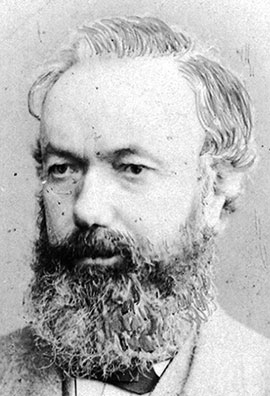
Édouard Branly: The Radio Coherer Inventor
The pioneering work of French physicist Édouard Branly fundamentally shaped modern communication. Best known as the inventor of the coherer, his device was the first practical detector of radio waves. This crucial component enabled the breakthrough of wireless telegraphy.
His 1890 discovery of radioconduction unlocked a new era of technology. Today, Branly is celebrated as a foundational figure in the history of radio and electrical engineering.
Early Life and Academic Foundations
Édouard Branly was born on October 23, 1844, in Amiens, France. His intellectual journey was marked by a profound dedication to both science and medicine. He pursued higher education with remarkable vigor, earning two separate doctoral degrees.
He received his doctorate in physical sciences in 1873. Nearly a decade later, in 1882, he also earned a doctorate in medicine. This dual expertise uniquely positioned him for interdisciplinary research.
Education and Dual Doctorates
Branly's educational path was exceptional. His deep understanding of physics provided the theoretical basis for his inventions. His medical training later informed his parallel career in therapeutic practices.
This combination of disciplines was uncommon for the time. It allowed Branly to approach problems from multiple angles. His work often bridged the gap between pure science and practical application.
Teaching Career at Catholic University
In 1875, Branly began his long tenure as a professor of physics. He taught at the Catholic University of Paris for over 50 years. His commitment to education influenced generations of students.
His academic role provided a stable platform for his experimental research. Throughout his life, he balanced teaching, invention, and a medical practice. This multifaceted career defined his professional legacy.
The Path to the Coherer Discovery
Branly's most famous invention did not emerge in a vacuum. It was the culmination of earlier scientific observations and his own meticulous experiments. The key phenomenon he explored was the effect of electromagnetic waves on materials.
Precursors and Influential Experiments
Several scientists paved the way for Branly's breakthrough. In 1879, David Hughes observed that his carbon microphone was sensitive to electrical disturbances. Later, in 1884, Temistino Calzecchi-Onesti noted that metal filings conducted electricity under an electromotive force.
The most direct inspiration came from Heinrich Hertz. In 1888, Hertz conclusively demonstrated the existence of electromagnetic waves. Branly aimed to find a reliable method to detect these mysterious "Hertzian waves."
Branly refined a simple tube of metal filings into the first practical radio wave detector, presenting his coherer to the Académie des Sciences in 1890.
The Eureka Moment: Radioconduction
Branly's crucial experiment involved a circuit containing loose metal filings. Normally, these filings exhibited high electrical resistance. When exposed to electromagnetic waves from a spark gap transmitter, they suddenly cohered.
This dramatic drop in resistance allowed current to flow. Branly termed this effect radioconduction. He had discovered a repeatable and detectable response to radio waves.
- Key Component: A glass tube filled with metal filings (often nickel-silver).
- Key Behavior: High resistance normally, low resistance when activated by radio waves.
- Key Innovation: The "decoherer" mechanism, often a small tapper, to reset the filings.
Invention of the Branly Coherer
Branly transformed his observation into a functional device around 1890. The Branly Coherer became the first widely used radio wave detector. It was simple in construction yet revolutionary in impact.
The basic setup included a transmitter with a spark gap and a receiver circuit containing the coherer. A demonstration for the Académie des Sciences showed signals could be sent without wires. This was the seminal moment for practical wireless telegraphy.
How the Coherer Worked
The operation of the coherer was elegantly straightforward. In its resting state, the loose metal filings barely conducted electricity. An incoming radio wave induced a small current between the metal particles.
This caused them to cling together or cohere, forming a better conductive path. The sudden drop in resistance could then trigger a relay or sounder. To reset the device for the next signal, a light tap would separate the filings again.
Immediate Impact and Adoption
The invention was rapidly adopted and improved by other wireless pioneers. British physicist Oliver Lodge incorporated it with Hertzian oscillators. He also coined the term "coherer" that we use today.
Most famously, Guglielmo Marconi used refined versions of the coherer in his groundbreaking long-distance experiments. Marconi publicly credited Branly's foundational work after his successful cross-Channel transmission in 1899.
Honors and Recognition During His Lifetime
Édouard Branly received significant acclaim for his contributions to science. His honors reflect the high esteem in which he was held by both academic and national institutions.
Prestigious Awards and Prizes
Branly's work was recognized with several major prizes. He won the grand prix at the monumental 1900 Paris Exposition. This placed him at the forefront of technological innovation at the dawn of the 20th century.
In 1903, he was awarded the prix Osiris, then one of France's most prestigious scientific awards. These accolades cemented his reputation as a leading inventor and physicist of his era.
National and Papal Honors
The French government honored him with the Legion of Honour. He achieved the high ranks of Officer and later Grand Croix. In 1899, he also received the title of Commander of the Order of St. Gregory the Great from the Pope.
His devout Catholic faith was an integral part of his life. This papal recognition was personally significant. It highlighted the harmony he saw between his faith and his scientific pursuits.
Branly's discovery was designated an IEEE Milestone in Electrical Engineering and Computing in 2010, over a century after his invention.
Legacy of the Coherer in Wireless Telegraphy
The coherer was the enabling technology for the first generation of wireless communication. Before its invention, detecting radio waves was a difficult laboratory exercise. Branly's device made reliable wireless signaling a practical reality.
Its simplicity and effectiveness spurred rapid international development. Inventors like Marconi, Lodge, and Popov integrated coherers into their systems. This directly led to the first transatlantic wireless signal in 1901.
From Laboratory Curiosity to Global Communication
Branly's initial demonstration was a short-range experiment. However, it proved a fundamental principle: electromagnetic waves could be used to transmit information. Engineers quickly scaled this concept for real-world use.
Marconi's famous improvements focused on increasing the range and reliability of transmission. The core detection mechanism, however, remained the coherer for many critical early years. It was the heart of the first commercial and maritime wireless sets.
- Maritime Safety: Coherer-based radios became standard on ships, leading to famous rescues like the RMS Titanic in 1912.
- Military Adoption: Navies worldwide adopted wireless telegraphy for fleet coordination, revolutionizing naval strategy.
- News Reporting: Wireless reports from international correspondents sped up global news dissemination dramatically.
Technical Refinements and Obsolescence
The coherer, while revolutionary, had inherent limitations. It was a relatively slow device, insensitive to weak signals, and required mechanical resetting. By around 1907, more sensitive detectors like the crystal diode and later the vacuum tube began to replace it.
These new technologies enabled voice transmission (radio telephony) and more complex broadcasting. The coherer's role was foundational but brief, marking the explosive infancy of wireless. Its historical importance, however, remains unparalleled.
Guglielmo Marconi explicitly credited Branly after the 1899 Dover-Boulogne transmission, sending a telegram that stated his historic signal used "Branly's apparatus."
Branly's Other Scientific Research and Medical Work
While the coherer defines his legacy, Édouard Branly was a prolific researcher in multiple fields. His dual doctorates fueled a career split between advanced physics and medical therapy. He published significant work on topics ranging from electrical capacitance to human physiology.
This interdisciplinary approach was a hallmark of his intellect. He saw connections between physical phenomena and biological systems. His medical practice specialized in the emerging fields of electrotherapy and physiotherapy.
Contributions to Physics and Instrumentation
Beyond radioconduction, Branly conducted detailed studies on electrical resistance in thin films. He investigated the properties of platinum deposited on glass. This work contributed to the broader understanding of materials science.
He was also an ingenious designer of scientific instruments and demonstrations. His skill lay in creating clear, effective apparatus to illustrate complex principles. Many of these devices were used in his long teaching career at the Catholic University.
A Pioneering Electrotherapist
Branly ran a medical clinic where he applied electrical currents for therapeutic purposes. This practice, known as electrotherapy, was a novel field in the late 19th century. He treated patients using techniques derived from his deep understanding of electricity.
His medical work was not separated from his physics research. Instead, he sought scientifically rigorous applications for electrical energy in medicine. He represents an early model of the physician-scientist, bridging two demanding professions successfully.
Later Life, Faith, and Historical Recognition
Édouard Branly lived a long life, witnessing the global transformation his invention helped initiate. He remained active in academia and his medical practice well into his later years. His Catholic faith was a central pillar of his identity and worldview.
He passed away on March 24, 1940, in Paris. His funeral was a national event, reflecting his status as a French scientific hero. His legacy is preserved through numerous honors and educational references.
A Devout Catholic in the Scientific Community
In an era sometimes marked by tension between faith and science, Branly saw no conflict. He was a committed Catholic who integrated his religious beliefs with his scientific pursuits. This harmony was recognized by the Vatican, which bestowed upon him a high papal honor.
He served as a prominent example that rigorous scientific inquiry and devout religious faith could coexist. His life challenged simplistic narratives about the relationship between religion and science in the modern age.
The 2010 IEEE Milestone Award
Over a century after his discovery, Branly received a supreme technical accolade. In 2010, the Institute of Electrical and Electronics Engineers designated his work an IEEE Milestone in Electrical Engineering and Computing.
This honor places his discovery of radioconduction among the most pivotal events in technological history. It formally recognizes the coherer as a foundational component for all subsequent radio and wireless systems.
- Milestone "Discovery of Radioconduction by Édouard Branly, 1890."
- Location: The original site of his experiments at the Catholic Institute of Paris.
- Significance: It honors the first reliable detector of radio-frequency electromagnetic waves.
Educational Portrayal and Popular Understanding
Today, Édouard Branly is a staple figure in the history of science and technology curricula. He is universally presented as a key precursor to Marconi and the radio age. His story highlights the importance of fundamental discovery in enabling later innovation.
Educational resources often focus on the elegant simplicity of the coherer experiment. It serves as a perfect teaching tool for explaining early radio principles. Branly's interdisciplinary career also offers a compelling model for students.
Branly in Museums and Public Memory
Several museums feature Branly's original apparatus or replicas. These exhibits contextualize his work within the broader narrative of communication history. His name is attached to schools, streets, and academic prizes, particularly in France.
The Musée des Arts et Métiers in Paris holds significant artifacts related to his work. Public memory celebrates him as a brilliant inventor whose device connected the world. His portrait often appears alongside those of Hertz, Lodge, and Marconi.
Common Misconceptions and Clarifications
A frequent simplification is crediting Marconi alone with "inventing radio." Informed historical accounts correctly position Branly as the inventor of the first critical detection component. Marconi was the brilliant engineer and entrepreneur who commercialized and scaled the technology.
Another point of clarification involves the term "coherer" itself. While Branly invented the device, the name was actually coined by Oliver Lodge. Understanding these nuances provides a richer picture of how collaborative and incremental scientific progress truly is.
Branly taught physics for over 50 years at the Catholic University of Paris, influencing countless students while conducting his groundbreaking research.
The Coherer's Role in Scientific Progress
The story of the coherer is a classic case of a discovery seeking an application. Branly was investigating a curious physical effect, not aiming to build a global communication network. His fundamental research provided the essential tool that made wireless telegraphy possible.
This underscores the vital importance of supporting pure scientific inquiry. Breakthroughs often come from exploring unexplained phenomena without a immediate commercial goal. Branly's radioconduction effect is a prime example of this principle.
From Effect to Application: A Timeline
The development from observation to world-changing technology happened with remarkable speed. This timeline highlights the key steps involving Branly's work.
- 1888: Heinrich Hertz proves the existence of electromagnetic waves.
- 1890: Édouard Branly discovers radioconduction and builds the first coherer.
- 1894: Oliver Lodge demonstrates wireless signaling using a coherer, naming the device.
- 1896: Guglielmo Marconi files his first patent in Britain for wireless telegraphy using an improved coherer.
- 1899: Marconi achieves the first cross-Channel wireless transmission, publicly crediting Branly.
- 1901: The first transatlantic wireless signal is sent, using a coherer-based receiver.
This rapid progression from laboratory effect to transatlantic communication took just over a decade. It showcases how a single enabling invention can accelerate technological progress exponentially.
Édouard Branly's Enduring Scientific Influence
The influence of Édouard Branly extends far beyond the specific technology of the coherer. He represents a critical link in the chain of discovery that brought humanity into the wireless age. His methodology of careful observation and experimental refinement serves as a model for scientific inquiry.
Branly demonstrated how a focused investigation into a subtle physical effect could yield world-changing applications. His work underscores the importance of fundamental research in driving technological revolutions. Modern communication systems, though vastly more complex, still rely on the basic principle of detecting electromagnetic waves that he helped pioneer.
Philosophy of Science and Interdisciplinarity
Branly's career stands as a testament to the power of interdisciplinary thinking. By mastering both physics and medicine, he cultivated a unique perspective. He approached problems holistically, seeing connections between different domains of knowledge.
This approach is increasingly valued in contemporary science and technology. Breaking down silos between specialties can lead to unexpected innovations. Branly's life provides a historical precedent for the modern integrated researcher.
Branly in the Context of Other Wireless Pioneers
Understanding Branly's role requires viewing him within a constellation of inventors. The birth of radio was a collaborative, international effort with many contributors. Each played a distinct part in transforming a theoretical concept into a practical tool.
Branly's specific contribution was providing the first reliable detector. Others, like Hertz, proved the waves existed; Lodge improved and named the device; Marconi engineered commercial systems. This collaborative narrative is essential for an accurate history of technology.
A Network of Discovery: Key Figures
- Heinrich Hertz (1857–1894): Provided the theoretical foundation by generating and detecting electromagnetic waves in his lab.
- Édouard Branly (1844–1940): Invented the practical coherer detector, enabling reliable reception of wireless signals.
- Oliver Lodge (1851–1940): Demonstrated wireless telegraphy publicly, refined the coherer, and coined its name.
- Guglielmo Marconi (1874–1937): Aggressively developed, patented, and commercialized wireless telegraphy on a global scale.
- Alexander Popov (1859–1906): Independently developed a similar lightning detector and radio receiver in Russia.
This network shows that technological breakthroughs are rarely the work of a single isolated genius. They are built upon a foundation of shared knowledge and incremental improvements.
Branly received France's highest honors, including the Grand Croix of the Legion of Honour, for his service to science and the nation.
The Physical Legacy: Artifacts and Memorials
Tangible reminders of Branly's work are preserved in museums and public spaces worldwide. These artifacts connect us directly to the dawn of the wireless era. They serve as powerful educational tools and monuments to human ingenuity.
Original coherers built by Branly are prized historical items. They are studied not only for their technical design but also as icons of a pivotal moment. Seeing these simple devices makes the leap from theory to application vividly clear.
Notable Sites and Collections
The Musée des Arts et Métiers in Paris holds significant Branly-related instruments. Other institutions, like the Science Museum in London and the IEEE History Center, also preserve his legacy. The site of his experiments at the Catholic Institute of Paris is marked by the IEEE Milestone plaque.
His name is immortalized on the Eiffel Tower, listed among 72 French scientists and engineers. Streets, schools, and academic awards bear his name, ensuring his memory endures in French cultural and educational life.
Modern Relevance and Lessons for Today
In our hyper-connected world of 5G and satellite internet, Branly's coherer seems like a primitive relic. However, the story of its invention holds timeless lessons. It teaches us about the nature of discovery, the importance of basic research, and the unpredictable path from experiment to global impact.
Branly was not trying to build a radio. He was investigating a curious effect. His work reminds us that transformative technologies often emerge from pursuing pure curiosity. This principle continues to drive innovation in fields like quantum computing and artificial intelligence today.
From Radioconduction to the Internet
The coherer was a fundamental "enabling technology." It solved a critical bottleneck—detection—that allowed wireless systems to function. In a similar way, modern technologies like the transistor or the laser were initially niche discoveries that later enabled entire industries.
Branly's journey from the lab bench to global recognition mirrors the path of many modern tech pioneers. The cycle of discovery, development, and diffusion remains a constant in technological progress. His story validates the long-term value of investing in scientific exploration.
Common Questions About Édouard Branly
Several recurring questions arise about Branly's life and work. Clarifying these points helps solidify a more accurate and nuanced understanding of his historical role.
Did Édouard Branly Invent the Radio?
No, Édouard Branly did not invent the radio as a complete system. He invented the coherer, which was the essential first radio wave detector. The radio as a practical communication tool resulted from the combined work of many individuals, with Branly providing a crucial component.
Attributing the entire invention to one person oversimplifies a complex historical process. Branly's contribution was foundational but specific to the detection mechanism.
Why Is He Less Famous Than Marconi?
Guglielmo Marconi receives more public recognition because he was the brilliant entrepreneur and engineer who successfully commercialized and marketed wireless technology. He secured patents, formed a powerful company, and achieved dramatic public demonstrations.
Branly, in contrast, was a professor and researcher focused on the scientific principle. He did not aggressively patent or promote his invention for commercial gain. History often remembers the business-minded implementer more vividly than the original discoverer.
What Was the Significance of His Medical Work?
Branly's medical practice in electrotherapy was a significant part of his professional life. It reflected his belief in the practical application of physical science for human benefit. This work placed him at the forefront of a now-established field: using electrical energy for therapeutic purposes.
It also highlights the breadth of his intellect. He was not a narrow specialist but a true polymath who contributed meaningfully to two distinct professions.
Conclusion: The Lasting Impact of a Fundamental Discovery
Édouard Branly's legacy is securely anchored in the foundation of modern communication. His discovery of radioconduction and invention of the coherer provided the key that unlocked wireless technology. Without a reliable detector, the waves proven by Hertz would have remained a laboratory curiosity.
His life exemplifies the integration of deep faith with rigorous science, a model of the devoted scholar. His dual careers in physics and medicine showcase the power of interdisciplinary thinking. The honors he received, culminating in the 2010 IEEE Milestone, affirm his permanent place in the history of engineering.
Key Takeaways and Final Thoughts
- Branly's coherer was the first practical radio wave detector, making wireless telegraphy possible.
- His work was recognized as an IEEE Milestone in 2010, cementing its historical importance.
- He excelled in two fields, holding doctorates in both physical science and medicine.
- He represents the critical role of fundamental research in enabling future technological revolutions.
- His story is a reminder that major innovations are often built upon the foundational work of less-heralded pioneers.
As we navigate our wirelessly connected world, it is worth remembering the simple tube of metal filings that started it all. Édouard Branly's curiosity and precision turned a curious effect into a global transformation. His journey from the lab in Paris to the pinnacle of scientific honor underscores a timeless truth: profound discoveries often begin with observing the subtle, unexplained phenomena right in front of us.