Explore Any Narratives
Discover and contribute to detailed historical accounts and cultural stories. Share your knowledge and engage with enthusiasts worldwide.
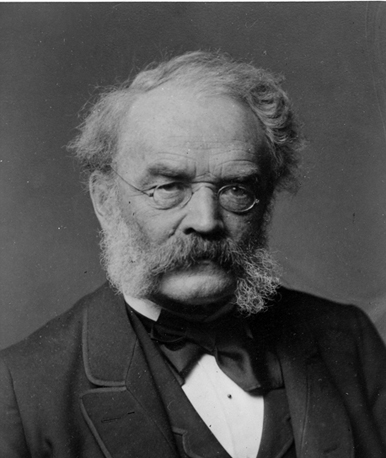
Werner von Siemens was more than an inventor—he was an architect of modernity. Born in 1816 in Lenthe, Germany, this electrical engineer and entrepreneur transformed how the world communicated, traveled, and powered its industries. His groundbreaking work on the self-excited dynamo and improvements to the electric telegraph laid the foundation for today’s electrical and telecommunications networks.
By the time of his death in 1892, Siemens had built a global empire—Siemens & Halske (now Siemens AG)—that employed thousands and connected continents through underwater cables. His legacy isn’t just in patents but in how he industrialized innovation, turning scientific breakthroughs into practical, world-changing technologies.
Werner von Siemens’ journey began in a modest Prussian household. His father, a tenant farmer, couldn’t afford formal education for all his children, so Werner enrolled in a military academy. There, he studied mathematics, physics, and engineering—skills that would later define his career.
His early work in the Prussian artillery exposed him to the limitations of telegraph technology. The existing systems were slow, unreliable, and unable to transmit over long distances. Siemens saw an opportunity—not just to improve the technology but to revolutionize it.
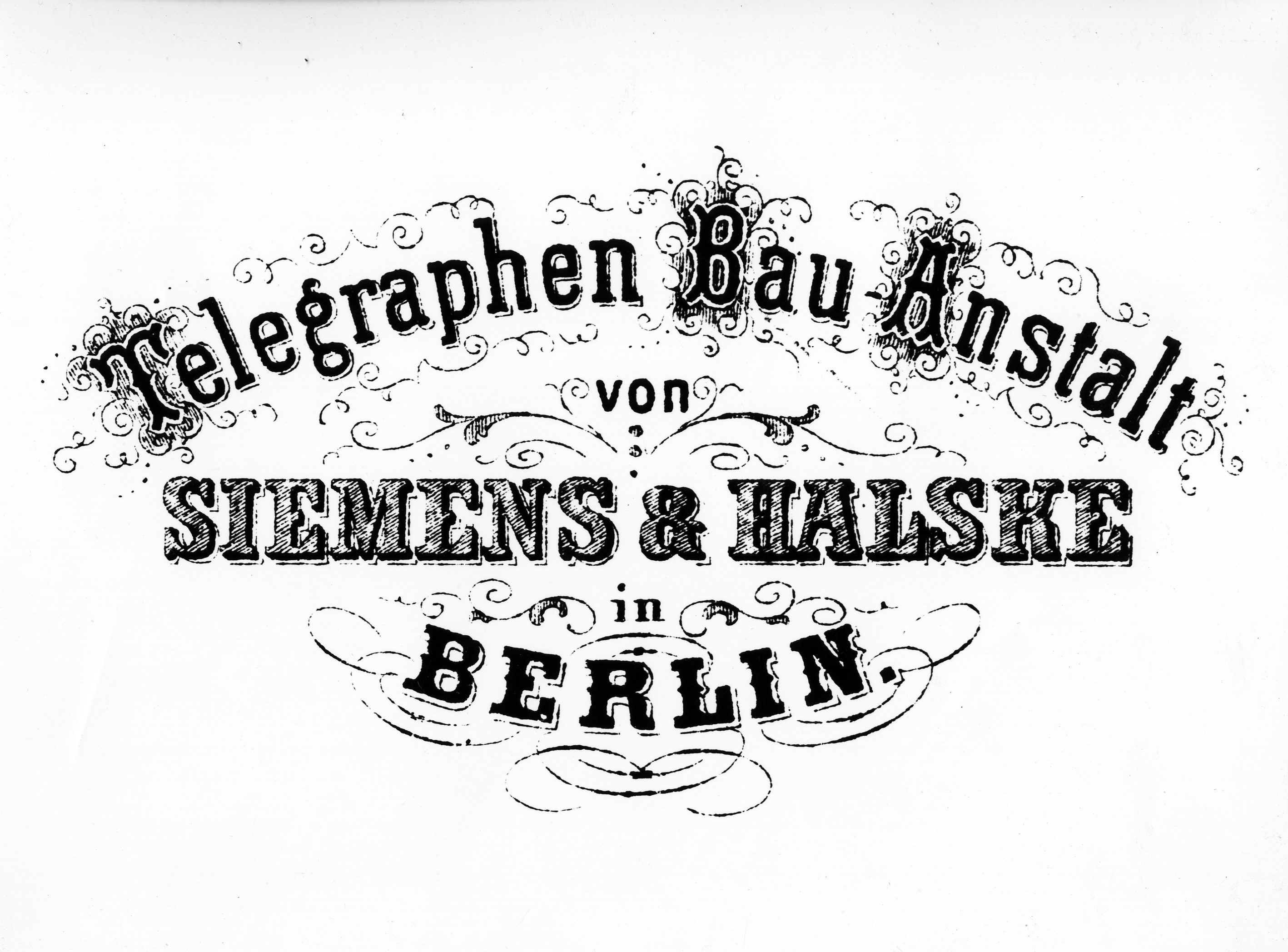
In 1847, Werner von Siemens co-founded Telegraphen-Bauanstalt Siemens & Halske with mechanic Johann Georg Halske. Their mission? To build better telegraph systems. Within years, the company became a leader in electrical engineering, thanks to Siemens’ relentless experimentation.
One of their first major breakthroughs was the use of gutta-percha, a natural plastic, to insulate underwater cables. This innovation made long-distance communication possible, paving the way for global telegraph networks.
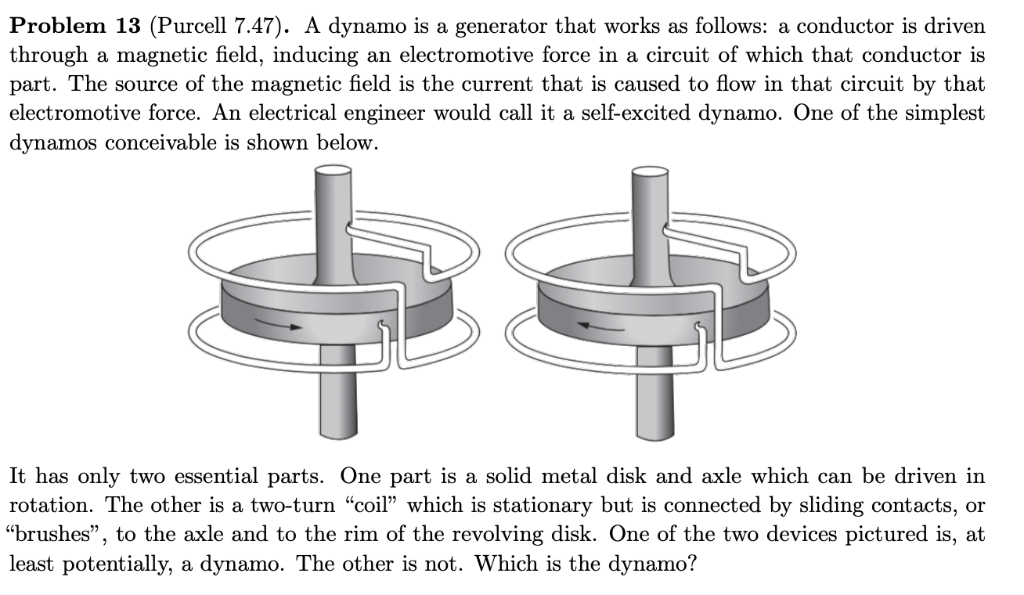
Siemens’ most famous invention—the self-excited dynamo—changed the world forever. Before his breakthrough in 1866, electricity was generated using inefficient methods. The dynamo solved this by using electromagnets to produce a continuous, powerful electrical current.
This wasn’t just a scientific achievement; it was an industrial revolution. Factories, streetlights, and even early electric trains could now run on reliable power. Siemens didn’t just invent the dynamo—he commercialized it, ensuring it became the backbone of modern electrification.
The genius of Siemens’ dynamo lay in its simplicity. Unlike earlier models that relied on permanent magnets, his design used residual magnetism to generate a self-sustaining electrical field. This meant:
Historians note that others, like Ányos Jedlik and Charles Wheatstone, had explored similar ideas. But Siemens was the first to patent, produce, and deploy the technology at scale—a testament to his business acumen.
Siemens didn’t just invent; he expanded. By the 1870s, his company had offices in London, Paris, St. Petersburg, and Vienna. They laid telegraph cables across the Mediterranean and connected Europe to India, shrinking the world in ways previously unimaginable.
His business model was ahead of its time:
By 1889, when Siemens retired, his company employed over 5,000 workers—a staggering number for the era. His brother Carl Wilhelm Siemens and later generations would continue expanding the empire, but Werner’s vision remained its core.
Today, Siemens AG is a global conglomerate with over 300,000 employees, operating in automation, energy, healthcare, and infrastructure. But Werner von Siemens’ influence goes beyond corporate success.
His work in electrification and telecommunications set the stage for:
Modern historians emphasize that Siemens’ true genius was in scaling innovation. He didn’t just create—he industrialized, ensuring his inventions reached every corner of the globe.
As we move toward a future powered by renewable energy and smart grids, Werner von Siemens’ legacy reminds us that progress isn’t just about ideas—it’s about making them work for the world.
Continue reading in Part 2, where we explore Siemens’ most famous inventions in detail, his rivalry with contemporaries, and how his company shaped the 20th century.
Before the internet, there was the electric telegraph—and Werner von Siemens made it faster, more reliable, and global. In the 1850s, telegraph lines were limited by poor insulation and weak signals. Siemens solved these problems with two key innovations:
First, he introduced gutta-percha, a rubber-like material, to insulate underwater cables. This allowed signals to travel long distances without degradation. Second, he developed the pointer telegraph, which used a needle to indicate letters—far more efficient than Morse code’s dots and dashes.
Siemens’ company didn’t just improve telegraphs—they built the networks that connected empires. In 1858, they laid a cable across the Mediterranean, linking Europe to the Middle East. By 1870, their cables stretched from London to Calcutta, cutting communication time from weeks to minutes.
These projects were engineering marvels:
By 1880, Siemens & Halske had installed over 20,000 miles of telegraph cable, making them the backbone of international communication. Governments, banks, and newspapers relied on their infrastructure—a testament to Siemens’ vision of a connected world.
In 1879, Werner von Siemens unveiled something the world had never seen: an electric passenger train. At the Berlin Industrial Exhibition, his locomotive pulled three cars at 13 km/h (8 mph)—a modest speed, but a revolutionary concept. For the first time, a train ran without steam, coal, or horses.
This wasn’t just a novelty. Siemens proved that electricity could replace steam power, offering a cleaner, more efficient alternative. His design used a third rail to deliver power, a system still used in modern subways.
Within two years, Siemens’ technology went from demonstration to public service. In 1881, the world’s first electric tram began operating in Lichterfelde, near Berlin. This 2.5 km (1.6 mi) route was the first step toward urban electrification.
The tram’s success led to rapid adoption:
Siemens’ electric railway wasn’t just about speed—it was about urban transformation. By eliminating smoke and noise, it made cities cleaner and more livable, setting the stage for modern public transit.
Werner von Siemens filed dozens of patents across Europe and the U.S., securing his inventions’ commercial future. His U.S. Patent No. 183,668 (1876) for an electric railway and Patent No. 307,031 (1884) for an electric meter were just two of many. But innovation rarely happens in isolation—and Siemens’ work was no exception.
Historical records show that Ányos Jedlik, a Hungarian physicist, had experimented with a similar dynamo design in 1861. Meanwhile, Samuel A. Avery and Charles Wheatstone in England had also explored electromagnetism. So why is Siemens credited with the breakthrough?
While others tinkered in labs, Siemens scaled and sold his inventions. His dynamo wasn’t just a prototype—it was a market-ready product. By 1867, Siemens & Halske was manufacturing dynamos for factories, streetlights, and telegraph stations.
Key factors that set Siemens apart:
As historian Thony Christie notes, “Siemens was not just an inventor but an industrial organizer. He turned science into industry.” This dual role—scientist and entrepreneur—is why his name endures.
Werner von Siemens didn’t just build machines; he built a corporate culture that valued innovation, quality, and global thinking. His business principles were decades ahead of their time:
Long before “R&D” became a corporate buzzword, Siemens funded dedicated research labs. His teams didn’t just assemble products—they tested, refined, and invented. This approach led to breakthroughs like:
By 1880, Siemens & Halske employed over 100 engineers—a massive investment in human capital for the era.
Siemens understood that technology had no borders. By 1850, his company had agents in Russia. By 1860, they’d opened offices in London and St. Petersburg. His strategy included:
This approach made Siemens & Halske the first true multinational electrical company, with operations on four continents by 1890.
Behind the patents and profits, Werner von Siemens was a man of contradictions. He was disciplined yet restless, a military-trained engineer who thrived in chaos. Colleagues described him as:
He also believed in social responsibility. Siemens funded worker housing, education programs, and even a company pension system—rare benefits in the 19th century.
In his 1892 memoir, Siemens wrote:
“The greatest satisfaction in my life has been to see my inventions not as mere curiosities, but as forces that improve human life.”
This philosophy guided his final years. Even after retiring in 1889, he remained active in scientific societies, advocating for electrification as a public good.
Continue to Part 3, where we explore Siemens’ lasting impact on modern industry, his company’s evolution into Siemens AG, and why his story matters in today’s tech-driven world.
When Werner von Siemens retired in 1889, his company employed over 5,000 people and had laid the foundation for a global empire. Today, Siemens AG is a $70 billion conglomerate with operations in 190 countries, but its DNA remains rooted in Werner’s vision of innovation through engineering.
The company’s growth timeline reveals a relentless pursuit of progress:
Werner’s emphasis on R&D and global reach ensured that Siemens didn’t just survive industrial shifts—it drove them.
The self-excited dynamo wasn’t just a 19th-century marvel—it was the ancestor of nearly every electrical generator today. From hydroelectric dams to wind turbines, the principle of electromagnetic induction powers our world. But Siemens’ influence extends far beyond electricity:
Siemens’ early work on insulated cables and signal amplification laid the groundwork for:
Today, Siemens’ subsidiary Siemens Mobility develops smart rail systems that use real-time data—a direct descendant of Werner’s telegraph-based train signaling.
Werner von Siemens dreamed of cities powered by clean electricity. That vision is now a reality through:
In 2021, Siemens announced a $1 billion investment in green hydrogen technology, proving that Werner’s commitment to sustainable energy lives on.
While Werner von Siemens is celebrated as a titan of industry, modern historians urge a nuanced view. His achievements didn’t occur in a vacuum, and his methods weren’t without controversy.
For decades, Siemens was portrayed as a lone genius who single-handedly electrified the world. But recent scholarship highlights:
Historian David Edgerton argues that industrial progress is rarely about “Eureka!” moments but rather incremental, collaborative effort. Siemens’ true genius may have been in organizing that effort.
Siemens’ aggressive patenting strategy secured his company’s dominance but also sparked debates about intellectual property. Critics argue that his patents:
Yet defenders point out that patents funded further R&D, creating a virtuous cycle of innovation. This tension between protectionism and progress remains relevant in today’s tech wars.
More than 130 years after his death, Werner von Siemens’ life offers critical lessons for today’s entrepreneurs, engineers, and policymakers.
Siemens didn’t just theorize—he built, tested, and deployed. Modern startups in cleantech and AI can learn from his approach:
Siemens’ decision to expand internationally within a decade of founding his company was radical. Today’s tech giants follow the same playbook:
As Elon Musk and Jeff Bezos race to globalize space tech, Siemens’ model of early internationalization remains a blueprint.
Long before “ESG” (Environmental, Social, Governance) became a buzzword, Siemens prioritized:
Today, Siemens AG’s “DEGREE” framework (Decarbonization, Ethics, Governance, Resource Efficiency, Equity, Employment) echoes Werner’s belief that profit and purpose aren’t mutually exclusive.
Werner von Siemens’ life was a masterclass in turning ideas into industries. He didn’t just invent the dynamo—he electrified cities. He didn’t just improve the telegraph—he shrunk the globe. And he didn’t just build a company—he created a legacy of innovation that still powers progress today.
His story reminds us that the greatest breakthroughs come from those who:
As we stand on the brink of a new industrial revolution—one driven by AI, renewable energy, and smart infrastructure—Werner von Siemens’ journey is more than history. It’s a roadmap.
In his own words:
“The value of an idea lies in the using of it.”
And use it, he did—lighting up the world, one invention at a time.
For further reading, explore the Siemens Historical Institute or dive into “The Siemens Century” by Wilfried Feldenkirchen. The past, after all, is prologue.



Your personal space to curate, organize, and share knowledge with the world.
Discover and contribute to detailed historical accounts and cultural stories. Share your knowledge and engage with enthusiasts worldwide.
Connect with others who share your interests. Create and participate in themed boards about any topic you have in mind.
Contribute your knowledge and insights. Create engaging content and participate in meaningful discussions across multiple languages.
Already have an account? Sign in here
Explore the profound legacy of Thomas Edison, a pioneering inventor who transformed society with over 1,000 patents. Fro...
View Board
Discover the fascinating legacy of Alexander Bain, the inventive genius and often overlooked pioneer of telegraphy. This...
View Board
Explore the remarkable life of Werner von Siemens, a pioneer of modern technology whose innovations in electrical engine...
View Board
"Discover Werner von Siemens' legacy: dynamo invention, electrified railways, and Siemens AG's global tech impact. Explo...
View Board
Antonio Meucci pioneer behind the telephone whose work and innovations significantly contributed to early telephony deve...
View Board
Explore the life and legacy of Walter Brattain, a pivotal figure in semiconductor history and co-inventor of the point-c...
View Board
Walter Brattain: The Transistor Pioneer Who Changed Electronics Early Life and Education of Walter Brattain Walter Hous...
View Board
Discover how John Logie Baird, the Father of Television, pioneered mechanical TV and revolutionized global media with hi...
View BoardDiscover the transformative legacy of Louis Paul Cailletet, the French physicist whose groundbreaking work with gases re...
View Board
Alessandro Volta, inventor of the electric battery and pioneer of electrical science, revolutionized energy with the Vol...
View Board
Discover how André-Marie Ampère, the father of electromagnetism, revolutionized science with Ampère's Law and shaped mod...
View Board
Discover the inspiring journey of David L. Jones, a trailblazer in electronics and engineering, and the founder of EEVbl...
View Board
Pioneering innovator Charles Hard Townes revolutionised science with his groundbreaking work on the maser and laser, ear...
View Board
Alessandro Volta, a pioneering Italian physicist, revolutionized electricity with the invention of the voltaic pile, sha...
View Board
Explore the pioneering legacy of Charles Babbage, the visionary often regarded as the "father of the computer." From his...
View Board
Discover the genius of Michael Reeves, a YouTube sensation blending humor with technological innovation. Explore his ecc...
View Board
Discover how Édouard Branly's coherer revolutionized communication as the first practical radio wave detector, paving th...
View BoardDiscover how the Fresnel lens revolutionized optics, from 19th-century lighthouses to modern solar energy and VR. Explor...
View Board
John Logie Baird, the Scottish inventor who pioneered mechanical television in 1925. Explore his early experiments, firs...
View Board
Discover the legacy of Michael Faraday, the self-taught genius hailed as the Father of Electromagnetism. From his humble...
View Board
Comments