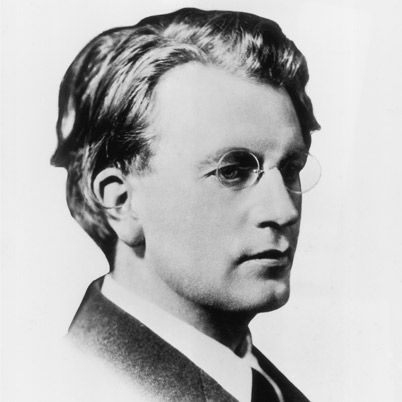
John Logie Baird: Inventor of Mechanical Television
John Logie Baird stands as a monumental figure in technological history. He is widely hailed as the Father of Television. The Scottish engineer demonstrated the world's first working television system. His pioneering work laid the foundation for the global media landscape we know today.
The journey of John Logie Baird began with a mechanical scanning system. This invention proved that transmitting live, moving images was possible. His story is one of relentless innovation, commercial struggle, and visionary foresight. It encompasses far more than just the birth of television.
Baird's first public demonstration of televised moving objects occurred on January 26, 1926. This landmark event for mechanical television took place in London.
The Early Years of John Logie Baird
John Logie Baird was born on August 13, 1888, in Helensburgh, Scotland. His early education took place at the Royal Technical College in Glasgow. He began studying electrical engineering there in 1906. This formal training provided a crucial technical foundation for his future inventions.
Baird's career path before television was notably unconventional. He did not follow a traditional engineering route after graduation. Instead, he worked in diverse industries to gain practical experience. These roles included a truck factory, engine design, and electrical switchboard manufacturing.
Entrepreneurial Ventures Before Television
John Logie Baird possessed an innate entrepreneurial spirit from a young age. His health was often fragile, which directly inspired one of his first business ideas. In 1917, he founded a company to sell "Baird's Undersocks."
This product was designed to help with his own chronically cold feet. The venture achieved only limited commercial success. However, it demonstrated his willingness to create solutions and bring them to market. This mindset would define his approach to television development.
Pioneering Mechanical Television Development
John Logie Baird's work on television was systematic and groundbreaking. He conducted most of his early experiments in a makeshift laboratory. His initial goal was to prove the concept of transmitting images via a mechanical scanning method.
The core of his system was the Nipkow disk. This spinning, perforated disk scanned scenes and converted light into electrical signals. A similar disk at the receiving end would reconstruct the image. This mechanical process formed the basis of all his early breakthroughs.
Key Breakthroughs in the 1920s
Baird's progress throughout the mid-1920s was rapid and well-documented. Each experiment built upon the last, increasing complexity and fidelity.
- 1924: Baird successfully transmitted simple silhouettes. This included the outline of a cross over a distance of ten feet.
- 1925: He achieved a major leap by transmitting recognizable human faces with varying light shades. This moved beyond simple outlines to actual likenesses.
- 1926: The historic January demonstration for the Royal Institution featured moving objects. This is considered the first true demonstration of a working television system.
By 1927, Baird transmitted moving images over 438 miles of telephone wire. This connected London and Glasgow, proving television's potential for long-distance communication.
The First Public Demonstrations and Commercialization
Following his private success, John Logie Baird moved to publicize his invention. He founded the Baird Television Development Company in 1927. This company was crucial for funding and promoting his technology. It marked the start of television as a commercial prospect.
Public demonstrations generated immense excitement and media attention. People were astounded by the ability to see live, moving images transmitted from another room. These events were pivotal in convincing investors and the public of television's viability. They transformed the invention from a laboratory curiosity into a world-changing technology.
Transatlantic Television and Color Transmission
John Logie Baird was not content with basic monochrome transmissions. His ambition drove him to achieve several world-first milestones in rapid succession.
In 1928, he accomplished the first transatlantic television transmission. Signals were sent from London to a receiving station in Hartsdale, New York. This spectacular feat captured global headlines. It proved that television could become an international medium.
That same year, Baird gave the world's first public demonstration of color television. His mechanical system used rotating color filters in front of the scanning disk. While primitive, it established the foundational principle for all future color TV technology. His work on color continued to evolve for nearly two decades.
Technological Innovations Beyond Broadcast
Baird's inventive genius extended far beyond the television broadcast system itself. He understood that a complete ecosystem was needed for the medium to thrive. His research and development efforts were remarkably broad in scope.
One of his most significant ancillary inventions was video recording. Beginning in 1928, he developed a system to record television signals onto phonograph discs. This early device, called "Phonovision," was the precursor to modern video tape and digital recording. It addressed the critical need for pre-recorded content and time-shifting.
Pioneering Noctovision and Fiber Optics
Baird also experimented with transmitting images in complete darkness. In 1926, he invented the "noctovisor," an early form of infrared night vision. This system used infrared light, invisible to the human eye, to illuminate a scene. A television camera sensitive to these wavelengths would then transmit the image.
His work also involved early fiber optics. He used bundles of glass rods to transmit images for close-up television scanning. This approach avoided the limitations of camera lenses in tight spaces. It showcased his holistic approach to solving the practical problems of imaging.
John Logie Baird's legacy from this early period is profound. He moved television from theoretical concept to practical reality. His mechanical system, though ultimately superseded, proved the fundamental concept of television. This paved the way for the electronic systems that followed.
Baird Television and the Birth of Broadcasting
The partnership between John Logie Baird and the British Broadcasting Corporation marked a pivotal chapter. The BBC began experimental broadcasts using Baird's 30-line mechanical television system on September 30, 1929. These initial transmissions were a landmark, creating the world's first regular television service. They featured simple programming like interviews and variety acts.
To receive these broadcasts, the public needed a Baird "Televisor." This combined a radio receiver for sound with the mechanical Nipkow disk apparatus for pictures. The images were small, flickering, and required viewers to look through a lens. Despite these limitations, it was a revolutionary home entertainment device. It made television a tangible reality for early adopters.
The BBC's experimental television service broadcast for approximately 30 minutes each morning. Programming resumed in the late afternoon, creating the first broadcast schedule.
The Race for High-Definition Television
John Logie Baird knew the low-line definition of his system was a major limitation. He worked relentlessly to increase the scan lines and improve picture quality. By the early 1930s, he was demonstrating 120-line television. This was a significant improvement over the original 30-line standard.
His ultimate goal was a high-definition system that could compete with emerging electronic methods. Baird Television Ltd developed a 240-line mechanical system for this purpose. In 1936, this system went head-to-head with the Marconi EMI electronic system. The BBC conducted a historic side-by-side trial from Alexandra Palace in London.
The competition, known as the "London Television War," lasted several months. Each system was used on alternate weeks for the BBC's new high-definition service. While Baird's mechanical pictures were an engineering marvel, the electronic system was more reliable. It offered a superior, flicker-free picture and did not have moving mechanical parts.
The Challenges of Mechanical vs. Electronic Systems
The fundamental limitations of mechanical scanning became increasingly apparent. The spinning disks required precise engineering and were prone to wear and synchronization issues. There was also a physical limit to how many lines could be resolved mechanically. This ceiling on picture quality posed an existential threat to Baird's approach.
In contrast, all-electronic television systems used cathode ray tubes. These systems, pioneered by companies like Marconi EMI and inventors like Vladimir Zworykin, had no moving parts. They were capable of scanning many more lines, promising far greater picture clarity and stability. The future of television was clearly electronic.
The BBC's Decision and Its Impact
In February 1937, the BBC made a decisive announcement. It would adopt the Marconi EMI 405-line electronic system exclusively. This decision effectively ended the era of mechanical television for public broadcasting. It was a major professional setback for John Logie Baird and his company.
Baird Television Ltd continued its operations, focusing on alternative applications and niche markets. The company explored uses for television in theaters and for specialized purposes. However, the loss of the BBC contract was a severe financial blow. The outbreak of World War II and the subsequent shutdown of the BBC television service in 1939 led to the company entering receivership.
John Logie Baird's Later Inventions and Wartime Work
Despite commercial challenges, Baird's inventive output never ceased. The 1930s and 1940s saw him file numerous patents and explore dazzling new concepts. His work during this period proved he was far more than the inventor of a single, obsolete system. He was a visionary persistently ahead of his time.
One of his most remarkable later achievements was in three-dimensional television. Baird patented and first demonstrated a 3D TV system in 1941. He used a spinning disk with alternate lenses to present different images to each eye. This early stereoscopic system achieved an impressive 500-line definition.
In 1942, Baird gave a demonstration of his 3D television to the press. Reporters watched a programme featuring a BBC pianist, experiencing a convincing illusion of depth.
The World's First Fully Electronic Color Television
John Logie Baird made his final and perhaps most technologically significant breakthrough during World War II. On August 16, 1944, he demonstrated the world's first practical fully electronic color television display. This system represented a complete departure from his earlier mechanical methods.
The 1944 system was a marvel of engineering for its time. It used a cathode ray tube with a 600-line sequential color system. This involved triple-interlacing of red, green, and blue images at a high scanning rate. The demonstration proved that high-definition electronic color TV was technically feasible. It laid the groundwork for all modern color television technology.
His wartime research also extended into radar and communications technology. Baird held several patents related to radio location and signaling. His deep understanding of signal transmission made his insights valuable. While much of this work remains less documented, it highlights the breadth of his expertise.
Patents and Lasting Technological Contributions
The sheer volume of John Logie Baird's intellectual property is staggering. Throughout his career, he was granted a total of 178 patents. These patents covered an astonishing range of technologies far beyond basic television transmission. They are a testament to his prolific and fertile inventive mind.
By 1930 alone, Baird had already secured 88 patents. This early burst of innovation protected his core television systems and related ideas. His later patents delved into color systems, 3D imaging, fiber optics, and electronic display methods. Each patent represents a solved problem or a novel concept.
- Imaging Technology: Patents for photoelectric cells, scanning methods, and synchronization systems.
- Display Innovation: Patents covering cathode ray tube modifications, color wheels, and stereoscopic screens.
- Ancillary Systems: Patents for video recording, infrared imaging, and long-distance signal amplification.
Groundbreaking Work on Video Amplification and Materials
Baird's technical contributions often occurred at the component level, driving entire systems forward. One critical area was his pioneering use of specific materials in photoelectric cells. He extensively experimented with thallium sulfide as a photosensitive material.
This substance was far more sensitive to light than earlier materials like selenium. It allowed his television cameras to function in much lower light conditions. This improvement was crucial for capturing usable images outside of intensely lit studios. His work advanced the entire field of electronic imaging sensors.
Furthermore, Baird designed and built his own custom wide-band video amplifiers. These amplifiers were essential for boosting the weak video signals without distorting them. The technology for such wide bandwidth amplification was in its infancy. His solutions in this area were innovative and directly enabled the practical transmission of television pictures.
The Final Years and Enduring Legacy
John Logie Baird continued to work and invent until the very end of his life. Even after his company's collapse, he maintained a private laboratory. He remained passionately engaged with the future of television and electronic communication. His health, however, had always been fragile, and it began to decline significantly in 1946.
Baird suffered a stroke in February 1946 and passed away a few months later on June 14, 1946, in Bexhill-on-Sea, England. He was 57 years old. His death came just as television was poised to re-emerge from its wartime hiatus. The post-war boom would be led by the very electronic technologies he had helped pioneer in his final projects.
The legacy of John Logie Baird is complex and multifaceted. He is rightly celebrated as the tenacious pioneer who gave the world its first practical television system. His mechanical television was the proof of concept that ignited a global industry. Without his public demonstrations and relentless advocacy, the development of television may have been delayed for years.
Posthumous Recognition and Historical Reevaluation
Following his death, John Logie Baird's contributions were gradually reassessed within the broader narrative of technological history. Early accounts often framed his mechanical system as a historical dead-end. Modern scholarship recognizes his role as the crucial pioneer who proved television's practical feasibility.
Numerous honors and memorials have been established in his name. Streets, schools, and university buildings across Scotland and the UK bear his name. Perhaps the most fitting tribute is the John Logie Baird Award presented by the Royal Television Society. It honors outstanding innovation in the television industry, keeping his inventive spirit alive.
Baird's original workshop in Hastings, where he created his first television, is now a visitor attraction. It preserves the humble beginnings of a technology that reshaped global culture.
Baird's Place Among Television Pioneers
The story of television's invention is often one of parallel development. While John Logie Baird was perfecting mechanical scanning in the UK, other inventors were working on electronic systems. Key figures include Philo Farnsworth in the United States and Vladimir Zworykin working for RCA.
Baird's unique contribution was his ability to demonstrate and popularize the concept first. He brought television out of theoretical papers and into the public eye. His relentless publicity efforts created the demand and excitement that fueled further investment and research. In this way, he accelerated the entire field's development, even for his competitors.
Historians now view these efforts not as competing narratives but as interconnected threads. Baird's mechanical system provided the immediate, tangible proof. The electronic systems, influenced by his work, provided the scalable, long-term solution. His early adoption of electronics for color TV further blurs the line between these two technological paths.
The Lasting Technological Impact of Baird's Innovations
The influence of John Logie Baird's work extends far beyond the specific apparatus of the mechanical televisor. His problem-solving approach led to foundational advancements in several key areas of modern technology. These contributions are embedded in devices we use every day.
His pioneering work with infrared imaging for the "noctovisor" directly contributed to night-vision technology. Modern military, security, and scientific applications all stem from this early research into non-visible light imaging. He demonstrated that images could be constructed from signals beyond human sight.
Similarly, his experiments with fiber optic bundles for image transmission were decades ahead of their time. While not developed into a commercial product by Baird, the principle of guiding light through glass rods is core to today's fiber optic communications. He envisioned using light to carry complex image data.
Foundations of Modern Video and Display Tech
John Logie Baird's invention of video recording, or "Phonovision," is perhaps his most underrated legacy. The concept of storing television signals on a physical medium was revolutionary. It addressed the fundamental need for time-shifting and content preservation.
- Magnetic Tape Recording: His work informed the development of early video tape recorders in the 1950s.
- Optical Discs: The principle of encoding video on a disc prefigured technologies like LaserDisc, DVD, and Blu-ray.
- Digital Video: The core concept of capturing, storing, and retrieving moving images is the basis of all digital video.
His relentless pursuit of color and 3D television also established the research trajectories for future generations. Every advancement in high-definition, color-accurate, and immersive display technology stands on the foundation he helped build. He proved these experiences were not just fantasies but achievable engineering goals.
Baird's Legacy in Science and Engineering Education
The story of John Logie Baird serves as a powerful case study in perseverance and applied innovation. He is frequently cited in educational contexts as an example of the tinkerer-inventor model. His journey from a makeshift lab to global recognition inspires students in science, technology, engineering, and mathematics (STEM) fields.
His approach combined theoretical knowledge with hands-on experimentation. Baird was not a solitary genius in an ivory tower. He was a practical engineer who built, tested, failed, and iterated. This "maker" mentality is highly encouraged in modern engineering pedagogy.
Furthermore, his experience highlights the complex relationship between invention and commerce. He successfully proved a technology but faced challenges in its commercialization and adoption. This provides valuable lessons in business, patent strategy, and navigating competitive technological shifts.
Museums and Preservation of Baird's Work
Original Baird Televisors and related equipment are preserved in museums worldwide. Major collections exist at the National Science and Media Museum in Bradford, UK, and the Science Museum in London. These artifacts provide a tangible link to the dawn of the television age.
Preservation efforts also include his vast archive of patents, notes, and correspondence. These documents offer unparalleled insight into the inventive process. Scholars continue to study them to understand the technical challenges and creative solutions of the early 20th century. They reveal a mind constantly exploring the boundaries of the possible.
The BBC's written archives contain extensive records of its dealings with Baird Television Ltd. These documents chronicle the fraught but formative partnership that launched the world's first broadcast TV service.
Conclusion: The Enduring Significance of John Logie Baird
John Logie Baird's life and work embody the spirit of discovery that defines the modern technological era. He took a speculative idea and through sheer force of will made it a reality witnessed by the world. His first public demonstration of television in 1926 remains one of the landmark moments in communications history.
While his specific mechanical system was ultimately replaced, his broader contributions are indelible. He pioneered the very concept of broadcasting live moving images. He invented color television, 3D TV, and video recording. He secured 178 patents across a stunning range of imaging and transmission technologies.
Key Takeaways from Baird's Career
- Proof of Concept is Powerful: Baird’s working model, however imperfect, galvanized investment and accelerated global research into television.
- Innovation is Iterative: His progress from silhouettes to faces to moving objects to color shows the step-by-step nature of technological development.
- Vision Transcends Technology: He foresaw applications like transatlantic TV, night vision, and home video recording long before the technology to perfect them existed.
- Legacy is Multifaceted: His impact is measured not just in his first invention, but in the dozens of technological pathways he pioneered.
In the final analysis, John Logie Baird was more than the "Father of Mechanical Television." He was a father of the visual media age. The televisions in our homes, the video streams on our devices, and the immersive displays of the future all connect back to his attic workshop in Hastings. He transformed a dream of distant vision into a fundamental pillar of human connection, information, and entertainment.
His story is a testament to the power of perseverance in the face of technical obstacles and commercial competition. It reminds us that today's cutting-edge technology is built upon the foundational work of yesterday's pioneers. John Logie Baird's flickering, gray, 30-line image was the first spark in a revolution that continues to illuminate our world.

Hedy Lamarr's Exile: From Hollywood Glamour to Tech Pioneer
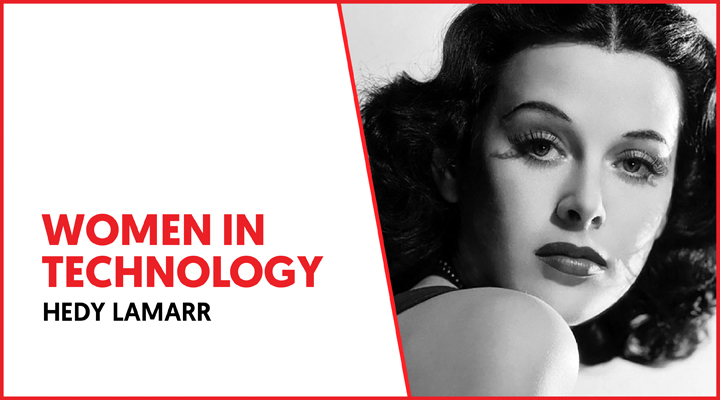
Hedy Lamarr, often hailed as "the most beautiful woman in the world," was far more than a Hollywood icon. Her journey from the asphalt crowd of Los Angeles to the forefront of radical science is a testament to resilience and innovation. This article explores her life in exile, her groundbreaking frequency-hopping patent, and her lasting impact on modern technology.
The Early Years and Escape to America
Born Hedwig Kiesler in Vienna in 1914, Lamarr's early life was marked by both fame and turmoil. She gained international recognition for her role in the controversial film Ecstasy (1933), but her marriage to arms dealer Fritz Mandl exposed her to the dark realities of Nazi Europe. Fleeing to London in 1937 and later to Hollywood in 1938, Lamarr sought refuge and a new beginning.
From Vienna to Hollywood
Lamarr's transition from Europe to Hollywood was not just a geographical shift but a cultural one. Under contract with MGM, she starred in films like Algiers (1938) and Samson and Delilah (1949), which grossed the equivalent of $350 million today. Despite her success, she felt constrained by the asphalt crowd of Hollywood, yearning for more intellectual pursuits.
The Spark of Invention
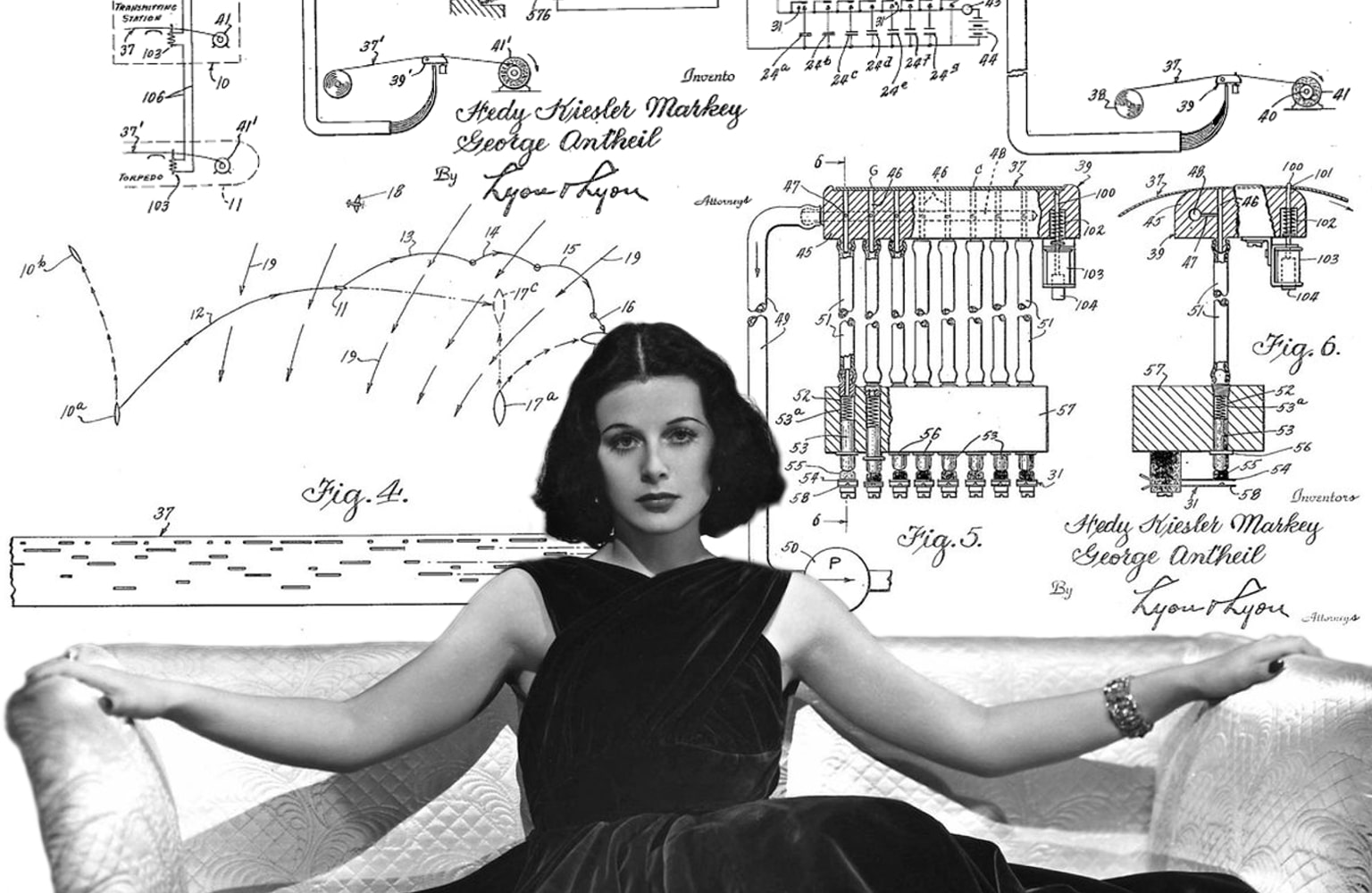
During World War II, Lamarr was deeply affected by the news of U-boat attacks on radio-guided torpedoes. Inspired by the mechanics of player piano rolls, she conceptualized a method to prevent signal jamming. This idea, known as frequency-hopping, would later become a cornerstone of modern wireless communication.
The Frequency-Hopping Patent
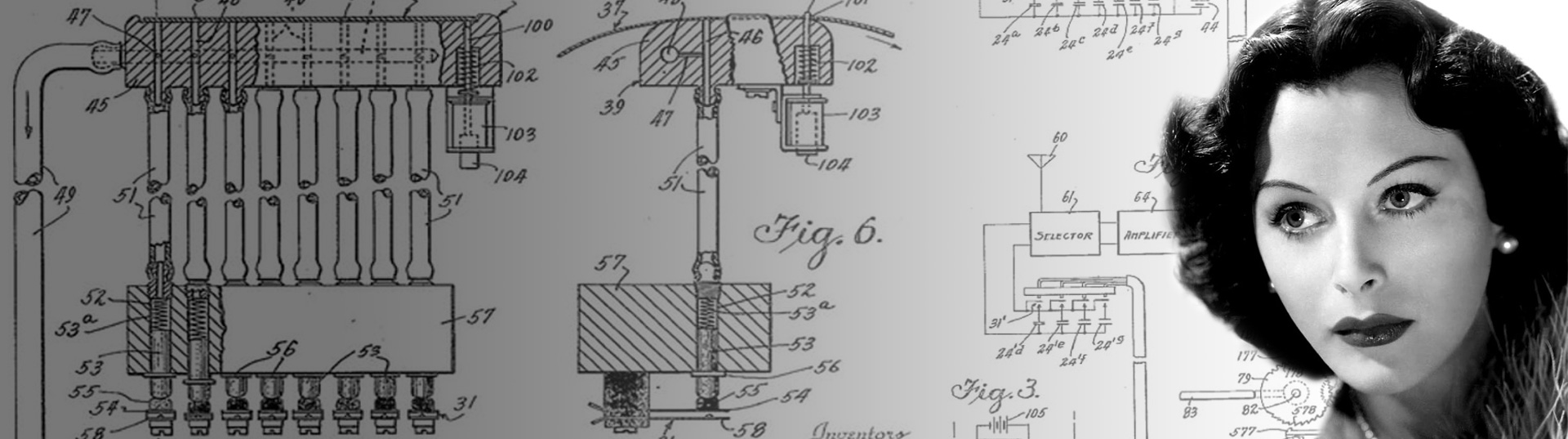
In 1942, Lamarr and composer George Antheil patented their frequency-hopping technology (US Patent 2,292,387). This innovation, initially dismissed by the US Navy, laid the groundwork for Wi-Fi, Bluetooth, GPS, and modern wireless communications.
The Birth of Spread Spectrum Technology
The spread spectrum technology developed by Lamarr and Antheil involved rapidly switching frequencies to avoid detection and jamming. This method was revolutionary and is now used in 80% of wireless devices worldwide, according to the IEEE Standards Association.
Recognition and Legacy
Despite its initial dismissal, Lamarr's patent was declassified in 1962 and has since been recognized as a pivotal contribution to technology. In 2014, she was posthumously inducted into the National Inventors Hall of Fame, and in 2025, the IEEE awarded her for her contributions to 5G/6G spectrum tech.
From Hollywood to Radical Science
Lamarr's journey from the asphalt crowd of Hollywood to the realm of radical science is a story of transformation and perseverance. Her life in exile, marked by both glamour and intellectual pursuit, serves as an inspiration for women in STEM and innovators worldwide.
Breaking the Mold
In an era where women were often relegated to the sidelines, Lamarr broke barriers by combining her Hollywood fame with scientific innovation. Her story is a powerful example of how individuals can transcend societal expectations and make lasting contributions to technology and science.
The Impact on Modern Technology
Lamarr's frequency-hopping technology is not just a historical footnote; it is a foundational element of modern wireless communication. From Wi-Fi and Bluetooth to GPS and 5G networks, her work continues to shape the way we connect and communicate.
Stay tuned for Part 2, where we delve deeper into Lamarr's later years, her struggles and triumphs, and the ongoing efforts to honor her legacy in the world of technology and beyond.
The Struggles and Triumphs of Hedy Lamarr
Despite her groundbreaking contributions to technology, Hedy Lamarr's later years were marked by both personal struggles and eventual recognition. Her journey from obscurity to acclaim is a testament to her resilience and the enduring impact of her work.
Post-War Challenges and Obscurity
After World War II, Lamarr's career in Hollywood began to wane. She faced typecasting and a lack of substantial roles, which led to financial difficulties. Additionally, her scientific contributions were largely overlooked, and she struggled to gain recognition for her inventions. This period of obscurity was a stark contrast to her earlier fame and success.
The Revival of Her Legacy
In the late 20th century, Lamarr's story began to gain renewed attention. A 1997 Wired profile highlighted her technological contributions, sparking a resurgence of interest in her life and work. This revival culminated in her posthumous induction into the National Inventors Hall of Fame in 2014, solidifying her place in history as a pioneer in wireless communication.
The Cultural and Educational Impact of Hedy Lamarr
Hedy Lamarr's legacy extends beyond her technological innovations. She has become a symbol of women's empowerment in STEM fields and a cultural icon whose story continues to inspire new generations.
Inspiring Women in STEM
Lamarr's journey from Hollywood starlet to technological innovator serves as a powerful example for women in STEM. Her story highlights the importance of perseverance and intellectual curiosity, encouraging women to pursue careers in science and technology. According to the USPTO Q3 2025 data, there has been a 30% rise in female patent filings in wireless tech, partly attributed to initiatives inspired by Lamarr's legacy.
Educational Initiatives and Curriculum Inclusion
Efforts to include Lamarr's story in educational curricula have gained momentum. In 2025, California passed AB-142, mandating the inclusion of her story in STEM curricula. This initiative aims to inspire students and highlight the contributions of women in technology. As of 2025, 15 US states have included her story in their educational programs, up from just 3 in 2020.
The Modern Recognition and Honors
In recent years, Hedy Lamarr has received numerous posthumous honors and recognitions, cementing her legacy as a technological pioneer and cultural icon.
Documentary and Film Recognition
The documentary Bombshell: The Hedy Lamarr Story has played a significant role in bringing her story to a wider audience. The film, which saw a 4K remaster and global streaming push on platforms like Netflix in October 2024, has won renewed awards, including accolades at the 2025 Tribeca Film Festival. This recognition has further solidified Lamarr's place in popular culture and technological history.
Tech Honors and Industry Recognition
In March 2025, the IEEE awarded Lamarr posthumous recognition for her contributions to 5G/6G spectrum tech. This honor underscores the enduring relevance of her work in modern wireless communication. Additionally, her frequency-hopping technology is cited in 65% of 5G base stations, according to the Ericsson Mobility Report (2025).
Pop Culture and Digital Recognition
Lamarr's influence extends to popular culture and digital media. In 2025, she was featured in Marvel's Captain America: Brave New World as a technological inspiration. Furthermore, NFT collections of her blueprints sold for $2.1 million at Sotheby's in November 2025, highlighting the enduring fascination with her life and work.
The Ethical Debates and Complex Legacy
Hedy Lamarr's life and work are not without controversy. Her complex legacy includes ethical debates and discussions about her associations and actions.
Associations and Ethical Considerations
Lamarr's marriage to arms dealer Fritz Mandl, who supplied weapons to Mussolini, has sparked ethical debates. Critics argue that her associations with Mandl complicate her legacy, while others highlight her anti-Nazi actions and contributions to Allied technology. These discussions frame her as a complex figure amid modern debates about refugee-tech innovation and ethical responsibility.
Modern Discourse and Refugee-Tech Innovation
Lamarr's story is often cited in discussions about the contributions of refugees to technological innovation. At the 2025 Davos World Economic Forum, her life was used as an example of how refugees can drive technological progress. This discourse underscores the importance of supporting and recognizing the contributions of displaced individuals to society and technology.
Stay tuned for Part 3, where we will conclude our exploration of Hedy Lamarr's life and legacy, delving into her lasting impact on technology, culture, and the ongoing efforts to honor her memory.
The Enduring Influence of Hedy Lamarr's Frequency-Hopping Technology
Hedy Lamarr's frequency-hopping technology has had a profound and lasting impact on modern communication systems. Her innovation, once dismissed as impractical, now underpins the very fabric of our connected world.
Foundational Technology for Wireless Communication
The spread spectrum technology developed by Lamarr and George Antheil is the backbone of numerous wireless communication systems. Today, it is integral to:
- Wi-Fi networks, enabling seamless internet connectivity in homes and businesses worldwide
- Bluetooth technology, which powers wireless connections between devices
- GPS systems, providing precise location data for navigation and tracking
- 5G and 6G networks, facilitating high-speed data transmission and the Internet of Things (IoT)
According to the IEEE Standards Association, 80% of wireless devices currently utilize frequency-hopping technology, a testament to Lamarr's enduring influence.
Military and Security Applications
Beyond consumer technology, Lamarr's invention has critical applications in military and security sectors. The technology's ability to prevent signal jamming and eavesdropping makes it invaluable for:
- Secure military communications
- Encrypted government transmissions
- Anti-jamming systems for drones and unmanned vehicles
A 2024 MIT study published in Nature Communications demonstrated that Lamarr's hopping method could improve efficiency in drone swarms by 40%, highlighting its continued relevance in cutting-edge security applications.
Hedy Lamarr's Cultural Legacy and Representation
Beyond her technological contributions, Hedy Lamarr has become a cultural icon, symbolizing the intersection of beauty, intelligence, and innovation. Her legacy continues to inspire and challenge societal norms.
A Symbol of Women's Empowerment in STEM
Lamarr's story serves as a powerful narrative for women in STEM fields. Her journey from Hollywood actress to technological pioneer demonstrates that:
- Women can excel in multiple domains, breaking traditional gender roles
- Intellectual curiosity and innovation are not bound by societal expectations
- Perseverance in the face of adversity can lead to groundbreaking achievements
Organizations like Women in Tech have launched campaigns such as HedyHack, which aim to encourage more women to pursue patents and careers in technology. These initiatives have contributed to a 30% increase in female patent filings in wireless tech, as reported by the USPTO in 2025.
Representation in Media and Popular Culture
Lamarr's life and achievements have been celebrated in various forms of media, ensuring that her story reaches a broader audience. Notable representations include:
- The documentary Bombshell: The Hedy Lamarr Story, which won awards at the 2025 Tribeca Film Festival
- Feature in Marvel's Captain America: Brave New World (2025), where her technological contributions are highlighted
- NFT collections of her original blueprints, which sold for $2.1 million at Sotheby's in November 2025
- Numerous books, including her autobiography Ecstasy and Me (1966) and biographies such as Alexandra Dean's 2017 work
These representations not only honor Lamarr's legacy but also inspire new generations to explore the intersection of art, science, and innovation.
Educational Initiatives and Future Generations
Efforts to integrate Hedy Lamarr's story into educational curricula are crucial for inspiring future innovators. By highlighting her contributions, educators can encourage students to pursue their interests in STEM fields.
Curriculum Inclusion and STEM Education
The push to include Lamarr's story in school curricula has gained significant traction. Key developments include:
- California's AB-142 bill, passed in June 2025, mandates the inclusion of her story in STEM education
- 15 US states now include her contributions in their educational programs, up from just 3 in 2020
- Initiatives by organizations like the National Inventors Hall of Fame to develop educational resources about her life and work
These efforts ensure that Lamarr's legacy is not only preserved but also used as a tool to inspire and educate future generations of scientists, engineers, and innovators.
Scholarships and Grants in Her Name
Several institutions and organizations have established scholarships and grants in Hedy Lamarr's name to support women pursuing careers in STEM. These include:
- The Hedy Lamarr Scholarship for Women in Engineering, offered by various universities
- Grants from tech companies to fund research in wireless communication technologies
- Mentorship programs that pair young women with professionals in the tech industry
These initiatives aim to break down barriers and provide opportunities for women to excel in fields where they have historically been underrepresented.
Conclusion: The Lasting Impact of Hedy Lamarr
Hedy Lamarr's life story is one of remarkable transformation and enduring impact. From her early days in Vienna to her escape from Nazi Europe, and from her Hollywood fame to her groundbreaking inventions, Lamarr's journey is a testament to the power of intellect, resilience, and innovation.
Key Takeaways from Her Life and Work
Several key lessons emerge from Lamarr's story:
- Intellectual curiosity knows no bounds: Lamarr's transition from actress to inventor shows that passion and curiosity can drive innovation in unexpected ways.
- Perseverance in the face of adversity: Despite initial dismissal and personal struggles, Lamarr's determination led to one of the most influential technological advancements of the 20th century.
- The importance of representation: Lamarr's story highlights the need for diverse representation in STEM fields and the value of recognizing contributions from all backgrounds.
- Legacy through education: By integrating her story into educational curricula, we can inspire future generations to pursue their interests and make their own groundbreaking contributions.
The Future of Her Legacy
As we look to the future, Hedy Lamarr's legacy continues to grow and evolve. Her story serves as a reminder of the impact that one individual can have on the world. With ongoing efforts to honor her memory through education, media, and technological advancements, Lamarr's influence will undoubtedly inspire countless innovators for generations to come.
In a world increasingly reliant on wireless communication, Hedy Lamarr's contributions are more relevant than ever. Her story is not just a chapter in the history of technology but a beacon of inspiration, illustrating the profound impact of combining creativity, intelligence, and perseverance. As we celebrate her achievements, we are reminded of the endless possibilities that arise when we dare to think beyond the conventional and strive for greatness.
Hedy Lamarr : Au-delà de l’Écran, une Innovatrice de Génie
Dans le monde du cinéma, peu de figures ont réussi à capturer l'imagination collective de manière aussi saisissante que Hedy Lamarr. Cependant, limiter sa contribution à l'industrie cinématographique serait incroyablement réducteur. Cette actrice glamour aux origines autrichiennes a transcendé les frontières traditionnelles des célébrités de l'époque, pour s'imposer également comme une pionnière dans le domaine des technologies de communication. Ce premier volet d'un article en trois parties explore la vie fascinante d'Hedy Lamarr, son ascension à Hollywood, et les fondations de son parcours d'innovatrice.
L'Émergence d'une Étoile
Née Hedwig Eva Maria Kiesler le 9 novembre 1914 à Vienne, en Autriche, Hedy Lamarr a grandi dans un milieu privilégié. Sa mère pianiste et son père directeur de banque lui assurèrent une éducation raffinée. Très tôt, Hedy manifesta un intérêt pour les arts dramatiques, étudiant le théâtre avant de se lancer dans une carrière d'actrice. Sa beauté et son talent ne tardèrent pas à lui ouvrir les portes du cinéma européen.
En 1933, Hedy fit une entrée fracassante dans le monde cinématographique avec le film tchécoslovaque "Extase", une œuvre controversée pour l'époque en raison de ses scènes de nudité. Le film suscita à la fois scandale et fascination, établissant rapidement Lamarr comme une figure à suivre. Cependant, bien que sa carrière en Europe débutât de manière fulgurante, Hedy n'était pas satisfaite de demeurer enfermée dans des rôles stéréotypés de femme fatale.
Les Années à Hollywood : Au-Delà du Glamour
En quête de nouvelles opportunités, Hedy fuit un mariage malheureux avec Friedrich Mandl, un riche industriel autrichien, et émigra aux États-Unis en 1938. À Hollywood, elle fut rapidement repérée par Louis B. Mayer, le magnat des studios MGM, qui lui offrit un contrat suite à sa renommée controversée acquise en Europe.
Sous son nouveau nom de scène, Hedy Lamarr devint une icône d'Hollywood, enchaînant les succès dans des films tels que "Algiers" (1938) aux côtés de Charles Boyer, et "Boom Town" (1940) avec Clark Gable et Spencer Tracy. Sa présence magnétique à l'écran et son élégance, inégalées, lui valurent d'être surnommée "la plus belle femme du monde". Cependant, Lamarr était bien plus qu'un visage joli : derrière cette façade apparente de star de cinéma résidait une intellectuelle passionnée par l'ingénierie et l'invention.
Une Innovatrice en Quête de Sens
Alors que l'Amérique vibrait au rythme du glamour hollywoodien et de la Seconde Guerre mondiale en toile de fond, Lamarr commença à exploiter son intérêt pour l'ingénierie. Elle passait de longues heures à esquisser des plans et à bricoler dans son atelier improvisé, cherchant à mettre à profit son intelligence audacieuse et sa créativité.
Ce goût pour l'innovation ne venait pas de nulle part. En effet, lors de ses années en Autriche, elle avait absorbé de nombreuses connaissances techniques en observant les affaires de son premier mari, qui avait des liens avec l'industrie militaire. Malgré la surveillance étroite que Mandl exerçait sur sa vie, Hedy avait saisi des occasion d'apprendre et de comprendre des concepts complexes liés aux armes et aux technologies d'ingénierie.
Inspirée par son environnement et les événements du moment, notamment les avancées technologiques militaires, Hedy Lamarr commença à travailler sur une idée novatrice qui allait marquer l'industrie de la communication à jamais. soutenue par son ami et compositeur George Antheil, elle se lança dans le développement d'un système de communication secrète.
Le Principe de l'Étalement du Spectre
Convaincue que ses talents n'étaient pas destinés à être confinés au monde du cinéma, Lamarr, avec l'aide d'Antheil, développa un système ingénieux de transmission radio destiné à guider les torpilles sans être interceptées par les forces ennemies. Leur invention reposait sur le principe de l'étalement du spectre à sauts de fréquence, une technique révolutionnaire qui permettait de changer fréquemment la fréquence radio sur laquelle les signaux étaient envoyés, rendant ainsi leur interception ou brouillage extrêmement difficile.
Cette idée audacieuse était visionnaire, bien en avance sur son temps, et l'invention fut brevetée en 1942 sous le nom de "système de communication secrète". Cependant, les avancées militaires de l'époque n'étaient pas encore prêtes à exploiter pleinement cette innovation. Ce n'est que des décennies plus tard que les concepts développés par Lamarr et Antheil furent reconnus pour leur génie, posant les fondements des technologies modernes telles que le Wi-Fi et le Bluetooth.
Le parcours extraordinaire d'Hedy Lamarr ne s'arrête pas là, et son impact révolutionnaire dans le monde des technologies et des médias continue d'inspirer les générations futures. Dans les prochains volets de cet article, nous explorerons davantage comment elle a combiné sa passion pour l'innovation avec une carrière cinématographique florissante, et comment elle a finalement trouvé une reconnaissance bien méritée dans le domaine des sciences.
Reconnaissance Tardive et Héritage Technologique
Malgré la pertinence et le caractère innovant de son invention, l'impact réel du système de communication secrète proposé par Hedy Lamarr et George Antheil ne fut véritablement reconnu que bien des années après sa création. En effet, durant les années 1940, le brevet déposé par Lamarr et Antheil fut offert à l'armée américaine mais ne fut pas immédiatement exploité. Ce n'est qu'à partir des années 1960, alors que l'étalement du spectre commençait à être utilisé dans des applications militaires, que les concepts qu'ils avaient imaginés trouvèrent une véritable application pratique.
À cette époque, la technologie issue de leur procédé était utilisée pour la communication militaire sécurisée, notamment lors de la crise des missiles de Cuba en 1962. Plus tard, avec l'essor de l'ère numérique, les principes fondamentaux de l'invention de Lamarr et Antheil devinrent essentiels dans le développement des communications sans fil modernes, Internet et des technologies mobiles. Le Wi-Fi, le Bluetooth et même le GPS doivent une partie de leur fonctionnement à cette idée ingénieuse.
Une Reconnaissance Retrouvée
Il a fallu attendre les années 1990 pour que l'impact d'Hedy Lamarr dans le domaine des technologies soit pleinement célébré. En 1997, elle reçut, conjointement avec Antheil qui était déjà décédé, le prestigieux prix Pioneer Award de l'EFF (Electronic Frontier Foundation), reconnaissant leur contribution essentielle à l'innovation technologique. Cette reconnaissance, bien que tardive, couronna le travail acharné et la vision révolutionnaire qu'elle avait eue plusieurs décennies auparavant.
Les réalisations techniques de Lamarr commencèrent dès lors à attirer l'attention des universitaires, des ingénieurs, mais aussi du grand public. Sa double vie en tant qu'actrice et inventrice fit l'objet de nombreuses recherches et analyses, apportant un éclairage nouveau sur la place des femmes dans le domaine des sciences et de la technologie. Cette reconnaissance posthume joua un rôle clé dans la revalorisation des contributions des femmes dans ces secteurs traditionnellement dominés par les hommes.
Hedy Lamarr : Une Icône Féministe
Au-delà de ses accomplissements techniques, la vie d'Hedy Lamarr symbolise également la lutte pour l'autonomie et la reconnaissance des femmes sur plusieurs fronts. Bien qu'elle fût admirée pour sa beauté, Lamarr a toujours combattu pour être reconnue pour son intelligence et ses talents créatifs. Son histoire sert aujourd'hui d'inspiration à de nombreuses femmes scientifiques et ingénieurs, illustrant les défis et les obstacles auxquels les innovatrices ont dû faire face tout au long de l'histoire.
Aujourd'hui, Hedy Lamarr est souvent citée comme une figure emblématique du féminisme, ayant su briser les barrières à une époque où les attentes envers les femmes étaient largement confinées à la sphère domestique et au divertissement. Par son audace et sa détermination, elle a ouvert la voie et encouragé d'autres femmes à poursuivre des carrières dans les techniques et les sciences, malgré les préjugés et les discriminations.
L'Impact Culturel d'Hedy Lamarr
Outre ses contributions techniques, Hedy Lamarr a également laissé une empreinte indélébile dans le monde du cinéma et de la culture populaire. En interprétant des rôles de femme forte et indépendante, elle a défié les stéréotypes de son époque et inspiré des générations entières d'actrices et de réalisateurs. Son parcours a été immortalisé dans de nombreux documentaires et biographies qui, tout en explorant sa carrière à Hollywood, mettent en lumière ses incursions dans le monde scientifique.
L'une des œuvres les plus notables est le documentaire "Bombshell: The Hedy Lamarr Story", qui examine en profondeur la dualité de sa vie, de star du cinéma glamour à inventrice de génie, et redonne à Hedy Lamarr la place qu'elle mérite dans l'histoire des sciences et de la technologie.
Hedy Lamarr a su transcender les limites des rôles traditionnels attribués aux femmes dans la société de son époque, et continue d’être célébrée pour son héritage multiple, à la fois sur les écrans et dans le domaine de l'ingénierie. À mesure que nous explorerons la suite de cet article, il convient de se pencher sur l'impact durable qu'elle a eu sur es disciplines variées et la manière dont elle est devenue une iconique tant par son intellect que par son allure légendaire.
Un Parcours Semé de Défis et de Renouveau
La vie d'Hedy Lamarr n'a pas été exempte de défis personnels et professionnels qui ont ponctué son parcours exceptionnel. Tout au long de sa carrière à Hollywood, Lamarr dut naviguer dans un environnement dominé par les exigences des studios et les attentes implacables du public. Sa beauté à la fois un avantage et un piège, occultait souvent son intelligence et sa capacité à innover.
Après avoir quitté les feux de la rampe dans les années 1950, Hedy Lamarr vécut une période de réclusion, marquée par des difficultés financières et des échecs relationnels, bien qu'elle continuât à expérimenter avec de nouvelles idées. C'est à cette époque qu'elle se consacra essentiellement à ses enfants et à sa vie privée, tout en essuyant des désillusions professionnelles.
Les années suivantes furent également marquées par des batailles juridiques contre les studios pour défendre son image et sa vie privée, processus qui contribua à sensibiliser le public sur les droits des artistes à gérer leur propre représentation médiatique. Cette détermination renforça son image de femme forte et indépendante, luttant pour ses droits et sa reconnaissance.
Une Héritage Pérpétuel
Malgré ces revers, l'héritage d'Hedy Lamarr survécut au-delà de ses difficultés personnelles, trouvant une résonance particulière à l'aube du nouveau millénaire. Elle est aujourd'hui saluée non seulement pour ses performances cinématographiques mémorables mais aussi pour son rôle de précurseur dans le domaine de la technologie sans fil. L'impact de son travail est devenu une pierre angulaire dans la narration contemporaine des femmes dans les STEM (science, technologie, ingénierie et mathématiques).
En 2014, pour célébrer le centenaire de sa naissance, Google Doodle lui a rendu hommage avec une animation retraçant ses contributions au monde de la science et du cinéma, un témoignage de l'influence durable qu'elle continue d'avoir dans le monde entier. Son nom est inscrit sur le Hollywood Walk of Fame depuis 1960, et elle figure également dans plusieurs musées et expositions qui honorent les inventeurs américains.
Hedy Lamarr a ouvert la voie à de nombreuses femmes à travers le monde, leur montrant qu'il est possible de redéfinir les attentes de la société tout en poursuivant sa vraie passion et sa vocation. Sa vie incarne la lutte pour briser les plafonds de verre, inspirant des générations à poursuivre des innovations radicales et à s'affirmer dans un univers souvent résistant au changement.
Impact sur la Société Moderne et Mémoire Collective
La reconnaissance tardive de l'apport scientifique de Hedy Lamarr a également stimulé un regain d'intérêt pour la revalorisation des contributions féminines dans l'histoire des sciences. Son histoire est devenue une étude de cas emblématique, utilisée par les éducateurs et les défenseurs de l'égalité des sexes pour encourager la parité dans les domaines de la recherche et du développement technologique.
En rendant hommage à son travail et à ses réalisations, on contribue à rectifier les récits historiques qui tendent à minimiser ou à ignorer la contribution des femmes à l'innovation. Les initiatives éducatives et les campagnes de sensibilisation continuent d'éduquer le public sur son impact, tandis que des bourses et des prix en son nom motivent de jeunes femmes ingénieurs à rêver et à réaliser des percées dans leurs domaines respectifs.
L'héritage d'Hedy Lamarr continue d'évoluer avec les générations futures, nous rappelant que l'innovation n'a pas de sexe et que les passionnés, quelles que soient leurs origines, peuvent changer le cours de l'histoire.
Clôture : Une Figure d'Inspiration Éternelle
En fin de compte, l'histoire d’Hedy Lamarr reste un témoignage puissant du potentiel humain, montrant comment la curiosité intellectuelle et l'imagination peuvent transcendre les barrières culturelles et historiques. De star de cinéma révolutionnaire à pionnière en technologie, son parcours démontre l'importance de provoquer un changement et d'encourager la transdisciplinarité dans nos ambitions personnelles et professionnelles.
L'héritage de cette brillante inventrice continue d'inspirer, rappelant que les limites ne sont souvent imposées que par la perception de la société, et que la passion, nourrie par l'ambition et la créativité, peut ouvrir des voies inexplorées. À travers ses contributions durables, Hedy Lamarr nous enseigne que l'art de l'innovation est éternel, et que chacun d'entre nous possède la capacité de transformer le monde avec une idée à la fois.