Charles Babbage: Pioneer of the Computing Revolution
In the annals of technological innovation and scientific endeavor, few names shine as brightly as that of Charles Babbage. Often heralded as the "father of the computer," Babbage's intellectual legacy is rooted deeply in his visionary designs and relentless pursuit of mechanizing computation. His profound contributions have laid the foundational stones for the digital age, inspiring generations of innovators who followed in his footsteps.
Early Life and Education
Born on December 26, 1791, in Teignmouth, Devonshire, England, Charles Babbage was the son of Benjamin Babbage and Elizabeth Teape. From the start, Charles was a curious and intellectually gifted child. His parents recognized his potential early on and ensured that he received a quality education. He began his formal education in a small village school before moving on to the prestigious Forty Hill School in Enfield.
However, it was at Trinity College, Cambridge, where Babbage's love for mathematics flourished. He found himself disenchanted with the mathematical instruction provided at the university, finding it outdated and limiting. Alongside his friends, including renowned mathematicians like John Herschel and George Peacock, Babbage founded the Analytical Society in 1812. Their goal was to promote the understanding and adoption of more advanced mathematical techniques derived from European works, specifically those from France.
Conceptualizing the First Computing Machines
Babbage's most significant contributions to the world stemmed from his revolutionary ideas about mechanical computation. In the early 19th century, calculations were laborious endeavors prone to human error. Babbage envisioned a machine that could perform accurate, repeatable, and complex calculations autonomously. This dream led him to design the Difference Engine in the 1820s—a device intended to simplify the creation of mathematical tables used in engineering, navigation, and astronomy.
The British government, recognizing the potential of Babbage's invention, supported the development of the Difference Engine with funding. The design incorporated numerous mechanical components intended to automate polynomial calculations across a set numerical range. Although Babbage faced various technical challenges and setbacks, his work on the Difference Engine set the stage for future innovations.
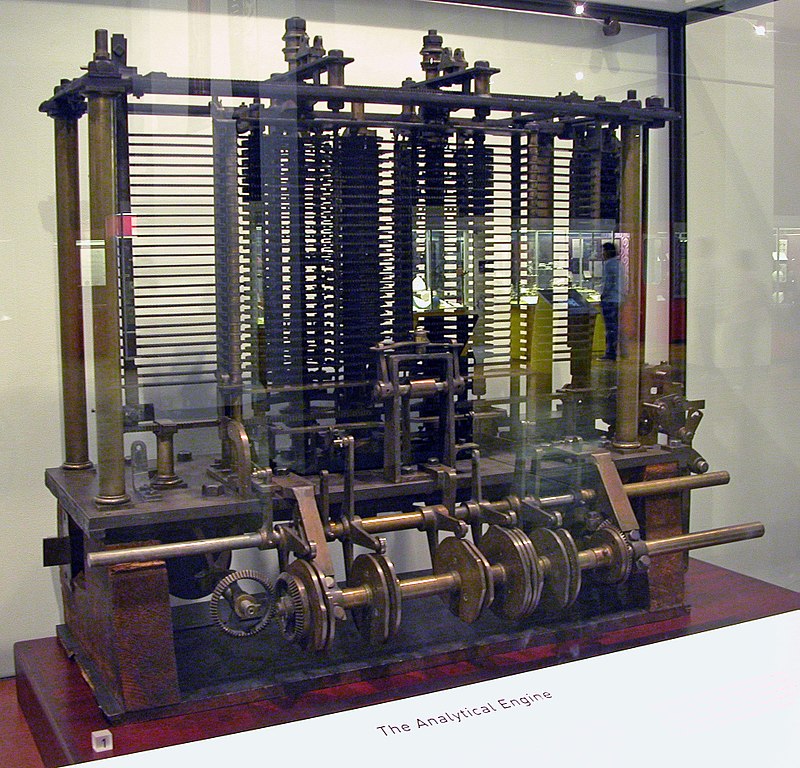
The concept of the Analytical Engine, however, truly solidified Babbage's role as a visionary. Envisioned as an enhancement to the Difference Engine, the Analytical Engine proposed a general-purpose computing device. It would, in theory, possess key features of modern computers: a central processing unit (CPU), memory, and the ability to perform programmed instructions via punch cards—a concept later embraced in early 20th-century computing.
The Challenges and Legacy
While Babbage's ideas were groundbreaking, they confronted several obstacles. The technology of his time was not sufficiently advanced to support the intricacies of his designs. His reliance on precision engineering, which was feasible in concept but difficult in practice, compounded these challenges. Further complicating his efforts, Babbage often struggled to communicate his vision to potential supporters and financiers. Consequently, his projects frequently suffered from funding shortfalls and logistical challenges.
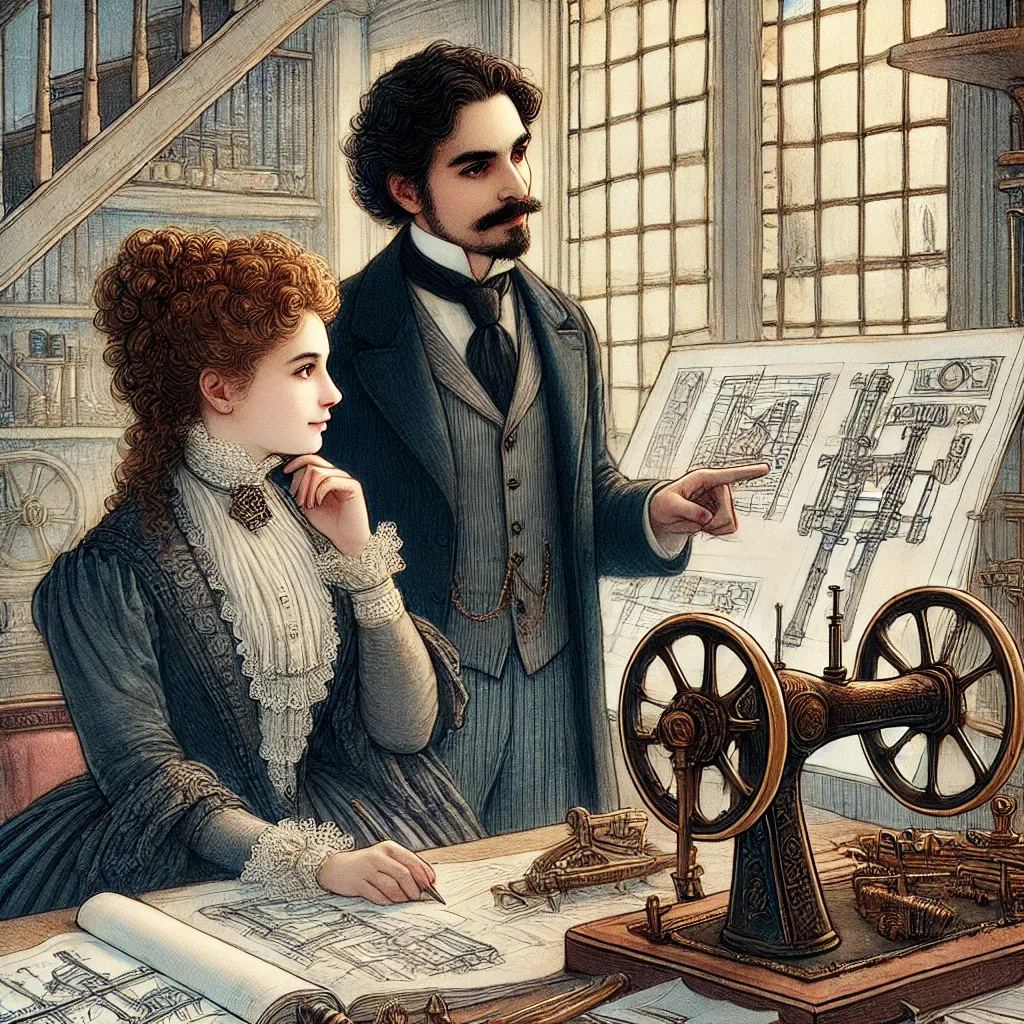
Nevertheless, Babbage's theoretical contributions were invaluable. His collaboration with Ada Lovelace—mathematician and daughter of famed poet Lord Byron—marked a significant milestone. Lovelace wrote extensive notes on the Analytical Engine, conceptualizing it as a machine capable of much more than mere arithmetic; she foresaw its potential to execute complex instructions, essentially laying the groundwork for programming.
Babbage's legacy extends beyond his machines. His intellectual pursuits and meticulous studies covered a wide range of disciplines, including cryptography, economics, and even the development of the postal system. His investigative spirit and commitment to progress profoundly influenced the trajectory of future engineering and scientific exploration.
Throughout the 19th century and beyond, researchers and engineers continued to draw inspiration from Babbage's work. Long after his death in 1871, the components and principles he proposed in the Analytical Engine became instrumental during the development of early computers in the mid-20th century. In essence, Babbage's ideas transcended his era, paving the way for the explosive growth of computing technology that defines contemporary society.
Charles Babbage's life paints a compelling picture of a man ahead of his time—his story a testament to the power of vision, innovation, and tenacity in the face of seemingly insurmountable odds. His seminal contributions resonate across scientific and technological fields, serving as a reminder of the enduring impact that a single mind can have on the world.
The Analytical Engine: A Revolutionary Concept
While the Difference Engine was Babbage's first foray into mechanical computation, it was the Analytical Engine that truly represented a leap into what many would now deem the realm of computers. Conceived in 1837, the Analytical Engine was a monumental stride in thinking about automated calculation. Unlike its predecessor, which was limited to performing a predefined set of calculations, the Analytical Engine was designed to be fully programmable. This programmability was a novel idea that suggested a machine could be instructed to perform a variety of operations sourced from a generalized set of instructions.
The Analytical Engine comprised four key components that resembled a modern computer's architecture: the mill (similar to a CPU), the store (akin to memory), the reader (which took in input via punch cards), and the printer (which output the results of calculations). This architecture embodied the idea of separating processing from storage and instruction, a concept that is central to computer design today.
The punch card system, inspired by the Jacquard loom which used punch cards to control weaving patterns in textiles, was an ingenious choice for inputting instructions into the machine. This allowed for a sequence of operations that could be customized for different problems, highlighting the versatility of Babbage's design. The use of punch cards also introduced the notion of programmability—decades before computers became a reality.
Ada Lovelace: The First Computer Programmer
One of the most remarkable figures linked to Babbage's work on the Analytical Engine was Ada Lovelace. Her collaboration with Babbage gave rise to what many consider the first computer program. Lovelace's involvement began when she translated an Italian mathematician's article about the Analytical Engine into English. Babbage, recognizing her mathematical talent and analytical prowess, invited her to expand on the translation with her own notes.
Lovelace's notes shed light on the Analytical Engine's potential beyond number crunching. Her farsighted vision included its capability to handle symbolic manipulation and to execute loops and conditional operations—a sophistication not realized until computer science matured over a century later. Her work in these notes elevated her status to that of the world's first computer programmer, earning her a revered place in computing history.
She famously postulated the machine's capacity to compose music if fed the correct set of instructions, an idea that weaves the creative with the technical. Lovelace's work sketched out the philosophical underpinnings of computational theory, influencing beyond Babbage's purely mechanical ambitions.
The Legacy of Unrealized Potential
Despite Babbage's pioneering concepts, the Analytical Engine never came to fruition in his lifetime. The numerous demands of engineering, coupled with persistent difficulties in securing reliable funding, meant that Babbage could only build partial prototypes. The engines he envisioned were extraordinarily complex, requiring precision engineering far beyond the capabilities of the craftsmen of his era.
The failure to construct a complete model of the Analytical Engine does not diminish Babbage's contributions. Instead, his visionary designs and theoretical work inked a blueprint for future thinkers. The principles laid out by Babbage served as inspiration when the computational gears began turning again in the early 20th century.
In the 1930s and 1940s, engineers and mathematicians began to revisit Babbage's concepts, compounded by the pressure of wars that sought advanced computation for strategy and encryption. Figures like Alan Turing and John von Neumann drew inspiration from the basic tenets Babbage proposed—chiefly the separation of processing and memory and the concept of a stored-program computer.
Today's computers, with their unfathomable processing power and versatility, are very much the descendants of Babbage's unfinished progeny. His life underscores an enduring truth: true innovation often requires not just visions grounded in current possibilities, but dreams that leap into future unknowns.
A Timeless Influence
Babbage lived in an era when scientific pursuit did not receive the systematic support it does today. His endeavors highlight how personal dedication and intellectual curiosity can lead to discoveries with far-reaching consequences. Babbage’s relentless spirit resonates with researchers and engineers who continue to push the boundaries of what machines can accomplish.
Through the lense of history, Charles Babbage is celebrated not just as a mathematician or inventor, but as a beacon of the relentless quest for knowledge and improvement. His work exemplifies the iterative nature of innovation, where each unfulfilled potential becomes the seed for future success.
By daring to dream of machines that could think, process, and calculate, Charles Babbage laid the philosophical groundwork for an entire field of study—our world rendered increasingly digital and interconnected owes much to his ambitious vision and diligent scholarship. As technology continues to evolve, the legacy of Charles Babbage reminds us of the unexplored potential that lies in our imaginations, waiting to be realized.
Reconstructing Babbage: Modern Attempts and Recognitions
In many ways, Charles Babbage's ideas were a century ahead of their time, yet they were left to be realized only in fragments. In the 1980s and 1990s, the curiosity about what could have been began to inspire new endeavors to bring Babbage's visions to life. Fueled by the advancements in modern engineering and a resurgence of interest in the history of computing, several projects aimed to construct working models of Babbage's designs.
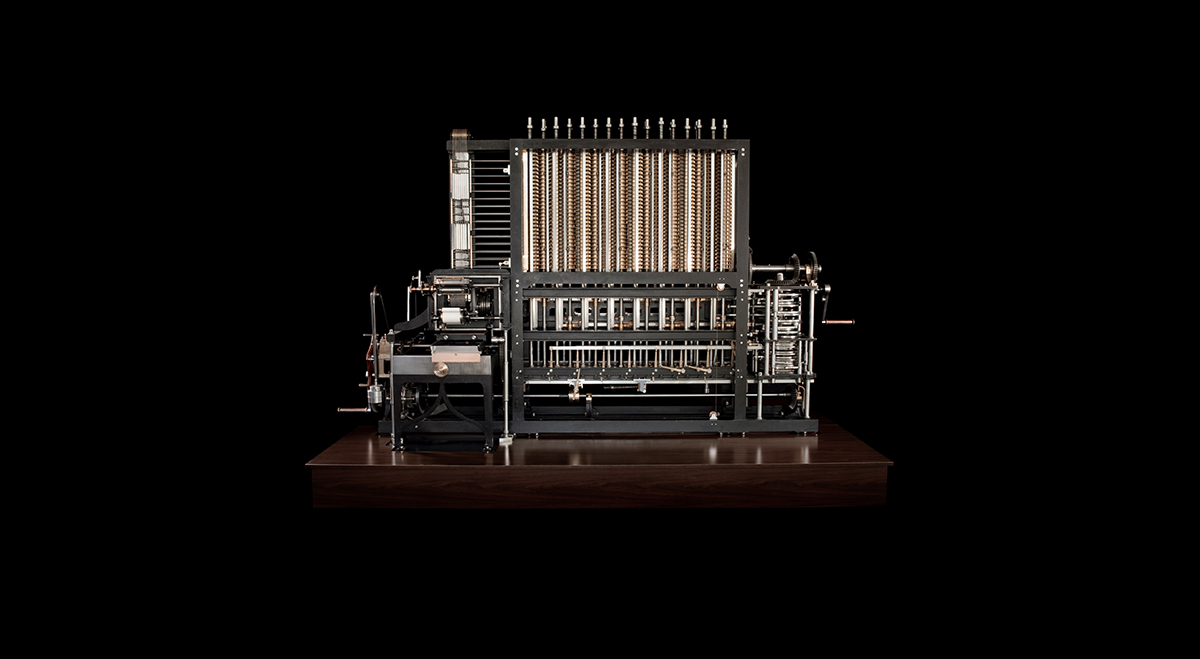
The most notable of these efforts occurred at the Science Museum in London, where a team, led by engineer Doron Swade, embarked on an ambitious journey to construct a working model of Babbage’s Difference Engine No. 2, a later design that Babbage had conceived during the 1840s. After years of meticulous work, the team successfully completed the project in 1991, finally realizing what Babbage's 19th-century calculations and ingenuity could not bring to fruition. This accomplishment underscored the mechanical brilliance of Babbage's design, showcasing its ability to execute complex calculations reliably and accurately.
Similarly, interest in the Analytical Engine has spurred enthusiasts and historians to continue exploring how it might have revolutionized computing had it been completed. Projects to simulate parts of the Analytical Engine using modern technology keep Babbage’s work pertinent and alive, providing glimpses into the potential operations of his conceptual design.
Impact on Modern Computing and Legacy
Though Charles Babbage's machines remained unrealized in his time, his analytical framework left a profound imprint on the evolution of computing. His pioneering concepts laid the groundwork for many future developments, including the theoretical underpinnings taught in computer science courses today. The structures and principles he envisaged are echoed in every byte of data processed by modern devices—from the smallest microprocessor to the most colossal supercomputers.
Babbage's legacy extends beyond the technical. He is a testament to the power of perseverance in the face of technological limitations and societal skepticism. His work ethic and intellectual rigor continue to inspire those who innovate, reminding us of the rewards of daring to envision technology not merely as it is, but as it could be.
Honored posthumously with numerous accolades and memorials, Babbage's name bears an enduring resonance. Institutions such as the Charles Babbage Institute at the University of Minnesota, dedicated to the history of information technology, stand as tributes to his enduring impact on the field. His influence pervades academic discussions, innovation narratives, and is often a point of reference in the discourse about the origins of the digital age.
Babbage's Influence in Today's Digital Landscape
In our contemporary digital landscape, where computing technology influences every aspect of daily life, the seeds sown by Babbage's insights continue to bear fruit. His prescience in envisioning a society reliant on data and computation is reflected in today's pervasive technology, ranging from handheld devices to complex algorithms powering artificial intelligence.
Moreover, recognizing Babbage's contributions has fostered greater awareness and appreciation of how inter-disciplinary collaborations—like that between Babbage and Ada Lovelace—can yield transformative outcomes. In today's world, where technology increasingly mines from diverse fields, insights from Babbage's life underscore the importance of leveraging cross-disciplinary visions and teamwork to harness the full potential of innovation.
The narrative of Charles Babbage serves as a valuable reminder of the intricacies in the path to technological advancement. His failed successes, in the words of Babbage himself, were "the stepping stones to great achievement." In an era characterized by rapidly evolving technology, the lessons from Babbage's odyssey reinforce the importance of continued exploration, courage in the face of failure, and the transformative power of visionary thought.
Conclusion: A Timeless Innovator
Charles Babbage exemplified the power of imagination interwoven with precision. Though he could never build his ultimate machines, his designs and theoretical innovations remained a guiding light for future generations. From his early days at Cambridge to his lifelong dedication to progress, Babbage navigated the complex intersections of engineering, mathematics, and thought with unmatched tenacity.
His life’s work did not just lie in the unrealized engines, but in the legacy of curiosity he ignited—a legacy that continues to inspire inventors and thinkers today. Just as the modern computer owes its existence to the tireless efforts of many, Babbage stands as a pivotal figure whose dreams laid the groundwork for technology that defines our modern world, signifying a timeless influence in the ever-unfolding story of human innovation.
Haporium is a revolutionary platform that lets you organize your web browsing experience with customizable dashboards and boards. Create, manage, and share your favorite content collections.
Join us today and get:
The right to be one of the first pioneers
Unlimited dashboards and boards
Access to exclusive beta features
Priority support from our team
We use cookies to enhance your experience. By continuing to use this site, you agree to our Cookie Policy.

















Comments