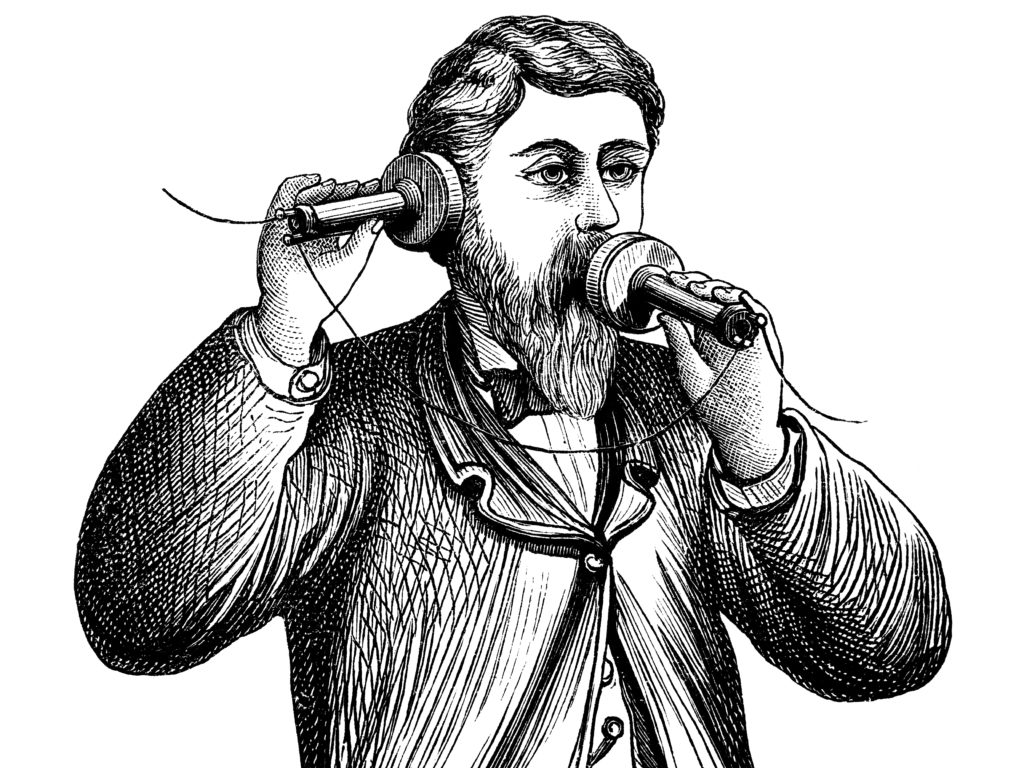




Explore Any Narratives
Discover and contribute to detailed historical accounts and cultural stories. Share your knowledge and engage with enthusiasts worldwide.
Antonio Meucci, an Italian inventor, is often overshadowed in the annals of history despite his groundbreaking work in early voice communication. Born in Florence, Italy, on April 13, 1808, Meucci's contributions to the development of the telephone are both significant and controversial. His story is one of innovation, perseverance, and the complexities of patent law.
Meucci's journey began in Florence, where he was born and raised. He later moved to Havana, Cuba, where he worked as a stage engineer. His early experiments with electricity and sound were driven by a desire to help his wife, who was suffering from a debilitating illness. This personal motivation led him to explore ways to transmit voice over wires, laying the foundation for his future inventions.
Around 1849, Meucci began experimenting with electrotherapy, which involved using electrical currents for medical purposes. During these experiments, he discovered an "electrophonic/physiophonic" effect, where sounds could be transmitted through electrical wires. This discovery sparked his interest in developing a device that could transmit voice electrically.
Meucci's most notable invention was the telettrofono, a device designed to transmit voice over wires. Between 1850 and 1870, he developed more than 30 variants of this device, each iteratively improving upon the last. His technical approach involved using vibrating membranes, metal strips, and electromagnetic coupling, concepts that are fundamental to modern telephone technology.
In 1871, Meucci filed a U.S. patent caveat for his telettrofono. A caveat is a temporary notice of invention, cheaper than a full patent but offering less protection. Unfortunately, Meucci's financial struggles prevented him from maintaining the caveat, which lapsed in 1874. This financial setback was a significant obstacle in his quest to secure recognition for his invention.
The invention of the telephone is often attributed to Alexander Graham Bell, who received a U.S. patent for the telephone in 1876. However, Meucci's earlier work and patent caveat have led to a historical dispute over the true inventor of the telephone. Meucci's inability to secure a full patent and his financial difficulties have been central to this controversy.
In 2002, the U.S. House of Representatives passed a non-binding resolution (H.Res.269) recognizing Meucci's contributions to the development of the telephone. The resolution stated that his work "may have been" an important contribution, although it did not revoke Bell's patents or alter legal history. This recognition has amplified public awareness of Meucci's role in the invention of the telephone.
Meucci's story is a testament to the challenges faced by inventors in securing recognition for their work. His contributions to the development of the telephone are now widely acknowledged, and his legacy continues to inspire discussions about innovation, patent law, and the role of financial resources in turning inventions into global technologies.
Contemporary sources and engineering histories present Meucci as a significant early experimenter whose technical ideas overlapped with later telephone technology. While he may not be universally recognized as the sole inventor of the telephone, his work is undeniably a crucial part of the telephone's developmental history.
Antonio Meucci's life and work offer a fascinating glimpse into the complexities of invention and innovation. His story highlights the importance of financial resources, patent law, and the role of personal motivation in driving technological advancements. As we continue to explore the history of the telephone, Meucci's contributions remain a vital part of the narrative.
Meucci's telettrofono was not just a single device but a series of evolving prototypes that incorporated several innovative techniques. His work laid the groundwork for modern voice communication technology. Below are some of the key technical aspects of his invention.
One of the most significant features of Meucci's devices was the use of vibrating membranes. These membranes would convert sound waves into mechanical vibrations, which were then transmitted through wires via electromagnetic coupling. This method is conceptually similar to the mechanisms used in later telephone transmitters.
Meucci was a prolific inventor, creating more than 30 variants of his speaking telegraph between 1850 and 1870. Each prototype built upon the lessons learned from the previous versions, demonstrating his commitment to refining the technology. Some key iterations included:
Meucci's experiments also explored the concept of inductive loading, a technique that helps maintain signal strength over long distances. This innovation was crucial for the practical application of voice communication technology, as it addressed one of the primary challenges of early telegraph systems.
Despite his technical brilliance, Meucci faced numerous personal and financial obstacles that hindered his ability to secure recognition for his inventions. These challenges provide a poignant backdrop to his story and highlight the difficulties faced by many inventors.
One of the most touching aspects of Meucci's story is his motivation to help his wife, who was suffering from a severe illness. Meucci reportedly built an early version of his speaking telegraph to communicate with her from his workshop to their bedroom. This personal connection to his invention adds a layer of emotional depth to his technical achievements.
Meucci's financial struggles were a significant barrier to his success. He filed a U.S. patent caveat in 1871, but his inability to afford the fees for a full patent application meant that his caveat eventually lapsed in 1874. This financial setback was a critical factor in the subsequent dispute over the invention of the telephone.
As an Italian immigrant in the United States, Meucci also faced cultural and linguistic barriers that may have contributed to his struggles. His story is a reminder of the challenges faced by many immigrant inventors who have made significant contributions to technology and science.
The debate over who truly invented the telephone has been a contentious issue in the history of technology. While Alexander Graham Bell is widely recognized as the inventor of the telephone, Meucci's earlier work and patent caveat have led to a historical dispute that continues to this day.
Understanding the timeline of events is crucial to grasping the complexity of the dispute between Meucci and Bell. Here are some key dates:
The late 19th and early 20th centuries saw numerous legal battles over the telephone's invention. Bell's patents were the subject of hundreds of legal actions, with various inventors, including Meucci, claiming priority. The courts generally upheld Bell's patents during that era, but the historical debate has persisted.
In recent years, there has been a reassessment of Meucci's role in the invention of the telephone. Many technical histories and engineering sources now recognize Meucci as an important early experimenter who anticipated several practical elements of voice transmission. However, there is still no universal consensus on whether he should be considered the sole inventor of the telephone.
"Meucci's work may have been an important contribution to the development of the telephone, but the historical record is complex and multifaceted." - Engineering and Technology History Wiki
Despite the ongoing debate, Meucci's contributions have not gone entirely unrecognized. His story has been championed by Italian and Italian-American organizations, and his legacy continues to inspire discussions about innovation and the challenges faced by inventors.
The Garibaldi-Meucci Museum in Staten Island, New York, is dedicated to preserving the legacy of Antonio Meucci and other Italian-American figures. The museum houses many of Meucci's original inventions and documents, providing a tangible connection to his work and life.
Italian and Italian-American organizations have played a significant role in promoting Meucci's story. Their efforts have helped to raise public awareness of his contributions and have fueled a cultural rehabilitation of his legacy. This advocacy has been crucial in ensuring that Meucci's work is not forgotten.
In addition to the 2002 U.S. House of Representatives resolution, Meucci has been honored in various ways. His story has been featured in documentaries, books, and articles, and he has been posthumously awarded for his contributions to technology. These recognitions serve as a testament to the enduring impact of his work.
Meucci's story offers valuable insights into the broader themes of innovation, patent law, and the role of financial resources in technological development. His experiences highlight the challenges faced by inventors and the importance of recognizing the contributions of all individuals involved in the process of innovation.
Meucci's financial struggles underscore the importance of financial resources in turning inventions into successful technologies. His inability to secure a full patent due to financial constraints serves as a reminder of the barriers that many inventors face, particularly those from disadvantaged backgrounds.
The dispute between Meucci and Bell also highlights the complexities of patent law. Meucci's use of a patent caveat, rather than a full patent, left his invention vulnerable to being overshadowed by others. This case serves as a cautionary tale about the importance of securing proper legal protection for inventions.
Meucci's story is also intertwined with issues of nationalism and the politics of memory. The debate over the invention of the telephone has often been framed in terms of national pride, with Italian and American perspectives offering different narratives. This aspect of Meucci's story adds a layer of cultural and political complexity to the historical dispute.
While the debate over who invented the telephone continues, there is no denying that Antonio Meucci’s contributions laid critical groundwork for modern communication technology. His experiments with voice transmission influenced later innovations, and his story remains a powerful example of how early technological breakthroughs shape the future.
Meucci’s use of vibrating membranes and electromagnetic coupling was ahead of its time. These principles became foundational in the development of telephone transmitters and receivers. Later inventors, including Bell, built upon similar concepts, demonstrating how Meucci’s ideas were integral to the evolution of voice communication.
Meucci was not just a pioneer in telephony; he also made advancements in other fields. His work included:
These contributions highlight his versatility as an inventor and his broader impact on 19th-century technology.
Meucci’s story has transcended historical debates, finding its way into educational curricula and popular media. His life serves as an inspiring narrative of perseverance, innovation, and the challenges faced by immigrant inventors.
Many schools and universities now include Meucci in their discussions of invention history and telecommunication development. His story is often used to illustrate:
Meucci’s life has been featured in documentaries, books, and even fictional works. These portrayals often emphasize:
These narratives help keep his legacy alive and ensure that his contributions are not forgotten.
The dispute between Meucci and Bell is more than just a historical footnote; it serves as a case study in the complexities of invention, patent law, and recognition. This debate offers valuable lessons for aspiring inventors and historians alike.
Meucci’s experience underscores critical lessons about intellectual property protection:
His story is a cautionary tale for inventors about the necessity of navigating patent systems effectively.
The Meucci-Bell debate also highlights how historical narratives evolve. Early accounts often favored Bell, but modern reassessments have given Meucci more credit. This shift reflects:
Meucci’s life is a testament to the significant contributions that immigrants have made to technological advancement. His story resonates with themes of resilience, adaptation, and innovation in the face of adversity.
Meucci’s experiences reflect the broader challenges faced by immigrant inventors, including:
His story serves as a reminder of the need to support and recognize the work of inventors from diverse backgrounds.
Meucci’s legacy is now celebrated as part of a broader movement to acknowledge the contributions of immigrants to science and technology. Initiatives such as:
These efforts ensure that Meucci’s story continues to inspire future generations of innovators.
Antonio Meucci’s life and work offer a compelling narrative of innovation, struggle, and eventual recognition. While the debate over the invention of the telephone may never be fully resolved, his contributions to voice communication technology are undeniable. His story serves as a powerful reminder of the importance of:
Meucci’s legacy extends beyond the telephone. It encompasses his broader impact on technology, his role as an immigrant inventor, and his enduring influence on how we understand the history of innovation. As we continue to celebrate the achievements of pioneers like Meucci, we honor not just their inventions, but the human stories behind them—stories of passion, resilience, and the relentless pursuit of progress.
In the end, Antonio Meucci’s place in history is secure not because he may or may not have been the sole inventor of the telephone, but because his work exemplifies the spirit of invention itself: a blend of curiosity, ingenuity, and an unyielding desire to make the world a better place.
Your personal space to curate, organize, and share knowledge with the world.
Discover and contribute to detailed historical accounts and cultural stories. Share your knowledge and engage with enthusiasts worldwide.
Connect with others who share your interests. Create and participate in themed boards about any topic you have in mind.
Contribute your knowledge and insights. Create engaging content and participate in meaningful discussions across multiple languages.
Already have an account? Sign in here

Antonio Meucci pioneer behind the telephone whose work and innovations significantly contributed to early telephony deve...
View Board
Discover Guglielmo Marconi, the father of wireless tech. Learn his story, Nobel-winning inventions, and impact on modern...
View Board
Explore the fascinating life of Michael Faraday, the pioneering scientist whose groundbreaking work in electromagnetism ...
View Board
Discover the legacy of Michael Faraday, the self-taught genius hailed as the Father of Electromagnetism. From his humble...
View Board
Fritz Haber: A Chemist Whose Work Changed the World The Rise of a Scientist Fritz Haber was born on December 9, 1868, i...
View Board
James Clerk Maxwell unified electricity and magnetism into a single mathematical framework, his work laying the foundati...
View Board
Walter Brattain: The Transistor Pioneer Who Changed Electronics Early Life and Education of Walter Brattain Walter Hous...
View Board
John Logie Baird, the Scottish inventor who pioneered mechanical television in 1925. Explore his early experiments, firs...
View Board
George Washington Carver: The Pioneering Scientist and Educator George Washington Carver (1864-1943) was a scientist, i...
View Board
Discover how Louis-Paul Cailletet revolutionized science with his groundbreaking gas liquefaction experiments, paving th...
View Board
Pioneering innovator Charles Hard Townes revolutionised science with his groundbreaking work on the maser and laser, ear...
View Board
Alessandro Volta, a pioneering Italian physicist, revolutionized electricity with the invention of the voltaic pile, sha...
View Board
Discover how André-Marie Ampère, the father of electromagnetism, revolutionized science with Ampère's Law and shaped mod...
View Board
John Napier, a Scottish mathematician, invented logarithms, revolutionizing calculations and paving the way for signific...
View Board
Discover the intriguing life of Léon Foucault, the pioneering French physicist who elegantly demonstrated the Earth's ro...
View Board
"Louis 'Luis' Alvarez: A scientific genius who pioneered new frontiers. Explore his early life, education, and groundbre...
View Board
Galileo Galilei: The Pioneer of Science and Chronology Galileo Galilei, often hailed as the father of modern science, r...
View Board
768 **Meta Description:** Explore the life of Enrico Fermi, the architect of the nuclear age. From quantum theory to th...
View Board
Discover Archimedes, ancient Greece's greatest scientist. Explore his life, groundbreaking work in math, physics, and en...
View Board
Mae Jemison: A Pioneering Astronaut and Champion of STEM Education The world was awe-struck when Mae Jemison became the...
View Board
Comments