


Explore Any Narratives
Discover and contribute to detailed historical accounts and cultural stories. Share your knowledge and engage with enthusiasts worldwide.
Amparo Acker Palmer is a leading figure in molecular and cellular neurobiology, renowned for her groundbreaking work on neurovascular communication and blood-brain barrier biology. As a W3 Professor and Chair of Molecular and Cellular Neurobiology at Goethe University Frankfurt and a Max-Planck Fellow at the Max Planck Institute for Brain Research, her research has reshaped our understanding of how blood vessels actively shape brain development and function.
Born in Spain, Amparo Acker Palmer pursued her academic journey with a focus on biology and biochemistry. She earned her degree from the University of Valencia, followed by a PhD in 1996 from the Instituto de Investigaciones Citológicas in Valencia. Her early research laid the groundwork for her future explorations into the intricate relationships between vascular biology and neuroscience.
Since completing her PhD, Amparo Acker Palmer has held several prestigious positions, marking her as a leader in her field. Her career trajectory includes significant roles at top-tier institutions, where she has driven innovative research in neurovascular interactions and brain development.
Amparo Acker Palmer has been recognized with numerous accolades for her contributions to science. Her memberships in prestigious organizations underscore her influence and expertise.
Her innovative research has been supported by several high-profile grants and awards, highlighting the significance and impact of her work.
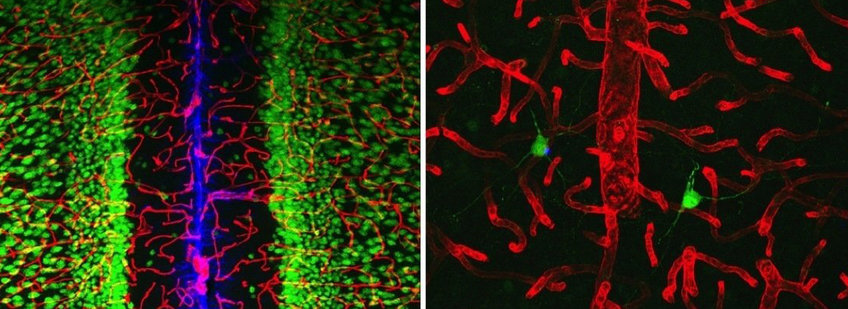
Amparo Acker Palmer's research is at the forefront of understanding how blood vessels play an active role in brain development and function. Her work challenges the traditional view of blood vessels as mere nutrient conduits, instead revealing their critical role as signaling partners in neuronal wiring and blood-brain barrier formation.
Her lab employs a multidisciplinary approach, combining genetic models, high-resolution imaging, molecular profiling, and in vivo studies. This comprehensive methodology allows her team to map the complex interactions between endothelial cells and neurons, uncovering the molecular pathways that coordinate these processes.
The findings from Amparo Acker Palmer's research have significant translational relevance. Her work provides critical insights into developmental brain malformations, blood-brain barrier dysfunctions, and pathological angiogenesis in tumors such as gliomas. These discoveries open new avenues for understanding disease mechanisms and developing potential therapeutic targets.
In the next sections, we will delve deeper into her recent major funding, lab output, and the broader implications of her research on the field of neurovascular biology.
Amparo Acker Palmer has secured substantial funding to advance her pioneering research on neurovascular interactions. One of her most significant recent grants is the DFG Koselleck Project, awarded by the German Research Foundation. This grant, totaling approximately €1.25 million, is dedicated to investigating how endothelial cells influence brain development, with a particular focus on neurovascular signaling, cerebellar development, and cortical folding.
The Koselleck Project exemplifies the innovative nature of Acker Palmer's research. This funding allows her team to explore the molecular mechanisms by which blood vessels guide neuronal development and contribute to the formation of complex brain structures. The project aims to uncover the role of endothelial-derived signals in shaping the cerebellum and influencing the folding patterns of the cerebral cortex.
The Acker-Palmer lab, also known as the Neurovascular Link group, is a hub of cutting-edge research in neurovascular biology. The lab's work focuses on understanding the signaling molecules that mediate communication between endothelial cells and neurons. Key areas of investigation include the roles of Reelin, VEGFR, and ephrinB pathways in blood-brain barrier (BBB) formation, vascular guidance, and neuronal development.
The lab has made significant contributions to our understanding of how endothelial cells influence brain development and function. Some of their notable findings include:
Acker Palmer's leadership extends beyond her lab, as she actively engages in cross-disciplinary collaborations. Her positions at Goethe University Frankfurt and the Max Planck Institute for Brain Research facilitate collaborative projects that combine vascular biology, developmental neurobiology, and translational neuroscience. These collaborations enhance the impact of her research and foster innovation in the field.
The Acker-Palmer lab has a robust publication record, with numerous high-impact papers in prestigious journals. Their research has shed light on the intricate mechanisms governing neurovascular interactions and has provided valuable insights into the molecular pathways that coordinate brain development and function.
While a comprehensive bibliography is beyond the scope of this article, some of the lab's most cited papers focus on:
The research conducted by Amparo Acker Palmer and her team has had a profound impact on the scientific community. Their findings have not only advanced our understanding of neurovascular biology but have also opened new avenues for exploring therapeutic targets for neurological disorders. The lab's work is frequently cited in the literature, underscoring its significance and influence in the field.
In addition to her research endeavors, Amparo Acker Palmer is deeply committed to education and mentorship. As a W3 Professor and Department Chair at Goethe University Frankfurt, she plays a pivotal role in shaping the next generation of scientists. Her mentorship extends to graduate students, postdoctoral researchers, and junior faculty, fostering a collaborative and innovative research environment.
Acker Palmer's teaching philosophy emphasizes the importance of interdisciplinary learning and hands-on research experience. She offers courses and seminars that cover a wide range of topics, including:
Her mentorship approach is characterized by a strong emphasis on scientific rigor, creativity, and collaboration. Acker Palmer encourages her mentees to pursue innovative research questions and supports their professional development through:
In the final section of this article, we will explore the broader implications of Acker Palmer's research, her future directions, and the lasting impact she is poised to make on the field of neurovascular biology.
The work of Amparo Acker Palmer has far-reaching implications for both basic neuroscience and clinical applications. By elucidating the complex interactions between blood vessels and neurons, her research provides critical insights into the mechanisms underlying brain development, neurological disorders, and brain tumors.
One of the most significant implications of Acker Palmer's research is its potential to shed light on neurodevelopmental disorders. Conditions such as autism spectrum disorder (ASD), schizophrenia, and epilepsy have been linked to abnormalities in brain wiring and cortical folding. By uncovering the role of endothelial cells in these processes, her work offers new avenues for understanding the pathophysiology of these disorders.
The blood-brain barrier (BBB) is a critical structure that protects the brain from harmful substances while allowing essential nutrients to pass through. Dysfunction in the BBB has been implicated in a range of neurological diseases, including multiple sclerosis, Alzheimer's disease, and brain tumors. Acker Palmer's research on BBB formation and neurovascular signaling provides valuable insights into how these dysfunctions arise and how they might be targeted therapeutically.
Gliomas, a type of brain tumor, are characterized by abnormal angiogenesis and vascular proliferation. Acker Palmer's work on the molecular pathways governing blood vessel formation and neuronal development has direct implications for understanding the pathogenesis of gliomas. Her research on ephrinB signaling and VEGFR pathways offers potential targets for developing anti-angiogenic therapies and other treatments for brain cancers.
As the field of neurovascular biology continues to evolve, Amparo Acker Palmer remains at the forefront of innovation. Her ongoing research and future directions promise to further expand our understanding of the brain-vascular interface and its role in health and disease.
Acker Palmer's lab is continually identifying and characterizing new molecular pathways involved in neurovascular communication. Future research will likely focus on uncovering additional signaling molecules and receptor interactions that mediate the crosstalk between endothelial cells and neurons. These discoveries could reveal novel therapeutic targets for a range of neurological and vascular disorders.
The Acker-Palmer lab is also committed to advancing imaging techniques and molecular profiling methods. By leveraging cutting-edge technologies such as super-resolution microscopy, single-cell RNA sequencing, and optogenetics, the lab aims to achieve an even deeper understanding of neurovascular interactions at the cellular and molecular levels.
A key focus for the future is translating basic research findings into clinical applications. Acker Palmer's work on neurovascular signaling and brain development has the potential to inform the development of new diagnostic tools and therapeutic strategies for neurological disorders. Collaborations with clinicians and pharmaceutical researchers will be essential in bridging the gap between laboratory discoveries and patient care.
Amparo Acker Palmer's influence extends beyond her own lab and institution. Her collaborative efforts and international recognition have positioned her as a global leader in neurovascular research.
Acker Palmer's roles as a W3 Professor at Goethe University Frankfurt and a Max-Planck Fellow facilitate numerous cross-institutional collaborations. These partnerships bring together experts from diverse fields, including vascular biology, neuroscience, genetics, and clinical medicine. By fostering these collaborations, she enhances the interdisciplinary nature of her research and accelerates the pace of discovery.
Her membership in prestigious organizations such as EMBO and the German National Academy of Sciences Leopoldina underscores her standing in the scientific community. Acker Palmer actively contributes to scientific societies, advisory boards, and peer-review panels, shaping the direction of research funding and priorities in neuroscience and vascular biology.
In addition to her research and academic responsibilities, Acker Palmer is committed to public engagement and science communication. She participates in public lectures, science festivals, and educational outreach programs to share her knowledge and inspire the next generation of scientists. Her efforts in science communication help bridge the gap between scientific research and public understanding.
Amparo Acker Palmer has made indelible contributions to the field of neurovascular biology. Her pioneering research on the interactions between blood vessels and neurons has reshaped our understanding of brain development, neurological disorders, and brain tumors. Through her innovative approaches, collaborative efforts, and commitment to mentorship, she has established herself as a leading figure in molecular and cellular neurobiology.
As Amparo Acker Palmer continues to push the boundaries of neurovascular research, her work will undoubtedly lead to further breakthroughs in our understanding of the brain and its complexities. Her dedication to scientific excellence, collaboration, and mentorship ensures that her impact will be felt for generations to come, inspiring future scientists to explore the intricate and fascinating world of neurovascular biology.
In the ever-evolving landscape of neuroscience, Acker Palmer stands as a beacon of innovation and discovery. Her contributions have not only advanced our knowledge but have also opened new pathways for diagnosing, treating, and ultimately curing some of the most challenging neurological conditions. As we look to the future, the legacy of Amparo Acker Palmer will continue to shape the field and inspire groundbreaking research in neurovascular biology.



Your personal space to curate, organize, and share knowledge with the world.
Discover and contribute to detailed historical accounts and cultural stories. Share your knowledge and engage with enthusiasts worldwide.
Connect with others who share your interests. Create and participate in themed boards about any topic you have in mind.
Contribute your knowledge and insights. Create engaging content and participate in meaningful discussions across multiple languages.
Already have an account? Sign in here

"Explore Professor Amparo Acker-Palmer's research on neurovascular signaling, transforming brain development and cancer ...
View Board
Explore the transformative legacy of Paul Broca, a pioneering figure in neuroanatomy whose groundbreaking discovery of “...
View Board
Discover the groundbreaking journey of Barry Marshall, a trailblazer in gastroenterology whose bold hypotheses and revol...
View Board
"Discover Luigi Galvani's frog leg experiments that sparked modern neurophysiology. Learn how his work shaped neuroscien...
View Board
Discover the fascinating legacy of Félix d'Herelle, the self-taught pioneer behind bacteriophage therapy. This captivati...
View Board
Explore the life and legacy of Claude Bernard, the trailblazer of experimental medicine. Discover how his scientific rig...
View Board
Explore the life and legacy of Karl Landsteiner, the visionary who revolutionized medical science with the discovery of ...
View Board
Discover the groundbreaking journey of Ronald Ross, the pioneering scientist whose revolutionary understanding of malari...
View Board
Explore how Dr. Rafael Yuste is transforming neuroscience through innovation and ethical stewardship. Discover his impac...
View Board
**Meta Description:** Discover how Francisco Mojica, the Spanish microbiologist behind CRISPR’s groundbreaking discove...
View Board
Discover the groundbreaking journey of Nobel Laureate Shinya Yamanaka, whose pioneering work in induced pluripotent stem...
View Board
"Explore how Santiago Ramón y Cajal, father of modern neuroscience, revolutionized brain science with the neuron doctrin...
View Board
"Discover Gabriele Falloppio, the 16th-century anatomist who transformed reproductive medicine. Learn about his life, di...
View Board
Explore the meaning behind O-Kregk-Benter-Oramatisths in Greece's thriving biotech sector. Discover key players, trends,...
View Board
Explore the inspiring journey of Gerty Cori, the first woman Nobel laureate in Physiology or Medicine, who defied societ...
View Board
Discover how AI is revolutionizing the fight against antibiotic resistance by accelerating drug discovery, predicting ou...
View Board
Discover the revolutionary scientists shaping endocrinology. Explore breakthroughs from insulin discovery to modern horm...
View Board
Last news about Biology Week from 14/10/2024 to 20/10/2024
View Board
Last news about Biology Week from 07/10/2024 to 13/10/2024
View Board
Discover the impactful legacy of Gregor Mendel, the Father of Genetics, whose pioneering pea plant experiments laid the ...
View Board
Comments