





Confederate Monuments Revisited: How US Museums Are Redefining Controversial History
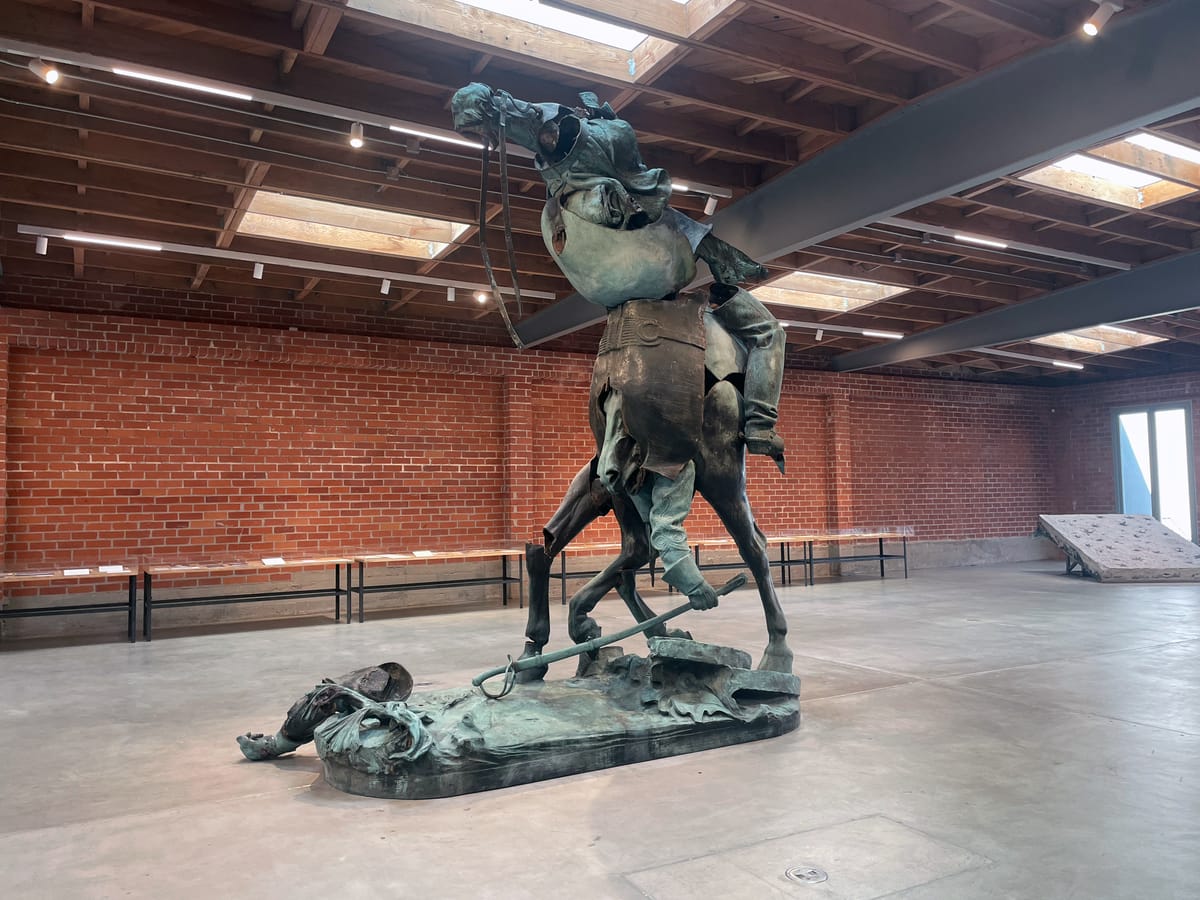
Confederate monuments, once symbols of Southern pride, now stand at the center of a national reckoning. Across the United States, museums are taking bold steps to redefine controversial history by transforming these contentious artifacts into tools for education and reflection. The MONUMENTS exhibition, a groundbreaking collaboration between the Museum of Contemporary Art (MOCA) and The Brick in Los Angeles, exemplifies this shift. Opening in October 2025, the exhibition features 10 decommissioned Confederate monuments, recontextualized alongside contemporary art to challenge their original narratives.
This movement is not just about removal—it’s about reinterpretation. As cities like Baltimore, Montgomery, and Richmond grapple with the legacies of these monuments, institutions are stepping in to foster critical discourse. With nearly 200 Confederate monuments removed since 2015, the conversation has evolved from whether to take them down to how to preserve and present their history responsibly.
The Rise and Fall of Confederate Monuments
Confederate monuments were not merely memorials to the Civil War dead. Many were erected decades after the conflict, during periods of racial tension, serving as symbols of white supremacy. Their removal gained momentum after pivotal events like the 2015 Charleston church shooting and the 2017 Charlottesville rally, where clashes over a Robert E. Lee statue turned deadly.
Key moments in this shift include:
- Bree Newsome’s bold removal of the Confederate flag in South Carolina (2015)
- Baltimore’s overnight dismantling of four Confederate statues (2017)
- Nearly 200 monuments decommissioned nationwide in the following years
These actions sparked debates: Should monuments be destroyed, stored, or repurposed? The MONUMENTS exhibition offers a compelling answer—recontextualization through art.
The MONUMENTS Exhibition: A New Approach
Opening on October 23, 2025, the MONUMENTS exhibition at MOCA’s Geffen Contemporary and The Brick presents a radical reimagining of Confederate history. The show features:
- 10 decommissioned monuments from cities like Baltimore, Montgomery, and Richmond
- 19 contemporary artworks by artists such as Kara Walker and Abigail DeVille
- Juxtapositions of old and new, forcing viewers to confront the past in fresh ways
Baltimore’s four Confederate statues, removed in 2017, were loaned to MOCA after years of debate. Initially resisted by Mayor Brandon Scott, their inclusion highlights the tension between preservation and erasure. The exhibition does not glorify these artifacts but instead exposes their problematic legacies through artistic intervention.
Artistic Interventions: From Symbols to Statements
Contemporary artists in the exhibition are not just displaying these monuments—they are dismantling their power. Kara Walker, known for her provocative explorations of race, transforms a Stonewall Jackson equestrian statue into a “grotesque” hybrid, stripping it of its heroic aura. Abigail DeVille’s immersive installation of charred Civil War-era furniture evokes the burning of Richmond, forcing visitors to confront the violence these monuments once symbolized.
Other notable works include:
- Vandalized monuments, some splattered with red paint, displayed as artifacts of protest
- Interactive installations that invite visitors to engage with history rather than passively observe
- Scholarly publications and public programs to deepening understanding of monument legacies
This approach turns museums into spaces of critical dialogue, where history is not just preserved but challenged.
The Broader Context: Museums as Agents of Change
The MONUMENTS exhibition is part of a larger trend in which museums are redefining their roles in societal debates. Rather than neutral repositories of artifacts, they are becoming active participants in historical reckonings. This shift is evident in initiatives like:
- The new museum at Georgia’s Stone Mountain, set to open in December 2025, which will provide historical context for the massive Confederate carving
- Enhanced security measures, such as metal detectors at MOCA, reflecting the ongoing risks of white supremacist backlash
- Public programming that encourages community engagement and education
These efforts counter political moves to reinstate removed monuments, such as a 2025 Trump decree mandating the restoration of certain statues. By emphasizing discourse over destruction, museums are positioning themselves as guardians of nuanced history.
As the MONUMENTS exhibition demonstrates, the future of Confederate monuments lies not in their removal alone but in their transformation into tools for education and reflection. This approach ensures that history is neither erased nor glorified but understood in all its complexity.
Continue reading in Part 2, where we explore the specific artworks and their impact on public perception.
Artistic Reckonings: How Contemporary Works Challenge Confederate Narratives
The MONUMENTS exhibition does not merely display decommissioned statues—it dismantles their mythologies through bold artistic interventions. By pairing Confederate relics with modern works, the exhibition forces viewers to confront the uncomfortable truths these monuments represent. Here’s how key artists are reshaping the narrative:
Kara Walker’s Surreal Deconstructions
Kara Walker, renowned for her explorations of race and power, contributes a striking reinterpretation of a Stonewall Jackson equestrian statue. Her work transforms the once-revered figure into a “grotesque” hybrid, blending human and animal forms to strip away its heroic facade. This approach highlights how Confederate monuments were tools of intimidation, not just memorials.
Walker’s piece is part of a broader trend in which artists use satire and surrealism to expose the absurdity of glorifying figures who fought to preserve slavery. By placing these works alongside the original monuments, the exhibition undermines their authority and invites critical reflection.
Abigail DeVille’s Immersive Installations
Abigail DeVille’s contribution to the exhibition is a haunting installation of charred Civil War-era furniture, evoking the burning of Richmond during the war’s final days. Her work serves as a visceral reminder of the destruction and suffering these monuments often obscure. Unlike traditional displays, DeVille’s installation engages multiple senses, creating an emotional connection to history.
This immersive approach is crucial in humanizing the past. By juxtaposing DeVille’s scorched artifacts with intact Confederate statues, the exhibition contrasts the romanticized version of history with its brutal realities.
The Role of Vandalism: Protest as Preservation
Some of the monuments in the exhibition bear the marks of public protest, including red paint splatters and graffiti. Rather than restoring these artifacts to their original state, curators have chosen to preserve the vandalism as part of their historical record. This decision underscores a key question: Is defacement a form of destruction or a form of storytelling?
The inclusion of vandalized monuments serves multiple purposes:
- It documents public outrage and the demand for change
- It challenges the idea of monuments as untouchable
- It highlights the role of activism in reshaping historical narratives
By displaying these altered artifacts, the exhibition legitimizes protest as a valid response to oppressive symbols. This approach aligns with broader trends in museum curation, where imperfections and interventions are embraced as part of an object’s history.
Security and Controversy: The Risks of Recontextualization
Recontextualizing Confederate monuments is not without risks. The MONUMENTS exhibition has implemented heightened security measures, including metal detectors, to protect against potential backlash. These precautions reflect the ongoing volatility surrounding Confederate imagery, particularly in an era of resurgent white supremacist movements.
The exhibition’s security protocols highlight several key tensions:
- Safety vs. accessibility: How do museums balance public engagement with protection?
- Free speech vs. hate speech: Can these monuments be displayed without amplifying harmful ideologies?
- Preservation vs. provocation: Does recontextualization risk glorifying the very symbols it seeks to critique?
Despite these challenges, the exhibition’s curators argue that confronting controversy is essential to meaningful dialogue. By acknowledging the risks, they demonstrate the importance of facing history head-on rather than sanitizing it.
Beyond Removal: The Future of Confederate Monuments
The MONUMENTS exhibition is part of a growing movement to reimagine the role of Confederate monuments in public memory. While removal has been a dominant strategy, museums are now exploring alternative approaches, including:
Contextualization Over Erasure
Rather than destroying monuments, institutions are adding interpretive layers to reframe their meanings. For example, the upcoming museum at Georgia’s Stone Mountain will provide historical context for the site’s massive Confederate carving. This approach allows visitors to engage with history critically without erasing it entirely.
Contextualization offers several advantages:
- It preserves artifacts for future study
- It encourages dialogue rather than silence
- It acknowledges the complexity of historical narratives
Artistic Interventions as Permanent Solutions
The MONUMENTS exhibition suggests that artistic interventions could become a permanent solution for controversial statues. By commissioning contemporary works that directly engage with Confederate imagery, museums can transform these artifacts into sites of critique rather than veneration.
This strategy has already been employed in other contexts, such as:
- The “Tear It Down” mural in Richmond, which reimagines a Confederate statue as a symbol of resistance
- The “Unsilent Rebellion” project, which overlays augmented reality narratives onto monuments
These interventions demonstrate that art can be a powerful tool for reclaiming problematic histories.
The Debate Over Deaccessioning
One of the most contentious issues surrounding Confederate monuments is deaccessioning—the process of permanently removing artifacts from museum collections. The fate of Baltimore’s four statues, currently on loan to MOCA, remains uncertain. While some argue for their destruction, others advocate for long-term preservation in educational contexts.
The deaccessioning debate raises critical questions:
- Who has the authority to decide the fate of these monuments?
- Can they be repurposed in ways that serve justice?
- What are the ethical implications of keeping or discarding them?
As museums navigate these challenges, the MONUMENTS exhibition serves as a test case for how institutions can balance preservation with progress.
Continue to Part 3, where we examine the exhibition’s impact on public perception and its long-term implications for historical memory.
Public Reception and the Power of Museum Spaces
The MONUMENTS exhibition has sparked intense public debate, demonstrating how museums can serve as catalysts for difficult conversations. Visitor reactions have ranged from profound reflection to outright controversy, revealing deep divisions in how Americans perceive Confederate history. This section explores the exhibition’s impact on audiences and its role in shaping collective memory.
Visitor Responses: From Reverence to Resistance
Early reviews of the exhibition highlight its emotional and intellectual impact. Many visitors report feeling a mix of anger, sadness, and enlightenment when confronted with the juxtaposition of Confederate monuments and contemporary art. Key observations include:
- Surprise at the scale of the monuments when viewed indoors, stripped of their pedestals
- Discomfort with the vandalized pieces, which force viewers to acknowledge recent protests
- Appreciation for the artistic interventions, which provide new lenses for understanding these objects
One visitor remarked,
“Seeing these statues in a museum instead of a park makes you realize how much power they once held—and how that power was used to intimidate.”This sentiment reflects the exhibition’s success in shifting perspectives through curatorial choices.
The Role of Public Programming
To deepen engagement, MOCA and The Brick have developed extensive public programming, including:
- Panel discussions with historians, artists, and activists
- Educational workshops for students and teachers
- Community forums on race, memory, and public space
These programs transform the exhibition from a passive viewing experience into an active dialogue. By inviting diverse voices into the conversation, the museums ensure that the narrative around Confederate monuments continues to evolve beyond the gallery walls.
Legal and Political Challenges: The Fight Over Historical Narratives
The exhibition’s approach to Confederate monuments has not gone unchallenged. Legal and political battles continue to shape how these artifacts are displayed, preserved, or removed. This section examines the ongoing struggles between institutions, governments, and advocacy groups.
The Trump Decree and Its Aftermath
In 2025, a Trump administration decree mandated the restoration of certain Confederate monuments, complicating the work of museums and cities that had removed them. This policy shift forced institutions to navigate:
- Legal battles over ownership and display rights
- Public backlash from both supporters and opponents of removal
- Ethical dilemmas about complying with federal orders versus local values
The MONUMENTS exhibition emerged in this fraught context, offering a middle ground between outright destruction and uncritical restoration. By presenting these artifacts as objects of study rather than veneration, the exhibition subverts political mandates while still engaging with history.
State-Level Battles: From Virginia to Georgia
The debate over Confederate monuments plays out differently across states, with some embracing removal and others resisting it. Key examples include:
- Virginia, where Richmond’s Monument Avenue has undergone significant changes, including the removal of statues like Robert E. Lee
- Georgia, where Stone Mountain’s new museum aims to contextualize rather than celebrate its Confederate carving
- Alabama, where laws protect monuments, making removal nearly impossible without legislative action
These varying approaches highlight the fragmented nature of historical memory in the U.S. While some regions seek to confront their past, others remain entangled in nostalgia and denial.
The Long-Term Impact: How Museums Are Reshaping History
The MONUMENTS exhibition is more than a temporary display—it represents a paradigm shift in how museums engage with controversial history. This final section explores its lasting implications for institutions, educators, and the public.
A New Model for Museum Curation
The exhibition sets a precedent for how museums can handle divisive artifacts. Key takeaways include:
- Recontextualization over removal: Museums can transform meaning without erasing history.
- Collaboration with artists: Contemporary interventions provide fresh perspectives on old narratives.
- Community engagement: Public programming ensures that exhibitions resonate beyond the gallery.
This model challenges traditional curatorial practices, which often prioritize neutrality over critical engagement. By embracing controversy, museums like MOCA are redefining their role as active participants in social discourse.
Educational Opportunities and Challenges
The exhibition also presents unique opportunities for education, particularly in how history is taught. Schools and universities are increasingly using such displays to:
- Teach critical thinking about historical narratives
- Explore the relationship between art and activism
- Encourage students to question dominant narratives about race and power
However, challenges remain, including:
- Resistance from conservative groups who view the exhibition as revisionist
- Limited access for schools in regions where Confederate symbols are still celebrated
- The risk of trauma for students confronting painful histories
Despite these hurdles, the exhibition’s educational potential is immense, offering a blueprint for future curricula that center marginalized voices.
Conclusion: The Future of Confederate Monuments in American Memory
The MONUMENTS exhibition marks a turning point in the national conversation about Confederate history. By recontextualizing these controversial artifacts, museums are not only preserving them but also transforming their meaning for future generations. The exhibition’s blend of historical artifacts, contemporary art, and public dialogue offers a powerful model for how institutions can engage with difficult pasts.
Key takeaways from this exploration include:
- Recontextualization works: Displaying monuments alongside critical art undermines their original power.
- Public engagement is essential: Museums must go beyond displays to foster dialogue.
- Legal and political battles persist: The fight over Confederate symbols is far from over.
- Education is the ultimate goal: These exhibitions can reshape how history is taught.
As the U.S. continues to grapple with its legacy of racism and division, the MONUMENTS exhibition stands as a testament to the power of art and institutions to challenge, educate, and heal. It proves that history is not static—it is alive, contested, and always open to reinterpretation.
In the end, the question is not whether Confederate monuments should exist, but how we choose to remember them. Through exhibitions like this one, museums are leading the way in ensuring that memory serves justice, not oppression.













Comments