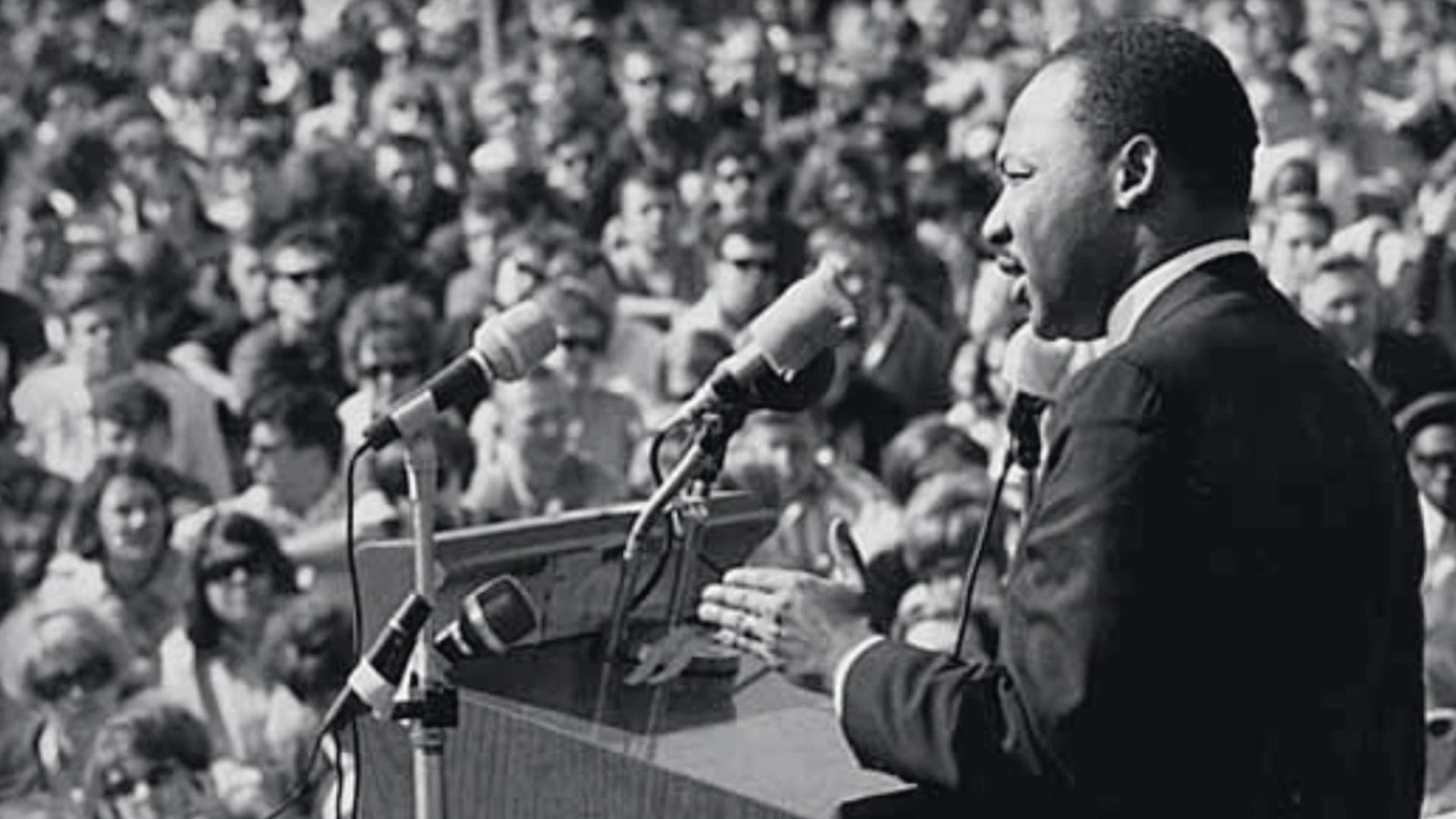


Martin Luther King Jr.: Civil Rights Leader Legacy
The life and work of Martin Luther King Jr. remain foundational to understanding American history and the ongoing struggle for civil rights. As a Baptist minister and a pivotal leader in the American civil-rights movement, King championed nonviolent resistance to combat racial segregation and injustice. His leadership directly contributed to landmark legislation and continues to inspire movements for equality worldwide.
Early Life and Ministry of Martin Luther King Jr.
Martin Luther King Jr. was born on January 15, 1929, in Atlanta, Georgia. He was born into a family of pastors, which deeply influenced his own path into the ministry. King’s early exposure to theology and social justice issues shaped his future role as a leader.
Education and Influences
King was an exceptional student, skipping two grades in high school. He entered Morehouse College at the age of fifteen, where he decided to follow his father and grandfather into the Baptist ministry. His studies continued at Crozer Theological Seminary and Boston University, where he earned his doctorate.
During his education, King was deeply influenced by the teachings of Mahatma Gandhi. He studied Gandhi’s philosophy of nonviolent resistance, adapting it as a powerful tool for social change in the United States. This principle would become the cornerstone of his activism.
The Montgomery Bus Boycott: A Movement Begins
The Montgomery Bus Boycott of 1955-1956 marked King’s entry into national prominence. This protest began after Rosa Parks was arrested for refusing to give up her seat to a white passenger. The African American community in Montgomery, Alabama, organized a sustained boycott of the city’s bus system.
Leadership and Outcome
At just 26 years old, Martin Luther King Jr. was chosen to lead the Montgomery Improvement Association, which organized the boycott. His powerful oratory and unwavering commitment to nonviolence helped sustain the protest for 381 days. The boycott concluded with a landmark Supreme Court ruling that declared segregation on public buses unconstitutional.
This victory demonstrated the effectiveness of organized, nonviolent protest and established King as a leading voice for civil rights. It was the first major large-scale demonstration against segregation in the U.S.
Founding the Southern Christian Leadership Conference (SCLC)
Following the success in Montgomery, King and other ministers founded the Southern Christian Leadership Conference (SCLC) in 1957. The organization’s mission was to harness the moral authority and organizing power of black churches to conduct nonviolent protests for civil rights reform.
Philosophy and Mission
The SCLC was built on the principle of Christian love and nonviolent direct action. King served as its first president, advocating for civil disobedience as a way to highlight and challenge unjust laws. The organization aimed to achieve full citizenship rights for African Americans.
Under King’s leadership, the SCLC planned and executed major campaigns across the South. These efforts were critical in dismantling the system of legalized segregation known as Jim Crow.
The Power of Words: "Letter from Birmingham Jail"
In April 1963, King was arrested during a campaign in Birmingham, Alabama. While in solitary confinement, he penned one of the most important documents of the civil rights era. The "Letter from Birmingham Jail" was a response to white clergy who criticized the protests as "untimely."
Key Arguments and Impact
In the letter, King defended the strategy of nonviolent resistance to racism. He argued that individuals have a moral responsibility to break unjust laws and to take direct action rather than wait indefinitely for justice. The letter powerfully articulated the urgency of the civil rights struggle.
Injustice anywhere is a threat to justice everywhere.
This document became a seminal text, widely circulated and studied. It helped sway public opinion and build sympathy for the civil rights movement among moderate white Americans.
The March on Washington and "I Have a Dream"
The March on Washington for Jobs and Freedom on August 28, 1963, was a historic event that drew approximately 250,000 people to the National Mall. It was one of the largest political rallies for human rights in United States history. King delivered his iconic "I Have a Dream" speech from the steps of the Lincoln Memorial.
A Vision for America
The speech is celebrated for its powerful vision of a future where people are judged by their character, not their skin color. King’s eloquent call for freedom and justice resonated across the nation and the world. It remains one of the most famous speeches ever given.
The march and the speech created immense political pressure. This momentum was instrumental in the passage of the Civil Rights Act of 1964, which outlawed discrimination based on race, color, religion, sex, or national origin.
Legislative Triumphs: The Civil Rights and Voting Rights Acts
The activism led by Martin Luther King Jr. produced concrete legislative results that transformed American society. Two of the most significant pieces of legislation were direct outcomes of the movement's pressure and public visibility. These laws dismantled the legal framework of racial segregation and discrimination.
The Civil Rights Act of 1964
Signed into law by President Lyndon B. Johnson on July 2, 1964, this act was a monumental victory. It prohibited discrimination in public places, provided for the integration of schools and other public facilities, and made employment discrimination illegal. The act is considered one of the most significant legislative achievements of the civil rights movement.
King and other leaders met with President Kennedy and later President Johnson to advocate for its passage. The political momentum generated by events like the March on Washington was crucial. The law's passage marked a fundamental shift in federal law and American social policy.
The Voting Rights Act of 1965
Following the historic Selma to Montgomery marches, which faced violent opposition, President Johnson signed the Voting Rights Act of 1965. This act aimed to overcome legal barriers at state and local levels that prevented African Americans from exercising their right to vote. It is hailed as the most effective piece of civil rights legislation ever enacted.
- Outlawed discriminatory voting practices like literacy tests.
- Provided for federal oversight of voter registration in areas with a history of discrimination.
- Led to a dramatic increase in African American voter registration.
King's strategic focus on voting rights in Selma highlighted the injustice and directly led to this pivotal law. His nonviolent campaign in Selma exposed the brutality of segregation to a national television audience.
Nobel Peace Prize and International Recognition
In 1964, at the age of thirty-five, Martin Luther King Jr. was awarded the Nobel Peace Prize. He was the youngest man to have received the award at that time. The prize recognized his exceptional leadership in the nonviolent struggle against racial inequality in the United States.
A Global Platform for Justice
In his acceptance speech in Oslo, Norway, King framed the civil rights struggle within a global context. He spoke about the interconnectedness of all humanity and the urgency of justice. He donated the entire Nobel Prize monetary award, which amounted to over $50,000, to further the civil rights movement.
I believe that unarmed truth and unconditional love will have the final word in reality.
This international honor amplified King's message and affirmed the moral power of nonviolent resistance. It brought global attention to the American civil rights movement and inspired freedom struggles around the world.
Expanding the Movement: Poverty and Peace
In the final years of his life, Martin Luther King Jr. expanded his focus beyond racial integration. He began to address issues of economic injustice and the Vietnam War. He argued that racism, poverty, and militarism were interrelated evils that needed to be confronted together.
The Poor People's Campaign
In 1968, King and the SCLC launched the Poor People's Campaign. This was a multiracial effort to gain economic justice for all poor Americans. The campaign demanded an Economic Bill of Rights, including commitments to full employment, a guaranteed income, and increased funding for affordable housing.
The campaign planned a massive demonstration in Washington, D.C., known as "Resurrection City." King envisioned uniting people across racial lines to confront systemic poverty. He stated that the movement sought to "redeem the soul of America" from the triple evils.
Opposition to the Vietnam War
King publicly denounced the Vietnam War in a powerful speech titled "Beyond Vietnam" on April 4, 1967. He called the United States government "the greatest purveyor of violence in the world today." This stance was controversial and drew criticism from many allies, including some within the civil rights movement.
- He argued that war spending drained resources from domestic anti-poverty programs.
- He connected the struggle for freedom in the U.S. to the struggle of the Vietnamese people.
- This position reflected his deepening commitment to nonviolence as a universal principle.
His moral opposition to the war alienated some supporters but solidified his role as a prophetic voice for peace and justice on a global stage.
FBI Surveillance and Harassment
Throughout his public life, Martin Luther King Jr. was the target of intense surveillance by the Federal Bureau of Investigation (FBI) under J. Edgar Hoover. The FBI's COINTELPRO program sought to discredit King and other civil rights leaders. This effort included wiretapping his phones and hotels, and attempting to undermine his influence.
The "Suicide Letter" and Psychological Warfare
In 1964, the FBI sent King an anonymous tape recording that allegedly contained evidence of extramarital affairs. Accompanying the tape was a letter suggesting King should take his own life. This letter is now considered an attempt at psychological warfare designed to destroy his will and public image.
Despite this intense pressure, King continued his work. The surveillance reveals the extent to which government agencies viewed the civil rights movement as a subversive threat. This historical fact adds a complex layer to understanding the opposition King faced beyond visible segregationists.
The Final Campaign: Memphis and the Sanitation Workers' Strike
In the spring of 1968, King traveled to Memphis, Tennessee, to support striking African American sanitation workers. The workers were protesting poor pay and dangerous working conditions. Their slogan, "I AM A MAN," embodied the struggle for human dignity and economic justice.
The Mountaintop Speech
On April 3, 1968, King delivered his last public address, now known as the "I've Been to the Mountaintop" speech. He spoke with a sense of urgency and foreshadowing, expressing no fear of death and a profound hope for the future. The speech is remembered for its powerful and prophetic conclusion.
I've seen the Promised Land. I may not get there with you. But I want you to know tonight, that we, as a people, will get to the Promised Land.
He was assassinated the following day, April 4, 1968, on the balcony of the Lorraine Motel. His death triggered a wave of grief and riots in more than 100 American cities. However, it also cemented his legacy as a martyr for justice and galvanized support for the causes he championed.
Legacy and National Commemoration
The legacy of Martin Luther King Jr. is enshrined in American law, culture, and education. His life's work continues to be studied and celebrated as a blueprint for nonviolent social change. From a federal holiday to memorials and ongoing educational initiatives, his impact is deeply woven into the national fabric.
Martin Luther King Jr. Day
Establishing a federal holiday in King's honor was a significant battle. Signed into law by President Ronald Reagan in 1983, Martin Luther King Jr. Day is observed on the third Monday of January each year. It was first observed nationally in 1986 and is the only federal holiday designated as a national day of service.
- Americans are encouraged to celebrate through "A Day On, Not a Day Off" with community service.
- The holiday provides a focal point for schools and institutions to teach about civil rights history.
- Its establishment represented a major victory in recognizing the contributions of African Americans to U.S. history.
The day serves as an annual reminder of King's teachings and the unfinished work of justice and equality.
The Martin Luther King Jr. Memorial
Located in West Potomac Park in Washington, D.C., the Martin Luther King Jr. Memorial opened to the public in 2011. It is the first major memorial on the National Mall to honor an African American citizen. The centerpiece is the "Stone of Hope" statue, depicting King emerging from a mountain.
The memorial's design is inspired by a line from his "I Have a Dream" speech: "Out of the mountain of despair, a stone of hope." Inscriptions of his quotes cover the surrounding walls. This site has become a major pilgrimage destination for visitors from around the world.
Teaching King's Legacy to New Generations
King's writings and speeches remain central to American civic education. Institutions like The King Center in Atlanta work to preserve his papers and promote his philosophy. His works are primary sources for teaching about democracy, protest, and ethical leadership.
Primary Sources and Digital Archives
Major institutions have undertaken efforts to digitize King's vast archive. The Martin Luther King, Jr. Research and Education Institute at Stanford University provides access to thousands of documents. The National Museum of African American History and Culture also houses key artifacts and offers online resources.
This digital access allows young people to engage directly with his words. Key documents for study include:
- The full text and audio of the "I Have a Dream" speech.
- The complete "Letter from Birmingham Jail."
- Transcripts of sermons like "The Drum Major Instinct."
King's Philosophy in Modern Contexts
King's principles of nonviolent resistance continue to inspire contemporary social justice movements globally. Activists for climate justice, racial equity, and economic fairness cite his methods and moral framework. His emphasis on beloved community remains a powerful vision.
Public debate often references King's legacy in discussions about systemic racism and protest. His life offers a historical case study on how to effectively challenge unjust systems through disciplined, peaceful action.
Key Statistics and Lasting Impact
The measurable outcomes of King's leadership highlight his profound effect on American society. The data reflects both the scale of his activism and the legislative changes he helped achieve.
Movement Milestones and Data
Quantifying the movement's efforts provides context for its immense scope and dedication.
- March on Washington Attendance: Approximately 250,000 people gathered in 1963, a record for its time.
- Legislative Impact: The Civil Rights Act (1964) and Voting Rights Act (1965) transformed American law.
- Arrests: King was arrested nearly 30 times for acts of civil disobedience.
- Travel and Speeches: He traveled over six million miles and gave about 2,500 speeches between 1957 and 1968.
These numbers underscore the relentless pace of his work and the massive public mobilization he helped lead.
Influence on Voting and Representation
The Voting Rights Act of 1965 had an immediate and dramatic effect. African American voter registration in the South increased significantly within just a few years. This political power paved the way for increased African American political representation at local, state, and federal levels.
The arc of the moral universe is long, but it bends toward justice.
While King often paraphrased this sentiment, it remains a touchstone for those working toward long-term social change, reminding them of the importance of perseverance.
The Enduring Relevance of Martin Luther King Jr.
Decades after his assassination, the words and work of Martin Luther King Jr. retain a powerful urgency. His life provides a masterclass in ethical leadership, strategic activism, and moral courage. In an era of continued social division, his call for a beloved community based on justice and love remains a vital guide.
Why King's Message Still Matters
King matters because he demonstrated that peaceful protest can change history. He showed that ordinary people, organized and disciplined, could confront powerful systems of oppression. His focus on human dignity, economic fairness, and global peace connects struggles across time and geography.
For young people today, studying King is not just about history. It is about learning tools for effective citizenship. His life teaches:
- The power of strategic nonviolence to achieve social goals.
- The importance of articulating a compelling moral vision.
- The necessity of expanding advocacy to include interconnected issues of race, poverty, and peace.
Conclusion: A Legacy of Hope and Action
The story of Martin Luther King Jr. is fundamentally a story of hope translated into action. From the Montgomery Bus Boycott to the March on Washington, he channeled the aspirations of millions into a transformative force. His achievements in helping to end legal segregation and secure voting rights are pillars of modern American democracy.
His later work, confronting poverty and war, reminds us that the quest for justice is never complete. King's legacy is not frozen in the past; it is a living challenge. It challenges each generation to examine its own conscience, to confront injustice wherever it exists, and to do so with the unwavering courage of nonviolent love.
The national holiday, the memorials, and the preserved archives ensure his voice continues to speak. But the truest tribute is found in the ongoing struggle for equality, in the daily acts of service, and in the commitment to building the beloved community he envisioned. Martin Luther King Jr.'s dream remains a powerful beacon, calling us toward a more just and compassionate future.











Comments