


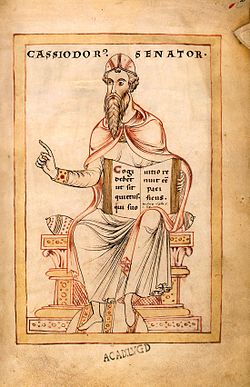

Cassiodorus: The Roman Scholar Who Saved Classical Knowledge
Cassiodorus, formally known as Magnus Aurelius Cassiodorus Senator, was a pivotal figure in the transition from late antiquity to the early Middle Ages. Born around 485 AD in Scylletium (modern Squillace, Italy), he served as a statesman, scholar, and monk, playing a crucial role in preserving classical and Christian texts. His life spanned nearly a century, during which he bridged the Roman and Gothic worlds, ensuring the survival of knowledge that might otherwise have been lost.
Early Life and Political Career
Cassiodorus was born into a noble Roman family with a long history of public service. His father, also a high-ranking official, provided him with an excellent education in rhetoric, law, and classical literature. By the early 6th century, Cassiodorus had entered the service of Theodoric the Great, the Ostrogothic king who ruled Italy after the fall of the Western Roman Empire in 476 AD.
Key Positions in the Ostrogothic Court
Cassiodorus quickly rose through the ranks, holding several important positions:
- Consiliarius (legal assistant) to his father
- Quaestor sacri palatii (chief legal officer) from 507–511 AD
- Consul in 514 AD, a prestigious honor
- Magister officiorum (head of civil service) from 526–527 AD
- Praetorian prefect of Italy around 533 AD, effectively serving as prime minister
In these roles, Cassiodorus was instrumental in maintaining the Roman administrative traditions under Gothic rule. His work helped stabilize the Ostrogothic Kingdom, which lasted from 493–553 AD, and ensured continuity in governance during a turbulent period.
Cassiodorus and the Preservation of Knowledge
One of Cassiodorus' most enduring legacies was his efforts to preserve classical and Christian texts. As the Roman world fragmented, many ancient works were at risk of being lost. Cassiodorus recognized the importance of these texts and took steps to ensure their survival.
The Variae: A Window into Ostrogothic Administration
Among his major works, the Variae stands out as a collection of official letters and documents from his time in public service. This work provides invaluable insights into the administration of the Ostrogothic Kingdom and the political dynamics of the era. The Variae also showcases Cassiodorus' skill as a rhetorician and his ability to navigate the complexities of Roman-Gothic relations.
The Institutiones: A Guide to Learning
Later in life, Cassiodorus wrote the Institutiones, a guide to divine and secular learning. This work was intended to educate monks and scholars, emphasizing the importance of both classical and Christian texts. The Institutiones became a foundational text for medieval education, influencing the curricula of monasteries across Europe.
Retirement and the Founding of Vivarium
Around 537–538 AD, Cassiodorus retired from public life amid the Byzantine-Gothic wars. He spent nearly 20 years in Constantinople, where he met influential figures like Junillus, the quaestor of Emperor Justinian. During this time, he continued to advocate for the preservation of knowledge.
The Vivarium Monastery: A Center of Learning
Upon his return to Italy, Cassiodorus founded the Vivarium monastery on his family estates in Calabria. Vivarium became a center of learning and manuscript preservation, where monks transcribed and copied classical and Christian texts. This effort was crucial in ensuring that works by authors like Plato, Aristotle, and Cicero survived into the Middle Ages.
Cassiodorus' vision for Vivarium was revolutionary. He believed that monasteries should be places of both spiritual devotion and intellectual pursuit. His model influenced later monastic communities, including the famous Bobbio Abbey, which became another key center for manuscript preservation.
Legacy and Impact on Medieval Europe
Cassiodorus' contributions to the preservation of knowledge cannot be overstated. His work at Vivarium helped bridge the gap between the classical world and the Middle Ages, ensuring that the intellectual heritage of Rome was not lost. Scholars today credit him with playing a pivotal role in the Carolingian Renaissance, a period of cultural revival in the 8th and 9th centuries.
Scholarly Interest and Digital Humanities
In recent years, there has been renewed interest in Cassiodorus' life and works. Digital humanities projects have made his writings more accessible, allowing scholars to study his contributions in greater detail. While no major archaeological discoveries have been reported since 2020, ongoing research continues to highlight his role in shaping medieval Europe.
Conclusion: The Enduring Influence of Cassiodorus
Cassiodorus was more than just a statesman or scholar; he was a visionary who understood the importance of preserving knowledge for future generations. His efforts at Vivarium ensured that the intellectual legacy of the classical world endured, influencing the development of medieval Europe. Today, his life and work serve as a testament to the power of education and the enduring value of cultural heritage.
In the next part of this series, we will delve deeper into Cassiodorus' major works, his time in Constantinople, and the lasting impact of Vivarium on medieval monasteries.
Cassiodorus' Major Works and Their Historical Significance
Cassiodorus was a prolific writer whose works provide invaluable insights into the political, cultural, and intellectual landscape of the 6th century. His writings not only document the administration of the Ostrogothic Kingdom but also reflect his commitment to preserving classical and Christian knowledge. Below, we explore his most significant works and their lasting impact.
The Variae: A Collection of State Papers
The Variae, or "Various Letters," is a compilation of 468 official documents from Cassiodorus' time in public service. Written between 507 and 538 AD, these letters and edicts cover a wide range of topics, including diplomacy, legal matters, and administrative policies. The Variae is divided into 12 books, each focusing on different aspects of governance under Theodoric the Great and his successors.
This work is particularly valuable for historians because it offers a firsthand account of how the Ostrogothic Kingdom functioned. The letters reveal Cassiodorus' skill in crafting persuasive and diplomatic language, which was essential for maintaining harmony between the Roman senatorial elite and the Gothic rulers. For example, in one letter, Cassiodorus emphasizes the importance of justice and fairness in taxation, reflecting his commitment to Roman administrative traditions.
"The health of the state depends on the justice of its laws and the integrity of its officials."
The Variae also highlights Cassiodorus' role as a cultural mediator. Many of the letters are written in a highly rhetorical style, blending Roman legal traditions with Gothic customs. This fusion of cultures was crucial for the stability of the Ostrogothic Kingdom, and Cassiodorus' writings provide a unique window into this period of transition.
The Historia Gothorum: A Lost History
Another significant work by Cassiodorus was the Historia Gothorum, a history of the Gothic people. Unfortunately, this work has been lost to time, and only fragments survive in the writings of later historians, such as Jordanes. The Historia Gothorum was likely written to legitimize Gothic rule in Italy and to provide a historical narrative that connected the Goths to the broader Roman world.
Despite its loss, the Historia Gothorum remains an important part of Cassiodorus' legacy. It reflects his efforts to create a shared identity between the Romans and the Goths, emphasizing the contributions of the Gothic people to the history of Italy. Scholars believe that this work may have influenced later medieval chronicles, which often drew on earlier historical accounts to construct their narratives.
The Institutiones: A Blueprint for Monastic Education
One of Cassiodorus' most enduring contributions was the Institutiones, a two-part guide to divine and secular learning. Written around 550 AD, this work was intended to serve as a curriculum for monks at the Vivarium monastery. The Institutiones is divided into two main sections:
- Divine Letters: Focuses on the study of the Bible and Christian theology.
- Secular Letters: Covers classical subjects such as grammar, rhetoric, logic, and the liberal arts.
The Institutiones was revolutionary because it emphasized the importance of both religious and secular education. Cassiodorus believed that monks should be well-versed in classical literature and philosophy, as these disciplines were essential for understanding and interpreting Christian texts. This approach to education became a model for medieval monasteries, influencing the development of scholarly traditions in Europe.
In the Institutiones, Cassiodorus also provided practical advice on how to copy and preserve manuscripts. He stressed the importance of accuracy in transcription and encouraged monks to take great care in their work. This emphasis on manuscript preservation was crucial for the survival of classical texts, many of which might have been lost without the efforts of Cassiodorus and his followers.
Cassiodorus in Constantinople: A Period of Exile and Learning
After retiring from public life around 537–538 AD, Cassiodorus spent nearly 20 years in Constantinople, the capital of the Byzantine Empire. This period of exile was a transformative time for Cassiodorus, as he immersed himself in the intellectual and cultural life of the city. During his stay, he met influential figures, including Junillus, the quaestor of Emperor Justinian, and engaged in scholarly pursuits that would shape his later work.
The Byzantine Influence on Cassiodorus
Constantinople was a center of learning and culture, and Cassiodorus was deeply influenced by the intellectual environment of the city. He had access to a vast array of classical and Christian texts, many of which were preserved in the imperial libraries. This exposure to Byzantine scholarship reinforced his belief in the importance of preserving knowledge and inspired him to establish the Vivarium monastery upon his return to Italy.
During his time in Constantinople, Cassiodorus also became acquainted with the works of Greek philosophers and theologians. He was particularly interested in the writings of Dionysius Exiguus, the inventor of the Anno Domini dating system, and other Christian scholars who were active in the Byzantine Empire. These influences are evident in his later works, which reflect a synthesis of Roman, Gothic, and Byzantine intellectual traditions.
The Return to Italy and the Founding of Vivarium
After nearly two decades in Constantinople, Cassiodorus returned to Italy in the 550s AD. The Byzantine-Gothic wars had left the region in a state of turmoil, and many of the institutions that had once supported learning and culture were in decline. Determined to preserve the intellectual heritage of the classical world, Cassiodorus founded the Vivarium monastery on his family estates in Calabria.
Vivarium was more than just a religious community; it was a center of learning and manuscript preservation. Cassiodorus designed the monastery to be a place where monks could dedicate themselves to the study of both sacred and secular texts. He provided the monks with a comprehensive library, which included works by classical authors such as Plato, Aristotle, Cicero, and Virgil, as well as Christian writings.
The Vivarium Monastery: A Beacon of Knowledge
The Vivarium monastery was one of the most important intellectual centers of the early Middle Ages. Under Cassiodorus' guidance, the monks at Vivarium engaged in the systematic copying and preservation of manuscripts, ensuring that the knowledge of the classical world was not lost. This section explores the structure, activities, and legacy of Vivarium.
The Structure and Organization of Vivarium
Cassiodorus designed Vivarium to be a self-sufficient community where monks could live, work, and study. The monastery was organized around several key areas:
- The Library: The heart of Vivarium, housing a vast collection of classical and Christian texts.
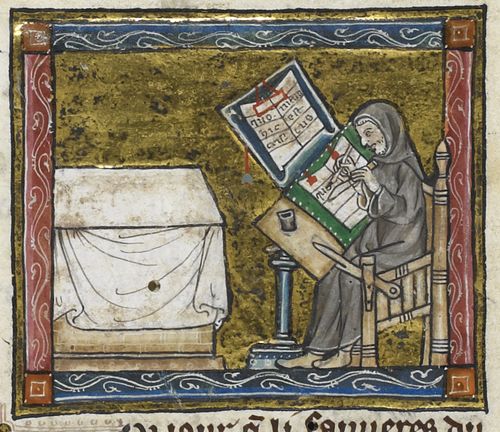
- The Scriptorium: A dedicated space where monks transcribed and copied manuscripts.
- The School: A place for education, where monks studied the liberal arts and theology.
- The Gardens and Workshops: Areas for agriculture and craftsmanship, ensuring the monastery's self-sufficiency.
The library at Vivarium was particularly notable for its size and scope. Cassiodorus had spent years collecting manuscripts, and the library included works on history, philosophy, science, and theology. He believed that access to these texts was essential for the intellectual and spiritual development of the monks.
The Scriptorium: Preserving Knowledge for Future Generations
The scriptorium at Vivarium was the center of manuscript production. Monks worked diligently to copy texts, ensuring that they were preserved for future generations. Cassiodorus placed a strong emphasis on accuracy and attention to detail, instructing the monks to take great care in their transcription work.
The scriptorium was equipped with the necessary tools for manuscript production, including parchment, ink, and writing implements. Monks would often work in teams, with one monk reading the text aloud while others wrote. This method helped to ensure that errors were minimized and that the texts were faithfully reproduced.
The efforts of the Vivarium scriptorium had a profound impact on the preservation of classical knowledge. Many of the texts copied at Vivarium were later disseminated to other monasteries, where they continued to be studied and copied. This network of monastic scriptoria played a crucial role in the survival of classical literature during the Middle Ages.
The Educational Program at Vivarium
Education was a central focus of life at Vivarium. Cassiodorus believed that monks should be well-versed in both sacred and secular learning, and he designed a comprehensive curriculum to achieve this goal. The educational program at Vivarium included the following subjects:
- Grammar and Rhetoric: Essential for understanding and interpreting texts.
- Logic and Philosophy: To develop critical thinking and reasoning skills.
- Theology and Biblical Studies: For spiritual growth and understanding.
- History and Science: To broaden the monks' knowledge of the world.
Cassiodorus' approach to education was innovative for its time. He recognized that a well-rounded education was essential for the intellectual and spiritual development of the monks. This holistic approach to learning became a model for medieval monasteries, influencing the development of scholarly traditions in Europe.
The Legacy of Cassiodorus and Vivarium
The impact of Cassiodorus and the Vivarium monastery extends far beyond the 6th century. Their efforts to preserve classical and Christian knowledge had a profound influence on the development of medieval Europe. This section explores the lasting legacy of Cassiodorus and his contributions to the intellectual history of the West.
Influence on Medieval Monasteries
The Vivarium monastery served as a model for other monastic communities in Europe. Cassiodorus' emphasis on education and manuscript preservation inspired later monasteries, such as Bobbio Abbey in Italy and St. Gall Abbey in Switzerland, to establish their own scriptoria and libraries. These monasteries played a crucial role in the preservation and transmission of knowledge during the Middle Ages.
The educational program at Vivarium also influenced the development of medieval curricula. Cassiodorus' Institutiones became a foundational text for monastic education, shaping the way that monks were trained in the liberal arts and theology. This emphasis on learning helped to foster a culture of scholarship in medieval Europe, laying the groundwork for the intellectual revivals of the Carolingian Renaissance and beyond.
Contributions to the Carolingian Renaissance
The Carolingian Renaissance, a period of cultural and intellectual revival in the 8th and 9th centuries, owed much to the efforts of Cassiodorus and the Vivarium monastery. The manuscripts preserved at Vivarium and other monastic scriptoria provided the raw material for the scholarly activities of the Carolingian era. Scholars such as Alcuin of York drew on these texts to develop new educational programs and to promote the study of classical literature.
Cassiodorus' vision of a learned clergy also resonated with the Carolingian reformers, who sought to improve the education of priests and monks. The emphasis on accurate transcription and the study of classical texts became a hallmark of Carolingian scholarship, ensuring that the intellectual heritage of the classical world continued to thrive.
Modern Scholarship and Digital Humanities
In recent years, there has been renewed interest in Cassiodorus and his contributions to the preservation of knowledge. Digital humanities projects have made his writings more accessible, allowing scholars to study his works in greater detail. For example, digital editions of the Variae and the Institutiones are now available through academic databases, making it easier for researchers to explore his ideas and influences.
Scholars continue to debate the significance of Cassiodorus' work, particularly his role in bridging the Roman and Gothic worlds. Some argue that his writings reflect a "mannered" style that prioritized rhetoric over substance, while others emphasize the practical value of his administrative and educational reforms. Despite these debates, there is widespread agreement that Cassiodorus played a crucial role in the transmission of classical knowledge to the Middle Ages.
In the final part of this series, we will examine Cassiodorus' later years, his conversion to monastic life, and the enduring impact of his ideas on the intellectual history of Europe.
Cassiodorus' Later Years: Monastic Life and Spiritual Legacy
After founding the Vivarium monastery in the 550s AD, Cassiodorus dedicated the remainder of his life to monastic discipline and intellectual pursuits. His later years were marked by a deep commitment to preserving knowledge while embracing the spiritual life of a monk. This period solidified his reputation as both a scholar and a devout Christian, bridging the gap between classical learning and medieval monasticism.
Conversion and Monastic Discipline
Cassiodorus' conversion to monastic life was a gradual process. Though he had been a high-ranking official in the Ostrogothic court, his later writings reflect a growing emphasis on Christian asceticism and the contemplative life. In his Institutiones, he outlines the virtues of monastic discipline, emphasizing humility, obedience, and the pursuit of divine wisdom.
At Vivarium, Cassiodorus adopted a structured daily routine that balanced prayer, study, and manual labor. Monks followed a strict schedule, beginning with matins (early morning prayers), followed by hours of transcription work in the scriptorium. This disciplined approach ensured that the monastery remained both a spiritual haven and a center of intellectual activity.
The Role of Prayer and Contemplation
While Cassiodorus is best known for his scholarly contributions, his later years were deeply rooted in Christian spirituality. He believed that the study of sacred texts should be accompanied by prayer and meditation, allowing monks to deepen their understanding of divine truth. His writings often reflect this dual focus on intellect and faith, making Vivarium a unique institution that blended scholarship with devotion.
"The mind must be nourished by both the bread of Scripture and the wisdom of the ancients, for true knowledge is found in the harmony of faith and reason."
This holistic approach to learning influenced later monastic traditions, particularly in the Benedictine Order, which also emphasized the balance between labor, study, and prayer.
The Intellectual and Cultural Impact of Cassiodorus
Cassiodorus' contributions extended far beyond his lifetime, shaping the intellectual and cultural landscape of medieval Europe. His efforts to preserve classical texts and promote Christian education left an indelible mark on history. This section explores the broader impact of his work and how it influenced subsequent generations.
Preservation of Classical Texts
One of Cassiodorus' most significant achievements was his role in saving classical literature from oblivion. During the turbulent years of the Byzantine-Gothic wars, many ancient manuscripts were at risk of being destroyed. Through the scriptorium at Vivarium, Cassiodorus ensured that works by Plato, Aristotle, Cicero, and Virgil were carefully copied and preserved.
This effort was not merely academic—it was a deliberate attempt to maintain the cultural heritage of Rome. Without his interventions, many of these texts might have been lost, depriving later generations of foundational works in philosophy, science, and literature.
Influence on Medieval Libraries and Education
The model of Vivarium inspired other monastic libraries across Europe. Institutions such as Bobbio Abbey and Monte Cassino adopted similar practices, establishing scriptoria where monks transcribed and studied classical and Christian texts. This network of monastic libraries became the backbone of medieval scholarship, ensuring the survival of knowledge during a period of political instability.
Cassiodorus' Institutiones also served as a blueprint for medieval education. His emphasis on the liberal arts—grammar, rhetoric, logic, arithmetic, geometry, music, and astronomy—became a standard curriculum in monastic schools. This educational framework laid the groundwork for the Carolingian Renaissance and the later development of universities in the High Middle Ages.
Cassiodorus' Death and Historical Legacy
Cassiodorus died around 580–585 AD on his family estates in Calabria, having lived nearly a century—a remarkable lifespan for his era. His death marked the end of an extraordinary life dedicated to public service, scholarship, and the preservation of knowledge. Yet, his legacy continued to grow long after his passing.
Posthumous Recognition and Scholarly Debates
In the centuries following his death, Cassiodorus was celebrated as a key figure in the transition from antiquity to the Middle Ages. Medieval scholars, including Bede the Venerable, referenced his works, and his ideas on education influenced the development of monastic schools. However, his reputation has also been the subject of scholarly debate.
Some historians argue that Cassiodorus' writings were overly rhetorical, prioritizing style over substance. Others highlight his practical contributions, such as the establishment of Vivarium and his role in preserving classical texts. Despite these differing perspectives, there is consensus that his efforts were instrumental in shaping the intellectual foundations of medieval Europe.
Modern Reassessments and Digital Preservation
In the modern era, Cassiodorus has gained renewed attention from scholars. Digital humanities projects have made his works more accessible, allowing researchers to analyze his writings in new ways. For example, digital editions of the Variae and Institutiones are now available through academic databases, facilitating deeper study of his ideas.
Recent scholarship has also explored Cassiodorus' role as a cultural mediator between the Roman and Gothic worlds. His ability to navigate the political and intellectual landscapes of his time underscores his significance as a historical figure who bridged two eras.
Conclusion: The Enduring Legacy of Cassiodorus
Cassiodorus was a man of extraordinary vision, whose life and work had a profound impact on the preservation of knowledge and the development of medieval scholarship. From his early career as a statesman in the Ostrogothic court to his later years as a monk and scholar at Vivarium, he dedicated himself to the ideals of learning, faith, and cultural preservation.
His major achievements include:
- The compilation of the Variae, a vital historical record of the Ostrogothic Kingdom.
- The establishment of the Vivarium monastery, a pioneering center for manuscript preservation.
- The authorship of the Institutiones, which shaped medieval education.
- The preservation of classical texts, ensuring their survival for future generations.
Cassiodorus' legacy is a testament to the power of knowledge and the enduring value of cultural heritage. His efforts to bridge the Roman and Gothic worlds, as well as his commitment to both secular and sacred learning, make him one of the most influential figures of the early Middle Ages. Today, his life and work serve as a reminder of the importance of preserving the past while embracing the future.
As we reflect on his contributions, we are reminded that the survival of knowledge is not merely an academic pursuit—it is a vital link to our shared human history. Cassiodorus' story is one of resilience, vision, and an unwavering belief in the power of education to transcend time.












Comments