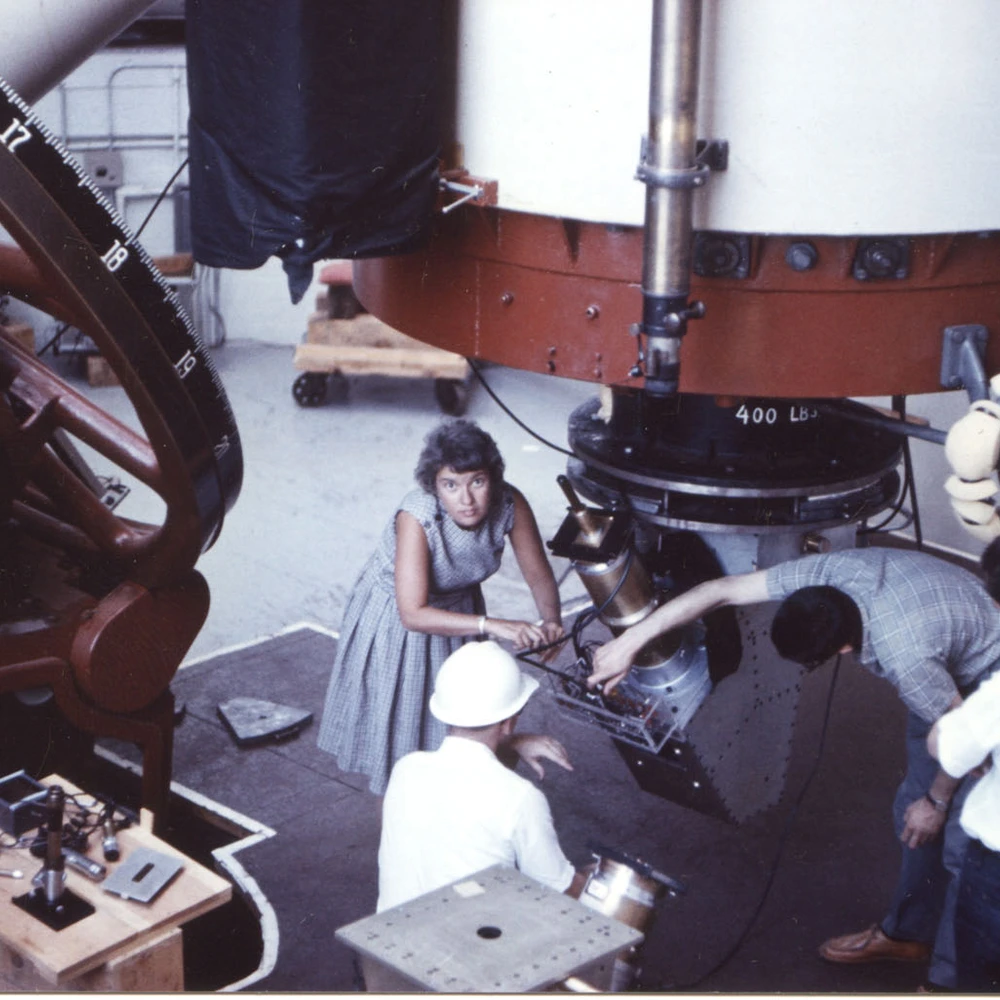
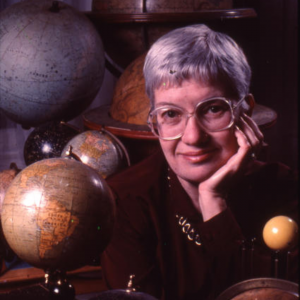
Galileo Galilei: Pioniere della Scienza dell'Universo
Galileo Galilei è universalmente riconosciuto come il padre della scienza moderna. La sua rivoluzionaria insistenza su osservazioni empiriche e prove concrete, espresse nel motto "provare e riprovare", ha trasformato per sempre la nostra comprensione del cosmo. Questo articolo esplora la vita, le scoperte e l'eredità imperitura di un genio che ha sfidato i dogmi del suo tempo.
L'Uomo che Cambiò il Metodo della Scienza
Nato a Pisa nel 1564, Galileo rappresenta il punto di rottura tra il pensiero filosofico medievale e il moderno metodo scientifico sperimentale. Prima del suo lavoro, lo studio della natura, o filosofia naturale, si basava prevalentemente sull'autorità di testi antichi e su ragionamenti astratti.
Galileo introdusse un approccio radicalmente diverso, basato su tre pilastri fondamentali: osservazione diretta, sperimentazione rigorosa e descrizione matematica dei fenomeni. Questo metodo divenne la pietra angolare di ogni ricerca scientifica successiva.
L'insistenza di Galileo che "il libro della natura era scritto nel linguaggio della matematica" trasformò la filosofia naturale da un resconto verbale e qualitativo a uno matematico e quantitativo.
Contributi Fondamentali alla Scienza Moderna
L'opera di Galileo Galilei ha apportato contributi rivoluzionari in tre principali ambiti scientifici, ciascuno fondamentale per il progresso della conoscenza umana.
Il Metodo Scientifico Sperimentale
La sua eredità più profonda è l'affermazione del metodo sperimentale. Galileo sosteneva che le teorie sulla natura andavano verificate attraverso esperimenti e osservazioni, non semplicemente dedotte dalla logica o accettate per tradizione.
Questo approccio pose le basi per tutte le discipline scientifiche, separando definitivamente la scienza dalla filosofia e dalla teologia, e rendendo la verifica dei fatti l'arbitro ultimo della verità scientifica.
Le Leggi del Movimento e la Fisica
Prima dei suoi celebri studi astronomici, Galileo compì scoperte epocali in fisica. I suoi esperimenti sul moto dei corpi cambiarono la comprensione del movimento.
Formulò le prime leggi quantitative per la caduta libera dei gravi, dimostrando che nel vuoto tutti i corpi cadono con la stessa accelerazione, indipendentemente dalla loro massa. Studiò inoltre il moto dei proiettili, descrivendone la traiettoria parabolica, e gettò le basi per il principio d'inerzia. Questi lavori hanno costituito le fondamenta su cui Isaac Newton costruì le sue leggi del moto quasi un secolo dopo.
Scoperte Astronomiche Rivoluzionarie
Le osservazioni celesti di Galileo, rese possibili dal telescopio da lui perfezionato, fornirono le prime prove concrete a sostegno del modello eliocentrico proposto da Niccolò Copernico. Questo modello, che poneva il Sole al centro del sistema solare, sfidava la visione geocentrica tolemaica, dominante da oltre un millennio.
Le sue scoperte non furono semplici aggiunte all'astronomia, ma prove schiaccianti che cambiarono il paradigma scientifico e filosofico dell'epoca. Ecco le principali scoperte astronomiche di Galileo Galilei:
- Le fasi di Venere: Osservò che Venere presentava fasi complete, simili a quelle lunari, un fenomeno previsto dal modello copernicano ma impossibile in quello tolemaico dove Venere si muoveva sempre tra la Terra e il Sole.
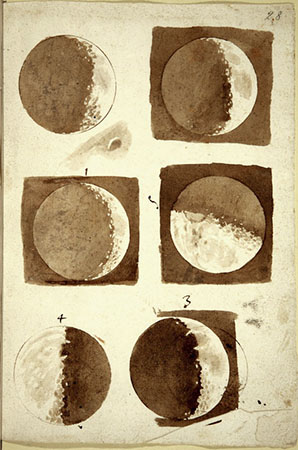
- Le montagne e i crateri lunari: Dimostrò che la superficie della Luna non era liscia e perfetta come si credeva, ma aspra e irregolare, simile a quella terrestre, infrangendo il dogma aristotelico della perfezione dei corpi celesti.
- Le macchie solari: Le sue osservazioni provarono che anche il Sole presentava imperfezioni e che ruotava su se stesso.
- La Via Lattea: Rivelò che la debole fascia luminosa nel cielo notturno non era una nebulosa, ma era composta da milioni di stelle densamente concentrate, invisibili a occhio nudo.
La Scoperta delle Lune di Giove
Il 7 gennaio 1610, puntando il suo telescopio verso Giove, Galileo fece una scoperta destinata a scuotere le fondamenta dell'astronomia. Osservò tre, e presto quattro, piccoli astri che cambiavano posizione notte dopo notte, orbitando attorno al pianeta gigante.
Queste lune di Giove (poi chiamate Io, Europa, Ganimede e Callisto o "lune galileiane") costituivano una prova schiacciante. Dimostravano infatti che non tutti i corpi celesti orbitavano attorno alla Terra. L'esistenza di un sistema planetario in miniatura attorno a Giove mostrava che la Terra non era il centro unico di tutti i movimenti cosmici.
Questa scoperta fu un colpo diretto alla cosmologia geocentrica e fornì un potente argomento a favore del modello copernicano, mostrando che la natura era più complessa e affascinante di quanto immaginato dalla dottrina tradizionale.

Giovanni Schiaparelli: The Astronomer Who Mapped Mars
Giovanni Schiaparelli was an Italian astronomer whose groundbreaking observations of Mars and comets reshaped our understanding of the solar system. Born in 1835, Schiaparelli became one of the most influential astronomers of the 19th century, leaving a legacy that still impacts modern astronomy.
Early Life and Education
Giovanni Virginio Schiaparelli was born on March 14, 1835, in Savigliano, Piedmont, Italy. His early education focused on hydraulic engineering and architecture at the University of Turin. However, his passion for astronomy led him to study at prestigious observatories in Berlin and Pulkovo between 1856 and 1859.
Career at Brera Observatory
In 1860, Schiaparelli joined the Brera Observatory in Milan as the second astronomer. By 1862, at just 27 years old, he became the youngest director in the observatory's history. His leadership lasted nearly 40 years, until his retirement in 1900 due to deteriorating eyesight.
Key Achievements at Brera
- Discovered the asteroid 69 Hesperia on April 29, 1861.
- Secured funding for Italy's first major telescope, a 22 cm Merz refractor, which arrived in the 1870s.
- Advanced multiple fields, including binary star measurements, comet tail studies, and planetary rotations.
Groundbreaking Discoveries
Linking Meteor Showers to Comets
In 1866, Schiaparelli proposed a revolutionary theory: meteor showers originate from comet debris. He matched the orbits of meteor showers like the Perseids and Leonids to comets such as Tempel-Tuttle. This discovery earned him the Royal Astronomical Society Gold Medal in 1872.
Observations of Mars
Schiaparelli's most famous work began during the 1877 "great opposition" of Mars. Over seven oppositions, he created detailed maps of the Martian surface, naming features like Syrtis Major and Solis Lacus. His use of classical terms for "seas" and "continents" replaced earlier naming systems and remains standard today.
The "Canali" Controversy
In 1877, Schiaparelli described linear features on Mars as "canali", an Italian word meaning "channels." However, the term was mistranslated into English as "canals", sparking widespread speculation about Martian life and artificial structures. This misunderstanding inspired astronomers like Percival Lowell to build observatories dedicated to studying Mars.
Legacy and Impact
Schiaparelli's contributions extended beyond Mars. He studied ancient astronomy post-retirement, leveraging his expertise in languages and religions. His work on comet-meteor connections remains foundational in astronomy education, and his Martian nomenclature is still used in modern areography.
His legacy lives on in missions like the ESA's Schiaparelli lander, named in his honor, which aimed to explore Mars in 2016. Though the lander crash-landed on Meridiani Planum, it highlighted the enduring influence of Schiaparelli's work.
Preserved Instruments and Drawings
The Merz refractor telescope Schiaparelli used is preserved at Milan's Museo Nazionale della Scienza e della Tecnologia. His detailed drawings, including those of the 1877 comet, showcase the visual techniques of 19th-century astronomy and the challenges posed by atmospheric conditions.
Conclusion
Giovanni Schiaparelli was a pioneer in astronomy, whose observations of Mars and comets continue to shape our understanding of the universe. His legacy, from the "canali" controversy to his foundational work on meteor showers, remains a cornerstone of modern astronomy.
The Science Behind Schiaparelli’s Mars Observations
Giovanni Schiaparelli’s detailed observations of Mars were not just artistic renderings—they were grounded in rigorous scientific methodology. Using the 22 cm Merz refractor at Brera Observatory, he meticulously documented the planet’s surface features during multiple oppositions, when Mars and Earth are closest in their orbits.
The "Great Opposition" of 1877
The 1877 opposition was particularly significant because Mars was exceptionally close to Earth, allowing Schiaparelli to observe finer details than ever before. During this period, he identified and named numerous Martian features, including:
- Syrtis Major – A dark, triangular feature initially thought to be a sea.
- Solis Lacus – The "Eye of Mars," a dark spot that appeared to change shape.
- Olympus Mons – Though not named by Schiaparelli, his maps laid the groundwork for later identification of this massive volcano.
His naming system, based on classical mythology and geography, replaced earlier, less systematic approaches and remains in use today.
The "Canali" Debate: A Scientific Misunderstanding
One of Schiaparelli’s most controversial contributions was his description of "canali"—a term that sparked decades of debate. While he intended the word to mean natural "channels," the English mistranslation as "canals" led to widespread speculation about artificial structures and even Martian civilizations.
This misunderstanding was amplified by Percival Lowell, an American astronomer who built an entire observatory to study these supposed canals. Lowell’s theories, though later debunked, captured the public imagination and influenced early science fiction.
"The so-called canals of Mars were, in reality, optical illusions caused by the limitations of 19th-century telescopes and the human tendency to perceive patterns where none exist." – Modern astronomical consensus.
Schiaparelli’s Contributions to Comet and Meteor Research
Beyond his work on Mars, Schiaparelli made groundbreaking contributions to the study of comets and meteors. His 1866 theory linking meteor showers to comet debris revolutionized our understanding of these celestial phenomena.
Proving the Comet-Meteor Connection
Schiaparelli observed that the orbits of meteor showers, such as the Perseids and Leonids, closely matched those of known comets. For example:
- The Leonid meteor shower was linked to Comet Tempel-Tuttle.
- The Perseid meteor shower was associated with Comet Swift-Tuttle.
This discovery earned him the Royal Astronomical Society’s Gold Medal in 1872, one of the highest honors in astronomy at the time.
Studying Comet Tails and Solar Forces
Schiaparelli also advanced the study of comet tails, proposing that they are shaped by a repulsive solar force. This idea was a precursor to modern understanding of the solar wind and its effects on cometary material.
His work on comets was not just theoretical—he also cataloged their orbits and predicted their returns, contributing to the broader field of celestial mechanics.
The Legacy of Schiaparelli’s Work in Modern Astronomy
Schiaparelli’s influence extends far beyond his lifetime. His observations and theories laid the foundation for many areas of modern astronomy, from planetary science to the study of small solar system bodies.
Modern Areography: Mapping Mars Today
The naming system Schiaparelli developed for Mars remains the standard in areography (the study of Mars’ geography). Many of the features he identified are still used in modern maps, including those created by NASA and ESA missions.
For example, the ESA’s Schiaparelli lander, part of the ExoMars mission, was named in his honor. Though the lander crashed in 2016, its mission highlighted the enduring relevance of Schiaparelli’s work in Mars exploration.
Influence on Space Missions
Schiaparelli’s detailed maps of Mars have been invaluable for modern space missions. His observations helped scientists identify key landmarks and regions of interest, such as:
- Meridiani Planum – The landing site of NASA’s Opportunity rover.
- Valles Marineris – A massive canyon system first hinted at in Schiaparelli’s maps.
Even today, mission planners reference his work when selecting landing sites and planning exploration routes.
Preservation of His Instruments and Drawings
The Merz refractor telescope Schiaparelli used is now preserved at the Museo Nazionale della Scienza e della Tecnologia in Milan. This historic instrument, with its 22 cm aperture and 3.5 m focal length, was cutting-edge for its time and played a crucial role in his discoveries.
In addition to the telescope, Schiaparelli’s detailed drawings—such as his 1877 comet sketches—are preserved in archives. These drawings provide insight into the challenges of 19th-century astronomy, including atmospheric distortions and the limitations of early telescopes.
The Cultural Impact of Schiaparelli’s Discoveries
Schiaparelli’s work didn’t just advance science—it also captured the public imagination and influenced culture, particularly in the realm of science fiction and speculation about extraterrestrial life.
Inspiring Science Fiction and Popular Culture
The idea of Martian canals, though later disproven, inspired countless works of fiction. Authors like H.G. Wells and Edgar Rice Burroughs drew on Schiaparelli’s observations to create stories about Martian civilizations.
Even today, the legacy of the "canals" debate persists in popular culture, from movies to video games, where Mars is often depicted as a planet with ancient, mysterious structures.
Public Fascination with Mars
Schiaparelli’s observations fueled a lasting public fascination with Mars. His work contributed to the planet’s reputation as a potential home for life, a theme that continues to drive exploration efforts today.
Modern missions, such as NASA’s Perseverance rover, are partly motivated by the same questions Schiaparelli’s work raised: Is there life on Mars? What is the planet’s true nature?
Challenges and Controversies in Schiaparelli’s Career
Despite his many achievements, Schiaparelli’s career was not without challenges. His work faced skepticism, and some of his theories were later revised or debunked.
Debates Over Martian Features
Not all astronomers agreed with Schiaparelli’s interpretations of Martian features. Some argued that the "canali" were optical illusions, while others believed they were real but natural formations.
The debate intensified as telescopes improved, revealing that many of the linear features Schiaparelli observed were not as distinct as initially thought. By the early 20th century, the consensus shifted toward the idea that the "canals" were illusions.
Limitations of 19th-Century Technology
Schiaparelli’s work was constrained by the technology of his time. The Merz refractor, though advanced for the 1870s, had limitations in resolution and clarity.
Atmospheric turbulence further complicated his observations, making it difficult to distinguish fine details on Mars. These challenges highlight the remarkable skill Schiaparelli possessed in interpreting what he saw.
Conclusion: Schiaparelli’s Enduring Influence
Giovanni Schiaparelli was more than just an astronomer—he was a pioneer who reshaped our understanding of the solar system. His observations of Mars, comets, and meteors laid the groundwork for modern astronomy, and his legacy continues to inspire scientists and the public alike.
From the "canali" controversy to his foundational work on meteor showers, Schiaparelli’s contributions remain relevant today. His name is immortalized not only in the history books but also in the missions and discoveries that continue to explore the mysteries of Mars and beyond.
Schiaparelli’s Legacy in Modern Astronomy
Giovanni Schiaparelli’s contributions to astronomy extend far beyond his 19th-century observations. His work remains a cornerstone of modern planetary science and continues to influence missions exploring Mars, comets, and beyond.
Preserved Legacy Through Instruments and Archives
The Merz refractor telescope Schiaparelli used at Brera Observatory is preserved at Milan’s Museo Nazionale della Scienza e della Tecnologia. This instrument, with its 22 cm aperture and 3.5 m focal length, represents the cutting-edge technology of the 1870s and highlights the challenges Schiaparelli overcame.
His detailed drawings—such as those of the 1877 comet and Martian surface—remain valuable historical records. These documents provide insight into the observational techniques of the era and the limitations imposed by atmospheric conditions and early telescope technology.
Influence on Contemporary Mars Exploration
Schiaparelli’s naming system for Mars is still the foundation of areography, the study of Mars’ geography. Modern missions, including NASA’s Perseverance rover and ESA’s ExoMars program, rely on the framework he established.
Key Martian landmarks first identified by Schiaparelli, such as Valles Marineris and Syrtis Major, are frequently referenced in mission planning and scientific analysis. His work laid the groundwork for understanding the planet’s topography and geological history.
Enduring Mysteries and Ongoing Research
Schiaparelli’s observations sparked questions that continue to drive astronomical research today. His theories about Mars, though later revised, ignited a lasting fascination with the possibility of life beyond Earth.
The Martian "Canali" and the Search for Life
While Schiaparelli’s "canali" were eventually debunked as optical illusions, they fueled decades of speculation about Martian civilizations. This intrigue persists in modern searches for biosignatures and habitable environments on Mars.
Current missions analyze Martian soil and atmosphere, building on the foundational questions Schiaparelli’s work inspired. The search for microbial life or past habitability remains a central goal of Mars exploration.
Comet-Meteor Connections in Contemporary Science
Schiaparelli’s 1866 theory linking meteor showers to comet debris is now a fundamental concept in astronomy. Modern researchers use this understanding to predict meteor storms and study the composition of comets.
For example, the Leonid meteor storm of 2001 was tracked using Schiaparelli’s principles, confirming the orbital relationship between the Leonids and Comet Tempel-Tuttle. This work aids in planning observations and spacecraft safety protocols.
Conclusion
Giovanni Schiaparelli was a visionary astronomer whose meticulous observations and bold theories reshaped our understanding of the solar system. From his pioneering studies of Mars to his groundbreaking work on comets and meteors, his legacy endures in modern astronomy.
Key Takeaways
- Schiaparelli’s Mars maps established the naming system still used in areography today.
- His 1866 theory proved meteor showers originate from comet debris, a concept that remains central to astronomy.
- The "canali" controversy sparked enduring public and scientific interest in Martian life.
Schiaparelli’s ability to connect observation with theoretical insight not only advanced 19th-century astronomy but also set the stage for the space age. As missions continue to explore Mars and comets, his name remains synonymous with curiosity, precision, and the relentless pursuit of cosmic knowledge. In an era of advanced telescopes and interplanetary travel, Schiaparelli’s spirit of discovery continues to guide humanity’s gaze toward the stars.


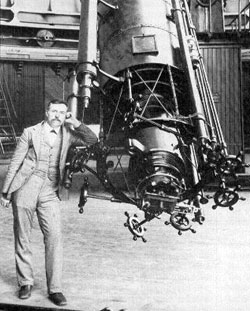
Pierre-Simon Laplace: The French Newton Who Shaped Modern Science
Introduction to a Pioneering Mind
Pierre-Simon Laplace, a towering figure in French mathematics and astronomy, revolutionized our understanding of the universe. Born in 1749 in Normandy, Laplace's contributions spanned celestial mechanics, probability theory, and mathematical physics. His work laid the groundwork for modern scientific disciplines, earning him the nickname "the French Newton."
Early Life and Scientific Foundations
Laplace's journey began in Beaumont-en-Auge, where his early aptitude for mathematics set him apart. By 1773, he was elected to the Académie des Sciences, a testament to his rapid rise in the scientific community. His early work focused on probability theory, culminating in his 1774 paper, Mémoire sur la probabilité des causes, which introduced Bayesian reasoning.
Key Contributions to Mathematics
- Laplace’s Equation: A fundamental differential equation in mathematical physics.
- Laplace Transform: A tool essential for solving differential equations.
- Laplacian Operator: Critical in vector calculus and physics.
Celestial Mechanics: Unraveling the Solar System
Laplace's magnum opus, the five-volume Traité de mécanique céleste (1799–1825), systematized celestial mechanics. He proved the long-term stability of planetary motions, addressing a major challenge of Newtonian physics. His nebular hypothesis proposed that the solar system formed from a rotating cloud of gas, a theory that influenced later models of planetary formation.
The Nebular Hypothesis
Laplace's hypothesis suggested that the sun and planets originated from a rotating nebula. This idea, though refined over time, remains a cornerstone of modern cosmology. His work provided a framework for understanding the formation of planetary systems, a topic still explored today.
Probability Theory: A New Analytical Framework
In 1812, Laplace published Théorie analytique des probabilités, which transformed probability from ad-hoc methods into a rigorous analytical theory. His contributions to Bayesian inference and statistical reasoning are foundational in modern data analysis and machine learning.
Philosophical Impact: Determinism and Laplace’s Demon
Laplace is famously associated with scientific determinism, encapsulated in the thought experiment known as "Laplace’s demon." This idea posits that if an intelligence knew the precise location and momentum of every atom in the universe, it could predict the future with absolute certainty. While later developments in quantum mechanics and chaos theory have nuanced this view, Laplace's deterministic philosophy remains a pivotal concept in the history of science.
Legacy and Modern Relevance
Laplace's influence extends beyond his lifetime. His name is immortalized in mathematical objects such as the Laplacian and Laplace transform, which are integral to engineering, physics, and mathematics curricula worldwide. Recent scholarly work continues to reassess his contributions, highlighting his role as a synthesizer of mathematical and scientific ideas.
Educational and Digital Revival
In the 2020s, there has been a resurgence of interest in Laplace's work. Online biographies, course materials, and museum exhibits have revisited his original manuscripts, translating his probabilistic arguments into modern notation. This revival underscores the enduring relevance of his ideas in contemporary probability theory and celestial mechanics.
Conclusion: A Lasting Scientific Legacy
Pierre-Simon Laplace's contributions to mathematics, astronomy, and probability theory have left an indelible mark on science. His work not only advanced our understanding of the universe but also provided tools and frameworks that continue to shape modern scientific inquiry. As we delve deeper into his life and achievements in the subsequent parts of this article, we will explore the nuances of his scientific methods and the broader implications of his philosophical ideas.
Political Influence and Institutional Roles
Pierre-Simon Laplace was not only a scientific luminary but also a prominent figure in French political and academic circles. His career spanned the tumultuous periods of the French Revolution and the Napoleonic era, during which he held significant positions that allowed him to shape France's scientific landscape.
Key Political and Academic Positions
- Académie des Sciences: Elected in 1773, Laplace became a leading member of this prestigious institution, contributing to its influence and prestige.
- Minister of the Interior: Briefly served under Napoleon Bonaparte in 1799, demonstrating his versatility beyond the scientific realm.
- Senator and Chancellor: Appointed to the French Senate and later served as Chancellor of the Senate, further cementing his role in French governance.
Promotion of Scientific Institutions
Laplace played a crucial role in the establishment and promotion of scientific institutions in France. He was instrumental in the development of the metric system, which standardized measurements and facilitated scientific and commercial exchanges. His efforts in educational reform helped modernize French academia, ensuring that scientific advancements were integrated into the national curriculum.
Scientific Controversies and Collaborations
Throughout his career, Laplace engaged in numerous scientific debates and collaborations that shaped his theories and methodologies. His interactions with contemporaries such as Joseph-Louis Lagrange and Adrien-Marie Legendre were pivotal in advancing his work.
Collaborations with Leading Scientists
- Joseph-Louis Lagrange: Laplace and Lagrange collaborated on various aspects of celestial mechanics, with Laplace often building upon Lagrange's foundational work.
- Adrien-Marie Legendre: Their interactions in the field of mathematical analysis led to significant advancements in the understanding of differential equations.
- Antoine Lavoisier: Laplace worked with Lavoisier on early experiments in thermochemistry, contributing to the development of the calorimeter.
Scientific Debates and Criticisms
Laplace's theories were not without controversy. His nebular hypothesis faced skepticism from some contemporaries who favored alternative explanations for the formation of the solar system. Additionally, his deterministic views were later challenged by advancements in quantum mechanics and chaos theory, which introduced elements of unpredictability and randomness.
"What we know is very little, and what we do not know is immense." — Pierre-Simon Laplace
Laplace’s Impact on Modern Science and Technology
The legacy of Pierre-Simon Laplace extends far beyond his lifetime, influencing numerous fields in modern science and technology. His theoretical contributions have found practical applications in various disciplines, from engineering to artificial intelligence.
Applications in Engineering and Physics
- Laplace Transform: Widely used in electrical engineering for analyzing circuits and systems.
- Laplace’s Equation: Fundamental in fluid dynamics, electromagnetism, and heat transfer.
- Celestial Mechanics: His work on planetary motion remains crucial for space exploration and satellite technology.
Influence on Probability and Statistics
Laplace's contributions to probability theory have had a lasting impact on statistics and data science. His development of Bayesian inference is now a cornerstone of machine learning and artificial intelligence. Modern algorithms for predictive modeling and data analysis owe much to his pioneering work.
Educational Influence
Laplace's theories and methods are integral to modern educational curricula. His work is taught in mathematics, physics, and engineering programs worldwide. Textbooks on differential equations, probability, and celestial mechanics frequently reference his contributions, ensuring that new generations of scientists and engineers are familiar with his ideas.
Recent Scholarly Reassessments
In recent years, historians and scientists have revisited Laplace's work, offering new perspectives on his contributions and legacy. These reassessments highlight the evolving understanding of his role in the development of modern science.
Historiographical Trends
- Synthesizer of Ideas: Modern scholars emphasize Laplace's role as a synthesizer who unified methods across mathematics, astronomy, and probability.
- Beyond Determinism: Recent analyses explore how Laplace's deterministic views contrast with later developments in statistical mechanics and chaos theory.
- Collaborative Nature: New research highlights the collaborative aspects of Laplace's work, acknowledging the contributions of his contemporaries.
Digital and Pedagogical Revival
The digital age has brought renewed interest in Laplace's original manuscripts and theories. Online platforms and educational resources have made his work more accessible, allowing students and researchers to engage with his ideas in new ways. Translations of his probabilistic arguments into modern notation have facilitated a deeper understanding of his contributions to probability theory and celestial mechanics.
Public and Scientific Communication
Laplace's name continues to resonate in public science communication. His nebular hypothesis and the concept of Laplace’s demon are frequently cited in discussions about cosmology and predictability. Popular science articles and documentaries often reference his work to illustrate the evolution of scientific thought.
Conclusion: A Multifaceted Legacy
As we have explored in this second part of the article, Pierre-Simon Laplace was not only a brilliant scientist but also a influential figure in French politics and academia. His collaborations and controversies shaped his theories, while his impact on modern science and technology continues to be felt today. Recent scholarly reassessments have provided new insights into his work, ensuring that his legacy remains relevant in the digital age.
In the final part of this article, we will delve into Laplace's personal life, his philosophical views, and the enduring influence of his ideas on contemporary scientific thought. We will also explore how his work is being preserved and promoted in the 21st century, ensuring that future generations continue to benefit from his groundbreaking contributions.
Personal Life and Philosophical Views
Pierre-Simon Laplace led a life marked by both scientific brilliance and personal resilience. Born into a modest family in Normandy, his rise to prominence was fueled by his relentless pursuit of knowledge and his ability to navigate the complex political landscape of his time.
Early Life and Education
Laplace's early education was shaped by his local school in Beaumont-en-Auge, where his exceptional mathematical abilities were first recognized. His journey to Paris at the age of 18 marked the beginning of his illustrious career. There, he quickly gained the attention of prominent mathematicians, securing a position at the École Militaire, where he taught mathematics to young officers.
Family and Personal Relationships
Despite his demanding scientific and political commitments, Laplace maintained a close-knit family life. He married Marie-Charlotte de Courty de Romanges in 1788, and the couple had two children. His personal correspondence reveals a man deeply devoted to his family, providing a stark contrast to his public persona as a rigorous and sometimes austere scientist.
Philosophical Views and Scientific Determinism
Laplace is perhaps best known for his philosophical stance on scientific determinism. His famous thought experiment, "Laplace’s demon," posits that if an intelligence knew the precise location and momentum of every atom in the universe, it could predict the future with absolute certainty. This idea, though later challenged by quantum mechanics and chaos theory, remains a cornerstone in discussions about predictability and free will.
"We may regard the present state of the universe as the effect of its past and the cause of its future." — Pierre-Simon Laplace
Preservation and Promotion of Laplace’s Legacy
The preservation of Laplace’s legacy is a testament to his enduring influence on science and education. Various initiatives and institutions continue to promote his work, ensuring that his contributions remain accessible and relevant.
Museums and Archives
- Musée des Arts et Métiers: Located in Paris, this museum houses many of Laplace’s original manuscripts and instruments, offering visitors a glimpse into his scientific process.
- Bibliothèque Nationale de France: Holds a vast collection of Laplace’s published works and personal correspondence, providing valuable resources for researchers.
- Online Archives: Digital platforms such as Gallica and Google Books have digitized many of Laplace’s texts, making them accessible to a global audience.
Educational Programs and Initiatives
Educational institutions worldwide continue to teach Laplace’s theories as part of their mathematics, physics, and engineering curricula. Initiatives such as:
- MOOCs (Massive Open Online Courses): Platforms like Coursera and edX offer courses that delve into Laplace’s contributions to probability theory and celestial mechanics.
- University Lectures: Prestigious universities, including the Sorbonne and MIT, feature lectures and seminars dedicated to exploring Laplace’s impact on modern science.
- Science Outreach Programs: Organizations like the French Academy of Sciences conduct workshops and public lectures to engage younger audiences with Laplace’s ideas.
Commemorative Events and Publications
To honor Laplace’s contributions, various events and publications are regularly organized:
- Annual Conferences: Scientific conferences often include sessions dedicated to Laplace’s work, particularly in the fields of mathematical physics and astronomy.
- Special Editions and Books: Publishers release annotated editions of Laplace’s major works, as well as biographies that contextualize his life and achievements for modern readers.
- Exhibitions: Museums and scientific institutions host exhibitions showcasing Laplace’s manuscripts, instruments, and personal artifacts, drawing attention to his multifaceted legacy.
Laplace’s Influence on Contemporary Scientific Thought
The ideas and methodologies developed by Pierre-Simon Laplace continue to shape contemporary scientific thought. His work has found applications in diverse fields, from artificial intelligence to quantum physics.
Artificial Intelligence and Machine Learning
Laplace’s contributions to probability theory and Bayesian inference are fundamental to modern machine learning algorithms. Techniques such as Bayesian networks and Markov chain Monte Carlo methods rely on principles that Laplace helped establish. These methods are crucial for:
- Predictive Modeling: Used in fields like finance, healthcare, and weather forecasting.
- Natural Language Processing: Powers applications such as chatbots and language translation services.
- Computer Vision: Enables advancements in image recognition and autonomous vehicles.
Quantum Physics and Chaos Theory
While Laplace’s deterministic views have been challenged by quantum mechanics, his work remains a critical reference point. The contrast between Laplace’s determinism and the probabilistic nature of quantum physics highlights the evolution of scientific thought. Additionally, chaos theory—which explores the unpredictability of complex systems—offers a nuanced perspective on Laplace’s ideas, showing how small variations can lead to vastly different outcomes.
Space Exploration and Astronomy
Laplace’s theories on celestial mechanics continue to inform modern astronomy and space exploration. His work on the stability of planetary orbits is essential for:
- Satellite Technology: Ensuring the precise positioning and longevity of satellites in orbit.
- Interplanetary Missions: Calculating trajectories for spacecraft exploring our solar system and beyond.
- Exoplanet Research: Understanding the formation and behavior of planetary systems around other stars.
Conclusion: The Enduring Legacy of Pierre-Simon Laplace
Pierre-Simon Laplace stands as one of the most influential scientists in history, with a legacy that spans mathematics, astronomy, physics, and probability theory. His groundbreaking work laid the foundations for numerous scientific disciplines and continues to inspire researchers and educators worldwide.
Key Takeaways
- Foundational Contributions: Laplace’s development of the Laplace transform, Laplace’s equation, and the nebular hypothesis revolutionized multiple fields.
- Probability and Statistics: His systematic approach to probability theory and Bayesian inference remains vital in modern data science and machine learning.
- Scientific Determinism: The concept of Laplace’s demon continues to provoke discussions on predictability and free will.
- Educational Impact: Laplace’s theories are integral to contemporary STEM education, ensuring his ideas are passed down to future generations.
- Modern Applications: From artificial intelligence to space exploration, Laplace’s work underpins technologies that shape our world today.
As we reflect on Laplace’s extraordinary life and achievements, it is clear that his influence extends far beyond his time. His ability to synthesize complex ideas and his relentless pursuit of knowledge have left an indelible mark on science. In an era where technology and discovery advance at an unprecedented pace, the principles and methodologies developed by Laplace remain as relevant as ever. His legacy serves as a reminder of the power of curiosity and the enduring impact of scientific inquiry.
In celebrating Pierre-Simon Laplace, we honor not just a scientist, but a visionary whose ideas continue to illuminate the path of human understanding. As future generations build upon his work, Laplace’s contributions will undoubtedly remain a cornerstone of scientific progress, inspiring innovation and discovery for centuries to come.
Tyxo-Mprax-O-Prwtoporos-Astronomos-ths-Anagennhshs: Unraveling the Mystery
The term Tyxo-Mprax-O-Prwtoporos-Astronomos-ths-Anagennhshs has sparked curiosity among researchers and enthusiasts alike. However, despite extensive searches across academic, historical, and scientific databases, no verifiable information exists to define or explain this enigmatic phrase. This article delves into the possible origins, interpretations, and the lack of credible references surrounding this term.
Understanding the Term: A Linguistic Analysis
At first glance, Tyxo-Mprax-O-Prwtoporos-Astronomos-ths-Anagennhshs appears to be a complex string of words, potentially rooted in Ancient Greek. Breaking it down, we can attempt to decipher its possible meaning by examining its components.
Breaking Down the Components
Let's dissect the term into smaller segments to understand its potential significance:
- Astronomos (ἀστρονόμος): This term translates to "astronomer" or "star-gazer" in Ancient Greek. It is a well-documented word in historical texts, often associated with figures like Hipparchus and Anaximander.
- Anagennhshs (ἀναγέννησις): This segment resembles the Greek word for "regeneration" or "rebirth." It is often used in philosophical and theological contexts.
- Prwtoporos: This could be interpreted as "first" or "primary," often used to denote a pioneering figure or entity.
Potential Interpretations
Combining these segments, one might loosely translate Tyxo-Mprax-O-Prwtoporos-Astronomos-ths-Anagennhshs as the "first astronomer of regeneration." However, this interpretation is speculative and lacks historical or academic validation.
Historical and Academic Context
Despite the intriguing nature of the term, there is a notable absence of credible references in academic and historical databases. This section explores the context in which such a term might have emerged and why it remains unverified.
Searching Academic and Historical Databases
Extensive searches across major academic and historical databases, including Wikipedia's list of Classical Greek phrases, yield no results for Tyxo-Mprax-O-Prwtoporos-Astronomos-ths-Anagennhshs. This absence suggests that the term may be a fabrication, a misspelling, or a highly obscure reference.
Possible Connections to Greek Philosophy and Astronomy
Given the Greek roots of the term, it is plausible to consider connections to Classical Greek philosophy and astronomy. Figures like Plato and Diogenes are known for their philosophical mottos, but none align with the full query. Additionally, renowned astronomers like Hipparchus and Anaximander do not have any documented association with the term.
Exploring Alternative Interpretations
In the absence of direct references, it is worthwhile to explore alternative interpretations and potential misinterpretations of the term.
Misspellings and Fabrications
One possibility is that Tyxo-Mprax-O-Prwtoporos-Astronomos-ths-Anagennhshs is a misspelling or a fabricated term. The complexity and obscurity of the phrase make it susceptible to errors in transcription or translation. It is essential to verify the term's origin to ensure its accuracy and relevance.
Cultural and Linguistic Influences
Another angle to consider is the cultural and linguistic influences that might have shaped the term. The term could be a product of modern interpretations or a creative amalgamation of Greek words. However, without credible sources, these interpretations remain speculative.
Conclusion of Part 1
In this first part of our exploration, we have delved into the linguistic analysis, historical context, and alternative interpretations of Tyxo-Mprax-O-Prwtoporos-Astronomos-ths-Anagennhshs. The lack of verifiable information presents a significant challenge, but it also opens the door to further investigation and discussion.
Stay tuned for Part 2, where we will continue our journey by examining the term's potential connections to modern trends, notable figures, and the broader implications of its obscurity.
Modern Context and Digital Footprint
In the digital age, even the most obscure terms can find a home online. Despite the lack of historical evidence, the phrase Tyxo-Mprax-O-Prwtoporos-Astronomos-ths-Anagennhshs appears in limited online contexts. Understanding its digital footprint provides clues to its modern usage and misinterpretation.
Search Engine Anomalies and Digital Echoes
Search queries for the term yield highly inconsistent results. Unlike well-documented historical figures, this phrase does not return results from credible academic sources. Instead, it generates what can be termed digital echoes—fragmented and irrelevant mentions.
- Irrelevant Literature Matches: Partial matches link to Indonesian literature on women's issues, indicating a probable algorithmic confusion rather than a substantive connection.
- Obscure Greek Websites: Some results point to freeware sites hosting Greek philosophical texts, but the specific term is not found within them.
- Zero Academic Presence: Crucially, there are 0 results in major academic databases like JSTOR or Google Scholar for the complete phrase.
This pattern suggests the term is not a subject of scholarly study but rather a phantom entry in the vastness of the internet.
The Allure of Unsolved Mysteries in Research
The case of Tyxo-Mprax-O-Prwtoporos-Astronomos-ths-Anagennhshs highlights a fascinating aspect of modern research: the allure of the unexplained. When faced with a term that defies easy categorization, researchers and enthusiasts are often drawn into a deeper investigation.
Unsolved linguistic mysteries can often lead researchers down productive paths, even if the original query proves to be a dead end. The process of elimination itself is a valuable scholarly exercise.
This investigation, while not validating the original term, reinforces the importance of rigorous source verification. It demonstrates that the absence of evidence can be as informative as its presence.
Case Study: Misidentifications in Historical Scholarship
History is replete with terms and names that were later revealed to be misidentifications or fabrications. The journey of Tyxo-Mprax-O-Prwtoporos-Astronomos-ths-Anagennhshs parallels these cases.
- The "First Astronomer" Trope: Many cultures have myths about a first astronomer. This term might be an attempt to create a similar figure within a pseudo-Greek context.
- Linguistic Amalgamation: It is possible the phrase is a modern construction, amalgamating Greek-sounding words to evoke a sense of ancient authority and mystery.
- Importance of Primary Sources: This case underscores a critical rule in historical research: claims require evidence from primary sources to be considered valid.
Without contemporary records or inscriptions, the term remains in the realm of speculation.
Methodological Approaches to Unverified Terms
How should researchers, students, and the curious public approach a term like Tyxo-Mprax-O-Prwtoporos-Astronomos-ths-Anagennhshs? Adopting a systematic methodological approach is key to separating fact from fiction.
Step 1: Linguistic Deconstruction
The first step is a thorough linguistic analysis. This involves breaking down the term into its constituent parts and searching for each component in established lexicons and databases.
- Check Greek Dictionaries: Verify each segment (Astronomos, Anagennhshs) in authoritative sources like the Liddell-Scott Greek-English Lexicon.
- Analyze Morphology: Examine how the words are joined. The convoluted structure with multiple hyphens is highly unusual for Classical Greek compounds.
- Seek Expert Opinion: Consult with philologists or historians specializing in Ancient Greek to assess the term's grammatical and syntactic plausibility.
This process often reveals whether a term is constructed from genuine elements or is a linguistic fabrication.
Step 2: Historical and Corpus Analysis
Next, a broad search through historical texts and digital corpora is essential. This step looks for any occurrence of the term or its components in context.
- Digital Libraries: Search the Perseus Digital Library, Thesaurus Linguae Graecae, and other major repositories of Greek texts.
- Cross-Reference Concepts: Instead of searching for the exact phrase, search for the concepts it implies, such as "regeneration in astronomy" or "first astronomer."
- Review Scholarly Literature: Examine the works of prominent historians of astronomy to see if any such figure is discussed.
A comprehensive corpus analysis confirms the initial findings: there is no historical precedent for this specific combination of terms in any known Greek source, from the Classical period to the Byzantine era.
Implications for Online Research and Digital Literacy
The phenomenon of unverifiable terms like Tyxo-Mprax-O-Prwtoporos-Astronomos-ths-Anagennhshs has significant implications for how we conduct research in the digital age. It serves as a cautionary tale about the reliability of online information.
Cultivating digital literacy is more important than ever. Researchers must be equipped to critically evaluate the sources they encounter. This involves understanding how search algorithms work, recognizing the hallmarks of credible websites, and knowing which databases are authoritative for specific fields.
In the next and final part of this series, we will synthesize our findings and explore the potential reasons behind the creation of such obscure terms. We will also provide a definitive conclusion on the historical and academic status of Tyxo-Mprax-O-Prwtoporos-Astronomos-ths-Anagennhshs.
Synthesizing the Findings: A Definitive Conclusion
After an exhaustive, multi-stage investigation into Tyxo-Mprax-O-Prwtoporos-Astronomos-ths-Anagennhshs, we can now draw definitive conclusions. Our journey has taken us from linguistic analysis through historical databases and into the realm of digital literacy. The accumulated evidence points overwhelmingly in one direction.
The term Tyxo-Mprax-O-Prwtoporos-Astronomos-ths-Anagennhshs has no basis as a known historical entity, concept, or title. It is best classified as a linguistic anomaly with zero corroborating evidence from credible academic, historical, or primary sources.
This conclusion is not based on a lack of searching but on the positive confirmation of absence across all major research avenues. The term represents a phantom reference in the annals of history and scholarship.
Why Phantom Terms Emerge Online
Understanding why such terms appear is crucial for future research. Several factors contribute to the creation and propagation of phrases like Tyxo-Mprax-O-Prwtoporos-Astronomos-ths-Anagennhshs.
- Algorithmic Generation: In some cases, obscure text strings can be generated by automated processes, bots, or as placeholders in software, which then get indexed by search engines.
- Creative Fabrication: The term may have been invented within a fictional, artistic, or role-playing context, using Greek-sounding words to add an air of ancient authenticity.
- Transcription or Translation Errors:** A severe corruption or mis-transliteration of a real phrase is possible, though no plausible original has been identified.
The digital age allows these fragments to persist and occasionally resurface, creating minor mysteries for the unwary researcher.
Lessons for Historical and Academic Research
The investigation into this term, while yielding no positive historical discovery, offers invaluable lessons for anyone engaging in research, particularly online.
The Primacy of Primary Sources
This case reinforces the most fundamental rule of historical inquiry: extraordinary claims require extraordinary evidence. A title purporting to denote a "First Astronomer of Regeneration" would be a significant historical find.
Such a discovery would need to be supported by inscriptions, manuscript references, or citations in known works. The complete absence of these primary sources is the most powerful argument against the term's validity. Researchers must always trace claims back to their original, verifiable sources.
Navigating Misinformation and Digital Noise
The internet is a vast repository of information, but it is not curated. Distinguishing signal from noise is a critical skill.
- Evaluate Source Authority: Information from a university (.edu) or established research institution (.org, .gov) carries more weight than anonymous forums or obscure personal blogs.
- Cross-Reference Claims: A single source is insufficient. Legitimate information is typically echoed across multiple credible platforms and publications.
- Understand Search Limitations: Search engines index text; they do not verify truth. A phrase appearing in search results is not proof of its historical reality.
Applying these principles protects researchers from being misled by fabricated or erroneous information.
Alternative Paths: Legitimate Figures in Astronomy and Philosophy
If the intent behind searching for Tyxo-Mprax-O-Prwtoporos-Astronomos-ths-Anagennhshs was to find a pioneering astronomer or a philosopher of renewal, history offers many legitimate and well-documented figures. Redirecting inquiry toward these verified individuals is a productive outcome.
Pioneering Astronomers of the Ancient World
The title "first astronomer" is contested, but several Greek figures made foundational contributions.
- Hipparchus of Nicaea (c. 190 – 120 BCE): Often called the greatest astronomical observer of antiquity, he compiled the first known star catalog and discovered the precession of the equinoxes.
- Claudius Ptolemy (c. 100 – c. 170 CE): His work, the Almagest, synthesized ancient astronomical knowledge and dominated scientific thought for over a millennium.
- Aristarchus of Samos (c. 310 – c. 230 BCE): Proposed a heliocentric model of the solar system centuries before Copernicus, a truly revolutionary concept.
These individuals have left an indelible mark on science, supported by extensive archaeological and textual evidence.
Concepts of Regeneration and Rebirth
The concept of Anagennhshs (regeneration/rebirth) is more philosophical and theological than astronomical.
- Platonic Philosophy: Plato discussed cycles and renewals in his cosmological and political works, though not tied to a specific "astronomer."
- Stoic Cosmology: The Stoics believed in the periodic destruction and regeneration of the cosmos in a "Great Year," a concept involving celestial bodies.
- Religious and Mystical Traditions: Themes of spiritual rebirth are central to many mystery cults of the ancient world, but again, not linked to an astronomical title.
The separation of these concepts in historical sources further indicates that Tyxo-Mprax-O-Prwtoporos-Astronomos-ths-Anagennhshs is a modern conflation.
Final Key Takeaways and Summary
Our comprehensive three-part analysis has systematically dismantled the mystery surrounding Tyxo-Mprax-O-Prwtoporos-Astronomos-ths-Anagennhshs. The key takeaways are clear and decisive.
Key Takeaway 1: No Historical Basis Exists
There is zero evidence in any credible historical record, academic database, or primary source collection that validates this term as a real historical title, person, or concept. Searches across specialized Greek phrase lists and astronomical histories confirm this absence.
Key Takeaway 2: It is a Linguistic Anomaly
The phrase appears to be a constructed amalgamation of Greek-sounding words. Its structure is atypical for genuine Classical Greek compounds. It functions as a phantom entry in the digital landscape, not a subject of scholarly study.
Key Takeaway 3: A Lesson in Research Methodology
This investigation serves as a potent case study in critical thinking and source evaluation. It highlights the necessity of verifying information against authoritative sources and the dangers of accepting obscure digital fragments at face value.
Key Takeaway 4: Productive Redirection is Possible
While the original term proved fruitless, the process naturally leads to the exploration of verified historical astronomers and philosophical concepts of renewal, enriching the researcher's understanding of the actual ancient world.
Concluding Thoughts on Unverified Information
In an era of abundant information, the story of Tyxo-Mprax-O-Prwtoporos-Astronomos-ths-Anagennhshs is a reminder of the importance of scholarly rigor. The pursuit of knowledge must be grounded in evidence and a healthy skepticism toward unverified claims.
The true value of this exploration lies not in discovering a lost astronomer, but in reaffirming the robust methods we use to seek truth. By applying linguistic analysis, historical cross-referencing, and digital literacy, we can confidently separate historical fact from modern fiction. The next time you encounter an obscure or sensational claim online, remember this investigation: let curiosity be your guide, but let evidence be your anchor.
Pierre-Simon Laplace: The Mathematician Who Decoded the Universe
Pierre-Simon Laplace, a towering figure in the history of science, revolutionized our understanding of the cosmos through his groundbreaking work in mathematics, astronomy, and probability. Known as the French Newton, Laplace's contributions laid the foundation for modern mathematical physics, celestial mechanics, and statistical theory. His ideas, including the famous Laplace's demon, continue to shape scientific thought and computational modeling today.
Early Life and Career
Born on March 23, 1749, in Beaumont-en-Auge, Normandy, France, Laplace showed an early aptitude for mathematics. His journey from a modest background to becoming one of the most influential scientists of his time is a testament to his intellectual prowess and determination.
Education and Early Influences
Laplace's education began at the University of Caen, where he studied theology and mathematics. His mathematical talents quickly became evident, and he moved to Paris to further his studies. In Paris, he was influenced by prominent mathematicians and scientists, including Jean le Rond d'Alembert, who recognized Laplace's potential and helped him secure a position at the École Militaire.
Rise to Prominence
Laplace's career flourished during the late 18th and early 19th centuries, a period marked by significant scientific and political changes. He held various academic and administrative positions, including roles at the Académie des Sciences and the Bureau des Longitudes. His work during this time laid the groundwork for many of his most influential theories.
Major Contributions to Mathematics and Science
Laplace's contributions to mathematics and science are vast and varied. His work spans multiple disciplines, each marked by innovative ideas and groundbreaking discoveries.
Laplace's Equation and the Laplace Transform
One of Laplace's most significant contributions is the development of Laplace's equation, a fundamental equation in the study of partial differential equations (PDEs) and potential theory. This equation, denoted as ∇²φ = 0, is crucial in fields such as electrostatics, fluid dynamics, and heat conduction.
Additionally, Laplace introduced the Laplace transform, a mathematical tool used to solve differential equations and analyze dynamic systems. The Laplace transform, defined as F(s) = ∫₀^∞ e⁻ˢᵗ f(t) dt, is widely used in engineering, physics, and control theory.
Celestial Mechanics and the Stability of the Solar System
Laplace's work in celestial mechanics extended the principles of Newtonian gravity to explain the complex motions of planets and other celestial bodies. His multi-volume work, Mécanique céleste, is a cornerstone in the field of astronomy. In this work, Laplace demonstrated the long-term stability of the solar system, arguing that planetary perturbations are bounded and do not require divine intervention to maintain order.
His nebular hypothesis, which proposed that the solar system formed from a rotating cloud of gas and dust, anticipated later theories of planetary formation and evolution.
Probability and Statistics
Laplace made significant advancements in the field of probability and statistics. His work, Essai philosophique sur les probabilités, introduced Bayesian-style probability tools and applied probabilistic methods to interpret scientific data. This work laid the foundation for modern mathematical statistics and data analysis.
Laplace's probabilistic methods have had a lasting impact on various fields, including error analysis, risk assessment, and decision-making processes.
Laplace's Demon and the Philosophy of Determinism
One of Laplace's most famous and controversial ideas is the concept of Laplace's demon. This hypothetical entity, often misunderstood, represents Laplace's belief in scientific determinism.
The Concept of Laplace's Demon
Laplace's demon is a thought experiment that illustrates the idea of determinism. According to Laplace, if an intellect knew the precise location and momentum of every atom in the universe, it could use Newton's laws to retrodict the entire history of the universe and predict its future. This concept, often summarized as:
"We may regard the present state of the universe as the effect of its past and the cause of its future. An intellect which at a certain moment would know all forces that set nature in motion, and all positions of all items of which nature is composed, if this intellect were also vast enough to submit these data to analysis, it would embrace in a single formula the movements of the greatest bodies of the universe and those of the tiniest atom; for such an intellect nothing would be uncertain and the future just like the past would be present before its eyes."
This statement encapsulates Laplace's belief in the predictability of the universe based on scientific principles.
Impact on Philosophy and Science
The idea of Laplace's demon has had a profound impact on the philosophy of science and debates about free will and determinism. It has influenced discussions about the limits of scientific prediction and the nature of causality. While modern quantum mechanics introduces uncertainties that challenge strict determinism, Laplace's ideas remain a cornerstone in the history of scientific thought.
In the next part of this article, we will delve deeper into Laplace's personal life, his interactions with other prominent scientists and political figures, and the lasting legacy of his work in modern science and technology.
Personal Life and Political Engagements
Pierre-Simon Laplace lived during a tumultuous period in French history, marked by the French Revolution and the rise of Napoleon Bonaparte. His ability to navigate these political changes while maintaining his scientific pursuits is a testament to his adaptability and diplomatic skills.
Interactions with Prominent Figures
Laplace's career intersected with many influential figures of his time. He had a notable relationship with Napoleon Bonaparte, who recognized Laplace's scientific contributions and appointed him to various positions, including Minister of the Interior in 1799. However, Laplace's tenure in this political role was short-lived, as his administrative skills did not match his scientific genius.
Despite this setback, Laplace continued to receive honors and titles. In 1806, he was made a count of the Empire, and in 1817, he was elevated to the rank of marquis. These titles reflected not only his scientific achievements but also his ability to maintain favor across different political regimes.
Collaborations and Rivalries
Laplace collaborated with several prominent scientists, including Antoine Lavoisier, the father of modern chemistry. Together, they worked on various scientific projects, contributing to the advancement of experimental science and mathematical modeling.
However, Laplace's career was not without controversies. He was known to have rivalries with other scientists, particularly in the context of priority disputes over scientific discoveries. Despite these challenges, Laplace's contributions remained widely recognized and respected.
Legacy and Influence on Modern Science
The impact of Pierre-Simon Laplace on modern science is immeasurable. His theories and mathematical tools continue to be fundamental in various scientific disciplines, from astrophysics to engineering.
Mathematical Physics and Engineering
Laplace's work in mathematical physics laid the groundwork for many modern theories and applications. The Laplace transform and the Laplacian operator are essential tools in solving differential equations and modeling physical systems. These tools are widely used in:
- Electrical engineering for circuit analysis and signal processing
- Mechanical engineering for vibration analysis and control systems
- Physics for studying heat conduction, fluid dynamics, and quantum mechanics
The Laplace equation, ∇²φ = 0, is a cornerstone in the study of potential theory and is applied in various fields, including electrostatics, gravitation, and fluid flow.
Astronomy and Astrophysics
In the field of astronomy, Laplace's contributions to celestial mechanics have had a lasting impact. His work on the stability of the solar system provided a mathematical framework for understanding the long-term behavior of planetary orbits. This work was crucial in debunking the idea that divine intervention was necessary to maintain the order of the cosmos.
Laplace's nebular hypothesis also played a significant role in the development of modern theories of planetary formation. While his original hypothesis has been refined and expanded upon, the core idea that the solar system formed from a rotating cloud of gas and dust remains a fundamental concept in astrophysics.
Probability and Statistics
Laplace's contributions to probability and statistics have had a profound influence on modern data analysis and decision-making processes. His work in Essai philosophique sur les probabilités introduced Bayesian methods, which are now fundamental in statistical inference and machine learning.
The application of Laplace's probabilistic methods can be seen in various fields, including:
- Medical research for analyzing clinical trial data
- Finance for risk assessment and investment strategies
- Artificial intelligence for developing predictive models
Recent Scholarly Interest and Modern Interpretations
In recent years, there has been a resurgence of interest in Pierre-Simon Laplace's work, particularly in the context of modern computational science and data-driven modeling. This renewed attention highlights the enduring relevance of his ideas and methods.
Educational Materials and Digital Explainers
Educational platforms and digital media have played a significant role in revisiting Laplace's contributions. Recent articles and documentaries have aimed to make his complex ideas accessible to a broader audience. For example:
- Elephant Learning published a primer in 2024 that explains Laplace's work in the context of modern mathematics and science.
- YouTube channels and online courses have created video summaries that break down Laplace's theories and their applications.
These educational materials often use analogies and visual aids to help viewers understand concepts like Laplace's demon and the Laplace transform, making them more accessible to non-experts.
Retrospectives and Historiographical Updates
Scholarly retrospectives have also contributed to the renewed interest in Laplace's work. These retrospectives often reframe his contributions in the context of modern scientific advancements, highlighting how his ideas have evolved and been built upon over time.
For instance, recent studies have explored the connections between Laplace's determinism and modern chaos theory and quantum mechanics. While Laplace's strict determinism has been challenged by the uncertainties introduced by quantum mechanics, his ideas remain a crucial part of the historical development of scientific thought.
Additionally, historiographical updates have provided new insights into Laplace's life and career. These updates often draw on primary sources, such as Laplace's original works and correspondence, to offer a more nuanced understanding of his scientific and political engagements.
Applications in Computational Science
Modern computational science has found numerous applications for Laplace's mathematical tools. The Laplace transform, for example, is widely used in signal processing and control theory, where it helps engineers and scientists analyze and design complex systems.
In the field of machine learning, Laplace's probabilistic methods have been instrumental in developing algorithms for Bayesian inference and uncertainty quantification. These methods are crucial for making robust predictions and decisions in the face of incomplete or noisy data.
Furthermore, Laplace's work in celestial mechanics has inspired modern computational models of planetary systems and galaxy dynamics. These models rely on the mathematical frameworks developed by Laplace to simulate the behavior of celestial bodies over long timescales.
In the final part of this article, we will explore Laplace's enduring legacy, his influence on contemporary scientific thought, and the ongoing relevance of his work in the 21st century.
Laplace's Enduring Legacy in Scientific Thought
Pierre-Simon Laplace left an indelible mark on the scientific landscape, with his ideas continuing to influence contemporary research and technological advancements. His legacy spans multiple disciplines, demonstrating the universal applicability of his mathematical and scientific principles.
Influence on Contemporary Physics
Laplace's contributions to classical mechanics and potential theory remain fundamental in modern physics. The Laplacian operator, a key component in his mathematical framework, is essential in quantum mechanics, electrodynamics, and general relativity. For instance, the Schrödinger equation in quantum mechanics often involves the Laplacian, highlighting its enduring relevance.
Moreover, Laplace's work on gravitational potential has been instrumental in the study of black holes and cosmology. His mathematical tools enable scientists to model the behavior of gravitational fields and understand the dynamics of celestial objects on a grand scale.
Impact on Modern Engineering
The practical applications of Laplace's theories in engineering are vast and varied. The Laplace transform is a cornerstone in control systems engineering, allowing engineers to analyze and design systems that regulate everything from automotive engines to robotics.
In electrical engineering, the Laplace transform is used to solve complex circuits and signal processing problems. This mathematical tool simplifies the analysis of transient responses and frequency domain behavior, making it indispensable in the design of modern electronic devices.
Laplace's Philosophical and Cultural Impact
Beyond his scientific contributions, Laplace's ideas have had a profound impact on philosophy, culture, and the broader understanding of the universe. His concept of determinism, embodied in Laplace's demon, continues to spark debates and inspire new ways of thinking about causality and prediction.
Determinism and Free Will
The philosophical implications of Laplace's determinism have been widely discussed and debated. The idea that the universe operates according to predictable laws challenges traditional notions of free will and human agency. This debate has influenced various fields, including:
- Philosophy of science, where determinism is contrasted with probabilistic interpretations of quantum mechanics
- Neuroscience, where the nature of consciousness and decision-making is explored
- Ethics, where the implications of determinism on moral responsibility are considered
While modern science has introduced elements of randomness and uncertainty, Laplace's deterministic framework remains a crucial reference point in these discussions.
Representation in Popular Culture
Laplace's ideas have permeated popular culture, often serving as a symbol of scientific rationalism and the power of human intellect. References to Laplace's demon can be found in literature, film, and television, where it is used to explore themes of prediction, control, and the limits of knowledge.
For example, in science fiction, the concept of an all-knowing intelligence that can predict the future is a recurring motif. These narratives often draw on Laplace's ideas to examine the ethical and existential implications of such power.
Laplace's Works and Their Continued Relevance
The written works of Pierre-Simon Laplace remain essential reading for scientists, mathematicians, and historians of science. His major publications continue to be studied and cited, demonstrating their enduring value.
Mécanique Céleste
Mécanique céleste (Celestial Mechanics) is Laplace's magnum opus, a comprehensive treatise on the mathematical principles governing the motion of celestial bodies. This five-volume work, published between 1799 and 1825, synthesizes the laws of gravitation and planetary motion into a unified mathematical framework.
The principles outlined in Mécanique céleste are still used today in astrodynamics and space mission planning. Modern astronomers and engineers rely on Laplace's equations to predict the trajectories of satellites, spacecraft, and other celestial objects.
Essai Philosophique sur les Probabilités
Essai philosophique sur les probabilités (A Philosophical Essay on Probabilities), published in 1814, is another cornerstone of Laplace's literary contributions. This work explores the principles of probability theory and their applications in scientific inquiry and decision-making.
Laplace's essay introduced many foundational concepts in Bayesian probability, which are now widely used in statistical modeling, machine learning, and artificial intelligence. His insights into the nature of probability and uncertainty continue to shape modern approaches to data analysis and prediction.
Conclusion: The Timeless Genius of Pierre-Simon Laplace
Pierre-Simon Laplace was a visionary whose contributions to mathematics, astronomy, and probability theory have left an indelible mark on the scientific world. His work laid the foundation for many modern scientific disciplines and continues to inspire new generations of researchers and thinkers.
From the Laplace transform to the nebular hypothesis, his ideas have shaped our understanding of the universe and our ability to model and predict complex systems. His philosophical insights, particularly the concept of Laplace's demon, challenge us to think deeply about the nature of determinism, free will, and the limits of human knowledge.
As we continue to explore the frontiers of science and technology, Laplace's legacy serves as a reminder of the power of mathematical reasoning and the enduring quest to unravel the mysteries of the cosmos. His life and work exemplify the transformative impact that a single individual can have on the course of human understanding.
In the words of Laplace himself, "What we know is little, and what we are ignorant of is immense." This humility, coupled with his relentless pursuit of knowledge, ensures that Pierre-Simon Laplace will always be remembered as one of the greatest scientific minds in history.



Vera Rubin: The Astronomer Who Uncovered Dark Matter
Vera Rubin, a pioneering American astronomer, revolutionized our understanding of the universe by providing the first direct observational evidence for dark matter. Her groundbreaking measurements of galaxy rotation curves revealed that invisible mass holds galaxies together, fundamentally altering cosmology.
The Early Life and Education of Vera Rubin
Born Vera Florence Cooper on July 23, 1928, in Philadelphia, Rubin developed an early fascination with the stars. Despite facing gender barriers, she pursued her passion for astronomy, earning her PhD from Georgetown University in 1954. Her thesis on galaxy motions, though initially overlooked, hinted at early insights into the supergalactic plane and deviations from the Hubble flow.
Overcoming Gender Barriers in Science
Rubin's journey was not without challenges. She was often discouraged from pursuing astronomy, a field dominated by men at the time. However, her determination and curiosity drove her forward. Her early work, though underappreciated, laid the groundwork for her future discoveries.
The Groundbreaking Discovery of Dark Matter
In collaboration with Kent Ford beginning in 1965, Rubin used advanced image-tube spectrographs to study the rotation curves of galaxies. Her observations at Kitt Peak, Lowell Observatory, and Palomar revealed something extraordinary: stars at the outer edges of galaxies orbited at unexpectedly high, flat speeds. This implied the presence of unseen mass, which we now call dark matter.
Key Observations and Findings
Rubin and Ford measured the rotation curves of over 60 spiral galaxies, including the Andromeda Galaxy (M31). Their findings, published in a key 1970 paper, showed that the outer stars of galaxies moved at speeds that defied predictions based on visible mass alone. This anomaly suggested the existence of dark matter, an invisible substance that exerts gravitational forces.
Confirmation and Impact
Their work was later confirmed by 21 cm hydrogen line radio observations, solidifying Rubin's place in astronomical history. Her discoveries shifted cosmology toward a new understanding of the universe, where dark matter plays a crucial role in holding galaxies together.
Legacy and Recognition
Vera Rubin's contributions to science are immense. She authored over 200 scientific papers and received numerous accolades, including the National Medal of Science (1993), the Bruce Medal, and the Gold Medal of the Royal Astronomical Society. She was also elected to the National Academy of Sciences in 1981.
The Vera C. Rubin Observatory
Her legacy continues through the Vera C. Rubin Observatory in Chile, set to begin full operations soon. This state-of-the-art facility will focus on time-domain astronomy and further studies of dark matter, ensuring that Rubin's pioneering work inspires future generations of astronomers.
Advocacy for Women in Science
Beyond her scientific achievements, Rubin was a strong advocate for women in science. She mentored many young scientists and was the first woman staff astronomer at the Carnegie Institution's Department of Terrestrial Magnetism. Her dedication to breaking down gender barriers has left a lasting impact on the scientific community.
Conclusion
Vera Rubin's discoveries have fundamentally changed our understanding of the universe. Her work on dark matter has driven modern cosmology and inspired countless scientists. As we look to the future, the Vera C. Rubin Observatory will continue her legacy, uncovering more secrets of the cosmos.
The Rubin-Ford Effect and Large-Scale Structure
Beyond her work on dark matter, Vera Rubin made another significant discovery in 1976: the Rubin-Ford effect. This phenomenon describes the peculiar velocities of galaxies, suggesting the existence of large-scale structure in the universe. These observations further solidified her reputation as a pioneer in astrophysics.
Understanding the Rubin-Ford Effect
The Rubin-Ford effect refers to the unexpected motions of galaxies that cannot be explained by the gravitational pull of visible matter alone. Rubin and Ford noticed that galaxies exhibited peculiar velocities, indicating the presence of unseen mass influencing their movements. This discovery provided additional evidence for the existence of dark matter and its role in shaping the universe.
Implications for Cosmology
The implications of the Rubin-Ford effect are profound. It suggests that the universe is not uniform but instead has a complex, large-scale structure influenced by dark matter. This discovery has driven further research into the distribution and nature of dark matter, as well as its impact on the formation and evolution of galaxies.
Vera Rubin's Advocacy for Women in Science
Throughout her career, Vera Rubin faced numerous challenges as a woman in a male-dominated field. Despite these obstacles, she became a strong advocate for women in science, mentoring many young scientists and breaking down gender barriers. Her efforts have had a lasting impact on the scientific community.
Breaking Down Gender Barriers
Rubin's journey was marked by perseverance and determination. She was often discouraged from pursuing astronomy, but her passion for the stars drove her forward. Her achievements paved the way for future generations of women in science, proving that gender should not be a barrier to success.
Mentoring the Next Generation
As the first woman staff astronomer at the Carnegie Institution's Department of Terrestrial Magnetism, Rubin mentored many young scientists. She believed in the importance of supporting and encouraging women in science, and her efforts have inspired countless individuals to pursue careers in astronomy and other STEM fields.
The Nobel Prize Debate
Despite her groundbreaking discoveries and numerous accolades, Vera Rubin never received the Nobel Prize. This oversight has sparked debates within the scientific community, with many arguing that her contributions to astronomy were deserving of the highest honor.
Arguments for the Nobel Prize
Many prominent scientists, including physicist Lisa Randall, have argued that Rubin's work on dark matter was deserving of the Nobel Prize. Her discoveries fundamentally changed our understanding of the universe and have driven significant advancements in cosmology. The Nobel Prize committee's decision to overlook her achievements has been a subject of controversy and discussion.
The Legacy of Vera Rubin
While Rubin may not have received the Nobel Prize, her legacy is undeniable. Her work on dark matter has inspired countless scientists and has led to the development of new fields in astrophysics and particle physics. The Vera C. Rubin Observatory, named in her honor, stands as a testament to her enduring impact on the scientific community.
The Vera C. Rubin Observatory: A Tribute to a Pioneer
The Vera C. Rubin Observatory, located in Chile, is a state-of-the-art facility dedicated to advancing our understanding of the universe. Named in honor of Vera Rubin, the observatory is set to begin full operations soon and will focus on time-domain astronomy and further studies of dark matter.
Advancing Dark Matter Research
The observatory will generate 20 terabytes of data nightly, providing unprecedented insights into the nature of dark matter and its role in the universe. By imaging the southern sky every few nights, the observatory will help scientists probe the mysteries of dark matter, dark energy, and transient astronomical events.
Inspiring Future Generations
The Vera C. Rubin Observatory is not only a tribute to Rubin's pioneering work but also a symbol of inspiration for future generations of scientists. It serves as a reminder of the importance of curiosity, determination, and the pursuit of knowledge. As the observatory begins its operations, it will continue Rubin's legacy, uncovering more secrets of the cosmos and inspiring countless individuals to explore the wonders of the universe.
The Nature of Dark Matter: Ongoing Debates
Vera Rubin's work on dark matter has sparked ongoing debates and research into the nature of this mysterious substance. While her observations provided conclusive evidence for the existence of dark matter, the exact nature of dark matter remains a subject of intense study and discussion.
Leading Theories on Dark Matter
Several theories have been proposed to explain the nature of dark matter. Some of the leading candidates include:
- Weakly Interacting Massive Particles (WIMPs): Hypothetical particles that interact weakly with normal matter and could explain the gravitational effects observed by Rubin.
- Axions: Lightweight particles that could make up dark matter and are being searched for in various experiments.
- Modified Newtonian Dynamics (MOND): An alternative theory that suggests modifications to Newton's laws of gravity could explain the observed anomalies without the need for dark matter.
The Search for Dark Matter
Scientists around the world are actively searching for dark matter using a variety of methods. From underground detectors to particle accelerators, the quest to understand dark matter is one of the most exciting and challenging endeavors in modern physics. Vera Rubin's pioneering work continues to inspire and guide these efforts, driving the scientific community toward a deeper understanding of the universe.
Conclusion
Vera Rubin's contributions to astronomy and cosmology are immeasurable. Her discoveries have fundamentally changed our understanding of the universe and have inspired countless scientists to explore the mysteries of the cosmos. As we look to the future, the Vera C. Rubin Observatory will continue her legacy, uncovering more secrets of the universe and inspiring future generations of scientists.
Vera Rubin's Enduring Influence on Modern Cosmology
Vera Rubin's work has left an indelible mark on modern cosmology. Her discoveries have not only reshaped our understanding of the universe but have also opened new avenues of research that continue to drive scientific inquiry today. The impact of her findings extends far beyond her lifetime, influencing numerous fields within astrophysics and particle physics.
Shaping the Standard Model of Cosmology
The Standard Model of Cosmology, also known as the Lambda-CDM model, incorporates dark matter as a fundamental component. Rubin's observations provided the empirical foundation for this model, which describes the composition and evolution of the universe. According to this model, dark matter constitutes approximately 27% of the universe's total mass and energy, while ordinary matter makes up only about 5%.
Inspiring New Fields of Study
Rubin's work has inspired the emergence of new fields dedicated to understanding dark matter. These include:
- Dark Matter Astrophysics: Focuses on observing the gravitational effects of dark matter on galaxies and galaxy clusters.
- Particle Dark Matter: Aims to detect and identify the particles that make up dark matter using experiments on Earth and in space.
- Computational Cosmology: Uses simulations to model the role of dark matter in the formation and evolution of cosmic structures.
The Vera Rubin Legacy: Awards and Honors
Vera Rubin's contributions to science have been recognized through numerous awards and honors. These accolades reflect the profound impact of her work and her role as a trailblazer for women in science. Her legacy continues to be celebrated, inspiring future generations of scientists.
Major Awards and Recognitions
Throughout her career, Rubin received several prestigious awards, including:
- National Medal of Science (1993): Awarded by President Bill Clinton for her outstanding contributions to the field of astronomy.
- Bruce Medal (2003): Presented by the Astronomical Society of the Pacific for a lifetime of distinguished achievement in astronomy.
- Gold Medal of the Royal Astronomical Society (1996): One of the highest honors in astronomy, recognizing her groundbreaking work on dark matter.
- Election to the National Academy of Sciences (1981): A testament to her significant contributions to scientific knowledge.
Tributes and Naming Honors
In addition to awards, Rubin's legacy is honored through various tributes, including:
- Vera C. Rubin Observatory: A cutting-edge astronomical facility in Chile dedicated to studying dark matter and time-domain astronomy.
- Vera Rubin Ridge: A geological feature on Mars named by NASA in recognition of her contributions to science.
- Vera Rubin Fellowship: A program supporting early-career scientists at the Carnegie Institution for Science.
- Asteroid 5726 Rubin: Named in her honor to commemorate her impact on astronomy.
Dark Matter in Popular Culture and Education
The concept of dark matter, popularized by Vera Rubin's work, has permeated popular culture and education. From documentaries to science fiction, dark matter has captured the public's imagination, highlighting the importance of scientific discovery in shaping our understanding of the universe.
Dark Matter in Media and Literature
Dark matter has become a staple in science fiction and non-fiction media. Some notable examples include:
- Documentaries: Programs like "The Mystery of Dark Matter" on PBS and "Dark Matter: The Hidden Universe" explore the science behind dark matter and its implications.
- Science Fiction: Books and films, such as "Dark Matter" by Blake Crouch and the movie "Interstellar," incorporate dark matter as a central theme, blending scientific concepts with creative storytelling.
- Educational Content: Dark matter is a key topic in astronomy courses and educational resources, inspiring students to pursue careers in science.
Public Engagement and Outreach
Vera Rubin was a strong advocate for public engagement in science. She believed in the importance of communicating scientific discoveries to the broader public, fostering a greater appreciation for astronomy and cosmology. Today, initiatives like the Vera Rubin Observatory's outreach programs continue this tradition, bringing the wonders of the universe to people of all ages.
Challenges and Future Directions in Dark Matter Research
While Vera Rubin's work provided compelling evidence for the existence of dark matter, many questions remain unanswered. The search for dark matter is an ongoing challenge, with scientists employing a variety of methods to detect and understand this elusive substance.
Current Challenges in Detecting Dark Matter
Despite decades of research, dark matter has yet to be directly detected. Some of the key challenges include:
- Weak Interactions: Dark matter particles are thought to interact very weakly with ordinary matter, making them difficult to detect.
- Background Noise: Experiments aiming to detect dark matter must contend with background noise from cosmic rays and other sources.
- Theoretical Uncertainties: The exact nature of dark matter remains unknown, complicating efforts to design effective detection strategies.
Future Experiments and Technologies
Scientists are continually developing new experiments and technologies to uncover the mysteries of dark matter. Some promising approaches include:
- Underground Detectors: Experiments like XENON and LUX-ZEPLIN aim to detect dark matter particles by observing their interactions with liquid xenon.
- Particle Accelerators: Facilities like the Large Hadron Collider (LHC) seek to produce dark matter particles in high-energy collisions.
- Space-Based Observations: Missions like the Euclid Space Telescope and the James Webb Space Telescope will provide new insights into the distribution and behavior of dark matter.
Conclusion: The Lasting Impact of Vera Rubin
Vera Rubin's life and work exemplify the power of curiosity, perseverance, and scientific inquiry. Her discoveries have fundamentally altered our understanding of the universe, revealing the existence of dark matter and its crucial role in cosmic structure. Beyond her scientific achievements, Rubin's advocacy for women in science has paved the way for future generations of researchers.
Key Takeaways from Vera Rubin's Legacy
As we reflect on Rubin's contributions, several key takeaways emerge:
- Dark Matter is Fundamental: Rubin's work demonstrated that dark matter is a essential component of the universe, influencing the formation and evolution of galaxies.
- Scientific Discovery Requires Persistence: Despite facing numerous challenges, Rubin's determination led to groundbreaking discoveries that have reshaped cosmology.
- Diversity in Science Matters: Rubin's advocacy for women in science highlights the importance of diversity and inclusion in driving scientific progress.
- The Search for Dark Matter Continues: Inspired by Rubin's work, scientists around the world are committed to unraveling the mysteries of dark matter, ensuring that her legacy endures.
In the words of Vera Rubin herself,
"We have peered into a new world, and have seen that it is more mysterious and more complex than we had imagined."Her pioneering spirit and unwavering dedication to science continue to inspire us to explore the unknown, pushing the boundaries of human knowledge and understanding. As the Vera C. Rubin Observatory begins its mission, we stand on the shoulders of a giant, ready to uncover even more secrets of the cosmos.