Understanding the Advanced Encryption Standard (AES)
In the digital age, where data breaches and cyber threats are escalating, ensuring the security of sensitive information has never been more crucial. Simple encryption techniques are often inadequate in safeguarding digital data, prompting the need for more robust cryptographic solutions. One such solution, which has gained prominence for its reliability and effectiveness, is the Advanced Encryption Standard (AES).
What is AES?
AES is a symmetric encryption algorithm that is widely used across the globe to secure electronic data. Developed by two Belgian cryptographers, Joan Daemen and Vincent Rijmen, AES was selected by the National Institute of Standards and Technology (NIST) in 2001 to replace the Data Encryption Standard (DES), which had been deemed insufficient for modern security needs. The selection of AES was a key milestone in cryptography, leading to the adoption of the algorithm in various security protocols.
How AES Works
AES is a block cipher, meaning it encrypts data in fixed-size blocks (usually 128 bits). Unlike stream ciphers, which encrypt data bit by bit, block ciphers like AES transform complete data blocks in a single operation. AES supports key lengths of 128, 192, or 256 bits, each offering varying degrees of security—the longer the key, the more resilient the encryption.
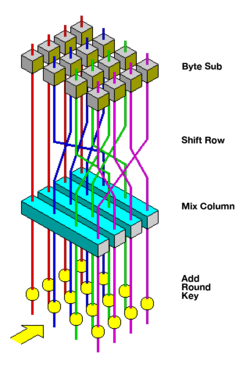
The encryption process involves several rounds of transformations, which include:
1. **Substitution (SubBytes)* Each byte in the block is replaced with a corresponding byte from a predetermined substitution box (S-box), providing non-linearity in the cipher.
2. **Permutation (ShiftRows)* The rows of the block are shifted by a specific number of positions, redistributing the bytes within the block to enhance diffusion.
3. **Mixing (MixColumns)* Columns of the block are combined using matrix multiplication, further spreading the input data across multiple bytes in the block.
4. **Key Addition (AddRoundKey)* A round key derived from the cipher key is XORed with the block, merging the key data with the transformed block data.
These operations are iterated multiple times, with the number of rounds depending on the key length—10 rounds for 128-bit keys, 12 for 192-bit keys, and 14 for 256-bit keys. This iterative approach ensures that even small amounts of input data undergo substantial transformation, making it highly resistant to cryptanalysis.
Applications of AES
AES is integral to a myriad of security applications and protocols, including SSL/TLS for secure internet communications, VPNs for secure remote access, and WPA2 for secure wireless networking. Additionally, AES is utilized in disk encryption systems, protecting stored data from unauthorized access, and in file encryption tools, securing individual files on various digital storage media.
The adoption of AES across these applications underscores its versatility and trustworthiness. Given the ever-evolving landscape of cyber threats, the implementation of AES is an essential component of robust security architectures.
The Strengths of AES
AES's strength lies in its combination of security, speed, and flexibility. Its encryption speed is optimal for both software and hardware implementations, making it suitable for a wide range of devices, from high-performance servers to low-power embedded systems. Moreover, AES is designed to withstand attacks such as differential and linear cryptanalysis, making it nearly impenetrable against conventional hacking techniques.
Another key advantage of AES is its open design. The AES algorithm is publicly accessible, having undergone extensive review and analysis by the global cryptographic community. This transparency has allowed experts to thoroughly vet its security, leading to widespread confidence in its reliability—unlike proprietary encryption schemes that lack sufficient peer review.
Conclusion
As the digital world continues to expand, so too do the threats that endanger our sensitive information. The Advanced Encryption Standard stands as a critical bulwark in this environment, providing an encryption protocol that meets the demands of contemporary cybersecurity. Its proven efficiency and security make AES an indispensable tool for organizations and individuals seeking to protect their data in an increasingly interconnected world.
Historical Context and Evolution of AES
Understanding the success and adoption of AES requires examining the historical context in which it was developed. Prior to AES, the Data Encryption Standard (DES) was the dominant encryption format used worldwide. Introduced in the 1970s by IBM in collaboration with the U.S. National Security Agency (NSA), DES utilized a 56-bit key length, which was considered secure during the initial years of its deployment.
However, by the late 1990s, advancements in computing power made it feasible for attackers to brute-force DES keys within a practical timeframe. Such vulnerabilities highlighted the need for a new encryption standard that could keep pace with technological advancements and provide a substantially higher level of security.
In response, the National Institute of Standards and Technology (NIST) initiated an open competition in 1997 to develop a successor to DES. The competition attracted entries from leading cryptographers and research institutions worldwide. After rigorous evaluation and analysis, Rijndael, designed by Joan Daemen and Vincent Rijmen, was selected and officially named the Advanced Encryption Standard (AES) in 2001.
Technical Characteristics of AES
AES was engineered with specific technical characteristics that enhance its security and performance:
1. **Key Length Variability* AES supports three different key lengths: 128, 192, and 256 bits. This variability enables flexible implementation, allowing users to select key lengths based on the security demands of their application. Given the exponential nature of key-length increase, each additional key bit substantially increases the computational workload required to attempt a brute-force attack.
2. **Efficient Performance* AES operates efficiently regardless of the hardware platform, owing to its relatively simple arithmetic operations. This efficiency is particularly advantageous for resource-constrained environments such as mobile devices and IoT applications, where computational resources are limited.
3. **Resistance to Known Attacks* The design of AES includes robust defense mechanisms against common cryptographic attacks, including differential and linear cryptanalysis. To date, no feasible attacks have been reported against AES when implemented correctly with proper key management.
4. **Parallelism and Performance Optimization* The internal architecture of AES is naturally amenable to parallel processing, allowing software and hardware implementations to exploit modern multi-core processors and other parallel computing architectures. This capability significantly enhances encryption and decryption speeds, which is critical for applications requiring real-time data protection.
Implementation Challenges and Considerations
While AES is celebrated for its strong security features, implementing the algorithm correctly is crucial to ensuring that it achieves its full potential. Several factors must be considered during AES implementation:
1. **Key Management* The security of AES is heavily dependent on effective key management practices. Compromised or poorly managed keys can jeopardize the encryption, rendering even the strongest algorithms vulnerable. Organizations should adopt key management policies that include regular key rotation, secure key storage, and controlled access.
2. **Side-Channel Attacks* While the AES algorithm itself is robust, vulnerabilities can arise in its implementation, particularly through side-channel attacks. These attacks exploit additional information, such as timing, power consumption, or electromagnetic emissions, to infer cryptographic keys. Countermeasures—including constant-time algorithms, noise addition, and shielding—can be employed to mitigate such risks.
3. **Compatibility and Interoperability* As AES is often implemented across various devices and software platforms, ensuring compatibility and interoperability is fundamental. Developers must adhere to standardized modes of operation, such as Cipher Block Chaining (CBC) and Galois/Counter Mode (GCM), to guarantee consistent and reliable encryption behavior.
The Future of AES and Cryptography
AES continues to be a cornerstone of encryption practices worldwide. However, with the advent of quantum computing, there is ongoing research into post-quantum cryptography to ensure preparedness for future threats. Quantum computers have the potential to break traditional encryption algorithms, including AES, albeit with certain limitations due to AES's symmetric nature. Consequently, the cryptographic community is actively exploring quantum-resistant algorithms that will complement AES in safeguarding data as new technological frontiers are reached.
The adaptability and solid foundation of AES ensure that it remains an invaluable component of modern encryption strategies, even as the security landscape evolves. Organizations and developers must stay informed of advances in cryptographic research and integrate innovations into their security measures, ensuring continued protection in an ever-changing cyber environment. Through combined efforts and vigilance, AES and its successors will remain at the forefront of data security, preserving the integrity and confidentiality of digital information for years to come.
Practical Applications and Real-World Usage of AES
As organizations and individuals increasingly rely on digital data storage and transmission, the deployment of AES has become ubiquitous across many industries. Here's how AES is utilized in practical, real-world scenarios:
1. **Financial Sector* The financial industry is one of the most heavily regulated sectors regarding data security. AES is employed to secure sensitive financial data such as credit card information, transaction details, and customer records. By leveraging AES, financial institutions can ensure that data remains confidential and protected against unauthorized access, reducing the risk of data breaches and financial fraud.
2. **Healthcare Industry* In healthcare, the protection of patient information is paramount, governed by regulations like the Health Insurance Portability and Accountability Act (HIPAA). AES encryption is used to secure electronic health records (EHRs), ensuring that patient data is safeguarded during storage and transmission. This not only helps in maintaining patient privacy but also complies with regulatory requirements.
3. **Government and Military* Government and military organizations handle classified information that demands the highest levels of security. AES is employed in encryption devices and secure communication systems to protect national security data from espionage and cyber threats. Its versatile key length options allow entities to customize their security protocols to align with the sensitivity of the information.
4. **Telecommunications* The telecommunications sector relies on AES for securing communications across various platforms. Mobile phones, VoIP systems, and messaging applications incorporate AES to encrypt voice and text data, providing users with privacy and protection from eavesdropping.
5. **Cloud Services* As more organizations transition to cloud computing, securing data stored in off-site cloud servers is critical. Cloud service providers use AES to encrypt data at rest and in transit, offering an extra layer of security that ensures customer data is protected even if the physical security of data centers is compromised.
Challenges in Adopting AES
While AES provides numerous benefits, its widespread adoption entails several challenges that organizations need to address:
1. **Resource Consumption* Although AES is efficient, encryption and decryption processes still consume computational resources. Organizations dealing with large volumes of data or operating in resource-constrained environments must consider the impact on system performance when implementing AES.
2. **Complexity in Key Management* Securely generating, storing, and managing encryption keys is a complex task. Without robust key management practices, the security offered by AES can be compromised. Organizations need to invest in key management solutions and training to mitigate these challenges effectively.
3. **Integration with Legacy Systems* Organizations with legacy systems that lack support for AES may face difficulties in integration. Transitioning to AES-compatible systems may require significant time, cost, and resources, necessitating a well-structured approach to modernization.
Best Practices for Implementing AES
To maximize the security benefits of AES, organizations should adhere to best practices during implementation:
1. **Regular Security Audits* Conduct regular security audits and vulnerability assessments to ensure that AES implementations are free from weaknesses and vulnerabilities.
2. **Use Strong Key Management* Implement comprehensive key management strategies, including regular key rotations and the use of hardware security modules (HSMs) for safe key storage.
3. **Adopt Secure Development Practices* Encourage secure coding practices among developers to prevent implementation flaws that may undermine AES's effectiveness.
4. **Stay Informed on Cryptographic Developments* Keep abreast of advancements in cryptographic research to anticipate emerging threats and incorporate new defenses proactively, ensuring that security systems remain robust against future challenges.
Conclusion: The Enduring Importance of AES
The Advanced Encryption Standard remains a critical component in securing digital data against growing cyber threats. Its proven track record of reliability, efficiency, and resilience against attacks makes AES a preferred choice across various sectors. As technological innovations emerge and the threat landscape continues to evolve, AES stands as a testament to the power of rigorous cryptographic design and global collaboration.
AES's future-proofing efforts and adaptation to post-quantum cryptographic challenges underscore its significance in maintaining data security for years to come. Organizations leveraging AES not only protect sensitive information but also build trust with their customers, ensuring confidence in their data handling practices. As the foundation of encryption, AES continues to exemplify robust security measures that enable the safe progression into an increasingly digital world.
Haporium is a revolutionary platform that lets you organize your web browsing experience with customizable dashboards and boards. Create, manage, and share your favorite content collections.
Join us today and get:
The right to be one of the first pioneers
Unlimited dashboards and boards
Access to exclusive beta features
Priority support from our team
We use cookies to enhance your experience. By continuing to use this site, you agree to our Cookie Policy.











Comments