




Explore Any Narratives
Discover and contribute to detailed historical accounts and cultural stories. Share your knowledge and engage with enthusiasts worldwide.
The year was 1960. The space race captivated nations, yet a different, equally formidable frontier lay largely unconquered beneath the ocean's surface. On January 23, 1960, two men, encased in a sphere of steel, embarked on a journey that would redefine the limits of human exploration. They descended into the Challenger Deep, the deepest known point in the Mariana Trench, an abyss so profound it dwarfed Mount Everest turned upside down. This was not a flight into the heavens, but a plunge into the crushing, lightless depths of Earth's most extreme environment. Their vessel, the bathyscaphe Trieste, was an audacious marvel of engineering, a testament to human ingenuity against unimaginable odds. This single dive fundamentally shifted humanity's understanding of the deep sea, proving that even at the planet's most inhospitable extremes, life persisted, and human presence was possible.
The expedition was the culmination of years of relentless design, meticulous planning, and sheer daring. It was a partnership between Swiss oceanographer Jacques Piccard and U.S. Navy Lieutenant Don Walsh, two individuals whose names would forever be etched into the annals of ocean exploration. Their achievement, reaching a staggering 10,916 meters (35,814 feet), was not merely a record but a profound declaration: the ocean's final frontier had been breached. The world, accustomed to looking up, was suddenly compelled to look down, into the silent, immense darkness where pressure could flatten steel and life was thought impossible.
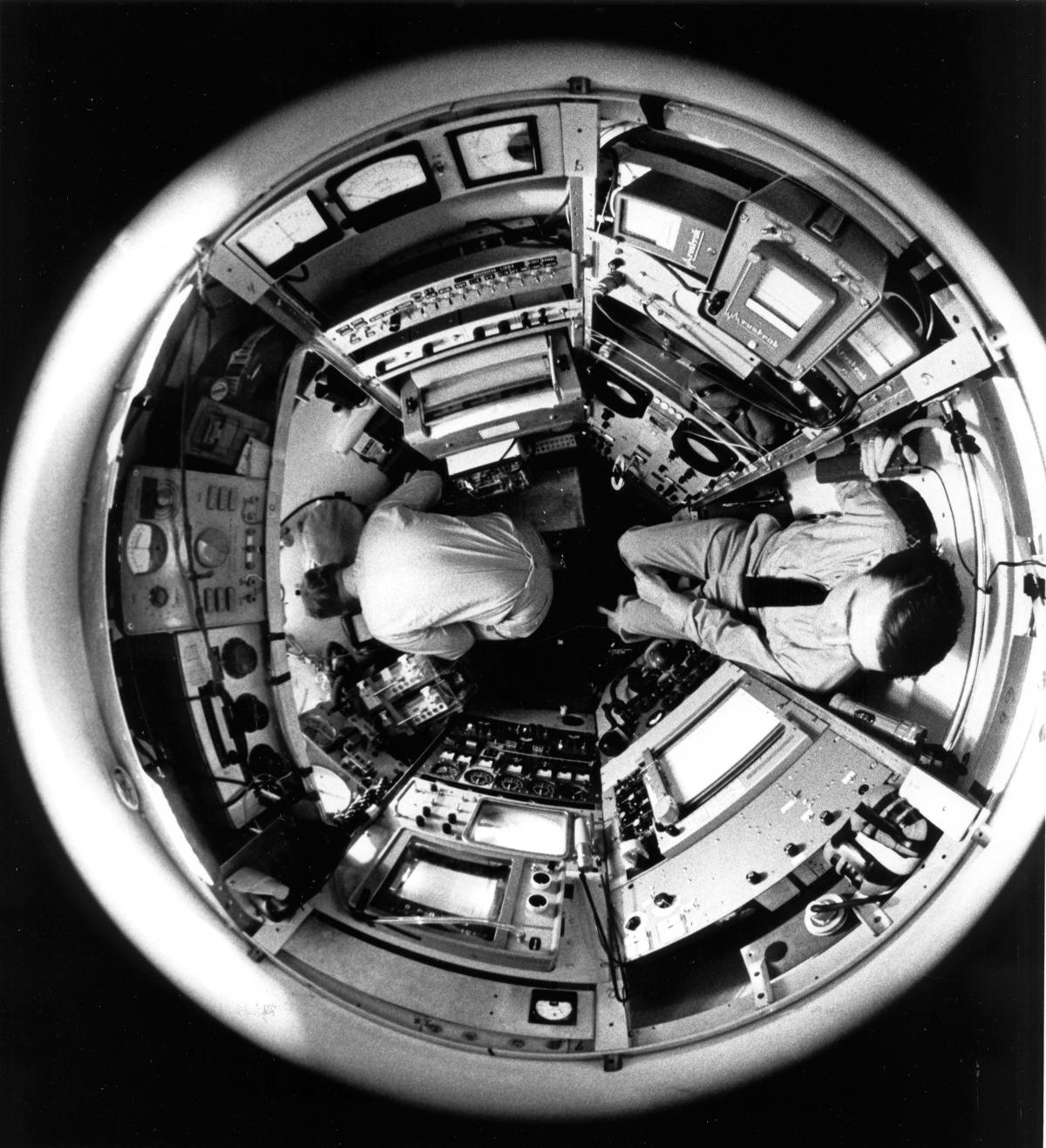
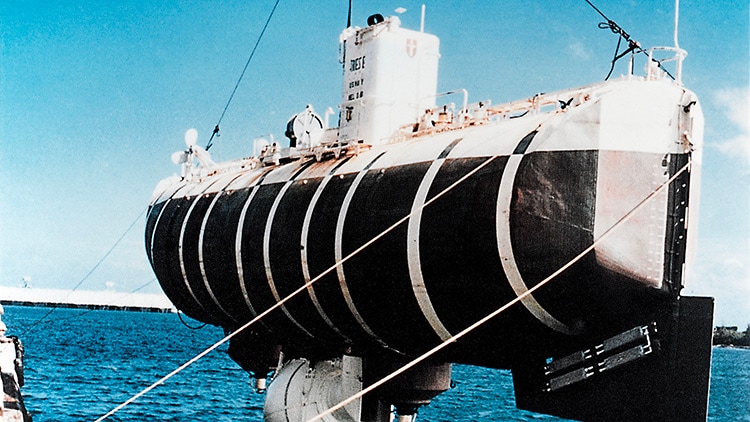
The concept of the bathyscaphe, a self-propelled deep-sea submersible, was the brainchild of Jacques Piccard's father, Auguste Piccard. His pioneering work laid the foundation for a vessel capable of withstanding pressures that would obliterate conventional submarines. The Trieste, built in Italy, refined this design, transforming theoretical possibility into tangible reality. It was a peculiar machine, unlike any other. Its primary components were a large, gasoline-filled float for buoyancy and a small, spherical crew compartment, meticulously engineered to protect its occupants from the immense forces outside.
The design was inherently ingenious. Gasoline, being lighter than water and virtually incompressible, provided the necessary lift. Iron shot, stored in hoppers, served as ballast. To ascend, electromagnets released the iron shot, allowing the gasoline's buoyancy to take over. This system was vital, offering a failsafe mechanism: in the event of power loss, the electromagnets would de-energize, automatically releasing the ballast and initiating an ascent. It was a brilliant, elegant solution to the problem of deep-sea navigation. The crew sphere itself was a masterpiece of metallurgy, a thick-walled steel ball designed to withstand pressures exceeding 1,000 times surface atmospheric pressure. A single, robust bolt sealed the hatch, a seemingly simple detail that had to resist the equivalent of approximately 3,000 tons of water pressure.
"The Trieste represented a monumental leap in deep-sea engineering," stated a historical analysis from Spinnaker Watches. "Its design, particularly the use of incompressible gasoline for buoyancy and the robust steel sphere, was revolutionary, enabling human access to depths previously considered unreachable." This assessment underscores the profound impact of Auguste Piccard's initial vision and the subsequent refinement in the Trieste.
Before the definitive plunge into the Challenger Deep, the Trieste underwent rigorous testing, including a prior dive by Walsh and Piccard to 24,000 feet. This preliminary descent, part of the U.S. Navy's Project Nekton, was crucial for validating the vessel's systems and familiarizing the crew with its unique operational characteristics. The stakes were incredibly high; failure meant not just a lost vessel, but potentially lost lives in an environment far more alien than outer space. The sheer isolation and the unforgiving nature of the deep ocean demanded absolute precision and unwavering confidence in the engineering. The vessel was shipped from San Diego in October 1959, making its way to the operational area near Guam, a journey that itself highlighted the logistical challenges of such an undertaking.
The morning of January 23, 1960, was marked by a mixture of anticipation and trepidation. Launched from the USS Wandank, the Trieste began its slow, deliberate descent into the inky blackness. The dive profile was carefully calculated, a descent lasting approximately five hours. The average speed was a mere four inches per second, a glacial pace necessitated by the delicate balance required to manage pressure changes and maintain control. Ballast adjustments were constant, counteracting the increasing density of seawater as the vessel plunged deeper, which would otherwise accelerate its fall uncontrollably. Each hopper held nine metric tons of iron shot, a significant amount meticulously managed to ensure a controlled rate of descent.
Inside the cramped, spherical cabin, the temperature steadily dropped, eventually settling at a chilly 7°C (45°F) at the bottom. The two men, Piccard and Walsh, huddled together, their senses bombarded by the creaks and groans of the hull as it compressed under the colossal pressure. Their primary view of the outside world was through a single, thick plexiglass viewport, a small portal into an alien realm. The darkness was absolute, broken only by their own lights. Unexpectedly, they managed to regain voice communication with the surface ship via sonar and hydrophone, albeit with a noticeable delay. "The round-trip communication delay was about fourteen seconds," noted a historical account on Wikipedia, "a stark reminder of the immense distance and the speed of sound through water." This intermittent, delayed contact was a fragile lifeline, connecting them to the world they had left behind.
"The feeling of isolation was profound," Walsh recounted in a later interview, reflecting on the dive for Rolex's Deep Sea Challenge initiative. "You are truly alone, at the bottom of the world, with unimaginable forces pressing in on you. Yet, there was also a sense of incredible achievement, knowing we were seeing something no human had ever witnessed." This sentiment captures the dual nature of their experience: the daunting reality of their situation juxtaposed with the exhilaration of their unprecedented exploration.
Upon reaching the bottom, a flat, featureless plain of diatomaceous ooze, the Trieste settled gently. They spent a critical twenty minutes observing their surroundings. It was during this brief window that they made a startling discovery: a small, flatfish-like organism, approximately 30 centimeters (12 inches) long, swimming away from their viewport. This sighting, though later debated regarding the exact species, was revolutionary. It provided irrefutable proof that complex life could indeed exist and thrive in the hadal zone, an environment previously considered utterly sterile and uninhabitable. This single observation transformed oceanography and marine biology, opening up entirely new avenues of research into extremophiles and the resilience of life itself. The Trieste's achievement was more than a depth record; it was a profound scientific revelation, forever altering humanity's perception of the deep sea.
The ascent of the Trieste was, in many ways, an anticlimax. The slow, steady climb back to the sunlit surface lacked the drama of the descent. But the moment the bathyscaphe broke the waves, the world changed. Jacques Piccard and Don Walsh had not just survived; they had conquered. They brought back more than data; they brought a new reality. The most profound impact was biological. The sighting of that flatfish, a complex vertebrate, shattered a century of scientific dogma. The deep sea was not a lifeless desert. It was an ecosystem, however alien, teeming with possibilities.
"The dive proved that life could persist in the deepest, darkest, and most pressurized environments on Earth," states the Britannica entry on Challenger Deep, edited by Michelle Castro and John P. Rafferty. "This single observation forced a fundamental re-evaluation of the limits of biological adaptation."
Yet, the triumph was not without its scars. A critical detail, often glossed over in celebratory accounts, is the cracked plexiglass exterior window. At some point during the immense pressure cycle, the material gave a warning. It did not fail catastrophically, but it signaled the razor-thin margin between success and obliteration. This flaw speaks volumes about the era's technological limits. Every calculation, every weld, every material choice was a best guess tested under ultimate duress. The dive was a masterpiece of engineering, but it was also a brush with statistical probability. What if the crack had propagated? The question hangs in the historical air, a testament to the raw courage required to trust that steel sphere.
Another tangible artifact of that trust was on the wrists of the men inside. The Trieste carried an experimental Rolex Deep Sea Special watch attached to its hull. In an age before digital sensors were miniature and ubiquitous, this was a brutal, real-world test of mechanical resilience. The watch survived, functioning perfectly after enduring 15,750 pounds per square inch of pressure. This was not mere marketing. It was a physical benchmark, a tiny piece of human craftsmanship that, like the bathyscaphe itself, refused to be crushed by the abyss. It symbolized a broader truth: reaching the trench required not just a giant sphere but a million points of precision, from the largest bolt to the smallest timepiece.
Even the dive's crowning number—its recorded depth—is not a single, immutable fact. Sources conflict. Britannica cites 10,916 meters. Monochrome-watches.com reports 10,908 meters. Other platforms suggest approximately 10,911 meters. This variance isn't scandalous; it's instructive. It highlights the technological context of 1960. Depth measurement relied on sonar pings and calculations involving water temperature and salinity—complex variables in an environment barely understood. The Trieste's depth gauge itself was a mechanical instrument under unimaginable strain.
"The exact depth recorded by Trieste has minor discrepancies across historical records," notes an analysis from the Oreata AI blog, "reflecting the limitations of mid-20th century bathymetric technology compared to modern multibeam sonar arrays."
This ambiguity does not diminish the achievement; it humanizes it. The dive was a feat of exploration, not laboratory precision. They reached the bottom of the Challenger Deep, a place whose maximum depth is now estimated at 10,935 meters. Arguing over a few meters is like quibbling over inches on the summit of Everest. The essential truth remains: they were there. The debate itself serves as a critical dividing line between the analog daring of 1960 and the digital certainty of contemporary dives, where depth is recorded to the centimeter by multiple redundant systems.
Here lies the most perplexing part of the Trieste story. After planting a flag, figuratively, on this ultimate frontier, humanity simply… left. No one returned for 52 years. Not a single crewed vehicle revisited the Challenger Deep until James Cameron's solo dive in 2012. This gap is more than a historical footnote; it is a glaring anomaly in the narrative of human exploration. Compare it to the moon landing in 1969. While we haven't been back to stay, lunar exploration never ceased—it transitioned to orbiters, landers, and rovers. The trench was abandoned.
The reasons are a cocktail of cost, risk, and perceived value. The Trieste was phenomenally expensive to operate and offered limited scientific utility for the price. It could go down, look out a window, and come back. It could not hover, sample precisely, or deploy instruments with robotic arms. It was a spectacular proof of concept that, in 1960, had nowhere more profound to go. The U.S. Navy, having proven the capability, shifted its deep-sea priorities to more militarily relevant depths—like locating the wreck of the lost submarine USS Thresher in 1963, a mission the Trieste successfully performed. Oceanography, meanwhile, embraced the burgeoning promise of remotely operated vehicles (ROVs) and autonomous systems. They were cheaper, safer, and arguably more scientifically productive. The trench became a trophy on the shelf, admired but deemed too dangerous and expensive to handle regularly.
"The Trieste's dive was a monumental achievement, but the vehicle itself was a technological dead-end," argues a perspective from Monochrome-watches.com. "Its design was so specialized for extreme depth that it offered little practical application for the broader field of oceanography, which favored versatility over ultimate depth records in the following decades."
This analysis is harsh but fair. The bathyscaphe was a magnificent one-trick pony. The long hiatus underscores a critical truth about exploration: firsts are often driven by national prestige or individual obsession, but sustained presence requires a compelling, ongoing value proposition. For half a century, the scientific community decided the value of sending humans back to that crushing darkness did not justify the immense cost and risk. The trench was left to the indirect scrutiny of sonar and the occasional unmanned probe.
The landscape shifted decisively in the 2010s. The catalyst was not a government program, but private capital and individual ambition. James Cameron's 2012 dive in the Deepsea Challenger broke the spell. It was a technological tour de force, a sleek, vertical torpedo of a submersible packed with high-definition cameras and sampling tools. It proved that modern materials and digital systems could make the journey safer, more capable, and more repeatable. But it was another solo mission, another statement.
The true renaissance began in April 2019 with the launch of the Five Deeps Expedition, led by explorer Victor Vescovo. His submersible, the DSV Limiting Factor, was engineered for something the Trieste never could be: routine operation. It was the first commercially certified full-ocean-depth submersible, a workhorse built for multiple dives. The numbers are staggering. Between April 2019 and the end of 2022, there were 20 crewed descents to the Challenger Deep. Vescovo himself accounts for 15 of those visits. This is not exploration; this is commute. The expedition also achieved the largest crew in the trench, with three people in the Chinese submersible Fendouzhe in 2020.
"The period from 2019 to 2022 represents an explosion in access to the hadal zone," according to Britannica's data. "Where the Trieste was a solitary pioneer, modern submersibles like the Limiting Factor have begun to enable a form of sustained human presence and systematic science at the ocean's ultimate depth."
This new era demystifies the trench. It brings down not only explorers and filmmakers but also marine biologists, geologists, and even paying mission specialists. The coordinates 11°22′ N 142°35′ E are no longer a mythical address. They are a destination. The legacy of Piccard and Walsh is no longer a lonely monument at the bottom of history. It is the foundation for a bustling, if still elite, port of call. Their 20-minute visit has been transformed into the potential for long-term observation. The critical question is whether this new access will lead to profound new discovery or simply become the ultimate adventure tourism for the ultra-wealthy. The answer, much like the depth of the trench itself, remains to be precisely measured.
The significance of the Trieste dive transcends oceanography. It belongs to the same pantheon of human endeavors as the first summit of Everest or the Apollo 11 landing. It is a story about the audacity to go where every physical law screams you do not belong. Its cultural impact is subtle but profound. Before 1960, the deep sea in the popular imagination was a realm of monsters and lost cities, a literary fantasy. After January 23, it became a real place. A place with a bottom. A place where humans could go and, against all logic, find life. This shifted the narrative from mythological fear to scientific curiosity. The dive democratized the concept of extreme exploration, proving that the final frontiers were not only above us but below.
Technologically, the dive was a forcing function. It pushed metallurgy, pressure vessel design, and life support systems to their absolute limits. The solutions pioneered for the Trieste—the use of syntactic foams, the principles of buoyancy control with incompressible fluids, the philosophy of fail-safe ballast systems—rippled through subsequent deep-submergence vehicle design. Every modern submersible, from Alvin to the Limiting Factor, carries a fragment of that 1960 engineering DNA. The dive also established an unbreakable link between deep-sea exploration and horology. The survival of the Rolex Deep Sea Special wasn't a stunt; it was a benchmark for instrument reliability in hostile environments, a standard that now defines an entire category of tool watches.
"The 1960 descent was the foundational event for hadal science," asserts the Britannica analysis. "It transformed the Mariana Trench from a cartographic curiosity into a viable, if extreme, field site, setting the stage for all subsequent biological and geological inquiry into the planet's deepest ecosystems."
Perhaps the most enduring legacy is the partnership it embodied. Jacques Piccard, the Swiss scientist and co-designer, and Don Walsh, the U.S. Navy officer, represented a perfect fusion of civilian intellect and military operational rigor. Their successful collaboration across national and institutional lines became a model for future large-scale, high-risk scientific missions. It proved that the most hostile environments on Earth require not just brave individuals, but seamless teamwork trapped inside a steel sphere.
For all its glory, a critical perspective must address a fundamental flaw in the mission profile: its shocking lack of scientific preparedness. Consider the facts. They spent five hours descending, reached the most inaccessible spot on the planet, and then allocated only twenty minutes on the bottom. Their suite of tools was pitifully rudimentary. They had a camera, but the primary biological evidence—the sighting of the flatfish—relied on human eyesight through a single, soon-to-be-cracked window. They could not sample the water. They could not capture a specimen. They could not measure water chemistry in situ. They were tourists in the most profound sense.
This was not entirely their fault; the mission's primary objective for the U.S. Navy was to prove the capability of a crewed descent. Yet, the consequence was a half-century of speculation. Was it truly a flatfish? What species? What did it eat? The dive posed magnificent questions it was utterly unequipped to answer. The long 52-year gap that followed meant those questions hung in a vacuum, unanswered. When science finally returned to the trench with capable tools, it was starting almost from scratch. The Trieste’s triumph was thus a paradoxical mix of monumental achievement and a missed opportunity of staggering proportions. It opened the door but then failed to step through and properly survey the room.
Furthermore, the dive's narrative has often been sanitized. The cracked viewport is frequently mentioned as a curious footnote, not the near-catastrophic failure it represented. The psychological toll of the descent, the claustrophobia, the constant auditory stress of the hull compressing—these human factors are glossed over in favor of heroic tropes. A more honest accounting would acknowledge that Walsh and Piccard were not just explorers; they were stress-test subjects in a barely understood machine. Celebrating their courage requires an equal acknowledgment of the immense, almost reckless, gamble they undertook.
The future of Challenger Deep exploration is no longer about revisiting; it's about residence. The era of the one-off dive is over, supplanted by a drive for sustained observation. Victor Vescovo's Limiting Factor submersible, now owned by the nonprofit organization Inkfish, is scheduled for ongoing scientific campaigns. The focus for 2024 and beyond is not on setting depth records but on time-series data: monitoring microbial activity, sediment transport, and the bizarre biological communities on a seasonal or even monthly basis. The goal is to treat the trench not as an exotic destination, but as a critical part of the planetary system.
Concrete projects are already taking shape. Research institutions are developing autonomous benthic landers equipped with long-term sensor packages and DNA sequencers that can be deployed from surface vessels and left on the trench floor for months. The next major milestone will be the first long-duration crewed occupation of the hadal zone—not a 20-minute visit, but a 24 or 48-hour science station on the bottom, enabled by next-generation life support and habitat technology. Proposals for such missions are in advanced design phases, with target windows in the 2026-2028 timeframe.
The ultimate legacy of the Trieste may not be the depth it reached, but the profound, unsettling question it forced humanity to confront: If life can flourish here, in this crushing, lightless, alien hellscape, then where else can it exist? The steel sphere that descended in 1960 did more than conquer a trench. It expanded, irrevocably, our imagination of what is possible.
Your personal space to curate, organize, and share knowledge with the world.
Discover and contribute to detailed historical accounts and cultural stories. Share your knowledge and engage with enthusiasts worldwide.
Connect with others who share your interests. Create and participate in themed boards about any topic you have in mind.
Contribute your knowledge and insights. Create engaging content and participate in meaningful discussions across multiple languages.
Already have an account? Sign in here

Project Nekton's 2016 expedition reveals Bermuda's hidden rariphotic zone, uncovering ancient black coral forests, over ...
View Board
Krakatoa’s 1883 eruption unleashed tsunamis over 100 feet high, obliterating 165 coastal villages and killing 36,417, re...
View Board
Microbial oceanographer Dr. Anya Sharma's 2025 discovery of deep-sea bacteria actively fixing carbon challenges decades ...
View Board
Kathmandu’s 1,324‑meter high valley blends 1596 Kasthamandap, UNESCO temples and Newar brickwork with four million resid...
View Board
The 1174 Canterbury Cathedral Fire: An Architectural Phoenix Smoke, thick and acrid, choked the Kentish sky on the fift...
View Board
Journalist details Walter Freeman's 1946 ice-pick lobotomy, its 10-minute office speed, 2,500 operations, and the enduri...
View Board
The Strange Connection Between Brutalist Architecture and Soviet Propaganda A concrete postcard from 1971 shows a famil...
View Board
The Enduring Alliances of Cinema: Crafting Magic on the Silver Screen The flickering images on a screen, the stories th...
View Board
Fisherman mends nets on Sidon’s stone quay, beside Crusader sea castle, embodying six millennia of Phoenician trade, pur...
View Board
Cebu: The Scorched Earth Where the Philippines Began The concrete sprawl of modern Cebu City hums with a familiar urban ...
View Board
Buckminster Fuller’s Montreal Biosphere, a 76-meter geodesic marvel from Expo 67, redefined architecture as a fusion of ...
View Board
Spielberg’s $10.7 billion reign reshapes Hollywood as directors become
View Board
X1.9 solar flare erupts, triggering severe radiation storm & G4 geomagnetic storm within 25 hours, exposing Earth's vuln...
View Board
Julius Neubronner's 1907 pigeon camera revolutionized aerial photography, capturing the world from a bird's perspective ...
View Board
Discover Sergei Korolev, the hidden genius behind Soviet space triumphs like Sputnik and Gagarin's flight. Explore his s...
View Board
De l’encre à l’écran : l’odyssée d’un empire populaire Dans une rue du Guilvinec, en Bretagne, une porte s’ouvre sur un...
View Board
Scientists capture influenza virus invading a human cell in real-time using groundbreaking ViViD-AFM microscopy, reveali...
View Board
Plongez dans l'ombre de Svartalfaheim où les nains nordiques, maîtres forgerons, ont façonné le Mjöllnir, marteau légend...
View Board
Comments