
Explore Any Narratives
Discover and contribute to detailed historical accounts and cultural stories. Share your knowledge and engage with enthusiasts worldwide.
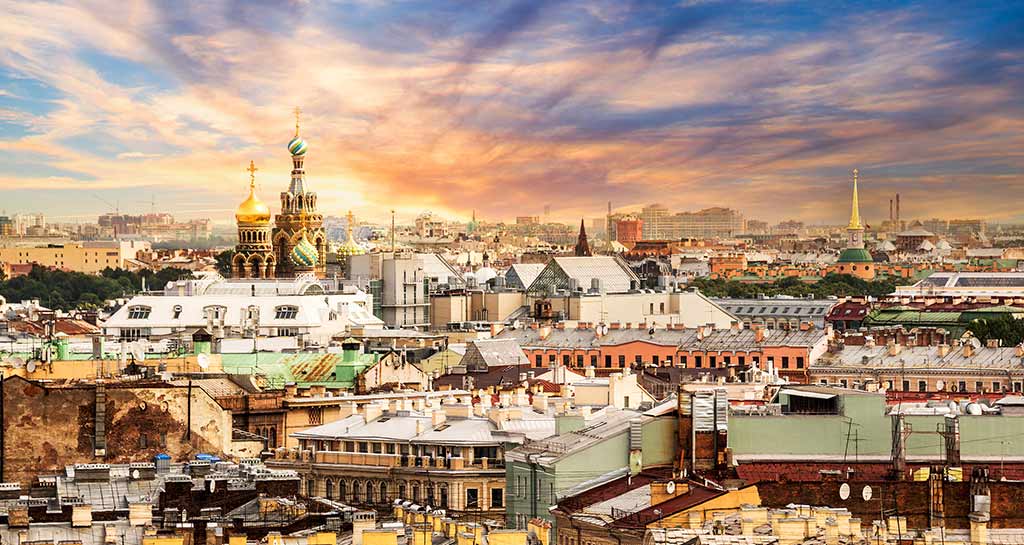
St Petersburg, Russia, stands as the nation's premier cultural and historical hub. Founded as a strategic "window on Europe" by Tsar Peter the Great in 1703, this magnificent metropolis enchants visitors with its imperial architecture, world-class art, and vibrant canals. As Russia's second-largest city with over 5.6 million residents, it continues to be a vital economic and political center.
Spanning 1,439 square kilometers across northwestern Russia, St Petersburg is a city of superlatives. It is the world's northernmost major city with a population exceeding one million people. Built across 101 islands in the Neva River delta, its UNESCO World Heritage Historic Centre holds a stunning concentration of Baroque and Neoclassical landmarks.
The city's creation was a monumental act of will by Peter the Great, designed to modernize Russia and connect it with European trade and ideas. For over two centuries, it served as the imperial capital, shaping the country's destiny. This legacy is etched into every palace square and embankment, from the Winter Palace to the iconic Bronze Horseman statue of its founder.
Located approximately 400 miles northwest of Moscow on the Gulf of Finland, St Petersburg's geography is defined by water. A network of canals and the broad Neva River have earned it the nickname "Venice of the North." Its position near the Arctic Circle creates the famous "White Nights" in summer, where daylight lasts nearly 24 hours.
St Petersburg covers a city proper area of 1,400 square kilometers (556 sq mi) and is a major Baltic Sea port, handling a significant portion of Russia's international trade.
The climate is humid continental, with long, cold winters and mild, often rainy summers. The frozen Neva in winter transforms the cityscape, while the spring ice breakup is a celebrated event.
St Petersburg's history is a dramatic tapestry of imperial ambition, revolutionary upheaval, and heroic resilience. Understanding its past is key to appreciating its present-day grandeur.
The city was officially founded on May 27, 1703, a date celebrated annually as the city's birthday. It rapidly grew from marshy lands into a splendid capital, officially replacing Moscow in 1712. This era saw the construction of its most iconic buildings, including the Winter Palace and Peter and Paul Fortress.
The city's name has changed three times, reflecting Russia's turbulent history:
One of the most tragic chapters was the 900-day Siege of Leningrad by Nazi German forces during World War II, from 1941 to 1944. The city's immense suffering and survival became a powerful symbol of Soviet resistance, though at a catastrophic human cost.
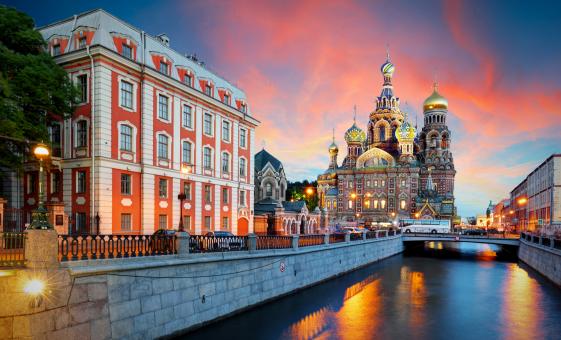
The cityscape of St Petersburg is an open-air museum of architectural masterpieces. Its historic center, designated a UNESCO World Heritage site in 1990, contains over 4,000 protected monuments.
The State Hermitage Museum is one of the largest and oldest museums in the world. Housed partly in the magnificent Winter Palace, it boasts a collection of over 3 million artworks. Its galleries display treasures from Rembrandt and Da Vinci to immense collections of Scythian gold.
Beyond the Hermitage, the city is dotted with breathtaking imperial structures. Key highlights include:
St Petersburg's skyline has been transformed by the Lakhta Centre, an 87-story skyscraper that is the tallest building in Europe. This symbol of modern ambition complements the historic cityscape without overshadowing it.
With a population of approximately 5.6 million people, St Petersburg is Russia's second-most populous city and the seventh-largest in Europe. The city is divided into 18 administrative districts, with the historic center remaining the primary tourist and cultural heart.
The city's population density is high, with most residents living in apartment buildings. Following the post-Soviet economic transition, the city has seen growth in its middle class and an influx of international businesses.
Beyond its historical and cultural significance, St Petersburg is a driving force in the Russian economy. It serves as a critical gateway for international trade and a center for high-tech industries.
The city's diversified economy includes several major sectors:
The city cements its global economic role by hosting the annual St. Petersburg International Economic Forum (SPIEF). The 28th SPIEF in June 2025 attracted over 20,000 guests from 140 countries, featuring more than 150 business events. This forum positions the city as a center for global economic dialogue.
Recent developments, including major events like the 2018 FIFA World Cup, highlight St Petersburg's capacity to host world-class events and drive tourism and investment.
From its imperial foundations to its modern-day forums, St Petersburg remains a city where history is continuously made. Its unique blend of European-inspired architecture and Russian soul creates an unforgettable destination for travelers and a dynamic home for millions.
St Petersburg is globally revered as Russia's cultural capital, a status fiercely defended by its residents. This legacy is rooted in its history as the imperial seat, attracting the nation's greatest artists, writers, composers, and architects. Its cultural output rivals that of any European capital, with an unparalleled density of theaters, museums, and concert halls.
While the Hermitage is the crown jewel, the city's museum landscape is vast and varied. The Russian Museum houses the world's largest collection of Russian fine art, tracing the nation's artistic journey from medieval icons to the avant-garde. For a more specialized experience, venues like the Fabergé Museum showcase exquisite imperial Easter eggs and the Kunstkamera, Peter the Great's cabinet of curiosities, offers a fascinating glimpse into early scientific collection.
With over 200 museums, St Petersburg offers cultural exploration for every interest, from the history of political history at the State Museum of Political History to the literary world of Dostoevsky at his former apartment.
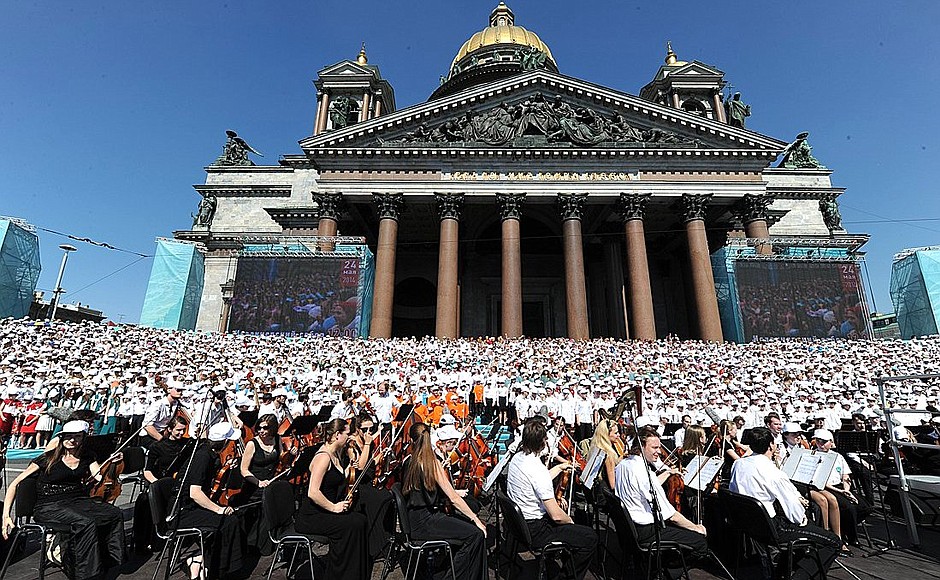
The performing arts thrive in St Petersburg. The Mariinsky Theatre is a globally renowned temple of ballet and opera, with a history spanning over two centuries. Its modern sibling, the Mariinsky II, provides a state-of-the-art venue for classic and contemporary productions. The city's over 100 theaters also include the Alexandrinsky Theatre, the oldest national drama theater in Russia.
The city's streets are imbued with literary history. It was the home and muse for giants like Alexander Pushkin, Fyodor Dostoevsky, and Anna Akhmatova. Visitors can walk the same canals and courtyards described in Crime and Punishment or visit the Pushkin Apartment Museum. In music, Pyotr Ilyich Tchaikovsky studied and composed here, and the city's conservatory has produced countless virtuosos.
Tourism is a cornerstone of St Petersburg's economy, with the city attracting over 15 million visitors in 2018. Its appeal lies in the seamless blend of grand history and living culture, accessible through its efficient metro, romantic canals, and walkable center.
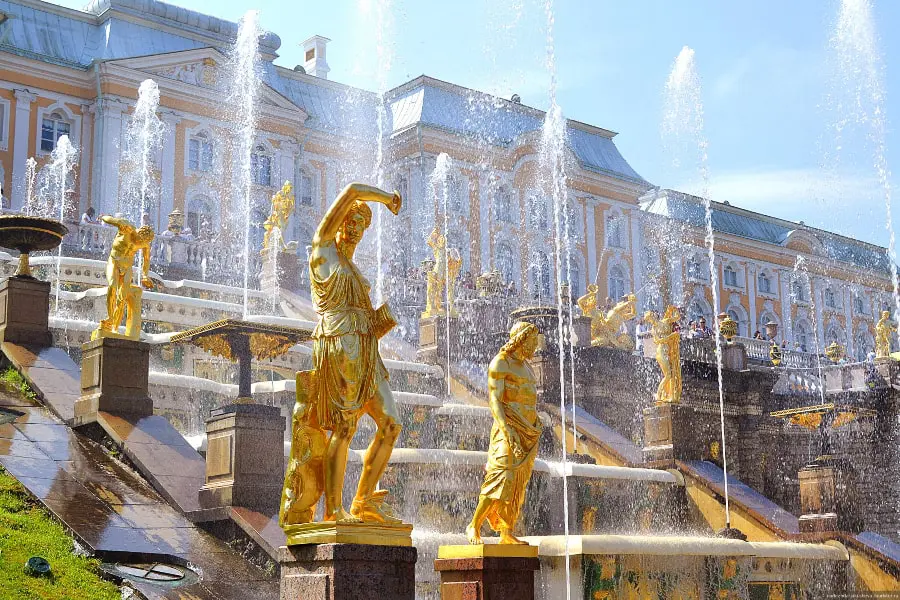
First-time visitors should prioritize the monumental highlights that define the city. A walk along Nevsky Prospect, the city's main artery, provides a perfect introduction. Essential experiences include visiting the Hermitage and Winter Palace, witnessing the fountains at Peterhof, and taking a boat tour through the city's canals and rivers.
The opening of the bridges across the Neva River during the White Nights is a spectacular nightly ritual. From April to November, large drawbridges like the Palace Bridge rise in the early hours to allow ship passage, creating a magical scene for night owls and photographers.
The best time to visit depends on the desired experience. The summer White Nights (June-July) offer nearly 24 hours of daylight and a festival atmosphere, but also peak crowds. Spring and early autumn provide milder weather and beautiful, changing landscapes with fewer tourists. Winter is cold and snowy, but the city under a blanket of snow is breathtaking, and the museums are blissfully uncrowded.
Most tourists require a visa to enter Russia, a process that should be started well ahead of travel. The city center is very walkable, but the St Petersburg Metro is deep, beautiful, and efficient for longer distances. While Russian is the native language, English is commonly spoken in tourist areas, hotels, and major museums.
For an authentic experience, venture beyond Nevsky Prospect to neighborhoods like Vasilievsky Island, the Petrograd Side, and the Liteyny District to discover local cafes, markets, and a more relaxed pace.
St Petersburg boasts a comprehensive and affordable public transportation system. Navigating this vast city is straightforward thanks to its radial layout centered on the Admiralty building.
The St Petersburg Metro is one of the deepest subway systems in the world and a landmark in itself, with ornately decorated stations like Avtovo and Kirovsky Zavod. It is the fastest way to cover long distances across the city. An extensive network of buses, trolleybuses, and trams covers areas not served by the metro, with the trams offering a scenic, above-ground tour of many districts.
Given its island geography, water transport has always been vital. In summer, canal and river boat tours provide unique views of the city's architecture. Smaller passenger ferries also connect points along the Neva and to suburbs like Kronstadt. The city's over 800 bridges, each with unique character, are integral to its identity and infrastructure.
St Petersburg is well-connected to Russia and the world. Pulkovo International Airport is the main air gateway, located about 15 km south of the city center. For domestic travel, Russia's vast railway network is excellent. The high-speed Sapsan train connects St Petersburg to Moscow in under four hours, making it a popular alternative to flying.
Major train stations like Moskovsky and Ladozhsky serve different destinations across the country. The city is also a major stop on Baltic cruise itineraries, with passenger terminals located near the city center.
St Petersburg has long been a center of learning and scientific advancement in Russia. Its numerous universities and research institutes attract students and scholars from across the country and globe, continuing a tradition that dates back to the 18th century.
The city is home to some of Russia's most prestigious higher education institutions. Saint Petersburg State University, founded in 1724, is one of the oldest and largest universities in Russia, boasting alumni like Vladimir Putin and numerous Nobel laureates. The Saint Petersburg Polytechnic University is a leading center for engineering and technical sciences.
Other notable institutions include the Herzen State Pedagogical University and the St. Petersburg State Institute of Technology. This concentration of talent fuels the city's modern technology and software development sectors, with a growing number of innovation hubs and start-ups.
The Russian Academy of Sciences was established here by Peter the Great, and the city was the base for pioneering explorers and scientists. Figures like Mikhail Lomonosov and Dmitri Mendeleev, who created the Periodic Table of Elements, worked within its academic circles. This legacy of discovery continues in modern research fields from quantum physics to Arctic studies.
As a student city with over 50 higher education institutions, St Petersburg has a dynamic, youthful energy that complements its deep historical roots, driving innovation in culture, business, and technology.
From its world-famous stages to its bustling university corridors, St Petersburg's identity as a center of knowledge and creativity is unchallenged. This intellectual vitality ensures the city remains not just a monument to the past, but a living, evolving metropolis. The next section will delve into its economy, contemporary life, and its role on the global stage.
St Petersburg's economy is a dynamic blend of traditional heavy industry and cutting-edge technology. As a major Baltic Sea port and transport hub, the city serves as a crucial gateway for Russian trade with Europe and the world. Its strategic location and skilled workforce support a diverse economic base that continues to evolve.
The city's industrial heritage remains strong, particularly in shipbuilding and heavy machinery. The historic Admiralty Shipyards and Baltic Shipyard continue to produce vessels for both civilian and military use. Alongside this, sectors like aerospace engineering, pharmaceuticals, and food processing are major employers and contributors to the regional economy.
The annual St. Petersburg International Economic Forum has become one of the world's premier platforms for global economic dialogue. The event attracts heads of state, CEOs of major corporations, and experts to discuss pressing international issues. The 28th SPIEF in 2025 exemplified this, drawing over 20,000 participants from 140 countries.
Major international investments and agreements are often announced at SPIEF, reinforcing St Petersburg's role as a center for global business and diplomacy.
St Petersburg is continuously modernizing its infrastructure while preserving its historic character. Recent decades have seen significant investment in transportation, utilities, and commercial real estate, transforming the city for the 21st century.
The city's skyline has been redefined by the Lakhta Centre, a 462-meter skyscraper that is the tallest building in Europe. This mixed-use complex symbolizes St Petersburg's forward-looking ambition. Other modern additions include the Zenit Arena, a state-of-the-art football stadium built for the 2018 FIFA World Cup, and the New Holland artificial island, transformed into a vibrant cultural and leisure space.
A major ring road project has helped alleviate traffic congestion in the historic center. The metro system continues to expand, with new stations opening in developing suburbs. The city also focuses on improving its environmental infrastructure, including water treatment facilities and public parks, to enhance quality of life for its 5.6 million residents.
St Petersburg offers a wide array of sporting and recreational activities for residents and visitors alike. From world-class professional teams to beautiful public spaces, the city promotes an active lifestyle throughout the year.
The city is home to several major professional sports teams. FC Zenit Saint Petersburg plays in the Russian Premier League and boasts a passionate fan base. Their home games are held at the modern Gazprom Arena. In hockey, SKA Saint Petersburg is a dominant force in the Kontinental Hockey League, regularly competing for championships.
St Petersburg is remarkably green for a major metropolis. The Summer Garden, laid out by Peter the Great himself, is a formal park of fountains and marble statues. Tauride Garden offers a more relaxed atmosphere with a large pond. During the winter, these parks become popular spots for ice skating and cross-country skiing.
The city's proximity to the Gulf of Finland provides opportunities for sailing, windsurfing, and beach activities during the short but intense summer months.
The city's culinary scene reflects its imperial history and cosmopolitan character. From traditional Russian fare to international cuisine, St Petersburg offers diverse dining options for every palate and budget.
Visitors should not miss trying classic Russian dishes that are expertly prepared in the city's many restaurants. Essentials include borscht (beet soup), pelmeni (dumplings), blini (thin pancakes with various fillings), and beef stroganoff. The city's café culture is also vibrant, with numerous establishments serving coffee, cakes, and pastries.
As Russia's most European city, St Petersburg boasts an impressive array of international restaurants. Excellent Italian, French, Caucasian, and Asian establishments can be found throughout the city. The city's status as a port has historically ensured access to diverse ingredients, influencing its culinary development for centuries.
St Petersburg's calendar is filled with cultural events that celebrate its artistic heritage and the changing seasons. These festivals attract visitors from around the world and are integral to city life.
The most famous is the White Nights Festival, which runs from May to July. This celebration of the midnight sun features spectacular cultural events, including the "Scarlet Sails" celebration for graduates, with fireworks and a ship with red sails on the Neva. The Mariinsky Theatre presents its Stars of the White Nights festival of ballet and opera.
Other notable events include the International Economic Forum in June, the City Day celebrations on May 27th marking its founding, and various winter festivals. The Maslenitsa festival in late winter features blini-eating contests and cultural events celebrating the end of winter.
As a historic international city, St Petersburg maintains strong connections with urban centers worldwide. These relationships foster cultural exchange, economic cooperation, and diplomatic ties that enhance the city's global profile.
St Petersburg has sister city relationships with numerous global metropolises, including:
These partnerships facilitate exchanges in culture, education, business, and urban planning. The city's proximity to Scandinavia and the Baltic states creates natural regional connections that are strengthened through cross-border cooperation.
St Petersburg stands as one of the world's most remarkable cities, a living monument to human ambition, artistry, and resilience. From its dramatic founding by Peter the Great to its modern status as a global economic and cultural hub, the city has continually reinvented itself while preserving its magnificent heritage. Its unique identity as Russia's "Window to the West" remains as relevant today as it was in the 18th century.
The city's UNESCO-listed historic center, with its breathtaking palaces, cathedrals, and canals, creates an unforgettable urban landscape. Meanwhile, its dynamic contemporary culture, thriving universities, and innovative businesses ensure it looks confidently toward the future. The blend of imperial grandeur with modern energy creates a destination that captivates visitors and inspires residents.
With a population of over 5.6 million people, St Petersburg continues to be a vital center of Russian political, economic, and cultural life, balancing its storied past with ambitious plans for the future.
Whether experiencing the magic of the White Nights, exploring the vast collections of the Hermitage, or attending a world-class ballet performance, visitors to St Petersburg encounter a city of profound beauty and depth. Its story—of imperial splendor, revolutionary upheaval, heroic survival, and modern renewal—is etched into every street and square. St Petersburg remains not just a destination, but an experience that continues to shape Russia's identity and captivate the world's imagination.


Your personal space to curate, organize, and share knowledge with the world.
Discover and contribute to detailed historical accounts and cultural stories. Share your knowledge and engage with enthusiasts worldwide.
Connect with others who share your interests. Create and participate in themed boards about any topic you have in mind.
Contribute your knowledge and insights. Create engaging content and participate in meaningful discussions across multiple languages.
Already have an account? Sign in here

Discover Chennai's vibrant blend of ancient temples and modern innovation. Explore landmarks, cuisine, and culture. Star...
View Board
Discover Rabat, Morocco’s capital & UNESCO gem. Explore historic landmarks, vibrant culture, and modern charm in this co...
View Board
Explore Tabriz, Iran's historic Silk Road city blending 4,500 years of culture with modern industry. Discover UNESCO-lis...
View Board
Discover Antwerp: the world's diamond capital & vibrant port city. Explore Gothic architecture, Rubens' art, & avant-gar...
View Board
Mandalay, the former capital of Myanmar, is a city steeped in royal history and cultural heritage, featuring ancient tem...
View Board
Explore Braga, Portugal's ancient gem! Discover historic landmarks, vibrant culture, and 2025 European Capital of Cultur...
View Board
Discover Oslo's captivating blend of history, vibrant culture, and breathtaking nature. From iconic landmarks like Akers...
View Board
Discover why Podgorica is Montenegro's vibrant heart! Explore its rich history, green spaces, and cultural gems in this ...
View Board
Discover Sharjah, the jewel of the Eastern Frontier, where traditional charm meets modern innovation, rich culture, and ...
View Board
Discover Kazan, Russia's Third Capital, where history meets modernity. Explore its rich cultural heritage, iconic landma...
View Board
Discover Muscat, Oman's vibrant capital, where ancient heritage meets modern charm, offering a unique blend of cultural ...
View Board
Discover Tbilisi, the historic capital of Georgia, with its rich cultural heritage, strategic location, and vibrant mode...
View Board
Discover Brive-la-Gaillarde, a French gastronomic gem with historic distilleries, vibrant markets, and world-class wines...
View Board
Explore the rich tapestry of Tripoli, a city where ancient history and vibrant modern culture intertwine. Discover Tripo...
View Board
Explore Dili's captivating blend of history and culture in this enthralling journey through East Timor's capital. Discov...
View Board
Discover the timeless allure of Damascus, one of the world's oldest continuously inhabited cities. Journey through its r...
View Board
Discover Siem Reap, the captivating gateway to Cambodia's Angkor Archaeological Park, brimming with rich history, vibran...
View Board
Explore Riyadh's transformation from historic oasis to futuristic metropolis under Vision 2030. Discover its rich herita...
View Board
Explore Cordoba, Spain: historic Mezquita, lively nightlife, and Andalusian cuisine await in this enchanting city. Plan ...
View Board
**Meta Description:** Discover Granada—Spain’s jewel where the Alhambra dazzles, flamenco pulses through Sacromonte, a...
View Board
Comments