Explore Any Narratives
Discover and contribute to detailed historical accounts and cultural stories. Share your knowledge and engage with enthusiasts worldwide.
Few figures in ancient history have captured the imagination as powerfully as Spartacus, the Thracian gladiator who led the most famous slave revolt against the Roman Republic. His story is one of defiance, resilience, and the unyielding quest for freedom. While much about his early life remains shrouded in mystery, Spartacus's rebellion between 73 and 71 BCE shook the foundations of Rome, challenging the might of an empire built on the backs of enslaved people.
Spartacus was born around 111 BCE in Thrace, a region spanning parts of modern-day Bulgaria, Greece, and Turkey. The details of his early years are scarce, but historians believe he may have been a member of the Maedi tribe, a Thracian people known for their warrior culture. Some sources suggest he served as an auxiliary soldier in the Roman army before being enslaved. His military training would later prove invaluable during the rebellion.
Captured and sold into slavery, Spartacus was brought to the Italian peninsula, where he was forced to train as a gladiator at the ludus (gladiator school) of Gnaeus Lentulus Batiatus in Capua. Capua was renowned for its gladiatorial training facilities, where enslaved men were brutally conditioned to fight for public entertainment. It was here that Spartacus would meet the men who would become his closest allies in the uprising.
In 73 BCE, Spartacus and about 70 fellow gladiators orchestrated a daring escape from the ludus. Using kitchen implements as makeshift weapons, they overwhelmed their guards and fled to the slopes of Mount Vesuvius. As word of their escape spread, hundreds of enslaved people from the surrounding countryside flocked to join them. What began as a small-scale breakout soon escalated into a full-fledged rebellion that would challenge Rome's dominance.
The rebels initially relied on hit-and-run tactics, taking advantage of the rough terrain to ambush Roman forces sent to quell the uprising. Their early victories against local militias and even trained Roman soldiers shocked the Republic and boosted the morale of the rebel army, which grew to include thousands of escaped slaves, including many women and children.
As Spartacus's forces swelled in numbers, they demonstrated surprising military discipline and strategy. The former gladiator proved to be a natural leader, organizing his diverse followers into an effective fighting force. While the Roman Senate initially viewed the rebellion as mere banditry requiring police action, the insurgents' continued success forced them to take the threat more seriously.
The rebel army established a semi-permanent camp in southern Italy, launching raids on Roman settlements for supplies. Spartacus implemented a policy of sharing plunder equally among his followers and treating captured Roman citizens with relative mercy, which helped sustain and grow his movement. His forces grew to an estimated 70,000 people at their peak, including not just slaves but also impoverished free citizens disillusioned with Roman rule.
Rome first dispatched praetor Gaius Claudius Glaber with about 3,000 poorly trained militia to eliminate the rebellion. Glaber attempted to besiege the rebels on Mount Vesuvius by blocking the only known path down the mountain. However, Spartacus ordered his men to weave ropes from vines and scale down steep cliffs to attack the Romans from behind, achieving complete surprise and routing Glaber's forces.
This stunning victory brought more recruits to the rebel cause and demonstrated Spartacus's tactical genius. The Senate then sent praetor Publius Varinius with two legions, but Spartacus outmaneuvered them as well, capturing Varinius's lictors (an honor guard) and even the praetor's horse—a humiliating blow to Roman prestige.
By 72 BCE, the slave rebellion had grown too large to ignore. The Senate, now seriously alarmed, dispatched two consular armies under Lucius Gellius Publicola and Gnaeus Cornelius Lentulus Clodianus. Around this time, internal divisions emerged within the rebel ranks. Spartacus's second-in-command, Crixus, a Gaul, broke away with a portion of the army but was defeated by Publicola at Mount Garganus in Apulia.
Despite this setback, Spartacus continued to win battles against the Romans, defeating both consular armies in turn. His forces moved north toward the Alps, possibly intending to disperse to their homelands. However, for reasons lost to history, they turned back south, a decision that would ultimately prove fatal to the rebellion.
This first part of Spartacus's story captures the dramatic rise of an enslaved gladiator to the leader of a massive rebellion that threatened the very heart of Rome. From his mysterious origins to his early victories against Roman forces, Spartacus demonstrated leadership and tactical skill that kept his movement alive much longer than anyone expected.
By the winter of 72 BCE, Spartacus and his rebel army had become a serious threat to Rome’s stability. Having defeated multiple Roman forces, their ranks had swelled to include runaway slaves, deserters, and even some impoverished freemen disillusioned with the Republic. Estimates suggest their numbers ranged from 70,000 to 120,000 at their peak, though exact figures remain debated among historians.
After his victories over the consular armies, Spartacus led his forces north toward the Alps, suggesting he may have intended for his followers to cross into Gaul and Thrace, dispersing to freedom. Some historians argue that his goal was not to overthrow Rome but to allow his people to escape Roman control. However, for reasons still unclear, the rebels abruptly turned back south toward Italy. Several theories attempt to explain this fateful decision:
Whatever the reason, this decision marked a critical turning point in the rebellion. Rome, now recognizing the severity of the threat, would no longer underestimate Spartacus.
In response to the rebels' resurgence, the Roman Senate took drastic action. The failed campaigns of previous generals had embarrassed Rome, and public unrest grew as Spartacus’s forces pillaged the countryside. The Senate appointed Marcus Licinius Crassus, one of Rome’s wealthiest and most politically ambitious men, to lead the war effort. Crassus, eager to prove himself as a military leader, took command of eight legions—roughly 40,000 trained soldiers—and pursued Spartacus with brutal efficiency.
Crassus instituted harsh discipline among his troops, reviving the ancient punishment of decimation—executing every tenth man in units that fled from battle—to restore order and morale. His legions engaged the rebels in several skirmishes, gradually pushing them toward the southern tip of Italy. By late 72 BCE, Spartacus had retreated to the region of Bruttium (modern Calabria), where he attempted to negotiate with Cilician pirates for passage to Sicily. According to some accounts, the pirates took payment from the rebels but abandoned them, leaving Spartacus trapped.
With Crassus’s forces closing in from the north and the sea offering no escape, Spartacus prepared for a final stand. In a desperate move, he led his army back north, hoping to break through Crassus’s defenses. However, another Roman force—returning from Spain under the command of Pompey the Great—began moving toward the conflict, threatening to encircle the rebels.
The Senate, eager to avoid further embarrassment, had also recalled general Lucius Licinius Lucullus from Macedon, though he would arrive too late to affect the outcome. Sensing the inevitable, some of Spartacus’s followers split from the main force, attempting independent escapes. These smaller groups were swiftly crushed by Crassus’s legions.
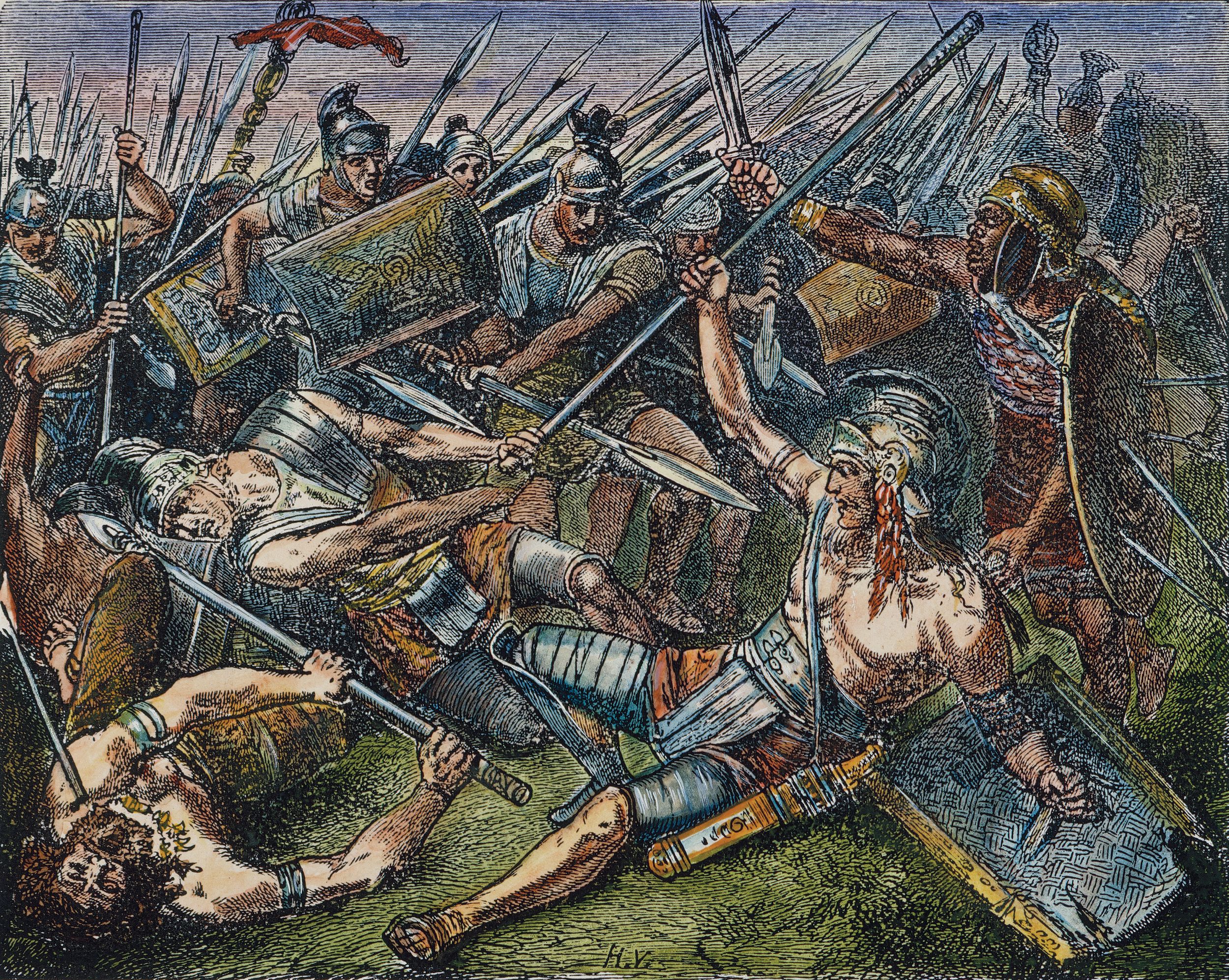
By early 71 BCE, the remaining rebels were cornered near the Silarus River (modern Sele River). Spartacus, realizing the hopelessness of the situation, reportedly killed his own horse to show his men that he would stand and fight alongside them, rather than attempt to flee. The final battle was a brutal massacre. Despite fierce resistance, the outnumbered and outmatched rebels were slaughtered. Spartacus himself died in battle, though his body was never found—leading to later legends that he escaped.
Crassus’s vengeance was swift and merciless. Thousands of captured rebels were crucified along the Appian Way, the major road leading from Capua to Rome, as a grisly warning to other would-be insurgents. Their bodies were left to rot for miles—a terrifying display of Rome’s power.
Pompey and Crassus both claimed credit for ending the rebellion. Pompey, who intercepted fleeing rebels, declared in letters to the Senate that he had "completed the war" despite Crassus having fought the decisive battle. This rivalry between the two generals would later fuel their political ambitions, shaping Rome’s future.
Though the revolt was ultimately crushed, Spartacus’s rebellion had far-reaching consequences:
The rebellion also left a lasting cultural impact—not just in Rome but throughout history. Spartacus became a symbol of resistance, inspiring future revolts and artistic depictions. His name would echo in later slave uprisings and revolutionary movements from Haiti to modern revolutions.
Roman historians like Plutarch and Appian record that Spartacus fell in battle, but the lack of a recovered body allowed myths to flourish. Some legends claimed he survived, escaping into obscurity. Others suggested his loyal followers secretly buried him to deny Rome the satisfaction of displaying his corpse. This uncertainty only deepened his mythic status, transforming him from a historical figure into a timeless emblem of defiance.
This second part of Spartacus’s story traces the rebellion’s climax and tragic end. From his strategic retreats to the brutal final battle, Spartacus fought against overwhelming odds, securing his place in history not just as a gladiator, but as a leader who challenged an empire.
The historical record of Spartacus comes primarily from Roman historians who wrote decades or even centuries after the revolt. The most detailed accounts appear in the works of Plutarch (in his Life of Crassus) and Appian, with additional references in Florus, Sallust, and Cicero. These accounts present conflicting details about key events and motivations, forcing modern historians to carefully evaluate these sources through archaeological and contextual evidence.
Tacitus notably omitted Spartacus from his major works, possibly considering the revolt unworthy of inclusion alongside more "dignified" Roman defeats. This selective memory reflects how Roman elites struggled to reconcile their embarrassment at being defeated by slaves with their need to document military history faithfully.
During the Middle Ages, Spartacus largely faded from Western historical consciousness as classical texts remained preserved mainly in monastic libraries. When Renaissance humanists rediscovered ancient sources, they tended to view Spartacus through Roman perspectives—as a dangerous rebel whose example should be avoided.
The Enlightenment and Romantic periods dramatically rehabilitated Spartacus's image. Enlightenment thinkers like Voltaire praised him as a freedom fighter against tyranny. The French Revolution (1789-1799) adopted Spartacus as a revolutionary symbol—Georges-Jacques Danton reportedly called him "the first revolutionary leader."
Karl Marx listed Spartacus as one of his heroes, and the early Communist movement embraced him as a proletarian rebel. The short-lived Spartacist League (1916-1919) in Germany took his name directly, seeking to overthrow the Weimar Republic through workers' revolution.
Spartacus became a popular subject for 19th century novels and plays. Raffaello Giovagnoli's 1874 historical novel "Spartaco" helped shape modern perceptions. Howard Fast's 1951 novel (written while the author was imprisoned for Communist sympathies) portrayed Spartacus as a proto-socialist revolutionary and became the basis for the famous 1960 film.
The 1960 Stanley Kubrick film "Spartacus," starring Kirk Douglas, cemented the gladiator's place in popular culture. Though historically inaccurate (including the famous "I'm Spartacus!" scene never recorded in ancient sources), it powerfully conveyed themes of freedom and resistance. The 2004 TV miniseries and Starz's 2010-2013 series introduced new generations to Spartacus while taking greater liberties with historical facts.
Several modern sports teams bear Spartacus's name, particularly in Eastern Europe. The most famous is FC Spartak Moscow, founded originally by Soviet trade unions in 1922. The Spartakiad was a Soviet alternative to the "bourgeois" Olympic Games from 1928-1937.
Few archaeological traces directly document the rebellion, partly because Roman authorities deliberately erased evidence of their embarrassing defeats. However:
Modern historians continue debating key questions:
Spartacus's revolt was neither the first nor last major slave uprising in antiquity. Notable comparisons include:
| Revolt | Period | Location | Outcome |
|---|---|---|---|
| First Sicilian Slave War | 135-132 BCE | Sicily | Crushed by Rome |
| Second Sicilian Slave War | 104-100 BCE | Sicily | Crushed by Rome |
| Spartacus's Revolt | 73-71 BCE | Italy | Crushed by Rome |
| Zanj Rebellion | 869-883 CE | Mesopotamia | Temporary success |
What made Spartacus unique was the rebellion's duration (nearly 3 years), proximity to Rome, and demonstrated military skill against professional legions.
Modern scholars debate whether Spartacus aimed to overthrow Roman society or simply win freedom for his followers. The lack of evidence about his ultimate goals allows for multiple interpretations across the political spectrum.
The rebellion's brutal suppression—with 6,000 crucifixions—raises ethical questions about Rome's use of terror tactics against slave populations. Some historians argue this deterrence strategy actually prolonged slavery by making resistance seem hopeless.
How much of Spartacus's legend reflects historical reality versus later romanticization remains contested. The real man disappears behind layers of cultural reinterpretation serving contemporary agendas.
Two thousand years after his death, Spartacus remains one of history's most resonant symbols because his story encapsulates universal human struggles:
From ancient chronicles to Hollywood films, communist manifestos to video games (including the popular "Spartacus Legends" fighting game), each generation has reinterpreted Spartacus to reflect its own values and battles. This very malleability ensures his legend will continue evolving while maintaining its core appeal—the slave who defied an empire and, in losing, won immortality.
The historical Spartacus may have died on the battlefield at Silarus River, but the idea of Spartacus—the archetypal rebel fighting for human dignity—survives all attempts to crucify his memory. That is perhaps the greatest irony of all: Rome sought to erase his legacy through terror, yet made him immortal through defeat.



Your personal space to curate, organize, and share knowledge with the world.
Discover and contribute to detailed historical accounts and cultural stories. Share your knowledge and engage with enthusiasts worldwide.
Connect with others who share your interests. Create and participate in themed boards about any topic you have in mind.
Contribute your knowledge and insights. Create engaging content and participate in meaningful discussions across multiple languages.
Already have an account? Sign in here

Explore the captivating story of Quintus Sertorius, the elusive Roman rebel who defied the mighty Roman Republic with in...
View Board
Discover the life and tumultuous reign of Maximinus Thrax, the first soldier-emperor of Rome, who rose to power through ...
View Board
Discover the compelling life of Pompey the Great in this insightful article. From his meteoric rise and military brillia...
View Board
Discover Scipio Africanus, the Roman general whose strategic brilliance and leadership shaped Rome's rise as a Mediterra...
View Board
Uncover the legacy of Gaius Duilius, the visionary commander who transformed Rome's naval capabilities during the First ...
View Board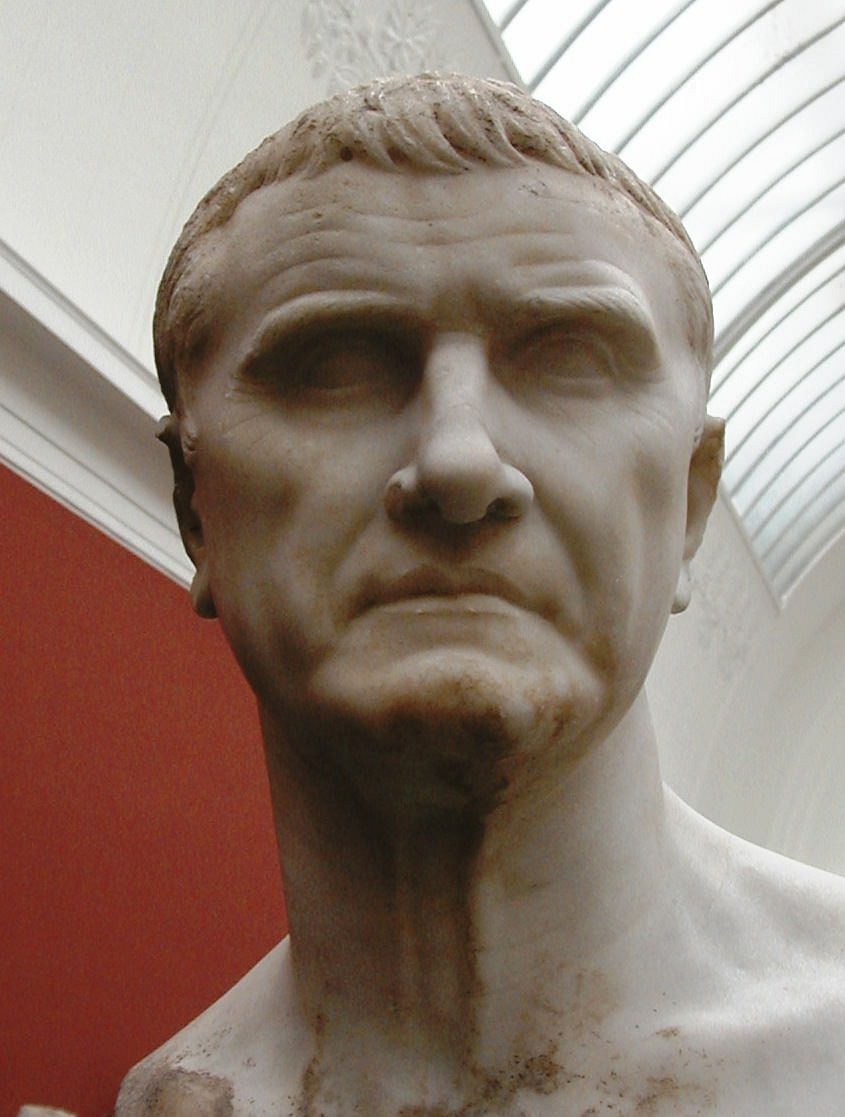
Discover how Marcus Licinius Crassus became the richest man in Rome through ruthless business tactics and political ambi...
View Board
Explore Themistocles: Athens' strategist who repelled Persia at Salamis, championed naval power, and shaped Western demo...
View Board
Explore the compelling tale of Agesilaus II, the influential king of Sparta, whose strategic genius and diplomatic maneu...
View Board
Phocion: The Athenian Statesman and Strategist Introduction Phocion the Young (ca. 402–317 BC), also known simply as P...
View Board
Explore the riveting tale of Flavius Stilicho, the last great Roman general who valiantly defended the Western Roman Emp...
View Board
Explore the life of Antipater, Ancient Macedon's unsung strategist, who played a crucial role in the Macedonian Empire's...
View Board
Discover Lucullus, the underrated Roman general whose strategic brilliance reshaped history. Explore his military genius...
View Board
Discover the untold story of Marcus Vipsanius Agrippa, the mastermind behind the foundation of the Roman Empire. From hu...
View Board
Explore the remarkable legacy of Epaminondas, the visionary leader of Thebes who transformed Greek history in the 4th ce...
View Board
Explore the strategic brilliance and enduring legacy of Hannibal, Carthage’s formidable general, in this captivating nar...
View Board
Lucius Septimius Severus: The Pious Emperor and His Legacy Introduction On January 18, 193 AD, Lucius Septimius Severu...
View Board
Discover the remarkable story of Claudius, Rome's most unlikely emperor, who rose to power despite physical disabilities...
View Board
Explore the legacy of Flavius Aetius, heralded as "The Last of the Great Roman Generals," whose strategic brilliance and...
View Board
Explore the legacy of Pelopidas, the fearless Theban leader whose strategic brilliance and valor reshaped Ancient Greece...
View Board
Discover the legendary life of Gaius Fabricius Luscinus, the incorruptible Roman hero who refused bribes and upheld virt...
View Board
Comments