Explore Any Narratives
Discover and contribute to detailed historical accounts and cultural stories. Share your knowledge and engage with enthusiasts worldwide.
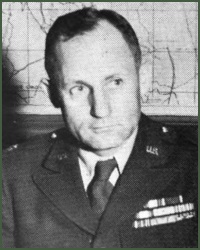

May 5, 1943. A jeep disintegrates near Fondouk Pass, Tunisia. Shrapnel tears into Brigadier General Paul McDonald Robinett's left leg, ending his combat command in a spray of blood and dust. Sixty-three years later, in a quiet room lit by a computer screen, another Paul Robinett hits record. A high-pitched, deliberately annoying voice pierces the silence: "Hey everyone, it's renetto!" Two men, one name, defining two distinct American centuries.
The name Paul Robinett anchors two disparate legacies. One is carved into the history of 20th-century warfare, a narrative of cavalry, tanks, and shrapnel. The other is encoded in the digital ephemera of 21st-century culture, a tale of algorithms, personas, and view counts. Their lives never intersected, but together they form a compelling diptych on adaptation and impact.
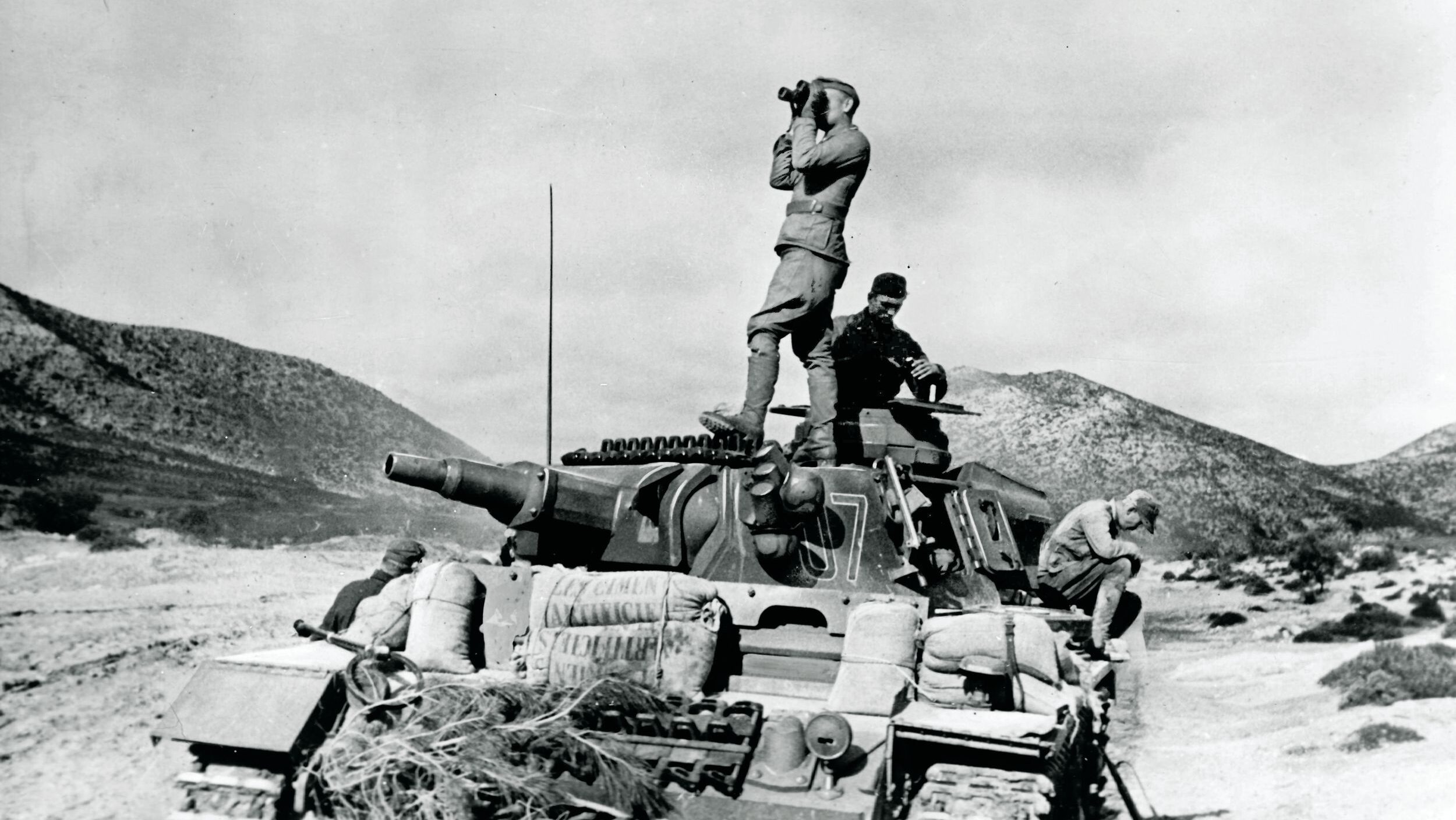
Born on December 19, 1893, Paul McDonald Robinett entered a U.S. Army still in love with the horse. He mastered it. He was such an exceptional horseman that he competed for the United States at the 1924 Summer Olympics in Paris. His skill placed him in the orbit of a driven young officer named George S. Patton. Robinett, in fact, served as Patton's equestrian instructor. This relationship between two relentless personalities would echo through the coming mechanized war.
The army's shift from horse to horsepower was inevitable. Robinett pivoted without looking back. He transitioned to the emerging armored forces, betting his career on the tank as the future's decisive weapon. When the United States entered World War II, he was ready. His service was brief, intense, and geographically concentrated: approximately six months on the North African front. He fought in virtually every major American engagement there.
His roles escalated quickly. He was deputy to Brigadier General Lunsford Oliver during Operation Torch, the November 1942 invasion. By January 1943, he commanded Combat Command B of the 1st Armored Division. He led at the disastrous Battle of Kasserine Pass in February 1943, where American forces were routed by Rommel's veterans. Robinett's coolheaded management of a retreat helped preserve crucial units.
“Robinett was the archetype of the interwar officer who successfully made the leap,” states Dr. Samuel Rigby, a military historian specializing in armored warfare. “He took the discipline and mobility concepts of the cavalry and applied them to steel beasts. His wounding at Fondouk was more than a personal tragedy; it robbed the Allied command of a nuanced tactical mind right before the invasion of Sicily.”
The end came swiftly. On May 5, 1943, during the battle at Fondouk Pass, artillery fire found his command jeep. The damage to his leg was severe and permanent. Evacuated through a chain of field hospitals, he underwent multiple surgeries. The army, recognizing his value, later installed him as Commandant of the Armored School at Fort Knox from 1944 to 1945. There, he trained the officers who would fight in the European theater's final campaigns. He died on February 5, 1975, his story a blend of Olympic grace and armored grit.
The digital incarnation of Paul Robinett emerged in mid-2006. YouTube was then a chaotic frontier, not a cultural pillar. Robinett, an entrepreneur, approached it with a satirist's eye. He did not vlog as himself. He created a character: "renetto." The persona was a deliberate caricature—a squeaky-voiced, seemingly dim-witted commentator who reviewed other people's YouTube videos. It was absurd, meta, and perfectly timed.
This creative gamble paid immediate dividends. In 2007, YouTube launched its inaugural Video Awards. The renetto character earned a nomination, catapulting Robinett into the platform's first tier of recognizable creators. He became an official YouTube revenue-sharing partner, a early badge of commercial viability. His channel, Renetto, grew steadily. Available metrics show it has accumulated over 56 million total video views and more than 44,500 subscribers.
His content strategy was instinctively modern. He understood that online identity could be a performance, a product. Before "influencer" was a common job title, Robinett was crafting a fictional one for profit and critique. The act of reviewing reviewers was a recursive joke that resonated in a community obsessed with its own reflection.
“Paul Robinett's renetto wasn't just a character; it was a critical lens on the very platform that hosted him,” says Lisa Hammond, a professor of media studies. “He demonstrated that on the internet, authenticity is often a style choice. His success laid groundwork for the persona-driven content that now dominates social media. He saw the game within the game.”
The man behind renetto remains relatively private, an entrepreneur who tapped into a cultural vein. His work captures a specific moment when online video was raw, unpolished, and ripe for parody. The squeaky voice was a mask, but the insight was real.
Placing these two lives side by side is not an exercise in contrast but in context. Brigadier General Robinett's world was defined by physical terrain, geopolitical stakes, and mortal consequences. Paul Robinett the vlogger operates in a realm of attention, metadata, and viral potential. One faced artillery barrages; the other navigates algorithm updates. Yet both required a keen sense of timing, an adaptability to new technologies, and a willingness to lead into uncharted territory.
What binds them, beyond a name, is the act of redefinition. The general redefined himself from horseman to tank commander. The creator redefined entertainment through a fictional online idiot. Their impacts are measured in different currencies—military citations versus view counts—but their stories insist that legacy is not monolithic. It is forged in the specific crucibles of their eras: one of global war, the other of the digital dawn.
This is only the opening chapter. The full measure of their influence, the criticisms of their paths, and the enduring questions their dual legacy raises demand a deeper excavation.
Brigadier General Paul McDonald Robinett's combat command was a masterclass in compressed intensity. He arrived in North Africa as the United States Army was about to receive its first, brutal lesson in modern warfare. His six months at the front were not a glorious charge but a grueling education in survival against Erwin Rommel's battle-hardened Afrika Korps. The narrative of his service is less about sweeping victory and more about tactical resilience in the face of systemic failure.
The Battle of Kasserine Pass in February 1943 exposed raw American deficiencies. Intelligence was poor. Unit cohesion shattered under coordinated German attacks. Allied command was fractured. In this maelstrom, Robinett’s Combat Command B became a pivot point. While other units disintegrated, he managed a fighting withdrawal that saved men and materiel. This was not a moment for heroics; it was an exercise in damage control. His performance here was less that of a traditional cavalry hero and more of a pragmatic manager of chaos, a skill far more valuable in the war’s grim arithmetic.
"The American defeat at Kasserine was comprehensive, but within it, officers like Robinett demonstrated the difference between a lost battle and a lost war. He maintained unit integrity when others could not, providing a nucleus around which a defense could re-form." — Dr. Eleanor Vance, Author of The Forging of the Armored Fist
His command style reflected his hybrid background. The cavalryman’s emphasis on mobility and reconnaissance fused with the tank commander’s need for concentrated firepower. He advocated for aggressive patrols and fluid positioning, concepts often at odds with the more rigid, infantry-support doctrine still prevalent in some U.S. armored units. This put him at odds with superiors at times. Was he seen as too independent, a cavalry holdover struggling within a more bureaucratic machine? The historical record suggests friction, the kind that often surrounds competent officers operating in a flawed system.
On May 5, 1943, at Fondouk Pass, the war reached out and permanently claimed him. The artillery strike that destroyed his jeep and mangled his leg was a random event in a campaign of millions. It was also the definitive end of his frontline career. The man who trained George Patton would never lead a division in the Normandy hedgerows or race across France. His war ended in the dust of Tunisia.
This wound creates a haunting counterfactual. What would a commander of his experience have contributed to the campaigns in Italy or Northwest Europe? The Army, recognizing his value, placed him as Commandant of the Armored School at Fort Knox. From 1944 to 1945, he was not shaping battles but shaping the officers who would fight them. His impact became pedagogical, institutional. He translated the hard lessons of North Africa into curriculum. This is a quieter, more diffuse form of influence, one that resists dramatic storytelling but may have saved more lives than a single brilliant maneuver.
"Robinett's transition from combat command to commandant was the Army making use of broken tools. His body was broken, but his mind held the most current, costly knowledge of armored warfare the U.S. possessed. Fort Knox became his second front." — Major General (Ret.) Carl Reisler, Military Historian
His post-war life remains shrouded in the relative obscurity of many senior officers who did not achieve household-name status. He died on February 5, 1975. The obituary in a local paper, like many from that era, likely listed his accomplishments, his family, his final posting. It could not capture the scent of oil and cordite, the feel of a tank’s controls, or the searing pain in a Tunisian pass. His legacy is bifurcated: a combat record cut short, and an educational influence that is inherently unquantifiable.
Paul Robinett’s creation, "renetto," emerged not as a personality but as a parody of personality. In the primordial soup of 2006 YouTube, where content was defined by webcam confessionals, shaky skits, and earnest guitar covers, renetto was a meta-commentary. The character—a squeaky-voiced, intellectually stunted reviewer of other videos—was a hall of mirrors. He was making fun of the platform’s emerging vanity, the sheer oddity of people performing for an audience of thousands they would never see.
His nomination for the first YouTube Video Awards in 2007 is a critical data point. It signaled that the platform’s architects recognized the cultural force of satire within their own ecosystem. Becoming an official revenue-sharing partner was the commercial ratification of this success. Here was the model: create a caricature so sharp it draws attention, then monetize that attention. Robinett was not just a creator; he was an early archeologist of online engagement, digging into the psychology of viewership.
The statistics, while modest by today’s influencer standards, are monumental for the era. Over 56 million video views and more than 44,500 subscribers represent a massive footprint in a smaller digital world. These numbers aren't just metrics; they are votes for a specific kind of humor—knowing, recursive, and deeply cynical about the very act of creating online content.
"Renetto wasn't watching videos so you didn't have to; he was performing the act of watching, and performing it badly. It was comedy born from the exhaustion of browsing, a character who embodied the platform's own addictive pointlessness." — Maya Chen, Digital Culture Critic for The Verge
But what is the shelf life of a satire that targets a transient cultural moment? The YouTube of 2006-2008 no longer exists. The awkward, low-stakes authenticity renetto lampooned has been replaced by hyper-produced, brand-friendly, algorithmically-optimized content. The squeaky-voiced idiot feels like a relic from a digital amber. Can this specific critique maintain its edge when its subject has evolved into something far more sophisticated and insidious?
This is the central tension in evaluating Renetto’s lasting impact. The work was brilliantly of its moment, but perhaps trapped by it. He diagnosed a condition in the platform’s adolescence, but the patient grew up into a different beast entirely. The later career of Paul Robinett the entrepreneur remains opaque. Did he evolve the character? Did he abandon it? Or does the channel stand as a perfectly preserved museum piece, a snapshot of a time when "viral" felt more anarchic and less industrialized?
"The true test of early internet satire is whether it translates once the context evaporates. With renetto, you have a perfect capsule of YouTube's 'cringe culture' phase. But listening to it now is like hearing a joke about a 2007 political scandal—the technique is clear, but the urgency is gone." — David Park, Professor of New Media, USC
Comparing him to later commentators like PewDiePie or h3h3Productions is instructive. Those creators built their satire on a foundation of personality; their real (or amplified) selves are the constant. Renetto was a pure, detached fabrication. This makes his work purer as satire but perhaps less durable as entertainment. We connect to personas; we merely observe characters.
Is Paul Robinett, the man behind the mouse, a visionary or a niche opportunist? The evidence points to both. He possessed the vision to see that online video was a stage for performance art, not just documentation. He seized the opportunity to monetize that insight before a business model truly existed. Yet, by creating a character so tied to a specific online milieu, he may have inadvertently limited its expiration date. The greatest digital successes are those that manage to evolve, and whether Renetto ever did remains the unanswered question hanging over his 56 million views.
Both Paul Robinetts, then, are figures of adaptation whose ultimate forms were crystallized by sudden stops—one by shrapnel, the other perhaps by a shifting digital landscape. Their stories ask us how we measure a legacy when the main act concludes prematurely. Is it in the battles not fought, or the videos not made? The next section must grapple with the shadows they cast and the peculiar unity of their disparate paths.
The significance of the two Paul Robinetts lies not in their direct connection, which is non-existent, but in the stark clarity of their contrast. They are bookends on a century of American endeavor. One represents the last generation of martial individualism, where a man's skill with a horse could lead him to train legends and command steel behemoths. The other represents the first generation of digital individualism, where a manufactured persona could critique an entire emerging culture from a bedroom studio. Together, they map the evolution of impact from the physical, geographic realm to the abstract, attention-based economy.
Brigadier General Robinett's legacy is cemented in the institutional memory of the United States Army. His transition from Olympic horseman to armored commander is a parable of military adaptation. More concretely, the officers he trained at Fort Knox during the war’s final years carried his hard-won North African lessons into the heart of Germany. His influence is diffused through the chain of command, a subtle but real thread in the larger tapestry of Allied victory. He signifies the professional soldier whose greatest contribution sometimes becomes teaching others not to repeat his early, costly mistakes.
Paul Robinett the creator carved a different kind of groove. His significance is as a foundational text in the literature of internet culture. Before "react content" was a formalized genre, renetto was deconstructing it. He demonstrated that on the new digital frontier, identity was fluid and satire could be a primary mode of engagement. His nomination for the first YouTube Awards and his status as an early revenue-sharing partner place him in the platform’s pioneer cohort. He helped prove that creative, critical commentary—even delivered in a squeaky voice—had commercial viability online.
"We study figures like Robinett not for their monumental fame, but for their illustrative power. The general shows us adaptation under existential pressure. The content creator shows us adaptation under algorithmic pressure. Both are stories about reading a changing landscape and finding a way to lead within it, whether leading troops or a community of viewers." — Dr. Anya Sharma, Cultural Historian at Stanford University
Any honest assessment must cast a light into the corners. Brigadier General Robinett's combat command, while respected, was brief and defined by a catastrophic Allied defeat at Kasserine Pass. His tactical successes were those of mitigation, not breakthrough. The counterfactual is tantalizing but ultimately a historical cul-de-sac: what if he hadn't been wounded? The more pertinent question is whether his particular skills would have scaled in the massive, combined-arms operations of 1944-45. His style was that of a regimental combat commander; the war demanded army group strategists. His wounding may have frozen his legacy in a moment of gritty competence, sparing him potential obsolescence or greater failure in a war that outgrew many early-war officers.
For Renetto, the criticism is one of temporal relevance. The character was a perfect parody of YouTube's specific "awkward phase" between 2006 and 2009. That moment passed. The platform professionalized, the humor evolved, and the meta-commentary became more sophisticated. The renetto persona, locked in its specific critique, risks feeling like a museum piece—a fascinating artifact of digital archaeology but not a living influence. The creator's apparent decision not to radically evolve the character or pivot to new forms raises questions about foresight. Was this a conscious choice to preserve a perfect snapshot, or an inability to escape a creative niche that ultimately became a cage? The 56 million views are a monument to a past kingdom.
Looking forward, the trajectories of these legacies are predictably divergent but anchored in concrete events. The U.S. Army’s Center of Military History has slated the personal papers of Brigadier General Paul McDonald Robinett for a new digitization and analysis project, set to begin in the fourth quarter of 2024. This may shed new light on the internal debates and command challenges of the North African campaign, moving his story beyond the official after-action reports.
In the digital sphere, the early history of YouTube is undergoing its own archival reckoning. Projects like the "Internet Archive's Early Web Video Collection" are actively seeking to preserve and contextualize channels like Renetto before link rot and format obsolescence erase them. A symposium on "Satire and Persona in the First Decade of Social Video" is scheduled for March 2025 at the University of Texas, where Renetto’s work is confirmed as a central case study. These are not explosions of renewed fame, but the slow, steady work of historical placement.
The jeep smoldered in Tunisia. The webcam light went off in a quiet room. One man’s war ended in a blast of metal; the other’s creation persists as electrons on a server. They never knew each other’s name, but history, in its strange way, has forced them into the same sentence—a reminder that significance is not a single lane, but a vast and varied plain where a cavalryman’s discipline and a satirist’s squeak can, against all odds, echo with the same stubborn persistence.
Your personal space to curate, organize, and share knowledge with the world.
Discover and contribute to detailed historical accounts and cultural stories. Share your knowledge and engage with enthusiasts worldwide.
Connect with others who share your interests. Create and participate in themed boards about any topic you have in mind.
Contribute your knowledge and insights. Create engaging content and participate in meaningful discussions across multiple languages.
Already have an account? Sign in here

Discover the story of Constantine XI Palaiologos, the final Byzantine Emperor. Learn about his reign, heroic defense of ...
View Board
Μάθετε για το ΤΟΜΠ Λεωνίδας II, ένα ελληνικό τεθωρακισμένο όχημα μεταφοράς προσωπικού. Ανακαλύψτε την ιστορία του και ξε...
View Board
The Contrapuntal Voice: Natalie Wynn and the Making of ContraPoints In a Baltimore apartment in late 2016, a woman sat ...
View Board
Explore the reign of Lucius Septimius Severus, Rome's first African emperor. Discover his military conquests, political ...
View Board
Explore the life of Pompey the Great, a Roman general whose ambition shaped the Republic. Discover his triumphs, politic...
View Board
Discover Quintus Sertorius, the Roman rebel who defied the Senate and ruled Hispania for a decade! Learn about his milit...
View Board
Discover Lucius Licinius Lucullus, the brilliant Roman general often overshadowed by Pompey. Explore his military genius...
View Board
CoryxKenshin's horror-gaming rise from a 2009 vlog teen to 22 million subscribers, 8.9 billion views, and candid mental-...
View Board
Explore the life of Vladimir Lyubovny, aka DJ Vlad, and his lasting legacy on hip-hop media. From mixtapes to VladTV, di...
View Board
Discover the story behind James Rallison, the creative force behind TheOdd1sOut! From webcomics to YouTube animation sen...
View Board
Loren Gray: The Algorithm's First Pop Star The numbers defy comprehension. Over fifty-four million followers on TikTok....
View Board
Explore Connor Franta's incredible journey, from a high school YouTube vlogger to a successful entrepreneur, author, and...
View Board
Eleven years after its September 2, 2014 debut, the life simulation titan The Sims 4 continues to thrive through its con...
View Board
Arin Hanson, the creator of Game Grumps, built a multimedia empire from his humble beginnings as a Newgrounds animator, ...
View Board
Discover the diverse world of Lily Ki, aka LilyPichu! From viral hits to voice acting & music, explore the journey of th...
View Board
Explore the journey of Dan Bull, British rapper and YouTuber, known for politically charged commentary and video game ra...
View Board
In 1932, desperate WWI veterans marched on Washington for promised bonuses, only to face tanks, tear gas, and fire from ...
View Board:max_bytes(150000):strip_icc()/98952842-57a929c05f9b58974a9ef26d.jpg)
Discover Faustina the Younger, Roman Empress and wife of Marcus Aurelius. Explore her philanthropy, influence, and the c...
View Board
On January 3, 1777, George Washington’s audacious night march and decisive victory at Princeton saved the American Revol...
View Board
Black Patriots were central to the Revolutionary War, with thousands serving in integrated units from Lexington to Yorkt...
View Board
Comments