Explore Any Narratives
Discover and contribute to detailed historical accounts and cultural stories. Share your knowledge and engage with enthusiasts worldwide.
Michael Collins (1890–1922) remains one of Ireland's most pivotal figures, a revolutionary leader whose strategic brilliance and unwavering dedication shaped the nation's fight for independence. As a guerrilla warfare innovator and chief negotiator of the 1921 Anglo-Irish Treaty, Collins laid the foundation for the Irish Free State. His tragic assassination during the Irish Civil War cut short a promising political career, but his legacy endures as a symbol of resilience and vision.
Born on October 16, 1890, in Woodfield, Sam's Cross, near Clonakilty, County Cork, Collins grew up in a family steeped in nationalist ideals. His father, a teacher and member of the Irish Republican Brotherhood (IRB), instilled in him a deep sense of Irish identity. Local figures like blacksmith James Santry further shaped his early perspectives on freedom and resistance.
In 1906, Collins moved to London, where he worked as a clerk in the Post Office. This period was crucial for his political awakening. He joined Sinn Féin in 1908 and the IRB in 1909, quickly rising to become the IRB treasurer for London and South England. His involvement in the Gaelic Athletic Association (GAA) also honed his leadership and physical discipline, traits that would later define his revolutionary tactics.
Collins' role in the 1916 Easter Rising marked a turning point in his life. Serving as aide-de-camp to Joseph Plunkett at the General Post Office (GPO) in Dublin, he witnessed firsthand the brutal suppression of the rebellion. After the Rising's failure, Collins was imprisoned at Frongoch internment camp in Wales. Here, he emerged as a natural leader among the detainees, earning respect for his organizational skills and strategic mind.
Released in December 1916, Collins returned to Ireland with a renewed sense of purpose. His experiences in Frongoch had solidified his belief in the need for a more structured and effective resistance. By 1918, he was elected as the MP for South Cork, a testament to his growing influence. His role in the First Dáil (1919) further cemented his position as a key figure in the independence movement.
As the Director of Intelligence for the Irish Republican Army (IRA), Collins revolutionized the fight against British rule. He organized "The Squad", a specialized unit tasked with targeting British agents and informants. His tactics, including the infamous Bloody Sunday in November 1920, where 14 British agents were assassinated, demonstrated his ruthless efficiency and strategic genius.
Collins' ability to evade capture, despite a £10,000 bounty on his head, became legendary. His guerrilla warfare strategies forced the British to evacuate numerous rural barracks, significantly weakening their control over Ireland. These efforts were instrumental in bringing the British government to the negotiating table, leading to the Anglo-Irish Treaty of 1921.
As the chief negotiator for the Irish side, Collins played a pivotal role in securing the Anglo-Irish Treaty. The treaty established the Irish Free State, a significant step toward independence, though it included the contentious partition of Ireland. Collins supported the treaty as a pragmatic path to freedom, despite fierce opposition from figures like Éamon de Valera.
Following the treaty's ratification, Collins became the Chairman of the Provisional Government, effectively serving as Prime Minister. In this role, he also took on the position of Minister of Finance, where he successfully raised funds through the Dáil loan. His leadership during this transitional period was marked by a delicate balance between maintaining order and addressing the divisions within the nationalist movement.
The Irish Civil War (1922–1923) erupted over the treaty's provisions, pitting pro-Treaty forces, led by Collins, against anti-Treaty factions. As Commander-in-Chief of the Free State Army, Collins faced the daunting task of uniting a fractured nation. His efforts were cut short on August 22, 1922, when he was ambushed and killed at Béal na Bláth, County Cork, by anti-Treaty forces. His death at the age of 31 marked a profound loss for Ireland.
Collins' legacy continues to resonate in modern Ireland. His vision for a united Ireland and his strategic acumen are celebrated in various forms, from statues in Clonakilty to cultural depictions like the 1996 film *Michael Collins*, directed by Neil Jordan and starring Liam Neeson. Recent commemorations, such as the 2025 Ancient Order of Hibernians (AOH) History Tour, highlight his enduring impact and the ongoing relevance of his ideals.
In the next section, we will delve deeper into Collins' tactical innovations, his complex relationship with Éamon de Valera, and the lasting implications of his leadership on Ireland's path to independence.
Michael Collins revolutionized Ireland's fight for independence through innovative guerrilla tactics that exploited British vulnerabilities. His strategic vision transformed limited resources into a formidable force, undermining British control systematically.
As Director of Intelligence for the IRA, Collins built an extensive network that penetrated British forces. This covert operation system provided real-time intelligence, enabling precise strikes against key targets. His ability to remain undetected while coordinating these efforts was legendary.
Collins formed "The Squad", a specialized unit responsible for eliminating British informers and agents. Their most infamous operation, Bloody Sunday (November 1920), assassinated 14 British agents, severely disrupting British intelligence efforts.
Through sustained pressure, Collins' tactics forced the evacuation of over 100 British barracks from rural Ireland. His strategy focused on attrition, wearing down British resolve while avoiding large-scale confrontations Ireland could not win.
"Collins' flying columns maximized limited resources in guerrilla warfare, crippling British control."Title
The 1921 Anglo-Irish Treaty created a deep rift within Irish nationalism. Collins advocated acceptance as a pragmatic path to independence, while opponents viewed concessions as betrayal. This division sparked the Irish Civil War.
The treaty split leaders into distinct camps: Collins and Arthur Griffith supported it as a foundation for future sovereignty, while Éamon de Valera and others rejected any partition or British ties. This ideological clash fractured the independence movement.
Collins and de Valera's differing approaches created lasting tension. Collins argued the treaty bought time for Irish unity, while de Valera saw it as a permanent partition that legitimized British influence. Their conflict shaped Ireland's early political landscape.
The treaty controversy ignited the Irish Civil War (1922–1923). Collins commanded Free State forces against anti-Treaty IRA holdouts, including the Battle of the Four Courts in June 1922. His death just weeks later left Ireland deeply divided.
Collins' influence persists through cultural commemoration, political discourse, and preserved historical sites. His complex legacy continues to inspire debates about Ireland's path to sovereignty.
The 1996 film *Michael Collins*, directed by Neil Jordan and starring Liam Neeson, cemented his global image as a revolutionary icon. Biographies dominate Irish studies, examining his childhood, strategic genius, and tragic demise.
In 2025, the Ancient Order of Hibernians (AOH) highlighted Collins' role during their History Tour of Béal na Bláth. Historian Dan Taylor noted:
"Collins' Treaty role, Civil War tensions, and vision for united Ireland remain central to understanding modern Ireland."Source
Michael Collins House in Clonakilty maintains artifacts from his life, offering insights into his early influences. Annual pilgrimages to his burial site reinforce his status as a national symbol of resilience and sacrifice.
Michael Collins was ambushed and killed on August 22, 1922 at Béal na Bláth, County Cork, by anti-Treaty IRA forces. His death occurred just five weeks after assuming command of the Free State Army during the Irish Civil War. Collins' assassination marked a pivotal moment, intensifying the conflict and hardening divisions within the nation.
Collins' death galvanized pro-Treaty forces to consolidate power, but it also deepened the trauma of civil strife. The Battle of the Four Courts (June 1922) had already escalated violence, and his loss removed a key moderate voice. The war continued until 1923, leaving Ireland permanently scarred by internal division.
"Collins’ assassination removed a unifying figure, allowing extremist voices on both sides to dominate."Historical Analysis
Collins' vision for a united Ireland remains a cornerstone of Irish political discourse. His pragmatic approach to the Anglo-Irish Treaty continues to spark debate about sovereignty, compromise, and national identity.
The treaty established the Irish Free State, which evolved into the modern Republic of Ireland. Collins' decision to accept limited independence, while securing crucial autonomy, laid groundwork for future negotiations. His belief that the treaty was a stepping stone to full sovereignty proved influential over decades.
Irish politics still reflects the Treaty divide. Pro-Treaty descendants evolved into Fine Gael, while anti-Treaty ideals shaped Fianna Fáil. Collins’ legacy is claimed by both sides as a symbol of nationalism and strategic state-building.
Collins’ life and death have inspired cultural preservation efforts and artistic interpretations. His story endures through memorials, education, and periodic reassessments of his leadership during Ireland’s turbulent birth.
The 1996 film *Michael Collins* immortalized his role globally. Biographical works continue to analyze his childhood influences, guerrilla tactics, and political compromises. Academic journals frequently revisit his legacy in debates about revolutionary leadership.
In 2025, the Ancient Order of Hibernians (AOH) highlighted Collins’ contributions during their History Tour of Béal na Bláth. Historian Dan Taylor observed:
"Collins’ Treaty role, Civil War tensions, and vision for united Ireland remain central to understanding modern Ireland."Source
Michael Collins House in Clonakilty serves as a museum, while annual pilgrimages to his grave reinforce his status as a national martyr. Irish schools teach his role in the War of Independence, ensuring new generations grasp his importance.
Michael Collins transformed Ireland’s struggle for independence through strategic brilliance, unwavering commitment, and tragic sacrifice. His innovations in guerrilla warfare, diplomatic pragmatism during the Anglo-Irish Treaty negotiations, and leadership in the early Free State established enduring paradigms for Irish governance and resistance.
Though his death at 31 denied him the chance to shape Ireland’s long-term future, Collins’ legacy persists. He remains a symbol of resilience, a master tactician, and a contentious figure whose choices continue to influence political and cultural narratives. As Ireland navigates contemporary challenges, Collins’ vision of unity and strategic compromise offers timeless lessons.
In examining Collins’ life, we confront the complexities of revolution, the weight of leadership in fractured times, and the enduring quest for a unified Ireland. His story remains not just a chapter in history, but a mirror reflecting the nation’s ongoing struggle to balance idealism with pragmatism.


:focal(1126x1410:1127x1411)/https://tf-cmsv2-smithsonianmag-media.s3.amazonaws.com/filer/50/16/5016b9d7-7a93-494d-aa28-5468c7053063/apollo_11_lunar_module.jpg)
Your personal space to curate, organize, and share knowledge with the world.
Discover and contribute to detailed historical accounts and cultural stories. Share your knowledge and engage with enthusiasts worldwide.
Connect with others who share your interests. Create and participate in themed boards about any topic you have in mind.
Contribute your knowledge and insights. Create engaging content and participate in meaningful discussions across multiple languages.
Already have an account? Sign in here

Explore the compelling journey of Naevius Sutorius Macro, a prominent Roman Prefect, through his rapid rise and dramatic...
View Board
Discover how Julius Caesar rose to power, reshaped Rome, and left a legacy that still influences the world today. Explor...
View Board
Mithridates VI Eupator, the Poison King, was a formidable ruler of Pontus who expanded his kingdom and fought against Ro...
View Board
Explore Ramallah Muqata'a, the heart of Palestinian governance. Discover its rich history, political significance, and c...
View Board
Explore the fascinating reign of Artabanus III of Parthia, a monarch navigating through internal unrest and external thr...
View Board
Explore the pivotal role of Sextus Afranius Burrus, Rome's Praetorian Prefect, in maintaining imperial stability during ...
View Board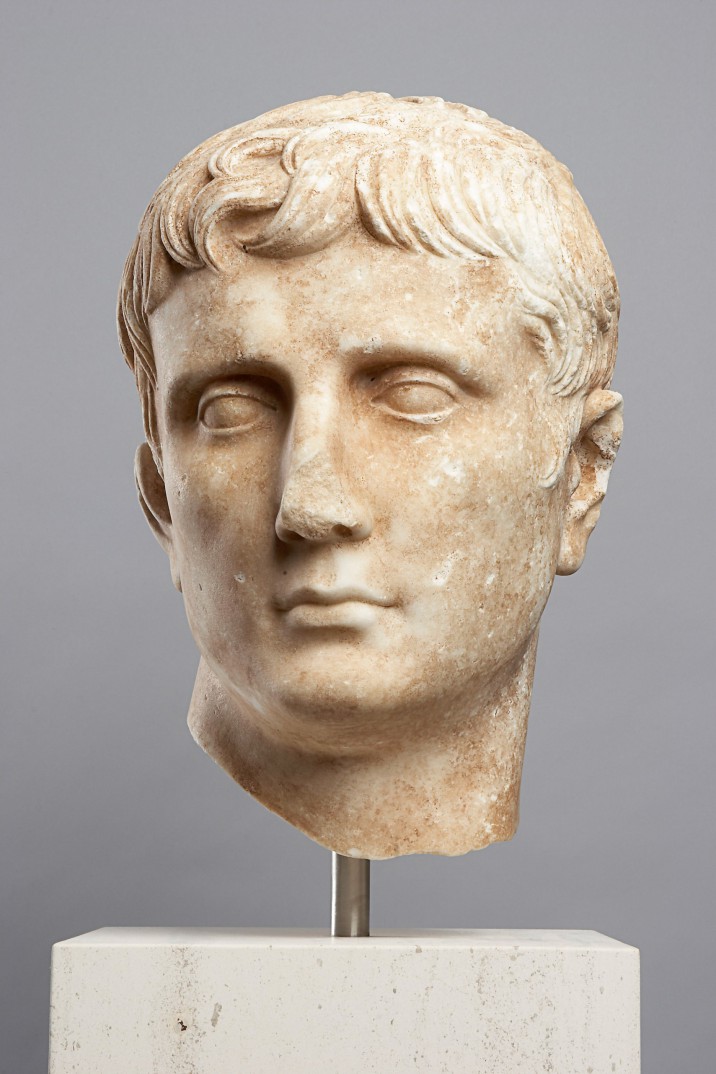
Discover the legacy of Augustus, the first Roman Emperor, whose transformative reign reshaped Roman history. Explore his...
View Board
Explore the riveting tale of Flavius Stilicho, the last great Roman general who valiantly defended the Western Roman Emp...
View Board
Phocion: The Athenian Statesman and Strategist Introduction Phocion the Young (ca. 402–317 BC), also known simply as P...
View Board
Discover Lucius Licinius Crassus, Rome’s forgotten orator and statesman. Explore his pivotal role in law, rhetoric, and ...
View Board
Explore the remarkable life and legacy of Constantine XI Palaiologos, the final Byzantine Emperor, who stood as a beacon...
View Board
Explore the secretive world of Cold War cryptography, where the U.S. and Soviet Union waged a cryptographic arms race wi...
View Board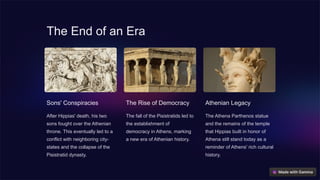
Explore the enigmatic legacy of Hippias, the notorious tyrant of Athens, in this captivating article. Delve into his ris...
View Board
> Constantine the Great: The Visionary Emperor Who Shaped History Constantine the Great, born Flavius Valerius Constanti...
View Board
Discover Mosul, Iraq’s historic crossroads of empires, from its golden Zangid era to the brutal ISIS occupation and the ...
View Board
Explore Dili's captivating blend of history and culture in this enthralling journey through East Timor's capital. Discov...
View Board
Explore the life of Paul Painlevé, a groundbreaking mathematician and innovative political leader, whose dual legacy in ...
View Board
Discover the intriguing legacy of Aeschines, a distinguished yet often overshadowed orator from classical Athens. This a...
View Board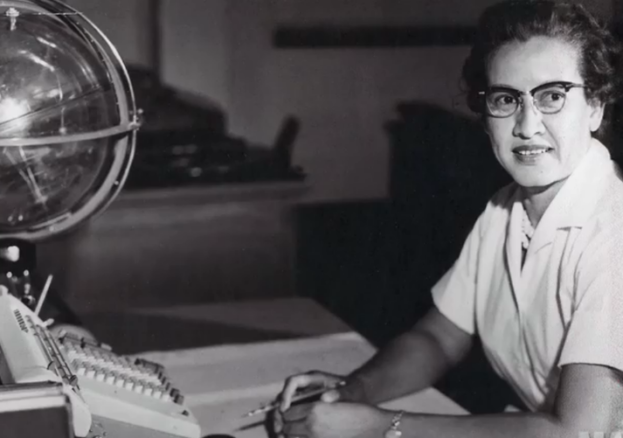
Katherine Johnson: Pioneering Mathematician and Trailblazer Introduction In the annals of American scientific history, ...
View Board
Discover the legendary life of Gaius Fabricius Luscinus, the incorruptible Roman hero who refused bribes and upheld virt...
View Board
Comments