

Explore Any Narratives
Discover and contribute to detailed historical accounts and cultural stories. Share your knowledge and engage with enthusiasts worldwide.
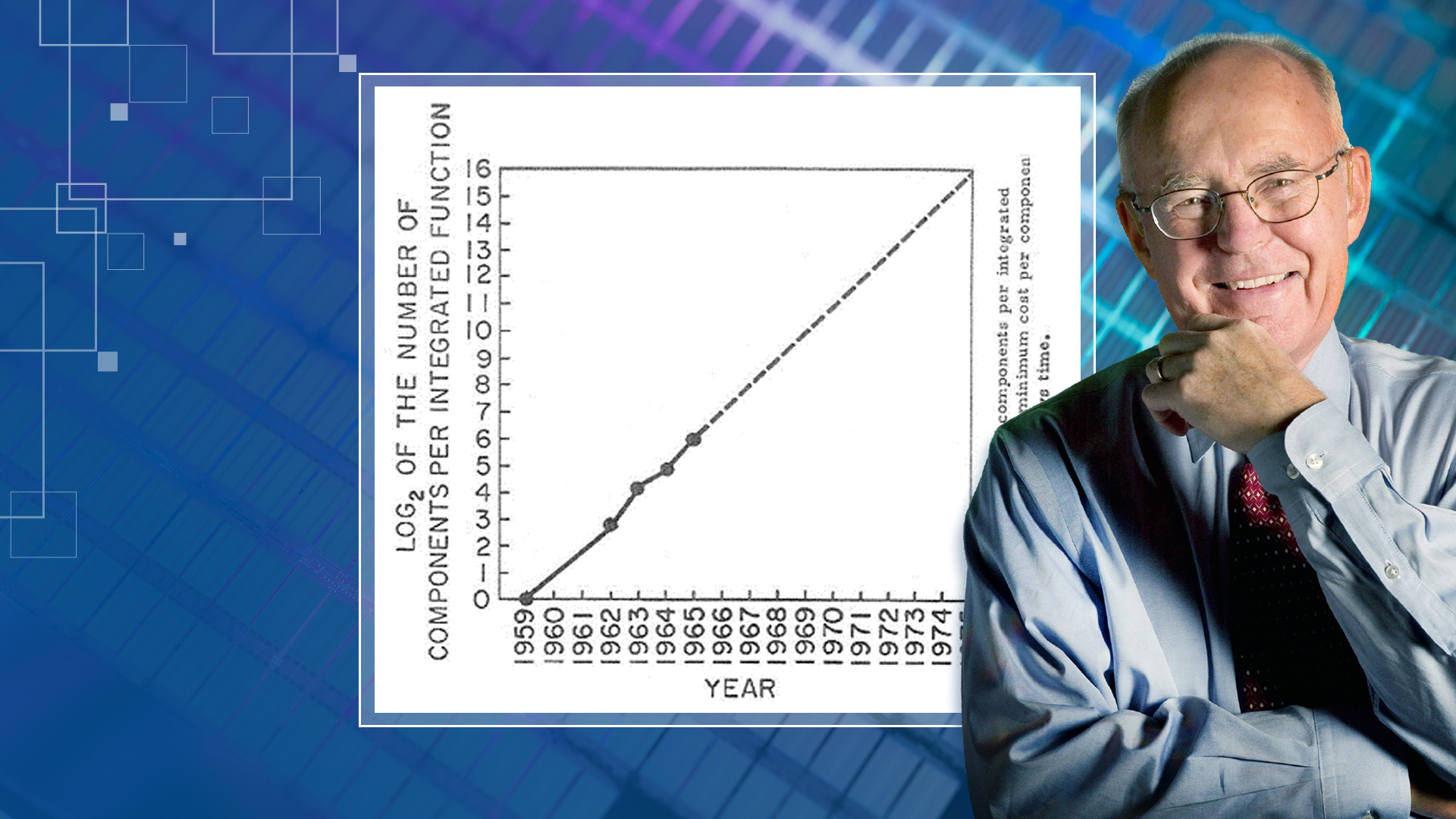
Moore's Law is the observation that the number of transistors on an integrated circuit doubles approximately every two years. This trend has fueled exponential growth in computing power while keeping costs relatively stable.
First articulated by Gordon Moore, co-founder of Intel, this principle has shaped the semiconductor industry for over five decades. It is not a physical law but rather an economic and engineering trend that has driven innovation in technology.
In 1964, Gordon Moore, then R&D director at Fairchild Semiconductor, presented his observations in a talk. He later formalized them in a 1965 article titled "Cramming More Components onto Integrated Circuits."
Initially, Moore predicted that the number of transistors would double every year for the next decade. However, in 1975, he revised this timeline to every two years, a prediction that held true for much longer than anticipated.
What began as an observation quickly became a self-fulfilling prophecy for the semiconductor industry. Companies like Intel adopted Moore's prediction as a development goal, ensuring that computing power grew exponentially.
This trend replaced bulky, room-sized computers and vacuum tubes with compact, affordable chips, revolutionizing the electronics industry.
The progression of transistor counts has been staggering:
As transistor counts increased, so did computational capacity. From 1975 to 2009, computing power doubled approximately every 1.5 years.
This exponential growth enabled the development of personal devices, mobile technology, and the infrastructure of the Information Age.
Moore's Law made it possible to shrink computers from room-sized mainframes to handheld smartphones. This miniaturization was driven by the ability to pack more transistors into smaller spaces.
The shift from vacuum tubes to integrated circuits marked a turning point in computing history, making technology more accessible and affordable.
As hardware advanced, software evolved to leverage multi-core processors. This shift toward parallel processing allowed applications to run faster and more efficiently.
Today, even everyday devices like smartphones and laptops benefit from the computational power enabled by Moore's Law.
Despite its longevity, Moore's Law faces growing challenges. As transistors approach sub-2nm scales, quantum effects and physical limitations make further miniaturization difficult.
Additionally, the breakdown of Dennard scaling means that energy efficiency no longer improves proportionally with transistor size reductions.
Another hurdle is the memory bandwidth gap, where CPU performance grows exponentially while memory improvements remain linear. This disparity creates bottlenecks in system performance.
Innovations like 3D stacking and advanced manufacturing nodes are helping to sustain progress, but the future of Moore's Law remains a topic of debate.
"Moore's Law only stops when innovation stops."
This statement underscores the ongoing efforts to push the boundaries of semiconductor technology, ensuring that Moore's Law continues to drive progress in computing.
Moore's Law has been a cornerstone of technological advancement, shaping the modern world in ways that were once unimaginable. While challenges exist, the spirit of innovation continues to propel the semiconductor industry forward.
In the next section, we will explore the current trends and future possibilities that could extend or redefine Moore's Law for the next generation of computing.
As traditional transistor scaling approaches its limits, the semiconductor industry is exploring new avenues to sustain Moore's Law. One promising direction is 3D chip stacking, which allows for more transistors in a given space by building vertically rather than horizontally.
Another approach is the development of chiplets, modular components that can be combined to create more powerful and efficient processors. This method reduces manufacturing complexity while maintaining performance gains.
The rise of artificial intelligence has led to the creation of AI accelerators, specialized hardware designed to handle machine learning tasks more efficiently than traditional CPUs. These chips optimize performance for specific workloads, reducing reliance on raw transistor counts.
Companies like NVIDIA and Google have invested heavily in these architectures, demonstrating that innovation can continue even as Moore's Law faces physical constraints.
Quantum computing represents a radical departure from classical computing. Instead of bits, which are either 0 or 1, quantum computers use qubits, which can exist in a superposition of states. This allows for probabilistic problem-solving at speeds unattainable by traditional systems.
While still in its infancy, quantum computing could eventually overcome some of the limitations of Moore's Law by solving complex problems in fields like cryptography, material science, and optimization.
Despite its potential, quantum computing faces significant hurdles. Qubit stability remains a major issue, as quantum states are highly susceptible to environmental interference. Additionally, scaling quantum systems to practical sizes requires breakthroughs in error correction and cooling technologies.
Researchers are actively working on these challenges, with companies like IBM and Google leading the charge in developing viable quantum processors.
As transistor density reaches its limits, the industry is increasingly prioritizing performance-per-watt over sheer computational power. This shift reflects the growing demand for energy-efficient devices, particularly in mobile and IoT applications.
Improving efficiency not only extends battery life but also reduces heat generation, a critical factor in maintaining system stability and longevity.
Heterogeneous computing combines different types of processors, such as CPUs, GPUs, and AI accelerators, to optimize performance for diverse workloads. This approach maximizes efficiency by assigning tasks to the most suitable hardware.
For example, a smartphone might use a GPU for graphics-intensive tasks while relying on a low-power CPU for everyday operations. This flexibility is key to sustaining progress in the post-Moore's Law era.
The question of whether Moore's Law is dead has sparked intense debate. Some argue that the slowdown in transistor scaling marks the end of the era, while others believe that innovation will find new ways to sustain the trend.
Intel, a company deeply tied to Moore's Law, has acknowledged the challenges but remains committed to pushing the boundaries of semiconductor technology. Their roadmap includes advanced packaging techniques and new materials to extend the law's relevance.
Experts offer varied perspectives on the future of Moore's Law:
"The death of Moore's Law has been predicted many times, but each time, the industry has found a way to adapt and innovate."
This sentiment highlights the resilience of the semiconductor industry and its ability to evolve in the face of challenges.
Moore's Law has been instrumental in the rise of the Internet of Things (IoT), where billions of connected devices rely on compact, powerful, and energy-efficient chips. From smart home devices to industrial sensors, IoT applications benefit from the continuous improvements in semiconductor technology.
As IoT expands, the demand for smaller, more efficient processors will only grow, further emphasizing the need for innovations that sustain Moore's Law.
The exponential growth in computing power has also fueled the expansion of cloud computing. Data centers, which power everything from social media to enterprise applications, depend on high-performance processors to handle massive workloads.
Even as Moore's Law faces challenges, advancements in chip design and manufacturing will continue to support the scalability and efficiency of cloud infrastructure.
Moore's Law has been a driving force behind the technological revolution of the past half-century. While its future may be uncertain, the principles it represents—innovation, efficiency, and progress—remain as relevant as ever.
In the final section, we will explore the broader implications of Moore's Law and its lasting impact on society, economy, and technology.
Moore's Law has reshaped nearly every aspect of modern life. From healthcare to finance, industries have leveraged exponential computing power to innovate and streamline operations. Medical imaging, genetic sequencing, and drug discovery have all benefited from faster, more efficient processors.
In everyday life, smartphones, laptops, and smart devices have become indispensable, all made possible by the relentless progress predicted by Moore's Law. The digital revolution has democratized access to information, entertainment, and communication.
The semiconductor industry, driven by Moore's Law, has become a cornerstone of the global economy. It has created millions of jobs in manufacturing, research, and software development. Countries like the United States, South Korea, and Taiwan have built thriving tech economies around chip production.
Startups and established companies alike have capitalized on the increasing computational power to develop new products and services. The rise of Silicon Valley as a global tech hub is closely tied to the advancements enabled by Moore's Law.
While Moore's Law has driven incredible technological progress, it has also contributed to growing energy consumption. Data centers, which power cloud computing and digital services, now account for a significant portion of global electricity use. The push for performance-per-watt is not just about efficiency but also about sustainability.
Companies are increasingly focusing on green computing initiatives, such as using renewable energy sources and improving cooling technologies to reduce the carbon footprint of data centers.
The rapid pace of technological advancement has led to a surge in electronic waste (e-waste). As devices become obsolete more quickly, the challenge of recycling and disposing of old electronics has grown. Governments and organizations are working to implement better e-waste management practices.
Innovations in modular design and repairability are also emerging as ways to extend the lifespan of electronic devices, reducing the environmental impact of the tech industry.
The exponential growth in computing power has accelerated scientific research across disciplines. Fields like astronomy, climate modeling, and particle physics rely on high-performance computing to process vast amounts of data and simulate complex systems.
For example, the Large Hadron Collider generates petabytes of data that require advanced processors to analyze. Similarly, climate scientists use supercomputers to model weather patterns and predict long-term environmental changes.
Moore's Law has also transformed education by making powerful computing tools accessible to students and researchers. Online learning platforms, virtual labs, and educational software have democratized knowledge, allowing people worldwide to access high-quality education.
Institutions are leveraging AI and machine learning to personalize learning experiences, adapting to individual student needs and improving educational outcomes.
The semiconductor industry has become a critical arena for global competition. Countries recognize that dominance in chip manufacturing translates to economic and military advantages. The United States, China, and the European Union are investing heavily in domestic semiconductor production.
Supply chain disruptions, such as those experienced during the COVID-19 pandemic, have highlighted the strategic importance of semiconductor self-sufficiency. Governments are offering incentives to attract chip manufacturers and reduce reliance on foreign suppliers.
Despite geopolitical tensions, collaboration remains essential for advancing semiconductor technology. International partnerships in research and development have led to breakthroughs in materials science, manufacturing techniques, and chip design.
Industry consortia and academic collaborations continue to drive innovation, ensuring that the principles of Moore's Law endure even as the challenges mount.
Inspired by the human brain, neuromorphic computing aims to create processors that mimic biological neural networks. These chips could revolutionize AI by enabling more efficient and adaptive learning systems.
Companies like IBM and Intel are already developing neuromorphic chips, which promise to deliver significant performance improvements for tasks like pattern recognition and real-time data processing.
Another promising avenue is optical computing, which uses light instead of electricity to perform calculations. Photonics-based processors could overcome the speed limitations of traditional silicon chips, enabling faster and more energy-efficient computing.
Research in this field is still in its early stages, but the potential for breakthroughs is immense, particularly in areas like high-speed communications and quantum computing.
Moore's Law has been one of the most influential principles in the history of technology. For over five decades, it has guided the semiconductor industry, driving unprecedented advancements in computing power, efficiency, and affordability.
While the physical and economic challenges to sustaining Moore's Law are real, the spirit of innovation it represents continues to thrive. The industry's shift toward performance-per-watt, heterogeneous computing, and emerging technologies like quantum computing and neuromorphic chips ensures that progress will continue.
"Moore's Law may slow, but the march of progress will not stop. The next era of computing will be defined by creativity, collaboration, and a relentless pursuit of innovation."
As we look to the future, the legacy of Moore's Law serves as a reminder of what is possible when vision, ambition, and ingenuity come together. The journey of technological advancement is far from over, and the best may still be yet to come.

:max_bytes(150000):strip_icc()/moores-law-4192714-1-5432709ba34c4a86bc7356f5274946ee.jpg)

Your personal space to curate, organize, and share knowledge with the world.
Discover and contribute to detailed historical accounts and cultural stories. Share your knowledge and engage with enthusiasts worldwide.
Connect with others who share your interests. Create and participate in themed boards about any topic you have in mind.
Contribute your knowledge and insights. Create engaging content and participate in meaningful discussions across multiple languages.
Already have an account? Sign in here

The open AI accelerator exchange in 2025 breaks NVIDIA's CUDA dominance, enabling seamless model deployment across diver...
View Board
Discover the top AI and tech trends of 2025, from agentic AI to healthcare breakthroughs and cybersecurity advancements....
View Board
# Sayak Chakraborty: A Comprehensive Profile of a Tech Innovator ## Meta Description "Explore the inspiring journey of ...
View Board
Alexis Jordan is a renowned tech entrepreneur and philanthropist, known for developing innovative solutions and promotin...
View Board
"Discover 2025's top tech trends: quantum computing, AIOps, and spatial computing. Stay ahead with insights on PQC and m...
View Board
Erfahren Sie, wie Quantencomputing die Consumer Electronics revolutioniert – von Cloud-Diensten bis zu integrierten Quan...
View Board
Explore the life and legacy of Walter Brattain, a pivotal figure in semiconductor history and co-inventor of the point-c...
View Board
Walter Brattain: The Transistor Pioneer Who Changed Electronics Early Life and Education of Walter Brattain Walter Hous...
View Board
Explore the pioneering legacy of Charles Babbage, the visionary often regarded as the "father of the computer." From his...
View Board
Meta Description Explore the extraordinary life of Alastair Aiken, a visionary leader in tech, AI, and philanthropy. Dis...
View Board
Nvidias 20 Mrd. USD Deal mit Groq revolutioniert den KI-Chipkrieg. Entdecken Sie, wie dieser strategische Coup die Infer...
View Board
Discover the top content creation and web design trends for 2025, from AI-driven personalization to immersive AR/VR expe...
View Board
Last news about Computer Science Week from 28/10/2024 to 03/11/2024
View Board
Узнайте, почему искусственный интеллект станет основой экономики 2025 года, как он трансформирует бизнес и государство, ...
View Board
Explore the profound legacy of Donald Knuth, the visionary architect of algorithms and a luminary in computer science. D...
View Board
Explore the transformative potential of quantum computing, a cutting-edge technology shaping the future of data processi...
View Board
Louis Rossmann's journey from repair shop owner to global right-to-repair advocate, challenging tech giants, influencing...
View Board
**Meta Description:** "Discover how quantum cryptography revolutionizes secure communication with unbreakable encrypti...
View Board
Discover the inspiring journey of Marques Brownlee, known as MKBHD, from a tech-savvy kid to a leading tech influencer. ...
View Board
Discover how Safwan Ahmedmia, aka SuperSaf, rose from a digital designer to a global tech influencer with 2M+ subscriber...
View Board
Comments