Explore Any Narratives
Discover and contribute to detailed historical accounts and cultural stories. Share your knowledge and engage with enthusiasts worldwide.
The life and work of Alan Turing fundamentally reshaped the 20th century and continues to define our digital world. This English mathematician, logician, and computer scientist laid the theoretical bedrock for all modern computers and artificial intelligence. His pioneering codebreaking efforts during World War II were instrumental in saving countless Allied lives.
From the abstract concept of the Turing Machine to the practical application of his theories in wartime cryptanalysis, Turing's genius bridged profound thought and urgent action.
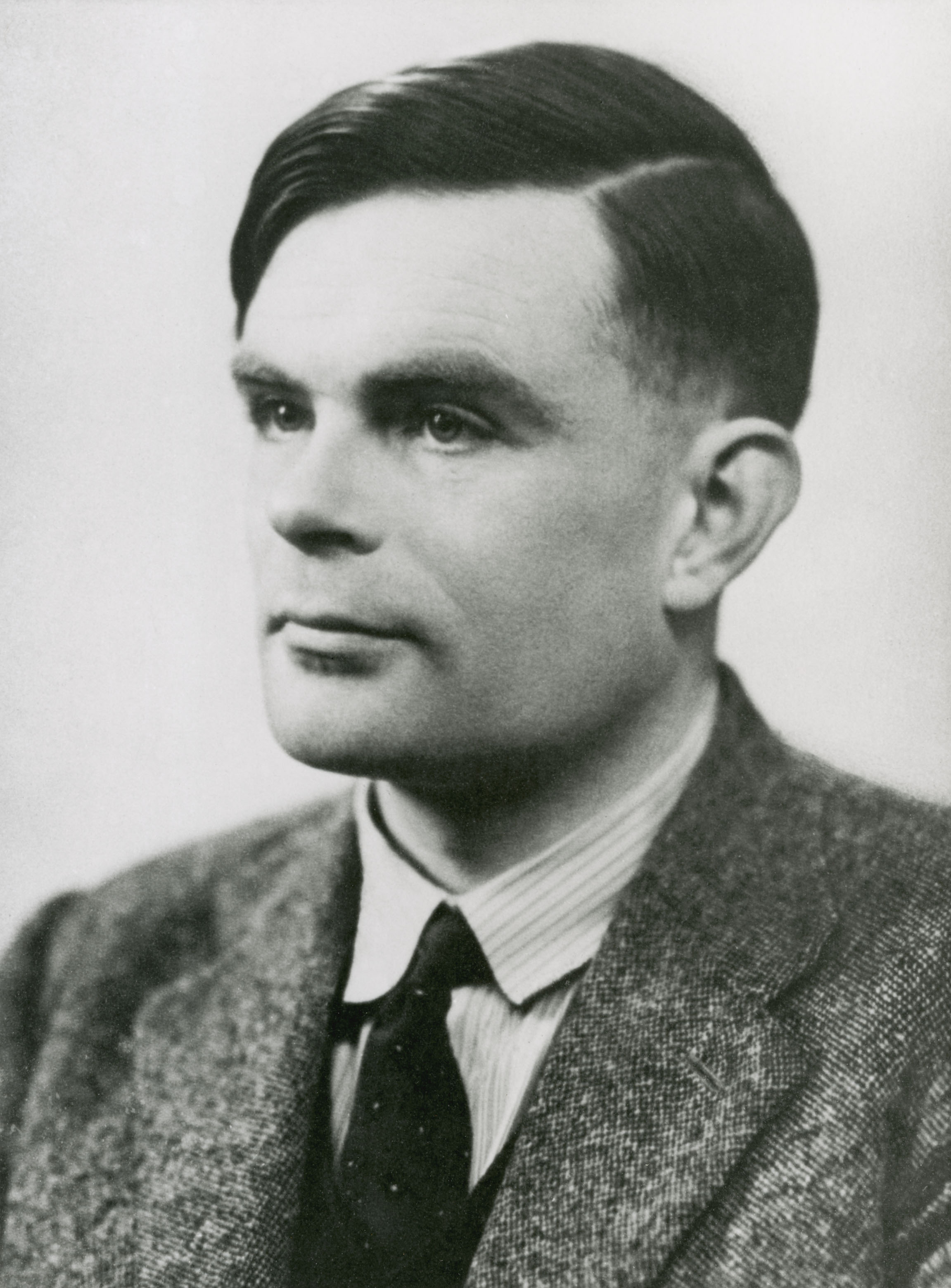
Alan Mathison Turing was born on June 23, 1912, in London, England. His remarkable intellectual talents were evident from an early age, showing a particular aptitude for mathematics and science. He attended Sherborne School and later studied mathematics at King's College, Cambridge, where he was elected a Fellow in 1935 for his work on probability theory.
His academic journey established the rigorous logical framework he would later apply to world-changing problems. At Cambridge, Turing was deeply influenced by the ongoing debates in the foundations of mathematics.
Turing's early career was shaped by one of the most significant mathematical challenges of his era: the Entscheidungsproblem (decision problem). This problem, posed by David Hilbert, asked whether a definitive method could determine the truth or falsehood of any mathematical statement.
In 1936, Turing published his landmark paper, "On Computable Numbers, with an Application to the Entscheidungsproblem." To solve this problem, he conceived a revolutionary abstract device.
In his 1936 paper, Turing introduced the concept of the Turing Machine. This theoretical device was a simple, abstract model of a human computer following a set of rules. It consisted of an infinite tape, a head that could read and write symbols, and a table of instructions.
The genius of the Turing Machine was its universality. Turing demonstrated that such a machine could be programmed to perform any conceivable mathematical computation if it were representable by an algorithm.
"Turing proved the Entscheidungsproblem was unsolvable, establishing the fundamental limits of mathematical logic and computation."
This breakthrough had monumental implications:
Turing's abstract machine is the direct theoretical ancestor of every computer in existence today, a number exceeding 4 billion devices globally, not including billions of smartphones.
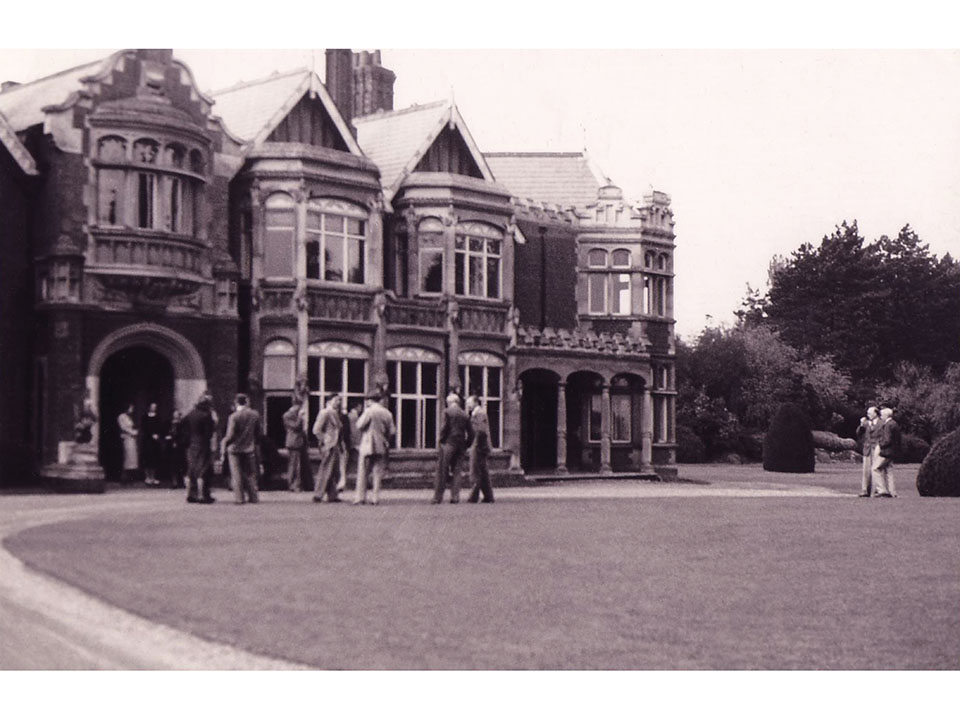
With the outbreak of World War II, Turing's theoretical brilliance was directed toward the most practical of problems: breaking Nazi Germany's encrypted communications. He joined the Government Code and Cypher School at Bletchley Park, Britain's secret cryptanalysis headquarters.
Turing was tasked with tackling the seemingly unbreakable Enigma cipher, used by the German military for all secure communications. The Enigma machine, with its complex system of rotors and plugs, could create an astronomical number of possible settings each day.
Turing was appointed head of Hut 8, the section responsible for German naval cryptanalysis. Breaking the naval Enigma was critical, as U-boat "wolf packs" were devastating Allied supply convoys in the Battle of the Atlantic.
He played a central role in designing an electromechanical device called the Bombe. Building upon earlier Polish designs, the Bombe could rapidly test possible Enigma settings to find the daily key.
The intelligence gained, code-named Ultra, provided the Allies with a decisive advantage. It is estimated that Turing's work saved thousands of lives and shortened the war by potentially years.
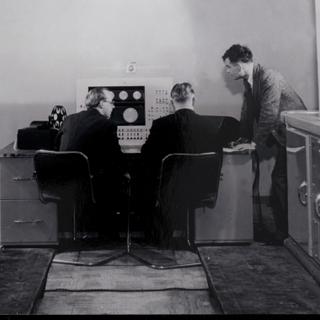
After the war, Turing turned his attention to building practical implementations of his theoretical ideas. In 1946, he joined the National Physical Laboratory (NPL) and designed the Automatic Computing Engine (ACE). His report outlined one of the first complete designs for a stored-program computer.
Although the full ACE was slow to be built, a pilot model, the ACE Pilot Model, became operational in 1950 and was among the fastest computers in the world at the time.
Turing's practical experience continued at the University of Manchester, where he worked on software for the Manchester Mark 1, one of the earliest stored-program computers.
He pioneered early programming, writing the first-ever programming manual for the Mark 1, and explored the machine's potential for tasks like chess.
This period cemented Turing's transition from pure theorist to a hands-on pioneer of the new digital age, directly shaping Britain's early leadership in computing.
While Turing's contributions to computer hardware were immense, his most forward-thinking work began after the war. He shifted his focus to the question of whether machines could think, a concept that would become the field of artificial intelligence (AI). His 1950 paper, "Computing Machinery and Intelligence," published in the journal Mind, remains a foundational text.
In this paper, Turing proposed a revolutionary way to approach the question of machine intelligence. He introduced an operational definition known as the Turing Test.
The Turing Test, originally called the "Imitation Game," was designed to sidestep philosophical debates about consciousness. It proposed a practical test: if a human interrogator, communicating via text, could not reliably distinguish between a machine and a human respondent, the machine could be considered intelligent.
This criterion shifted the focus from how a machine thinks to how it behaves. Turing predicted that by the year 2000, machines would be able to play the imitation game so well that an average interrogator would have no more than a 70% chance of making the correct identification after five minutes of questioning.
"I believe that in about fifty years' time it will be possible to programme computers... to make them play the imitation game so well that an average interrogator will not have more than 70 per cent chance of making the right identification after five minutes of questioning." - Alan Turing, 1950
The significance of the Turing Test is profound:
In the final years of his life, Turing applied his unique genius to an entirely new field: biology. Fascinated by patterns in nature, he began researching morphogenesis, the biological process that causes an organism to develop its shape. He published his only paper on the subject, "The Chemical Basis of Morphogenesis," in 1952.
Turing proposed that complex patterns like the spots on a leopard or the stripes on a zebra could arise from a simple mathematical model. He suggested that these patterns were the result of the interaction between chemical agents, which he termed "morphogens."
His theory, now known as a reaction-diffusion system, described how two chemicals—an activator and an inhibitor—could diffuse through tissue at different rates. The interaction between these morphogens could spontaneously generate stable, periodic patterns from an initially uniform state.
This was a radical departure from conventional biological thinking at the time. Turing used early Manchester computers to model these equations, demonstrating that his theory could produce patterns strikingly similar to those found in nature.
The impact of this work is still felt today:
Turing's foray into biology showed that his fundamental interest was in the underlying patterns of the universe, whether they were found in logic, machines, or living organisms.
Despite his monumental contributions to the Allied victory and science, Alan Turing's life ended in tragedy. In 1952, his house was burgled by an acquaintance of his partner. During the police investigation, Turing openly admitted to having a homosexual relationship, which was illegal in the United Kingdom under the same Labouchere Amendment that had convicted Oscar Wilde.
Rather than face a prison sentence, Turing accepted a horrifying alternative: chemical castration through a series of injections of synthetic estrogen. This "treatment" was intended to reduce his libido and lasted for a year, causing significant physical and emotional distress.
As a direct result of his conviction, Turing's security clearance was revoked. The man who had been one of the nation's greatest wartime assets was suddenly barred from the secret government work he had once led. He could no longer consult with GCHQ, the successor to Bletchley Park.
On June 7, 1954, Alan Turing was found dead at his home in Wilmslow, Cheshire, at the age of 41. The coroner ruled the cause of death as suicide by cyanide poisoning. A half-eaten apple was found beside his bed, though it was never tested for the poison.
The official persecution of Alan Turing represents a profound national tragedy and a terrible failure to honor a true war hero.
The legal and personal consequences of his conviction were severe and multifaceted:
For decades, Turing's contributions were shrouded in official secrecy, and the circumstances of his death were a quiet stain on British history. As the story of Bletchley Park slowly emerged, public awareness and appreciation for Turing's work grew.
In 2009, following a high-profile public campaign, the British government issued an official apology for the "appalling" way Turing was treated. Then-Prime Minister Gordon Brown stated, "On behalf of the British government, and all those who live freely thanks to Alan's work, I am very proud to say: we're sorry, you deserved so much better."
This apology was followed by a significant legal act. On December 24, 2013, Queen Elizabeth II granted Alan Turing a posthumous royal pardon. This symbolic gesture was an attempt to right a historical wrong and acknowledge the injustice he suffered.
The pardon for Turing later paved the way for broader legislation. In 2017, the UK government introduced "Turing's Law," which posthumously pardoned thousands of other men who had been convicted of similar historical homosexual offenses.
This journey toward recognition highlights a slow but significant societal shift:
The legacy of Alan Turing extends far beyond the historical record. His theoretical and practical work forms the invisible foundation of the digital age. From the smartphones in our pockets to the most advanced AI research labs, his influence is pervasive and profound.
Turing's ideas continue to drive innovation and debate in the 21st century. The concepts he introduced—from the universal machine to the test for intelligence—serve as both tools and benchmarks for ongoing scientific exploration.
The Turing Machine remains the central model of computation in theoretical computer science. It defines the very boundaries of what is computationally possible. Every programming language and every digital computer, no matter how advanced, is ultimately an implementation of this abstract concept.
His work on the halting problem and computability directly influences modern cybersecurity, algorithm design, and software engineering. Developers and theorists alike operate within the framework he established.
The Turing Test has evolved from a thought experiment into a cultural and technical milestone. While no AI has definitively and consistently passed an unrestricted Turing Test, the pursuit of this goal has driven decades of research in natural language processing and machine learning.
Modern large language models (LLMs) and sophisticated chatbots are frequently evaluated against Turing's original criteria. Their ability to generate human-like text reignites perennial debates about intelligence, consciousness, and the ethical implications of AI that he first anticipated.
Turing's 1950 paper anticipated key debates in AI ethics, including machine learning, consciousness, and the societal impact of intelligent systems.
His visionary questions continue to guide the field:
Alan Turing's story has captured the public imagination, moving from classified files to global recognition. His life and work have been commemorated in numerous ways, ensuring his legacy is remembered by generations to come.
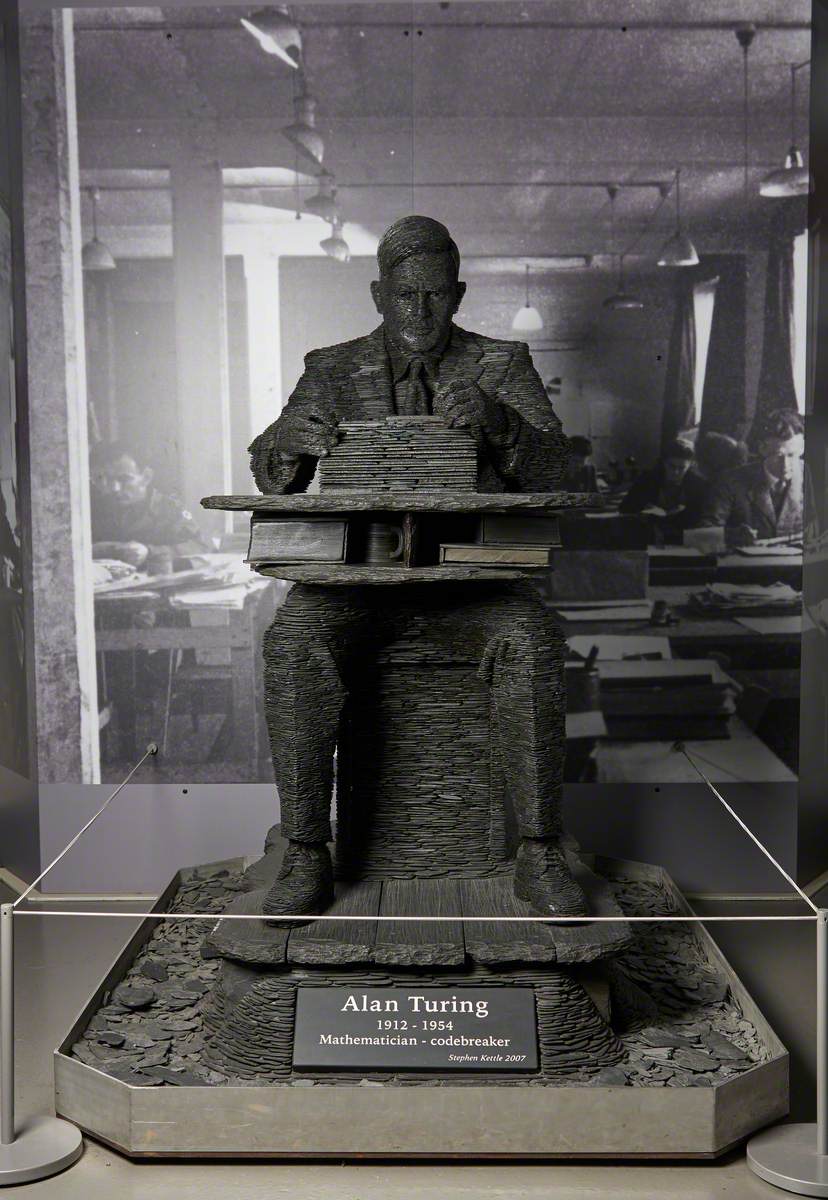
In Manchester, a poignant bronze statue of Turing sits in Sackville Park, depicting him sitting on a bench holding an apple. The sculpture, created by Glyn Hughes, is a permanent public tribute to the city's adopted son. In 2021, the Bank of England honored Turing by featuring his portrait on the new polymer £50 banknote.
This note includes a suite of symbols related to his work: a mathematical table and formulae from his 1936 paper, the technical drawings for the Bombe, his signature, and a quote: "This is only a foretaste of what is to come, and only the shadow of what is going to be."
Turing's life was dramatized in the 2014 Oscar-winning film The Imitation Game, starring Benedict Cumberbatch. While taking creative liberties, the film introduced his story to a massive global audience. Numerous documentaries, plays, and books have also explored his genius and tragedy.
In 2019, he was named the "greatest person of the 20th century" by a BBC audience vote, surpassing figures like Nelson Mandela and Ernest Shackleton. This popular vote signaled a profound public appreciation for his foundational role in shaping the modern world.
While his wartime work remained secret for decades, the principles of cryptography and cryptanalysis that Turing advanced are now public domain. Modern encryption algorithms and cybersecurity protocols stand on the shoulders of the work done at Bletchley Park.
The entire field of information security, which protects everything from online banking to private communications, owes a debt to the pioneers who broke the Enigma. Turing's logical and statistical approaches are foundational to cryptographic analysis.
His legacy in this field is dual in nature:
Turing's work continues to inspire new frontiers of scientific research. His interdisciplinary approach—bridging mathematics, biology, and engineering—is a model for tackling complex, systemic problems.
His 1952 paper on morphogenesis was decades ahead of its time. Today, with advanced computational power, scientists actively use and expand upon his reaction-diffusion models.
Researchers simulate his equations to study a vast array of biological patterning, from the branching of lungs and blood vessels to the segmentation of embryos. His work provides a crucial mathematical language for the emerging field of systems biology.
The next frontier for AI may involve moving beyond pure software. Researchers are exploring "physical Turing tests," where robots must not only converse but also interact with the physical world in human-like ways. This expands his original concept into the realm of embodied cognition and robotics.
Furthermore, the exploration of "Turing-complete" systems within chemistry and molecular programming seeks to implement computation at a nanoscale, another indirect lineage from his universal machine concept.
Alan Turing's life was a constellation of brilliant achievement and profound tragedy. He was a theoretical visionary who provided the blueprint for the digital universe. He was a practical savior whose clandestine work altered the course of a global war.
He was also a biologist who decoded nature's patterns and a philosopher who asked the deepest questions about machines and minds. His legacy is not monolithic but multifaceted, touching nearly every aspect of our technologically mediated existence.
Theoretical Foundation: The Turing Machine is the bedrock of computer science, proving what can and cannot be computed. Every digital device is a realization of his abstract model.
Practical Application: His applied genius at Bletchley Park, leading to the Bombe and crucial cryptanalytic techniques, saved countless lives and shortened World War II. His efforts were a decisive factor in the Battle of the Atlantic.
Visionary Forecasting: He inaugurated the field of artificial intelligence with the Turing Test, setting a benchmark and a philosophical challenge that still guides AI development today.
Interdisciplinary Pioneer: His foray into mathematical biology with morphogenesis showed how computational models could unlock the secrets of life's development.
A Legacy of Justice: His posthumous pardon and the subsequent "Turing's Law" stand as powerful symbols of societal progress and a stark reminder of the cost of prejudice.
Alan Turing gave us the framework for the computer age and the questions that will define its future. He was, in the truest sense, a man ahead of his time.
From the over 4 billion computers and billions of smartphones that populate the planet to the AI algorithms that power our search engines and the biological models that explain our very form, we live in a world of Turing's making. His story is a permanent testament to the power of pure thought, the imperative of applying genius to real-world problems, and the enduring need for a society that protects and celebrates its brightest minds, regardless of who they are. The shadow he foretold has become our reality, and his legacy is the ongoing story of the digital century he invented.



Your personal space to curate, organize, and share knowledge with the world.
Discover and contribute to detailed historical accounts and cultural stories. Share your knowledge and engage with enthusiasts worldwide.
Connect with others who share your interests. Create and participate in themed boards about any topic you have in mind.
Contribute your knowledge and insights. Create engaging content and participate in meaningful discussions across multiple languages.
Already have an account? Sign in here
Archimedes, the genius of ancient Greece, revolutionized mathematics, physics, and engineering with discoveries like pi,...
View Board
John von Neumann, the 20th-century polymath, revolutionized computing, game theory, nuclear physics, and AI. Explore his...
View Board
John Napier, a Scottish mathematician, invented logarithms, revolutionizing calculations and paving the way for signific...
View Board
Fritz Haber: A Chemist Whose Work Changed the World The Rise of a Scientist Fritz Haber was born on December 9, 1868, i...
View Board
Discover the intriguing life of Léon Foucault, the pioneering French physicist who elegantly demonstrated the Earth's ro...
View Board
Discover the mysterious history of the Death Machine cipher, the WWII Enigma machine. Explore its origins, wartime role,...
View Board
Galileo Galilei: The Pioneer of Science and Chronology Galileo Galilei, often hailed as the father of modern science, r...
View Board
Discover the untold story of Samuel Pepper, a 19th-century pioneer whose remarkable contributions to science and educati...
View Board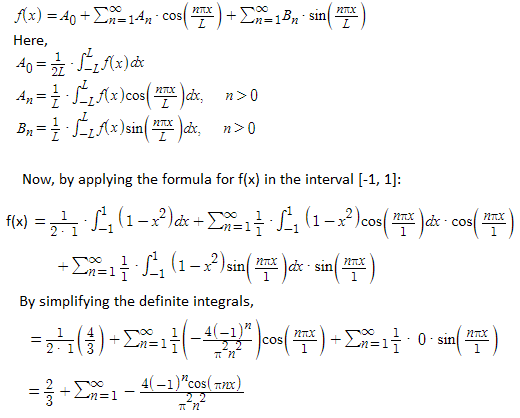
Explore the life and groundbreaking innovations of Jean-Baptiste Joseph Fourier, the French mathematician and physicist ...
View Board
Émile Borel: A Pioneering Mathematician and Physicist The Early Life and Education of Émile Borel Émile Borel, born on...
View Board
André-Marie Ampère: A Pioneer in the History of Electricity The Early Life and Education André-Marie Ampère, often rega...
View Board
158 ̩ Meta Description: Explore the groundbreaking contributions of Giovanni Battista Amici - the Italian physicist w...
View Board
Explore the fascinating life of Michael Faraday, the pioneering scientist whose groundbreaking work in electromagnetism ...
View Board
George Washington Carver: The Pioneering Scientist and Educator George Washington Carver (1864-1943) was a scientist, i...
View Board
Antonio Meucci pioneer behind the telephone whose work and innovations significantly contributed to early telephony deve...
View Board
Explore the life of Paul Painlevé, a groundbreaking mathematician and innovative political leader, whose dual legacy in ...
View Board
The open AI accelerator exchange in 2025 breaks NVIDIA's CUDA dominance, enabling seamless model deployment across diver...
View Board
Explore the secretive world of Cold War cryptography, where the U.S. and Soviet Union waged a cryptographic arms race wi...
View Board
Explore the pioneering legacy of Charles Babbage, the visionary often regarded as the "father of the computer." From his...
View Board
Comments