

Explore Any Narratives
Discover and contribute to detailed historical accounts and cultural stories. Share your knowledge and engage with enthusiasts worldwide.
Nestled along the banks of the timeless Nile River, Cairo stands as a beacon of history and modernity, a city where ancient treasures and contemporary life converge seamlessly. Home to inspirational landscapes, iconic architecture, and a tapestry of cultures, Cairo is much more than Egypt's sprawling capital—it is a living museum, offering a gateway into a world of forgotten pharaohs and perpetual reinvention.
The roots of Cairo stretch back thousands of years, evolving from the conquest-driven settlement of Fustat established in 641 AD by Arab conqueror ‘Amr ibn al-‘As, to the thriving metropolis it is today. The city's significance grew as Fatimid Caliphate made it their capital in 969 AD, naming it "Al-Qāhirah," which means "The Victorious." Over the centuries, Cairo burgeoned into a vital crossroad of Eastern and Western influences, where cultural and commercial exchanges moulded its very essence.
Cairo's skyline is an enchanting juxtaposition of the grandeur of past empires and the burgeoning heights of modernity. Dominating the horizon are the iconic Pyramids of Giza, timeless legacies of the Old Kingdom Pharaohs and a testament to human ingenuity. Nearby, the Great Sphinx remains an enigmatic sentinel, enduring through millennia with its lion's body and human head.
In the heart of the city, medieval treasures such as the Citadel of Saladin and the Al-Azhar Mosque beckon history enthusiasts to walk through time. The Citadel, built in 1176, offers panoramic views of Cairo's sprawling urban landscape, while Al-Azhar, founded in 970 AD, stands as a beacon of Islamic learning, representing a bridge of knowledge connecting the past to the present.
Cairo is very much a city where the strands of diverse cultures intertwine into a vibrant and complex tapestry. This diversity is reflected in its population, which is an eclectic mix of ethnicities and religions living side by side, contributing to Cairo's charisma and its rich cultural landscape.
Visitors can lose themselves within the bustling alleys of Khan El Khalili, Cairo's historic bazaar, once a major spice and silk road stop. Today, it offers a sensory overload of sights, sounds, and smells; a treasure trove of handcrafted goods, from elaborate brassware to colorful scarabs, atmospheric alleyways teaming with haggling traders and inquisitive tourists alike.
While its ancient history defines Cairo's identity, its modern heart pulses with life and dynamism. The city’s streets thrum with the rhythm of honking cars and lively street vendors. Contemporary Cairo is an eclectic mix of skyscrapers and traditional markets, where modern conveniences meet time-honored customs.
The Egyptian Museum, housing a vast tapestry of history, is set to pass the baton to the Grand Egyptian Museum in Giza, anticipated to be the world's largest archaeological museum. This ambitious project epitomizes Cairo's simultaneous reverence for its past and its gaze firmly fixed on the future.


Your personal space to curate, organize, and share knowledge with the world.
Discover and contribute to detailed historical accounts and cultural stories. Share your knowledge and engage with enthusiasts worldwide.
Connect with others who share your interests. Create and participate in themed boards about any topic you have in mind.
Contribute your knowledge and insights. Create engaging content and participate in meaningful discussions across multiple languages.
Already have an account? Sign in here

Explore Birkirkara, Malta's vibrant town blending rich history with modern life. Discover its medieval roots, stunning a...
View Board
Explore the rich historical and cultural tapestry of Cebu, the Queen City of the South. Discover its evolution from a pr...
View Board
Discover the enchanting blend of history and culture in Vilnius, Lithuania's vibrant capital. Explore its architectural ...
View Board
Explore Ramallah Muqata'a, the heart of Palestinian governance. Discover its rich history, political significance, and c...
View Board
The Historical Gem of Salamanca: A Tapestry of Culture and Heritage Introduction Cities often reflect the soul of thei...
View Board
"Explore the cultural richness and vibrant spirit of Kolkata, India's 'City of Joy.' Delve into its colonial history, ar...
View Board
Explore the charismatic allure of Lisbon, a city rich in history and vibrant culture. Discover its stunning architecture...
View Board
Explore the captivating history of Aleppo, one of the world's oldest cities, tracing its journey from ancient trade hub ...
View Board
Discover Rijeka, Croatia's hidden gem, nestled along the Adriatic Sea. With a rich tapestry of history and culture from ...
View Board
Mandalay, the former capital of Myanmar, is a city steeped in royal history and cultural heritage, featuring ancient tem...
View Board
Discover Marrakech, a city where history and vibrant culture blend into modernity, offering a rich tapestry of sights, s...
View Board
Kandy, the last capital of the Sinhalese monarchy, is a city steeped in history and culture, with a rich legacy of resil...
View Board
Discover Mdina, Malta's ancient Silent City, with its rich history, stunning Baroque architecture, and enduring legacy, ...
View Board
Discover Tbilisi, the historic capital of Georgia, with its rich cultural heritage, strategic location, and vibrant mode...
View Board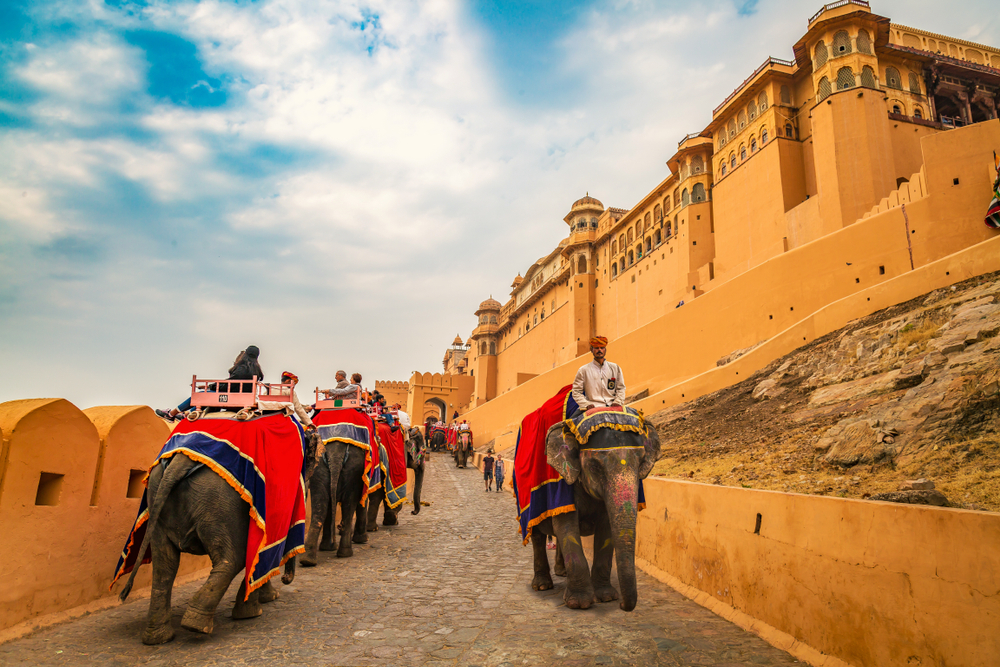
Discover the rich heritage and vibrant modernization of Jaipur in this comprehensive historical overview. Explore how th...
View Board
Explore the rich tapestry of Male, the bustling capital of the Maldives, where ancient history meets vibrant modernity. ...
View Board
Discover the timeless allure of Damascus, one of the world's oldest continuously inhabited cities. Journey through its r...
View Board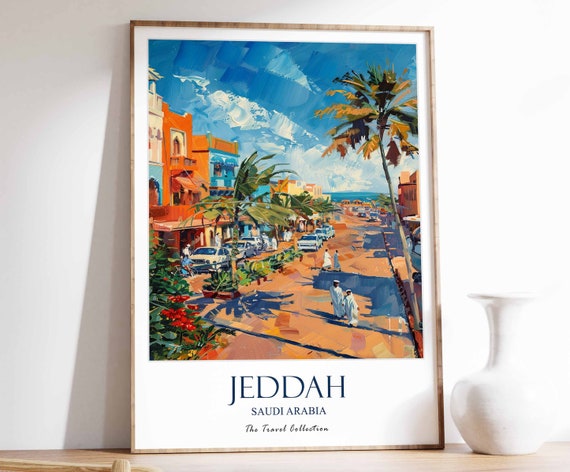
Explore the rich historical and cultural tapestry of Jeddah, a vibrant Saudi Arabian city located on the Red Sea. Discov...
View Board
Explore the rich history and vibrant transformation of Łódź, Poland's city of contrasts. Discover how this former indust...
View Board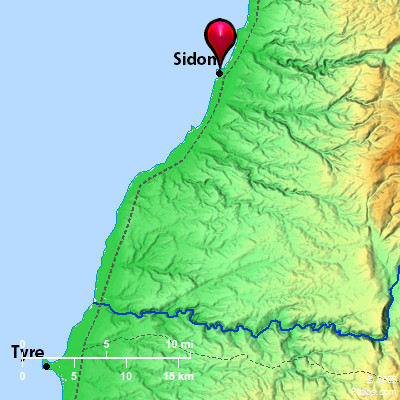
Discover the ancient wonders of Sidon, a coastal gem on the Mediterranean Sea known for its rich tapestry of history and...
View Board
Comments