Protagoras: The Father of Sophistry and Relativism
Introduction to Protagoras
Protagoras, a pivotal figure in ancient Greek philosophy, is renowned as the first and most famous Sophist. Born around 490 BCE in Abdera, Thrace, he revolutionized education by charging fees to teach wealthy youth in rhetoric, virtue, and public speaking. His most famous dictum, "Man is the measure of all things", encapsulates his philosophy of subjective relativism, which has influenced countless debates in epistemology and ethics.
Early Life and Background
Protagoras' origins were humble, with some accounts suggesting he began his career as a porter. Despite his modest beginnings, he rose to prominence through his intellectual prowess and teaching abilities. His potential influence from Democritus, another notable philosopher from Abdera, remains a subject of debate among scholars.
Rise to Prominence
Protagoras' journey to becoming a celebrated Sophist is a testament to his dedication and skill. He traveled to Athens, where he engaged in debates on moral, political, and educational questions. His emphasis on teachable virtue (aretē) was particularly appealing in the litigious culture of 5th-century BCE Athens.
Association with Pericles
One of Protagoras' most significant achievements was his association with Pericles, the influential Athenian statesman. This connection not only enhanced his reputation but also provided him with opportunities to influence the political and educational landscape of Athens. His involvement in drafting the constitution for the Athenian colony of Thurii around 444–443 BCE further solidified his status as a key figure in Greek philosophy and politics.
Philosophical Contributions
Protagoras' philosophical contributions are vast and varied, but he is best known for his relativistic views and his teachings on rhetoric. His famous dictum, "Man is the measure of all things", suggests that perceptions, knowledge, and judgments are subjective and vary from individual to individual.
The Dictum: "Man is the Measure of All Things"
This statement, often referred to as the homo mensura principle, is a cornerstone of Protagoras' philosophy. It implies that there are no absolute truths and that each person's perspective is valid in their own right. This idea has had a profound impact on subsequent philosophical thought, particularly in the realms of epistemology and ethics.
Agnosticism About the Gods
In his work On the Gods, Protagoras expressed a form of agnosticism. He stated that no one could know for certain whether the gods exist due to the obscurity of the topic. This stance was quite radical for its time and contributed to his reputation as a controversial thinker.
Teachings and Influence
Protagoras' teachings focused on practical skills such as rhetoric and public speaking, which were essential for success in the civic life of ancient Greece. He believed that virtue could be taught and that these skills were crucial for effective participation in democratic processes.
Professional Sophistry
Protagoras is often credited with inventing professional sophistry. He was one of the first to charge fees for his teachings, making education accessible to those who could afford it. His methods emphasized persuasive dialectic and language, which were highly valued in the competitive environment of Athenian politics.
Plato's Portrayal
Plato's dialogues, particularly Protagoras and Theaetetus, provide valuable insights into Protagoras' philosophical views. While Plato often critiques Protagoras' relativism and skepticism, these dialogues highlight the significance of Protagoras' contributions to philosophy. Socrates' engagement with Protagoras in these texts underscores the depth and complexity of his thought.
Legacy and Modern Relevance
Protagoras' ideas continue to resonate in contemporary philosophy and education. His emphasis on subjective truth and the teachability of virtue has influenced modern debates in epistemology, postmodernism, and rhetoric. The concept of "post-truth" discourse, prevalent in today's media landscape, can trace some of its roots back to Protagoras' relativistic views.
Scholarly Debates
Recent scholarship has focused on the scope of Protagoras' relativism, debating whether it applies primarily to perceptions or extends to ethical judgments. Additionally, the historicity of legends surrounding Protagoras, such as the alleged burning of his books for impiety, remains a topic of discussion among historians and philosophers.
Digital Humanities and Sophistic Revival
The advent of digital humanities has opened new avenues for analyzing Platonic portrayals of Protagoras and other Sophists. Furthermore, there has been a sophistic revival in communication studies, highlighting the enduring relevance of Protagoras' teachings on rhetoric and persuasion.
Conclusion of Part 1
In this first part of our exploration of Protagoras, we have delved into his early life, philosophical contributions, and enduring influence. His ideas on relativism and the teachability of virtue have left an indelible mark on philosophy and education. In the next part, we will further examine his teachings, his interactions with other philosophers, and the broader impact of his work on ancient and modern thought.
Protagoras' Role in Athenian Political Life
Protagoras' influence extended beyond philosophy into the political sphere of ancient Athens. His association with Pericles, the leading statesman of the era, granted him access to high-stakes civic debates. One of his most tangible political contributions was drafting the constitution for the Athenian colony of Thurii around 444–443 BCE, showcasing his practical application of rhetorical and legal expertise.
The Thurii Constitution
The constitution for Thurii was a significant undertaking that required balancing democratic principles with colonial governance. Protagoras’ work on this document demonstrated his ability to translate abstract philosophical ideas into functional legal frameworks. Though no complete copies survive, fragments and historical accounts highlight its innovative structure and emphasis on civic participation.
Debates in Athenian Courts
Athens’ litigious culture provided fertile ground for Protagoras’ teachings. He actively participated in public debates that often blended philosophy with legal argumentation. These discussions covered topics such as justice, governance, and the nature of law, reinforcing his reputation as a thinker who could navigate both theoretical and practical realms.
Protagoras in Plato's Philosophical Arsenal
Plato dedicated two major dialogues—Protagoras and Theaetetus—to examining the Sophist’s ideas. These works remain critical for understanding Protagoras’ legacy, even as Plato often positions Socrates as his intellectual counterpart.
Portrayal as a Sophistic Founder
In Protagoras, Plato depicts the Sophist as a charismatic teacher who claims to instruct students in virtual virtue. Socrates challenges these assertions, arguing that true wisdom cannot be taught. This dialogue serves as a foundational text for debates about the teachability of ethics and the role of expertise in moral education.
Critiques of Relativism
Plato’s Theaetetus directly confronts Protagoras’ relativism through the character of Theodorus. Socrates questions whether “Man is the measure of all things” implies that perceptions—like illusion or error—are equally valid truths. The dialogue underscores tensions between subjective experience and objective reality that continue to shape epistemology.
“If Protagoras were right, then every human opinion would hold equal truth, making folly and wisdom indistinguishable.”
Modern Interpretations and Scholarly Debates
Contemporary scholarship continues to grapple with Protagoras’ complex legacy, particularly his views on relativism and the limits of knowledge. Recent analyses explore how his ideas resonate in today’s “post-truth” discourse and digital communication landscapes.
Relativism: Perceptual or Ethical?
Scholars remain divided on whether Protagoras’ dictum applies solely to sensory perceptions or extends to moral and ethical judgments. This debate influences modern discussions about subjective truth in fields ranging from politics to artificial intelligence. Key points include:
- Protagoras may have distinguished between physical phenomena and value judgments.
- His emphasis on perspective aligns with modern theories of contextual knowledge.
- The ambiguity allows his philosophy to adapt to diverse interpretations across eras.
Digital Humanities and Sophistic Revival
The rise of digital humanities has enabled new methods for analyzing Protagoras’ influence. Researchers use text-mining tools to trace references to his work in Platonic dialogues and later philosophical texts. Meanwhile, communication studies have revived interest in his rhetorical techniques, highlighting their relevance to modern media and public discourse.
Enduring Relevance in Education
Protagoras’ belief that virtue can be taught remains a cornerstone of modern pedagogy. His approach—focusing on persuasive speech, critical thinking, and civic engagement—continues to inform debate programs, leadership training, and interdisciplinary curricula. Educational institutions often cite his methods when designing courses on logic, ethics, and rhetoric.
Enduring Legacy of Protagoras
Protagoras’ philosophies continue to echo through modern academia, politics, and education. His radical embrace of subjective relativism challenges traditional notions of absolute truth, influencing fields from epistemology to communication studies.
Influence on the Sophistic Movement
As the first renowned Sophist, Protagoras set the standard for a generation of teachers who prioritized rhetoric over dogma. His approach to persuasive speech and civic engagement laid the groundwork for future scholars, including Gorgias and Prodicus. The Sophistic movement he helped pioneer emphasized practical wisdom over abstract theory, a focus that remains relevant in leadership training today.
Impact on Modern Pedagogy
Protagoras’ belief in the teachability of virtue (aretē) resonates in contemporary education. Modern curricula in public speaking, critical thinking, and ethics often draw from his methods. His emphasis on adapting arguments to audience and context mirrors modern strategies in debate clubs and corporate training programs.
- Rhetorical adaptability remains a core skill in higher education.
- Critical analysis of perspectives aligns with current interdisciplinary approaches.
- The link between civic engagement and moral instruction persists in civic education.
Protagoras in Contemporary Thought
In an era marked by “post-truth” discourse, Protagoras’ ideas gain renewed significance. His assertion that “Man is the measure of all things” parallels modern debates about subjective experience versus empirical evidence.
Resonance in Digital Communication
The rise of social media and fragmented information ecosystems mirrors the relativism Protagoras championed. His focus on persuasive language over absolute truth finds parallels in algorithm-driven content creation and viral rhetoric. Scholars increasingly analyze his techniques to understand how modern audiences navigate competing narratives.
Scholarly Reinterpretations
Recent studies examine Protagoras through lenses of postmodernism and epistemology. Researchers debate whether his relativism applies to moral judgments or only sensory perceptions. Key arguments include:
- His work anticipates modern theories of contextual knowledge.
- The ambiguity of his doctrines allows flexible reinterpretation across disciplines.
- His rejection of divine certainty influences secular ethics today.
“Protagoras’ legacy lies not in answers, but in the questions he forced humanity to confront about the nature of truth.”
Conclusion
Protagoras’ life and teachings exemplify the complexity of intellectual innovation in ancient Greece. From his humble beginnings to his role advising statesmen, he reshaped how society understood rhetoric, ethics, and knowledge. His dictum—“Man is the measure of all things”—remains a provocative challenge to modern assumptions about objectivity.
Key Takeaways
Protagoras’ influence extends far beyond his lifetime. His emphasis on subjective perspective, teachable virtue, and persuasive communication continues to inform education, philosophy, and public discourse. As debates over truth and authority evolve, his ideas offer timeless insights into the human condition.
In a world increasingly defined by diverse viewpoints and digital interaction, Protagoras’ legacy serves as both a mirror and a guide—reminding us that understanding begins with questioning what we accept as fact.
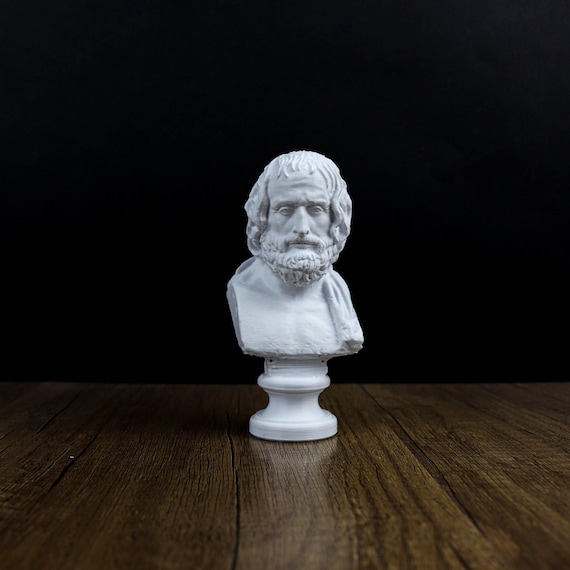
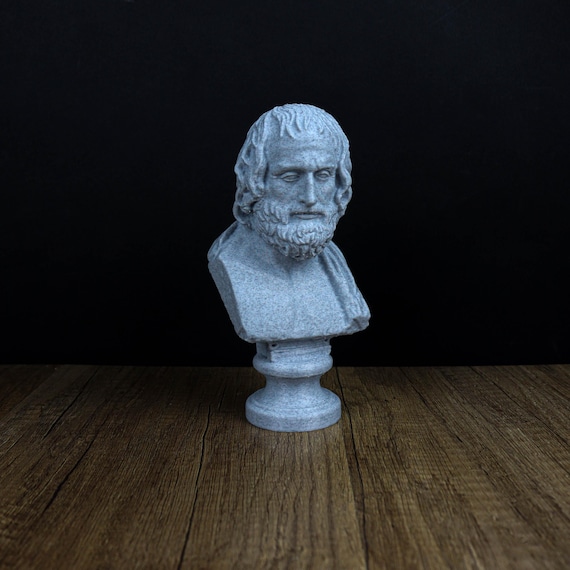
Aristotle: The Father of Western Philosophy
Aristotle, born in 384 BCE in the Macedonian city of Stagira, was a polymath whose impact on Western thought is unmatched. His contributions to philosophy, science, politics, and ethics have been profound and enduring, influencing countless thinkers and shaping the way we understand the world around us.
Early Life and Education
Aristotle was born during a period known as the Hellenistic era, a time of great cultural and intellectual ferment. His father, Nicomachus, who was the personal physician to King Amintas III of Macedon, provided Aristotle with an early exposure to the field of medicine, which later informed his philosophical and scientific inquiry.
At the age of seventeen, Aristotle was sent to study in Athens at the Academy, the renowned school founded by Plato. There, Aristotle immersed himself in the intellectual community, engaging with the ideas of his teachers and fellow students. Although a pupil of Plato, Aristotle was not a mere follower and often disagreed with the older philosopher’s doctrines, particularly his more mystical and metaphysical tendencies.
Key Philosophical Influences
Aristotle's philosophy is a product of his extensive and varied education, which ranged from metaphysics and ontology to logic and politics. Among the most significant influences on his thought were the Pre-Socratic philosophers (like Thales and Parmenides) and the works of Plato. Aristotle’s approach to philosophy was characterized by empirical observation and logical analysis, a method that was more systematic and less abstract than that of his teacher.
In his works, Aristotle discusses several key themes, including the nature of reality, the structure of the cosmos, and the principles of logic and ethics. His ideas on causality and the hierarchical order of the universe were groundbreaking and have had a lasting impact on the way we think about the world.
Contributions to Philosophy
Aristotle's contributions to philosophy are numerous and diverse. In metaphysics, he developed a comprehensive system of logic and categories that has influenced Western philosophy to this day. His works include Categories, On Interpretation, and Metaphysics, which laid the foundation for the scientific method and the study of logic.
One of Aristotle's most famous works, the Nicomachean Ethics, is a treatise on the nature of virtue and happiness. In this work, Aristotle explores the concept of eudaimonia, or flourishing, which he links to the fulfillment of one's potential. He argues that the virtuous life is the path to eudaimonia, and that this virtue is not only moral but also intellectual and social.
Scientific Contributions
Aristotle’s impact on the sciences is equally significant. His approach to natural philosophy was highly observational and empirical, distinguishing him from the theoretical approach of Plato. In his scientific works, such as Aristotle’s Parts of Animals and On the Generation of Animals, he provided detailed descriptions of biological processes and the characteristics of living beings.
Aristotle classified living things into categories, a method that influenced taxonomy and biology for centuries. He also made observations in meteorology, zoology, and botany, and his works remain foundational in the history of these sciences. His theories on the elements and the structure of the universe, while later disproven, were a crucial step in the development of scientific thought.
Political Thought
Aristotle’s political philosophy is encapsulated in his work Politics and Ethics. He argues that the ideal form of government is a constitutional republic or a form of aristocracy, where the best are in charge. Aristotle believed that political institutions should be designed to protect the interests of the whole community, not just the ruling class.
In his analysis of different forms of government, Aristotle distinguished among monarchy, oligarchy, and tyranny, as well as the more democratic forms of government. His discussion of the balance between virtue and power, and the importance of ethical conduct among leaders, has had a lasting impact on political science and theory.
Teaching and Legacy
Aristotle’s most lasting legacy is his influence on education and the curriculum. His method of teaching, which involved detailed discussions and practical exercises, set the model for higher education in the Western world. In his school, the Lyceum, Aristotle encouraged his students to think critically and to engage in empirical research, a method that has become a cornerstone of modern education.
His works were heavily criticized and even banned by some in his own time, but by the 18th century, they were rediscovered and celebrated. Today, Aristotle’s ideas continue to be studied and debated, and his works remain essential reading for scholars in philosophy, science, and politics.
The influence of Aristotle is evident in the works of countless subsequent thinkers, from Galileo and Darwin to modern philosophers like Martha Nussbaum and Alasdair MacIntyre. His methods of inquiry, his commitment to empirical evidence, and his holistic approach to knowledge continue to shape the way we think about the world and ourselves.
Conclusion
Aristotle is not just a philosopher; he is a cultural touchstone, an intellectual cornerstone, and a guiding light for anyone seeking to understand the complexities of the human condition. His works, his methods, and his legacy have made him a central figure in Western civilization, and his ideas continue to inspire and challenge us today.
Philosophy of Nature and Cosmology
Aristotle’s philosophy of nature and cosmology is a complex and nuanced framework that attempts to explain the workings of the physical world. One of his most influential theories is the concept of the four elements—earth, water, air, and fire—which he believed composed all matter in the terrestrial world. Each element was associated with specific properties such as weight, heat, and shape. For example, earth was the heaviest and was associated with stability and solid form, whereas fire was the lightest and was related to heat and extension.
Aristotle’s cosmological views were grounded in a teleological perspective, where every entity has a purpose or final cause that explains its existence. This perspective led him to develop a hierarchical structure of the cosmos, with Earth at the center surrounded by concentric spheres containing the celestial bodies: the Moon, Sun, planets, and stars. This view, known as the “Celestial Spheres,” was based on the belief that the heavens moved in perfect circular orbits with eternal, unchanging motion. Aristotle further argued that there must be an unmoved mover, often identified with God, that initiated and sustained the motion of the celestial spheres.
Ethics and Politics: The Golden Mean
Aristotle’s ethical and political thought is encapsulated in his works Nicomachean Ethics and Poetics. Central to his ethical theory is the concept of the golden mean, which posits that virtue lies midway between two extremes of character traits. For instance, courage is the golden mean between excessive fear and excessive recklessness. This idea emphasizes a balanced and moderate approach to life rather than extremes.
In his Politics, Aristotle distinguishes between various forms of government—the rule of one (monarchy), few (oligarchy), many (democracy), and the best (aristocracy)—and discusses their strengths and weaknesses. He argues that the optimal form of government is one that balances the interests of all citizens and promotes the common good. Aristotle also emphasizes the importance of education and citizenship, suggesting that citizens should be educated in both virtues and practical skills to contribute effectively to society.
Criticism and Controversies
Aristotle’s ideas, while groundbreaking, were not without criticism. During his lifetime, some of his contemporaries saw him as a threat to established beliefs, particularly those of Plato. However, it was after his death that his theories faced more significant challenges. Ptolemy’s model of the universe, which retained the notion of celestial spheres, eventually gave way to more accurate models proposed by figures like Nicolaus Copernicus and later Isaac Newton.
Moreover, Aristotle’s views on slavery, hierarchy, and the subjugation of women have been widely criticized. His assertion that some individuals were naturally suited for servitude has been heavily condemned by contemporary scholars. These critiques highlight the historical context and limitations of Aristotle’s thought, reminding us that even great minds can hold problematic beliefs.
Impact on Later Thinkers
Despite the challenges, Aristotle’s ideas continued to influence later thinkers across various disciplines. In medieval Europe, during the Scholastic period, his works were studied in universities, and his teachings permeated theological, legal, and political thought. Thomas Aquinas, who synthesized Aristotelian thought with Christian doctrine, exemplified the impact of Aristotle on medieval philosophy.
During the Renaissance, humanists like Petrarch and Savonarola were influenced by Aristotle’s emphasis on empirical observation and logical analysis. This renewed interest in Greek texts contributed to the broader revival of classical learning. By the Enlightenment, thinkers like Gottfried Wilhelm Leibniz and Immanuel Kant continued to draw from Aristotelian traditions, albeit in a modified and critical manner.
Aristotle’s influence extends beyond philosophy and science into fields such as literature and aesthetics. His Poetics, which examines the structure and effects of drama, remains a seminal work in literary theory. Authors like Sophocles and Shakespeare are said to have adhered to the principles of tragic form outlined by Aristotle.
Conclusion
In conclusion, Aristotle’s legacy is multifaceted and enduring. From his pioneering scientific methods and classifications to his profound contributions to ethics and politics, his ideas have shaped Western thought in fundamental ways. Despite facing criticism and evolving alongside new discoveries and perspectives, his influence remains profound. His holistic approach to understanding the world continues to inspire and challenge contemporary scholars and thinkers alike.
The study of Aristotle’s works provides not only insights into the past but also valuable lessons for the present and future. Whether through his systematic approach to logic and categorization, his ethical theories, or his contributions to the sciences, Aristotle stands as a towering figure in the intellectual landscape of humanity.
Preservation and Transmission of Works
Aristotle’s works were not widely known for a period after his death. Many of his writings were lost or destroyed, and his works as we know them today are largely thanks to Julius Pollux, a 3rd-century CE grammarian, and other Byzantine scholars. The Corpus Aristotelicum includes around 16 works that are believed to be from Aristotle’s original writings, although the authenticity of some of these works has been questioned by contemporary scholars. These works cover everything from logic and metaphysics to biology and political thought, reflecting the breadth of Aristotle’s intellectual endeavors.
The rediscovery of Aristotle’s works during the Renaissance was a key factor in the revival of classical learning. Humanists like Erasmus and Petrarch were instrumental in translating Greek texts into Latin, making Aristotle’s ideas accessible to a wider audience. This renaissance of interest in Aristotle’s works was part of the larger intellectual movement known as the Renaissance, which sought to return to the classical wisdom of ancient Greece and Rome.
Morality and Virtue
Aristotle’s theories on morality and virtue are grounded in his broader framework of practical philosophy. He defines virtue as a mean between two extremes and argues that ethical behavior arises from habit and practice. Virtue, for Aristotle, is not just a moral concept but also involves the exercise of reason and the cultivation of character. This concept of virtue is closely linked to his notion of eudaimonia, or flourishing, which he sees as the highest form of human happiness.
One of Aristotle’s most famous ethical concepts is the golden mean, which posits that virtue lies in the middle ground between excess and deficiency. For example, courage is a mean between recklessness (excess) and cowardice (deficiency). This balanced approach to ethics has been influential in both Western and Eastern traditions, with thinkers like Confucius and Mencius drawing on similar ideas.
Political and Social Thought
Aristotle’s political thought is often seen as a precursor to modern democratic theory. He emphasizes the importance of participation in civic life and the role of education in shaping good citizens. His concept of aristocracy, where leaders are chosen based on their virtue and knowledge, has been interpreted as a form of meritocracy—a concept that remains central to democratic societies.
Aristotle believed that the ideal form of government was a mixed government that balanced the interests of different groups within society. This mixed government included elements of aristocracy, democracy, and other forms. His ideas on distributive justice, the rule of law, and the protection of individual rights have had a lasting impact on political philosophy and the establishment of democratic institutions.
Scientific Contributions
Aristotle’s contributions to science were significant and diverse. In biology, he made detailed observations of animals and plants, developing a form of systematics that laid the groundwork for future biological classification. His works on zoology, botany, and embryology, such as the Historia Animalium and Historia Plantarum, were influential and were the basis for the work of later scientists like Aristotle of Ascalon and Theophrastus (Aristotle’s successor at the Lyceum).
Apart from biology, Aristotle’s writings on astronomy, meteorology, and meteorology also reflect his empirical approach to understanding the natural world. His views on matter and form, as well as his theories on causality and explanation, were foundational to the development of scientific thought.
Later Influence on Thinkers
Aristotle’s ideas have been adapted and reinterpreted by numerous thinkers throughout history. During the Enlightenment, thinkers like Voltaire and John Locke incorporated Aristotelian concepts into their political philosophies. Voltaire, for instance, used Aristotle’s ideas to advocate for the rule of law and the protection of individual rights. Similarly, John Locke’s theories on natural rights and government were influenced by Aristotle’s emphasis on human rationality and virtue.
In modern philosophy, Aristotle’s ethics and politics continue to be relevant. Contemporary figures like Martha Nussbaum and Alasdair MacIntyre have used Aristotelian concepts to explore contemporary moral and political issues. Nussbaum, in particular, has argued that Aristotelian concepts of virtue and flourishing can provide a framework for understanding contemporary ethical dilemmas.
Assessment and Legacy
When evaluating Aristotle’s legacy, it is important to recognize both his enduring contributions and the limitations of his ideas. His systematic approach to knowledge and his insistence on empirical evidence have been influential in shaping the methods of scientific inquiry. However, his views on slavery, gender, and social hierarchy have been widely criticized and often challenged by contemporary thinkers.
Despite these criticisms, Aristotle’s works remain essential reading for scholars and students. His comprehensive system of logic and his explorations of the nature of reality, ethics, and politics continue to inspire and challenge intellectual discourse. His ideas have been subject to constant revision and reinterpretation, and they continue to be relevant in a wide range of fields, from philosophy to biology.
Aristotle’s influence is evident in the continued study and analysis of his works, as well as in the ongoing debate surrounding his ideas. His contributions to Western thought are not only a testament to his intellectual prowess but also a reminder of the dynamic and evolving nature of human knowledge.
From his early education at Plato’s Academy to his extensive works on philosophy, science, and politics, Aristotle has left an indelible mark on the history of Western civilization. His ideas continue to shape our understanding of the world and ourselves, making him a figure of immense importance in the annals of human thought.
In conclusion, Aristotle’s legacy is one of unparalleled influence and enduring relevance. His systematic approach to knowledge, his empirical methods, and his comprehensive theories have stood the test of time, shaping the way we think and live. His ideas continue to inspire new generations of scholars and thinkers, and his works remain a cornerstone of Western intellectual tradition.

Anaximandro: Biografía y Filosofía del Pensador Presocrático
Anaximandro de Mileto es una figura monumental en la historia del pensamiento. Nacido alrededor del 610 a.C., este filósofo, geógrafo y científico es considerado por muchos estudiosos el primer pensador naturalista y uno de los pilares fundamentales de la filosofía occidental. Su vida y obra representan un puente crucial entre el mito y el logos, sentando las bases para la ciencia y la filosofía racional.
Su contribución más perdurable es la introducción del concepto del ápeiron, el principio indeterminado y eterno del universo. Además de sus revolucionarias ideas filosóficas, Anaximandro realizó aportaciones pioneras en campos como la cartografía, la astronomía y la cosmología. Este artículo explora su biografía, su contexto histórico y las ideas fundamentales que cambiaron para siempre nuestra comprensión del mundo.
Vida y Contexto Histórico de Anaximandro
Anaximandro nació y vivió en Mileto, una próspera ciudad griega en la costa de la actual Turquía. Fue discípulo y sucesor de Tales de Mileto, siendo aproximadamente catorce años más joven que su maestro. Posteriormente, él mismo sería el maestro de Anaxímenes, completando así la tríada de los grandes filósofos milesios.
Su época estuvo marcada por un florecimiento cultural y comercial. Mileto era un centro neurálgico de intercambio de ideas, gracias a su intensa actividad marítima y comercial. Este entorno propició un pensamiento innovador y abierto, alejado de las tradiciones dogmáticas.
Su Papel en la Sociedad Milesia
Más allá de su trabajo intelectual, Anaximandro participó activamente en la vida política y social de su ciudad. Se le atribuye un papel destacado en empresas de colonización. Según diversas fuentes históricas, dirigió una expedición para fundar la colonia de Apolonia en las costas del Mar Negro.
Su prestigio era tal que, en un hecho excepcional para la época, se le erigió una estatua en vida en Mileto. Este honor refleja la profunda admiración y el respeto que sus conciudadanos tenían por él, no solo como pensador, sino también como líder de la comunidad.
Su influencia fue tan grande que incluso se le encomendaron tareas prácticas de gobierno, como la gestión de la natalidad en una colonia para evitar problemas de superpoblación, demostrando la confianza en su criterio y sabiduría.
El Ápeiron: La Teoría Fundamental de Anaximandro
La contribución filosófica más radical de Anaximandro fue sin duda su teoría del ápeiron. Este concepto, que significa "lo indefinido", "lo ilimitado" o "lo infinito", constituyó una ruptura total con las explicaciones tradicionales sobre el origen del cosmos.
Mientras que su maestro Tales proponía que el principio de todas las cosas (arjé) era el agua, Anaximandro argumentó que ningún elemento observable podía ser el origen último. El agua, el fuego, la tierra y el aire son elementos finitos y opuestos que se limitan unos a otros. El principio originario, por tanto, debía ser algo diferente.
Definición y Características del Ápeiron
El ápeiron es una sustancia primordial, eterna e indestructible. No tiene cualidades sensibles específicas como la humedad o el calor, y es la fuente de la que surgen y a la que regresan todas las cosas. Según el pensamiento de Anaximandro, el cosmos nace, se desarrolla y finalmente perece dentro de este principio infinito.
Esta idea presenta varias características revolucionarias:
- Es eterno y no engendrado: No tiene principio ni fin.
- Es indeterminado: Carece de cualidades fijas y mensurables.
- Es la fuente de todos los opuestos: De él se generan los elementos contrapuestos (frío/calor, seco/húmedo).
- Garantiza un equilibrio cósmico: Los elementos extraídos del ápeiron retornan a él según una ley de justicia.
La teoría del ápeiron tuvo una influencia profunda y duradera en toda la filosofía presocrática posterior. Filósofos como Pitágoras, Parménides, Heráclito y Anaxágoras bebieron de esta idea seminal. Incluso se ha sugerido que pudo influir en el concepto platónico del Mundo de las Ideas.
Anaximandro como Fundador del Pensamiento Naturalista
Anaximandro es ampliamente reconocido como el primer pensador naturalista de la historia occidental. Su enfoque representó un cambio de paradigma trascendental: abandonar las explicaciones mitológicas y sobrenaturales para buscar causas racionales dentro de la propia naturaleza.
Este salto intelectual fue fundamental para el nacimiento de la ciencia. Por primera vez, fenómenos como los terremotos, los relámpagos o la formación de la Tierra se explicaban mediante procesos naturales y leyes inmanentes, no por la voluntad caprichosa de los dioses.
El Cambio del Mito al Logos
La obra de Anaximandro simboliza el tránsito del mythos (relato mítico) al logos (razón discursiva). Su libro "Sobre la Naturaleza" (Περί φύσεως) es considerado el primer tratado filosófico escrito en prosa, un formato que buscaba la exposición racional y sistemática de las ideas.
Esta metodología abrió el camino para el estudio sistemático de disciplinas como:
- La física, al investigar la naturaleza de la materia y el cambio.
- La cosmología, al proponer una teoría sobre el origen y estructura del universo.
- La biología, al especular sobre el origen de la vida y los animales.
- La meteorología, al buscar explicaciones para los fenómenos atmosféricos.
Su visión inauguró una nueva era de investigación basada en la observación y la razón, estableciendo los cimientos sobre los que se construiría toda la ciencia y filosofía occidentales posteriores.
La influencia de Anaximandro se extiende mucho más allá de la antigüedad. Su insistencia en buscar causas naturales y su osadía intelectual para proponer teorías audaces lo convierten en un fundador clave del pensamiento racional. En la siguiente parte de este artículo, exploraremos en detalle sus revolucionarias aportaciones científicas y técnicas.
Aportaciones Científicas y Técnicas de Anaximandro
La genialidad de Anaximandro se manifestó no solo en filosofía abstracta, sino en aplicaciones prácticas concretas. Su mente inquisitiva lo llevó a realizar contribuciones fundacionales en varias disciplinas científicas. Estas innovaciones muestran su compromiso con una comprensión racional y empírica del mundo que lo rodeaba.
Su enfoque integrador, que combinaba la especulación teórica con la observación, sentó un precedente para el método científico. Anaximandro no se contentaba con teorías; buscaba validarlas mediante la creación de instrumentos y la representación visual del conocimiento. Su legado técnico es tan impresionante como su legado filosófico.
El Primer Mapa del Mundo y la Revolución Cartográfica
Anaximandro es considerado el padre de la cartografía occidental. Su logro más celebrado en este campo fue la creación del primer mapa del mundo conocido por los griegos. Este mapa, confeccionado alrededor del siglo VI a.C., representaba una visión revolucionaria de la geografía.
Para su elaboración, se basó en los relatos y croquis rudimentarios de mercaderes y viajeros. Su mapa tenía forma circular y mostraba las tierras conocidas (Europa y Asia) rodeadas completamente por el Océano. Esta representación, aunque simple, fue un hito monumental en la historia de la geografía.
Este mapa fue posteriormente perfeccionado por Hecateo de Mileto y utilizado como referencia por el historiador Herodoto, lo que demuestra su valor y precisión relativa para la época.
Su concepción de la Tierra fue igualmente innovadora. Rechazando la idea de una Tierra plana, Anaximandro propuso que nuestro planeta tenía la forma de un cilindro, cuya altura era una tercera parte de su diámetro. Esta forma explicaba, según él, la estabilidad de la Tierra en el espacio, al "flotar" sin necesidad de ningún soporte.
Innovaciones en Astronomía y Medición del Tiempo
En el campo de la astronomía, las ideas de Anaximandro fueron igualmente audaces y precursoras. Realizó afirmaciones que contradecían las creencias populares y estableció fundamentos para la cosmología moderna.
- La Tierra flota libremente: Postuló que la Tierra se mantenía inmóvil en el centro del universo, sin apoyo alguno, equidistante de todos los puntos de la bóveda celeste.
- Fijación de los solsticios y equinoccios: Se le atribuye el cálculo y la determinación precisa de estos eventos astronómicos clave.
- Medición de distancias estelares: Intentó calcular los tamaños y las distancias relativas de las estrellas y otros cuerpos celestes.
- Introducción del gnomon: Trajo desde Babilonia este instrumento para estudiar la trayectoria del Sol.
También desarrolló herramientas prácticas para la medición del tiempo. Se le atribuye la creación de un reloj de sol y de una esfera celeste, instrumentos que permitían observar y predecir los movimientos de los astros. Estas herramientas no solo tenían un valor científico, sino también práctico para la agricultura y la navegación.
Anaximandro y el Origen de la Vida
El pensamiento de Anaximandro también se aventuró en el terreno de la biología y el origen de los seres vivos. Sus hipótesis, aunque especulativas desde nuestra perspectiva moderna, muestran un intento coherente de aplicar su principio del ápeiron a la explicación de la vida. Su teoría es considerada un antecedente lejano del concepto de evolución.
Según su visión, los primeros animales no nacieron de padres similares, sino que se generaron de manera espontánea a partir de elementos primordiales. Propuso una teoría fascinante y extraña para la época sobre el origen de la humanidad, alejándose por completo de los mitos creacionistas.
La Teoría del Origen Acuático y la Adaptación
Anaximandro propuso que la vida se había originado en el agua. Los primeros seres vivos, según él, se formaron en un medio líquido y caliente. Con el tiempo, estos seres primitivos fueron adaptándose para salir a tierra firme. Esta idea representa uno de los primeros intentos de explicar la diversidad biológica mediante un proceso natural.
Su explicación sobre el origen del hombre es particularmente llamativa. Creía que los seres humanos, en una etapa inicial de desarrollo, no podían haber sobrevivido por sí solos en un entorno hostil. Por lo tanto, dedujo que debieron haber nacido inicialmente en el interior de criaturas similares a los peces, protegidos hasta alcanzar la madurez necesaria.
Esta visión, aunque hoy nos resulte ingenua, muestra un esfuerzo genuino por encontrar una secuencia causal y natural para el surgimiento de la vida compleja, sin invocar la intervención divina.
La Obra Escrita y su Método Filosófico
Anaximandro no solo fue un pensador oral; dejó un legado escrito que marcó un punto de inflexión en la historia intelectual. Su decisión de escribir sus ideas en prosa, en lugar de verso como era común en la época poética, refleja su deseo de claridad y precisión. Este cambio formal es sintomático de un cambio más profundo en la manera de buscar y transmitir el conocimiento.
Su libro, conocido como "Sobre la Naturaleza" (Περί φύσεως), es considerado la primera obra filosófica escrita en prosa de Occidente. Desafortunadamente, como ocurre con la mayoría de los presocráticos, su obra se ha perdido y solo la conocemos a través de fragmentos y referencias de autores posteriores.
El Estilo y la Influencia de su Prosa
La elección de la prosa por parte de Anaximandro no fue un detalle menor. La poesía estaba asociada al mito, a la inspiración divina y a la tradición oral. La prosa, en cambio, sugería razonamiento lógico, exposición sistemática y un discurso dirigido a la inteligencia más que a la emoción. Este fue un acto fundacional para la filosofía como disciplina discursiva.
Los pocos fragmentos que se conservan, especialmente uno citado por Simplicio, muestran un estilo conciso y lleno de significado. El fragmento más famoso habla de cómo los seres "pagan pena y expiación unas a otras por su injusticia según el orden del tiempo", una poderosa metáfora sobre el equilibrio cósmico y el devenir de los opuestos generados desde el ápeiron.
- Fundación de la cosmología: Su obra es vista como el primer tratado sistemático sobre el origen y estructura del cosmos.
- Modelo para futuros filósofos: Estableció el formato de "Sobre la Naturaleza" que luego usarían otros presocráticos.
- Transición al Logos: Su prosa simbolizó el abandono definitivo del lenguaje mítico-poético.
El método de Anaximandro combinaba la deducción racional con la observación empírica disponible. Partía de un principio general (el ápeiron) y derivaba de él explicaciones para fenómenos concretos, desde la forma de la Tierra hasta el origen de los animales. Este enfoque holístico sería la marca distintiva de la escuela milesia.
La influencia de su obra escrita se extendió rápidamente más allá de Mileto. Sus ideas viajaron por el mundo griego y fueron discutidas, criticadas y desarrolladas por generaciones posteriores de pensadores. En la tercera y última parte de este análisis, exploraremos el legado histórico de Anaximandro y su impacto duradero en la filosofía y la ciencia occidentales.
Legado y Influencia en Filósofos Posteriores
La filosofía de Anaximandro no terminó con su muerte alrededor del 546-545 a.C.. Por el contrario, sus ideas seminales germinaron y dieron frutos en las mentes más brillantes de la antigua Grecia. El concepto del ápeiron actuó como un catalizador intelectual, inspirando tanto la admiración como la crítica constructiva.
A diferencia de su maestro Tales, de quien no quedan fragmentos escritos directos, la existencia de una cita atribuida directamente a Anaximandro le otorga una relevancia histórica tangible. Este hecho lleva a muchos estudiosos contemporáneos a argumentar que debería ser considerado el primer filósofo occidental en un sentido estricto.
El Impacto en la Escuela Pitagórica y Heráclito
La noción de un principio ilimitado resonó profundamente con Pitágoras y sus seguidores. Para los pitagóricos, los números eran la esencia de la realidad, una abstracción similar en espíritu al ápeiron. La idea de un principio ordenador subyacente y no-material encuentra un claro paralelismo en el pensamiento de Anaximandro.
Heráclito de Éfeso, por su parte, tomó la idea del devenir y la lucha de opuestos y la llevó a su extremo lógico. Mientras que Anaximandro veía este proceso como una "injusticia" que requería "expiación", Heráclito lo celebró como la esencia misma de la realidad: la guerra es el padre de todas las cosas. Este diálogo intelectual a distancia muestra la vitalidad de las ideas milesias.
- Parménides: Su concepto del "Ser" único e inmutable puede verse como una respuesta al ápeiron cambiante de Anaximandro.
- Anaxímenes: Su discípulo directo, aunque volvió a un elemento material (el aire) como arjé, mantuvo la estructura lógica de su maestro.
- Anaxágoras: Su "nous" (mente) como fuerza ordenadora comparte la cualidad de ser ilimitado e independiente de la mezcla de elementos.
La influencia de Anaximandro se extendió como una onda expansiva, forzando a cada nuevo pensador a posicionarse frente a su audaz propuesta de un origen indefinido del cosmos.
Anaximandro vs. Tales: ¿Quién fue el Primer Filósofo?
La tradición ha consagrado a Tales de Mileto como el primer filósofo. Sin embargo, un análisis más detallado de la evidencia histórica sugiere que el título podría corresponderle legítimamente a Anaximandro. Este debate no es meramente académico; se refiere a la naturaleza misma de la ruptura filosófica.
La principal evidencia a favor de Anaximandro es la existencia de un fragmento escrito directo. Tenemos una cita suya preservada por comentaristas posteriores, lo que ofrece una ventana incontrovertible a su pensamiento. De Tales, en cambio, no tenemos nada más que reportes e interpretaciones de otros autores.
Argumentos para la Primacía de Anaximandro
Varios factores sólidos apoyan la candidatura de Anaximandro como el fundador genuino de la filosofía occidental:
- Abstracción conceptual: Mientras Tales propuso el agua, un elemento empírico, como arjé, Anaximandro introdujo el ápeiron, un concepto abstracto y metafísico.
- Obra escrita sistemática: Su libro "Sobre la Naturaleza" es reconocido como el primer tratado filosófico en prosa, estableciendo un formato para la disciplina.
- Enfoque integral: Desarrolló un sistema completo que abarcaba cosmología, física, biología y geografía, no solo una intuición aislada.
- Ruptura metodológica: Su uso de la prosa representa una ruptura más clara con el pensamiento mítico-poético tradicional.
Esto no disminuye la contribución de Tales, quien sin duda fue un precursor inspirador. Pero sugiere que fue Anaximandro quien consolidó el salto hacia una nueva forma de pensar, dando a la filosofía su método y su primer gran problema: la naturaleza del principio primordial.
Vigencia del Pensamiento de Anaximandro en la Ciencia Moderna
Lo más asombroso del legado de Anaximandro es su sorprendente resonancia con conceptos de la ciencia contemporánea. Aunque sus explicaciones específicas han sido superadas, la estructura profunda de su pensamiento anticipa preocupaciones centrales de la cosmología y la física modernas.
La idea de que el universo observable surge de una realidad subyacente no directamente perceptible es un pilar de la física teórica actual. Desde los campos cuánticos hasta la teoría de cuerdas, los científicos buscan el "árjé" moderno del cual emerge toda la materia y energía.
Paralelos con la Cosmología Contemporánea
Los ecos del ápeiron pueden encontrarse en varias teorías científicas de vanguardia:
- La Singularidad del Big Bang: El estado de densidad infinita del que surgió el universo comparte la cualidad de ser "indefinido" e inaccesible a nuestras leyes físicas actuales.
- La Energía del Vacío Cuántico: La idea de que el espacio "vacío" bulle de energía potencial recuerda al ápeiron como fuente inagotable de existencia.
- El Principio Antrópico: La reflexión de Anaximandro sobre las condiciones necesarias para la vida humana encuentra un paralelo en la discusión sobre las constantes fundamentales del universo.
Anaximandro intuyó que la verdadera naturaleza de la realidad podría ser contraria a la experiencia sensorial inmediata, una lección que la física del siglo XX ha confirmado repetidamente.
Su visión de una Tierra que no necesita soporte y flota libre en el espacio fue una intuición genial que prefigura el principio de inercia y la gravitación universal. Aunque su modelo cilíndrico era incorrecto, la audacia de eliminar apoyos míticos para la Tierra fue un paso fundamental hacia el pensamiento científico.
Conclusión: El Gigante sobre cuyos Hombros se Elevó la Ciencia
Anaximandro de Mileto fue un titán intelectual cuyo valor reside no tanto en las respuestas específicas que dio, sino en las preguntas revolucionarias que se atrevió a formular. Al postular el ápeiron como el principio de todas las cosas, estableció para siempre que la filosofía y la ciencia deben buscar explicaciones más allá de lo aparente.
Su legado es multidimensional. Como filósofo, fundó la cosmología racional. Como científico, creó la geografía matemática y avanzó la astronomía. Como pensador naturalista, abrió el camino para la investigación empírica de la naturaleza. Su obra representa la primera gran síntesis del conocimiento humano bajo el imperio de la razón.
Resumen de Aportaciones Clave
Para concluir, las contribuciones esenciales de Anaximandro se pueden resumir en los siguientes puntos fundamentales:
- Concepto del Ápeiron: Introdujo la idea de un principio ilimitado y abstracto como origen del cosmos.
- Fundación del Naturalismo: Reemplazó las explicaciones míticas por causas naturales y racionales.
- Pionero de la Cartografía: Creó el primer mapa del mundo conocido, revolucionando la geografía.
- Innovador en Astronomía: Propuso una Tierra libremente suspendida en el espacio y estudió los movimientos celestes.
- Autor del Primer Tratado Filosófico: Escribió "Sobre la Naturaleza", estableciendo la prosa como vehículo del pensamiento racional.
La estatua que sus conciudadanos le erigieron en vida no fue solo un honor personal; fue un reconocimiento a la nueva forma de pensar que él encarnaba. Anaximandro nos enseñó que el universo es cognoscible, que sus secretos pueden ser desvelados mediante la observación, la razón y la audacia intelectual. Su espíritu inquisitivo sigue vivo, recordándonos que la búsqueda del conocimiento comienza con la valentía de cuestionar lo establecido y imaginar lo inimaginable.
En conclusión, Anaximandro de Mileto fue un pionero fundamental en la transición del pensamiento mítico al racional, sentando las bases de la filosofía y la ciencia occidentales. Su concepto del ápeiron como principio originario sigue inspirando la reflexión sobre los fundamentos del cosmos. ¿Qué otras preguntas sobre el universo, planteadas por los presocráticos, siguen desafiando nuestra comprensión hoy?


Plato: The Great Philosopher of Antiquity and His Enduring Legacy
Plato, the great philosopher of antiquity, remains one of the most influential thinkers in Western philosophy. Born in Athens around 428/427 BCE, his ideas on metaphysics, ethics, and governance continue to shape modern thought. As a student of Socrates and teacher of Aristotle, Plato bridges the gap between classical Greek philosophy and contemporary intellectual traditions. His Theory of Forms and the founding of the Academy in Athens cement his status as a pillar of philosophical inquiry.
The Life and Times of Plato
Plato was born into an aristocratic Athenian family during the tumultuous period of the Peloponnesian War. This era of conflict and political instability deeply influenced his views on governance and justice. The execution of his mentor, Socrates, in 399 BCE further shaped his philosophical trajectory, leading him to question the efficacy of democracy and explore ideal forms of government.
Early Influences and Education
Plato's early education was steeped in the traditions of Greek thought. He was profoundly influenced by Socrates, whose method of questioning and dialogue became a cornerstone of Plato's own philosophical approach. Additionally, Plato drew inspiration from Pythagoras, particularly in the realm of mathematics and the idea of harmonic order in the universe. The phrase "Ἀγεωμέτρητος μηδεὶς εἰσίτω" ("Let no one untrained in geometry enter") adorned the entrance of his Academy, underscoring the importance of mathematical precision in philosophical inquiry.
The Founding of the Academy
In c. 387 BCE, Plato established the Academy in Athens, the first institution of higher learning in the Western world. The Academy was not merely a school but a center for advanced study in mathematics, philosophy, and dialectic. It operated for nearly 900 years, making it one of the most enduring educational institutions of antiquity. The curriculum emphasized paideia, a holistic approach to education that aimed to cultivate the mind, body, and spirit.
Plato's Philosophical Contributions
Plato's philosophical contributions are vast and varied, but his Theory of Forms stands as his most enduring legacy. This theory posits the existence of a realm of perfect, eternal Ideas or Forms that transcend the imperfect, sensory world. According to Plato, the physical world is merely a shadow or imitation of these higher realities. This concept is vividly illustrated in his famous Allegory of the Cave, where prisoners mistaking shadows for reality symbolize humanity's limited perception.
The Theory of Forms
The Theory of Forms is central to understanding Plato's metaphysics. He argued that true knowledge comes from comprehending these eternal Forms, which are unchanging and perfect. For instance, while a drawn triangle may be imperfect, the Form of the Triangle is a perfect, abstract ideal that exists beyond the physical realm. This theory has profound implications for epistemology, ethics, and aesthetics, as it suggests that ultimate truth and beauty lie in these transcendent Ideas.
Major Works and Dialogues
Plato's philosophical ideas are primarily conveyed through his dialogues, which feature Socrates as the central character. These works are typically categorized into three periods:
- Early Dialogues: Focus on Socratic method and ethics, e.g., Apology, Crito.
- Middle Dialogues: Introduce the Theory of Forms, e.g., Phaedo, Republic, Symposium.
- Late Dialogues: Explore more complex themes and refine earlier ideas, e.g., Parmenides, Laws.
Among these, the Republic is perhaps his most famous work, delving into questions of justice, the ideal state, and the philosopher-king. The Symposium, on the other hand, explores the nature of love and beauty through a series of speeches at a banquet.
Plato's Influence on Western Thought
Plato's influence extends far beyond his lifetime, permeating various fields such as philosophy, theology, and political theory. His ideas have been reinterpreted and built upon by countless thinkers, from Neoplatonists like Plotinus to modern philosophers such as Alfred North Whitehead, who famously remarked that all Western philosophy is but a series of footnotes to Plato.
Integration into Christian Thought
Plato's philosophy found a significant place within Christian theology, particularly in the development of apophatic traditions. The concept of pursuing eudaimonia (human flourishing) resonated with Christian ideas of spiritual fulfillment. Early Christian thinkers like Augustine of Hippo incorporated Platonic ideas into their theological frameworks, blending Greek philosophy with Christian doctrine.
Modern Scholarship and Reinterpretations
Modern scholarship continues to reevaluate and clarify Plato's ideas. Recent studies, such as those by Paul Friedländer and Patricia Fagan, have challenged outdated interpretations of Plato's works. For instance, the strict dichotomy between the sensible and intelligible worlds has been reconsidered, with scholars emphasizing the role of myth-making in Plato's dialogues and their poetic and cultural contexts. Courses like "Ancient Greek Philosophy: Plato and the Theory of Ideas" further explore these nuances, addressing term clarification, dialogue taxonomy, and the use of myths as tools for understanding the sensible world as an image of Forms.
Plato's Enduring Legacy
Plato's legacy is evident in the enduring relevance of his ideas. His emphasis on reason, dialectic, and the pursuit of truth has left an indelible mark on education and intellectual inquiry. The Academy he founded set a precedent for institutions of higher learning, influencing the structure and goals of modern universities. Moreover, Plato's dialogues continue to be studied and debated, offering insights into ethics, metaphysics, and political philosophy that remain pertinent today.
Cultural Resonance and Modern Applications
Plato's phrases and concepts have permeated modern culture and academia. For example, the phrase "ὅπερ ἔδει δεῖξαι" (often abbreviated as QED, meaning "which was to be demonstrated") is commonly used in mathematical proofs. Additionally, Plato's ideas inspire modern mnemonics and educational techniques, such as associating geometry with the concept of pi. His influence is also seen in contemporary discussions on governance, ethics, and the nature of reality, demonstrating the timelessness of his philosophical contributions.
As we delve deeper into Plato's life, works, and influence in the subsequent sections, it becomes clear that his status as the great philosopher of antiquity is well-deserved. His ideas continue to challenge, inspire, and shape the intellectual landscape, making him a cornerstone of Western philosophical tradition.
The Evolution of Plato's Philosophical Thought
Plato's philosophical journey was not static; it evolved significantly over his lifetime. His early dialogues, heavily influenced by Socrates, focus on ethical questions and the pursuit of virtue. As his thought matured, he developed the Theory of Forms and explored more complex metaphysical and political ideas. Understanding this evolution is crucial to grasping the depth and breadth of his contributions to philosophy.
Early Dialogues: The Socratic Influence
Plato's early works, such as the Apology and Crito, are deeply rooted in the teachings and methods of Socrates. These dialogues emphasize the Socratic method, a form of cooperative argumentative dialogue that stimulates critical thinking and illuminates ideas. The focus is primarily on ethics and the examination of moral concepts like justice, courage, and piety. In these works, Socrates often plays the role of the inquisitive interlocutor, guiding his conversation partners toward a deeper understanding of these virtues.
One of the key themes in these early dialogues is the idea that virtue is knowledge. Socrates argues that no one knowingly does wrong; thus, immoral behavior stems from ignorance rather than malice. This concept is explored in dialogues like the Meno, where Socrates and Meno discuss whether virtue can be taught. These early works lay the foundation for Plato's later philosophical developments, particularly his exploration of the nature of knowledge and reality.
Middle Dialogues: The Theory of Forms
The middle period of Plato's writing marks a significant shift in his philosophical thought. It is during this time that he introduces and elaborates on the Theory of Forms, a metaphysical doctrine that posits the existence of abstract, perfect, and unchanging Ideas or Forms. These Forms are the true reality, while the physical world is merely a shadow or imitation of these higher truths. This theory is most famously illustrated in the Republic, particularly through the Allegory of the Cave.
In the Phaedo, Plato presents the Theory of Forms in the context of the immortality of the soul. He argues that the soul, being akin to the Forms, is immortal and seeks to return to the realm of the Forms after death. The Symposium, another middle dialogue, explores the Form of Beauty through a series of speeches at a banquet. These works highlight Plato's belief in the transcendental nature of true knowledge and the importance of philosophical inquiry in ascending to this higher realm.
Late Dialogues: Refinement and Complexity
Plato's late dialogues, such as the Parmenides and Laws, exhibit a more nuanced and complex approach to his earlier ideas. In the Parmenides, Plato engages in a critical examination of the Theory of Forms, presenting a series of arguments that challenge and refine his metaphysical doctrines. This dialogue demonstrates Plato's willingness to subject his own theories to rigorous scrutiny, showcasing his commitment to philosophical integrity and intellectual honesty.
The Laws, one of Plato's longest dialogues, focuses on political philosophy and the principles of legislation. Unlike the Republic, which presents an idealized vision of a philosopher-king ruled state, the Laws offers a more practical approach to governance. Plato discusses the importance of laws in maintaining social order and the role of education in cultivating virtuous citizens. This work reflects his mature thought on political theory and his recognition of the complexities involved in creating a just society.
Plato's Impact on Political Philosophy
Plato's contributions to political philosophy are as profound as his metaphysical and ethical theories. His exploration of governance, justice, and the ideal state has had a lasting impact on political thought. The Republic, in particular, stands as a cornerstone of political philosophy, offering a vision of an ideal society ruled by philosopher-kings. This work has sparked centuries of debate and interpretation, influencing countless political theorists and philosophers.
The Ideal State: The Republic
In the Republic, Plato presents his vision of the ideal state, governed by philosopher-kings who possess true knowledge of the Forms. He argues that only those who have ascended to the realm of the Forms and understood the Form of the Good are fit to rule. This idea is based on the belief that true knowledge is essential for just and effective governance. Plato's ideal state is structured into three classes: the rulers (philosopher-kings), the auxiliaries (warriors), and the producers (farmers, artisans, etc.).
Plato's concept of justice in the Republic is intricately linked to the idea of each class performing its proper function. Justice, in this context, is the harmony that results when each part of society fulfills its role without interfering with others. This vision of a just society has been both praised for its idealism and criticized for its rigidity and lack of individual freedoms. Nonetheless, it remains a pivotal work in the history of political thought.
Critique of Democracy
Plato's experiences with the democratic governance of Athens, particularly the execution of Socrates, led him to harbor deep skepticism about democracy. In the Republic, he critiques democracy as a flawed system that panders to the whims of the masses rather than pursuing true justice and wisdom. He argues that democracy can easily degenerate into tyranny, as the uneducated and unenlightened populace is swayed by demagogues and false prophets.
Plato's critique of democracy is rooted in his belief that true knowledge and virtue are essential for good governance. He contends that the majority of people lack the philosophical insight necessary to make just and wise decisions. This skepticism about democracy has resonated throughout history, influencing political theorists who question the efficacy and morality of democratic systems. However, it has also sparked counterarguments from those who champion the values of individual freedom and collective decision-making.
Plato's Contributions to Epistemology
Epistemology, the study of knowledge, is another area where Plato made significant contributions. His exploration of the nature of knowledge, belief, and truth has shaped the field of epistemology and continues to influence contemporary debates. Plato's theories on knowledge are closely tied to his Theory of Forms, as he posits that true knowledge is derived from an understanding of these eternal and unchanging Ideas.
Knowledge vs. Opinion
Plato distinguishes between knowledge and opinion in his epistemological framework. True knowledge, according to Plato, is infallible and pertains to the realm of the Forms. It is achieved through rational thought and philosophical inquiry. Opinion, on the other hand, is fallible and related to the sensory world, which is merely a shadow of the true reality. This distinction is crucial in Plato's philosophy, as it underscores the importance of ascending from the world of appearances to the realm of true knowledge.
In the Meno, Plato explores the nature of knowledge through the famous slave boy experiment. Socrates demonstrates that an uneducated slave boy can arrive at geometric truths through guided questioning, suggesting that knowledge is not learned but rather recollected from a prior existence. This concept of anamnesis (recollection) implies that the soul possesses innate knowledge of the Forms, which can be accessed through philosophical dialogue and inquiry.
The Role of Dialectic
The dialectic, a method of logical discussion and debate, is central to Plato's epistemology. He believes that through dialectical reasoning, one can ascend from the world of appearances to the realm of the Forms. The dialectic involves a process of questioning, hypothesis testing, and refinement of ideas, ultimately leading to a deeper understanding of truth. This method is exemplified in Plato's dialogues, where Socrates engages in dialectical discussions with his interlocutors.
Plato's emphasis on dialectic highlights the importance of critical thinking and rational inquiry in the pursuit of knowledge. He argues that true understanding is not achieved through passive acceptance of information but through active engagement with ideas and rigorous examination of beliefs. This approach to knowledge has had a lasting impact on education and intellectual inquiry, shaping the way we approach learning and philosophical discourse.
Plato's Influence on Modern Education
Plato's philosophical ideas have had a profound impact on modern education. His emphasis on holistic education (paideia), the importance of mathematics, and the pursuit of truth through dialectical reasoning has shaped educational theories and practices. The Academy he founded served as a model for institutions of higher learning, influencing the development of universities and educational systems worldwide.
The Academy: A Model for Higher Education
The Academy in Athens, established by Plato in c. 387 BCE, was the first institution of higher learning in the Western world. It served as a center for advanced study in mathematics, philosophy, and dialectic, attracting scholars from across the Greek world. The Academy's curriculum emphasized the pursuit of knowledge and the cultivation of virtue, reflecting Plato's belief in the interconnectedness of intellectual and moral development.
The Academy's legacy extends far beyond its physical existence. It set a precedent for the structure and goals of higher education, influencing the establishment of universities in the medieval period and beyond. The emphasis on liberal arts education, which seeks to develop well-rounded individuals capable of critical thinking and rational inquiry, can be traced back to Plato's educational ideals. Today, institutions of higher learning continue to draw inspiration from the Academy's commitment to intellectual excellence and the pursuit of truth.
Plato's Educational Philosophy
Plato's educational philosophy is rooted in the belief that education should aim to cultivate the whole person, fostering both intellectual and moral growth. He argues that true education involves more than the acquisition of information; it requires the development of critical thinking skills and the ability to engage in dialectical reasoning. This approach to education is evident in his dialogues, where Socrates guides his interlocutors through a process of questioning and inquiry, leading them to a deeper understanding of truth.
In the Republic, Plato outlines a comprehensive educational program for the guardian class, which includes physical training, musical education, and philosophical study. He believes that a well-rounded education is essential for the development of virtuous and capable leaders. This holistic approach to education has influenced modern educational theories, particularly those that emphasize the importance of interdisciplinary learning and the cultivation of moral character alongside intellectual growth.
As we continue to explore Plato's enduring influence in the final section, it becomes evident that his ideas have transcended time and continue to shape our understanding of philosophy, politics, education, and the pursuit of truth. His legacy as the great philosopher of antiquity remains unassailable, and his contributions to human thought are as relevant today as they were in ancient Greece.
Plato’s Enduring Influence on Science and Mathematics
While Plato is primarily celebrated for his contributions to philosophy and political theory, his impact on science and mathematics is equally profound. His insistence on the importance of geometry and abstract reasoning laid the groundwork for future scientific inquiry. The Academy’s motto, “Ἀγεωμέτρητος μηδεὶς εἰσίτω” (“Let no one untrained in geometry enter”), underscores his belief that mathematical precision is essential for philosophical and scientific understanding.
Plato’s Mathematical Philosophy
Plato viewed mathematics as a bridge between the sensory world and the realm of the Forms. He believed that mathematical truths, such as those in geometry, are eternal and unchanging, much like the Forms themselves. This perspective is evident in dialogues like the Meno, where Socrates guides a slave boy to discover geometric principles through reasoned inquiry. Plato’s emphasis on mathematics as a tool for understanding reality influenced later thinkers, including Euclid and Archimedes, who built upon his ideas to develop foundational mathematical theories.
Plato’s mathematical philosophy also extended to astronomy. In the Timaeus, he presents a geometric model of the universe, describing the cosmos as a living organism governed by mathematical harmony. This work laid the groundwork for future astronomical theories and inspired later scientists to explore the mathematical underpinnings of the natural world. Plato’s belief in the harmony of the spheres—the idea that celestial bodies produce musical notes as they move—reflects his conviction that the universe is ordered by mathematical principles.
The Legacy of Platonic Mathematics
Plato’s influence on mathematics extended far beyond antiquity. During the Scientific Revolution, thinkers like Galileo Galilei and Johannes Kepler drew inspiration from Platonic ideas. Galileo famously declared that the book of nature is written in the language of mathematics, a sentiment that echoes Plato’s belief in the fundamental role of mathematics in understanding reality. Kepler’s laws of planetary motion, which describe the orbits of planets in mathematical terms, reflect the Platonic tradition of seeking mathematical harmony in the cosmos.
Modern mathematics and physics continue to reflect Platonic principles. The concept of mathematical realism, which posits that mathematical entities exist independently of human thought, is a direct descendant of Plato’s Theory of Forms. This idea has influenced fields such as quantum mechanics and string theory, where abstract mathematical models are used to describe the fundamental nature of reality. Plato’s legacy in mathematics is a testament to his enduring impact on scientific thought.
Plato’s Role in the Development of Ethics
Plato’s contributions to ethics are as significant as his metaphysical and political theories. His exploration of virtue, justice, and the good life has shaped ethical philosophy for over two millennia. Central to Plato’s ethical thought is the idea that virtue is knowledge—a belief that true moral understanding leads to righteous action. This concept is explored in dialogues like the Protagoras and Gorgias, where Socrates debates the nature of virtue with sophists and other interlocutors.
The Socratic Paradox: Virtue as Knowledge
The Socratic paradox, the idea that no one knowingly does wrong, is a cornerstone of Plato’s ethical philosophy. Socrates argues that immoral behavior stems from ignorance rather than malice, as individuals who truly understand what is good will act accordingly. This concept is central to Plato’s early dialogues, where Socrates engages in dialectical discussions to expose the ignorance of his interlocutors and guide them toward moral truth. Plato’s emphasis on the interplay between knowledge and virtue has influenced ethical theories from Aristotelian virtue ethics to modern cognitive moral theories.
In the Meno, Plato explores whether virtue can be taught. Socrates and Meno debate the nature of virtue, with Socrates ultimately concluding that virtue is a form of knowledge that can be recollected through philosophical inquiry. This idea underscores Plato’s belief in the innate capacity of the soul to grasp moral truths, a theme that resonates throughout his ethical writings. The dialogue also introduces the concept of anamnesis (recollection), which suggests that the soul possesses innate knowledge of the Forms, including the Form of the Good.
The Form of the Good and Ethical Idealism
Plato’s ethical philosophy culminates in the idea of the Form of the Good, the highest and most fundamental of the Forms. In the Republic, Socrates describes the Form of the Good as the source of all truth, beauty, and justice. Understanding this Form is essential for achieving true knowledge and living a virtuous life. Plato’s ethical idealism—the belief that moral truths are objective and eternal—has influenced countless ethical theories, from Kantian deontology to contemporary moral realism.
The pursuit of the Form of the Good is central to Plato’s vision of the philosopher-king, a ruler who possesses true knowledge of justice and governance. This ideal reflects Plato’s belief that ethical understanding is essential for effective leadership and social harmony. His emphasis on the interconnectedness of knowledge and virtue has shaped ethical education and continues to inspire discussions on the role of morality in public life.
Plato’s Impact on Art and Aesthetics
Plato’s influence extends to the realm of art and aesthetics, where his ideas on beauty, imitation, and the role of the artist have sparked centuries of debate. In the Republic, Plato famously critiques poetry and the arts, arguing that they are mere imitations of the sensory world, which itself is an imitation of the Forms. This perspective has shaped aesthetic theories and influenced discussions on the nature and purpose of art.
The Theory of Mimesis
Plato’s theory of mimesis (imitation) is central to his critique of the arts. In the Republic, he argues that artists create works that are twice removed from reality, as they imitate the sensory world, which is itself an imitation of the Forms. This perspective leads Plato to view art as a potentially misleading and corrupting influence, particularly in the context of education. He suggests that poetry and drama, which often depict emotional and irrational behavior, can undermine the rational and virtuous development of individuals.
Despite his critical stance, Plato’s theory of mimesis has had a profound impact on aesthetic philosophy. Later thinkers, such as Aristotle, engaged with and expanded upon Plato’s ideas, developing more nuanced theories of art and imitation. Plato’s critique also sparked discussions on the ethical responsibilities of artists and the role of art in society, themes that continue to resonate in contemporary aesthetic debates.
Beauty and the Forms
Plato’s exploration of beauty is closely tied to his Theory of Forms. In the Symposium, he presents a ladder of love that culminates in the contemplation of the Form of Beauty. This dialogue suggests that true beauty is not found in physical objects but in the eternal and unchanging Form of Beauty itself. Plato’s idea that beauty is an objective and transcendent reality has influenced aesthetic theories throughout history, from Neoplatonist ideas of divine beauty to modern theories of aesthetic universalism.
Plato’s emphasis on the spiritual and intellectual dimensions of beauty has shaped the way we understand and appreciate art. His belief that true beauty is connected to moral and philosophical truth has inspired artists and thinkers to seek deeper meaning in their creative endeavors. This perspective continues to influence contemporary discussions on the relationship between art, beauty, and truth.
Plato’s Legacy in Contemporary Philosophy
Plato’s ideas continue to shape contemporary philosophy, influencing debates in metaphysics, epistemology, ethics, and political theory. His emphasis on rational inquiry, the pursuit of truth, and the interconnectedness of knowledge and virtue remains relevant in modern philosophical discourse. From analytic philosophy to continental thought, Plato’s contributions are a cornerstone of Western philosophical tradition.
Plato and Analytic Philosophy
In analytic philosophy, Plato’s Theory of Forms and his emphasis on logical reasoning have been subjects of rigorous analysis. Philosophers such as Bertrand Russell and Gottlob Frege have engaged with Platonic ideas, exploring the nature of abstract objects and the foundations of mathematics. Plato’s distinction between knowledge and opinion has also influenced epistemological debates, particularly in the study of justified true belief and the nature of truth.
Plato’s dialogues, with their emphasis on dialectical reasoning, have served as models for philosophical inquiry in the analytic tradition. The Socratic method, characterized by its focus on questioning and critical examination, remains a powerful tool for philosophical analysis. This approach has shaped the way contemporary philosophers engage with complex ideas and has contributed to the development of logical positivism and other analytic movements.
Plato and Continental Philosophy
In continental philosophy, Plato’s ideas have been reinterpreted and expanded upon in various ways. Thinkers like Martin Heidegger and Jacques Derrida have engaged with Platonic themes, exploring the nature of being, truth, and language. Heidegger’s concept of Dasein (being-in-the-world) and Derrida’s deconstruction of metaphysical traditions both reflect a critical engagement with Plato’s philosophical legacy.
Plato’s influence is also evident in phenomenology and hermeneutics, where his ideas on perception, reality, and interpretation continue to inspire philosophical inquiry. The emphasis on the interplay between the sensible and intelligible worlds has shaped contemporary discussions on the nature of experience and the limits of human understanding. Plato’s enduring relevance in continental philosophy underscores his status as a foundational thinker in the Western tradition.
Conclusion: The Timeless Wisdom of Plato
Plato’s contributions to philosophy, science, ethics, and aesthetics have left an indelible mark on human thought. As the great philosopher of antiquity, his ideas continue to shape our understanding of reality, knowledge, and the good life. From the Theory of Forms to the Allegory of the Cave, Plato’s philosophical insights challenge us to question our perceptions, seek deeper truths, and strive for virtue and wisdom.
His founding of the Academy set a precedent for institutions of higher learning, emphasizing the importance of mathematics, dialectic, and holistic education. Plato’s influence on political theory, particularly his vision of the ideal state and his critique of democracy, remains a subject of debate and reflection. His ethical philosophy, rooted in the belief that virtue is knowledge, continues to inspire discussions on morality and human flourishing.
Plato’s legacy extends beyond philosophy to science, art, and contemporary thought. His emphasis on mathematical harmony, his critique of mimesis, and his exploration of beauty have shaped aesthetic and scientific inquiry. In modern philosophy, Plato’s ideas continue to resonate, influencing both analytic and continental traditions. His enduring relevance is a testament to the depth and breadth of his intellectual contributions.
As we reflect on Plato’s timeless wisdom, we are reminded of the power of philosophical inquiry to illuminate the human experience. His call to ascend from the shadows of the cave to the light of true knowledge remains a compelling metaphor for the pursuit of truth and understanding. In a world of constant change and uncertainty, Plato’s ideas offer a steadfast foundation for exploring the fundamental questions of existence, justice, and the good life. His legacy as the great philosopher of antiquity is not merely a historical footnote but a living tradition that continues to inspire and challenge us today.
Damascius: The Last Great Philosopher of Antiquity
Introduction
Damascius, often regarded as the last great philosopher of Neoplatonism, stands as a pivotal figure in the intellectual history of late antiquity. As the final head of the Athenian Academy before its closure by Emperor Justinian in 529 AD, Damascius represents the culmination of a philosophical tradition that sought to reconcile Greek thought with mystical and theological elements. His works, though not as widely known as those of Plato or Aristotle, offer profound insights into metaphysics, epistemology, and the nature of the divine. This article explores his life, philosophical contributions, and his enduring legacy in the face of a changing world.
Early Life and Education
Born around 462 AD in Damascus, Syria, Damascius came of age during a period of significant cultural and political transformation. The Roman Empire was fracturing, and Christianity was becoming the dominant religion, challenging the pagan philosophical traditions that had flourished for centuries. Little is known about his early years, but it is likely that he received a classical education in rhetoric and philosophy, possibly in Alexandria, a hub of intellectual activity at the time.
Damascius studied under prominent Neoplatonists, including Ammonius Hermiae, who also taught the renowned philosopher Simplicius. His education would have included rigorous training in Plato’s dialogues, Aristotle’s works, and the mystical traditions associated with Neoplatonism. By the time he arrived in Athens to join the Academy, he was already a seasoned philosopher deeply immersed in the intellectual currents of his time.
Leadership of the Athenian Academy
Damascius became the head (or "diadochos") of the Athenian Academy in the early 6th century, succeeding Marinus of Neapolis. The Academy, founded by Plato in the 4th century BCE, had long been a symbol of pagan intellectual resistance to Christianity. Under Damascius’ leadership, the institution continued to promote Neoplatonic thought, emphasizing the study of Plato’s works while engaging with broader philosophical and theological questions.
The Academy was not merely a center for abstract speculation; it was also a vibrant community where students and scholars engaged in debates, wrote commentaries, and sought to live according to philosophical principles. Damascius’ tenure, however, coincided with increasing hostility from the Christian authorities. The Byzantine Emperor Justinian, seeking to consolidate religious and political authority, issued an edict in 529 AD banning pagan teachings and ordering the closure of the Academy. This marked the end of an era for Greek philosophy as an institutionalized tradition.
Philosophical Contributions
Damascius’ surviving works reveal a thinker deeply engaged with the complexities of Neoplatonism. His philosophy can be characterized by its systematic approach to metaphysical questions and its emphasis on the ineffable nature of the ultimate reality. Below are some of his key contributions:
The Principle of the Ineffable
At the heart of Damascius’ metaphysics is the concept of the "Ineffable," a reality beyond all names, categories, and even being itself. Drawing on Plotinus’ notion of "The One," Damascius argued that the ultimate principle transcends all description and intellectual grasp. Unlike earlier Neoplatonists, who attempted to define The One positively, Damascius insisted on its absolute transcendence. This stance reflects a profound skepticism about the limits of human language and reason when confronting the divine.
Critique of Previous Neoplatonists
Damascius was not uncritical of his predecessors. In his works, he engaged in detailed critiques of Plotinus, Proclus, and other Neoplatonists, refining their ideas and pointing out inconsistencies. For instance, he questioned Proclus’ hierarchical structuring of reality, arguing that it risked reducing the ineffable to a series of intellectual constructs. His critical approach demonstrates a commitment to philosophical rigor and a willingness to challenge established doctrines.
The Problem of the Soul
Damascius also explored the nature of the soul, a central theme in Neoplatonism. He grappled with questions about the soul’s descent into the material world, its relationship to the body, and its potential for reascent to the divine. Unlike some of his predecessors, he emphasized the soul’s freedom and its capacity to transcend deterministic frameworks. His views on the soul reflect a synthesis of Platonic and Aristotelian ideas, tempered by his own innovations.
Exile and Later Life
Following the closure of the Academy, Damascius and his fellow philosophers faced persecution and exile. Along with six other Neoplatonists, including Simplicius, he sought refuge in the court of the Persian King Khosrow I. Although they were initially welcomed, the group eventually returned to the Byzantine Empire after Khosrow secured an agreement with Justinian allowing them to practice their philosophy without interference. The details of Damascius’ later life remain obscure, but it is believed that he continued to write and teach until his death.
Legacy and Influence
Damascius’ legacy is complex. As the last head of the Athenian Academy, he symbolizes the end of ancient Greek philosophy as an institutional tradition. Yet his works, preserved in fragments and later commentaries, influenced medieval Islamic and Christian thought. His emphasis on the ineffable nature of the divine resonated with mystical traditions, while his critical approach to philosophy set a precedent for later metaphysical inquiry.
In the modern era, Damascius has been rediscovered as a thinker whose ideas anticipate contemporary questions about language, reality, and the limits of human understanding. His work continues to inspire scholars and philosophers who seek to bridge the gap between ancient wisdom and modern thought.
Damascius' Works and Their Significance
Damascius' philosophical contributions are primarily preserved through his written works, which, though not as extensive as those of some of his predecessors, offer profound insights into his thought. His most significant surviving work is Problems and Solutions Concerning First Principles (also known as On First Principles), a dense and complex text that explores the nature of ultimate reality. In this work, Damascius systematically examines the limitations of human language and reason when attempting to describe the divine, reinforcing his belief in the ineffability of the highest principle. Another important text, Commentary on the Parmenides, delves into Plato's dialogue, offering a detailed analysis of the One and the Many, further developing his metaphysical framework.
Damascius' writings are notable for their rigorous logical structure and their willingness to question established doctrines. Unlike many of his contemporaries, he did not shy away from critiquing the ideas of earlier Neoplatonists, including Plotinus and Proclus. His approach was not merely academic; it was deeply personal, reflecting his own philosophical journey and his commitment to uncovering truth. His works also provide valuable historical context, shedding light on the intellectual climate of late antiquity and the challenges faced by pagan philosophers in a Christianizing world.
Damascius and the End of Pagan Philosophy
The closure of the Athenian Academy in 529 AD marked a turning point in the history of philosophy. For centuries, the Academy had been a beacon of intellectual freedom, fostering the development of ideas that would shape Western thought. Damascius' leadership during this tumultuous period was characterized by resilience and a steadfast commitment to preserving the legacy of Greek philosophy. His efforts to defend the Academy against political and religious pressures were ultimately unsuccessful, but they underscored the enduring value of philosophical inquiry.
Damascius' exile and the dispersal of the Neoplatonists following the Academy's closure had far-reaching consequences. Many of his students and colleagues sought refuge in the East, particularly in Persia, where they continued their intellectual pursuits. This migration facilitated the transmission of Greek philosophy to the Islamic world, where it would later influence thinkers such as Avicenna and Averroes. In this way, Damascius' legacy extended beyond the borders of the Byzantine Empire, contributing to the preservation and evolution of classical thought.
Damascius' Influence on Later Thought
Despite the decline of Neoplatonism as a dominant philosophical school, Damascius' ideas continued to resonate in various intellectual traditions. In the medieval period, his works were studied by Christian theologians who sought to reconcile Greek philosophy with Christian doctrine. His emphasis on the ineffability of God found echoes in the mystical theology of figures like Pseudo-Dionysius the Areopagite, who drew heavily on Neoplatonic concepts.
During the Renaissance, Damascius' writings were rediscovered and studied by humanists who sought to revive classical
Damascius' Philosophical Legacy in Modern Thought
Damascius' influence extends far beyond the ancient world, as his ideas continue to resonate with contemporary philosophical and theological discussions. His emphasis on the ineffable nature of ultimate reality has found new relevance in modern metaphysics, particularly in debates about the limits of language and human understanding. Philosophers such as Martin Heidegger and Jacques Derrida have drawn upon Damascius' skepticism toward fixed definitions, using it to challenge traditional notions of truth and meaning. His work has also been revisited by scholars interested in the intersection of philosophy and mysticism, as his ideas about the divine transcendence align with certain strands of postmodern thought.
In the 20th and 21st centuries, Damascius has been the subject of renewed scholarly interest, with translations of his works making his ideas more accessible to a global audience. His critiques of earlier Neoplatonists have been particularly influential, as they offer a model for how to engage with philosophical traditions critically while remaining respectful of their insights. This approach has inspired contemporary philosophers to re-examine the foundations of their own disciplines, questioning assumptions and exploring new ways of thinking about reality.
Damascius and the Search for Ultimate Truth
One of the most enduring aspects of Damascius' philosophy is his relentless pursuit of truth, even when it leads to paradox or uncertainty. His willingness to embrace the unknown and acknowledge the limits of human knowledge sets him apart from many of his predecessors. This humility in the face of the unknowable has made his work particularly appealing to those who seek a more open-ended approach to philosophy, one that does not claim to have all the answers but instead remains open to new possibilities.
Damascius' exploration of the soul's relationship to the divine has also found echoes in modern psychology and spirituality. His ideas about the soul's journey and its potential for transcendence resonate with contemporary discussions about consciousness and the nature of the self. Psychologists and spiritual teachers alike have drawn upon his insights to explore the deeper dimensions of human experience, finding in his work a bridge between ancient wisdom and modern inquiry.
Conclusion: The Timeless Relevance of Damascius
Damascius stands as a towering figure in the history of philosophy, not only for his contributions to Neoplatonism but also for his enduring influence on subsequent generations of thinkers. His work challenges us to question our assumptions, to embrace the limits of our understanding, and to remain open to the mysteries of existence. In a world that often seeks quick answers and easy solutions, Damascius' philosophy offers a reminder of the value of deep reflection and intellectual humility.
As we continue to grapple with the big questions of life, meaning, and the nature of reality, Damascius' insights remain as relevant as ever. His legacy is not just a historical curiosity but a living tradition that continues to inspire and challenge us. Whether in the halls of academia or the quiet moments of personal reflection, his voice still speaks to those who are willing to listen, offering a vision of philosophy as a lifelong journey toward truth.

Anaximander: The First True Scientific Mind
Anaximander was a revolutionary pre-Socratic Greek philosopher whose innovative ideas laid the groundwork for Western science and philosophy. A pupil of Thales and a native of Miletus, he is credited with authoring the first known prose work on nature. His seminal concept of the apeiron, or the boundless, marked a critical departure from mythological explanations of the cosmos.
Who Was Anaximander? A Philosophical Pioneer
Anaximander of Miletus lived from approximately 610 to 546 BCE, over 2,600 years ago. He was the successor to Thales as the head of the influential Milesian school of thought. This position established him as a central figure in the early Greek intellectual tradition, mentoring future thinkers like Anaximenes.
His most significant written contribution was a book, now lost, titled On Nature. This work is considered the first philosophical treatise written in prose rather than verse. Only a single, precious fragment of his writing survives today, but it was enough to secure his legacy.
Early Life and the Milesian Context
Miletus, a thriving Greek city-state on the coast of modern-day Turkey, was a hub of trade and cultural exchange. This vibrant environment fostered a spirit of inquiry that challenged traditional mythological worldviews. Anaximander was born into this dynamic setting, where rational speculation about the natural world was beginning to flourish.
As a prominent citizen, Anaximander was also politically active. He reportedly led a colony-founding expedition to Apollonia on the Black Sea. This demonstrates that his intellectual pursuits were coupled with practical leadership and a deep engagement with the civic life of his time.
The Groundbreaking Concept of the Apeiron
Anaximander's most profound contribution to metaphysics was his introduction of the apeiron. This term translates to "the boundless" or "the indefinite," representing an eternal, limitless substance from which everything in the universe originates and to which it ultimately returns.
This was a radical departure from his teacher Thales, who proposed that water was the fundamental principle of all things. Anaximander argued that the primary substance must be something without definite qualities to avoid being corrupted by its opposites.
Why the Apeiron Was Revolutionary
The apeiron concept was a monumental leap in abstract thought. Instead of attributing the cosmos's origin to a familiar element like water or air, Anaximander posited an abstract philosophical principle. His reasoning was rooted in a sense of cosmic justice.
He believed that for the world to exist in a balanced state, its origin must be neutral and unlimited. The apeiron was subject to eternal motion, which initiated the process of creation by separating hot from cold and dry from wet, giving rise to the world as we know it.
Anaximander's Cosmic Model: A Universe Without Gods
Anaximander constructed the first comprehensive mechanical model of the universe that did not rely on divine intervention. He envisioned a cosmos governed by natural laws, a revolutionary idea for his time. His model was bold, systematic, and based on rational observation.
He famously proposed that the Earth was a short, squat cylinder, floating freely in space. This idea was astonishing because it removed the need for the Earth to be supported by anything, such as water, air, or a giant deity.
The Free-Floating Earth and Celestial Bodies
Anaximander's Earth was a cylinder with a flat, habitable top surface. He correctly deduced that it remained suspended because it was equidistant from all other points in the cosmos, requiring no physical support. This was a primitive but insightful application of the principle of sufficient reason.
His celestial model was equally ingenious. He described the sun, moon, and stars as fiery rings surrounded by mist, with holes or vents through which their fire shone. Eclipses and phases were explained by the opening and closing of these vents, offering a naturalistic alternative to myths about monsters devouring the celestial bodies.
Scientific and Cartographic Innovations
Beyond theoretical cosmology, Anaximander was a practical innovator. He is credited with creating the first known world map, which depicted the known lands of the world surrounded by a cosmic ocean. This map, though crude, represented a systematic attempt to understand geography.
He also introduced the gnomon, a simple sundial, to the Greek world. This instrument allowed him to make precise astronomical observations, such as determining the solstices and equinoxes.
The Gnomon and Early Timekeeping
The gnomon was a vertical rod whose shadow length changed throughout the day and year. By carefully tracking these shadows, Anaximander could mark the changing seasons and the passing of time with unprecedented accuracy.
This tool was not just for timekeeping; it provided empirical data that supported his cosmological theories. His measurements of celestial cycles were a crucial step toward a scientific understanding of astronomy, moving beyond mere speculation to evidence-based inquiry.
Anaximander's Radical Map of the World
The creation of the first known world map stands as one of Anaximander's most tangible achievements. While his original map is lost, historical accounts describe it as a significant leap in human understanding of geography. It represented the inhabited world, or oikoumene, as a circular landmass surrounded by the world ocean.
This map was a direct visual manifestation of his cosmological and geographical theories. It provided a systematic framework for navigation and thought, moving geography away from mythological tales and toward a rational, observational discipline.
The Structure and Influence of His Map
Anaximander's map was likely inscribed on a bronze tablet or similar durable material. The known continents of Europe and Asia were depicted, with the Mediterranean Sea at its center. This pioneering effort established a tradition of mapmaking that would be refined by later Greek thinkers like Hecataeus and Ptolemy.
The map's importance lies not in its accuracy by modern standards, but in its conceptual boldness. It was an attempt to order the chaotic world of human experience into a single, comprehensible image based on logical deduction and reported travel.
Proto-Evolutionary Thought: Life from the Waters
One of Anaximander's most astonishingly prescient ideas was his theory on the origin of life. He proposed a form of proto-evolution, suggesting that all terrestrial life, including humans, originated in the water. His reasoning was based on the observation of the lengthy helplessness of human infants.
Anaximander held that humans first arose from a different kind of animal, specifically a fish-like creature. He reasoned that since human babies require prolonged care, the first humans could not have survived on land initially.
He hypothesized that life began in a wet, primeval state. The first living creatures were encased in thorny bark, developing in the oceans or marshes. As these creatures adapted and grew, they eventually moved onto land, shedding their protective coverings.
A Biological Vision Ahead of Its Time
This theory is a remarkable early example of biological speculation. While not evolution by natural selection, it was a naturalistic explanation for the diversity of life. It completely bypassed creation myths involving gods molding humans from clay.
He specifically suggested that humans developed from fish-like creatures, which nurtured them until they could survive independently on land. This idea, found in the writings of later commentators, shows a mind trying to solve the puzzle of human origins through cause and effect, not divine fiat.
Astronomical Measurements and Distances
Anaximander did not stop at qualitative descriptions of the cosmos; he attempted to quantify it. He assigned numerical dimensions and distances to celestial bodies, making him one of the first to apply mathematical principles to astronomy. His figures, though wildly inaccurate, established a methodology.
He conceived of the universe as a series of concentric rings or wheels. According to later reconstructions based on doxographical sources, he estimated the distances of these celestial rings from the Earth.
- The Stars: He placed the ring of stars closest to Earth, at a distance of 9 times the Earth's diameter.
- The Moon: The lunar ring was farther out, at 19 times the Earth's diameter.
- The Sun: The solar ring was the most distant, at 27 times the Earth's diameter.
Geometry of the Heavens
These numbers reveal a geometric approach to the cosmos. The Earth's diameter served as his fundamental unit of cosmic measurement. Furthermore, he described the Sun and Moon as rings of fire, one solar diameter thick, enclosed in mist with a single vent.
The sizes of these rings were also estimated. He is said to have calculated the solar ring as being 27 or 28 times the size of the Earth. This attempt to scale the universe, however imperfect, was a crucial step toward the mathematical astronomy of later Greeks like Aristarchus and Ptolemy.
The Enduring Legacy of the Milesian School
Anaximander was a central pillar of the Milesian school, a group of thinkers from Miletus dedicated to natural philosophy. This school, founded by Thales and advanced by Anaximander and Anaximenes, represents the very dawn of Western scientific thought.
Their collective project was to identify the single underlying substance or principle (arche) of the cosmos. Where Thales proposed water, and Anaximenes would later propose air, Anaximander posited the more abstract and innovative apeiron.
From Myth to Logos: A Philosophical Revolution
The fundamental shift pioneered by the Milesians, and exemplified by Anaximander, was the move from mythos (myth) to logos (reason). They sought explanations rooted in observable nature and logical consistency, rather than in the capricious wills of anthropomorphic gods.
This intellectual revolution created the foundation for all subsequent philosophy and science. By asking "What is the world made of?" and "How did it come to be?", they established the core questions that would drive inquiry for millennia. Anaximander's synthesis of cosmology, geography, and biology from a single rational framework was unprecedented.
Surviving Evidence and Historical Transmission
A critical challenge in studying Anaximander is the scarcity of primary sources. His major work, On Nature, is completely lost. Our knowledge of his ideas comes entirely from doxographical reports—summaries and quotations by later ancient authors.
The single surviving verbatim fragment, concerning the apeiron and cosmic justice, was preserved by the 4th-century CE philosopher Themistius. Most other information comes from Aristotle and his student Theophrastus, who discussed Anaximander's theories, albeit often through the lens of their own philosophical concerns.
The Challenge of Fragmentary Philosophy
This fragmentary transmission means modern scholars must carefully reconstruct his thought. They analyze reports from sources like Simplicius, Hippolytus, and Aetius. Each report must be weighed for potential bias or misinterpretation.
Despite these challenges, a coherent picture of a brilliant and systematic thinker emerges. The consistency of the reports across different ancient sources confirms Anaximander's stature as a major and original intellect. He is universally acknowledged as the first Greek to publish a written philosophical treatise.
Modern Reassessment and Scholarly Trends
Contemporary scholarship continues to reassess Anaximander's place in history. Modern historians of science, like Andrew Gregory in his 2016 work Anaximander: A Re-assessment, argue for viewing his ideas as a tightly interconnected system. They emphasize the observational basis of his theories.
Current trends highlight his role not just as a philosopher, but as a true instigator of the scientific method. His use of the gnomon for measurement, his creation of a map based on gathered information, and his mechanistic cosmic model all point toward an empirical mindset.
Anaximander in Popular Understanding
Beyond academia, Anaximander's story resonates in popular science media. Documentaries and online video essays frequently highlight his ambition to explain the entire universe through reason alone. His ideas are celebrated as milestones in humanity's long journey toward a rational comprehension of nature.
His proto-evolutionary theory is often singled out as a stunning anticipation of modern biology. Similarly, his free-floating Earth and attempts at cosmic measurement are seen as courageous first steps toward the astronomy we know today. He remains a powerful symbol of human curiosity and intellectual courage.
Anaximander's attempt to calculate cosmic proportions marks a pivotal moment in the history of science. He established a methodological precedent for quantifying nature rather than accepting mythological proportions. While his numbers were speculative, the attempt itself demonstrates a commitment to making cosmology a measurable discipline.
He envisioned the universe as a harmonious system governed by mathematical ratios. This geometric framing of the cosmos opened the door for future thinkers like Pythagoras to explore the mathematical underpinnings of reality. His work established that the heavens were not chaotic but could be understood through rational inquiry and measurement.
The Mechanics of the Cosmos
Detailed reconstructions suggest Anaximander assigned specific dimensions to celestial rings. The Earth's diameter served as his fundamental unit:
- The celestial sphere of stars was 9 Earth diameters away
- The Moon's ring was located 18 Earth diameters distant
- The Sun occupied the outermost ring at 27 Earth diameters
His model featured celestial bodies as fiery rings encased in mist with breathing holes. Eclipses and phases occurred when these vents opened or closed, providing a naturalistic alternative to mythological explanations involving divine creatures.
Enduring Significance Across Millennia
Anaximander's influence spans more than 2,600 years of intellectual history. His ideas created foundational concepts that continue to shape modern thought across multiple disciplines including cosmology, geography, and evolutionary biology.
Contemporary scholars emphasize how his approach established core principles of scientific inquiry: seeking natural explanations, using empirical observation, and building systematic models of complex phenomena. His work represents the crucial transition from mythological thinking to rational investigation of nature.
Modern Scientific Echoes
Remarkable parallels exist between Anaximander's ideas and modern scientific concepts:
- His free-floating Earth anticipates Newton's principle of inertia
- The apeiron resembles modern concepts of quantum fields
- His proto-evolutionary theory presages Darwinian natural selection
- The cosmic justice governing elements finds echoes in conservation laws
These connections highlight how his philosophical framework contained seeds that would eventually blossom into full scientific theories millennia later.
Conclusion: The First Scientist
Anaximander merits recognition as humanity's first true scientist. While Thales began the process of natural philosophy, Anaximander systematized it across multiple domains. His integrated approach to cosmology, geography, and biology demonstrates a comprehensive scientific mindset that sought to explain diverse phenomena through unifying principles.
His most enduring legacy lies in establishing the fundamental methods of scientific inquiry: observation, hypothesis formation, logical reasoning, and model building. The Milesian school he helped lead created the intellectual foundation upon which Western science and philosophy would develop for centuries.
Timeless Relevance
Anaximander's story remains profoundly relevant today. In an age of specialized knowledge, his example reminds us of the power of interdisciplinary thinking. His ability to connect cosmic principles with earthly phenomena, biological origins with celestial mechanics, exemplifies the kind of synthetic intelligence needed to address complex modern challenges.
His vision of a universe governed by natural laws rather than capricious gods established the essential precondition for all scientific progress. The rational commitment to understanding reality through observation and reason represents his greatest gift to subsequent generations.
Anaximander taught us to see the universe as comprehensible, measurable, and governed by principles accessible to human reason. This fundamental insight launched humanity's greatest intellectual adventure.
From his cosmic measurements to his biological speculations, Anaximander demonstrated extraordinary intellectual courage in pushing beyond conventional explanations. His work stands as a permanent monument to human curiosity and our enduring quest to understand our place in the cosmos.
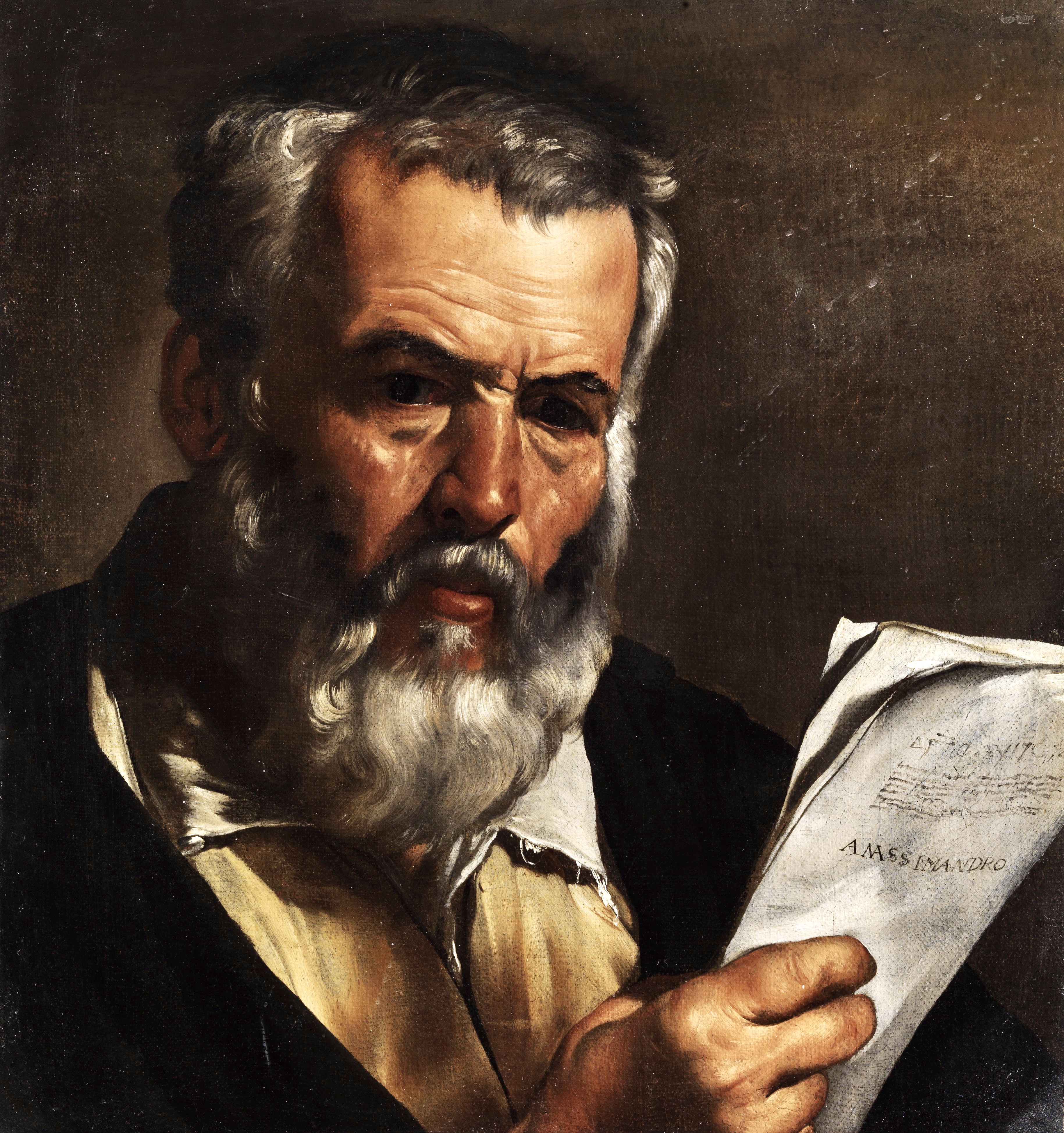


Plato: The Philosopher Who Shaped Western Thought
Plato, a towering figure in the annals of philosophy, remains a foundational influence on Western thought. His writings, primarily in the form of dialogues, have left a lasting impression on a multitude of disciplines, including ethics, metaphysics, epistemology, and politics. Born circa 427 BCE in Athens, Plato was a student of Socrates and later became the teacher of Aristotle, forming a pivotal triad in the progression of ancient Greek philosophy.
The Life and Times of Plato
Plato was born into an aristocratic Athenian family during a time of political turmoil and transition. His early life was marked by the Peloponnesian War, a protracted conflict between Athens and Sparta, and the socio-political upheaval that followed Athens' defeat. This complex backdrop deeply influenced Plato's thought processes, as he grappled with questions concerning justice, governance, and human virtue.
As a young man, Plato was greatly influenced by his mentor Socrates, who championed the pursuit of knowledge and truth. Socrates' method of elenchus, or questioning, formed the backbone of the Socratic dialogues attributed to Plato. The execution of Socrates in 399 BCE, a result of his controversial ideas and method of engaging the youth, profoundly affected Plato, pushing him to flee Athens and embark on a period of travel and study.
Plato's Philosophical Contributions
Plato's philosophy is notable for its depth and breadth, encompassing overarching themes that pervade his dialogues. One of his most significant contributions is the Theory of Forms, or Ideas, which posits that beyond the physical world lies a realm of immutable and eternal forms that represent the true essence of all things. According to Plato, the forms are the only objects of genuine knowledge, while the material world is characterized by mere opinion.
This theory laid the groundwork for discussions on the nature of reality and knowledge. Plato's famed Allegory of the Cave, presented in "The Republic," illustrates his metaphysical vision. It depicts prisoners in a cave who perceive reality only through the shadows cast on the wall from objects they cannot see. The allegory underscores Plato's belief that philosophers, through reason and intellectual training, can perceive the true forms and lead others to higher understanding.
Plato's Political Philosophy
In addition to metaphysics and epistemology, Plato made significant contributions to political theory. In "The Republic," he outlines his vision of an ideal society ruled by philosopher-kings—individuals who possess both the wisdom to govern justly and the moral compass to prioritize the common good above personal interests. Plato was critical of democracy, which he believed to be flawed due to the ease with which unqualified individuals could ascend to power.
Plato's political philosophy is further demonstrated in works such as "The Laws" and "The Statesman." Though less comprehensive than "The Republic," these dialogues continue to explore his ideas on governance, law, and the role of education in cultivating virtue among citizens. Plato emphasized the importance of a structured and hierarchical society where the well-being of the whole supersedes individual desires.
Plato's Legacy and Influence
Plato's impact on Western philosophy and the broader intellectual tradition is immeasurable. His establishment of the Academy in Athens, one of the earliest known institutions of higher learning, marked a significant development in the history of education. The Academy not only disseminated Plato's teachings but also nurtured future philosophers, including his most renowned pupil, Aristotle.
Plato's works, ranging from ethics to metaphysics, continue to be scrutinized and debated by scholars and thinkers. His dialogues explore concepts such as beauty, justice, and love, often in the form of conversations featuring Socrates. By employing dialogue rather than treatise, Plato invites readers into a participatory exploration of ideas, encouraging them to engage with and question their own beliefs.
In modern times, Plato's influence extends beyond philosophy to disciplines such as political science, psychology, and literature. His conceptualization of ideal forms and his reflections on the human condition resonate through time, inspiring contemporary discourse and debate.
Plato's Dialogues: A Literary and Philosophical Legacy
One of the most distinctive features of Plato's work is his use of dialogues to express philosophical ideas. This format, largely unprecedented in his time, imbues his writings with a dynamic quality, as they depict lively exchanges between Socrates and various interlocutors. By choosing dialogue as his vehicle, Plato not only pays homage to the Socratic method but also enables readers to witness the unfolding of philosophical inquiry in a vivid, almost theatrical setting.
Key dialogues such as "The Republic," "Phaedrus," "Symposium," and "Timaeus" showcase Plato's philosophical rigor and literary artistry. In "The Republic," for instance, Plato uses the dialogue to explore justice and the nature of a just society, while in "Symposium," he delves into the concept of love through a series of speeches, each providing a different perspective on its nature and purpose. Through these conversations, Plato subtly guides the reader toward deeper understanding, demonstrating that philosophy is not just a solitary pursuit, but a communal and continuous quest for wisdom.
Plato and the Theory of Knowledge
Central to Plato's philosophy is his theory of knowledge, intimately tied to his Theory of Forms. Plato asserts that true knowledge is not derived from the physical world but from an intellectual understanding of the forms, which transcend sensory experience. This perspective is vividly illustrated in his dialogue "Meno," where he explores whether virtue can be taught and introduces the concept of anamnesis, or recollection.
In "Meno," Plato suggests that the human soul, being immortal, has already encountered the forms in a previous, pre-bodily existence. Thus, learning is an act of recollecting these eternal truths rather than acquiring new information. This notion elevates the role of the philosopher as a midwife of knowledge, aiding others in recollection through dialectical reasoning.
The epistemological inquiries in Plato's dialogues have had lasting implications in the realm of philosophy, laying the groundwork for subsequent debates on the nature and limits of human knowledge. His distinction between opinion and knowledge continues to inform modern discussions in epistemology, prompting questions about how we perceive reality and the methods through which we ascertain truth.
Plato's Ethical Philosophy
Ethics is a core component of Plato's thought, interwoven with his political and epistemological ideas. In dialogues such as "Gorgias" and "Crito," Plato examines moral philosophy and the virtues essential to a well-lived life. For Plato, the cultivation of virtue is paramount, intertwined with the pursuit of the good life and reflective of a harmonious soul.
In "Gorgias," Plato critiques the sophists—who prioritized rhetoric and persuasion over truth and morality—highlighting the tension between appearance and reality. He argues that genuine happiness arises from moral virtue and the alignment of one's life with the forms of truth and justice, rather than from external success or pleasure.
Plato extends his ethical reflections into political philosophy, positing a model of the ideal state rooted in virtue and rational governance. By envisioning a society led by philosopher-kings, Plato merges ethics with politics, advocating for leaders who exemplify justice and wisdom. This alignment foregrounds the belief that individual virtue and societal well-being are interconnected, each drawing strength from the other.
Plato's Enduring Influence on Education
Plato's thoughts on education are profound, woven throughout his philosophical narratives. He envisions education as an essential pathway to achieving personal and societal excellence. In his Academy, Plato intended to cultivate reason and intellectual virtue, asserting that true knowledge and understanding lead to just actions.
His emphasis on education as a lifelong endeavor marks a significant contribution to educational philosophy. Through the Allegory of the Cave, Plato symbolizes the journey from ignorance to enlightenment, emphasizing the transformative power of education. He believed that only through proper education could individuals achieve a comprehensive understanding of the forms, ultimately fostering a just society.
Plato's educational concepts have cast a long shadow over Western thought, influencing models of education that prioritize critical thinking, inquiry, and the development of moral character. His idea that education should nurture the soul and intellect, rather than merely imparting factual knowledge, remains a cornerstone of contemporary educational philosophy.
By infusing his dialogues with rich discussions on these subjects, Plato continues to inspire debates and explorations across a range of disciplines. His legacy, one of an insatiable quest for wisdom, justice, and the ideal society, endures as a guiding light in the ongoing dialogue about the human condition and the world we inhabit.
Platonic Love: An Exploration of Ideal Connections
In examining Plato's influence, one cannot overlook his exploration of love, particularly as articulated in the dialogue "Symposium." Here, Plato presents diverse viewpoints on the nature of love, culminating in Socrates' recounting of Diotima's Ladder of Love—a philosophical ascent from physical attraction to the contemplation of divine beauty itself. This progression underscores Plato’s belief in love as a form of motivation leading the soul toward higher realms of understanding and virtue.
The concept of "Platonic love," as it is known today, stems from this dialogue and signifies a deep, spiritual connection detached from physical desire. Plato challenges conventional notions of love by suggesting that the truest form of this emotion transcends the corporeal to become an intellectual and spiritual quest for truth. This idea has had a lasting impact, shaping cultural and philosophical interpretations of love and friendship across centuries.
Plato's Mythological and Intellectual Legacy
In addition to articulating systematic philosophical ideas, Plato also wove mythological narratives into his dialogues to elucidate complex concepts. Stories such as the Myth of Er, the Allegory of the Cave, and the myth of Atlantis serve both as pedagogical tools and as devices to explore metaphysical issues. The Myth of Er, found in "The Republic," addresses themes of justice and the afterlife, positing a moral structure that extends beyond human existence.
Plato's use of myth reflects a dual approach to philosophy—while grounded in rational inquiry, he also recognized the power of narrative to capture the imagination and convey deeper truths. His blend of reason and myth continues to resonate, offering a template for integrating storytelling into philosophical discourse.
Furthermore, Plato's dialogues laid the groundwork for philosophical schools of thought that followed. Neoplatonism, for instance, emerged as a prominent philosophical system in the third century CE, deeply influenced by Platonic metaphysics. This school further expanded on concepts such as the One, the Good, and the relationship between the material and ideal realms, leaving a profound mark on Christian theology and medieval philosophy.
Challenges and Critiques of Plato's Philosophy
While Plato's contributions to philosophy are indispensable, his ideas have also faced criticism and debate over the centuries. His Theory of Forms, for instance, has been scrutinized for its abstract nature and lack of empirical underpinning. Critics argue that the theory does not adequately account for the complexity and variability of the physical world.
Moreover, Plato's denouncement of democracy, as depicted in "The Republic," has been contentious, sparking extensive discussion among political scholars. His idealized vision of philosopher-kings and a structured hierarchy contrasts sharply with contemporary democratic ideals, which emphasize individual agency and equality.
Plato's perspectives on gender have also been debated. Although he proposed that women could serve as philosopher-rulers in his ideal society, he still adhered to certain conventional views on gender roles in other dialogues, prompting ongoing analysis and interpretation.
Despite these challenges, the continued examination and critique of Plato's ideas testify to their enduring relevance. His willingness to engage with complex questions and propose radical solutions continues to inspire philosophical inquiry and debate.
The Enduring Relevance of Plato
Today, Plato's philosophical inquiries remain integral to understanding not only classical thought but also modern intellectual traditions. His works provide a foundation for exploring ethical dilemmas, political systems, and metaphysical concepts in contemporary contexts. As modern societies grapple with issues of truth, justice, and governance, Plato's insights offer valuable perspectives for reflection and analysis.
Educational institutions worldwide continue to engage with Plato’s dialogues, recognizing their role in honing analytical and critical thinking skills. His emphasis on dialectical reasoning and the pursuit of knowledge aligns with current pedagogical approaches that prioritize dialogue and inquiry.
In the broader cultural sphere, Plato’s ideas permeate literature, art, and popular discourse, illustrating the timeless nature of his philosophical questions. His exploration of the human condition invites individuals to examine their own lives and societies, fostering a deeper understanding of what it means to seek truth and live virtuously.
In conclusion, Plato’s contribution to philosophy transcends his historical context, leaving an indelible mark on the development of Western thought. His dialogues encourage us to question, explore, and reflect, guiding us in our pursuit of wisdom and understanding in an ever-complex world. Through the ages, Plato endures not merely as a philosopher but as an essential interlocutor in the ongoing conversation about humanity and its place in the cosmos.
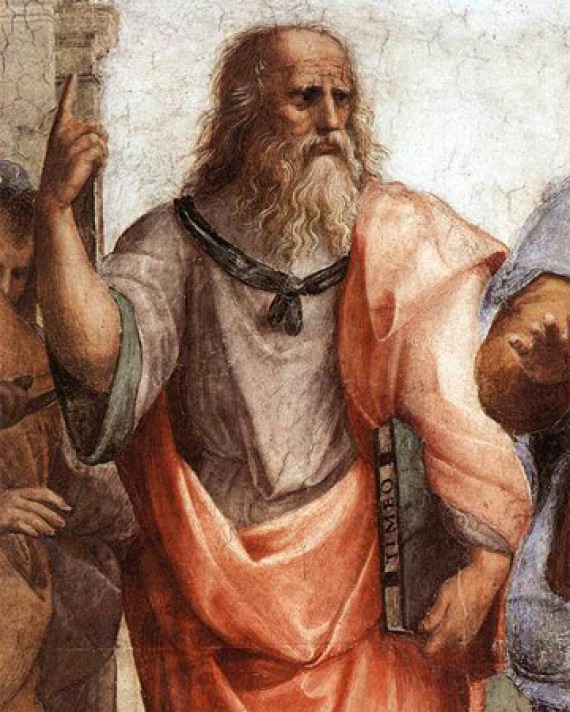
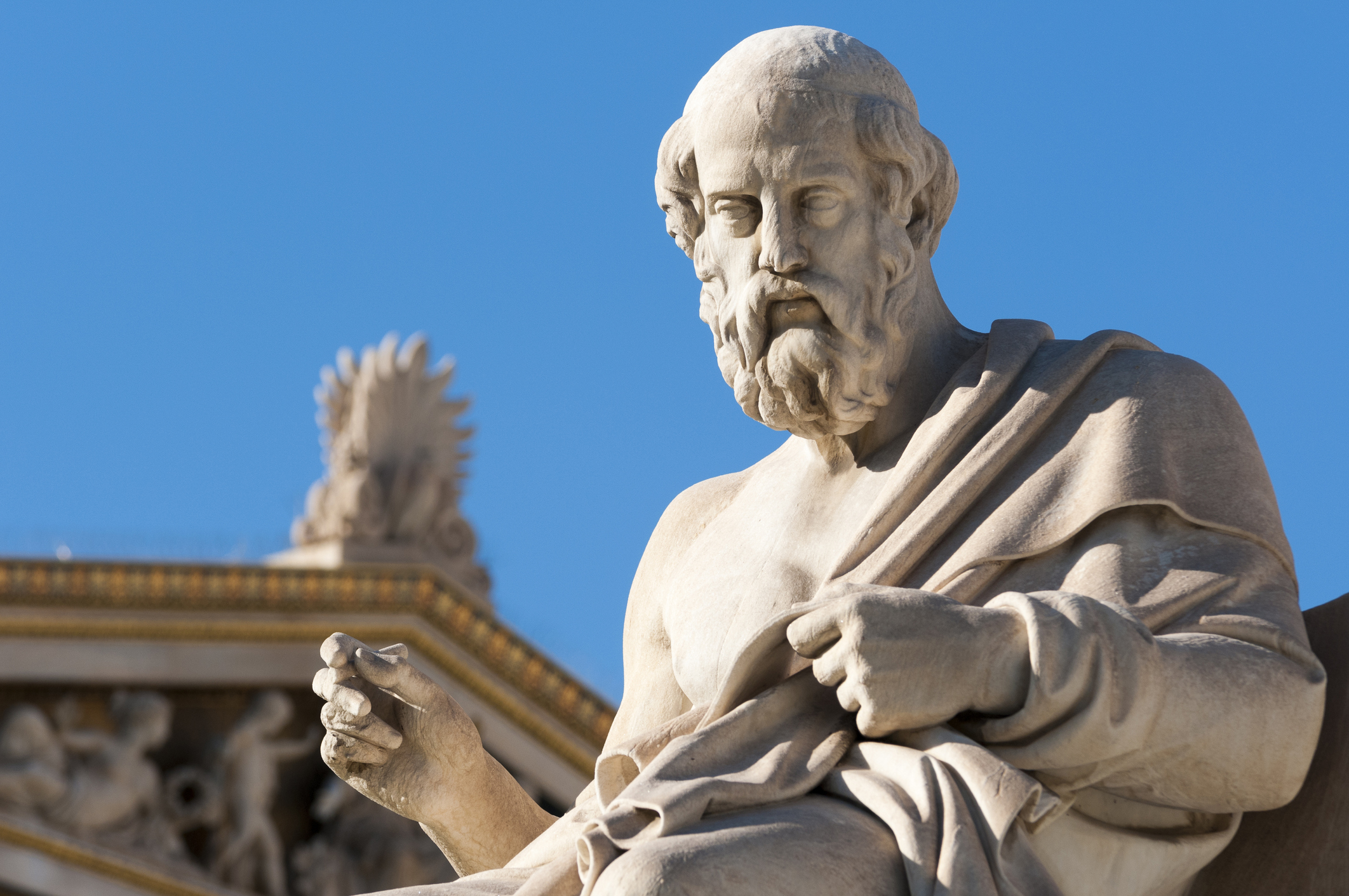
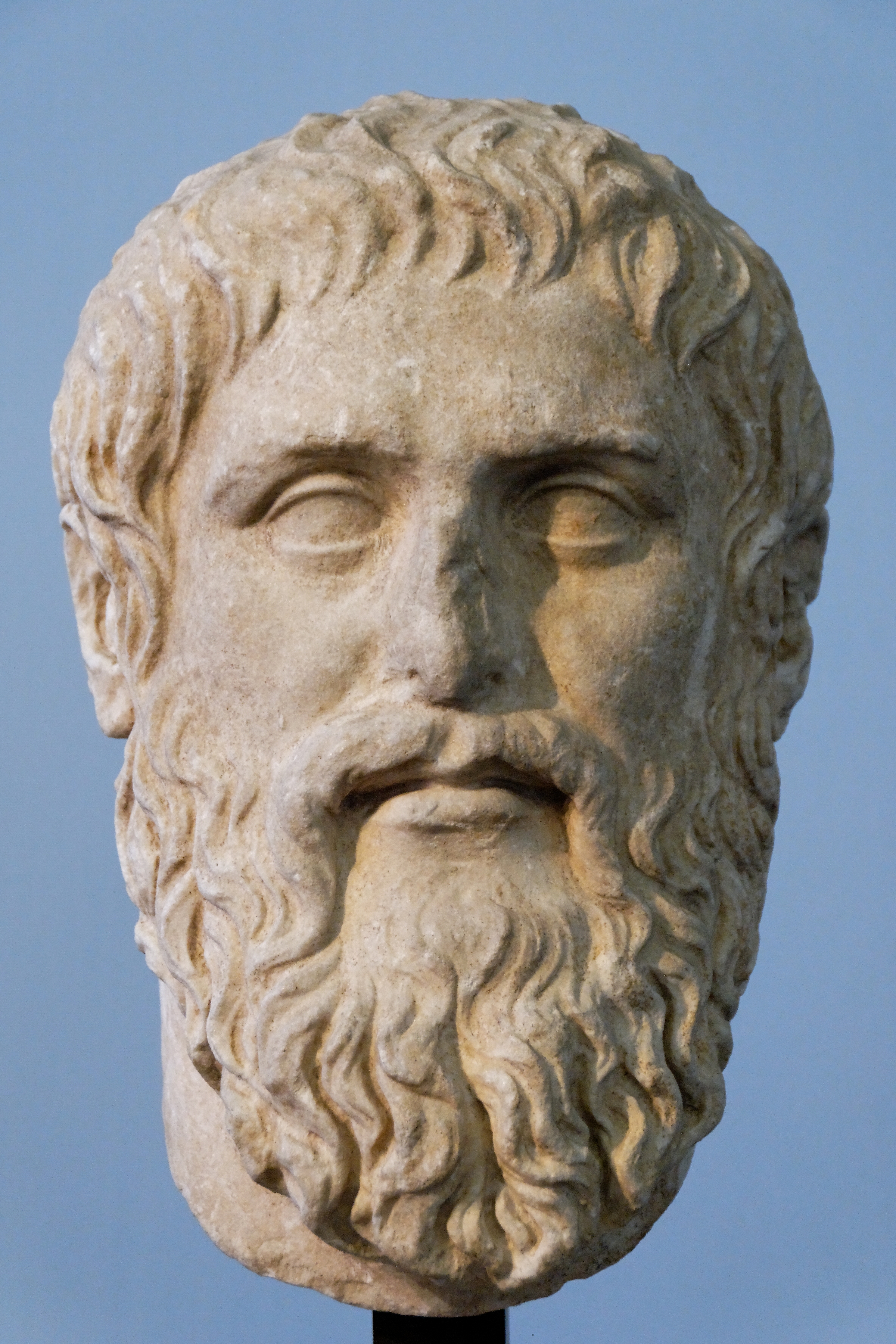
Immanuel Kant: Pioneer of Cosmology and Quantum Theories
Immanuel Kant, a towering figure in philosophy, made foundational contributions to cosmology that continue to influence modern astronomy and theoretical physics. While his work predates quantum theory, his insights into the nature of the universe, space, and time remain profoundly relevant. This article explores Kant's groundbreaking ideas, from the nebular hypothesis to his cosmological antinomies, and their enduring impact on science and philosophy.
Early Life and Intellectual Foundations
Born in 1724 in Königsberg, Prussia, Immanuel Kant grew up in a modest household. His early education was steeped in classical philosophy and the natural sciences, setting the stage for his later contributions. Kant's intellectual journey began with a deep immersion in the works of Newton and Leibniz, whose ideas would profoundly shape his cosmological theories.
Influences and Education
Kant's academic pursuits at the University of Königsberg exposed him to a broad range of disciplines, including physics, mathematics, and metaphysics. His early works reflect a synthesis of Newtonian mechanics and Leibnizian metaphysics, which he would later critique and expand upon in his own philosophical system.
The Pre-Critical Period
During his pre-critical period (1747–1770), Kant focused on natural philosophy, laying the groundwork for his cosmological theories. His 1755 work, Universal Natural History and Theory of the Heavens, introduced the nebular hypothesis, a revolutionary idea that proposed the Solar System formed from a rotating cloud of gas and dust.
The Nebular Hypothesis: A Revolutionary Idea
Kant's nebular hypothesis was a bold departure from the prevailing static view of the universe. He suggested that the Solar System originated from a primordial nebula, a vast cloud of gas and dust that collapsed under its own gravity. This theory not only explained the formation of planets but also anticipated the existence of other galaxies.
Key Propositions of the Nebular Hypothesis
- The Solar System formed from a rotating nebular cloud.
- The Milky Way is a disk of stars, with distant "nebulae" as separate galaxies.
- The universe is dynamic, with celestial bodies undergoing continuous change.
Modern Validation
Kant's nebular hypothesis has been largely validated by modern astronomy. Observations from the Herschel Space Observatory and the Gaia mission have confirmed the Milky Way's structure as a rotating disk of stars. Additionally, the discovery of exoplanets and their formation processes aligns closely with Kant's predictions.
Cosmological Antinomies: Exploring the Limits of Reason
In his 1781 masterpiece, Critique of Pure Reason, Kant introduced the concept of cosmological antinomies. These are contradictions that arise when reason attempts to comprehend the totality of the universe. Kant identified four key antinomies, each presenting a thesis and an antithesis that seem equally plausible yet mutually exclusive.
The Four Cosmological Antinomies
- Thesis: The world has a beginning in time and is limited in space. Antithesis: The world is infinite in both time and space.
- Thesis: Every composite substance in the world is made up of simple parts. Antithesis: No composite thing in the world is made up of simple parts.
- Thesis: There are causes through freedom in the world. Antithesis: There is no freedom; everything is determined by natural laws.
- Thesis: There is a necessary being that is either part of the world or its cause. Antithesis: There is no necessary being, and everything is contingent.
Resolving the Antinomies
Kant resolved these antinomies through his theory of transcendental idealism. He argued that space and time are not properties of the universe itself but are instead forms of human intuition. This perspective allows for empirical knowledge of the world while acknowledging the limits of human reason in comprehending the universe's totality.
Early Cosmological Innovations
Beyond the nebular hypothesis and cosmological antinomies, Kant made several other innovative contributions to cosmology. His early works explored the relationship between spacetime and momentum-energy, suggesting that matter could be understood as energy bubbles—a concept that echoes modern superstring theory.
Spacetime and Momentum-Energy
In his 1747 work, Kant linked spacetime to momentum-energy reciprocity, a idea that foreshadowed later developments in theoretical physics. This connection between space, time, and energy laid the groundwork for more complex theories of the universe's structure and dynamics.
Matter as Energy Bubbles
Kant's suggestion that matter could be understood as energy bubbles is particularly intriguing. This concept resonates with modern theories of quantum fields and superstring theory, where fundamental particles are seen as vibrations in higher-dimensional spaces.
Conclusion of Part 1
Immanuel Kant's contributions to cosmology and theoretical physics are both profound and far-reaching. From his revolutionary nebular hypothesis to his exploration of cosmological antinomies, Kant's ideas have shaped our understanding of the universe. In the next part of this article, we will delve deeper into Kant's later works and their impact on modern science and philosophy.
Kant’s Critical Period: Transcendental Idealism and Cosmology
Kant’s critical period, marked by the publication of the Critique of Pure Reason in 1781, represented a profound shift in his philosophical approach. During this time, he developed transcendental idealism, a framework that redefined the boundaries of human knowledge and reshaped cosmological thought. This section explores how Kant’s critical philosophy influenced his views on the universe and its limits.
The Limits of Rational Cosmology
In the Critique of Pure Reason, Kant critiqued traditional rational cosmology, arguing that human reason is inherently limited when attempting to grasp the totality of the universe. He demonstrated that certain questions—such as whether the world has a beginning or is infinite—lead to antinomies, or irreconcilable contradictions. These antinomies arise because human reason seeks absolute knowledge, yet our cognitive faculties are constrained by the structures of space and time.
Kant’s solution was to distinguish between phenomena (the world as we experience it) and noumena (the world as it is in itself). This distinction allowed him to argue that while we can gain empirical knowledge of the universe, we cannot achieve determinate knowledge of its ultimate nature.
Transcendental Idealism and the Universe
Central to Kant’s critical philosophy is the idea that space and time are not objective realities but rather forms of human intuition. This means that our perception of the universe is shaped by the way our minds structure experience. Kant’s transcendental idealism thus places limits on what we can know about the cosmos while still allowing for scientific inquiry.
This perspective had a profound impact on cosmology, as it shifted the focus from speculative metaphysics to empirical observation. Kant’s approach paved the way for modern scientific cosmology, which relies on observational data rather than purely theoretical speculation.
Late Works: The Opus Postumum and Cosmic Synthesis
In his later years, Kant worked on the Opus Postumum, an unfinished manuscript that sought to unify his philosophical system. This work represents Kant’s attempt to bridge the gap between physics, metaphysics, aesthetics, and ethics, offering a holistic view of the universe. Though incomplete, the Opus Postumum provides valuable insights into Kant’s evolving cosmological thought.
The Transition Principle
One of the key concepts in the Opus Postumum is the idea of a transition principle, which Kant envisioned as a way to connect the physical world with metaphysical realities. This principle was intended to resolve the dualism between phenomena and noumena, offering a more integrated understanding of the universe.
Kant’s exploration of this principle reflects his desire to create a cosmotheoros, or a comprehensive theory of the cosmos that synthesizes all aspects of human knowledge. While the Opus Postumum remains fragmentary, it underscores Kant’s commitment to a unified vision of reality.
Holism and the Cosmic Order
In his late works, Kant also emphasized the holistic nature of the universe. He argued that the cosmos is not merely a collection of isolated objects but a dynamic, interconnected system. This holistic perspective anticipated modern theories of cosmic evolution and systems theory, which view the universe as a complex, evolving entity.
Kant’s holism extended to his views on biospherical dynamics, where he explored the relationship between living organisms and their environment. His ideas in this area foreshadowed later developments in ecology and environmental science.
Kant’s Influence on Modern Cosmology and Quantum Theory
Although Kant predates the development of quantum theory by over a century, his ideas have been reinterpreted in light of modern physics. Scholars have drawn parallels between Kant’s cosmological concepts and contemporary theories, highlighting his enduring relevance in scientific discourse.
Functional Cosmology and Modern Astronomy
Recent scholarship has revisited Kant’s functional cosmology, which emphasizes the dynamic and evolutionary nature of the universe. This approach aligns with modern observational cosmology, which relies on empirical data to understand the universe’s structure and history.
Key aspects of Kant’s functional cosmology include:
- The idea that the universe is not static but undergoes continuous change.
- The role of natural laws in governing cosmic phenomena.
- The importance of empirical observation in validating cosmological theories.
These principles resonate with contemporary cosmological models, such as the Big Bang theory and the study of dark matter and dark energy.
Analogies to Quantum Theory
While Kant did not directly contribute to quantum theory, some of his ideas have been compared to modern quantum concepts. For example, his suggestion that matter could be understood as energy bubbles has been linked to theories of quantum fields and superstring theory.
Additionally, Kant’s exploration of the limits of human knowledge parallels the uncertainties inherent in quantum mechanics, where the observer’s role affects the observed phenomena. This connection underscores Kant’s foresight in recognizing the boundaries of human understanding.
Philosophical and Scientific Legacy
Kant’s contributions to cosmology and philosophy have left a lasting legacy, influencing both scientific thought and philosophical inquiry. His ideas have shaped the way we understand the universe, from its origins to its fundamental structure.
Impact on Astronomy
Kant’s nebular hypothesis was a groundbreaking theory that transformed astronomy. By proposing that the Solar System formed from a rotating nebula, Kant challenged the static view of the universe and paved the way for modern theories of planetary formation. His ideas were later expanded by Pierre-Simon Laplace, whose own nebular model became widely accepted in the 19th century.
Today, Kant’s hypothesis is supported by observational evidence from telescopes and space missions. The discovery of exoplanets and the study of protoplanetary disks have confirmed many of his predictions, solidifying his place as a pioneer in cosmology.
Influence on Philosophy
Kant’s philosophical contributions extend beyond cosmology, influencing fields such as epistemology, ethics, and metaphysics. His theory of transcendental idealism reshaped the way philosophers approach questions of knowledge and reality, while his Categorical Imperative remains a cornerstone of moral philosophy.
In cosmology, Kant’s emphasis on the limits of human reason has encouraged a more humble and empirical approach to understanding the universe. His ideas continue to inspire philosophers and scientists alike, fostering a dialogue between speculative thought and empirical inquiry.
Critiques and Controversies
Despite his profound influence, Kant’s cosmological theories have not been without criticism. Some scholars have challenged his views on space, time, and the nature of the universe, arguing that his ideas are overly abstract or speculative. This section explores some of the key critiques and controversies surrounding Kant’s cosmology.
Rejection of Cosmological Proofs
One of the most notable critiques of Kant’s cosmology is his rejection of cosmological proofs for the existence of God. In the Critique of Pure Reason, Kant argued that such proofs rely on flawed ontological arguments, which assume that existence is a predicate of being. This rejection has sparked debate among philosophers and theologians, with some viewing it as a limitation of Kant’s system.
However, Kant’s critique has also been praised for its rigor and clarity, as it highlights the dangers of speculative metaphysics. By emphasizing the limits of human reason, Kant encouraged a more cautious and empirical approach to cosmological questions.
Challenges to Transcendental Idealism
Kant’s theory of transcendental idealism has also faced criticism, particularly from those who argue that it leads to a form of solipsism or subjective idealism. Critics contend that by treating space and time as mere forms of intuition, Kant undermines the objective reality of the external world.
In response, defenders of Kant’s philosophy argue that transcendental idealism does not deny the existence of an external world but rather seeks to explain how we perceive and understand it. This debate continues to shape discussions in metaphysics and the philosophy of science.
Conclusion of Part 2
Immanuel Kant’s contributions to cosmology and philosophy are both vast and enduring. From his revolutionary nebular hypothesis to his exploration of cosmological antinomies, Kant’s ideas have shaped our understanding of the universe and the limits of human knowledge. In the final part of this article, we will examine Kant’s lasting impact on modern science and philosophy, as well as the ongoing debates surrounding his cosmological theories.
Kant’s Enduring Impact on Modern Science
Immanuel Kant’s influence extends far beyond his own era, shaping the trajectory of modern cosmology, astronomy, and theoretical physics. His ideas laid the groundwork for many scientific advancements, from the understanding of galactic structures to the philosophical underpinnings of quantum mechanics. This section explores how Kant’s theories continue to resonate in contemporary scientific thought.
From Nebular Hypothesis to Modern Astronomy
Kant’s nebular hypothesis, proposed in 1755, was a radical departure from the static models of the universe prevalent at the time. His theory that the Solar System formed from a rotating cloud of gas and dust was later expanded by Pierre-Simon Laplace and has since been validated by modern astronomical observations.
Today, telescopes like the Hubble Space Telescope and the James Webb Space Telescope have provided stunning images of nebulae and protoplanetary disks, confirming Kant’s vision of a dynamic, evolving universe. The discovery of exoplanets—planets orbiting stars outside our Solar System—further supports his hypothesis, as many of these systems exhibit the same formation processes Kant described.
Kant and the Concept of Multiple Galaxies
One of Kant’s most prescient ideas was his suggestion that the Milky Way is just one of many galaxies in the universe. In Universal Natural History and Theory of the Heavens, he proposed that distant "nebulae" observed in the night sky were actually separate island universes, a concept that was not widely accepted until the 20th century.
The confirmation of this idea came in 1924 when Edwin Hubble demonstrated that the Andromeda Nebula was indeed a separate galaxy. This discovery revolutionized astronomy and solidified Kant’s reputation as a visionary thinker. Today, we know that the universe contains over 100 billion galaxies, each with billions of stars, a testament to Kant’s foresight.
Kant’s Philosophical Legacy in Quantum Theory
While Kant predates the development of quantum theory, his philosophical insights have been reinterpreted in light of modern physics. His exploration of the limits of human knowledge and the nature of reality provides a useful framework for understanding the uncertainties and paradoxes inherent in quantum mechanics.
The Observer Effect and Transcendental Idealism
One of the most intriguing connections between Kant’s philosophy and quantum theory is the concept of the observer effect. In quantum mechanics, the act of observation can influence the behavior of particles, a phenomenon that challenges classical notions of objectivity.
Kant’s transcendental idealism, which posits that our perception of reality is shaped by the structures of human cognition, offers a philosophical parallel to this idea. Just as quantum mechanics suggests that observation affects reality, Kant argued that our understanding of the universe is mediated by the forms of space and time.
Energy Bubbles and Modern Particle Physics
Kant’s suggestion that matter could be understood as energy bubbles has drawn comparisons to modern theories of particle physics. In his 1756 work, he speculated that fundamental particles might be dynamic entities rather than static objects, an idea that resonates with contemporary models of quantum fields and superstring theory.
While Kant’s concept of energy bubbles is not a direct precursor to these theories, it reflects his intuitive grasp of the dynamic nature of matter. Today, physicists study quantum fluctuations and virtual particles, which emerge and disappear in the fabric of spacetime, echoing Kant’s early insights.
Kant’s Influence on Contemporary Cosmological Debates
Kant’s cosmological theories continue to inform contemporary debates in philosophy and science. His ideas about the nature of the universe, the limits of human knowledge, and the interplay between observation and reality remain relevant in discussions about the origins and structure of the cosmos.
The Role of Antinomies in Modern Cosmology
Kant’s cosmological antinomies highlight the inherent contradictions that arise when human reason attempts to comprehend the totality of the universe. These antinomies remain pertinent in modern cosmology, where questions about the beginning of time, the infinite nature of space, and the ultimate fate of the universe continue to challenge scientists and philosophers.
For example, the debate between the Big Bang theory and alternative models of the universe’s origin reflects Kant’s first antinomy: whether the world has a beginning or is infinite. While the Big Bang theory provides a framework for understanding the universe’s early moments, it also raises questions about what, if anything, preceded it—a question that Kant would argue lies beyond the limits of human reason.
Functional Cosmology and Observational Data
Kant’s emphasis on functional cosmology, which prioritizes empirical observation and natural laws, aligns with the methodologies of modern astronomy. Today, cosmologists rely on data from telescopes, satellites, and particle accelerators to test theories about the universe’s structure and evolution.
This empirical approach has led to groundbreaking discoveries, such as the accelerating expansion of the universe and the existence of dark matter and dark energy. Kant’s insistence on the importance of observation over pure speculation has thus become a cornerstone of contemporary cosmological research.
Kant’s Critique of Metaphysical Speculation
Throughout his career, Kant was a vocal critic of metaphysical speculation, arguing that many traditional philosophical questions—such as the existence of God or the nature of the soul—lie beyond the reach of human reason. His critique has had a lasting impact on both philosophy and science, encouraging a more rigorous and empirical approach to understanding the universe.
Rejection of the Cosmological Argument
One of Kant’s most significant critiques was his rejection of the cosmological argument for the existence of God. In the Critique of Pure Reason, he argued that such arguments rely on flawed assumptions about the nature of causality and existence. This critique has influenced both theological and philosophical debates, prompting a reevaluation of traditional proofs for the divine.
Kant’s position has been both praised and criticized. Supporters argue that his critique exposes the limitations of human reasoning, while detractors contend that it undermines the possibility of metaphysical knowledge. Regardless, Kant’s challenge to the cosmological argument remains a pivotal moment in the history of philosophy.
The Limits of Human Knowledge
Kant’s exploration of the limits of human knowledge has had a profound impact on epistemology, the branch of philosophy concerned with the nature and scope of knowledge. By arguing that certain questions—such as the ultimate nature of reality—are unanswerable, Kant encouraged a more humble and cautious approach to philosophical inquiry.
This perspective has influenced modern discussions about the boundaries of science, particularly in fields like quantum mechanics and cosmology, where the nature of reality itself is often called into question. Kant’s insistence on recognizing these limits has fostered a more nuanced and reflective approach to scientific and philosophical exploration.
Conclusion: Kant’s Lasting Legacy in Cosmology and Philosophy
Immanuel Kant’s contributions to cosmology, philosophy, and theoretical physics are both profound and far-reaching. From his revolutionary nebular hypothesis to his exploration of cosmological antinomies, Kant’s ideas have shaped our understanding of the universe and the limits of human knowledge. His emphasis on empirical observation, his critique of metaphysical speculation, and his insights into the dynamic nature of reality continue to influence contemporary science and philosophy.
Key Takeaways from Kant’s Cosmology
- The nebular hypothesis laid the foundation for modern theories of planetary and galactic formation.
- Cosmological antinomies highlight the inherent contradictions in human reasoning about the universe’s totality.
- Transcendental idealism reshaped our understanding of space, time, and the limits of human knowledge.
- Functional cosmology emphasized the importance of empirical data in understanding the universe.
- Critiques of metaphysical speculation encouraged a more rigorous and cautious approach to philosophical inquiry.
The Future of Kantian Cosmology
As science and philosophy continue to evolve, Kant’s ideas remain a vital part of the conversation. His insights into the nature of the universe, the role of observation, and the limits of human reason provide a valuable framework for addressing the complex questions that arise in modern cosmology and quantum theory.
Whether through the study of dark matter, the exploration of quantum fields, or the philosophical debates about the nature of reality, Kant’s legacy endures. His work reminds us that while the universe may be vast and mysterious, our pursuit of knowledge—grounded in both empirical observation and philosophical reflection—remains one of humanity’s greatest endeavors.
In the words of Kant himself,
"Two things fill the mind with ever new and increasing admiration and awe: the starry heavens above me and the moral law within me."This sentiment captures the essence of his cosmological vision—a vision that continues to inspire and challenge us as we seek to understand our place in the cosmos.
Philolaus: Pioneer of Pre-Socratic Philosophy and Astronomy
Philolaus was a revolutionary figure in ancient Greek thought. He stands as a critical link between the mystical teachings of Pythagoras and the rational cosmology of later philosophers. As the first known Pythagorean to write down the sect's doctrines, his work On Nature provides a rare and precious window into early scientific inquiry.
This article explores the life, ideas, and enduring legacy of this pre-Socratic pioneer. We will delve into his groundbreaking astronomical model and his profound belief that numbers were the key to understanding the universe's harmony.
The Life and Times of Philolaus of Croton
Philolaus was born around 470 BCE in Croton, a Greek colony in southern Italy known as Magna Graecia. This city was the epicenter of the Pythagorean school, founded by Pythagoras himself. Philolaus belonged to the second generation of Pythagoreans, inheriting a blend of religious, mathematical, and philosophical teachings.
Historical records indicate he was forced to flee Croton due to political unrest around 450 BCE. He found refuge in mainland Greece, possibly in Thebes or Thessaly, where he taught and wrote. His journey reflects the turbulent era of pre-Socratic philosophy, where new ideas often clashed with traditional beliefs.
Historical Context and Philosophical Landscape
The pre-Socratic period was marked by a decisive shift from mythological explanations to rational inquiry into nature (physis). Philosophers sought the fundamental principle (arche) underlying all reality. In this intellectual ferment, the Pythagorean school stood apart by proposing that numbers were this primary substance.
Philolaus operated within this framework but pushed it toward greater systematic clarity. He was influenced by the monist philosophy of Parmenides, which argued for a single, unchanging reality. Philolaus attempted to reconcile this with the Pythagorean belief in a harmonious, mathematically ordered cosmos.
Philolaus's Central Cosmological Revolution
The most staggering contribution of Philolaus was his non-geocentric cosmological model. He radically proposed that the Earth was not the center of the universe. This idea overturned centuries of anthropocentric thought and planted the seed for later astronomical revolutions.
The Central Fire and the Counter-Earth
At the heart of his system was a Central Fire, which he called the "Hearth of the Universe" (Hestia). This was not the visible Sun, but a divine, unseen furnace around which all celestial bodies revolved. According to Philolaus, a spherical Earth revolved around this fire once per day, explaining the diurnal cycle.
Even more astonishing was his postulation of a Counter-Earth (Antichthon). This was an invisible planet, also orbiting the Central Fire, positioned between it and the Earth. He likely introduced it for mathematical and philosophical symmetry, aiming to bring the count of orbiting bodies to the perfect number ten.
The Order of the Cosmos
In the Philolaic system, the celestial bodies orbited the Central Fire in the following order:
- The Central Fire (Hestia) - The unseen, divine center.
- Counter-Earth (Antichthon) - An invisible planet.
- Earth - Our home, revolving to create day and night.
- Moon - Illuminated by the Central Fire.
- Sun - A mirror-like body reflecting the Fire's light to the Earth.
- The Five Known Planets (Venus, Mercury, Mars, Jupiter, Saturn).
- The Fixed Stars - The outermost sphere.
This model, while incorrect by modern standards, was a monumental leap. It provided a mathematical framework for the heavens and explained phenomena like eclipses and lunar phases more systematically than before.
The Philosophical Foundations: Limiters and Unlimiteds
Beyond astronomy, Philolaus established a metaphysical foundation for existence. He argued that reality arose from the combination of two fundamental, opposing principles.
The Two Primary Principles
Philolaus posited that all things in the cosmos resulted from the union of Limiters (perainonta) and Unlimiteds (apeiron). The Unlimited represented the boundless, chaotic, and potential aspects of reality—like a raw, infinite continuum. The Limiter represented form, structure, and definition—what imposed shape and order on the Unlimited.
"Actually, everything that is known has a number. For it is impossible to grasp anything with the mind or to recognize it without this." - Fragment from Philolaus (DK 44B4)
The harmonious mixing of these principles produced the ordered world. This cosmic harmony was itself expressed through number, particularly through the sacred Tetractys (1+2+3+4=10), which held deep Pythagorean significance.
Recent Scholarly Validation
Modern scholarship continues to validate the importance of his work. A 2024 papyrological analysis published in Mnemosyne used advanced spectrometry to confirm the authenticity of a key fragment (DK 44B6). This technical study strengthens the credibility of his cosmological descriptions as preserved through ancient sources.
Furthermore, recent archaeological work adds context. 2024 excavations in Croton by the Italian Ministry of Culture uncovered a Pythagorean sanctuary with inscriptions. These findings, reported by ANSA, potentially connect to the intellectual environment where Philolaus developed his ideas.
Philolaus and the Soul: Immortality and Transmigration
Like all Pythagoreans, Philolaus believed in the immortality of the soul and its transmigration through different lives (metempsychosis). He viewed the soul as a harmonious, number-like entity that was temporarily joined to the body.
This harmony could be maintained or corrupted by one's ethical life. A virtuous existence preserved the soul's harmony, leading to a better subsequent incarnation. This ethical dimension intertwined his mathematical view of nature with a prescription for how to live, a hallmark of Pythagorean thought.
In the next part of this article, we will delve deeper into Philolaus's mathematical legacy, his influence on giants like Plato and Aristotle, and his surprising resonance with modern scientific thought.
The Mathematical Universe: Numbers as the Essence of Reality
The core of Philolaus's philosophy was the Pythagorean conviction that number is the essence and first principle of all things. He was not merely stating that the cosmos could be measured mathematically, but that it was literally constituted by number. For Philolaus, numbers and their relationships were the fundamental reality from which physical objects and harmony emerged.
This represented a profound abstraction in pre-Socratic thought. It moved the inquiry beyond physical elements like water or air to an immaterial, intellectual substrate. Understanding the universe, therefore, required understanding the mathematical ratios and harmonies that structured it.
The Theory of Musical and Cosmic Harmony
Philolaus is famed for applying numerical theory to music, seeing it as a direct manifestation of cosmic order. He studied the intervals of the musical scale—the octave, fifth, and fourth—and expressed them as simple whole-number ratios (2:1, 3:2, 4:3).
This discovery was monumental. It proved that a pleasing sensory experience (harmony) had an innate mathematical foundation. Philolaus then extrapolated this principle to the cosmos: the distances and movements of the celestial bodies were governed by similar harmonic ratios, creating a "music of the spheres."
- The Octave (2:1): The foundational interval, representing duality and unity.
- The Fifth (3:2): A primary consonant interval, crucial in scale construction.
- The Fourth (4:3): Completes the basic harmonic framework.
The Sacred Tetractys and the Decad
For Philolaus and the Pythagoreans, the number ten (the Decad) was the perfect number, symbolizing the completeness of the cosmos. This perfection was encapsulated in the Tetractys, a triangular figure of ten points arranged in four rows (1, 2, 3, 4).
"All things have number, and it is this which enables them to be known." - A Philolaic principle reflecting his ontological stance.
The sum of these rows (1+2+3+4=10) was sacred. Philolaus's cosmology, with its ten revolving bodies (Central Fire, Counter-Earth, Earth, Moon, Sun, five planets, and sphere of fixed stars), was a direct physical embodiment of this perfect number. His system was a geometric manifestation of divine mathematics.
Philolaus’s Direct Influence on Plato and Aristotle
The legacy of Philolaus is perhaps most vividly seen in his profound impact on the two giants of classical Greek philosophy: Plato and Aristotle. His writings provided a crucial bridge between early Pythagorean ideas and the fully developed systems of the Academy and the Lyceum.
Shaping Platonic Cosmology and Metaphysics
Scholars widely acknowledge that Plato was deeply influenced by Philolaus. According to ancient tradition, Plato purchased a copy of Philolaus's book for a high sum. This influence is palpable in Plato's later dialogue, the Timaeus, which presents a mathematical creation story for the cosmos.
The Timaean cosmology echoes Philolaic themes: a divine craftsman (Demiurge) imposes mathematical order on chaotic receptacle, using geometric shapes and harmonic ratios to structure the world soul and the orbits of the planets. The very notion that the world is a kosmos—an ordered, beautiful arrangement—stemming from number is a Philolaic-Pythagorean concept that Plato adopted and refined.
Recent academic debate, highlighted in a 2023 issue of Phronesis, grapples with whether Plato directly appropriated ideas from Philolaus. The modern consensus suggests not plagiarism, but a profound and transformative engagement with Philolaic texts, which provided the scientific framework Plato sought for his metaphysical visions.
Aristotle’s Critical Engagement
Aristotle, while often critical of Pythagorean number philosophy, engaged seriously with Philolaus's ideas. In his Metaphysics (Book I, 986a), Aristotle discusses Philolaus by name, summarizing his doctrine of the Limitless and the Limiting as the first principles.
This critical analysis by Aristotle ensured that Philolaus's theories were preserved and debated within the philosophical canon. Even in disagreement, Aristotle treated Philolaus as a serious philosophical predecessor, cementing his status as a key pre-Socratic figure. Aristotle’s detailed critiques provide invaluable, if filtered, testimony to the content and rigor of Philolaus's lost book.
Modern Rediscovery and Digital Reconstruction
The 21st century has witnessed a significant resurgence of interest in Philolaus of Croton, fueled by new technologies and interdisciplinary research. Scholars are now using digital tools to reconstruct and analyze his work with unprecedented precision.
AI and the Reconstruction of "On Nature"
One of the most exciting recent developments was presented at the 2025 international congress "Pythagoreanism Revisited" in Naples. Researchers demonstrated a digital reconstruction of Philolaus's treatise On Nature using AI algorithms.
This project cross-referenced the surviving fragments with later testimonia and philosophical texts to model probable connections and thematic structures. The preliminary findings suggest even more extensive influences on Platonic dialogues than previously assumed, particularly regarding the geometric underpinning of physical reality.
- Method: AI pattern analysis across ancient texts and philological databases.
- Goal: To create a probabilistic model of the original treatise's organization.
- Outcome: A dynamic, interactive 3D model of his cosmology (Euclid Project).
Archaeological Context from Croton
The material record is also coming to light. The 2024 excavations in ancient Croton, led by the Italian Ministry of Culture, uncovered artifacts directly tied to Pythagorean community life. While no artifact bears Philolaus's name, the context is illuminating.
Discoveries include a ritual space and inscriptions referencing mathematical and harmonic concepts. These findings provide the tangible, cultural backdrop against which Philolaus developed his theories. They move him from a purely textual figure to a thinker embedded in a vibrant, ritual and intellectual community with a distinct worldview.
Philolaus in Contemporary Scientific Discourse
Remarkably, the ideas of Philolaus find echoes in modern theoretical physics and cosmology. While the connections are analogical rather than direct, they highlight the enduring power of his core intuition: that the universe is fundamentally mathematical.
Resonances with Quantum Mechanics and String Theory
The Pythagorean idea that numbers and harmony are the "stuff" of reality has intriguing parallels with modern physics. In quantum mechanics, particles are described by wave functions—mathematical entities whose squaring gives probability. The fundamental laws are written in the language of mathematics.
Furthermore, the explosion of online content on platforms like TikTok and YouTube with hashtags like PythagoreanCosmology (garnering over 2 million views) often draws poetic connections to string theory. This theory posits that the fundamental constituents of reality are tiny, vibrating "strings," whose resonant frequencies determine particle properties—a concept reminiscent of the harmony of the spheres.
The Enduring Appeal of a Mathematical Cosmos
Pop culture documentaries, such as Netflix's 2024 series *Ancient Innovators*, have dubbed Philolaus a "father of the heliocentric model," acknowledging his role in dethroning the Earth from the cosmic center centuries before Copernicus. This framing, while simplified, speaks to his lasting image as a bold cosmological innovator.
The modern appeal lies in Philolaus's vision of a cosmos that is not chaotic or divinely capricious, but ordered, knowable, and beautiful. In an age of advanced particle accelerators and space telescopes, the search for a "Theory of Everything"—a single, elegant mathematical framework describing all forces—continues this ancient Philolaic and Pythagorean quest.
"The magnitude of Pythagorean influence on the birth of science is hard to overstate. Philolaus represents a critical point where mystical insight began its transformation into quantitative science." - Modern scholarly assessment.
In the final part of this article, we will assess the critical challenges in interpreting Philolaus, summarize his lasting legacy, and examine the enduring questions his philosophy raises about knowledge and the nature of the universe.
Critical Challenges and Interpretative Debates
Despite his significance, interpreting the philosophy of Philolaus of Croton presents distinct scholarly challenges. The fragmentary nature of the primary sources necessitates careful reconstruction and leaves room for ongoing academic debate about his true doctrines.
The Problem of Fragmentary Evidence
The single greatest hurdle is the scarcity of his original words. Philolaus survives only through approximately 32 fragments and testimonia compiled by later authors like Diogenes Laërtius, Stobaeus, and Proclus. These were collected in the standard reference work, Diels-Kranz's Die Fragmente der Vorsokratiker (listed as DK 44).
This means our understanding is filtered through the interests and biases of later compilers. Scholars like Carl Huffman, author of the seminal work Philolaus of Croton (Cambridge, 1993), dedicate careers to painstaking source criticism, separating Philolaus's own ideas from later Pythagorean or Platonic accretions. The 2024 papyrological analysis confirming fragment authenticity is a major boon to this effort.
Key Controversies in Philolaic Scholarship
Several aspects of his system remain hotly debated. The exact function and necessity of the Counter-Earth (Antichthon) is a prime example. Was it a purely mathematical construct to reach the perfect number ten, or did it have an intended explanatory role for eclipses? Similarly, the nature of the Central Fire—whether it was a physical or metaphysical entity—is a point of contention.
- Authenticity Debate: Some 19th-century scholars doubted any fragments were genuine, a view largely overturned by modern analysis.
- Cosmological Mechanics: How did Philolaus conceive of the bodies moving? Was there a void, and how did harmony govern motion?
- Influence vs. Originality: Determining which ideas were uniquely his versus developments of core Pythagoreanism.
These debates are not signs of weakness but indicators of a rich and complex thinker whose ideas were substantive enough to sustain centuries of analysis. Over 150+ scholarly publications between 2015 and 2025 attest to his enduring place in academic discourse.
The Enduring Legacy of a Pre-Socratic Pioneer
The legacy of Philolaus is woven into the very fabric of the Western intellectual tradition. He was not a mere footnote but a transitional architect, building a crucial bridge from mystical numerology to a form of mathematical natural science.
A Bridge Between Eras of Thought
Philolaus successfully systematized and committed to writing the previously oral and secretive doctrines of early Pythagoreanism. In doing so, he transformed them into a subject for philosophical discourse and critique. His work marks the point where Pythagorean thought entered the mainstream of Greek philosophy, becoming accessible to and engaged with by thinkers like Plato and Aristotle.
He moved the conversation forward by attempting to answer Parmenides' radical challenge regarding change and permanence. His pair of fundamental principles—Limiters and Unlimiteds—provided a dynamic, interactive model for how a unified, ordered cosmos could emerge from opposing forces, a model that respected both rational argument and empirical observation.
Proto-Scientific Influence on Later Astronomy
While his Central Fire model was eventually superseded, its philosophical impact was seismic. By removing Earth from the cosmic center, Philolaus shattered an anthropocentric illusion. He championed the idea that the cosmos operates by impersonal, mathematical laws comprehensible to human reason.
This paved the way for all future cosmologists who dared to propose non-geocentric models. Historians of science often note that Aristarchus of Samos, who proposed a heliocentric model in the 3rd century BCE, and much later, Nicolaus Copernicus, stood on the shoulders of this pioneering Pythagorean who first set the Earth in motion.
"Philolaus’s great contribution was to make the universe an object of scientific rather than purely mythological speculation, governed by number and harmony." - Assessment from a contemporary history of science textbook.
Conclusion: Philolaus's Relevance for the Modern World
In synthesizing the life and thought of Philolaus of Croton, a clear portrait emerges of a foundational but often underappreciated innovator. His contributions form a critical chapter in the story of how humanity learned to interrogate the natural world using reason and mathematics.
Summary of Key Contributions
Philolaus's work represents a multifaceted breakthrough in pre-Socratic philosophy. His most significant achievements can be summarized as follows:
- Cosmological Revolution: Proposed a non-geocentric model with a Central Fire, moving Earth from the universe's center and introducing the Counter-Earth.
- Mathematical Foundation: Articulated the Pythagorean doctrine that number is the essence of reality, applying harmonic ratios to explain both music and cosmic order.
- Metaphysical Framework: Established the dual first principles of Limiters and Unlimiteds as the source of all cosmic harmony and structure.
- Doctrinal Transmission: Became the first known Pythagorean to publish the sect's teachings, preserving them for future generations and enabling direct influence on Plato and Aristotle.
- Proto-Scientific Method: Advocated for a view of the cosmos as an ordered, knowable system governed by consistent principles, moving explanation away from the divine caprice of myth.
The Philolaic Question Today
The study of Philolaus compels us to reflect on enduring questions about the nature of knowledge and reality. His core premise—that the universe is fundamentally mathematical—remains a central dogma of modern theoretical physics. The ongoing search for a unified theory echoes the Pythagorean and Philolaic quest for a single, harmonious numerical principle underlying all diversity.
Moreover, the interdisciplinary revival of interest in his work—from papyrology and archaeology to digital humanities and science communication—demonstrates the timeless fascination with origins. It shows how ancient thought continues to inform, challenge, and inspire our contemporary worldview. The viral spread of related content on social media platforms indicates a public hunger for connecting deep history with cutting-edge science.
Philolaus of Croton was more than just a pre-Socratic philosopher; he was a pivotal force in the evolution of scientific thought. From the fragments of his lost book On Nature to the digital reconstructions of the 21st century, his legacy endures as a testament to the human drive to find order in the cosmos. He taught that to understand the world, one must seek out the hidden numbers and harmonies that bind it together—a quest that began in the meeting halls of Magna Graecia and continues in the laboratories and colliders of today. In daring to reimagine humanity's place in the universe, Philolaus truly earned his title as a pioneer, whose light, though filtered through millennia, still illuminates the path of inquiry.