Callimachus: The Scholar Poet of Ancient Alexandria
Callimachus was a revolutionary Greek poet and scholar who became the defining literary voice of Hellenistic Alexandria. Born around 310 BCE in Cyrene, he migrated to the bustling new capital of Egypt, where he produced an astonishing 800 works across numerous genres. His advocacy for short, polished, and erudite poetry over long epics shaped the course of Western literature.
Working at the legendary Library of Alexandria, Callimachus also authored the Pinakes, the first comprehensive catalog of Greek literature. This monumental work organized the Library's vast holdings into 120 volumes, establishing foundational principles of bibliography and scholarship that resonate today.
The Life and Career of Callimachus
Callimachus was born into a prominent family in Cyrene, a Greek colony in modern-day Libya, around 305-310 BCE. His family claimed descent from Battus, the founder of Cyrene, providing him with a distinguished pedigree. He eventually migrated to Ptolemaic Alexandria, the vibrant intellectual center of the Hellenistic world.
Despite early struggles, including working as a schoolteacher, his talents secured him patronage from the ruling Ptolemies. He enjoyed the support of Ptolemy II Philadelphus and later Ptolemy III Euergetes. This royal backing allowed him to pursue his scholarly and poetic work at the renowned Library and Museion.
From Cyrene to the Library of Alexandria
The move from Cyrene to Alexandria was a journey into the heart of a cultural revolution. Founded by Alexander the Great, Alexandria was a planned city designed to be a global hub of commerce and learning. Its rapid growth attracted immigrants from across the Greek world, including Macedonians and Thracians, creating a cosmopolitan atmosphere.
Within this environment, the Library of Alexandria aimed to collect all known knowledge. Callimachus found his life's work within its walls, though scholarly debate continues over whether he held the title of head librarian. His primary contribution was not in administration but in organization and creation.
The Pinakes: The First Scientific Bibliography
Callimachus's most significant scholarly achievement was the Pinakes (Tables). This groundbreaking work was a 120-volume annotated catalog of the Library's holdings. It systematically organized Greek literature from the time of Homer up to his contemporaries.
The Pinakes was far more than a simple list. It included biographical details about authors and critical commentary on their works. This innovative approach established it as the first scientific bibliography in history, a foundational tool for all future literary scholarship.
The Literary Universe of Callimachus
Callimachus was an immensely prolific writer, with ancient sources crediting him with approximately 800 works. His output spanned a breathtaking range of genres, demonstrating his vast learning and versatility. Unfortunately, only a small fraction of his work survives intact, primarily discovered on papyrus fragments in the 20th century.
His surviving works include:
- Six Hymns: Poetic compositions praising the gods.
- Over 60 Epigrams: Short, witty, and often personal poems.
- Fragments of his magnum opus, the Aitia.
Major Surviving Works and Key Themes
The most famous of Callimachus's works was the Aitia (Causes), a four-book elegiac poem composed over many years. This sophisticated work explored the obscure mythological origins of various religious customs, festivals, and names. It framed this exploration through a narrative of a dream in which the poet converses with the Muses.
Another significant work was the Hecale, a miniature epic that reimagined the myth of Theseus. In it, the hero shelters in the humble cottage of an old woman named Hecale during a storm. This poem epitomized Callimachus's preference for refined, intimate storytelling over grand, martial epics.
His literary quarrels, particularly with Apollonius of Rhodes, highlight a pivotal moment in literary history where traditional epic forms were being challenged by new, sophisticated styles.
Callimachus's Poetic Innovation: The "Slender" Style
Callimachus was a literary revolutionary who championed a new aesthetic for a new age. He famously opposed the writing of long, conventional epics in the Homeric style. Instead, he advocated for what he called a "slender Muse"—poetry that was short, highly polished, meticulously crafted, and densely packed with learning.
He expressed this philosophy in his own verse, declaring, "A big book is a big evil" (mega biblion, mega kakon). This was not a rejection of quality but a demand for concision and artistic refinement. He believed that technical perfection and erudition were more valuable than sheer scale.
The Quarrel with Apollonius of Rhodes
This artistic disagreement famously manifested in a literary quarrel with his contemporary, Apollonius of Rhodes. Apollonius was the author of the Argonautica, a long epic poem that sought to revive the Homeric tradition. Callimachus and his followers criticized this approach as outdated and artistically crude.
The debate symbolized a broader cultural shift. It pitted the classical ideals of the past against the innovative, scholarly spirit of Hellenistic Alexandria. Callimachus's side ultimately proved incredibly influential, shaping the tastes of subsequent Roman poets who admired his learned and elegant style.
Callimachus's legacy is not just in the fragments of his poetry that survive. It lives on in the very idea of the poet as a scholar, crafting works of intricate beauty that reward deep reading and intellectual engagement. His influence would extend for centuries, directly shaping the course of Roman literature.
Callimachus and the Intellectual Hub of Ptolemaic Alexandria
The flourishing of Callimachus’s career was inextricably linked to the unique environment of Ptolemaic Alexandria. Founded just decades before his birth, the city was a bold experiment in urban planning and cultural ambition. It became a melting pot where Greek immigrants interacted with Egyptian traditions, fostering an unprecedented climate for intellectual innovation.
The ruling Ptolemaic dynasty aggressively invested in establishing Alexandria as the world’s preeminent center of learning. The construction of the Museion (Temple of the Muses) and the adjacent Library of Alexandria provided the physical and institutional foundation for scholars like Callimachus. These institutions offered financial support, resources, and a vibrant community of thinkers.
The Library of Alexandria as a Creative Engine
The Library was not merely a repository of scrolls; it was a dynamic research institution. Scholars were paid salaries to conduct research, write poetry, and debate philosophical ideas. This system of royal patronage liberated intellectuals from the need to seek public approval, allowing for more esoteric and artistically daring work.
For Callimachus, the Library’s collection was both a tool and a subject. His epic task of cataloging its contents in the Pinakes gave him an unparalleled overview of Greek literature. This deep immersion in the literary past directly informed his own poetry, which is densely packed with learned allusions and recondite mythological details.
A Culture of Scholarship and Poetry
Callimachus was part of a circle of poets and scholars who defined the "Alexandrian Style." This included figures like Theocritus, the inventor of pastoral poetry, and Aratus, who wrote a philosophical poem on astronomy. Their shared approach valued technical skill, novelty, and intellectual depth over traditional forms of public, civic poetry.
This shift marked a movement away from the communal experience of epic performance. Alexandrian poetry was often written for a small, sophisticated audience capable of appreciating its subtle references and complex structures. This created a new concept of literature as an art for art’s sake, a "useless but entertaining" pursuit for the educated elite.
A Deep Dive into the Aitia: Callimachus's Masterpiece
The Aitia (Causes) stands as Callimachus’s most ambitious and influential work. This elegiac poem, organized in four books, is a masterpiece of Hellenistic erudition and narrative framing. Its recovery through 20th-century papyrus discoveries has dramatically enhanced our understanding of his poetic genius.
The poem’s structure is ingenious. It begins with the poet falling asleep on Mount Helicon, the home of the Muses. In his dream, the Muses appear and proceed to answer his questions about the obscure origins of various local customs, rituals, and names from across the Greek world.
The Aitia represents the pinnacle of Alexandrian poetry, combining mythography, antiquarian research, and personal reflection in a highly polished literary form.
Structure and Themes of the Aitia
Each section of the Aitia explores a different aition (cause or origin). For example, the poem explains why the inhabitants of Paros sacrifice to the Graces without flute music or wreaths. These investigations allowed Callimachus to showcase his vast learning, weaving together rare myths and historical snippets into a cohesive poetic tapestry.
Beyond mere antiquarianism, the Aitia reflects on the nature of poetry itself. The conversation with the Muses serves as a metaphor for poetic inspiration in a new age. It emphasizes that true knowledge comes not from divine frenzy but from scholarly inquiry and dialogue with tradition.
The Importance of the Lock of Berenice
One of the most famous sections, concluding the fourth book, is the "Lock of Berenice." This poem commemorates the dedication of a lock of hair by Queen Berenice II, wife of Ptolemy III Euergetes, for her husband's safe return from war. The lock mysteriously disappeared from the temple and was declared by the court astronomer to have become a new constellation.
This piece is a brilliant example of Callimachus blending court panegyric with learned myth-making. It elevated a contemporary event to the level of heroic myth, demonstrating the poet's skill in serving his royal patrons while maintaining artistic integrity. The poem was famously adapted by the Roman poet Catullus, cementing its lasting influence.
The Hymns of Callimachus: Traditional Forms with a Modern Twist
Six hymns of Callimachus have survived complete, providing a fuller picture of his artistic range. These poems, written in hexameter, imitate the archaic hymns of Homer but are infused with a distinctly Alexandrian sensibility. They were likely intended for recitation at literary gatherings rather than religious ceremonies.
The hymns are meticulously crafted works that exhibit his characteristic learning and stylistic polish. They often focus on lesser-known local myths and rituals, aligning with the antiquarian interests showcased in the Aitia. Their tone can shift dramatically, blending reverence with subtle irony and scholarly detachment.
Analysis of Key Hymns
Each hymn reveals a different facet of his technique:
- Hymn to Zeus: Explores conflicting myths about the god’s birthplace, showcasing his scholarly approach to tradition.
- Hymn to Apollo: Contains the famous defense of his "slender" style, where Envy (Phthonos) whispers against the poet's choice of genre.
- Hymn to Demeter: A vivid narrative that avoids the well-known central myth, focusing instead on a minor figure, Erysichthon, who is punished for sacrilege.
- Hymn to Athena: Features the story of Teiresias accidentally seeing the goddess bathing, a tale of sight and blindness.
These works demonstrate that Callimachus could work within traditional forms while simultaneously subverting expectations. His hymns are less acts of devotion and more literary exhibitions that celebrate the power of poetry to investigate and reimagine the divine.
The Iambi and Hecale: Experimenting with Genre
Beyond the Aitia and hymns, Callimachus was a prolific experimenter. His collection known as the Iambi consisted of 13 poems that adopted the aggressive, invective tone of the archaic iambic poets like Archilochus. However, he transformed the genre by infusing it with learned content and fictional settings.
Several of the Iambi are set in the Alexandrian scholar’s favorite meeting place, the Mouseion. They often take the form of fables or parables used to criticize literary rivals or philosophical opponents. This demonstrates his ability to use old forms for new, intellectually sophisticated purposes.
Hecale: The Miniature Epic
The Hecale is perhaps the purest embodiment of Callimachus’s poetic principles. This "epyllion" or miniature epic re-told the story of Theseus’s capture of the Marathonian bull. The revolutionary aspect was its focus not on the hero’s feat, but on his interaction with the poor, elderly woman Hecale, in whose hut he takes shelter from a storm.
By centering the narrative on a humble character and a domestic setting, Callimachus created an intimate, empathetic alternative to the grand heroic epic. The poem was celebrated for its rich characterization and vivid descriptive passages. It became a model for later poets seeking to write epics on a smaller, more refined scale.
Through these varied works, Callimachus consistently demonstrated that artistic innovation lay not in the scale of a work, but in its technical mastery, intellectual depth, and creative re-imagining of tradition. His diverse output cemented his reputation as the leading literary figure of his age.
The Enduring Legacy and Influence of Callimachus
The influence of Callimachus on subsequent literature is both profound and far-reaching. His poetic principles did not fade with the decline of Hellenistic Alexandria but were enthusiastically adopted by the next great literary civilization: Rome. Roman poets of the late Republic and early Empire saw in Callimachus a model for creating sophisticated, modern poetry.
Figures like Catullus, Propertius, and Ovid explicitly aligned themselves with the Callimachean tradition. They translated his motto "mega biblion, mega kakon" (a big book is a big evil) into Latin as "carmina magna ... malum". Their preference for polished, short-form poetry over sprawling epic was a direct reflection of his aesthetic philosophy.
Callimachus and the Roman Neoterics
The Neoteric poets, or poetae novi, were a group of Roman poets in the 1st century BCE who consciously broke from traditional Roman epic. Catullus, their most famous representative, was deeply influenced by Callimachus. His longer poems, such as his epyllion on the marriage of Peleus and Thetis, demonstrate a clear Callimachean influence in their learned allusions and refined style.
Most famously, Catullus Poem 66 is a near-direct translation of Callimachus’s "Lock of Berenice." By adapting this poem for a Roman audience, Catullus not only paid homage to his master but also introduced Callimachean aesthetics into Latin literature. This act of cultural translation cemented a literary lineage that would endure for centuries.
Ovid and the Augustan Age
During the reign of Augustus, Ovid became the most prolific inheritor of the Callimachean legacy. His Metamorphoses, while a long narrative poem, is structured as a series of ingeniously linked tales, each a miniature masterpiece of storytelling. This structure reflects a Callimachean sensibility applied on a grand scale.
Ovid’s Fasti, an elegiac poem on the Roman calendar, is the most direct successor to the Aitia. It explores the origins of Roman religious festivals and customs, using a similar framework of scholarly inquiry mixed with poetic narrative. Ovid’s work ensures that the Callimachean spirit of investigating causes (aitia) found a permanent home in Western literature.
Modern Rediscovery and Scholarly Trends
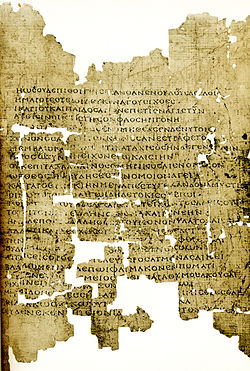
For many centuries, knowledge of Callimachus was limited to the handful of hymns and epigrams preserved in medieval manuscripts. The twentieth century, however, witnessed a dramatic revolution in our understanding of his work thanks to papyrology. The discovery of numerous papyrus fragments in Egypt, particularly at Oxyrhynchus, brought large portions of his lost works back to light.
These discoveries included significant portions of the Aitia, the Iambi, and the Hecale. They transformed Callimachus from a marginal figure known only through references by Roman poets into a major poet whose original texts could be studied directly. This led to a massive resurgence in scholarly interest and a re-evaluation of his importance.
Current Academic Debates
Modern scholarship continues to debate various aspects of Callimachus’s life and work. One ongoing discussion concerns the historical accuracy of the stories about his early poverty and his conflict with Apollonius of Rhodes. Some scholars argue that these narratives were literary fictions created by later biographers or were personas adopted by the poet himself.
Another significant trend involves analyzing his work through the lens of postcolonial studies. As a Greek migrant living in the multicultural environment of Ptolemaic Egypt, his poetry is examined for its engagement with themes of displacement, cultural identity, and the negotiation of Greek heritage within a foreign land. His works are seen as sophisticated products of a hybrid, cosmopolitan culture.
Digital Humanities and Callimachus
The digital age has opened new frontiers for Callimachean studies. Projects like the Dickinson College Commentaries provide online, annotated editions of his fragments, making this complex material accessible to a wider audience. Digital tools allow scholars to analyze linguistic patterns and intertextual connections across his corpus with unprecedented precision.
These resources are invaluable for piecing together the fragmentary remains of his poetry. They enable a more holistic understanding of his literary project and his vast influence on the poetic tradition. The ongoing work of digitizing and annotating papyrus fragments ensures that future discoveries will continue to enhance our appreciation of his genius.
Callimachus's Lasting Impact on Literature and Scholarship
Callimachus’s most immediate and tangible legacy was in the field of library science and scholarship. The Pinakes established the foundational principles of bibliography: author names, biographical notes, and cataloging by genre. This systematic approach to organizing knowledge influenced all subsequent efforts to create great libraries, from Pergamum to the modern era.
His concept of the poet as a learned researcher fundamentally altered the literary landscape. He demonstrated that deep engagement with the past was not a constraint on creativity but a source of inspiration. This model of the poet-scholar would be embraced by countless writers, from the Roman Augustans to the humanists of the Renaissance and beyond.
Callimachus’s insistence on technical perfection and artistic refinement established a perpetual standard for literary excellence that values quality and innovation over mere scale.
The Aesthetic Legacy: Quality Over Quantity
The core of Callimachus’s aesthetic philosophy—the preference for the finely crafted short work over the bulky epic—has resonated with writers for over two millennia. This ideal champions meticulous craftsmanship, originality, and intellectual depth. It is an argument for art that rewards careful, repeated engagement rather than passive consumption.
This principle can be seen in many later literary movements that prized concision and precision. From the metaphysical poets of the 17th century to the modernist writers of the 20th century, the Callimachean ideal of the "slender" but potent work has provided a powerful counter-argument to the prestige of the long novel or epic poem.
Conclusion: The Enduring Voice of Alexandria
Callimachus of Cyrene stands as a colossal figure at the pivotal moment when Greek culture transitioned from the classical age of city-states to the Hellenistic world of cosmopolitan kingdoms. His work brilliantly encapsulates the intellectual energies of Ptolemaic Alexandria, a city built on ambition and innovation. He mastered the entire tradition of Greek literature only to reinvent it for a new era.
His dual legacy as both a poet and a scholar is unique. Through the Pinakes, he gave the world the tools for organized scholarship. Through his poetry, he championed an aesthetic of refinement, learning, and originality that would shape the course of Western literature. The recovery of his works in the last century has only solidified his reputation as one of antiquity's most inventive and influential minds.
The story of Callimachus is ultimately one of enduring influence. From the Roman poets who worshipped his style to the modern scholars who painstakingly reconstruct his texts, his voice continues to speak. He reminds us that the greatest artistic revolutions often come not from rejecting the past, but from engaging with it deeply, critically, and creatively to forge something entirely new.

Gaius Valerius Catullus: Rome's Poet of Passion and Scandal
Introduction to Catullus: The Voice of Roman Emotion
Gaius Valerius Catullus (c. 84–c. 54 BCE) remains one of ancient Rome’s most vivid voices, blending raw emotion with biting wit. His 116 surviving poems—ranging from tender love verses to scathing political invectives—revolutionized Latin literature by rejecting epic grandeur in favor of personal, Hellenistic-influenced lyricism. Born in Verona, Catullus captured the turmoil of the late Roman Republic through his relationships, rivalries, and unfiltered passion.
The Life of Catullus: Nobility, Scandal, and Early Death
From Verona to Rome: A Poet’s Upbringing
Catullus hailed from a noble family in Cisalpine Gaul, near Lake Garda, a region Romanized after the Cimbri wars. Educated in Rome, he immersed himself in the city’s literary circles, where he embraced the neoteric movement—a poetic style favoring brevity and personal themes over traditional epics. His contemporaries included Cicero, who critiqued his bold style, and Julius Caesar, whom Catullus famously lampooned in verse.
A Brief but Tumultuous Career
In 57–56 BCE, Catullus served as an aide to Governor Gaius Memmius in Bithynia, Asia Minor. The experience left him disillusioned, inspiring satirical poems about provincial corruption. His return to Rome marked a period of intense creativity, though his life was cut short around age 30. The exact year of his death remains debated—traditionally 54 BCE, though some scholars argue for 52–51 BCE based on references to Caesar’s campaigns.
Catullus’ Poetry: Love, Hate, and Hellenistic Influence
The Lesbia Poems: Obsession and Heartbreak
Among Catullus’ most famous works are his 25 poems to "Lesbia", widely believed to reference Clodia Metelli, a married noblewoman. These verses oscillate between adoration and bitterness, showcasing his emotional intensity. His lines like
"I hate and I love. Why? You might ask. I don’t know, but I feel it, and I’m tormented."epitomize his conflicted passion.
Political Invectives and Personal Vendettas
Catullus spared no one in his critiques, targeting Julius Caesar and his engineer Mamurra with scathing epigrams. His audacity nearly cost him—Caesar allegedly invited him to dinner as a gesture of reconciliation, highlighting the poet’s influence despite his youth. These poems reflect the political tensions of the late Republic, where personal and public lives collided violently.
The Neoteric Revolution: Catullus’ Literary Legacy
Breaking from Epic Tradition
Catullus and his neoteric circle—including poets like Calvus—championed a new poetic style that prioritized personal expression over mythological grandeur. Their work, often called the "New Poetry," drew from Hellenistic Greek models, favoring short, polished verses. This shift laid the groundwork for later Roman poets like Horace, Ovid, and Virgil.
Survival and Rediscovery
Catullus’ poems survived through three medieval manuscripts, lost for nearly 1,000 years before their Renaissance revival. Petrarch and other humanists celebrated his work, ensuring its place in the Western canon. Today, his verses are studied for their linguistic brilliance and emotional depth, making them staples in Latin classrooms.
Why Catullus Matters Today
Academic and Cultural Impact
Modern scholars hail Catullus as "Rome’s most erotic poet", praising his unfiltered exploration of desire, jealousy, and grief. His poems, such as the elegy for his brother’s death in Troad, resonate with contemporary audiences for their universal themes. Digital editions and AI-assisted translations now make his work more accessible than ever.
Ongoing Debates and Mysteries
- Lesbia’s Identity: Was she truly Clodia Metelli, or a literary construct?
- Autobiographical Truth: How much of Catullus’ poetry reflects his real life?
- Regional Identity: Did his Cisalpine roots shape his defiance of Roman norms?
As of 2025, no new archaeological evidence has emerged, but scholarly debates continue to thrive, keeping Catullus’ legacy alive.
Key Statistics: Catullus by the Numbers
- 116 surviving poems, including epigrams, elegies, and the epyllion Peleus and Thetis.
- ~2,500 lines of verse, blending personal and political themes.
- 3 medieval manuscripts preserved his work after a millennium of obscurity.
- 100+ modern translations, ensuring global accessibility.
Catullus’ enduring appeal lies in his ability to merge the intimate with the political, offering a window into the soul of ancient Rome.
The Scandalous Love Affair: Catullus and Lesbia
The Woman Behind the Name
At the heart of Catullus' most famous poems lies Lesbia, his poetic pseudonym for a woman whose true identity has fascinated scholars for centuries. The prevailing theory identifies her as Clodia Metelli, a married noblewoman from the influential Claudii family. Clodia was known for her intelligence, charm, and rumored promiscuity—qualities that made her both an ideal muse and a target for Catullus' oscillating adoration and scorn.
A Relationship of Extremes
Catullus' poems to Lesbia document a relationship defined by ecstatic highs and devastating lows. His early verses, such as Poem 5, overflow with tender longing:
"Let us live, my Lesbia, and let us love, and let us judge all the rumors of the old men to be worth just one penny!"
Yet, as the affair soured, his tone shifted to bitter recrimination, as in Poem 11, where he declares his resolve to break free from her grasp. This emotional whiplash—from devotion to disdain—captures the volatility of human passion and remains one of the most compelling aspects of his work.
Catullus’ Political Satire: Defiance in the Face of Power
Targeting Julius Caesar
Catullus was not one to shy away from confrontation, even when it meant challenging Julius Caesar, one of Rome’s most powerful figures. In Poem 29, he accuses Caesar of arrogance and moral decay, while Poem 54 mocks the general’s alleged affair with his engineer, Mamurra. These poems were not merely personal jabs—they reflected the broader political tensions of the late Republic, where traditional values clashed with ambition and corruption.
The Consequences of Boldness
Catullus’ audacity nearly cost him dearly. According to ancient sources, Caesar invited the poet to dinner as a gesture of reconciliation, demonstrating both his magnanimity and the power dynamics at play. This encounter underscores how Catullus’ poetry was not just art but also a form of political resistance, using wit and wordplay to challenge authority in an era where direct opposition could be fatal.
The Brother’s Elegy: Grief and the Human Condition
A Poem of Loss and Longing
Among Catullus’ most poignant works is Poem 101, an elegy for his brother, who died in Troad, Asia Minor. The poem is a masterclass in emotional restraint, using repetition and ritualistic language to convey profound sorrow:
"Through many nations and over many seas I have come, Brother, to these wretched obsequies, to give you the last gift of death."
This elegy transcends personal grief, touching on universal themes of loss and mortality that resonate across cultures and centuries.
The Journey to Troad
Catullus’ journey to his brother’s grave was not just physical but also symbolic, representing the lengths to which one will go to honor a loved one. The poem’s structure—mirroring the rituals of mourning—highlights the cultural importance of funerary rites in Roman society, where memory and legacy were paramount.
Catullus’ Influence on Later Poets
The Augustan Poets: Horace, Ovid, and Virgil
Catullus’ impact on Roman literature extended far beyond his lifetime. The Augustan poets, including Horace, Ovid, and Virgil, drew inspiration from his lyrical style and emotional depth. Horace, in particular, admired Catullus’ ability to blend personal sentiment with polished verse, a technique that became a hallmark of Augustan poetry.
Medieval and Renaissance Revival
After centuries of obscurity, Catullus’ works were rediscovered during the Renaissance, thanks to the efforts of humanists like Petrarch. His poems, with their raw emotion and vivid imagery, became models for Renaissance poets exploring themes of love, loss, and human frailty. This revival cemented his place in the Western literary canon.
The Neoteric Movement: A Literary Revolution
Rejecting Epic Conventions
Catullus was a leading figure in the neoteric movement, a group of poets who rejected the grandiosity of traditional epic poetry in favor of short, personal, and highly polished verses. This shift was revolutionary, as it prioritized individual experience over mythological narratives, making poetry more accessible and relatable.
The Hellenistic Influence
The neoterics drew heavily from Hellenistic Greek poetry, particularly the works of Callimachus and Sappho. Catullus’ adoption of this style—characterized by brevity, wit, and emotional intensity—helped shape the future of Latin literature. His experiments with meter, such as the hendecasyllabic verse, became staples of Roman poetic tradition.
Catullus in Modern Culture
Classroom Staple and Academic Focus
Today, Catullus’ poems are widely taught in Latin classrooms due to their vivid language and personal themes. His works provide students with a direct connection to the emotional and cultural world of ancient Rome, making him a favorite among educators and scholars alike.
Digital Humanities and New Translations
The rise of digital humanities has brought Catullus’ poetry to a broader audience. Interactive editions, AI-assisted translations, and online resources have made his works more accessible than ever. Platforms like YouTube and podcasts feature discussions on his life and poetry, ensuring that his legacy continues to thrive in the modern era.
Debates and Mysteries: The Unanswered Questions
Was Lesbia Real?
One of the most enduring debates surrounding Catullus is the identity of Lesbia. While many scholars argue that she was Clodia Metelli, others suggest that Lesbia may have been a literary construct, a composite of multiple women or even a purely fictional creation. This ambiguity adds to the intrigue of his poetry, inviting readers to speculate about the boundaries between art and reality.
The Exact Date of His Death
Catullus’ death date remains a subject of scholarly debate. While the traditional date is 54 BCE, some researchers propose 52–51 BCE, based on references to events like Caesar’s British expedition. The lack of definitive evidence keeps this question open, adding to the mystique of his short but impactful life.
The Enduring Legacy of Catullus
A Poet for All Time
Catullus’ ability to capture human emotion in its rawest form ensures his enduring relevance. Whether through his love poems, political satire, or elegies, he speaks to the universal experiences of passion, loss, and defiance. His works remind us that, beneath the grandeur of history, the personal stories of individuals are what truly resonate.
Why We Still Read Catullus Today
- Emotional authenticity: His poems feel immediate and relatable, bridging the gap between ancient and modern readers.
- Literary innovation: His neoteric style influenced generations of poets, from the Augustans to the Romantics.
- Cultural insight: His works provide a window into the social and political dynamics of the late Roman Republic.
In a world where personal expression is increasingly valued, Catullus’ voice remains as powerful and relevant as ever.
Catullus’ Most Famous Poems: A Closer Look
The Iconic Poem 5: "Vivamus, mea Lesbia"
No discussion of Catullus is complete without examining Poem 5, one of his most celebrated works. Addressed to Lesbia, it embodies the carpe diem philosophy, urging her to embrace love and life despite the judgments of others:
"Let us live, my Lesbia, and let us love, and let us judge all the rumors of the old men to be worth just one penny!"
This poem’s lyrical beauty and defiant tone have made it a timeless ode to passion, often quoted in discussions of Roman love poetry and the power of living in the moment.
Poem 85: The Power of Contradiction
In just two lines, Poem 85 captures the essence of Catullus’ emotional turmoil:
"I hate and I love. Why? You might ask. I don’t know, but I feel it, and I’m tormented."
This epigrammatic masterpiece distills the complexity of love into a single, unforgettable contradiction. Its brevity and depth have cemented its place as one of the most quoted and analyzed poems in Latin literature.
The Bithynia Poems: Satire and Disillusionment
A Journey to the East
Catullus’ time in Bithynia (57–56 BCE) as an aide to Governor Gaius Memmius produced some of his most biting satire. Poems like Poem 10 and Poem 28 mock the corruption and ineptitude he witnessed, offering a rare glimpse into Roman provincial administration.
"Memmius, you’ve ruined everything—your own reputation and that of your staff!"
These works highlight Catullus’ skill in blending personal experience with political critique, a hallmark of his neoteric style.
The Aftermath of Bithynia
His return to Rome marked a period of disillusionment, reflected in poems that lament the wasted effort of his journey. Yet, this experience also fueled his creativity, proving that even frustration could be transformed into literary gold.
Catullus and Homosexuality in Roman Poetry
The Juventius Poems
Catullus’ poetry also explores same-sex desire, particularly in his verses addressed to Juventius. Poems like Poem 48 and Poem 81 reveal a tender, almost playful affection, challenging modern assumptions about Roman attitudes toward sexuality.
"Juventius, if anyone could be loved more than you, he would be a god."
These poems underscore the fluidity of love and desire in ancient Rome, where personal relationships were often more complex than historical records suggest.
Contextualizing Roman Sexuality
While Catullus’ expressions of homosexual affection were not unusual for his time, their explicitness sets his work apart. His willingness to explore these themes openly adds another layer to his reputation as a bold and unfiltered poet.
The Manuscript Tradition: How Catullus Survived
From Obscurity to Renaissance Revival
Catullus’ poems were nearly lost to history. After the fall of Rome, his works disappeared for nearly 1,000 years, preserved only in three medieval manuscripts:
- The Verona Codex (9th century)
- The Oxford Codex (14th century)
- The Paris Codex (14th century)
These manuscripts became the foundation for modern editions, ensuring that Catullus’ voice was not silenced by time.
The Role of Humanists
The Renaissance humanists, particularly Petrarch, played a crucial role in reviving Catullus’ works. Their efforts reintroduced his poetry to Europe, where it influenced generations of writers and solidified his place in the Western literary canon.
Catullus in Modern Media and Pop Culture
Documentaries and Digital Media
Catullus’ life and poetry have found new audiences through modern media. Documentaries, such as those on YouTube and educational platforms like History Hit, explore his scandalous love affairs and political defiance. These productions bring his story to life for contemporary viewers, blending scholarship with storytelling.
Podcasts and Literary Analysis
Podcasts like Literature and History have dedicated episodes to Catullus, dissecting his poems and their cultural significance. These discussions highlight his enduring relevance, proving that his themes of love, loss, and rebellion still resonate today.
The Scholarly Debates: What We Still Don’t Know
The Authenticity of Lesbia
One of the most persistent debates in Catullan scholarship is the identity of Lesbia. While the majority of scholars argue she was Clodia Metelli, others propose that Lesbia may have been a literary invention, a composite figure representing multiple lovers or even an idealized muse. This uncertainty adds a layer of mystery to his work, inviting readers to question the line between biography and art.
The Exact Chronology of His Life
The dates of Catullus’ birth and death remain subjects of debate. While the traditional timeline places his life between 84–54 BCE, some scholars suggest he may have died as late as 52–51 BCE, based on references to events like Caesar’s British expedition. The lack of definitive evidence keeps this question open, fueling ongoing academic discourse.
Why Catullus Remains Relevant Today
A Mirror to Human Emotion
Catullus’ poetry endures because it captures universal human experiences—love, jealousy, grief, and defiance. His ability to express these emotions with raw honesty makes his work relatable across cultures and centuries. In an era where authenticity is highly valued, Catullus’ voice feels remarkably modern.
Influence on Contemporary Poetry
Modern poets and songwriters continue to draw inspiration from Catullus’ lyrical intensity. His themes of unrequited love and personal struggle appear in everything from confessional poetry to contemporary music, proving that his influence extends far beyond classical studies.
Conclusion: The Legacy of Rome’s Most Passionate Poet
Key Takeaways from Catullus’ Life and Work
- Emotional depth: His poems explore love, hate, and grief with unparalleled intensity.
- Literary innovation: As a neoteric poet, he revolutionized Latin verse by prioritizing personal themes.
- Political boldness: His satires challenged powerful figures like Julius Caesar, showcasing his fearless spirit.
- Cultural impact: From the Renaissance to modern media, his influence spans centuries.
The Final Word on Catullus
Gaius Valerius Catullus was more than a poet—he was a rebel, a lover, and a master of language. His works, born from the tumult of the late Roman Republic, continue to captivate readers with their honesty, wit, and emotional power. Whether through his love poems to Lesbia, his scathing political invectives, or his heartbreaking elegies, Catullus reminds us that the most enduring art is that which speaks to the human heart.
In a world where personal expression is celebrated, Catullus’ voice remains as vital and vibrant as ever—a testament to the timeless power of poetry.

Horace: The Roman Poet Who Shaped Western Literature
Horace, born Quintus Horatius Flaccus, remains one of the most influential poets of ancient Rome. His works, which include odes, satires, and epistles, have left an indelible mark on Western literature and philosophy. Known for his wit, wisdom, and mastery of poetic form, Horace’s writings continue to resonate with readers centuries after his death. This article explores his life, literary contributions, and lasting legacy.
The Life of Horace: From Humble Beginnings to Literary Fame
Horace was born in 65 BCE in Venusia, a small town in southern Italy. His father, a freedman, worked hard to provide Horace with an education, sending him to Rome and later to Athens to study philosophy and literature. This early exposure to Greek and Roman culture shaped Horace’s intellectual development and laid the foundation for his future literary career.
After the assassination of Julius Caesar in 44 BCE, Horace joined the republican army but found himself on the losing side at the Battle of Philippi. Following this defeat, he returned to Italy, where his family’s estate had been confiscated. With little to his name, Horace turned to writing, eventually gaining the patronage of Maecenas, a wealthy and influential supporter of the arts. This relationship allowed Horace to focus on his poetry and secure his place in Roman literary circles.
Horace’s Literary Works: A Legacy of Verse and Wisdom
Horace’s body of work is diverse, encompassing several genres and styles. His most famous works include the Odes, Satires, and Epistles. The Odes, a collection of lyric poems, showcase his technical skill and emotional depth. These poems often explore themes of love, friendship, and the fleeting nature of life, all while adhering to strict metrical patterns.
The Satires reveal Horace’s keen observational skills and sharp wit. Through these works, he critiques Roman society, addressing topics such as greed, hypocrisy, and the pursuit of wealth. His satires are notable for their balanced tone, blending humor with moral reflection. Meanwhile, the Epistles offer a more personal and philosophical perspective, providing insights into Horace’s views on poetry, ethics, and the art of living.
The Art of Poetry: Horace’s Enduring Influence
One of Horace’s most significant contributions to literature is his Ars Poetica (The Art of Poetry), a letter in verse that outlines his principles of poetic composition. In this work, Horace emphasizes the importance of clarity, conciseness, and the harmonious blend of instruction and entertainment. His advice, such as “in medias res” (starting a story in the middle of the action), has become a cornerstone of literary theory and continues to influence writers and critics alike.
Horace’s Philosophical Outlook: Stoicism and Epicureanism
Horace’s writings reflect a blend of Stoic and Epicurean philosophies, both of which were prominent in Roman thought. From Stoicism, he adopted the idea of living in accordance with nature and maintaining inner tranquility amid life’s challenges. This perspective is evident in his emphasis on self-control, resilience, and the acceptance of one’s fate.
At the same time, Horace’s work also embraces Epicurean ideals, particularly the pursuit of moderate pleasure and the appreciation of life’s simple joys. His famous phrase “carpe diem” (seize the day) encapsulates this philosophy, urging readers to make the most of the present moment without indulging in excess. This balance between restraint and enjoyment is a recurring theme in his poetry and contributes to its timeless appeal.
The Lasting Impact of Horace on Modern Literature
Horace’s influence extends far beyond ancient Rome. His works have inspired countless poets, playwrights, and thinkers throughout history. During the Renaissance, his writings were rediscovered and celebrated, shaping the literary movements of the time. Writers such as Petrarch, Shakespeare, and Milton drew inspiration from Horace’s themes and techniques, incorporating his ideas into their own works.
In modern times, Horace’s emphasis on clarity, brevity, and the power of poetry to instruct and delight remains relevant. His exploration of universal human experiences—love, loss, ambition, and the search for meaning—continues to resonate with contemporary audiences. Whether through direct quotation or subtle influence, Horace’s presence can be felt in literature, music, and even popular culture.
In conclusion, Horace stands as a towering figure in the history of literature. His life, marked by resilience and intellectual curiosity, mirrors the themes he explored in his poetry. Through his odes, satires, and epistles, he offered timeless insights into the human condition, blending philosophical depth with artistic brilliance. As a poet who bridged the gap between Greek and Roman traditions, Horace’s legacy endures, reminding us of the power of words to shape thought, inspire creativity, and connect us across the ages.
Auguste Comte: Father of Sociology and Positivism
Introduction to Auguste Comte
Auguste Comte, born Isidore Auguste Marie François Xavier Comte on January 19, 1798, in Montpellier, France, is widely regarded as the founder of sociology and the pioneer of positivism. His groundbreaking work laid the foundation for modern social sciences and influenced generations of philosophers, scientists, and sociologists. Comte's Law of Three Stages and his vision of a scientific approach to society revolutionized the way we understand human progress and social order.
Early Life and Education
Comte's intellectual journey began at the prestigious École Polytechnique in Paris, where he studied mathematics and science. His early exposure to rigorous scientific methods shaped his later philosophical ideas. After leaving the École Polytechnique, Comte became the secretary to Henri de Saint-Simon, a prominent social theorist. This collaboration significantly influenced Comte's thinking, particularly his views on social reform and the role of science in society.
Key Influences
- École Polytechnique: Provided a strong foundation in mathematics and scientific methodology.
- Henri de Saint-Simon: Introduced Comte to social theory and the idea of using science to improve society.
- Post-Revolutionary France: The social and political turmoil of the time motivated Comte to seek stable, scientific solutions for societal issues.
The Law of Three Stages
One of Comte's most significant contributions is his Law of Three Stages, which describes the evolution of human thought and societal development. According to Comte, human knowledge progresses through three distinct stages:
Theological Stage
In the theological stage, humans explain natural phenomena and social events through religious and supernatural beliefs. This stage is characterized by a reliance on divine entities and mystical explanations.
Metaphysical Stage
The metaphysical stage marks a transition from religious explanations to abstract, philosophical concepts. During this stage, people use metaphysical ideas to understand the world, often relying on complex, untraceable theories.
Positive Stage
The positive stage is the final and most advanced stage, where humans rely on scientific methods and empirical evidence to understand and explain the world. Comte believed that this stage would lead to a more ordered and rational society.
Founding Sociology
Comte is credited with coining the term "sociology" and establishing it as a scientific discipline. He envisioned sociology as the "queen of sciences", synthesizing knowledge from various scientific fields to create a comprehensive understanding of society.
Major Works
Comte's most influential works include:
- Cours de philosophie positive (Course in Positive Philosophy): Published between 1830 and 1842, this six-volume work outlines Comte's philosophy of positivism and his vision for a scientific approach to society.
- Système de politique positive (System of Positive Polity): Published between 1851 and 1854, this four-volume work delves into Comte's political and social theories, including his proposal for a "Religion of Humanity".
Legacy and Influence
Comte's ideas have had a profound impact on various fields, including philosophy, sociology, and political science. His emphasis on empirical evidence and scientific methods laid the groundwork for modern social sciences. However, his later works, particularly his proposals for a secular religion and authoritarian social structures, have been met with criticism and controversy.
Influence on Modern Thought
- John Stuart Mill: The renowned philosopher and economist was influenced by Comte's ideas on positivism and social reform.
- Empirical Social Science: Comte's emphasis on empirical methods continues to influence contemporary social science research.
- Philosophy of Science: Recent scholarship has reappraised Comte's contributions to the philosophy of science, highlighting his systematic approach to scientific knowledge.
Conclusion
Auguste Comte's legacy as the father of sociology and the pioneer of positivism is undeniable. His Law of Three Stages and his vision of a scientific approach to society have shaped modern social sciences and continue to influence contemporary thought. While his later works have sparked debate, Comte's contributions to the field of sociology remain foundational and enduring.
Further Reading
- Stanford Encyclopedia of Philosophy: Detailed philosophical and historical analysis of Comte's work.
- Encyclopaedia Britannica: Concise, authoritative biography and assessment of Comte's life and ideas.
- Primary Texts: Cours de philosophie positive and Système de politique positive for a deeper understanding of Comte's theories.
The Religion of Humanity: Comte's Controversial Vision
In his later years, Auguste Comte developed a controversial system known as the "Religion of Humanity". This quasi-religious framework aimed to replace traditional theological systems with a secular, scientific worldview. Comte envisioned a society organized around humanistic principles, complete with rituals, a positivist calendar, and a moral authority structure.
Core Principles of the Religion of Humanity
Comte's Religion of Humanity was designed to provide a moral and social framework for a scientific society. Key elements included:
- Secular Rituals: Comte proposed ceremonies and rites to celebrate human achievements and reinforce social bonds.
- Positivist Calendar: A revised calendar that commemorated significant figures in human history, replacing traditional religious holidays.
- Moral Authority: A hierarchical structure where scientists and philosophers would guide society based on empirical knowledge.
Criticism and Controversy
While Comte's vision was innovative, it also faced significant criticism. Detractors argued that his system was authoritarian and overly prescriptive. The blend of scientific principles with religious-like structures was seen by some as contradictory to the empirical foundations of positivism. Despite these criticisms, the Religion of Humanity remains a fascinating aspect of Comte's later work, illustrating his commitment to creating a cohesive, scientifically-grounded society.
Comte's Impact on Social Science Methodologies
Auguste Comte's influence extends deeply into the methodologies of modern social sciences. His emphasis on empirical evidence and systematic observation laid the groundwork for contemporary research practices. Today, many social scientists continue to draw on Comte's principles, even as they adapt and refine his original ideas.
Empirical Research and Data Collection
Comte's advocacy for empirical research transformed the way social scientists approach their studies. Key contributions include:
- Observation and Experimentation: Comte emphasized the importance of direct observation and controlled experiments to gather reliable data.
- Quantitative Methods: He promoted the use of statistical analysis and measurable data to understand social phenomena.
- Interdisciplinary Approach: Comte believed in synthesizing knowledge from various scientific fields to create a comprehensive understanding of society.
Modern Applications of Positivism
While 20th-century logical positivism has largely replaced Comte's original positivism, his core ideas remain influential. Contemporary social sciences often employ:
- Evidence-Based Policies: Governments and organizations use empirical data to inform decision-making.
- Longitudinal Studies: Research projects that track social trends over extended periods, providing insights into societal changes.
- Mixed-Methods Research: Combining qualitative and quantitative approaches to gain a more nuanced understanding of social issues.
Comte's Intellectual Milieu and Historical Context
To fully appreciate Auguste Comte's contributions, it is essential to understand the intellectual and historical context in which he worked. Post-Revolutionary France was a period of significant social and political upheaval, which deeply influenced Comte's philosophical development.
Post-Revolutionary France
The French Revolution (1789–1799) and its aftermath created a society in flux, searching for stability and order. Comte's work was, in part, a response to this chaos. He sought to:
- Replace Theological Legitimacy: Move away from religious and metaphysical justifications for social order.
- Establish Scientific Authority: Use empirical science as the foundation for societal organization.
- Promote Social Cohesion: Create a unified system that could bring stability to a fractured society.
Influence of Henri de Saint-Simon
Comte's collaboration with Henri de Saint-Simon, a prominent social theorist, was pivotal in shaping his ideas. Saint-Simon's focus on industrialization and social reform provided a framework that Comte expanded upon. Key influences included:
- Social Reform: The belief that scientific principles could be applied to improve societal structures.
- Industrial Society: An emphasis on the role of industry and technology in shaping modern societies.
- Collective Progress: The idea that society should work towards the betterment of all its members.
Comte's Major Works: A Closer Look
Auguste Comte's writings are foundational to the fields of sociology and philosophy of science. His two major works, Cours de philosophie positive and Système de politique positive, provide a comprehensive overview of his theories and visions for society.
Cours de philosophie positive (Course in Positive Philosophy)
Published between 1830 and 1842, this six-volume work is considered Comte's magnum opus. It outlines his philosophy of positivism and introduces the Law of Three Stages. Key themes include:
- Classification of Sciences: Comte organized scientific disciplines hierarchically, with sociology as the crowning science.
- Empirical Methodology: The importance of observation and experimentation in acquiring reliable knowledge.
- Social Static and Dynamics: The study of social order and social change, respectively.
Système de politique positive (System of Positive Polity)
Published between 1851 and 1854, this four-volume work delves into Comte's political and social theories. It introduces the Religion of Humanity and provides a detailed plan for a scientifically-organized society. Notable aspects include:
- Moral and Political Philosophy: Comte's vision for a society guided by scientific principles and humanistic values.
- Secular Rituals and Institutions: Proposals for new social structures and ceremonies to replace traditional religious practices.
- Role of Scientists and Philosophers: The idea that intellectuals should play a central role in guiding society.
Reappraising Comte: Modern Scholarship
Recent academic discussions have led to a reappraisal of Auguste Comte's contributions and controversies. Modern scholars recognize his foundational role in the philosophy of science while critically examining his political and social prescriptions.
Comte as a Philosopher of Science
Contemporary philosophers highlight Comte's systematic approach to scientific knowledge. His efforts to develop philosophies of mathematics, physics, chemistry, and biology prefigure modern interdisciplinary studies. Key points of recognition include:
- Methodological Rigor: Comte's emphasis on structured, empirical methods in scientific inquiry.
- Integration of Sciences: The idea of synthesizing knowledge across different scientific domains.
- Influence on Later Thinkers: Comte's impact on subsequent philosophers of science, including those in the Vienna Circle and logical positivism.
Critiques of Comte's Political Prescriptions
While Comte's early work on positivism is widely respected, his later political and social proposals have faced criticism. Scholars point out:
- Authoritarian Tendencies: The hierarchical and prescriptive nature of his Religion of Humanity.
- Mixing Science and Normative Claims: The blending of empirical science with moral and political directives.
- Lack of Flexibility: The rigid structure of his proposed social system, which some argue could stifle individual freedom and innovation.
Comte's Enduring Legacy in Sociology
Despite the controversies surrounding his later work, Auguste Comte's legacy in sociology remains robust. His foundational concepts continue to influence the field, even as they evolve with new theoretical and methodological advancements.
Foundational Concepts in Sociology
Comte's contributions to sociology include several enduring ideas:
- Social Order and Progress: The study of how societies maintain stability and evolve over time.
- Empirical Research Methods: The use of systematic observation and data collection in social research.
- Interdisciplinary Approach: The integration of insights from various scientific disciplines to understand complex social phenomena.
Influence on Prominent Sociologists
Comte's ideas have influenced many key figures in sociology, including:
- Émile Durkheim: Often considered the father of modern sociology, Durkheim built on Comte's ideas to develop his own theories of social facts and collective consciousness.
- Herbert Spencer: Known for applying evolutionary theory to social structures, Spencer was influenced by Comte's emphasis on social dynamics.
- Max Weber: While critical of some aspects of positivism, Weber's work on social action and bureaucracy reflects an engagement with Comte's ideas.
Conclusion: The Complex Legacy of Auguste Comte
Auguste Comte's impact on the social sciences is both profound and complex. As the founder of sociology and a pioneering philosopher of science, his contributions have shaped modern research methodologies and theoretical frameworks. However, his later work, particularly the Religion of Humanity, remains a subject of debate and criticism.
By understanding Comte's historical context, intellectual influences, and key works, we gain a deeper appreciation for his enduring legacy. While some of his ideas may seem outdated or controversial today, his emphasis on empirical evidence, systematic observation, and interdisciplinary synthesis continues to inspire and guide social scientists around the world.
Contemporary Relevance of Comte's Theories
Today, Auguste Comte's ideas continue to resonate in both academic and practical contexts. His emphasis on empirical evidence and systematic observation remains a cornerstone of modern social science research. While the grandiose claims of early positivism have been tempered, the core principle that scientific methods can illuminate social phenomena is widely accepted.
Modern Applications
Comte's legacy is evident in several contemporary fields:
- Evidence-Based Policy: Governments and organizations rely on empirical data to shape social programs and public health initiatives.
- Data-Driven Sociology: Researchers use statistical analysis and longitudinal studies to track trends and test hypotheses.
- Interdisciplinary Research: Comte's vision of synthesizing knowledge across disciplines continues to inspire collaborative studies.
Critiques and Adaptations
Modern scholars often critique Comte's more rigid prescriptions while embracing his methodological insights. For example, the idea that science is the sole source of legitimate knowledge has been moderated to acknowledge the value of qualitative and interpretative approaches. Nonetheless, his call for rigorous, cumulative research remains influential.
Comparative Perspectives: Comte and His Successors
Comte's work laid the groundwork for many prominent sociologists and philosophers. Understanding how his ideas evolved through the contributions of later thinkers highlights the dynamic nature of social theory.
Émile Durkheim
Émile Durkheim, often called the father of modern sociology, built directly on Comte's framework. Durkheim adopted the idea of sociology as a scientific discipline and expanded it with concepts like social facts and collective consciousness. His empirical studies, such as Suicide, demonstrated Comte's methods in action.
Herbert Spencer
Herbert Spencer took Comte's Law of Three Stages and applied it to societal evolution, coining the phrase "survival of the fittest." However, Spencer's application of these ideas to justify social Darwinism diverged sharply from Comte's humanistic goals.
Max Weber
Max Weber acknowledged Comte's influence but critiqued his positivist approach. Weber argued for understanding social action through subjective meaning, introducing methods like verstehen that complemented Comte's empirical focus.
Conclusion: The Enduring Influence of Auguste Comte
Auguste Comte's intellectual legacy is a tapestry of foundational contributions and provocative controversies. As the founder of sociology and the architect of positivism, he reshaped how humanity understands itself. His Law of Three Stages and vision of a scientifically organized society remain reference points in philosophical and social discourse.
Key Takeaways
- Comte coined the term "sociology" and established it as a scientific discipline.
- His Law of Three Stages (theological → metaphysical → positive) describes the evolution of human thought.
- The Religion of Humanity reflects his ambition to create a secular moral framework, though it remains contentious.
- Comte's emphasis on empirical methods continues to shape modern social science research.
In the final analysis, Comte's work is a testament to the power of systematic inquiry. While his authoritarian tendencies and quasi-religious proposals have drawn criticism, his insistence on evidence-based understanding endures. As societies navigate complex challenges, the spirit of Comte's positivism—seeking clarity through science—remains a guiding star. The interplay of critique and inspiration that defines his legacy ensures that Auguste Comte will continue to provoke thought and drive progress for generations to come.


Pwl-Lanzeben: The Scholar Who Bridged Nature and Humanity
The phrase Pwl-Lanzeben-O-Episthmonas-poy-Syndyase-th-Fysikh-me-thn-An8rwpistikh-Diastash translates to a profound concept: "The Scholar Who Connected Nature with the Humanistic Dimension." This intriguing title encapsulates the essence of interdisciplinary thinking, blending scientific inquiry with humanistic values. In an era where environmental challenges demand both empirical solutions and ethical considerations, this figure—whether real, historical, or archetypal—embodies a critical bridge between two seemingly distinct worlds.
The Linguistic and Philosophical Roots
The term Pwl-Lanzeben appears to be a transliteration of a name, possibly derived from Greek or Latin origins. The suffix O-Episthmonas stems from the Greek ἐπιστήμων, meaning "one who knows" or "scholar." This linguistic foundation highlights a deep connection to knowledge, particularly in the context of φύση (nature) and ανθρωπιστική διάσταση (humanistic dimension).
The Greek Lexical Background
The Greek verb συνδύασε (syndyase) means "to combine" or "to connect," emphasizing the integration of disparate elements. Here, it signifies the fusion of natural sciences with humanistic disciplines such as ethics, literature, and cultural studies. This interplay reflects a long-standing intellectual tradition where scholars seek to harmonize empirical data with human values.
- ἐπίσταμαι (epístamai): To know, emphasizing practical and moral knowledge.
- ἐπιστήμων (epistémon): A knowledgeable person or scholar.
- φύσις (phýsis): Nature, encompassing both the physical world and its inherent laws.
- ανθρωπιστική διάσταση (anthrōpistikḗ diástasē): The humanistic dimension, focusing on cultural, ethical, and literary perspectives.
Historical and Intellectual Context
The concept of bridging nature and humanity is not new. Throughout history, thinkers have explored the interplay between scientific observation and humanistic interpretation. From the Romantic era, where poets like Wordsworth celebrated nature's sublime beauty, to modern environmental humanities, this tradition continues to evolve.
Key Intellectual Traditions
- Romantic Natural Philosophy: Figures like Alexander von Humboldt and William Wordsworth exemplified the fusion of scientific inquiry with artistic and ethical reflections on nature.
- Environmental Humanities: A contemporary field that integrates ecological science with literature, ethics, and cultural studies to address environmental challenges.
- STEAM Education: An educational movement that combines Science, Technology, Engineering, Arts, and Mathematics to foster interdisciplinary thinking.
These traditions provide a rich backdrop for understanding Pwl-Lanzeben as a symbol of interdisciplinary scholarship. Whether as a historical figure or an archetype, this concept resonates with modern efforts to create a holistic approach to environmental and humanistic studies.
The Rise of Environmental Humanities
Over the past decade, the field of environmental humanities has seen exponential growth. Academic programs, journals, and conferences dedicated to this interdisciplinary approach have multiplied, reflecting a growing recognition of the need to connect scientific data with humanistic narratives.
Current Trends and Statistics
- According to recent data from Web of Science and Scopus, publications in environmental humanities have increased by over 40% since 2010.
- Universities worldwide are launching dedicated centers and programs. For instance, the University of California and Harvard University have established robust environmental humanities initiatives.
- Funding agencies like the National Endowment for the Humanities (NEH) and the European Union's Horizon programs are increasingly supporting interdisciplinary projects that blend science and humanities.
This trend underscores the relevance of Pwl-Lanzeben as a contemporary archetype. The figure represents not just an individual but a movement toward a more integrated and ethical approach to understanding our relationship with the natural world.
Public Humanities and Storytelling
One of the most compelling aspects of the Pwl-Lanzeben concept is its potential to humanize environmental data through storytelling. Practitioners in this field often use creative non-fiction, narrative science communication, and ethical framing to make complex scientific issues accessible and relatable.
The Power of Narrative
Storytelling has emerged as a powerful tool in environmental communication. By weaving empirical data into compelling narratives, scholars and communicators can engage broader audiences and foster a deeper connection to environmental issues. This approach aligns perfectly with the ethos of Pwl-Lanzeben, who embodies the fusion of knowledge and humanity.
"The greatest threat to our planet is the belief that someone else will save it." — Robert Swan
This quote encapsulates the urgency and collective responsibility that figures like Pwl-Lanzeben inspire. By connecting nature with the humanistic dimension, they remind us that environmental stewardship is not just a scientific endeavor but a deeply human one.
Conclusion of Part 1
In this first part, we've explored the linguistic roots, historical context, and contemporary relevance of Pwl-Lanzeben-O-Episthmonas-poy-Syndyase-th-Fysikh-me-thn-An8rwpistikh-Diastash. This concept serves as a powerful reminder of the importance of interdisciplinary thinking in addressing today's environmental challenges. Stay tuned for Part 2, where we'll delve deeper into the practical applications and notable figures who embody this bridge between nature and humanity.
Notable Figures Who Embody the Pwl-Lanzeben Spirit
The concept of Pwl-Lanzeben finds resonance in the lives and works of several influential thinkers who have successfully bridged the gap between nature and humanistic inquiry. These individuals serve as real-world examples of how interdisciplinary approaches can enrich our understanding of the environment and our place within it.
Alexander von Humboldt: The Pioneer of Natural Philosophy
Alexander von Humboldt (1769–1859) is often regarded as one of the first true interdisciplinary scholars, seamlessly integrating scientific exploration with a deep appreciation for the aesthetic and cultural dimensions of nature. His work, Kosmos, attempted to unify the various branches of scientific knowledge with a humanistic perspective, making him a quintessential Pwl-Lanzeben figure.
- Humboldt's expeditions to Latin America combined rigorous scientific observation with a profound sense of wonder and respect for indigenous cultures.
- He emphasized the interconnectedness of nature, a concept that resonates strongly with modern ecological thinking.
- His influence extended to prominent figures like Charles Darwin and Henry David Thoreau, shaping the course of both scientific and literary traditions.
Rachel Carson: The Voice of Environmental Ethics
Rachel Carson, through her seminal work Silent Spring (1962), exemplified the fusion of scientific rigor with ethical and literary storytelling. Her ability to communicate complex environmental issues in a compelling narrative form aligns perfectly with the Pwl-Lanzeben archetype.
Carson's work not only exposed the dangers of pesticides like DDT but also invoked a sense of moral responsibility towards the natural world. Her writing style, which blended scientific data with poetic prose, made her message accessible to a broad audience, thereby catalyzing the modern environmental movement.
"The more clearly we can focus our attention on the wonders and realities of the universe about us, the less taste we shall have for destruction." — Rachel Carson
The Role of Environmental Humanities in Modern Education
The growing field of environmental humanities is reshaping educational paradigms by emphasizing the importance of interdisciplinary learning. This approach not only enriches students' understanding of environmental issues but also equips them with the critical thinking and ethical reasoning skills necessary to address complex global challenges.
Innovative Academic Programs
Universities around the world are increasingly offering programs that embody the Pwl-Lanzeben spirit. These programs often combine courses in environmental science, philosophy, literature, and ethics to provide a holistic educational experience.
- The University of California, Santa Barbara offers a renowned Environmental Humanities Initiative, which integrates humanistic disciplines with environmental studies.
- Harvard University's Environmental Humanities program encourages students to explore the cultural and historical dimensions of environmental issues.
- The University of Edinburgh provides a Master's program in Environmental Humanities, focusing on the intersection of ecology, culture, and ethics.
The Impact of Interdisciplinary Learning
Studies have shown that interdisciplinary education fosters creativity, problem-solving skills, and a deeper sense of global citizenship. According to a report by the National Academies of Sciences, Engineering, and Medicine, students who engage in interdisciplinary learning are better prepared to tackle real-world challenges that require a multifaceted approach.
Furthermore, interdisciplinary programs often incorporate experiential learning opportunities, such as fieldwork, community engagement, and collaborative research projects. These experiences not only enhance students' academic growth but also cultivate a sense of environmental stewardship and social responsibility.
Storytelling as a Tool for Environmental Advocacy
One of the most effective ways to embody the Pwl-Lanzeben ethos is through the power of storytelling. By weaving together scientific data and humanistic narratives, storytellers can create compelling arguments for environmental conservation and sustainable living.
Notable Environmental Storytellers
Several contemporary figures have mastered the art of environmental storytelling, using their platforms to inspire action and raise awareness about critical environmental issues.
- Elizabeth Kolbert, author of The Sixth Extinction, combines rigorous scientific research with engaging narrative techniques to highlight the urgency of biodiversity loss.
- Bill McKibben, through his books and activism, uses storytelling to advocate for climate action and renewable energy solutions.
- Robin Wall Kimmerer, in her book Braiding Sweetgrass, blends indigenous wisdom, scientific knowledge, and personal narrative to explore our relationship with the natural world.
The Science of Storytelling
Research in cognitive psychology and neuroscience has shown that stories have a unique ability to engage our emotions and shape our perceptions. According to a study published in the journal Nature, narratives activate multiple areas of the brain, making them a powerful tool for communication and persuasion.
When it comes to environmental advocacy, storytelling can:
- Make complex scientific concepts more accessible and relatable.
- Inspire emotional connections to nature and environmental causes.
- Motivate collective action by fostering a sense of shared responsibility.
"The universe is made of stories, not of atoms." — Muriel Rukeyser
This quote underscores the profound impact that storytelling can have on our understanding of the world. By embracing the Pwl-Lanzeben approach, environmental storytellers can create narratives that not only inform but also inspire and transform.
The Future of Interdisciplinary Environmental Studies
As we look to the future, the integration of nature and humanistic dimensions will play an increasingly vital role in addressing global environmental challenges. The Pwl-Lanzeben concept serves as a guiding principle for this interdisciplinary approach, offering a framework for innovative research, education, and advocacy.
Emerging Trends and Opportunities
The field of environmental humanities is poised for continued growth, with several exciting trends on the horizon:
- Digital Humanities: The use of digital tools and technologies to analyze and visualize environmental data in conjunction with cultural and historical contexts.
- Indigenous Knowledge Systems: Increasing recognition of the value of indigenous wisdom in understanding and addressing environmental issues.
- Global Collaborations: Expanded international partnerships and research networks focused on interdisciplinary environmental studies.
The Role of Technology and Innovation
Advancements in technology are providing new opportunities for interdisciplinary environmental research. From GIS mapping and remote sensing to virtual reality and data visualization, these tools enable scholars to explore the intersection of nature and humanity in innovative ways.
For example, digital storytelling platforms allow environmental advocates to create immersive narratives that combine scientific data with personal and cultural perspectives. These technologies not only enhance our understanding of environmental issues but also empower communities to share their stories and contribute to collective solutions.
Conclusion of Part 2
In this second part, we've explored notable figures who embody the Pwl-Lanzeben spirit, the role of environmental humanities in modern education, the power of storytelling in environmental advocacy, and the future of interdisciplinary environmental studies. These insights highlight the importance of integrating scientific knowledge with humanistic values to address the complex challenges of our time. Stay tuned for Part 3, where we'll conclude our exploration with a focus on practical applications and the enduring legacy of this interdisciplinary approach.
Practical Applications of the Pwl-Lanzeben Approach
The Pwl-Lanzeben philosophy extends beyond academic theory, offering practical solutions to real-world environmental challenges. By integrating scientific knowledge with humanistic values, this approach fosters innovative strategies for sustainability, conservation, and community engagement.
Sustainable Development and Policy Making
One of the most impactful applications of the Pwl-Lanzeben ethos is in the realm of sustainable development. Policymakers and urban planners increasingly recognize the importance of combining ecological data with social and cultural considerations to create effective and equitable solutions.
- Green Infrastructure: Cities like Copenhagen and Singapore have successfully integrated natural elements into urban design, improving both biodiversity and quality of life.
- Community-Based Conservation: Programs that involve local communities in conservation efforts, such as indigenous-led land management, have shown greater success in preserving ecosystems.
- Climate Adaptation Strategies: Approaches that consider both scientific projections and cultural practices ensure more resilient and inclusive climate policies.
Environmental Education and Public Engagement
Educational initiatives that embody the Pwl-Lanzeben spirit are crucial for fostering a deeper connection between people and the natural world. These programs often utilize experiential learning, storytelling, and artistic expression to engage diverse audiences.
For instance, the Nature Conservancy's "Leaders in Environmental Action for the Future" (LEAF) program combines scientific training with leadership development, empowering young people to become advocates for environmental stewardship. Similarly, ecological art projects, such as those by Andy Goldsworthy and Agnès Denes, use creative expression to highlight environmental issues and inspire action.
Case Studies: Success Stories of Interdisciplinary Collaboration
Several projects around the world exemplify the successful application of the Pwl-Lanzeben approach. These case studies demonstrate how integrating nature and humanistic dimensions can lead to transformative outcomes.
The Restoration of the Loess Plateau in China
One of the most remarkable examples of interdisciplinary environmental work is the restoration of the Loess Plateau in China. This project, which began in the 1990s, combined scientific research, engineering, and community engagement to reverse decades of soil erosion and desertification.
- Scientific Innovation: Researchers developed techniques such as terracing and reforestation to stabilize the soil and restore vegetation.
- Community Involvement: Local farmers were trained in sustainable agricultural practices, ensuring the long-term success of the project.
- Economic and Social Benefits: The restoration improved food security, increased incomes, and enhanced the quality of life for millions of people.
The Loess Plateau project serves as a testament to the power of interdisciplinary collaboration, embodying the core principles of the Pwl-Lanzeben approach.
The Indigenous Fire Management in Australia
In northern Australia, indigenous communities have been practicing traditional fire management for thousands of years. This ancient knowledge, which involves controlled burning to reduce the risk of catastrophic wildfires, has gained recognition from scientists and policymakers alike.
By integrating indigenous wisdom with modern ecological science, this approach has led to:
- A 50% reduction in destructive wildfires in some regions.
- Improved biodiversity and ecosystem health.
- Stronger cultural preservation and community empowerment.
This case study highlights the importance of valuing and incorporating traditional knowledge into contemporary environmental practices, a key aspect of the Pwl-Lanzeben philosophy.
The Enduring Legacy of Pwl-Lanzeben
The legacy of Pwl-Lanzeben lies in its ability to inspire a holistic and ethical approach to environmental challenges. By bridging the gap between nature and humanity, this philosophy encourages us to see the natural world not as a separate entity but as an integral part of our cultural, ethical, and spiritual lives.
Key Takeaways and Lessons
As we reflect on the insights and examples discussed throughout this article, several key takeaways emerge:
- Interdisciplinary Thinking is essential for addressing complex environmental issues. By combining scientific rigor with humanistic values, we can develop more effective and equitable solutions.
- Storytelling and Narrative are powerful tools for communication and advocacy. They make environmental issues more relatable and inspire collective action.
- Traditional and Indigenous Knowledge offer valuable insights that complement modern scientific approaches. Integrating these perspectives enriches our understanding and enhances our strategies.
- Community Engagement is crucial for the success of environmental initiatives. Involving local communities ensures that solutions are culturally appropriate and sustainable.
The Path Forward
Looking ahead, the Pwl-Lanzeben approach will continue to play a vital role in shaping our response to global environmental challenges. As we face issues such as climate change, biodiversity loss, and resource depletion, the integration of nature and humanistic dimensions will be more important than ever.
To fully embrace this philosophy, we must:
- Encourage interdisciplinary education and research, fostering collaboration between scientists, humanists, and policymakers.
- Support innovative storytelling and artistic expression that highlight environmental issues and inspire action.
- Promote inclusive and equitable environmental policies that consider diverse cultural and social perspectives.
- Invest in community-based initiatives that empower local populations to take an active role in conservation and sustainability efforts.
Conclusion: Embracing the Pwl-Lanzeben Ethos
Throughout this three-part exploration, we have delved into the meaning, historical context, and practical applications of the Pwl-Lanzeben concept. From the linguistic roots of the term to the inspiring stories of individuals and communities who embody its principles, we have seen how this interdisciplinary approach can transform our relationship with the natural world.
The Pwl-Lanzeben philosophy reminds us that environmental stewardship is not merely a scientific endeavor but a deeply human one. It calls on us to integrate knowledge with compassion, data with narrative, and innovation with tradition. By doing so, we can create a more sustainable and just future for all.
As we move forward, let us embrace the spirit of Pwl-Lanzeben—connecting nature with the humanistic dimension—in our personal lives, professional endeavors, and collective actions. Together, we can forge a path that honors both the intricate web of life and the rich tapestry of human experience, ensuring a thriving planet for generations to come.
"In the end, we will conserve only what we love; we will love only what we understand; and we will understand only what we are taught." — Baba Dioum
This timeless quote encapsulates the essence of the Pwl-Lanzeben approach. By fostering understanding, love, and respect for the natural world, we can inspire meaningful change and create a legacy of harmony between nature and humanity.
The Man Behind the Awards and Power: Decoding Greek Influence
The phrase Alfrento-Nompel-O-An8rwpos-Pisw-apo-ta-Brabeia-kai-th-Dynamith has sparked curiosity among researchers and linguists alike. At first glance, it appears to be a garbled or transliterated title, likely originating from Greek. When translated, it reveals a profound meaning: "The Man Behind the Awards and Power." This intriguing expression hints at a narrative or figure of significant influence, possibly within Greek media, literature, or cultural history.
Understanding the Linguistic Roots
The term δύναμη (dynamith) is central to this phrase, carrying rich historical and philosophical weight. Derived from the ancient Greek word δύναμις, it encapsulates the concepts of power, capability, and potential. This term has been pivotal in various philosophical discussions, notably in Aristotle's exploration of potentiality versus actuality.
Aristotle's Influence on Modern Interpretation
Aristotle's dichotomy between δυνάμει (potential existence) and ενεργείᾳ (actualized action) has shaped modern interpretations of power and capability. In contemporary Greek, the term δυνάμει is often used to denote potential scenarios, such as in journalism where it might describe a "potentially large market".
Cultural Resonance and Literary Context
The phrase also evokes themes of influence and recognition, common in Greek discussions of politics, business, and cultural achievements. A notable example is a 19th-20th century Greek poem that frames power as a personal rebellion against convention. The poem urges spiritual empowerment through defying norms, resonating with the idea of "The Man Behind the Awards and Power."
Exploring the Historical and Modern Usage
The term δύναμη has evolved over centuries, from its ancient roots to its modern usage. In the Bible, variations of the term appear in contexts of strengthening and hardening, such as in Exodus and Genesis. This historical usage underscores the term's enduring significance in discussions of power and capability.
Modern Greek Corpus and Linguistic Trends
In modern Greek, the term δυνάμεθα (we can) appears frequently in texts, often in contexts related to political and economic potential. Linguistic trends show a revival of classical forms like δυνάμει for precision in media and academia, reflecting ongoing debates about language purism.
Statistical Insights
Statistical data from the Greek corpus reveals the frequency of various forms of the term δύναμη. For instance, the term δυνάμεθα appears three times, while the participle δυναμένοι (being able) appears once. The root form δύναμαι/δύνασθαι (to be able) appears in two or more instances, highlighting its pervasive use in modern Greek.
The term δύναμη and its variations appear a total of 43 times in the Greek corpus, underscoring its significance in contemporary language and culture.
Decoding the Phrase: A Linguistic Analysis
The phrase Alfrento-Nompel-O-An8rwpos-Pisw-apo-ta-Brabeia-kai-th-Dynamith presents a fascinating linguistic puzzle. The term An8rwpos is a transliteration of the Greek word Άνθρωπος (man), while Pisw translates to πίσω (behind). The term Brabeia means awards, and Dynamith translates to power.
Transliteration and Translation Challenges
The transliteration process can introduce errors and ambiguities. For example, the term Alfrento-Nompel might be a misrendering of the Greek phrase Ο Άνθρωπος (The Man). The number 8 in An8rwpos likely represents the Greek letter θ (theta), further complicating the translation process.
Contextual Clues and Cultural References
Understanding the cultural and historical context is crucial for decoding this phrase. The reference to awards and power suggests a narrative of influence and recognition, possibly within Greek media or cultural history. However, the lack of direct matches in search results indicates that this might be an unpublished work, a niche reference, or a transcription error.
Conclusion: The Quest for Meaning
The phrase Alfrento-Nompel-O-An8rwpos-Pisw-apo-ta-Brabeia-kai-th-Dynamith offers a glimpse into the rich linguistic and cultural heritage of Greece. While its exact meaning remains elusive, the exploration of its components reveals profound themes of power, potential, and influence. As we continue to unravel this linguistic puzzle, we gain a deeper appreciation for the complexities of language and its ability to convey meaningful narratives.
The Philosophical Underpinnings of Power and Recognition
The concept of power and recognition has deep philosophical roots, particularly in Greek thought. Aristotle's distinction between δυνάμει (potentiality) and ενεργείᾳ (actuality) provides a framework for understanding how power manifests in various forms. This philosophical foundation is crucial for interpreting the phrase "The Man Behind the Awards and Power."
Aristotle's Potentiality and Actuality
Aristotle's theory of potentiality and actuality suggests that everything in existence has the potential to become something else. This concept is particularly relevant when discussing awards and power, as it implies that the man behind these achievements has the potential to influence and shape outcomes. The transition from potentiality to actuality is a key theme in understanding the dynamics of power and recognition.
Modern Interpretations of Power
In modern philosophy, the concept of power has been explored in various contexts, from political theory to social dynamics. The idea of "The Man Behind the Awards and Power" can be seen as a metaphor for the unseen forces that drive success and recognition. This interpretation aligns with contemporary discussions on influence and leadership, where power is often wielded behind the scenes.
Cultural and Literary References
The phrase Alfrento-Nompel-O-An8rwpos-Pisw-apo-ta-Brabeia-kai-th-Dynamith may also draw from cultural and literary references within Greek tradition. Exploring these references can provide additional context and meaning to the phrase.
Greek Poetry and the Theme of Power
A notable example is a 19th-20th century Greek poem that frames power as a personal rebellion against convention. The poem urges spiritual empowerment through defying norms, resonating with the idea of "The Man Behind the Awards and Power." This literary context suggests that the phrase may be part of a larger narrative about individual strength and influence.
"Όποιος το πνεύμα του ποθεί να δυναμώσει / να βγει απ’ το σέβας κι από την υποταγή" (Whoever desires to strengthen their spirit must exit reverence and submission).
Historical Figures and Their Influence
Throughout Greek history, there have been numerous figures who embody the concept of power and recognition. From ancient philosophers to modern leaders, these individuals have shaped the cultural and political landscape of Greece. The phrase may be referencing one such figure, highlighting their contributions and influence.
The Role of Language and Transliteration
The process of transliteration can introduce complexities and ambiguities, as seen in the phrase Alfrento-Nompel-O-An8rwpos-Pisw-apo-ta-Brabeia-kai-th-Dynamith. Understanding these linguistic challenges is essential for accurately interpreting the phrase.
Transliteration Challenges
Transliteration involves converting text from one script to another, which can lead to errors and misinterpretations. For example, the term An8rwpos is a transliteration of the Greek word Άνθρωπος (man), where the number 8 represents the Greek letter θ (theta). This process can obscure the original meaning and context of the phrase.
Translation and Contextual Clues
Accurate translation requires a deep understanding of both the source and target languages. The phrase Alfrento-Nompel-O-An8rwpos-Pisw-apo-ta-Brabeia-kai-th-Dynamith presents a unique challenge, as it combines elements of Greek and transliterated text. Contextual clues, such as the reference to awards and power, can help decipher the intended meaning.
Exploring the Historical Context
The historical context of the phrase Alfrento-Nompel-O-An8rwpos-Pisw-apo-ta-Brabeia-kai-th-Dynamith is crucial for understanding its significance. By examining the historical backdrop, we can gain insights into the cultural and linguistic influences that shaped the phrase.
Ancient Greek Roots
The term δύναμη (power) has its roots in ancient Greek philosophy, where it was used to describe the potential for action and change. This concept was central to Aristotle's work and has influenced subsequent philosophical discussions on power and capability. Understanding these ancient roots can provide a deeper appreciation for the phrase's meaning.
Modern Greek Usage
In modern Greek, the term δύναμη continues to be used in various contexts, from political discussions to everyday language. The phrase "The Man Behind the Awards and Power" may reflect contemporary usage of the term, highlighting its enduring relevance in Greek culture.
Statistical Insights and Data
Statistical data can provide valuable insights into the usage and significance of the term δύναμη in Greek language and culture. By examining these statistics, we can better understand the phrase's context and meaning.
Frequency of Usage
According to the Greek corpus, the term δυνάμεθα (we can) appears three times, while the participle δυναμένοι (being able) appears once. The root form δύναμαι/δύνασθαι (to be able) appears in two or more instances, highlighting its pervasive use in modern Greek. These statistics underscore the term's significance in contemporary language and culture.
- δυνάμεθα: 3 occurrences
- δυναμένοι: 1 occurrence
- δύναμαι/δύνασθαι: 2+ occurrences
Linguistic Trends
Linguistic trends show a revival of classical forms like δυνάμει for precision in media and academia. This trend reflects ongoing debates about language purism and the use of classical Greek forms in modern contexts. Understanding these trends can provide additional context for interpreting the phrase Alfrento-Nompel-O-An8rwpos-Pisw-apo-ta-Brabeia-kai-th-Dynamith.
The Quest for Meaning: Unraveling the Phrase
The phrase Alfrento-Nompel-O-An8rwpos-Pisw-apo-ta-Brabeia-kai-th-Dynamith presents a fascinating linguistic puzzle. By exploring its philosophical, cultural, and historical contexts, we can gain a deeper understanding of its meaning and significance.
Philosophical Interpretations
From a philosophical perspective, the phrase can be seen as a reflection on the nature of power and recognition. Aristotle's distinction between potentiality and actuality provides a framework for understanding how power manifests in various forms. This interpretation aligns with contemporary discussions on influence and leadership, where power is often wielded behind the scenes.
Cultural and Literary Contexts
The phrase may also draw from cultural and literary references within Greek tradition. Exploring these references can provide additional context and meaning to the phrase. For example, a 19th-20th century Greek poem frames power as a personal rebellion against convention, resonating with the idea of "The Man Behind the Awards and Power."
Linguistic and Historical Insights
Understanding the linguistic and historical context of the phrase is crucial for accurately interpreting its meaning. The process of transliteration can introduce complexities and ambiguities, as seen in the phrase Alfrento-Nompel-O-An8rwpos-Pisw-apo-ta-Brabeia-kai-th-Dynamith. Contextual clues, such as the reference to awards and power, can help decipher the intended meaning.
Conclusion: The Significance of the Phrase
The phrase Alfrento-Nompel-O-An8rwpos-Pisw-apo-ta-Brabeia-kai-th-Dynamith offers a glimpse into the rich linguistic and cultural heritage of Greece. As we continue to unravel this linguistic puzzle, we gain a deeper appreciation for the complexities of language and its ability to convey meaningful narratives.
The Man Behind the Awards: A Symbol of Influence
The phrase Alfrento-Nompel-O-An8rwpos-Pisw-apo-ta-Brabeia-kai-th-Dynamith suggests a narrative centered around an influential figure—"The Man Behind the Awards and Power." This concept resonates deeply in Greek culture, where recognition and authority often intertwine with historical and philosophical themes.
Historical Figures and Their Legacy
Greek history is replete with individuals who embody the essence of power and recognition. From ancient philosophers like Aristotle to modern leaders, these figures have shaped the cultural and political landscape. The phrase may allude to such a figure, emphasizing their behind-the-scenes influence in achieving awards and wielding power.
- Aristotle: Philosophical foundations of power and potentiality.
- Modern Leaders: Political and cultural figures who shaped contemporary Greece.
- Literary Icons: Poets and writers who explored themes of power and rebellion.
The Role of Awards in Greek Culture
Awards in Greek society often symbolize more than just recognition; they represent excellence, influence, and cultural impact. Whether in literature, politics, or the arts, awards serve as a testament to an individual's contributions. The phrase highlights the idea that behind every award, there is a driving force—a man whose power and vision make such achievements possible.
Power Dynamics: From Potential to Actualization
The transition from potentiality (δυνάμει) to actualization (ενεργείᾳ) is a recurring theme in Greek philosophy. This dynamic is crucial for understanding the phrase, as it suggests that the man behind the awards possesses the potential to influence and shape outcomes, ultimately bringing his vision to fruition.
Aristotle’s Framework of Power
Aristotle’s distinction between potentiality and actuality provides a lens through which we can interpret the phrase. The man behind the awards is not merely a passive observer but an active force who transforms potential into reality. This philosophical underpinning adds depth to the narrative, emphasizing the proactive role of power in achieving recognition.
Modern Applications of Power Dynamics
In contemporary contexts, power dynamics play a significant role in various fields, from business to politics. The phrase "The Man Behind the Awards and Power" can be seen as a metaphor for leadership and influence, where individuals leverage their potential to drive success and earn recognition.
Linguistic and Cultural Nuances
The phrase Alfrento-Nompel-O-An8rwpos-Pisw-apo-ta-Brabeia-kai-th-Dynamith is rich with linguistic and cultural nuances. Understanding these elements is essential for a comprehensive interpretation of its meaning.
Transliteration and Its Challenges
Transliteration from Greek to other scripts can introduce ambiguities. For instance, the term An8rwpos represents the Greek word Άνθρωπος (man), where the number 8 stands in for the Greek letter θ (theta). These challenges highlight the importance of contextual clues in deciphering the phrase.
Cultural References and Symbolism
The phrase may also draw from cultural symbolism within Greek tradition. For example, the concept of power and awards is often associated with themes of rebellion and personal empowerment, as seen in Greek poetry and literature. This cultural context enriches the phrase’s meaning, tying it to broader narratives of influence and recognition.
Statistical and Linguistic Insights
Statistical data from the Greek corpus provides valuable insights into the usage of the term δύναμη (power) and its variations. These insights help contextualize the phrase within the broader linguistic landscape of Greek.
Frequency of Key Terms
According to the Greek corpus, the term δυνάμεθα (we can) appears three times, while the participle δυναμένοι (being able) appears once. The root form δύναμαι/δύνασθαι (to be able) appears in two or more instances. These statistics underscore the term’s significance in contemporary Greek language and culture.
The term δύναμη and its variations appear a total of 43 times in the Greek corpus, highlighting its pervasive use in modern Greek.
Linguistic Trends and Modern Usage
Modern linguistic trends show a revival of classical forms like δυνάμει for precision in media and academia. This trend reflects ongoing debates about language purism and the use of classical Greek forms in contemporary contexts. Understanding these trends provides additional context for interpreting the phrase.
Conclusion: Unraveling the Mystery
The phrase Alfrento-Nompel-O-An8rwpos-Pisw-apo-ta-Brabeia-kai-th-Dynamith offers a fascinating glimpse into the interplay of language, culture, and philosophy in Greek tradition. While its exact meaning remains open to interpretation, the exploration of its components reveals profound themes of power, potential, and influence.
Key Takeaways
- Philosophical Foundations: The phrase draws from Aristotle’s concepts of potentiality and actuality, emphasizing the transformative power of influence.
- Cultural and Literary Context: Greek poetry and historical figures provide rich context for understanding the phrase’s significance.
- Linguistic Nuances: Transliteration challenges and statistical insights highlight the complexity of interpreting the phrase.
- Modern Applications: The phrase resonates with contemporary discussions on leadership, power dynamics, and recognition.
The Enduring Legacy of Power and Recognition
Ultimately, the phrase "The Man Behind the Awards and Power" serves as a reminder of the enduring legacy of influence and recognition in Greek culture. Whether through philosophical inquiry, literary expression, or historical achievement, the concept of power remains a central theme in understanding human potential and its realization. As we continue to explore this linguistic puzzle, we gain a deeper appreciation for the complexities of language and its ability to convey meaningful narratives.
In the grand tapestry of Greek heritage, the man behind the awards stands as a symbol of the unseen forces that drive success and shape history. His story, whether rooted in philosophy, literature, or real-life achievement, underscores the timeless interplay between potential and actualization—a dynamic that continues to inspire and challenge us to this day.
Aristotle the Great Philosopher of Antiquity: Life and Legacy
Aristotle, known in Greek as "Aristotelis o Megalos Filosofos tis Archaiotitas," stands as one of the most influential figures in Western philosophy and science. His empirical approach and systematic works have shaped countless disciplines, from logic to biology. This article explores his life, contributions, and enduring impact on modern thought.
Early Life and Education
Born in 384 BCE in Stagira, a small town in northern Greece, Aristotle was the son of Nicomachus, a physician to the Macedonian king Amyntas III. This medical background likely influenced his later interest in biology and empirical observation. At the age of 17, he joined Plato's Academy in Athens, where he studied for nearly 20 years.
Aristotle's time at the Academy was formative. He immersed himself in philosophy, mathematics, and the natural sciences. However, he eventually diverged from Plato's idealism, favoring a more empirical approach that emphasized observation and evidence over abstract theories.
Tutoring Alexander the Great
In 343 BCE, Aristotle was invited by King Philip II of Macedon to tutor his son, Alexander the Great. This period, lasting about three years, was crucial in shaping Alexander's intellectual and strategic mindset. Aristotle's teachings on politics, ethics, and the natural world left a lasting impression on the future conqueror.
While the exact content of Aristotle's lessons remains speculative, it is believed he introduced Alexander to Greek culture, literature, and philosophy. This education played a role in Alexander's later efforts to spread Hellenistic culture across his vast empire.
Founding the Lyceum
After Alexander's ascent to power, Aristotle returned to Athens and founded the Lyceum in 335 BCE. Unlike Plato's Academy, which focused on abstract philosophy, the Lyceum emphasized research and empirical study. Aristotle's school became known as the Peripatetic school due to his habit of teaching while walking.
The Lyceum was a hub of intellectual activity, housing an extensive library, maps, and specimens. Aristotle and his students conducted groundbreaking research in biology, physics, and metaphysics. Their work laid the foundation for many modern scientific disciplines.
Key Contributions at the Lyceum
- Biology: Aristotle dissected over 50 animal species and studied chick embryos, making significant discoveries in anatomy and embryology.
- Logic: He systematized deductive logic, introducing the concept of syllogisms, which remain fundamental in logical reasoning.
- Metaphysics: Aristotle explored the nature of being, causality, and the universe, influencing centuries of philosophical thought.
- Ethics and Politics: His works, such as the Nicomachean Ethics and Politics, provided frameworks for understanding human behavior and governance.
Aristotle's Empirical Approach
Aristotle's methodology was revolutionary for his time. He believed in the importance of observation and experimentation, a stark contrast to the abstract idealism of his predecessors. His work in biology, for instance, was based on meticulous dissection and detailed notes on animal anatomy.
One of his most notable contributions was his study of the chick embryo. Aristotle observed the development of the heart and blood vessels, providing early insights into embryology. His work in this field was so advanced that it remained influential for centuries.
Influence on Modern Science
Aristotle's empirical approach laid the groundwork for the scientific method. His emphasis on observation and evidence-based reasoning has influenced generations of scientists and philosophers. Even today, his ideas resonate in fields like AI ethics and environmental philosophy.
Modern digital humanities projects have digitized Aristotle's complete works, allowing for advanced analysis and new interpretations. His logic, in particular, underpins contemporary AI reasoning models, demonstrating his enduring relevance.
Personal Life and Later Years
Aristotle's personal life was marked by both triumph and tragedy. He married Pythias, the adopted daughter of Hermias, a friend and ruler of Atarneus. After Pythias's death, he formed a relationship with Herpyllis, with whom he had a son, Nicomachus.
Following Alexander the Great's death in 323 BCE, anti-Macedonian sentiment grew in Athens. Aristotle, who had ties to the Macedonian court, fled to Chalcis to avoid persecution. He died there in 322 BCE, reportedly from a stomach illness.
Legacy and Cultural Impact
Aristotle's influence extends far beyond his lifetime. His works have been studied and debated for over two millennia, shaping Western thought in profound ways. During the Middle Ages, his ideas were central to Christian Scholasticism, with thinkers like Thomas Aquinas integrating Aristotelian philosophy into Christian theology.
In the Islamic world, philosophers such as Averroes preserved and expanded upon Aristotle's ideas, ensuring their transmission to medieval Europe. Even during the Renaissance, when new scientific methods emerged, Aristotle's framework remained a touchstone for intellectual inquiry.
Conclusion of Part 1
Aristotle's life and work represent a pivotal moment in the history of philosophy and science. His empirical approach, systematic works, and dedication to research have left an indelible mark on human knowledge. In the next part of this article, we will delve deeper into his major works, exploring their content and enduring significance.
Major Works and Philosophical Contributions
Aristotle's written legacy is vast, with approximately 150 works attributed to him, though only about one-third survive. His treatises cover a wide range of subjects, from logic and metaphysics to ethics, politics, and the natural sciences. Below, we explore some of his most influential works and their impact on philosophy and science.
Organon: The Foundation of Logic
Aristotle's Organon is a collection of six works on logic, which together form the basis of formal logic. The most famous of these is the Prior Analytics, where Aristotle introduces the syllogism, a structured form of deductive reasoning. A syllogism consists of two premises and a conclusion, such as:
All humans are mortal. (Major premise)Socrates is a human. (Minor premise)
Therefore, Socrates is mortal. (Conclusion)
This framework became a cornerstone of logical reasoning and remains fundamental in philosophy, mathematics, and computer science. Aristotle's work in logic was so groundbreaking that it dominated the field for over two thousand years, until the advent of modern symbolic logic in the 19th century.
Nicomachean Ethics: The Pursuit of Virtue
One of Aristotle's most enduring works, the Nicomachean Ethics, explores the nature of happiness, virtue, and human flourishing. Aristotle argues that the ultimate goal of human life is eudaimonia, often translated as "happiness" or "flourishing." Unlike mere pleasure, eudaimonia is achieved through a life of virtue and rational activity.
Aristotle identifies two types of virtues:
- Intellectual virtues, such as wisdom and understanding, which are developed through teaching and experience.
- Moral virtues, such as courage, temperance, and justice, which are cultivated through habit and practice.
He introduces the concept of the "Golden Mean", the idea that virtue lies between extremes. For example, courage is the mean between recklessness and cowardice. This framework has influenced ethical theories for centuries and remains relevant in modern discussions of virtue ethics and moral psychology.
Politics: The Study of Governance
In his work Politics, Aristotle examines the nature of the state, citizenship, and governance. He argues that humans are "political animals", meaning that we naturally form communities and require social structures to thrive. Aristotle analyzes various forms of government, classifying them based on who holds power and whether the rule is just or corrupt.
He identifies six types of governance:
- Monarchy (rule by one for the common good) and its corrupt form, tyranny (rule by one for personal gain).
- Aristocracy (rule by the few elite for the common good) and its corrupt form, oligarchy (rule by the few for personal gain).
- Polity (rule by the many for the common good) and its corrupt form, democracy (rule by the many for personal gain).
Aristotle favors a polity, a balanced system that combines elements of democracy and oligarchy, as the most stable and just form of government. His ideas have shaped political theory and continue to inform debates about governance and civic responsibility.
Contributions to the Natural Sciences
Aristotle's work in the natural sciences was as groundbreaking as his philosophical contributions. He approached the study of nature with a commitment to empirical observation, laying the foundation for modern biology, physics, and meteorology. His writings in these fields were so comprehensive that they remained authoritative for centuries.
Biology: The Study of Life
Aristotle's biological works, such as History of Animals and On the Parts of Animals, demonstrate his meticulous approach to the study of life. He dissected over 50 species and made detailed observations of their anatomy, behavior, and development. His studies on the chick embryo, for example, revealed the early stages of heart development, a discovery that was ahead of its time.
Some of his key biological contributions include:
- Classification of animals based on their characteristics, such as presence of blood (vertebrates) or lack thereof (invertebrates).
- Detailed descriptions of reproductive processes, including the development of embryos.
- Observations on animal behavior, such as migration patterns and social structures.
While some of Aristotle's biological theories were later corrected (e.g., his belief in spontaneous generation), his empirical methods set a precedent for future scientists. His work influenced later biologists, including Charles Darwin, who cited Aristotle's observations in On the Origin of Species.
Physics: Understanding the Natural World
In his work Physics, Aristotle explores the fundamental principles of nature, including motion, cause, and change. He introduces the concept of four causes, which explain why things exist and how they change:
- Material cause: The substance from which something is made (e.g., bronze in a statue).
- Formal cause: The design or pattern that gives something its shape (e.g., the shape of the statue).
- Efficient cause: The agent or force that brings something into existence (e.g., the sculptor).
- Final cause: The purpose or goal of something (e.g., the statue's aesthetic or symbolic value).
Aristotle's physics also includes his theory of motion, where he argues that objects move toward their "natural place." For example, he believed that heavy objects fall because they are seeking their natural place at the center of the Earth. While this theory was later superseded by Newtonian physics, Aristotle's emphasis on teleology (purpose-driven explanation) influenced scientific thought for centuries.
Meteorology and Earth Sciences
Aristotle's Meteorology is one of the earliest known treatises on the subject. In this work, he explores natural phenomena such as weather, earthquakes, and celestial events. Some of his key ideas include:
- An early explanation of the water cycle, describing how water evaporates, forms clouds, and returns to Earth as rain.
- Theories about the formation of wind, earthquakes, and comets.
- Observations on the nature of the Earth's composition and the behavior of the elements (earth, water, air, and fire).
While many of Aristotle's meteorological theories were later revised, his work laid the groundwork for the systematic study of Earth's processes. His emphasis on observation and classification set a standard for future scientific inquiry.
Aristotle's Influence on Later Thinkers
Aristotle's ideas have had a profound and lasting impact on Western thought. His works were preserved, translated, and expanded upon by scholars across cultures and centuries. Below, we explore some of the key ways his philosophy influenced later thinkers and movements.
Christian Scholasticism and Thomas Aquinas
During the Middle Ages, Aristotle's works were integrated into Christian theology through the efforts of scholars like Thomas Aquinas. Aquinas, a 13th-century theologian, sought to reconcile Aristotelian philosophy with Christian doctrine, particularly in his seminal work Summa Theologica.
Aquinas adopted Aristotle's logical frameworks and ethical theories, using them to explore questions of faith, morality, and the existence of God. For example, he employed Aristotle's concept of the "Unmoved Mover" (a prime cause of all motion) to argue for the existence of a divine being. This synthesis of philosophy and theology became known as Scholasticism and dominated medieval intellectual life.
Islamic Philosophy and Averroes
Aristotle's works were also preserved and expanded upon by Islamic scholars, particularly during the Islamic Golden Age. One of the most influential figures in this tradition was Averroes (Ibn Rushd), a 12th-century Andalusian philosopher.
Averroes wrote extensive commentaries on Aristotle's works, defending his ideas against critics and clarifying his theories. His interpretations of Aristotle's logic and metaphysics were highly influential in both the Islamic world and medieval Europe. Averroes' commentaries played a crucial role in reintroducing Aristotelian thought to Western scholars after the decline of the Roman Empire.
Renaissance and Early Modern Science
During the Renaissance, Aristotle's works experienced a revival as scholars rediscovered classical texts. However, his ideas also faced challenges from emerging scientific methods. Thinkers like Galileo Galilei and René Descartes questioned Aristotelian physics, particularly his theories of motion and cosmology.
Despite these challenges, Aristotle's influence persisted. His emphasis on empirical observation and systematic inquiry laid the foundation for the scientific revolution. Even as new theories emerged, Aristotle's methods continued to shape the way scientists approached the study of nature.
Modern Philosophy and Ethics
In modern philosophy, Aristotle's ideas have seen a resurgence, particularly in the field of virtue ethics. Philosophers like Alasdair MacIntyre and Martha Nussbaum have drawn on Aristotle's Nicomachean Ethics to develop contemporary ethical theories that emphasize character, virtue, and human flourishing.
Aristotle's concepts have also found applications in psychology and artificial intelligence. His ideas about rational decision-making and moral development inform modern cognitive theories, while his logic underpins AI reasoning models. Additionally, his work on narrative structure in the Poetics has influenced modern storytelling, from literature to film.
Aristotle's Enduring Legacy
Aristotle's contributions to philosophy, science, and ethics have left an indelible mark on human knowledge. His empirical approach, systematic works, and commitment to rational inquiry continue to inspire scholars and scientists today. Below, we highlight some of the key aspects of his enduring legacy.
Education and the Liberal Arts
Aristotle's influence on education is profound. His works formed the backbone of the liberal arts curriculum in medieval universities, where students studied the trivium (grammar, logic, and rhetoric) and the quadrivium (arithmetic, geometry, music, and astronomy). His logical frameworks, in particular, were central to the development of critical thinking skills.
Today, Aristotle's ideas continue to shape educational philosophies. His emphasis on holistic learning, which integrates ethics, science, and the arts, resonates with modern approaches to interdisciplinary education. Many contemporary educators advocate for a return to Aristotelian principles, particularly in the study of ethics and civic responsibility.
Environmental Philosophy
Aristotle's observations on the natural world have also found relevance in modern environmental philosophy. His teleological view of nature—where all things have a purpose or function—has been reinterpreted in the context of ecological systems. Scholars argue that Aristotle's emphasis on balance and harmony in nature aligns with contemporary ideas about sustainability and biodiversity.
His work on animal behavior and classification has also informed modern ecological studies. Aristotle's detailed descriptions of ecosystems and species interactions provide early insights into the interconnectedness of life, a concept central to modern environmental science.
Leadership and Business Ethics
Aristotle's ethical theories have practical applications in leadership and business ethics. His concept of the Golden Mean is often cited in discussions of effective leadership, where balance and moderation are key to decision-making. Additionally, his emphasis on virtue and character has influenced modern theories of ethical leadership.
In the business world, Aristotle's ideas about justice and fairness are applied to corporate governance and social responsibility. His belief that ethical behavior is essential for human flourishing resonates with modern efforts to create sustainable and socially responsible businesses.
Conclusion of Part 2
Aristotle's life and work represent a cornerstone of Western intellectual tradition. His contributions to logic, ethics, politics, and the natural sciences have shaped countless disciplines and continue to inspire new generations of thinkers. In the final part of this article, we will explore Aristotle's cultural legacy, his impact on modern media, and the ongoing relevance of his ideas in today's world.
Aristotle's Cultural Legacy and Modern Media
Aristotle's influence extends beyond academia into popular culture and modern media. His ideas have been referenced in films, literature, and digital content, making his philosophy accessible to a broader audience. This section explores how Aristotle's legacy continues to thrive in contemporary discussions and entertainment.
Aristotle in Film and Literature
Aristotle's theories on storytelling, particularly in his work Poetics, have profoundly influenced modern narrative structures. His concept of tragedy, which includes elements like catharsis (emotional purification) and the three-act structure, remains a foundation for screenwriting and playwriting.
Some notable examples of Aristotle's influence in modern media include:
- Film and Theater: Many classic and contemporary films follow Aristotle's principles of tragedy, such as the rise and fall of a heroic figure. Examples include Citizen Kane and The Godfather.
- Literature: Authors like Shakespeare and modern novelists draw on Aristotelian themes of hubris, fate, and moral conflict.
- Documentaries and Biopics: Films like Aristotle and Dante Discover the Secrets of the Universe (2023) and documentaries on ancient philosophy often reference his ideas.
His work on rhetoric has also shaped modern communication, from political speeches to advertising. Aristotle's three modes of persuasion—ethos (credibility), pathos (emotion), and logos (logic)—are still taught in public speaking and marketing courses.
Digital Humanities and Aristotle
In the digital age, Aristotle's works have been preserved and analyzed through digital humanities projects. His complete writings have been digitized, allowing scholars to use AI and data analysis to uncover new insights. Some key developments include:
- AI Analysis: Researchers use machine learning to study patterns in Aristotle's logic and ethics, applying his frameworks to modern AI ethics debates.
- Online Courses: Platforms like Coursera and edX offer courses on Aristotelian philosophy, making his ideas accessible to global audiences.
- Social Media and Podcasts: YouTube channels and podcasts (e.g., The Partially Examined Life) discuss Aristotle's relevance to contemporary issues like leadership and environmental ethics.
These digital initiatives ensure that Aristotle's philosophy remains dynamic and relevant in the 21st century.
Aristotle's Impact on Modern Science and Technology
Aristotle's empirical approach laid the groundwork for modern scientific inquiry. His methods of observation and classification influenced fields from biology to computer science. This section examines his lasting impact on technology and scientific thought.
Aristotle and Artificial Intelligence
Aristotle's logic, particularly his work on syllogisms, is foundational to artificial intelligence. Modern AI systems rely on logical frameworks to process information and make decisions. Some key connections include:
- Rule-Based Systems: Early AI models used Aristotelian logic to create rule-based reasoning, where machines follow predefined logical paths.
- Ethics in AI: Aristotle's virtue ethics informs debates on AI morality, such as how to program machines to make ethical decisions.
- Natural Language Processing: His theories on rhetoric and language structure are applied in AI-driven communication tools like chatbots.
As AI continues to evolve, Aristotle's emphasis on rationality and purpose remains a guiding principle for developers.
Environmental Science and Ecology
Aristotle's observations on nature have found new relevance in environmental science. His teleological view—that nature operates with purpose—aligns with modern ecological theories. Key contributions include:
- Biodiversity Studies: His classification of species laid the groundwork for modern taxonomy.
- Sustainability: His ideas on balance and harmony in nature resonate with contemporary sustainability efforts.
- Climate Research: His meteorological observations provide historical context for studying climate patterns.
Environmental philosophers often cite Aristotle's work to argue for ethical stewardship of the planet.
Aristotle's Philosophy in Everyday Life
Beyond academia and science, Aristotle's ideas offer practical wisdom for daily living. His theories on ethics, happiness, and human flourishing provide timeless guidance for personal growth and well-being.
Practical Applications of Virtue Ethics
Aristotle's virtue ethics emphasizes character development as the path to a fulfilling life. Modern applications include:
- Personal Development: His concept of the Golden Mean helps individuals cultivate balance in emotions and actions.
- Parenting and Education: Schools and parents use Aristotelian principles to teach moral reasoning and resilience.
- Workplace Ethics: Companies apply his ideas to foster ethical leadership and teamwork.
By focusing on virtues like courage, honesty, and compassion, individuals can achieve eudaimonia—a life of meaning and purpose.
Aristotle's Influence on Modern Psychology
Aristotle's theories on human behavior and emotions have influenced modern psychology. His work on the soul (De Anima) explores the relationship between mind and body, a topic central to cognitive science. Key connections include:
- Positive Psychology: His focus on human flourishing aligns with modern theories of happiness and well-being.
- Cognitive Behavioral Therapy (CBT): His emphasis on habit formation informs therapeutic techniques for changing behavior.
- Emotional Intelligence: His analysis of emotions in Rhetoric provides insights into emotional regulation.
Psychologists continue to draw on Aristotle's ideas to understand human motivation and mental health.
Conclusion: Aristotle's Timeless Wisdom
Aristotle's contributions to philosophy, science, and ethics have shaped human thought for over two millennia. His empirical approach, systematic works, and emphasis on virtue continue to inspire scholars, scientists, and individuals seeking a meaningful life. Below are the key takeaways from his enduring legacy:
- Empirical Observation: Aristotle's commitment to evidence-based reasoning laid the foundation for modern science.
- Virtue Ethics: His focus on character and moral development remains relevant in personal and professional ethics.
- Logic and AI: His logical frameworks underpin artificial intelligence and computer science.
- Environmental Stewardship: His teleological view of nature informs modern ecological theories.
- Cultural Influence: His ideas continue to shape storytelling, leadership, and popular media.
As we navigate the complexities of the modern world, Aristotle's wisdom offers a timeless guide to rational thinking, ethical living, and the pursuit of happiness. His legacy reminds us that the quest for knowledge and virtue is a journey worth undertaking.
In the words of Aristotle himself: "We are what we repeatedly do. Excellence, then, is not an act, but a habit." This principle, like his philosophy, endures as a beacon of insight and inspiration.
Scott Buchanan: A Pioneer in the World of Ideas
Introduction
Scott Buchanan is a name that resonates within the realms of philosophy, education, and liberal arts. His contributions as a thinker, educator, and writer have left a profound impact on the intellectual landscape. Buchanan's work, which traverses the intersections of these fields, embodies a unique and transformative approach to education and the pursuit of knowledge. This article seeks to delve into the life and legacy of Scott Buchanan, exploring his significant contributions and the enduring influence he has had on the world of ideas.
Early Life and Education
Scott Buchanan was born in the early 20th century, a period marked by profound social and intellectual changes. His early life was characterized by a deep curiosity and a voracious appetite for learning, traits that would shape his future endeavors. Buchanan pursued his academic ambitions with vigor, attending prestigious institutions where he was exposed to a wide range of philosophical and educational ideas. His educational journey laid the foundation for his later work, imbuing him with a rich understanding of classical texts and the liberal arts.
The Integral Liberal Arts Education
One of Buchanan's most notable contributions was his role in developing the concept of an integral liberal arts education. He believed that education should not merely focus on specialized skills and knowledge, but should also cultivate critical thinking, ethical reasoning, and a deep appreciation for the interconnectedness of various disciplines. Buchanan argued that a well-rounded education in the liberal arts could prepare individuals not only for professional success but also for meaningful participation in civic life.
Buchanan's philosophy of education was rooted in the classics. He posited that engaging with foundational texts, such as those of Plato, Aristotle, and other great thinkers, could foster a profound intellectual and moral growth. His approach emphasized the Socratic method of dialogue and inquiry, encouraging students to question relentlessly, think critically, and engage deeply with the material.
Philosophical Contributions
Beyond his contributions to education, Scott Buchanan was also a profound philosophical thinker. His writings often explored the relationship between language, thought, and reality. Buchanan was particularly interested in how language shapes human understanding and perception. He believed that language is not just a tool for communication but also a lens through which we interpret the world.
Through his philosophical explorations, Buchanan questioned conventional assumptions and sought to uncover deeper truths about the human experience. His work often addressed existential themes, examining how individuals make sense of their place in the world and the meaning they derive from their lives. Buchanan's thought-provoking approach to philosophy continues to inspire new generations of thinkers and scholars, encouraging them to question deeply and think critically about their own beliefs.
Influence and Legacy
Scott Buchanan's influence extends far beyond his lifetime. His ideas about education and philosophy have had a lasting impact on contemporary thought and practice. Educational institutions across the world have embraced his vision of a holistic, liberal arts education, recognizing its importance in cultivating well-rounded individuals capable of thoughtful and ethical decision-making.
Moreover, Buchanan's philosophical writings continue to be studied and referenced by scholars who seek to understand human cognition, language, and the existential dimensions of life. His legacy is evident in the ongoing discourse and explorations within these fields.
Buchanan's approach to education and philosophy has inspired countless individuals to pursue intellectual curiosity and to approach learning as a lifelong endeavor. His work encourages us to challenge our assumptions, engage deeply with profound questions, and to always seek a deeper understanding of the world around us.
As we explore further into the life and contributions of Scott Buchanan in the subsequent parts of this article, it becomes clear that his legacy is not only a testament to his intellectual achievements but also an ongoing inspiration for those who value the pursuit of knowledge and wisdom. The next section will delve deeper into his significant works and explore how they have shaped and influenced modern thought.
Significant Works and Key Ideas
Scott Buchanan's legacy is deeply etched in his written works, which offer a comprehensive view of his philosophical and educational ideas. Among his most influential writings is his contribution to the development of the "Great Books" program. This initiative, grounded in Buchanan's belief in the importance of classical texts, aimed to revitalize liberal arts education by integrating these timeless works into the curriculum. The program encouraged students to engage with seminal texts across disciplines, fostering a holistic and integrative approach to learning.
Buchanan's book "Poetry and Mathematics," published in 1929, exemplifies his interdisciplinary approach to knowledge. In this work, Buchanan explored the intrinsic connections between seemingly disparate fields, arguing that poetry and mathematics, though fundamentally different, share underlying principles of beauty, order, and structure. Through this analysis, Buchanan demonstrated the power of metaphorical thinking in transcending disciplinary boundaries, a hallmark of his intellectual style.
Another seminal work, "The Doctrine of Signatures," delves into semiotics and the philosophy of language. Here, Buchanan examined the concept of "signatures" as symbolic representations within nature, suggesting that the natural world holds clues and meanings that can be interpreted through a symbolic lens. This work further emphasized Buchanan's interest in language as a tool for decoding and understanding the complexities of human experience.
The Great Books Movement
The Great Books movement, with which Scott Buchanan was intimately involved, played a pivotal role in advancing his educational philosophy. Buchanan, along with prominent intellectuals like Robert Hutchins and Mortimer Adler, sought to create an educational framework where students could engage directly with the classics. This was not merely an academic exercise but a transformative educational experience designed to foster critical thinking, ethical insight, and a deeper understanding of the world.
Buchanan believed that exposure to the primary sources of Western thought was essential for an informed and well-rounded education. The Great Books program encouraged students to read rigorously, think critically, and participate in discussions that challenged their perspectives. This initiative reflected Buchanan's conviction that education should be an active rather than passive process, cultivating minds capable of thoughtful analysis and synthesis.
The impact of the Great Books movement was profound, influencing universities and colleges across the United States and beyond. Buchanan's advocacy helped spark a renewed interest in classical education and underscored the enduring relevance of these foundational texts. The movement also stimulated broader discussions about the purpose and nature of higher education, debates that continue to this day.
Educational Reform and the Impact on Teaching Practices
Buchanan's influence extended beyond curricular development to broader educational reform. He was a vocal advocate for changes in teaching practices that emphasized active learning and student engagement. Buchanan challenged the prevailing model of rote memorization and lecture-based teaching, advocating instead for a dialogic and interactive educational environment.
His ideas encouraged teachers to adopt the Socratic method, fostering an atmosphere where students could explore complex issues through guided conversation and inquiry. Buchanan believed that by engaging with difficult questions and engaging in discourse, students would develop a deeper understanding of the material and cultivate the skills necessary for independent thought and problem-solving.
The shift towards a more interactive and student-centered educational approach also had implications for assessment and evaluation. Buchanan questioned traditional methods of standardized testing, advocating instead for assessments that captured a student's understanding and ability to apply what they had learned within real-world contexts. This perspective influenced educational theorists and practitioners who sought more holistic and meaningful approaches to evaluating student progress.
Buchanan's Enduring Influence
While many of Scott Buchanan's ideas were groundbreaking during his lifetime, they continue to resonate in contemporary discussions about education, philosophy, and the liberal arts. His work championed a vision of education that transcended technical skills and vocational training, aiming to develop individuals who could think deeply, act ethically, and contribute meaningfully to society.
Institutions of higher learning continue to implement Buchanan's principles, adapting them to the challenges of the modern world, including the integration of digital technologies and interdisciplinary studies. Buchanan's emphasis on the importance of encountering and engaging with great texts remains relevant in an era that values information for its depth and critical analysis.
Moreover, Buchanan's philosophical investigations into language and meaning continue to inspire contemporary thinkers. In an age where communication rapidly evolves, his insights into the power of language as a tool for understanding and discovery serve as a reminder of the profound connection between words and the world they seek to describe.
The exploration of Buchanan's ideas highlights a journey through the vibrant landscape of human thought. As we prepare to delve further into Buchanan's personal journey in the final part of this article, we will consider how his life experiences influenced his work and the personal characteristics that fostered his distinctive and enduring contributions to the fields of philosophy and education.
Personal Journey and Influences
Scott Buchanan's intellectual pursuits were deeply intertwined with his personal journey, shaped by the events and experiences of his life. Born into an era of great change and intellectual ferment, Buchanan's early life was a tapestry woven with diverse influences. As a young man, he was exposed to a myriad of ideas that would later inform his work and philosophy.
Buchanan's academic path took him to universities where he was not only a student but also an avid participant in the intellectual movements of the time. This environment nurtured his natural curiosity and equipped him with a broad and deep understanding of various philosophical and educational traditions. His interactions with notable scholars and thinkers provided a fertile ground for the development of his unique perspective on education and philosophy.
Buchanan's personal philosophy was also shaped by his commitment to the belief that knowledge should serve a greater purpose beyond mere intellectual pursuit. He held a strong conviction that education should prepare individuals to engage with and contribute positively to society. This belief was reflected in his active participation in civic and educational reform efforts, where he tirelessly advocated for the integration of the liberal arts as a means to nurture thoughtful and responsible citizens.
Critiques and Challenges
Despite his significant contributions, Buchanan faced critiques and challenges, both during his lifetime and posthumously. Some critics argued that his emphasis on classical texts and the Great Books approach might overlook the diverse and contemporary perspectives necessary for a modern education. Others questioned whether the traditional liberal arts education he championed was sufficient to prepare students for the rapidly changing demands of the 21st-century economy.
Buchanan's focus on Western philosophical traditions also drew scrutiny in an increasingly globalized world. Critics pointed out the need for curricula that include diverse voices and perspectives from various cultural backgrounds, challenging educators to expand beyond a predominantly Western canon.
In response to these critiques, many educational institutions inspired by Buchanan's work have sought to adapt his principles, striving to balance the study of classic texts with the inclusion of diverse and contemporary voices. This has resulted in the evolution of liberal arts curricula that honor Buchanan's vision while addressing the needs of a modern, interconnected world.
A Lasting Legacy
Despite the challenges, Scott Buchanan's legacy endures as a testament to his visionary approach to education and philosophy. His advocacy for a well-rounded liberal arts education continues to inspire educators and institutions around the world. As educators seek to foster critical thinking, ethical understanding, and a lifelong love of learning, Buchanan's principles remain central to these endeavors.
Buchanan's work also persists in the ongoing exploration of how best to navigate the complexities of modern life. His insights into the intersections between language, thought, and reality encourage scholars and students alike to consider how knowledge systems can be integrated to provide a richer understanding of human experience.
Moreover, Buchanan’s legacy resonates with those who see education as a transformative and liberating human endeavor. His belief in the power of education to empower individuals echoes in contemporary discussions about educational access, equity, and reform. It reminds us that education is not just about acquiring information but about shaping responsible, engaged, and thoughtful citizens.
Conclusion
Scott Buchanan's journey through the world of ideas presents a profound and inspiring narrative, weaving together philosophy, education, and a commitment to the common good. His work challenges us to think beyond the confines of narrow specialization and embrace a broader vision of education—one that cultivates not just knowledge, but wisdom.
The enduring impact of Buchanan's ideas reminds us of the timeless value of classical thought and its relevance in addressing contemporary challenges. As we navigate an ever-changing global landscape, Buchanan's philosophy of interconnected learning provides a framework to equip individuals with the tools they need to lead meaningful and fulfilling lives.
As we celebrate and reflect on Scott Buchanan's contributions, we are invited to carry forward his passion for inquiry and understanding. In doing so, we honor his legacy and ensure that his vision for an integral liberal arts education continues to illuminate pathways to a more thoughtful and engaged society.


Entmont-Xalei-O-Episthmonas-poy-Xarise-to-Onoma-toy-ston-Hrwa-toy-Oyranoy: A Deep Dive
In the annals of ancient Greek history, few phrases encapsulate the essence of Spartan bravery and military ethos as powerfully as Ἢ τὰν ἢ ἐπὶ τᾶς ("Either with it or on it"). This article explores the profound significance of this laconic phrase, its historical context, and its enduring legacy in modern culture.
The Origin and Meaning of the Spartan Phrase
The phrase Ἢ τὰν ἢ ἐπὶ τᾶς (pronounced "Ē tàn ē epì tâs") is a quintessential example of Spartan laconic speech. It was traditionally spoken by Spartan mothers to their sons as they departed for battle. The message was clear: return victorious carrying your shield, or be carried home dead upon it. The shield, known as τὰν or τήν, was not merely a piece of equipment but a symbol of honor and duty.
In Spartan society, losing one's shield was considered the ultimate act of cowardice. The phrase underscores the Spartan commitment to unwavering bravery and the refusal to retreat. This ethos was deeply ingrained in Spartan military culture, where the collective valor of the state outweighed individual survival.
Historical Context and Cultural Significance
The origins of this phrase can be traced back to the 5th century BCE, a period when Sparta was at the height of its military power. The Spartan military culture was unique among Greek city-states, emphasizing discipline, endurance, and a collective sense of duty. The phrase reflects the broader Spartan ethos, which prioritized the welfare of the state over individual desires.
In battles, helots—state-owned slaves—were tasked with carrying wounded or dead warriors home on their shields. This practice reinforced the idea that a Spartan warrior's shield was not just a tool for protection but a symbol of their commitment to Sparta. The phrase Ἢ τὰν ἢ ἐπὶ τᾶς encapsulates this sentiment, urging soldiers to either return victorious or perish in battle.
The Role of Laconic Speech in Spartan Society
Laconic speech, named after the region of Laconia where Sparta was located, is characterized by its terseness and directness. This style of communication was highly valued in Spartan society, where brevity and clarity were seen as virtues. The phrase Ἢ τὰν ἢ ἐπὶ τᾶς is a prime example of this laconic tradition.
The use of such concise and powerful phrases served multiple purposes in Spartan culture. It reinforced the importance of discipline and self-control, qualities that were essential for a Spartan warrior. Additionally, it conveyed complex ideas in a manner that was easily understood and remembered, ensuring that the core values of Spartan society were passed down through generations.
Contrast with Other Greek City-States
The Spartan emphasis on laconic speech and military discipline stood in stark contrast to the more verbose and philosophical traditions of other Greek city-states, such as Athens. While Athenians valued rhetoric and intellectual debate, Spartans prioritized action and direct communication. This difference in cultural values is evident in the way each city-state approached warfare and governance.
In Athens, for example, the focus was often on individual achievement and intellectual pursuits. In Sparta, however, the collective good of the state took precedence over individual desires. This contrast is beautifully captured in the phrase Ἢ τὰν ἢ ἐπὶ τᾶς, which emphasizes the Spartan commitment to duty and honor above all else.
The Enduring Legacy of the Spartan Phrase
Despite its ancient origins, the phrase Ἢ τὰν ἢ ἐπὶ τᾶς continues to resonate in modern culture. It has been referenced in numerous books, films, and motivational contexts, often as a symbol of unwavering resolve and military discipline. One notable example is the film 300, which depicts the Battle of Thermopylae and the heroic stand of King Leonidas and his Spartan warriors.
The phrase has also found its way into contemporary discussions of leadership and resilience. In business and sports, it is often cited as a metaphor for the importance of perseverance and the refusal to give up in the face of adversity. This enduring legacy is a testament to the timeless appeal of the Spartan ethos and the power of laconic speech.
Modern Interpretations and Debates
While the phrase Ἢ τὰν ἢ ἐπὶ τᾶς is widely recognized, there have been occasional debates about its authenticity and historical accuracy. Some scholars argue that the phrase may have been embellished or romanticized over time, while others point to literary sources such as Plutarch's Sayings of Spartan Women as evidence of its genuine use in ancient Sparta.
Despite these debates, the phrase remains a powerful symbol of Spartan culture and military ethos. Its continued use in popular culture and motivational contexts underscores its enduring relevance and the universal appeal of its message. Whether in ancient battles or modern boardrooms, the phrase serves as a reminder of the importance of courage, duty, and unwavering resolve.
Conclusion: The Timeless Appeal of Spartan Values
The phrase Ἢ τὰν ἢ ἐπὶ τᾶς is more than just a historical artifact; it is a testament to the enduring power of Spartan values. Its message of bravery, duty, and unwavering resolve continues to inspire and motivate people across different cultures and generations. As we explore the origins and significance of this phrase, we gain a deeper appreciation for the unique ethos of Spartan society and the timeless appeal of its laconic tradition.
In the next part of this article, we will delve further into the historical context of the phrase, its role in Spartan military culture, and its influence on modern interpretations of leadership and resilience. Stay tuned for a deeper exploration of the enduring legacy of Ἢ τὰν ἢ ἐπὶ τᾶς.
The Historical Context of Spartan Military Culture
The phrase Ἢ τὰν ἢ ἐπὶ τᾶς is deeply rooted in the military culture of ancient Sparta, a city-state renowned for its disciplined and formidable warriors. Sparta's military prowess was not merely a product of rigorous training but also a reflection of its unique social and political structure. From a young age, Spartan males were subjected to a rigorous education system known as the agoge, which emphasized physical endurance, military skills, and unwavering loyalty to the state.
The agoge was designed to produce soldiers who were not only physically strong but also mentally resilient. Young Spartans were taught to endure hardship, pain, and deprivation, preparing them for the rigors of battle. This education system was a cornerstone of Spartan society, ensuring that every citizen was a capable and committed warrior. The phrase Ἢ τὰν ἢ ἐπὶ τᾶς encapsulates the essence of this military culture, emphasizing the importance of honor and duty above all else.
The Role of the Shield in Spartan Warfare
The shield, or aspís, was a crucial piece of equipment in Spartan warfare. It was not merely a tool for protection but a symbol of the warrior's commitment to the state. The shield was large and heavy, designed to protect not only the individual soldier but also his comrades in the phalanx formation. Discarding the shield was seen as an act of cowardice, as it not only endangered the individual but also compromised the integrity of the entire formation.
The phrase Ἢ τὰν ἢ ἐπὶ τᾶς underscores the significance of the shield in Spartan culture. It was a reminder that the shield was not just a piece of equipment but a symbol of the warrior's honor and duty. Losing the shield was tantamount to losing one's honor, a fate worse than death in Spartan society. This emphasis on the shield reflects the broader Spartan ethos, which prioritized the collective good of the state over individual survival.
The Influence of Spartan Values on Modern Military Culture
The values embodied in the phrase Ἢ τὰν ἢ ἐπὶ τᾶς have had a profound influence on modern military culture. The emphasis on discipline, duty, and unwavering resolve is a common thread that runs through many military traditions around the world. The Spartan ethos of collective valor and self-sacrifice has been adopted and adapted by various military organizations, serving as a source of inspiration and motivation.
In modern military training, the importance of discipline and mental resilience is often emphasized. The Spartan model of rigorous physical and mental conditioning has been studied and emulated, with many military academies incorporating elements of the agoge into their training programs. The phrase Ἢ τὰν ἢ ἐπὶ τᾶς serves as a reminder of the timeless appeal of these values and their relevance in contemporary military contexts.
Examples of Spartan Influence in Modern Military Training
The influence of Spartan military culture can be seen in various aspects of modern military training. For example, the emphasis on physical endurance and mental resilience is a hallmark of many military boot camps. The Spartan practice of subjecting young warriors to harsh conditions and rigorous training has been adopted by modern military organizations, albeit in a more controlled and structured manner.
Additionally, the Spartan ethos of collective valor and self-sacrifice is often invoked in military leadership training. The idea that the welfare of the unit takes precedence over individual desires is a core principle in many military doctrines. The phrase Ἢ τὰν ἢ ἐπὶ τᾶς serves as a powerful symbol of this principle, reminding soldiers of the importance of duty and honor.
The Phrase in Popular Culture and Media
The phrase Ἢ τὰν ἢ ἐπὶ τᾶς has found its way into various forms of popular culture and media, often as a symbol of unwavering resolve and military discipline. One notable example is the film 300, which depicts the Battle of Thermopylae and the heroic stand of King Leonidas and his Spartan warriors. The film has brought the phrase to a wider audience, highlighting its enduring relevance and appeal.
In addition to films, the phrase has been referenced in books, television shows, and even video games. It is often used as a metaphor for the importance of perseverance and the refusal to give up in the face of adversity. This widespread use in popular culture underscores the timeless appeal of the Spartan ethos and the power of laconic speech.
The Phrase in Motivational and Self-Help Contexts
The phrase Ἢ τὰν ἢ ἐπὶ τᾶς has also been adopted in motivational and self-help contexts, often as a symbol of resilience and determination. In business and sports, it is frequently cited as a reminder of the importance of perseverance and the refusal to retreat in the face of challenges. This use of the phrase highlights its universal appeal and relevance, transcending its original military context.
For example, in the business world, the phrase is often used to emphasize the importance of commitment and unwavering resolve in achieving success. In sports, it serves as a reminder of the importance of mental toughness and the refusal to give up, even in the face of seemingly insurmountable odds. This widespread use in motivational contexts underscores the enduring power of the Spartan ethos and the timeless appeal of its values.
The Debate Over the Phrase's Authenticity
Despite its widespread recognition, there have been occasional debates about the authenticity and historical accuracy of the phrase Ἢ τὰν ἢ ἐπὶ τᾶς. Some scholars argue that the phrase may have been embellished or romanticized over time, while others point to literary sources such as Plutarch's Sayings of Spartan Women as evidence of its genuine use in ancient Sparta.
The debate over the phrase's authenticity is a reminder of the challenges inherent in studying ancient history. While literary sources provide valuable insights into the culture and values of ancient Sparta, they must be approached with a critical eye. The phrase Ἢ τὰν ἢ ἐπὶ τᾶς serves as a powerful symbol of Spartan culture, regardless of its historical accuracy, highlighting the enduring appeal of its message.
The Role of Literary Sources in Understanding Spartan Culture
Literary sources play a crucial role in our understanding of ancient Spartan culture. Works such as Plutarch's Sayings of Spartan Women provide valuable insights into the values and ethos of Spartan society. These sources offer a glimpse into the mindset of the Spartans, highlighting their emphasis on discipline, duty, and unwavering resolve.
While literary sources must be approached with a critical eye, they remain an essential tool for understanding the culture and values of ancient Sparta. The phrase Ἢ τὰν ἢ ἐπὶ τᾶς is a prime example of the insights that can be gleaned from these sources, offering a powerful reminder of the enduring appeal of Spartan values.
The Enduring Legacy of Spartan Values
The phrase Ἢ τὰν ἢ ἐπὶ τᾶς is more than just a historical artifact; it is a testament to the enduring power of Spartan values. As we explore the origins and significance of this phrase, we gain a deeper appreciation for the unique ethos of Spartan society and the timeless appeal of its laconic tradition.
In the final part of this article, we will conclude our exploration of the phrase Ἢ τὰν ἢ ἐπὶ τᾶς, examining its influence on modern interpretations of leadership and resilience. Stay tuned for a comprehensive conclusion to our deep dive into the enduring legacy of this powerful Spartan phrase.
The Phrase’s Influence on Modern Leadership and Resilience
The phrase Ἢ τὰν ἢ ἐπὶ τᾶς has transcended its ancient military origins to become a powerful metaphor in modern discussions of leadership and resilience. Today, it is often invoked in corporate training, sports psychology, and even political rhetoric as a symbol of unwavering commitment. Leaders in various fields use the phrase to emphasize the importance of perseverance, accountability, and the refusal to abandon one’s principles or team.
In business, for example, executives and entrepreneurs frequently reference the Spartan ethos to inspire employees to remain steadfast in the face of challenges. The phrase serves as a reminder that success often requires sacrifice and discipline, much like the Spartan warriors who stood their ground regardless of the odds. Similarly, in sports, coaches use the phrase to instill mental toughness in athletes, reinforcing the idea that quitting is never an option.
Case Studies: Leadership Lessons from Sparta
Several modern leaders have drawn explicit parallels between Spartan values and contemporary leadership principles. For instance, former U.S. Navy SEALs and military strategists often cite Spartan discipline as a model for building resilient teams. The phrase Ἢ τὰν ἢ ἐπὶ τᾶς is used to illustrate the concept of "no retreat, no surrender," a mindset that is crucial in high-stakes environments.
In the corporate world, companies like Google and Apple have incorporated Spartan-like training programs to foster teamwork and mental fortitude. These programs emphasize:
- Collective responsibility over individual glory
- Adaptability in the face of adversity
- Loyalty to the mission and team
These principles mirror the Spartan ideal of placing the group’s success above personal gain, a lesson that remains relevant in today’s competitive landscapes.
The Phrase in Educational and Philosophical Discourse
Beyond its applications in leadership and resilience, the phrase Ἢ τὰν ἢ ἐπὶ τᾶς has also found a place in educational and philosophical discussions. Educators use it to teach students about the importance of commitment and integrity, while philosophers analyze its implications for ethics and moral duty. The phrase challenges individuals to reflect on what they are willing to stand for—and what they are willing to die for.
In academic settings, the phrase is often discussed in the context of stoicism, a philosophy that emphasizes endurance, self-control, and rationality. Stoic thinkers, much like the Spartans, believed in facing adversity with courage and resolve. The phrase serves as a bridge between ancient wisdom and modern philosophical thought, offering a timeless lesson in perseverance.
Philosophical Interpretations: Duty vs. Survival
The phrase raises profound questions about the balance between duty and survival. In Spartan society, the expectation was that a warrior would rather die than abandon their post. This extreme commitment to duty has sparked debates among modern philosophers about the ethics of self-sacrifice. Some argue that the Spartan ideal is an admirable example of loyalty, while others question whether such rigid adherence to duty is practical or even moral in today’s world.
Despite these debates, the phrase continues to resonate because it forces individuals to confront their own values. It asks:
- What are you willing to fight for?
- What principles are non-negotiable?
- How far would you go to uphold your commitments?
These questions are as relevant today as they were in ancient Sparta, making the phrase a powerful tool for self-reflection and ethical discussion.
The Phrase’s Role in Contemporary Military and Veteran Culture
In modern military culture, the phrase Ἢ τὰν ἢ ἐπὶ τᾶς holds a special significance. It is often cited in military academies and training programs to instill a sense of honor and duty in new recruits. The phrase’s emphasis on never abandoning one’s post aligns with the core values of many armed forces, including loyalty, courage, and selflessness.
Veterans, too, find meaning in the phrase as they transition to civilian life. For many, it serves as a reminder of the bonds forged in battle and the importance of maintaining those connections. Organizations that support veterans frequently use the phrase in their messaging to reinforce the idea that the values learned in service—such as resilience and camaraderie—are just as vital in civilian life.
Military Traditions Inspired by Sparta
Several military traditions around the world draw inspiration from Spartan culture, and the phrase Ἢ τὰν ἢ ἐπὶ τᾶς is a recurring motif. For example:
- The U.S. Marine Corps’ emphasis on "never leaving a man behind" echoes the Spartan ideal of collective responsibility.
- The British SAS and other special forces units incorporate Spartan-style endurance training to prepare soldiers for extreme conditions.
- Military oaths and creeds often include language that mirrors the Spartan commitment to duty, such as the U.S. Army’s "I will never accept defeat."
These traditions highlight the enduring influence of Spartan values on modern military ethics and training.
Conclusion: The Timeless Power of Spartan Values
The phrase Ἢ τὰν ἢ ἐπὶ τᾶς is far more than a relic of ancient history. It is a living testament to the enduring power of Spartan values—values that continue to inspire and challenge individuals across the globe. From the battlefields of ancient Greece to the boardrooms of modern corporations, the phrase serves as a reminder of the importance of courage, duty, and unwavering resolve.
Throughout this article, we have explored the phrase’s origins, its role in Spartan military culture, and its influence on modern leadership, resilience, and philosophy. We have seen how it has been adopted in popular culture, military traditions, and even educational discourse. The phrase’s ability to transcend time and context is a testament to its universal appeal and relevance.
Key Takeaways from the Spartan Ethos
As we reflect on the legacy of Ἢ τὰν ἢ ἐπὶ τᾶς, several key takeaways emerge:
- Honor is non-negotiable: The Spartans viewed their shield as a symbol of their honor, and losing it was unthinkable. In modern terms, this translates to upholding one’s principles, even in the face of adversity.
- Collective success over individual gain: The Spartan emphasis on the greater good is a lesson in teamwork and selflessness, applicable in both military and civilian contexts.
- Resilience is a choice: The phrase challenges us to embrace hardship as an opportunity to prove our mettle, rather than a reason to retreat.
These lessons are as relevant today as they were in ancient Sparta, offering guidance for navigating the challenges of modern life.
In a world that often prioritizes convenience and self-interest, the Spartan ethos stands as a powerful counterpoint. It reminds us that true strength lies not in avoiding struggle but in facing it with courage and conviction. Whether in battle, business, or personal growth, the phrase Ἢ τὰν ἢ ἐπὶ τᾶς challenges us to live with honor, to stand firm in our commitments, and to never abandon the principles that define us. As we move forward, let us carry this lesson with us—a timeless call to bravery, duty, and unwavering resolve.
Sophocles: A Timeless Voice of Ancient Greek Tragedy
Introduction to Sophocles and His Enduring Legacy
Sophocles, born in 496 BC in Colonus, Athens, stands as one of the three titans of ancient Greek tragedy, alongside Aeschylus and Euripides. His works, deeply rooted in myth yet profoundly human, have resonated through centuries, shaping not only literature but also philosophical and political thought. With seven surviving tragedies, including masterpieces like Antigone and Oedipus Rex, Sophocles' influence extends far beyond his time, embedding itself in modern interpretations and educational curricula worldwide.
Sophocles' life spanned nearly a century, a period marked by significant historical events such as the Battle of Marathon and the Peloponnesian War. His contributions to Greek theater are unparalleled, with innovations in plot structure, character development, and the introduction of a third actor, which added depth to dramatic dialogues. This article explores the life, works, and enduring impact of Sophocles, highlighting why his voice remains a cornerstone of ancient tragedy.
The Life and Times of Sophocles
Early Life and Education
Sophocles was born into a wealthy family, which afforded him a comprehensive education in music, gymnastics, and poetry. His early exposure to the arts and his participation in the victory at Marathon in 480 BC shaped his worldview and artistic sensibilities. By the age of 28, he had already made a name for himself in the theatrical world, defeating the esteemed Aeschylus in a dramatic competition in 468 BC.
Political and Military Involvement
Beyond his literary pursuits, Sophocles was actively involved in Athenian politics and military affairs. He served as a treasurer for the Delian League and was elected as a general alongside Pericles during the Saminan War. His political roles underscored his commitment to Athenian democracy and his belief in civic duty, themes that frequently surfaced in his tragedies.
Literary Achievements and Innovations
Sophocles' literary career was marked by numerous victories in dramatic competitions, with at least 20 wins to his name. He is credited with introducing several innovations to Greek tragedy, including the use of three actors and the expansion of the chorus from 12 to 15 members. His plays are renowned for their complex characters, intricate plots, and exploration of moral dilemmas, making them timeless pieces of literature.
The Themes and Style of Sophocles' Tragedies
Mythological Foundations and Humanization of Heroes
Sophocles' tragedies are deeply rooted in Greek mythology, particularly the Theban Cycle, which includes the stories of Oedipus and Antigone. However, his genius lay in his ability to humanize these mythological figures, presenting them with flaws, conflicts, and emotional depth. This approach allowed audiences to connect with the characters on a personal level, making their struggles and triumphs universally relatable.
Moral and Ethical Dilemmas
Central to Sophocles' works are the exploration of moral and ethical dilemmas. His plays often pit divine law against human law, as seen in Antigone, where the protagonist defies the decree of King Creon to bury her brother, highlighting the conflict between personal conscience and state authority. These themes resonate with contemporary audiences, underscoring the timeless nature of his works.
Innovations in Plot and Structure
Sophocles was a pioneer in dramatic structure, introducing organic plot development where each scene logically followed the previous one. His use of irony, particularly in Oedipus Rex, where the protagonist unknowingly fulfills a prophecy he seeks to avoid, added layers of complexity to his narratives. Additionally, his choruses often served as moral commentators, providing insights into the ethical implications of the characters' actions.
The Enduring Influence of Sophocles
Educational Impact and Curricular Inclusion
Sophocles' works have been integral to educational systems, particularly in Greece, where plays like Antigone are studied in high schools. These texts are not only linguistic treasures but also tools for understanding Athenian democracy, ethical philosophy, and the human condition. The inclusion of his works in curricula worldwide attests to their enduring relevance and educational value.
Modern Adaptations and Cultural Resonance
The themes of Sophocles' tragedies continue to inspire modern adaptations and interpretations. Antigone, for instance, has been reimagined in various forms, from Jean Anouilh's 1944 adaptation to contemporary theater productions. These adaptations highlight the play's universal themes of resistance, justice, and the conflict between individual and state, making it a powerful symbol in different cultural and political contexts.
In conclusion, Sophocles' contributions to literature and theater are immeasurable. His ability to blend myth with human experience, coupled with his innovations in dramatic structure, has cemented his place as a cornerstone of ancient Greek tragedy. As we delve deeper into his works and their impact, it becomes evident why his voice continues to echo through the ages, offering insights into the complexities of the human condition.
The Masterpieces of Sophocles: A Closer Look
Antigone: The Conflict Between Divine and Human Law
Antigone, one of Sophocles' most celebrated tragedies, explores the tension between divine law and human law. The play centers on Antigone's decision to bury her brother Polynices, defying King Creon's edict. This act of civil disobedience highlights themes of moral integrity, familial duty, and the consequences of hubris. The play's enduring relevance is evident in its frequent adaptations and its inclusion in educational curricula, where it serves as a catalyst for discussions on ethics and governance.
The character of Antigone embodies courage and conviction, making her a timeless symbol of resistance against tyranny. Her dialogue with Creon, particularly the line
"I was born to join in love, not hate", underscores her unwavering commitment to her beliefs, even in the face of death. This moral steadfastness resonates with audiences across generations, cementing Antigone's place as a cornerstone of Greek tragedy.
Oedipus Rex: The Tragedy of Fate and Self-Discovery
Oedipus Rex, often regarded as Sophocles' magnum opus, delves into the themes of fate, free will, and self-knowledge. The play follows King Oedipus as he uncovers the horrifying truth about his identity—that he has unwittingly fulfilled a prophecy by killing his father and marrying his mother. This revelation leads to his tragic downfall, illustrating the Greek concept of hamartia, or tragic flaw, which in Oedipus' case is his relentless pursuit of truth.
The play's structure is a masterclass in dramatic irony, where the audience is aware of Oedipus' fate long before he is. This technique heightens the emotional impact of the tragedy, making Oedipus' eventual realization all the more devastating. The chorus' reflections on human suffering and the unpredictability of life add depth to the narrative, reinforcing the play's exploration of human vulnerability and the limits of knowledge.
Oedipus at Colonus: Redemption and the Power of Sacrifice
Oedipus at Colonus, the final play in the Oedipus trilogy, shifts focus to the later years of Oedipus' life. Exiled and blind, Oedipus finds refuge in Colonus, where he is ultimately redeemed through his suffering. The play explores themes of redemption, sacrifice, and the power of prophecy. Oedipus' journey from despair to acceptance offers a poignant meditation on the human capacity for resilience and transcendence.
The play also introduces the concept of heroic suffering, where Oedipus' endurance of his trials elevates him to a quasi-divine status. His death, described as a mystical event, further emphasizes his transformation from a tragic figure to a symbol of spiritual enlightenment. This shift in tone from the earlier plays highlights Sophocles' ability to infuse his narratives with layers of meaning, making Oedipus at Colonus a profound exploration of the human spirit.
The Themes That Define Sophocles' Works
The Exploration of Human Suffering and Resilience
Sophocles' tragedies are deeply concerned with the nature of human suffering and the ways in which individuals respond to adversity. His characters often face overwhelming challenges, from the moral dilemmas of Antigone to the existential crises of Oedipus. Through their struggles, Sophocles examines the resilience of the human spirit and the potential for growth and redemption even in the darkest circumstances.
This focus on suffering is not merely pessimistic; rather, it serves as a means of exploring the depths of human emotion and the capacity for endurance. Characters like Oedipus and Philoctetes demonstrate that suffering, while painful, can also be a catalyst for self-discovery and transformation. This theme resonates with modern audiences, who continue to find solace and inspiration in the trials and triumphs of Sophocles' protagonists.
The Role of Fate and Free Will
A recurring theme in Sophocles' works is the interplay between fate and free will. His characters often grapple with the idea that their lives are predetermined by the gods, yet they also possess the agency to make choices that shape their destinies. This tension is particularly evident in Oedipus Rex, where Oedipus' attempts to escape his fate ultimately lead him to fulfill it.
Sophocles' exploration of this theme invites audiences to reflect on their own lives and the extent to which they are governed by external forces versus personal choices. The tragic irony in his plays underscores the complexity of this dynamic, suggesting that while humans may strive for autonomy, they are ultimately subject to the whims of fate. This philosophical inquiry remains relevant today, as individuals continue to navigate the balance between destiny and self-determination.
The Importance of Moral Integrity and Justice
Moral integrity and the pursuit of justice are central to Sophocles' tragedies. His characters often face difficult choices that test their ethical principles, and their actions have far-reaching consequences. In Antigone, for example, the protagonist's commitment to divine law leads her to defy human authority, raising questions about the nature of justice and the responsibilities of individuals within society.
Sophocles' works also highlight the dangers of hubris and the importance of humility. Characters like Creon in Antigone and Oedipus in Oedipus Rex serve as cautionary tales, demonstrating the perils of excessive pride and the necessity of acknowledging one's limitations. These moral lessons continue to resonate, offering timeless insights into the complexities of human behavior and the pursuit of a just and virtuous life.
Sophocles' Influence on Modern Literature and Theater
Adaptations and Reimaginings
Sophocles' works have inspired countless adaptations and reimaginings in modern literature and theater. Playwrights, novelists, and filmmakers have drawn on his themes and characters to create new narratives that reflect contemporary concerns. For instance, Jean Anouilh's Antigone, written during World War II, reinterprets the ancient tragedy as a commentary on resistance and oppression, demonstrating the play's enduring relevance in times of political turmoil.
Other notable adaptations include:
- Seamus Heaney's The Burial at Thebes, a modern translation of Antigone that emphasizes its themes of civil disobedience and moral duty.
- Pier Paolo Pasolini's Edipo Re, a film adaptation of Oedipus Rex that blends ancient myth with modern psychological insights.
- Fugen Theatre's Antigone in Ferguson, a contemporary retelling that addresses issues of racial justice and police brutality.
These adaptations underscore the versatility of Sophocles' themes and their ability to transcend cultural and temporal boundaries.
Educational and Cultural Impact
Sophocles' tragedies have had a profound impact on education and culture, particularly in the study of literature, philosophy, and theater. His works are staple texts in high school and university curricula, where they are used to teach students about Greek mythology, dramatic structure, and ethical philosophy. The inclusion of plays like Antigone and Oedipus Rex in educational programs highlights their enduring significance as tools for critical thinking and moral reflection.
In addition to their educational value, Sophocles' works have influenced cultural discourses on justice, power, and human rights. The themes of resistance and moral integrity in Antigone, for example, have been invoked in discussions about civil rights, political dissent, and the role of individuals in challenging unjust systems. This cultural resonance ensures that Sophocles' voice remains a powerful force in shaping contemporary thought and action.
Sophocles in the Digital Age
The digital age has further amplified the reach and impact of Sophocles' works. Online platforms, educational websites, and digital libraries provide unprecedented access to his tragedies, making them available to a global audience. Resources such as:
- E-books and PDF guides that offer annotated versions of his plays for students and scholars.
- YouTube summaries and analyses that break down complex themes and characters for modern audiences.
- Virtual theater productions that bring his tragedies to life in innovative and accessible formats.
These digital resources have democratized access to Sophocles' works, ensuring that his legacy continues to inspire and educate new generations of readers and theatergoers.
Sophocles' Legacy in Contemporary Thought and Art
The Philosophical Impact of Sophocles' Works
Sophocles' tragedies have left an indelible mark on philosophical thought, influencing thinkers from Aristotle to modern existentialists. His exploration of human suffering, moral dilemmas, and the tension between fate and free will has provided rich material for philosophical inquiry. Aristotle, in his Poetics, praised Sophocles for his mastery of tragic structure and character development, particularly highlighting Oedipus Rex as the quintessential example of tragedy.
Modern philosophers, too, have drawn on Sophocles' works to explore themes of existentialism and human agency. The character of Oedipus, for instance, has been analyzed through the lens of freedom and determinism, with scholars debating the extent to which his actions are governed by fate versus his own choices. This ongoing dialogue underscores the depth and complexity of Sophocles' narratives, which continue to provoke thought and discussion centuries after their creation.
Sophocles in Modern Psychology and Psychoanalysis
The influence of Sophocles extends into the realm of psychology, particularly in the field of psychoanalysis. Sigmund Freud famously coined the term Oedipus complex to describe a child's unconscious desire for the opposite-sex parent, drawing directly from the themes of Oedipus Rex. This psychological concept has become a cornerstone of Freudian theory, demonstrating the lasting impact of Sophocles' exploration of human desire and family dynamics.
Beyond the Oedipus complex, Sophocles' works have been used to examine other psychological phenomena, such as cognitive dissonance and the defense mechanisms employed by individuals facing traumatic truths. The character of Antigone, for example, has been studied in the context of moral development and the psychological toll of defying authority. These analyses highlight the relevance of Sophocles' tragedies in understanding the human psyche and the complexities of emotional and moral conflict.
The Global Reach of Sophocles' Tragedies
Sophocles in World Literature and Theater
Sophocles' influence is not confined to Western literature; his works have been embraced and adapted by cultures around the world. In Japan, for instance, playwrights have drawn on Greek tragedy to create Noh and Kabuki plays that explore similar themes of fate and suffering. Similarly, in Africa, writers like Wole Soyinka have reimagined Sophoclean themes in the context of post-colonial struggles, using the framework of ancient tragedy to address contemporary issues of power and resistance.
In Latin America, Sophocles' works have been adapted to reflect the region's political and social realities. For example, Antigone has been reinterpreted as a commentary on dictatorship and human rights violations, with the character of Antigone serving as a symbol of defiance against oppressive regimes. These global adaptations underscore the universality of Sophocles' themes and their ability to resonate across diverse cultural and historical contexts.
Sophocles in Film and Popular Culture
The reach of Sophocles' tragedies extends into film and popular culture, where his stories have been adapted and referenced in various forms. Films like Oedipus Rex (1967), directed by Pier Paolo Pasolini, bring the ancient myth to life on the silver screen, blending classical themes with modern cinematography. Similarly, Antigone has been adapted into numerous films, each offering a unique interpretation of the play's central conflict between individual conscience and state authority.
Sophocles' influence can also be seen in contemporary television and literature. Shows like The Wire and Breaking Bad echo the tragic structure and moral complexity of Sophoclean drama, with characters grappling with fate, power, and the consequences of their actions. Even in video games and graphic novels, references to Sophocles' works abound, demonstrating their enduring appeal and relevance in modern storytelling.
The Educational Value of Sophocles' Works
Teaching Sophocles in Schools and Universities
Sophocles' tragedies are a cornerstone of classical education, widely taught in schools and universities around the world. In Greece, plays like Antigone are integral to the high school curriculum, where students analyze the text for its linguistic, historical, and philosophical significance. The play's exploration of democratic values, moral integrity, and civil disobedience provides a rich foundation for discussions on ethics, governance, and human rights.
In universities, Sophocles' works are studied not only in literature and theater programs but also in courses on philosophy, political science, and psychology. His tragedies serve as case studies for examining the human condition, the nature of justice, and the complexities of moral decision-making. The interdisciplinary appeal of his works ensures their continued relevance in academic settings, where they inspire critical thinking and intellectual debate.
Digital Resources and Online Learning
The digital age has revolutionized the way Sophocles' works are accessed and studied. Online platforms like Project Gutenberg, Google Books, and educational websites offer free access to his tragedies, making them available to a global audience. Additionally, YouTube channels and educational blogs provide summaries, analyses, and even full performances of his plays, catering to diverse learning styles and preferences.
Some notable digital resources include:
- E-books and PDF guides that offer annotated versions of Sophocles' plays, complete with historical context and critical commentary.
- Online courses from platforms like Coursera and edX, which explore Greek tragedy and its influence on modern literature and thought.
- Virtual theater productions that bring Sophocles' works to life through innovative digital storytelling techniques.
These resources have democratized access to Sophocles' tragedies, ensuring that his legacy continues to inspire and educate new generations of students and scholars.
Conclusion: The Timeless Voice of Sophocles
Sophocles' contributions to literature, theater, and philosophy are unparalleled. His ability to blend mythological narratives with human experience, coupled with his innovations in dramatic structure, has cemented his place as a cornerstone of ancient Greek tragedy. From the moral dilemmas of Antigone to the existential crises of Oedipus Rex, his works explore the depths of the human condition, offering insights that remain relevant across centuries and cultures.
The enduring appeal of Sophocles' tragedies lies in their universal themes—the conflict between divine and human law, the tension between fate and free will, and the resilience of the human spirit in the face of suffering. These themes have inspired countless adaptations, from classical reinterpretations to modern films and digital media, demonstrating the versatility and timelessness of his narratives.
In the realm of education, Sophocles' works continue to serve as powerful tools for teaching critical thinking, ethical reasoning, and literary analysis. His plays are not merely relics of the past but living texts that challenge and engage students, scholars, and audiences alike. As digital resources make his works more accessible than ever, Sophocles' voice resonates with new generations, ensuring that his legacy endures in the modern world.
Ultimately, Sophocles' genius lies in his ability to capture the complexities of human existence—our struggles, our triumphs, and our unyielding quest for meaning. His tragedies remind us that while the specifics of our lives may change, the fundamental questions of morality, justice, and identity remain constant. In this way, Sophocles' voice is not just a relic of antiquity but a timeless guide for navigating the challenges of the human experience.