




Explore Any Narratives
Discover and contribute to detailed historical accounts and cultural stories. Share your knowledge and engage with enthusiasts worldwide.
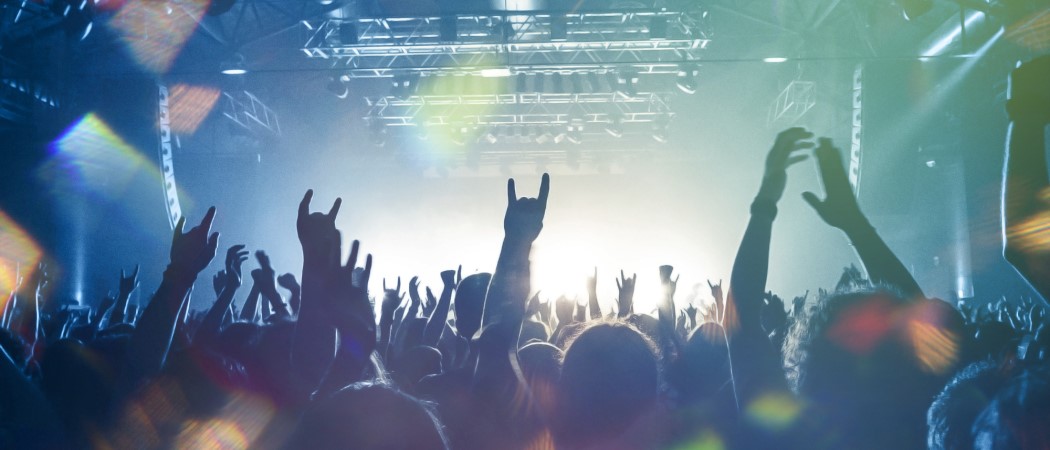
The silence was the worst part. From March 2020 onward, the world’s stages went dark, a global hush that stretched for months, then years. The hum of amplifiers, the collective intake of breath before a chorus, the tectonic thump of a kick drum through a packed floor—all of it vanished. That silence, however, created a vacuum. And when the lights finally flickered back on, the roar that filled it wasn't just a return to normal. It was a detonation.
We are now witnessing not a recovery, but a fundamental reordering of the music ecosystem. The data is staggering, a cascade of billions and millions that tells a story of raw, human hunger. In 2024, Live Nation reported $23.1 billion in revenue from 151 million fans across the globe. The top 100 tours alone grossed $9.5 billion. Taylor Swift’s Eras Tour, a cultural and economic singularity, barreled past the $2 billion mark, reshaping entire city economies in its wake. This isn't a boom. It’s a new geological epoch for entertainment.
The pandemic did more than postpone concerts; it rewired consumer psychology. Confined to screens for work, socialization, and passive entertainment, people developed a profound craving for shared, physical experience. The budget once allocated for monthly streaming subscriptions, new headphones, or digital downloads began pooling into a different fund: the live event fund. This wasn’t discretionary spending anymore. It was essential.
“What we saw wasn't just pent-up demand, it was compressed demand,” says industry analyst David Chen, author of the 2025 Global Music Report. “Two years of missed birthdays, graduations, first dates, and communal celebrations got funneled into a single priority: being in a room, or a field, with thousands of other people feeling the same thing. Streaming is a service. A concert is an event. People stopped buying services and started investing in events.”
This shift is quantified in the astonishing growth projections. The US live music market, valued at $18.51 billion for 2025, is expected to swell to $25.81 billion by 2030. Globally, live ticket sales are on track to hit $36.71 billion next year. Goldman Sachs is even more bullish, forecasting a total global live music market of $38.2 billion in 2025, a 10% year-over-year jump. The money is following the hunger, and the hunger shows no sign of abating.
"The calculus for artists changed completely. A hit on streaming pays your internet bill. A sold-out tour pays for your life, your band's lives, and your next album. After the lockdowns, that direct connection—that financial and emotional feedback loop—became the entire point of making music for many." - Maria Rodriguez, Tour Director for a major label.
This tidal wave of demand crashed onto shores of every size. The narrative often focuses on stadium spectacles, but the resurgence is most dynamically felt in the mid-tier. Venues holding between 1,001 and 10,000 people captured a 48.87% share of the US market in 2024. These are the rooms that offer a fragile, precious equilibrium: the palpable intimacy of seeing the sweat on a performer's brow, coupled with the economic viability that keeps the lights on.
Walk into The Fillmore in San Francisco or Brooklyn Steel in New York on any given night in 2024. The air is thick, not just with sound, but with a palpable sense of occasion. You see it in the fans—they dress for it. They arrive hours early. They are fully, devoutly present, a conscious rejection of the distracted, multi-screen consumption that defined the pandemic years. The medium-sized venue has become the sweet spot for artist development and fan devotion, a crucible where tomorrow's headliners are forged.
Yet, the large venues are evolving too, growing at a compound annual rate of 8.84%. This isn't just about adding more seats. It's about creating self-contained destinations. Modern stadium tours are feats of logistical and experiential engineering, incorporating premium lounges, enhanced sightlines, local food vendors, and even sustainability initiatives to meet new ESG benchmarks. The concert is no longer just the performance; it's the entire ecosystem built around it, from the moment you step off the train until you finally find your car in the massive, buzzing lot.
Geographically, the growth is uneven and telling. The US West, with its tech-wealth and constant influx of new residents, leads the nation with a projected growth rate of 7.38%. But look beyond the obvious hubs. Cities like Austin and Nashville are not just resting on their musical reputations; they are aggressively building for the future. Developments like Nashville Yards, a massive mixed-use complex with a state-of-the-art venue at its heart, are betting millions that live music is the core urban amenity of the 2020s. These cities understand that the concertgoer is also a tourist, a diner, a hotel guest, and a retail consumer. The ripple effect of a single show can buoy a local economy for days.
This regional diversification protects the industry. The boom is not monolithic. It's a patchwork of thriving scenes, from country in Texas to indie rock in the Pacific Northwest, each feeding the larger machine. The artist on stage at a 500-capacity club in Seattle tonight might be plotting a theater tour for next year, and a stadium annexation for 2027. The pipeline, stagnant for years, is gushing again.
The first act of this story is one of pure, explosive return. The silence was broken, decisively. But what happens after the initial euphoria? The live music industry now faces the complex second act: sustaining this momentum, managing its own swollen size, and navigating the inevitable backlash that follows any period of breakneck growth. The roar is back. The question is, what will it sound like in five years?
Beyond the broad euphoria lies a complex, often brutal economic machine. The live music resurgence is powered by unprecedented scale, daring artist gambles, and a fan base willing to pay premiums that would have seemed laughable a decade ago. Consider the singularity of Taylor Swift’s Eras Tour. It didn't just sell out stadiums; it became the first tour in history to cross the $1 billion revenue mark, a feat achieved within a single year. Its 2024 gross of $1.043 billion is a figure so large it distorts the gravity of the entire industry. But Swift’s achievement, while singular, illuminates a new rulebook.
Tours are no longer promotional vehicles for albums. They are the primary economic engine, cinematic spectacles that demand cinematic budgets and promise cinematic returns. Coldplay’s Music of the Spheres Tour pulled in $421.7 million in 2024, moving 10.3 million tickets globally. Bruce Springsteen, P!nk, The Rolling Stones—each generated over a quarter-billion dollars. The top 100 tours collectively raked in $9.5 billion in 2024, a monumental leap from the roughly $5.55 billion they generated just two years prior in 2022. This isn't growth. It's a different industry entirely.
"The Eras Tour didn't break the mold; it vaporized it. It proved that a tour can be a self-contained economic universe, with its own film, its own merchandise empire, and its own gravitational pull on national economies. Every major artist and their management now operates in a post-Eras reality." — Lena Warren, Music Business Professor at NYU.
This recalibration comes at a cost, borne directly by the fan. Between 2015 and 2023, the average global ticket price for music tours ballooned by approximately 67 percent. The dynamic pricing model, turbocharged by algorithms and pent-up demand, means the face-value ticket is often a phantom, a starting point for a digital bidding war. Yet, the demand holds. A 2023 survey found roughly one in three American consumers planned to spend even more on live events in the coming year. This creates a dangerous paradox: the industry’s current health is sustained by a pricing trajectory that threatens its long-term vitality.
The risk is a fundamental stratification of the audience. Live music, historically a unifying cultural commons, risks becoming the preserve of a financial elite. Can a genre sustain its cultural relevance if its most vital ritual—the live performance—is priced out of reach for the next generation of fans? The industry is gambling that the answer is yes, betting on a model that extracts maximum value from a dedicated, if shrinking, pool of high-spending superfans. This isn't merely a business strategy; it's a cultural calculation with profound implications for which artists get supported and which sounds reach a mass audience.
"We are inching toward a two-tier system: the billion-dollar stadium spectacular and the grassroots DIY show. The middle class of touring—the artist building a career through 2,000-capacity theater tours—is being squeezed by production costs and fan expectation. The pressure to 'go big or go home' has never been more intense." — Carlos Mendez, Independent Tour Manager.
The staggering revenue flows through increasingly narrow channels. Live Nation Entertainment, the behemoth born from the 2010 merger of Live Nation and Ticketmaster, has seen its revenue double in the past five years. It now presides over a kingdom of venues, promotion rights, and the primary ticketing platform, creating a vertically integrated ecosystem of breathtaking scale. For artists playing the stadium game, dealing with Live Nation is not a choice; it's a condition of entry. This consolidation delivers efficiency and global reach. It also breeds profound vulnerability and resentment.
The U.S. Department of Justice’s ongoing antitrust lawsuit against Live Nation, alleging the abuse of its dominant market position, hangs over the industry like a sword. Fans blame the company for baffling service fees and ticket scarcity. Artists, even hugely successful ones, whisper about the leverage it holds. When one entity controls the venue, sells the ticket, and often promotes the show, where does competition live?
"The promise of the post-pandemic boom was a renaissance for all. The reality is a hyper-efficient oligopoly. The artist makes more per ticket, but the path to that ticket is gated by a single company. The fan pays more, but feels the process is rigged. Everyone is making record profits, and everyone is furious." — Anya Sharma, Journalist covering antitrust in entertainment.
This centralization shapes artistic lineups, too. Promoters chasing guaranteed returns bank on legacy acts and proven stadium-fillers, which partially explains why only five women in history have grossed over $1 billion in career concert revenue. The financial risk of betting on a rising, unproven artist for a major tour has become astronomical. The result is a headliner circuit that can feel paradoxically stagnant even amidst explosive growth, recycling the same iconic names—Springsteen, The Stones, Elton John—while new voices fight for recognition in smaller rooms.
To understand the modern tour’s economics, you must stop looking at the ticket alone. The transaction at point of sale is merely the initial handshake. The real conversation happens in the sprawling marketplace built around it. Sponsorships, which now account for 5% of Live Nation's revenue, have evolved from simple stage banners to immersive brand “experiences” within festival grounds. Merchandise has transformed into high-priced, limited-edition collectible apparel. And then there is the content.
Taylor Swift’s “The Eras Tour” concert film, released directly to theaters in October 2023, generated over $260 million in global revenue. This wasn't a nostalgic afterthought; it was a strategic extension of the tour itself, capturing revenue from fans who couldn't secure tickets or lived continents away, while simultaneously functioning as a three-hour advertisement for the next leg of dates. It created a new paradigm: the tour as a transmedia franchise.
This diversification is a survival mechanism. It insulates artists and promoters from the volatility of touring itself—weather, illness, geopolitical instability. If a show in Buenos Aires gets postponed, the film is still streaming, the branded hoodie is still shipping from the online store. The live event becomes the sun in a solar system of revenue streams, each planet pulling in its own gravitational field of cash.
"The concert film is no longer a documentary. It's a capital asset. We budget for it during initial tour planning. It serves tertiary markets, extends the tour's cultural lifespan, and becomes a perpetual revenue stream on streaming platforms. It turns a fleeting event into a permanent product." — David Finch, Producer of multiple major concert films.
Amidst this deafening boom, a quiet question emerges: has the experience itself been commodified into oblivion? Purchasing a ticket now initiates a gauntlet: dynamic pricing, lottery-style registration systems, Verified Fan presales that feel like a loyalty tax. The act of buying has become a stressful, transactional video game. Then, at the venue, the premiumization continues—$40 for a t-shirt, $25 for a cocktail, $150 for a “VIP lounge” wristband that gets you a slightly shorter bathroom line.
Is the communal, transcendent joy of live music being slowly suffocated by the mechanics of its own monetization? The industry points to the sold-out shows, the smiling faces in Instagram posts, the record revenue. But the magic of a concert has always resided in its feeling of collective escape from the commercial grind. When the commercial grind follows you into the stadium, hands you a $20 beer, and shoves a QR code in your face to bid on a “VIP meet & greet upgrade,” what exactly are we escaping? The industry’s great challenge is no longer filling seats. It’s preserving the soul inside them while the financial machinery grows ever louder.
The numbers are undeniable. The momentum is real. But sustainability hinges on more than economic models. It requires a belief, held by both artist and audience, that the transaction is merely a means to a sacred end. When that belief erodes, the roar will soften, no matter how many billions are on the spreadsheet.
The significance of this live music boom extends far beyond balance sheets and attendance records. It represents a fundamental renegotiation of value in the digital age. For two decades, the narrative was one of devaluation—music became a stream, a background hum, an effectively free commodity. The pandemic, in its profound isolation, reminded us that the true value of music is not in its data stream, but in its physical vibration. It is in the collective gasp, the shared silence before a drop, the stranger you become temporary allies with as you fight for a sightline. The live resurgence is a massive, multi-billion dollar correction to the notion that experience can be fully digitized.
This shift has re-empowered the artist in a way the streaming economy never could. Where a billion streams on a platform might net an artist a few hundred thousand dollars, a single night in a stadium can generate millions. The financial center of gravity has shifted back from Silicon Valley to the stage. This economic power alters creative decisions, allowing for the kind of theatrical, high-concept tours like The Eras Tour or Coldplay's eco-conscious spectacle, projects that would be deemed financially insane if they relied on album sales or streaming royalties alone. Live music is no longer a subsidiary right; it is the primary canvas.
"We are witnessing the re-ritualization of music. The album release is a digital event, fleeting and fragmented. The tour is the pilgrimage. Fans don't just buy a ticket; they invest in travel, outfits, community—they mark their calendars for months. The concert has reclaimed its place as the definitive, communal text of an artist's work." — Dr. Evelyn Reed, Cultural Sociologist at University of Chicago.
Cities now compete not for corporate headquarters, but for tour dates. The economic impact of a single stadium show—estimated to inject between $10 and $20 million into a local economy through hotels, restaurants, and transportation—has made municipal governments active participants in this boom. Infrastructure is being built or retrofitted not just for sports, but for music. The success of a city’s cultural quarter is increasingly measured by its ability to attract and host major tours, turning entertainment from a leisure sector into a core pillar of urban economic strategy.
For all its power, this new golden age is built on precarious ground. The industry’s dependence on a handful of mega-tours creates staggering systemic risk. What happens when the current slate of legacy superstars—Springsteen, McCartney, The Stones—finally retires? The development pipeline for artists who can command a stadium is narrowing, not widening, under the financial pressure to immediately monetize. The middle-class artist, once the backbone of the industry, is being hollowed out, forced to choose between grueling, low-margin van tours or chasing viral fame with no guarantee of longevity.
Furthermore, the environmental cost of this global touring circuit is a gathering storm. The carbon footprint of moving stadium-scale productions across continents, and the travel emissions of millions of fans, clash violently with the professed values of many artists and their young audiences. Coldplay's extensive (and expensive) efforts to mitigate their tour's impact highlight the dilemma, but such measures are the exception, not the rule. The industry has yet to grapple in any meaningful way with the contradiction of selling communion with the planet while contributing to its degradation.
And then there is the fan, the ultimate source of all this revenue. The relationship is becoming transactional and extractive. The "Verified Fan" system, designed to thwart bots, often feels like a loyalty program where the reward is the privilege to pay more. Dynamic pricing algorithms can turn excitement into resentment in real-time. There is a boiling point, a price at which the emotional return no longer justifies the financial investment. We may be approaching it.
The clock is already ticking on the next phase. The summer of 2025 is poised to test the market’s limits with a saturation of mega-events. All eyes are on the European stadium runs from global pop titans and the continued dominance of heritage rock acts in North America. More telling will be the success of artists like Olivia Rodrigo, whose "GUTS World Tour" is scaling up to arenas globally throughout 2025, and whether gen-Z focused festivals like When We Were Young can sustain their momentum. The real signal will come from the genre's margins—can a jazz festival, a classical series, or an experimental electronic tour capture a slice of this financial fervor, or is the boom exclusively a pop and rock phenomenon?
Technology will not retreat; it will integrate. The concert film is now a staple, but the next frontier is immersive digital twins of shows—high-fidelity VR experiences offered as a cheaper, accessible alternative, not a replacement. These won't cannibalize ticket sales; they will serve as feeders and archives, broadening the audience and extending a tour’s lifespan. Meanwhile, the battle over ticketing transparency will intensify, with legislation like the proposed "TICKET Act" in the US Senate forcing changes to the often-opaque pricing models.
The silence that defined 2020 taught us what we truly valued. The roar that followed was the answer. But a roar is not a melody; it is a burst of chaotic energy. The challenge for the industry is to translate that energy into a sustainable rhythm, to build an ecosystem where artists can thrive at every level, where fans feel valued rather than monetized, and where the music, in all its live, terrifying, beautiful power, remains the undeniable, irreplaceable point of it all. The stages are bright, the crowds are massive, and the money is flowing. Now comes the hard part: ensuring the music survives its own success.
Your personal space to curate, organize, and share knowledge with the world.
Discover and contribute to detailed historical accounts and cultural stories. Share your knowledge and engage with enthusiasts worldwide.
Connect with others who share your interests. Create and participate in themed boards about any topic you have in mind.
Contribute your knowledge and insights. Create engaging content and participate in meaningful discussions across multiple languages.
Already have an account? Sign in here
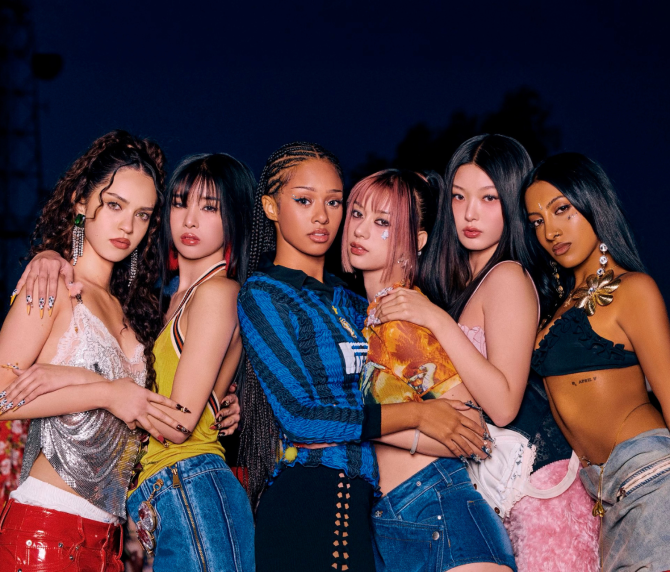
KATSEYE's meteoric rise from a 140,000-applicant global talent search to Grammy-nominated pop phenomenon redefines stard...
View Board
Tiffany Alvord’s rise from a 2008 bedroom cover to 705M YouTube views, indie hits, and a pivot into acting shows how a t...
View Board
1996 research debunks the samurai Tabata myth, exposing the scientific creation of a four‑minute, eight‑round interval p...
View Board
Two Arab-Indian creators sparked a 17 million-view anthem from a living-room FIFA session, blending beatboxing, film cra...
View Board
Jessie Kahnweiler shatters silence with raw, Jewish-inflected comedy, turning trauma into sharp satire that reshaped onl...
View Board
Jim Morrison turned rock into poetry, weaving surreal visions and Romantic rebellion into timeless anthems that still ha...
View Board
Livingston Allen: The Provocateur Who Redefined Hip-Hop Media A young man sits in a dorm room at Rutgers University in l...
View Board
The Enduring Alliances of Cinema: Crafting Magic on the Silver Screen The flickering images on a screen, the stories th...
View Board
Bad Bunny’s 19.8 billion streams in 2025 dethroned Taylor Swift, revealing a clash of fandom, strategy, and global cultu...
View Board
Loren Gray’s meteoric rise from a Pennsylvania teen to 55 million TikTok followers reveals how digital identity is engin...
View Board
Explore the epic journey of Star Wars from its humble beginnings to the current wave of streaming series and films, disc...
View Board
Spielberg’s $10.7 billion reign reshapes Hollywood as directors become
View Board
Kid Francescoli's melancholic electro-pop, born in Marseille, captivates global audiences with its cinematic Mediterrane...
View Board
Montpelliérain discret devenu figure de l'électro-pop, Kazy Lambist trace sa route entre Rome et Istanbul, mêlant synthé...
View Board
Taylor Swift's Eras Tour redefines pop as an economic powerhouse, generating billions and transforming cities through fa...
View Board
From silent eruptions to CGI-driven tsunamis, the disaster genre maps cultural dread, from 1970s all-star calamities to ...
View Board
Sea of Thieves: An Epic Adventure on the High Seas Picture this: the horizon is a molten orange line against a deepenin...
View Board
Max Verstappen en 2023 : une domination sans précédent en F1 avec 19 victoires, 575 points et une symbiose parfaite entr...
View Board
Microsoft's ambitious January 2026 Xbox Game Pass lineup signals a new era of curated entertainment, with over a dozen n...
View Board
Adin Ross turned a $4 million gambling loss into a Kick empire, mixing celebrity interviews, radical stunts and platform...
View Board
Comments