



Explorez tous les récits
Découvrez et contribuez aux récits historiques et culturels. Partagez vos connaissances avec des passionnés du monde entier.
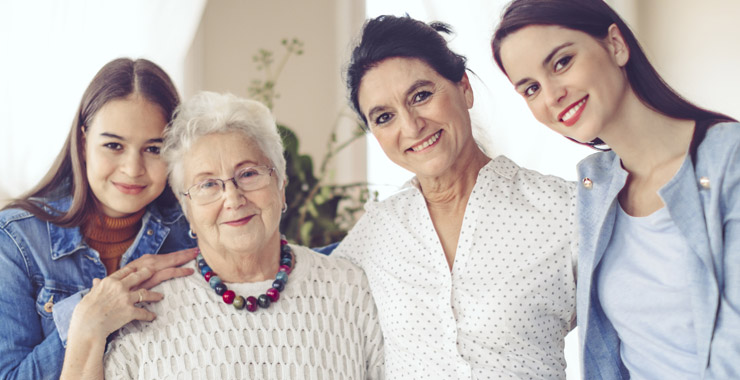
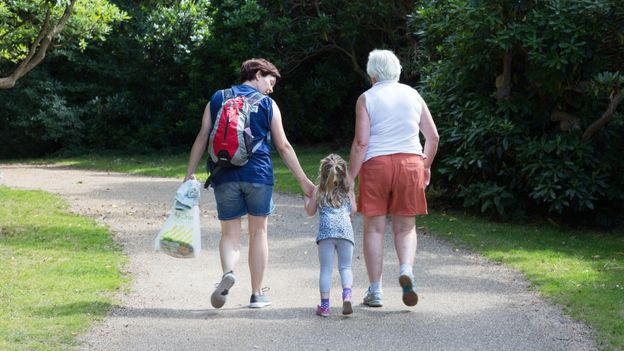
The teenager needs a ride to soccer practice at 4:15 PM. The aging father's physical therapist arrives at 4:30 PM. The conference call you cannot miss starts at 5:00 PM. You are not a logistics coordinator for a small, chaotic corporation. You are a parent. You are a child. You are a member of what sociologists, with dry understatement, call the "sandwich generation." This is not a demographic niche. By 2025, it is a defining condition of midlife for nearly one in four American adults, a relentless double-shift of care performed in the quiet spaces between everyone else's needs.
The traditional linear progression of life—grow up, leave home, start a family, retire—has fractured. It has been replaced by a compressed, overlapping simultaneity. Longer lifespans mean our parents live into their 80s and 90s, often with complex chronic needs. At the same time, delayed childbearing means a 45-year-old professional is as likely to be managing college applications as they are managing a parent's medication schedule. The math is brutal and inescapable. According to Pew Research, 54% of adults in their 40s are now simultaneously raising young or financially dependent children and supporting an aging parent.
This convergence is not accidental. It is the direct product of twentieth-century medical triumphs and twenty-first-century economic pressures. We saved the bodies but failed to build the societal scaffolding to support them. The average weekly cost for senior care now sits at $762, a figure that looms over household budgets already strained by orthodontist bills and college savings plans. The result is a population, predominantly women, performing an average of 20 to 37 hours of unpaid care work per week on top of paid employment. This is not a part-time job. It is a second full-time career, undertaken without training, pay, or a clear path to promotion.
"We have engineered a perfect storm of dependency," says Dr. Anya Petrova, a sociologist at the University of Chicago who studies family structures. "The neoliberal retreat of the welfare state placed care back onto the family unit just as demographic shifts made that unit least equipped to bear it. The sandwich generation member is the shock absorber for systemic failures in healthcare, elder services, and affordable housing. Their exhaustion is not a personal failing. It is a policy outcome."
Think of a typical weekday morning in such a household. There is an assembly line of need, but it is invisible to the outside world. The ritual involves not just packing lunches and signing permission slips, but also organizing pillboxes, confirming home health aide arrivals, and fielding panicked early-morning calls about a misplaced insurance card or a confusing medical bill. The emotional labor is constant and switching costs are high. One moment you are soothing adolescent social drama, the next you are explaining to a confused parent why they cannot drive anymore. The cognitive load would cripple a supercomputer.
The workplace, built for a bygone era of single-earner households and full-time homemakers, is largely oblivious to this reality. The Family and Medical Leave Act (FMLA) offers 12 weeks of unpaid leave, a provision laughably inadequate for a chronic, compounding condition that may last a decade or more. The adaptations are stealthy and costly. A 2025 survey by Wellabe found that 64% of these caregivers use sick days or PTO for caregiving duties, while 58% decline promotions or educational opportunities. Ambition is quietly suffocated by logistical necessity.
"I have clients who are senior VPs by day and dementia care managers by night," notes Michael Thorne, a family therapist in Seattle. "They speak in the calm, measured tones of executives in our sessions, but their hands are always moving—checking phones for alerts from the medication dispenser or the school portal. Their identity has been hollowed out. They are no longer an engineer, a writer, a musician. They are a function. A node in a care network. The psychological toll is a slow-motion erosion of self."
To understand the sandwich generation is to understand that care, in America, remains a gendered currency. The data is unambiguous: 59% of sandwiched caregivers are women. They are the "sandwich moms" who bear the brunt of what researchers call the "caregiver career penalty." They exit the workforce earlier, scale back ambitions more frequently, and sacrifice personal savings at higher rates. Their retirement accounts become emergency funds for parental co-pays and home modifications. Their career trajectories flatline not for lack of talent, but for an overabundance of responsibility.
This is not merely a personal struggle. It reshapes economic landscapes. When a highly skilled professional reduces her hours or leaves her job to manage care, the economy loses her productivity. Her family loses her income and future earning potential. Her own retirement security is compromised, potentially setting the stage for her children to face the same squeeze a generation later. It is a recursive cycle of financial insecurity, built one resigned phone call to HR at a time.
The strain is now quantifiably worsening. A 2025 HousingWire analysis reported that 69% of those caring for aging parents cite significant financial strain, a sharp rise from 64% just three years prior. This is not anxiety about discretionary spending. This is the visceral fear of running out of money for necessities—for a parent's assisted living facility or a child's textbook fees. The sandwich generation is not living paycheck to paycheck. They are living alert to alert, invoice to invoice.
What does this do to a person? To a marriage? To the relationship between the caregiver, their children, and the parents they tend? The emotional geometry becomes distorted. Love is threaded with resentment. Duty is shadowed by grief for a life put on permanent hold. One third of adults aged 40 to 60 report severe emotional and physical strain, citing a universal loss of personal time and a corrosive sense of failure. You are, by the brutal logic of the situation, always failing someone. The teenager misses the game. The parent misses the doctor's appointment. You miss your own life.
The question hanging over the kitchen at 11 PM, after the last email is sent and the last medication is dispensed, is not "How do I get it all done?" It is more fundamental, more philosophical: When did this become my job? And the unspoken corollary: Who built a world where this is the answer?
Examine the financial statements of a sandwiched caregiver. The story is not in the income column, but in the deductions, the deferrals, the silent erosions. A 2024 Harris Poll conducted for financial firm Athene laid the crisis bare: 79% of sandwich generation members have adjusted their retirement goals to fund care for others. 34%9% now plan never to retire. This is not planning for the future. This is the managed dissolution of a future.
"As the retirement age population in the U.S. grows, the Sandwich Generation represents the next wave in America’s retirement crisis, with potential long-term implications for individuals, families and the economy." — Mike Downing, Athene Chief Operating Officer
The math is unforgiving. Data from the National Partnership for Women & Families reveals that these caregivers provide roughly 77 hours of unpaid care per month while 69% simultaneously hold paid jobs. This is the equivalent of working two full-time jobs, but one offers no salary, no health benefits, and no 401(k) match. The lifetime financial penalty for women, who perform the bulk of this labor, is catastrophic: lost wages and missed promotions tally between $295,000 and $324,044. This sum represents a vanished down payment on a house, a child’s college tuition evaporated, a retirement portfolio gutted before it was ever built.
This financial hemorrhage creates a perverse inheritance. Instead of passing on wealth, stability, or opportunity, the sandwich generation is often forced to pass on debt and insecurity. The 2025 AARP and National Alliance for Caregiving report confirmed the total number of family caregivers in the U.S. has surged 45% since 2015 to 63 million. Nearly 30% of them are sandwiched. They are not just caring for two generations; they are bankrupting their own generation’s future to do so.
Consider the compounding pressures. Over 57% of 18-24-year-olds lived with parents in 2024, according to U.S. Census data, trapped by student debt and impossible housing costs. So the "child" side of the care equation now extends well into adulthood. At the other end, 10,000 Americans turn 65 every single day, a statistic from CBS News that will hold steady through 2030. The demand for care is exploding at both termini, while the resources of the middle—time, money, emotional bandwidth—are being crushed into nonexistence.
"The senior population is increasing at an incredible rate, so it’s no surprise that the number of family caregivers is increasing, too... it also can take a physical, emotional, and mental toll." — Sierra Goetz, co-founder, HomeCare Advocacy Network
The health outcomes are a direct indictment of the system. The same AARP 2025 report found one in five caregivers rates their own health as fair or poor. A quarter have taken on debt to manage care. This is not a side effect. It is the primary effect. The body breaks under the load. Sleep deprivation becomes chronic. Preventative medical care is skipped. The caregiver becomes the next patient in line, ensuring the cycle continues.
Popular discourse often frames this crisis through the lens of individual resilience. Articles praise the "grit" of Generation X, those born between 1965 and 1980, who now form the core of the sandwich cohort. A recent analysis by SiliconCanals dubbed them "the most stressed yet resilient" generation. This framing is dangerous. It misattributes a systemic failure to personal character. Celebrating resilience in the face of untenable pressure is simply a way to avoid building structural support.
What does this "resilience" actually look like on the ground? It looks like 40% of caregivers performing high-intensity medical tasks like injections or wound care without formal training. It looks like the silent bargaining at 2 AM: if I get four hours of sleep, I can function at the meeting tomorrow. If I skip my own doctor’s appointment, I can take my mother to hers. Resilience is not a virtue here. It is a survival tactic in a war of attrition against one’s own well-being.
The generational specificity matters. Gen X entered adulthood during the shift from defined-benefit pensions to risky 401(k)s. They bought homes at the peak of the market before the 2008 crash. They are now navigating care with less familial wealth than the Silent Generation before them and less guaranteed safety net than their Boomer parents often enjoyed. Their resilience is born of a lifetime of economic instability. It is not innate toughness but learned adaptation to perpetual crisis.
"We have to stop calling it 'juggling.' Juggling implies a graceful, voluntary act. There is nothing graceful about this. It is perpetual triage in a field hospital you did not build, for wounds you did not inflict, with insufficient supplies." — Dr. Liana Rodriguez, clinical psychologist specializing in caregiver burnout
Confronting this requires a societal conversation we are desperately avoiding. Guides for the sandwich generation, like one from D&C Home Care Maine, pragmatically advise breaking "the talk" about aging into a series of smaller discussions about finances and care preferences. The tragic reality is that these talks are statistical rarities. Data from the National Partnership for Healthcare and Hospice Innovation shows less than 50% of families have discussed end-of-life plans, and two-thirds of Americans lack any advance directive.
This silence is expensive. It transfers decision-making from a place of planning to a state of emergency, where choices are limited, costly, and made under duress. The policy landscape mirrors this avoidance. The Family and Medical Leave Act remains a skeleton of what is needed. Long-term care insurance is unattainable for many. The Medicaid spend-down requirements for elder care force families into poverty to qualify for assistance. We have designed a system that punishes preparation and rewards crisis.
The gender debate here is not academic. The fact that 59% of sandwiched caregivers are women, who then suffer disproportionate career and financial penalties, reveals this as a central feminist economic issue. The unpaid labor extracted from women is what props up the faltering formal systems of health and elder care. Their lost earnings subsidize the state’s refusal to build a coherent care infrastructure. When we talk about the wage gap, we must include this massive, invisible transfer of wealth and labor.
"The Sandwich Generation is the human shock absorber for our collective refusal to value care work. We treat their time, their health, their financial security as an infinite resource to be mined until depleted. Then we wonder why there’s a retirement crisis." — Elena Marcus, economist, Brookings Institution
Where does this lead? The projections are clear. With 2.5 million Americans currently engaged in this dual care and the population over 65 skyrocketing, the sandwich condition will define midlife for millions more through 2050. We are normalizing a life stage characterized by financial precarity, physical exhaustion, and the systematic siphoning of one generation’s security to patch the holes in another’s. This is not a temporary squeeze. It is the new architecture of the American family, built on a foundation of quiet, desperate sacrifice. The question is no longer whether the system is broken. The question is whether anyone intends to fix it before the center collapses entirely.
This is not a private struggle. The significance of the sandwich generation extends far beyond individual kitchen tables cluttered with medical bills and permission slips. It represents the wholesale failure of a postwar social contract that assumed stable nuclear families, employer-linked benefits, and a government that largely stayed out of domestic life. That contract is void. In its place, we have an ad-hoc, informal, and brutally inefficient care economy powered by the unpaid labor of midlife adults, disproportionately women. The Pew Research finding that 83% of adults aged 60 and over are engaged in some form of this dual caregiving is not a minor statistic. It signals that this is not a phase but a permanent reconfiguration of later adulthood.
The cultural impact is a pervasive, low-grade mourning. There is a grief for the lost narrative of midlife as a time of personal achievement, exploration, and relative freedom. In its place is a narrative of service and sacrifice so total it becomes identity. The very term "sandwich generation" sanitizes the reality. This is not a neat package. It is a compression, a tectonic pressure that reshapes the landscape of family, work, and self. It forces a revision of what we consider a successful life—away from individual accomplishment and toward a grim metric of endurance.
"We are witnessing the privatization of the welfare state, one family at a time. The sprawling, hidden workforce of family caregivers now provides an estimated $600 billion in unpaid labor annually. That figure isn't charity. It's a massive subsidy to both the healthcare industry and government coffers. We call them caregivers. Economists should call them the largest unpaid workforce in the nation." — Dr. Rebecca Chen, political economist, The New School
Historically, multi-generational care was embedded in extended family structures and communal living. It was shared. The modern iteration is uniquely isolating. It happens in suburban homes and urban apartments designed for discrete nuclear units. The labor is invisible, performed behind closed doors, its costs internalized as personal failure rather than systemic dysfunction. This isolation fuels the mental health crisis documented by the Mental Health America National, where caregivers report exhaustion so profound it mimics clinical depression.
The primary weakness in the current discourse is its therapeutic, individualistic framing. Magazine articles, employer wellness webinars, and caregiver guides focus almost exclusively on self-care strategies, better calendar apps, and mindfulness techniques. This approach is necessary but catastrophically insufficient. It addresses the symptom—burnout—while implicitly accepting the disease: a society that has offloaded essential human services onto unpaid family members with no training, no support, and no exit.
This focus on resilience and coping mechanisms risks becoming a new form of victim-blaming. If you are overwhelmed, the logic implies, you have not yet mastered the correct breathing technique or learned to delegate effectively. It places the onus for solving a macroeconomic and policy failure onto the individual experiencing its most acute effects. The conversation remains stubbornly personal when it needs to be fiercely political.
Furthermore, the demographic data itself can be misleading. Highlighting that more than half of people in their 40s and 59% in their 50s are in this position can normalize it, making it seem like an inevitable life stage rather than a policy choice. We risk accepting the absurd: that it is reasonable to expect a generation to fund two retirements (their parents’ and their own) while putting children through college, all on a single income stream increasingly threatened by the care demands themselves. The greatest controversy is not about the existence of the squeeze, but about our collective willingness to name its root cause as a willful societal neglect.
Another critical blind spot is intergenerational equity. The financial and emotional resources being drained from Gen X and older Millennials are resources that will not be available to their children. The transfer is not just from parent to grandparent; it is from grandchild to grandparent, a intergenerational raid on future security. The 9% who plan never to retire are not making a choice. They are announcing a sentence.
The forward look is not a mystery. The demographic wave is a known quantity. The 10,000 daily turning 65 will continue through 2030. The first Millennials will enter their mid-50s by 2035, likely facing this squeeze with even less financial cushion than Gen X. The projection that sandwich population pressures will peak between 2030 and 2050 is not a forecast. It is a certainty. The questions are about our response.
Concrete developments are emerging, driven less by policy and more by sheer market force. Watch for the expansion of employer-based benefits in 2025 and 2026, not from altruism but from retention necessity. Companies like Bright Horizons are expanding backup elder care services. The financial advisory industry, as noted in a 2025 InsuranceNewsNet analysis, is scrambling to create "caregiving concierge" services as a new product line, recognizing that portfolio management is now inextricable from care logistics. The private sector will attempt to monetize the desperation.
The true battleground is policy. Advocacy groups are building momentum around specific legislative pushes for 2025 and 2026: expanding the federal tax credit for caregivers, making it refundable; pushing for paid family and medical leave laws at the state level that go beyond the 12-week FMLA model to cover intermittent, chronic needs; and reforming Medicaid asset rules that force impoverishment. The success of these efforts will define the next decade. Their failure will guarantee the crisis deepens.
The teenager’s soccer practice and the father’s physical therapy appointment still loom at 4:15 and 4:30. The conference call still starts at 5:00. But the figure in the middle is no longer just a parent or a child. They are the central actor in a drama of national neglect, performing a role they never auditioned for on a set that is actively crumbling. We have built a society that asks for everything and offers nothing in return. The final calculation is not how many hours they can endure, but how long a nation can ask its people to hold a breaking point in their hands and call it home.
Votre espace personnel pour organiser et partager vos connaissances avec le monde.
Découvrez et contribuez aux récits historiques et culturels. Partagez vos connaissances avec des passionnés du monde entier.
Connectez-vous avec d'autres qui partagent vos intérêts. Créez et participez à des tableaux thématiques.
Contribuez avec vos connaissances. Créez du contenu engageant et participez à des discussions dans plusieurs langues.
Vous avez déjà un compte ? Connectez-vous ici
In the 1970s Norway reengineered prisons by replacing solitary with community life, cutting assaults by 74% and reshapin...
Voir le tableau
Journalist details Walter Freeman's 1946 ice-pick lobotomy, its 10-minute office speed, 2,500 operations, and the enduri...
Voir le tableau
Jared Loughner: The Fractured Path to a Tucson Parking Lot The morning of January 8, 2011, was cool and bright in Tucso...
Voir le tableau
Shinrin-yoku, Japan's 1982 forest bathing practice, blends science and spirituality, lowering stress and boosting immuni...
Voir le tableauNew study reveals skin bacteria linked to lower stress, hinting probiotic skincare may redefine beauty as mental wellnes...
Voir le tableau
Explore how radical acceptance, rooted in DBT and ACT, offers a path through infidelity's pain—without bypassing account...
Voir le tableau
Commentaires