Explore Any Narratives
Discover and contribute to detailed historical accounts and cultural stories. Share your knowledge and engage with enthusiasts worldwide.

Dating back to the very origins of Christianity, Saint Polycarp remains a pivotal figure in the story of the early Church. Born in Asia Minor around the end of the first century, Polycarp was both a witness and a guardian of the apostolic heritage, serving as bishop of Smyrna for an astonishing eighty years.
Saint Polycarp's birth, traditionally placing it around 69 or 70 AD, marks the beginning of a life closely intertwined with the early history of Christianity. Born likely in Asia Minor, an area rich in cultural and religious diversity, Polycarp's journey from a humble beginning to his status as a revered bishop spans nearly half a millennium of Christian history. Much of what we know about his early years comes from tradition and later writings, suggesting he was indeed a direct disciple of the Apostle John. This apostolic connection provides invaluable context for understanding not only his personal life but also the theological and cultural landscapes of the era.
As a young convert to Christianity, Polycarp would have been steeped in the teachings of the apostle, absorbing his interpretations of the New Testament and the principles of the early Church. This firsthand connection to the apostles adds a layer of authenticity and authority to Polycarp's teachings, setting him apart from subsequent generations of Christians who would base their understandings largely on written texts rather than oral traditions.
Polycarpus' rise to the position of bishop of Smyrna around 109 AD marked the beginning of his enduring legacy. Serving as bishop for approximately six decades until his martyrdom around 155 AD, Polycarp's tenure as spiritual leader of Smyrna coincided with some of the most transformative periods in Christian history. His appointment came at a time when Christianity was transitioning from a minority religion to a more structured and organized institution, a process characterized by challenges both internal and external.
During his lengthy tenure, Polycarp was known for his pastoral care, zeal in preserving apostolic teaching, and his unwavering dedication to the defense of orthodox Christian doctrine. These qualities were crucial in a time when the early Church faced numerous challenges—both from external pressures like persecution at the hands of pagans and internal challenges involving the emergence of various heresies.
Polycarp played a significant role in defending the orthodox Christian faith against various heresies, none more prominent than Marcionism. The Marcionites rejected the Old Testament and advocated for a Gnostic interpretation of Christianity, viewing it as a higher, more enlightened truth in contrast to Judaism. Polycarp's stance against these heresies reinforced the need for a clear and unified Christian doctrine, emphasizing the compatibility of the Hebrew Bible and early Christian teachings.
In dealing with heretical teachings, Polycarp emphasized the continuation of apostolic tradition. Through his writings and public disputations, he sought to preserve the authentic teachings handed down from the apostles, ensuring their relevance and integrity within the developing Christian church. This focus on apostolic authority and continuity reflects a fundamental aspect of early Christian thought, where the living tradition of faith and practice was seen as crucial for maintaining theological orthodoxy.
Aside from his contributions as a bishop and defender of faith, Polycarp is also remembered for one of his surviving works—The Epistle to the Philippians. Written in the later years of his ministry, this letter offers profound insights into the early Church's practices and beliefs. While only fragments remain, the text emphasizes themes of moral conduct, spiritual growth, and Christological perspectives. Through this epistle, Polycarp demonstrates his continued commitment to upholding apostolic tradition and fostering spiritual maturity among his flock.
Polycarpus' legacy extends beyond mere pastoral duties and intellectual discourse. His martyrdom stands as perhaps his most enduring legacy, serving as a powerful symbol of faith and sacrifice in the face of persecution. Described in vivid detail by contemporaries, particularly in The Martyrdom of Polycarp, his final moments underscore the risks and costs associated with adhering to Christian teachings in a predominantly pagan world.
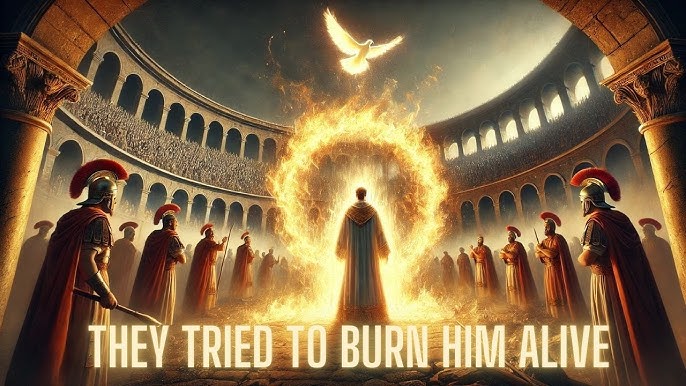
According to historical accounts, Polycarp was arrested during persecutions under Emperor Antoninus Pius and faced execution. Despite attempts to have him burned alive, Polycarp miraculously survived and was ultimately dispatched by a soldier with a sword. His courage and steadfastness in the face of adversity have made him a hero among Christians, embodying the spirit of unwavering faith. The Martyrdom of Polycarp serves not only as a testament to his personal bravery but also as a historical document providing valuable insights into the experiences and perceptions of early Christians under persecution.
Polycarpus' long and influential life had a profound impact on the development of early Christian thought. His teachings, while based on apostolic authority, contributed significantly to shaping the theological foundations of the growing Christian community. His efforts to maintain doctrinal orthodoxy and combat heresies helped ensure that the core teachings of Christianity remained cohesive and consistent, even amidst periods of rapid change and uncertainty.
Potential future articles can delve deeper into specific debates and controversies that shaped the early Church, as well as explore how Polycarp's writings and actions influenced later Christian thinkers and leaders. Additionally, examining the ways in which Polycarp's legacy continues to resonate across different Christian traditions might provide further insights into his enduring significance.
The cultural and linguistic environment of Asia Minor also played a significant role in shaping Polycarp’s legacy. As Smyrna was a cosmopolitan city with deep roots in Greek philosophy and culture, Polycarp was adept at navigating these complexities while promoting Christian values. His ability to articulate the Gospel within the broader intellectual framework of the time ensured that Christian teachings could find a receptive audience among those immersed in pagan thought.
Polycarp’s familiarity with Greek literature and philosophical debates allowed him to engage effectively with intellectuals and educated pagans, making Christianity accessible to a wider populace. This cultural fluency enhanced his credibility and effectiveness as a teacher and leader within the early Church.
The concept of apostolic succession was central to Polycarp’s leadership and teachings. By claiming direct lineage from the apostolic heritage, Polycarp strengthened his position as a legitimate spiritual authority. This emphasis on apostolic succession served multiple purposes:
This approach not only bolstered his position but also provided a robust framework for addressing the numerous heresies that emerged during his time. For example, Marcionism’s rejection of the Old Testament and its emphasis on a Gnostic interpretation of Christianity presented a significant challenge to traditional Christian beliefs. By asserting his apostolic credentials, Polycarp could counter these heretical views with a clear and unambiguous stance rooted in apostolic authority.
Polycarp was engaged in several ecclesiastical controversies during his lifetime, particularly concerning the dating of Easter. One of the most notable disputes involved reconciling the differences between the Eastern and Western churches regarding the timing of Easter celebrations.
Polycarp represented the Asian churches in their interactions with the Roman Church. These discussions were critical in establishing common practices and resolving differences. The Easter debate highlights the challenges the early Church faced in harmonizing traditions and practices that had developed independently in different regions.
Through these interactions, Polycarp demonstrated diplomatic skills and a desire to maintain unity within the Church. His efforts in resolving such disputes illustrate his role not merely as a local bishop but as a key figure in early Christian ecclesiastical governance.
Polycarp’s leadership extended to the liturgical practices and rituals of the Church. His involvement in shaping these aspects helped to standardize and codify early Christian worship. By ensuring that liturgical norms were consistent with apostolic teachings, Polycarp reinforced the authenticity of Christian practices.
In liturgical matters, Polycarp would have focused on maintaining the use of familiar elements from apostolic times, such as prayers, hymns, and communal meals. These practices not only honored the past but also strengthened the sense of continuity and identity within the Christian community. His influence in liturgical matters underscores his broader efforts to maintain a robust and unified Christian faith.
Polycarp maintained close relationships with other prominent Church leaders of his time. For instance, his correspondence with Ignatius of Antioch, another important figure in the early Church, highlights the interconnected nature of these early Church communities. Their mutual respect and collaboration exemplified the cooperative spirit that characterized much of early Christian leadership.
Such interactions were vital for the propagation of apostolic teaching and the resolution of conflicting views. By exchanging perspectives and sharing insights gained through their respective ministries, Polycarp and other leaders like Ignatius contributed to the cohesion and stability of the early Church.
Polycarp’s teachings on perseverance and faithfulness were central to his ministry. In the face of persecution, his steadfast dedication to Christian principles inspired countless followers. His final words and actions, documented in The Martyrdom of Polycarp, became a template for later martyrs, reinforcing the idea that true Christianity demanded a willingness to endure suffering for one’s faith.
Polemics like Justin Martyr and Tertullian echoed Polycarp’s emphasis on perseverance and the value of steadfast faith. His legacy includes not only his martyrdom but also the manner in which he lived out his faith in daily life, serving as a model for Christian character and conduct.
The impact of Polycarp’s teachings and actions extends far beyond his immediate era. His legacy lives on in the modern Church, where his name is venerated as a saint and a respected figure in ecclesiastical history. Polycarp’s contributions to the development of Christian doctrine and his example of courage and devotion continue to inspire believers.
Polycarp remains a crucial reference point for understanding the early Church, providing insights into the challenges faced by early Christians and the strategies employed to overcome them. His story serves as a reminder of the importance of continuity and faith in the face of adversity, resonating deeply with contemporary Christians.
Future articles could delve deeper into Polycarp’s specific theological contributions, his impact on local and international church governance, and the enduring relevance of his teachings in modern times. Exploring how his legacy inspires contemporary Christian leaders and believers might offer fresh perspectives on his continuing significance.
While only a fragment of Polycarp’s writings has survived, what remains provides invaluable insight into the theological landscape of the early Church. Among his surviving works is The Epistle to the Philippians, a brief but profound letter that offers glimpses into his theological perspectives. Although incomplete, this epistle conveys themes of moral conduct, eschatology, and apostolic authority.
Polycarp emphasized the importance of moral discipline and ethical living, urging his readers to maintain a pure and godly walk. This stress on personal ethics reflected a broader concern for moral integrity in the face of external challenges and internal divisions. His teachings also touched upon the Second Coming of Christ, encouraging his congregation to prepare themselves spiritually for the imminent return of Christ.
The emphasis on apostolic authority and continuity is evident throughout Polycarp’s remaining writings. In the epistle to the Philippians, he frequently references the apostles’ testimony and teachings, grounding his own perspectives within a rich tradition inherited from the apostolic era. This emphasis on apostolic succession served not only to legitimize his own authority but also to uphold the integrity of Christian doctrine.
The veneration of Polycarp within the Christian Church began immediately after his death. During the persecutions of the early Church, his martyrdom was seen as a manifestation of divine approval and the ultimate sacrifice for faith. The Martyrdom of Polycarp, written by a companion named Ignatius of Antioch, served as a powerful narrative that captured the broader Christian imagination.
This text described Polycarp’s arrest, trial, and execution in vivid and moving detail, painting him as a martyr and a role model for others facing persecution. The Martyrdom of Polycarp was read aloud in churches and became a key religious text, illustrating the early practice of reading martyrdom tales together with worship. This tradition of veneration eventually led to his canonization as a saint across various Christian denominations, including Eastern Orthodox, Catholic, Oriental Orthodox, Lutheran, and Anglican churches.
Polycarp’s martyrdom and the stories surrounding it reinforced his status as a martyr and a saint, ensuring his lasting place in Christian history. His legacy was further solidified through the compilation and preservation of early Christian martyrologies, which celebrated the sacrifices and virtues of early Christian leaders.
Despite the passage of nearly two millennia, Polycarp remains relevant in modern times. Scholars continue to study his life and writings, particularly his contributions to the understanding of early Christian doctrine and the challenges faced during the formative years of Christianity.
The study of Polycarp’s martyrdom, particularly through texts like the Martyrdom of Polycarp, provides valuable insights into early Christian attitudes towards persecution and death for faith. These narratives help modern readers understand the psychological and societal contexts that shaped early Christian beliefs and practices.
Polycarp’s example of steadfast faith and enduring devotion resonates across different epochs. His story continues to inspire contemporary Christians, highlighting the importance of moral integrity, apostolic authority, and unwavering commitment to the Gospel.
Throughout his life and career, Saint Polycarp played a pivotal role in the early Christian Church. As a direct disciple of the Apostle John, a bishop who served for over six decades, and a martyr whose legacy continues to reverberate, Polycarp embodies the essence of apostolic continuity and Christian perseverance. His teachings, writings, and deeds have left an indelible mark on Christian history and provide a rich tapestry for modern scholars and faithful alike to explore.
From his birth in Asia Minor, through his long and influential ministry, and finally, to his martyrdom, Polycarp exemplifies the transformative power of faith. His story serves as a testament to the enduring impact of early Christian leaders and the unchanging message of Christ.
The life and legacy of Saint Polycarp remind us of the ongoing struggle for faith, the importance of moral integrity, and the enduring relevance of apostolic tradition. As we navigate the complexities of our own times, Polycarp’s example continues to offer guidance and inspiration, reminding us of the eternal truths that unite the Christian community.

Your personal space to curate, organize, and share knowledge with the world.
Discover and contribute to detailed historical accounts and cultural stories. Share your knowledge and engage with enthusiasts worldwide.
Connect with others who share your interests. Create and participate in themed boards about any topic you have in mind.
Contribute your knowledge and insights. Create engaging content and participate in meaningful discussions across multiple languages.
Already have an account? Sign in here

Explore the profound legacy of Saint Polycarp, a pivotal figure in early Christianity who bridged apostolic times with e...
View Board
Explore the influential life of Saint Ambrose, a pivotal figure in early Christianity whose theological insights and lea...
View Board
Discover the profound legacy of Saint Ignatius of Antioch, a pivotal figure in early Christianity whose teachings on uni...
View Board
Discover Pope Clement I, the first Apostolic Father who shaped early Christianity. Explore his life, the First Epistle o...
View Board
Explore the compelling story of Saint Agnes of Rome, a symbol of courage and faith that transcends time. Discover her un...
View Board
Discover Saint Jerome's life, his Vulgate Bible translation, and lasting impact on Christianity. Explore his scholarly l...
View Board
Pope Leo I, known as Leo the Great, shaped Christianity with his theological clarity, diplomatic negotiations with Attil...
View Board
Pope Linus, the second Bishop of Rome, played a pivotal role in the early Christian Church, navigating theological dispu...
View Board
Discover the profound history and spiritual significance of Rome’s Holy Doors as the 2025 Jubilee concludes. Learn about...
View Board
Discover the biblical roots and theological significance of Melbin-Kalbin-H-Zwh-kai-To-Ergo-enos-Prwtoporoy-Xhmikoy. Exp...
View Board
Visit sacred Karbala, Iraq's spiritual heart, to explore the revered shrines of Imam Hussain and Abbas. Join millions on...
View Board
Baba Ali was a legendary Sufi saint whose teachings on love, compassion, and ethical living continue to inspire individu...
View Board
"Explore Mecca's spiritual significance, rich history, and cultural heritage. Discover why millions embark on pilgrimage...
View Board
Discover the rich traditions of San Giuseppe, from Sicilian feasts to Roman zeppole. Celebrate faith, family, and food o...
View Board
Explore the reign of Julian the Apostate, a Roman emperor whose ambitious reforms and controversial attempts to revive p...
View Board
> Constantine the Great: The Visionary Emperor Who Shaped History Constantine the Great, born Flavius Valerius Constanti...
View Board
Explore the spiritual heart of Iran in our in-depth look at Qom, a city rich in religious significance, historical depth...
View Board
Rishikesh is a sacred city in Uttarakhand known for its spiritual significance, yoga heritage, and natural beauty with t...
View Board
Discover the enchanting allure of Dharamshala, a Himalayan haven nestled in the Dhauladhar Range. Explore stunning vista...
View Board
"Explore the transformative power of solitude in your spiritual journey with our insightful article, uncovering the hidd...
View Board
Comments