Pope Leo I: The Great Pontiff Who Shaped Christianity
Introduction: The Significance of Pope Leo I
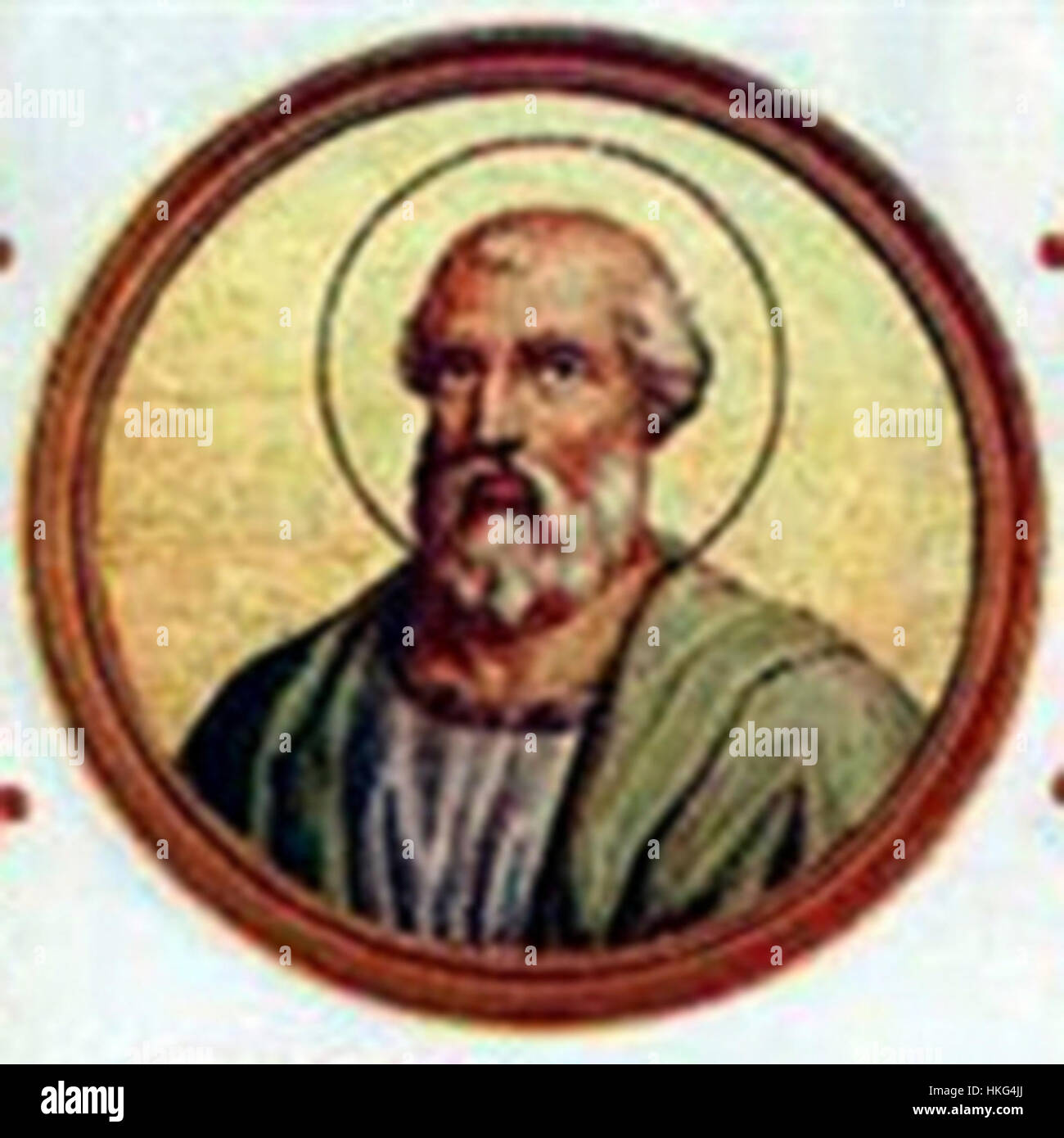
Pope Leo I, also known as Leo the Great, stands as one of the most influential figures in the history of the Catholic Church. Serving as the Bishop of Rome from 440 to 461 AD, his leadership came at a critical time when the Western Roman Empire was in decline, and theological controversies threatened to fracture Christendom. Through his theological clarity, political diplomacy, and unwavering commitment to the Church, Leo not only preserved the unity of Christianity but also laid the foundations for the medieval papacy.
Early Life and Rise to the Papacy
Little is known about Leo’s early life, but historical sources indicate that he was born in Tuscany, Italy, around 400 AD. His early career in the Church saw him rise through the ranks, earning a reputation as a skilled theologian and administrator. By the time of his election as pope in 440, Leo had already demonstrated his competence as a deacon under Pope Sixtus III, where he played a key role in ecclesiastical affairs.
His pontificate began during a tumultuous period—the Western Roman Empire was crumbling under internal strife and external invasions. Meanwhile, theological debates, particularly concerning Christ’s nature, were causing deep divisions within the Church. Leo’s strong leadership was essential in navigating these challenges.
Theological Contributions: The Council of Chalcedon
One of Leo’s most enduring legacies is his theological influence, particularly in defining the nature of Christ. The mid-5th century was marked by the christological controversy between Nestorianism, which emphasized the separation of Christ’s divine and human natures, and Monophysitism, which argued for a single, divine nature.
To address these disputes, the Council of Chalcedon was convened in 451 AD. Though Leo did not attend in person, his *Tome to Flavian*, a doctrinal letter sent to Archbishop Flavian of Constantinople, became the cornerstone of the council’s deliberations. In this document, Leo articulated the orthodox position that Christ is one person existing in two natures—fully divine and fully human—united without confusion or separation.
The council fathers acclaimed his letter with the famous declaration: *"Peter has spoken through Leo!"* This affirmation not only solidified Christological orthodoxy but also reinforced the primacy of the Roman See, positioning the pope as a supreme doctrinal authority.
Political Leadership: The Meeting with Attila the Hun
Beyond theology, Leo’s pontificate was marked by his diplomatic prowess. In 452, the notorious Hun leader Attila invaded Italy, sacking cities and marching toward Rome. With the Western Emperor Valentinian III powerless to stop the advance, Leo took it upon himself to confront the barbarian king.
The details of their meeting remain shrouded in legend, but historical accounts suggest that Leo’s intervention—whether through negotiation, persuasion, or divine intervention—convinced Attila to spare Rome. While some historians argue that disease and logistical challenges also influenced Attila’s decision, Leo’s boldness cemented his reputation as the spiritual and political defender of Rome.
Ecclesiastical Reforms and Pastoral Care
Leo’s pontificate was also characterized by efforts to strengthen Church discipline and pastoral care. He enforced clerical celibacy, countered abuses within the clergy, and emphasized the moral responsibility of bishops. His sermons and letters reveal a deep pastoral concern for the faithful, often stressing themes of charity, humility, and repentance.
Additionally, Leo worked to consolidate the authority of the papacy over regional churches. He asserted Rome’s supremacy in ecclesiastical disputes, particularly against the claims of the patriarchs of Constantinople. His vision of the pope as Christ’s vicar on Earth, successor to St. Peter, became a defining feature of the medieval Church’s structure.
Conclusion of Part One: A Pillar of the Early Church
Pope Leo I’s impact on Christianity cannot be overstated. Through his theological clarity, he preserved orthodoxy at a time when the faith was at risk of fragmentation. His political interventions shielded Rome from destruction, while his ecclesiastical reforms strengthened the Church’s unity and moral authority.
As we move to the next part of this exploration, we will delve deeper into Leo’s writings, his confrontation with other theological disputes, and his lasting influence on the development of papal authority. His legacy as "Leo the Great" is well-earned, marking him as one of history’s most consequential popes.
(Instruction: Let me know when you're ready for the second part of the article.)
Leo the Great’s Writings and Sermons: A Legacy of Spiritual Depth
Pope Leo I was not only a skilled administrator and diplomat but also a profound theologian and preacher. His extensive writings—primarily sermons and letters—offer a window into his theological vision and pastoral care. Of his surviving works, 96 sermons and 143 letters provide invaluable insights into his thoughts on liturgy, morality, and Church authority.
Many of Leo’s sermons were delivered on major feast days, particularly Christmas and Easter. His *Christmas Homilies* are especially notable for their emphasis on Christ’s dual nature, reinforcing the teachings of the Council of Chalcedon. He framed the Incarnation as the pivotal moment in human history, where divinity united with humanity to redeem mankind. His eloquent and theologically rich sermons not only instructed the faithful but also countered heretical interpretations that sought to diminish Christ’s true nature.
Leo’s correspondence reveals his hands-on approach to governing the Church. His letters to bishops across the Roman world addressed doctrinal disputes, disciplinary measures, and administrative issues. One of his most famous letters, *Epistula 28* (also known as the *Tome to Flavian*), became a cornerstone of Christian orthodoxy. His clear, authoritative writing style helped unify the Church under a coherent theological framework.
Confronting the Challenge of Monophysitism
Even after the Council of Chalcedon, the controversy surrounding Christ’s nature did not subside. Monophysitism, which held that Christ had only a single divine nature, continued to gain traction, particularly in the Eastern Roman Empire. Leo worked tirelessly throughout his papacy to combat this heresy, which threatened to divide the Christian world.
One of his major opponents was Eutyches, a leading proponent of Monophysitism who had initially been condemned at Chalcedon. Despite the council’s rulings, Eutyches found support among certain bishops and even the Eastern Emperor, Theodosius II. Leo, however, remained steadfast, insisting on adherence to Chalcedonian doctrine. His diplomatic efforts included direct appeals to the emperor and influential clergy, demanding enforcement of the council’s decrees.
Leo’s persistence in this struggle underscored his broader vision of the Church as a universal body bound by a single, unchangeable faith. His insistence on theological precision ensured that Chalcedonian Christianity would remain the orthodox foundation of both Western and Eastern Christendom.
Strengthening Papal Authority: The Foundations of the Medieval Church
Leo I played a decisive role in shaping the doctrine of papal supremacy. Drawing upon Christ’s words to Peter in Matthew 16:18 ("You are Peter, and on this rock I will build my Church"), Leo articulated a vision of the Roman pontiff as the heir of St. Peter’s authority. This Petrine theology became central to the medieval papacy’s claims of primacy over all other bishops.
He frequently intervened in disputes beyond Rome, asserting that the pope had the final say in doctrinal and disciplinary matters. For example, when Bishop Hilary of Arles in Gaul attempted to exercise authority over other regional bishops, Leo rebuked him, emphasizing that only the See of Rome held universal jurisdiction. This stance was later formalized in canon law, reinforcing Rome’s preeminence.
Leo’s papacy set a crucial precedent for later popes, who would invoke his legacy to assert their authority during the Middle Ages. His conception of the pope as Christ’s vicar became a foundational principle of Catholicism, influencing figures like Gregory the Great and Innocent III centuries later.
The Vandal Sack of Rome: Another Testament to Leo’s Diplomatic Role
While Leo’s meeting with Attila the Hun is legendary, his encounter with the Vandals in 455 further cemented his reputation as Rome’s defender. After the assassination of Emperor Valentinian III, the Vandal king Genseric seized the opportunity to invade Italy. Unlike Attila, however, Genseric’s forces successfully breached Rome’s gates, leading to a brutal 14-day sack of the city.
Once again, Leo stepped forward as a mediator. Though he could not prevent the looting, his negotiations with Genseric spared Rome from indiscriminate slaughter and widespread destruction of churches. The Vandals agreed to abstain from mass killings and arson, though they carried off immense wealth, including sacred vessels from St. Peter’s Basilica.
This event, though less triumphant than the encounter with Attila, demonstrated Leo’s unwavering commitment to his flock. His willingness to personally engage with conquerors—despite the risks—solidified his image as both a spiritual and civic leader.
Liturgical Contributions and the Development of Christian Worship
Beyond theology and diplomacy, Leo left an indelible mark on Christian worship. He is credited with refining the Roman liturgical calendar, emphasizing key feasts such as Christmas and Easter while discouraging lingering pagan customs. His sermons often highlighted the theological significance of these celebrations, deepening their meaning for believers.
One notable tradition attributed to Leo is the formalization of the Ember Days—periods of fasting and prayer tied to the agricultural seasons. These observances served as times of spiritual reflection and charity, reinforcing communal discipline.
Additionally, Leo’s liturgical focus on the saints, particularly St. Peter and St. Paul, reinforced the connection between Rome and its apostolic heritage. His writings often invoked these martyrs as models of faith, further strengthening the city’s religious identity.
Conclusion of Part Two: A Bridge Between Antiquity and the Middle Ages
Pope Leo I’s papacy was a turning point in Church history. His theological rigor quelled dangerous heresies, his diplomacy saved Rome from ruin, and his administrative reforms laid the groundwork for papal supremacy. Yet his influence extended beyond politics and doctrine—his pastoral care and liturgical contributions shaped the spiritual lives of countless Christians.
As we prepare to explore the final phase of Leo’s legacy in the next section, we will examine his death and canonization, his enduring influence on later theologians, and the modern-day relevance of his teachings. Few popes have earned the title "the Great" as deservedly as Leo I.
(Instruction: Let me know when you're ready for the third and final part of the article.)
The Final Years and Death of Pope Leo I
As Leo entered the final decade of his pontificate, his influence remained undiminished despite his advancing age. Historical records suggest he maintained an active role in Church affairs until his death in 461 AD. The exact year of his birth remains uncertain, but tradition holds that he was around 60 years old when he passed, having served as pope for 21 years—a remarkably long tenure for the period.
His final letters and sermons reveal a man deeply concerned with preserving the unity he had fought so hard to establish. Even in his waning years, Leo continued to address doctrinal disputes, particularly the lingering tensions between Chalcedonian orthodoxy and Monophysite factions in the East. His steadfastness in these matters only reinforced his legacy as a bulwark against heresy.
Leo died on November 10, 461, and was buried in St. Peter’s Basilica. Almost immediately, veneration for him spread throughout Christendom. Unlike many early popes, whose tombs were neglected over time, Leo’s resting place became a site of pilgrimage. His reputation as "the Great" was solidified not just by his actions but by the enduring impact of his teachings.
Canonization and Patronage: The Church Recognizes a Saint
Pope Leo I was canonized shortly after his death, an almost unprecedented honor for a pontiff of his era. He was declared a Doctor of the Church in 1754 by Pope Benedict XIV, placing him among the elite group of saints recognized for their outstanding contributions to Christian theology. His feast day is celebrated on November 10 in the Roman Catholic Church, while the Eastern Orthodox Church honors him on February 18.
Leo is venerated as the patron saint of popes, theologians, and musicians—a diverse range of devotions reflecting his multifaceted legacy. His intellectual rigor inspires scholars, his diplomatic courage serves as a model for leaders, and his liturgical influences resonate in sacred music traditions.
In art, he is frequently depicted in pontifical vestments, sometimes shown confronting Attila the Hun or holding a quill to symbolize his theological writings. One of the most famous artistic renderings is the 16th-century fresco by Raphael in the Vatican’s Stanza di Eliodoro, which immortalizes Leo’s meeting with Attila.
Theological Influence on Later Church Thinkers
Leo I’s impact extended far beyond his lifetime, shaping the thought of major Christian theologians across centuries. Pope Gregory the Great (590–604), himself a Doctor of the Church, drew heavily on Leo’s model of pastoral leadership and papal authority. The Carolingian Renaissance of the 8th and 9th centuries saw Leo’s works copied and studied, ensuring their preservation.
In the medieval period, scholastic thinkers like Thomas Aquinas referenced Leo’s Christological clarity when addressing the nature of Christ. Even during the Reformation, both Catholic and Protestant scholars engaged with his writings, though their interpretations diverged. For Catholics, Leo’s defense of papal primacy became a cornerstone of Counter-Reformation theology.
Perhaps most significantly, Leo’s articulation of Christ’s dual nature remains fundamental to Christian doctrine. The Council of Chalcedon’s definition, shaped by his *Tome to Flavian*, continues to be upheld by Catholic, Orthodox, and many Protestant traditions. Few theologians have left so indelible a mark on the bedrock of Christian belief.
Military and Political Legacy: The Pope as a Temporal Power
Leo’s interventions during crises like the invasions of Attila and Genseric set a crucial precedent for the papacy’s temporal role. Though Rome would fall in 476 AD, just 15 years after Leo’s death, his legacy endured in the Church’s growing political influence. By stepping into the power vacuum left by weakening emperors, Leo inadvertently helped transition the papacy from a purely spiritual office to one with secular authority.
Medieval popes would later cite Leo’s example when asserting their right to crown emperors, negotiate treaties, and even raise armies. The emerging Papal States, established in the 8th century, owed much to the groundwork laid by Leo’s vision of an independent Church capable of acting as a political force. While this fusion of spiritual and temporal power would later spark controversies, its roots lie in Leo’s pragmatic leadership during Rome’s decline.
Modern Relevance: Lessons from Leo the Great
In an age of theological fragmentation and global crises, Leo I’s legacy offers enduring insights. His unwavering commitment to doctrinal clarity—amid fierce disagreement—provides a model for contemporary religious leaders navigating divisions. The rise of secularism and interfaith challenges has parallels in Leo’s struggle to uphold orthodoxy amid cultural shifts.
His diplomatic courage also holds modern resonance. Whether confronting warlords or mediating between rival factions, Leo demonstrated that moral authority could transcend military might. In an era of geopolitical instability, his example reminds us that dialogue and principle can sometimes avert disaster where force fails.
Moreover, Leo’s pastoral emphasis on humility and service contrasts sharply with today’s often politicized religious landscape. His sermons consistently directed focus away from personal glory and toward the needs of the faithful—a timeless antidote to the temptation of clerical triumphalism.
Archeological and Textual Discoveries: Unearthing Leo’s World
Recent scholarship continues to shed new light on Leo’s era. Manuscript discoveries have confirmed the authenticity of several attributed letters, while archaeological work in Rome has illuminated the city’s condition during his papacy. Excavations near St. Peter’s Basilica have revealed traces of the original 4th-century structure Leo would have known, including possible remnants of his tomb.
Textual analysis has also refined our understanding of his writings. Some previously disputed sermons have now been verified through stylistic and linguistic studies, affirming their place in his corpus. Meanwhile, historians are re-evaluating his interactions with the Eastern Church, revealing a more nuanced relationship than once assumed.
These discoveries not only bolster Leo’s historical standing but also provide richer context for his achievements. They paint a picture of a leader operating in a time of profound transition—much like today—adapting ancient traditions to meet unprecedented challenges.
Final Reflections: Why Leo Earned the Title "Great"
Few titles in Church history are as judiciously bestowed as "the Great." Among popes, only three have borne this honor: Leo I, Gregory I, and Nicholas I. What set Leo apart was his rare combination of intellectual brilliance, administrative skill, and moral courage.
He defended doctrine when it was under siege, saved lives through personal risk, and structured the Church to endure beyond empires. His vision of the papacy as both a spiritual beacon and a unifying force became the blueprint for over a millennium of Catholic tradition.
Perhaps most remarkably, Leo accomplished all this without the institutional might of later medieval popes. He wielded authority through persuasion and example rather than armies or wealth—a testament to the power of conviction in turbulent times.
As contemporary Christianity faces its own crises—from declining membership to internal divisions—Leo’s legacy reminds us that great leadership begins with clarity of purpose, compassion for the vulnerable, and unshakable faith in truth. Nine centuries before the Great Schism, five before the Reformation, and fifteen before modernity’s challenges, Pope Leo I already embodied what it means to steer the Church through storms with wisdom and grace.
In him, we find not just a historical figure but a perpetual model: the pastor who could face down barbarians and heretics alike, yet never lost sight of his calling to feed Christ’s sheep. That is the measure of true greatness.
Haporium is a revolutionary platform that lets you organize your web browsing experience with customizable dashboards and boards. Create, manage, and share your favorite content collections.















Comments