
Explore Any Narratives
Discover and contribute to detailed historical accounts and cultural stories. Share your knowledge and engage with enthusiasts worldwide.
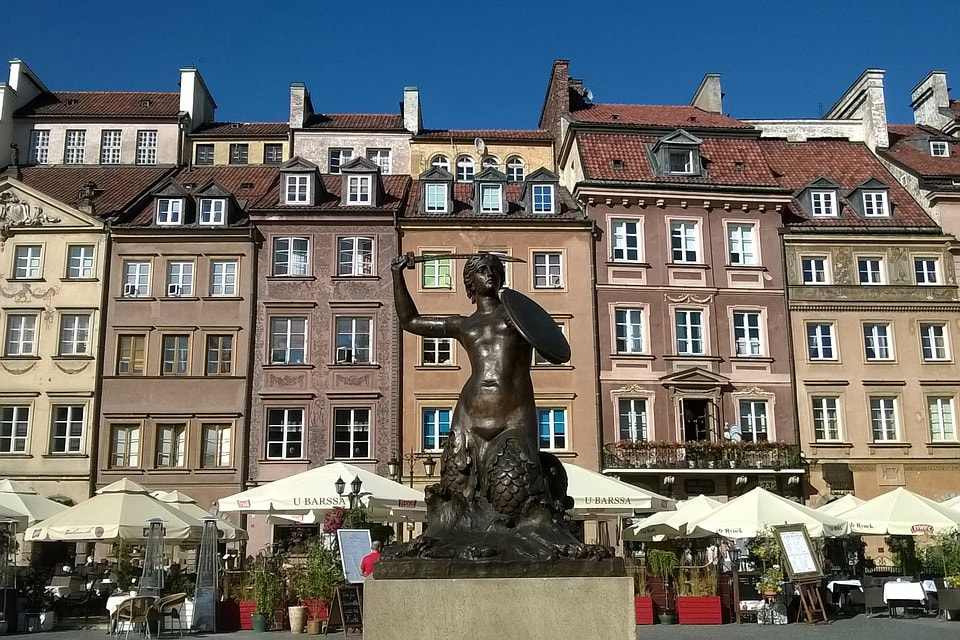
The story of Warsaw is a story of erasure. Not once, but repeatedly. It is a story written in fire and answered in stone. On a quiet morning, you can walk the cobblestones of the Old Town’s Market Square, past the pastel facades and the mermaid statue, the city’s ancient symbol, holding her sword and shield. Every brick here, every ornate pediment, every cobblestone, is younger than your grandparents. This is a city that died and decided, against all logic and odds, to remember itself back into existence.
It began with the river. The Vistula, a broad, silvery artery slicing through the North European Plain, offered passage and power. By the late 13th century, the Dukes of Mazovia saw its strategic value, establishing a fortified settlement to control trade and traffic. The official date is 1280, but Warsaw was a place of action long before it was a place on a charter. It grew not from imperial decree, but from mercantile necessity. By 1413, it was the capital of the Duchy of Mazovia, a regional power center.
The real pivot came with a king’s practical headache. Kraków, the ancient and glorious capital in the south, was simply too far from the political center of gravity of the Polish-Lithuanian Commonwealth. In 1596, King Sigismund III Vasa made a bureaucratic decision that would alter European history: he moved the royal court north to Warsaw. The city ballooned. Its population, a modest 4,500 in the early 1400s, exploded to over 20,000 by the end of the 16th century. Magnates built palaces. The Sejm, the Commonwealth’s parliament, cemented its presence. Warsaw was no longer a Mazovian town; it was the beating heart of a vast, multi-ethnic republic.
“The move of the capital was not ceremonial; it was logistical. Sigismund needed to be closer to the restive north and to Sweden, his inherited kingdom. Warsaw was the geopolitical pivot point, and he turned it into a powerhouse,” notes Dr. Katarzyna Wagner, a historian of early modern Poland.
The 17th and 18th centuries were a paradox of splendor and violence. The city adorned itself with Baroque jewels: the column of King Sigismund rose in 1644, Wilanów Palace became a summer residence, Europe’s first public park, the Saxon Gardens, was laid out. Yet this was also the era of the ‘Deluge.’ Swedish armies sacked and occupied the city in 1656 and again in 1702, leaving ruins in their wake. Each time, Warsaw rebuilt. Its spirit was not one of fragile majesty, but of stubborn resilience. It was here, in 1791, that the Commonwealth’s parliament passed the Constitution of 3 May—the first modern constitution in Europe, a revolutionary document born of enlightened thought.
That act of hope was swiftly crushed. The Partitions of Poland consumed the state, and by 1795, Warsaw was under Prussian control. A flicker of independence returned with Napoleon’s creation of the Duchy of Warsaw in 1806, but the Congress of Vienna in 1815 handed the city to the Russian Tsar. For over a century, Warsaw became a center of Polish resistance and Russian repression. The massive Citadel fortress, built by the Russians after the November Uprising of 1830, loomed over the riverbank not to protect the city, but to dominate it.
November 1918. Poland reappeared on the map after 123 years, and Warsaw, constitutionally confirmed as the capital, erupted in joy. The next two decades were a frenzy of catching up. The city modernized, expanded, and breathed. It became a hub of Jewish life, of avant-garde art, of diplomatic intrigue. In August 1920, at the gates of Warsaw, the Polish army performed the “Miracle on the Vistula,” halting the advancing Soviet Red Army and altering the course of European history. The city was, for a brief, brilliant moment, the capital of a nation determined to claim its future.
That future was stolen on September 1, 1939. The German invasion began World War II. The occupation that followed was one of calculated brutality. The Warsaw Ghetto, the largest in Nazi-occupied Europe, became a prison and then a killing ground. Its uprising in April 1943 was crushed into dust. Yet, an even greater cataclysm was being planned in the city’s cellars.
“The 1944 Warsaw Uprising was not a military decision; it was a political and existential scream. The Home Army knew the odds were catastrophic. But the choice was to die fighting for your city’s soul, or to watch it be dismantled brick by brick while you waited for ‘liberation’,” argues military historian Marek Jan Chodakiewicz.
At 5:00 PM on August 1, 1944, the city rose. The Polish Home Army, loyal to the government-in-exile in London, launched an operation to liberate Warsaw before the Soviet Red Army, which had arrived on the east bank of the Vistula, could take it. What followed was 63 days of street-by-street combat, some of the most savage urban warfare of the 20th century. The Soviets, cynically, did not advance. They watched from across the river. The Nazis, under the direct orders of Heinrich Himmler and Adolf Hitler, were commanded to annihilate the city and its people as an example.
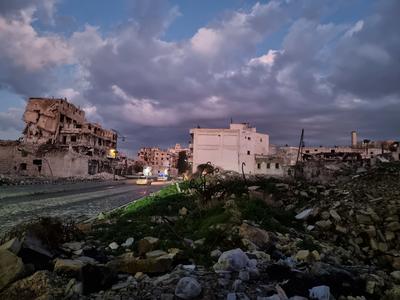
They succeeded. After the surrender of the insurgents on October 2, 1944, Hitler ordered Warsaw to be erased from the face of the earth. Special German demolition squads, using flamethrowers and explosives, systematically went block by block. Libraries were torched. Archives were pulped. Palaces, churches, tenements—everything was fuel for the fire. By January 1945, when the Soviets finally crossed the frozen Vistula, they entered a lunar landscape. An estimated 85% of the historic city center was gone. Rubble stood 20 feet high in streets. The human cost was almost incomprehensible: between 600,000 and 800,000 Varsovians—roughly two out of every three pre-war residents—were dead, murdered in the ghetto, executed in mass shootings, killed in the Uprising, or perished in camps.
The photograph is iconic: a lone man sitting on a pile of shattered bricks that was once his home, staring into nothing. Warsaw was not just damaged. It was deleted.
So why are those cobblestones in the Old Town so perfectly aged? Why does the Royal Castle look exactly as it did in an 18th-century veduta? The answer is the second miracle, one of memory and defiance. Even before the guns fell silent, architects and historians, using old paintings, pre-war inventories, and the precise drawings made by architecture students in the 1930s, began planning the reconstruction. It was an act of political will by the new communist authorities, yes, who wanted to claim the symbol of Polish nationhood. But it was driven from the ground up by citizens wielding trowels, not rifles.
They didn’t build a modern city on the ruins. They rebuilt the old one, painstakingly, from the cellars up. The Old Town was reconstructed by 1966, not as a theme park, but as a holistic urban entity. Every tenement on the Market Square, every segment of the city walls, the Barbican, the cathedral—all were re-erected to their 14th-18th century forms. In 1980, UNESCO recognized this staggering achievement, inscribing the Historic Centre of Warsaw on the World Heritage List not for its antiquity, but for the fidelity of its resurrection. It is the only instance on the list where a near-totally destroyed heritage site was restored with such archaeological and historical precision.
Walk those streets now. The past is a whisper and a shout. The mermaid’s sword is still raised. The story is only half told.
The decision to rebuild Warsaw’s Old Town was an act of profound defiance. It was also a staggering logistical and artistic challenge. The city authorities, established on February 1, 1945 amid the smoldering ruins, faced a choice: create a modern socialist city on a blank slate, or resurrect the old bourgeois capital. They chose resurrection, but with a complex political subtext. The reconstruction, beginning in earnest in the 1950s and continuing for decades, became a national pilgrimage. Citizens sifted rubble for reusable bricks. Architects pored over 18th-century vedutas by Bernardo Bellotto, the nephew of Canaletto, whose precise cityscapes served as blueprints. The Royal Castle, a gutted shell, reopened only in 1984, a testament to the project's monumental scale.
"The reconstruction was a labor of love, but also of political necessity. The communist government could not let the symbol of Polish nationhood remain a graveyard. By rebuilding it, they co-opted it, attempting to write themselves into the narrative of Poland’s eternal endurance." — Dr. Elżbieta Janicka, cultural historian of Warsaw.
This creates a fascinating tension for the visitor. Is the Old Town a fake? The question is too simplistic. It is a meticulous replica, yes, but one built with the same materials, following the same techniques, and occupying the exact same urban footprint. The Warsaw Barbican, that red-brick fortification from 1548, was rebuilt in the 1950s using original surviving fragments and old plans. The result is not a medieval structure; it is a mid-20th century monument to medievalism. UNESCO recognized this nuance in 1980, inscribing the site specifically for the "outstanding example of a near-total reconstruction of a span of history covering the 13th to the 20th century." The value lies in the process, not the patina.
While the Old Town shines, Warsaw’s more recent history is often written in subtler, more haunting script. At the intersection of Chłodna and Żelazna Streets, two tall metal frames outline the ghost of a footbridge. This was the "Footbridge of Memory," connecting the 'small' and 'large' ghettos over an Aryan thoroughfare. It stood for roughly six months in late 1942 and early 1943, a brutal piece of infrastructure in a city designed for murder. Its image, captured in Roman Polanski’s *The Pianist*, remains one of the most potent symbols of the ghetto’s cruel geography.
Elsewhere, a different kind of marker appears. In July 2023, the first Stolpersteine—"stumbling stones"—were installed in Warsaw at Złota 62. These small, brass-capped cobblestones, embedded in sidewalks, commemorate victims of the Nazis at their last place of residence. The ones at Złota 62 remember sisters Katarzyna Zylberberg, Maria Wygodzka, and Zofia Kabak, who perished in the ghetto. This grassroots project, which counts over 107,000 stones across Europe as of August 2024, represents a counterpoint to grand reconstruction. It is hyper-local, personal, and impossible to ignore underfoot. It forces a confrontation with individual loss on the very pavement of a city that has moved on.
"The Stolpersteine are not about the majesty of rebirth. They are about the intimacy of absence. You don’t visit them; you encounter them. They disrupt the daily flow of the modern city with a whisper of a name." — Michał Majewski, curator at the Warsaw Ghetto Museum.
Modern Warsaw is a city of jarring, sometimes thrilling, juxtaposition. You can stand in the shadow of the Palace of Culture and Science, a "gift" from Stalin that dominates the skyline, and gaze at a forest of gleaming glass skyscrapers in the financial district. This is the "city of contrasts" not as a tourism slogan, but as a lived reality. The 18th-century Łazienki Park, with its palace on the water and wandering peacocks, offers a pastoral escape minutes from the urban core. Summer brings an al fresco culture to the Old Town squares, where restaurants serve vodka-paired herring and tartare—a culinary revival as deliberate as the architectural one.
But what is the cost of this relentless forward momentum? The city’s expansion beyond its pre-1945 size and population has often come at the expense of its own layered history. Pre-war tenements that survived the bombs sometimes fall to developers’ bulldozers. The Jazz at Old Town Festival fills the summer air with music, but can the sound of a saxophone ever fully drown out the echoes of the past? The city’s energy is palpable, its economic power undeniable. Yet it sometimes feels like a patient moving too quickly through therapy, celebrating recovery while still carrying deep, unexamined scars.
"Warsaw’s skyline is a debate in steel and glass. Every new tower is a statement: we are here, we are modern, we have moved on. But the past is not underneath us; it is woven into the very concrete of our foundations. We build on top of it, but we do not erase it." — Anna Sobolewska, architectural critic for *Gazeta Wyborcza*.
Take the Tomb of the Unknown Soldier in Piłsudski Square. Inaugurated in a solemn ceremony from October 30 to November 2, 1925, it contains remains from the 1918-1919 battlefields of Lwów. It is a monument from a different Poland, one that existed between the wars. It survived the war itself—a lone, defiant arcade standing in a field of rubble. Today, it is hemmed in by traffic and commerce, a sacred relic in a secular, hustling city. The changing of the guard persists, a ritual observed by some, ignored by most. Is this integration, or isolation?
The history of Warsaw is not a settled record; it is an ongoing argument. The single most contentious debate revolves around the 1944 Uprising and the Soviet role. Was the Red Army’s halt on the Vistula’s east bank a necessary operational pause, or a calculated decision by Stalin to let the Nazis eradicate his potential political rivals? The weight of evidence points chillingly toward the latter. This was not just non-intervention; it was a geopolitical betrayal that enabled the city’s physical annihilation. The Soviet "liberation" of Warsaw in January 1945 was the occupation of a corpse.
This event casts a long shadow over the postwar narrative. The communist regime’s magnificent reconstruction was, in part, an attempt to claim the mantle of national savior. They rebuilt the Royal Castle, but they also filled it with propaganda. The story became one of "the nation, with the help of its socialist friends, rising from the ashes." The more uncomfortable truths—the Western allies’ limited help, the Soviet betrayal, the sheer scale of autonomous Polish sacrifice—were suppressed. Today, historians are untangling these threads, but the political echoes remain. When current politicians invoke the Uprising, are they honoring sacrifice or weaponizing memory?
"To discuss the Warsaw Uprising is to immediately enter a minefield of modern Polish politics. The facts are brutal and clear: the city was sacrificed. But who bears the moral responsibility? The Nazis who destroyed it, certainly. The Soviets who let it happen, absolutely. But also the Polish commanders who gave the order, knowing the likely cost. We must have the courage to hold all three truths at once." — Professor Andrzej Nowak, historian at Jagiellonian University.
Even the city’s deeper past is contested. The founding date of 1280 under Duke Siemowit II of Masovia is neat, but it obscures a messier reality. The site was an unchartered trading action point long before a duke formalized it. This isn’t just academic nitpicking; it speaks to Warsaw’s essential character. It was never a planned, idealized city like Kraków. It was pragmatic, strategic, and emerged from the rough-and-tumble of commerce and defense. Its identity has always been more functional than mythical. Its greatest myth—the Phoenix—was born not from ancient legend, but from modern catastrophe.
So what are we left with? A city that is a palimpsest. The 13th-century street plan underlies the 18th-century facades, which are in fact 20th-century recreations, which are now surrounded by 21st-century towers. The footbridge of the ghetto is a ghost. The stones stumble you with names. The jazz plays. The debate rages. Warsaw does not offer the visitor a serene, finished history. It offers the raw, exhilarating, and sometimes exhausting process of remembering, rebuilding, and relentlessly moving forward, all at the same time. It is the least quaint old town in Europe, and the most alive.
Warsaw’s significance extends far beyond Poland’s borders. It presents the world with a radical, unsettling, and ultimately indispensable case study: how does a society physically reconstruct its annihilated heart? In an era where cultural heritage is increasingly targeted in conflicts from Ukraine to the Middle East, Warsaw’s experience is no longer a historical curiosity; it is a critical reference point. The city did not merely rebuild buildings; it engineered a collective memoryscape. This "Warsaw Model"—the deliberate, archival-grade resurrection of an urban core—offers both a powerful tool and a profound warning. It proves identity can be materially restored, but it also reveals how easily that process can be politicized, commercialized, or turned into a performance of resilience that risks obscuring the raw truth of loss.
"When we consult on post-conflict reconstruction in places like Mosul or Lviv, Warsaw is always on the table. It’s the extreme example. It asks the hardest question: if almost nothing is left, do you rebuild the old, or invent the new? Warsaw chose the old, and in doing so, made a statement that cultural memory is a non-negotiable human need, as vital as housing or roads." — Dr. Iskra Johnson, senior advisor for heritage recovery at UNESCO.
The city’s legacy is its lived-in paradox. It is a capital that feels perpetually new, yet is obsessed with its past. It is a place where the annual observance of the Ghetto Uprising on April 19 and the Warsaw Uprising on August 1 bring the city to a solemn standstill, sirens wailing, crowds gathering. These are not stale ceremonies; they are active, emotional rehearsals of memory. The legacy is also embedded in the global language of memorialization. The Stolpersteine project, now with its stones in Warsaw, represents a decentralized, grassroots approach to memory that contrasts sharply with the central, state-driven reconstruction of the Old Town. Warsaw now hosts both models, a laboratory of how to remember.
For all its majesty, the Warsaw reconstruction project has undeniable flaws. The most glaring is the potential for historical Disneyfication. The picturesque Old Town, perfect for tourist Instagram shots and summer jazz concerts, can feel sanitized. The brutal, chaotic, desperate reality of its destruction—the 85% rubble, the 600,000–800,000 dead—is smoothed over by pristine cobblestones. This is a heritage site that risks becoming a beautiful shell, where the tragedy is acknowledged but not viscerally felt. The pain is curated, contained within museum walls, while the streets sell ice cream and amber.
Furthermore, the reconstruction’s communist-era genesis created a foundational irony. The state rebuilt the symbols of Polish aristocracy and bourgeoisie—the Royal Castle, the noble townhouses—while suppressing the very political and intellectual traditions they represented. It was a schizophrenic act: resurrecting the physical form of a pre-communist Poland while trying to kill its spirit. This has left a lingering ambiguity about ownership of the city’s history. The physical city was saved by a regime whose ideology many Varsovians rejected. That tension has never been fully resolved.
A more practical criticism concerns what was *not* rebuilt. The overwhelming focus on the pre-1795 "golden age" meant that vast swathes of 19th-century industrial architecture and pre-war modernist gems were cleared for socialist-realist housing blocks or, later, glass towers. The city’s architectural timeline has gaps. You can see the 17th century and the 21st century, but the 19th is often a ghost. The narrative of recovery came with a subconscious editorial pen, favoring one version of history over others.
Looking forward, Warsaw’s next chapter is already being written in steel and civic action. The Warsaw Ghetto Museum, set to open fully in 2025 within the former Bersohn and Bauman Children’s Hospital, will be a monumental addition to the memory landscape, focusing on Jewish life and death. Culturally, the city solidifies its Central European clout. The upcoming Warsaw Autumn International Festival of Contemporary Music in September 2024 continues its 66-year tradition of pushing sonic boundaries. On November 11, 2024, Independence Day marches will fill the streets, a display of national pride that is always a complex, charged spectacle.
The city’s skyline continues its relentless metamorphosis. The Varso Tower, already the EU’s tallest building, is no finale. Development plans for the former Warsaw Ghetto area and the Powiśle district promise more architectural statements, each one sparking debates about gentrification, memory, and modernity. The question is whether the city’s planning can mature from a reflex of defiant growth to a more nuanced conversation about preserving the intangible—the sightlines, the neighborhood scale, the quiet spaces for remembrance amidst the roar of progress.
You can still find that lone man from the 1945 photograph, or his ghost, in the quiet moments. He’s there in the elderly woman placing a candle on a Stolpersteine. He’s in the shadow the Royal Castle casts on the modern bank building across the street. He is the silent third party in every debate about a new development. Warsaw is a city that looked into the abyss of total erasure and responded not with a whimper, but with a roar of reconstructing masons and a whisper of brass stones underfoot. It built its old heart anew, and in doing so, asked every city that follows: what is worth remembering, and how heavy is the stone you are willing to carry to keep that memory alive?
Your personal space to curate, organize, and share knowledge with the world.
Discover and contribute to detailed historical accounts and cultural stories. Share your knowledge and engage with enthusiasts worldwide.
Connect with others who share your interests. Create and participate in themed boards about any topic you have in mind.
Contribute your knowledge and insights. Create engaging content and participate in meaningful discussions across multiple languages.
Already have an account? Sign in here
Archaeologists in Izmir, eng, uncover a 1,500-year-old mosaic with Solomon’s Knot, revealing Smyrna’s Agora’s layered hi...
View Board
Cahokia, America's forgotten metropolis, flourished between 1050-1350 CE, boasting 40,000 inhabitants, earthen pyramids,...
View Board
"Discover Mosul's inspiring journey from conflict to resilience. Explore its rich history, heritage restoration, and hop...
View Board
Archaeologists uncover lost Hadrian’s Wall section in 2025, revealing a 2,000-year-old frontier’s complex legacy of powe...
View Board
The Times Square Ball, a 12-foot crystal sphere, honors U.S. history with its annual descent, evolving from a 1907 marit...
View BoardGettysburg’s 2026 Winter Lecture Series challenges Civil War memory, linking diplomacy, Reconstruction, and global stake...
View Board
Explore the captivating history of Aleppo, one of the world's oldest cities, tracing its journey from ancient trade hub ...
View Board
Historic sites undergo massive restoration and reinterpretation as America gears up for its 250th anniversary, blending ...
View Board
Discover Jericho, the world’s oldest city, with 9,000 years of history. Explore its ancient walls, Neolithic tower, and ...
View BoardExplore the storied city of Belgrade, where ancient history meets vibrant modernity. Discover its rich cultural tapestry...
View Board
The lost libraries of antiquity—Alexandria, Pergamum, Constantinople—vanished not in flames but through neglect, conques...
View Board
**Meta Description:** Explore the rich history, culture, and resilience of Baghdad, the ancient capital of Iraq. From ...
View BoardCarolingian Dynasty reshaped Europe through conquest, faith, and cultural revival, leaving a legacy that echoes in moder...
View Board
Discover the enigmatic heritage of Famagusta, a walled medieval port city in Cyprus. Explore its rich history, from anci...
View Board
Explore the timeless intrigue of Pompeii in "The Enigmatic Legacy of Pompeii: A Journey Through Time." Unearth the vibra...
View BoardThe Historical Gem of Salamanca: A Tapestry of Culture and Heritage Introduction Cities often reflect the soul of thei...
View Board
Discover the timeless allure of Damascus, one of the world's oldest continuously inhabited cities. Journey through its r...
View BoardBlack Patriots were central to the Revolutionary War, with thousands serving in integrated units from Lexington to Yorkt...

View Board
Ephesus: Where Gods, Empires, and Earth Itself Collided - Explore the rise and fall of one of antiquity's greatest citie...
View Board
Discover Mdina, Malta's ancient Silent City, with its rich history, stunning Baroque architecture, and enduring legacy, ...
View Board
Comments