
Explore Any Narratives
Discover and contribute to detailed historical accounts and cultural stories. Share your knowledge and engage with enthusiasts worldwide.
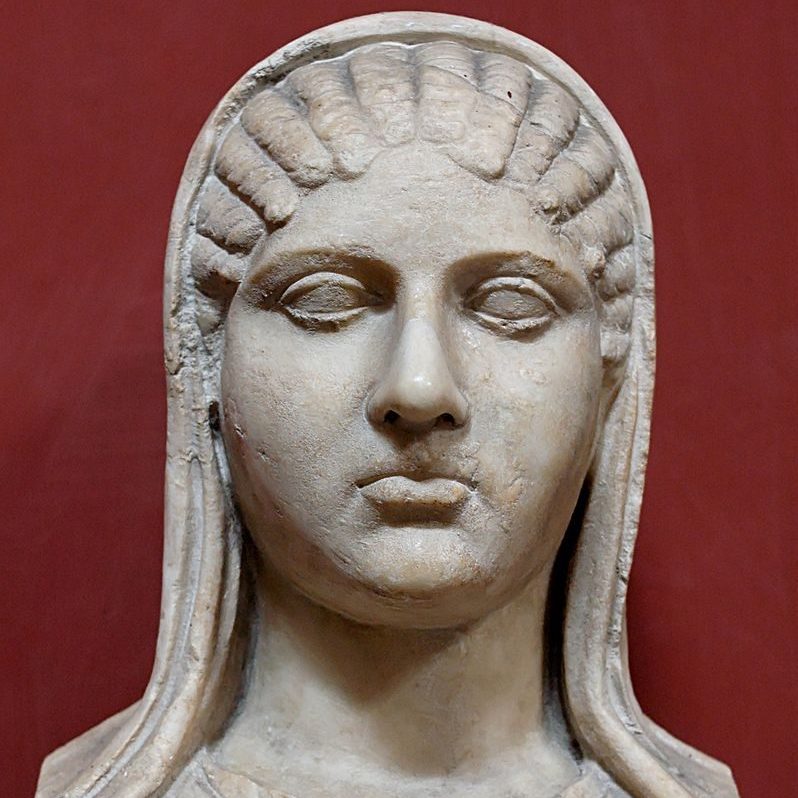
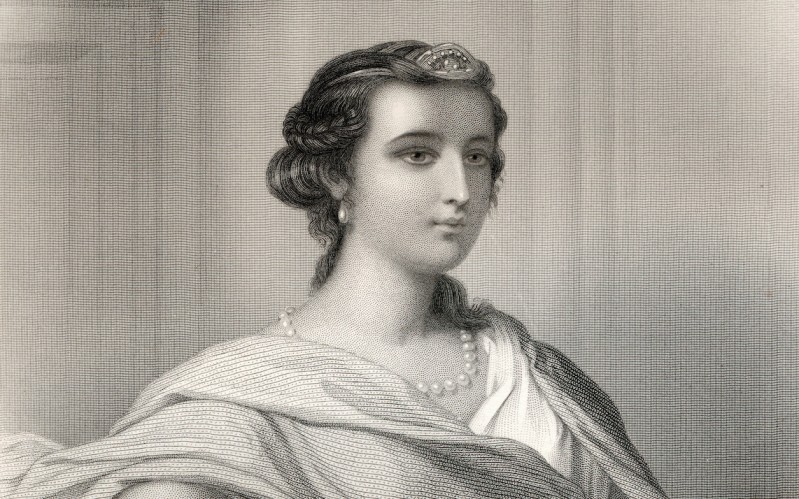
The name Aspasia of Miletus resonates as one of the most remarkable figures from classical Athens. A foreign-born woman, she captivated the city's intellectual elite and influenced its most powerful leader, Pericles. Her story defies the strict conventions of her time, offering a unique glimpse into the world of ancient Greek philosophy and politics.
This influential woman from Miletus became a central figure in Athenian society despite her status as a metic, or resident alien. Her life and legacy are a testament to the power of intellect and rhetoric in the ancient world. This article explores her journey, her profound influence, and her lasting historical significance.
Aspasia was born around 470 BCE in the Ionian Greek city of Miletus, located in Asia Minor. Historians believe she immigrated to Athens around 450 BCE, a move that would place her at the heart of the city's golden age. Her background as a foreigner was a defining aspect of her identity in her new home.
Unlike citizen women who were largely confined to the private sphere, Aspasia's status as a metic afforded her a different, albeit still limited, set of freedoms. This unique legal position allowed her to participate in public life in ways that were impossible for Athenian-born women. Her arrival coincided with a period of immense cultural and intellectual flourishing in Athens.
The term metic referred to a free resident alien who lived in Athens without the rights of citizenship. While metics paid taxes and had legal responsibilities, they could not own land or participate directly in the Athenian democracy. This status, however, was paradoxically liberating for an educated woman like Aspasia.
Athenian citizen women were expected to live private, domestic lives, largely separated from the intellectual and political discourse of men. As a metic, Aspasia was not bound by these same social restrictions. This freedom was crucial, enabling her to engage with the leading minds of her era and establish her own intellectual salon.
Aspasia is often described as a hetaira, which translates to "companion." This was a distinct class of woman in ancient Greece. Unlike typical wives, hetairai were educated, cultured, and trained in the arts of conversation, music, and dance.
This role provided Aspasia with social mobility and access to the elite circles of Athenian society. As a hetaira, she could host gatherings, participate in philosophical debates, and form relationships based on intellectual companionship. This position was the foundation from which she built her considerable influence.
Aspasia's most famous relationship was with Pericles, the preeminent statesman and general of Athens during its Classical Age. Their partnership began around 445 BCE and lasted until his death from the plague in 429 BCE. This union placed Aspasia at the very center of Athenian power.
Although she could not legally marry Pericles due to a law he himself had sponsored restricting Athenian citizenship, their relationship was a profound personal and intellectual partnership. Ancient sources, including Plutarch, suggest that Pericles valued her not just as a companion but as a trusted adviser.
Plutarch recorded that Pericles held Aspasia in "high favor because of her rare political wisdom."
Aspasia’s home became a renowned intellectual hub, attracting the brightest minds of Athens. Figures like the philosopher Socrates and the artist Phidias were known to attend her gatherings. These salons were spaces for vibrant discussion on philosophy, rhetoric, and politics.
This environment allowed Aspasia to exert significant indirect influence on Athenian thought. Her ability to host and engage with the elite in reasoned debate was unprecedented for a woman of her time. Her salon was a crucible for the ideas that shaped classical Athens.
Their relationship produced a son, named Pericles after his father. Initially, the younger Pericles was not eligible for Athenian citizenship due to his mother's foreign status. However, after the deaths of Pericles's two legitimate sons from his first marriage, the Athenian assembly passed a special decree.
This extraordinary enactment granted citizenship to Aspasia's son, a clear indication of the elder Pericles's stature and the unique regard in which their family was held. The younger Pericles would later go on to serve as an Athenian general, continuing his father's legacy.
Aspasia was widely celebrated for her rhetorical skill and sharp intellect. Her reputation for eloquence and political wisdom was noted by multiple ancient authors. She was not merely a hostess but an active participant and teacher in the intellectual life of the city.
Her influence extended far beyond social gatherings. Credible historical sources suggest that her insights directly impacted the political decision-making of the most powerful man in Athens. She demonstrated that intellectual authority could be wielded effectively from a position outside formal power structures.
One of the most compelling pieces of evidence for Aspasia's expertise comes from Plato. In his dialogue Menexenus, Socrates explicitly credits Aspasia as his teacher in the art of rhetoric. He even suggests that she was the true author of the famous Funeral Oration delivered by Pericles.
This attribution, whether factual or a literary device, underscores the high regard in which Aspasia's rhetorical abilities were held. To be named by Socrates as a master of persuasion placed her in an elite category of thinkers. Her teachings were considered worthy of the greatest Athenian orators.
Further evidence of her respected knowledge appears in Xenophon's Oeconomicus. In this work, Socrates acknowledges Aspasia's superior understanding of household management and the economic partnership between spouses. This highlights the breadth of her intellectual contributions, spanning from public rhetoric to private virtue.
The prominent public role of Aspasia inevitably made her a target for political adversaries and comic playwrights. In the fiercely competitive and often misogynistic atmosphere of Athenian democracy, her influence over Pericles was viewed with suspicion and scorn. She faced a barrage of slanderous attacks that questioned her morality and accused her of manipulating state affairs.
The primary sources of these attacks were the writers of Old Comedy. Playwrights like Aristophanes and Eupolis used her as a frequent subject for ridicule, a common tactic for criticizing powerful men through their associates. These theatrical portrayals, while fictionalized, shaped public perception and contributed to a hostile environment for the influential metic.
Ancient sources recount that Aspasia was put on trial for asebeia, or impiety. This was a serious charge in ancient Athens, as demonstrated by the trial and execution of Socrates years later. The accusation allegedly stemmed from her supposedly introducing free-thinking women and new religious ideas to the city's women.
However, modern scholars widely question the historicity of this specific trial. Many believe the story originates from a fictional portrayal in a now-lost comedy by Hermippus. While the trial may be apocryphal, its persistence in the historical record highlights the political vulnerability she faced as a foreign woman with perceived power.
Scholars debate whether her prosecution for impiety was historical fact or a plot device from Athenian comedy, illustrating the blurred lines between her real life and her public persona.
In a more direct political attack, Aspasia was accused of influencing major military decisions. Comic poets claimed she persuaded Pericles to launch the Samian War in 440 BCE, allegedly to aid her native Miletus in a conflict against Samos. This accusation framed her as a dangerous foreign agent using her intimate access to sway Athenian policy.
She was also blamed, even more dramatically, for instigating the Peloponnesian War. The story claimed she convinced Pericles to attack Megara, a key escalation leading to the protracted conflict with Sparta. These accusations, almost certainly invented, reveal how her gender and origin were used to personify and criticize Pericles's political strategies.
The great plague of Athens in 429 BCE claimed the life of Pericles, devastating the city and dramatically altering Aspasia's life. She had lost her partner of nearly two decades and her primary protector in the volatile political landscape. Despite this profound loss, historical records show that Aspasia's influence did not end with Pericles's death.
Demonstrating her unique skills in mentorship and rhetoric, Aspasia later married Lysicles, a seemingly ordinary Athenian sheep merchant. This union further cements her reputation as a teacher and political strategist. Under her guidance, Lysicles emerged as a prominent popular leader in the tumultuous years following Pericles's death.
This second marriage is a powerful testament to her enduring agency and intellect. It proved that her perceived power was not solely derivative of her relationship with Pericles but was rooted in her own formidable capabilities. She could guide a man from humble origins to a position of political leadership through instruction in public speaking and statecraft.
The historical record becomes less clear regarding the final years of Aspasia's life. The date and circumstances of her death are not definitively known. Most historians estimate she died sometime around 400 BCE. Little is documented about her life after Lysicles, who himself was killed in battle in 428 BCE, just a year after their marriage.
Despite the silence on her later years, her legacy was already firmly established. Ancient authors continued to discuss her influence for centuries, ensuring her story survived. The fact that she re-married and continued her role as an adviser confirms she remained an active and respected figure in Athenian society until the end of her life.
Reconstructing the life of Aspasia requires careful navigation of complex and often biased ancient sources. She is mentioned by pivotal figures including Plato, Xenophon, Plutarch, and Aristophanes. However, each author wrote with a specific agenda, from philosophical dialogue to comedic satire, which colors their portrayal.
The challenge for modern historians is separating the factual woman from the literary construct. She appears as a symbol of wisdom, a scapegoat for political woes, and a philosophical muse. This multiplicity makes her one of the most intriguing, yet elusive, figures from classical antiquity.
In philosophical texts, Aspasia is presented with considerable respect. Plato's *Menexenus*** is the most significant of these. By having Socrates credit her with composing Pericles's Funeral Oration, Plato elevates her to the highest level of rhetorical mastery. This was not a casual compliment but a serious attribution in a philosophical work.
Similarly, Xenophon's *Oeconomicus*** uses Aspasia as an authority on domestic economy and marital partnership. These philosophical portrayals suggest that among intellectual circles, her wisdom was recognized as genuine and authoritative. They provide a counter-narrative to the slander found in comedic works.
In stark contrast, the comedic tradition painted Aspasia as a licentious and manipulative figure. Aristophanes, in his play *Acharnians*, crudely blames her for the Peloponnesian War. This portrayal was designed for laughs and political point-scoring, using her as a stand-in to attack Pericles.
While these portrayals are not reliable history, they are invaluable for understanding her public perception. They reveal the deep anxiety her influence provoked and the standard tactics used to undermine powerful women. The very frequency of these attacks confirms that she was a household name in Athens.
Contemporary scholars approach Aspasia with cautious analysis. She is recognized as one of the best-attested women from the Greco-Roman world, yet significant uncertainty surrounds specific details. The consensus is that while the comic accusations are fabrications, her intellectual influence and social prominence are historical facts.
Modern scholarship often focuses on her role as a hetaira and what it reveals about gender and class in ancient Athens. Her ability to navigate this role to achieve intellectual recognition is a key area of study. Scholars also analyze how her story has been interpreted and reinterpreted from antiquity through to the modern feminist movement.
As one modern analysis notes, "Aspasia remains a figure who stands at the intersection of historical reality, literary invention, and modern ideological debate."
The story of Aspasia of Miletus extends far beyond the confines of fifth-century Athens. Her legacy has been reinterpreted across centuries, serving as a symbol for intellectual women, the power of rhetoric, and the complexities of gender in historical narratives. From the Renaissance to the modern day, she remains a figure of fascination and scholarly debate.
Her life challenges modern perceptions of the ancient world, revealing nuances in social structures often overlooked. Aspasia proves that even within highly restrictive systems, exceptional individuals could carve out spaces of influence. Her legacy is a powerful reminder of the voices that history often marginalizes but cannot completely silence.
Since antiquity, Aspasia has been a popular subject in Western art and literature. Renaissance painters, drawn to classical themes, often depicted her in the company of Pericles and Socrates. In the 19th century, she became a romantic figure in novels and plays, symbolizing enlightened feminine wisdom amidst Athenian glory.
The Victorian era saw a renewed interest in her story, though often filtered through contemporary moral sensibilities. In more recent times, she features prominently in historical fiction and feminist reinterpretations of classical history. Each era recreates her image to reflect its own values and questions about gender, power, and knowledge.
In the 20th and 21st centuries, Aspasia has taken on a significant role within feminist scholarship. Historians seeking to recover the contributions of women have pointed to her as a prime example of female agency in a male-dominated society. She is studied as a case study in how women could exert informal power when formal avenues were barred.
Feminist readings often highlight the contrast between the slander she endured and the respect she commanded from philosophers. This dichotomy illuminates the strategies used to police women who transgressed social boundaries. Her life offers critical insights into the construction of gender norms and the resistance they faced.
Aspasia serves as a crucial anchor point for feminist classical studies, demonstrating that influential women existed even in societies that systematically excluded them from public life.
For students of ancient history, philosophy, and rhetoric, Aspasia provides a unique and invaluable perspective. She acts as a connective thread linking major figures like Pericles, Socrates, and the artistic milieu of the Athenian Golden Age. Studying her offers a more holistic view of Athenian society beyond the standard narratives of great men.
Her documented involvement in rhetorical education forces a reconsideration of the origins of this critical Athenian art form. If influential men like Socrates and Pericles learned from her, then the standard, male-centric history of rhetoric requires expansion. She challenges us to ask whose voices are missing from our historical accounts.
The claim that Aspasia taught rhetoric and even authored speeches places her at the very foundation of Western oratory. The Funeral Oration, attributed to Pericles, is one of the most celebrated speeches in history, a cornerstone of democratic ideals. The suggestion that Aspasia composed it is revolutionary.
This positions her not as a peripheral figure but as a potential architect of democratic ideology. It invites scholars to re-examine the collaborative nature of intellectual production in antiquity. Her role encourages a broader definition of authorship and influence in the ancient world.
Aspasia’s life forces historians to confront the limitations and biases of the source material. The fact that most of our information comes from comedy, philosophy, and later biography means we see her through multiple, distorting lenses. Separating the historical Aspasia from these representations is a central challenge.
This process, however, is intellectually rewarding. It teaches critical methodology and highlights how figures are constructed for various purposes—political, philosophical, or comic. Aspasia becomes a lens through which we examine how ancient societies recorded, and often misrepresented, the lives of complex women.
The story of Aspasia is one of exceptional intellect navigating a world of severe constraints. A metic from Miletus, she leveraged her position as a hetaira to become a central node in the intellectual network of classical Athens. Her relationships with Pericles and Socrates underscore her significant, though informal, authority.
Despite facing slander, legal threats, and social prejudice, she left an indelible mark on her time. Her legacy is preserved in the writings of philosophers, the jokes of comedians, and the ongoing work of modern historians. She symbolizes the persistent human capacity for influence beyond prescribed social roles.
Aspasia’s impact can be measured in several key areas. First, she demonstrated that intellectual influence could be wielded from outside traditional power structures. Second, her life exposes the gendered dynamics of Athenian public life and the mechanisms used to attack powerful women. Third, she serves as a critical figure for understanding the social world of the Athenian elite.
Finally, her enduring presence in historical memory highlights the ongoing desire to understand women's roles in the ancient world. She continues to inspire because she represents a triumph of mind over circumstance, a theme that resonates across the centuries.
Aspasia of Miletus remains a compelling and somewhat enigmatic figure two millennia after her death. She stands at the intersection of history and legend, fact and fiction. While the precise details of her life may be debated, the broad outline of her significance is clear: she was a woman of profound intellect who shaped, and was shaped by, the most vibrant cultural center of the ancient world.
Her journey from a foreigner to a central figure in Athenian intellectual life is a testament to the power of ideas. It reminds us that history is filled with individuals whose influence rippled through time, not from positions of formal title, but from the strength of their character and their mind. Aspasia’s story encourages a deeper look into the past, prompting us to listen for the voices that traditional narratives have often obscured.
In the end, Aspasia transcends her specific historical moment. She becomes a figure for all eras—a symbol of the struggle for recognition, the price of influence, and the enduring power of a sharp intellect. By studying her, we gain not only insight into classical Athens but also a timeless reflection on knowledge, gender, and legacy.




Your personal space to curate, organize, and share knowledge with the world.
Discover and contribute to detailed historical accounts and cultural stories. Share your knowledge and engage with enthusiasts worldwide.
Connect with others who share your interests. Create and participate in themed boards about any topic you have in mind.
Contribute your knowledge and insights. Create engaging content and participate in meaningful discussions across multiple languages.
Already have an account? Sign in here

Explore the brutal reign of Clearchus of Heraclea, a tyrant whose 12-year rule was marked by betrayal, cruelty, and self...
View Board
Aspasia of Miletus: influential companion of Pericles, philosopher, and teacher in classical Athens who defied gender no...
View Board
Discover Octavia the Younger, Rome’s virtuous sister of Augustus. Explore her strategic marriages, diplomatic skills, an...
View Board
Explore the groundbreaking ideas of Anaxagoras, the pre-Socratic philosopher who revolutionized ancient Greek thought by...
View Board
Discover how Solon the Great Lawgiver transformed Ancient Athens with revolutionary reforms, laying the foundation for d...
View Board
Discover how Antigonus II Gonatas founded the Antigonid dynasty, secured Macedonia, and shaped Hellenistic history for o...
View Board
Discover how Miltiades, the Athenian strategos, led Greece to victory at Marathon with bold tactics. Explore his life, l...
View Board
Explore the life of Phokion the Athenian, a wise statesman and general whose pragmatic leadership and stoic integrity sh...
View Board
Aristotle: The Father of Western Philosophy Aristotle, born in 384 BCE in the Macedonian city of Stagira, was a polymat...
View Board
Discover Prodikos of Keos, the ancient Greek philosopher who shaped ethics and language. Explore his groundbreaking theo...
View BoardExplore the intriguing life and groundbreaking contributions of Anaximander, the pioneer of pre-Socratic thought and cos...
View Board
Discover Hipparchia of Maroneia, the first female Cynic philosopher who defied wealth, class, and gender norms in 4th ce...
View Board
Protagoras: The Father of Sophistry and Relativism Introduction to Protagoras Protagoras, a pivotal figure in ancient G...
View Board
Discover Poppaea Sabina, the powerful empress of Nero’s Rome. Explore her strategic marriages, political influence, and ...
View Board
Discover the life of Craterus, Alexander the Great’s most loyal Macedonian general. Explore his pivotal battles, unwaver...
View Board
Explore the compelling tale of Agesilaus II, the influential king of Sparta, whose strategic genius and diplomatic maneu...
View Board
Discover the enigmatic life of Aspasia of Phocis, an influential yet overlooked figure in ancient history. Unveil her su...
View Board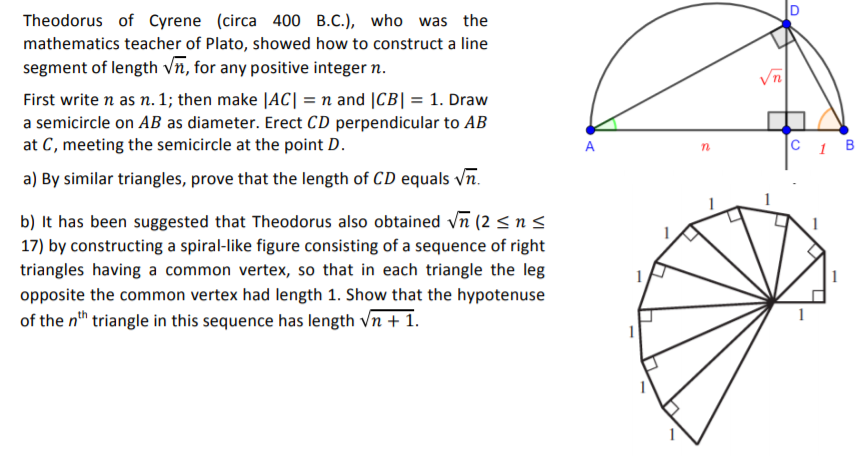
Theodorus of Cyrene, the ancient Greek mathematician and Plato's teacher, revolutionized geometry with his work on irrat...
View Board
Explore the enduring legacy of Quintus Aurelius Symmachus, a pivotal figure in late Roman history. This comprehensive ar...
View Board
Comments