


Explore Any Narratives
Discover and contribute to detailed historical accounts and cultural stories. Share your knowledge and engage with enthusiasts worldwide.

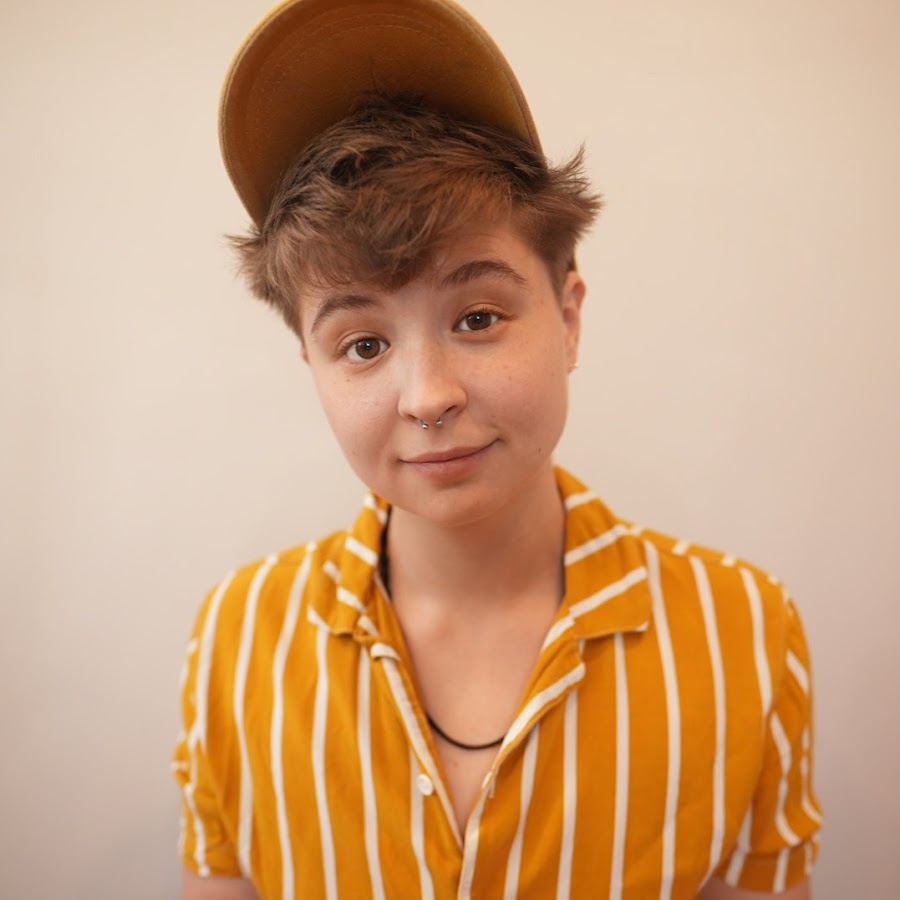
The screen flickers to life on a cold November day in 2017. Ash Hardell, then 25, looks directly into the camera. Their voice is steady, but their eyes hold a weight that millions would soon recognize. On November 14, 2017, they uploaded a video titled "Coming Out as Trans." It was not their first video, but it became a pivot point for their life and for a vast, searching audience. Three months later, in February 2018, that video went viral. It was a simple act of personal truth that catapulted a niche educator into the center of a cultural conversation about gender, identity, and the power of digital storytelling.
Ash Hardell did not set out to become a seminal figure in online LGBTQ+ education. Born Ashley Mardell on February 4, 1992, in Minneapolis, Minnesota, their early creative impulses were rooted in comedy and animation. The YouTube channel they started on November 5, 2009, was a teenager's playground for stop-motion sketches and humorous vignettes. For six years, it was a hobby. Then, in 2015, something shifted. The content began to change. The jokes were still there, but a new purpose emerged: explanation. Advocacy. Clarity.
This was not a random pivot. It was a response to a vacuum. Mainstream media offered clumsy, often harmful representations of queer identities. Search engines led confused teens into dark corners of the internet. Ash saw a need for a guide—someone who could translate the dense lexicon of gender and sexuality into human terms. They started making videos that answered basic, terrifying questions. What does non-binary mean? Is it okay to question your gender? How do I use they/them pronouns? The channel transformed into a digital sanctuary.
"I realized that if I was searching for this information and struggling to find it, other people were too," Ash stated in a 2018 interview about their channel's evolution. "The goal was never to be an activist first. It was to be a teacher. To take the confusion I felt and turn it into a resource so others wouldn't have to feel so alone."
The format was deceptively simple. Ash, often sitting against a backdrop of books and fairy lights, spoke to the camera with the calm authority of a favorite tutor. They used diagrams, honest anecdotes, and a disarming smile. The production value was modest, but the content was revolutionary. It was accessible. It was definitive. In a landscape of debate, Ash presented identities not as political statements but as facts of human diversity. They built a curriculum from their own experience.
The cornerstone of this curriculum became the "ABC's of LGBT+" series. Launched in 2016, it was a video encyclopedia that walked viewers from Asexual to Ze/Zir. Each video broke down a single identity or concept with clear definitions, personal stories from community members, and historical context. The series exploded in popularity. It provided a shared language for a generation that often lacked the words to describe itself.
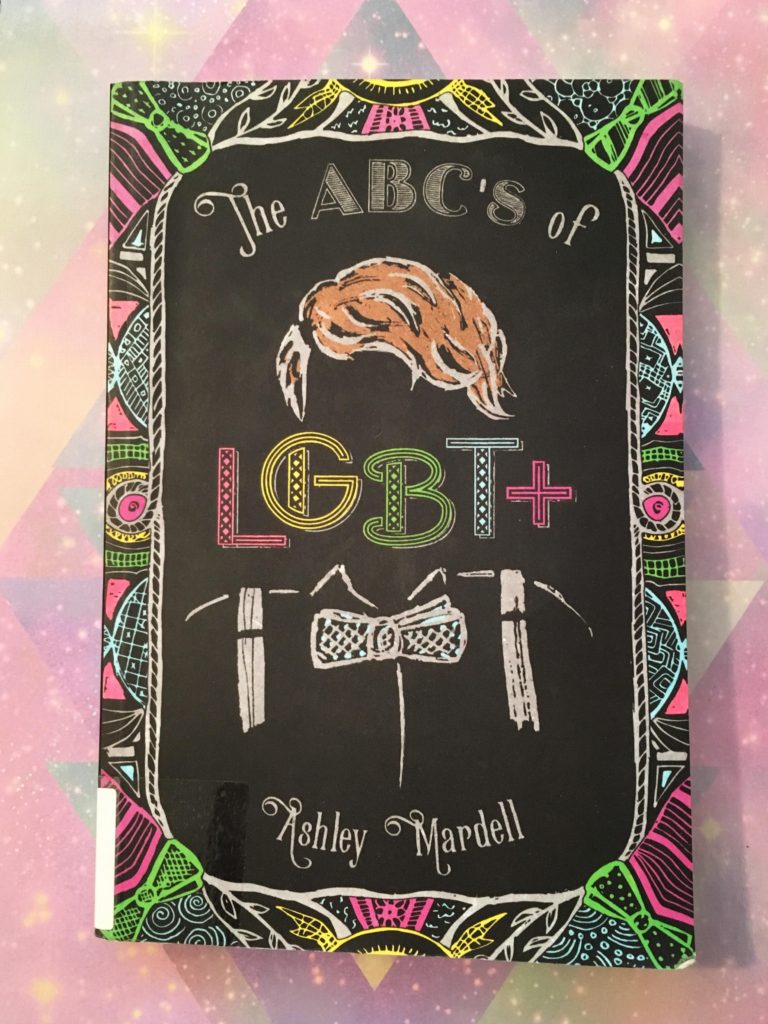
This digital success bled into the analog world. In October 2016, Ash published a book, also titled The ABC's of LGBT+, through Mango Publishing. A year later, in November 2017, they released a free ebook, The GayBC's of LGBT+. The move from screen to page was strategic. It was an acknowledgment that not everyone could safely watch a YouTube video, but a book could be hidden under a mattress. It was also a statement of legitimacy. Ash was not just a content creator; they were an author, an archivist of queer experience.
Their personal life became inextricably linked to their public work. In November 2016, Ash married their partner, Grayson "Gray" Hardell, who is also trans-masculine non-binary. Gray became a frequent, grounding presence in videos, offering a window into a shared queer life that was joyful, mundane, and radically normal. Their relationship, documented with unvarnished affection, served as a powerful counter-narrative to stereotypes of queer isolation. When Ash documented their top surgery process in August 2018, the channel became a medical resource, a diary of recovery, and a testament to bodily autonomy all at once.
Dr. Lena Chen, a sociologist at the University of Michigan who studies digital communities, observes, "Hardell's work operates at a critical intersection. They function as a peer, a journalist, and a public health educator. By framing their transition and marriage not as spectacle but as documented human experience, they normalize identities that much of society still treats as abstract or controversial. The educational impact is profound because it is wrapped in authenticity."
With visibility came a torrent of backlash. The hate comments began as a trickle and soon became a flood. Ash has been doxxed, threatened, and subjected to relentless criticism from anti-LGBTQ+ groups who label their work as propaganda. Each educational video spawned a parallel universe of hateful reaction content. Yet, Ash rarely retreated. They addressed the harassment directly, sometimes with weary frustration, often with a pointed lesson in digital literacy and resilience.
What keeps someone logging on under those conditions? The answer is in the numbers and the messages. By 2020, Ash's channel had surpassed 600,000 subscribers. The comments sections on older videos are filled with time-stamped testimonials. "This video helped me come out to my parents in 2019." "I learned the word non-binary here in 2021 and it saved my life." The channel is not a broadcast; it is a living archive of personal revelation, with Ash as its steady curator.
In 2020, Ash announced an intention to broaden their scope further, planning content on psychology and neurodivergence. It was a natural expansion for someone whose entire career is built on mapping the inner landscapes of human identity. The core mission, however, remained unchanged: to explain, to validate, to connect.
The story of Ash Hardell is not a simple tale of internet fame. It is a case study in how personal identity, when paired with strategic communication, can build a community and challenge a culture. They started with a webcam in Minnesota and ended up constructing one of the most referenced primers on queer identity in the English-speaking world. But what is the cost of building that classroom in the public square? And how does an educator evolve when the lesson plan is their own life?
By 2026, the metrics of Ash Hardell's influence are both concrete and deceptive. Their Instagram account, @ashhardell, boasts 116.2 thousand followers, a figure that places them firmly in the "Macro Influencer" tier according to industry trackers. The bio is a concise manifesto: "Queer and tired. Protect Trans Kids. BLM. Free Palestine. 🏳️🌈🏳️⚧️🇵🇸 PREMIERE DAY ✨" It is a far cry from the tentative comedy sketches of 2009. This evolution—from creator to educator to activist-influencer—charts a precise map of the last decade's digital culture wars. The numbers tell a story of reach, but they obscure the more complex narrative of impact and exhaustion.
Headlining events like the 7th Annual Buffer Festival alongside creators like MacDoesIt and Freddie Ransome cemented Ash's status as a pillar of a specific digital ecosystem. This is not mainstream celebrity; it is niche authority. Their platform became a trusted node in a network of marginalized voices, a fact underscored by industry analyses of YouTube's efforts to support such creators. But trust in this arena is a double-edged currency. It grants authority but also paints a target.
"The transition from personal storytelling to public education requires a brutal compartmentalization," notes Dr. Anya Petrova, a media scholar specializing in digital labor. "Creators like Hardell must metabolize their own lived experience—their joy, their dysphoria, their medical transitions—into structured, consumable content. They become both the subject and the curator of their trauma and triumph. The emotional labor is immense and largely unquantified."
The genius of the "ABC's of LGBT+" series was its foundational simplicity. It assumed no prior knowledge. It met viewers at a point of zero understanding and walked them forward. This pedagogical approach filled a desperate need, but it also created a creative box. How many times can one define "aromantic" or "genderfluid" before the act of explanation becomes a rote performance? The risk for any educator, especially one operating within the relentless content churn of YouTube, is that their greatest strength can calcify into a brand.
Ash's announcement in 2020 to expand into psychology and neurodivergence was a clear attempt to break this mold, to follow the threads of identity into adjacent realms of the human mind. Yet, the core audience often arrives with a single, urgent question: *What am I?* The demand for basic definitions remains voracious, a testament to both the ongoing need and the frustratingly slow pace of broader cultural education. Ash, in many ways, became a prisoner of their own effectiveness.
The "PREMIERE DAY" tag in their 2026 Instagram bio hints at this perpetual push against constraints. It suggests a new project, a new format, a pivot—but to what? Without specific details, it stands as a symbol of the influencer's constant need to evolve or risk fading. Is the premiere for a documentary series? A podcast? A new book? The ambiguity is itself telling. In an attention economy, the tease is part of the product.
"Audiences come to me for clarity in a confusing world," Ash reflected in a since-deleted 2021 community post. "But sometimes I stare at the camera and think, 'I've said this a hundred times.' Then I get a message from a parent in a rural town who just watched my video with their child and finally understands. The repetition isn't for me. It's for the person hearing it for the first time, tonight."
Documenting a top surgery recovery on YouTube is an act of profound public service and a staggering invasion of privacy. Ash did it in August 2018. They showed the drains, the bandages, the fatigue, the incremental joy. This footage demystified a medical procedure shrouded in fear and misinformation. It provided a realistic timeline for thousands of prospective patients. It also turned one of the most vulnerable periods of a human life into content.
This is the central contradiction of Ash Hardell's work. The very intimacy that makes it so effective is also its greatest point of vulnerability. Their marriage to Grayson is both a genuine, loving relationship and a narrative device that reinforces themes of queer joy and normalcy. Where does the person end and the persona begin? The question is not unique to Ash, but it is amplified by the deeply personal nature of their subject matter. They didn't choose to review tech gadgets or makeup; they chose to map their own identity for public consumption.
The backlash is the inevitable shadow of this visibility. The hate comments, the doxxing, the politically-motivated criticism—these are not side effects. They are direct consequences of the work. Each clear, calm explanation of non-binary identity is, to a certain segment of the population, an act of provocation. Ash's stance has hardened in response. The bio's directives—"Protect Trans Kids. BLM. Free Palestine."—are no longer just personal beliefs; they are battle lines drawn in the profile. The educator has become an advocate, the explainer has become a partisan. This shift was likely unavoidable, but it changes the nature of the conversation. Can you be a teacher for everyone when you are explicitly opposed to some?
"The harassment is a metric of success," argues cybersecurity researcher Mark Chen, who has studied coordinated attacks against LGBTQ+ creators. "The goal of these campaigns is to silence through exhaustion. The fact that Hardell continues to post, continues to tag their work with 'Free Palestine,' demonstrates that the calculus has shifted. They are no longer just weathering attacks; they are incorporating resistance into their public identity. It's a survival strategy that becomes part of the brand."
Compare this journey to that of a mainstream science educator like Bill Nye. Nye explained volcanoes and gravity; concepts that, while sometimes contested, do not inspire the same visceral hatred as explaining gender dysphoria. Ash's work exists in the combustible space where personal identity meets political ideology. Their classroom is built on a fault line.
What is the endpoint for a digital pioneer of identity? The influencer model is inherently present-tense, built on consistent output and algorithmic relevance. Yet, Ash's most important work—the "ABC's" series, the coming-out video—has the timeless quality of a reference text. These videos will likely remain in search results for years, helping long after their creator has logged off. This creates a strange dichotomy: Ash as a living, evolving person and "Ash Hardell" as a static, searchable database of queer knowledge.
The influencer ranking at 92 on a 2026 Top 100 list is a snapshot of a moment. It confirms they are still in the game. But it also suggests a plateau. Is the goal to climb to 50? To 10? Or is the real impact measured in the countless, anonymous comments that read, "This video made me feel real for the first time"? The latter is noble, but it doesn't pay the bills or satisfy the platform's constant demand for newness.
"We must be wary of the 'one-stop-shop' expectation placed on marginalized creators," states cultural critic Lila Fernandez. "Hardell provided an essential service, but no single person should bear the burden of educating the world on the entire spectrum of LGBTQ+ identity. The true sign of progress will be when their videos are one of hundreds of similar resources, not a singular, targeted lighthouse in a storm. Their eventual obscurity, in a way, would be a mark of success."
This is the contrarian observation: Ash Hardell's ultimate triumph may be their own obsolescence. The vibrant, sometimes chaotic ecosystem of queer TikTokers, Instagram explainers, and Substack newsletters that exists today is a direct descendant of the space they helped carve out. Their early, polished, definitive videos set a standard. Now, a teenager might learn the basics from Ash's 2017 video but find their specific niche in the vibrant, messy, hyper-specific community of a micro-influencer with 5,000 followers. Ash built the central library; others have opened the specialized bookstores.
The work continues, but the landscape has fractured. The "PREMIERE DAY" beckons, a promise of the next chapter. Will it be a look back, a consolidation of a decade's work? Or a sharp turn into uncharted territory? The audience that grew up with the "ABC's" is now older, perhaps asking more complex questions about psychology, politics, and the neuroscience of identity. The new audience, the freshly questioning teens, still need those basics. Can one channel serve both masters? Ash Hardell's second act depends on the answer. The educator must now decide whether to keep teaching Intro to Gender or to write the advanced textbook.
Ash Hardell’s significance is not measured in viral moments, though they have those. It is not quantified in follower counts, though they possess a substantial audience. Their true impact lies in the architecture of understanding they built during a period of profound cultural transition. Between 2015 and 2020, as national debates over bathrooms and pronouns reached a fever pitch, Ash’s channel operated as a quiet, persistent counter-program. They provided the definitions that were missing from the headlines. They offered the human face that was absent from the political caricatures. In doing so, they created a template for how marginalized knowledge could bypass traditional gatekeepers and find its audience directly, person-to-person, screen-to-screen. This was peer-to-peer education at an industrial scale.
Their legacy is embedded in the language itself. Terms like “non-binary,” “demisexual,” and “genderqueer” moved from the obscure corners of academic texts and niche online forums into the common vernacular of a generation, largely because creators like Ash created the accessible explainer videos that served as on-ramps. They didn’t coin these terms, but they functioned as their most effective translators for a mass audience. This translation work is a form of cultural infrastructure. It is less glamorous than celebrity but more enduring. Every time a teenager uses “they/them” pronouns with confidence, or a parent references a video to better understand their child, that infrastructure is being used.
"Hardell’s work represents a critical phase in the democratization of identity discourse," argues historian of media Dr. Samuel T. Ellis. "Prior to this wave of digital creators, the primary vectors for understanding LGBTQ+ concepts were clinical literature, activist pamphlets, or sensationalized talk shows. Ash and their contemporaries created a third space: the empathetic explainer video. This format personalized the political and made the abstract tangible. It’s a modern equivalent of the pamphlet movements of the past, but with unprecedented reach and intimacy. They built the shared reference library for a community that was writing its own dictionary in real-time."
The cultural impact is therefore rhizomatic. It spreads unseen. It is present in the corporate diversity training that now includes non-binary identities, in the dropdown menus on forms that offer more than “M” or “F,” and in the narrative arcs of television characters whose identities are presented matter-of-factly, without lengthy exposition. Ash’s videos were a primary source for the writers, designers, and HR professionals who needed a crash course. They professionalized the act of being a public queer person, demonstrating that identity could be a subject of study, a craft, and a credible digital career.
For all its importance, this model carries inherent and critical limitations. The first is the unsustainable burden placed on the individual. Ash became a lighthouse, and lighthouses are stationary, exposed, and constantly battered. The expectation to be eternally patient, pedagogically perfect, and personally vulnerable on demand is a recipe for burnout. The harassment they faced is not an aberration; it is a structural feature of being the most visible target in a contested space. The educational content that empowers also fossilizes a persona. The creator can become trapped in the “Explainer” role, their own complex humanity flattened into a teaching tool for others.
A second, more subtle criticism concerns the aesthetic and philosophical framework of this style of education. The “ABC’s” approach, by necessity, categorizes and defines. It creates neat boxes—asexual, bisexual, pansexual—in a human experience that is often fluid and resistant to categorization. This can have the unintended effect of creating new rigidities. Some viewers may feel pressure to find the perfect label from the menu presented, rather than sitting with the messiness of their own undefined feelings. The format’s clarity can sometimes precede the individual’s complexity.
Furthermore, the influencer economy that sustains this work is fickle and demands constant production. This can incentivize covering the same foundational topics repeatedly for new audiences, potentially at the expense of deeper, more challenging exploration. The “PREMIERE DAY” tease in their 2026 bio is a symptom of this system—a necessary hook to maintain relevance in an attention market that is always hungry for the next thing, even from a creator whose most vital work may already be behind them.
The forward path for Ash Hardell is not about chasing higher influencer rankings. It is about evolution beyond the foundational role they have masterfully occupied. The audience that discovered them in 2017 is now nearly a decade older. Their needs have shifted from “What is this?” to “How do I live with this in a hostile world?”, “How does this intersect with my neurodivergence?”, or “What comes after the label?” The expansion into psychology and neurodivergence hinted at in 2020 is the logical, necessary progression. The premiere hinted at for 2026 must be a step into this deeper water.
Imagine a documentary series following the long-term social and medical journeys of several trans individuals, moving beyond the single-surgery snapshot. Consider a podcast deconstructing the psychology of anti-trans legislation, interviewing experts and activists. Envision a partnership with an academic institution to create a certified online curriculum based on their years of work. These are concrete, credible next acts that leverage existing authority while escaping the repetitive cycle of Definition 101.
The raw, confessional style that defined their early transition videos could mature into a more nuanced, longitudinal study of a queer life across years—the complexities of marriage, career pivots, aging in a trans body, and managing a public identity that started in youth. This is the advanced seminar. It is riskier. The audience may be smaller. But it is the work of a legacy being deepened, not merely maintained.
The screen still flickers, but the questions have changed. The person who once asked “What am I?” into a webcam now holds the microphone for a community that has found its words. The task is no longer just to name the colors on the palette, but to critique the canvas, to challenge the gallery owners, and to teach others how to paint their own, ever-shifting portraits. The blueprint is complete. Now, the complex, beautiful, and imperfect architecture of a life must be built upon it.
Your personal space to curate, organize, and share knowledge with the world.
Discover and contribute to detailed historical accounts and cultural stories. Share your knowledge and engage with enthusiasts worldwide.
Connect with others who share your interests. Create and participate in themed boards about any topic you have in mind.
Contribute your knowledge and insights. Create engaging content and participate in meaningful discussions across multiple languages.
Already have an account? Sign in here

A former YouTube prankster turned education innovator, Kevin Wu has transformed his digital fame into a mission to make ...
View Board
Comedian and YouTube personality Grace Helbig, 37, reveals her battle with stage 2A triple-positive breast cancer, shari...
View Board
Chloé Hayden rewrote the script for neurodivergence with her 2020 autism rap video, which resonated with millions and sp...
View Board
Explore Connor Franta's incredible journey, from a high school YouTube vlogger to a successful entrepreneur, author, and...
View Board
Warum du nach dem Training "Kälte-Shivering" brauchst Die Temperaturen im Inneren des menschlichen Körpers schwanken ni...
View Board
The Story of Males: A History of Power, Variance, and Identity The world’s oldest story might be a simple one: the stor...
View Board
Michael Reeves: The Theologian Making Doctrine Delightful The book’s title felt like a dare. Delighting in the Trinity....
View Board
Paul Barbato's Geography Now built a research-driven digital atlas delivering engaging country profiles turned a hobby i...
View Board
Paul Joseph Watson: The Architect of the Online Culture War The video opens with a stark, scrolling text crawl set to d...
View Board
Bjørn Nyland films Norway’s dimming streetlights, tests 565‑mile Tesla runs, and dissects costly electric‑road bids, off...
View Board
Autonomous AI agents quietly reshape work in 2026, slashing claim processing times by 38% overnight, shifting roles from...
View Board
Depthfirst's $40M Series A fuels AI-native defense against autonomous AI threats, reshaping enterprise security with con...
View Board
Jessie Kahnweiler shatters silence with raw, Jewish-inflected comedy, turning trauma into sharp satire that reshaped onl...
View Board
Discover Hbomberguy, the British left-wing YouTuber & video essayist. Explore his political commentary, gaming analysis,...
View Board
Discover The Valleyfolk, the comedy group featuring Elliott Morgan, Joe Bereta, and Steve Zaragoza. Learn about their So...
View Board
Keemstar turned YouTube feuds into a daily news broadcast, monetizing outrage with relentless, unfiltered commentary tha...
View Board
Discover the story of Benny and Rafi Fine, the pioneering brothers behind Fine Brothers Entertainment (FBE) and the vira...
View Board
From a Durban bedroom vlogger to a $20 million VC fund, Caspar Lee reshaped creator entrepreneurship with data-driven ex...
View Board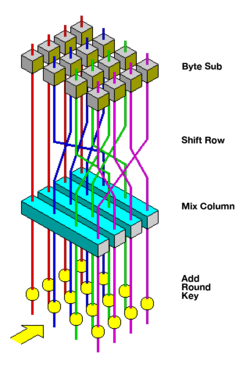
Learn about AES (Advanced Encryption Standard), the global standard for data encryption. Discover how AES works, key len...
View Board
Meet Jerma985, the unconventional architect of internet comedy, whose decade-long career defies influencer norms and red...
View Board
Comments