



Mosul Iraq: Crossroads of History and Conflict
Mosul, Iraq's second-largest city, stands as a profound testament to the tumultuous history of northern Mesopotamia. Located on the Tigris River opposite ancient Nineveh, Mosul has served for centuries as a critical bridge linking empires. Its story is one of grandeur, commerce, conquest, and resilience, most recently defined by the traumatic ISIS occupation and the brutal battle for its liberation.
The Ancient Foundations and Rise of Mosul
The city's significance is deeply rooted in its geography and ancient past. Mosul emerged as the successor to the fabled Assyrian capital of Nineveh, which lies in ruins on the opposite bank of the Tigris. By the 8th century CE, Mosul had ascended to become the principal urban center of the region.
From Abbasid Province to Zangid Capital
Under the Abbasid Caliphate, Mosul flourished as a provincial capital. Its true zenith, however, came during the reign of the Zangid dynasty (1127–1222). The Zangids, notably the famed ruler Nur al-Din, transformed the city into a major hub of Islamic culture, scholarship, and military power. This golden age continued under the subsequent rule of Sultan Badr al-Dīn Luʾluʾ.
Mosul's historical role is defined by its strategic position as a nexus between Syria, Anatolia, and Persia, making it a coveted prize for empires.
Ottoman Era and Modern Formation of Iraq
The Ottoman Empire captured Mosul from Safavid Persia in 1538. For nearly four centuries, it was a vital administrative and commercial center within the empire, first as part of the Baghdad Eyalet and later as the capital of its own Mosul Vilayet.
This period cemented its role in overland trade networks. The aftermath of World War I and the dissolution of the Ottoman Empire marked a drastic turning point. British forces occupied the area, and through a contentious 1926 border settlement with Turkey, Mosul was formally annexed to the newly created state of Iraq.
Economic Decline and National Integration
Severed from the broader Ottoman economic sphere, Mosul's commercial prominence initially declined. Its integration into the Iraqi state set the stage for the complex ethnic and sectarian dynamics that would define its modern history, as a predominantly Sunni Arab city with significant Kurdish, Yazidi, and Christian minorities within a Shiite-majority nation.
The 2003 Invasion and Insurgency Flashpoint
The US-led invasion of Iraq in 2003 brought sudden and violent change to Mosul. On April 11, 2003, U.S. forces captured the city with the aid of Kurdish peshmerga fighters. The swift collapse of Iraqi Army forces was followed by widespread looting and the rapid unraveling of public order.
Mosul became a focal point for the burgeoning insurgency against coalition forces and the new Iraqi government. It was also the site of a pivotal moment in the post-invasion period: the July 2003 raid where Saddam Hussein's sons, Uday and Qusay, were killed by U.S. troops.
- April 11, 2003: Mosul falls to U.S.-led forces.
- July 2003: Uday and Qusay Hussein killed in a Mosul raid.
- 2007: Devastating truck bombings target Yazidi communities west of Mosul, killing hundreds.
The city experienced severe violence throughout the following years, struggling under the weight of sectarian conflict and the presence of extremist groups, foreshadowing the catastrophe to come.
The ISIS Occupation: A City Held Captive
On June 10, 2014, the world watched in horror as the Islamic State of Iraq and Syria (ISIS) overran Mosul. Iraqi security forces, plagued by corruption and poor morale, largely disintegrated. ISIS's capture of this major urban center marked a stunning military and propaganda victory, and the group declared Mosul the capital of its so-called caliphate.
For three years, the city's residents endured a brutal regime characterized by:
- Extreme violence against minorities and political opponents.
- The systematic destruction of cultural heritage sites.
- The imposition of a harsh interpretation of Islamic law.
- Economic collapse and humanitarian crisis.
The ISIS seizure of Mosul in June 2014 represented the group's largest military conquest and fundamentally altered the geopolitics of the Middle East.
Life Under the Caliphate
The occupation severed Mosul from the rest of Iraq and the world. Historical monuments, including mosques, shrines, and churches, were deliberately destroyed. The city's diverse social fabric was violently torn apart, with Yazidis, Christians, Shia Muslims, and other groups facing persecution, forced conversion, or death. This period remains a deep scar on the collective memory of the city's inhabitants.
The Battle for Liberation: Destruction and Freedom
The campaign to retake Mosul began on October 16, 2016. It was the largest military operation in Iraq since 2003, involving Iraqi Security Forces, Kurdish Peshmerga, and various militias, with crucial air and logistical support from a U.S.-led international coalition.
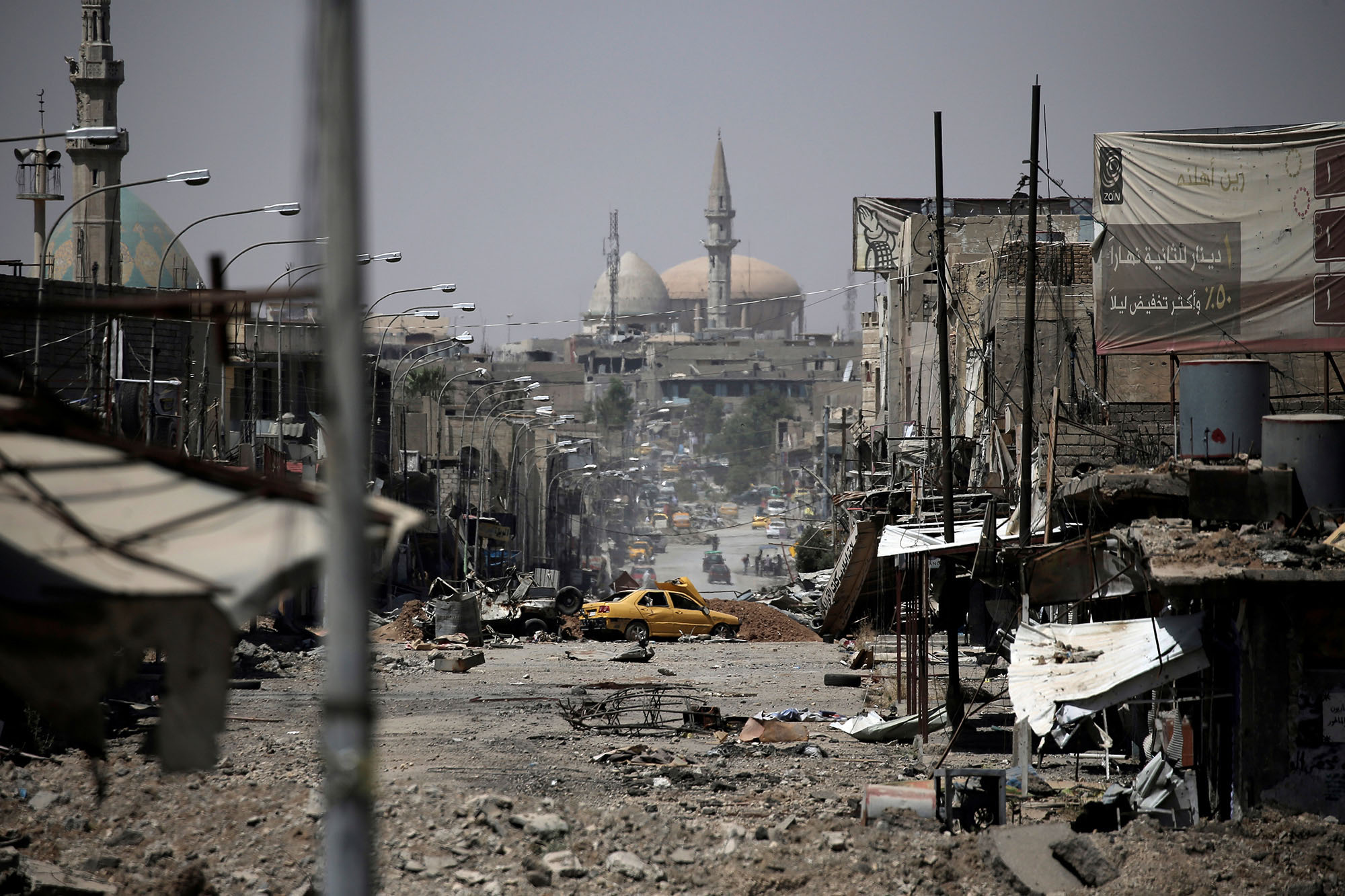
The fight was grueling and destructive. ISIS fighters, dug into a dense urban environment, used civilians as human shields. The final phase of the battle, focused on the narrow alleyways of the Old City, was particularly harrowing. Coalition airstrikes and Iraqi artillery shelling caused catastrophic damage to the city's infrastructure.
Iraqi Prime Minister Haider al-Abadi formally declared victory on July 10, 2017, though intense fighting continued until the city was fully liberated on July 21, 2017. The human cost was staggering.
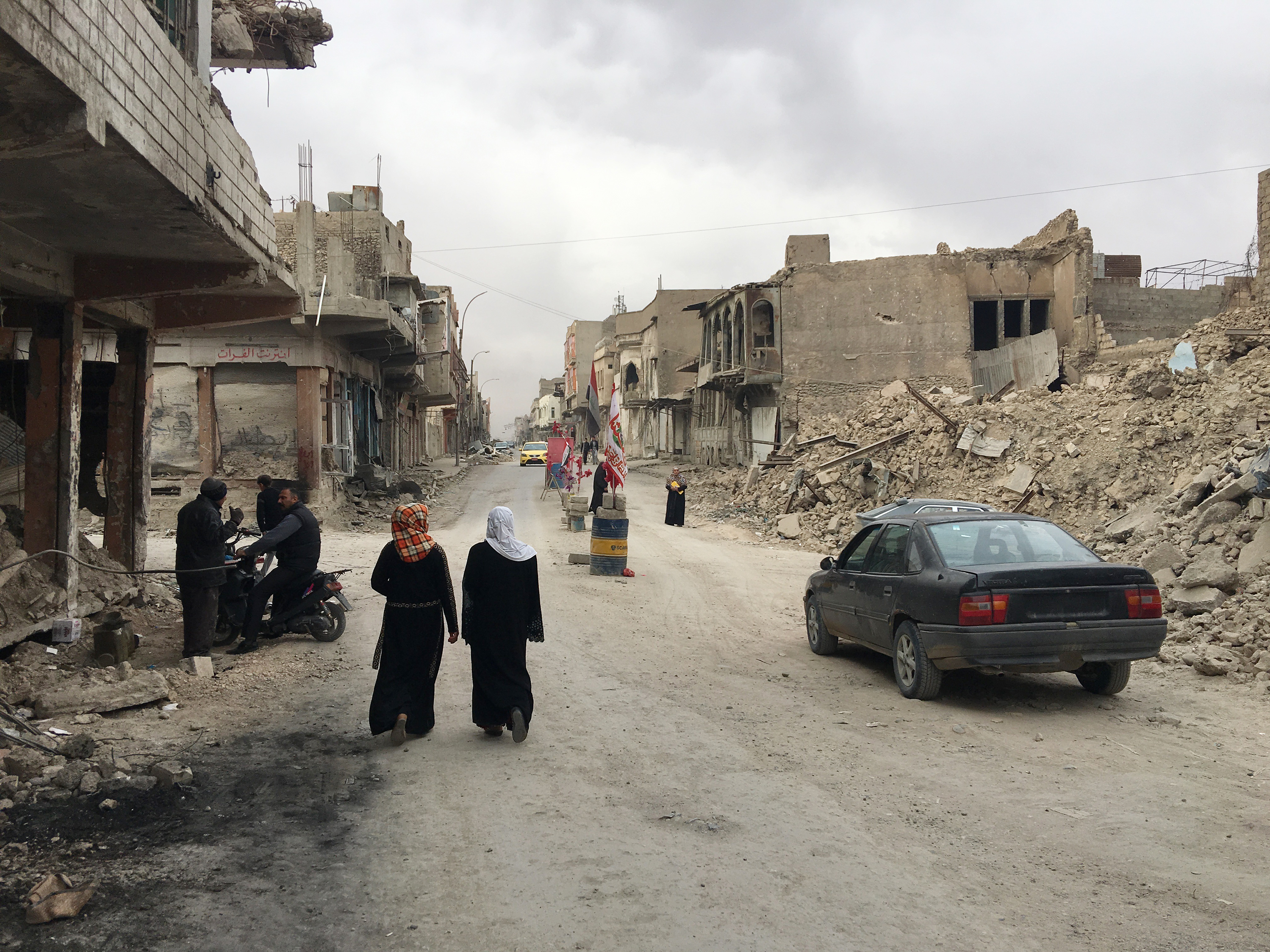
Kurdish intelligence estimates suggested tens of thousands of civilian deaths during the nearly nine-month offensive. The physical devastation was near-total, with vast swathes of the city, especially in western Mosul, reduced to rubble.
The Aftermath of Liberation and a City in Ruins
The declaration of liberation in July 2017 marked the end of ISIS's brutal rule but the beginning of an immense humanitarian and logistical crisis. Western Mosul was almost completely destroyed, with entire neighborhoods reduced to fields of rubble. The scale of devastation posed unprecedented challenges for reconstruction and the return of displaced populations.
Critical infrastructure, including water systems, electricity grids, and hospitals, lay in ruins. The immediate priorities involved clearing streets of debris, identifying and disposing of unexploded ordnance, and providing emergency aid to the traumatized civilians who remained. The humanitarian response was a monumental task for the Iraqi government and international aid agencies.
The battle for Mosul left an estimated 8 to 11 million tons of debris, a stark symbol of the city's physical and psychological scars.
The Challenge of Governing a Fractured City
Liberation also created a new political landscape. The role of the Popular Mobilization Units (PMU), an umbrella group of predominantly Shiite militias backed by Iran, became a source of significant tension. Their presence in the Sunni-majority city raised concerns about sectarian friction and future instability.
The Iraqi government faced the dual challenge of re-establishing legitimate state authority while managing the influence of these powerful, non-state actors. Restoring trust between the citizens of Mosul and the central government, long viewed with suspicion, was identified as a critical factor for lasting peace.
Reconstructing Mosul: The Long Road to Recovery
The process of rebuilding Mosul is one of the most ambitious urban reconstruction projects in the world. Efforts are focused on several key fronts, from restoring basic services to reviving the city's shattered economy and unique cultural identity.
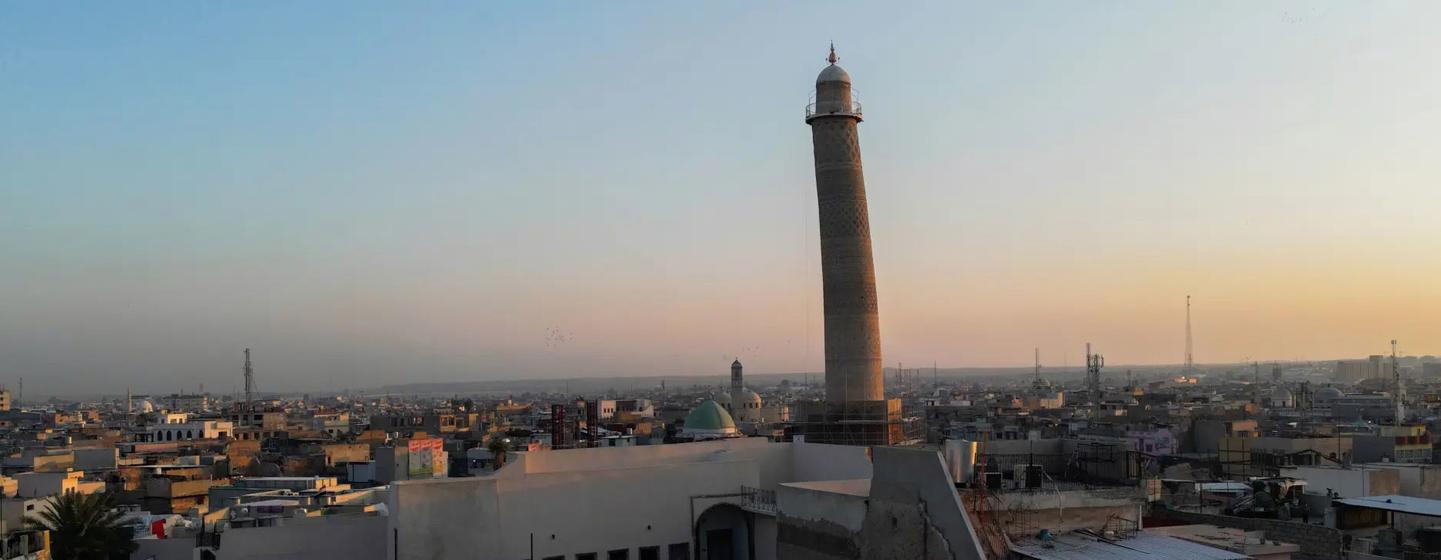
International organizations, including UNESCO, have launched major initiatives to restore heritage sites deliberately targeted by ISIS. Projects aim to rebuild iconic landmarks such as the Al-Nuri Mosque and its leaning Al-Hadba minaret, symbols of the city's resilience.
- Infrastructure Repair: Restoring water, electricity, and sanitation systems for returning residents.
- Housing Reconstruction: Clearing rubble and rebuilding thousands of destroyed homes.
- Economic Revival: Stimulating local businesses and creating employment opportunities.
- Cultural Restoration: Rebuilding mosques, churches, and historical monuments to heal communal wounds.
Remembering Mosul and Cultural Revival
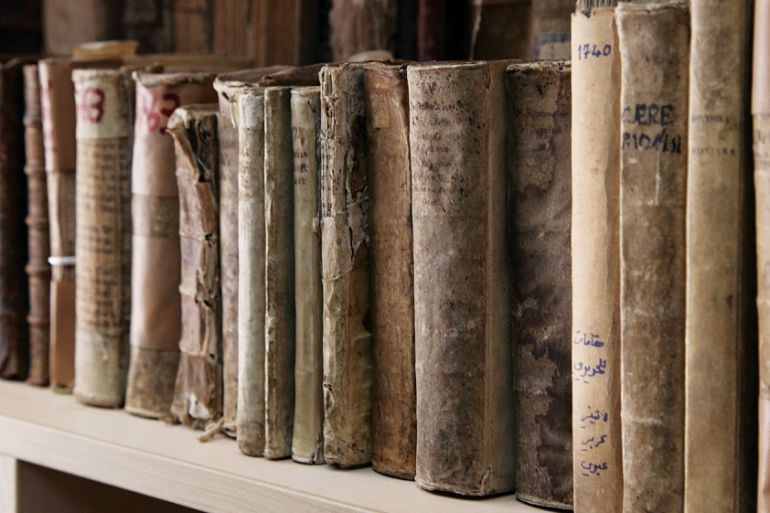
Initiatives like the digital heritage project Remembering Mosul play a vital role in the city's recovery. By documenting and virtually reconstructing lost heritage, these projects preserve collective memory and support physical restoration. This cultural revival extends to the rejuvenation of traditional Mosul crafts, including exquisite handmade textiles and distinctive soap production.
The return of calligraphers, artists, and musicians to the city signals a slow but steady rebirth of its vibrant cultural scene. This revival is seen as essential for healing the trauma of occupation and fostering a sense of shared identity among Mosul's diverse communities.
The Enduring Human Toll and Displacement
The conflict created one of the largest internal displacement crises in Iraq's recent history. At the height of the fighting, over one million people fled Mosul. Years after liberation, the process of return remains slow and fraught with difficulty.
Many families return to find their homes destroyed and their neighborhoods lacking basic services. The psychological impact of the violence, known as trauma, is profound and widespread, affecting children and adults alike. Mental health support is a critical yet often under-resourced component of the recovery effort.
Even by 2025, hundreds of thousands of people originally from Mosul and the surrounding Nineveh Plains remain displaced, unable or unwilling to return.
The Plight of Minorities
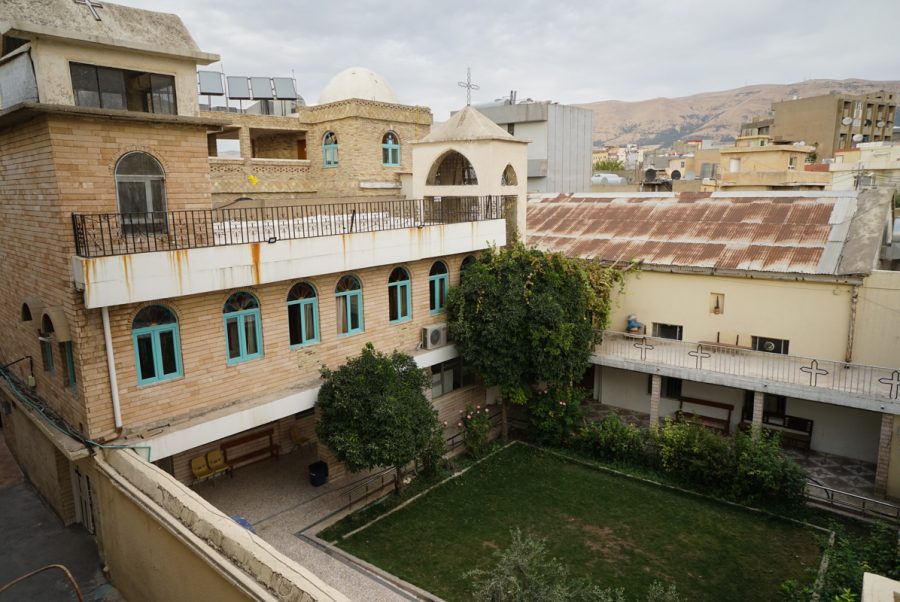
The ISIS occupation had a particularly devastating effect on Mosul's ethnic and religious minorities. The city's ancient Christian community, which dated back to the first centuries of Christianity, was almost entirely expelled. Yazidis, Shabaks, and Turkmen also suffered grievously from targeted persecution.
Ensuring the safe and voluntary return of these communities is a benchmark for a truly inclusive recovery. However, persistent security concerns, property disputes, and a lack of economic opportunities have hindered their large-scale return, threatening the historic diversity of the region.
Security Challenges in Post-ISIS Mosul
While large-scale combat operations ended in 2017, security remains a fragile commodity in and around Mosul. ISIS insurgents have transitioned to a guerrilla warfare strategy, carrying out sporadic hit-and-run attacks, ambushes, and assassinations, particularly in rural areas.
These attacks target security forces, local officials, and civilians perceived as cooperating with the government. The continued presence of ISIS sleeper cells perpetuates a climate of fear and complicates the restoration of normal life. Security operations by Iraqi forces are ongoing but face significant challenges.
- Assassinations: Targeted killings of community leaders and security personnel.
- Improvised Explosive Devices (IEDs): A persistent threat on roads and in markets.
- Intimidation Campaigns: Efforts to undermine governance and terrify the population.
The Militia Factor and Sectarian Tensions
The role of the Popular Mobilization Units (PMU) continues to be a double-edged sword for Mosul's stability. While they played a role in the fight against ISIS, their entrenched presence fuels sectarian grievances among the Sunni population. Many Sunni residents view the PMU not as liberators but as an occupying force representing an antagonistic sectarian agenda.
This dynamic creates a precarious environment where the formal authority of the Iraqi state is contested. Long-term stability depends on the Iraqi government's ability to exert sole security control and build a security apparatus that is seen as legitimate by all of Mosul's communities.
Mosul's Geostrategic Importance in Modern Iraq
Mosul's historical role as a strategic crossroads continues to define its significance in contemporary Iraq. The city is the capital of Nineveh Governorate, a region rich in resources and agricultural land. Its location near the borders with Syria and Turkey makes it a key node for trade and security.
Control over Mosul and its surrounding territory is central to several ongoing national debates. These include disputes between the central government and the Kurdistan Regional Government (KRG) over disputed territories, as well as broader tensions regarding regional influence, particularly from Iran and Turkey.
The city's future is inextricably linked to the future of the Iraqi state. A stable, prosperous, and unified Mosul is essential for a stable Iraq. Conversely, continued instability in the north could threaten the country's fragile cohesion. The management of Mosul's complex ethnic and sectarian makeup remains a critical test for Iraqi nationalism.
Economic Revival and the Future of Commerce
The revitalization of Mosul's economy is fundamental to its long-term recovery. Before the devastation, the city was a bustling commercial hub known for its agricultural production, oil refining, and traditional industries. Restoring this economic vitality is a slow process dependent on security, infrastructure, and investment.
Key sectors for development include agriculture in the fertile Nineveh Plains, small and medium-sized enterprises (SMEs), and the reconstruction supply chain itself. The revival of the Mosul soap industry and other traditional crafts symbolizes a hopeful return to normalcy and economic self-sufficiency.
Creating sustainable livelihoods is considered the most effective long-term strategy for preventing the resurgence of extremism in the region.
The Role of International Aid and Investment
International donors and development agencies play a crucial role in Mosul's economic future. Funding from the World Bank, the European Union, and various UN agencies supports large-scale infrastructure projects. However, attracting significant private sector investment remains a challenge due to perceived political and security risks.
The success of these economic initiatives hinges on good governance and the fight against corruption. Ensuring that reconstruction funds reach their intended projects is critical for building public trust and demonstrating tangible progress to a weary population.
The Struggle for Coexistence and National Reconciliation
Perhaps the most complex challenge facing Mosul is healing the deep social and sectarian divisions exacerbated by conflict. The city's history as a mosaic of Sunni Arabs, Kurds, Christians, Yazidis, and other groups was severely damaged by ISIS's sectarian violence and the subsequent dynamics of the liberation.
Genuine reconciliation requires addressing grievances, promoting justice, and fostering dialogue between communities. This involves delicate processes such as resolving disputed property claims, integrating former fighters, and ensuring equitable representation in local governance.
- Truth and Accountability: Acknowledging the suffering of all communities and holding perpetrators of war crimes accountable.
- Interfaith Dialogue: Rebuilding trust between religious leaders and their congregations.
- Youth Engagement: Investing in education and opportunities for the next generation to counter radicalization.
- Local Governance: Empowering inclusive local councils that represent all of Mosul's communities.
The Plight and Potential Return of Minorities
The voluntary and safe return of Mosul's decimated minority communities is a bellwether for true reconciliation. While some families have returned, the prospects for a large-scale restoration of the Christian and Yazidi populations remain uncertain. Many survivors are unwilling to return without guarantees of security, justice, and economic opportunity.
Initiatives to rebuild churches and temples are powerful symbolic gestures, but they must be accompanied by concrete measures to protect minority rights. The future character of Mosul—whether it will regain its historic diversity or become homogenized—hangs in the balance.
Mosul in the Broader Iraqi and Regional Context
Mosul's fate is inextricably linked to the political trajectory of Iraq as a whole. The city sits at the heart of several ongoing national crises, including the unresolved status of territories disputed between the central government in Baghdad and the Kurdistan Regional Government (KRG).
Furthermore, Mosul is a focal point of regional rivalry. The influence of Iran-backed militias through the PMU conflicts with the interests of Turkey, which has historical claims and maintains military presence in the region. This external interference complicates local governance and threatens to reignite conflict.
Analysts often describe Mosul as a microcosm of Iraq, where the nation's most pressing challenges—sectarianism, corruption, foreign influence, and reconstruction—are concentrated and magnified.
Lessons from the Mosul Crisis
The rise and fall of ISIS in Mosul offers critical lessons for the international community. It underscored the dangers of governance failures and sectarian marginalization. The battle also highlighted the devastating humanitarian cost of urban warfare against non-state actors embedded in civilian populations.
These lessons emphasize the need for comprehensive post-conflict strategies that integrate military, humanitarian, and political efforts from the outset. The focus must shift from merely defeating an enemy to winning the peace that follows.
Conclusion: A City Forged and Tested by History
The story of Mosul is a profound narrative of resilience set against millennia of history. From its origins near ancient Nineveh to its zenith under the Zangids and its crucial role in the Ottoman Empire, the city has long been a strategic and cultural crossroads. The 21st century, however, has presented its most severe trials.
The 2003 invasion shattered the existing order, the ISIS occupation inflicted unspeakable trauma, and the battle for liberation left the city in ruins. The aftermath presents a daunting trilogy of challenges: physical reconstruction, economic revival, and social reconciliation. Each is a monumental task on its own; together they represent one of the world's most complex recovery efforts.
The future of Mosul remains uncertain but is not without hope. The determination of its residents to rebuild their lives, the painstaking work to restore its cultural heritage, and the gradual return of everyday commerce are all testaments to an indomitable spirit. The city's path forward will be long and difficult, requiring sustained commitment from both Iraqis and the international community.
Ultimately, the rebirth of Mosul is about more than clearing rubble and rebuilding walls. It is about reclaiming a pluralistic identity, fostering a just and inclusive peace, and ensuring that the horrors of the past are not repeated. The world watches, hopeful that this ancient city, so often a bellwether for the region, can forge a future defined not by conflict, but by the enduring strength of its people.






Comments