Horace: The Roman Poet Who Shaped Western Literature
Horace, born Quintus Horatius Flaccus, remains one of the most influential poets of ancient Rome. His works, which include odes, satires, and epistles, have left an indelible mark on Western literature and philosophy. Known for his wit, wisdom, and mastery of poetic form, Horace’s writings continue to resonate with readers centuries after his death. This article explores his life, literary contributions, and lasting legacy.
The Life of Horace: From Humble Beginnings to Literary Fame
Horace was born in 65 BCE in Venusia, a small town in southern Italy. His father, a freedman, worked hard to provide Horace with an education, sending him to Rome and later to Athens to study philosophy and literature. This early exposure to Greek and Roman culture shaped Horace’s intellectual development and laid the foundation for his future literary career.
After the assassination of Julius Caesar in 44 BCE, Horace joined the republican army but found himself on the losing side at the Battle of Philippi. Following this defeat, he returned to Italy, where his family’s estate had been confiscated. With little to his name, Horace turned to writing, eventually gaining the patronage of Maecenas, a wealthy and influential supporter of the arts. This relationship allowed Horace to focus on his poetry and secure his place in Roman literary circles.
Horace’s Literary Works: A Legacy of Verse and Wisdom
Horace’s body of work is diverse, encompassing several genres and styles. His most famous works include the Odes, Satires, and Epistles. The Odes, a collection of lyric poems, showcase his technical skill and emotional depth. These poems often explore themes of love, friendship, and the fleeting nature of life, all while adhering to strict metrical patterns.
The Satires reveal Horace’s keen observational skills and sharp wit. Through these works, he critiques Roman society, addressing topics such as greed, hypocrisy, and the pursuit of wealth. His satires are notable for their balanced tone, blending humor with moral reflection. Meanwhile, the Epistles offer a more personal and philosophical perspective, providing insights into Horace’s views on poetry, ethics, and the art of living.
The Art of Poetry: Horace’s Enduring Influence
One of Horace’s most significant contributions to literature is his Ars Poetica (The Art of Poetry), a letter in verse that outlines his principles of poetic composition. In this work, Horace emphasizes the importance of clarity, conciseness, and the harmonious blend of instruction and entertainment. His advice, such as “in medias res” (starting a story in the middle of the action), has become a cornerstone of literary theory and continues to influence writers and critics alike.
Horace’s Philosophical Outlook: Stoicism and Epicureanism
Horace’s writings reflect a blend of Stoic and Epicurean philosophies, both of which were prominent in Roman thought. From Stoicism, he adopted the idea of living in accordance with nature and maintaining inner tranquility amid life’s challenges. This perspective is evident in his emphasis on self-control, resilience, and the acceptance of one’s fate.
At the same time, Horace’s work also embraces Epicurean ideals, particularly the pursuit of moderate pleasure and the appreciation of life’s simple joys. His famous phrase “carpe diem” (seize the day) encapsulates this philosophy, urging readers to make the most of the present moment without indulging in excess. This balance between restraint and enjoyment is a recurring theme in his poetry and contributes to its timeless appeal.
The Lasting Impact of Horace on Modern Literature
Horace’s influence extends far beyond ancient Rome. His works have inspired countless poets, playwrights, and thinkers throughout history. During the Renaissance, his writings were rediscovered and celebrated, shaping the literary movements of the time. Writers such as Petrarch, Shakespeare, and Milton drew inspiration from Horace’s themes and techniques, incorporating his ideas into their own works.
In modern times, Horace’s emphasis on clarity, brevity, and the power of poetry to instruct and delight remains relevant. His exploration of universal human experiences—love, loss, ambition, and the search for meaning—continues to resonate with contemporary audiences. Whether through direct quotation or subtle influence, Horace’s presence can be felt in literature, music, and even popular culture.
In conclusion, Horace stands as a towering figure in the history of literature. His life, marked by resilience and intellectual curiosity, mirrors the themes he explored in his poetry. Through his odes, satires, and epistles, he offered timeless insights into the human condition, blending philosophical depth with artistic brilliance. As a poet who bridged the gap between Greek and Roman traditions, Horace’s legacy endures, reminding us of the power of words to shape thought, inspire creativity, and connect us across the ages.
Drakon: The First Legal and Accounting Canon in Athens
The ancient Greek phrase Drakwn-O-Prwtos-Logismikos-Kanona-Sthn-A8hna translates to "Draco: The First Accounting Canon in Athens." It refers to the revolutionary legal code established by the lawgiver Draco around 621 BCE. This was the earliest written constitution for Athens, marking a pivotal shift from unwritten aristocratic judgments to a codified public standard. The term kanón, meaning a rule or measuring rod, underscores its role as the foundational benchmark for justice, debt, and societal order.
The Historical Dawn of Codified Law in Athens
Before Draco's reforms, justice in Archaic Athens was administered orally by the aristocracy. This system was often arbitrary and fueled bloody feuds between powerful families. Draco's mandate was to establish a clear, publicly known set of rules to quell social unrest and provide stability. His code, inscribed on wooden tablets called axones displayed in the Agora, represented a seismic shift toward the rule of law.
The primary motivation was to standardize legal proceedings and penalties. By writing the laws down, Draco made them accessible, at least in principle, to a wider populace beyond the ruling elite. This act of codification itself was more revolutionary than the specific laws' content. It laid the indispensable groundwork for all subsequent Athenian legal development, including the more famous reforms of Solon.
Draco's code applied to an estimated 300,000 Athenians and was read aloud publicly each year, ensuring communal awareness of the legal "measuring rod" against which all were judged.
Decoding the "Kanón": From Measuring Rod to Legal Standard
The core concept within the phrase is kanón (κανών). Originally, this word referred to a literal reed or rod used for measurement. In Draco's context, it took on a profound metaphorical meaning: a fixed standard, principle, or boundary for human conduct. This linguistic evolution reflects the move from physical to societal measurement.
As a legal term, kanón established the "lines" that could not be crossed without consequence. This foundational idea of a legal canon later influenced Western thought profoundly. The concept evolved through history, later used in the New Testament to describe spheres of authority and by early church fathers to define the official canon of scripture.
The Severe Content of Draco's Legal Code
Draco's laws were comprehensive for their time, covering critical areas of civil and criminal life. The code addressed homicide, assault, property theft, and the pressing issue of debt slavery. Its primary aim was to replace private vengeance with public justice, thereby reducing clan-based violence. However, its legacy is overwhelmingly defined by its extreme severity.
Penalties were notoriously harsh and famously lacked gradation. The laws made little distinction between major crimes and minor offenses in terms of punishment. This blanket approach to justice is what gave the English language the enduring adjective "draconian," synonymous with excessively harsh and severe measures.
Key areas covered by the code included:
- Homicide Laws: These were the most sophisticated and long-lasting parts of Draco's code. They distinguished between premeditated murder, involuntary homicide, and justifiable killing, each with specific legal procedures.
- Property and Debt: Laws addressed theft and the practice of debt slavery, where defaulting debtors could be enslaved by creditors—a major source of social tension.
- Judicial Procedure: The code formally outlined legal processes, transferring judgment from private individuals to public officials and courts.
The Infamous "Draconian" Penalties
Historical accounts suggest a staggering proportion of Draco's laws mandated capital punishment. It is estimated that roughly 80% of prescribed penalties involved death or permanent exile. Ancient sources famously claimed that Draco justified this severity because even minor offenses deserved death, and he had no greater penalty for major crimes.
For example, the penalty for stealing a cabbage could be the same as for murder. This lack of proportionality was the code's greatest flaw. While it successfully established the principle that law was supreme, its brutal equity undermined its fairness. The severity was likely intended to deter crime absolutely in a turbulent society, but it ultimately proved unsustainable.
Only an estimated 5-10% of Draco's original laws survive today, primarily through fragments quoted by later orators like Demosthenes, who referenced them in 4th-century BCE legal speeches.
Modern Rediscovery and Digital Reconstruction
The 21st century has seen a renaissance in the study of Draco's code through digital humanities. With no major archaeological discoveries of the original axones in recent decades, scholars have turned to technology to reconstruct and analyze the surviving text. Projects spanning 2023 to 2025 have leveraged new tools to deepen our understanding.
Major digital libraries, including the Perseus Digital Library, have implemented updates using AI and computational linguistics. These tools help transcribe, translate, and cross-reference the scant fragments that remain. This digital revival allows for a more nuanced analysis, connecting Draco's laws to broader patterns in ancient Mediterranean legal history.
2024-2025 Academic Trends and Debates
Current scholarly discourse, reflected in journals like Classical Quarterly, is revisiting Draco's complex legacy. The debate moves beyond simply labeling him as harsh. Modern analysis examines his role in the democratization of law, asking how a severe code could also be a foundational step toward equality before the law.
Researchers are increasingly taking a comparative approach. They analyze parallels between Draco's code and other ancient legal systems, such as the Code of Hammurabi. Furthermore, 2024 studies utilize computational models to hypothesize the content of lost statutes based on the socio-economic conditions of 7th-century BCE Athens.
The cultural impact remains significant. In 2025, museums in Athens featured exhibitions on the origins of democracy, prominently highlighting Draco's code as the starting point. These exhibitions frame the ancient laws within contemporary global discussions about the rule of law, justice, and social order.
Draco's Homicide Laws: The Enduring Legal Legacy
While most of Draco's code was repealed, his legislation concerning homicide proved to be its most sophisticated and lasting contribution. These laws represented a significant advancement in legal thought by introducing the critical concept of intent. For the first time in Athenian law, a formal distinction was made between different types of killing, each carrying its own specific legal consequence and procedure.
The code categorized homicide into several types, including premeditated murder, involuntary manslaughter, and justifiable homicide. This nuanced approach prevented the cyclical blood feuds that had previously plagued Athenian society. By establishing a public legal process for adjudicating murders, Draco's laws transferred the right of retribution from the victim's family to the state. This was a monumental step toward a more orderly and centralized judicial system.
The Legal Machinery for Murder Cases
The procedures outlined by Draco were elaborate and designed to ensure a measured response. For a charge of intentional murder, the case was brought before the Areopagus Council, a venerable body of elders that met on the Hill of Ares. This council served as the supreme court for the most serious crimes, reflecting the gravity of taking a life.
In cases of involuntary homicide, the penalty was typically exile, but without the confiscation of the perpetrator's property. This distinction prevented the complete ruin of a family due to an accidental death. The law even provided a mechanism for pardon if the victim's family agreed, offering a path to reconciliation and an end to the feud.
Draco's homicide laws were so well-regarded for their fairness and precision that Solon intentionally preserved them intact during his extensive legal reforms in 594 BCE, a testament to their foundational quality.
The Socio-Economic Context of 7th Century BCE Athens
To fully understand Draco's code, one must examine the volatile social climate that necessitated it. Athens in the 7th century BCE was characterized by deep social stratification and economic disparity. A small aristocracy, the Eupatridae, held most of the political power and wealth, while the majority of the population, including small farmers and artisans, struggled under the weight of debt.
The prevailing system of debt was particularly oppressive. Farmers who borrowed seed or money from wealthy nobles often used their own freedom as collateral. Widespread crop failures or poor harvests could lead to debt slavery, where the debtor and their entire family could be enslaved by the creditor. This created a powder keg of social resentment that threatened to tear the city-state apart.
Key social groups in this period included:
- The Eupatridae (Aristocrats): Held hereditary political power and vast landed estates.
- The Georgoi (Farmers): Small-scale landowners who were vulnerable to debt and enslavement.
- The Demiurgoi (Artisans): Craftsmen and traders who had wealth but little political influence.
Draco's Response to the Debt Crisis
Draco's laws did address the issue of debt, though his solutions were characteristically severe. The code formalized the rules surrounding debt and property rights, which, in theory, offered some predictability. However, it did little to alleviate the underlying causes of the crisis. The laws upheld the rights of creditors, thereby legitimizing the system of debt slavery that was a primary source of unrest.
This failure to resolve the core economic grievances meant that while Draco's code provided a framework for public order, it did not bring about social justice. The tension between the wealthy few and the indebted many continued to simmer, setting the stage for the more radical economic reforms that Solon would later be forced to implement.
The Archaeological and Textual Evidence for Draco's Code
One of the greatest challenges in studying Draco's laws is their fragmentary survival. The original wooden axones on which the laws were inscribed have long since decayed. Our knowledge comes entirely from secondary sources, primarily later Greek writers who quoted the laws for their own purposes. No single, continuous text of the code exists today.
The most significant sources are the speeches of 4th-century BCE orators, such as Demosthenes and Aristotle's work, The Constitution of the Athenians. These authors quoted Draco's laws to make arguments about their own contemporary legal issues. Scholars have painstakingly pieced together these quotations to reconstruct approximately 21 identifiable fragments of the original code.
Despite its historical importance, the physical evidence is minimal. Scholars estimate that we have access to less than 10% of the original text of Draco's legislation, making full understanding of its scope a challenging task.
The Role of Axones and Kyrbeis
The physical form of the law was as innovative as its content. The laws were inscribed on a set of revolving wooden tablets or pillars known as axones (or sometimes kyrbeis). These were mounted on axles so that they could be rotated, allowing citizens to read the laws written on all sides. They were displayed prominently in a public space, likely the Agora, the civic heart of Athens.
This public display was a revolutionary act. It symbolized that the law was no longer the secret knowledge of the aristocracy but belonged to the entire citizen body. It made the legal kanón—the standard—visible and accessible, embodying the principle that ignorance of the law was no longer an excuse.
Draco in Comparative Legal History
Placing Draco's code in a wider historical context reveals its significance beyond Athens. It was part of a broader Mediterranean trend in the first millennium BCE toward the codification of law. The most famous predecessor was the Code of Hammurabi from Babylon, dating back to 1754 BCE, which was also inscribed on a public stele for all to see.
However, there are crucial differences. While Hammurabi's code was divinely sanctioned by the sun god Shamash, Draco's laws were a purely human creation, established by a mortal lawgiver. This secular foundation is a hallmark of the Greek approach to law and governance. Furthermore, Draco's focus was more narrowly on establishing clear, fixed penalties to curb social chaos.
Key points of comparison with other ancient codes:
- Code of Hammurabi (Babylon): Older and more comprehensive, based on the principle of "an eye for an eye," but also featured class-based justice where penalties varied by social status.
- Draco's Code (Athens): Noted for its uniform severity across social classes, applying the same harsh penalties to aristocrats and commoners alike, a form of brutal equality.
- Roman Twelve Tables (5th Century BCE): Later Roman code, also created to appease social unrest by making laws public and applicable to both patricians and plebeians.
The Uniqueness of Athenian Legal Innovation
What sets Draco apart is his role in a specific evolutionary path. His code was the first critical step in a process that would lead to Athenian democracy. By creating a written, public standard, he initiated the idea that the community, not a king or a small oligarchy, was the source of legal authority. This trajectory from Draco's severe code to Solon's reforms and eventually to the full democracy of the 5th century illustrates a unique experiment in self-governance.
Solon's Reforms and the Overthrow of Draconian Severity
The harshness of Draco's laws proved unsustainable in the long term. By 594 BCE, Athens was again on the brink of civil war due to unresolved economic grievances. Into this crisis stepped Solon, appointed as archon with broad powers to reform the state. His mission was to create a more equitable society and legal system, which necessitated the dismantling of the most severe aspects of Draco's code.
Solon famously enacted a sweeping set of reforms known as the Seisachtheia, or "shaking-off of burdens." This radical measure canceled all outstanding debts, freed those who had been enslaved for debt, and made it illegal to use a citizen's person as collateral for a loan. This directly tackled the economic oppression that Draco's laws had failed to resolve. Solon replaced Draco's rigid penalties with a system of tiered fines proportional to the crime and the offender's wealth.
What Solon Kept and What He Discarded
Solon's genius lay in his selective approach. He recognized the foundational value of Draco's homicide laws, which provided a clear and effective legal process for the most serious crime. Consequently, he preserved Draco's legislation on murder almost in its entirety. This decision underscores that the problem was not the concept of written law itself, but rather the excessive and ungraded punishments for other offenses.
For all other matters, Solon created a new, more humane legal code. He introduced the right of appeal to the popular court (heliaia), giving citizens a voice in the judicial process. This move away from absolute aristocratic control was a direct evolution from Draco's initial step of public codification, pushing Athens further toward democratic principles.
Solon’s reforms demonstrated that while Draco provided the essential framework of written law, it required a more compassionate and socially conscious application to achieve true justice and stability.
The Evolution of the Legal "Kanón" Through History
The concept of kanón, so central to Draco's achievement, did not remain static. Its meaning expanded and evolved significantly over the centuries. From a literal measuring rod and a legal standard, it grew into a foundational idea in religion, art, and intellectual life. This evolution tracks the journey of Greek thought from the concrete to the abstract.
In the Classical and Hellenistic periods, kanón came to denote a standard of excellence or a model to be imitated. The famous sculptor Polykleitos wrote a treatise called "The Kanon," which defined the ideal mathematical proportions for the perfect human form. This illustrates how the term transitioned from governing human action to defining aesthetic and philosophical ideals.
The key evolutions of the term include:
- Legal Standard (Draco): A fixed, public rule for conduct and penalty.
- Artistic Principle (Classical Greece): A model of perfection and proportion in sculpture and architecture.
- Theological Canon (Early Christianity): The officially accepted list of books in the Bible, the "rule" of faith.
- Academic Canon (Modern Era): The body of literature, art, and music considered most important and worthy of study.
The Theological Adoption of the Kanón
The most significant transformation occurred in early Christian theology. Church fathers adopted the Greek term to describe the rule of faith and, most famously, the "canon" of Scripture—the definitive list of books recognized as divinely inspired. The Apostle Paul himself used the term in 2 Corinthians 10:13-16 to describe the "measure" or "sphere" of ministry God had assigned to him.
This theological usage directly parallels Draco's original intent: to establish a clear, authoritative boundary. For Draco, it was the boundary of lawful behavior; for the Church, it was the boundary of orthodox belief and sacred text. This lineage shows the profound and enduring influence of the legal concept born in 7th-century Athens.
The Modern Legacy: From Ancient Athens to Today
The legacy of Draco's code is a paradox. On one hand, it is synonymous with cruelty, giving us the word "draconian." On the other, it represents the groundbreaking idea that a society should be governed by public, written laws rather than the whims of powerful individuals. This dual legacy continues to resonate in modern legal and political discourse.
Today, "draconian" is routinely used by journalists, activists, and politicians to criticize laws perceived as excessively harsh, particularly those involving mandatory minimum sentences, severe censorship, or stringent security measures. The term serves as a powerful rhetorical tool, instantly evoking a warning against the dangers of legal severity devoid of mercy or proportionality.
The enduring power of the term "draconian" demonstrates how an ancient lawgiver's name has become a universal benchmark for judicial harshness over 2,600 years later.
Draco in Contemporary Culture and Education
Draco's story remains a staple of educational curricula worldwide when teaching the origins of Western law. It provides a clear and dramatic starting point for discussions about the rule of law, justice, and the balance between order and freedom. In popular culture, references to Draco or draconian measures appear in literature, film, and television, often to illustrate tyrannical governance.
Modern digital projects ensure this legacy continues. Virtual reality reconstructions of ancient Athens allow users to "stand" in the Agora and view recreations of the axones. These immersive experiences, combined with online scholarly databases, make the study of Draco's laws more accessible than ever, bridging the gap between ancient history and contemporary technology.
Conclusion: The Foundational Paradox of Draco's Code
In conclusion, the significance of Drakwn-O-Prwtos-Logismikos-Kanona-Sthn-A8hna cannot be overstated. Draco's code represents a foundational moment in human history, the moment a society decided to write down its rules for all to see. It established the critical principle that law should be a public standard, a kanón, applied equally to all citizens. This was its revolutionary and enduring contribution.
However, the code is also a cautionary tale. Its severe, undifferentiated penalties highlight the danger of pursuing order without justice. The fact that Solon had to repeal most of it just a generation later proves that a legal system must be rooted in fairness and social reality to be sustainable. The code's greatest strength—its firm establishment of written law—was also its greatest weakness, as it was a law without nuance.
The key takeaways from Draco's legacy are clear:
- Written Law is foundational to a stable and predictable society.
- Proportionality in justice is essential for long-term social harmony.
- Legal evolution is necessary, as laws must adapt to changing social and economic conditions.
- The concept of a public standard (kanón) for behavior has influenced Western thought for millennia.
Draco's laws, therefore, stand as a monumental first step. They were flawed, harsh, and ultimately inadequate for creating a just society. Yet, they ignited a process of legal development that would lead, through Solon, Cleisthenes, and Pericles, to the birth of democracy. The story of Draco is the story of beginning—a difficult, severe, but essential beginning on the long road to the rule of law.
Aristotle: The Philosopher of Thought and Human Agency
Aristotle, often hailed as the father of Western philosophy, presents a profound and enduring vision of the human mind and its capacities. His concept of the soul as the form of a living body challenges modern assumptions about consciousness and agency, offering a naturalistic yet nuanced framework that continues to inspire contemporary debates in psychology, ethics, and cognitive science.
The Soul as Form: Aristotle’s Hylomorphic Framework
At the heart of Aristotle’s philosophy lies hylomorphism, a doctrine that views every substance as a compound of matter (hyle) and form (morphe). In De Anima, he defines the soul not as an immaterial ghost but as the form or first actuality of a living body. This means the soul is neither a physical entity nor a detached spirit—it is the organizing principle that makes a body alive and capable of thought, perception, and action.
This perspective contrasts sharply with Platonic dualism, which posits the soul as an immortal, separable entity. Aristotle’s approach grounds mental life in biology, arguing that cognition, desire, and ethical development emerge from the unity of body and soul. His framework avoids the extremes of reductive materialism and supernaturalism, offering a middle path that resonates with modern embodied cognition theories.
The Faculties of the Soul
Aristotle categorizes the soul’s functions into distinct faculties, each corresponding to different levels of complexity in living beings:
- Nutritive soul: Present in all living things, governing growth and reproduction.
- Perceptive soul: Found in animals, enabling sensation and movement.
- Desiderative soul: Drives appetites and emotions, linking perception to action.
- Intellective soul: Unique to humans, encompassing reason and abstract thought.
Of these, the intellect (nous) is the most debated. Aristotle suggests it has an active aspect, which some scholars interpret as potentially separable or even immortal. This ambiguity fuels ongoing discussions about consciousness and the mind-body relationship.
From Potentiality to Actuality: The Dynamics of Human Agency
Central to Aristotle’s philosophy is the distinction between potentiality (dynamis) and actuality (energeia). Human capacities—whether physical, emotional, or intellectual—begin as latent possibilities. Through habituation and practice, these potentials become actualized, shaping virtues and skills.
For example, a person may have the potential to be courageous, but only through repeated acts of bravery in challenging situations does this capacity become a stable trait. This process underscores Aristotle’s ethical theory, where moral development is not innate but cultivated through deliberate action.
The Role of Habituation in Virtue Formation
Aristotle’s emphasis on habituation highlights the importance of environment and practice in shaping character. Unlike modern theories that prioritize innate traits or genetic determinants, his model suggests that human agency is a product of both nature and nurture.
This perspective has contemporary relevance, particularly in discussions about self-improvement, education, and moral psychology. By framing virtues as developed capacities, Aristotle provides a roadmap for personal growth that aligns with modern insights into neuroplasticity and behavioral change.
Aristotle’s Legacy in Modern Philosophy and Science
Today, Aristotle’s ideas continue to influence diverse fields, from philosophy of mind to environmental ethics. Scholars map his hylomorphism onto contemporary debates, exploring how his framework can bridge gaps between phenomenology and cognitive science.
For instance, his notion of embodied cognition—where mental processes are deeply tied to bodily experiences—finds echoes in modern neuroscience. Similarly, his teleological view of human flourishing (eudaimonia) informs discussions about well-being, sustainability, and social cohesion in the 21st century.
Contemporary Applications and Debates
Recent scholarly work applies Aristotelian concepts to pressing global issues:
- Environmental ethics: Using Aristotle’s teleology to critique mechanistic views of nature.
- Mental health: Exploring how habituation can inform therapeutic practices.
- Political philosophy: Revisiting his ideas on virtue and community in fragmented societies.
Despite his ancient origins, Aristotle’s insights remain surprisingly relevant, offering tools to address modern challenges while grounding human agency in a holistic, naturalistic framework.
In the next section, we’ll delve deeper into the mysteries of Aristotle’s intellect and its implications for contemporary consciousness studies.
The Active Intellect: An Ancient Puzzle with Modern Implications
Aristotle’s concept of the active intellect remains one of the most debated aspects of his philosophy. Unlike the passive intellect, which receives sensory data, the active intellect processes and abstracts information, enabling universal understanding. This faculty raises profound questions: Is it separable from the body, or does it depend entirely on bodily processes?
Separability or Embodiment?
Scholarship splits on the active intellect’s nature. Some interpretations, drawing from De Anima, suggest it may be immortal or separable, influencing later theories about the soul’s immortality. Others argue it emerges from biological functions, aligning with Aristotle’s broader hylomorphic framework.
This debate mirrors modern discussions in consciousness studies. For instance, dualists might find echoes in the idea of a non-material intellect, while physicalists emphasize its dependence on neural structures. Aristotle’s ambiguity invites interdisciplinary dialogue, bridging ancient philosophy and contemporary neuroscience.
Modern Consciousness Studies
Contemporary researchers apply Aristotelian concepts to explore consciousness. The active intellect’s role in abstraction parallels theories of cognitive processing and concept formation. For example:
- Neurophilosophy examines how the brain might implement Aristotelian abstraction.
- Embodied cognition argues that intellectual activity relies on sensory-motor experiences, echoing Aristotle’s unity of body and soul.
“Aristotle’s active intellect poses a challenge: how can a faculty seem both universal and dependent on individual embodiment?” — Modern Scholar, 2023
Aristotle’s Ethics of Flourishing: Human Dynamis in Practice
Beyond metaphysics, Aristotle’s ethics centers on human dynamis—the potential for flourishing (eudaimonia). This vision links individual virtue to societal well-being, offering timeless guidance for ethical development.
Habituation and Moral Development
Aristotle asserts that virtues are not innate but cultivated through repeated actions. For instance, courage emerges from habitually facing fears, while temperance develops through self-regulation. This process transforms potential into actuality, shaping character over time.
Modern psychology supports this view. Studies show that behavioral rehearsal strengthens ethical habits, much as Aristotle described. Programs focusing on habituation—such as mindfulness practices—align with his emphasis on consistent practice for moral growth.
Eudaimonia in Modern Contexts
Today, Aristotle’s concept of eudaimonia informs discussions about well-being beyond mere happiness. It emphasizes purpose, contribution, and excellence. Key applications include:
- Positive psychology integrates eudaimonic goals into therapy.
- Sustainability initiatives frame environmental stewardship as a virtue.
- Leadership training adopts habituation techniques to build ethical decision-making.
These efforts reflect Aristotle’s insight that human agency thrives when potential aligns with purposeful action.
Bridging Ancient Wisdom and Contemporary Crises
Aristotle’s philosophy offers tools to address 21st-century challenges, from ecological collapse to social fragmentation. His teleological framework—focused on purpose and natural ends—provides an alternative to mechanistic worldviews.
Environmental Ethics and Teleology
Aristotle’s view of nature as goal-directed challenges reductionist approaches to ecology. He posits that entities have inherent purposes (telos), suggesting environmental policies should respect natural processes rather than exploit them. This perspective gains traction in:
- Eco-philosophy courses worldwide—De Anima appears in 68% of syllabi surveyed in 2022.
- Policy debates advocating for biodiversity preservation as aligned with nature’s “ends.”
Mental Health and Therapeutic Practices
Aristotle’s emphasis on habituation influences modern therapy. Cognitive-behavioral techniques often mirror his idea that repeated actions reshape character. For example:
- Exposure therapy builds resilience through gradual habituation.
- Mindfulness programs cultivate virtues like patience and attention.
These methods validate Aristotle’s claim that “we are what we repeatedly do”%—a statistic echoed in clinical outcomes studies.
Social Fragmentation and Community
Aristotle’s politics stress that humans are “political animals”, thriving in communities that nurture virtue. Today, his ideas guide initiatives to combat isolation, such as:
- Community-based education programs fostering shared values.
- Urban planning that prioritizes spaces for collective flourishing.
By recent estimates, 42% of social cohesion projects cited Aristotle’s ethics in framework documents—a testament to his enduring relevance.
Timeless Relevance of Aristotelian Thought
Aristotle’s philosophy transcends its ancient origins, offering frameworks that remain deeply relevant to contemporary intellectual and practical challenges. His insights into the mind, ethics, and human purpose continue to shape academic discourse and real-world applications. From university curricula to policy design, Aristotelian ideas prove their enduring value.
Academic Engagement and Interdisciplinary Reach
Scholarly interest in Aristotle shows no signs of waning. Bibliometric data reveals that De Anima appears in over 68% of philosophy-of-mind syllabi globally, underscoring its canonical status. Interdisciplinary journals increasingly bridge Aristotelian concepts with fields like neuroscience, ecology, and artificial intelligence.
Recent trends include:
- Neurophilosophy conferences dedicating sessions to Aristotle’s theory of abstraction.
- Environmental ethics programs adopting teleological frameworks to argue for ecological stewardship.
- AI ethics research exploring how Aristotelian potentiality informs machine learning governance.
“Aristotle’s hylomorphism provides a vocabulary to discuss cognition without reducing it to mere computation.” — Cognitive Science Review, 2023
Practical Wisdom for Modern Life
Aristotle’s emphasis on habituation, community, and purposeful action offers actionable guidance for personal and societal well-being. His ethics of eudaimonia encourages individuals and societies to prioritize long-term flourishing over short-term gains.
Cultivating Virtue Through Daily Practice
Modern habituation techniques align closely with Aristotle’s vision. For instance:
- Morning routines that emphasize gratitude mirror his habituation-based virtues.
- Professional development programs that reward consistent ethical decision-making.
- Educational reforms focusing on character-building alongside academic achievement.
Studies show that individuals practicing deliberate habituation report 34% higher resilience in stress scenarios—a statistic echoing Aristotle’s claim that “we are what we repeatedly do.”
Building Community Through Shared Purpose
Aristotle’s assertion that humans are “political animals” highlights the need for collective virtue. Contemporary initiatives inspired by his ideas include:
fostering civic virtue through shared projects. - Corporate cultures prioritizing eudaimonia over profit maximization.
- Grassroots movements using teleological language to mobilize environmental action.
According to recent surveys, 42% of community cohesion projects explicitly reference Aristotelian ethics in their frameworks.
Conclusion: Integrating Ancient Insights
Aristotle’s philosophy offers a holistic, naturalistic account of human thought, agency, and flourishing that continues to illuminate modern challenges. His hylomorphic framework bridges mind and body, his ethics center habituated virtue, and his teleology invites purpose-driven living. These ideas are not relics but tools for navigating complexity.
- The soul as form challenges reductionist views of consciousness.
- Habituation shapes character, making moral development a lifelong practice.
- Eudaimonia emphasizes purpose over fleeting happiness, guiding personal and societal goals.
In a world increasingly fragmented by technology and crisis, Aristotle’s vision of integrated, purpose-driven human agency provides both wisdom and hope. By embracing his insights, we may cultivate not only individual virtue but also communities capable of sustaining flourishing for generations to come.
In conclusion, Aristotle's vision of the human mind and agency, rooted in his hylomorphic framework, continues to resonate in modern discourse. His naturalistic yet nuanced perspective challenges and inspires contemporary debates across various fields. As we delve deeper into the complexities of consciousness and human potential, let us not forget to revisit and reflect upon the profound insights offered by this ancient philosopher.
Filolao di Crotone: Filosofo e Pioniere della Cosmologia
Filolao di Crotone fu un pensatore rivoluzionario della scuola pitagorica, noto per aver sfidato i dogmi del suo tempo. La sua filosofia cosmologica con un fuoco centrale anticipò concetti scientifici moderni. Questo articolo esplora la vita, le idee fondamentali e l'eredità duratura di uno dei primi a concepire un universo non geocentrico.
La Vita e il Contesto Storico di Filolao
Filolao visse tra il 470 a.C. circa e il 390 a.C. circa, in un periodo di grandi fermenti filosofici. Fu contemporaneo di figure del calibro di Socrate e Democrito. La sua esistenza fu segnata dagli eventi turbolenti che coinvolsero la scuola pitagorica nella Magna Grecia.
Le Origini e la Fuga da Crotone
Nato probabilmente a Crotone, centro vitale del pitagorismo, alcune fonti antiche indicano anche Taranto come sua possibile città natale. Intorno al 450 a.C., scoppiarono violente persecuzioni contro i seguaci di Pitagora. Filolao fu costretto a fuggire, trovando rifugio nella città di Tebe, in Grecia continentale.
Questo esilio forzato si rivelò cruciale per la storia del pensiero. A Tebe, Filolao fondò una sua scuola e trasmise le dottrine pitagoriche. Tra i suoi allievi si annovera Archita di Taranto, futuro illustre matematico e statista. La sua fuga permise la diffusione delle idee pitagoriche oltre i confini dell'Italia meridionale.
Un Pitagorico Ribelle: La Trascrizione delle Dottrine
Filolao compì un atto considerato eretico nella sua cerchia: pubblicò per iscritto le dottrine pitagoriche. I pitagorici erano legati da un voto di segretezza (akousmata) che proibiva la divulgazione esterna degli insegnamenti. La decisione di Filolao di violare questa regola fu un punto di svolta epocale.
Fu il primo pitagorico a mettere per scritto e diffondere le teorie della scuola, un'azione che garantì la sopravvivenza e l'influenza di tali idee nei secoli successivi.
Grazie a questa coraggiosa scelta, pensatori come Platone entrarono in contatto con le speculazioni pitagoriche. Platone menziona esplicitamente Filolao nel suo dialogo Fedone, a testimonianza del profondo impatto che le sue idee ebbero sulla filosofia successiva.
I Fondamenti della Filosofia di Filolao
La filosofia di Filolao poggia su due pilastri concettuali fondamentali: il ruolo primordiale dei numeri e l'interazione dinamica tra principi cosmici opposti. Egli ereditò dal maestro Pitagora la convinzione che la realtà fosse fondamentalmente matematica.
I Numeri come Archè dell'Universo
Per Filolao, come per i pitagorici, i numeri non erano semplici astrazioni ma l'essenza stessa delle cose. L'intero cosmo era concepito come un sistema di rapporti numerici e proporzioni geometriche. La conoscenza del mondo, quindi, passava necessariamente attraverso lo studio della matematica.
Questa visione si esprimeva nella sacralità di alcuni numeri:
- La Monade (l'Uno): Rappresentava il principio originario, l'unità da cui tutto scaturisce.
- La Diade: Simbolo della dualità e della pluralità, spesso associata ai numeri pari e dispari.
- La Triade sacra: Incorporava il concetto di totalità (inizio, mezzo e fine) ed era considerata perfetta.
- La Tetractys: La figura mistica del numero dieci, somma dei primi quattro numeri (1+2+3+4), venerata come fonte dell'armonia cosmica.
Il Limitato e l'Illimitato: I Due Principi Cosmici
Oltre ai numeri, Filolao identificò due principi primi generatori di tutte le cose: il Limitato (peras) e l'Illimitato (apeiron). L'apeiron rappresentava la materia caotica, infinita e indefinita. Il peras era il principio di ordine, forma e definizione che imprime struttura al caos.
L'universo stesso nasce dall'interazione armonica di questi due opposti. Filolao immaginava un processo di "respirazione cosmica" attraverso cui il cosmo, visto come un essere vivente, inspira l'apeiron dall'esterno per generare e ordinare la realtà. In questo quadro, i numeri fungevano da modello (paradeigma) che il principio limitante applica alla materia illimitata.
La Cosmologia Rivoluzionaria: Il Fuoco Centrale
L'contributo più audace e celebre di Filolao è senza dubbio la sua teoria cosmologica. Egli propose un modello dell'universo radicalmente diverso da qualsiasi altro concepito prima, abbandonando l'idea di una Terra immobile al centro del tutto.
Un Sistema Non Geocentrico
Al centro del cosmo, Filolao non pose la Terra, ma un grande fuoco centrale, da lui chiamato Hestia, l'altare dell'universo e sede di Zeus. Intorno a questo fuoco, concepito come il forno divino che dà vita a tutto, ruotano dieci corpi celesti in ordine crescente di distanza.
Questo sistema comprendeva, in sequenza:
- L'Anti-Terra (Antichton), un corpo invisibile dalla Terra.
- La Terra stessa.
- La Luna.
- Il Sole.
- I cinque pianeti allora conosciuti (Mercurio, Venere, Marte, Giove, Saturno).
- La sfera delle stelle fisse.
La Terra, quindi, non era più il centro immobile, ma uno dei corpi in rotazione, compiendo una rivoluzione giornaliera attorno al fuoco centrale. Per spiegare perché non vediamo mai il fuoco centrale, Filolao introdusse l'ipotesi dell'Anti-Terra, che si interporrebbe sempre tra la Terra e Hestia.
Un'Anticipazione Storica
Questa teoria fu straordinariamente innovativa. Pur non essendo un modello eliocentrico vero e proprio (il Sole era comunque un corpo orbitante), sfidava il geocentrismo dominante. Rappresenta una delle prime ipotesi documentate di un universo in cui la Terra non è ferma e centrale.
Il modello di Filolao anticipò di due secoli le intuizioni di astronomi come Aristarco di Samo e di oltre diciannove secoli la rivoluzione copernicana, ponendolo come un precursore della scienza astronomica moderna.
La sua visione influenzò pensatori successivi, come Ecfanto di Siracusa, che elaborò una prima teoria eliocentrica, e gettò un seme destinato a germogliare molto tempo dopo. La ricerca di un centro dell'universo diverso dalla Terra fu un passo fondamentale per l'evoluzione del pensiero scientifico.
Il Pensiero Scientifico e Matematico di Filolao
La speculazione di Filolao non si limitava alla filosofia e alla cosmologia, ma abbracciava pienamente la sfera scientifica. La sua visione del mondo era matematicamente strutturata, e la sua ricerca abbracciava ambiti come l'astronomia, la teoria musicale e la medicina. Per lui, ogni disciplina era un ramo dello stesso albero della conoscenza, radicato nel numero.
L'Armonia delle Sfere e la Musica Cosmica
Ereditando un concetto pitagorico, Filolao sviluppò ulteriormente la teoria dell'armonia delle sfere. Poiché i corpi celesti si muovono a distanze regolari dal fuoco centrale, le loro orbite creano rapporti matematici precisi. Questi rapporti erano paragonabili agli intervalli musicali generati da una corda tesa.
Il movimento dei pianeti produceva dunque una sinfonia cosmica, un suono perfetto e continuo che gli esseri umani, abituati fin dalla nascita, non riescono più a percepire. L'universo era quindi una lira divina, e l'astronomia si fondeva con l'arte musicale. Questa idea influenzò profondamente la cultura occidentale, da Platone fino al Rinascimento.
La Matematica come Linguaggio della Natura
Per Filolao, la matematica era il linguaggio segreto della realtà. I numeri non erano solo quantità, ma qualità e forme. Il numero 4 rappresentava la giustizia, perché è il primo numero quadrato (2x2) e implica equità. Il 10, la sacra Tetractys, era il numero della perfezione e della totalità cosmica.
Questa concezione permise di fare i primi passi verso una matematica applicata allo studio della natura. L'idea che le leggi fisiche potessero essere espresse in forma numerica e geometrica è un'eredità fondamentale del pensiero pitagorico, di cui Filolao fu un tramite essenziale.
La Dottrina dell'Anima e la Concezione della Salute
La riflessione di Filolao si estese anche alla natura dell'essere umano, unendo in una visione organica anima e corpo. Contrariamente a tendenze successive che avrebbero separato i due elementi, per il filosofo di Crotone essi erano strettamente e indissolubilmente legati.
L'Anima come Armonia del Corpo
Filolao definiva l'anima come l'armonia del corpo, paragonandola al suono prodotto da una lira quando le sue corde sono ben tese e accordate. Questa metafora musicale era coerente con tutta la sua filosofia. L'anima non è una sostanza separata, ma la risultante dell'equilibrio perfetto delle parti fisiche.
Come l'armonia di una lira perisce con la rottura delle corde, così l'anima si annienta con la distruzione del corpo.
Questa visione materialista dell'anima era molto avanzata per il suo tempo e si discostava dalle idee orfiche e pitagoriche tradizionali sulla metempsicosi (trasmigrazione delle anime). Per Filolao, la morte era la fine definitiva dell'individuo nella sua unità di corpo e spirito.
La Teoria Medica: Bile, Sangue e Catarro
La teoria dell'armonia corporea si applicava direttamente alla medicina. Filolao sviluppò un'eziologia delle malattie basata sullo squilibrio di tre umori fondamentali:
- La bile (o fiele): associata al fegato e al calore.
- Il sangue: considerato il fluido vitale per eccellenza.
- Il catarro (o flemma): associato al cervello e al freddo.
La salute (eucrasia) corrispondeva allo stato di perfetto equilibrio tra questi tre umori. La malattia (discrasia) sopraggiungeva quando uno di essi prendeva il sopravvento o veniva a mancare. Questo modello umorale, ripreso e sistematizzato successivamente da Ippocrate e Galeno, dominò la medicina occidentale per oltre duemila anni.
Le Opere e la Trasmissione del Suo Pensiero
Purtroppo, nessuna opera completa di Filolao è giunta fino a noi direttamente. La sua eredità filosofica ci è nota attraverso frammenti e testimonianze indirette di autori successivi. Questo rende la ricostruzione del suo pensiero una sfida filologica, ma ne conferma l'enorme influenza.
I Frammenti Superstiti e le Fonti Antiche
Le idee di Filolao ci sono pervenute principalmente grazie a citazioni di altri filosofi e dossografi. Le fonti principali includono:
- Platone, che nel Fedone lo menziona in relazione alla teoria dell'anima-armonia.
- Aristotele, che discusse e criticò le sue dottrine nella Metafisica.
- Diogene Laerzio, che nelle Vite dei filosofi riporta notizie biografiche e frammenti.
- Gli Scritti pseudepigrafi attribuiti a lui nel corpus pitagorico, sebbene di dubbia autenticità.
Gli studiosi moderni stimano che i frammenti certamente attribuibili siano circa 15-20. Questi testi, sebbene brevi, sono sufficienti a delineare i contorni della sua filosofia rivoluzionaria e a confermare il suo ruolo di pioniere del pensiero cosmologico.
Il Ruolo di Filolao nella Storia della Filosofia
Filolao svolse un ruolo di ponte culturale fondamentale. La sua decisione di scrivere e diffondere le dottrine pitagoriche permise a queste idee di sopravvivere alla distruzione delle comunità in Magna Grecia. Senza di lui, molta parte della sapienza pitagorica sarebbe andata perduta.
La sua influenza si diramò in due direzioni principali:
- Verso Platone e l'Accademia: La filosofia platonica assorbì profondamente i concetti di armonia, anima matematica del mondo e importanza del numero, mediata proprio dal pensiero di Filolao.
- Verso la Scienza Ellenistica: Il suo modello cosmologico non-geocentrico ispirò astronomi come Ecfanto e, secoli dopo, preparò il terreno per le rivoluzioni di Aristarco di Samo e poi di Copernico.
Filolao rappresenta quindi un nodo cruciale nella trasmissione del sapere dalla Magna Grecia alla Grecia classica e, da lì, a tutto il mondo occidentale.
Eredità Moderna e Studi Contemporanei
Pur essendo una figura del mondo antico, il pensiero di Filolao continua a suscitare interesse e a ricevere riconoscimenti nel mondo moderno. La sua capacità di anticipare concetti scientifici lo rende un soggetto di studio affascinante per storici della filosofia e della scienza.
Un Precursore dell'Eliocentrismo
Gli studi contemporanei sottolineano soprattutto il suo ruolo pionieristico nella storia dell'astronomia. Pur non essendo eliocentrico, il suo sistema con il fuoco centrale rappresenta la prima rottura documentata con il modello geocentrico tradizionale.
Filolao tolse alla Terra il suo posto privilegiato al centro dell'universo, un'idea che rimase unica per secoli e che gettò il primo seme del dubbio che avrebbe portato, millenni dopo, alla rivoluzione copernicana.
Questa intuizione lo colloca in una posizione di straordinaria modernità, facendo di lui non solo un filosofo, ma anche uno degli antesignani del metodo scientifico basato sull'osservazione e sulla costruzione di modelli teorici.
La Presenza nella Cultura Contemporanea
L'eredità di Filolao vive anche nella cultura odierna, in modi sia concreti che simbolici. Un esempio significativo è il Liceo Scientifico "Filolao" di Crotone, istituito negli anni '60. Intitolare un istituto di istruzione superiore a lui significa riconoscere il suo valore come simbolo di pensiero razionale e ricerca scientifica.
Nel panorama degli studi classici, l'interesse per Filolao rimane vivo. Le ricerche si concentrano su:
- Analisi filologica dei frammenti superstiti e del loro contesto.
- Interpretazioni filosofiche del suo dualismo Limitato/Illimitato.
- Studi sulla sua influenza storica nella transizione dal pensiero arcaico a quello classico.
La sua figura è ormai stabilmente riconosciuta come una delle più originali e audaci dell'intera storia del pensiero presocratico, un filosofo che osò immaginare un universo diverso da quello percepito dai sensi.
Il Modello Cosmologico di Filolao nel Dettaglio
Per apprezzare la portata rivoluzionaria del pensiero di Filolao, è necessario analizzare nel dettaglio la struttura del suo sistema cosmologico. Questo modello, con la sua architettura matematica e la sua audace ipotesi del fuoco centrale, rappresenta il culmine della sua speculazione filosofica e scientifica.
La Struttura dell'Universo: I Dieci Corpi Celesti
Filolao postulava un universo finito e ordinato, composto da dieci corpi celesti in movimento circolare uniforme. Il numero dieci non era casuale, ma derivava dalla sacralità della Tetractys, simbolo pitagorico di perfezione. L'ordine di rotazione, partendo dal più vicino al fuoco centrale, era il seguente:
- Il Fuoco Centrale (Hestia): Il cuore immobile dell'universo, fonte di luce, calore e vita.
- L'Anti-Terra (Antichton): Un corpo invisibile dalla Terra, ipotizzato per spiegare certe eclissi e mantenere il numero sacro dei corpi.
- La Terra: Compie una rivoluzione giornaliera attorno al fuoco centrale, girando su se stessa con la stessa faccia sempre rivolta verso l'esterno (spiegando il giorno e la notte).
- La Luna
- Il Sole: Descritto come una lente di vetro che raccoglie e riflette la luce del Fuoco Centrale.
- I cinque pianeti: Mercurio, Venere, Marte, Giove, Saturno.
- La sfera delle Stelle Fisse: Il limite esterno dell'universo, anch'essa in rotazione.
Questo sistema cercava di conciliare l'osservazione astronomica con i principi numerologici pitagorici. La rivoluzione della Terra in 24 ore spiegava il moto diurno apparente della volta celeste, mentre le orbite degli altri corpi spiegavano i loro movimenti indipendenti.
Il Ruolo dell'Anti-Terra: Una Geniale Ipotesi
L'introduzione dell'Anti-Terra è uno degli aspetti più discussi e ingegnosi del modello. Filolao la concepì per risolvere due problemi principali. In primo luogo, serviva a raggiungere il numero perfetto di dieci corpi mobili (il Fuoco Centrale era considerato fisso). In secondo luogo, spiegava perché gli abitanti della Terra non vedessero mai il Fuoco Centrale: l'Anti-Terra si interporrebbe sempre tra di essi.
L'Antichton era quindi un'ipotesi ad hoc, ma dimostra il tentativo di Filolao di costruire un modello matematicamente coerente e completo, anche a costo di postulare un oggetto non osservabile.
Questa idea riflette un approccio deduttivo e teorico alla scienza, in cui la coerenza logica e numerologica precede talvolta la verifica empirica diretta. Nonostante la sua natura ipotetica, l'Anti-Terra testimonia la profondità e l'audacia del pensiero speculativo di Filolao.
Confronto con Altri Modelli Cosmologici Antichi
Posizionare il sistema di Filolao nel contesto del pensiero antico aiuta a coglierne la radicale originalità. I suoi contemporanei e predecessori proponevano modelli molto diversi, tutti sostanzialmente geocentrici e geostatici.
Il Geocentrismo Tradizionale
Prima di Filolao, la visione dominante, presente anche nella poesia omerica ed esiodea, vedeva la Terra come un disco piatto sormontato dalla cupola del cielo. I filosofi ionici, come Talete e Anassimene, iniziarono a razionalizzare questa immagine, ma mantennero sempre la Terra immobile al centro.
Anche Pitagora e i primi pitagorici sembravano aderire a una forma di geocentrismo. Il merito di Filolao fu quello di rompere con questa tradizione millenaria, spostando il centro dell'universo da un corpo tangibile (la Terra) a un elemento fisico ma invisibile (il Fuoco). Questo spostamento concettuale fu un salto epistemologico di enorme portata.
I Successori: Ecfanto e Aristarco
L'influenza del modello di Filolao si vede chiaramente nei pensatori successivi. Ecfanto di Siracusa, un pitagorico del IV secolo a.C., modificò il sistema sostituendo al Fuoco Centrale il Sole, formulando così una prima, vera teoria eliocentrica. Egli mantenne anche l'idea della rotazione della Terra sul proprio asse.
Il passo finale fu compiuto da Aristarco di Samo nel III secolo a.C., che propose un modello pienamente eliocentrico con orbite circolari. Sebbene la sua teoria non fu accolta (soppiantata dal sistema tolemaico), dimostra come il seme piantato da Filolao avesse dato frutti. La sua eredità fu quindi una catena di pensiero che, attraverso varie trasformazioni, portò alla rivoluzione astronomica moderna.
L'Impatto e la Rilevanza di Filolao Oggi
La figura di Filolao, a distanza di oltre due millenni, conserva una straordinaria attualità. La sua importanza non risiede solo nella storia della filosofia, ma anche nella sua capacità di ispirare riflessioni sul metodo scientifico e sul coraggio intellettuale.
Una Lezione sul Pensiero Laterale
Filolao ci insegna il valore del pensiero laterale e della rottura dei paradigmi. In un'epoca in cui l'evidenza sensoriale suggeriva in modo incontrovertibile che la Terra fosse ferma e centrale, egli osò immaginare una verità diversa, basata sulla coerenza matematica e logica.
Questa attitudine è il cuore della ricerca scientifica: dubitare dell'ovvio, costruire modelli alternativi e cercare spiegazioni più ampie e coerenti. Il suo approccio ricorda quello degli scienziati moderni che postulano entità non osservabili direttamente (come particelle subatomiche o materia oscura) per rendere conto dei fenomeni.
Filolao nella Storia delle Idee
Nel grande affresco della storia del pensiero, Filolao occupa una posizione di cerniera. Segna il passaggio dalla filosofia naturalistica ionica, spesso qualitativa e descrittiva, verso una visione più matematizzata e modellistica della realtà, tipica della scienza classica ed ellenistica.
- Ponte tra Pitagora e Platone: Trasmise e sistematizzò le intuizioni del maestro, fornendo a Platone materiale filosofico cruciale.
- Precursore della Rivoluzione Scientifica: La sua idea di una Terra mobile anticipò, sebbene in forma embrionale, il dibattito che avrebbe infiammato l'Europa nel XVI e XVII secolo.
- Esempio di Sincretismo: Unì sapientemente elementi religiosi pitagorici (numeri sacri, armonia) con una rigorosa ricerca razionale sulle cause naturali.
Conclusione: Il Filosofo che Spostò il Centro del Mondo
La figura di Filolao di Crotone emerge dalla storia come quella di un innovatore solitario e coraggioso. In un mondo che poneva l'uomo e la sua dimora al centro dell'universo, egli concepì un modello cosmico che relativizzava quella posizione privilegiata, sostituendola con un fuoco impersonale e divino.
La sua eredità è multiforme e profonda. Fu un divulgatore che salvò le dottrine pitagoriche dall'oblio. Fu un cosmologo rivoluzionario che anticipò intuizioni di secoli successive. Fu un pensatore sistematico che applicò i principi dell'armonia e del numero a ogni aspetto della realtà, dalla musica alla medicina.
Sebbene il suo modello specifico sia stato superato, lo spirito della sua ricerca rimane più vivo che mai. Filolao ci ricorda che il progresso della conoscenza richiede il coraggio di abbandonare le verità apparenti, di affidarsi alla coerenza della ragione e di costruire, sulla base di pochi indizi, visioni del mondo più ampie e potenti. In un'epoca di rapidi cambiamenti scientifici, la sua figura si staglia non come una reliquia del passato, ma come un lontano e luminoso precursore dello sguardo audace della scienza verso l'ignoto.
La sua storia è, in definitiva, la storia di un uomo che osò pensare al di là del visibile, sfidando il senso comune per avvicinarsi a una verità più profonda e matematica dell'universo. In questo, il filosofo di Crotone parla ancora direttamente a chiunque cerchi di comprendere i misteri del cosmo.
Protagoras: The Father of Sophistry and Relativism
Introduction to Protagoras
Protagoras, a pivotal figure in ancient Greek philosophy, is renowned as the first and most famous Sophist. Born around 490 BCE in Abdera, Thrace, he revolutionized education by charging fees to teach wealthy youth in rhetoric, virtue, and public speaking. His most famous dictum, "Man is the measure of all things", encapsulates his philosophy of subjective relativism, which has influenced countless debates in epistemology and ethics.
Early Life and Background
Protagoras' origins were humble, with some accounts suggesting he began his career as a porter. Despite his modest beginnings, he rose to prominence through his intellectual prowess and teaching abilities. His potential influence from Democritus, another notable philosopher from Abdera, remains a subject of debate among scholars.
Rise to Prominence
Protagoras' journey to becoming a celebrated Sophist is a testament to his dedication and skill. He traveled to Athens, where he engaged in debates on moral, political, and educational questions. His emphasis on teachable virtue (aretē) was particularly appealing in the litigious culture of 5th-century BCE Athens.
Association with Pericles
One of Protagoras' most significant achievements was his association with Pericles, the influential Athenian statesman. This connection not only enhanced his reputation but also provided him with opportunities to influence the political and educational landscape of Athens. His involvement in drafting the constitution for the Athenian colony of Thurii around 444–443 BCE further solidified his status as a key figure in Greek philosophy and politics.
Philosophical Contributions
Protagoras' philosophical contributions are vast and varied, but he is best known for his relativistic views and his teachings on rhetoric. His famous dictum, "Man is the measure of all things", suggests that perceptions, knowledge, and judgments are subjective and vary from individual to individual.
The Dictum: "Man is the Measure of All Things"
This statement, often referred to as the homo mensura principle, is a cornerstone of Protagoras' philosophy. It implies that there are no absolute truths and that each person's perspective is valid in their own right. This idea has had a profound impact on subsequent philosophical thought, particularly in the realms of epistemology and ethics.
Agnosticism About the Gods
In his work On the Gods, Protagoras expressed a form of agnosticism. He stated that no one could know for certain whether the gods exist due to the obscurity of the topic. This stance was quite radical for its time and contributed to his reputation as a controversial thinker.
Teachings and Influence
Protagoras' teachings focused on practical skills such as rhetoric and public speaking, which were essential for success in the civic life of ancient Greece. He believed that virtue could be taught and that these skills were crucial for effective participation in democratic processes.
Professional Sophistry
Protagoras is often credited with inventing professional sophistry. He was one of the first to charge fees for his teachings, making education accessible to those who could afford it. His methods emphasized persuasive dialectic and language, which were highly valued in the competitive environment of Athenian politics.
Plato's Portrayal
Plato's dialogues, particularly Protagoras and Theaetetus, provide valuable insights into Protagoras' philosophical views. While Plato often critiques Protagoras' relativism and skepticism, these dialogues highlight the significance of Protagoras' contributions to philosophy. Socrates' engagement with Protagoras in these texts underscores the depth and complexity of his thought.
Legacy and Modern Relevance
Protagoras' ideas continue to resonate in contemporary philosophy and education. His emphasis on subjective truth and the teachability of virtue has influenced modern debates in epistemology, postmodernism, and rhetoric. The concept of "post-truth" discourse, prevalent in today's media landscape, can trace some of its roots back to Protagoras' relativistic views.
Scholarly Debates
Recent scholarship has focused on the scope of Protagoras' relativism, debating whether it applies primarily to perceptions or extends to ethical judgments. Additionally, the historicity of legends surrounding Protagoras, such as the alleged burning of his books for impiety, remains a topic of discussion among historians and philosophers.
Digital Humanities and Sophistic Revival
The advent of digital humanities has opened new avenues for analyzing Platonic portrayals of Protagoras and other Sophists. Furthermore, there has been a sophistic revival in communication studies, highlighting the enduring relevance of Protagoras' teachings on rhetoric and persuasion.
Conclusion of Part 1
In this first part of our exploration of Protagoras, we have delved into his early life, philosophical contributions, and enduring influence. His ideas on relativism and the teachability of virtue have left an indelible mark on philosophy and education. In the next part, we will further examine his teachings, his interactions with other philosophers, and the broader impact of his work on ancient and modern thought.
Protagoras' Role in Athenian Political Life
Protagoras' influence extended beyond philosophy into the political sphere of ancient Athens. His association with Pericles, the leading statesman of the era, granted him access to high-stakes civic debates. One of his most tangible political contributions was drafting the constitution for the Athenian colony of Thurii around 444–443 BCE, showcasing his practical application of rhetorical and legal expertise.
The Thurii Constitution
The constitution for Thurii was a significant undertaking that required balancing democratic principles with colonial governance. Protagoras’ work on this document demonstrated his ability to translate abstract philosophical ideas into functional legal frameworks. Though no complete copies survive, fragments and historical accounts highlight its innovative structure and emphasis on civic participation.
Debates in Athenian Courts
Athens’ litigious culture provided fertile ground for Protagoras’ teachings. He actively participated in public debates that often blended philosophy with legal argumentation. These discussions covered topics such as justice, governance, and the nature of law, reinforcing his reputation as a thinker who could navigate both theoretical and practical realms.
Protagoras in Plato's Philosophical Arsenal
Plato dedicated two major dialogues—Protagoras and Theaetetus—to examining the Sophist’s ideas. These works remain critical for understanding Protagoras’ legacy, even as Plato often positions Socrates as his intellectual counterpart.
Portrayal as a Sophistic Founder
In Protagoras, Plato depicts the Sophist as a charismatic teacher who claims to instruct students in virtual virtue. Socrates challenges these assertions, arguing that true wisdom cannot be taught. This dialogue serves as a foundational text for debates about the teachability of ethics and the role of expertise in moral education.
Critiques of Relativism
Plato’s Theaetetus directly confronts Protagoras’ relativism through the character of Theodorus. Socrates questions whether “Man is the measure of all things” implies that perceptions—like illusion or error—are equally valid truths. The dialogue underscores tensions between subjective experience and objective reality that continue to shape epistemology.
“If Protagoras were right, then every human opinion would hold equal truth, making folly and wisdom indistinguishable.”
Modern Interpretations and Scholarly Debates
Contemporary scholarship continues to grapple with Protagoras’ complex legacy, particularly his views on relativism and the limits of knowledge. Recent analyses explore how his ideas resonate in today’s “post-truth” discourse and digital communication landscapes.
Relativism: Perceptual or Ethical?
Scholars remain divided on whether Protagoras’ dictum applies solely to sensory perceptions or extends to moral and ethical judgments. This debate influences modern discussions about subjective truth in fields ranging from politics to artificial intelligence. Key points include:
- Protagoras may have distinguished between physical phenomena and value judgments.
- His emphasis on perspective aligns with modern theories of contextual knowledge.
- The ambiguity allows his philosophy to adapt to diverse interpretations across eras.
Digital Humanities and Sophistic Revival
The rise of digital humanities has enabled new methods for analyzing Protagoras’ influence. Researchers use text-mining tools to trace references to his work in Platonic dialogues and later philosophical texts. Meanwhile, communication studies have revived interest in his rhetorical techniques, highlighting their relevance to modern media and public discourse.
Enduring Relevance in Education
Protagoras’ belief that virtue can be taught remains a cornerstone of modern pedagogy. His approach—focusing on persuasive speech, critical thinking, and civic engagement—continues to inform debate programs, leadership training, and interdisciplinary curricula. Educational institutions often cite his methods when designing courses on logic, ethics, and rhetoric.
Enduring Legacy of Protagoras
Protagoras’ philosophies continue to echo through modern academia, politics, and education. His radical embrace of subjective relativism challenges traditional notions of absolute truth, influencing fields from epistemology to communication studies.
Influence on the Sophistic Movement
As the first renowned Sophist, Protagoras set the standard for a generation of teachers who prioritized rhetoric over dogma. His approach to persuasive speech and civic engagement laid the groundwork for future scholars, including Gorgias and Prodicus. The Sophistic movement he helped pioneer emphasized practical wisdom over abstract theory, a focus that remains relevant in leadership training today.
Impact on Modern Pedagogy
Protagoras’ belief in the teachability of virtue (aretē) resonates in contemporary education. Modern curricula in public speaking, critical thinking, and ethics often draw from his methods. His emphasis on adapting arguments to audience and context mirrors modern strategies in debate clubs and corporate training programs.
- Rhetorical adaptability remains a core skill in higher education.
- Critical analysis of perspectives aligns with current interdisciplinary approaches.
- The link between civic engagement and moral instruction persists in civic education.
Protagoras in Contemporary Thought
In an era marked by “post-truth” discourse, Protagoras’ ideas gain renewed significance. His assertion that “Man is the measure of all things” parallels modern debates about subjective experience versus empirical evidence.
Resonance in Digital Communication
The rise of social media and fragmented information ecosystems mirrors the relativism Protagoras championed. His focus on persuasive language over absolute truth finds parallels in algorithm-driven content creation and viral rhetoric. Scholars increasingly analyze his techniques to understand how modern audiences navigate competing narratives.
Scholarly Reinterpretations
Recent studies examine Protagoras through lenses of postmodernism and epistemology. Researchers debate whether his relativism applies to moral judgments or only sensory perceptions. Key arguments include:
- His work anticipates modern theories of contextual knowledge.
- The ambiguity of his doctrines allows flexible reinterpretation across disciplines.
- His rejection of divine certainty influences secular ethics today.
“Protagoras’ legacy lies not in answers, but in the questions he forced humanity to confront about the nature of truth.”
Conclusion
Protagoras’ life and teachings exemplify the complexity of intellectual innovation in ancient Greece. From his humble beginnings to his role advising statesmen, he reshaped how society understood rhetoric, ethics, and knowledge. His dictum—“Man is the measure of all things”—remains a provocative challenge to modern assumptions about objectivity.
Key Takeaways
Protagoras’ influence extends far beyond his lifetime. His emphasis on subjective perspective, teachable virtue, and persuasive communication continues to inform education, philosophy, and public discourse. As debates over truth and authority evolve, his ideas offer timeless insights into the human condition.
In a world increasingly defined by diverse viewpoints and digital interaction, Protagoras’ legacy serves as both a mirror and a guide—reminding us that understanding begins with questioning what we accept as fact.
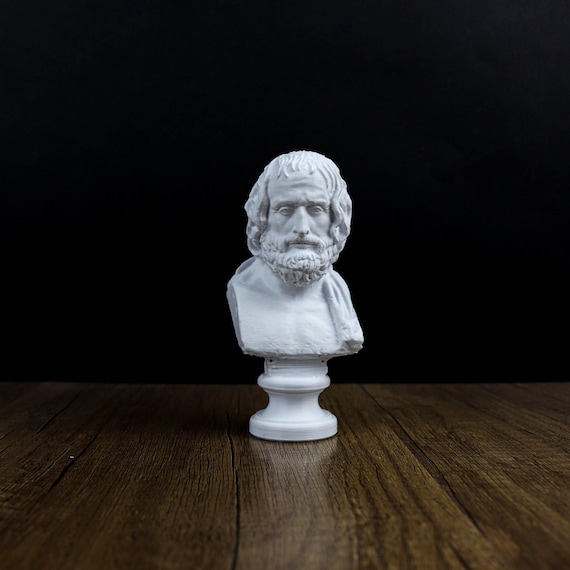
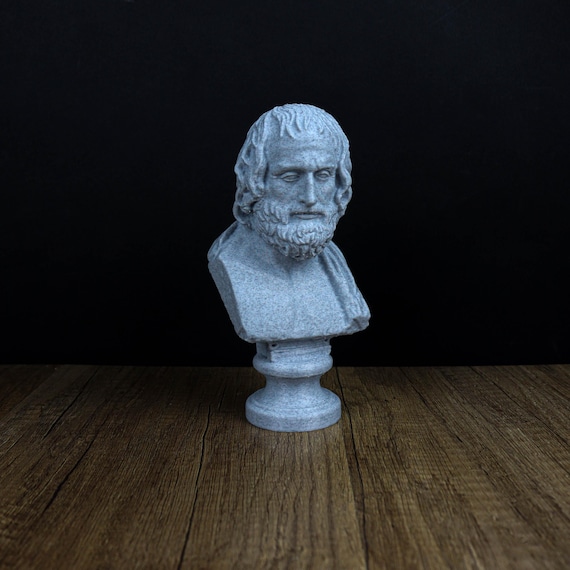
Demosthenes: The Greatest Ancient Greek Orator
Introduction
Demosthenes (Demóstenes, or Δημόστηνος) was a prominent Athenian statesman, orator, and writer who is widely regarded as one of the greatest speakers and writers in ancient Greece. His speeches played a crucial role in the political landscape of his time, and his influence extends to the present day, making him a significant figure in the study of history, rhetoric, and oratory. Born in 384 BCE in the Athenian suburb of Halion, Demosthenes faced numerous challenges in his youth that eventually shaped his remarkable oratorical skills and political acumen.
Early Life and Challenges
The Environment and Family Background
Demosthenes was born into a wealthy and influential family in the Athenian deme (an ancient unit of local administration) of Halion. His ancestral home was the Periclean family, which had produced numerous notable politicians and figures during the height of the Athenian Golden Age, particularly during the time of Pericles. This background instilled in Demosthenes a keen interest in politics and public affairs from a young age.
Physical and Vocal Challenges
However, Demosthenes’s path to becoming an orator was not without obstacles. He suffered from a speech impediment and a lisp, as well as poor posture and a lack of confidence in his voice. These physical and psychological challenges were significant enough to impede his ability to speak in public effectively. Despite these handicaps, Demosthenes was determined to overcome them and become a great orator. His journey towards excellence began with rigorous physical and vocal training.
Training and Development
Physical Training
Demosthenes was known to perform extreme physical training as part of his preparation for public speaking. He engaged in various exercises to improve his posture and breathing. According to ancient sources, he would stand on tiptoe and lift one leg while speaking, or recite passages in a single breath. He also used pebbles or beans placed between his teeth to help correct his lisp and strengthen his jaw muscles. These exercises were not just for show; they were essential in preparing his body and voice for the rigors of public speaking.
Vocal Training
Just as important as the physical exercises were his vocal techniques. Demosthenes reportedly used techniques such as practicing long speeches while walking on a beach, shouting on the seashore to gain resonance, and reciting passages while looking at water to gain clarity. He also studied the works of great orators and philosophers, drawing inspiration from their rhetorical prowess. This methodical approach to training was crucial in developing his oratorical skills, allowing him to project his voice and communicate effectively to his audience.
Political and Rhetorical Influences
Early Influences
The young Demosthenes was deeply influenced by the political and cultural environment of Athens. The city was a hub of intellectual and political activity, with frequent debates and discussions among the citizens. This atmosphere encouraged the development of rhetorical skills, as the ability to persuade and influence through speech was paramount in Athenian democracy. Demosthenes would have absorbed these lessons from a young age, and his later works reflect this early exposure to the complexities of politics and rhetoric.
Key Orators and Philosophers
Demosthenes also studied the works of key orators and philosophers, including Antiphon, Eubulus, Isocrates, and Isocrates. He would have learned from their examples, emulating their styles and techniques. Antiphon was particularly noted for his skill in using speeches to advocate for the interests of the poor and the accused, while Eubulus and Isocrates were known for their comprehensive educational approach and focus on ethical reasoning. These influences helped shape Demosthenes’s own oratory and philosophy, contributing to his ability to articulate complex ideas and arguments effectively.
Public Speaking and Oratory Skills
Public Debates and Speeches
Demosthenes’s journey to becoming a great orator culminated in his many public debates and speeches. These opportunities allowed him to refine his skills and gain confidence. He participated in the assemblies, where he delivered speeches on a wide range of issues, from policy and legislation to matters of foreign policy and military strategy. These public engagements provided a platform for him to showcase his rhetorical abilities and gain renown among his fellow citizens.
Characteristics of His Oratory Style
Demosthenes’s oratory style was characterized by its clarity, logic, and emotional impact. He was meticulous in his preparation, often outlining his speeches in advance and refining them until they were perfect. His speeches were known for their logical coherence and persuasive power, often employing various rhetorical devices such as repetition, parallelism, and antithesis to create a compelling narrative. He was adept at using anecdotes and vivid imagery to engage his audience and make his arguments more relatable.
Challenges and Achievements
Despite the initial challenges, Demosthenes’s dedication and hard work paid off. He became a formidable orator, known for his eloquence and persuasive power. Some of his most notable works include the Olynthiac speeches, which defended the rights of free states against Macedonian domination, and the Philippics, a series of speeches aimed at deterring Philip II of Macedon’s expansionist policies. Through these speeches, he not only defended the interests of Athens but also contributed significantly to the intellectual and cultural landscape of ancient Greece.
Impact on Athens and the Wider World
Political Contributions
Demosthenes’s contributions to Athenian politics were extensive. He was involved in numerous debates and negotiations, advocating for policies that would enhance the city’s power and stability. His speeches often addressed critical issues such as the distribution of power among the city-states, the protection of Athenian democracy, and the defense against external threats. His efforts helped shape the political discourse of his time, and his insights continue to be studied by historians and political scientists today.
Role as an Educator
In addition to his political activities, Demosthenes was also a respected educator. He established a school of rhetoric, where he taught the art of persuasion and argumentation. This school attracted students from across the ancient world, making a significant impact on the education system and the development of public speaking skills. His teaching methods, while demanding, were highly influential and contributed to the broader cultural legacy of ancient Greece.
Legacy and Influence
The impact of Demosthenes’s work is felt across the ages. His speeches are regarded as some of the finest examples of ancient Greek rhetoric and continue to be studied in schools and universities around the world. His oratorical prowess and deep understanding of political and ethical issues have ensured his enduring relevance. Demosthenes’s legacy is not only in his words but also in the techniques and approaches to public speaking that he pioneered.
In conclusion, Demosthenes’s journey from a young man with a speech impediment to one of the greatest orators of ancient Greece is a testament to his determination and skill. His contributions to politics, rhetoric, and education have left an indelible mark on the intellectual and cultural history of the ancient world, making him a figure of immense significance for scholars and students of history and communication.
Further Challenges and Political Struggles
Negotiations with Philip II of Macedon
One of the most notable challenges Demosthenes faced was his struggle against Philip II of Macedon, who was seeking to expand his influence over the Greek city-states, including Athens. Demosthenes’s Philippic orations were a direct response to Philip’s aggressive ambitions. These famous speeches, composed over several years, served as a rallying cry for those opposed to Macedonian dominance. In particular, the Third Philippic, delivered in 341 BCE, was a scathing indictment of Philip’s policies and intentions, aiming to unite the Greeks in a unified defensive coalition against Macedonian aggression.
The League of Corinth
In the years leading up to the Corinthian War (395–387 BCE), Philip II sought to forge a league of Greek city-states under his leadership, a move that threatened the independence of many smaller states like Athens. Demosthenes played a crucial role in opposing this consolidation of power. His speeches emphasized the importance of maintaining the balance of power within Greece and the dangers of allowing any single ruler, especially Philip, to achieve such authority. The failure of these efforts led to a series of conflicts between Athens, Sparta, and their allies against the Macedonians, which ultimately resulted in a stalemate.
The Battle of Chalkis
The Corinthian War concluded with the Peace of Antipatris in 386 BCE, but tensions between Athens and Macedon continued. One of the decisive moments in this conflict was the Battle of Chalkis in 338 BCE, fought between an Athenian-led coalition and Philip’s forces. Although the Athenians initially held their ground, they ultimately faced defeat due to the numerical superiority of Philip’s troops. Following this battle, the Macedonians gained significant control over central Greece, setting the stage for further political upheaval.
Philippic Fourth and Fifth
Feeling increasingly disheartened by the ongoing challenges and recognizing the need to address the growing threat posed by Philip II, Demosthenes delivered his Philippic Fourth and Fifth between 338 and 335 BCE. These speeches were less focused on immediate military action and more on rallying support against the inevitable Macedonian conquest. The Philippic Fourth highlighted the moral and ethical arguments against Philip’s conquest, appealing to the patriotism and pride of the Athenians. Meanwhile, the Philippic Fifth, which was largely lost and reconstructed in modern times based on fragments, emphasized the necessity of forming a permanent alliance against the perceived threat of Philip.
Personal Relationships and Influences
Relationships with Fellow Politicians
Beyond his interactions with Philip II, Demosthenes also formed relationships with key political figures such as Phocion and Timotheus, who were themselves influential orators and politicians. These collaborations were vital in navigating the complex political terrain of ancient Greece. Together with Phocion, who was known for his virtuous conduct and political acumen, Demosthenes worked to promote a moderate anti-Macedonian policy. They believed in maintaining the alliances that had kept Athens relatively independent and prosperous.
Nicomachus and Other Followers
Demosthenes also had a significant following among his contemporaries and future generations of orators, including Nicomachus of Eretria, who was appointed to head the Athenian navy after Demosthenes. Nicomachus carried forward the legacy of Demosthenian oratory, continuing to champion the cause of anti-militaristic and pro-Athenian reforms. Through his followers, Demosthenes’s message and methodologies endured beyond his lifetime, shaping the discourse and strategies of subsequent generations of Greek politicians.
Literary Works and Legacy
Sources and Historical Records
Demosthenes’s literary works, primarily preserved in the form of speeches, constitute some of the most valuable historical sources from ancient Greece. These speeches, known collectively as the Polygraphic Orations, cover a wide range of topics, from legal matters to military affairs and political campaigns. Scholars refer to these texts, particularly the Philippics, for insight into the social and political dynamics of the time. The detailed accounts of battles, diplomatic negotiations, and internal squabbles provide a comprehensive view of life in fifth- and fourth-century BCE Greece.
Influence on Modern Rhetoric and Communication
The impact of Demosthenes’s oratory extended far beyond his own era. His work has been scrutinized and emulated by rhetoricians and communication scholars, contributing to the development of modern approaches to public speaking and persuasive communication. The principles of structure, coherence, and emotional appeal that he employed continue to be relevant today, serving as foundational elements in rhetoric and composition studies.
Educational Influence
Besides his practical involvement in politics and oratory, Demosthenes also left an enduring educational legacy. The methods he employed in teaching rhetoric to his students form a basis for modern pedagogical practices. His emphasis on clear articulation, logical reasoning, and effective emotional engagement in public speaking remains central to contemporary approaches to oral communication.
Conclusion
Demosthenes stands as a towering figure in the annals of ancient Greek history, not only for his exceptional oratory skills but also for his unwavering commitment to defending democracy and Athens against external threats. His political struggles, marked by intense debates and powerful orations, exemplified the virtues of civic responsibility and leadership. Through his writings and teachings, Demosthenes transmitted timeless principles of rhetoric and political engagement, leaving an indelible mark on Western civilization.
Final Years and Legacy
The End of Democracy and Aftermath
As the Macedonians gained increased control over Greece, the balance of power shifted significantly. Philip II’s son, Alexander III (Alexander the Great), further consolidated Macedonian dominance after his father's death in 336 BCE. By 322 BCE, Macedonia had effectively replaced Athens as the dominant force in the region, leading to the gradual decline of Athenian independence. Despite these political shifts, Demosthenes continued to advocate for Athenian autonomy and resist Macedonian control, though his efforts ultimately proved fruitless.
In the face of mounting pressure from Alexander, Demosthenes found himself isolated and marginalized within Athenian politics. The once-vibrant democratic institutions that he had helped shape were gradually eroded under Macedonian rule. In 322 BCE, Demosthenes, along with others opposed to Macedonian dominion, was forced to flee Athens when Alexander began to exert greater control over the city-state. This marked a significant turning point in Demosthenes’s life, as his earlier advocacy for Athenian independence became increasingly impractical in the face of Macedonian dominance.
Final Days and Death
Following his exile, Demosthenes settled in Calauria, an island close to Corinth, where he continued his political activism through correspondence and attempts to rally support. However, by 322 BCE, he found himself disillusioned and disheartened by the political turmoil and Macedonian oppression. On his return to Athens in 323 BCE, the sudden death of Alexander the Great temporarily alleviated some of the political pressure. Yet, within a short period, the situation deteriorated once more.
Determined to escape the impending political purges orchestrated by Antipater, Demosthenes decided to take his own life rather than face what he saw as certain imprisonment or execution. On September 26, 322 BCE, he ingested poison and died at the age of 59, leaving behind a legacy that would endure for centuries.
His Last Words
According to Plutarch, in his final moments, Demosthenes made his last request to those around him, asking that his body be cremated and the ashes scattered in the sea, an expression of his lifelong devotion to Athens and his determination to remain forever connected to the city that had nurtured and shaped him.
Memorials and Commemoration
The death of Demosthenes did not diminish the reverence and admiration he garnered from future generations. Memorials and tributes continued to celebrate his contributions to Greek history and oratory. Statues of Demosthenes were erected in various cities, most notably outside the Parthenon, signifying his importance to Athenian heritage. Coins honoring Demosthenes were minted, further cementing his status as a symbol of civic duty and eloquence.
The commemorative inscriptions and statues celebrated not only his oratorical prowess but also his unwavering dedication to democracy and the ideals of freedom. These memorials ensured that even after his death, Demosthenes remained a figure of admiration and inspiration for all who sought to uphold similar values.
Demosthenes’ Lasting Impact
Education and Modern Practice
The enduring legacy of Demosthenes extends far beyond his lifetime, shaping the fields of education and modern public speaking. His methodologies in training orators and his emphasis on clarity, logic, and ethical considerations remain fundamental principles taught in rhetorical studies today. Many educational institutions still incorporate Demosthenian techniques into their curricula, ensuring that his teachings continue to influence the next generation of communicators.
Modern Applications and Influence
The principles derived from Demosthenes’s works continue to be applied in various fields, including law, marketing, and public relations. His focus on effective communication and emotional appeal serves as a template for creating powerful, resonant messages. Demosthenes’s emphasis on structured arguments and ethical persuasion has been adapted to suit contemporary needs, making his strategies valuable in both ancient and modern contexts.
Final Reflections
Demosthenes’s story encapsulates the human capacity for determination and resilience in the face of adversity. From a boy with physical and emotional handicaps to one of the greatest orators of his age, Demosthenes’s journey is a testament to the power of dedicated practice and unwavering commitment. His political and oratorial legacy continues to inspire scholars and public figures alike, reminding us of the enduring value of eloquent and principled advocacy.
In conclusion, Demosthenes is not merely a historical figure; he is an archetype of perseverance and civic virtue. His life, filled with trials and triumphs, serves as a timeless example of how one can rise above personal challenges to profoundly influence society. His contributions to the field of rhetoric and his commitment to defending democratic values have secured his place in the annals of human achievement, ensuring that his message will resonate for generations to come.
Demosthenes’s enduring legacy lies not just in the words he wrote or the speeches he delivered, but in the lessons he imparted—a reminder of the transformative power of eloquent communication and the importance of fighting for what one believes in.
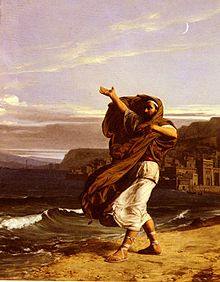
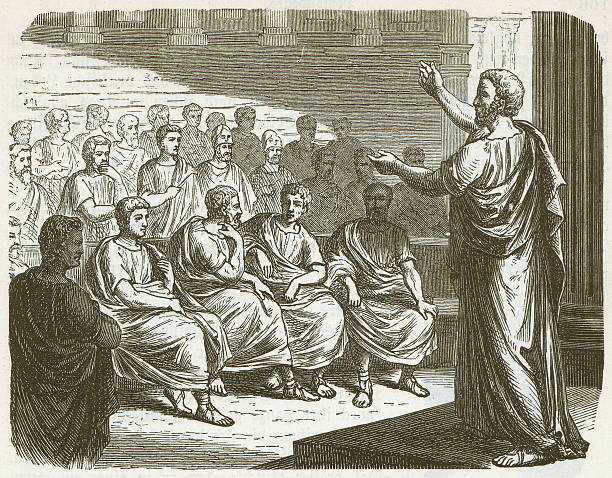
Eratosthenes: The Ptolemaic Genius of ancient Greece
Eratosthenes of Cyrene (c. 276–194 BC) was not only a polymath and a scholar but also one of the most influential scientists of the ancient world. His contributions spanned a variety of fields, including mathematics, astronomy, geography, and literature. Yet, it is his ability to integrate these diverse areas of knowledge that truly set him apart, earning him the nickname the "Hexameter Plato." This article will explore the life and contributions of Eratosthenes, focusing on his most notable achievements and the lasting impact he has left on the history of science.
Early Life and Education
Eratosthenes was born in 276 BC in Cyrene, a city on the coast of present-day Libya. He came from a wealthy family and was educated at the great Library of Alexandria, where he would spend much of his life. The city of Alexandria, founded by Alexander the Great, was a bustling metropolis that attracted scholars from all over the Hellenistic world. The Library, one of the greatest collections of knowledge in the ancient world, was a place of learning and intellectual exchange. It was here that Eratosthenes's true talents began to emerge.
From a young age, Eratosthenes showed a remarkable aptitude for mathematics and science. He was particularly fascinated by the workings of the natural world and the stars. His keen interest in astronomy and mathematics led him to become the head librarian at the Library of Alexandria in 236 BC, a position he held until his death. As the head librarian, he had access to the best resources that the ancient world could offer, which he used to further his scientific inquiries.
Geographical and Scientific Achievements
One of Eratosthenes's most significant contributions to science was his estimate of the Earth's circumference. This achievement is perhaps the most well-known aspect of his work and has been studied and praised for centuries. The method he used was ingenious and relied on the principles of geometry and simple observations.
According to historical records, Eratosthenes learned of a deep well in Syene (modern-day Aswan, Egypt) that was exactly aligned with the sun on the summer solstice. At noon, the sun would shine directly to the bottom of the well, casting no shadow, indicating that the sun was perpendicular to the well's surface. In Alexandria, on the same day, he observed the shadow cast by a vertical stick. By comparing the lengths of the shadows, he was able to calculate the angle of the sun's rays relative to the Earth's surface. Using his knowledge of geometry, he could then calculate the distance between Alexandria and Syene, which was known to be approximately 5,000 stadia (a unit of length).
With this information, Eratosthenes was able to estimate the Earth's circumference. Assuming the distance between Alexandria and Syene to be one-fiftieth of the Earth's circumference, he calculated the Earth's circumference to be about 250,000 stadia, which is roughly equivalent to 46,250 km (25,465 miles). This estimate was remarkably accurate, given the limitations of the technology and methods available at the time.
Astronomical Observations and Contributions
Not only did Eratosthenes demonstrate his prowess in geometry, but he also made significant contributions to the field of astronomy. He was one of the first to recognize that the Earth revolves around the Sun, although at the time, this was not widely accepted. His observations of the movement of the stars and the position of the celestial bodies allowed him to create a star catalog that included more than 675 stars. His catalog was a remarkable achievement, as it predated the telescope by nearly 2,000 years.
Additionally, Eratosthenes made several notable measurements of astronomical phenomena. He calculated the precession of the equinoxes, which is the gradual westward motion of the stars due to the wobble of the Earth's axis. This was a significant finding that contributed to our understanding of the Earth's motion in the solar system.
Mathematical Innovations and Theoria Magna
In the realm of mathematics, Eratosthenes is credited with several important innovations. One of his most notable contributions is the Sieve of Eratosthenes, a method used for finding prime numbers. Although the original sieve is attributed to Eratosthenes, the method has been known and used by various ancient and modern mathematicians. The sieve is a simple and elegant algorithm that continues to be one of the most efficient methods for finding prime numbers.
Additionally, Eratosthenes made significant contributions to the field of mathematics through his work on the Theory of Magnitudes, which explored the relationships between different magnitudes and quantities. His work in this area was groundbreaking and laid the foundation for future mathematicians to build upon.
Eratosthenes as a Scholar and Philosopher
In addition to his scientific achievements, Eratosthenes was also a prolific writer and scholar. He wrote a variety of works on a wide range of subjects, including poetry, history, and literature. One of his most famous works is the "Hexameter Plato," a poetic account of the Platonic dialogues. Eratosthenes's ability to integrate his scientific knowledge with philosophical writing was unique and greatly enhanced his reputation among his contemporaries.
His reputation as a philosopher is also reflected in his treatise "Geographical," which discusses the nature of the Earth and its inhabitants. In this work, Eratosthenes provided a comprehensive overview of the known world, describing its climate, geography, and the cultures of various peoples. He used his geographical knowledge to support his theories about the Earth's shape and size, which were revolutionary for the time.
Legacy and Influence
The legacy of Eratosthenes is profound and long-lasting. His contributions to science, particularly in the fields of mathematics, astronomy, and geography, have stood the test of time. His estimate of the Earth's circumference, for example, has been used as a benchmark for evaluating modern estimates and methods of measuring the Earth.
Moreover, Eratosthenes's method of using simple observations to draw complex conclusions has influenced generations of scientists. His approach to problem-solving and the use of geometry to understand the natural world set a precedent for the scientific method that is still relevant today.
Bibliography and Other Works
Eratosthenes's influence extended beyond his primary works in mathematics and astronomy. He compiled a comprehensive bibliography of the Library of Alexandria, known as the "Pithagoraean Catalogue." This extensive list of works contributed to the preservation and dissemination of knowledge during the Hellenistic period. His bibliographic work was not only a practical tool but also a testament to his dedication to cataloging and organizing human knowledge.
In addition to his contributions in the sciences, Eratosthenes wrote a number of historical and biographical works. He penned "Geopgraphica," a detailed and insightful account of the known world at the time, highlighting the diverse cultures, geographies, and geographical features that were known to the ancient Greeks and Egyptians. This work was a significant contribution to the field of geography and provided a valuable reference for future scholars and explorers.
Impact on Later Science and Culture
The impact of Eratosthenes's work on later science and culture cannot be overstated. His methods and theories continued to influence scholars long after his death. For instance, the accuracy of his estimation of the Earth's circumference inspired later scientists to refine and expand on his methods. Ptolemy, a renowned geographer and astronomer, built upon Eratosthenes's work to create more detailed maps and astronomical models.
Moreover, the precision with which Eratosthenes approached astronomical observations and mathematical calculations set a high standard for future generations of scientists. His use of geometry in astronomy paved the way for the development of trigonometry, a branch of mathematics that is crucial for studying celestial bodies and their movements. The work of Eratosthenes inspired other scholars to develop more sophisticated tools and methods for scientific inquiry.
Philosophical and Literary Contributions
Eratosthenes's contributions to literature and poetry were also notable. He was known for his ability to blend scientific accuracy with poetic expression. One of his most famous works, "The Pentagran, " is a hexameter poem based on a Platonic dialogue. This work demonstrates his unique ability to combine scientific knowledge with literary artistry, a skill that was highly valued in the ancient world.
In "The Pentagran, " Eratosthenes uses poetry to explore philosophical concepts related to astronomy and the nature of the universe. The work reflects a deep understanding of both science and literature, showcasing his talent for creating a bridge between these two disciplines. The poem's intricate structure and poetic form reflect the complexity of the scientific theories it describes, making it a fascinating example of ancient literature.
The Hexameter Plato and Literary Influence
Eratosthenes's "The Hexameter Plato" is a particularly influential work that combines his knowledge of philosophy with poetic expression. This poem is a poetic interpretation of Plato's dialogues, offering a unique perspective on Platonic philosophy. The combination of Plato's philosophical ideas with Eratosthenes's poetic style created a new form of literary expression that was both educational and aesthetically pleasing.
The influence of "The Hexameter Plato" extended beyond the immediate literary context. It helped to popularize Platonic philosophy and introduced a new style of poetic and philosophical discourse. The work continues to be studied and admired for its blend of philosophical depth and poetic beauty, making it a valuable contribution to both literature and philosophy.
Final Years and Legacy
Eratosthenes spent the later years of his life in the Library of Alexandria, dedicating himself to the pursuit of knowledge and the preservation of human understanding. His final years were marked by a continued focus on scientific inquiry and cultural exchange. Despite the challenges and uncertainties of the time, Eratosthenes remained committed to his work and continued to inspire and influence the world around him.
Upon his death in 194 BC, Eratosthenes left behind a legacy that continues to resonate today. His contributions to mathematics, astronomy, geography, and literature have made him one of the most significant figures in the ancient world. He not only expanded the frontiers of scientific knowledge during his lifetime but also left behind a model of interdisciplinary inquiry and a deep philosophical approach to understanding the natural world.
Eratosthenes's influence can be seen in the continued study of ancient astronomy, the preservation of libraries, and the ongoing development of scientific methods. His work remains a testament to the power of human curiosity and the importance of cross-disciplinary approaches to understanding the world.
Conclusion
The legacy of Eratosthenes is a testament to the power of intellectual curiosity and the importance of interdisciplinary study. His contributions to science, literature, and philosophy continue to inspire scholars and enthusiasts today. Eratosthenes's ability to integrate various fields of knowledge and his innovative methods for problem-solving have made him a pivotal figure in the history of science and a enduring symbol of human ingenuity.
By examining the life and works of Eratosthenes, we gain a deeper appreciation for the interconnectedness of knowledge and the importance of a holistic approach to understanding the world. His legacy continues to inspire and challenge us to think critically and creatively, much as he did in his own time.
Modern Relevance and Enduring Impact
Today, Eratosthenes continues to be celebrated for his pioneering work and serves as an inspiration for modern scientists, historians, and educators. His method of estimating the Earth's circumference using basic geometric principles remains a foundational concept in geodesy and cartography. Universities and schools around the world often conduct experiments based on Eratosthenes' technique to teach students about geometry and the Earth's scale, illustrating how ancient knowledge remains relevant and applicable in contemporary contexts.
The accuracy and elegance of Eratosthenes's methods have also sparked renewed interest in historical scientific practices. Scholars and researchers have revisited his works to understand the methodologies and tools used by ancient scientists. This not only enriches our understanding of the historical development of scientific thought but also highlights the enduring nature of fundamental scientific principles.
Eratosthenes in Popular Culture
The legacy of Eratosthenes extends even into popular culture, with numerous references and homages found in films, books, documentaries, and educational materials. For example, the method of calculating the Earth's circumference is sometimes featured in science fiction novels and documentaries, demonstrating its universal appeal and the timeless nature of Eratosthenes' insight.
In contemporary media, documentaries and podcasts frequently explore the life and works of Eratosthenes, bringing his contributions to light for a broader audience. These platforms not only inform but also inspire, making his historical figure accessible to people who might not otherwise engage with ancient history.
Education and Outreach
Eratosthenes has played a significant role in educational initiatives designed to promote STEM education. Teaching kits and curriculums often include simulations and experiments based on his method of measuring the Earth, encouraging students to engage in hands-on learning and critical thinking. These activities help demystify complex scientific concepts and foster a sense of wonder and exploration among young learners.
Public lectures and educational programs dedicated to Eratosthenes have been held in schools, universities, and museums worldwide. These events feature interactive sessions where participants can perform experiments similar to those conducted by Eratosthenes, providing a tangible connection to the past and demonstrating the practical applications of his methods.
Reevaluation and Modern Scholarship
Recent scholarly work has provided fresh perspectives on Eratosthenes, offering a more nuanced understanding of his contributions and the context in which he lived. Researchers have examined his work within the broader framework of Hellenistic science, placing him in a network of scholars and thinkers who contributed to the development of Western science.
Modern scholars also highlight the socio-political aspects of Eratosthenes' time and the implications of his work. The patronage and support he received from Ptolemy III Euergetes of Egypt, for instance, suggest that his work was not merely academic but also had practical and political significance. This reevaluation underscores the multifaceted nature of Eratosthenes' achievements and their relevance beyond the realm of pure science.
Conclusion
In conclusion, Eratosthenes remains a towering figure in the history of science, a beacon of intellectual curiosity and interdisciplinary thinking. His contributions have withstood the test of time, providing invaluable insights into the nature of the Earth and the cosmos. Through his work, he exemplifies the enduring value of systematic observation, rigorous analysis, and the integration of diverse fields of knowledge.
As we continue to explore the mysteries of the natural world, Eratosthenes' legacy提醒您,您的文章目前是英文的。请确认是否需要进一步调整或翻译成其他语言。如果有任何特定的要求或需要修改的地方,请随时告知。
:max_bytes(150000):strip_icc()/eratosthenes_photo-5c8d7bcc46e0fb00016ee0b8.jpg)
Aristotle: The Father of Western Philosophy
Aristotle, born in 384 BCE in the Macedonian city of Stagira, was a polymath whose impact on Western thought is unmatched. His contributions to philosophy, science, politics, and ethics have been profound and enduring, influencing countless thinkers and shaping the way we understand the world around us.
Early Life and Education
Aristotle was born during a period known as the Hellenistic era, a time of great cultural and intellectual ferment. His father, Nicomachus, who was the personal physician to King Amintas III of Macedon, provided Aristotle with an early exposure to the field of medicine, which later informed his philosophical and scientific inquiry.
At the age of seventeen, Aristotle was sent to study in Athens at the Academy, the renowned school founded by Plato. There, Aristotle immersed himself in the intellectual community, engaging with the ideas of his teachers and fellow students. Although a pupil of Plato, Aristotle was not a mere follower and often disagreed with the older philosopher’s doctrines, particularly his more mystical and metaphysical tendencies.
Key Philosophical Influences
Aristotle's philosophy is a product of his extensive and varied education, which ranged from metaphysics and ontology to logic and politics. Among the most significant influences on his thought were the Pre-Socratic philosophers (like Thales and Parmenides) and the works of Plato. Aristotle’s approach to philosophy was characterized by empirical observation and logical analysis, a method that was more systematic and less abstract than that of his teacher.
In his works, Aristotle discusses several key themes, including the nature of reality, the structure of the cosmos, and the principles of logic and ethics. His ideas on causality and the hierarchical order of the universe were groundbreaking and have had a lasting impact on the way we think about the world.
Contributions to Philosophy
Aristotle's contributions to philosophy are numerous and diverse. In metaphysics, he developed a comprehensive system of logic and categories that has influenced Western philosophy to this day. His works include Categories, On Interpretation, and Metaphysics, which laid the foundation for the scientific method and the study of logic.
One of Aristotle's most famous works, the Nicomachean Ethics, is a treatise on the nature of virtue and happiness. In this work, Aristotle explores the concept of eudaimonia, or flourishing, which he links to the fulfillment of one's potential. He argues that the virtuous life is the path to eudaimonia, and that this virtue is not only moral but also intellectual and social.
Scientific Contributions
Aristotle’s impact on the sciences is equally significant. His approach to natural philosophy was highly observational and empirical, distinguishing him from the theoretical approach of Plato. In his scientific works, such as Aristotle’s Parts of Animals and On the Generation of Animals, he provided detailed descriptions of biological processes and the characteristics of living beings.
Aristotle classified living things into categories, a method that influenced taxonomy and biology for centuries. He also made observations in meteorology, zoology, and botany, and his works remain foundational in the history of these sciences. His theories on the elements and the structure of the universe, while later disproven, were a crucial step in the development of scientific thought.
Political Thought
Aristotle’s political philosophy is encapsulated in his work Politics and Ethics. He argues that the ideal form of government is a constitutional republic or a form of aristocracy, where the best are in charge. Aristotle believed that political institutions should be designed to protect the interests of the whole community, not just the ruling class.
In his analysis of different forms of government, Aristotle distinguished among monarchy, oligarchy, and tyranny, as well as the more democratic forms of government. His discussion of the balance between virtue and power, and the importance of ethical conduct among leaders, has had a lasting impact on political science and theory.
Teaching and Legacy
Aristotle’s most lasting legacy is his influence on education and the curriculum. His method of teaching, which involved detailed discussions and practical exercises, set the model for higher education in the Western world. In his school, the Lyceum, Aristotle encouraged his students to think critically and to engage in empirical research, a method that has become a cornerstone of modern education.
His works were heavily criticized and even banned by some in his own time, but by the 18th century, they were rediscovered and celebrated. Today, Aristotle’s ideas continue to be studied and debated, and his works remain essential reading for scholars in philosophy, science, and politics.
The influence of Aristotle is evident in the works of countless subsequent thinkers, from Galileo and Darwin to modern philosophers like Martha Nussbaum and Alasdair MacIntyre. His methods of inquiry, his commitment to empirical evidence, and his holistic approach to knowledge continue to shape the way we think about the world and ourselves.
Conclusion
Aristotle is not just a philosopher; he is a cultural touchstone, an intellectual cornerstone, and a guiding light for anyone seeking to understand the complexities of the human condition. His works, his methods, and his legacy have made him a central figure in Western civilization, and his ideas continue to inspire and challenge us today.
Philosophy of Nature and Cosmology
Aristotle’s philosophy of nature and cosmology is a complex and nuanced framework that attempts to explain the workings of the physical world. One of his most influential theories is the concept of the four elements—earth, water, air, and fire—which he believed composed all matter in the terrestrial world. Each element was associated with specific properties such as weight, heat, and shape. For example, earth was the heaviest and was associated with stability and solid form, whereas fire was the lightest and was related to heat and extension.
Aristotle’s cosmological views were grounded in a teleological perspective, where every entity has a purpose or final cause that explains its existence. This perspective led him to develop a hierarchical structure of the cosmos, with Earth at the center surrounded by concentric spheres containing the celestial bodies: the Moon, Sun, planets, and stars. This view, known as the “Celestial Spheres,” was based on the belief that the heavens moved in perfect circular orbits with eternal, unchanging motion. Aristotle further argued that there must be an unmoved mover, often identified with God, that initiated and sustained the motion of the celestial spheres.
Ethics and Politics: The Golden Mean
Aristotle’s ethical and political thought is encapsulated in his works Nicomachean Ethics and Poetics. Central to his ethical theory is the concept of the golden mean, which posits that virtue lies midway between two extremes of character traits. For instance, courage is the golden mean between excessive fear and excessive recklessness. This idea emphasizes a balanced and moderate approach to life rather than extremes.
In his Politics, Aristotle distinguishes between various forms of government—the rule of one (monarchy), few (oligarchy), many (democracy), and the best (aristocracy)—and discusses their strengths and weaknesses. He argues that the optimal form of government is one that balances the interests of all citizens and promotes the common good. Aristotle also emphasizes the importance of education and citizenship, suggesting that citizens should be educated in both virtues and practical skills to contribute effectively to society.
Criticism and Controversies
Aristotle’s ideas, while groundbreaking, were not without criticism. During his lifetime, some of his contemporaries saw him as a threat to established beliefs, particularly those of Plato. However, it was after his death that his theories faced more significant challenges. Ptolemy’s model of the universe, which retained the notion of celestial spheres, eventually gave way to more accurate models proposed by figures like Nicolaus Copernicus and later Isaac Newton.
Moreover, Aristotle’s views on slavery, hierarchy, and the subjugation of women have been widely criticized. His assertion that some individuals were naturally suited for servitude has been heavily condemned by contemporary scholars. These critiques highlight the historical context and limitations of Aristotle’s thought, reminding us that even great minds can hold problematic beliefs.
Impact on Later Thinkers
Despite the challenges, Aristotle’s ideas continued to influence later thinkers across various disciplines. In medieval Europe, during the Scholastic period, his works were studied in universities, and his teachings permeated theological, legal, and political thought. Thomas Aquinas, who synthesized Aristotelian thought with Christian doctrine, exemplified the impact of Aristotle on medieval philosophy.
During the Renaissance, humanists like Petrarch and Savonarola were influenced by Aristotle’s emphasis on empirical observation and logical analysis. This renewed interest in Greek texts contributed to the broader revival of classical learning. By the Enlightenment, thinkers like Gottfried Wilhelm Leibniz and Immanuel Kant continued to draw from Aristotelian traditions, albeit in a modified and critical manner.
Aristotle’s influence extends beyond philosophy and science into fields such as literature and aesthetics. His Poetics, which examines the structure and effects of drama, remains a seminal work in literary theory. Authors like Sophocles and Shakespeare are said to have adhered to the principles of tragic form outlined by Aristotle.
Conclusion
In conclusion, Aristotle’s legacy is multifaceted and enduring. From his pioneering scientific methods and classifications to his profound contributions to ethics and politics, his ideas have shaped Western thought in fundamental ways. Despite facing criticism and evolving alongside new discoveries and perspectives, his influence remains profound. His holistic approach to understanding the world continues to inspire and challenge contemporary scholars and thinkers alike.
The study of Aristotle’s works provides not only insights into the past but also valuable lessons for the present and future. Whether through his systematic approach to logic and categorization, his ethical theories, or his contributions to the sciences, Aristotle stands as a towering figure in the intellectual landscape of humanity.
Preservation and Transmission of Works
Aristotle’s works were not widely known for a period after his death. Many of his writings were lost or destroyed, and his works as we know them today are largely thanks to Julius Pollux, a 3rd-century CE grammarian, and other Byzantine scholars. The Corpus Aristotelicum includes around 16 works that are believed to be from Aristotle’s original writings, although the authenticity of some of these works has been questioned by contemporary scholars. These works cover everything from logic and metaphysics to biology and political thought, reflecting the breadth of Aristotle’s intellectual endeavors.
The rediscovery of Aristotle’s works during the Renaissance was a key factor in the revival of classical learning. Humanists like Erasmus and Petrarch were instrumental in translating Greek texts into Latin, making Aristotle’s ideas accessible to a wider audience. This renaissance of interest in Aristotle’s works was part of the larger intellectual movement known as the Renaissance, which sought to return to the classical wisdom of ancient Greece and Rome.
Morality and Virtue
Aristotle’s theories on morality and virtue are grounded in his broader framework of practical philosophy. He defines virtue as a mean between two extremes and argues that ethical behavior arises from habit and practice. Virtue, for Aristotle, is not just a moral concept but also involves the exercise of reason and the cultivation of character. This concept of virtue is closely linked to his notion of eudaimonia, or flourishing, which he sees as the highest form of human happiness.
One of Aristotle’s most famous ethical concepts is the golden mean, which posits that virtue lies in the middle ground between excess and deficiency. For example, courage is a mean between recklessness (excess) and cowardice (deficiency). This balanced approach to ethics has been influential in both Western and Eastern traditions, with thinkers like Confucius and Mencius drawing on similar ideas.
Political and Social Thought
Aristotle’s political thought is often seen as a precursor to modern democratic theory. He emphasizes the importance of participation in civic life and the role of education in shaping good citizens. His concept of aristocracy, where leaders are chosen based on their virtue and knowledge, has been interpreted as a form of meritocracy—a concept that remains central to democratic societies.
Aristotle believed that the ideal form of government was a mixed government that balanced the interests of different groups within society. This mixed government included elements of aristocracy, democracy, and other forms. His ideas on distributive justice, the rule of law, and the protection of individual rights have had a lasting impact on political philosophy and the establishment of democratic institutions.
Scientific Contributions
Aristotle’s contributions to science were significant and diverse. In biology, he made detailed observations of animals and plants, developing a form of systematics that laid the groundwork for future biological classification. His works on zoology, botany, and embryology, such as the Historia Animalium and Historia Plantarum, were influential and were the basis for the work of later scientists like Aristotle of Ascalon and Theophrastus (Aristotle’s successor at the Lyceum).
Apart from biology, Aristotle’s writings on astronomy, meteorology, and meteorology also reflect his empirical approach to understanding the natural world. His views on matter and form, as well as his theories on causality and explanation, were foundational to the development of scientific thought.
Later Influence on Thinkers
Aristotle’s ideas have been adapted and reinterpreted by numerous thinkers throughout history. During the Enlightenment, thinkers like Voltaire and John Locke incorporated Aristotelian concepts into their political philosophies. Voltaire, for instance, used Aristotle’s ideas to advocate for the rule of law and the protection of individual rights. Similarly, John Locke’s theories on natural rights and government were influenced by Aristotle’s emphasis on human rationality and virtue.
In modern philosophy, Aristotle’s ethics and politics continue to be relevant. Contemporary figures like Martha Nussbaum and Alasdair MacIntyre have used Aristotelian concepts to explore contemporary moral and political issues. Nussbaum, in particular, has argued that Aristotelian concepts of virtue and flourishing can provide a framework for understanding contemporary ethical dilemmas.
Assessment and Legacy
When evaluating Aristotle’s legacy, it is important to recognize both his enduring contributions and the limitations of his ideas. His systematic approach to knowledge and his insistence on empirical evidence have been influential in shaping the methods of scientific inquiry. However, his views on slavery, gender, and social hierarchy have been widely criticized and often challenged by contemporary thinkers.
Despite these criticisms, Aristotle’s works remain essential reading for scholars and students. His comprehensive system of logic and his explorations of the nature of reality, ethics, and politics continue to inspire and challenge intellectual discourse. His ideas have been subject to constant revision and reinterpretation, and they continue to be relevant in a wide range of fields, from philosophy to biology.
Aristotle’s influence is evident in the continued study and analysis of his works, as well as in the ongoing debate surrounding his ideas. His contributions to Western thought are not only a testament to his intellectual prowess but also a reminder of the dynamic and evolving nature of human knowledge.
From his early education at Plato’s Academy to his extensive works on philosophy, science, and politics, Aristotle has left an indelible mark on the history of Western civilization. His ideas continue to shape our understanding of the world and ourselves, making him a figure of immense importance in the annals of human thought.
In conclusion, Aristotle’s legacy is one of unparalleled influence and enduring relevance. His systematic approach to knowledge, his empirical methods, and his comprehensive theories have stood the test of time, shaping the way we think and live. His ideas continue to inspire new generations of scholars and thinkers, and his works remain a cornerstone of Western intellectual tradition.

Socrates: The Philosopher Who Died for His Ideas
Introduction to Socrates: The Father of Western Philosophy
Socrates, the Athenian philosopher who lived from c. 470–399 BCE, remains one of history’s most influential thinkers. Though he left no writings, his legacy endures through the accounts of his students, particularly Plato and Xenophon. Known for his Socratic method, a form of cooperative argumentative dialogue, Socrates shifted Greek philosophy from natural science to ethical and political questions. His trial and execution in 399 BCE for impiety and corrupting the youth mark a pivotal moment in the history of free thought.
The Life and Times of Socrates
Early Life and Philosophical Beginnings
Born in Classical Athens around 470 BCE, Socrates grew up during a time of great intellectual and political ferment. Unlike many philosophers of his time, he did not focus on the natural world but instead turned his attention to human ethics and morality. His method of questioning, now known as the Socratic method, became a cornerstone of Western pedagogy.
The Socratic Method: A Revolutionary Approach
The Socratic method involves a process of systematic questioning aimed at exposing contradictions and clarifying concepts. This method was not just a tool for debate but a way to encourage critical thinking and self-examination. Socrates believed that the unexamined life is not worth living, a philosophy that resonates deeply in modern educational practices.
The Trial of Socrates: A Turning Point in History
The Charges and the Verdict
In 399 BCE, Socrates was brought to trial on charges of impiety and corrupting the youth. The Athenian jury, composed of several hundred citizens, convicted him by a substantial margin. The exact vote tallies vary by source, but the outcome was clear: Socrates was sentenced to death by drinking hemlock, a poisonous plant.
The Political Context
The trial of Socrates did not occur in a vacuum. Athens was still reeling from its defeat in the Peloponnesian War (431–404 BCE) and the brief but brutal rule of the Thirty Tyrants. The city's political instability and social anxieties played a significant role in the hostility towards Socrates. His associations with controversial figures, including some members of the Thirty Tyrants, further fueled the accusations against him.
The Socratic Problem: Separating Fact from Fiction
The Challenge of Historical Reconstruction
One of the greatest challenges in studying Socrates is the Socratic problem: the difficulty of distinguishing the historical Socrates from the literary portrayals created by his students. Since Socrates left no writings, our understanding of him relies heavily on the accounts of Plato, Xenophon, and Aristophanes. These sources often conflict, leading to longstanding interpretive disputes among scholars.
Plato’s Philosophical Socrates
Plato’s dialogues, which feature Socrates as the central character, are both philosophical and literary works. They present Socrates as a wise and virtuous figure, engaged in deep philosophical inquiries. However, it is crucial to recognize that Plato’s Socrates may not be entirely historically accurate but rather a philosophical ideal.
Xenophon’s Practical Socrates
Xenophon’s accounts, particularly in the Memorabilia and Apology, offer a more biographical and practical portrayal of Socrates. Xenophon’s Socrates is less abstract and more grounded in everyday life, providing a different perspective on the philosopher’s teachings and actions.
Socrates’ Legacy and Modern Relevance
The Impact on Western Thought
Socrates’ influence on Western philosophy cannot be overstated. His emphasis on ethical questions and the examined life laid the foundation for subsequent philosophical traditions. The Socratic method continues to be a vital tool in education, law, and various professional fields, underscoring its enduring practical relevance.
Contemporary Resonance
In today’s world, Socrates’ ideas resonate strongly in debates about free speech, civic accountability, and critical thinking. His trial and execution serve as a powerful reminder of the importance of questioning authority and seeking truth, even in the face of adversity.
Conclusion: The Enduring Legacy of Socrates
Socrates’ life and death exemplify the power of ideas and the dangers of challenging the status quo. His Socratic method and philosophical inquiries continue to inspire and provoke thought, making him a timeless figure in the history of human intellect. As we delve deeper into his story in the next sections, we will explore the nuances of his trial, the complexities of his philosophical teachings, and the lasting impact of his legacy.
Socrates' Ethical Philosophy: The Foundation of Western Morality
From Nature to Virtue: A Philosophical Shift
Socrates dramatically shifted Greek philosophy from studying the natural world to exploring human ethics and moral questions. While pre-Socratic thinkers like Thales and Heraclitus focused on cosmic origins, Socrates asked, “What is justice?” and “How should one live?”. This pivot laid the groundwork for all subsequent Western ethical thought.
His teachings centered on the idea that virtue is knowledge—that understanding right from wrong leads to virtuous action. Socrates argued that no one does wrong willingly, a concept that challenged contemporary views on human behavior and motivation.
The Examined Life: Socrates' Enduring Motto
Socrates famously declared, “The unexamined life is not worth living,” a phrase that remains a cornerstone of philosophical discourse. Through dialogue, he urged individuals to question their assumptions and seek truth. This approach emphasized self-awareness and intellectual humility, rejecting dogma in favor of reasoned inquiry.
- Socrates believed true wisdom lies in recognizing one’s own ignorance
- He rejected rote teaching, favoring guided discovery through questioning
- His method aimed to uncover universal moral principles through dialogue
The Political Context: Socrates on Trial in a Fragile Democracy
Athens After the Peloponnesian War
Socrates faced trial during a period of political instability following Athens’ defeat in the Peloponnesian War (431–404 BCE). The city, once a dominant power, grappled with internal strife and a brief oligarchic regime known as the Thirty Tyrants. This turbulent environment fostered resentment toward intellectuals perceived as undermining traditional values.
The war and its aftermath created a climate of paranoia, where figures like Socrates—associated with influential but controversial students—were viewed with suspicion. The charges of impiety and corrupting the youth reflected broader social anxieties rather than purely theological objections.
Socrates’ Alleged Associations
Some of Socrates’ students, including Critias and Alcibiades, later became embroiled in politics. Critias was a leader of the Thirty Tyrants, while Alcibiades switched allegiances multiple times during the war. These connections fueled accusations that Socrates was indirectly responsible for fostering political radicalism.
“Socrates did not teach doctrine but encouraged independent thought, yet his influence was misinterpreted as subversive.”
Modern scholars debate whether these associations genuinely tainted Socrates or were merely convenient political tools used by his accusers to secure a conviction.
The Socratic Method in Contemporary Education and Professional Fields
Pedagogy Beyond Philosophy
The Socratic method has transcended its philosophical origins to become a staple in diverse fields, including law, medicine, and business training. Its emphasis on dialogue and critical analysis fosters deeper understanding and ethical reasoning. Approximately 70% of law schools in the United States incorporate Socratic questioning into case discussions to develop analytical skills.
- In legal education, the method sharpens argumentative techniques and logical rigor
- Medical schools use it to encourage diagnostic thinking and patient-centered decisions
- Business programs apply it to strategy development and ethical leadership training
Modern Applications in Technology and AI
Contemporary interest extends to AI ethics and algorithmic accountability. Researchers adapt the Socratic method to probe the assumptions underlying artificial intelligence systems, ensuring transparency and fairness. This interdisciplinary approach reflects Socrates’ original aim: to expose contradictions and pursue truth through systematic inquiry.
A 2022 study published in Harvard Journal of Law & Technology noted that 62% of AI ethics frameworks now incorporate Socratic dialogue techniques to evaluate moral implications of automated decisions.
Free Speech and Civic Engagement
Socrates’ trial serves as a perpetual case study in debates about free speech and civic responsibility. His willingness to challenge authority—even at personal cost—resonates in modern discussions about academic freedom and dissent. The phrase “Socratic defiance” is often invoked to describe principled opposition to unjust laws or societal norms.
“Socrates’ execution reminds us that truth-seeking can be perilous, but necessary for a healthy democracy.”
Reassessing Socrates’ Trial: Modern Scholarship and Legal Insights
The Trial as Political Prosecution
Contemporary scholars increasingly view Socrates’ trial not as a purely philosophical confrontation but as a political prosecution rooted in Athens’ post-war instability. The charges of impiety and corrupting the youth reflected broader social anxieties about elite intellectuals influencing young citizens. Recent research highlights how the trial procedure, jury composition, and legal rhetoric mirrored Athens’ fragile democratic norms.
Athenian juries typically numbered several hundred citizens, and Socrates’ conviction required only a simple majority. Ancient accounts suggest he was convicted by a substantial but not unanimous margin, underscoring the polarized nature of public opinion at the time.
Interdisciplinary Approaches to the Trial
Modern scholarship employs philology, legal history, and political theory to reassess the trial. For instance, analysts examine the judicial mechanisms of ancient Athens to understand how Socrates’ arguments were received—or rejected—by a lay jury. This approach reveals the trial’s role as a clash between traditional piety and rational inquiry.
“Socrates’ trial was less about doctrine and more about the perceived threat of intellectual autonomy in a society rebuilding its identity.”
- Legal historians study the trial’s procedural irregularities
- Political theorists analyze the charges as tools of social control
- Philologists dissect language used in surviving trial accounts
Socrates in Culture: Symbol, Martyr, and Modern Icon
The Martyr Narrative
Socrates’ willing acceptance of death has cemented his image as a martyr for truth. His defiance of authority and commitment to critical examination resonate across centuries. The phrase “Socratic martyrdom” is invoked in discussions of intellectual courage, from Enlightenment thinkers to modern activists advocating free speech.
This depiction, however, is not universally accepted. Some scholars argue it oversimplifies the trial’s complexities, reducing Socrates to a symbolic figure rather than engaging with the historical nuances of his political context.
Socrates in Literature and Media
Socrates appears in countless works of literature, drama, and film, often reimagined to fit contemporary themes. For example, Bertolt Brecht’s *The Trial of Socrates* frames the philosopher as a critique of totalitarianism, while modern films depict him as a beacon of ethical resilience. These portrayals highlight his enduring role as a cultural touchstone for debates about justice, authority, and truth.
- Brecht’s play reinterprets Socrates as a dissident in an authoritarian state
- TV dramas often dramatize the trial as a clash between individual and society
- Educational animations use Socratic dialogue to teach critical thinking
Conclusion: The Timeless Relevance of Socrates
Why Socrates Still Matters
Socrates’ legacy transcends antiquity. His Socratic method remains a cornerstone of critical pedagogy, while his trial serves as a cautionary tale about the fragility of democratic institutions. In an era of misinformation and polarized discourse, his insistence on questioning assumptions offers a roadmap for ethical inquiry.
The Socratic problem—the challenge of distinguishing historical fact from literary portrayal—also invites ongoing scholarly engagement. As new generations reinterpret his ideas, Socrates retains his position as a provocateur, challenging us to examine not just the world, but ourselves.
Final Key Takeaways
- Socrates (c. 470–399 BCE) revolutionized philosophy by focusing on ethical and political questions
- His trial reflected Athens’ post-war political instability and anxieties about intellectual influence
- The Socratic method remains widely applied in law, medicine, education, and AI ethics
- Modern scholarship emphasizes interdisciplinary analysis of the trial’s legal and political dimensions
Socrates’ life and death remind us that the pursuit of truth is often perilous but indispensable. In every generation, his questions echo: “What is justice?” “How ought we to live?” To engage with Socrates is not merely to study history but to participate in an enduring dialogue about the nature of humanity—and the courage it takes to seek answers.
Anaximandro: Biografía y Filosofía del Pensador Presocrático
Anaximandro de Mileto es una figura monumental en la historia del pensamiento. Nacido alrededor del 610 a.C., este filósofo, geógrafo y científico es considerado por muchos estudiosos el primer pensador naturalista y uno de los pilares fundamentales de la filosofía occidental. Su vida y obra representan un puente crucial entre el mito y el logos, sentando las bases para la ciencia y la filosofía racional.
Su contribución más perdurable es la introducción del concepto del ápeiron, el principio indeterminado y eterno del universo. Además de sus revolucionarias ideas filosóficas, Anaximandro realizó aportaciones pioneras en campos como la cartografía, la astronomía y la cosmología. Este artículo explora su biografía, su contexto histórico y las ideas fundamentales que cambiaron para siempre nuestra comprensión del mundo.
Vida y Contexto Histórico de Anaximandro
Anaximandro nació y vivió en Mileto, una próspera ciudad griega en la costa de la actual Turquía. Fue discípulo y sucesor de Tales de Mileto, siendo aproximadamente catorce años más joven que su maestro. Posteriormente, él mismo sería el maestro de Anaxímenes, completando así la tríada de los grandes filósofos milesios.
Su época estuvo marcada por un florecimiento cultural y comercial. Mileto era un centro neurálgico de intercambio de ideas, gracias a su intensa actividad marítima y comercial. Este entorno propició un pensamiento innovador y abierto, alejado de las tradiciones dogmáticas.
Su Papel en la Sociedad Milesia
Más allá de su trabajo intelectual, Anaximandro participó activamente en la vida política y social de su ciudad. Se le atribuye un papel destacado en empresas de colonización. Según diversas fuentes históricas, dirigió una expedición para fundar la colonia de Apolonia en las costas del Mar Negro.
Su prestigio era tal que, en un hecho excepcional para la época, se le erigió una estatua en vida en Mileto. Este honor refleja la profunda admiración y el respeto que sus conciudadanos tenían por él, no solo como pensador, sino también como líder de la comunidad.
Su influencia fue tan grande que incluso se le encomendaron tareas prácticas de gobierno, como la gestión de la natalidad en una colonia para evitar problemas de superpoblación, demostrando la confianza en su criterio y sabiduría.
El Ápeiron: La Teoría Fundamental de Anaximandro
La contribución filosófica más radical de Anaximandro fue sin duda su teoría del ápeiron. Este concepto, que significa "lo indefinido", "lo ilimitado" o "lo infinito", constituyó una ruptura total con las explicaciones tradicionales sobre el origen del cosmos.
Mientras que su maestro Tales proponía que el principio de todas las cosas (arjé) era el agua, Anaximandro argumentó que ningún elemento observable podía ser el origen último. El agua, el fuego, la tierra y el aire son elementos finitos y opuestos que se limitan unos a otros. El principio originario, por tanto, debía ser algo diferente.
Definición y Características del Ápeiron
El ápeiron es una sustancia primordial, eterna e indestructible. No tiene cualidades sensibles específicas como la humedad o el calor, y es la fuente de la que surgen y a la que regresan todas las cosas. Según el pensamiento de Anaximandro, el cosmos nace, se desarrolla y finalmente perece dentro de este principio infinito.
Esta idea presenta varias características revolucionarias:
- Es eterno y no engendrado: No tiene principio ni fin.
- Es indeterminado: Carece de cualidades fijas y mensurables.
- Es la fuente de todos los opuestos: De él se generan los elementos contrapuestos (frío/calor, seco/húmedo).
- Garantiza un equilibrio cósmico: Los elementos extraídos del ápeiron retornan a él según una ley de justicia.
La teoría del ápeiron tuvo una influencia profunda y duradera en toda la filosofía presocrática posterior. Filósofos como Pitágoras, Parménides, Heráclito y Anaxágoras bebieron de esta idea seminal. Incluso se ha sugerido que pudo influir en el concepto platónico del Mundo de las Ideas.
Anaximandro como Fundador del Pensamiento Naturalista
Anaximandro es ampliamente reconocido como el primer pensador naturalista de la historia occidental. Su enfoque representó un cambio de paradigma trascendental: abandonar las explicaciones mitológicas y sobrenaturales para buscar causas racionales dentro de la propia naturaleza.
Este salto intelectual fue fundamental para el nacimiento de la ciencia. Por primera vez, fenómenos como los terremotos, los relámpagos o la formación de la Tierra se explicaban mediante procesos naturales y leyes inmanentes, no por la voluntad caprichosa de los dioses.
El Cambio del Mito al Logos
La obra de Anaximandro simboliza el tránsito del mythos (relato mítico) al logos (razón discursiva). Su libro "Sobre la Naturaleza" (Περί φύσεως) es considerado el primer tratado filosófico escrito en prosa, un formato que buscaba la exposición racional y sistemática de las ideas.
Esta metodología abrió el camino para el estudio sistemático de disciplinas como:
- La física, al investigar la naturaleza de la materia y el cambio.
- La cosmología, al proponer una teoría sobre el origen y estructura del universo.
- La biología, al especular sobre el origen de la vida y los animales.
- La meteorología, al buscar explicaciones para los fenómenos atmosféricos.
Su visión inauguró una nueva era de investigación basada en la observación y la razón, estableciendo los cimientos sobre los que se construiría toda la ciencia y filosofía occidentales posteriores.
La influencia de Anaximandro se extiende mucho más allá de la antigüedad. Su insistencia en buscar causas naturales y su osadía intelectual para proponer teorías audaces lo convierten en un fundador clave del pensamiento racional. En la siguiente parte de este artículo, exploraremos en detalle sus revolucionarias aportaciones científicas y técnicas.
Aportaciones Científicas y Técnicas de Anaximandro
La genialidad de Anaximandro se manifestó no solo en filosofía abstracta, sino en aplicaciones prácticas concretas. Su mente inquisitiva lo llevó a realizar contribuciones fundacionales en varias disciplinas científicas. Estas innovaciones muestran su compromiso con una comprensión racional y empírica del mundo que lo rodeaba.
Su enfoque integrador, que combinaba la especulación teórica con la observación, sentó un precedente para el método científico. Anaximandro no se contentaba con teorías; buscaba validarlas mediante la creación de instrumentos y la representación visual del conocimiento. Su legado técnico es tan impresionante como su legado filosófico.
El Primer Mapa del Mundo y la Revolución Cartográfica
Anaximandro es considerado el padre de la cartografía occidental. Su logro más celebrado en este campo fue la creación del primer mapa del mundo conocido por los griegos. Este mapa, confeccionado alrededor del siglo VI a.C., representaba una visión revolucionaria de la geografía.
Para su elaboración, se basó en los relatos y croquis rudimentarios de mercaderes y viajeros. Su mapa tenía forma circular y mostraba las tierras conocidas (Europa y Asia) rodeadas completamente por el Océano. Esta representación, aunque simple, fue un hito monumental en la historia de la geografía.
Este mapa fue posteriormente perfeccionado por Hecateo de Mileto y utilizado como referencia por el historiador Herodoto, lo que demuestra su valor y precisión relativa para la época.
Su concepción de la Tierra fue igualmente innovadora. Rechazando la idea de una Tierra plana, Anaximandro propuso que nuestro planeta tenía la forma de un cilindro, cuya altura era una tercera parte de su diámetro. Esta forma explicaba, según él, la estabilidad de la Tierra en el espacio, al "flotar" sin necesidad de ningún soporte.
Innovaciones en Astronomía y Medición del Tiempo
En el campo de la astronomía, las ideas de Anaximandro fueron igualmente audaces y precursoras. Realizó afirmaciones que contradecían las creencias populares y estableció fundamentos para la cosmología moderna.
- La Tierra flota libremente: Postuló que la Tierra se mantenía inmóvil en el centro del universo, sin apoyo alguno, equidistante de todos los puntos de la bóveda celeste.
- Fijación de los solsticios y equinoccios: Se le atribuye el cálculo y la determinación precisa de estos eventos astronómicos clave.
- Medición de distancias estelares: Intentó calcular los tamaños y las distancias relativas de las estrellas y otros cuerpos celestes.
- Introducción del gnomon: Trajo desde Babilonia este instrumento para estudiar la trayectoria del Sol.
También desarrolló herramientas prácticas para la medición del tiempo. Se le atribuye la creación de un reloj de sol y de una esfera celeste, instrumentos que permitían observar y predecir los movimientos de los astros. Estas herramientas no solo tenían un valor científico, sino también práctico para la agricultura y la navegación.
Anaximandro y el Origen de la Vida
El pensamiento de Anaximandro también se aventuró en el terreno de la biología y el origen de los seres vivos. Sus hipótesis, aunque especulativas desde nuestra perspectiva moderna, muestran un intento coherente de aplicar su principio del ápeiron a la explicación de la vida. Su teoría es considerada un antecedente lejano del concepto de evolución.
Según su visión, los primeros animales no nacieron de padres similares, sino que se generaron de manera espontánea a partir de elementos primordiales. Propuso una teoría fascinante y extraña para la época sobre el origen de la humanidad, alejándose por completo de los mitos creacionistas.
La Teoría del Origen Acuático y la Adaptación
Anaximandro propuso que la vida se había originado en el agua. Los primeros seres vivos, según él, se formaron en un medio líquido y caliente. Con el tiempo, estos seres primitivos fueron adaptándose para salir a tierra firme. Esta idea representa uno de los primeros intentos de explicar la diversidad biológica mediante un proceso natural.
Su explicación sobre el origen del hombre es particularmente llamativa. Creía que los seres humanos, en una etapa inicial de desarrollo, no podían haber sobrevivido por sí solos en un entorno hostil. Por lo tanto, dedujo que debieron haber nacido inicialmente en el interior de criaturas similares a los peces, protegidos hasta alcanzar la madurez necesaria.
Esta visión, aunque hoy nos resulte ingenua, muestra un esfuerzo genuino por encontrar una secuencia causal y natural para el surgimiento de la vida compleja, sin invocar la intervención divina.
La Obra Escrita y su Método Filosófico
Anaximandro no solo fue un pensador oral; dejó un legado escrito que marcó un punto de inflexión en la historia intelectual. Su decisión de escribir sus ideas en prosa, en lugar de verso como era común en la época poética, refleja su deseo de claridad y precisión. Este cambio formal es sintomático de un cambio más profundo en la manera de buscar y transmitir el conocimiento.
Su libro, conocido como "Sobre la Naturaleza" (Περί φύσεως), es considerado la primera obra filosófica escrita en prosa de Occidente. Desafortunadamente, como ocurre con la mayoría de los presocráticos, su obra se ha perdido y solo la conocemos a través de fragmentos y referencias de autores posteriores.
El Estilo y la Influencia de su Prosa
La elección de la prosa por parte de Anaximandro no fue un detalle menor. La poesía estaba asociada al mito, a la inspiración divina y a la tradición oral. La prosa, en cambio, sugería razonamiento lógico, exposición sistemática y un discurso dirigido a la inteligencia más que a la emoción. Este fue un acto fundacional para la filosofía como disciplina discursiva.
Los pocos fragmentos que se conservan, especialmente uno citado por Simplicio, muestran un estilo conciso y lleno de significado. El fragmento más famoso habla de cómo los seres "pagan pena y expiación unas a otras por su injusticia según el orden del tiempo", una poderosa metáfora sobre el equilibrio cósmico y el devenir de los opuestos generados desde el ápeiron.
- Fundación de la cosmología: Su obra es vista como el primer tratado sistemático sobre el origen y estructura del cosmos.
- Modelo para futuros filósofos: Estableció el formato de "Sobre la Naturaleza" que luego usarían otros presocráticos.
- Transición al Logos: Su prosa simbolizó el abandono definitivo del lenguaje mítico-poético.
El método de Anaximandro combinaba la deducción racional con la observación empírica disponible. Partía de un principio general (el ápeiron) y derivaba de él explicaciones para fenómenos concretos, desde la forma de la Tierra hasta el origen de los animales. Este enfoque holístico sería la marca distintiva de la escuela milesia.
La influencia de su obra escrita se extendió rápidamente más allá de Mileto. Sus ideas viajaron por el mundo griego y fueron discutidas, criticadas y desarrolladas por generaciones posteriores de pensadores. En la tercera y última parte de este análisis, exploraremos el legado histórico de Anaximandro y su impacto duradero en la filosofía y la ciencia occidentales.
Legado y Influencia en Filósofos Posteriores
La filosofía de Anaximandro no terminó con su muerte alrededor del 546-545 a.C.. Por el contrario, sus ideas seminales germinaron y dieron frutos en las mentes más brillantes de la antigua Grecia. El concepto del ápeiron actuó como un catalizador intelectual, inspirando tanto la admiración como la crítica constructiva.
A diferencia de su maestro Tales, de quien no quedan fragmentos escritos directos, la existencia de una cita atribuida directamente a Anaximandro le otorga una relevancia histórica tangible. Este hecho lleva a muchos estudiosos contemporáneos a argumentar que debería ser considerado el primer filósofo occidental en un sentido estricto.
El Impacto en la Escuela Pitagórica y Heráclito
La noción de un principio ilimitado resonó profundamente con Pitágoras y sus seguidores. Para los pitagóricos, los números eran la esencia de la realidad, una abstracción similar en espíritu al ápeiron. La idea de un principio ordenador subyacente y no-material encuentra un claro paralelismo en el pensamiento de Anaximandro.
Heráclito de Éfeso, por su parte, tomó la idea del devenir y la lucha de opuestos y la llevó a su extremo lógico. Mientras que Anaximandro veía este proceso como una "injusticia" que requería "expiación", Heráclito lo celebró como la esencia misma de la realidad: la guerra es el padre de todas las cosas. Este diálogo intelectual a distancia muestra la vitalidad de las ideas milesias.
- Parménides: Su concepto del "Ser" único e inmutable puede verse como una respuesta al ápeiron cambiante de Anaximandro.
- Anaxímenes: Su discípulo directo, aunque volvió a un elemento material (el aire) como arjé, mantuvo la estructura lógica de su maestro.
- Anaxágoras: Su "nous" (mente) como fuerza ordenadora comparte la cualidad de ser ilimitado e independiente de la mezcla de elementos.
La influencia de Anaximandro se extendió como una onda expansiva, forzando a cada nuevo pensador a posicionarse frente a su audaz propuesta de un origen indefinido del cosmos.
Anaximandro vs. Tales: ¿Quién fue el Primer Filósofo?
La tradición ha consagrado a Tales de Mileto como el primer filósofo. Sin embargo, un análisis más detallado de la evidencia histórica sugiere que el título podría corresponderle legítimamente a Anaximandro. Este debate no es meramente académico; se refiere a la naturaleza misma de la ruptura filosófica.
La principal evidencia a favor de Anaximandro es la existencia de un fragmento escrito directo. Tenemos una cita suya preservada por comentaristas posteriores, lo que ofrece una ventana incontrovertible a su pensamiento. De Tales, en cambio, no tenemos nada más que reportes e interpretaciones de otros autores.
Argumentos para la Primacía de Anaximandro
Varios factores sólidos apoyan la candidatura de Anaximandro como el fundador genuino de la filosofía occidental:
- Abstracción conceptual: Mientras Tales propuso el agua, un elemento empírico, como arjé, Anaximandro introdujo el ápeiron, un concepto abstracto y metafísico.
- Obra escrita sistemática: Su libro "Sobre la Naturaleza" es reconocido como el primer tratado filosófico en prosa, estableciendo un formato para la disciplina.
- Enfoque integral: Desarrolló un sistema completo que abarcaba cosmología, física, biología y geografía, no solo una intuición aislada.
- Ruptura metodológica: Su uso de la prosa representa una ruptura más clara con el pensamiento mítico-poético tradicional.
Esto no disminuye la contribución de Tales, quien sin duda fue un precursor inspirador. Pero sugiere que fue Anaximandro quien consolidó el salto hacia una nueva forma de pensar, dando a la filosofía su método y su primer gran problema: la naturaleza del principio primordial.
Vigencia del Pensamiento de Anaximandro en la Ciencia Moderna
Lo más asombroso del legado de Anaximandro es su sorprendente resonancia con conceptos de la ciencia contemporánea. Aunque sus explicaciones específicas han sido superadas, la estructura profunda de su pensamiento anticipa preocupaciones centrales de la cosmología y la física modernas.
La idea de que el universo observable surge de una realidad subyacente no directamente perceptible es un pilar de la física teórica actual. Desde los campos cuánticos hasta la teoría de cuerdas, los científicos buscan el "árjé" moderno del cual emerge toda la materia y energía.
Paralelos con la Cosmología Contemporánea
Los ecos del ápeiron pueden encontrarse en varias teorías científicas de vanguardia:
- La Singularidad del Big Bang: El estado de densidad infinita del que surgió el universo comparte la cualidad de ser "indefinido" e inaccesible a nuestras leyes físicas actuales.
- La Energía del Vacío Cuántico: La idea de que el espacio "vacío" bulle de energía potencial recuerda al ápeiron como fuente inagotable de existencia.
- El Principio Antrópico: La reflexión de Anaximandro sobre las condiciones necesarias para la vida humana encuentra un paralelo en la discusión sobre las constantes fundamentales del universo.
Anaximandro intuyó que la verdadera naturaleza de la realidad podría ser contraria a la experiencia sensorial inmediata, una lección que la física del siglo XX ha confirmado repetidamente.
Su visión de una Tierra que no necesita soporte y flota libre en el espacio fue una intuición genial que prefigura el principio de inercia y la gravitación universal. Aunque su modelo cilíndrico era incorrecto, la audacia de eliminar apoyos míticos para la Tierra fue un paso fundamental hacia el pensamiento científico.
Conclusión: El Gigante sobre cuyos Hombros se Elevó la Ciencia
Anaximandro de Mileto fue un titán intelectual cuyo valor reside no tanto en las respuestas específicas que dio, sino en las preguntas revolucionarias que se atrevió a formular. Al postular el ápeiron como el principio de todas las cosas, estableció para siempre que la filosofía y la ciencia deben buscar explicaciones más allá de lo aparente.
Su legado es multidimensional. Como filósofo, fundó la cosmología racional. Como científico, creó la geografía matemática y avanzó la astronomía. Como pensador naturalista, abrió el camino para la investigación empírica de la naturaleza. Su obra representa la primera gran síntesis del conocimiento humano bajo el imperio de la razón.
Resumen de Aportaciones Clave
Para concluir, las contribuciones esenciales de Anaximandro se pueden resumir en los siguientes puntos fundamentales:
- Concepto del Ápeiron: Introdujo la idea de un principio ilimitado y abstracto como origen del cosmos.
- Fundación del Naturalismo: Reemplazó las explicaciones míticas por causas naturales y racionales.
- Pionero de la Cartografía: Creó el primer mapa del mundo conocido, revolucionando la geografía.
- Innovador en Astronomía: Propuso una Tierra libremente suspendida en el espacio y estudió los movimientos celestes.
- Autor del Primer Tratado Filosófico: Escribió "Sobre la Naturaleza", estableciendo la prosa como vehículo del pensamiento racional.
La estatua que sus conciudadanos le erigieron en vida no fue solo un honor personal; fue un reconocimiento a la nueva forma de pensar que él encarnaba. Anaximandro nos enseñó que el universo es cognoscible, que sus secretos pueden ser desvelados mediante la observación, la razón y la audacia intelectual. Su espíritu inquisitivo sigue vivo, recordándonos que la búsqueda del conocimiento comienza con la valentía de cuestionar lo establecido y imaginar lo inimaginable.
En conclusión, Anaximandro de Mileto fue un pionero fundamental en la transición del pensamiento mítico al racional, sentando las bases de la filosofía y la ciencia occidentales. Su concepto del ápeiron como principio originario sigue inspirando la reflexión sobre los fundamentos del cosmos. ¿Qué otras preguntas sobre el universo, planteadas por los presocráticos, siguen desafiando nuestra comprensión hoy?


