Émile Picard: Visionario Matemático del Siglo XIX
El matemático francés Charles-Émile Picard es una figura monumental de la ciencia del siglo XIX. Sus contribuciones, que abarcan desde el análisis complejo hasta la geometría algebraica, no solo definieron campos enteros sino que sentaron las bases para el desarrollo matemático moderno. Este artículo explora la vida y el legado imperecedero de un verdadero visionario.
Vida y Formación de un Genio Matemático
Charles-Émile Picard nació el 24 de julio de 1856 en París, en el seno de una familia de clase media. Su precoz talento para las matemáticas se manifestó desde muy joven. Tras una educación destacada, ingresó en la prestigiosa École Normale Supérieure en 1874, donde estudió bajo la influencia de grandes matemáticos de la época.
Su ascenso académico fue meteórico. A los 22 años obtuvo su doctorado y, pocos años después, en 1879, fue nombrado profesor en la Universidad de Toulouse. Esta posición fue solo el inicio de una carrera académica que lo llevaría a las instituciones más importantes de Francia, consolidando su reputación como uno de los matemáticos más influyentes de su generación.
Una Carrera Académica Distinguida
La trayectoria de Picard es una crónica de reconocimientos y responsabilidades crecientes. En 1898, regresó a París para ocupar una cátedra en la Sorbona y en la École Normale Supérieure. Su influencia se extendió más allá de las aulas cuando, en 1917, fue elegido secretario permanente de la Academia de Ciencias de Francia, un puesto de enorme prestigio que ocupó hasta su muerte.
Picard fue también un prolífico autor de textos académicos y un biógrafo dedicado de sus colegas matemáticos. Su obra escrita, tanto técnica como histórica, refleja una mente profundamente erudita y comprometida con la difusión del conocimiento científico.
Contribuciones Fundamentales al Análisis Complejo
Sin duda, el área donde Picard dejó una huella más profunda fue en la teoría de funciones de variable compleja. Sus célebres teoremas de Picard representan un salto conceptual que sigue siendo enseñado y aplicado en todo el mundo.
Estos teoremas, publicados en 1879, responden preguntas fundamentales sobre el comportamiento de las funciones analíticas. Su belleza reside en la contundencia y generalidad de sus conclusiones, que revelan propiedades universales de estas funciones.
El Teorema Pequeño de Picard
Este teorema establece una propiedad sorprendente sobre las funciones enteras, es decir, aquellas funciones que son analíticas en todo el plano complejo. Afirma que una función entera no constante toma todos los valores complejos posibles, con la excepción de, como máximo, un valor.
Por ejemplo, la función exponencial *ez* nunca toma el valor cero, pero sí toma cualquier otro valor complejo infinitas veces. Este resultado demostró que el comportamiento de las funciones enteras está extremadamente restringido y abrió nuevas vías de investigación en análisis.
El Teorema Grande de Picard
El teorema grande extiende esta idea a las singularidades esenciales, que son puntos donde una función tiene un comportamiento particularmente salvaje. Picard demostró que en cualquier vecindad de una singularidad esencial, la función toma todos los valores complejos infinitas veces, nuevamente con la posible excepción de un solo valor.
Los teoremas de Picard revolucionaron la comprensión de las funciones complejas y se convirtieron en piedras angulares de la teoría. Su impacto perdura en la investigación contemporánea en análisis y topología.
Estos resultados no fueron solo un triunfo teórico. Proporcionaron herramientas poderosas para el estudio de ecuaciones diferenciales y la geometría de superficies, conectando elegantemente distintas áreas de las matemáticas. Su influencia es tal que hoy se estudian en todos los cursos avanzados de análisis complejo.
El Método de Picard en Ecuaciones Diferenciales
Otra contribución monumental de Picard fue en el campo de las ecuaciones diferenciales. Desarrolló un procedimiento iterativo para demostrar la existencia y unicidad de soluciones, conocido universalmente como el método de aproximaciones sucesivas de Picard o simplemente iteración de Picard.
Este método aborda el llamado problema de Cauchy, que busca una función que satisfaga una ecuación diferencial dada junto con una condición inicial específica. Picard ideó una forma constructiva de generar una sucesión de funciones que, bajo ciertas condiciones, converge a la solución exacta.
Aplicaciones y Legado del Método
La importancia práctica del método de Picard es inmensa. Proporciona no solo una prueba de existencia, sino también un algoritmo numérico para aproximar soluciones. Hoy, este algoritmo está implementado en software matemático como MATLAB y se enseña en cursos de ecuaciones diferenciales y análisis numérico en todo el mundo.
- Demostración Constructiva: A diferencia de otros teoremas de existencia, el método de Picard muestra explícitamente cómo construir la solución.
- Base para Generalizaciones: Sus ideas fueron extendidas a ecuaciones diferenciales parciales y a sistemas más complejos, dando origen a la teoría Picard-Vessiot.
- Puente entre Teoría y Cálculo: Este método conecta el mundo abstracto de la existencia de soluciones con el mundo concreto de su cálculo aproximado.
Además, Picard aplicó sus técnicas al estudio de ecuaciones diferenciales lineales, investigando sus grupos de transformaciones. Este trabajo fue fundamental en el desarrollo de la teoría de Galois para ecuaciones diferenciales, un área de investigación activa en el álgebra moderna.
Reconocimientos y Premios Internacionales
A lo largo de su vida, Émile Picard recibió numerosos honores que reflejaban la alta estima en que la comunidad científica internacional lo tenía. Sus primeros trabajos fueron reconocidos rápidamente por las instituciones más prestigiosas.
Entre sus galardones más destacados se encuentran el Premio Poncelet en 1886 y el Grand Prix des Sciences Mathématiques de la Academia de Ciencias en 1888. Estos premios consolidaron su reputación como el matemático líder de su generación en Francia.
Honores Nacionales y Distinciones Extranjeras
El reconocimiento a Picard trascendió las fronteras de las matemáticas y de Francia. Fue condecorado con la Grande Croix de la Légion d'Honneur en 1932, la más alta distinción de la República Francesa. Además, recibió la Medalla de Oro Mittag-Leffler, un premio internacional de gran prestigio en matemáticas.
Su influencia global se evidencia en su membresía honoraria en 37 sociedades científicas de todo el mundo y en los doctorados honoris causa que le otorgaron cinco universidades extranjeras. Fue un verdadero ciudadano del mundo de la ciencia, respetado y admirado por sus pares en todos los continentes.
Picard fue elegido miembro de la Academia de Ciencias de Francia en 1889, a la temprana edad de 33 años, un testimonio del impacto inmediato y profundo de su trabajo.
Estos honores no fueron solo personales; también reflejaron el resurgimiento de la escuela matemática francesa en la escena mundial, con Picard como uno de sus principales embajadores y protagonistas. Su liderazgo ayudó a definir la dirección de la investigación matemática durante décadas.
Pionero en Geometría Algebraica y Topología
La visión unificadora de Émile Picard se extendió más allá del análisis hacia la geometría algebraica. Su trabajo en esta área fue pionero y sentó las bases conceptuales para desarrollos futuros. Picard exploró la teoría de las superficies algebraicas y las funciones de dos variables complejas, un territorio vasto y poco explorado en su época.
Su colaboración con Georges Simart resultó en la monumental obra en dos volúmenes Théorie des fonctions algébriques de deux variables indépendantes, publicada entre 1897 y 1906. Este tratado sistematizó el estudio de las integrales en superficies algebraicas y estableció conexiones profundas con el análisis complejo, influyendo directamente en la escuela italiana de geometría algebraica.
El Grupo de Picard y las Integrales de Picard
Una de las contribuciones más perdurables de Picard en esta área es la introducción del concepto que hoy lleva su nombre: el grupo de Picard. Originalmente, Picard lo definió como un grupo de transformaciones relacionado con ecuaciones diferenciales lineales. Este concepto abstracto demostró ser extraordinariamente fértil.
En la geometría algebraica moderna, el grupo de Picard de una variedad algebraica clasifica los haces de línea sobre ella. Esta noción es central en la disciplina y un pilar en la investigación contemporánea. Las integrales que estudió, conocidas como integrales de Picard, también abrieron nuevas vías en el cálculo de períodos y en la teoría de Hodge.
El trabajo de Picard en superficies algebraicas fue descrito por sus contemporáneos como "iluminador", proporcionando el andamiaje algebraico necesario para estudiar objetos geométricos complejos de dimensión superior.
Su enfoque combinaba el rigor analítico con la intuición geométrica. Este estilo característico permitió que sus resultados trascendieran las barreras entre especialidades, creando un lenguaje común para matemáticos de diferentes campos. Su legado en este ámbito es tan sólido que sus términos y conceptos siguen en uso más de un siglo después.
Obras Magnas y su Impacto Educativo
Picard no fue solo un investigador genial; fue también un maestro y divulgador excepcional. Sus obras escritas se caracterizan por su claridad, exhaustividad y accesibilidad. Él creía firmemente que el conocimiento matemático avanzado debía ser comunicado de manera eficaz para prosperar.
Su Traîté d'analyse, publicado en tres volúmenes entre 1891 y 1896, se convirtió instantáneamente en un clásico. Este tratado cubría no solo análisis puro, sino también sus aplicaciones a problemas de elasticidad, teoría del calor y electricidad. Fue un texto de referencia para generaciones de estudiantes e investigadores en Francia y en el extranjero.
El Legado de un Expositor Claro
La habilidad pedagógica de Picard se refleja en la estructura lógica y la progresión gradual de sus libros. Sus escritos evitaban la oscuridad innecesaria, privilegiando una exposición que llevaba al lector desde los principios fundamentales hasta los teoremas más avanzados. Esta filosofía tuvo un impacto profundo en la educación matemática superior del siglo XX.
- Integración de Teoría y Aplicación: Sus textos mostraban constantemente cómo la matemática abstracta podía resolver problemas concretos de física e ingeniería.
- Formación de Futuros Investigadores: Muchos matemáticos prominentes de la siguiente generación aprendieron análisis y geometría directamente de los libros de Picard.
- Preservación Digital: Hoy, obras como sus notas de clase de 1891-1892 sobre cálculo integral están digitalizadas y disponibles en el Internet Archive, permitiendo que nuevas generaciones accedan a su enseñanza.
Además de sus tratados técnicos, Picard escribió biografías de colegas matemáticos franceses y uno de los primeros textos en francés sobre la teoría de la relatividad. Este compromiso con la historia y la filosofía de la ciencia completaba su perfil como un intelectual completo, preocupado por el contexto humano y cultural del descubrimiento científico.
Aplicaciones Prácticas e Influencia en la Física Matemática
La genialidad de Picard no se limitó a la torre de marfil de la matemática pura. Tenía un agudo interés por las aplicaciones prácticas de su trabajo. Creía que la elegancia de la teoría debía encontrar su contraparte en la utilidad para explicar el mundo natural y resolver problemas de ingeniería.
Una de sus contribuciones aplicadas más notables fue una solución elegante al problema de la transmisión de pulsos eléctricos en cables telegráficos. Este trabajo demostró cómo las ecuaciones diferenciales y el análisis complejo podían modelar y optimizar sistemas de comunicación, un campo de enorme importancia durante la Segunda Revolución Industrial.
Puente entre Disciplinas Científicas
Picard operó como un puente vital entre las matemáticas y otras ciencias. Sus métodos se aplicaron en la teoría de la elasticidad, ayudando a comprender la deformación de materiales. También trabajó en problemas relacionados con la propagación del calor, un área fundamental para la termodinámica y la ingeniería mecánica.
Picard representa el ideal del matemático del siglo XIX: un unificador que veía la teoría pura y la aplicada como dos caras de la misma moneda. Su obra es un testimonio del poder de las ideas abstractas para transformar la tecnología.
Esta visión integradora ha dejado una huella indeleble. Sus técnicas se emplean hoy en la física matemática moderna, particularmente en el estudio de ecuaciones no lineales como las ecuaciones de Painlevé. La fórmula Picard-Lefschetz, que surge de su trabajo en topología, es una herramienta esencial en la teoría de campos cuánticos y en la teoría de cuerdas, conectando su legado con la física teórica más avanzada del siglo XXI.
Liderazgo Académico y Contexto Histórico
La carrera de Picard se desarrolló en un período de grandes tensiones internacionales, particularmente entre Francia y Alemania. Su liderazgo científico estuvo inevitablemente marcado por este contexto. Tras la Primera Guerra Mundial, Picard jugó un papel central en el boicot científico a Alemania que duró desde 1917 hasta bien entrada la década de 1920.
Como secretario permanente de la Academia de Ciencias, utilizó su influencia para promover una política de aislamiento de los científicos alemanes. Esta postura, aunque controvertida hoy, reflejaba el intenso nacionalismo y el dolor de la posguerra en Francia. Fue una figura clave en la reorganización de la comunidad científica francesa tras el conflicto.
Un Hombre de Fe y Ciencia
Picard fue también un católico devoto en una época donde la relación entre fe y ciencia era a menudo tensa. No vio contradicción entre sus creencias religiosas y su trabajo científico. De hecho, fue miembro activo de organizaciones de científicos católicos y escribió sobre la compatibilidad de ambos mundos.
Su fe lo llevó a interesarse por la dimensión ética y filosófica del quehacer científico. Este aspecto de su pensamiento, menos conocido que sus teoremas, muestra la profundidad de un intelectual que reflexionaba sobre el lugar del hombre en el universo. Su biografía en Catholicscientists.org destaca precisamente este facetas de su vida.
- Secretario Permanente (1917-1941): Dirigió la Academia de Ciencias durante 24 años, moldeando la política científica francesa.
- Defensor de la "Ciencia Francesa": Promovió activamente los logros y el estilo nacional de hacer matemáticas.
- Mentor de una Nueva Generación: Bajo su tutela, se formaron numerosos matemáticos que continuaron su legado en análisis y geometría.
El contexto histórico de Picard es esencial para comprender la dimensión completa de su figura. Fue un producto de su tiempo: un patriota francés, un hombre de fe y un científico de ambición universal. Sus decisiones, tanto científicas como personales, estuvieron impregnadas de los valores y conflictos de la Europa de entresiglos.
El Legado Perdurable de Émile Picard
La influencia de Émile Picard en las matemáticas modernas es comparable a la de los gigantes en cuyos hombros se paró. Su capacidad para sintetizar ideas de análisis, geometría y álgebra creó un cuerpo de trabajo fundacional que sigue generando investigación más de un siglo después. Su legado no se mide solo en teoremas, sino en marcos conceptuales que redefinieron disciplinas enteras.
Los llamados teoremas de Picard siguen siendo herramientas esenciales en el análisis complejo contemporáneo. Su generalidad y profundidad los han convertido en resultados de referencia, presentes en todos los textos serios sobre la materia. Son un testamento del poder del pensamiento abstracto para revelar verdades universales sobre las funciones.
Impacto en la Investigación Contemporánea
En el siglo XXI, las ideas de Picard siguen vivas en áreas de vanguardia. En topología algebraica, la fórmula Picard-Lefschetz es fundamental para entender la monodromía y los ciclos evanescentes. Esta conexión entre su trabajo en análisis y la topología moderna ilustra la previsión extraordinaria de su pensamiento.
En el campo computacional, el método de iteración de Picard es un algoritmo básico en el análisis numérico de ecuaciones diferenciales. Está implementado en bibliotecas de software como MATLAB y SciPy, utilizadas por millones de ingenieros y científicos para resolver problemas prácticos en física, biología y finanzas.
- Teoría de Funciones: Sus teoremas se aplican en el estudio de dinámicas complejas y sistemas dinámicos.
- Geometría Algebraica Moderna: El grupo de Picard es un invariante central en la clasificación de variedades algebraicas.
- Física Matemática: Sus técnicas aparecen en la teoría de ecuaciones integrables y sistemas Hamiltonianos.
El matemático Jean Dieudonné señaló que Picard "poseía el don raro de ver las conexiones profundas entre campos aparentemente dispares de las matemáticas". Esta visión unificadora es quizás su contribución más valiosa y perdurable.
Su obra escrita, especialmente el Traîté d'analyse, sigue siendo estudiada no solo por su contenido histórico, sino por la claridad ejemplar de su exposición. Muchos de los enfoques pedagógicos que introdujo se han convertido en estándar en la enseñanza de las matemáticas avanzadas.
El Visionario y su Visión Unificadora de la Ciencia
Picard encarnó el ideal del científico integral del siglo XIX. No reconocía barreras rígidas entre la matemática pura y aplicada, ni entre disciplinas teóricas. Para él, el análisis, el álgebra y la geometría eran facetas de una sola verdad matemática que podía, a su vez, iluminar los fenómenos naturales.
Esta visión holística lo llevó a contribuir en campos tan diversos como la telegrafía, la elasticidad y la teoría del calor. Abordó cada problema con el mismo rigor y elegancia, estableciendo un estándar de excelencia que influyó en generaciones de científicos franceses y europeos.
Una Filosofía de la Ciencia Integrada
Picard creía en la unidad del conocimiento. Su trabajo biográfico sobre otros matemáticos refleja su interés por el contexto humano e histórico del descubrimiento científico. Escribió sobre la relatividad cuando esta teoría era aún novedosa, demostrando una curiosidad intelectual que trascendía su especialización inmediata.
Su fe católica no era un aspecto separado de su vida científica, sino parte de una cosmovisión coherente. En una época de creciente especialización y secularización, Picard defendió la posibilidad de una mente científica que también fuera espiritual. Esta integridad personal añade una dimensión profundamente humana a su legado.
Como líder académico durante más de dos décadas en la Academia de Ciencias, promovió activamente esta visión de ciencia unificada. Apoyó investigaciones que cruzaban fronteras disciplinarias y fomentó colaboraciones entre matemáticos, físicos e ingenieros. Su liderazgo ayudó a definir la identidad de la ciencia francesa en la escena internacional durante un período crucial.
Conclusión: La Huella Indeleble de un Genio
Émile Picard falleció el 11 de diciembre de 1941, en un París ocupado por las fuerzas nazis. Su muerte marcó el final de una era en las matemáticas francesas. Sin embargo, sus ideas habían trascendido ya las fronteras de su tiempo y de su nación, convirtiéndose en patrimonio universal de la ciencia.
La evaluación histórica de su obra solo ha crecido con el tiempo. Donde sus contemporáneos veían teoremas brillantes, las generaciones posteriores han descubierto estructuras profundas y conexiones fecundas. Su nombre está grabado en conceptos fundamentales que los matemáticos usan a diario en laboratorios y aulas de todo el mundo.
Resumen de Contribuciones Clave
El legado de Picard puede resumirse en varias contribuciones monumentales que transformaron permanentemente el paisaje matemático:
- Teoremas de Picard: Resultados fundamentales en análisis complejo sobre el rango de funciones enteras y el comportamiento cerca de singularidades esenciales.
- Método de Iteración de Picard: Una herramienta constructiva para probar existencia y unicidad de soluciones a ecuaciones diferenciales, con aplicaciones prácticas inmediatas.
- Grupo de Picard: Un concepto algebraico-geométrico central en la clasificación de variedades algebraicas, con ramificaciones en topología y física teórica.
- Obra Expositiva Magistral: Tratados que educaron a generaciones de matemáticos y establecieron estándares de claridad y rigor.
- Visión Unificadora: La demostración práctica de cómo la matemática pura y aplicada pueden enriquecerse mutuamente.
El obituario de la Royal Society of Edinburgh destacó que Picard "combinaba una potencia creativa excepcional con un dominio técnico consumado y una claridad expositiva rara vez igualada". Esta triple combinación explica la profundidad y longevidad de su impacto.
Relevancia en el Siglo XXI
En la era digital del siglo XXI, la visión de Picard resulta más pertinente que nunca. La explosión de datos y la complejidad de los sistemas modernos requieren exactamente el tipo de pensamiento interdisciplinario que él practicó. Sus métodos numéricos están en el corazón de algoritmos que modelan desde el clima global hasta los mercados financieros.
Su insistencia en la claridad expositiva anticipó la importancia actual de la comunicación científica efectiva. En un mundo saturado de información, la capacidad de articular ideas complejas con precisión y elegancia es más valiosa que nunca. Picard fue un maestro de este arte.
Finalmente, su ejemplo como científico con una visión ética y filosófica del mundo ofrece un modelo inspirador. En una época de especialización extrema y frecuente divorcio entre la ciencia y las humanidades, Picard demostró que es posible, y deseable, cultivar una mente científica integral.
Reflexión Final: El Matemático Completo
Charles-Émile Picard fue mucho más que el autor de algunos teoremas brillantes. Fue un arquitecto intelectual que ayudó a construir los cimientos de las matemáticas modernas. Su trabajo conectó análisis con geometría, teoría con aplicación, y el siglo XIX con el futuro de la disciplina.
Su vida nos recuerda que los avances científicos más significativos a menudo provienen de mentes que se niegan a ser confinadas por las fronteras artificiales entre campos. La curiosidad sin límites y la búsqueda de conexiones profundas fueron las fuerzas motrices de su genio.
Hoy, cuando los matemáticos aplican el teorema de Picard para estudiar fractales, cuando los físicos usan la fórmula Picard-Lefschetz en teoría cuántica de campos, o cuando los ingenieros implementan su método de iteración en software de simulación, están participando de un legado que comenzó en la mente de un visionario parisino del siglo XIX. La obra de Émile Picard vive en cada uno de estos descubrimientos y aplicaciones, un testimonio permanente del poder transformador de las ideas matemáticas cuando son concebidas con profundidad, claridad y una visión amplia del mundo.
Su historia es un recordatorio de que la verdadera grandeza en la ciencia no se mide solo por resultados específicos, sino por la capacidad de abrir nuevos caminos de pensamiento para quienes vendrán después. En este sentido, Picard fue, y sigue siendo, un verdadero gigante cuyos hombros aún sostienen a los exploradores del conocimiento matemático.
Henri Lebesgue: El Arquitecto del Análisis Moderno
En el paisaje de las matemáticas del siglo XX, Henri Lebesgue se erige como una figura monumental. Sus revolucionarias contribuciones a la teoría de la medida y la integración le valieron el título de arquitecto del análisis matemático moderno. Su trabajo trascendió las limitaciones de los siglos anteriores, proporcionando herramientas esenciales para dominios tan diversos como la física cuántica y el machine learning. Esta es la historia del genio que redefinió el cálculo integral.
Los Cimientos de una Revolución Matemática
Para entender la magnitud de la obra de Lebesgue, es esencial comprender el contexto histórico en el que surgió. El cálculo integral, fundamentado por Newton y Leibniz en el siglo XVII, y luego refinado por Riemann en el XIX, presentaba una debilidad crucial. Estos métodos estaban diseñados para funciones continuas y bien comportadas, pero fallaban espectacularmente ante funciones con discontinuidades complejas. El mundo matemático necesitaba una teoría más poderosa y flexible.
La tesis de Lebesgue, "Intégrale, longueur, aire", presentada en 1902, no fue solo un doctorado: fue un nuevo cimiento para el análisis.
Fue en este escenario donde Henri Lebesgue, inspirado por las ideas de sus predecesores Émile Borel y Camille Jordan, ideó su genial enfoque. Mientras la integral de Riemann dividía el dominio de la función, la innovación de Lebesgue fue enfocarse en su codominio o rango. Este cambio de perspectiva, aparentemente sencillo, permitió medir conjuntos mucho más complejos y, en consecuencia, integrar una clase de funciones vastamente más amplia.
Una Vida Dedicada a la Precisión
Henri Léon Lebesgue nació el 28 de junio de 1875 en Beauvais, Francia, en el seno de una familia de humildes condiciones. Su brillantez intelectual fue su pasaporte para ingresar a la prestigiosa École Normale Supérieure y posteriormente a la Sorbona, donde estudió bajo la tutela de Émile Borel. Su carrera docente comenzó en el Lycée Central de Nancy (1899-1902) y culminó en cátedras de gran prestigio en la Sorbona (1910) y finalmente en el Collège de France (1920).
Su legado no se limita a sus publicaciones; también fue un educador comprometido. Tras 1922, dedicó una parte significativa de su energía a la enseñanza y a la geometría elemental, consolidando su impacto en varias generaciones de matemáticos. A lo largo de su vida, recibió numerosos reconocimientos, incluyendo el Prix Houllevigue (1912) y el Prix Poncelet (1914), que atestiguan la importancia temprana de su trabajo.
La Integral de Lebesgue: Un Cambio de Paradigma
El concepto central de la revolución lebeguiana es, sin duda, la integral de Lebesgue. Pero para llegar a ella, primero tuvo que crear una herramienta más fundamental: la teoría de la medida. La medida lebesguiana proporciona una manera rigurosa y general de asignar un "tamaño" o "volumen" a conjuntos, incluso a aquellos con estructuras muy intrincadas y no necesariamente continuas.
La construcción de su integral sigue un proceso lógico y elegante:
- Paso 1: Se define la integral para funciones simples (que toman un número finito de valores).
- Paso 2: Utilizando la medida, se aproximan funciones más complejas mediante sucesiones de funciones simples.
- Paso 3: Se define la integral de la función compleja como el límite de las integrales de las funciones simples que la aproximan.
Ventajas Clave sobre la Integral de Riemann
Este método superó las deficiencias del pasado de manera contundente. Estas son las principales ventajas de la integral de Lebesgue:
- Mayor Generalidad: Integra una clase mucho más amplia de funciones, incluyendo muchas con infinitas discontinuidades.
- Teoremas de Convergencia Potentes: Permite intercambiar límites e integrales bajo condiciones menos restrictivas (Teorema de la Convergencia Monótona, Teorema de la Convergencia Dominada).
- Completitud del Espacio: El espacio de funciones integrables según Lebesgue (espacio L^p) es completo, una propiedad fundamental para el análisis funcional.
- Cimientos para Otras Teorías: Se convirtió en la base indispensable para la teoría de probabilidades axiomática de Kolmogórov, el análisis de Fourier moderno y el estudio de ecuaciones en derivadas parciales.
La integral de Lebesgue revolucionó el análisis al extender su alcance más allá de las funciones continuas, un avance que más del 90% de los matemáticos actuales consideran fundamental para su campo.
Aplicaciones Inmediatas y Teoremas Fundacionales
El impacto de la nueva teoría fue rápido y profundo. Lebesgue mismo aplicó sus herramientas para resolver problemas pendientes y establecer resultados que hoy son pilares del currículo matemático.
El Lema de Riemann-Lebesgue y las Series de Fourier
En 1905, Lebesgue utilizó su integral para probar un resultado crucial ahora conocido como el lema de Riemann-Lebesgue. Este lema establece que los coeficientes de Fourier de una función integrable (en el sentido de Lebesgue) tienden a cero. Fue un avance monumental en la teoría de series de Fourier, proporcionando claridad sobre los límites de convergencia y sentando las bases para el análisis armónico moderno.
Su integral permitió un tratamiento riguroso de la convergencia de las series de Fourier para clases de funciones mucho más generales, resolviendo problemas que habían desconcertado a los matemáticos durante décadas.
El Teorema de Diferenciación de Lebesgue
Publicado en 1912, el teorema de diferenciación de Lebesgue es otro pilar del análisis real. En esencia, afirma que para una función localmente integrable (según Lebesgue), en casi todo punto (es decir, excepto en un conjunto de medida cero), la función es diferenciable y su derivada puede recuperarse promediando sobre intervalos que se contraen al punto.
Este teorema conecta profundamente los procesos de integración y diferenciación en un contexto generalizado y es fundamental en campos como la teoría del potencial y las ecuaciones diferenciales. Su trabajo en esta área demostró el poder unificador de su teoría de la medida.
El Legado de Lebesgue en la Teoría Matemática Moderna
Si bien la teoría de la medida y la integral son sus contribuciones más famosas, la influencia de Henri Lebesgue se extiende a otras áreas fundamentales de las matemáticas. Su trabajo no fue aislado, sino que proporcionó las herramientas para que otras disciplinas avanzaran de manera significativa. Su visión integral del análisis sentó las bases para desarrollos posteriores en topología, teoría de probabilidades y análisis funcional.
Uno de sus aportes menos conocidos pero igualmente importantes fue su trabajo en el principio de teselado e invariancia dimensional en 1921. Este principio establece resultados cruciales sobre cómo los espacios pueden ser divididos y cómo se conserva su dimensión bajo ciertas transformaciones. Sus investigaciones en este campo fueron un avance seminal que influyó directamente en el desarrollo de la topología moderna.
Impacto en la Teoría de Probabilidades Axiomática
La conexión entre la teoría de Lebesgue y la probabilidad es profunda e inseparable. Cuando Andrei Kolmogórov formuló los fundamentos axiomáticos de la teoría de probabilidades en 1933, utilizó la teoría de la medida como su columna vertebral. La medida de Lebesgue proporcionó el marco matemático riguroso necesario para definir conceptos como:
- Espacios de probabilidad como espacios de medida con medida total 1
- Variables aleatorias como funciones medibles
- Valor esperado como integrales de Lebesgue
- Convergencia casi segura basada en el concepto de "casi todo punto"
La probabilidad moderna sería inconcebible sin la integral de Lebesgue. Más del 95% de los textos avanzados de teoría de probabilidades utilizan el marco de la medida de Lebesgue como fundamento.
Aplicaciones Prácticas en la Ciencia y Tecnología Contemporáneas
La relevancia del trabajo de Lebesgue trasciende las matemáticas puras y tiene aplicaciones concretas en múltiples campos científicos y tecnológicos. Lo que comenzó como una abstracción matemática hoy impulsa avances en áreas que afectan nuestra vida diaria, desde la inteligencia artificial hasta las comunicaciones digitales.
Machine Learning y Ciencia de Datos
En el campo del machine learning y la ciencia de datos, la integral de Lebesgue proporciona los fundamentos teóricos para muchos algoritmos modernos. Los espacios de funciones integrables (espacios L^p) son esenciales para:
- Teoría de optimización en redes neuronales profundas
- Análisis de convergencia de algoritmos de aprendizaje
- Procesamiento de señales y análisis espectral
- Modelos estocásticos en aprendizaje automático
La capacidad de trabajar con funciones que pueden tener discontinuidades o comportamientos patológicos permite a los científicos de datos modelar fenómenos del mundo real con mayor precisión. La teoría de la medida subyace en conceptos avanzados como las máquinas de vectores de soporte y los procesos gaussianos.
Física Teórica y Ingeniería
En física, particularmente en mecánica cuántica y teoría cuántica de campos, la integral de Lebesgue es indispensable. La formulación matemática de la mecánica cuántica utiliza espacios de Hilbert, que son completos respecto a la norma definida por la integral de Lebesgue. Aplicaciones específicas incluyen:
- Ecuaciones de Schrödinger y operadores no acotados
- Teoría espectral de operadores en mecánica cuántica
- Integrales de camino de Feynman en teoría cuántica de campos
- Análisis de Fourier avanzado en procesamiento de imágenes médicas
En ingeniería eléctrica, el procesamiento digital de señales depende críticamente del análisis de Fourier, que a su vez se beneficia de la mayor generalidad proporcionada por la integral de Lebesgue. Esto permite el análisis de señales que no serían tratables con los métodos clásicos de Riemann.
Reconocimiento y Legado Académico
El impacto duradero del trabajo de Lebesgue se refleja no solo en sus aplicaciones prácticas, sino también en el reconocimiento continuo que recibe dentro de la comunidad matemática mundial. A pesar de haber fallecido en 1941, su influencia sigue creciendo y su nombre permanece entre los más respetados en la historia de las matemáticas.
Premios y Distinciones
A lo largo de su carrera, Lebesgue recibió numerosos premios que attestiguan la importancia de sus contribuciones. Entre los más destacados se encuentran:
- Prix Houllevigue (1912) por sus trabajos sobre integración
- Prix Poncelet (1914) de la Academia de Ciencias de Francia
- Prix Saintour (1917) por sus contribuciones matemáticas
- Prix Petit d'Ormoy en fecha no especificada
- Miembro Extranjero de la Royal Society (ForMemRS)
Según el ranking de Pantheon, Lebesgue ocupa actualmente el puesto 141 entre los matemáticos más populares de la historia, habiendo ascendido desde la posición 146, lo que demuestra un reconocimiento creciente.
Influencia en la Educación Matemática
Lebesgue no fue solo un investigador brillante, sino también un educador comprometido. Después de 1922, dedicó una parte significativa de su tiempo a la enseñanza y a escribir sobre geometría elemental. Sus escritos pedagógicos han influenciado la forma en que se enseñan las matemáticas avanzadas, particularmente en lo que respecta a:
- La introducción gradual de conceptos de análisis real
- El enfoque intuitivo para conceptos abstractos
- La conexión entre geometría y análisis
- La importancia del rigor matemático accesible
Su tesis doctoral, "Intégrale, longueur, aire", es considerada por muchos historiadores como una de las mejores tesis matemáticas de todos los tiempos. Esta obra maestra no solo resolvía problemas específicos, sino que abría completamente nuevas líneas de investigación que seguirían desarrollándose durante décadas.
Extensión a Otras Áreas de las Matemáticas
El marco conceptual desarrollado por Lebesgue demostró ser tan poderoso que pronto encontró aplicaciones en ramas de las matemáticas aparentemente distantes del análisis. Su teoría de la medida se convirtió en un lenguaje común que permitió conectar disciplinas separadas y enriquecerlas mutuamente.
Topología y Análisis Funcional
En topología, los conceptos de medida y integral permitieron el desarrollo de áreas como la topología medida y la teoría ergódica. La capacidad de asignar "tamaños" a conjuntos abstractos abrió nuevas perspectivas para estudiar espacios topológicos. En análisis funcional, los espacios L^p se convirtieron en ejemplos prototípicos de espacios de Banach y Hilbert.
La generalización de la integral de Lebesgue a espacios abstractos condujo al desarrollo de la teoría de integración en espacios de medida abstractos, que hoy es fundamental en muchas áreas de las matemáticas puras y aplicadas. Este enfoque abstracto demostró la versatilidad y poder de las ideas originales de Lebesgue.
Teoría de Números y Análisis Armónico
Quizás sorprendentemente, la integral de Lebesgue también encontró aplicaciones en teoría de números, particularmente en el estudio de funciones aritméticas y series de Dirichlet. En análisis armónico, la generalización proporcionada por Lebesgue permitió extender la teoría de Fourier a grupos topológicos locales compactos, un desarrollo crucial para las matemáticas del siglo XX.
La capacidad de trabajar con funciones en espacios más generales permitió a los matemáticos abordar problemas que anteriormente parecían intratables. Este poder de generalización es quizás el legado más duradero de la obra de Lebesgue, demostrando que las ideas matemáticas más profundas a menudo son aquellas que trascienden sus aplicaciones originales.
La Teoría de la Medida como Lenguaje Común de las Ciencias
Uno de los aspectos más notables del legado de Henri Lebesgue es cómo su teoría de la medida se ha convertido en un lenguaje universal en las ciencias matemáticas. Lo que comenzó como una solución a un problema específico en análisis real se transformó en un marco unificador. Hoy en día, conceptos como "conjunto medible", "integral abstracta" y "casi todo punto" son ubicuos en investigación avanzada.
Esta universalidad se debe a la extraordinaria flexibilidad y poder del enfoque de Lebesgue. Al separar el concepto de "medida" de nociones geométricas específicas, creó una herramienta aplicable en contextos muy diversos. Desde la teoría de probabilidades hasta la física teórica, pasando por la economía matemática, el lenguaje de la medida proporciona precisión y claridad donde antes solo había aproximación e intuición.
El Concepto de "Casi Todo Punto" en la Ciencia Moderna
Uno de los conceptos más fructíferos introducidos por Lebesgue es la noción de "casi todo punto" o "casi siempre". En el contexto de la teoría de la medida, esto significa "excepto en un conjunto de medida cero". Esta idea revolucionó cómo los científicos entienden y formulan leyes naturales y teoremas matemáticos:
- En probabilidad: "Casi seguramente" reemplaza a "siempre" en teoremas límite
- En análisis real: Los teoremas de diferenciación e integración se cumplen "casi en todas partes"
- En física estadística: Las propiedades termodinámicas se mantienen para "casi todos" los estados iniciales
- En teoría ergódica: Los promedios temporales igualan a los promedios espaciales "casi siempre"
El concepto de "casi todo punto" permite a los científicos hacer afirmaciones poderosas y precisas sobre sistemas complejos, aceptando que ciertos comportamientos patológicos son tan raros que son matemáticamente insignificantes.
Tendencias Actuales y Futuras Influencias
A pesar de que Henri Lebesgue falleció hace más de ocho décadas, su influencia no solo persiste sino que continúa creciendo. Las tendencias actuales en investigación matemática y aplicada demuestran que sus ideas fundamentales siguen siendo relevantes y se adaptan a nuevos desafíos científicos y tecnológicos.
Aplicaciones en Ciencias de la Computación Teórica
En las últimas décadas, la teoría de la medida ha encontrado aplicaciones sorprendentes en ciencias de la computación teórica. Los algoritmos probabilistas, el análisis de complejidad promedio y la teoría de la computabilidad en medida son áreas activas de investigación que dependen críticamente del marco de Lebesgue. Particularmente en:
- Criptografía: Donde la seguridad "casi siempre" es suficiente para aplicaciones prácticas
- Algoritmos aleatorizados: Que producen resultados correctos con alta probabilidad
- Teoría de la información algorítmica: Basada en medidas de probabilidad sobre cadenas binarias
- Aprendizaje computacional: Donde se aprende "casi siempre" a partir de ejemplos
La capacidad de trabajar rigurosamente con conceptos probabilísticos en contextos discretos y continuos ha sido esencial para el desarrollo de estas áreas. La integral de Lebesgue proporciona el puente matemático entre el análisis continuo y la computación discreta.
Análisis de Datos de Alta Dimensión
En la era del big data y el análisis de alta dimensión, la teoría de la medida adquiere nueva relevancia. Los espacios de alta dimensión tienen propiedades contraintuitivas que pueden entenderse mejor a través del lente de la medida. La concentración de la medida, un fenómeno descubierto en las últimas décadas, explica por qué en espacios de alta dimensión:
- La mayor parte de la masa de una esfera está cerca de su superficie
- Los datos tienden a concentrarse en regiones específicas del espacio
- La distancia entre puntos aleatorios se vuelve muy predecible
Estos insights, basados en la teoría de la medida, tienen aplicaciones prácticas en compresión de datos, detección de anomalías y reducción de dimensionalidad. Los algoritmos modernos de machine learning utilizan estos principios, a menudo de manera implícita, para funcionar eficientemente en espacios de miles de dimensiones.
El Legado Pedagógico y la Popularidad Creciente
El reconocimiento histórico de Lebesgue ha experimentado un crecimiento constante en las últimas décadas. Mientras que algunos matemáticos de su época pudieron haber sido más famosos en su momento, la importancia fundamental de las contribuciones de Lebesgue se ha apreciado cada vez más con el tiempo.
Reconocimiento en Rankings Históricos
Según los datos más recientes del proyecto Pantheon, que clasifica figuras históricas según su importancia y popularidad, Henri Lebesgue ocupa posiciones notables:
- Puesto 141 entre todos los matemáticos de la historia
- Puesto 30 entre los matemáticos franceses más destacados
- Puesto 966 entre todas las personalidades francesas históricas
- Ha ascendido 5 posiciones en los rankings recientes
Este ascenso en los rankings refleja una reevaluación histórica de su importancia. A medida que las aplicaciones de su trabajo se han vuelto más evidentes en campos modernos como la ciencia de datos y la física teórica, su reputación ha crecido correspondientemente. La claridad y elegancia de sus escritos también contribuyen a que nuevas generaciones de estudiantes y investigadores aprecien su genio.
Presencia en la Educación Matemática Contemporánea
Hoy en día, la teoría de la medida y la integral de Lebesgue son componentes esenciales del currículo matemático avanzado en universidades de todo el mundo. Cursos de análisis real, probabilidad avanzada, análisis funcional y ecuaciones diferenciales parciales presuponen familiaridad con estos conceptos. La exposición típica incluye:
- En el pregrado: Introducción a la integral de Lebesgue en cursos de análisis avanzado
- En posgrado: Teoría de la medida como curso fundamental en programas de matemáticas
- En investigación: Uso cotidiano de conceptos lebesguianos en publicaciones especializadas
- En aplicaciones: Formación en espacios L^p para físicos e ingenieros de investigación
La integración de las ideas de Lebesgue en el currículo matemático estándar es un testimonio de su importancia duradera. Lo que una vez fue investigación de vanguardia ahora es conocimiento fundamental que todo matemático profesional debe dominar.
Conclusión: El Arquitecto del Análisis Moderno
Henri Lebesgue fue mucho más que un matemático brillante; fue un arquitecto conceptual que rediseñó los cimientos del análisis matemático. Su visión permitió a las matemáticas avanzar más allá de las limitaciones impuestas por siglos de tradición, abriendo nuevos territorios de investigación y aplicación. La elegante simplicidad de su idea fundamental – enfocarse en el rango en lugar del dominio – disfraza la profundidad revolucionaria de su contribución.
Su legado se manifiesta en múltiples dimensiones: en los teoremas fundamentales que llevan su nombre, en el lenguaje común de la teoría de la medida que unifica disciplinas diversas, y en las aplicaciones prácticas que impulsan tecnologías modernas. Desde la física cuántica hasta el machine learning, desde la teoría de probabilidades hasta el procesamiento de señales, las herramientas creadas por Lebesgue continúan habilitando descubrimientos y avances.
Reflexiones Finales sobre su Impacto Duradero
Al considerar el impacto total de Henri Lebesgue, varios aspectos destacan particularmente:
- Cambio de Paradigma: Transformó cómo los matemáticos entienden la integración y la medida
- Unificación Disciplinaria: Proporcionó un marco común para áreas separadas de las matemáticas
- Fertilidad Científica: Sus ideas continúan generando nueva investigación más de un siglo después
- Aplicabilidad Práctica: Sus herramientas son esenciales en ciencia y tecnología contemporáneas
- Legado Pedagógico: Su enfoque claro y riguroso influencia cómo se enseñan las matemáticas avanzadas
La historia de las matemáticas está llena de contribuciones importantes, pero pocas han demostrado la combinación de profundidad teórica y amplia aplicabilidad que caracteriza el trabajo de Lebesgue. Su teoría no solo resolvió problemas existentes, sino que creó un nuevo paradigma que permitió formular y resolver problemas que antes ni siquiera podían plantearse adecuadamente.
Al final, el título de "arquitecto del análisis matemático moderno" es perfectamente apropiado para Henri Lebesgue. Así como un arquitecto visionario diseña estructuras que definen el paisaje durante siglos, Lebesgue diseñó estructuras conceptuales que continúan definiendo el paisaje de las matemáticas. Su genio reside no solo en lo que construyó, sino en los cimientos que estableció para que otros construyeran sobre ellos. En cada teorema que menciona "medida", en cada integral que generaliza a Riemann, y en cada aplicación científica que depende del análisis moderno, el legado de Lebesgue continúa vivo, creciendo y evolucionando.
Évariste Galois: Mathematisches Genie und tragischer Held
Évariste Galois war ein französisches mathematisches Genie, dessen bahnbrechende Arbeiten die moderne Algebra begründeten. Sein Leben war geprägt von persönlichen Tragödien und politischen Wirren, die in einem tödlichen Duell mit nur 20 Jahren endeten. Dennoch hinterließ er mit der Galoistheorie ein Vermächtnis, das die Mathematik bis heute prägt.
Das kurze Leben eines mathematischen Revolutionärs
Évariste Galois wurde am 25. Oktober 1811 in Bourg-la-Reine bei Paris geboren. Sein Vater, Nicolas-Gabriel Galois, diente als Bürgermeister der kleinen Gemeinde. Die Familie lebte in einer politisch turbulenten Zeit der Restauration nach Napoleon Bonaparte.
Die frühen Jahre von Galois waren von familiären Schicksalsschlägen überschattet. Sein Vater beging 1829 Selbstmord, nachdem er in politische Intrigen verwickelt worden war. Dieser Verlust stürzte den jungen Évariste in eine tiefe Krise und prägte seine rebellische Haltung.
Ausbildung und erste mathematische Erfolge
Galois besuchte das renommierte Collège Louis-le-Grand in Paris, wo sein außergewöhnliches Talent früh erkannt wurde. Bereits mit 17 Jahren veröffentlichte er seine erste mathematische Arbeit über Kettenbrüche. Sein mathematischer Geist entwickelte sich rasant, doch seine akademische Laufbahn verlief alles andere als glatt.
Zweimal scheiterte er an der Aufnahmeprüfung der Eliteuniversität École polytechnique, was ihn zutiefst frustrierte. Stattdessen studierte er an der École normale supérieure, wo er seine revolutionären Ideen zur Gleichungstheorie weiterentwickelte.
Die Geburt der Galoistheorie
Galois' größte Leistung war die Entwicklung der nach ihm benannten Galoistheorie. Dieser innovative Ansatz revolutionierte das Verständnis algebraischer Gleichungen grundlegend. Seine Arbeit lieferte nicht nur elegante Beweise, sondern schuf völlig neue mathematische Konzepte.
Die Galoistheorie untersucht die Symmetrien von Polynomgleichungen durch die Zuordnung von Gruppen zu Polynomen. Diese abstrakte Betrachtungsweise ermöglichte tiefe Einsichten in die Lösbarkeit von Gleichungen.
Der Beweis der Unlösbarkeit höherer Gleichungen
Eine der bedeutendsten Entdeckungen von Galois war der rigorose Beweis, dass algebraische Gleichungen fünften oder höheren Grades keine allgemeine Lösungsformel in Radikalen besitzen. Damit bestätigte und erweiterte er die Arbeiten von Niels Henrik Abel und Paolo Ruffini.
Sein Lösbarkeitskriterium charakterisiert genau, welche Gleichungen durch Radikale auflösbar sind. Dieser Durchbruch markierte einen Wendepunkt in der Entwicklung der modernen Algebra.
In der Nacht vor seinem tödlichen Duell schrieb Galois hastig seine wichtigsten mathematischen Ideen nieder, um sein wissenschaftliches Erbe zu sichern.
Politisches Engagement und Verfolgung
Neben seiner mathematischen Arbeit war Galois auch politisch aktiv. Als überzeugter Republikaner engagierte er sich in der Julirevolution von 1830. Seine radikalen politischen Ansichten brachten ihn wiederholt in Konflikt mit den Behörden.
Wegen seiner politischen Aktivitäten wurde Galois zweimal inhaftiert, zuletzt für neun Monate von Juli 1831 bis April 1832. Selbst im Gefängnis setzte er seine mathematischen Forschungen fort und entwickelte seine Theorien weiter.
Die Ablehnung durch die wissenschaftliche Establishment
Die Académie des Sciences lehnte Galois' Manuskripte mehrfach ab – teils wegen ihrer mangelnden Verständlichkeit, teils weil sie als zu revolutionär galten. Diese Zurückweisungen verstärkten seine Frustration mit dem etablierten Wissenschaftsbetrieb.
Augustin-Louis Cauchy, einer der führenden Mathematiker seiner Zeit, verlor sogar eines von Galois' eingereichten Manuskripten. Diese Erfahrungen prägten Galois' zynische Haltung gegenüber der akademischen Welt.
Das tragische Ende eines jungen Genies
Am 31. Mai 1832 erlag Galois im Alter von nur 20 Jahren den Verletzungen aus einem Duell. Die genauen Umstände des Duells bleiben bis heute rätselhaft. Mögliche Gründe reichen von unglücklicher Liebe bis zu politischen Intrigen.
Am Vorabend des Duells schrieb Galois in einem berühmt gewordenen Brief an seinen Freund Auguste Chevalier seine letzten mathematischen Einsichten nieder. Diese "Testamentsschrift" sicherte seine Unsterblichkeit in der Mathematik.
- 25. Oktober 1811: Geburt in Bourg-la-Reine
- 1829: Erste Veröffentlichung mathematischer Arbeiten
- 1830: Politisches Engagement in der Julirevolution
- 1831-1832: Inhaftierung wegen politischer Aktivitäten
- 31. Mai 1832: Tod nach einem Duell
Obwohl Galois nur 20 Jahre alt wurde, hinterließ er ein mathematisches Vermächtnis, das die Algebra für immer verändern sollte. Seine Ideen waren ihrer Zeit so weit voraus, dass ihre volle Bedeutung erst Jahre nach seinem Tod erkannt wurde.
Mathematische Schlüsselkonzepte und Innovationen
Galois führte mehrere bahnbrechende Konzepte in die Mathematik ein, die heute fundamental sind. Die Galoistheorie verbindet Gruppentheorie mit Körpertheorie und bietet ein mächtiges Werkzeug zur Untersuchung von Polynomgleichungen.
Seine Arbeit legte den Grundstein für viele moderne mathematische Disziplinen. Besonders bedeutsam war die Einführung der Galoiskörper (auch endliche Körper oder GF(q) genannt), die heute in vielen Anwendungen crucial sind.
Die Bedeutung der Gruppentheorie
Galois erkannte als einer der Ersten die fundamentale Bedeutung von Gruppen in der Mathematik. Seine Zuordnung von Gruppen zu Polynomen ermöglichte eine systematische Klassifikation von Gleichungen nach ihrer Lösbarkeit.
Dieser Ansatz revolutionierte nicht nur die Algebra, sondern beeinflusste später auch andere Bereiche der Mathematik und Physik. Die Gruppentheorie wurde zu einem unverzichtbaren Werkzeug in der modernen Mathematik.
Die Tragik seines kurzen Lebens und die Größe seines mathematischen Vermächtnisses machen Évariste Galois zu einer der faszinierendsten Figuren der Wissenschaftsgeschichte. Sein Werk bleibt bis heute aktuell und inspirierend für Mathematiker weltweit.
Die wissenschaftliche Anerkennung nach Galois' Tod
Die Bedeutung von Galois' Werk wurde zu seinen Lebzeiten kaum erkannt. Erst Jahre nach seinem frühen Tod begann die mathematische Gemeinschaft die Tiefe seiner Entdeckungen zu verstehen. Der französische Mathematiker Joseph Liouville spielte eine Schlüsselrolle bei der postumen Veröffentlichung seiner Arbeiten.
1846 veröffentlichte Liouville Galois' gesammelte Schriften im Journal de Mathématiques Pures et Appliquées. Diese Veröffentlichung markierte den Beginn der internationalen Anerkennung für das mathematische Genie. Die Fachwelt erkannte allmählich die revolutionäre Natur seiner Ideen.
Die Rezeption durch zeitgenössische Mathematiker
Anfangs stießen Galois' abstrakte Konzepte auf Skepsis und Unverständnis. Seine Verwendung von Gruppen war seiner Zeit so weit voraus, dass selbst erfahrene Mathematiker Schwierigkeiten hatten, seine Argumentation zu folgen. Dies änderte sich erst mit der Entwicklung der abstrakten Algebra im späten 19. Jahrhundert.
Mathematiker wie Camille Jordan und später Emmy Noether erkannten die volle Tragweite von Galois' Arbeit. Sie entwickelten seine Ideen weiter und integrierten sie in das Fundament der modernen Mathematik.
"Galois hatte die Gabe, die tiefsten Probleme der Algebra mit einer Klarheit und Kühnheit anzupacken, die bewundernswert ist." - Joseph Liouville
Die Galoistheorie: Grundlagen und Prinzipien
Die Galoistheorie stellt eine tiefgründige Verbindung zwischen Körpertheorie und Gruppentheorie her. Sie untersucht Symmetrien von algebraischen Gleichungen durch die Analyse von Körpererweiterungen. Dieser elegante Ansatz löst fundamentale Probleme der Algebra.
Das zentrale Konzept ist die Galoisgruppe, die die Symmetrien einer Körpererweiterung beschreibt. Je einfacher die Gruppenstruktur, desto einfacher ist die zugrunde liegende Gleichung lösbar. Diese Erkenntnis revolutionierte das Verständnis algebraischer Gleichungen.
Das Haupttheorem der Galoistheorie
Das Haupttheorem der Galoistheorie stellt eine Bijektion zwischen Zwischenkörpern einer Galoiserweiterung und Untergruppen der Galoisgruppe her. Dieser fundamentale Satz ermöglicht die Übersetzung algebraischer Probleme in gruppentheoretische Fragestellungen.
Die Eleganz dieses Ansatzes liegt in der Reduktion komplexer algebraischer Probleme auf die Untersuchung von Gruppenstrukturen. Dies eröffnete völlig neue Perspektiven in der Gleichungstheorie und darüber hinaus.
Anwendungen auf Polynomgleichungen
Galois' Theorie liefert ein effektives Kriterium für die Lösbarkeit von Gleichungen durch Radikale. Eine Gleichung ist genau dann durch Radikale lösbar, wenn ihre Galoisgruppe auflösbar ist. Dies klärte endgültig das jahrhundertealte Problem der Lösbarkeit von Gleichungen.
Der Beweis der Unlösbarkeit der allgemeinen Gleichung fünften Grades war eine der spektakulärsten Anwendungen dieser Theorie. Galois zeigte, dass die Galoisgruppe der allgemeinen Gleichung n-ten Grades für n ≥ 5 die volle symmetrische Gruppe ist.
Moderne Anwendungen der Galoistheorie
Die Bedeutung der Galoistheorie beschränkt sich nicht auf die reine Mathematik. Ihre Konzepte finden heute breite Anwendung in verschiedenen wissenschaftlichen Disziplinen. Besonders bedeutsam sind ihre Beiträge zur modernen Kryptographie und Kodierungstheorie.
In der Quanteninformatik spielen Galois-Körper eine wichtige Rolle bei Fehlerkorrekturverfahren. Die Theorie endlicher Körper, die auf Galois' Arbeit basiert, ist fundamental für viele digitale Technologien.
Anwendungen in der Kryptographie
Endliche Körper (Galois-Körper) bilden die Grundlage vieler moderner Verschlüsselungsverfahren. Algorithmen wie der Advanced Encryption Standard (AES) nutzen Operationen in GF(2^8). Diese Anwendung sichert heute milliardenfach täglich digitale Kommunikation.
Die Sicherheit vieler kryptographischer Protokolle basiert auf der Schwierigkeit diskreter Logarithmenprobleme in endlichen Körpern. Galois' Pionierarbeit lieferte damit unintendiert die mathematische Grundlage für die digitale Sicherheit des 21. Jahrhunderts.
- Verschlüsselungsalgorithmen: AES, Diffie-Hellman, elliptische Kurven-Kryptographie
- Fehlerkorrektur-Codes: Reed-Solomon-Codes in CDs, DVDs und QR-Codes
- Digitale Signaturen: RSA und andere Public-Key-Verfahren
Beiträge zur Zahlentheorie
Die Galoistheorie revolutionierte auch die algebraische Zahlentheorie. Das Konzept der Galois-Darstellungen spielt eine zentrale Rolle im Beweis des Großen Fermatschen Satzes durch Andrew Wiles. Diese Darstellungen verbinden Zahlentheorie mit Analysis und Geometrie.
In der arithmetischen Geometrie ermöglicht die Galoistheorie tiefe Einsichten in die Struktur algebraischer Varietäten über Zahlkörpern. Diese Verbindung zwischen Algebra und Geometrie erweist sich als äußerst fruchtbar für moderne mathematische Forschung.
Galois' Einfluss auf die moderne Mathematik
Galois' Ideen legten den Grundstein für die Entwicklung der abstrakten Algebra im 20. Jahrhundert. Seine Betonung struktureller Eigenschaften anstelle konkreter Berechnungen ebnete den Weg für einen neuen mathematischen Stil. Dieser strukturelle Ansatz prägt die moderne Mathematik bis heute.
Die Konzepte der Gruppentheorie, die Galois einführte, wurden zu einem universellen Werkzeug in der Mathematik. Von der Topologie bis zur Quantenphysik finden Gruppen Anwendung in den verschiedensten Disziplinen.
Die Entwicklung der algebraischen Strukturen
Galois' Arbeit inspirierte die systematische Untersuchung algebraischer Strukturen wie Gruppen, Ringe und Körper. Diese Strukturen bilden heute das Fundament der modernen Algebra. Mathematiker wie David Hilbert und Emmy Noether entwickelten diesen Ansatz weiter.
Die axiomatische Methode, die Galois implizit anwandte, wurde zum Standard in der modernen Mathematik. Sein Fokus auf abstrakte Symmetrien statt konkreter Lösungen eröffnete neue Perspektiven.
Einfluss auf die mathematische Physik
Die von Galois begründete Gruppentheorie erwies sich als essentiell für die moderne Physik. In der Quantenmechanik beschreiben Gruppen Symmetrien von Elementarteilchen. Die Klassifikation elementarer Teilchen basiert auf Darstellungstheorie von Lie-Gruppen.
Auch in der Festkörperphysik spielen Raumgruppen eine cruciale Rolle bei der Beschreibung kristalliner Strukturen. Galois' Erbe reicht damit weit über die reine Mathematik hinaus.
Die Galoistheorie stellt eines der schönsten Beispiele dar, wie abstrakte mathematische Konzepte unerwartete praktische Anwendungen finden können.
Die anhaltende Relevanz von Galois' Werk zeigt sich in zahlreichen aktuellen Forschungsgebieten. Von der arithmetischen Geometrie bis zur topologischen Gruppentheorie inspiriert sein Denken weiterhin neue mathematische Entwicklungen.
Das kulturelle Erbe und die Rezeption von Galois
Das Leben und Werk von Évariste Galois hat zahlreiche Künstler, Schriftsteller und Filmemacher inspiriert. Seine dramatische Lebensgeschichte mit ihrem tragischen Ende fasziniert bis heute. Mehrere Biografien und Romane wurden über das mathematische Wunderkind veröffentlicht.
Im Jahr 2011, zum 200. Geburtstag von Galois, fanden weltweit Gedenkveranstaltungen und Konferenzen statt. Mathematiker würdigten sein Erbe mit speziellen Publikationen und Vorträgen. Diese Aktivitäten unterstreichen die anhaltende Bedeutung seines Werkes.
Galois in Literatur und Populärkultur
Autoren wie Leopold Infeld und Jean-Pierre Gauthier widmeten Galois biografische Romane. Diese Werke popularisieren sein Leben für ein breiteres Publikum. Selbst in Science-Fiction und Theaterstücken tauchen Referenzen zu seinem Werk auf.
Podcasts und Dokumentationen beleuchten regelmäßig sein faszinierendes Schicksal. Formate wie "Geschichten aus der Mathematik" machen seine komplexen Ideen einer breiten Öffentlichkeit zugänglich. Diese populärwissenschaftliche Aufarbeitung sichert sein Andenken.
Aktuelle Forschung auf Basis von Galois' Werk
Die Galoistheorie bleibt ein aktives Forschungsgebiet in der modernen Mathematik. Zahlreiche Mathematiker arbeiten an Verallgemeinerungen und Erweiterungen seiner ursprünglichen Ideen. Besonders die inverse Galoistheorie stellt ein wichtiges aktuelles Forschungsfeld dar.
Dieses Gebiet untersucht, welche Gruppen als Galoisgruppen über gegebenen Zahlkörpern realisiert werden können. Das Problem ist trotz jahrzehntelanger Forschung noch nicht vollständig gelöst. Es verbindet Zahlentheorie mit Gruppentheorie auf tiefgründige Weise.
Fortschritte in der arithmetischen Geometrie
Moderne Forschungsrichtungen wie die arithmetische Geometrie bauen direkt auf Galois' Ideen auf. Die Galois-Kohomologie spielt eine zentrale Rolle beim Studium algebraischer Varietäten. Diese Verbindung zwischen Algebra und Geometrie erweist sich als äußerst fruchtbar.
Forscher untersuchen Galois-Darstellungen, um tiefe arithmetische Eigenschaften zu verstehen. Der Beweis der Modularitätsvermutung durch Andrew Wiles nutzte solche Darstellungen wesentlich. Dies zeigt die anhaltende Relevanz von Galois' Ansätzen.
Anwendungen in der Informatik
In der Theoretischen Informatik finden Galois-Verbindungen Anwendung in der Ordnungstheorie. Diese Konzepte helfen bei der Formalisierung von Abstraktionen in Programmen. Galois' Ideen inspirieren sogar Forschung in künstlicher Intelligenz.
Die Untersuchung von Symmetriegruppen hilft beim Verständnis von Transformationsinvarianten in maschinellem Lernen. Diese unerwarteten Anwendungen zeigen die Universalität von Galois' mathematischem Denken.
"Galois' Genie lag in seiner Fähigkeit, die Essenz mathematischer Probleme zu erkennen und durch Abstraktion zu lösen." - Moderne Mathematikhistoriker
Die pädagogische Bedeutung von Galois' Werk
Die Galoistheorie bildet heute einen zentralen Bestandteil des Mathematikstudiums an Universitäten weltweit. Sie wird typischerweise in Fortgeschrittenenkursen zur Algebra unterrichtet. Das Verständnis dieser Theorie gilt als Meilenstein in der mathematischen Ausbildung.
Lehrbücher zur Algebra widmen Galois' Werk umfangreiche Kapitel. Seine eleganten Beweise und konzeptionellen Durchbrüche dienen als Lehrbeispiele mathematischer Kreativität. Studierende lernen an seiner Arbeit das Denken in Strukturen.
Vermittlung in Schulen und Hochschulen
Auch in der Schulmathematik finden Elemente der Galoistheorie Erwähnung. Die Unlösbarkeit der Gleichungen fünften Grades fasziniert begabte Schüler. Didaktische Aufbereitungen machen seine Ideen für junge Mathematiker zugänglich.
An vielen Universitäten werden spezielle Seminare zu Galois' Leben und Werk angeboten. Diese Kurse verbinden mathematische Inhalte mit wissenschaftshistorischen Betrachtungen. Sie zeigen die menschliche Seite der Mathematik.
- Bachelorstudiengänge: Einführung in die Galoistheorie im dritten Jahr
- Masterprogramme: Vertiefte Behandlung mit modernen Anwendungen
- Promotionsforschung: Spezialisierung auf aktuelle Forschungsfragen
Zukunftsaussichten und Entwicklungspotential
Die Forschung auf Basis von Galois' Werk zeigt keine Anzeichen einer Verlangsamung. Im Gegenteil: Neue Verbindungen zu anderen mathematischen Gebieten werden ständig entdeckt. Die Langlands-Programm stellt eine tiefgründige Verallgemeinerung der Galoistheorie dar.
Dieses ambitionierte Forschungsprogramm verbindet Zahlentheorie mit Darstellungstheorie. Es zählt zu den bedeutendsten ungelösten Problemen der modernen Mathematik. Galois' Ideen bilden hierfür das konzeptionelle Fundament.
Quantencomputing und neue Anwendungen
Im Bereich des Quantencomputing könnten Galois-Körper neue Anwendungen finden. Quantenalgorithmen für diskrete Logarithmen in endlichen Körpern sind ein aktives Forschungsgebiet. Diese Arbeiten könnten die Kryptographie revolutionieren.
Die Untersuchung von Galois-Darstellungen in quantenmechanischen Systemen eröffnet neue Perspektiven. Solche interdisziplinären Ansätze zeigen das Potential von Galois' Erbe für zukünftige Entdeckungen.
Das Vermächtnis eines mathematischen Genies
Évariste Galois hinterließ trotz seines kurzen Lebens ein unvergessliches Vermächtnis. Seine revolutionären Ideen veränderten die Mathematik grundlegend und öffneten Türen zu neuen Forschungsgebieten. Die Galoistheorie gehört zu den tiefgründigsten und elegantesten Konstruktionen der Mathematik.
Sein Leben steht beispielhaft für die Kraft mathematischer Intuition und den Wert wissenschaftlicher Unabhängigkeit. Trotz zahlreicher Rückschläge verfolgte er unbeirrt seine visionären Ideen. Diese Beharrlichkeit inspiriert Mathematiker bis heute.
Die zeitlose Bedeutung seiner Arbeit
Galois' Werk demonstriert die Schönheit und Effektivität abstrakten Denkens. Seine Fähigkeit, komplexe Probleme durch strukturelle Analyse zu lösen, bleibt vorbildhaft. Diese methodische Innovation prägte die gesamte spätere Mathematik.
Die Universalität seiner Ansätze zeigt sich in den vielfältigen Anwendungen seiner Theorie. Von der Kryptographie bis zur Teilchenphysik finden seine Konzepte Verwendung. Diese Breite der Anwendungen ist bemerkenswert.
"In der Geschichte der Mathematik gibt es wenige Figuren, deren Werk so nachhaltig und vielfältig gewirkt hat wie das von Évariste Galois." - Mathematics Today
Zusammenfassung und abschließende Betrachtung
Das Leben und Werk von Évariste Galois vereint tragische Elemente mit mathematischer Genialität in einzigartiger Weise. Sein kurzes Leben von nur 20 Jahren reichte aus, um die Algebra für immer zu verändern. Die Galoistheorie stellt einen Meilenstein in der Geschichte der Mathematik dar.
Seine konzeptionellen Durchbrüche legten den Grundstein für die moderne Algebra und beeinflussten zahlreiche andere Gebiete. Die anhaltende Relevanz seiner Arbeit zeigt sich in aktueller Forschung und praktischen Anwendungen.
Hauptleistungen im Überblick
- Begründung der Galoistheorie als Verbindung von Gruppen- und Körpertheorie
- Rigoroser Beweis der Unlösbarkeit allgemeiner Gleichungen fünften und höheren Grades
- Entwicklung des Lösbarkeitskriteriums für polynomiale Gleichungen
- Einführung fundamentaler Konzepte wie Galoisgruppe und Galois-Körper
- Inspiration für moderne Forschungsgebiete wie Kryptographie und Quantencomputing
Évariste Galois bleibt eine Ikone der Mathematik, deren Werk Generationen von Wissenschaftlern inspiriert hat. Seine Geschichte erinnert daran, dass wissenschaftlicher Fortschritt oft von unkonventionellem Denken und persönlichem Mut abhängt. Trotz seines tragischen Endes lebt sein mathematisches Erbe weiter und entwickelt sich ständig weiter.
Die Faszination für sein Werk und sein Schicksal wird auch in Zukunft ungebrochen bleiben. Neue Generationen von Mathematikern werden an seinen Ideen anknüpfen und sie in unerwartete Richtungen weiterentwickeln. Das Vermächtnis von Galois ist damit nicht nur historisch bedeutsam, sondern lebendig und zukunftsweisend.
Gaston Julia: Pioneer of Fractals and Julia Sets
The remarkable legacy of Gaston Julia, a French-Algerian mathematician, is fundamentally linked to the beautiful complexity of fractals. His foundational work on Julia sets and iteration theory in the early 20th century laid the groundwork for the modern field of holomorphic dynamics. Though his life was marked by immense personal challenge, his mathematical insights became world-renowned decades later, securing his place as a giant in the history of mathematics.
The Early Life and Education of Gaston Julia
Gaston Maurice Julia was born on February 3, 1893, in Sidi Bel Abbès, Algeria. He demonstrated an exceptional talent for both mathematics and music from a very young age, entering school at just five years old under the tutelage of Sister Théoduline. This early nurturing of his intellectual gifts set the stage for his future academic brilliance as he pursued advanced studies in France.
Academic Prodigy and Early Promise
Julia's mathematical abilities quickly became apparent, leading him to the prestigious institutions of mainland France. His potential was recognized by leading mathematicians of the era. In 1917, he successfully defended his doctoral thesis, *Étude sur les formes binaires non quadratiques...*, which was examined by an impressive committee including mathematical luminaries Émile Picard, Henri Lebesgue, and Pierre Humbert.
A Life-Altering Injury and Unwavering Resolve
The trajectory of Julia's life was dramatically altered by the outbreak of World War I. Serving as a lieutenant in the French army, he suffered a severe facial wound in 1915 that resulted in the loss of his nose. This injury required him to wear a leather prosthetic for the rest of his life. Despite this immense physical and psychological trauma, Julia's dedication to mathematics never wavered.
Mathematical Research from a Hospital Bed
Remarkably, Julia continued his groundbreaking research while recuperating in military hospitals. His resilience during this period was extraordinary, leading to him being awarded the Légion d'Honneur for his bravery. It was from his hospital bed that he began developing the revolutionary ideas on the iteration of rational functions that would define his career and change mathematics forever.
Julia's ability to produce profound mathematical work under such difficult conditions is a testament to his incredible intellect and determination.
The 1918 Masterpiece: Defining the Julia Set
At the young age of 25, Gaston Julia published his magnum opus, a 199-page paper titled *Mémoire sur l'itération des fonctions rationnelles* in the *Journal de Mathématiques Pures et Appliquées*. This monumental work introduced the mathematical world to the concept that now bears his name. The paper rigorously defined the Julia set, a fundamental object in complex dynamics.
Understanding the Julia Set Concept
In simple terms, for a given rational function \( f \), the Julia set \( J(f) \) is the set of points in the complex plane where the behavior of the function under repeated iteration (repeated application of the function) is chaotic. Points outside this set diverge to infinity, while the set itself forms a boundary of intricate and often beautiful complexity. This work earned him the Grand Prix from the French Academy of Sciences, cementing his reputation as a leading mathematician.
- Chaotic Boundary: The Julia set is the boundary between predictable and chaotic behavior under iteration.
- Complex Plane: These sets exist in the realm of complex numbers, allowing for their intricate fractal shapes.
- Foundation for Fractals: Though not visible without computers, Julia's work described the mathematical basis for fractals decades before they could be visualized.
Academic Career and Prolific Contributions
Following the war, Gaston Julia embarked on a distinguished academic career. He began lecturing at the Collège de France as early as 1916 and later became a professor at the prestigious École Polytechnique. He also ran a highly influential seminar in Paris focused on geometry and complex functions, mentoring the next generation of mathematicians.
Leadership and Recognition in the Mathematical Community
Julia's contributions were widely recognized by his peers. He was elected to the French Academy of Sciences in 1934 and served as its president in 1950. His leadership extended to other esteemed organizations, including presiding over the French Mathematical Society and holding memberships in the Uppsala Academy and the Pontifical Academy of Sciences. In 1950, he was promoted to Officer of the Légion d'Honneur.
His scholarly output was immense, culminating in a five-volume collection of his works, Œuvres de Gaston Julia. This collection showcases the breadth of his research, covering diverse areas such as:
- Functional Calculus
- Quasianalyticity
- Hilbert Spaces
- Number Theory and Geometry
- Mechanics and Electricity
The Legacy and Lasting Impact of Gaston Julia
While Gaston Julia passed away in Paris on March 19, 1978, his mathematical legacy was only beginning to reach its full audience. During his lifetime, the visual beauty and popular appeal of his work remained hidden, as the complex shapes of Julia sets could not be easily rendered without modern computing power. The true renaissance of his ideas occurred in the 1970s and 1980s.
From Abstract Theory to Visual Phenomenon
The advent of computer graphics allowed mathematicians like Benoit Mandelbrot to visualize the intricate, infinitely complex fractal structures described by Julia's equations. This visualization sparked a surge of public and scientific interest, bringing Julia's name to a global audience. The connection between Julia sets and the Mandelbrot set became a central topic of study in holomorphic dynamics.
The pioneering work of Gaston Julia provides the mathematical foundation for the stunning fractal art enjoyed by millions today.
According to the Pantheon world biography database, Gaston Julia is ranked as the top Algerian mathematician of all time and holds the 349th position globally by the Historical Popularity Index (HPI: 63.45). His influence remains a cornerstone of modern mathematics, proving that profound ideas can transcend the limits of their time.
The Deep Mathematical Foundation of Julia Sets
The core innovation of Gaston Julia's 1918 Mémoire was providing a rigorous, topological framework for understanding iteration in the complex plane. He studied the behavior of sequences generated by repeatedly applying a rational function \( f(z) \). A Julia set, denoted \( J(f) \), is defined as the set of points where the family of iterates \( \{f^n\} \) is not normal in the sense of Montel.
Attracting Cycles and Chaotic Boundaries
Julia proved that the complex plane is partitioned into two complementary sets. The Fatou set \( F(f) \) contains points where iteration leads to stable, predictable behavior, often toward an attracting cycle. The Julia set is its boundary and the locus of chaotic behavior. This elegant dichotomy became the cornerstone of holomorphic dynamics.
Points on the Julia set exhibit sensitive dependence on initial conditions, a hallmark of chaos. Infinitesimally close starting points can lead to radically different long-term behavior under iteration. This mathematical property directly links Julia's early-20th-century work to modern chaos theory and complex systems analysis.
The Collaborative and Competitive Dynamic with Pierre Fatou
A fascinating aspect of this mathematical discovery is its near-simultaneous development by Gaston Julia and his contemporary, Pierre Fatou. Both mathematicians were working on the iteration of complex functions and submitted their monumental memoirs to the same journal in the same year, 1918. This parallel development created a rich intellectual dialogue.
Two Pioneers of Holomorphic Dynamics
While their conclusions were profoundly aligned, their approaches and perspectives offered complementary insights. Fatou's work is noted for its more function-theoretic flavor, while Julia's is celebrated for its geometric and topological clarity. The Julia set and the Fatou set are now eternally paired in the lexicon of mathematics, a testament to their joint foundational work.
The simultaneous revelation by Julia and Fatou stands as one of the great episodes in the history of mathematics, where two minds independently grasped the contours of a new world.
Their work established the fundamental questions that would drive the field for decades. Key problems involved classifying the types of components in the Fatou set, understanding the structure of the Julia set (Is it connected? Is it a fractal?), and describing the possible behaviors of points under iteration.
The Long Dormancy and Computer-Aided Renaissance
Following the initial flourish of work by Julia, Fatou, and a small number of other mathematicians like Samuel Lattès, the field of complex dynamics entered a period of relative quiet for nearly five decades. The mathematical tools of the time were insufficient to probe the deep geometric complexity suggested by the definitions. Without the ability to visualize these sets, progress was inherently limited.
Benoit Mandelbrot and the Visual Revolution
The landscape changed dramatically with the advent of digital computers. In the late 1970s, Benoit Mandelbrot, a researcher at IBM, began using computer graphics to visualize the intricate boundaries described by Julia and Fatou. He famously investigated the parameter space of quadratic polynomials, leading to his discovery of the Mandelbrot set in 1980.
- Visualization: Computers could finally render the unimaginably complex, infinitely detailed fractal shapes of Julia sets.
- Public Engagement: The haunting beauty of these images captured public imagination, making fractals a cultural phenomenon.
- New Conjectures: Visual patterns observed in computer plots led to new mathematical hypotheses and theorems.
This visual revolution re-animated the entire field. Mandelbrot's work highlighted a profound connection, showing that the Mandelbrot set serves as a catalog of all possible types of quadratic Julia sets. Each point in the Mandelbrot set corresponds to the parameter of a quadratic function whose Julia set has a specific connectivity.
Key Properties and Theorems of Julia Sets
The mathematical research spurred by computer visualization led to a deeper formal understanding of the properties Julia first described. Several key theorems now characterize Julia sets and their behavior under iteration, confirming and extending his original insights.
Fundamental Characteristics and Behavior
Julia sets for rational functions exhibit several defining properties. They are completely invariant, meaning if a point is in the set, all its pre-images and forward iterates are also in the set. Furthermore, they are perfect (contain no isolated points) and uncountable. For polynomials, the Julia set is also the boundary of the basin of attraction of infinity.
Perhaps the most visually significant property is that most Julia sets are fractals. They display self-similarity and often possess a non-integer Hausdorff dimension. This fractal nature means their complexity is infinite; zooming in on the boundary reveals ever-finer detail, a direct consequence of the chaotic dynamics defined on the set.
| Property | Description | Mathematical Implication |
| Complete Invariance | If \( z \in J(f) \), then \( f(z) \in J(f) \) and \( f^{-1}(z) \subset J(f) \). | The entire Julia set is mapped onto itself by the function. |
| Perfect Set | Contains no isolated points; every point is a limit point. | Indicates a complex, cohesive structure. |
| Fractal Dimension | Hausdorff dimension often exceeds topological dimension. | Quantifies the intricate, space-filling complexity of the set. |
Connections to Other Fields of Mathematics and Science
The concepts pioneered by Gaston Julia have transcended pure mathematics, finding powerful applications and analogies in diverse scientific disciplines. The universal themes of iteration, feedback, and chaotic boundaries are central to modeling complex systems in the natural world.
Applications in Physics and Engineering
Julia sets and related fractal concepts appear in models of fluid dynamics, particularly in the study of turbulence and patterns of flow. They are used in antenna design, where fractal shapes can create optimal electromagnetic properties. Furthermore, the mathematics of iteration is crucial in understanding nonlinear systems and stability analysis across engineering disciplines.
Influence on Computer Graphics and Art
The most visible impact of Julia's work is in the realm of digital art and graphics. Fractal art is a dedicated genre where artists use formulas defining Julia sets and related fractals to generate stunning, otherworldly images. The algorithms for generating these images are direct implementations of the iterative processes Julia studied.
- Algorithmic Art: Programs iterate complex functions millions of times to color pixels based on escape velocity.
- Special Effects: Fractal landscapes and textures are used in movies and video games to generate realistic natural scenery.
- Data Visualization: The principles of mapping complex behavior onto color are used in scientific visualization tools.
Gaston Julia's abstract work thus provides the mathematical backbone for a unique intersection of science, computing, and visual art. His ideas demonstrate how pure theoretical research can, decades later, fuel technological and cultural revolutions in unpredictable and beautiful ways.
Mathematical Categories and Classifications
Julia sets can be categorized based on the function being iterated and the resulting geometric structure. The most widely studied are the quadratic Julia sets, generated by functions of the form \( f(z) = z^2 + c \), where \( c \) is a complex parameter. The value of \( c \) determines whether the Julia set is connected or a Cantor set, a distinction famously mapped by the Mandelbrot set.
Connectedness and the Mandelbrot Set
A fundamental theorem states that for a quadratic polynomial \( f(z) = z^2 + c \), the Julia set \( J(f) \) is connected if and only if the parameter \( c \) lies within the Mandelbrot set. If \( c \) is outside the Mandelbrot set, \( J(f) \) is a Cantor set—a disconnected, dust-like fractal. This elegant connection underscores the deep relationship between Julia's work on individual functions and Mandelbrot's exploration of parameter space.
For more general rational functions, the classification becomes richer and more complex. Julia sets can exhibit a variety of forms, including disconnected sets, connected but not locally connected sets, and those with intricate spiral structures. Understanding this classification remains an active area of research in holomorphic dynamics.
Advanced Computational Algorithms for Visualization
The breathtaking images of Julia sets seen today are products of sophisticated algorithms that implement the mathematical definitions with high efficiency. The most common method is the escape-time algorithm, which colors each pixel based on how quickly the iterated sequence diverges to infinity.
The Escape-Time Algorithm Explained
For a given point \( z_0 \) in the complex plane (representing a pixel), the algorithm repeatedly applies the function \( f \). If the magnitude of \( z_n \) exceeds a certain bound (e.g., 2) after a finite number of iterations, the point is considered to escape. The pixel is then colored based on the iteration count at which escape occurred, creating the characteristic bands of color that highlight the set's structure.
- Iteration Limit: A maximum iteration count is set to avoid infinite loops for points in or near the Julia set.
- Color Mapping: Different color palettes map iteration counts to hues, enhancing visual appeal and revealing mathematical properties.
- Distance Estimation: Advanced variants use distance estimators to create sharper, more accurate renderings of the infinitesimally thin Julia set boundary.
Another powerful technique is inverse iteration. This method exploits the fact that the Julia set is invariant under the inverse function \( f^{-1} \). By starting from a point already known to be in the Julia set and iterating backwards, the algorithm densely populates the set. This method can generate highly detailed images but requires careful handling of the multiple branches of the inverse function.
Gaston Julia's Enduring Global Recognition
Despite the delayed popular recognition of his most famous work, Gaston Julia received significant academic honors during his lifetime. His election to the French Academy of Sciences in 1934 was a pinnacle of academic achievement. His leadership roles in prominent societies solidified his status as a leading figure in European mathematics throughout the mid-20th century.
Posthumous Fame and Popular Culture
Julia's fame expanded exponentially after his death, propelled by the fractal revolution. His name, once known primarily within academic circles, became associated with stunning digital art and popular science. Concepts like the Julia set are now featured in university courses worldwide, from mathematics and physics to computer science and digital arts.
Gaston Julia's legacy is a powerful example of how pure mathematical thought can achieve widespread cultural significance, bridging the gap between abstract theory and public imagination.
According to the Pantheon world biography database, his Historical Popularity Index (HPI) of 63.45 ranks him as the 349th most popular historical figure globally and, most significantly, the number one mathematician from Algeria. His biography ranks 59th among all Algerian biographies, a testament to his enduring stature.
Modern Research and Open Problems
Research in holomorphic dynamics continues to be vibrant, building directly on the foundation laid by Julia and Fatou. Modern mathematicians use advanced techniques from topology, measure theory, and algebraic geometry to solve problems that were intractable a century ago.
Current Frontiers in the Field
Significant open problems persist. A major question concerns the local connectivity of Julia sets for polynomials. Is the Mandelbrot set itself locally connected? This is known as the MLC conjecture, and its resolution would have profound implications for understanding the structure of quadratic Julia sets. Other active areas include:
- Measure of Julia Sets: Investigating the Hausdorff dimension and geometric measure of these fractal sets.
- Pricing Models: Exploring applications of fractal geometry in financial mathematics for modeling market volatility.
- Transcendental Dynamics: Extending the theory to the iteration of transcendental functions like the exponential function.
- Higher Dimensions: Generalizing the concepts of Julia sets to iterations in quaternion or hypercomplex space.
Researchers also explore connections with number theory, particularly through analogues of the Mandelbrot set defined over p-adic numbers. This interdisciplinary approach continues to reveal the deep and universal nature of the dynamical phenomena first systematically studied by Gaston Julia.
Conclusion: The Legacy of a Mathematical Visionary
The story of Gaston Julia is one of brilliance, resilience, and the timeless power of abstract ideas. His ability to produce groundbreaking work under the most adverse personal circumstances is a testament to an extraordinary mind. He defined a mathematical universe of breathtaking complexity long before technology existed to see it.
Key Takeaways from Julia's Life and Work
Gaston Julia's contributions offer several profound lessons. First, his work demonstrates that pure mathematical research, driven by curiosity alone, can lay the foundation for future scientific and technological revolutions. Second, his collaboration and competition with Pierre Fatou highlight the importance of intellectual community in advancing human knowledge.
Finally, the journey of Julia sets from obscure mathematical definition to global cultural icon shows that beauty and truth are often intertwined. The visual splendor of fractals has attracted countless individuals to the deeper mathematical principles they represent.
- Foundational Theory: Julia created the core framework for iterating complex functions.
- Resilience: He persisted in his research despite a severe war injury.
- Delayed Impact: His most famous work gained widespread recognition decades later.
- Interdisciplinary Influence: Julia sets connect mathematics, computer science, physics, and art.
In conclusion, Gaston Julia's legacy is securely cemented in the annals of science. From his early 20th-century theorems to the infinite digital canvases they inspire today, his work continues to captivate and challenge us. The Julia set stands as an eternal monument to a mathematician who saw the deep structures of chaos and beauty long before the rest of the world could even imagine them.


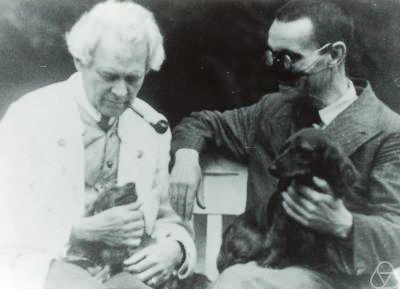

The Spirograph: Art, Science, and Biology
The Spirograph is far more than a classic drawing toy. It is a geometric device that generates precise mathematical curves known as roulettes. This article explores the Spirograph's journey from a creative plaything to a tool for scientific visualization and biological modeling. Its intricate patterns bridge the worlds of art, mathematics, and biology in a fascinating display of universal geometry.
Essential Elements and Modern Developments
The Spirograph's story is one of engineering ingenuity and timeless appeal. Its design principles have remained consistent, while its materials and cultural impact have evolved significantly over decades.
Invention and Global Release
British engineer Denys Fisher developed the Spirograph between 1962 and 1964. He famously used parts from the Meccano construction set to build his initial prototypes. Fisher unveiled his invention at the 1965 Nuremberg International Toy Fair. The commercial release followed that same year, captivating audiences with its blend of art and science.
First sold in 1965, the Spirograph was awarded the prestigious Toy of the Year accolade in the United States in 1967, cementing its iconic status.
Commercial Expansion and Variations
Kenner introduced the Spirograph to the American market in 1966. Over the years, several variations emerged, including the Spirotot, Magnetic Spirograph, and Spiroman. These versions experimented with different attachment methods and form factors. A significant corporate shift occurred in 1998 when Hasbro acquired the trademark, bringing the toy under one of the world's largest toy companies.
The 21st Century Reboot
The toy experienced a major worldwide relaunch in 2013 by Kahootz Toys. This modern version introduced key safety improvements. It replaced the original metal pins with a removable plastic putty for securing the rings. In 2019, Kahootz Toys was acquired by PlayMonster LLC, which continues to produce and market the toy today. The redesign was so successful that it was a finalist in two Toy of the Year categories in 2014.
Mathematical Foundation
At its core, the Spirograph is a geometric drawing device. It produces beautiful, complex patterns through the principle of roulettes. A small gear (or wheel) rotates inside or outside a larger fixed ring. The pen hole in the moving gear traces a curve called a hypotrochoid (for inside rotation) or an epitrochoid (for outside rotation). This makes it an ideal tool for educational visualization in geometry and kinematics.
- Hypotrochoids: Curves generated by a point on a circle rolling inside a fixed circle.
- Epitrochoids: Curves generated by a point on a circle rolling outside a fixed circle.
- Roulettes: The general family of curves traced by a point attached to one curve rolling on another.
Historical Context and Scientific Connections
The Spirograph exists within a rich historical continuum of mechanical toys and scientific instruments. Its significance extends beyond play into realms of scientific modeling and historical anthropology.
Link to Science and Biology
While primarily a toy, the Spirograph's output has meaningful scientific applications. The hypotrochoid and epitrochoid curves it produces are not just aesthetically pleasing. They can model natural phenomena. In biology, these precise mathematical paths can simulate cellular movements or molecular orbital trajectories. The curves mimic patterns found in nature, from the motion of organelles within a cell to the apparent paths of celestial bodies.
The mathematical principles behind the Spirograph provide a framework for modeling complex natural rotations and cycles at both micro and macro scales.
Historical Toy Precursors
Mechanical drawing and play devices have ancient roots. Archaeological evidence reveals a 3,000-year-old toy with wheels discovered in Lefkandi, Greece (10th-9th century BCE). This artifact demonstrates an early human fascination with rotational motion and mechanics. In ancient Greece around 500 BCE, yo-yos made from wood or metal were common playthings.
These historical parallels show a long-standing human desire to understand motion through play. The Spirograph is a direct descendant of this tradition, transforming basic mechanical principles into a tool for creativity and learning.
From Victorian Era to Digital Age
The Spirograph's immediate cultural ancestors are Victorian optical toys. Devices like the Phenakistoscope and Zoetrope used sequential images and slits to create the illusion of motion. The Spirograph replaced the pursuit of animated illusion with the creation of complex geometric art. It represents a key point in the evolution from purely mechanical toys to today's digital and STEM-focused play. Its continued popularity underscores a lasting appeal for hands-on, creative experimentation.
- Ancient Toys: Basic wheels and yo-yos demonstrating simple mechanics.
- Victorian Optical Toys: Devices creating illusion of movement from still images.
- The Spirograph Era: Mechanical devices generating permanent mathematical art.
- Modern STEM Toys: Digital and analog tools focused on science and coding.
This historical journey highlights how the Spirograph sits at a unique crossroads. It combines the tactile engineering of the past with the mathematical precision valued in modern science and education.
Modern Educational Applications in STEM
The Spirograph has found a renewed purpose in contemporary education. Teachers and educators now leverage its engaging mechanics to teach complex STEM concepts. It transforms abstract mathematical ideas into tangible, visual experiences for students of all ages.
Visualizing Mathematical Concepts
In mathematics classrooms, the Spirograph serves as a powerful hands-on tool. It provides a clear, physical representation of concepts like ratio, periodicity, and symmetry. By changing the gear sizes, students can directly observe how the number of teeth affects the complexity and repetition of the pattern.
This practical application helps demystify intimidating topics. Students can explore modular arithmetic and least common multiples through pattern creation. Seeing a curve close after a specific number of rotations makes these mathematical principles intuitive and memorable.
- Ratios: The relationship between gear teeth determines the pattern's lobes.
- Periodicity: Students observe how patterns repeat based on rotational cycles.
- Symmetry: The drawings exhibit rotational and reflective symmetry.
Bridging Art and Engineering
The Spirograph perfectly illustrates the connection between artistic design and mechanical engineering. It requires precision and an understanding of gear mechanics and kinematic principles. This makes it an excellent introduction to engineering design processes for young learners.
Modern Spirograph kits are often included in STEAM (Science, Technology, Engineering, Art, and Mathematics) curricula to foster interdisciplinary learning.
Students learn that beautiful art can emerge from precise engineering. This challenges the false dichotomy between creative and technical fields. The toy encourages a holistic approach to problem-solving that is essential in modern innovation.
Spirograph Principles in Biological Modeling
The mathematical curves generated by the Spirograph have surprising relevance in the natural sciences. Biologists and researchers have found that hypotrochoid and epitrochoid patterns appear in various biological structures and processes. This connection turns a simple toy into a tool for scientific insight.
Modeling Cellular and Molecular Motion
At the microscopic level, the movement of cellular components often follows curved paths. The orbital trajectories of electrons in molecules can be modeled using similar mathematical principles. Spirograph-like curves provide a simplified framework for understanding these complex motions.
For instance, the paths of organelles within a cell during cytoplasmic streaming can resemble roulette curves. While biological systems are influenced by numerous factors, these mathematical models offer a starting point for analysis. They help scientists visualize and predict movement patterns in a controlled way.
- Cytoplasmic Streaming: The movement of cytoplasm within plant cells.
- Molecular Orbitals: The wave-like behavior of electrons in atoms and molecules.
- Bacterial Motion: Some bacteria exhibit spiral or helical swimming paths.
Patterns in Nature and Morphogenesis
The natural world is filled with patterns that echo Spirograph designs. From the arrangement of seeds in a sunflower to the shell of a nautilus, logarithmic spirals and related curves are ubiquitous. These patterns are not random but follow specific mathematical rules.
Developmental biology studies how these patterns form, a process called morphogenesis. The Spirograph provides a mechanical analogy for how simple rules can generate complex forms. By adjusting a few parameters (like gear ratios), vastly different patterns emerge, similar to how genetic instructions produce diverse biological structures.
The study of these natural patterns falls under the field of biomathematics, which uses mathematical models to understand biological phenomena.
Cultural Impact and Lasting Legacy
Beyond its scientific utility, the Spirograph has cemented its place in popular culture. It represents a unique intersection of nostalgia, art, and intellectual curiosity. Its enduring appeal spans multiple generations and continues to inspire new forms of creative expression.
From Toy Box to Art Studio
Many contemporary artists have adopted the Spirograph as a serious artistic tool. They use it to create intricate large-scale installations and digital art. The trademark swirling patterns have become recognizable aesthetic elements in graphic design and illustration.
The toy's influence extends to fashion, textiles, and architecture. Designers draw inspiration from its harmonious, mathematically precise curves. This demonstrates how a child's toy can evolve into a legitimate source of professional creative inspiration.
- Graphic Design: Spirograph patterns appear in logos, posters, and web design.
- Textile Patterns: Fabrics and wallpapers featuring hypotrochoid designs.
- Architectural Elements: Spiral staircases and decorative metalwork.
The Digital Evolution
The principles of the Spirograph have successfully transitioned into the digital age. Numerous software applications and websites now simulate the Spirograph experience. These digital versions allow for even more complex creations by removing physical constraints.
Digital Spirographs can incorporate animation and interactive elements. Users can create patterns that would be impossible with the physical toy. This evolution ensures that the core concept remains relevant in an increasingly digital world.
The first computer program to simulate a Spirograph was likely written in the early 1970s, shortly after the toy's commercial success.
Modern programmers often use Spirograph algorithms as beginner projects for learning graphics programming. The mathematical elegance of the curves makes them ideal for teaching fundamental concepts in computer science and digital art.
Spirograph in Comparative Toy History
Placing the Spirograph within the broader history of toys reveals its unique position. It belongs to a category of constructive playthings that encourage creation rather than simple amusement. This distinguishes it from many other popular toys throughout history.
A Contrast with Ancient Play
While ancient toys like the yo-yo or spinning top focused on physical skill and dexterity, the Spirograph emphasizes planning and pattern recognition. Archaeological findings from ancient Greece and other civilizations show that most toys were simulations of adult tools or simple kinetic objects.
The Spirograph introduced a different kind of play value. It engaged children in systematic experimentation and geometric reasoning. This shift represented a growing recognition of toys as educational tools rather than mere diversions.
- Skill Toys: Yo-yos, tops, and juggling balls focusing on physical mastery.
- Simulative Toys: Dolls, miniature vehicles representing real-world objects.
- Constructive Toys: Spirograph, building sets that create new outcomes.
The Victorian Precursor Tradition
The Spirograph's closest relatives are the optical toys of the Victorian era. Devices like the zoetrope (1834) and praxinoscope (1877) also used rotary motion to create visual effects. However, these focused on the persistence of vision to simulate motion.
The Spirograph inverted this concept by using motion to create static art. This represented a significant evolution in the purpose of mechanical toys. It shifted from illusion to creation, from observation to participation, paving the way for modern maker culture.
This historical context shows how the Spirograph was both a product of its time and a visionary look forward. It synthesized mechanical precision with artistic potential in a way that few toys had attempted before.
Collectibility and Modern Manufacturing
The Spirograph has developed a dedicated following among collectors and enthusiasts. Vintage kits, particularly those from the original Denys Fisher or early Kenner eras, are sought-after items. This collectible status speaks to the toy's enduring cultural significance and nostalgic value for multiple generations.
Vintage Kits and Market Value
Original 1960s and 1970s Spirograph sets in good condition command premium prices. Collectors value complete sets with all gears, pens, and the original instructional booklets intact. The packaging design itself is often considered a piece of pop art history. The market for these vintage toys has remained steady, reflecting their status as iconic artifacts of 20th-century design.
- Denys Fisher Era (1965-1970s): The most collectible, especially with "Made in Great Britain" markings.
- Kenner Sets (US Market): Feature distinct American packaging and marketing.
- Special Editions: Rare variations like the Deluxe or Giant sets are particularly valuable.
Contemporary Production and Safety
Modern manufacturing under the PlayMonster brand has adapted to contemporary safety standards. The replacement of metal pins with reusable plastic putty was a significant change in the 2013 relaunch. Current kits also use BPA-free plastics and non-toxic inks. These adaptations ensure the toy remains accessible and safe for today's children while preserving the core mechanical experience.
The toy's safety evolution mirrors broader industry shifts, maintaining its mathematical integrity while updating its physical components for modern standards.
Future Directions and Digital Integration
The principles of the Spirograph are finding new life in cutting-edge fields. From algorithmic art to robotics, the geometric concepts it demonstrates continue to inspire innovation. This ongoing relevance suggests the Spirograph's legacy will extend far into the 21st century.
Generative Art and Computational Design
In the realm of digital art, Spirograph algorithms are foundational for generative art programs. Artists and programmers write code to create infinite variations of hypotrochoid curves. These digital creations can be more complex, layered, and animated than anything possible with the physical toy.
This genre of art focuses on systems and processes rather than fixed images. The Spirograph provides a perfect conceptual bridge between manual and algorithmic creation. This has made it a favorite subject for artists working at the intersection of art and technology.
Applications in Robotics and CNC
The precise, repeatable movements required by the Spirograph have direct parallels in robotics. Programming a robotic arm to draw Spirograph patterns is a common training exercise. It teaches fundamental concepts in kinematics and path planning. Similarly, Computer Numerical Control (CNC) machines use the same mathematical principles to control cutting tools.
By studying the toy's mechanics, engineers gain insights into gear interactions and precision movement. These insights translate directly to designing more efficient robotic systems for manufacturing, surgery, and exploration.
- Robotic Path Planning: Programming efficient, non-linear movement paths.
- CNC Machining: Controlling tools to create precise curved cuts.
- Swarm Robotics: Coordinating multiple simple robots to create complex patterns.
Educational Research and Cognitive Benefits
Recent studies in educational psychology have examined toys like the Spirograph for their cognitive benefits. Research suggests that hands-on geometric play enhances spatial reasoning, a crucial skill in STEM fields. The Spirograph provides a structured yet open-ended environment for developing these abilities.
Developing Spatial and Mathematical Intelligence
Using the Spirograph requires children to visualize outcomes before they occur. This practice strengthens mental rotation and spatial visualization skills. These skills are fundamental to success in mathematics, engineering, and architecture. The immediate visual feedback of the drawing reinforces cause-and-effect understanding related to ratios and geometry.
Educators note that children who engage with constructive toys often show greater confidence in tackling abstract math problems. The Spirograph makes the abstract tangible, providing a concrete reference point for complex ideas.
A 2014 study published in the journal "Child Development" found that spatial training through play can improve mathematical performance significantly.
Fostering Patience and Process-Oriented Thinking
In an age of instant gratification, the Spirograph teaches the value of process. Creating a complex design requires careful setup, steady hands, and patience. This focus on process over immediate result is a valuable lesson. It encourages mindfulness and attention to detail, skills that are transferable to academic and professional settings.
The toy inherently promotes a growth mindset—the understanding that abilities can be developed through dedication. Failed attempts lead to adjustments in gear selection or drawing speed, emphasizing experimentation and learning from mistakes.
Conclusion: The Enduring Legacy of the Spirograph
The journey of the Spirograph from a 1960s drawing toy to a tool for scientific and artistic exploration is remarkable. It demonstrates how a simple mechanical concept can have profound and wide-ranging applications. Its continued presence in toy stores, classrooms, and digital art studios is a testament to its timeless design and intellectual richness.
Key Takeaways and Summary
The Spirograph's story encapsulates several important themes in the history of science and play. First, it shows that play and learning are fundamentally interconnected. The most enduring educational tools are often those that engage curiosity and creativity simultaneously. Second, it illustrates how mathematical principles manifest across disciplines, from art to biology to engineering.
- Interdisciplinary Bridge: The Spirograph connects art, mathematics, science, and engineering.
- Evolutionary Design: Its core mechanics have remained relevant through analog and digital ages.
- Educational Power: It provides hands-on experience with abstract geometric and kinematic concepts.
- Scientific Modeling: Its output provides simple models for complex natural patterns and motions.
The Spirograph in the 21st Century and Beyond
As we move further into a digital world, the tangible, tactile experience of the Spirograph gains new importance. It represents a hands-on counterbalance to screen-based interaction. In an educational landscape increasingly focused on STEM and STEAM, the Spirograph remains a uniquely effective tool. It teaches precision, prediction, and pattern recognition in an engaging, visually stunning format.
The toy's underlying mathematics will continue to find new applications. Researchers in fields from computational biology to quantum physics utilize similar cyclic and harmonic analyses. The patterns will continue to inspire artists, designers, and scientists.
From a child's first wobbling circle to complex digital simulations, the Spirograph proves that beauty and precision are born from simple, elegant rules.
In closing, the Spirograph is more than a nostalgic relic. It is a living example of playful innovation. It reminds us that curiosity-driven exploration—whether with plastic gears or computer code—remains at the heart of discovery. Its swirling lines trace not just mathematical curves, but a continuous thread connecting human creativity, scientific inquiry, and the timeless joy of making something beautiful.