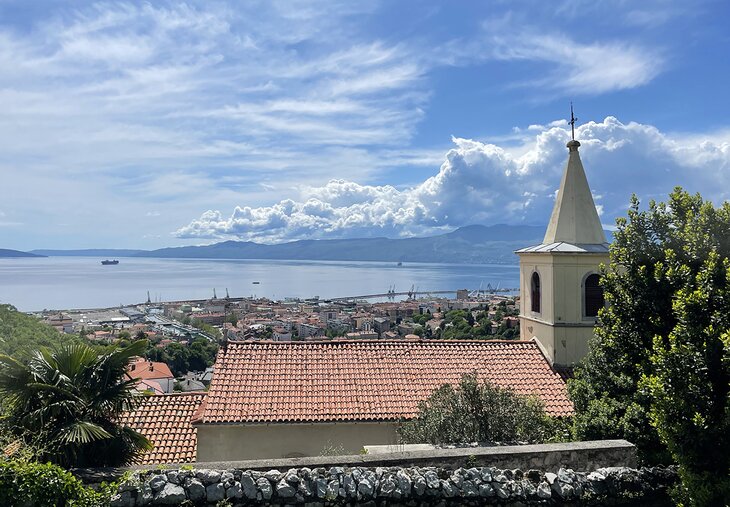
Nestled along the sparkling coast of the Adriatic Sea, Rijeka is Croatia's third-largest city and a trove of historical and cultural richness. This vibrant city, often overshadowed by the more tourist-centric destinations along the Dalmatian coast, offers a unique blend of influences that date back centuries. From its Roman roots to its role as a key seaport in the Austro-Hungarian Empire, Rijeka has been shaped by a myriad of cultural currents and historical events.
The Ancient Beginnings
The story of Rijeka begins in ancient times. The earliest settlements in this area can be traced back to the pre-Roman period, around 1000 BC, when the region was inhabited by the Histri and Liburnians, Illyrian tribes known for their seafaring skills. By the time the Roman Empire extended its reach into the area, Rijeka was known as Tarsatica, serving as an important trading post.
The remnants of this Roman past can still be seen today. A notable example is the Roman arch, or gate, which stands in the old part of the city, though its original purpose and date remain a bit of a mystery. It has come to symbolize the city's ancient heritage, serving as a gateway not just to Rijeka's historical past but also to its rich tapestry of cultures and traditions.
The Medieval Tapestry
The fall of the Roman Empire saw Rijeka enter a turbulent period characterized by shifting allegiances and control. The Middle Ages saw Rijeka transform into a bustling medieval town. By the 13th century, it had adopted the name Rijeka, derived from the Croatian word for "river," marking the natural feature that divides the city and provides a lifeline.
During this era, Rijeka was often contested by powerful neighboring states. The city came under the influence of the Hungarian crown and, subsequently, the Habsburg Monarchy. The Habsburgs, recognizing the strategic importance of Rijeka as a port city, invested heavily in its development. In the 16th century, Rijeka began to rise as a significant trading hub due to its prime location at the crossroads of European trade routes.
The medieval era left its mark on Rijeka's architecture and urban landscape. One of the most iconic structures from this period is the Trsat Castle. Perched on a hill overlooking the city, the castle offers a window into Rijeka's feudal past. Originally built by the Frankopan family, a noble lineage with ties across Croatia, the castle has been a silent witness to countless historical upheavals and now serves as a cultural and tourist attraction.
The Austro-Hungarian Influence
The 18th and 19th centuries heralded a transformative era for Rijeka under the auspices of the Austro-Hungarian Empire. This period saw the city's rise as a major port and industrial center. The empire's investment was motivated by the need for an economic powerhouse in the region, leading to significant urban development and industrialization.
Rijeka's shipbuilding industry boomed during this time, placing the city on the international map. Its docks and warehouses thrived as significant conduits for the trade of goods such as timber, coal, and diverse maritime products. This era of prosperity also brought about cultural and civic developments, with the construction of prominent public buildings, theaters, and museums.
The architectural landscape of Rijeka was indelibly shaped by the Austro-Hungarian period. The Governor's Palace, an edifice of neoclassical grandeur, stands as a testament to this influence. Designed by the Hungarian architect Alajos Hauszmann in the late 19th century, it now houses the Maritime and History Museum of the Croatian Littoral, offering a historical narrative of Rijeka's maritime legacy.
Twentieth Century Tumult
As the 20th century dawned, Rijeka found itself at the epicenter of geopolitical upheavals that would transform its identity yet again. The fall of the Austro-Hungarian Empire after World War I led to a complex and contentious period in Rijeka's history. The city was claimed by Italy, the Kingdom of Serbs, Croats, and Slovenes, and self-proclaimed as an independent entity under the Italian poet Gabriele D'Annunzio for a brief period during the so-called Free State of Fiume.
Eventually, the Treaty of Rome in 1924 divided the city, awarding Rijeka (known as Fiume) to Italy and the surrounding area to the Kingdom of Serbs, Croats, and Slovenes. This division was further complicated by the onset of World War II, which saw Rijeka suffer occupation and significant infrastructural damage.
The conclusion of World War II and the subsequent formation of socialist Yugoslavia brought Rijeka under the Republic of Croatia within the federation. The city experienced rapid rebuilding and modernization efforts, becoming a symbol of industrial prowess within the Yugoslav framework. Nevertheless, this period also saw demographic shifts and socio-political changes, with many Italian residents leaving and a local focus on industrial development.
Rijeka in the Yugoslav Era
Rijeka's journey through the Yugoslav era was marked by industrial growth and massive urbanization that changed the city's landscape and demographic profile. The socialist government championed infrastructure development, aiming to transform Rijeka into an industrial hub. The city became a pivotal part of Yugoslavia’s economy, especially noted for its contributions to shipbuilding, oil refining, and manufacturing.
The working-class ethos defined much of Rijeka's mid-20th-century identity. With shipyards like "3. Maj," established in 1947, and other industries providing employment, the city attracted labor from all over the former Yugoslavia. The resulting population surge necessitated the construction of new residential districts and modern amenities, sculpting Rijeka into a more contemporary urban landscape.
However, the Yugoslav era was not without its challenges. The political climate limited freedom of expression, and cultural activity often operated within the constraints of party ideology. Despite this, Rijeka fostered a robust cultural scene, supported by theaters, libraries, and a broadcast station, which became outlets for artistic expression and intellectual discourse. This era saw the origins of Rijeka's rich tradition in punk and rock music, which would flourish in later decades as both counter-cultural commentary and creative expression.
The Resilience of Rijeka
The breakup of Yugoslavia in the early 1990s plunged Croatia into a period of conflict and transition, presenting Rijeka with both challenges and opportunities. The Croatian War of Independence was largely fought away from Rijeka, but the city experienced economic upheavals and socio-political shifts as Croatia forged its new national identity.
Emerging from the war-torn years, Rijeka faced the daunting task of transitioning from a socialist economy to a market-oriented one. The decline in industrial activity hit hard, especially evident in the shipbuilding and manufacturing sectors, which faced closures and downsizing. Despite these adversities, Rijeka demonstrated remarkable resilience.
The city reinvented itself by focusing on service industries, educational institutions, and cultural development. The University of Rijeka, originally established in the 17th century by Jesuits but significantly expanded in the post-war period, became a symbol of the city’s commitment to academic excellence and research. The institution's growth attracted students and academicians, injecting vibrancy and innovation into Rijeka's social fabric.
Rijeka's Cultural Renaissance
Rijeka's cultural scene has experienced a resurgence in recent decades, reinventing itself as a hub of artistic and intellectual activity. In 2020, the city was designated as a European Capital of Culture, a recognition that highlighted its rich heritage and contemporary cultural dynamism. While the COVID-19 pandemic affected many of the planned events, the title served as a catalyst for cultural investments and initiatives that continue to enrich Rijeka’s offerings.
The city’s cultural vitality is evident in its numerous museums, galleries, and festivals. The Museum of Modern and Contemporary Art, which relocated to a new, larger venue in 2017, showcases works by local and international artists, serving as a beacon of Rijeka's modern creative spirit. Other successful cultural projects include the Rijeka Carnival, one of Europe's largest carnivals, which blends centuries-old tradition with modern exuberance.
Rijeka’s music scene has played a key role in its cultural renaissance. The city is home to numerous music festivals and venues, celebrating everything from classical music to rock and punk. Bands from Rijeka have gained both national and international acclaim, reinforcing the city’s reputation as Croatia’s rock and alternative music capital.
Preserving Rijeka’s Heritage
Preserving its multifaceted heritage is a testament to Rijeka's commitment to embracing its past while forging its future. The city’s urban planners and conservationists work to maintain its blend of historic and modern elements. Historic sites are carefully conserved, while innovative architecture projects showcase Rijeka's flair for blending the old with the new.
Key restoration projects have revitalized Rijeka's historic core. The old city center, with its narrow alleys and medieval architecture, has been transformed into a pedestrian-friendly zone teeming with cafes, shops, and cultural landmarks. The redevelopment of the industrial port area, known as the "Delta Project," envisions a dynamic urban space poised to enrich community life and leisure activity.
One notable preservation success is the Rijeka Synagogue, which stands as a testament to the city’s diverse religious and cultural past. Built in 1903, it survived both World Wars and periods of socio-political upheaval. Recent restoration efforts have ensured that it remains a focal point of Rijeka's Jewish heritage, offering insights into the city's historical tapestry.
The Future Beckons
The transformation of Rijeka is an ongoing saga of resilience, adaptability, and vision. As Croatia further integrates into the European Union landscape, Rijeka stands poised to leverage its strategic geographical location, dynamic cultural scene, and educated populace. The city's development plans emphasize sustainability, digital innovation, and cultural vitality, aiming to create a high quality of life for residents and an inviting atmosphere for visitors.
Rijeka's harbor, long a catalyst for its development and expansion, is expected to remain central to its future growth. Plans to modernize port facilities promise to enhance Rijeka's role in global trade networks while environmental initiatives aim to balance industrial needs with ecological concerns.
Ultimately, Rijeka's story is a compelling narrative of a city that has survived and thrived despite the many tides of history it has faced. As it moves confidently into the future, Rijeka exemplifies how a city steeped in history can harness its past to illuminate and inform its path forward.
Embracing Diversity and Community Spirit
Rijeka’s social fabric is a mosaic of different cultures, religions, and ethnicities that have coexisted, interacted, and influenced one another over centuries. This diverse cultural heritage is not merely a historical footnote but continues to shape the everyday life and community spirit of the city today. Rijeka is a city where multiculturalism is celebrated, and this is evident in various aspects of daily life, from gastronomy to public events and religious observances.
The community spirit in Rijeka is palpable in its numerous festivals and public gatherings, where locals and visitors celebrate the city’s rich cultural heritage. A prime example is the Rijeka Carnival, which blends traditional customs with contemporary creativity. Each year, the carnival attracts thousands of visitors with its vibrant parades, elaborate masks, and festive atmosphere, proving that Rijeka remains as lively and inclusive as ever.
The Culinary Delights of Rijeka
Rijeka’s culinary scene reflects its multicultural influences, serving as a delightful fusion of Mediterranean and Central European flavors. The city’s vibrant food culture is anchored in fresh seafood, thanks to its proximity to the Adriatic Sea, complemented by the richness of Slavic cuisine characterized by hearty stews and grilled meats.
Visitors and residents alike enjoy the konobas, traditional Croatian taverns, that dot the city, offering rustic dishes like squid ink risotto, fresh grilled fish, and the renowned Istrian delicacy, pršut (prosciutto). These establishments provide not only satisfying meals but also warm and convivial atmospheres where stories and laughter are readily shared over a glass of local wine.
The city’s commitment to modern gastronomy is also evident in the rise of innovative dining spaces and gourmet festivals. Rijeka’s food festivals, such as the Rijeka Food Week, showcase the creativity and passion of local chefs who are eager to infuse traditional recipes with new techniques and flavors, embodying Rijeka’s spirit of blending the old with the new.
Nurturing the Natural Environment
Rijeka's commitment to sustainability and preservation extends to its lush natural surroundings. The city is uniquely positioned between the Adriatic coast and the mountainous hinterland, offering diverse landscapes and outdoor opportunities. The nearby Učka Nature Park, with its sprawling vistas and rich biodiversity, provides a sanctuary for both wildlife and nature lovers seeking respite from urban life.
To promote ecological tourism and preserve its natural beauty, Rijeka has invested in green infrastructure projects and sustainable urban planning. Initiatives like expanding parks, adding bike lanes, and ensuring public transport accessibility reflect a city striving to maintain harmony between development and nature.
The coastlines of Rijeka also offer pristine beaches and azure waters that are less crowded than those found in more tourist-heavy Croatian cities. These serene spots invite relaxation and exploration, with nautical activities such as sailing and diving enabling visitors to appreciate the marine ecosystem and coastal beauty. The city's ongoing conservation projects underscore its dedication to safeguarding these natural resources for future generations.
A Bright Horizon
As Rijeka steps into the future, it continues to harness the potential of its strategic location, vibrant culture, and historical prowess. The city envisions itself as a regional hub for innovation and creativity, underpinned by a thriving academic community and a focus on technological advancements. This vision is supported by concerted efforts to attract investments in high-tech industries and digital infrastructure, fostering an entrepreneurial environment that inspires growth and innovation.
Rijeka's plans for the future emphasize fostering a smart city model that integrates sustainable practices with cutting-edge technology. Projects targeting renewable energy, intelligent transportation systems, and digital inclusion are not just aspirational but pragmatic strategies designed to improve quality of life and efficiency in urban living. This forward-looking perspective aligns with the broader European objectives of sustainability and interconnectedness, positioning Rijeka as a model city for adaptive, resource-smart urbanism.
Conclusion: The Soul of Rijeka
In summary, Rijeka is not just a city; it is a living narrative of resilience, adaptation, and renewal. Throughout its history, it has evolved while maintaining its distinctive identity, continuously drawing from a rich tapestry of cultures to enrich its social, cultural, and economic landscape. Whether exploring its historical sites, indulging in its culinary delights, or participating in its vibrant festivals, one can feel the pulse of Rijeka’s resilient spirit and enduring charm.
Rijeka stands as a testament to a community that is as proud of its past as it is hopeful for its future. A city that celebrates its diversity and finds strength in its unity. As it continues on its journey, Rijeka remains an enticing destination for those who seek a place where history, culture, and innovation converge to create a compelling and dynamic urban experience.
In its journey through time, Rijeka teaches that perpetual change need not be daunting but can instead be a harbinger of positive transformation and lasting legacy. With its eyes set firmly on the horizon, Rijeka invites the world to witness its ongoing evolution, ensuring that it remains a vibrant and vital part of the global community for years to come.
Haporium is a revolutionary platform that lets you organize your web browsing experience with customizable dashboards and boards. Create, manage, and share your favorite content collections.
Join us today and get:
The right to be one of the first pioneers
Unlimited dashboards and boards
Access to exclusive beta features
Priority support from our team
We use cookies to enhance your experience. By continuing to use this site, you agree to our Cookie Policy.










Comments