Explore Any Narratives
Discover and contribute to detailed historical accounts and cultural stories. Share your knowledge and engage with enthusiasts worldwide.
Konrad Lorenz, a pioneering figure in behavioral ecology, revolutionized our understanding of animal behavior and its connection to the natural world. His groundbreaking work on ethology laid the foundation for modern studies on how animals—and humans—interact with their environments. This article explores Lorenz’s contributions, their impact on sensitivity toward nature, and how his ideas continue to shape conservation efforts today.
Konrad Lorenz (1903–1989) was an Austrian zoologist and ethologist renowned for his studies on animal behavior. He co-founded the field of ethology, the scientific study of animal behavior in natural conditions. His work on imprinting, instinct, and social behavior earned him the 1973 Nobel Prize in Physiology or Medicine, shared with Nikolaas Tinbergen and Karl von Frisch.
Lorenz’s observations of animals in their natural habitats led to key concepts such as innate releasing mechanisms and fixed action patterns. These ideas helped bridge the gap between animal behavior and ecological function, forming the basis of modern behavioral ecology.
One of Lorenz’s most famous discoveries was imprinting, a process where young animals form strong attachments to the first moving object they see after birth—often their mother. His experiments with geese demonstrated how this behavior is critical for survival and social structure.
Imprinting highlights the importance of early-life experiences in shaping behavior, a concept that extends beyond animals to human psychology and sensitivity to nature.
Lorenz identified innate releasing mechanisms (IRMs)—specific stimuli that trigger instinctive behaviors. For example, the red belly of a male stickleback fish elicits aggressive responses from other males. These mechanisms are hardwired into an animal’s biology and play a crucial role in survival.
Similarly, fixed action patterns (FAPs) are sequences of behaviors that, once initiated, are carried out to completion. These concepts helped scientists understand how animals respond to their environment in predictable ways, influencing later studies in behavioral ecology.
While Lorenz’s work focused on instinct and innate behaviors, modern behavioral ecology expands on these ideas by integrating evolutionary theory, game theory, and quantitative methods. Today, researchers study how behaviors evolve to maximize fitness in ecological contexts, building on Lorenz’s foundational observations.
Key developments in behavioral ecology include:
Lorenz’s work also influenced how we understand human sensitivity to nature. His emphasis on observation and empathy toward animals inspired later research in environmental psychology and conservation behavior.
Modern studies explore how humans develop emotional connections to nature, often through:
This growing field seeks to foster pro-environmental behaviors by leveraging insights from ethology and psychology.
Lorenz’s ideas have had a lasting impact in Greek academic circles, where his works have been translated and studied in ethology and behavioral science series. Greek-language publications continue to reference his concepts, particularly in discussions about human-nature relationships.
Key Greek resources include:
Konrad Lorenz’s contributions to ethology and behavioral ecology remain foundational in understanding animal behavior and its ecological implications. His work not only advanced scientific knowledge but also inspired a deeper sensitivity to nature in both academic and public spheres.
In the next section, we’ll explore how modern behavioral ecology builds on Lorenz’s legacy and examine real-world applications in conservation.
Since Konrad Lorenz’s foundational work, behavioral ecology has evolved into a dynamic field that combines ethology with evolutionary biology, neurobiology, and quantitative modeling. Researchers now explore how behaviors enhance survival and reproduction, applying these insights to conservation challenges.
Modern behavioral ecology expands on Lorenz’s observations by incorporating:
These advancements allow scientists to address complex questions, such as how climate change alters migration patterns or how urbanization affects wildlife behavior.
Real-world applications of behavioral ecology include:
One notable example is the reintroduction of wolves in Yellowstone National Park. Behavioral ecologists studied how wolf packs influence prey behavior, leading to cascading ecological effects that restored balance to the ecosystem.
Lorenz’s emphasis on observation and empathy toward animals has influenced environmental psychology, a field that examines how humans perceive and interact with nature. Understanding sensitivity to nature is crucial for promoting conservation behaviors.
Research suggests that early exposure to nature shapes lifelong attitudes toward the environment. Studies show that:
These findings echo Lorenz’s work on imprinting, highlighting how formative experiences influence long-term behaviors.
Environmental psychologists use various tools to assess human sensitivity to nature, including:
A study published in Frontiers in Psychology found that individuals with higher nature relatedness scores reported greater well-being and were more likely to participate in conservation efforts.
Conservation psychology merges ethological principles with social science to encourage sustainable behaviors. This interdisciplinary field draws on Lorenz’s legacy while incorporating modern techniques to foster sensitivity to nature.
Effective strategies to promote pro-environmental behaviors include:
For example, a campaign in Costa Rica used social marketing to reduce sea turtle poaching by emphasizing the cultural significance of these animals, leading to a 50% decrease in illegal harvesting.
Advancements in technology have expanded the tools available for studying and promoting sensitivity to nature:
These innovations make conservation more accessible and interactive, aligning with Lorenz’s belief in the power of observation and connection.
While progress has been made in understanding and applying behavioral ecology, several challenges remain:
Future research will likely focus on:
As we move forward, the fusion of ethology, behavioral ecology, and psychology will continue to shape our approach to conservation, ensuring that Lorenz’s legacy endures in both science and society.
In the final section, we’ll explore practical ways to cultivate sensitivity to nature and highlight key resources for further learning.
Fostering a deeper connection with nature requires intentional efforts to engage with the environment. Drawing from ethology and conservation psychology, here are actionable ways to enhance sensitivity to nature in daily life.
Direct interactions with animals can strengthen empathy and understanding. Consider these approaches:
These activities align with Lorenz’s emphasis on observation while promoting ethical engagement with wildlife.
Educational institutions play a vital role in shaping attitudes toward nature. Effective strategies include:
Research shows that students exposed to nature-based education develop stronger environmental values and are more likely to pursue conservation careers.
For those interested in exploring behavioral ecology and sensitivity to nature, the following resources provide valuable insights:
Konrad Lorenz’s contributions to ethology and behavioral ecology have left an indelible mark on science and conservation. His work on imprinting, innate behaviors, and human-animal connections continues to inspire researchers and environmentalists alike.
The intersection of behavioral ecology and sensitivity to nature offers a powerful framework for addressing environmental challenges. By understanding animal behaviors and human attitudes, we can develop more effective conservation strategies that resonate with diverse communities.
As we face global biodiversity loss and climate change, Lorenz’s legacy reminds us of the importance of observation, empathy, and scientific inquiry. Whether through education, technology, or personal engagement, each of us has a role to play in preserving the natural world.
Let us honor this legacy by fostering a deeper connection with nature—one that inspires action, drives innovation, and ensures a sustainable future for all species.
Your personal space to curate, organize, and share knowledge with the world.
Discover and contribute to detailed historical accounts and cultural stories. Share your knowledge and engage with enthusiasts worldwide.
Connect with others who share your interests. Create and participate in themed boards about any topic you have in mind.
Contribute your knowledge and insights. Create engaging content and participate in meaningful discussions across multiple languages.
Already have an account? Sign in here
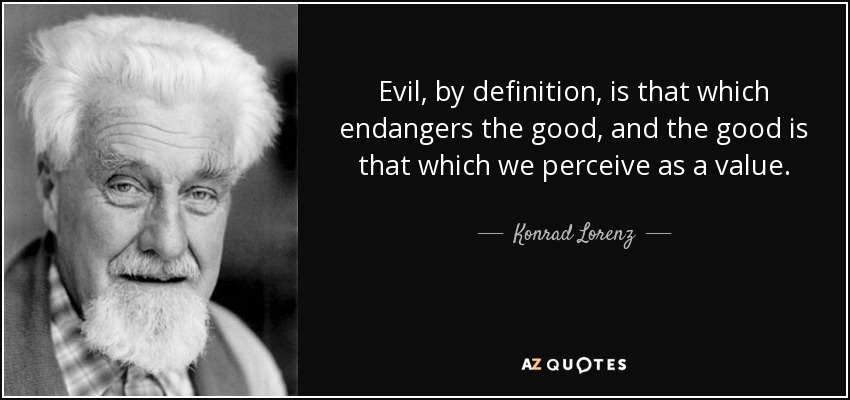
"Discover Konrad Lorenz, Nobel-winning ethology pioneer. Explore his imprinting studies, legacy, and impact on science &...
View Board
Discover the influential life of Konrad Lorenz, a trailblazer in ethology whose research on animal behavior revolutioniz...
View Board
Discover the inspiring journey of Joey Santore, a self-taught botanist who brings the world of botany to life with engag...
View Board
Jacques Cousteau: Explorer, inventor, and conservationist who revolutionized marine science with the Aqua-Lung, the Caly...
View Board
**Meta Description:** Discover Carl Linnaeus, the "Father of Taxonomy," whose binomial nomenclature revolutionized bio...
View Board
**Meta Description:** Explore the enchanting world of forests—their biodiversity, vital ecological roles, and threats ...
View Board
"Discover James Lovelock's Gaia hypothesis: his revolutionary work on Earth's self-regulating systems and impact on clim...
View Board
Last news about Earth and Environmental Sciences Week from 21/10/2024 to 27/10/2024
View Board
Last news about Biology Week from 07/10/2024 to 13/10/2024
View Board
Last news about Biology Week from 14/10/2024 to 20/10/2024
View Board
Explore the life and legacy of James Lovelock, the pioneering environmental scientist behind the Gaia hypothesis. Discov...
View Board
Discover the remarkable legacy of Theophrastus, widely revered as the Father of Botany. This in-depth exploration delves...
View Board
Explore the transformative contributions of Lazzaro Spallanzani to modern biological sciences. Discover how his pioneeri...
View Board
Discover the intriguing legacy of Jean-Baptiste Lamarck, the often-overlooked pioneer of evolutionary thought whose bold...
View Board
**Meta Description:** Discover how Craig Venter revolutionized genomics, from decoding the human genome to creating sy...
View Board
Discover the impactful legacy of Gregor Mendel, the Father of Genetics, whose pioneering pea plant experiments laid the ...
View Board
Last news about Science Week from 22/12/2025 to 28/12/2025
View Board
Discover how August Baisman revolutionized biology with gamete selection theory, reshaping our understanding of reproduc...
View Board
"Explore Pwl-Lanzeben's work, blending nature and humanity. Discover how interdisciplinary thinking merges science and e...
View Board
"Explore the groundbreaking CRISPR technology revolutionizing genetic engineering with this in-depth article. Understand...
View Board
Comments