





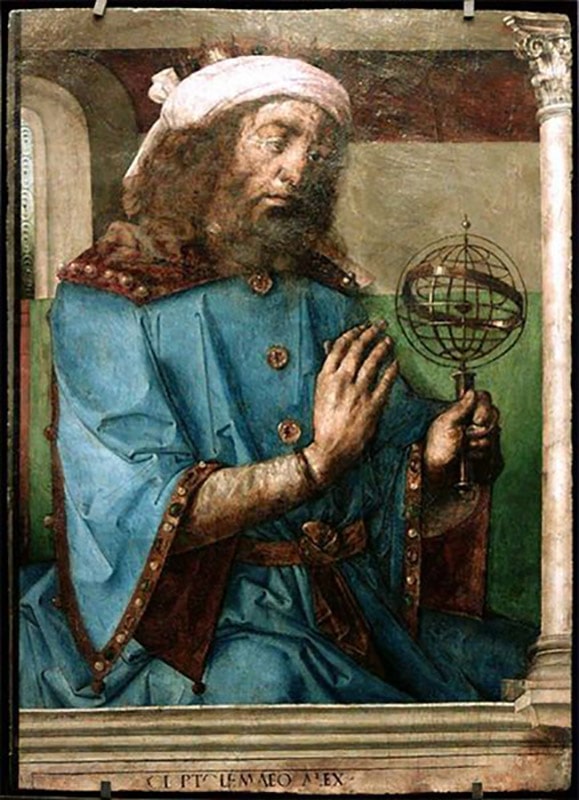
Claudius Ptolemy: The Ancient Scholar Who Shaped Astronomy
Claudius Ptolemy, a Greco-Roman mathematician and astronomer, revolutionized scientific thought with his geocentric model of the universe. His works, particularly the Almagest, influenced astronomy for over 1,400 years, making him one of history's most pivotal figures in science.
Early Life and Historical Context
Born around 100 CE in Alexandria, Egypt, Ptolemy lived during the height of Greco-Roman scholarship. Alexandria, a center of learning under Roman rule, provided the perfect environment for his groundbreaking work. His contributions built upon the observations of earlier scholars like Hipparchus and Aristotle.
Little is known about Ptolemy's personal life, but his writings reveal a meticulous observer. He recorded solstices, equinoxes, and planetary movements, using these data to refine his astronomical models. His work synthesizes centuries of observations, including records from Babylon dating back to 747 BCE.
The Almagest: A Cornerstone of Ancient Astronomy
Ptolemy's most famous work, the Almagest, originally titled Mathematical Treatise, was completed around 150 CE. This comprehensive text presented a geocentric model of the universe, placing Earth at the center with planets moving in complex circular orbits called epicycles.
The Almagest included:
- A catalog of over 1,000 stars across 48 constellations.
- Detailed trigonometric tables, including chord lengths in a circle.
- Predictions for planetary positions, eclipses, and star movements.
This work became the foundation of Western and Islamic astronomy, remaining authoritative until the 16th century when Copernicus and Galileo challenged its geocentric assumptions.
The Geocentric Model Explained
Ptolemy's geocentric model explained the apparent irregularities in planetary motion, such as retrograde motion, where planets seem to move backward in the sky. He achieved this by introducing epicycles—smaller circular orbits within larger ones called deferents.
This system allowed Ptolemy to make remarkably accurate predictions, despite its complexity. His model's precision ensured its dominance in astronomical thought for centuries, even as later scholars debated its accuracy.
Beyond Astronomy: Ptolemy's Other Contributions
While the Almagest remains his most famous work, Ptolemy made significant contributions to other fields:
Geography and Cartography
In his treatise Geography, Ptolemy mapped approximately 8,000 locations with latitudes and longitudes. This work advanced the science of cartography, providing a framework for future explorers and geographers.
Mathematics and Optics
Ptolemy's contributions to mathematics included early trigonometric tables, such as chord lengths in a circle. He also explored optics, studying the angles of reflection, and made strides in spherical trigonometry.
Music Theory
His writings on music theory demonstrated his interdisciplinary approach, blending mathematical principles with artistic expression. This work reflected the broader Hellenistic tradition of integrating science and the arts.
Legacy and Influence
Ptolemy's influence extended far beyond his lifetime. His geocentric model shaped scientific thought until the Renaissance, when Copernicus proposed a heliocentric model in 1543. Even then, Ptolemy's mathematical methods remained foundational.
His work was preserved and expanded by Islamic scholars, who translated the Almagest into Arabic. This transmission ensured that Ptolemy's ideas reached medieval Europe, where they continued to inform astronomical studies.
Today, Ptolemy's legacy is honored in the names of craters on the Moon and Mars, as well as the asteroid 4001 Ptolemaeus. His contributions to science remain a testament to the power of observation, mathematics, and theoretical innovation.
Modern Scholarship and Debates
Recent scholarship has focused on Ptolemy's trigonometric innovations, such as his approximation of √2 ≈ 1.41421356 using a 360-sided polygon. Digital reconstructions of his world maps have also provided insights into ancient climate and historical studies.
However, debates persist about the accuracy of his observations. Some scholars question whether Ptolemy fabricated certain data to fit his models, though his synthetic approach to astronomy remains widely admired.
In the 2020s, Ptolemy's work has found new relevance in computational modeling, particularly in AI and physics simulations. His epicycle-based models are now studied for their mathematical elegance and historical significance.
Conclusion: Ptolemy's Enduring Impact
Claudius Ptolemy's contributions to astronomy, geography, and mathematics have left an indelible mark on scientific history. His geocentric model, though eventually superseded, provided a framework for understanding the cosmos for over a millennium. As modern scholarship continues to explore his work, Ptolemy's legacy as a pioneer of ancient science remains secure.
The Almagest: A Deep Dive into Ptolemy’s Astronomical Masterpiece
The Almagest, Ptolemy’s magnum opus, remains one of the most influential scientific texts in history. Completed around 150 CE, it synthesized centuries of astronomical observations into a cohesive geocentric model. This work not only cataloged stars but also introduced mathematical tools that would shape astronomy for centuries.
The Star Catalog: Mapping the Northern Hemisphere
One of the Almagest's most significant contributions was its star catalog, which listed over 1,000 stars across 48 constellations. This catalog provided:
- Precise positions of stars in the Northern Hemisphere.
- Brightness classifications, helping future astronomers identify celestial objects.
- A framework for navigating the night sky, which was essential for both scientific and practical purposes.
Ptolemy’s catalog became a cornerstone for later astronomers, including those in the Islamic Golden Age, who expanded and refined his observations.
Trigonometry and Mathematical Innovations
Ptolemy’s work in the Almagest included groundbreaking trigonometric tables. He developed a table of chord lengths for angles in a circle, which was an early form of the sine function. This innovation allowed astronomers to:
- Calculate the positions of celestial bodies with greater accuracy.
- Predict eclipses and planetary movements using mathematical models.
- Establish a foundation for spherical trigonometry, which became crucial in navigation and astronomy.
His approximation of √2 ≈ 1.41421356 demonstrated his mathematical prowess and influenced later developments in geometry and algebra.
Ptolemy’s Geography: Mapping the Ancient World
Beyond astronomy, Ptolemy made substantial contributions to geography with his treatise Geography. This work mapped approximately 8,000 locations using a system of latitudes and longitudes, providing a detailed view of the known world at the time.
The Coordinate System: A Revolutionary Approach
Ptolemy’s use of a coordinate system was revolutionary. By assigning latitude and longitude to locations, he created a standardized method for mapping the Earth. This system:
- Allowed for more accurate representations of geographical features.
- Facilitated navigation and exploration by providing a consistent framework.
- Influenced later cartographers, including those in the Renaissance, who built upon his methods.
His maps, though distorted by modern standards—particularly in the size of Asia—were the most advanced of their time and remained influential for centuries.
Distortions and Limitations
While Ptolemy’s geographical work was groundbreaking, it was not without flaws. Modern scholars have noted several distortions in his maps:
- An oversized representation of Asia, which affected later explorers’ expectations.
- Inaccuracies in the positions of some locations due to limited data.
- A lack of knowledge about the Southern Hemisphere, which was largely unexplored during his lifetime.
Despite these limitations, Ptolemy’s Geography remained a critical resource for geographers and explorers well into the Middle Ages.
Ptolemy’s Influence on Islamic and Medieval Science
Ptolemy’s works were preserved and expanded by Islamic scholars during the Middle Ages. The Almagest was translated into Arabic, ensuring its survival and dissemination across the Islamic world and later into medieval Europe.
The Transmission of Knowledge
The translation of Ptolemy’s texts into Arabic was a pivotal moment in the history of science. Islamic astronomers, such as Al-Battani and Al-Farghani, built upon his work, refining his models and adding their own observations. This transmission of knowledge:
- Preserved Ptolemy’s ideas during a period when many classical texts were lost in Europe.
- Introduced European scholars to advanced astronomical and mathematical concepts during the Renaissance.
- Facilitated the development of new astronomical instruments and methods.
Without the efforts of Islamic scholars, much of Ptolemy’s work might have been lost to history.
The Impact on Medieval Europe
When Ptolemy’s texts were reintroduced to Europe in the 12th century, they had a profound impact on medieval science. Scholars such as Copernicus and Tycho Brahe studied his works, using them as a foundation for their own theories.
Ptolemy’s geocentric model, though eventually challenged, provided a framework for understanding the cosmos that dominated European thought until the Scientific Revolution.
The Scientific Revolution and the Decline of Geocentrism
The Scientific Revolution of the 16th and 17th centuries marked a turning point in the history of astronomy. Ptolemy’s geocentric model, which had held sway for over a millennium, was increasingly called into question.
Copernicus and the Heliocentric Model
In 1543, Nicolaus Copernicus published De Revolutionibus Orbium Coelestium, proposing a heliocentric model of the universe. This model placed the Sun at the center, with the Earth and other planets orbiting around it.
Copernicus’s work was heavily influenced by Ptolemy’s mathematical methods, even as it challenged his geocentric assumptions. The shift from geocentrism to heliocentrism was a gradual process, with many scholars initially resisting the new model.
Galileo and the Final Blow to Geocentrism
The final blow to Ptolemy’s geocentric model came with the observations of Galileo Galilei in the early 17th century. Using the newly invented telescope, Galileo discovered:
- The phases of Venus, which could only be explained by a heliocentric model.
- The moons of Jupiter, demonstrating that not all celestial bodies orbited the Earth.
- The imperfections on the Moon’s surface, challenging the Aristotelian view of celestial perfection.
These observations provided compelling evidence against geocentrism and solidified the shift toward heliocentrism. By 1633, Galileo’s work had effectively dismantled Ptolemy’s model, though his mathematical contributions remained influential.
Ptolemy’s Legacy in Modern Science
Despite the eventual rejection of his geocentric model, Ptolemy’s legacy endures in modern science. His mathematical innovations, particularly in trigonometry and cartography, continue to be studied and applied in various fields.
Trigonometry and Computational Modeling
Ptolemy’s trigonometric tables and methods laid the groundwork for modern computational modeling. His work in spherical trigonometry, for example, is still used in:
- Navigation and GPS technology.
- Astronomical calculations and satellite positioning.
- Computer graphics and simulations, particularly in AI and physics modeling.
His approximation techniques, such as calculating √3 using chord lengths, are studied for their historical significance and mathematical elegance.
Cartography and Digital Mapping
Ptolemy’s coordinate system and geographical methods have had a lasting impact on cartography. Modern digital mapping technologies, such as GIS (Geographic Information Systems), owe much to his early work in standardization and precision.
Digital reconstructions of Ptolemy’s maps have provided valuable insights into ancient climate patterns and historical geography, aiding researchers in fields ranging from archaeology to environmental science.
Debates and Controversies Surrounding Ptolemy’s Work
While Ptolemy’s contributions are widely celebrated, his work has also been the subject of debate and controversy. Modern scholars have raised questions about the accuracy of his observations and the integrity of his data.
The Fabrication Debate
Some historians have suggested that Ptolemy may have fabricated certain observations to fit his geocentric model. This debate centers on discrepancies between his recorded data and later observations, particularly regarding the positions of stars and planets.
However, many scholars argue that Ptolemy’s synthetic approach—combining observations from multiple sources—was a strength rather than a flaw. His ability to integrate diverse data sets into a cohesive model remains a testament to his genius.
The Accuracy of His Geographical Maps
Ptolemy’s geographical work has also faced scrutiny, particularly regarding the distortions in his maps. Critics point to:
- An exaggerated size of Asia, which may have influenced later explorers’ expectations.
- Inaccuracies in the positions of certain locations due to limited data.
- A lack of knowledge about the Southern Hemisphere, which was largely unexplored during his lifetime.
Despite these limitations, Ptolemy’s geographical methods were groundbreaking and provided a foundation for later cartographers.
Conclusion: Ptolemy’s Enduring Influence
Claudius Ptolemy’s contributions to astronomy, geography, and mathematics have left an indelible mark on scientific history. His geocentric model, though eventually superseded, provided a framework for understanding the cosmos for over a millennium. As modern scholarship continues to explore his work, Ptolemy’s legacy as a pioneer of ancient science remains secure.
His influence extends beyond astronomy, shaping fields as diverse as cartography, trigonometry, and computational modeling. Despite debates about the accuracy of his observations, Ptolemy’s synthetic approach and mathematical innovations continue to inspire scholars and scientists today.
Ptolemy’s Contributions to Optics and Music Theory
While Ptolemy is best known for his work in astronomy and geography, his contributions to optics and music theory are equally significant. These lesser-known aspects of his scholarship demonstrate the breadth of his intellectual pursuits and his commitment to understanding the natural world.
Advancements in Optics: The Study of Light and Reflection
Ptolemy’s treatise on optics, though less famous than the Almagest, was a groundbreaking work in the study of light. He conducted experiments to understand the behavior of light, particularly its reflection and refraction. His findings included:
- The law of reflection, which states that the angle of incidence equals the angle of reflection.
- Observations on the bending of light as it passes through different mediums, an early exploration of refraction.
- The development of mathematical models to describe these phenomena, laying the groundwork for later optical theories.
His work in optics influenced later scholars, including Ibn al-Haytham (Alhazen), who expanded upon Ptolemy’s ideas in his own treatises on light and vision.
Music Theory: The Harmonics of Sound
Ptolemy’s interest in music theory reflected the Hellenistic tradition of integrating mathematics with the arts. In his work Harmonics, he explored the mathematical principles underlying musical scales and intervals. His contributions included:
- A detailed analysis of musical intervals and their ratios, building on the work of Pythagoras.
- The development of a system for tuning musical instruments based on mathematical principles.
- An exploration of the relationship between sound waves and harmony, which influenced later music theorists.
Ptolemy’s work in music theory demonstrated his belief in the interconnectedness of science and art, a philosophy that resonated with later Renaissance thinkers.
The Cultural and Historical Impact of Ptolemy’s Work
Ptolemy’s influence extended far beyond the realm of science, shaping cultural and historical narratives for centuries. His ideas were integrated into educational curricula, artistic representations, and even religious thought, leaving a lasting imprint on human civilization.
Integration into Educational Curricula
From the medieval period through the Renaissance, Ptolemy’s works were central to scientific education. His texts were studied in universities across Europe and the Islamic world, forming the basis of astronomical and geographical instruction. Key aspects of his educational legacy include:
- The use of the Almagest as a standard textbook in astronomy for over 1,000 years.
- The incorporation of his geographical methods into navigation and exploration courses.
- The influence of his mathematical techniques on the development of early modern science.
Even after the Scientific Revolution, Ptolemy’s methods continued to be taught as foundational knowledge for aspiring scientists and mathematicians.
Artistic and Literary Representations
Ptolemy’s ideas also found expression in art and literature, particularly during the Renaissance. His geocentric model, for example, was depicted in illuminated manuscripts and celestial maps, reflecting the era’s fascination with the cosmos. Notable representations include:
- Celestial globes and astronomical clocks that visualized Ptolemy’s model of the universe.
- Literary references in works by Dante Alighieri and other medieval writers, who drew on Ptolemy’s cosmology.
- Artistic depictions of the cosmos in paintings and sculptures, often reflecting his geocentric framework.
These artistic interpretations helped to popularize Ptolemy’s ideas and cement his place in cultural history.
Ptolemy’s Work in the Context of Ancient Alexandria
To fully appreciate Ptolemy’s contributions, it is essential to understand the intellectual environment of Alexandria, the city where he lived and worked. As a center of learning in the Greco-Roman world, Alexandria provided Ptolemy with access to vast libraries, scholarly networks, and diverse cultural influences.
The Library of Alexandria: A Hub of Knowledge
The Library of Alexandria, one of the largest and most significant libraries of the ancient world, played a crucial role in Ptolemy’s research. This institution housed thousands of scrolls, including works from Babylonian, Greek, and Egyptian traditions. Key aspects of the library’s influence include:
- Access to centuries of astronomical records, which Ptolemy synthesized in the Almagest.
- Collaboration with other scholars, fostering an environment of intellectual exchange.
- The preservation of knowledge from earlier civilizations, ensuring that Ptolemy’s work built on a rich foundation.
The library’s resources allowed Ptolemy to create a comprehensive and cohesive model of the universe, integrating data from multiple sources.
The Multicultural Influence on Ptolemy’s Work
Alexandria’s position as a cultural crossroads exposed Ptolemy to a diversity of ideas and methodologies. His work reflects influences from:
- Babylonian astronomy, particularly in his use of observational records dating back to 747 BCE.
- Greek philosophy, including the ideas of Aristotle and Hipparchus.
- Egyptian mathematical techniques, which informed his trigonometric calculations.
This multicultural synthesis was a defining feature of Ptolemy’s scholarship, allowing him to create models that were both innovative and grounded in tradition.
Modern Reinterpretations and Digital Reconstructions
In the 21st century, Ptolemy’s work has been revisited through the lens of modern technology. Digital reconstructions of his maps and astronomical models have provided new insights into his methods and their accuracy.
Digital Mapping and Ptolemy’s Geography
Modern geographers and historians have used GIS (Geographic Information Systems) to recreate Ptolemy’s maps with greater precision. These digital reconstructions have revealed:
- The extent of distortions in his geographical representations, particularly in the size of continents.
- The accuracy of his coordinate system, which was remarkably advanced for its time.
- The potential reasons for inaccuracies, such as limited data from certain regions.
These reconstructions have not only deepened our understanding of Ptolemy’s methods but also provided valuable data for studying ancient climate and trade routes.
Computational Modeling and Ptolemy’s Astronomy
Ptolemy’s astronomical models have also been revisited using computational techniques. Modern simulations of his epicycle-based system have demonstrated:
- The mathematical elegance of his geocentric model, despite its eventual rejection.
- The complexity of his calculations, which required advanced trigonometric methods.
- The potential applications of his models in modern physics and AI simulations.
These reinterpretations highlight the enduring relevance of Ptolemy’s work, even in fields far removed from ancient astronomy.
Key Takeaways: Why Ptolemy’s Work Still Matters
Claudius Ptolemy’s contributions to science and scholarship have had a lasting impact on human knowledge. His work laid the foundation for numerous fields, from astronomy to geography, and his methods continue to inspire modern research. Here are the key takeaways from his legacy:
- Mathematical Innovation: Ptolemy’s trigonometric tables and coordinate systems were groundbreaking, influencing fields from navigation to computational modeling.
- Synthetic Approach: His ability to integrate data from multiple sources into cohesive models set a precedent for scientific synthesis.
- Educational Influence: His texts were central to scientific education for over a millennium, shaping the minds of generations of scholars.
- Cultural Impact: Ptolemy’s ideas permeated art, literature, and religious thought, reflecting the interconnectedness of science and culture.
- Enduring Relevance: Modern reinterpretations of his work, through digital reconstructions and computational modeling, demonstrate the timelessness of his contributions.
Conclusion: The Timeless Legacy of Claudius Ptolemy
Claudius Ptolemy’s work represents a pinnacle of ancient scholarship, blending observation, mathematics, and theoretical innovation. His geocentric model, though eventually superseded, provided a framework for understanding the cosmos that dominated scientific thought for over 1,400 years. His contributions to geography, optics, and music theory further demonstrate the breadth of his intellectual pursuits.
Today, Ptolemy’s legacy endures in the fields of astronomy, mathematics, and computational science. His methods continue to be studied for their precision and elegance, while his ideas inspire new generations of scholars. As we look back on his achievements, it is clear that Ptolemy’s work transcends the boundaries of time, remaining a cornerstone of scientific and cultural history.
In an era where technology allows us to revisit ancient knowledge with fresh eyes, Ptolemy’s contributions remind us of the enduring power of human curiosity and the timeless quest for understanding the universe.












Comments