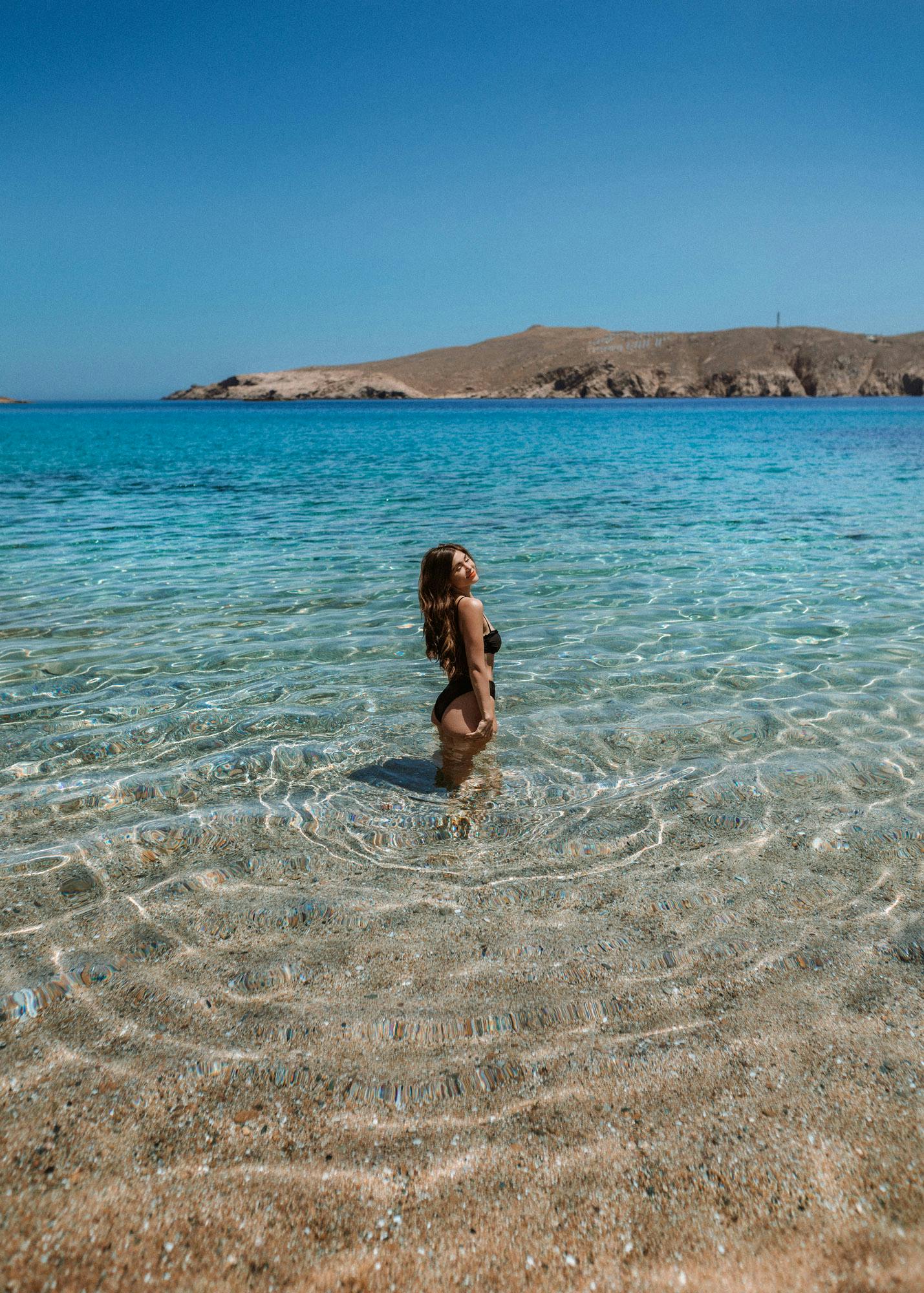
Mykonos : L'Île des Vents et des Plages Paradisiaques
Introduction à Mykonos
Mykonos, située dans les Cyclades en mer Égée, est une destination incontournable pour les voyageurs en quête de plages épiques, d'architecture cycladique et d'une vie nocturne animée. Avec ses maisons blanchies à la chaux, ses églises aux dômes bleus et ses moulins à vent emblématiques, Mykonos offre un cadre pittoresque et enchanteur. Surnommée "l'île des vents", elle attire des millions de touristes chaque année grâce à son mélange unique de culture, de luxe et de divertissement.
Géographie et Climat
Mykonos s'étend sur environ 85 km² et abrite plus de 20 plages principales, chacune offrant des activités variées comme la baignade, le kite surf, la planche à voile et le snorkeling. Le climat méditerranéen de l'île, avec des vents modérés, est idéal pour les sports nautiques et les activités en plein air. La meilleure période pour visiter Mykonos s'étend d'avril à décembre, lorsque les températures sont agréables et les conditions météorologiques favorables.
Les Plages de Mykonos
Parmi les plages les plus célèbres, on trouve Super Paradise, Paradise, Platis Gialos, Elia, Lia, Psarou, Ornos et Kalafatis. Chaque plage a son propre caractère et attire différents types de visiteurs, des familles aux amateurs de sports nautiques en passant par les fêtards.
Histoire et Culture
Mykonos tire son nom de la mythologie grecque et s'est imposée comme une destination chic dès les années 1960-1970. L'île a évolué d'un havre hippie à un hotspot luxueux et festif, attirant une clientèle internationale diversifiée, y compris la communauté LGBTQ+. Historiquement riche en sites antiques, Mykonos équilibre culture et modernité, avec des musées, de l'artisanat local et des boutiques de créateurs.
Chora et la Petite Venise
Chora, la capitale de Mykonos, est célèbre pour ses ruelles sinueuses, ses bougainvilliers et ses maisons pieds dans l'eau dans le quartier de la Petite Venise. L'église Panagia Paraportiani, avec son architecture unique, est un autre site incontournable. Ces lieux incarnent le charme pittoresque de l'île et attirent des visiteurs du monde entier.
Delos, l'Île Sacrée
À proximité de Mykonos se trouve l'île de Delos, un site archéologique majeur inscrit au patrimoine mondial de l'UNESCO. Delos est le lieu mythique de naissance d'Apollon et Artémis, et abrite des ruines antiques, des temples et des cabanes préhistoriques datant de 5 000 ans. Une visite à Delos est un voyage dans le temps et une expérience culturelle enrichissante.
Vie Nocturne et Divertissement
Mykonos est réputée pour sa vie nocturne animée, avec des clubs mythiques comme Cavo Paradiso et des rooftop bars offrant des vues spectaculaires. Les fêtes sur les plages de Paradise et Super Paradise attirent une foule chic et internationale, faisant de Mykonos la reine de la vie nocturne grecque. Les soirées à Mykonos sont synonymes de glamour, d'excès et d'authenticité, offrant une expérience unique aux visiteurs.
Activités et Expériences
En plus de la vie nocturne, Mykonos propose une variété d'activités pour tous les goûts. Les amateurs de sports nautiques peuvent profiter du kite surf, du parachute ascensionnel et de la plongée dans les grottes de Tragonisi. Pour ceux qui préfèrent le calme, les plages isolées au nord de l'île offrent un cadre paisible pour se détendre. Les cours de cuisine grecque et les visites culturelles hors des sentiers battus sont également populaires parmi les visiteurs.
Économie et Tourisme
L'économie de Mykonos est dominée par le tourisme, qui représente 90 % des revenus de l'île. Le secteur du luxe et du nautisme est particulièrement développé, avec des hôtels 5 étoiles, des clubs VIP et des boutiques de créateurs. Les prix à Mykonos peuvent être élevés, reflétant le positionnement haut de gamme de l'île. Malgré cela, Mykonos reste une destination prisée pour sa beauté naturelle, son ambiance festive et son hospitalité.
Affluence Touristique
Mykonos est l'une des îles grecques les plus visitées, attirant des millions de visiteurs chaque été. Sa réputation festive, ses plages de renommée mondiale et son ambiance chic en font une destination de choix pour les voyageurs du monde entier. L'île offre une expérience unique, mêlant culture, luxe et divertissement, et continue de séduire les visiteurs année après année.
Conclusion de la Première Partie
Mykonos est une destination fascinante qui offre une combinaison unique de plages paradisiaques, d'architecture cycladique et d'une vie nocturne animée. Avec son riche patrimoine culturel, ses sites archéologiques et ses activités variées, Mykonos attire des visiteurs de tous horizons. Dans la deuxième partie de cet article, nous explorerons plus en détail les attractions spécifiques, les activités et les conseils pratiques pour profiter pleinement de votre séjour à Mykonos.
Les Incontournables de Mykonos
Mykonos regorge de sites et d'expériences uniques qui méritent d'être explorés. Voici une sélection des incontournables pour un séjour mémorable sur cette île des Cyclades.
Les Moulins à Vent de Mykonos
Symboles emblématiques de l'île, les moulins à vent de Mykonos sont situés sur une colline surplombant la Petite Venise. Ces moulins, construits au XVIe siècle par les Vénitiens, servaient autrefois à moudre le grain. Aujourd'hui, ils offrent un point de vue spectaculaire sur la mer Égée et sont un spot photo incontournable. La plupart des moulins sont accessibles à pied depuis Chora, et la vue au coucher du soleil est tout simplement magique.
Le Quartier de la Petite Venise
La Petite Venise est l'un des quartiers les plus pittoresques de Mykonos. Ses maisons colorées, construites au bord de l'eau, créent une atmosphère romantique et unique. Ce quartier est idéal pour une promenade en fin de journée, lorsque les couleurs du ciel se reflètent dans l'eau. Vous y trouverez également des cafés et des bars où vous pourrez vous détendre tout en admirant la vue.
L'Église Panagia Paraportiani
L'église Panagia Paraportiani est l'un des monuments les plus photographiés de Mykonos. Ce joyau architectural, situé dans le quartier de Kastro, est en réalité un ensemble de cinq chapelles construites les unes sur les autres. Son nom signifie "Notre-Dame de la Porte Latérale", en référence à son entrée située près de l'ancienne porte de la ville. Cette église est un exemple remarquable de l'architecture cycladique et un lieu de paix et de sérénité.
Les Plages de Mykonos : Un Paradis pour Tous
Mykonos est célèbre pour ses plages épiques, chacune offrant une ambiance et des activités différentes. Que vous soyez à la recherche de détente, de sports nautiques ou de fêtes, vous trouverez une plage qui correspond à vos attentes.
Super Paradise et Paradise : Les Plages Festives
Les plages de Super Paradise et Paradise sont mondiales pour leur ambiance festive et leurs beach clubs. Ces plages attirent une foule jeune et internationale, venue profiter des DJ sets, des cocktails et de l'ambiance électrique. Si vous cherchez à faire la fête en journée, ces plages sont les endroits idéaux. Cependant, si vous préférez le calme, il est préférable de les éviter.
Platis Gialos et Psarou : Le Luxe et la Détente
Les plages de Platis Gialos et Psarou sont réputées pour leur ambiance plus chic et leurs installations haut de gamme. Vous y trouverez des transats confortables, des restaurants de plage et des services de qualité. Ces plages sont idéales pour ceux qui souhaitent se détendre dans un cadre luxueux. Psarou, en particulier, est connue pour attirer des célébrités et des visiteurs en quête de glamour.
Elia et Kalafatis : Les Plages Familiales
Les plages de Elia et Kalafatis sont parfaites pour les familles et ceux qui recherchent une ambiance plus tranquille. Ces plages offrent des eaux cristallines, des sables dorés et des installations adaptées aux enfants. Elia, en particulier, est l'une des plus grandes plages de Mykonos et propose une variété de sports nautiques, tandis que Kalafatis est idéale pour le snorkeling et la plongée.
Les Activités Nautiques à Mykonos
Grâce à ses vents constants et à ses eaux cristallines, Mykonos est une destination de choix pour les sports nautiques. Que vous soyez débutant ou expert, vous trouverez une activité qui vous convient.
Kite Surf et Planche à Voile
Les plages de Kalafatis et Korfos sont particulièrement populaires pour le kite surf et la planche à voile. Les vents forts et réguliers de Mykonos créent des conditions idéales pour ces sports. Plusieurs écoles et centres de location sont disponibles sur l'île, offrant des cours pour tous les niveaux. Que vous souhaitiez apprendre les bases ou perfectionner vos compétences, vous trouverez des instructeurs qualifiés pour vous guider.
Plongée et Snorkeling
Les eaux autour de Mykonos regorgent de vie marine et de sites de plongée fascinants. Les grottes de Tragonisi, une petite île située au sud de Mykonos, sont particulièrement populaires parmi les plongeurs. Ces grottes sous-marines offrent une expérience unique, avec des formations rocheuses spectaculaires et une biodiversité marine riche. Plusieurs centres de plongée sur l'île proposent des excursions et des cours pour tous les niveaux.
Excursions en Bateau
Une excursion en bateau est un excellent moyen de découvrir les beautés cachées de Mykonos et des îles environnantes. Vous pouvez opter pour une croisière d'une journée vers l'île de Delos, un site archéologique majeur, ou explorer les criques isolées et les plages accessibles uniquement par la mer. Plusieurs companies proposent des excursions en bateau, avec des options allant du luxe à l'aventure.
La Gastronomie de Mykonos
La cuisine de Mykonos est un mélange délicieux de saveurs traditionnelles grecques et d'influences internationales. Les restaurants de l'île offrent une variété de plats, des spécialités locales aux créations gastronomiques innovantes.
Spécialités Locales à Goûter
Parmi les spécialités locales à ne pas manquer, on trouve le kopanisti, un fromage local épicé, et le loukaniko, une saucisse traditionnelle. Les fruits de mer frais, tels que les calmars grillés et les moules, sont également un incontournable. Pour les amateurs de sucré, le amyglota, un dessert à base d'amandes, est un délice à essayer.
Restaurants et Tavernes Recommandés
Mykonos compte de nombreux restaurants et tavernes où vous pourrez déguster une cuisine authentique dans un cadre enchanteur. Voici quelques adresses recommandées :
- Nammos : Situé sur la plage de Psarou, ce restaurant est célèbre pour sa cuisine méditerranéenne raffinée et son ambiance chic.
- Sea Satin Market : Un restaurant de fruits de mer situé dans la Petite Venise, offrant une vue imprenable sur la mer.
- To Maereio : Une taverne traditionnelle dans le quartier d'Ano Mera, connue pour ses plats locaux et son ambiance authentique.
Conseils Pratiques pour Votre Séjour
Pour profiter pleinement de votre séjour à Mykonos, voici quelques conseils pratiques à garder à l'esprit.
Transport sur l'Île
Mykonos dispose d'un réseau de bus public qui dessert les principales plages et villages. Cependant, pour plus de flexibilité, la location d'une voiture ou d'un scooter est recommandée. Les taxis sont également disponibles, mais peuvent être coûteux pendant la haute saison. Pour ceux qui préfèrent éviter la conduite, les services de navettes et les excursions organisées sont une bonne alternative.
Hébergement : Où Loger ?
Mykonos offre une large gamme d'options d'hébergement, des hôtels de luxe aux studios économiques. Pour une expérience authentique, séjournez dans une maison traditionnelle à Chora ou dans un hôtel boutique avec vue sur la mer. Les zones les plus prisées pour l'hébergement incluent Chora, la Petite Venise et les plages de Psarou et Ornos. Il est conseillé de réserver à l'avance, surtout pendant la haute saison.
Meilleure Période pour Visiter
La meilleure période pour visiter Mykonos s'étend d'avril à décembre, lorsque les températures sont agréables et les conditions météorologiques favorables. La haute saison, de juin à août, est la plus animée mais aussi la plus fréquentée. Pour éviter la foule, envisagez de visiter Mykonos en mai, septembre ou octobre, lorsque l'île est plus calme mais toujours aussi belle.
Conclusion de la Deuxième Partie
Mykonos est une destination qui offre une expérience unique, mêlant plages paradisiaques, culture riche et vie nocturne animée. Dans cette deuxième partie, nous avons exploré les incontournables de l'île, ses plages variées, ses activités nautiques, sa gastronomie et des conseils pratiques pour votre séjour. Dans la troisième et dernière partie, nous découvrirons les aspects moins connus de Mykonos, ses événements culturels et des conseils pour un voyage responsable et durable.
Mykonos Hors des Sentiers Battus
Au-delà des plages bondées et des clubs animés, Mykonos cache des trésors méconnus qui valent le détour. Découvrez une facette plus authentique et préservée de l'île.
Le Village d'Ano Mera
À seulement 8 km de Chora, le village d'Ano Mera offre une échappée paisible loin de l'agitation touristique. Ce village traditionnel est centré autour d'une place pittoresque où se dresse le monastère de Panagia Tourliani, un joyau architectural du XVIe siècle. Les ruelles étroites, les maisons blanchies à la chaux et les tavernes locales créent une atmosphère authentiquement cycladique. Ne manquez pas de goûter aux spécialités locales comme le fourno (agneau cuit au four) dans l'une des tavernes familiales.
Les Plages Secrètes du Nord
Si les plages du sud de Mykonos sont réputées pour leur ambiance festive, celles du nord offrent un havre de tranquillité. Parmi elles, Fokos et Agios Sostis sont des perles cachées. Accessibles par des chemins de terre, ces plages préservées sont idéales pour ceux qui recherchent le calme et une nature intacte. Fokos, avec son sable doré et ses eaux turquoise, est particulièrement appréciée des locaux. Agios Sostis, quant à elle, offre une vue imprenable sur l'île de Tinos et est parfaite pour un pique-nique en bord de mer.
Les Sites Archéologiques Méconnus
Bien que Delos soit le site archéologique le plus célèbre à proximité de Mykonos, l'île elle-même possède des trésors historiques moins connus. Le site archéologique de Paleokastro, situé près de la plage d'Agios Ioannis, abrite les ruines d'un ancien château vénitien et offre une vue panoramique sur la mer Égée. Un autre lieu intéressant est le musée archéologique de Mykonos, qui abrite une collection impressionnante de artefacts datant de l'époque préhistorique à la période romaine, dont la célèbre amphore de Mykonos représentant le cheval de Troie.
Événements Culturels et Festivals
Mykonos n'est pas seulement une destination estivale, c'est aussi un lieu où la culture et les traditions grecques sont célébrées tout au long de l'année. Voici quelques événements à ne pas manquer.
Le Festival de Mykonos
Chaque été, le Festival de Mykonos attire des artistes et des visiteurs du monde entier. Cet événement culturel met en avant la musique, la danse et le théâtre, avec des représentations en plein air dans des lieux emblématiques comme la Petite Venise et le théâtre en plein air de Mykonos. Les soirées de musique classique et les spectacles de danse traditionnelle grecque sont particulièrement populaires. Ce festival est une occasion unique de découvrir la richesse culturelle de l'île au-delà de son image festive.
Les Fêtes Religieuses
Les fêtes religieuses occupent une place importante dans la vie des habitants de Mykonos. Parmi les plus significatives, la fête de la Panagia Tourliani à Ano Mera, célébrée le 15 août, attire des pèlerins et des visiteurs. Les célébrations incluent des processions, des chants traditionnels et des repas communautaires. Une autre fête notable est celle de Saint Charalambos, le saint patron de l'île, célébrée le 10 février. Ces événements offrent un aperçu de la vie locale et des traditions profondes de Mykonos.
Les Soirées Cinématographiques
Pour les amateurs de cinéma, Mykonos propose des soirées cinématographiques en plein air pendant les mois d'été. Ces projections ont lieu dans des cadres idylliques, comme les cours des hôtels ou les plages, et mettent souvent à l'honneur des films grecs et internationaux. C'est une expérience magique que de regarder un film sous les étoiles, avec le bruit des vagues en fond sonore. Renseignez-vous auprès des offices de tourisme locaux pour connaître le programme des projections pendant votre séjour.
Mykonos : Une Destination pour Tous
Mykonos est une île qui sait séduire tous les types de voyageurs, des familles aux amateurs de luxe, en passant par les aventuriers et les amoureux de la culture. Voici pourquoi Mykonos est une destination polyvalente.
Mykonos en Famille
Contrairement à l'idée reçue, Mykonos est une destination adaptée aux vacances en famille. Les plages peu profondes et sécurisées comme Agios Ioannis et Ornos sont idéales pour les enfants. De plus, des activités comme les excursions en bateau vers des criques isolées ou les visites des sites archéologiques peuvent captiver l'imagination des plus jeunes. Les hôtels familiaux et les restaurants accueillants complètent l'offre pour des vacances réussies en famille.
Mykonos pour les Amoureux
Mykonos est également une destination romantique, parfaite pour les lunes de miel et les escapades en amoureux. Les couchers de soleil à la Petite Venise, les dîners aux chandelles dans les restaurants de plage et les balades à cheval le long des côtes créent une ambiance envoûtante. Pour une expérience inoubliable, optez pour une croisière privée au coucher du soleil ou une nuit dans un hôtel boutique avec vue sur la mer.
Mykonos pour les Aventuriers
Les voyageurs en quête d'aventure trouveront également leur bonheur à Mykonos. Entre le kite surf à Kalafatis, la plongée sous-marine dans les grottes de Tragonisi et les randonnées le long des sentiers côtiers, les possibilités sont nombreuses. Pour une expérience unique, essayez le parapente au-dessus des plages ou explorez les fond marins en snorkeling. Les paysages variés de l'île offrent un terrain de jeu idéal pour les amateurs de sensations fortes.
Voyager de Manière Responsable à Mykonos
Avec l'afflux croissant de touristes, il est essentiel de visiter Mykonos de manière responsable et durable. Voici quelques conseils pour minimiser votre impact environnemental et soutenir les communautés locales.
Préserver les Plages et les Sites Naturels
Les plages et les sites naturels de Mykonos sont des trésors fragiles. Pour les préserver, évitez de laisser des déchets sur les plages et utilisez des crèmes solaires respectueuses des océans. Privilégiez les activités écoresponsables, comme le kayak ou la randonnée, qui ont un impact minimal sur l'environnement. Respectez également les zones protégées et les sentiers balisés pour éviter de perturber la faune et la flore locales.
Soutenir l'Économie Locale
Pour contribuer à l'économie locale, privilégiez les petits commerces, les tavernes familiales et les artisans locaux. Achetez des souvenirs fabriqués à Mykonos, comme les céramiques ou les bijoux en argent, plutôt que des produits importés. En choisissant des hébergements gérés par des locaux, comme les pensions familiales ou les maisons d'hôtes, vous soutenez directement les habitants de l'île.
Respecter les Traditions et la Culture Locale
Mykonos est une île riche en traditions et en culture. Pour montrer votre respect, habillez-vous de manière appropriée lorsque vous visitez les églises et les monastères. Participez aux événements locaux avec une attitude ouverte et respectueuse. Apprendre quelques mots de grec, comme "efcharistó" (merci) ou "kaliméra" (bonjour), est également un excellent moyen de montrer votre appreciation pour la culture locale.
Conclusion : Mykonos, Une Île aux Mille Visages
Mykonos est bien plus qu'une simple destination estivale. C'est une île aux mille visages, où se mêlent plages paradisiaques, culture riche, vie nocturne animée et traditions authentiques. Que vous soyez à la recherche de détente, d'aventure, de romance ou de découvertes culturelles, Mykonos saura vous séduire.
De ses moulins à vent emblématiques à ses plages secrètes, en passant par ses festivals culturels et sa gastronomie savoureuse, Mykonos offre une expérience de voyage inoubliable. En visitant l'île de manière responsable, vous contribuerez à préserver sa beauté et son authenticité pour les générations futures.
Prêt à découvrir Mykonos ? Que vous planifiez un séjour en famille, une escapade romantique ou une aventure en solo, cette île des Cyclades vous promet des souvenirs impérissables. Mykonos n'attend que vous pour révéler tous ses secrets et vous enchanter par sa magie unique.
Sustainable Tourism Trends Shaping Travel in 2025
Sustainable tourism is the future of travel. Defined by the UNWTO as tourism that accounts for its economic, social, and environmental impacts, it seeks balance for visitors, industry, nature, and host communities. In 2025, it has moved from a niche concept to a mainstream imperative. This shift is driven by climate urgency and traveler demand for more meaningful, responsible experiences.
Sustainable tourism fully accounts for its current and future economic, social, and environmental impacts.
Defining Sustainable and Responsible Tourism
To understand the modern travel landscape, we must define its core concepts. Sustainable tourism is a comprehensive framework with four interconnected pillars. These pillars are environmental conservation, economic viability, socio-cultural respect, and effective management. The goal is to meet present needs without compromising future generations.
The Four Pillars of Sustainability
The Global Sustainable Tourism Council (GSTC) outlines the foundational structure for all sustainable practices. These pillars are interdependent and equally important.
- Environmental Pillar: Focuses on conserving natural resources, protecting biodiversity, and reducing pollution and waste.
- Economic Pillar: Ensures tourism businesses are profitable and viable long-term while benefiting local economies.
- Socio-Cultural Pillar: Respects the heritage, traditions, and well-being of host communities.
- Management Pillar: Involves effective planning, monitoring, and governance to achieve sustainability goals.
Ecotourism and Responsible Travel
Ecotourism is a vital subset of sustainable tourism focused on natural areas. It emphasizes conservation, community well-being, and environmental education. Responsible travel, meanwhile, refers to the choices individual travelers make to minimize negative impacts and maximize positive contributions.
These concepts have evolved in response to the documented harms of mass tourism. Issues like environmental degradation and cultural erosion prompted a rethinking of travel ethics beginning in the 1980s.
Current Trends in Sustainable Tourism for 2025
The year 2025 marks a pivotal moment where sustainability is no longer optional. Traveler awareness and global challenges are shaping powerful new trends. The global sustainable tourism market is projected to reach a staggering USD 11.53 trillion by 2033, signaling massive industry transformation.
These trends reflect a collective desire to travel more thoughtfully. They prioritize long-term planetary health and authentic human connection over fleeting, high-impact experiences.
Rise of Carbon-Neutral and Carbon-Negative Travel
With tourism contributing an estimated 6.5 billion tons of CO2 annually, carbon accountability is paramount. Carbon-neutral tourism aims to offset all emissions from a trip through verified projects like reforestation. More ambitiously, carbon-negative tourism seeks to remove more carbon from the atmosphere than it produces.
This trend is moving from voluntary offsetting to integral business planning. Resorts are investing in solar power, airlines are developing sustainable aviation fuels, and tour operators are building carbon calculations directly into their itineraries.
Growth of Ecotourism and Nature-Based Experiences
The ecotourism market was valued at $246.99 billion in 2023 and is forecast to grow to $279 billion in 2025. This explosive growth, at a 13.1% rate, underscores a deep traveler yearning for pristine natural environments. Modern ecotourism directly supports conservation efforts and creates local jobs.
Travelers are seeking immersive experiences in national parks, wildlife sanctuaries, and protected marine areas. These trips often include educational components led by local guides, fostering a deeper appreciation for ecosystem preservation.
Shift Toward Regenerative Tourism Practices
Moving beyond simply reducing harm, regenerative tourism aims to leave a place better than it was found. It focuses on active restoration and enhancement of ecosystems and communities. This represents the next evolutionary step in sustainable travel philosophy.
Examples include tourism projects where visitors participate in tree planting, coral reef restoration, or native species monitoring. The focus is on creating a net-positive impact, ensuring tourism actively contributes to the resilience and regeneration of its destination.
Embracing Digital Detox and "Quietcations"
In response to overtourism and constant connectivity, travelers are seeking simplicity. Digital detox trips promote disconnection from devices to reconnect with surroundings and companions. Similarly, "quietcations" or low-key stays in rural or lesser-known locations offer respite from crowded tourist hubs.
A significant 67% of travelers express a desire to visit alternatives to overcrowded destinations, according to a 2025 Booking.com survey. This trend supports the dispersion of tourism benefits to new areas while reducing pressure on strained iconic sites.
The Economic and Environmental Imperative
The drive toward sustainable tourism is not merely ethical; it is an economic and environmental necessity. The industry faces increasing pressure from consumers, investors, and regulators to demonstrate genuine responsibility. Certifications like those from GSTC and Green Globe verify compliance across 44+ criteria, providing trusted benchmarks for businesses and travelers.
Sustainable tourism directly supports the UN's Sustainable Development Goals. It champions inclusive economic growth, reduced inequalities, and climate action. The future of travel depends on an industry-wide commitment to these principles for long-term viability.
As we look ahead, these foundational trends set the stage for a more detailed exploration of sustainable practices. The following sections will delve into actionable strategies for travelers and businesses, the role of technology, and the profound importance of community-led tourism.
Strategies for Implementing Sustainable Tourism
Understanding trends is the first step; implementing them is the crucial next phase. For both travel businesses and individual tourists, actionable strategies exist to translate principles into practice. These strategies revolve around deliberate choices in transportation, accommodation, and daily activities.
Certification bodies provide clear roadmaps for businesses, while conscious decision-making guides travelers. The ultimate goal is to create a positive feedback loop where responsible travel choices support destinations, encouraging more businesses to adopt sustainable models.
For Travel Businesses and Destinations
Tour operators, hotels, and destination managers hold significant power to drive systemic change. Their strategies must encompass operations, supply chains, and community engagement.
- Adopt Recognized Certification Standards: Pursuing accreditation from bodies like the Global Sustainable Tourism Council (GSTC) provides a verified framework. It builds consumer trust and offers a clear path for improvement across all sustainability pillars.
- Invest in Carbon Measurement and Reduction: Businesses should first measure their carbon footprint, then implement reduction plans. This can include energy-efficient infrastructure, waste reduction programs, and sourcing from local, sustainable suppliers to cut transportation emissions.
- Develop Regenerative Itineraries: Beyond minimizing harm, tours can include elements that give back. This could be a portion of the trip cost funding a local conservation project or incorporating a volunteer activity, such as a beach clean-up, into the schedule.
- Prioritize Community Benefit and Employment: Ensuring tourism revenue stays within the local economy is vital. This means hiring local guides, using locally-owned accommodations and restaurants, and creating fair-wage job opportunities for community members.
For the Conscious Traveler
Every traveler’s choices contribute to the overall impact of tourism. Informed and intentional decisions can collectively steer the industry toward greater sustainability.
- Choose Certified Green Accommodations and Operators: Look for reputable eco-labels on hotel websites and tour booking platforms. These certifications indicate a verified commitment to environmental and social standards.
- Embrace Slow and Flight-Free Travel Options: Consider overland travel for longer portions of a trip. Taking trains or buses, staying longer in one place, and exploring local regions deeply significantly reduces the carbon footprint compared to multiple short-haul flights.
- Support the Local Economy Directly: Make a conscious effort to spend money with local businesses. Eat at family-owned restaurants, shop at artisan markets, and book tours with community-run cooperatives. This ensures your spending benefits residents.
- Respect Cultural and Environmental Norms: Educate yourself on local customs, dress codes, and etiquette. Follow established guidelines in natural areas, staying on trails, not feeding wildlife, and adhering to the principle of "leave no trace."
The Power of Community-Led and Cultural Tourism
At the heart of the socio-cultural pillar is the empowerment of host communities. Sustainable tourism fails if it does not respect and benefit the people who call a destination home. Community-led tourism ensures local people have control over how tourism is developed and managed on their land.
Sustainable tourism balances the needs of visitors, the industry, the environment, and host communities.
This model directly combats the economic leakage often seen in mass tourism, where profits are extracted by international corporations. Instead, financial benefits are retained locally, funding community projects, preserving cultural heritage, and improving quality of life.
Preserving Cultural Heritage Through Tourism
Cultural tourism, when done responsibly, can be a powerful force for preservation. It provides an economic incentive to maintain traditional crafts, languages, festivals, and historical sites. It turns living culture into a valued asset rather than a relic of the past.
Authentic interactions are key. Travelers should seek experiences that are hosted and defined by community members themselves. This could involve learning a traditional craft from a master artisan, sharing a meal in a family home, or listening to elders share oral histories.
This approach counters cultural erosion and the creation of "staged" experiences for tourists. It fosters genuine cross-cultural exchange and mutual respect between visitors and hosts.
Indigenous Tourism and Ethical Engagement
A vital subset of community-led tourism is Indigenous tourism. This involves travel experiences planned, operated, and owned by Indigenous peoples. It offers visitors a unique opportunity to learn about ancient cultures, knowledge systems, and connections to the land directly from their custodians.
Ethical engagement requires that travelers approach these experiences with humility and a willingness to listen and learn. It is critical to choose tours that are explicitly Indigenous-owned and to follow any protocols or guidelines provided by the community. Revenue from these experiences supports Indigenous self-determination and the protection of often-threatened cultures and environments.
Technology's Role in Advancing Sustainable Travel
Innovative technology is a powerful enabler for the sustainable tourism movement. It provides tools for transparency, efficiency, and access that were previously unavailable. From planning to the travel experience itself, tech is helping to reduce environmental footprints and connect travelers with more responsible options.
Apps and platforms are democratizing access to information. They allow travelers to research the sustainability credentials of hotels, calculate carbon footprints for trips, and discover off-the-beaten-path destinations that benefit from dispersing tourism.
Platforms for Transparency and Booking
A new generation of booking platforms is emerging, specializing in curating verified sustainable accommodations and tours. These platforms often include detailed sustainability reports, carbon footprint calculators, and filters for specific certifications.
They address the "greenwashing" problem by providing third-party verification and detailed criteria. This helps travelers make confident choices aligned with their values without spending hours on independent research.
Tech for Destination Management and Crowd Control
Destinations are using technology to manage visitor flows and mitigate overtourism. Smart data analytics can predict crowding, allowing for dynamic pricing, timed entry tickets, or promotion of alternative sites.
- Real-Time Crowd Monitoring: Apps and sensors provide live data on visitor numbers at popular attractions, suggesting less-crowded alternatives.
- Virtual and Augmented Reality: These tools can offer alternative experiences, such as virtual tours of fragile archaeological sites, reducing physical wear and tear.
- Blockchain for Supply Chains: Emerging technology can provide transparent tracking of where tourism dollars go, ensuring fair compensation for local producers and service providers.
The World Economic Forum's 2025 report on the future of travel highlights personalized, inclusive experiences powered by technology. The focus remains on using these tools to prioritize sustainability and enhance, not replace, genuine human connection and environmental stewardship.
Addressing Challenges and Overcoming Greenwashing
The path to a truly sustainable tourism industry is not without significant obstacles. Two of the most pressing challenges are the pervasive issue of greenwashing and the structural economic dependencies on high-volume tourism. Addressing these honestly is critical for meaningful progress.
Greenwashing occurs when companies exaggerate or falsely claim environmental benefits to attract conscious consumers. This deception undermines trust and dilutes the efforts of genuinely sustainable businesses. Travelers must learn to identify credible certifications and ask specific questions about operational practices.
Identifying and Combating Greenwashing
Vague terms like "eco-friendly" or "green" without substantiation are major red flags. To combat this, travelers and industry watchdogs must demand transparency. Third-party certifications from organizations like GSTC, Green Key, or EarthCheck are the most reliable indicators, as they require independent audits against strict criteria.
- Look for Specifics: Genuinely sustainable businesses provide clear data on energy use, waste diversion, water conservation, and community partnerships.
- Beware of Token Gestures: A single initiative, like reusing towels, does not equate to a comprehensive sustainability strategy if other operations are harmful.
- Research the Supply Chain: True sustainability extends to how a business sources its food, materials, and services. Locally sourced, ethical supply chains are a strong positive sign.
The Economic Dilemma of Overtourism
Many destinations face a difficult paradox: their economies depend heavily on tourism revenue, yet the sheer volume of visitors degrades the very assets people come to see. This cycle of overtourism leads to environmental strain, resident displacement, and a decline in the quality of the visitor experience.
Solutions require proactive destination management. This includes implementing visitor caps, introducing pricing strategies that favor longer stays over day trips, and actively promoting visitation during off-peak seasons. Critically, tourism revenue must be reinvested into maintaining and protecting the destination's infrastructure and natural capital.
The Future Outlook: Where is Sustainable Tourism Headed?
Looking beyond 2025, the trajectory of sustainable tourism points toward deeper integration and innovation. The concept will become less of a distinct category and more of a baseline expectation for all travel. Consumer demand, regulatory pressures, and climate realities will drive this normalization.
The global sustainable tourism market is projected to reach USD 11.53 trillion by 2033.
This vast market projection indicates an irreversible shift. Future development will likely focus on hyper-localized experiences, advanced technology for impact measurement, and stronger regulatory frameworks that mandate sustainable practices rather than merely encourage them.
Policy, Regulation, and Global Cooperation
Individual and corporate action must eventually be supported by robust policy. Governments and international bodies will play an increasingly important role in setting and enforcing standards. This could take the form of carbon taxes on aviation, strict building codes for new resorts, or mandates for environmental impact assessments for large tourism projects.
Initiatives like the UN Sustainable Development Goals (SDGs) provide a global framework. Goal 12, on responsible consumption and production, and Goal 13, on climate action, are directly relevant. The tourism industry's success will be measured by its contribution to these universal targets.
Personalization and Inclusivity in Sustainable Travel
The future of sustainable tourism is also personal and inclusive. The World Economic Forum highlights a trend toward tailored experiences that cater to diverse traveler needs while upholding sustainability principles. This means making responsible travel accessible to people of different ages, abilities, and budgets.
Technology will enable this personalization, suggesting itineraries that align with a traveler's specific interests and values—whether that’s culinary tourism, adventure travel, or cultural heritage—all within a low-impact, community-beneficial framework. Inclusivity ensures the benefits of sustainable tourism are shared widely, not just among a privileged few.
Actionable Steps for Your Next Trip
Turning awareness into action is the final, most important step. Here is a concise checklist to guide your journey toward becoming a more sustainable traveler. Implementing even a few of these steps makes a positive difference.
Pre-Trip Planning and Booking
- Choose Your Destination Wisely: Consider less-visited locations to help disperse tourism benefits. Research the destination's sustainability challenges and how you can avoid contributing to them.
- Select Certified Providers: Prioritize accommodations and tour operators with legitimate sustainability certifications.
- Travel Slow and Overland: Plan a longer trip to one region instead of a multi-stop whirlwind. Opt for trains or buses over planes for shorter segments.
- Pack Light and Right: A lighter suitcase reduces transportation fuel consumption. Pack reusable items like a water bottle, shopping bag, and utensils to avoid single-use plastics.
During Your Stay
- Act Like a Local Guest: Respect local customs, dress codes, and laws. Learn a few basic phrases in the local language.
- Conserve Resources: Use water and energy sparingly in your accommodation, just as you would at home. Reuse towels and sheets.
- Support Local Economies: Make a conscious effort to eat at local restaurants, hire local guides, and purchase souvenirs from artisan makers.
- Leave No Trace: In natural areas, stay on marked trails, do not disturb wildlife or plants, and carry out all your waste.
Conclusion: Travel as a Force for Good
The evolution of sustainable tourism from a niche concept to a central industry pillar marks a profound shift in our relationship with travel. We have moved from simply seeking escapes to understanding our role as temporary guests in a fragile, interconnected world. The core principles—environmental conservation, economic equity, cultural respect, and good governance—provide a compass for this new journey.
The trends defining 2025, from regenerative tourism to flight-free travel, demonstrate a collective desire to not only see the world but to care for it. The staggering growth of the ecotourism market and the projected multi-trillion dollar value of the sustainable tourism sector prove this is a durable movement, not a passing fad. It is driven by both ethical imperative and economic opportunity.
The responsibility is shared. Businesses must innovate and embrace transparency, moving beyond greenwashing to genuine, verifiable action. Travelers must move from passive consumers to active participants, making informed choices that support positive outcomes. Destinations and policymakers must implement smart management strategies that protect their assets for generations to come.
Ultimately, sustainable tourism redefines the very purpose of travel. It transforms it from an act of consumption into an opportunity for connection, education, and contribution. By choosing to travel thoughtfully, we can ensure that the wonders of our world remain vibrant and vital, supporting thriving communities and flourishing ecosystems. The future of travel is not about seeing more places; it's about making our time in each place truly matter.


Bagan: A Living Legacy of Myanmar's Past
The Enchanting Heritage of Bagan
Bagan, also spelled Pagan, is a sprawling archaeological site located in central Myanmar (formerly Burma). This ancient city, once the capital of the powerful Pagan Empire, is renowned for its vast collection of Buddhist temples, pagodas, and monasteries spread across a vast landscape. Nestled along the banks of the river Irrawaddy, Bagan offers a unique and captivating journey through the region’s rich history.
The ruins of Bagan cover an area of approximately 25 square miles (64 square kilometers) and are home to more than 2,200 pagodas, temples, and monasteries, many of which have survived earthquakes and centuries of abandonment. The largest and most famous of these structures includes Ananda Temple, which dates back to the early 11th century and remains a significant symbol of the site’s religious and cultural significance.
Ancient History and Cultural Significance
The history of Bagan spans over a millennium, with the earliest known settlements dating back to around the 6th century AD. It was during the reign of King Kyansittha in the 11th century that Bagan began to flourish as the capital of the unified Pagan Kingdom.
The Pagan Empire lasted until the late 13th century when it was sacked by the Mongols under Kublai Khan. Despite this setback, Bagan continued to be an important center of Buddhist practice and learning. Today, the site remains a living testament to the culture and religion of the past, attracting thousands of visitors each year who come to marvel at the ancient architecture and explore the rich history encapsulated within the walls of these historic structures.
Pilgrimages and Travel
For many travelers and pilgrims, visiting Bagan is not merely a sightseeing tour but a spiritual experience. The sunrise and sunset are particularly magical times to visit the sites, casting a warm and golden hue across the sprawling plains of temples and monuments. Each temple carries its own story and significance, making them fascinating destinations for both tourists and scholars alike.
To reach Bagan, one typically flies into Mandalay or Naypidaw, both major cities in Myanmar, and then travels by car or bus to the site. Visitors can spend several days exploring the area to get a comprehensive view of the ancient structures, many of which are open for public viewing or require admission fees for entry into specific areas.
Architectural Marvels and Iconic Temples
The architectural style of Bagan temples combines various elements from earlier Burmese styles with local influences, resulting in a unique blend of aesthetic and spiritual significance. These structures are built using traditional Burmese brick and decorated with intricate sculptures and carvings that tell stories from Buddhist mythology and history.
Key features of the Bagan temples include:
Ananda Temple
- Date of Construction: Early 11th century
- Significance: One of the oldest and most famous temples, dedicated to Buddha
- Architecture: Four equal sides, each containing a main entrance and numerous small stupas
- Sculptures: Intricate carvings depicting scenes from the life of Buddha and Buddhist deities
Htilominlo Temple:
- Date of Construction: 1218 AD
- Significance: Named after King Htilominlo of the Pagan Dynasty
- Architecture: Known for its large spire and richly decorated exterior
- Highlights: Intricate sculptures and murals inside the temple
Shwezigon Pagoda:
- Date of Construction: Around 1090 AD
- Significance: Often referred to as Burma’s equivalent of the Egyptian pyramids due to its resemblance
- Architecture: Pyramid-shaped structure topped with a gilded stupa
- Features: A sacred site associated with the Buddha and housing relics
Mandalay Palace Paya:
- Date of Construction: 1784 AD
- Significance: Built during the time of King Bodawpaya as part of the Royal Palace complex
- Architecture: Reflects Shan-Burmese architectural style with brick walls and terracotta tiles
- Features: Includes various halls and pavilions adorned with sculptures and paintings
Visitors can also explore less popular yet equally fascinating structures such as Dhammayangyi Temple, with its massive sandstone blocks, and Dhammayazika Pagoda, known for its ornate frescoes depicting the life of the Buddha.
Cultural Practices and Local Life
Bagan’s local community plays a vital role in preserving the historical significance of these ancient structures. Villagers in the surrounding area continue to live in harmony with the legacy of their ancestors, maintaining simple lifestyles that reflect traditional practices and beliefs. Local monks, or bhikkhus, are integral to daily life, conducting rituals and teaching in the temples and monasteries.
Cultural festivals like the Bagan Hot Air Balloon Festival, held annually during the full moon of Tabaung (mid-April), attract international participants and highlight the region’s vibrant cultural tapestry. The festival involves hot air balloon rides over the temples, adding an additional layer of excitement and celebration to the already storied landscape.
Conservation Efforts and Sustainable Tourism
With the increasing attention placed on Bagan’s cultural heritage, conservation efforts have become paramount. UNESCO has recognized the site as a World Heritage Site, prompting significant initiatives aimed at protecting and restoring the buildings. Various organizations work collaboratively to preserve the structures, ensuring they stand the test of time.
Sustainable tourism practices are also encouraged to minimize environmental impact. This includes reducing plastic waste, promoting eco-friendly transportation options (such as bicycles), and supporting local businesses that follow sustainable practices. Visitors are encouraged to adopt responsible behaviors, contributing to the ongoing preservation of this invaluable historical site.
The ongoing commitment to conservation and the promotion of sustainable tourism ensures that future generations can continue to appreciate and learn from the remarkable history embedded in Bagan’s temples and monuments.
In the following part of this article, we will delve deeper into the specific challenges faced in the conservation efforts and the impact of modernization on Bagan’s historical integrity. We will also explore the significance of cultural preservation and the role of local communities in maintaining their heritage. Stay tuned!
Challenges in Conservation Efforts
Bagan faces a myriad of challenges in its conservation efforts, primarily stemming from the natural hazards it encounters, including frequent earthquakes and the effects of climate change. The loose construction materials used in building these ancient structures make them susceptible to damage during seismic activity. In recent decades, several significant earthquakes have caused substantial structural damage, necessitating urgent restoration work.
Another pressing issue is the encroachment of vegetation, which threatens the stability and appearance of these ancient edifices. Without proper management, trees and shrubs can grow roots that destabilize the ground, leading to cracks and collapses. Efforts to control this growth involve periodic manual removal and the application of herbicides to prevent re-growth. However, these methods must be carefully managed to avoid causing further harm to the delicate structures.
Erosion is also a significant concern, particularly on the slopes of pagodas and temples where water can lead to soil loss and instability. Measures such as reinforced retaining walls and the installation of drainage systems help mitigate this problem. Furthermore, regular monitoring and maintenance are essential to identifying weak spots early and addressing them promptly.
Modernization and Its Impact
The rapid pace of modernization poses another challenge to the historical integrity of Bagan. As Myanmar emerges from decades of isolation, there is an increasing demand for development that can bring economic growth and improve the quality of life for its citizens. While these initiatives aim to uplift the region, they can inadvertently pose risks to the cultural heritage of Bagan.
The construction of roads and buildings near the archaeological sites, for instance, can disrupt the historical context and visual aesthetics of the area. Urban sprawl threatens to encroach upon the buffer zones around the temples, potentially compromising their preservation. To address these issues, local authorities and international heritage organizations are implementing strict guidelines and regulations to ensure that new developments do not undermine the cultural significance of Bagan.
The juxtaposition of old and new in Bagan is evident even in individual structures. Renovations to restore some temples often involve modern techniques and materials, which can sometimes be controversial among preservationists who fear they might detract from the original architecture. Balancing the need for restoration with respect for historical authenticity is a delicate process that requires careful consideration.
Community Engagement and Preservation Initiatives
The active involvement of the local community is crucial to the preservation efforts in Bagan. Villagers and monks not only rely on the sites for their livelihood but also play a key role in upholding the traditions and values associated with these historical landmarks. Training programs are being conducted to educate community members on the importance of conservation and sustainable practices.
One such initiative involves the establishment of village committees responsible for maintaining the cleanliness and upkeep of the archaeological site. These committees organize regular cleanup drives and patrols to ensure that the surroundings remain pristine. Additionally, there are educational programs targeting schoolchildren to instill a sense of pride and responsibility towards their cultural heritage.
Furthermore, partnerships between local authorities and international organizations support these efforts by providing funding, expertise, and resources. Projects funded through collaborative endeavors often include community-Based tourism initiatives that generate income while fostering a sense of ownership and stewardship among locals.
Involving the community also helps in addressing challenges such as vandalism. Local residents are trained to recognize signs of unauthorized access or damage, allowing for prompt reporting and intervention. This collaborative approach ensures that both preservation goals and community needs are met, creating a sustainable model for the future.
Cultural Preservation and Educational Outreach
Preserving the cultural legacy of Bagan involves not only physical preservation but also the transmission of knowledge and traditions to future generations. Educational programs play a vital role in achieving this objective. Schools in the surrounding areas incorporate Bagan’s history and cultural significance into their curricula, ensuring that students are exposed from an early age to the rich tapestry of their heritage.
Workshops and training sessions are organized for artisans and craftsmen to pass down traditional skills related to temple architecture and artistry. Master craftsmen work alongside apprentices, teaching them how to carve intricate designs, mold bricks, and paint frescoes. These skills are crucial for restoring and maintaining the many ancient structures within Bagan.
Documentation and digitization projects are also underway to preserve valuable records and artifacts. Photographs, drawings, and digital scans capture details of the temples and surrounding areas, creating comprehensive archives for researchers, educators, and enthusiasts alike. These efforts not only aid in research but also serve as educational tools, allowing individuals from around the world to virtually explore Bagan’s cultural treasures.
The importance of engaging with the broader academic community cannot be overstated. International collaborations bring together experts from various disciplines to contribute to ongoing research and analysis. Seminars, conferences, and publication of scholarly works help disseminate knowledge and foster a deeper understanding of Bagan’s significance in the broader context of Asian and world history.
In conclusion, the preservation of Bagan’s cultural heritage is an ongoing and multifaceted endeavor that requires the concerted efforts of community members, local authorities, international organizations, and the academic community. By working together, these groups can ensure that future generations can continue to appreciate the magnificent history and cultural richness of this ancient site.
To be continued...
The Future of Bagan: Challenges and Hope
Despite the numerous challenges, the future of Bagan holds promise. Continued efforts in conservation, sustainable tourism, and community engagement offer hope for preserving this unparalleled cultural heritage. As Myanmar transitions to a more open and economically vibrant nation, the global spotlight on Bagan increases, bringing attention and resources to ensure its longevity.
Collaborative initiatives between local and international partners are critical in addressing the multifaceted issues facing Bagan. For example, partnerships with UNESCO, the World Monuments Fund, and other heritage organizations provide financial and technical support for preservation projects. These collaborations often involve community-driven approaches that empower local stakeholders to take an active role in shaping the future of Bagan.
One promising development is the implementation of sustainable tourism practices. Eco-friendly initiatives, such as guided tours led by local residents, promote authentic experiences and reduce the negative impact of mass tourism. Programs that support local artisans and craftspeople help sustain traditional skills, offering economic benefits while preserving cultural heritage.
Governance and Policy Frameworks
Effective governance and policy frameworks are essential to managing the complexities of preserving Bagan. The Myanmar government, recognizing the site’s significance, has established the Bagan Archaeological Zone Administration, which oversees the conservation and management of the archaeological site. This administration works closely with international partners to develop comprehensive plans that balance the needs of preservation with those of local communities and visitors.
Regulations are put in place to manage visitor numbers, controlling the flow of tourists to prevent overcrowding and damage. Guidelines for appropriate behavior and interaction with the sites are also disseminated, educating visitors on how to respect and protect the cultural heritage. Additionally, efforts to enhance security measures aim to safeguard against theft, vandalism, and natural disasters.
Education and Awareness Campaigns
Educational campaigns and awareness programs have been launched to inform both local and international audiences about the importance of Bagan’s preservation. These initiatives include public lectures, documentary films, and online resources that highlight the historical and cultural significance of the site. Social media platforms and educational institutions play significant roles in spreading awareness and encouraging global participation in conservation efforts.
Youth empowerment programs are especially important in inspiring the next generation of custodians of Bagan. These programs engage young people in hands-on preservation activities, fostering a sense of pride and responsibility toward their cultural heritage. Summer camps, workshops, and internships provide opportunities for students to learn from experienced conservation professionals and contribute to ongoing projects.
Conclusion and Final Thoughts
Bagan stands as a testament to the rich cultural heritage of Myanmar, embodying the spirit of a civilization that has endured for centuries. Through a combination of community engagement, sustainable practices, and international collaboration, there is a collective effort to ensure that this legacy continues to thrive. As the world pays increasing attention to Bagan, the site becomes a beacon of hope for the preservation of cultural treasures around the globe.
The future of Bagan is not just about maintaining the physical structures; it is about sustaining the cultural narratives and traditional practices that define its essence. By fostering a sense of shared responsibility among all stakeholders, both local and global, Bagan can continue to inspire and educate future generations, ensuring that the lessons of the past are never forgotten.
Explore More: If you wish to delve deeper into the history and cultural significance of Bagan, you can visit the official websites of the Myanmar Ministry of Hotels and Tourism and the Bagan Archaeological Zone Administration. Additionally, reading scholarly articles and participating in virtual tours available through heritage organizations can provide a richer understanding of this magnificent archaeological site.
Bagan invites you to become part of its enduring story—a story filled with discovery, reflection, and admiration for human creativity and resilience.

Camping Sauvage: The Ultimate Guide to Wild Camping
Camping sauvage, or wild camping, refers to the immersive practice of setting up camp in undeveloped natural areas. This activity stands in stark contrast to staying at organized, designated campsites with amenities. Understanding the legal framework and environmental ethics is crucial for anyone interested in this form of outdoor adventure.
Defining Camping Sauvage and Bivouacking
A critical first step is distinguishing camping sauvage from the similar practice of bivouacking. These two terms are often used interchangeably, but they describe fundamentally different activities with distinct legal implications.
What is Bivouacking?
Bivouacking is a lightweight, temporary form of outdoor shelter. It is typically practiced by hikers, trekkers, and alpinists who need to stop for a single night during a multi-day expedition. The setup is minimal, usually from sunset to sunrise, and the goal is to move on the next morning.
Legally, bivouacking is often permitted under a principle of tolerance. It is generally allowed wherever it is not explicitly prohibited. This makes it a practical necessity for long-distance trail enthusiasts.
What is Camping Sauvage?
In contrast, camping sauvage involves settling in one location for multiple nights. Practitioners often travel by vehicle, such as a camping car, van, or car, and carry more substantial equipment. This extended stay is the key differentiator from a simple bivouac.
The legal distinction is paramount. Wild camping operates under the opposite principle: it is forbidden everywhere it is not explicitly permitted. This fundamental rule shapes how and where you can practice it.
The Legal Framework for Wild Camping in France
France has a relatively permissive approach to camping sauvage compared to some European neighbors, but it is governed by a clear set of regulations. The foundational rule comes from French decree R*111-41.
According to the 2015 decree, camping is authorized on all land where it is not specifically prohibited, provided the camper has permission from whoever has use of the land.
This means the default is not necessarily "illegal," but it is highly conditional. You must always seek authorization when on private property and be acutely aware of the many areas where it is outright forbidden.
Areas Where Wild Camping is Prohibited
Understanding the restrictions is the most important part of planning a safe and legal trip. Camping sauvage is explicitly forbidden in several types of locations to protect the environment, public safety, and private property.
- Woods, forests, and classified nature reserves: These protected areas are particularly sensitive ecosystems.
- Public roads and highways: Camping is prohibited for obvious safety reasons.
- Seashores and coastal areas: These zones are often protected to preserve fragile coastal ecosystems.
- Near water sources: It is illegal within 200 meters of drinking water catchment points.
- Protected heritage sites: Prohibition applies within 500 meters of classified monuments, parks, and gardens.
- Private land without owner authorization: Trespassing laws apply strictly.
- Municipal parks and areas designated by local authorities: Always check local urban planning schemes (PLU).
Regulations in Switzerland and Europe
While the focus is often on France, regulations vary significantly across Europe. Switzerland presents an interesting case study with its own nuanced approach to camping sauvage.
There is no overarching federal law in Switzerland that explicitly bans wild camping outside of specific protected zones. However, authority is delegated to the cantonal (regional) and municipal levels. These local authorities frequently impose their own restrictions.
On private land, the rule is simple: camping depends entirely on the property owner's consent. The Swiss distinction between a temporary bivouac and extended wild camping is also clear, with bivouacking being generally more accepted.
Essential Principles for Responsible Practice
Before delving into more detailed preparations, every aspiring practitioner of camping sauvage must internalize core principles. These guidelines ensure the activity remains sustainable and respectful.
- Leave No Trace: This is the golden rule. You must leave the camping location exactly as you found it, or even cleaner.
- Seek Local Authorization: Always contact local town halls or check regional park websites for the most current rules.
- Respect Timing Restrictions: Bivouacking is for nighttime; setting up camp during the day is often prohibited.
- Understand Fire Regulations: Campfires are frequently forbidden to prevent forest fires. Use a portable stove instead.
Adhering to these principles not only keeps you within the law but also helps preserve natural areas for future generations of outdoor enthusiasts. The privilege of wild camping comes with a significant responsibility.
Practical Tips for Successful Wild Camping
Moving from theory to practice requires careful preparation. Successful camping sauvage hinges on selecting the right location, carrying appropriate gear, and practicing impeccable discretion. Your goal should be to have a minimal impact on the natural environment.
Always plan your stops before dusk to ensure you have enough light to set up camp safely and discreetly. Avoid areas with high visibility from roads or popular trails. The best wild camping spots are those where you can truly blend in with nature.
Gear Essentials for a Comfortable Night
The right equipment makes the difference between a miserable night and a memorable adventure. Since you are far from facilities, self-sufficiency is key. Your gear should be lightweight, durable, and chosen with the specific environment in mind.
- Shelter: A lightweight tent, bivvy bag, or a well-equipped campervan. Choose a model with a low-profile, muted color to remain unobtrusive.
- Sleeping System: A high-quality sleeping bag rated for the expected temperatures and an insulated sleeping pad for comfort and warmth from the ground.
- Cooking: A portable gas stove is essential. Open fires are often prohibited and pose a significant wildfire risk.
- Navigation: A reliable GPS device, a physical map, and a compass as a backup. Know your exact location at all times.
- Water and Waste: Carry sufficient water or a proven filtration system. Bring bags to carry out all your trash, including biodegradable waste.
Finding a Suitable and Legal Spot
Locating a spot for camping sauvage is an art. Use topographic maps to identify flat, dry ground away from obvious hazards. Look for clearings in wooded areas or sheltered spots that are not in a valley bottom where cold air settles.
Crucially, you must verify the legal status of the land. If it is private property, you must seek permission. Public land requires checking for local ordinances. A good rule is to camp on durable surfaces like rock, gravel, or dry grass, avoiding fragile vegetation.
Understanding the Ecological Impact
The appeal of camping sauvage is its connection to pristine nature, which comes with a responsibility to protect it. Even a single camper can cause lasting damage if not careful. The core principle is to leave no trace of your presence.
Ecological studies show that it can take over a decade for compressed vegetation from a single tent pitch to fully recover in alpine environments.
This statistic underscores the importance of careful site selection and the Leave No Trace ethos. Every action, from where you walk to how you dispose of wastewater, has an ecological consequence.
Minimizing Your Environmental Footprint
Responsible campers take deliberate steps to minimize their impact. This goes beyond just picking up litter. It involves a holistic approach to your interaction with the environment.
- Waste Disposal: Pack out all trash, including food scraps and toilet paper. Do not burn or bury waste.
- Human Waste: Where no facilities exist, bury solid waste in a cathole 6-8 inches deep at least 200 feet from water sources.
- Soap and Hygiene: Use biodegradable soap sparingly and wash yourself and dishes at least 200 feet away from lakes and streams.
- Respect Wildlife: Observe animals from a distance. Store food securely to avoid attracting them to your camp.
Navigating Protected Natural Areas in France
France's network of protected areas is vast and magnificent, but it comes with strict regulations. With 16 national parks and 52 regional natural parks, understanding the rules for each is non-negotiable. These areas are designated for their exceptional ecological or landscape value.
In the majority of these parks, camping sauvage is strictly prohibited to protect sensitive habitats. However, bivouacking is often tolerated or formally permitted under specific conditions to support long-distance hiking. The key is to research the specific park's regulations before you go.
Rules in National Parks versus Regional Parks
While both are protected, the rules can differ. National parks, like the Vanoise or the Pyrenees, typically have a highly protected core zone where all camping is forbidden. Bivouacking may be allowed in a peripheral zone, but only for one night near a mountain refuge or specified area.
Regional Natural Parks (Parcs Naturels Régionaux) are generally more flexible, as they aim to balance conservation with human activity. They often have designated areas for bivouacking. You should always check the official website for the specific park you plan to visit for the most accurate and current information.
Other Protected Designations
Beyond the parks, other designations carry heavy restrictions. These include Natura 2000 sites, UNESCO World Heritage sites, and biological reserves. Camping sauvage is almost always forbidden in these areas due to their extreme ecological sensitivity.
Ignoring these restrictions can result in significant fines and cause irreversible damage to fragile ecosystems. Your commitment to checking these designations on a map is a critical part of responsible trip planning.
Camping Sauvage with a Vehicle
For many, camping sauvage is synonymous with van life or travelling with a camping car. This mode of travel offers comfort and mobility but presents its own set of legal and ethical challenges. The visibility of a vehicle makes discretion more difficult.
Parking overnight is often regulated separately from tent camping. Many municipalities prohibit sleeping in vehicles on public streets or in certain parking areas. The best practice is to use designated aires de camping-car (campervan areas) or seek explicit permission to park on private land.
Ethical Van Camping Practices
When wild camping with a vehicle, your impact is magnified. It is essential to adopt a set of ethical guidelines to maintain positive relations with locals and authorities.
- Avoid Residential Areas: Do not park overnight in villages or residential neighborhoods. Seek out industrial areas or large, quiet parking lots with permission.
- No External Set-Up: Avoid setting up chairs, tables, or awnings outside your vehicle. This signals a temporary stop, not an established camp.
- Manage Resources: Be self-sufficient with water and power. Do not drain your waste water (grey water) onto the ground.
- Arrive Late, Leave Early: Minimize your time parked to reduce your impact and visibility.
Following these guidelines helps ensure that wild camping with a vehicle remains a viable option for responsible travelers and does not lead to increased restrictions from local communities.
Farm Campsites: A Regulated Alternative
For those who seek a more rustic experience than a commercial campground but want to ensure they are on the right side of the law, France offers an excellent alternative: the farm campsite (aire naturelle). These sites provide a perfect middle ground for enjoying nature responsibly.
Farm campsites are small, privately-run sites typically located on agricultural land. They are regulated and must be declared to the local town hall. They offer a more authentic, back-to-nature feel while providing basic facilities and guaranteeing your stay is legal.
Benefits of Choosing a Farm Campsite
Opting for a designated farm campsite removes the uncertainty of camping sauvage. You have explicit permission from the landowner and the local authorities. This allows you to relax and enjoy your stay without worrying about being asked to move on.
- Legal Security: You are camping with full authorization, eliminating the risk of fines.
- Basic Amenities: Most offer access to fresh water, simple toilet facilities, and sometimes a place to empty chemical toilets.
- Local Experience: Staying on a farm often provides a unique opportunity to connect with local producers and rural life.
- Environmental Management: These sites are designed to handle waste properly, protecting the surrounding land.
By law, these aires naturelles can typically accommodate up to 6 camping shelters or 20 campers, ensuring a small-scale, intimate experience.
Utilizing these sites supports local farmers and promotes sustainable tourism. It is a responsible choice that aligns with the spirit of outdoor adventure while respecting regulations.
Consequences and Legal Risks of Ignoring Rules
While the freedom of camping sauvage is alluring, ignoring the rules carries real consequences. Enforcement varies by region, but penalties can be severe. Understanding the risks is part of being a prepared and ethical outdoor enthusiast.
Authorities, including forest rangers, police, and municipal agents, patrol protected areas. Illegal camping can result in on-the-spot fines, which can be substantial. In some cases, particularly egregious violations or repeat offenses, equipment may be confiscated.
Potential Penalties and Fines
The financial cost of illegal camping can quickly ruin a trip. Fines are not uniform and depend on local regulations and the specific infringement.
- Camping in a prohibited zone (like a nature reserve or protected forest) can lead to the highest fines, often exceeding several hundred euros.
- Camping without permission on private land can result in fines for trespassing.
- Lighting an illegal campfire in a high-risk area, especially during dry seasons, can lead to massive penalties due to the extreme fire danger.
- Leaving trash or damaging vegetation can also incur additional fines on top of a camping violation.
Beyond fines, the most significant consequence is the damage to the reputation of the outdoor community. Widespread disrespect for the rules leads to stricter regulations and the closure of areas for everyone.
Essential Resources for Planning Your Trip
Proper planning is the foundation of a successful and legal wild camping experience. Reliable information is your most important piece of gear. Several key resources should be consulted before you depart.
Always start with official sources. Local tourist offices and town halls (mairies) have the most current information on municipal bylaws. For national and regional parks, their official websites provide detailed maps showing zones where bivouacking is permitted or prohibited.
Recommended Tools and Apps
Modern technology provides excellent tools for the responsible camper. The following resources can help you navigate the complex legal landscape.
- IGN Maps (Institut Géographique National): The gold standard for topographic maps in France, essential for identifying terrain and property boundaries.
- Park Official Websites: Always check the "Practical Information" or "Regulations" section of the specific park you are visiting.
- Specialized Forums and Associations: Organizations like the French Federation of Hiking (FFRandonnée) provide guidelines and updates.
- Apps for Campervans: Apps like Park4Night can show designated areas for overnight parking, though user-generated content should be verified against official rules.
Cross-referencing information from multiple sources is the best practice. Do not rely on a single blog post or anecdote from a previous year, as regulations change.
The Future of Wild Camping and Sustainability
The growing popularity of camping sauvage and van life presents both opportunities and challenges for sustainable tourism. Increased pressure on natural areas makes responsible practices not just a personal choice, but a collective necessity.
There is a noticeable trend toward stricter enforcement in highly trafficked areas due to issues like littering and overcrowding. The future of this activity depends on today's campers adhering to the highest standards of environmental ethics.
Promoting Responsible Practices
The outdoor community must be proactive in self-policing and education. Sharing knowledge about Leave No Trace principles and specific local laws helps protect the places we love.
Consider joining or supporting conservation organizations that work to maintain trail systems and protect natural habitats. Advocate for the creation of more designated low-impact camping areas, like farm campsites, to provide sustainable alternatives.
The core principle remains unchanged: we are visitors in nature. Our goal should be to pass through an area leaving it untouched for the next person and for the wildlife that calls it home.
Conclusion: Embracing Freedom with Responsibility
Camping sauvage offers an unparalleled sense of freedom and connection to the natural world. It is a practice rooted in simplicity, self-reliance, and awe for the wilderness. However, this freedom is a privilege that is directly tied to our responsibility as stewards.
The key takeaways for any practitioner are clear and non-negotiable. First, understand and respect the critical legal distinction between bivouacking and extended wild camping. Second, know the specific regulations of your destination, especially concerning protected areas. Third, always follow the Leave No Trace principles without exception.
By choosing to camp responsibly, you help ensure that these wild spaces remain open and vibrant for future generations. You become part of a community that values adventure without arrogance, and exploration without exploitation.
The ultimate success of a wild camping trip is measured not by the photos you take, but by the absence of trace you leave behind. Plan meticulously, tread lightly, and immerse yourself fully in the profound quiet and beauty that responsible camping sauvage can provide. The mountains, forests, and coasts are waiting—respect them, and they will reward you with memories that last a lifetime.


Tabriz City Guide: History, Economy & Tourist Attractions
Tabriz is a major northwestern Iranian city with profound historical significance and dynamic modern growth. It serves as the bustling capital of East Azerbaijan Province and is the sixth-largest city in Iran. With a 2025 population nearing 1.7 million, Tabriz remains a vital economic and cultural hub. Its legacy as a Silk Road commercial crossroads is permanently etched into its UNESCO-listed bazaar and ancient architecture.
This resilient city sits in a high valley, blending centuries of history with contemporary industrial power. Known as a "city of firsts" for its pioneering modern infrastructure in Iran, Tabriz today balances rapid development with environmental stewardship. It offers visitors a unique journey through time, from medieval marketplaces to cutting-edge manufacturing plants.
Tabriz: Geography, Climate, and Demographics
Understanding the physical and human landscape of Tabriz is key to appreciating its character. The city's location and climate have shaped its history, while its people drive its vibrant culture and economy today.
Geographical Location and Terrain
Tabriz is strategically positioned in northwestern Iran. Its coordinates are approximately 38°04′N 46°18′E. The city lies within a fertile valley 1,367 meters (4,485 feet) above sea level. It is surrounded by picturesque hills and mountains.
This elevated valley location places Tabriz about 619 kilometers northwest of Tehran. Its geography made it a natural meeting point on historical trade routes. The terrain has also influenced its urban development patterns over the centuries.
Climate and Environmental Conditions
The city experiences a continental climate with distinct seasonal variations. Summers are typically hot and dry, while winters can be severely cold with significant snowfall. Spring and autumn offer more moderate temperatures.
Tabriz is situated in a seismically active zone, making it prone to earthquakes. This has profoundly impacted its architectural history and urban planning. Despite these challenges, recent recognition highlights its environmental success. In 2025, it was named the Environmental Capital of Asian Countries.
Population and Language
Tabriz is a growing metropolis. Current estimates project its 2025 population at 1,695,670 residents. This reflects an annual growth rate of about 1.05%. The population has expanded dramatically from 235,132 in 1950.
The city is a primarily bilingual community. Most residents speak Azerbaijani (Azeri Turkish) as their native tongue and Persian (Farsi) as the official national language. This linguistic blend adds a rich layer to the city's cultural identity and daily life.
Tabriz's population grew by an estimated 17,640 people from 2024 to 2025, showcasing its continued role as a major economic and immigrant hub in northwestern Iran.
The Economic Powerhouse of Northwestern Iran
Tabriz stands as the undisputed largest economic center in northwest Iran. Its industrial base is diverse and powerful, contributing significantly to the national economy. The city hosts several of the country's most important manufacturing companies.
This industrial strength is a modern continuation of its historic role as a commercial nexus. Today, its factories and workshops produce goods that reach across the Middle East and beyond.
Major Industries and Manufacturing
The city's economy is anchored by heavy industry and advanced manufacturing. Key sectors include automobile production, machine tools, oil refineries, petrochemical plants, textiles, and cement production. This industrial diversity provides economic stability and employment.
Notably, Tabriz is home to five of Iran's Fortune 100 companies, including industrial giants like ITMCO and Kashi Tabriz. The concentration of major firms underscores its national economic importance.
Leadership in Diesel Engine Production
A standout feature of Tabriz's industrial profile is its dominance in engine manufacturing. The city is the biggest diesel engine producer in the entire Middle East. Its facilities manufacture an impressive 16,000 diesel engine units per year.
This specialized production supports regional transportation, agriculture, and energy infrastructure. It represents a high-value, technologically advanced sector where Tabriz excels.
Rankings and Economic Metrics
Tabriz holds second place in Iran for several key industrial metrics. It ranks second after Tehran for the number of major industrial plants. The city also holds the second position nationally for tower construction activity, indicating a booming real estate and development sector.
The broader industrial ecosystem includes over 600 parts-making and ancillary companies. This creates a robust supply chain and fosters innovation and entrepreneurship within the metropolitan area.
- Automotive and Machinery: A cornerstone of the local economy.
- Petrochemicals and Refining: Leveraging proximity to energy resources.
- Textiles and Cement: Traditional industries with modern updates.
- Private Investment: Ranked top in Iran for investment absorption for five consecutive years.
Historical Significance and Ancient Roots
Tabriz is one of Iran's oldest cities, with a history that stretches back millennia. Its story is intertwined with the rise and fall of empires, pivotal revolutions, and enduring cultural achievements. The city's landscape is a living museum of this deep past.
Ancient Origins and Archaeological Discoveries
Recent discoveries have pushed the city's known history even further back. Evidence now suggests Tabriz dates back an astonishing 4,500 years. Findings near the Blue Mosque have revealed ancient settlements.
This ancient foundation explains the city's layered archaeological heritage. Each era has left its mark, from pre-Islamic times through various dynastic rules.
Medieval Peak and Global Importance
By the year 1500, Tabriz had grown into a global metropolis. It was then the fourth-largest city in the entire world, with a population estimated at 250,000 people. This period marked its zenith as an international trade and cultural center.
The city served as the capital for several important dynasties. These included the Ilkhanids, the Kara Koyunlu (or "Black Sheep Turkomans"), and the early Safavid Empire until 1548. This capital status attracted scholars, artists, and merchants from across Asia.
Role in the Constitutional Revolution
In the modern era, Tabriz played a pivotal role in Iran's Constitutional Revolution (1905-1911). The city was a stronghold for constitutionalists and a center of intellectual and political agitation against autocratic rule.
This revolutionary spirit earned Tabriz a reputation for political activism and progressive thought. The Constitution House of Tabriz stands today as a museum commemorating this critical chapter in Iranian history.
The Silk Road Legacy
For centuries, Tabriz thrived as a major commercial crossroads on the Silk Road. Its bazaar channeled goods and ideas between the Caucasus, Eastern Anatolia, Central Asia, and central Iran. This position created immense wealth and cosmopolitan culture.
The city's influence extended across a vast region. It acted as a bridge between Persian, Turkic, and other Eurasian civilizations. This mercantile history is the bedrock of its enduring economic vitality.
Tabriz Cultural Heritage and Architectural Treasures
The cultural fabric of Tabriz is woven from centuries of artistic achievement and architectural innovation. As a former capital of empires and a Silk Road metropolis, the city accumulated remarkable cultural wealth. Its landmarks reflect a blend of Persian, Turkic, and Islamic influences.
Tabriz proudly bears the nickname "city of firsts" for its pioneering role in modern Iranian history. It was home to the country's first public libraries, printing presses, cinemas, and power plants. This forward-thinking spirit coexists with profound respect for ancient traditions.
The Magnificent Tabriz Historic Bazaar Complex
The Tabriz Bazaar stands as the world's largest covered bazaar and a UNESCO World Heritage Site. This sprawling marketplace spans approximately 7 square kilometers with magnificent brick-vaulted corridors. It represents one of the most complete examples of traditional commercial architecture.
Throughout its history, the bazaar has demonstrated remarkable resilience. It has survived numerous earthquakes, floods, and fires that damaged other parts of the city. Today, it remains a vibrant center of commerce and social interaction, much as it was during the Silk Road's golden age.
- UNESCO Recognition: Designated a World Heritage Site in 2010 for its cultural significance.
- Architectural Mastery: Features stunning brickwork, domes, and caravanserais.
- Economic Hub: Houses numerous specialized sections for carpets, spices, and jewelry.
- Cultural Crossroads: Historically hosted merchants from Europe, China, and across Asia.
The Iconic Blue Mosque (Masjed-e Kabud)
Constructed between 1465 and 1466, the Blue Mosque remains Tabriz's most famous architectural landmark. Originally part of a larger complex, the mosque earned its name from the exquisite blue tiles that adorn its exterior and interior. These tiles feature intricate calligraphy and geometric patterns.
Though damaged by earthquakes over the centuries, the mosque has been extensively restored. Recent archaeological work around the site has revealed evidence of ancient settlements dating back thousands of years. This underscores Tabriz's position as a center of continuous civilization.
The Blue Mosque's magnificent tilework represents the pinnacle of Islamic decorative arts during the Kara Koyunlu dynasty, blending Persian artistic traditions with new innovations.
Other Significant Historical Sites
Beyond the bazaar and Blue Mosque, Tabriz boasts numerous other important historical sites. The Arg-e Tabriz is a massive brick citadel that predates 1322. Though partially ruined, its imposing structure still dominates the city skyline.
The Azerbaijan Museum houses precious artifacts from the region's long history. Nearby, the Constitution House preserves the memory of Tabriz's revolutionary role. Each site contributes to understanding the city's multilayered past.
Just outside Tabriz, visitors can explore the Saint Stepanos Monastery, an Armenian Apostolic church dating to the 9th century. This demonstrates the region's religious diversity and its importance as a center for Armenian Christianity.
Modern Urban Development and Infrastructure
Contemporary Tabriz blends its ancient heritage with forward-looking urban planning. The city has earned the nickname "city of underpasses and overpasses" for its extensive modern transportation infrastructure. This network facilitates movement for its growing population.
Urban development has accelerated since World War II, particularly after the establishment of Tabriz University in 1946. The railway connection to Tehran and other major cities further integrated Tabriz into national development patterns. Today, it stands as a model of balanced growth.
Transportation and Connectivity
Tabriz enjoys excellent transportation links regionally and nationally. The city's international airport connects it to destinations across the Middle East and beyond. Its railway station provides efficient rail service to Tehran and other Iranian cities.
Within the city, an extensive network of highways, bridges, and tunnels manages traffic flow. Tabriz ranks second only to Mashhad for passenger traffic among Iranian cities. This reflects its importance as a regional hub.
- Road Network: Extensive system of modern highways and urban thoroughfares.
- Public Transit: Bus rapid transit systems serving major corridors.
- Rail Connection: Vital link to national railway network since mid-20th century.
- Air Transport: International airport with flights to regional destinations.
Urban Planning and Social Development
Tabriz has implemented innovative urban policies that have earned it national recognition. The city has been officially recognized as "beggar-free" through comprehensive social programs. These initiatives address poverty while maintaining urban dignity.
The city has also been designated Iran's "healthiest city" by the World Health Organization for three consecutive years. This reflects investments in public health infrastructure, green spaces, and environmental quality.
Tabriz's success in attracting private investment has made it a model for other Iranian cities. For five consecutive years, it ranked as Iran's top city for private investment absorption. This economic vitality supports continued urban improvement.
Educational and Research Institutions
Higher education plays a crucial role in Tabriz's development strategy. Tabriz University, established in 1946, anchors the city's academic community. Numerous other universities and research institutes have followed.
These institutions produce graduates who fuel the city's knowledge economy. They also conduct research that supports local industries, particularly in engineering and technology fields. This academic-industry partnership drives innovation.
With multiple universities and technical colleges, Tabriz has transformed into an important center for higher education and research in northwestern Iran, supporting its diversified economy.
Tourism and Cultural Attractions
In 2018, Tabriz was designated the "Islamic World Tourism City" by the Organization of Islamic Cooperation. This recognition highlights its growing importance as a destination for cultural and heritage tourism. The city offers visitors a unique blend of ancient wonders and modern amenities.
Tourism infrastructure has expanded significantly in recent decades. The city now offers a range of accommodations, from traditional guesthouses to international hotels. Guided tours help visitors navigate the city's rich historical tapestry.
Major Tourist Destinations
The Tabriz Bazaar remains the city's premier attraction, drawing shoppers and architecture enthusiasts alike. Visitors can spend days exploring its specialized sections, each dedicated to different goods. The bazaar offers an authentic experience of traditional Persian commerce.
El Goli Park provides a serene escape from urban bustle. This magnificent Persian garden features a large artificial lake at its center, surrounded by walking paths and recreational facilities. It exemplifies the Persian tradition of harmonious landscape design.
The Azerbaijan Museum offers comprehensive insights into regional history and culture. Its collections include archaeological finds, ethnographic displays, and artistic works. The museum helps contextualize the city's place in broader historical narratives.
Culinary Tourism and Local Cuisine
Tabriz boasts a distinctive culinary tradition that reflects its multicultural history. Local specialties include Tabrizi meatballs (Kufteh Tabrizi), oversized meatballs stuffed with boiled eggs, prunes, and walnuts. This dish represents the region's rich culinary creativity.
Other local specialties include various kebabs, pilafs, and sweets unique to the Azerbaijan region. Food markets throughout the city offer visitors opportunities to sample these delights. Culinary tourism has become an increasingly important part of the visitor experience.
- Kufteh Tabrizi: Giant meatballs with surprising fillings.
- Tabriz Carpet: World-famous handmade carpets with distinctive patterns.
- Local Confectionery: Traditional sweets like Nougat and Baklava.
- Traditional Tea Houses: Social hubs serving tea in distinctive glasses.
Festivals and Cultural Events
Tabriz hosts numerous cultural festivals throughout the year that celebrate its heritage. These events range from traditional music performances to contemporary art exhibitions. They provide vibrant glimpses into the city's living culture.
The city's designation as Islamic World Tourism City has spurred development of new cultural programming. These initiatives aim to showcase Tabriz's unique position at the crossroads of Persian, Turkic, and Islamic traditions. They enrich the experience for both residents and visitors.
Annual events celebrate Nowruz (Persian New Year) with particular enthusiasm in Tabriz. The city's parks and public spaces fill with families observing ancient springtime traditions. These celebrations highlight the continuity of cultural practices across generations.
Environmental Leadership and Sustainability Initiatives
Tabriz has emerged as a national and regional leader in environmental stewardship and sustainable urban development. The city's recognition as the Environmental Capital of Asian Countries for 2025 by the Asian Mayors Forum represents a significant achievement. This honor acknowledges decades of dedicated environmental policy implementation.
The city's environmental success stems from comprehensive planning across multiple sectors. Initiatives address air and water quality, waste management, green space preservation, and sustainable transportation. These efforts have made Tabriz consistently rank as Iran's cleanest city in national assessments.
Sustainable Urban Planning Strategies
Tabriz has implemented innovative urban planning that balances growth with environmental protection. The city's extensive network of parks and green spaces provides essential ecological services and recreational opportunities. El Goli Park stands as a magnificent example of integrating natural and built environments.
The city's transportation policies increasingly emphasize sustainability. Investments in public transit, pedestrian infrastructure, and traffic management reduce congestion and emissions. These measures contribute to better air quality despite industrial activity.
- Green Space Management: Extensive parks and urban forests improving air quality.
- Waste Management Systems: Advanced recycling and waste processing facilities.
- Water Conservation: Efficient water management in a semi-arid climate.
- Environmental Education: Public awareness campaigns promoting sustainability.
Climate Resilience and Disaster Preparedness
Given its location in a seismically active zone, earthquake preparedness constitutes a critical aspect of Tabriz's environmental planning. Building codes have been strengthened to improve structural resilience. Emergency response systems are regularly tested and upgraded.
The city's approach to climate adaptation addresses both its hot, dry summers and severely cold winters. Urban design incorporates passive heating and cooling strategies. Infrastructure is designed to withstand extreme temperature variations.
Tabriz's recognition as Environmental Capital of Asian Countries reflects its comprehensive approach to balancing industrial development with ecological preservation, serving as a model for other cities in the region.
Tabriz as a Center for Arts and Innovation
Beyond its historical significance, Tabriz maintains a vibrant contemporary arts scene that bridges traditional and modern expressions. The city has long been renowned for its handicraft traditions, particularly carpet weaving, which continues to thrive alongside newer artistic forms.
Tabriz's innovative spirit, evidenced by its "city of firsts" nickname, extends to creative fields. Artists, musicians, and writers draw inspiration from the city's rich cultural layers while addressing contemporary themes. This dynamic cultural production attracts attention across Iran and beyond.
Traditional Crafts and Artisanal Traditions
Tabriz carpets rank among the world's most prized handmade textiles, known for their intricate designs and superior quality. The city's carpet weaving tradition dates back centuries and continues to employ thousands of artisans. These creations represent both artistic excellence and economic vitality.
Other traditional crafts include pottery, metalwork, leatherworking, and calligraphy. Each reflects specific aspects of Tabriz's cultural heritage while adapting to modern markets. Artisanal workshops throughout the city keep these traditions alive.
Contemporary Cultural Scene
Modern Tabriz supports a diverse range of cultural institutions, including theaters, galleries, and music venues. The city hosts annual festivals celebrating film, theater, and visual arts. These events showcase both local talent and international contributions.
Higher education institutions play a crucial role in cultural innovation. University arts programs nurture new generations of creators. Research centers explore the preservation and evolution of regional cultural expressions.
- Tabriz International Film Festival: Showcasing regional and international cinema.
- Traditional Music Preservation: Centers dedicated to Azeri musical traditions.
- Contemporary Art Galleries: Platforms for modern artistic expression.
- Literary Culture: Strong tradition of poetry and literature publication.
Economic Diversification and Future Prospects
While honoring its industrial heritage, Tabriz continues to diversify its economy for sustainable future growth. The city is developing strengths in technology, services, and creative industries alongside its manufacturing base. This diversification enhances economic resilience.
Strategic planning focuses on sectors where Tabriz possesses competitive advantages. These include logistics (leveraging its historical position as a trading hub), education services, and specialized manufacturing. Each builds on existing strengths while opening new opportunities.
Emerging Economic Sectors
The technology sector represents a growing component of Tabriz's economy. Technology parks and incubators support startups in software development, engineering services, and digital applications. These initiatives benefit from the city's strong engineering education programs.
Higher education itself has become a significant economic driver, with multiple universities attracting students from across Iran and neighboring countries. The presence of these institutions stimulates research, innovation, and cultural exchange.
Tourism continues to grow as an economic sector, building on the city's UNESCO designation and cultural assets. Hospitality infrastructure expands to accommodate increasing visitor numbers. Tourism supports numerous small businesses and artisans.
Infrastructure Development Projects
Major infrastructure projects position Tabriz for continued growth. Transportation upgrades improve connections to international markets through road, rail, and air links. Urban redevelopment projects enhance quality of life while creating construction jobs.
Energy infrastructure receives significant investment, particularly in renewable energy. Solar power projects leverage the region's abundant sunlight. Energy efficiency measures reduce costs for businesses and residents alike.
With strategic investments in transportation, energy, and digital infrastructure, Tabriz is building the foundation for sustained economic growth while maintaining its unique cultural identity.
Tabriz's Role in Regional and International Context
Tabriz maintains important relationships with neighboring regions and the international community. Its geographic position near borders with Turkey, Azerbaijan, and Armenia facilitates cross-border trade and cultural exchange. These connections reinforce its historical role as a bridge between civilizations.
The city actively participates in regional organizations and initiatives focusing on economic cooperation, environmental protection, and cultural preservation. These engagements amplify Tabriz's influence beyond national boundaries. They also bring international perspectives to local development.
International Partnerships and Diplomacy
Tabriz hosts consulates from several neighboring countries, facilitating diplomatic and economic relations. Sister city relationships with municipalities in other nations promote cultural and technical exchange. These connections open opportunities for collaboration in various fields.
International recognition, such as the UNESCO World Heritage designation and environmental awards, raises Tabriz's profile globally. This recognition attracts investment, tourists, and academic interest. It positions the city as a destination for international engagement.
Regional Economic Integration
As the economic center of northwestern Iran, Tabriz plays a crucial role in regional development. Its industries supply goods to markets across Iran and neighboring countries. Logistics infrastructure supports trade flows throughout the region.
The city's manufacturing capabilities, particularly in automotive and diesel engine production, serve regional markets. Industrial clusters create supply chains that extend across borders. This economic integration fosters stability and prosperity.
- Cross-Border Trade: Historical trade routes revived through modern infrastructure.
- Regional Transportation Hub: Connecting Iran to the Caucasus and Eastern Anatolia.
- Cultural Diplomacy: Promoting understanding through arts and education exchange.
- Environmental Cooperation: Addressing transboundary environmental challenges.
Conclusion: The Enduring Significance of Tabriz
Tabriz stands as a remarkable city that harmoniously blends ancient heritage with modern development. Its 4,500-year history provides a deep foundation upon which contemporary achievements are built. The city demonstrates how historical legacy can inspire rather than constrain progress.
As Iran's sixth-largest city with a population approaching 1.7 million, Tabriz continues to grow while maintaining its distinctive character. Its economic vitality, driven by diverse industries from traditional crafts to advanced manufacturing, ensures its continued importance. Environmental leadership positions the city for sustainable development.
The recognition of Tabriz as Environmental Capital of Asian Countries for 2025 underscores its transformation into a model sustainable city. This achievement builds on previous honors, including designation as Iran's healthiest city and Islamic World Tourism City. Each recognition reflects different facets of the city's comprehensive development approach.
Tabriz's future appears bright as it leverages its strategic location, human capital, and cultural assets. The city continues to evolve while preserving the essence that has made it significant for millennia. It remains a place where history is not just remembered but actively informs contemporary life.
From the vaulted corridors of its magnificent bazaar to the cutting-edge factories producing diesel engines for the Middle East, Tabriz embodies the dynamic interplay of tradition and innovation. Visitors and residents alike experience a city that honors its past while enthusiastically embracing the future. This unique synthesis ensures Tabriz will remain a vital center of culture, commerce, and community for generations to come.
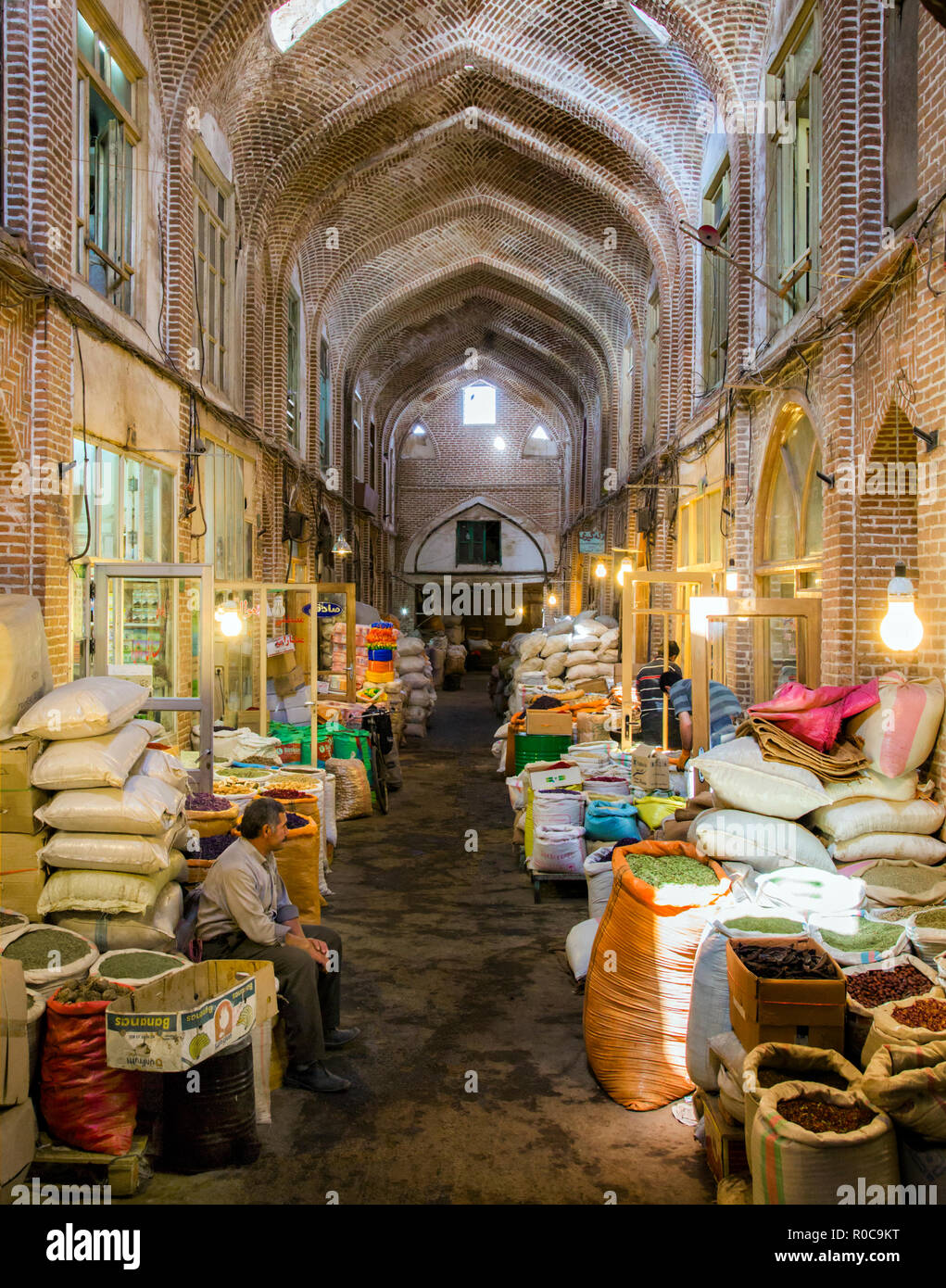

Discover Braga: Portugal's Historic and Cultural Gem
Braga, Portugal's oldest city, is a captivating destination where ancient history meets modern innovation. Established over two millennia ago as the Roman city of Bracara Augusta, it is now the nation's third-largest urban center. This vibrant city in the Minho region offers a unique blend of profound religious heritage, a dynamic university atmosphere, and a forward-looking cultural vision.
Braga's Rich Historical Legacy and Identity
The foundation of Braga dates back to around 16 BC, making its history a central part of its identity. As the capital of the Roman province of Gallaecia, it was a pivotal administrative and economic hub. This deep-rooted past is palpable throughout the city, earning it the evocative nickname, the "Rome of Portugal."
From Ancient Capital to Modern Hub
Today, Braga has successfully transformed into a major inland hub for northern Portugal. It is a recognized center for entrepreneurship and technology, while still serving as an important stop on the Portuguese Way of the Camino de Santiago. The city skillfully balances its prestigious past with a progressive, energetic present.
Key Landmarks and Architectural Marvels
Visitors to Braga are greeted by an impressive collection of historical monuments that chart the city's long and varied history. These sites are not just tourist attractions; they are the living heart of the community.
Braga Cathedral: The Oldest in Portugal
The Braga Cathedral, or Sé de Braga, is the country's oldest cathedral, with construction beginning in the 11th century. Its architecture is a fascinating tapestry, exhibiting styles from Romanesque to Baroque due to centuries of additions and renovations. The cathedral complex houses royal tombs and a significant Sacred Art Museum.
Bom Jesus do Monte Sanctuary
Perhaps the most iconic image of Braga is the Bom Jesus do Monte Sanctuary. This celebrated pilgrimage site is famous for its stunning Baroque stairway that climbs the hillside. The intricate zigzagging stairs, with their thematic fountains, chapels, and sculptures, represent a powerful spiritual journey and offer breathtaking views.
The Historic Center and Largo da Sé
The pedestrianized historic center is a delight to explore, centered around lively squares like the Largo da Sé. Here, visitors can admire medieval streets, charming cafes, and the preserved tower of the ancient Braga Castle. This area pulsates with the daily life of the city.
Braga 2025: Portuguese Capital of Culture
A defining chapter in Braga's contemporary story is its designation as the Portuguese Capital of Culture for 2025. The ambitious "Braga'25" program officially launched on January 25th with spectacular events, including concerts by fado star Mariza and artist Kim Gordon, as well as dazzling drone shows.
This year-long cultural celebration is a massive undertaking, involving 180 local, 50 national, and 40 international partners. With a budget of €13.5 million, the initiative aims to decentralize culture across all 37 parishes of the municipality. The city's goal is to increase cultural spending to 8% of the municipal budget by 2027.
The Braga'25 program represents a strategic investment in the city's future, positioning it as a leading European cultural destination.
Highlight Events and International Recognition
The city has already hosted prestigious international events like ARTECH 2025 and the Eurocities 2025 conference, highlighting its commitment to urban innovation and digital arts. This aligns with Braga's growing reputation as a center for creative and technological convergence.
Braga's Demographic and Urban Profile
Understanding Braga's current dynamics requires a look at its population and layout. As of 2023, the municipality has a population of 201,583, making it the seventh-largest municipality in Portugal. The city's density is significant, with approximately 962 inhabitants per square kilometer.
After a period of decline in the 20th century, Braga experienced revitalization from the 1980s onward. This was driven by rural-to-urban migration and immigration, particularly from Brazil. This growth spurred substantial infrastructure development and cemented its status as a key northern urban center.
- Municipal Population (2023): 201,583
- Total Area: 183.40 km²
- Population Density: ~962/km² (2011 data)
- Urban Rank in Portugal: 3rd Largest
The Religious Heart of Portugal: Faith and Festivals
The spiritual significance of Braga is deeply woven into the cultural fabric of Portugal. Its long-standing role as an archbishopric has earned it the title of the country's religious capital. This devotion is most spectacularly displayed during its world-renowned festivals and within the walls of its many churches and sanctuaries.
Holy Week: A Spectacle of Devotion
Braga's Holy Week celebrations are among the most elaborate in the Iberian Peninsula, attracting approximately 100,000 visitors annually. The city transforms into a vast open-air theater of faith, with solemn processions winding through the historic streets. The air fills with incense and the sound of sacred music, creating an unforgettable atmosphere.
A distinctive feature of these celebrations are the ornate temporary street altars, known as "Passos." These intricately decorated installations depict scenes from the Passion of Christ and are focal points for prayer and reflection. The combination of ancient ritual and profound community participation makes this event a cornerstone of Braga's identity.
A City of Churches and Pilgrimage
Beyond the cathedral and Bom Jesus, Braga is dotted with significant religious sites. The Sanctuary of Sameiro, a major Marian shrine, and the Igreja de Santa Cruz are just two examples of the city's rich ecclesiastical architecture. These sites are not only places of worship but also key landmarks on the spiritual map of northern Portugal.
As a crucial stop on the Portuguese Way of the Camino de Santiago, the city has welcomed pilgrims for centuries. This constant flow of travelers has enriched Braga's culture, making it a crossroads of faith and tradition. The pilgrim's shell symbol is a common sight, signaling the city's enduring connection to this ancient journey.
Academic and Technological Innovation in Braga
Braga's gaze is firmly fixed on the future, driven by a robust academic and technological sector. The city has successfully carved out a reputation as a center for innovation, balancing its historical prestige with a dynamic, forward-thinking economy. This transformation is largely powered by its youthful population and world-class institutions.
The University of Minho: An Engine of Growth
The University of Minho, founded in 1973, has been a catalyst for the city's modern development. With campuses in Braga and the nearby city of Guimarães, it is renowned for its schools of engineering, sciences, and arts. The university fosters a strong culture of interdisciplinary research and collaboration with industry.
This academic powerhouse attracts thousands of students from across Portugal and internationally, injecting a vibrant, youthful energy into the city. The presence of the university has been instrumental in attracting technology companies and research centers, creating a thriving ecosystem of innovation.
Braga as a Tech and Startup Hub
Building on its academic strengths, Braga has emerged as a significant hub for technology and entrepreneurship. The city is home to the International Iberian Nanotechnology Laboratory (INL), a leading cross-border research organization. This presence has helped to position Braga at the forefront of cutting-edge scientific advancement.
- International Iberian Nanotechnology Laboratory (INL): A premier research center in nanoscience.
- Tech Parks and Incubators: Supporting a growing community of startups and tech firms.
- Digital Innovation: The city actively promotes smart city initiatives and digital transformation.
This focus on technology and innovation ensures that Braga is not only preserving its past but is also actively building its future as a competitive and modern European city.
Urban Regeneration and Sustainable Development
In recent decades, Braga has undertaken significant efforts to reinvent its urban landscape. The focus has shifted towards creating a more sustainable, inclusive, and livable city for its residents and visitors. These regeneration projects respect the city's history while embracing contemporary design and functionality.
Revitalizing the Urban Core
A key success story has been the pedestrianization of the historic city center. By limiting vehicle access, the city has reclaimed its public spaces for people, enhancing the quality of life and boosting local commerce. Squares like Praça da República have become vibrant social hubs filled with cafes and cultural activity.
Current major projects include the East End revitalization and the development of a new Urban Innovation District. These initiatives aim to transform underutilized areas into modern, mixed-use neighborhoods that combine housing, business, and green spaces. The goal is to create a more connected and efficient urban environment.
Commitment to Sustainability and Green Spaces
Braga's urban planning prioritizes environmental sustainability and the well-being of its citizens. The city is increasing its network of parks, gardens, and cycling paths to promote a healthier lifestyle. This green infrastructure provides essential lungs for the city and enhances its aesthetic appeal.
The integration of sustainability into urban development is a core principle for Braga's future growth, ensuring resilience and a high quality of life.
These efforts are part of a broader strategy to position Braga as a model of sustainable urban living in Portugal. The city's participation in networks like Eurocities underscores its commitment to sharing best practices and implementing innovative solutions to urban challenges.
The Vibrant Cultural Scene Beyond 2025
While the Braga'25 designation is a major highlight, the city's cultural life is a year-round phenomenon. A diverse array of festivals, artistic collaborations, and culinary traditions ensure that there is always something happening in Braga.
Major Annual Festivals and Events
The most famous celebration is the Festas de São João in June, a vibrant street party honoring St. John the Baptist. The city erupts with music, traditional dance, and the scent of grilled sardines. A charming tradition involves playfully hitting strangers on the head with soft plastic hammers or releasing illuminated paper balloons into the night sky.
Other key events include the Braga em Risco illustration festival and the Convergências program, which fosters artistic dialogue between Portugal and Galicia. These events attract both local families and international visitors, creating a festive and inclusive atmosphere.
Collaborations with National Institutions
Braga's cultural prestige is amplified through strategic partnerships with leading national institutions. Collaborations with the National Theater Dona Maria II and the Serralves Foundation bring world-class exhibitions and performances to the city. These partnerships ensure that Braga's residents have access to a high caliber of artistic programming without needing to travel to Lisbon or Porto.
The city regularly features renowned international artists, such as pianist Maria João Pires and choreographer Meg Stuart. This demonstrates Braga's ambition to be not just a regional cultural center, but a player on the international stage.
Culinary Delights and the Vinho Verde Region
The gastronomic experience in Braga is a highlight for any visitor, deeply rooted in the traditions of the Minho region. The city's location places it at the heart of the Vinho Verde wine region, influencing both its cuisine and its social culture. Meals here are a celebration of fresh, local produce and time-honored recipes.
Traditional Minho Cuisine
Braga's restaurants and traditional "tascas" offer hearty and flavorful dishes. Classics include Rojões à Moda do Minho (marinated pork cubes), Bacalhau à Braga (codfish prepared in the local style), and Papas de Sarrabulho (a rich pork and blood stew). Freshly baked pão de ló sponge cake and the famous Pudim Abade de Priscos (a rich, port wine-infused caramel pudding) are essential desserts.
These dishes are often enjoyed in a convivial, family-style atmosphere, reflecting the warm hospitality of northern Portugal. Exploring the city's food markets, like the Mercado Municipal, provides a direct connection to the local farmers and artisans who supply these ingredients.
The Vinho Verde Wine Experience
No culinary journey in Braga is complete without tasting Vinho Verde, or "green wine." This unique wine is typically young, light, slightly fizzy, and low in alcohol, making it incredibly refreshing. While "green" refers to its youthful character, not its color, the region also produces excellent white, red, and rosé varieties.
- Wine Tours and Tastings: Numerous quintas (wine estates) around Braga offer tours and tastings.
- Perfect Pairings: Vinho Verde pairs excellently with the region's seafood, grilled meats, and light appetizers.
- Cultural Significance: Wine production is a centuries-old tradition integral to the local economy and social life.
This connection to the Vinho Verde region makes Braga a perfect base for food and wine enthusiasts looking to explore the authentic flavors of Portugal.
Living in Braga: Quality of Life and Modern Amenities
Beyond its tourist appeal, Braga is increasingly recognized as an excellent place to live, work, and study. The city offers a high quality of life at a more accessible cost than Portugal's larger coastal metropolises. This balance attracts a diverse mix of students, professionals, families, and retirees.
Cost of Living and Real Estate
Compared to Lisbon and Porto, Braga offers more affordable housing options, from historic apartments in the center to modern developments in the expanding suburbs. The overall cost of living, including dining and services, is generally lower, allowing for a comfortable lifestyle. This affordability is a key factor in its growing popularity among both Portuguese nationals and international residents.
Braga combines the amenities of a major city with the manageable scale and community feel of a smaller town, offering an attractive lifestyle proposition.
The city's ongoing urban regeneration projects are also enhancing its livability, creating new public spaces, improving transportation links, and adding modern residential and commercial facilities to complement its historic charm.
Education and Healthcare
The presence of the University of Minho provides world-class higher education and drives innovation. The city also boasts a strong network of public and private primary and secondary schools. For healthcare, Braga is served by the state-run Braga Hospital and several modern private clinics, ensuring comprehensive medical services for residents.
This robust infrastructure in education and health, combined with the city's safety and cleanliness, makes it a particularly attractive destination for families. The blend of historical environment and modern facilities provides a unique setting for raising children.
Planning Your Visit to Braga: Travel Essentials
Braga is well-connected and easy to navigate, making it an ideal destination for a short break or a longer exploration of the Minho region. Understanding the practicalities of travel will help you make the most of your visit to this captivating city.
Getting to and Around Braga
Braga is efficiently served by Francisco Sá Carneiro Airport (OPO) in Porto, which is approximately a 50-minute drive or a short train ride away. Regular trains and buses connect Braga directly to Porto, Lisbon, and other major Portuguese cities. The train station is conveniently located near the city center.
Within the city, the historic core is best explored on foot. For longer distances, Braga has a reliable and affordable local bus network. Taxis and ride-sharing services are also readily available. For maximum flexibility to visit surrounding areas like Guimarães or the Peneda-Gerês National Park, renting a car is recommended.
Best Time to Visit and Accommodation
The ideal time to visit Braga depends on your interests. The summer months (June-September) offer warm weather and major festivals like São João, but also larger crowds. Spring (April-May) and autumn (October-November) provide milder temperatures and fewer tourists, perfect for sightseeing.
- For Religious Events: Visit during Holy Week (March/April) for an unparalleled cultural experience.
- For Culture: 2025 is a standout year due to the Braga'25 Capital of Culture program.
- For Good Weather & Festivals: June is excellent for the São João festivities.
Accommodation options range from charming guesthouses and boutique hotels within the historic center to larger, modern hotels on the city outskirts. It is advisable to book well in advance during major festivals and the peak summer season.
Conclusion: The Enduring Allure of Braga
Braga stands as a city of remarkable duality, where ancient Roman foundations support a dynamic, forward-looking urban community. It is a place where the sacred and the secular, the historic and the innovative, exist in a harmonious and vibrant balance. From its spiritual resonance as the "Rome of Portugal" to its growing status as a hub for technology and culture, Braga offers a deeply authentic Portuguese experience.
A City Poised for the Future
The designation as Portuguese Capital of Culture for 2025 is not an isolated event but a catalyst for long-term transformation. The investments in cultural infrastructure, urban regeneration, and sustainable development are shaping a city ready for the 21st century. Braga is confidently stepping onto a wider European stage while preserving the unique character that defines it.
Whether you are drawn by its profound history, its stunning Baroque architecture, its lively festivals, its innovative spirit, or its delectable cuisine and wines, Braga delivers a rich and multifaceted journey. It invites visitors to look beyond Portugal's coastal giants and discover the beating heart of the Minho region.
Braga is more than just a destination; it is an experience that engages all the senses. It is the echo of Gregorian chant in a centuries-old cathedral, the lively beat of drummers during São João, the crisp taste of a young Vinho Verde on a sunny terrace, and the inspiring atmosphere of a university lecture hall. This city, with its over 2,000 years of history and its eyes firmly on the future, promises lasting memories and a compelling reason to return. To visit Braga is to understand a fundamental part of Portugal's soul and to witness a city proudly writing the next chapter of its extraordinary story.

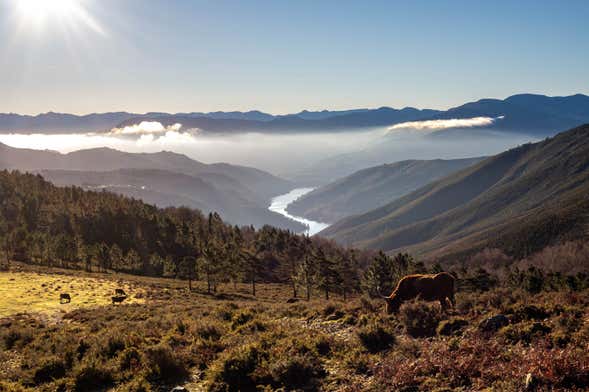

Dubrovnik: A Historical Gem on the Adriatic Coast
Nestled on the southern coast of Croatia and basking in the azure hues of the Adriatic Sea, Dubrovnik is a city that exudes an irresistible allure. Known as the "Pearl of the Adriatic," this historic city is a trove of cultural, architectural, and natural wonders. Dubrovnik's splendid medieval walls encapsulate not just its ancient spirit, but a vibrant history that weaves through its narrow streets and majestic structures, offering a unique blend of past and present.
Dubrovnik holds a magnetism that draws history enthusiasts and casual tourists alike. A walk through the city is akin to stepping through pages of history, embodying a myriad of stories that unfold with every corner turned. From its founding, thriving maritime prowess, to its status as a UNESCO World Heritage site, Dubrovnik is a testament to resilience and tenacity.
The Birth and Blossoming of Dubrovnik
The origins of Dubrovnik, once known as Ragusa, are steeped in legend and lore. Founded in the 7th century by refugees from the nearby Roman city of Epidaurum, modern-day Cavtat, Dubrovnik soon evolved into a prominent city-state. Initially, it existed under Byzantine protection, which helped shape its strategic and economic landscape.
In the Middle Ages, Dubrovnik thrived as an influential maritime city, connecting East and West through the Adriatic Sea. With a strategic position coupled with astute diplomacy, it became a crucial trading hub, establishing strong ties with the Mediterranean and beyond. The city's governing autonomy, known as the Republic of Ragusa, was established in the 15th century and lasted until 1808. This republic was a beacon of diplomacy and commerce, notorious for its savvy navigations through complex international relations, maintaining peace, and prosperity in volatile times.
Exploring the Walls: Defenders of History
The imposing City Walls of Dubrovnik are arguably its most recognizable feature. Originally constructed between the 11th and 17th centuries, these fortifications stretch for nearly two kilometers. The walls were a formidable barrier against potential sieges, reinforced by a series of towers and bastions that played essential roles in the defense of the city. Walking along these walls offers a panoramic view of Dubrovnik's exquisite terracotta roofs and the expansive blue of the Adriatic.
The walls are interspersed with fortresses, such as the Bokar Fortress, the oldest preserved fortification of its kind in Europe. Designed to protect the Pile Gate, it stands as a testament to medieval military architecture. Another notable structure is the Lovrijenac Fortress, perched upon a rocky cliff, often celebrated as "Dubrovnik's Gibraltar." This fortress was critical in defending the city from Venetian incursions, whose expansive empire viewed Ragusa as both adversary and potential conquest.
The Heart of the Old Town
Inside the embrace of the city walls lies Dubrovnik's Old Town, a pedestrian marvel full of Baroque and Renaissance buildings. Its streets, laid with white limestone, reflect a wealth of history in its intricate architecture. At the heart of the Old Town is Stradun, the main thoroughfare, which acts as the lifeline of daily city buzz and a connector of cultural stops.
Stradun is an exemplary illustration of urban transformation and resilience, rebuilt with homogeneity after the catastrophic earthquake of 1667 that left much of Dubrovnik in ruins. Despite the city's vulnerability to natural calamities and sieges, its architectural resilience shines through with intact structures like the Sponza Palace, which once served as a customs house and now is the home to carefully preserved Dubrovnik archives.
Just steps away is the Rectors Palace, blending Gothic, Renaissance, and Baroque styles. It once served as the seat of the Republic's Rector and today functions as a cultural history museum, sharing the insights into the political narrative and life in the Republic of Ragusa.
Dubrovnik’s religious heritage is equally captivating, with iconic landmarks like Dubrovnik Cathedral, dedicated to the Assumption of the Virgin Mary. This imposing structure stands on the foundations of older sacred buildings dating back to the 7th century, showcasing a rich history intertwined with faith.
A Center of Culture and Innovation
Aside from its architectural splendors, Dubrovnik has long been acknowledged as a nucleus of culture, education, and science. The city was among the pioneers of the abolition of slavery in Europe, demonstrating its progressiveness and humanistic values, with a formal decree in 1418 prohibiting the trade. This foresight and humanity extend into the arts, with the city birthing illustrious poets, playwrights, and scholars.
The renowned playwright Marin Držić, often compared to Shakespeare, found his roots in Dubrovnik. His comedy and drama pieces resonate with creative expression, leaving an enduring legacy. The city is also the birthplace of Ruđer Bošković, an esteemed physicist and astronomer, whose work significantly contributed to scientific thought.
As one delves into the streets of Dubrovnik, this journey is a continuous discovery of its profound legacy, an entrancing blend of history and culture, inviting visitors to explore further and unravel its mysteries. As this article moves to its continuation, the intrigue of Dubrovnik's modern stories and its embrace of tourism and preservation efforts await. The next section will further illuminate how this historic gem continues to thrive in the current era and its endeavors to maintain its unique heritage for future generations.
Dubrovnik’s Renaissance: From War to Peace
Dubrovnik’s rich tapestry of history took a turbulent turn at the end of the 20th century during the Croatian War of Independence. The Siege of Dubrovnik in 1991 was a significant event that tested the resilience of this historic city. The bombardment left severe damage and indelible scars on its ancient walls and cultural monuments, yet the spirit of Dubrovnik emerged unbroken.
Acknowledging the city's profound historical and cultural significance, global efforts were swiftly marshaled following the siege to aid in its restoration. Under the watchful gaze of UNESCO and alongside local architects, craftsmen embarked on a mission to meticulously restore the damaged areas. This restoration became not only a testimony to the resilient spirit of Dubrovnik’s people but also a stellar example of successful heritage conservation.
The dedication to preserving the old while rebuilding the new played a pivotal role in Dubrovnik’s resurgence as a cultural crown jewel of the Adriatic. Over the years, Dubrovnik has elegantly transitioned from a city affected by conflict to one of peace and prosperity, attracting countless visitors worldwide seeking to delve into its historical riches and vibrant culture.
The Role of Tourism: Opening Doors to the World
Today, Dubrovnik thrives as one of Europe's premier tourist destinations. The stark beauty of its medieval walls, gleaming in the Mediterranean sun, draws tourists seeking the unique charm of an ancient world where history and modernity coexist. The city's capacity to transform itself into a global tourism hub is a narrative of adaptability and preservation, strategically balancing the influx of visitors with protecting its cultural heritage.
Guided tours through its historic sites reveal the lesser-known stories and anecdotes of its storied past. Expert local guides regale tourists with tales of noble families, fascinating myths, and the city's diplomatic feats, infusing life into the stones that stand testament to Dubrovnik’s enduring legacy.
Cultural tourism in Dubrovnik takes on a multidimensional form. Beyond its architectural sites, the city vibrates with festivals such as the Dubrovnik Summer Festival, an iconic cultural event celebrating theatre, music, and art. Since 1950, artists from around the world have converged on Dubrovnik during this festival, turning its streets and squares into stages for vibrant performances. This festival is not just entertainment but an integral aspect of Dubrovnik's cultural tapestry, connecting global narratives with local traditions.
Moreover, the city caters to modern tourists by interlacing its historical grandeur with contemporary luxury. Sophisticated accommodation options nestled within its ancient edifices offer panoramic views of the Adriatic, seamlessly blending the charm of antiquity with modern comfort. Local culinary experiences delight visitors with traditional Dalmatian flavors, ensuring that the magic of Dubrovnik's heritage is both a visual and sensory experience.
Cinematic Enchantment: Dubrovnik on the Screen
Dubrovnik's cinematic appeal has transcended time, finding new life and renewed fame through film and television. Its well-preserved historical architecture and stunning landscapes have made it a favored filming location for many productions, most notably the acclaimed television series "Game of Thrones." The series showcased Dubrovnik as the majestic city of King’s Landing, propelling it into the spotlight and kindling the interest of a diverse and global audience.
Game of Thrones-themed tours have since become a leading tourist attraction, drawing fans eager to explore filming locations such as Fort Lovrijenac and the Jesuit Staircase, where notable scenes unfolded. The city has leveraged this fame to enhance its tourism sector further, creating a bridge between its ancient allure and modern pop culture.
Dubrovnik’s ability to adapt to contemporary cultural trends is embedded in its strategy to preserve its core identity while embracing new narratives, an approach that has significantly enhanced its global cultural footprint. Filmmakers and tourists alike are magnetized to Dubrovnik’s amalgamation of historical beauty and its visionary approach to hospitality.
Safeguarding the Future: Challenges and Conservation
While embracing the global spotlight, Dubrovnik faces the ongoing challenge of preserving its captivating allure amidst heavy tourist traffic. The delicate balance between fostering economic growth through tourism and preserving its erected history is a continual negotiation.
In recent years, Dubrovnik has proactively addressed these challenges by implementing sustainable tourism measures. Initiatives include limiting the number of cruise ships allowed per day and encouraging tourism outside of the peak summer season to manage crowds effectively. The city has engaged in active dialogue with international organizations to develop conservation strategies that ensure the preservation of its rich cultural heritage for future generations.
Furthermore, Dubrovnik cultivates a tight-knit community of historians, archaeologists, and preservationists who work diligently to safeguard its historical legacy. This collaborative approach underscores the city's commitment to long-term sustainability and cultural stewardship, ensuring that its historical sites remain not just points of tourism but living parts of its community and history.
Dubrovnik: A Timeless Legacy
Dubrovnik stands today as a shining example of a city that has embraced its past while navigating the demands of the contemporary world. Every stone tells a story; each courtyard echoes with distant voices, blending seamlessly with the bustling city that thrives within the ancient walls.
The romance of its setting, the intricacy of its history, and the warmth of its people create an atmosphere quintessentially Dubrovnik—a city where the old and the new harmoniously coexist. As this article proceeds to its third part, we will explore further the undiscovered paths of this captivating city, delve into its future aspirations, and reflect on the continuing journey of Dubrovnik’s timeless legacy on the Adriatic coast.
Exploring Dubrovnik’s Hidden Corners
While the grand vistas and celebrated landmarks of Dubrovnik often steal the spotlight, the city’s hidden corners hold an equally captivating tale. Away from the bustling main streets, intimate alleyways and quiet nooks provide a deeper glimpse into the soul of Dubrovnik. These lesser-known paths, like secrets whispered through time, invite exploration and discovery beyond the conventional tourist trails.
Wandering through the labyrinthine backstreets of the Old Town, visitors might stumble upon charming secluded squares or hidden chapels like St. Ignatius Church, renowned for its awe-inspiring Baroque architecture. These peaceful areas offer a contemplative escape from the crowds, where the echoes of distant history resonate within their aged facades.
The Gundulić Square morning market is another gem, where local vendors display a vibrant array of fresh produce and handmade goods. It's a place where the aroma of local delicacies mingles with the melodies of daily life, offering a taste of Dubrovnik’s day-to-day vibrancy that is both authentic and inviting.
Another hidden treasure lies beneath the city’s streets—a complex network of subterranean tunnels from World War II, which now house museums and exhibitions. These spaces offer insight into the modern history of Dubrovnik, shedding light on the lesser-known chapters of its storied past, illustrating the resilience through epochs of both peace and turmoil.
Embracing the Natural Beauty
Dubrovnik’s allure extends beyond its rich historical and cultural fabric, unfurling into breathtaking natural scenery just waiting to be explored. The magnificent Adriatic Sea, with its crystal-clear waters, offers numerous opportunities for coastal excursions. From kayaking along the city walls to taking a boat ride to the nearby Elaphiti Islands, the azure expanse invites adventure and relaxation alike.
Lokrum Island, a mere stone's throw from Dubrovnik, is a verdant oasis that affords a mix of history, legend, and lush landscapes. Allegedly cursed by Benedictine monks, this island is steeped in mythology and intrigue. Visitors can wander through its botanical gardens, discover ruins of a medieval monastery, or simply bask along its serene coastline.
Dubrovnik’s natural beauty is further complemented by the Dinaric Alps, offering hiking trails with panoramic vistas that encapsulate both the city and the tranquil sea. An ascent of Mount Srđ rewards climbers with unparalleled views of Dubrovnik’s terracotta rooftops nestled alongside the shimmering water—an arresting sight that anchors the heart and rejuvenates the soul.
Each element of Dubrovnik’s natural landscapes presents an opportunity to step away from the cobbled streets and immersed in a different aspect of the city’s multifaceted charm, fostering a holistic experience that speaks to both its beauty and bounty.
Dubrovnik: Looking Towards the Future
In its essence, Dubrovnik represents a city of progress; it is not merely resting on its historical laurels but striving towards future innovation and vibrancy. The city has expressed aspirational endeavors to remain a beacon of cultural and historical preservation while embracing modernity and sustainable tourism practices.
The Dubrovnik Development Agency, in collaboration with international stakeholders, has propelled efforts to engage young local entrepreneurs and innovators in enhancing the city’s digital landscape. Programs encouraging startups and tech-centric businesses aim to broaden the economic base of Dubrovnik, fostering a dynamic new era of economic diversity within the ancient city walls.
Furthermore, Dubrovnik is investing in academic partnerships and hosting international conferences, fortifying its standing as not just a tourist draw, but a cultural and intellectual hub. These initiatives reflect the city's priority in nurturing future generations who understand the delicate balance between heritage and innovation, ensuring a sustainable future that honors the legacy of the past.
Reflecting on Dubrovnik’s Timeless Appeal
As one reflects on the entirety of Dubrovnik’s offerings, the picture that emerges is that of an everlasting dialogue between its striking past and promising future. It is a city where history walks hand in hand with progress, where the whispers of ancient times intermingle with the footsteps of modern wanderers.
Dubrovnik's charm lies not in any singular narrative but within its tapestry of experiences—an intricate mosaic that unites the grandeur of historic edifices, the tranquility of nature, and the vibrancy of cultural festivities. It invites visitors to lose themselves in its enchanting ethos, creating memories that linger long after the journey has ended.
Ultimately, as Dubrovnik continues to captivate with its allure, the city remains a place where both the adventures of yesterday and dreams of tomorrow are embraced, illustrating a perpetual journey etched into the heart of the Adriatic. Dubrovnik is more than just a destination; it is an enduring story—a testament to the spirit of resilience and a beacon of timeless wonders that beckons to be discovered anew.
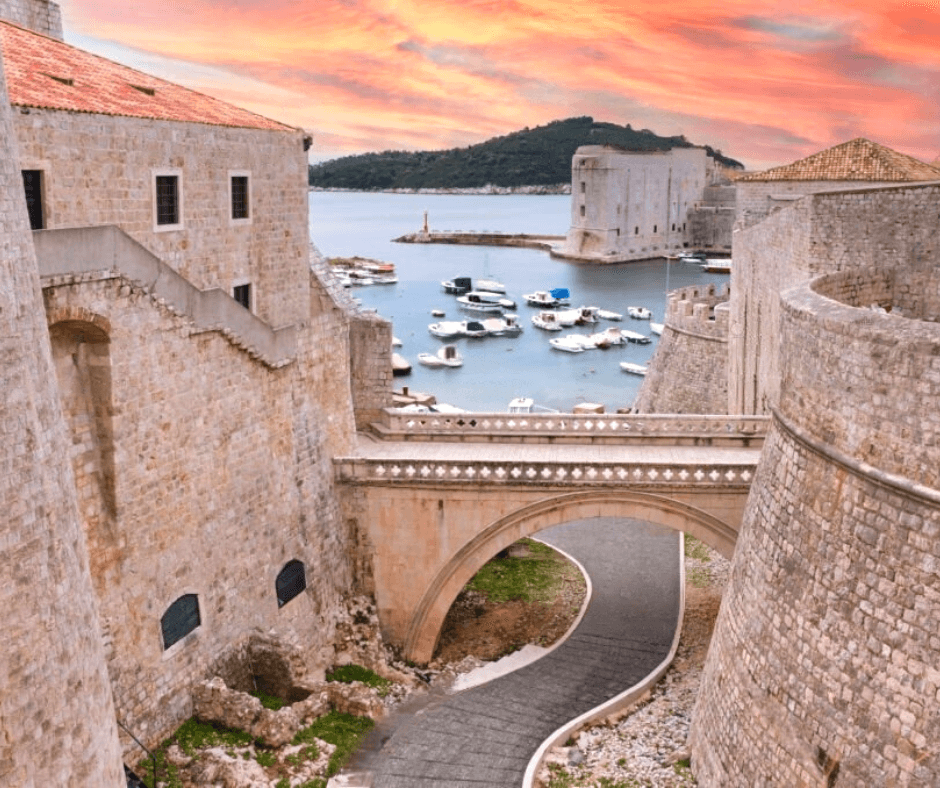

Siem Reap: Gateway to the Ancient Wonders of Cambodia
Introduction
Siem Reap, a small yet bustling city located in northwestern Cambodia, serves as the primary gateway to one of the world's most awe-inspiring archaeological sites: Angkor Archaeological Park. This mesmerizing city, with its combination of historical allure and vibrant street life, has become a favorite destination for travelers embarking on a journey through Southeast Asia. Known for its proximity to the ancient temple complex of Angkor Wat, Siem Reap encapsulates a perfect blend of splendid antiquity, colonial charm, and modern conveniences.
A Glimpse into Siem Reap's History
The history of Siem Reap is intricately tied to that of the Angkor region. The city rose to prominence due to its strategic location near Angkor, the heart of the Khmer Empire from the 9th to the 15th centuries. Angkor was a flourishing metropolis, renowned for its architectural and artistic achievements, depicted through the massive monuments and temples that still stand today.
During the colonial period, particularly in the late 19th century, Siem Reap began to modernize under French influence, leading to the development of its infrastructure and emergence as a pivotal regional center. The colonial legacy can still be seen today in the French-style architecture scattered throughout the city.
The Angkor Experience
For most visitors, the highlight of Siem Reap is undoubtedly Angkor Archaeological Park, which stretches over 400 square kilometers and encompasses scores of ancient temples, including the iconic Angkor Wat, Bayon Temple, and Ta Prohm. Angkor Wat, a UNESCO World Heritage Site, is the largest religious monument in the world and a symbol of Cambodia's historical grandeur. Its sheer scale and intricate bas-reliefs depicting scenes from Hindu mythology leave a lasting impression on all who visit.
While Angkor Wat commands the most attention, exploring beyond this iconic structure reveals an intricate network of other temples, each with its unique architectural style and historical significance. Bayon Temple is cherished for its enigmatic smiling stone faces, while Ta Prohm is famous for the giant trees and sprawling roots enveloping its stones, offering a surreal, almost mystical appearance.
Siem Reap Today: A Tapestry of Culture and Community
Beyond the archaeological marvels, Siem Reap itself has much to offer. It has evolved into a vibrant city brimming with cultural and culinary experiences. The Old Market area and Pub Street are popular spots to immerse oneself in the local atmosphere, featuring a lively mix of bustling markets, art galleries, and eateries serving delectable Cambodian cuisine. Street food is prevalent, and a visit wouldn’t be complete without tasting traditional dishes like Amok, a fragrant coconut milk and curry-based preparation typically made with fish.
Siem Reap's cultural landscape is complemented by its array of cultural shows and performances that showcase traditional Khmer dance and music. The city's openness to cultural exchange is evident through its numerous museums, including the Angkor National Museum, which provides a deeper understanding of Cambodia's rich archaeological legacy.
Stay tuned for more insights and discover what makes Siem Reap a must-visit destination for any traveler seeking a journey through time.

Exploring Windhoek: The Enchanting Capital of Namibia
Exploring Windhoek: The Enchanting Capital of Namibia
Windhoek, the vibrant capital city of Namibia, serves as both the cultural and economic heart of the country. With its unique blend of African tradition and European influence, Windhoek is a city that captivates its visitors with an unparalleled charm. As you walk through its streets, the harmonious mix of colonial German architecture and modern buildings set against a backdrop of beautiful landscapes tells a compelling story of transformation and growth.
A Glimpse into the History of Windhoek
Historically, Windhoek plays a significant role in Namibia's past. The city was originally inhabited by the pastoral Herero and Nama people. The establishment of Windhoek as a European city began with Jonker Afrikaner, a leader of the Oorlam people, who established a settlement here in the early 19th century due to its strategic location and natural springs. The name 'Windhoek' itself is believed to derive from "Winterhoek," referring to the Winterhoek Mountains in South Africa, the homeland of Jonker Afrikaner.
The city's colonial past is integral to its identity. In 1890, Major Curt von François of the Imperial German Army officially founded Windhoek as a colonial capital. It soon grew under German colonial rule, which is evident in many of its historical buildings such as the Alte Feste (Old Fortress), Christuskirche, and the railway station, all of which are key attractions for visitors today.
Windhoek's Rich Cultural Tapestry
Windhoek is characterized by its diverse cultural heritage, reflected in its population makeup and cultural expressions. It serves as a melting pot of ethnicities including the Ovambo, Kavango, Herero, Nama, and Damara, among others. This diversity is celebrated in Windhoek through various cultural festivals and the lively marketplace at the Katutura township, which translates to "The place where we do not want to live." Despite its name, Katutura is a vibrant suburb pulsating with life, offering a rich cultural experience to those who visit.
The cultural vibe in Windhoek is further amplified through music, dance, and art. Street vendors selling handcrafted jewelry, textiles, and wooden sculptures exhibit the artisan skills passed through generations. Meanwhile, contemporary art galleries showcase modern Namibian art that speaks volumes of the country's new awakening post-independence.
The Urban Pulse of Windhoek
As the primary urban center of Namibia, Windhoek offers a bustling cityscape juxtaposed with serene natural surroundings. The city's infrastructure reflects its colonial heritage while also offering modern amenities essential for a thriving urban environment. Windhoek's skyline, while not as towering as some global cities, features a mix of classical Germanic architecture with modern buildings that define its unique character.
Renowned for its cleanliness, Windhoek's streets are lined with cafes, shops, and restaurants catering to both locals and tourists. It is advisable to explore on foot, as this is the best way to experience its vibrant atmosphere. The central business district is packed with an assortment of boutiques and craft stores perfect for souvenir hunting. The Maerua Mall and Grove Mall stand out as modern shopping complexes that offer international brands and entertainment options.
Beyond shopping and dining, Windhoek’s nightlife offers a range of experiences from exclusive clubs to low-key pubs showcasing live local music. Traditional Namibian cuisine, infused with a touch of colonial and international influences, can be enjoyed at various eateries across the city, making dining in Windhoek a delightful journey through flavors.
Amidst its modern urban vibe, Windhoek also offers numerous green spaces and parks such as the delightful parliament gardens which provide the perfect spot for picnics and leisurely strolls.
As Namibia's capital city, Windhoek is not merely a political or economic hub. It is a city that presents its past, present, and future through vibrant experiences, diverse people, and an undying spirit of adventure that invites you to explore all its dimensions. From its historical heritage to modern-day urban experiences, Windhoek is a city that narrates the story of a nation striving towards unity and progress.
Nature and Wildlife Around Windhoek
While Windhoek itself is a bustling urban center, it is also a gateway to the diverse natural wonders that Namibia offers. Just a short drive away from the city, you will find tranquil landscapes and game reserves that provide a stark contrast to city life. The Daan Viljoen Game Reserve, located on the outskirts of Windhoek, is a popular spot for day trips and short safari experiences. It offers visitors the opportunity to witness Namibia's unique wildlife, including springboks, zebras, and a variety of bird species, all set against the stunning backdrop of rolling hills and plains.
The reserve is also a haven for hikers, offering well-marked trails where visitors can immerse themselves in the scenic environment. Exploring these trails, you'll be treated to breathtaking vistas and the soothing sounds of nature, far removed from the urban bustle of Windhoek. For those seeking a more adventurous encounter with wildlife, guided tours and safaris are available, ensuring a safe yet thrilling experience.
The Architectural Marvels: A Testament to History
Windhoek's architectural landscape is a captivating blend of historical and modern elements. At the heart of the city lies the Christuskirche, a Lutheran church and one of Windhoek's most iconic landmarks. Constructed in the early 20th century, this German architectural masterpiece with its stained-glass windows and quaint clock tower stands as a symbol of Windhoek's colonial past.
Nearby, the Alte Feste or Old Fortress is another historic structure worth visiting. Originally built by the Germans as a military headquarters, it now houses the National Museum of Namibia. The museum offers a fascinating glimpse into Namibia's history and independence movement, providing context to the nation's rich cultural and political landscape. Another modern architectural highlight is the Independence Memorial Museum, which presents Namibia's journey from colonization to independence.
As you traverse the city, you'll notice an eclectic mix of building designs ranging from art deco influences to minimalist contemporary styles. This architectural diversity not only enriches the city's aesthetic appeal but also tells the story of its evolution over time.
Events and Festivals: Celebrating Windhoek’s Vibrancy
Windhoek is a city that knows how to celebrate, and there are numerous events and festivals throughout the year that highlight its vibrant culture. Windhoek’s annual Oktoberfest is a nod to its German colonial past, drawing locals and tourists alike to enjoy traditional German beers, foods, and music in a lively atmosphere. This dynamic celebration is a testament to the city’s ability to blend cultural influences into unique experiences.
Another notable event is the Windhoek Show, held annually in September. It is Namibia’s premier trade and agriculture show, showcasing the country’s diverse agricultural produce, crafts, and innovations. The event is a window into Namibia's economic landscape and a celebration of local enterprise and ingenuity.
The city also hosts the Windhoek Jazz Festival, an annual event that brings together local and international artists in a fusion of global and Namibian sounds. The festival reflects Windhoek's growing status as a cultural hub, attracting music lovers to its enthralling performances and electric vibe.
Windhoek’s Commitment to Sustainable Development
As Windhoek continues to grow, the city is increasingly focused on sustainable development practices to ensure a harmonious balance between urbanization and environmental conservation. Initiatives like integrated urban planning, public transportation expansion, and renewable energy projects highlight Windhoek's commitment to a sustainable future. The city's efforts in water recycling and waste management demonstrate a proactive approach to resource management, a critical issue given the region's arid climate.
This forward-thinking approach to sustainability is not only vital for the city’s development but sets an example for other urban centers in similar environments. Windhoek’s commitment to sustainability is evident in its urban planning initiatives, which strive to create green spaces and eco-friendly infrastructure as the city continues to expand.
Conclusion
Windhoek is more than just the capital city of Namibia; it is an enchanting destination where history, culture, and nature coexist in harmony. From its diverse cultural tapestry to its historic architecture, and from its vibrant festivals to its breathtaking natural surroundings, Windhoek offers a unique experience to every visitor. Whether you are exploring its urban pulse, venturing into the surrounding wild landscapes, or immersing yourself in local traditions, Windhoek is a city that promises adventure, discovery, and a deepened appreciation for Namibia's rich heritage.
Whether it is your first time or a return visit, Windhoek stands ready to share its stories and its spirit with you. In every corner, this remarkable city invites exploration and leaves an indelible mark on its visitors, making it a must-visit destination for travelers seeking to experience the dynamic heart of Namibia.