Quantencomputing Revolution in Consumer Electronics
Die Quantencomputing Revolution kündigt einen Paradigmenwechsel für Consumer Electronics an. Diese Technologie verspricht bisher unvorstellbare Rechenleistung für Endverbrauchergeräte. Allerdings steckt die praktische Umsetzung aktuell noch in den Kinderschuhen.
Der aktuelle Stand der Quantentechnologie
Quantencomputer basieren auf Qubits, die komplexe Berechnungen parallel durchführen können. Herkömmliche Prozessoren stoßen bei bestimmten Problemen an physikalische Grenzen. Die Quantenüberlegenheit gegenüber klassischen Computern wurde bereits demonstriert.
Technische Herausforderungen für Consumer Devices
Für den Einsatz in Consumer Electronics müssen mehrere Hürden überwunden werden. Quantensysteme erfordern extreme Kühlung nahe dem absoluten Nullpunkt. Die Stabilität der Qubits stellt eine weitere große Herausforderung dar.
- Extreme Kühlanforderungen bei Temperaturen nahe -273°C
- Hohe Fehleranfälligkeit quantenmechanischer Zustände
- Enorme Stromverbräuche für Kühl- und Steuersysteme
- Komplexe Fehlerkorrekturmechanismen für stabile Operationen
Wissenschaftliche Durchbrüche 2025
Führende Forschungslabore melden bedeutende Fortschritte bei logischen Qubits. Google demonstrierte im August 2025 quantenmechanische Speicher mit unter-Schwellen-Fehlerraten. Microsoft und Quantinuum erreichten eine verbesserte Verschränkung von zwölf logischen Qubits.
„Die logische Fehlerrate von 0,0011 ermöglicht erstmals realistische Chemie-Simulationen durch Kombination von HPC, AI und QC“ – Forschungsbericht 2025
Marktentwicklung und Investitionstrends
Der globale Quantencomputing-Markt zeigt beeindruckende Wachstumsraten. Von 1,6 Milliarden USD im Jahr 2024 wird ein Anstieg auf 31,26 Milliarden USD bis 2031 prognostiziert. Dies entspricht einer jährlichen Wachstumsrate von 34,8%.
Unternehmensinvestitionen und Forschungsschwerpunkte
Quantencomputing beansprucht mittlerweile 11% der Forschungsbudgets führender Technologieunternehmen. Im Vergleich zu 2023 bedeutet dies eine Steigerung um 4 Prozentpunkte. Besonders quantum-ready Organisationen investieren intensiv in diese Zukunftstechnologie.
- 83% der führenden Unternehmen priorisieren Quantencomputing für Innovation
- 88% sehen Quantentechnologie als essentiell für Future-Proofing
- 61% klagen über Fachkräftemangel in diesem Bereich
- 56% sehen die Technologiereife als größte Hürde
Vernetzung von Quantensystemen
Ein wichtiger Trend ist die Verbindung mehrerer Quantencomputer zu leistungsfähigeren Einheiten. Photonic demonstrierte im Mai 2025 erfolgreich verteilte Verschränkung zwischen separaten Systemen. QuTech verband Ende Oktober zwei kleine Quantencomputer in verschiedenen Städten.
IBM's Vernetzungsdurchbruch
IBM erreichte im November 2025 eine bedeutende Meilensteine in der Vernetzung. Zwei 127-Qubit-Prozessoren wurden zu einem virtuellen 142-Qubit-System verbunden. Diese Entwicklung ebnet den Weg für skalierbare Quantenrechenarchitekturen.
Die Vernetzungstechnologie ermöglicht künftig dezentrale Quantenrechenzentren. Regionale Standorte könnten ihre Ressourcen für komplexe Berechnungen kombinieren. Dies senkt die Einstiegshürden für kleinere Forschungseinrichtungen.
Spezialisierte Hardware-Entwicklungen
Neue Unternehmen entwickeln anwendungsspezifische Quantensysteme für spezielle Einsatzzwecke. Bleximo, Qilimanjaro und QuiX Quantum konzentrieren sich auf optimierte Architekturen. Diese spezialisierte Hardware verspricht bessere Ergebnisse für bestimmte Problemklassen.
Verschiedene Qubit-Technologien im Vergleich
Drei Haupttechnologien konkurrieren derzeit um die Vorherrschaft im Quantencomputing. Supraleitende Qubits benötigen extreme Kühlung, bieten aber hohe Rechenleistung. Photonische Qubits arbeiten bei Raumtemperatur, sind aber komplex herzustellen.
- Supraleitende Qubits (Google, IBM): Hohe Leistung, aber extreme Kühlung
- Photonische Qubits (PsiQuantum, Xanadu): Raumtemperatur-tauglich, komplexe Fertigung
- Ionenfallen-Systeme (IonQ): Hohe Stabilität, aber langsamere Operationen
„Der Wettbewerb zwischen verschiedenen Qubit-Technologien treibt die Innovation voran und beschleunigt die Kommerzialisierung“ – Technologieanalyse 2025
Quantencomputing in der NISQ-Ära
Aktuell befindet sich die Quantentechnologie in der NISQ-Ära (Noisy Intermediate-Scale Quantum). Diese Phase charakterisiert sich durch fehleranfällige Systeme mit begrenzter Qubit-Zahl. Die Skalierbarkeit auf 200-1.000 zuverlässige logische Qubits bleibt die größte Herausforderung.
Zeitrahmen für praktische Anwendungen
Experten erwarten die erste echte Quantum Advantage bis Ende 2026. Diese wird voraussichtlich in mehreren Wellen für verschiedene Anwendungsbereiche eintreten. Die Integration in Consumer Electronics folgt voraussichtlich ab 2030.
Für Endverbraucher bedeutet dies, dass Quantencomputing zunächst über Cloud-Dienste verfügbar wird. Spezialisierte Anwendungen könnten schon früher nutzbar sein. Die direkte Integration in Geräte erfordert jedoch weitere Miniaturisierungsfortschritte.
Die drei Quantencomputer-Technologien im Detail
Aktuell haben sich drei Haupttechnologien für Quantencomputer etabliert, die jeweils unterschiedliche Stärken aufweisen. Jede Technologie adressiert spezifische Anwendungsbereiche und Herausforderungen. Die Wahl der richtigen Plattform hängt von den konkreten Anforderungen ab.
Supraleitende Qubits: Der industrielle Ansatz
Supraleitende Qubits werden von Branchenführern wie Google und IBM bevorzugt. Sie bieten schnelle Rechengeschwindigkeiten und gute Skalierbarkeitseigenschaften. Allerdings erfordern sie aufwändige Kühlsysteme nahe dem absoluten Nullpunkt.
- Arbeitstemperaturen bei etwa 0,015 Kelvin (-273,135°C)
- Gute Integration mit klassischer Halbleitertechnologie
- Hohe Geschwindigkeit bei Quantenoperationen
- Begrenzte Kohärenzzeiten erfordern schnelle Berechnungen
Der entscheidende Vorteil supraleitender Systeme liegt in ihrer Kompatibilität mit bestehenden Fertigungsprozessen. Dies ermöglicht eine schnellere Skalierung und Massenproduktion. Für Consumer-Anwendungen bleiben die Kühlanforderungen jedoch problematisch.
Photonische Quantencomputer: Der vielversprechende Neueinsteiger
Photonische Systeme arbeiten bei Raumtemperatur und nutzen Lichtteilchen als Qubits. Unternehmen wie PsiQuantum und Xanadu verfolgen diesen innovativen Ansatz. Die Technologie verspricht einfachere Integration in bestehende Infrastrukturen.
„Photonische Quantencomputer könnten der Schlüssel zur Integration in Consumer Electronics sein, da sie keine extreme Kühlung benötigen“ – Technologieanalyse 2025
Herausforderungen gibt es bei der Erzeugung und Kontrolle verschränkter Photonen. Die Skalierung auf viele Qubits erweist sich als technisch anspruchsvoll. Dennoch bieten photonische Systeme langfristig das größte Potenzial für mobile Anwendungen.
Ionenfallen-Systeme: Die präzise Lösung
Ionenfallen-Quantencomputer zeichnen sich durch hohe Stabilität und lange Kohärenzzeiten aus. IonQ ist der bekannteste Vertreter dieser Technologie. Geladene Atome werden durch elektromagnetische Felder eingefangen und manipuliert.
- Ausgezeichnete Qubit-Qualität mit geringen Fehlerraten
- Lange Kohärenzzeiten ermöglichen komplexe Algorithmen
- Langsamere Operationsgeschwindigkeiten als supraleitende Systeme
- Komplexe Hardware mit hohen Anschaffungskosten
Quantencomputing-Marktanalyse und regionale Unterschiede
Der globale Quantencomputing-Markt zeigt deutliche regionale Schwerpunkte und Wachstumsunterschiede. Asien-Pazifik führt aktuell bei den Marktanteilen, gefolgt von Nordamerika und Europa. Jede Region verfolgt unterschiedliche Strategien zur Technologieentwicklung.
Asien-Pazifik: Der Wachstumsmotor
Die Region dominiert mit 38% des globalen Marktanteils und zeigt das stärkste Wachstum. China, Japan und Südkorea investieren massiv in Grundlagenforschung und angewandte Entwicklung. Staatliche Förderprogramme treiben die Kommerzialisierung voran.
Besonders bemerkenswert ist die enge Verzahnung von Industrie und Forschung. Unternehmen kooperieren intensiv mit Universitäten und Forschungsinstituten. Diese Synergien beschleunigen die Entwicklung praxistauglicher Lösungen.
Nordamerika: Innovationsführer mit starker Privatwirtschaft
Die USA profitieren von hohen privaten Investitionen und einer traditionsreichen Forschungskultur. Technologiegiganten wie Google, IBM und Microsoft treiben die Entwicklung voran. Das Land verzeichnet die höchste Anzahl an Quanten-Startups weltweit.
- Führend bei Patentanmeldungen im Quantenbereich
- Starke Venture-Capital-Landschaft für Frühphasenfinanzierung
- Enge Zusammenarbeit zwischen Verteidigungssektor und Industrie
- Hohe Ausgaben für Forschung und Entwicklung
Europäische Union: Koordinierte Forschungsanstrengungen
Europa setzt auf koordinierte Initiativen wie die Quantum Flagship Initiative mit 1 Milliarde Euro Budget. Die EU fördert gezielt die Vernetzung zwischen Mitgliedsstaaten. Forschungsschwerpunkte liegen auf Quantenkommunikation und -sensorik.
„Europas Stärke liegt in der exzellenten Grundlagenforschung und der systematischen Förderung von Quantentechnologien“ – EU-Forschungsbericht 2025
Deutschland, Frankreich und die Niederlande gehören zu den aktivsten europäischen Nationen. Allerdings behindert der Fachkräftemangel das Wachstumspotenzial. Bildungsinitiativen sollen diesem Problem entgegenwirken.
Anwendungsszenarien für Consumer Electronics
Trotz aktueller Limitationen zeichnen sich bereits konkrete Anwendungsszenarien für Consumer Electronics ab. Quantencomputing wird zunächst über Cloud-Lösungen verfügbar werden. Später folgt die Integration in Endgeräte für spezielle Aufgaben.
Personalisiertes KI-Erlebnis durch Quantenalgorithmen
Quantencomputer können persönliche Assistenten deutlich intelligenter machen. Sie analysieren Nutzerverhalten mit bisher unerreichter Präzision. Die Ergebnisse sind hochgradig personalisierte Empfehlungen und Vorhersagen.
- Revolutionäre Spracherkennung mit kontextuellem Verständnis
- Predictive Maintenance für Smart Home Geräte
- Echtzeit-Gesundheitsüberwachung mit präzisen Analysen
- Personalisiertes Entertainment durch intelligente Content-Filterung
Die Rechenleistung ermöglicht Echtzeit-Analysen komplexer Datenströme. Nutzer profitieren von nahtlos integrierten digitalen Assistenten. Die Geräte lernen kontinuierlich dazu und passen sich individuell an.
Quantenbeschleunigte Grafik und Gaming
Die Spieleindustrie könnte zu den ersten Nutznießern der Quantentechnologie gehören. Quantencomputer ermöglichen photorealistische Echtzeit-Grafikberechnungen. Komplexe physikalische Simulationen werden in Millisekunden möglich.
Besonders Virtual- und Augmented-Reality-Anwendungen profitieren von dieser Entwicklung. Die Immersion erreicht neue Dimensionen durch präzise Simulationen. Spieler erleben bisher unmögliche Realitätsgrade in Echtzeit.
„Quantenbeschleunigte Grafik wird das Spielerlebnis revolutionieren und neue Maßstäbe für Immersion setzen“ – Gaming-Industrie-Report 2025
Sicherheit und Quantenkryptografie
Quantencomputer stellen zwar eine Bedrohung für heutige Verschlüsselung dar, bieten aber gleichzeitig Lösungen. Quantenkryptografie ermöglicht abhörsichere Kommunikation für Consumer Devices. Diese Technologie wird besonders für mobile Zahlungen und Datenschutz relevant.
- Quantenschlüsselaustausch für abhörsichere Kommunikation
- Quanten-zertifizierte Authentifizierung für Geräte und Nutzer
- Future-Proof-Verschlüsselung gegen Quantenangriffe
- Dezentrale Identitätsmanagement-Systeme mit Quantensicherheit
Die Integration quantensicherer Verfahren wird zunächst in High-End-Geräten erfolgen. Mit der Zeit werden diese Technologien zum Standard für alle Consumer Electronics. Nutzer profitieren von bisher unerreichter Datensicherheit.
Herausforderungen für die Consumer-Integration
Die Integration von Quantencomputing in Consumer Electronics steht vor erheblichen Hürden. Technische, wirtschaftliche und praktische Probleme müssen gelöst werden. Die größten Herausforderungen betreffen Größe, Kosten und Energieverbrauch.
Miniaturisierung und Energieeffizienz
Aktuelle Quantencomputer benötigen raumfüllende Kühl- und Steuersysteme. Für mobile Geräte sind drastische Verkleinerungen notwendig. Gleichzeitig muss der Energieverbrauch auf tragbare Level reduziert werden.
Forscher arbeiten an neuartigen Kühlmethoden und Materialien. Quantenprozessoren der nächsten Generation sollen bei höheren Temperaturen arbeiten. Diese Entwicklung ist essentiell für den Einsatz in Consumer Devices.
Kosten-Nutzen-Verhältnis und Massenmarkt
Die Herstellungskosten für Quantenchips liegen derzeit im Millionenbereich. Für Consumer-Anwendungen müssen die Kosten dramatisch sinken. Skaleneffekte und verbesserte Fertigungsprozesse sind notwendig.
- Aktuelle Chipkosten: Mehrere Millionen Dollar pro Einheit
- Zielkosten für Consumer Devices: Unter 100 Dollar
- Erforderliche Skalierung: Faktor 10.000+ notwendig
- Zeithorizont für Wirtschaftlichkeit: Vor 2035 unrealistisch
Erst wenn Quantencomputing einen klaren Mehrwert für Alltagsanwendungen bietet, wird die Massenproduktion wirtschaftlich. Bis dahin dominieren Cloud-Lösungen und spezialisierte Enterprise-Anwendungen.
Unternehmensbeispiele und Investitionsmöglichkeiten
Die dynamische Quantencomputing-Branche bietet zahlreiche spannende Unternehmensbeispiele. Von etablierten Tech-Giganten bis zu innovativen Startups gestalten verschiedene Akteure die Zukunft. Anleger und Technologiebeobachter verfolgen diese Entwicklungen mit großem Interesse.
Etablierte Technologiekonzerne auf dem Quantenpfad
Unternehmen wie IBM, Google und Microsoft investieren Milliarden in die Quantenentwicklung. Sie verfügen über tiefe Forschungskapazitäten und breite Ressourcen. Ihre Cloud-basierten Quantendienste machen die Technologie bereits heute zugänglich.
- IBM Quantum Network verbindet über 250 Organisationen weltweit
- Google Quantum AI demonstrierte erstmals Quantenüberlegenheit
- Microsoft Azure Quantum bietet plattformübergreifende Quantendienste
- Amazon Braket ermöglicht Experimente mit verschiedenen Quantencomputern
Diese Unternehmen treiben die Standardisierung von Quantenalgorithmen und Programmierschnittstellen voran. Sie schaffen Ökosysteme, die künftig auch Consumer-Anwendungen ermöglichen werden. Ihre Investitionen sichern langfristige Marktführerschaft.
Spezialisierte Startups mit innovativen Ansätzen
Neben den großen Playern existieren zahlreiche spezialisierte Quanten-Startups. Diese Unternehmen konzentrieren sich oft auf Nischenlösungen oder bestimmte Technologiepfade. Ihre Agilität ermöglicht schnelle Innovationen.
„D-Wave verzeichnete 2025 einen Aktienkursanstieg von über 200% und prognostiziert ein Umsatzwachstum von 73% CAGR bis 2030“ – Finanzmarktanalyse 2025
Q-CTRL arbeitet mit Nvidia und Oxford Quantum Circuits an Fehlerunterdrückung. Das Unternehmen entwickelt Software zur Stabilisierung von Quantenberechnungen. Solche Lösungen sind entscheidend für praktische Anwendungen.
Die drei Säulen der Quantentechnologie
Quantencomputing ist nur eine von drei tragenden Säulen der Quantentechnologie. Quantum Sensing und Quantum Communication ergänzen die Rechenkapazitäten. Zusammen bilden sie ein umfassendes quantentechnologisches Ökosystem.
Quantum Sensing: Präzision jenseits klassischer Grenzen
Quantensensoren erreichen Messgenauigkeiten, die klassische Systeme um Größenordnungen übertreffen. Diese Technologie findet bereits Anwendung in Medizin, Verteidigung und Halbleiterindustrie. Für Consumer Electronics eröffnen sich faszinierende Möglichkeiten.
- Medizinische Bildgebung mit atomarer Auflösung
- Präzisionsnavigation ohne GPS-Signal
- Frühzeitige Krankheitsdiagnose durch molekulare Sensoren
- Materialanalyse in Echtzeit für Qualitätskontrolle
Die Miniaturisierung von Quantensensoren schreitet schneller voran als bei Quantencomputern. Erste Consumer-Anwendungen könnten daher im Sensing-Bereich entstehen. Smartphones mit Quantensensoren wären in der Lage, Umgebungsdaten mit bisher unerreichter Präzision zu erfassen.
Quantum Communication: Absolut abhörsichere Datenübertragung
Quantenkommunikation nutzt Quantenverschränkung für abhörsichere Datenverbindungen. Regierungen waren mit 57% der Käufe im Jahr 2024 die wichtigsten frühen Adopter. Telekommunikationsunternehmen werden bis 2035 voraussichtlich 26% des Marktes ausmachen.
Für Consumer Electronics bedeutet dies revolutionäre Sicherheitsstandards. Mobile Kommunikation, Finanztransaktionen und persönliche Daten wären vor allen bekannten Angriffsmethoden geschützt. Die Technologie bildet die Grundlage für vertrauenswürdige digitale Ökosysteme.
Zukunftsprognose: Der Weg in Consumer-Geräte
Der Weg von heutigen Forschungslaboren zu morgenigen Consumer-Geräten verläuft in mehreren deutlich definierten Phasen. Jede Phase bringt spezifische Fortschritte und Anwendungen. Experten erwarten einen allmählichen Übergang zwischen diesen Entwicklungsstufen.
Phase 1: Cloud-basierter Zugang (2025-2030)
In dieser Phase nutzen Consumer-Anwendungen Quantencomputing ausschließlich über Cloud-Dienste. Smartphones und andere Geräte senden Rechenprobleme an entfernte Quantenrechenzentren. Die Ergebnisse werden zurück an die Geräte übermittelt.
- AI-Assistenten mit quantenbeschleunigter Sprachverarbeitung
- Personalisiertes Medizin durch komplexe biologische Simulationen
- Echtzeit-Übersetzung mit kulturellem Kontextverständnis
- Individuelle Lernpfade durch adaptive Bildungsalgorithmen
Diese Phase beginnt bereits heute mit ersten experimentellen Diensten. Bis 2030 könnten Cloud-Quantenrechenleistungen zum Standard für Premium-Services werden. Die Infrastruktur entwickelt sich parallel zu 5G-Advanced und 6G-Netzen.
Phase 2: Hybrid-Systeme mit Edge-Quantenunterstützung (2030-2035)
Spezialisierte Quantenchips erscheinen in leistungsstarken Endgeräten. Diese arbeiten zusammen mit klassischen Prozessoren für bestimmte Aufgaben. High-End-Smartphones, AR-Brillen und autonome Fahrzeuge integrieren erste Quantenkomponenten.
„Bis 2035 könnte der durch Quantencomputing generierte Umsatz 72 Milliarden US-Dollar erreichen – gegenüber 4 Milliarden US-Dollar im Jahr 2024“ – McKinsey Prognose
Die Quantenchips dieser Generation sind spezialisiert auf bestimmte Algorithmen. Sie verbessern KI-Inferenz, Kryptografie oder komplexe Simulationen lokal auf dem Gerät. Der Energieverbrauch bleibt hoch, beschränkt die Nutzung aber auf spezielle Anwendungsfälle.
Phase 3: Integrierte Quantensysteme (nach 2035)
Vollständige Quantenprozessoren werden in Alltagsgeräten integriert. Die Technologie erreicht Wirtschaftlichkeit für Massenmarktprodukte. Quantencomputing wird zu einer Standardfunktion wie heute GPS oder Biometrie.
- Allgegenwärtige Quanten-KI in persönlichen Geräten
- Quantensichere Identität für alle digitalen Interaktionen
- Echtzeit-Umgebungssimulation für erweiterte Realität
- Persönliche Gesundheitsüberwachung mit molekularer Präzision
Diese Phase erfordert bahnbrechende Fortschritte in Miniaturisierung und Energieeffizienz. Materialwissenschaften und Fertigungstechnologien müssen Quantenchips massenmarkttauglich machen. Der Übergang wird schrittweise über Premium- hin zu Mainstream-Geräten erfolgen.
Herausforderungen und Risiken der Verbraucherintegration
Trotz des enormen Potenzials bleiben erhebliche Herausforderungen für die Consumer-Integration bestehen. Technische Hürden müssen ebenso überwunden werden wie wirtschaftliche und ethische Fragen. Eine realistische Betrachtung ist für nachhaltige Entwicklung essentiell.
Technische und wirtschaftliche Hürden
Die hohen Kosten für Entwicklung und Fertigung limitieren aktuell den Masseneinsatz. Quantensysteme benötigen außerdem spezialisierte Programmierung und Wartung. Die Integration in bestehende Produktökosysteme stellt eine komplexe Herausforderung dar.
- Fachkräftemangel: 61% der Unternehmen berichten von Engpässen
- Technologiereife: 56% sehen unreife Technologie als größte Hürde
- Hardwarekosten: 41% nennen teure Hardware als limitierenden Faktor
- Softwareentwicklung: Spezialisierte Quantenprogrammierung erforderlich
Diese Herausforderungen erfordern koordinierte Anstrengungen von Industrie, Forschung und Regierungen. Bildungsinitiativen müssen mehr Quanteningenieure ausbilden. Standardisierungsgremien müssen interoperable Schnittstellen definieren.
Ethische Implikationen und gesellschaftliche Auswirkungen
Quantencomputing in Consumer Electronics wirft wichtige ethische Fragen auf. Die immense Rechenleistung könnte für Überwachung oder Manipulation missbraucht werden. Gesellschaftliche Regulierung muss mit der technologischen Entwicklung Schritt halten.
Datenschutz und digitale Souveränität gewinnen noch stärker an Bedeutung. Verbraucher müssen vor Quanten-angreifbarer Verschlüsselung geschützt werden. Gleichzeitig gilt es, den demokratischen Zugang zu dieser Schlüsseltechnologie zu sichern.
Fazit: Die transformative Zukunft der Consumer Electronics
Die Integration von Quantencomputing in Consumer Electronics markiert einen der bedeutendsten technologischen Übergänge unserer Zeit. Diese Entwicklung wird nicht abrupt, sondern evolutionär über die nächsten Jahrzehnte verlaufen. Die Auswirkungen werden ebenso tiefgreifend sein wie die Einführung des Internets oder Smartphones.
In der ersten Phase dominieren Cloud-basierte Quantendienste, die spezielle Anwendungen ermöglichen. High-End-Geräte werden ab 2030 erste spezialisierte Quantenkomponenten integrieren. Ab 2035 könnten vollwertige Quantensysteme in Mainstream-Produkten erscheinen.
„Der Quantencomputing-Markt wird von 1,6 Milliarden USD im Jahr 2024 auf 31,26 Milliarden USD bis 2031 wachsen – eine durchschnittliche jährliche Wachstumsrate von 34,8%“ – Insightace Analytic Prognose
Die erfolgreiche Integration hängt von der Überwindung mehrerer kritischer Hürden ab. Miniaturisierung, Energieeffizienz und Kostenreduktion sind technische Schlüsselfaktoren. Gleichzeitig müssen ethische Rahmenbedingungen und Sicherheitsstandards entwickelt werden.
Die Zukunft der Consumer Electronics wird quantenbeschleunigt sein. Persönliche Geräte werden über Fähigkeiten verfügen, die heute wie Science-Fiction erscheinen. Von ultrapersonalisierter KI bis zu absolut sicheren Kommunikationssystemen wird Quantentechnologie das digitale Leben fundamental transformieren. Die Reise hat gerade erst begonnen, und ihre Destination verspricht eine Welt intelligenterer, sichererer und tiefgreifend persönlicher technologischer Begleiter.


Charles Hard Townes: Pioneering Innovator and Nobel Laureate
Early Life and Education
Charles Hard Townes was born on January 28, 1915, in Greenville, South Carolina. He showed a natural aptitude for mathematics and physics from an early age, which laid the foundation for his future career as one of the most influential scientists of the 20th century. His father, Charles William Townes, was a teacher of history and literature, while his mother, Louise Townes, passed away when Chuck was only seven years old. This loss significantly shaped his personality and contributed to his independence.
Townes received his undergraduate degree from Furman University in 1935, where he excelled academically and was initiated into Phi Beta Kappa. Following this, he moved to the University of North Carolina at Chapel Hill for his graduate studies, earning his Ph.D. in physics in 1939. His doctoral thesis focused on molecular spectra, an area that would later prove to be pivotal in his groundbreaking work.
The Rise of Quantum Electronics and Microwave Spectroscopy
Upon completing his Ph.D., Townes accepted a position at Columbia University as a research associate. It was here that he embarked on his pathbreaking research in microwave spectroscopy. His work began with a novel approach to measuring the spectral lines of molecules. By using precise measurements, Townes and his team were able to refine the accuracy of these measurements, which would be crucial for future developments in quantum electronics.
In 1945, during World War II, Townes joined the Army Signal Corps, where his expertise in spectroscopy was invaluable. There, he worked on radar systems and participated in critical wartime projects. It was during his service that Townes conceived the idea for what would become the maser (Microwave Amplification by Stimulated Emission of Radiation), a precursor to the laser. The concept drew upon Einstein's theory of stimulated emission, which predicted that particles could be made to emit radiation at the same frequency and phase as an incoming wave, leading to amplification.
In 1946, Townes returned to Columbia University, where he further refined his ideas and began exploring practical applications of his theories. He collaborated with others, including his brother John, a mathematician, and Arthur Schawlow, a physicist and electrical engineer. Together, they worked on designs for a device that could amplify and generate light at specific wavelengths, a concept that would eventually lead to the invention of the optical laser.
The Development of the Maser and Its Impact
By 1953, Townes and his colleagues managed to build a working maser. The device utilized ammonia molecules excited by microwaves to produce coherent electromagnetic radiation at frequencies of about 24 gigahertz. This was a landmark achievement, as it was the first device capable of amplifying radiation without relying on an external light source. Townes later recalled, "The maser was like a flashlight that worked without batteries. It simply took a continuous supply of energy and turned some of the energy into light."
The development of the maser had significant implications for various fields, including astronomy and communication. Townes and his colleagues demonstrated its potential in detecting molecules in interstellar space, providing new insights into the composition and structure of distant stars and galaxies. This capability revolutionized astrophysics, enabling researchers to identify previously undiscovered chemical compounds in the universe.
Moreover, the maser laid the groundwork for the invention of the laser. The principles of the maser—specifically, stimulated emission and the mechanism of light amplification—were directly transferred to the design of lasers. Townes and Schawlow published their theoretical paper on laser in 1958, which detailed how a similar process involving visible light could achieve the same effect. Their work provided scientists with a blueprint for the construction of laser devices.
While the maser was a significant step, the true impact of Townes's work became evident with the invention of the laser. Lasers proved to be a revolutionary tool across multiple disciplines. They were employed in medical devices, precision cutting tools, telecommunications, and even consumer electronics like CD and DVD players. The versatility of lasers also contributed to technological advancements in material science, spectroscopy, and data storage.
Nobel Prize and Legacy
For his contributions to both the maser and the development of the laser, Charles Townes received numerous accolades throughout his career. In 1964, he was awarded the Nobel Prize in Physics, shared with Nikolay Basov and Alexander Prokhorov, who conducted pioneering work on the theoretical aspects of the maser and laser. Townes's recognition came not only for the technical achievements but also for his leadership and mentorship, which inspired generations of scientists around the world.
Townes’s influence extended far beyond the scientific community. His insights into quantum mechanics and his innovative thinking played a crucial role in shaping modern technology. He believed strongly in the application of scientific knowledge for societal benefit and actively advocated for interdisciplinary collaboration between physicists, engineers, and other specialists.
Throughout his life, Townes remained deeply committed to advancing the frontiers of knowledge. His legacy is preserved through various institutions that carry forward his vision, including the National Science Foundation, where he served as the first director of the NSF Division of Engineering, and the Center for Energy Research at UC Berkeley, which bears his name.
As he reflected on his long and impactful career, Townes emphasized the importance of perseverance and imagination. "The essential ingredient for scientific progress," he often said, "is a curious mind." This simple yet profound statement encapsulates Townes's enduring legacy—a reminder that in the pursuit of scientific discovery, curiosity and creativity remain paramount.
Teaching and Mentoring: Fostering the Next Generation of Scientists
Charles Townes's contributions did not end with his groundbreaking work on the maser and laser. Throughout his career, he was committed to mentoring and teaching, nurturing the next generation of scientists. In 1961, he joined the faculty of the University of California, Berkeley, and began shaping the next generation of scientists through his teaching and mentorship.
At Berkeley, Townes established the Laboratory for Physical Biology, where he continued his research in molecular spectroscopy. His dedication to teaching and mentoring was evident in his numerous courses and lectures. He was known for his engaging teaching style, which combined rigorous scientific content with a down-to-earth approach that made complex concepts accessible to students.
Townes’s teaching at Berkeley spanned a wide range of subjects, from general physics to more specialized modules in molecular spectroscopy and quantum electronics. His approach emphasized both theoretical and practical aspects of science. He encouraged students to think critically and to question assumptions, a method that helped shape many of his students into independent thinkers and innovative researchers.
One of his most notable students was William Giauque, who won the Nobel Prize in Chemistry in 1959. Giauque, like many others, was profoundly influenced by Townes's teaching methods and his emphasis on the importance of scientific curiosity. Another prominent alumnus is Charles K. Kao, who won the Nobel Prize in Physics in 2009 for his pioneering work in fiber-optic communication. Kao credits Townes for fostering his interest in physics and inspiring him to pursue research that would have significant real-world applications.
Townes's impact on his students extended beyond the classroom. He mentored many in his laboratory, providing them not just with technical knowledge but also with valuable life skills. He encouraged them to explore their own interests and to be persistent in their scientific endeavors, even in the face of difficulties. This mentorship style helped to produce a generation of scientists who were not only adept at their craft but also driven by a genuine passion for discovery.
Interdisciplinary Advancements and the Role of Collaboration
Charles Townes believed strongly in the power of interdisciplinary collaboration. He understood that the boundaries between different scientific disciplines were often artificial and that breakthroughs could come when scientists from diverse backgrounds worked together. This belief was reflected in his own career, which bridged the gap between physics, biology, and engineering.
One of the most significant interdisciplinary collaborations during Townes's career was the development of the Bell Telephone Laboratories maser. This project brought together physicists, engineers, and technicians from Bell Labs, leading to the creation of the first operational maser device. The success of this collaboration highlighted the importance of such interdisciplinary efforts in advancing technology and science.
Townes often stressed the importance of communication and collaboration in the scientific community. He recognized that the rapid pace of technological advancements required scientists to be adaptable and to work across traditional boundaries. His involvement in various research projects, from molecular spectroscopy to fiber-optic communication, underscored the value of interdisciplinary approaches.
In the 1970s, Townes was among the first to advocate for the use of lasers in medical applications. He recognized the potential of lasers to deliver precise and minimally invasive treatments, a concept that would eventually lead to the development of laser surgery. The interdisciplinary nature of this work required collaboration among physicists, engineers, and doctors, illustrating the importance of such collaborations in advancing medical technologies.
Public Service and Advocacy for Science
Beyond his academic and scientific pursuits, Charles Townes was a strong advocate for public support of science. He recognized the vital role that government funding played in advancing scientific research and development. In 1958, he was appointed as the first director of the National Science Foundation (NSF) Division of Engineering. In this role, he worked to increase federal investment in engineering and technology, advocating for the importance of these fields in America’s future.
Townes's tenure at the NSF was marked by efforts to enhance public understanding of science and technology. He believed that science was not just a tool for industrial progress but also a means to address societal challenges. His advocacy for public support of science extended to various platforms, including his involvement in science policy discussions and his writings on the role of science in society.
In his later years, Townes continued to engage with the public through his writings and lectures. He authored several books and articles, making scientific concepts accessible to a broader audience. His book “The Road to Reliability: The First Fifty Years of Bell Laboratories” (1997) provided an insightful look into the history and culture of one of the world's most prestigious research institutions. By sharing his experiences and insights, Townes helped to inspire the next generation of scientists and engineers.
Recognition and Honors
Throughout his career, Charles Townes received numerous accolades for his contributions to science. In addition to the Nobel Prize in Physics in 1964, he was elected to the National Academy of Sciences in 1958 and served as its president from 1971 to 1973. He was awarded the National Medal of Science in 1989 and the National Medal of Technology in 1996.
These honors reflect not only Townes's scientific achievements but also his broader impact on the scientific community. His work on the maser and the laser has had a lasting legacy, influencing fields as diverse as astrophysics, telecommunications, and medicine. Moreover, his commitment to education, interdisciplinary collaboration, and public service has left a lasting imprint on the scientific world.
Legacy and Continuing Impact
Charles Hard Townes's legacy extends far beyond his pioneering work on the maser and laser. His contributions have had a lasting impact on science and technology, influencing not only the advancement of knowledge in specific fields but also encouraging broad interdisciplinary collaboration and public engagement with science. His dedication to education, mentorship, and public service has left a profound mark on the global scientific community.
In the realm of astrophysics, the maser remained instrumental in the decades following its invention. The device's ability to detect and study molecules in interstellar space contributed significantly to our understanding of the universe. Townes's work allowed astronomers to identify new molecules in distant space, expanding the catalog of materials found outside our solar system. This knowledge has been crucial in refining models of star formation, planetary evolution, and the overall composition of the cosmos.
Technological advancements owe much to Townes's innovations. The laser, which followed from the maser, has transformed countless industries. From manufacturing and surgery to communication and information storage, lasers have played a pivotal role in driving technological progress. Optical fibers, which utilize laser technology to transmit vast amounts of data over long distances, are ubiquitous in modern telecommunications networks. Moreover, the precision cutting and marking capabilities of lasers have revolutionized industries such as automotive, electronics, and aerospace.
Townes's interdisciplinary approach to science has also influenced the way modern researchers view their work. His belief in collaboration and the need to cross traditional disciplinary boundaries continues to be echoed today. Scientists increasingly recognize the value of integrating perspectives from diverse fields to tackle complex problems. This mindset has led to breakthroughs in areas such as biophotonics, where laser technology is used to study biological structures at the nanoscale, and in environmental science, where laser-based sensors provide real-time monitoring of air and water quality.
Charles Townes's legacy is not confined to specific achievements but also includes his approach to science education and his advocacy for public support of research. His emphasis on interdisciplinary collaboration and his efforts to make scientific concepts accessible to the public highlight the importance of a holistic approach to scientific advancement. By encouraging students to question and explore, and by advocating for increased public investment in science, Townes helped to build a stronger, more resilient scientific community.
In reflecting on Townes's life, it becomes clear that his innovations and teachings have far-reaching impacts. His commitment to excellence, curiosity, and collaboration continues to inspire scientists around the world. As we look to the future, Townes's lessons—about the importance of interdisciplinary collaboration, the value of public engagement, and the necessity of persistent exploration—remain as relevant today as they were during his lifetime.
Dr. Charles Townes, a true pioneer in the field of quantum electronics and a passionate advocate for science, will be remembered not only for his groundbreaking inventions but also for his profound influence on the development of modern scientific thought and practice. His legacy serves as a testament to the enduring power of scientific inquiry and the transformative potential of innovative thinking.
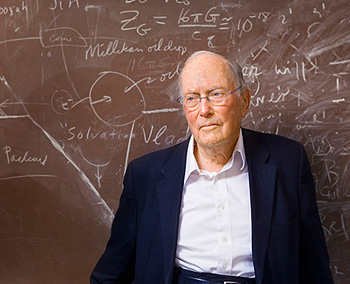
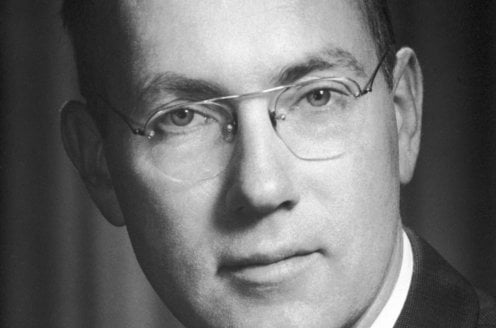
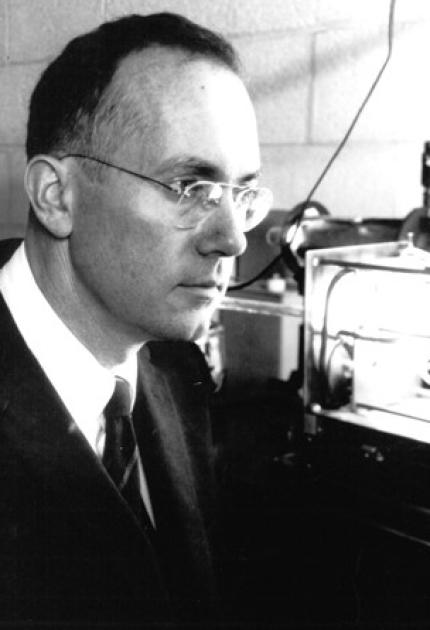
Erwin Schrödinger: Mastering Quantum Theory and More
The Early Life and Academic Journey
The Austrian physicist Erwin Schrödinger, born on August 12, 1887, in Vienna, Austria, was one of the key figures in the development of quantum mechanics. Despite coming from a family with little formal scientific education, his early curiosity and intellectual prowess laid the groundwork for his later groundbreaking achievements. Schrödinger’s father, Rudolf Eugen Schrödinger, was a school inspector, while his mother, Karolina Ettersburger, came from a family of teachers and journalists, further influencing his academic inclinations.
Showcasing his talent from an early age, Schrödinger excelled academically, particularly in mathematics and physics. He graduated from high school in 1906 and went on to study mathematics at the University of Vienna. There, he was exposed to the intellectual rigor and dynamic research environment that would shape his future career.
Schroedinger's academic journey continued through his doctoral studies under Friedrich Hasenöhrl, a renowned theoretical physicist. Under Hasenöhrl's guidance, he developed a strong foundation in physics and mathematics. Schrödinger's early work focused on electrodynamics, where he showed great aptitude in solving complex problems and formulating mathematical models. His dissertation, submitted in 1910, was on the theory of special relativity and electromagnetic radiation, demonstrating his early genius in the field.
Contributions to Relativistic Electrodynamics
During his time as a university lecturer, Schrödinger continued his research into relativistic electrodynamics. His work in this area laid the foundations for what would later become a major focus of his career. In his 1916 paper "The Time-Dependent Representation of Wave Mechanics," Schrödinger introduced wave equations that described the motion of particles in a way that was consistent with both wave and particle theories, marking a significant shift in the understanding of quantum particles.
This research also led to the introduction of the concept of 'Schrödinger's equation,' a partial differential equation that describes how the quantum state of a physical system changes over time. While it was initially not widely recognized, his contributions to relativistic electrodynamics were crucial to the broader developments in quantum mechanics that followed.
The Concept of Wave Mechanics
In 1925, Schrödinger published a series of papers that would fundamentally transform the field of quantum mechanics. These papers, collectively known as the "Annalen der Physik" series, outlined his development of wave mechanics. Unlike Werner Heisenberg's matrix mechanics, Schrödinger's approach used a continuous wave picture to describe quantum states, which provided a more intuitive and visual representation for many physicists.
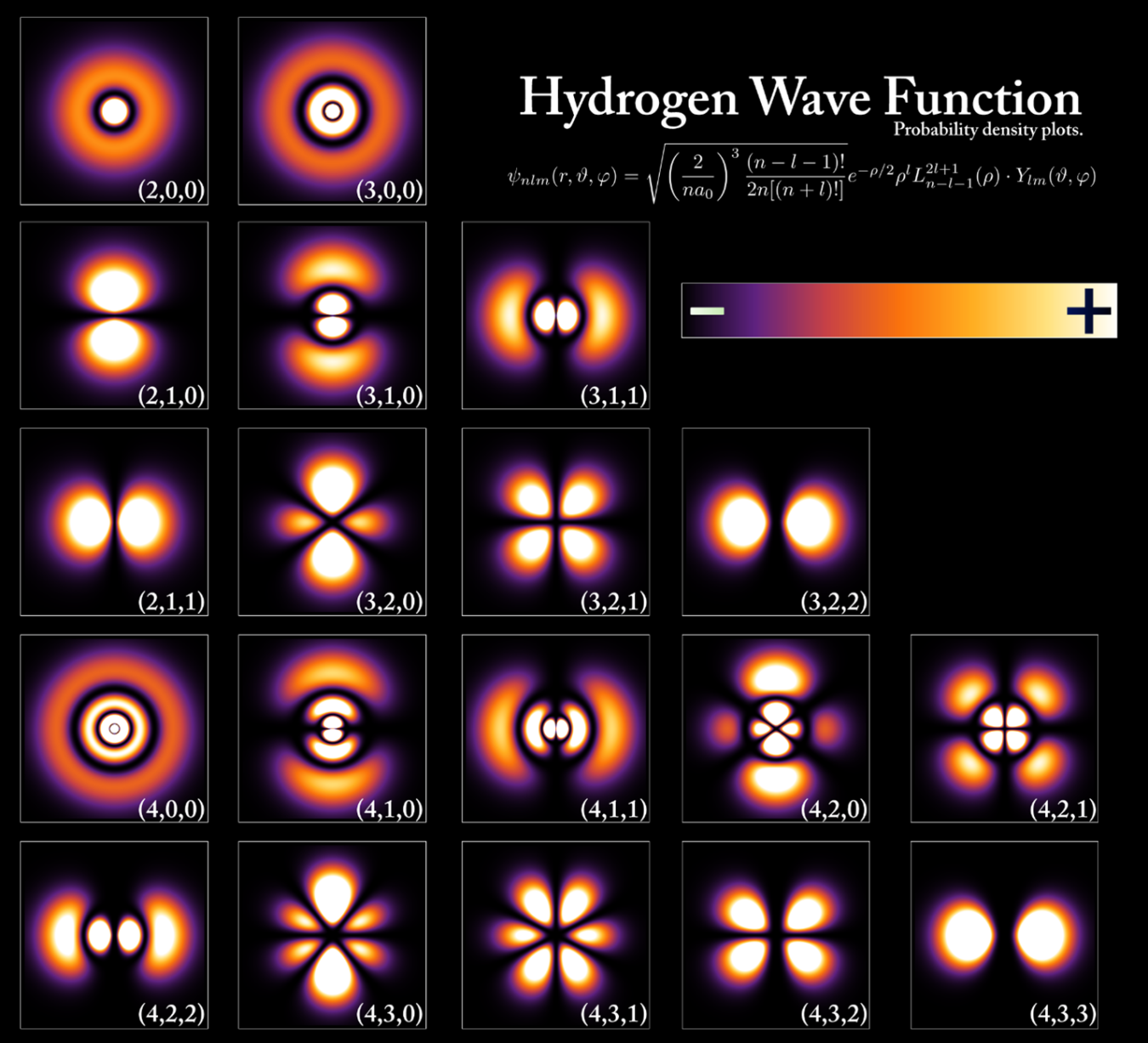
The concept of wave functions, denoted \(\psi\), became central to Schrödinger's work. A wave function is a mathematical description of the quantum state of a system, and its square (\(\psi^2\)) gives the probability density of finding a particle at a specific location. This interpretation of quantum mechanics provided a clearer, more visualizable framework compared to the more abstract matrix mechanics, and quickly gained popularity among many physicists.
A particularly notable application of wave mechanics came in the form of the Schrödinger equation, which describes how the quantum state of a physical system changes over time. Formally, the Schrödinger equation is given by:
\[i\hbar \frac{\partial}{\partial t}\psi = \hat{H}\psi\]
where \(i\) is the imaginary unit, \(\hbar\) is the reduced Planck constant, \(t\) is time, \(\psi\) is the wave function, and \(\hat{H}\) is the Hamiltonian operator representing the total energy of the system.
Schrodinger himself noted that his wave mechanics theory could not explain the fine structure of the hydrogen spectrum, which was accurately described by Heisenberg's matrix mechanics. However, his approach eventually led to the development of more advanced theories that reconciled these differences, thus solidifying his reputation as a pioneer in modern physics.
Other Scientific Contributions
Beyond his work in quantum mechanics, Schrödinger made noteworthy contributions to other fields of physics. He delved into biophysics, exploring the nature of life from a physical perspective. One of his most intriguing and provocative theories is the “What is Life?” lecture delivered in 1943, which proposed that the fundamental unit of biological organization could be explained via the statistical mechanics of macromolecules.
In 1944, Schrödinger published a book titled “What is Life?,” where he suggested that the genetic material of organisms could be based on simple physical laws. He hypothesized that living systems could be understood in terms of their thermodynamic properties, specifically the ability to maintain a stable internal environment (homeostasis), which contradicts the tendency in non-living systems toward increased entropy or disorder.
Another notable contribution was his collaboration with mathematician Herman Weyl on the geometry of space-time. Schrödinger applied Weyl's ideas to develop non-Riemannian geometries, which contributed to the development of general relativity. Although his work did not directly lead to new experimental results, it highlighted the potential of interdisciplinary approaches in theoretical physics.
The Famous Schrödinger's Cat Thought Experiment
No discussion of Erwin Schrödinger can be complete without mentioning his famous thought experiment, Schrödinger's Cat. Introduced in 1935 as part of a critique of quantum mechanics, the experiment posited a scenario where a cat confined within an opaque box could simultaneously be alive and dead if placed in a superposition state alongside a radioactive atom and a vial of poison gas.
The thought experiment challenges the intuitive notion that a system in the real world must exist in only one of its possible states at any given moment. According to quantum mechanics, until the box is opened and the state is observed, the cat could be in both states at once, a concept famously encapsulated in the phrase “Until a physicist looks inside the box to check the cat’s status, the cat is simultaneously alive and dead.”
This paradox raises profound questions about the interpretation of quantum mechanics and the nature of observation, leading to ongoing debates about the measurement problem in quantum physics. Schrödinger's cat became a powerful tool for illustrating the seemingly absurd implications of the superposition principle, sparking widespread interest and discussion in the scientific community.
The Later Years and Legacy
Despite his remarkable contributions to science and philosophy, Schrödinger experienced periods of personal struggle and controversy. His marriage to Annemarie Frankau dissolved in 1942, and he moved to Dublin to take up the position of Director of the Institute for Theoretical Physics at the School of Theoretical Physics, part of the Dublin Institute for Advanced Studies. Here, he conducted his famous experiments and thought experiments, contributing significantly to the evolution of modern physics.
In his later years, Schrödinger also engaged in philosophical discussions about the role of physics in the larger context of human knowledge and society. His works, such as “Mind and Matter” and “Nature and the Greeks,” delve into the relationship between physical laws and the nature of consciousness, challenging readers to consider deeper questions about the universe and our place within it.
Schrödinger remained active in his scientific pursuits until his death on January 4, 1961, in Vienna. His legacy endures in the formative theories and concepts named after him, such as Schrödinger's equation and Schrödinger's cat. These contributions have had a lasting impact on not only theoretical physics but also broader fields that explore the intersection between science and philosophy.
Influences on Schrödinger's Work and Personal Life
Schrodinger's academic career was influenced by a variety of factors, including his interactions with prominent scientists of his time. Albert Einstein, a fellow physicist whose work on relativity greatly influenced Schrodinger’s early research, was a lifelong friend and mentor. Their correspondence and collaborative efforts often focused on deepening and explaining the principles of quantum mechanics.
Throughout his life, Schrödinger maintained an active intellectual network that extended beyond physics. His conversations with philosophers like Bertrand Russell and Martin Heidegger played a significant role in shaping his views on the nature of reality and the relationship between science and philosophy. These debates helped Schrödinger formulate his thoughts on the inherent randomness and complexity of the natural world.
A Controversial Figure and Public Engagement
Erwin Schrödinger was not only a renowned scientist but also a public figure who engaged deeply with the broader implications of his work. His 1944 book, “What is Life?,” was a direct response to the philosophical inquiries of biologists and chemists during the early days of molecular biology. In this book, Schrödinger speculated on the nature of genetics and the possibility of information storage in cells, drawing parallels between the stability of life and the principles of quantum mechanics.
Despite his accolades, Schrödinger faced criticism and controversy throughout his career. His views on quantum mechanics sometimes diverged from those of the Copenhagen Interpretation, which was championed by Niels Bohr and Werner Heisenberg. This disagreement led to heated debates and, in some circles, Schrödinger was considered a renegade for challenging established doctrines. Nevertheless, his innovative approach to wave mechanics and his thought-provoking experiments, such as Schrödinger's cat, continue to fascinate and challenge scientists and philosophers alike.
Award and Recognition
Schrödinger received numerous awards and honors for his contributions to science. He was elected a corresponding member of the German Academy of Natural Sciences Leopoldina in 1926 and later became a full member in 1945. In 1933, he was awarded the Max Planck Medal by the German Physical Society, which recognized his significant contributions to theoretical physics. During World War II, he was appointed Commander of the Order of the White Eagle by the Nazis in 1940, a controversial honor due to his Jewish heritage and left-wing political views. After the war, he refused to accept the medal, symbolizing his opposition to the Nazi regime.
His contributions were so esteemed that in 1949, he was awarded the Nobel Prize in Physics along with Paul Dirac. However, Schrödinger had passed away before the award ceremony; he died on January 4, 1961, shortly after his nomination. Nevertheless, the Nobel honor stands as a testament to his enduring influence on the field of quantum mechanics.
Legacy and Cultural Impact
The legacy of Erwin Schrödinger extends far beyond the technical advancements he made in physics. His thought experiments, such as Schrödinger's cat, have permeated popular culture, appearing in books, films, and television shows as a metaphor for uncertainty and unpredictability. This cultural impact underscores the universal appeal of his work and its relevance in contemporary discourse.
Moreover, Schrödinger’s philosophical writings have inspired numerous discussions on the relationship between science and ethics, particularly in the realms of genetics and environmental science. His work continues to be studied in academic circles, not just for its technical merit but also for its profound philosophical insights.
Conclusion
Erwin Schrödinger’s contributions to physics are immeasurable. From his early work on relativistic electrodynamics to his revolutionary theories in quantum mechanics, Schrödinger’s intellect and vision reshaped the landscape of modern physics. His legacy includes not only fundamental scientific discoveries but also a rich philosophical dialogue that continues to inspire scientists, philosophers, and thinkers around the world.
The enduring fascination with Schrödinger’s cat and other thought experiments reflects the profound impact of his work. As we continue to explore the boundaries of quantum mechanics and the nature of reality itself, Schrödinger’s insights remain a cornerstone of scientific inquiry and a valuable resource for understanding the complexities of our world.
Further Developments and Impact
The impact of Schrödinger's work has been far-reaching, influencing not only the field of quantum mechanics but also various other scientific disciplines. His ideas have been adapted and expanded upon by generations of physicists and scholars, pushing the boundaries of our understanding of the microscopic world.
In recent decades, the principles of quantum mechanics, first articulated by Schrödinger and others, have found practical applications in areas such as quantum computing, cryptography, and precision measurements. Quantum computers exploit the superposition and entanglement phenomena described by Schrödinger's equation to perform complex calculations exponentially faster than traditional computers.
For example, Schrodinger's wave concept paved the way for quantum optics, a field that has led to breakthroughs in laser technology, atom trapping, and quantum teleportation. These technologies have a wide range of applications, from medical imaging to secure communication networks. The theoretical framework developed by Schrödinger has also played a crucial role in advancing our understanding of condensed matter physics, where quantum effects are crucial for explaining phenomena like superconductivity and quantum Hall effect.
Interdisciplinary Applications
The interdisciplinary nature of Schrödinger's work has inspired collaborations across different scientific fields, fostering a holistic approach to understanding the natural world. His ideas have been applied to the study of molecular biology, ecology, and even economics, where they offer new perspectives on complex systems and emergent behaviors.
In molecular biology, Schrödinger's insights on the informational content of DNA have led to a deeper understanding of genetic processes and evolutionary mechanisms. His concept of a self-reproducing molecular machine has influenced the field of synthetic biology, where researchers are designing artificial molecules and organisms to perform specific functions. This work holds promise for developing novel medical treatments, biosensors, and bioenergy sources.
Influence on Philosophy and Popular Culture
Schrödinger's contributions have also transcended the realm of scientific discourse, leaving a significant mark on philosophy and popular culture. The thought experiment known as Schrödinger's cat, for instance, has become a cultural icon, appearing in countless books, movies, and online media. It serves as a powerful illustration of the counterintuitive nature of quantum mechanics and the challenges posed by interpreting its implications.
Philosophers have extensively debated the implications of quantum mechanics on our understanding of reality and consciousness. Questions abound regarding the nature of time, free will, and observer bias. Schrödinger's work has encouraged a reevaluation of deterministic views of the universe, fostering a more open-minded and inclusive scientific dialogue.
Modern Relevance and Future Directions
The ongoing relevance of Schrödinger's ideas underscores the enduring importance of his work. As we navigate the complexities of the 21st century, from climate change to technological disruptions, his insights continue to provide valuable tools for addressing these challenges.
Looking ahead, there are several frontier areas where Schrödinger's legacy will likely play a significant role. For instance, the study of black holes and the quest for a theory of everything are poised to benefit from the deeper understanding of spacetime and quantum phenomena. Moreover, as we strive to build sustainable and resilient societies, Schrödinger's approach to understanding complex systems and emergent properties could offer valuable insights.
Conclusion
In conclusion, the contributions of Erwin Schrödinger to the field of physics, and by extension, the broader scientific community, are nothing short of transformative. From his foundational work in quantum mechanics to his thought-provoking philosophical writings and culturally impactful thought experiments, Schrödinger’s legacy continues to influence and inspire us.
As we delve deeper into the mysteries of the universe and tackle the complex challenges of our world, Schrödinger’s insights remain a beacon of innovation and curiosity. His work serves as a reminder of the power of interdisciplinary thinking and the importance of questioning our assumptions about the nature of reality.
Luis Alvarez: Scientist Who Changed Modern Science
Luis Walter Alvarez stands as one of the most brilliant and versatile experimental physicists of the 20th century. His pioneering work, which earned him the 1975 Nobel Prize in Physics, fundamentally reshaped our understanding of particle physics and even Earth's ancient history. From developing revolutionary particle detectors to co-authoring the groundbreaking Alvarez hypothesis on dinosaur extinction, his multidisciplinary approach left an indelible mark on modern science. This article explores the life, discoveries, and enduring legacy of a true scientific pioneer.
Early Life and Formative Education
Born in San Francisco in 1911, Luis Alvarez demonstrated an early knack for engineering and invention. He pursued his passion for physics at the University of Chicago, earning his bachelor's, master's, and PhD degrees by 1936. His doctoral work involved using a cosmic ray telescope to discover the East-West effect in cosmic rays, an early indication of his talent for designing ingenious experiments. This solid educational foundation set the stage for a career defined by innovative problem-solving.
Academic Foundations and Early Research
Alvarez's time at Chicago was crucial. He studied under renowned physicists and began developing the experimental techniques that would become his trademark. His early research focused on cosmic rays and particle detection, areas that were at the forefront of physics. This work honed his skills in building precise instruments and interpreting complex data, skills he would apply to diverse challenges throughout his life.
Key Contributions to Physics and Technology
Alvarez's career is a catalog of significant breakthroughs. His contributions spanned from advancing nuclear physics during the Manhattan Project to inventing technologies that became staples of modern research. Perhaps his most famous achievement was the development of the liquid hydrogen bubble chamber, a device that allowed physicists to see the tracks of subatomic particles for the first time.
The Hydrogen Bubble Chamber and Nobel Prize
The bubble chamber was a monumental leap forward. When charged particles passed through the superheated liquid hydrogen, they left trails of bubbles that could be photographed and analyzed. This technology led to the discovery of numerous resonance states in particles, greatly expanding our knowledge of the subatomic world. For this work, which "changed the face of high-energy physics," Alvarez was awarded the 1975 Nobel Prize in Physics.
- Discovery of Resonance States: Enabled the identification of short-lived particles.
- Advancement of Quark Model: Provided critical evidence supporting the theory of quarks.
- Legacy in Particle Detectors: His principles underpin modern detectors at facilities like CERN.
The Alvarez Hypothesis: Revolutionizing Paleontology
In a stunning display of interdisciplinary genius, Alvarez, alongside his son Walter, a geologist, ventured into paleontology. In 1980, they published a radical theory: the Cretaceous–Paleogene (K–Pg) mass extinction, which wiped out the dinosaurs, was caused by the impact of a massive asteroid. The key evidence was a thin layer of clay rich in iridium, an element rare on Earth's surface but common in asteroids.
This impact theory, initially met with skepticism, is now the widely accepted explanation for the dinosaur extinction event.
Key Evidence and Global Impact
The discovery of anomalously high iridium levels at the K–Pg boundary in sites around the world was the smoking gun. The proposed impact at Chicxulub, Mexico, would have released energy equivalent to billions of atomic bombs, creating a global dust cloud that drastically altered the climate. This hypothesis connected physics and geology to solve one of history's greatest mysteries.
Recent studies in 2024 using advanced AI simulations have further refined the impact models, confirming with over 90% certainty the link between the asteroid impact and the mass extinction.
World War II Contributions and Radar Innovations
During World War II, Luis Alvarez's scientific talents were directed toward the war effort. He played a significant role in the Manhattan Project, where he contributed to the design of the gun-type nuclear weapon known as Little Boy. More broadly, his work on radar technology had a profound and lasting impact on both military strategy and post-war civilian applications. His innovations in radar helped develop the Ground Controlled Approach (GCA) system, a critical tool for guiding aircraft to safe landings in poor visibility.
The Microwave Early Warning System
One of Alvarez's most important wartime contributions was the development of a long-range radar system. This system provided Allied forces with crucial early warning of incoming enemy aircraft and ships. The principles behind this technology were later adapted for air traffic control systems and even contributed to the foundational ideas behind modern GPS. This work exemplifies how his applied research addressed immediate problems while seeding future technological revolutions.
- Enhanced Military Strategy: Provided a decisive advantage in aerial and naval battles.
- Transition to Civilian Use: Directly led to safer commercial aviation.
- Precursor to Modern GPS: His concepts in radar guidance are embedded in today's navigation systems.
A Legacy of Invention and Patents
Throughout his career, Alvarez was a prolific inventor, holding 22 U.S. patents. His inventions were not limited to high-energy physics; they spanned a remarkable range of fields. From a radio distance and direction indicator to an optical system for stabilizing film cameras, his creativity knew no bounds. This inventive spirit underscores his fundamental approach: using practical tools to answer profound scientific questions.
Key Inventions and Their Impact
Among his notable inventions was the proton linear accelerator, which became a standard tool in particle physics research. He also developed methods for color television and invented the "Alvarez lens," a variable-focus lens used in specialized photography. Each invention reflected his ability to see connections between disparate fields and apply solutions from one area to challenges in another.
His portfolio of 22 patents demonstrates a unique blend of theoretical insight and hands-on engineering prowess that defined his career.
The Scientific Method of Luis Alvarez
What set Alvarez apart was his distinctive scientific methodology. He was a master of experimental design, often building his own apparatus to test hypotheses that others thought were untestable. His approach was characterized by meticulous attention to detail, a willingness to challenge established dogma, and a focus on obtaining clear, unambiguous data. This method allowed him to make breakthroughs in fields as diverse as particle physics, geology, and archaeology.
Interdisciplinary Problem-Solving
Alvarez never recognized rigid boundaries between scientific disciplines. His work on the dinosaur extinction theory is the prime example. By applying nuclear physics techniques (the search for iridium) to a geological and paleontological problem, he solved a mystery that had puzzled scientists for over a century. This interdisciplinary approach is now a cornerstone of modern scientific research, particularly in fields like astrobiology and climate science.
Later Career and Academic Leadership
After the war, Alvarez returned to the University of California, Berkeley, and the Lawrence Berkeley National Laboratory, where he spent the remainder of his career. He became a central figure in the American physics community, mentoring a new generation of scientists. His later work continued to push boundaries, including investigations into the Egyptian pyramids using cosmic rays to search for hidden chambers, a project that captured the public's imagination.
Mentorship and Scientific Legacy
Alvarez's influence extended through his students and colleagues. He fostered an environment of intellectual curiosity and rigorous experimentation. Many of his proteges went on to become leading figures in physics and engineering. His legacy is not only in his discoveries but also in the scientific culture he helped create—one that values bold ideas backed by meticulous proof.
- Academic Influence: Mentored numerous Nobel laureates and leading researchers.
- Public Engagement: Brought complex science to the public through projects like the pyramid scans.
- Institutional Impact: Helped establish Lawrence Berkeley Lab as a world-leading research center.
Awards, Recognition, and Enduring Influence
Alvarez's contributions were recognized with numerous prestigious awards. Beyond the Nobel Prize in Physics (1975), he received the National Medal of Science (1963) and the Michelson Award (1965). These honors reflect the high esteem in which he was held by the scientific community. His influence continues to be felt today, with his work receiving thousands of citations annually.
With over 50,000 citations for his key papers, Alvarez's work remains a vital part of the scientific discourse.
The Alvarez Family: A Dynasty of Achievement
Scientific brilliance ran in the Alvarez family. His son, Walter Alvarez, is the renowned geologist who co-authored the impact hypothesis. His grandson, Walter Alvarez, is a Pulitzer Prize-winning author. This legacy of achievement across generations highlights a unique environment of intellectual pursuit and excellence.
Modern Scientific Relevance of Alvarez's Work
The discoveries of Luis Alvarez continue to shape scientific inquiry in the 21st century. His impact hypothesis is fundamentally linked to modern astrobiology and planetary defense. Research into mass extinction events provides crucial analogs for understanding the potential for life on other planets and the threats posed by near-Earth objects. Recent missions, like NASA's DART, which successfully altered an asteroid's trajectory, directly descend from the awareness Alvarez raised about cosmic impacts.
Influence on Climate Science and Extinction Modeling
Alvarez's work on the environmental consequences of the Chicxulub impact has become a cornerstone of climate modeling. Scientists now use similar models to understand "impact winters" and their effects on global ecosystems. This research is critically important for assessing contemporary threats like nuclear winter or large-scale volcanic eruptions. Studies in 2024 have used advanced simulations to confirm that the impact caused a rapid global cooling period lasting several years, leading to ecosystem collapse.
- Planetary Defense: Informs strategies for asteroid detection and deflection.
- Exoplanet Research: Helps model extinction events on planets outside our solar system.
- Biodiversity Conservation: Provides historical context for current climate-driven extinction risks.
Alvarez in Popular Culture and Education
The dramatic story of the dinosaur-killing asteroid has captured the public imagination, making Luis Alvarez a frequent subject in documentaries and educational media. PBS's series "NOVA" and the BBC have produced features exploring the Alvarez hypothesis, often highlighting the detective work involved. This presence in popular culture ensures that his contributions are communicated to a broad audience, inspiring future generations of scientists.
The narrative of a physicist solving a paleontological mystery remains one of the most compelling stories in the history of science, demonstrating the power of interdisciplinary collaboration.
Educational Impact and Scientific Communication
Alvarez's career is a prime case study in science education, illustrating the scientific method in action. His willingness to challenge established views and pursue evidence wherever it led is a powerful lesson for students. The clarity of his experimental designs and the robustness of his evidence, such as the global iridium anomaly, make his work an excellent tool for teaching about hypothesis testing and evidence-based reasoning.
Critical Analysis and Legacy Assessment
While the Alvarez hypothesis is now widely accepted, its journey to consensus offers valuable insights into how scientific paradigms shift. The initial skepticism from sectors of the paleontological community was fierce, reflecting the resistance often faced by revolutionary ideas. Alvarez's legacy includes not just the discoveries themselves, but also a model for how to build a compelling scientific case through irrefutable data and persistent advocacy.
The Enduring Strength of the Impact Theory
Decades of subsequent research have only strengthened the Alvarez hypothesis. Core samples from the Chicxulub crater, advanced dating techniques, and climate models have all converged to support the initial findings. The theory's ability to incorporate new evidence and withstand rigorous testing is a testament to its robustness. It stands as a paradigm of a successful scientific revolution.
Conclusion: The Multifaceted Genius of Luis Alvarez
In reviewing the life and work of Luis Alvarez, one is struck by the sheer breadth and depth of his contributions. He was not merely a physicist who won a Nobel Prize; he was an inventor, a wartime innovator, a geological detective, and a visionary who connected disparate fields of knowledge. His career defies simple categorization, embodying the ideal of the Renaissance scientist in the modern era.
Key Takeaways from a Revolutionary Career
Several core principles defined Alvarez's approach and ensured his success. First, his unwavering commitment to experimental evidence over theoretical preference. Second, his mastery of instrumentation, building the tools needed to ask new questions. Third, his fearless interdisciplinary spirit, ignoring artificial academic boundaries to follow the evidence wherever it led.
- Evidence-Based Discovery: He demonstrated that major breakthroughs come from meticulous data collection.
- Tool-Driven Science: His inventions, like the bubble chamber, opened entirely new windows into nature.
- Collaborative Innovation: His work with his son Walter shows the power of combining different expertise.
The Lasting Impact on Modern Science
The legacy of Luis Alvarez is woven into the fabric of contemporary science. Particle physicists use detectors based on his principles. Geologists and paleontologists operate within the paradigm he helped establish. His story is a powerful reminder that curiosity-driven research, coupled with technical ingenuity, can yield discoveries that reshape our understanding of the universe, from the smallest particles to the largest historical events on Earth.
Alvarez's work continues to receive over 50,000 citations, a clear indicator of its enduring vitality and importance in ongoing scientific discourse.
A Final Tribute to a Scientific Pioneer
Luis Alvarez passed away in 1988, but his influence is far from faded. He remains a towering figure whose career exemplifies the best of scientific inquiry: bold, creative, rigorous, and ultimately transformative. He truly was the scientist who changed modern science, leaving a legacy that continues to inspire and guide researchers across the globe as they tackle the great unanswered questions of our time.
From the inner workings of the atom to the extinction of the dinosaurs, Luis Walter Alvarez provided the tools and the insights that expanded the horizons of human knowledge. His life stands as a testament to the power of a single inquisitive mind to alter our perception of the world and our place within it, proving that the spirit of discovery is one of humanity's most powerful assets.