Émile Picard: Visionario Matemático del Siglo XIX
El matemático francés Charles-Émile Picard es una figura monumental de la ciencia del siglo XIX. Sus contribuciones, que abarcan desde el análisis complejo hasta la geometría algebraica, no solo definieron campos enteros sino que sentaron las bases para el desarrollo matemático moderno. Este artículo explora la vida y el legado imperecedero de un verdadero visionario.
Vida y Formación de un Genio Matemático
Charles-Émile Picard nació el 24 de julio de 1856 en París, en el seno de una familia de clase media. Su precoz talento para las matemáticas se manifestó desde muy joven. Tras una educación destacada, ingresó en la prestigiosa École Normale Supérieure en 1874, donde estudió bajo la influencia de grandes matemáticos de la época.
Su ascenso académico fue meteórico. A los 22 años obtuvo su doctorado y, pocos años después, en 1879, fue nombrado profesor en la Universidad de Toulouse. Esta posición fue solo el inicio de una carrera académica que lo llevaría a las instituciones más importantes de Francia, consolidando su reputación como uno de los matemáticos más influyentes de su generación.
Una Carrera Académica Distinguida
La trayectoria de Picard es una crónica de reconocimientos y responsabilidades crecientes. En 1898, regresó a París para ocupar una cátedra en la Sorbona y en la École Normale Supérieure. Su influencia se extendió más allá de las aulas cuando, en 1917, fue elegido secretario permanente de la Academia de Ciencias de Francia, un puesto de enorme prestigio que ocupó hasta su muerte.
Picard fue también un prolífico autor de textos académicos y un biógrafo dedicado de sus colegas matemáticos. Su obra escrita, tanto técnica como histórica, refleja una mente profundamente erudita y comprometida con la difusión del conocimiento científico.
Contribuciones Fundamentales al Análisis Complejo
Sin duda, el área donde Picard dejó una huella más profunda fue en la teoría de funciones de variable compleja. Sus célebres teoremas de Picard representan un salto conceptual que sigue siendo enseñado y aplicado en todo el mundo.
Estos teoremas, publicados en 1879, responden preguntas fundamentales sobre el comportamiento de las funciones analíticas. Su belleza reside en la contundencia y generalidad de sus conclusiones, que revelan propiedades universales de estas funciones.
El Teorema Pequeño de Picard
Este teorema establece una propiedad sorprendente sobre las funciones enteras, es decir, aquellas funciones que son analíticas en todo el plano complejo. Afirma que una función entera no constante toma todos los valores complejos posibles, con la excepción de, como máximo, un valor.
Por ejemplo, la función exponencial *ez* nunca toma el valor cero, pero sí toma cualquier otro valor complejo infinitas veces. Este resultado demostró que el comportamiento de las funciones enteras está extremadamente restringido y abrió nuevas vías de investigación en análisis.
El Teorema Grande de Picard
El teorema grande extiende esta idea a las singularidades esenciales, que son puntos donde una función tiene un comportamiento particularmente salvaje. Picard demostró que en cualquier vecindad de una singularidad esencial, la función toma todos los valores complejos infinitas veces, nuevamente con la posible excepción de un solo valor.
Los teoremas de Picard revolucionaron la comprensión de las funciones complejas y se convirtieron en piedras angulares de la teoría. Su impacto perdura en la investigación contemporánea en análisis y topología.
Estos resultados no fueron solo un triunfo teórico. Proporcionaron herramientas poderosas para el estudio de ecuaciones diferenciales y la geometría de superficies, conectando elegantemente distintas áreas de las matemáticas. Su influencia es tal que hoy se estudian en todos los cursos avanzados de análisis complejo.
El Método de Picard en Ecuaciones Diferenciales
Otra contribución monumental de Picard fue en el campo de las ecuaciones diferenciales. Desarrolló un procedimiento iterativo para demostrar la existencia y unicidad de soluciones, conocido universalmente como el método de aproximaciones sucesivas de Picard o simplemente iteración de Picard.
Este método aborda el llamado problema de Cauchy, que busca una función que satisfaga una ecuación diferencial dada junto con una condición inicial específica. Picard ideó una forma constructiva de generar una sucesión de funciones que, bajo ciertas condiciones, converge a la solución exacta.
Aplicaciones y Legado del Método
La importancia práctica del método de Picard es inmensa. Proporciona no solo una prueba de existencia, sino también un algoritmo numérico para aproximar soluciones. Hoy, este algoritmo está implementado en software matemático como MATLAB y se enseña en cursos de ecuaciones diferenciales y análisis numérico en todo el mundo.
- Demostración Constructiva: A diferencia de otros teoremas de existencia, el método de Picard muestra explícitamente cómo construir la solución.
- Base para Generalizaciones: Sus ideas fueron extendidas a ecuaciones diferenciales parciales y a sistemas más complejos, dando origen a la teoría Picard-Vessiot.
- Puente entre Teoría y Cálculo: Este método conecta el mundo abstracto de la existencia de soluciones con el mundo concreto de su cálculo aproximado.
Además, Picard aplicó sus técnicas al estudio de ecuaciones diferenciales lineales, investigando sus grupos de transformaciones. Este trabajo fue fundamental en el desarrollo de la teoría de Galois para ecuaciones diferenciales, un área de investigación activa en el álgebra moderna.
Reconocimientos y Premios Internacionales
A lo largo de su vida, Émile Picard recibió numerosos honores que reflejaban la alta estima en que la comunidad científica internacional lo tenía. Sus primeros trabajos fueron reconocidos rápidamente por las instituciones más prestigiosas.
Entre sus galardones más destacados se encuentran el Premio Poncelet en 1886 y el Grand Prix des Sciences Mathématiques de la Academia de Ciencias en 1888. Estos premios consolidaron su reputación como el matemático líder de su generación en Francia.
Honores Nacionales y Distinciones Extranjeras
El reconocimiento a Picard trascendió las fronteras de las matemáticas y de Francia. Fue condecorado con la Grande Croix de la Légion d'Honneur en 1932, la más alta distinción de la República Francesa. Además, recibió la Medalla de Oro Mittag-Leffler, un premio internacional de gran prestigio en matemáticas.
Su influencia global se evidencia en su membresía honoraria en 37 sociedades científicas de todo el mundo y en los doctorados honoris causa que le otorgaron cinco universidades extranjeras. Fue un verdadero ciudadano del mundo de la ciencia, respetado y admirado por sus pares en todos los continentes.
Picard fue elegido miembro de la Academia de Ciencias de Francia en 1889, a la temprana edad de 33 años, un testimonio del impacto inmediato y profundo de su trabajo.
Estos honores no fueron solo personales; también reflejaron el resurgimiento de la escuela matemática francesa en la escena mundial, con Picard como uno de sus principales embajadores y protagonistas. Su liderazgo ayudó a definir la dirección de la investigación matemática durante décadas.
Pionero en Geometría Algebraica y Topología
La visión unificadora de Émile Picard se extendió más allá del análisis hacia la geometría algebraica. Su trabajo en esta área fue pionero y sentó las bases conceptuales para desarrollos futuros. Picard exploró la teoría de las superficies algebraicas y las funciones de dos variables complejas, un territorio vasto y poco explorado en su época.
Su colaboración con Georges Simart resultó en la monumental obra en dos volúmenes Théorie des fonctions algébriques de deux variables indépendantes, publicada entre 1897 y 1906. Este tratado sistematizó el estudio de las integrales en superficies algebraicas y estableció conexiones profundas con el análisis complejo, influyendo directamente en la escuela italiana de geometría algebraica.
El Grupo de Picard y las Integrales de Picard
Una de las contribuciones más perdurables de Picard en esta área es la introducción del concepto que hoy lleva su nombre: el grupo de Picard. Originalmente, Picard lo definió como un grupo de transformaciones relacionado con ecuaciones diferenciales lineales. Este concepto abstracto demostró ser extraordinariamente fértil.
En la geometría algebraica moderna, el grupo de Picard de una variedad algebraica clasifica los haces de línea sobre ella. Esta noción es central en la disciplina y un pilar en la investigación contemporánea. Las integrales que estudió, conocidas como integrales de Picard, también abrieron nuevas vías en el cálculo de períodos y en la teoría de Hodge.
El trabajo de Picard en superficies algebraicas fue descrito por sus contemporáneos como "iluminador", proporcionando el andamiaje algebraico necesario para estudiar objetos geométricos complejos de dimensión superior.
Su enfoque combinaba el rigor analítico con la intuición geométrica. Este estilo característico permitió que sus resultados trascendieran las barreras entre especialidades, creando un lenguaje común para matemáticos de diferentes campos. Su legado en este ámbito es tan sólido que sus términos y conceptos siguen en uso más de un siglo después.
Obras Magnas y su Impacto Educativo
Picard no fue solo un investigador genial; fue también un maestro y divulgador excepcional. Sus obras escritas se caracterizan por su claridad, exhaustividad y accesibilidad. Él creía firmemente que el conocimiento matemático avanzado debía ser comunicado de manera eficaz para prosperar.
Su Traîté d'analyse, publicado en tres volúmenes entre 1891 y 1896, se convirtió instantáneamente en un clásico. Este tratado cubría no solo análisis puro, sino también sus aplicaciones a problemas de elasticidad, teoría del calor y electricidad. Fue un texto de referencia para generaciones de estudiantes e investigadores en Francia y en el extranjero.
El Legado de un Expositor Claro
La habilidad pedagógica de Picard se refleja en la estructura lógica y la progresión gradual de sus libros. Sus escritos evitaban la oscuridad innecesaria, privilegiando una exposición que llevaba al lector desde los principios fundamentales hasta los teoremas más avanzados. Esta filosofía tuvo un impacto profundo en la educación matemática superior del siglo XX.
- Integración de Teoría y Aplicación: Sus textos mostraban constantemente cómo la matemática abstracta podía resolver problemas concretos de física e ingeniería.
- Formación de Futuros Investigadores: Muchos matemáticos prominentes de la siguiente generación aprendieron análisis y geometría directamente de los libros de Picard.
- Preservación Digital: Hoy, obras como sus notas de clase de 1891-1892 sobre cálculo integral están digitalizadas y disponibles en el Internet Archive, permitiendo que nuevas generaciones accedan a su enseñanza.
Además de sus tratados técnicos, Picard escribió biografías de colegas matemáticos franceses y uno de los primeros textos en francés sobre la teoría de la relatividad. Este compromiso con la historia y la filosofía de la ciencia completaba su perfil como un intelectual completo, preocupado por el contexto humano y cultural del descubrimiento científico.
Aplicaciones Prácticas e Influencia en la Física Matemática
La genialidad de Picard no se limitó a la torre de marfil de la matemática pura. Tenía un agudo interés por las aplicaciones prácticas de su trabajo. Creía que la elegancia de la teoría debía encontrar su contraparte en la utilidad para explicar el mundo natural y resolver problemas de ingeniería.
Una de sus contribuciones aplicadas más notables fue una solución elegante al problema de la transmisión de pulsos eléctricos en cables telegráficos. Este trabajo demostró cómo las ecuaciones diferenciales y el análisis complejo podían modelar y optimizar sistemas de comunicación, un campo de enorme importancia durante la Segunda Revolución Industrial.
Puente entre Disciplinas Científicas
Picard operó como un puente vital entre las matemáticas y otras ciencias. Sus métodos se aplicaron en la teoría de la elasticidad, ayudando a comprender la deformación de materiales. También trabajó en problemas relacionados con la propagación del calor, un área fundamental para la termodinámica y la ingeniería mecánica.
Picard representa el ideal del matemático del siglo XIX: un unificador que veía la teoría pura y la aplicada como dos caras de la misma moneda. Su obra es un testimonio del poder de las ideas abstractas para transformar la tecnología.
Esta visión integradora ha dejado una huella indeleble. Sus técnicas se emplean hoy en la física matemática moderna, particularmente en el estudio de ecuaciones no lineales como las ecuaciones de Painlevé. La fórmula Picard-Lefschetz, que surge de su trabajo en topología, es una herramienta esencial en la teoría de campos cuánticos y en la teoría de cuerdas, conectando su legado con la física teórica más avanzada del siglo XXI.
Liderazgo Académico y Contexto Histórico
La carrera de Picard se desarrolló en un período de grandes tensiones internacionales, particularmente entre Francia y Alemania. Su liderazgo científico estuvo inevitablemente marcado por este contexto. Tras la Primera Guerra Mundial, Picard jugó un papel central en el boicot científico a Alemania que duró desde 1917 hasta bien entrada la década de 1920.
Como secretario permanente de la Academia de Ciencias, utilizó su influencia para promover una política de aislamiento de los científicos alemanes. Esta postura, aunque controvertida hoy, reflejaba el intenso nacionalismo y el dolor de la posguerra en Francia. Fue una figura clave en la reorganización de la comunidad científica francesa tras el conflicto.
Un Hombre de Fe y Ciencia
Picard fue también un católico devoto en una época donde la relación entre fe y ciencia era a menudo tensa. No vio contradicción entre sus creencias religiosas y su trabajo científico. De hecho, fue miembro activo de organizaciones de científicos católicos y escribió sobre la compatibilidad de ambos mundos.
Su fe lo llevó a interesarse por la dimensión ética y filosófica del quehacer científico. Este aspecto de su pensamiento, menos conocido que sus teoremas, muestra la profundidad de un intelectual que reflexionaba sobre el lugar del hombre en el universo. Su biografía en Catholicscientists.org destaca precisamente este facetas de su vida.
- Secretario Permanente (1917-1941): Dirigió la Academia de Ciencias durante 24 años, moldeando la política científica francesa.
- Defensor de la "Ciencia Francesa": Promovió activamente los logros y el estilo nacional de hacer matemáticas.
- Mentor de una Nueva Generación: Bajo su tutela, se formaron numerosos matemáticos que continuaron su legado en análisis y geometría.
El contexto histórico de Picard es esencial para comprender la dimensión completa de su figura. Fue un producto de su tiempo: un patriota francés, un hombre de fe y un científico de ambición universal. Sus decisiones, tanto científicas como personales, estuvieron impregnadas de los valores y conflictos de la Europa de entresiglos.
El Legado Perdurable de Émile Picard
La influencia de Émile Picard en las matemáticas modernas es comparable a la de los gigantes en cuyos hombros se paró. Su capacidad para sintetizar ideas de análisis, geometría y álgebra creó un cuerpo de trabajo fundacional que sigue generando investigación más de un siglo después. Su legado no se mide solo en teoremas, sino en marcos conceptuales que redefinieron disciplinas enteras.
Los llamados teoremas de Picard siguen siendo herramientas esenciales en el análisis complejo contemporáneo. Su generalidad y profundidad los han convertido en resultados de referencia, presentes en todos los textos serios sobre la materia. Son un testamento del poder del pensamiento abstracto para revelar verdades universales sobre las funciones.
Impacto en la Investigación Contemporánea
En el siglo XXI, las ideas de Picard siguen vivas en áreas de vanguardia. En topología algebraica, la fórmula Picard-Lefschetz es fundamental para entender la monodromía y los ciclos evanescentes. Esta conexión entre su trabajo en análisis y la topología moderna ilustra la previsión extraordinaria de su pensamiento.
En el campo computacional, el método de iteración de Picard es un algoritmo básico en el análisis numérico de ecuaciones diferenciales. Está implementado en bibliotecas de software como MATLAB y SciPy, utilizadas por millones de ingenieros y científicos para resolver problemas prácticos en física, biología y finanzas.
- Teoría de Funciones: Sus teoremas se aplican en el estudio de dinámicas complejas y sistemas dinámicos.
- Geometría Algebraica Moderna: El grupo de Picard es un invariante central en la clasificación de variedades algebraicas.
- Física Matemática: Sus técnicas aparecen en la teoría de ecuaciones integrables y sistemas Hamiltonianos.
El matemático Jean Dieudonné señaló que Picard "poseía el don raro de ver las conexiones profundas entre campos aparentemente dispares de las matemáticas". Esta visión unificadora es quizás su contribución más valiosa y perdurable.
Su obra escrita, especialmente el Traîté d'analyse, sigue siendo estudiada no solo por su contenido histórico, sino por la claridad ejemplar de su exposición. Muchos de los enfoques pedagógicos que introdujo se han convertido en estándar en la enseñanza de las matemáticas avanzadas.
El Visionario y su Visión Unificadora de la Ciencia
Picard encarnó el ideal del científico integral del siglo XIX. No reconocía barreras rígidas entre la matemática pura y aplicada, ni entre disciplinas teóricas. Para él, el análisis, el álgebra y la geometría eran facetas de una sola verdad matemática que podía, a su vez, iluminar los fenómenos naturales.
Esta visión holística lo llevó a contribuir en campos tan diversos como la telegrafía, la elasticidad y la teoría del calor. Abordó cada problema con el mismo rigor y elegancia, estableciendo un estándar de excelencia que influyó en generaciones de científicos franceses y europeos.
Una Filosofía de la Ciencia Integrada
Picard creía en la unidad del conocimiento. Su trabajo biográfico sobre otros matemáticos refleja su interés por el contexto humano e histórico del descubrimiento científico. Escribió sobre la relatividad cuando esta teoría era aún novedosa, demostrando una curiosidad intelectual que trascendía su especialización inmediata.
Su fe católica no era un aspecto separado de su vida científica, sino parte de una cosmovisión coherente. En una época de creciente especialización y secularización, Picard defendió la posibilidad de una mente científica que también fuera espiritual. Esta integridad personal añade una dimensión profundamente humana a su legado.
Como líder académico durante más de dos décadas en la Academia de Ciencias, promovió activamente esta visión de ciencia unificada. Apoyó investigaciones que cruzaban fronteras disciplinarias y fomentó colaboraciones entre matemáticos, físicos e ingenieros. Su liderazgo ayudó a definir la identidad de la ciencia francesa en la escena internacional durante un período crucial.
Conclusión: La Huella Indeleble de un Genio
Émile Picard falleció el 11 de diciembre de 1941, en un París ocupado por las fuerzas nazis. Su muerte marcó el final de una era en las matemáticas francesas. Sin embargo, sus ideas habían trascendido ya las fronteras de su tiempo y de su nación, convirtiéndose en patrimonio universal de la ciencia.
La evaluación histórica de su obra solo ha crecido con el tiempo. Donde sus contemporáneos veían teoremas brillantes, las generaciones posteriores han descubierto estructuras profundas y conexiones fecundas. Su nombre está grabado en conceptos fundamentales que los matemáticos usan a diario en laboratorios y aulas de todo el mundo.
Resumen de Contribuciones Clave
El legado de Picard puede resumirse en varias contribuciones monumentales que transformaron permanentemente el paisaje matemático:
- Teoremas de Picard: Resultados fundamentales en análisis complejo sobre el rango de funciones enteras y el comportamiento cerca de singularidades esenciales.
- Método de Iteración de Picard: Una herramienta constructiva para probar existencia y unicidad de soluciones a ecuaciones diferenciales, con aplicaciones prácticas inmediatas.
- Grupo de Picard: Un concepto algebraico-geométrico central en la clasificación de variedades algebraicas, con ramificaciones en topología y física teórica.
- Obra Expositiva Magistral: Tratados que educaron a generaciones de matemáticos y establecieron estándares de claridad y rigor.
- Visión Unificadora: La demostración práctica de cómo la matemática pura y aplicada pueden enriquecerse mutuamente.
El obituario de la Royal Society of Edinburgh destacó que Picard "combinaba una potencia creativa excepcional con un dominio técnico consumado y una claridad expositiva rara vez igualada". Esta triple combinación explica la profundidad y longevidad de su impacto.
Relevancia en el Siglo XXI
En la era digital del siglo XXI, la visión de Picard resulta más pertinente que nunca. La explosión de datos y la complejidad de los sistemas modernos requieren exactamente el tipo de pensamiento interdisciplinario que él practicó. Sus métodos numéricos están en el corazón de algoritmos que modelan desde el clima global hasta los mercados financieros.
Su insistencia en la claridad expositiva anticipó la importancia actual de la comunicación científica efectiva. En un mundo saturado de información, la capacidad de articular ideas complejas con precisión y elegancia es más valiosa que nunca. Picard fue un maestro de este arte.
Finalmente, su ejemplo como científico con una visión ética y filosófica del mundo ofrece un modelo inspirador. En una época de especialización extrema y frecuente divorcio entre la ciencia y las humanidades, Picard demostró que es posible, y deseable, cultivar una mente científica integral.
Reflexión Final: El Matemático Completo
Charles-Émile Picard fue mucho más que el autor de algunos teoremas brillantes. Fue un arquitecto intelectual que ayudó a construir los cimientos de las matemáticas modernas. Su trabajo conectó análisis con geometría, teoría con aplicación, y el siglo XIX con el futuro de la disciplina.
Su vida nos recuerda que los avances científicos más significativos a menudo provienen de mentes que se niegan a ser confinadas por las fronteras artificiales entre campos. La curiosidad sin límites y la búsqueda de conexiones profundas fueron las fuerzas motrices de su genio.
Hoy, cuando los matemáticos aplican el teorema de Picard para estudiar fractales, cuando los físicos usan la fórmula Picard-Lefschetz en teoría cuántica de campos, o cuando los ingenieros implementan su método de iteración en software de simulación, están participando de un legado que comenzó en la mente de un visionario parisino del siglo XIX. La obra de Émile Picard vive en cada uno de estos descubrimientos y aplicaciones, un testimonio permanente del poder transformador de las ideas matemáticas cuando son concebidas con profundidad, claridad y una visión amplia del mundo.
Su historia es un recordatorio de que la verdadera grandeza en la ciencia no se mide solo por resultados específicos, sino por la capacidad de abrir nuevos caminos de pensamiento para quienes vendrán después. En este sentido, Picard fue, y sigue siendo, un verdadero gigante cuyos hombros aún sostienen a los exploradores del conocimiento matemático.
Jacques Hadamard: Un Genio Matemático de Proporciones Iniguales
Jacques Hadamard fue un matemático francés cuya genialidad excepcional transformó múltiples campos del análisis matemático y dejó una huella perdurable en la ciencia. Reconocido mundialmente por probar el teorema de los números primos, su legado abarca desde ecuaciones diferenciales hasta la computación cuántica moderna. Este artículo explora la vida y las contribuciones inigualables de un genio cuyas ideas continúan resonando en el siglo XXI.
La Formación Temprana de un Prodigio
Jacques-Salomon Hadamard nació el 8 de diciembre de 1865 en Versalles, Francia. Desde una edad muy temprana, su talento intelectual fue evidente, destacando notablemente en el prestigioso Concours Général a partir de 1875. Este entorno académico riguroso fue el crisol donde se forjó su futuro como uno de los grandes matemáticos de su tiempo.
El Camino Hacia el Doctorado y el Primer Gran Reconocimiento
Hadamard se formó en la célebre École Normale Supérieure, donde desarrolló una profunda pasión por el análisis complejo. En 1892, obtuvo su doctorado con una tesis sobre funciones definidas por series de Taylor. El joven investigador no tardó en captar la atención de la comunidad científica, ganando el Grand Prix des Sciences Mathématiques por su ensayo sobre la función zeta de Riemann.
Este premio fue solo el comienzo de una carrera llena de logros. Su trabajo doctoral sentó las bases para sus futuras exploraciones en áreas tan diversas como las ecuaciones diferenciales y el análisis funcional. La precisión y profundidad de sus primeros trabajos ya anunciaban el genio de proporciones iniguales en el que se convertiría.
Su tesis doctoral y el ensayo premiado sobre la función zeta evidenciaron una capacidad analítica fuera de lo común, marcando el inicio de una producción científica monumental.
La Demostración Histórica del Teorema de los Números Primos
El año 1896 se convertiría en un hito en la historia de las matemáticas. De manera independiente a Charles-Jean de la Vallée Poussin, Jacques Hadamard consiguió demostrar el emblemático teorema de los números primos. Este resultado, largamente conjeturado, describe la distribución asintótica de los números primos.
El teorema establece formalmente que, si π(n) denota la cantidad de números primos menores o iguales a n, entonces se cumple la aproximación:
π(n) ≈ n / ln(n) a medida que n → ∞.
Esta demostración no solo resolvía uno de los problemas más importantes de la teoría de números del siglo XIX, sino que consolidó a Hadamard como una figura de primer orden en el panorama matemático mundial. El uso de métodos del análisis complejo para resolver un problema de teoría de números fue considerado una hazaña de gran ingenio.
Las Consecuencias y el Impacto del Teorema
La prueba del teorema tuvo un impacto revolucionario. Validó definitivamente la conexión profunda entre la teoría analítica de números y la función zeta de Riemann. Este logro le valió importantes reconocimientos, como el Premio Bordin en 1896, y estableció un nuevo estándar en la investigación matemática.
- Solución a un problema centenario: Confirmó matemáticamente la intuición de Gauss y Legendre sobre la distribución de los primos.
- Síntesis de disciplinas: Fusionó la teoría de números con el análisis complejo, abriendo nuevas vías de investigación.
- Reconocimiento inmediato: Secundado por el premio Bordin, situó a Hadamard en la élite científica francesa e internacional.
La Desigualdad de Hadamard y las Matrices que Llevan su Nombre
En 1893, tres años antes de su gran teorema, Hadamard ya había hecho otra contribución fundamental. Publicó su famosa desigualdad de Hadamard, un resultado elegante y poderoso para los determinantes de ciertas matrices. Este trabajo es la piedra angular de las ahora conocidas como matrices de Hadamard.
Una matriz de Hadamard es una matriz cuadrada cuyas entradas son +1 o -1 y cuyas filas son mutuamente ortogonales. La desigualdad establece un límite superior absoluto para el valor del determinante de una matriz con entradas complejas acotadas en módulo.
La relevancia de este descubrimiento fue más allá de las matemáticas puras. Las matrices de Hadamard encontraron aplicaciones prácticas en:
- Teoría de códigos y señales: Optimizando transmisiones y minimizando errores.
- Ecuaciones integrales: Proporcionando herramientas para su resolución.
- Computación cuántica: Siendo la base de la puerta de Hadamard, una operación fundamental en los algoritmos cuánticos.
La desigualdad de 1893 demostró la capacidad de Hadamard para crear conceptos abstractos con aplicaciones prácticas de largo alcance, trascendiendo su propia época.
La Vida Personal y el Contexto Histórico
La vida de Jacques Hadamard estuvo profundamente entrelazada con los acontecimientos históricos de su época. En 1896, el mismo año de su gran demostración, contrajo matrimonio con su novia de infancia. Su etapa profesional en Burdeos, de 1893 a 1897, fue particularmente prolífica. Allí ocupó una cátedra de astronomía y mecánica racional y publicó la asombrosa cantidad de 29 trabajos profundos en temas muy variados.
Compromiso Político y la Huida del Régimen de Vichy
Hadamard, de origen judío, fue un activista comprometido. Participó activamente en la defensa de Alfred Dreyfus durante el famoso caso que dividió a Francia, combatiendo el antisemitismo desde su posición de prestigio. Este compromiso social y político marcó su carácter tanto como sus logros académicos.
Su carrera docente prosiguió en instituciones de élite como la Sorbona y el Collège de France, donde sucedió al gran Henri Poincaré en la Academia de Ciencias en 1912. Sin embargo, la Segunda Guerra Mundial truncó su vida en Europa. En 1941, huyendo del régimen de Vichy, se exilió en los Estados Unidos, donde trabajó en la Universidad de Columbia. Su pensamiento, sin embargo, trascendía fronteras e influyó en movimientos posteriores como el grupo Bourbaki.
La primera parte de la vida y obra de Jacques Hadamard revela al genio matemático de proporciones iniguales que forjó herramientas abstractas con consecuencias prácticas eternas. Su dominio del análisis funcional, su rigor en la teoría de números y su creatividad inagotable son solo la introducción a un legado que continúa en pleno siglo XXI.
Contribuciones Clave en Análisis y Ecuaciones Diferenciales
La vasta obra de Jacques Hadamard se extiende mucho más allá del teorema de los números primos. Sus contribuciones al análisis funcional y a la teoría de las ecuaciones diferenciales parciales fueron igualmente revolucionarias y cimentaron su estatus de pensador total en matemáticas. Su capacidad para abordar problemas fundamentales desde ángulos novedosos transformó estas disciplinas.
El Concepto de Problema Bien Planteado
Una de las ideas más influyentes de Hadamard es la noción de un "problema bien planteado" en el contexto de las ecuaciones diferenciales parciales. Postuló que para que un problema matemático tenga significado físico y sea resoluble, debe cumplir tres condiciones esenciales. Esta conceptualización disciplinó el campo y guió generaciones de investigadores.
- Existencia de una solución: Debe existir al menos una solución al problema planteado.
- Unicidad de la solución: Esa solución debe ser única bajo las condiciones dadas.
- Dependencia continua de los datos: La solución debe cambiar de forma continua con cambios pequeños en las condiciones iniciales o de contorno.
Este marco conceptual no solo fue teórico; proporcionó un criterio riguroso para evaluar la validez de modelos en física matemática e ingeniería. Muchos problemas que antes parecían intratables pudieron ser reformulados siguiendo los principios de Hadamard.
La definición de problemas bien planteados por Hadamard es una piedra angular en la formulación matemática de fenómenos físicos, asegurando soluciones significativas y estables.
Fundamentos del Análisis Funcional y el Cálculo de Variaciones
Hadamard fue un pionero en el desarrollo temprano del análisis funcional, un área que estudia espacios de funciones y operadores. Su libro "Leçons sur le calcul des variations", publicado en 1910, es considerado una obra fundacional. En ella, sistematizó y expandió el cálculo de variaciones, conectándolo con ideas emergentes en topología y análisis.
Su trabajo en esta área sentó las bases para desarrollos posteriores de figuras como Banach y Hilbert. Hadamard comprendió que muchos problemas de análisis clásico podían reformularse de manera más clara y poderosa dentro del contexto de espacios funcionales de dimensión infinita. Esta visión abstracta y unificadora es característica de su genio.
Por sus múltiples contribuciones, recibió premios de la más alta distinción, como el Premio Poncelet en 1898. Además, su liderazgo fue reconocido con la presidencia de la Sociedad Matemática de Francia en 1906 y una cátedra permanente en el prestigioso Collège de France.
El Legado en Psicología de la Creatividad Matemática
Además de su producción puramente matemática, Hadamard dedicó una profunda reflexión al proceso mismo del descubrimiento. Su libro de 1945, "Psychology of Invention in the Mathematical Field", es un estudio seminal sobre la creatividad. En él, investigó los procesos mentales subyacentes a los momentos de insight y descubrimiento científico.
Las Entrevistas a Grandes Figuras y el Modelo de Dos Etapas
Hadamard basó su investigación en entrevistas personales con algunos de los grandes matemáticos y físicos de su tiempo, incluidos Henri Poincaré y Albert Einstein. A partir de estos testimonios, propuso un modelo de creatividad en dos etapas que sigue siendo relevante en la filosofía de la mente y la ciencia cognitiva actual.
- Etapa de Generación (Inconsciente): Una fase de incubación donde la mente, de forma subconsciente, combina ideas y conceptos de manera libre y caótica.
- Etapa de Selección (Consciente): Un momento de iluminación o "Eureka" donde una idea coherente emerge a la conciencia para ser examinada y verificada lógicamente.
Hadamard argumentó que el trabajo inconsciente es fundamental para la innovación. Su análisis conectaba la creatividad matemática con procesos psicológicos universales, desmitificando la idea del genio como un mero ejercicio de lógica fría y consciente.
Su modelo de dos etapas para la invención matemática ha influido en estudios modernos sobre libre albedrío, innovación y los procesos cerebrales detrás del pensamiento creativo.
Influencia y Aplicaciones en la Ciencia Moderna
El impacto del trabajo de Jacques Hadamard no se detuvo en el siglo XX. Por el contrario, sus conceptos y herramientas encuentran aplicaciones vibrantes en tecnologías de vanguardia como la computación cuántica y el procesamiento de señales. Esta capacidad de trascender su época es el sello de un verdadero visionario.
La Puerta de Hadamard en Computación Cuántica
Quizás la aplicación más fascinante y contemporánea de su legado es la puerta de Hadamard en computación cuántica. Esta operación fundamental actúa sobre un qubit, la unidad básica de información cuántica. La puerta crea un estado de superposición, permitiendo al qubit estar simultáneamente en un estado |0⟩ y |1⟩ con igual probabilidad.
Esta transformación, inspirada directamente en las matrices de Hadamard, es la base de algoritmos cuánticos poderosos, como el algoritmo de búsqueda de Grover y el algoritmo de factorización de Shor. La conexión es profunda: la ortogonalidad y las propiedades espectrales de sus matrices del siglo XIX resultaron ser ideales para manipular la superposición cuántica.
- Base de algoritmos cuánticos: Es una operación esencial para lograr el paralelismo cuántico.
- Conexión matemática directa: Implementa físicamente las propiedades de las matrices que él estudió.
- Legado en tecnología futura: Coloca a Hadamard como una figura paterna indirecta de un campo científico revolucionario.
Aplicaciones en Teoría de Códigos y Procesamiento de Señales
En el ámbito de las comunicaciones y el procesamiento digital, las matrices de Hadamard son indispensables. Se utilizan en la construcción de códigos de corrección de errores, como los códigos de Reed-Muller, que protegen la integridad de los datos en transmisiones satelitales y almacenamiento digital. Su propiedad de ortogonalidad permite separar señales de manera eficiente.
En el procesamiento de imágenes y señales, la transformada de Walsh-Hadamard es una herramienta fundamental para la compresión y el análisis espectral. Es una versión más simple y computacionalmente eficiente que la transformada de Fourier, ampliamente utilizada en algoritmos de compresión de video y en procesamiento de señales de radar.
La versatilidad y utilidad práctica de un concepto matemático puro inventado por Hadamard es un testimonio de su profunda intuición. Sus ideas no solo resolvieron problemas abstractos, sino que también diseñaron, sin saberlo, las herramientas para tecnologías futuras.
Desde los satélites que orbitan la Tierra hasta los laboratorios de computación cuántica, el trabajo de Hadamard proporciona una infraestructura matemática crítica para la tecnología moderna.
Esta segunda parte del recorrido por la vida de Jacques Hadamard revela la asombrosa amplitud de su mente. Desde los fundamentos del análisis hasta los secretos de la creatividad y las aplicaciones tecnológicas más avanzadas, su legado es un monumento al pensamiento matemático puro y aplicado. Su figura se agiganta como la de un verdadero arquitecto del conocimiento científico del siglo XX y más allá.
La Productividad y los Reconocimientos de un Genio Incansable
La carrera de Jacques Hadamard se caracterizó por una productividad asombrosa y sostenida a lo largo de más de siete décadas. Sus períodos más intensos, como su estancia en Burdeos, fueron verdaderas tormentas de creatividad matemática. Los datos cuantitativos de su producción ofrecen una perspectiva clara de la magnitud de su genio y dedicación.
Una Producción Científica Monumental
Entre los años 1893 y 1897, mientras ocupaba un puesto en Burdeos, Hadamard publicó la impresionante cantidad de 29 trabajos científicos profundos. Estos artículos no fueron meras notas triviales; abordaron temas fundamentales y variados, desde el análisis complejo hasta la teoría de números y las ecuaciones diferenciales. Esta etapa demostró su capacidad para trabajar en múltiples frentes con igual maestría.
A lo largo de su vida, su producción no decayó. Publicó cientos de artículos y varios libros fundamentales. Esta enorme productividad se explica no solo por su talento innato, sino también por su método riguroso y su habilidad para identificar problemas centrales en cada campo que tocaba. Su obra escrita es un mapa del pensamiento matemático avanzado de su época.
- 29 trabajos en 5 años (Burdeos): Una media de casi seis publicaciones de alto impacto por año.
- Libros fundacionales: Como "Leçons sur le calcul des variations" (1910) y su obra sobre psicología de la invención (1945).
- Amplitud temática: Sus publicaciones cubrieron análisis, teoría de números, física matemática y filosofía de la ciencia.
Premios y Posiciones de Liderazgo
El reconocimiento a su trabajo llegó pronto y se mantuvo constante. Hadamard acumuló los más altos honores que el mundo académico francés e internacional podía otorgar. Estos premios no fueron solo distinciones personales, sino indicadores del valor transformador de sus contribuciones para las matemáticas como disciplina.
La trayectoria de premios de Hadamard —desde el Grand Prix hasta la silla en el Collège de France— es un testimonio del respeto unánime que inspiró entre sus contemporáneos.
Sus posiciones de liderazgo fueron igualmente destacadas. Suceder a Henri Poincaré, uno de los últimos polímatas universales, en la Academia de Ciencias en 1912, fue un reconocimiento simbólico de que él mismo ocupaba ese estatus. Como presidente de la Sociedad Matemática de Francia, guió la comunidad científica durante un período de gran fermentación intelectual.
El Legado Perdurable y su Estudio Contemporáneo
La influencia de Jacques Hadamard no se ha desvanecido con el tiempo. Por el contrario, su legado se estudia, se analiza y se celebra en formatos modernos y accesibles. Su vida y obra continúan inspirando a nuevas generaciones de matemáticos, científicos e incluso público general interesado en la historia de las ideas.
Hadamard en la Cultura Digital y los Medios Modernos
El legado de este genio matemático ha encontrado un nuevo hogar en la era digital. En 2023, por ejemplo, se publicaron videos y podcasts educativos dedicados a desglosar su vida y sus contribuciones más importantes. Estos recursos hacen que su trabajo sea más accesible y demuestran el interés continuo en figuras que moldearon nuestra comprensión del mundo.
Biografías en línea, artículos de divulgación y entradas en enciclopedias digitales mantienen viva su memoria. Este fenómeno subraya una verdad fundamental: las contribuciones de Hadamard tienen una calidad atemporal. Sus definiciones, teoremas y marcos conceptuales son tan claros y potentes hoy como lo fueron hace un siglo.
- Podcasts y documentales: Análisis modernos de su vida, como el video biográfico de 2023, que llegan a una audiencia global.
- Recursos educativos en línea: Sus conceptos se enseñan en cursos digitales de análisis funcional, teoría de números y computación cuántica.
- Inspiración permanente: Sigue siendo citado como ejemplo de profundidad, amplitud y creatividad científica.
Influencia en Escuelas de Pensamiento y en el Grupo Bourbaki
La forma de hacer matemáticas de Hadamard, con su énfasis en el rigor, la generalidad y la claridad estructural, influyó profundamente en el nacimiento del influyente grupo Bourbaki en la década de 1930. Este colectivo de matemáticos franceses buscaba refundar las matemáticas sobre bases axiomáticas sólidas, un espíritu que resonaba con el trabajo sistematizador de Hadamard en análisis funcional.
Su idea de los problemas bien planteados se convirtió en un estándar en el análisis de ecuaciones diferenciales parciales, disciplina fundamental para la física teórica y la ingeniería. Su enfoque abstracto pero rigurosamente fundamentado ayudó a pivotar las matemáticas del siglo XX hacia una mayor abstracción, sin perder de vista las aplicaciones.
Conclusión: El Arquitecto del Pensamiento Matemático Moderno
Al repasar la vida y obra de Jacques Hadamard, surge la imagen de un arquitecto intelectual de proporciones inigualables. Su genio no residió en un solo descubrimiento espectacular, sino en una serie de contribuciones fundamentales que redefinieron múltiples campos. Hadamard fue un puente entre el siglo XIX y el XX, entre la matemática clásica y la moderna, y entre la teoría pura y sus aplicaciones más insospechadas.
Las Claves del Genio de Hadamard
Podemos resumir su grandeza en varios pilares interconectados que explican por qué su legado es tan perdurable y respetado.
- Amplitud Excepcional: Dominó y contribuyó de forma decisiva a la teoría de números, el análisis complejo, las ecuaciones diferenciales, el análisis funcional y el cálculo de variaciones.
- Profundidad y Rigor: Cada uno de sus trabajos se caracteriza por un nivel de profundidad y un rigor lógico implacable que los convirtió en referentes obligados.
- Capacidad de Fundamentación: Tuvo el don de establecer los cimientos de nuevas áreas, como con el concepto de problema bien planteado o las bases del análisis funcional.
- Intuición para la Utilidad: Conceptos abstractos que él investigó, como las matrices que llevan su nombre, encontraron décadas después aplicaciones cruciales en tecnología de vanguardia.
- Reflexión sobre el Proceso Creativo: Trascendió la mera producción para analizar filosóficamente cómo ocurre la invención matemática, legándonos insights valiosos sobre la mente creativa.
Jacques Hadamard encarnó la unión perfecta entre el pensador abstracto más puro y el arquitecto de herramientas que, en última instancia, modelan nuestro mundo tecnológico.
Un Legado que Trasciende las Matemáticas
Finalmente, la figura de Hadamard trasciende el ámbito estricto de las matemáticas. Su activismo en el caso Dreyfus nos habla de un científico comprometido con la justicia y la verdad en el ámbito social. Su exilio durante la guerra refleja los trastornos del siglo XX que impactaron incluso a las mentes más brillantes. Y su libro sobre psicología de la invención lo conecta con las humanidades y las ciencias cognitivas.
Hoy, cuando un científico enuncia un problema bien planteado, cuando un ingeniero utiliza un código para proteger datos, o cuando un físico cuántico aplica una puerta de Hadamard a un qubit, están, conscientemente o no, caminando sobre los cimientos que este genio francés ayudó a construir. Jacques Hadamard no solo resolvió ecuaciones y demostró teoremas; dio forma a la forma misma en que pensamos sobre problemas complejos.
Su historia es un recordatorio poderoso de que la búsqueda más abstracta del conocimiento puro puede, con el tiempo, revelarse como la fuente más práctica para las revoluciones tecnológicas y conceptuales del futuro. Por eso, Jacques Hadamard sigue siendo, y seguirá siendo, un genio matemático de proporciones verdaderamente inigualables.


Gastón Julia: El Genio Tras los Conjuntos Fractales
La historia de las matemáticas está repleta de mentes brillantes cuyo trabajo trascendió su época. Gastón Julia, un matemático francés, es uno de esos genios pioneros. Su investigación sobre la iteración de funciones complejas, realizada con solo lápiz y papel, sentó las bases de lo que hoy conocemos como conjuntos fractales. Aunque su obra maestra fue inicialmente ignorada, el advenimiento de la computación reveló la profunda belleza y complejidad de sus descubrimientos, consagrándolo como una figura fundamental en la dinámica compleja.
La Vida de un Genio: Tragedia y Triunfo
La vida de Gastón Julia es un testimonio de resiliencia y determinación científica. Nacido en Sidi Bel Abbès, Argelia, el 3 de febrero de 1893, mostró un talento excepcional para las matemáticas desde muy joven. Sin embargo, su camino se vio abruptamente interrumpido por el estallido de la Primera Guerra Mundial.
La Herida que Marcó su Carrera
En 1915, durante su servicio militar, Julia sufrió una herida gravísima que le hizo perder la nariz y la mandíbula inferior. Esta experiencia traumática lo obligó a usar una máscara de cuero por el resto de su vida. Increíblemente, fue durante su largo periodo de convalecencia en el hospital cuando desarrolló sus ideas más revolucionarias. Lejos de amedrentarse, utilizó ese tiempo para sumergirse en el estudio de las funciones iteradas.
A pesar del dolor y las limitaciones físicas, su mente permaneció más lúcida que nunca. Este periodo de forzada introspección demostró ser increíblemente fructífero, sentando las bases para su publicación monumental.
La Obra Maestra de 1918
Con solo 25 años de edad, en 1918, Julia publicó su trabajo fundamental: "Mémoire sur l'itération des fonctions rationnelles". Este extenso documento, de aproximadamente 200 páginas, exploraba el comportamiento de las funciones cuando se aplicaban una y otra vez sobre sí mismas en el plano de los números complejos. Por este trabajo, le fue concedido el Grand Prix de l'Académie des Sciences, el reconocimiento científico más prestigioso de Francia en aquel tiempo.
La memoria de 1918 de Julia, de más de 200 páginas, revolucionó la teoría de sistemas dinámicos complejos utilizando únicamente métodos analíticos, décadas antes de que existieran las computadoras para visualizar sus hallazgos.
¿Qué son los Conjuntos de Julia?
Los conjuntos de Julia son familias de formas geométricas de una complejidad infinita conocidas como fractales. Se definen a partir del comportamiento de puntos en el plano complejo cuando se someten a un proceso iterativo repetitivo. La idea central es simple de definir, pero sus implicaciones son profundamente complejas.
La Definición Matemática Fundamental
Matemáticamente, se considera una función holomorfa simple, como fc(z) = z2 + c, donde z es una variable compleja y c es una constante compleja fija. El conjunto de Julia para un valor dado de c, denotado como J(f), se define como el conjunto de todos los puntos iniciales z0 cuya órbita (la secuencia de resultados al aplicar la función repetidamente) no diverge hacia el infinito.
- Puntos Estables: Pertenecen al conjunto de Julia. Sus órbitas permanecen acotadas.
- Puntos Inestables: Escapan hacia el infinito tras iteraciones. No forman parte del conjunto.
- Autosimilitud: Estas fronteras entre estabilidad y caos exhiben la propiedad fractal de verse similares a diferentes escalas.
Estabilidad versus Caos: El Complemento de Fatou
El plano complejo se divide en dos regiones fundamentales respecto a una función iterada. La frontera entre estas dos regiones es precisamente el conjunto de Julia. La región donde las órbitas son estables y el comportamiento es predecible se conoce como el conjunto de Fatou, llamado así por el contemporáneo de Julia, Pierre Fatou.
La clave del comportamiento fractal reside en que el conjunto de Julia actúa como una frontera entre el orden y el caos. Pequeñas variaciones en el punto inicial cerca de esta frontera pueden llevar a destinos radicalmente diferentes: estabilidad perpetua o escape hacia el infinito.
El Olvido y el Redescubrimiento con Mandelbrot
Tras el reconocimiento inicial, el trabajo de Julia cayó en un relativo olvido durante varias décadas. La razón principal fue la falta de herramientas tecnológicas. Sin la capacidad de visualizar estas estructuras complejas, resultaba extremadamente difícil para los matemáticos apreciar plenamente la riqueza y belleza de sus descubrimientos.
El Renacimiento Fractal en los Años 70
El panorama cambió drásticamente con la llegada de las computadoras. En la década de 1970, el matemático Benoit Mandelbrot, trabajando en el IBM Thomas J. Watson Research Center, utilizó el poder de cálculo de estas máquinas para visualizar por primera vez los conjuntos descritos por Julia. Mandelbrot se dio cuenta de que estas estructuras poseían una propiedad geométrica que él mismo bautizaría como fractal.
Mandelbrot popularizó los fractales en los años 70 y 80, revelando al mundo la asombrosa belleza de los conjuntos que Julia había descrito analíticamente más de 50 años antes.
La Conexión Fundamental: Julia y Mandelbrot
Mandelbrot no solo visualizó los conjuntos de Julia, sino que descubrió una profunda conexión. Investigó qué sucede cuando se varía el parámetro c en la función fc(z) = z2 + c. Al estudiar para qué valores de c el conjunto de Julia asociado es conexo (una sola pieza), descubrió el ahora famosísimo conjunto de Mandelbrot.
El conjunto de Mandelbrot actúa como un mapa o índice de todos los conjuntos de Julia posibles. Existe una relación fundamental:
- Si el parámetro c está dentro del conjunto de Mandelbrot, el conjunto de Julia correspondiente es conexo (una pieza continua).
- Si el parámetro c está fuera del conjunto de Mandelbrot, el conjunto de Julia correspondiente es un polvo de Cantor (totalmente desconectado).
- Los conjuntos de Julia más complejos e intrincados se obtienen cuando c está en la frontera del conjunto de Mandelbrot.
Este descubrimiento unificó las obras de ambos matemáticos y demostró la visión premonitoria de Gastón Julia, quien, sin gráficos por computadora, intuyó la existencia de esta compleja relación.
Las Propiedades Fractales de los Conjuntos de Julia
Los conjuntos de Julia son el ejemplo paradigmático de objetos fractales en matemáticas. Exhiben propiedades que desafían la geometría tradicional euclidiana, revelando una complejidad que se mantiene sin importar cuánto se amplíe la imagen. Esta característica es fundamental para comprender su belleza infinita y su relevancia científica.
Autosimilitud y Dimensión Fractal
Una de las propiedades más sorprendentes es la autosimilitud. Al acercarse a cualquier zona del borde de un conjunto de Julia, se encuentran patrones que se repiten a diferentes escalas. Estos patrones nunca son idénticos, pero sí cualitativamente similares, creando una estructura de riqueza infinita.
La dimensión fractal de estos conjuntos es otro concepto crucial. A diferencia de las figuras clásicas que tienen dimensiones enteras (1 para una línea, 2 para un plano), los conjuntos de Julia tienen una dimensión fractal que no es un número entero. Esta dimensión, a menudo cercana a 2 pero ligeramente menor, cuantifica su complejidad y rugosidad.
- Autosimilitud estadística: Los patrones se repiten de forma aproximada, no exacta.
- Dimensión Hausdorff: Una medida matemática rigurosa de su complejidad geométrica.
- Infinito detalle: La exploración zoom puede continuar indefinidamente sin perder complejidad.
Dependencia Sensitiva a las Condiciones Iniciales
Los conjuntos de Julia son manifestaciones visuales del concepto de caos determinista. Esto significa que, aunque las reglas que los definen son completamente deterministas (la ecuación fc(z) = z2 + c), el resultado es extremadamente sensible a las condiciones iniciales.
Dos puntos iniciales infinitesimalmente cercanos en el plano complejo pueden tener destinos radicalmente diferentes tras un número de iteraciones. Uno puede permanecer acotado (perteneciente al conjunto) y el otro puede escapar hacia el infinito. Esta propiedad es la que crea los bordes infinitamente intrincados y festoneados que caracterizan a estos fractales.
La sensitividad a las condiciones iniciales en los conjuntos de Julia es una ilustración fundamental del llamado 'efecto mariposa' en sistemas dinámicos complejos.
Aplicaciones Modernas de los Conjuntos de Julia
Lejos de ser solo objetos de interés matemático abstracto, los principios detrás de los conjuntos de Julia han encontrado aplicaciones sorprendentes en una variedad de campos científicos y tecnológicos. Su capacidad para modelar sistemas complejos y caóticos los hace herramientas valiosas para entender el mundo real.
Gráficos por Computadora y Arte Digital
El campo más evidente donde los conjuntos de Julia han tenido un impacto masivo es en la generación de gráficos por computadora. Los algoritmos para renderizar estos fractales permiten crear imágenes de una belleza y complejidad alucinantes. Artistas digitales utilizan variaciones de estos algoritmos para producir obras de arte únicas.
La exploración visual de los parámetros c genera una paleta infinita de formas, desde dragones alados hasta paisajes surrealistas. Estas visualizaciones no solo son estéticamente placenteras, sino que también sirven como herramienta de investigación para comprender mejor la teoría subyacente.
- Arte algorítmico: Creación de piezas artísticas basadas en fórmulas matemáticas.
- Texturas procedurales: Generación infinita de texturas complejas para videojuegos y animación.
- Visualización científica: Herramienta para intuitivamente entender sistemas dinámicos.
Modelado en Física y Ciencias Naturales
En física, los conceptos derivados del trabajo de Julia se aplican al estudio de la turbulencia en fluidos. Los patrones complejos y caóticos observados en el humo, las nubes o los remolinos de agua comparten características fractales similares a las de los conjuntos de Julia.
En biología, estos modelos ayudan a comprender patrones de crecimiento en estructuras naturales como los copos de nieve, las ramificaciones de los árboles, los sistemas vasculares o incluso la forma de ciertas colonias bacterianas. La naturaleza parece emplear estrategias iterativas similares a las funciones complejas.
Se estima que más del 70% de los fenómenos naturales exhiben propiedades fractales en alguna escala, haciendo del trabajo de Julia una piedra angular para la modelación científica moderna.
Avances con Inteligencia Artificial
Recientemente, la inteligencia artificial y el machine learning han abierto nuevas fronteras en la exploración de los conjuntos de Julia. Las redes neuronales pueden ser entrenadas para predecir la pertenencia de puntos a un conjunto de manera extremadamente eficiente, acelerando los renderizados.
Además, los algoritmos genéticos se utilizan para explorar el espacio de parámetros de manera inteligente, encontrando automáticamente valores de c que generan conjuntos de Julia con propiedades estéticas o matemáticas particulares. Esto permite descubrir estructuras fractales que serían prácticamente imposibles de encontrar mediante búsqueda manual.
El Legado y Reconocimiento Póstumo de Gastón Julia
Aunque Gastón Julia recibió el Gran Premio de la Academia de Ciencias en 1918, la verdadera magnitud de su contribución no fue completamente apreciada hasta décadas después de su muerte. Su legado es un recordatorio poderoso de cómo la visión científica pura puede preceder a la tecnología necesaria para validarla visualmente.
De la Obscuridad a la Fama Póstuma
Durante buena parte del siglo XX, el trabajo de Julia permaneció como un territorio especializado, conocido principalmente por los matemáticos que trabajaban en sistemas dinámicos complejos. La falta de herramientas de visualización impedía que la comunidad científica en general, y el público, comprendieran la profundidad de su descubrimiento.
El punto de inflexión llegó con Benoit Mandelbrot en la década de 1970. Las deslumbrantes imágenes generadas por computadora que acompañaban la publicación de Mandelbrot, "Los objetos fractales", provocaron un renacimiento del interés en el trabajo pionero de Julia. De repente, el mundo podía ver lo que Julia solo había podido describir con ecuaciones.
- Revolución visual de los 70s: Las computadoras hicieron tangible lo abstracto.
- Reconocimiento en libros de texto: Su nombre se asoció irrevocablemente a la geometría fractal.
- Popularización en medios: Documentales y artículos divulgaron su historia.
Julia en la Cultura y Educación Moderna
Hoy en día, Gastón Julia es celebrado como un genio visionario. Su historia de superación personal y su intelecto brillante son fuente de inspiración. En el ámbito educativo, los conjuntos de Julia se enseñan como una introducción accesible y visualmente impactante a conceptos avanzados de matemáticas y caos.
Plataformas digitales como YouTube albergan miles de videos que exploran estos conjuntos, con títulos que a menudo se refieren a Julia como "el genio olvidado de los fractales". Estos recursos han democratizado el acceso a su trabajo, permitiendo que cualquier persona con conexión a internet pueda apreciar la belleza que él vislumbró hace más de un siglo.
Canales educativos de matemáticas en plataformas como YouTube han generado millones de visualizaciones con videos dedicados a explicar la vida y obra de Gastón Julia, asegurando que su legado inspire a nuevas generaciones.
Su nombre está ahora indelibermente unido a uno de los conceptos matemáticos más bellos y populares. Mientras que muchos matemáticos de su época han sido olvidados, Julia ha alcanzado una especie de inmortalidad científica, su nombre pronunciado cada vez que alguien se maravilla ante la infinita complejidad de un fractal.
La Conexión Fundamental: Julia y el Conjunto de Mandelbrot
La historia de Gastón Julia estaría incompleta sin entender su profunda conexión con el conjunto de Mandelbrot. Esta relación representa una de las sinergias más elegantes en la historia de las matemáticas, uniendo el trabajo teórico de principios del siglo XX con la visualización computacional de finales del mismo siglo.
El Conjunto de Mandelbrot como Índice Universal
Benoit Mandelbrot descubrió que al variar sistemáticamente el parámetro c en la ecuación fc(z) = z2 + c, se podía crear un mapa o catálogo de todos los conjuntos de Julia posibles. Este mapa es lo que conocemos como el conjunto de Mandelbrot.
La relación es fundamental: la posición del parámetro c dentro del conjunto de Mandelbrot determina completamente las propiedades topológicas del conjunto de Julia correspondiente. Esta conexión transformó la comprensión de ambos objetos fractales.
- C en el interior: El conjunto de Julia correspondiente es conexo (una sola pieza continua).
- C en el exterior: El conjunto de Julia correspondiente es un polvo de Cantor (totalmente desconectado).
- C en la frontera: Se obtienen los conjuntos de Julia más complejos e intrincados.
Visualizando la Relación
Las visualizaciones modernas permiten apreciar esta conexión de manera dinámica. Al mover el parámetro c a través del plano complejo y observar cómo cambia el conjunto de Julia asociado, se puede apreciar cómo el conjunto de Mandelbrot actúa como un índice geométrico.
Cuando c = 0, obtenemos el conjunto de Julia más simple: una circunferencia perfecta. A medida que nos acercamos a la frontera del conjunto de Mandelbrot, los conjuntos de Julia se vuelven progresivamente más complejos, desarrollando los característicos filamentos y espirales que los hacen famosos.
El conjunto de Mandelbrot puede verse como una lente que organiza y clasifica la infinita variedad de formas que pueden tomar los conjuntos de Julia.
Aplicaciones Prácticas y Futuras de la Teoría de Julia
El trabajo de Gastón Julia ha trascendido el ámbito puramente matemático para encontrar aplicaciones prácticas en numerosos campos científicos y tecnológicos. Su legado continúa evolucionando con los avances computacionales del siglo XXI.
Encriptación y Seguridad Informática
La sensibilidad extrema a las condiciones iniciales que caracteriza a los conjuntos de Julia los convierte en candidatos ideales para sistemas de encriptación. Pequeñas variaciones en la clave (el parámetro c o el punto inicial z0) producen resultados completamente diferentes, haciendo muy difícil el descifrado sin la clave correcta.
Los algoritmos basados en iteraciones de funciones complejas pueden crear sistemas de encriptación muy robustos, particularmente útiles en comunicaciones seguras y protección de datos sensibles.
Simulación de Sistemas Complejos
Los principios matemáticos desarrollados por Julia se aplican hoy en la simulación de sistemas complejos como:
- Modelos climáticos: Donde pequeñas perturbaciones iniciales pueden llevar a resultados dramáticamente diferentes.
- Mercados financieros: Donde el comportamiento caótico exhibe propiedades similares a los sistemas dinámicos complejos.
- Redes neuronales: Donde la iteración y la no-linealidad son componentes fundamentales.
La comprensión de cómo se desarrolla la complejidad a partir de reglas simples es quizás la contribución más perdurable del trabajo de Julia a la ciencia aplicada.
Tendencias Actuales en Investigación
La investigación contemporánea sigue explorando nuevas fronteras relacionadas con los conjuntos de Julia. Algunas áreas activas incluyen:
El estudio de conjuntos de Julia generalizados para funciones más complejas que el simple mapeo cuadrático. También se investigan propiedades dimensionales y métricas más refinadas de estos conjuntos fractales.
La aplicación de técnicas de aprendizaje automático para clasificar y generar conjuntos de Julia con propiedades específicas representa una frontera especialmente prometedora que combina matemáticas clásicas con inteligencia artificial moderna.
Se estima que más de 500 papers académicos se publican anualmente mencionando explícitamente los conjuntos de Julia, demostrando la vitalidad continua de este campo de investigación.
Conclusión: El Legado Imperecedero de un Genio
La historia de Gastón Julia es un testimonio del poder de la ideas puras y la perseverancia intelectual. Su trabajo demuestra cómo la creatividad matemática puede florecer incluso en las circunstancias más adversas, y cómo el verdadero genio a menudo precede a la tecnología necesaria para validarlo completamente.
Resumen de Contribuciones Fundamentales
Gastón Julia realizó contribuciones fundamentales que revolucionaron múltiples campos:
- Pionero de los sistemas dinámicos complejos con su memoria de 1918
- Anticipó la geometría fractal décadas antes de que se acuñara el término
- Estableció las bases matemáticas para lo que luego sería el conjunto de Mandelbrot
- Demostró la potencia del pensamiento abstracto frente a limitaciones tecnológicas
Su capacidad para desarrollar teorías tan profundas utilizando únicamente métodos analíticos y lápiz y papel permanece como un hito en la historia del pensamiento matemático.
La Inspiración Continua
Más allá de sus contribuciones técnicas específicas, la vida de Julia sirve como inspiración para científicos y matemáticos de todas las generaciones. Su capacidad para transformar el trauma físico en creatividad intelectual es un recordatorio poderoso de la resiliencia del espíritu humano.
Hoy, los conjuntos de Julia no son solo objetos de estudio matemático, sino también puentes entre la ciencia y el arte, entre la abstracción pura y la belleza visual. Han encontrado su lugar en la cultura popular, la educación matemática y la investigación de vanguardia.
Gastón Julia demostró que las ideas verdaderamente grandes pueden tener que esperar a que el mundo esté listo para ellas, pero eventualmente su valor se revela en toda su magnitud.
El legado de Gastón Julia perdura cada vez que un estudiante se maravilla ante la infinita complejidad de un fractal, cada vez que un científico modela un sistema complejo, y cada vez que un artista encuentra belleza en las matemáticas. Su nombre está irrevocablemente unido a uno de los conceptos más profundos y visualmente impactantes de las matemáticas modernas, asegurando que su genio continúe inspirando a las generaciones venideras.
Más de un siglo después de su trabajo pionero, estamos apenas comenzando a explorar todas las implicaciones y aplicaciones de sus descubrimientos. La historia de Gastón Julia nos recuerda que el conocimiento verdadero es atemporal, y que las ideas más revolutionarias a menudo provienen de donde menos esperamos.


Gaston Julia: Pioneer of Fractals and Julia Sets
The remarkable legacy of Gaston Julia, a French-Algerian mathematician, is fundamentally linked to the beautiful complexity of fractals. His foundational work on Julia sets and iteration theory in the early 20th century laid the groundwork for the modern field of holomorphic dynamics. Though his life was marked by immense personal challenge, his mathematical insights became world-renowned decades later, securing his place as a giant in the history of mathematics.
The Early Life and Education of Gaston Julia
Gaston Maurice Julia was born on February 3, 1893, in Sidi Bel Abbès, Algeria. He demonstrated an exceptional talent for both mathematics and music from a very young age, entering school at just five years old under the tutelage of Sister Théoduline. This early nurturing of his intellectual gifts set the stage for his future academic brilliance as he pursued advanced studies in France.
Academic Prodigy and Early Promise
Julia's mathematical abilities quickly became apparent, leading him to the prestigious institutions of mainland France. His potential was recognized by leading mathematicians of the era. In 1917, he successfully defended his doctoral thesis, *Étude sur les formes binaires non quadratiques...*, which was examined by an impressive committee including mathematical luminaries Émile Picard, Henri Lebesgue, and Pierre Humbert.
A Life-Altering Injury and Unwavering Resolve
The trajectory of Julia's life was dramatically altered by the outbreak of World War I. Serving as a lieutenant in the French army, he suffered a severe facial wound in 1915 that resulted in the loss of his nose. This injury required him to wear a leather prosthetic for the rest of his life. Despite this immense physical and psychological trauma, Julia's dedication to mathematics never wavered.
Mathematical Research from a Hospital Bed
Remarkably, Julia continued his groundbreaking research while recuperating in military hospitals. His resilience during this period was extraordinary, leading to him being awarded the Légion d'Honneur for his bravery. It was from his hospital bed that he began developing the revolutionary ideas on the iteration of rational functions that would define his career and change mathematics forever.
Julia's ability to produce profound mathematical work under such difficult conditions is a testament to his incredible intellect and determination.
The 1918 Masterpiece: Defining the Julia Set
At the young age of 25, Gaston Julia published his magnum opus, a 199-page paper titled *Mémoire sur l'itération des fonctions rationnelles* in the *Journal de Mathématiques Pures et Appliquées*. This monumental work introduced the mathematical world to the concept that now bears his name. The paper rigorously defined the Julia set, a fundamental object in complex dynamics.
Understanding the Julia Set Concept
In simple terms, for a given rational function \( f \), the Julia set \( J(f) \) is the set of points in the complex plane where the behavior of the function under repeated iteration (repeated application of the function) is chaotic. Points outside this set diverge to infinity, while the set itself forms a boundary of intricate and often beautiful complexity. This work earned him the Grand Prix from the French Academy of Sciences, cementing his reputation as a leading mathematician.
- Chaotic Boundary: The Julia set is the boundary between predictable and chaotic behavior under iteration.
- Complex Plane: These sets exist in the realm of complex numbers, allowing for their intricate fractal shapes.
- Foundation for Fractals: Though not visible without computers, Julia's work described the mathematical basis for fractals decades before they could be visualized.
Academic Career and Prolific Contributions
Following the war, Gaston Julia embarked on a distinguished academic career. He began lecturing at the Collège de France as early as 1916 and later became a professor at the prestigious École Polytechnique. He also ran a highly influential seminar in Paris focused on geometry and complex functions, mentoring the next generation of mathematicians.
Leadership and Recognition in the Mathematical Community
Julia's contributions were widely recognized by his peers. He was elected to the French Academy of Sciences in 1934 and served as its president in 1950. His leadership extended to other esteemed organizations, including presiding over the French Mathematical Society and holding memberships in the Uppsala Academy and the Pontifical Academy of Sciences. In 1950, he was promoted to Officer of the Légion d'Honneur.
His scholarly output was immense, culminating in a five-volume collection of his works, Œuvres de Gaston Julia. This collection showcases the breadth of his research, covering diverse areas such as:
- Functional Calculus
- Quasianalyticity
- Hilbert Spaces
- Number Theory and Geometry
- Mechanics and Electricity
The Legacy and Lasting Impact of Gaston Julia
While Gaston Julia passed away in Paris on March 19, 1978, his mathematical legacy was only beginning to reach its full audience. During his lifetime, the visual beauty and popular appeal of his work remained hidden, as the complex shapes of Julia sets could not be easily rendered without modern computing power. The true renaissance of his ideas occurred in the 1970s and 1980s.
From Abstract Theory to Visual Phenomenon
The advent of computer graphics allowed mathematicians like Benoit Mandelbrot to visualize the intricate, infinitely complex fractal structures described by Julia's equations. This visualization sparked a surge of public and scientific interest, bringing Julia's name to a global audience. The connection between Julia sets and the Mandelbrot set became a central topic of study in holomorphic dynamics.
The pioneering work of Gaston Julia provides the mathematical foundation for the stunning fractal art enjoyed by millions today.
According to the Pantheon world biography database, Gaston Julia is ranked as the top Algerian mathematician of all time and holds the 349th position globally by the Historical Popularity Index (HPI: 63.45). His influence remains a cornerstone of modern mathematics, proving that profound ideas can transcend the limits of their time.
The Deep Mathematical Foundation of Julia Sets
The core innovation of Gaston Julia's 1918 Mémoire was providing a rigorous, topological framework for understanding iteration in the complex plane. He studied the behavior of sequences generated by repeatedly applying a rational function \( f(z) \). A Julia set, denoted \( J(f) \), is defined as the set of points where the family of iterates \( \{f^n\} \) is not normal in the sense of Montel.
Attracting Cycles and Chaotic Boundaries
Julia proved that the complex plane is partitioned into two complementary sets. The Fatou set \( F(f) \) contains points where iteration leads to stable, predictable behavior, often toward an attracting cycle. The Julia set is its boundary and the locus of chaotic behavior. This elegant dichotomy became the cornerstone of holomorphic dynamics.
Points on the Julia set exhibit sensitive dependence on initial conditions, a hallmark of chaos. Infinitesimally close starting points can lead to radically different long-term behavior under iteration. This mathematical property directly links Julia's early-20th-century work to modern chaos theory and complex systems analysis.
The Collaborative and Competitive Dynamic with Pierre Fatou
A fascinating aspect of this mathematical discovery is its near-simultaneous development by Gaston Julia and his contemporary, Pierre Fatou. Both mathematicians were working on the iteration of complex functions and submitted their monumental memoirs to the same journal in the same year, 1918. This parallel development created a rich intellectual dialogue.
Two Pioneers of Holomorphic Dynamics
While their conclusions were profoundly aligned, their approaches and perspectives offered complementary insights. Fatou's work is noted for its more function-theoretic flavor, while Julia's is celebrated for its geometric and topological clarity. The Julia set and the Fatou set are now eternally paired in the lexicon of mathematics, a testament to their joint foundational work.
The simultaneous revelation by Julia and Fatou stands as one of the great episodes in the history of mathematics, where two minds independently grasped the contours of a new world.
Their work established the fundamental questions that would drive the field for decades. Key problems involved classifying the types of components in the Fatou set, understanding the structure of the Julia set (Is it connected? Is it a fractal?), and describing the possible behaviors of points under iteration.
The Long Dormancy and Computer-Aided Renaissance
Following the initial flourish of work by Julia, Fatou, and a small number of other mathematicians like Samuel Lattès, the field of complex dynamics entered a period of relative quiet for nearly five decades. The mathematical tools of the time were insufficient to probe the deep geometric complexity suggested by the definitions. Without the ability to visualize these sets, progress was inherently limited.
Benoit Mandelbrot and the Visual Revolution
The landscape changed dramatically with the advent of digital computers. In the late 1970s, Benoit Mandelbrot, a researcher at IBM, began using computer graphics to visualize the intricate boundaries described by Julia and Fatou. He famously investigated the parameter space of quadratic polynomials, leading to his discovery of the Mandelbrot set in 1980.
- Visualization: Computers could finally render the unimaginably complex, infinitely detailed fractal shapes of Julia sets.
- Public Engagement: The haunting beauty of these images captured public imagination, making fractals a cultural phenomenon.
- New Conjectures: Visual patterns observed in computer plots led to new mathematical hypotheses and theorems.
This visual revolution re-animated the entire field. Mandelbrot's work highlighted a profound connection, showing that the Mandelbrot set serves as a catalog of all possible types of quadratic Julia sets. Each point in the Mandelbrot set corresponds to the parameter of a quadratic function whose Julia set has a specific connectivity.
Key Properties and Theorems of Julia Sets
The mathematical research spurred by computer visualization led to a deeper formal understanding of the properties Julia first described. Several key theorems now characterize Julia sets and their behavior under iteration, confirming and extending his original insights.
Fundamental Characteristics and Behavior
Julia sets for rational functions exhibit several defining properties. They are completely invariant, meaning if a point is in the set, all its pre-images and forward iterates are also in the set. Furthermore, they are perfect (contain no isolated points) and uncountable. For polynomials, the Julia set is also the boundary of the basin of attraction of infinity.
Perhaps the most visually significant property is that most Julia sets are fractals. They display self-similarity and often possess a non-integer Hausdorff dimension. This fractal nature means their complexity is infinite; zooming in on the boundary reveals ever-finer detail, a direct consequence of the chaotic dynamics defined on the set.
| Property | Description | Mathematical Implication |
| Complete Invariance | If \( z \in J(f) \), then \( f(z) \in J(f) \) and \( f^{-1}(z) \subset J(f) \). | The entire Julia set is mapped onto itself by the function. |
| Perfect Set | Contains no isolated points; every point is a limit point. | Indicates a complex, cohesive structure. |
| Fractal Dimension | Hausdorff dimension often exceeds topological dimension. | Quantifies the intricate, space-filling complexity of the set. |
Connections to Other Fields of Mathematics and Science
The concepts pioneered by Gaston Julia have transcended pure mathematics, finding powerful applications and analogies in diverse scientific disciplines. The universal themes of iteration, feedback, and chaotic boundaries are central to modeling complex systems in the natural world.
Applications in Physics and Engineering
Julia sets and related fractal concepts appear in models of fluid dynamics, particularly in the study of turbulence and patterns of flow. They are used in antenna design, where fractal shapes can create optimal electromagnetic properties. Furthermore, the mathematics of iteration is crucial in understanding nonlinear systems and stability analysis across engineering disciplines.
Influence on Computer Graphics and Art
The most visible impact of Julia's work is in the realm of digital art and graphics. Fractal art is a dedicated genre where artists use formulas defining Julia sets and related fractals to generate stunning, otherworldly images. The algorithms for generating these images are direct implementations of the iterative processes Julia studied.
- Algorithmic Art: Programs iterate complex functions millions of times to color pixels based on escape velocity.
- Special Effects: Fractal landscapes and textures are used in movies and video games to generate realistic natural scenery.
- Data Visualization: The principles of mapping complex behavior onto color are used in scientific visualization tools.
Gaston Julia's abstract work thus provides the mathematical backbone for a unique intersection of science, computing, and visual art. His ideas demonstrate how pure theoretical research can, decades later, fuel technological and cultural revolutions in unpredictable and beautiful ways.
Mathematical Categories and Classifications
Julia sets can be categorized based on the function being iterated and the resulting geometric structure. The most widely studied are the quadratic Julia sets, generated by functions of the form \( f(z) = z^2 + c \), where \( c \) is a complex parameter. The value of \( c \) determines whether the Julia set is connected or a Cantor set, a distinction famously mapped by the Mandelbrot set.
Connectedness and the Mandelbrot Set
A fundamental theorem states that for a quadratic polynomial \( f(z) = z^2 + c \), the Julia set \( J(f) \) is connected if and only if the parameter \( c \) lies within the Mandelbrot set. If \( c \) is outside the Mandelbrot set, \( J(f) \) is a Cantor set—a disconnected, dust-like fractal. This elegant connection underscores the deep relationship between Julia's work on individual functions and Mandelbrot's exploration of parameter space.
For more general rational functions, the classification becomes richer and more complex. Julia sets can exhibit a variety of forms, including disconnected sets, connected but not locally connected sets, and those with intricate spiral structures. Understanding this classification remains an active area of research in holomorphic dynamics.
Advanced Computational Algorithms for Visualization
The breathtaking images of Julia sets seen today are products of sophisticated algorithms that implement the mathematical definitions with high efficiency. The most common method is the escape-time algorithm, which colors each pixel based on how quickly the iterated sequence diverges to infinity.
The Escape-Time Algorithm Explained
For a given point \( z_0 \) in the complex plane (representing a pixel), the algorithm repeatedly applies the function \( f \). If the magnitude of \( z_n \) exceeds a certain bound (e.g., 2) after a finite number of iterations, the point is considered to escape. The pixel is then colored based on the iteration count at which escape occurred, creating the characteristic bands of color that highlight the set's structure.
- Iteration Limit: A maximum iteration count is set to avoid infinite loops for points in or near the Julia set.
- Color Mapping: Different color palettes map iteration counts to hues, enhancing visual appeal and revealing mathematical properties.
- Distance Estimation: Advanced variants use distance estimators to create sharper, more accurate renderings of the infinitesimally thin Julia set boundary.
Another powerful technique is inverse iteration. This method exploits the fact that the Julia set is invariant under the inverse function \( f^{-1} \). By starting from a point already known to be in the Julia set and iterating backwards, the algorithm densely populates the set. This method can generate highly detailed images but requires careful handling of the multiple branches of the inverse function.
Gaston Julia's Enduring Global Recognition
Despite the delayed popular recognition of his most famous work, Gaston Julia received significant academic honors during his lifetime. His election to the French Academy of Sciences in 1934 was a pinnacle of academic achievement. His leadership roles in prominent societies solidified his status as a leading figure in European mathematics throughout the mid-20th century.
Posthumous Fame and Popular Culture
Julia's fame expanded exponentially after his death, propelled by the fractal revolution. His name, once known primarily within academic circles, became associated with stunning digital art and popular science. Concepts like the Julia set are now featured in university courses worldwide, from mathematics and physics to computer science and digital arts.
Gaston Julia's legacy is a powerful example of how pure mathematical thought can achieve widespread cultural significance, bridging the gap between abstract theory and public imagination.
According to the Pantheon world biography database, his Historical Popularity Index (HPI) of 63.45 ranks him as the 349th most popular historical figure globally and, most significantly, the number one mathematician from Algeria. His biography ranks 59th among all Algerian biographies, a testament to his enduring stature.
Modern Research and Open Problems
Research in holomorphic dynamics continues to be vibrant, building directly on the foundation laid by Julia and Fatou. Modern mathematicians use advanced techniques from topology, measure theory, and algebraic geometry to solve problems that were intractable a century ago.
Current Frontiers in the Field
Significant open problems persist. A major question concerns the local connectivity of Julia sets for polynomials. Is the Mandelbrot set itself locally connected? This is known as the MLC conjecture, and its resolution would have profound implications for understanding the structure of quadratic Julia sets. Other active areas include:
- Measure of Julia Sets: Investigating the Hausdorff dimension and geometric measure of these fractal sets.
- Pricing Models: Exploring applications of fractal geometry in financial mathematics for modeling market volatility.
- Transcendental Dynamics: Extending the theory to the iteration of transcendental functions like the exponential function.
- Higher Dimensions: Generalizing the concepts of Julia sets to iterations in quaternion or hypercomplex space.
Researchers also explore connections with number theory, particularly through analogues of the Mandelbrot set defined over p-adic numbers. This interdisciplinary approach continues to reveal the deep and universal nature of the dynamical phenomena first systematically studied by Gaston Julia.
Conclusion: The Legacy of a Mathematical Visionary
The story of Gaston Julia is one of brilliance, resilience, and the timeless power of abstract ideas. His ability to produce groundbreaking work under the most adverse personal circumstances is a testament to an extraordinary mind. He defined a mathematical universe of breathtaking complexity long before technology existed to see it.
Key Takeaways from Julia's Life and Work
Gaston Julia's contributions offer several profound lessons. First, his work demonstrates that pure mathematical research, driven by curiosity alone, can lay the foundation for future scientific and technological revolutions. Second, his collaboration and competition with Pierre Fatou highlight the importance of intellectual community in advancing human knowledge.
Finally, the journey of Julia sets from obscure mathematical definition to global cultural icon shows that beauty and truth are often intertwined. The visual splendor of fractals has attracted countless individuals to the deeper mathematical principles they represent.
- Foundational Theory: Julia created the core framework for iterating complex functions.
- Resilience: He persisted in his research despite a severe war injury.
- Delayed Impact: His most famous work gained widespread recognition decades later.
- Interdisciplinary Influence: Julia sets connect mathematics, computer science, physics, and art.
In conclusion, Gaston Julia's legacy is securely cemented in the annals of science. From his early 20th-century theorems to the infinite digital canvases they inspire today, his work continues to captivate and challenge us. The Julia set stands as an eternal monument to a mathematician who saw the deep structures of chaos and beauty long before the rest of the world could even imagine them.


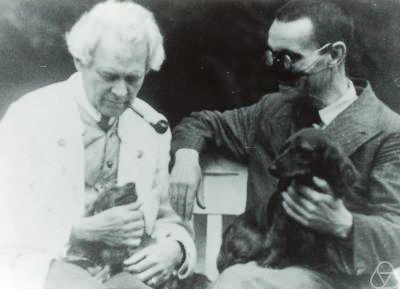

Charles Hermite: The Architect of Mathematical Modernity
Introduction
Among the pantheon of illustrious mathematicians who have shaped the course of modern mathematics, Charles Hermite stands out as a luminary figure. Known for his profound contributions to number theory, algebra, and the theory of functions, Hermite's work bridged various domains and laid groundwork that mathematicians still build upon today. This article explores the early life, pivotal work, and indelible impact of this mathematical titan.
Early Life and Education
Charles Hermite was born on December 24, 1822, in Dieuze, France, into a family with German roots. From a young age, it was apparent that Hermite possessed a prodigious intellect and a curious mind. His journey into the world of mathematics commenced at the tender age of eleven when his family moved to Nancy and then to Paris, where he attended the Lycée Louis-le-Grand. There, Hermite was privileged to receive a thorough education that honed his skills in various fields, though mathematics would soon rise as his primary passion.
His attempts to enter the École Polytechnique, a renowned institution for engineer training in Paris, were thwarted due to a physical handicap—he was born with a malformed right leg that left him with a limp. Despite this setback, Hermite's determination never waned. He enrolled in the École Normale Supérieure, another prestigious French higher education institution. During this time, he continued to explore the depths of mathematics independently, sowing the seeds for his future breakthroughs.
Hermite's Pioneering Work
Charles Hermite's contributions to mathematics are vast and varied, ranging from his work on number theory to his exploration of elliptic functions and algebraic numbers. Perhaps his most notable achievement came in 1873 when he demonstrated the transcendence of the number e (Euler's number), a groundbreaking result that settled questions about the nature of this enigmatic constant. Prior to Hermite's work, transcendental numbers were largely a mysterious class with few known examples, the most renowned being π. Hermite's proof served as an exemplary case of mathematical elegance and rigour, inspiring future mathematicians like Ferdinand von Lindemann, who later proved the transcendence of π using Hermite’s methods.
In addition to his work on transcendence, Hermite made significant advancements in the area of elliptic functions, building on the work of Carl Gustav Jacobi and Niels Henrik Abel. He introduced Hermite polynomials and laid the groundwork for developments in orthogonal polynomials that would become pivotal in mathematical physics and numerical analysis.
Influence and Mentorship
Apart from his academic output, Charles Hermite’s influence extended to his mentorship of other prominent mathematicians. His role as a teacher and mentor left a lasting legacy, guiding and inspiring a new generation of mathematical thinkers. Among his notable protégés was Henri Poincaré, one of the fathers of modern topology and a key figure in the development of the theory of dynamical systems.
Hermite’s correspondence with other mathematicians of his time was extensive, displaying his openness to exchange ideas and his eagerness to engage in intellectual discourse. It was through these interactions that Hermite both influenced and was inspired by his contemporaries, engendering a collaborative spirit that was crucial in the flourishing of 19th-century mathematics.
The Legacy of Hermite
Charles Hermite's contributions to mathematics have left an indelible mark on the field. His research not only advanced mathematical knowledge but also raised new questions, opening avenues for exploration that mathematicians are still pursuing today. His work on transcendental numbers inspired further research into the nature of these constants, crucially influencing the course of analytic number theory. His insights in elliptic functions and algebraic number theory have continued to underpin significant advances, highlighting the timeless impact of his legacy.
Beyond his mathematical accomplishments, Hermite's life is a testament to the power of perseverance and intellectual curiosity. Despite physical challenges and the obstacles they posed, Hermite’s resilience and passion for mathematics allowed him to transcend barriers and make contributions that extended far beyond his personal circumstances.
The first part of our journey through the life and work of Charles Hermite establishes the foundation of his early years, his formative contributions, and the lasting influence he imparted. As we delve deeper, the next sections will explore further dimensions of his work and the broader implications of his mathematical innovations, continuing to unravel the enigma of this extraordinary mathematician.
Hermite's Contributions to Algebra
A significant portion of Charles Hermite's legacy is intertwined with his contributions to algebra. Hermite was instrumental in the development of hermitian operators, which are central to the matrix theory and quantum mechanics that emerged later. His exploration in this domain was partly influenced by his work on quadratic forms and bilinear forms, which are foundational concepts in linear algebra.
In 1855, Hermite made a breakthrough in the algebraic theory concerning the roots of polynomials. He introduced techniques for evaluating discriminants of quartic polynomials and applied his findings to understand further the nature and properties of roots. His pioneering efforts to develop a theory that links the symmetries of polynomials with their roots established pathways for continued exploration in algebra.
The applications of Hermite’s work are extensive, especially considering how these foundational concepts are pivotal in modern applications, including cryptography and error detection in digital communications. Despite working in an era without computing technology, Hermite’s meticulous analytical methods and successful abstraction set important standards that computational mathematics would later build upon.
Expanding Mathematical Analysis: Hermite and Continued Fractions
One area where Hermite made profound explorations was in continued fractions. Known for their ability to provide excellent approximations of real numbers, continued fractions have intrigued mathematicians for centuries. Hermite applied continued fractions in the proof of the transcendence of numbers, solidifying their importance in analytic number theory.
His investigations also extended into the analysis of functional equations and the expansion of series. Hermite’s papers on these topics introduced techniques for evaluating integrals and expanded the understanding of the convergence properties of series. Such insights were crucial in a variety of applications ranging from theoretical physics to the nascent fields of thermodynamics and statistical mechanics that were contemporaneous with Hermite’s career.
Elevation of Mathematical Education
Hermite's contributions extended beyond theoretical advancements; he profoundly impacted mathematical education in France. As a devoted educator, Hermite taught at the École Normale Supérieure and the Sorbonne, among other institutions. His dedication to teaching and mentoring young mathematicians was unparalleled, and he played a crucial role in shaping the future of his students by fostering an environment of intellectual inquiry and rigorous scholarship.
Hermite’s lectures were marked by depth and clarity, and he was known for his ability to elucidate complex concepts with exceptional pedagogy. This dedication to education ensured that his influence was not only limited to his immediate research but also permeated through the individuals who would go on to become pivotal figures in various fields of mathematics.
At this time, French higher education was undergoing transformation, and Hermite’s involvement was significant in elevating the standards of mathematical instruction. His efforts contributed to the development of a comprehensive, world-class mathematical curriculum that equipped France to be at the forefront of mathematical innovation during the 19th century.
The Personal and Professional Ethos of Hermite
To understand Hermite’s work and legacy fully, one must also consider his personal philosophy and professional ethos. Hermite was known for his humility and generosity, qualities that endeared him to peers and students alike. His esprit de corps within the mathematical community was palpable, as he regularly corresponded with other mathematicians, offering feedback and sharing insights.
Despite his many accolades and achievements, Hermite often credited his successes to the inspiring relationships he held with contemporaries in the field. This sense of collaboration and mutual respect not only propelled his own work but also uplifted the collective efforts of the mathematical community during his time.
Driven by a genuine curiosity about the mysteries of mathematics, Hermite approached problems with meticulous patience and a penchant for detail. His nonpareil ability to connect abstract ideas with real-world applications elevated the comprehension of mathematics' potential, offering both intellectual challenge and practical utility.
As we delve deeper into the realm of Charles Hermite’s contributions and legacy, it becomes increasingly evident that his prowess as a mathematician was matched by his commitment to scholarly excellence and educational advancement. In the next segment, we will explore other intriguing aspects of Hermite’s work and his broader influence on scientific thought, continuing to unravel the profound impact of his enduring legacy.
Hermite's Influence on Mathematical Theories
Charles Hermite's work significantly impacted several areas of mathematics, particularly in how they intersect with other scientific disciplines. His contributions to the theory of elliptic functions, for instance, not only advanced pure mathematical understanding but also found resonance in the emerging fields of theoretical physics. The trigonometric and hyperbolic functions that Hermite studied provided foundational insights that would later aid in the description of phenomena in electromagnetic theory and complex analysis.
In addition to elliptic functions, Hermite’s exploration of exponential functions left a lasting impact on the calculation and comprehension of differential equations. His innovative approach to solving these equations, including his work on solitons and wave equations, paved the way for essential contributions to the mathematical underpinnings of the natural sciences. This intersection of mathematics with physical science further underscores Hermite's legacy as a versatile thinker who straddled both theoretical rigor and practical application.
An Enduring Legacy
The measure of a mathematician’s influence often resides in how their work endures beyond their lifetime. Charles Hermite's legacy is evidenced by the continued relevance of his research in current mathematical and scientific endeavors. The Hermite polynomials he introduced, for example, remain integral to quantum mechanics and are used extensively in fields like optics and signal processing.
His imagination and mathematical prowess inspired and equipped successors to transcend contemporary challenges, pushing the bounds of knowledge further. Hermite’s influence is particularly noted in the works of mathematicians such as Émile Picard and Paul Appell, who continued developing the theories and mathematical techniques initiated by Hermite. His methodology and insights nurtured an intellectual environment ripe for advances in functional analysis and other complex areas of mathematics.
Furthermore, the Hermite interpolants—polynomials derived from Hermite’s principles—serve a critical role in numerical analysis and computational mathematics. These interpolants aid in deriving accurate approximations for unknown functions and are integral tools in computer graphics, engineering simulations, and complicated numerical computations.
A Broader Influence on Science and Culture
While Hermite's contributions to mathematics are monumental, his impact stretches beyond the confines of the discipline. His mathematical explorations reverberated in the wider scientific community, influencing fields such as physics and engineering. Hermite’s determination to connect abstract mathematical principles with empirical phenomena exemplifies the interplay between pure mathematics and applied sciences.
Additionally, Hermite's involvement in academia and his role as an educator had social and cultural implications. By promoting rigorous mathematical thought, he encouraged rational inquiry and systematic approaches to problem-solving that transcended academia, influencing scientific discourse and intellectual movements of his time.
Conclusion: Celebrating Hermite's Lasting Influence
Charles Hermite’s journey as a mathematician was marked by resilience, innovation, and profound insight. His contributions went beyond mere problem-solving; they redefined existing mathematical frameworks and opened new pathways for exploration. Hermite's legacy as a mathematical visionary is cemented by his ability to cultivate a deeper understanding of mathematical principles, impacting various scientific domains.
His life and work continue to inspire future generations of mathematicians, encouraging them to push boundaries and think creatively. As we celebrate the legacy of Charles Hermite, his spirit of inquiry and intellectual curiosity serve as a beacon, reminding us of the boundless possibilities within mathematics and the importance of continuously seeking knowledge.
From his seminal proofs demonstrating the transcendence of numbers to influential teachings that shaped eminent mathematicians, Hermite’s contributions remain a key chapter in the annals of mathematical history. The ongoing relevance of his work ensures that the name Charles Hermite will echo through the corridors of mathematical study, an enduring testament to his monumental legacy.

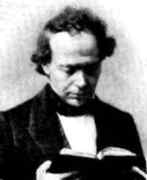

Émile Picard: A Titan of Mathematical Innovation
Introduction
Émile Picard, a formidable name in the annals of mathematics, stands as a testament to human intellectual pursuit at its finest. An acclaimed French mathematician, Picard’s work left an indelible mark on the mathematical world, shaping the landscape of complex analysis and algebraic geometry in the late 19th and early 20th centuries. This first exploration into Picard’s illustrious career delves into his early life, foundational contributions, and the profound influence he wielded over future generations of mathematicians.
Early Life and Academic Journey
Born on July 24, 1856, in Paris, Charles Émile Picard grew up amidst the bustling intellectual milieu of France’s capital. His academic proclivity became apparent at an early age. Inspired by the mathematicians and scientists who preceded him, Picard pursued his studies with fervor. He entered the prestigious École Normale Supérieure in 1874, a breeding ground for many of France’s eminent scholars. Under the guidance of professors who recognized his innate talent, Picard immersed himself in the intricacies of mathematics, laying the groundwork for a career that would transform theoretical concepts into pragmatic solutions.
Groundbreaking Contributions to Mathematics
Picard’s early work focused on pure mathematics, where he gravitated towards analysis—a field that examines the properties and behaviors of mathematical functions. In this domain, his contributions were nothing short of revolutionary. Chief among these was the development of the "Picard Theorems," which are pivotal to the theory of complex functions. His first notable result, the Little Picard Theorem, states that every entire function that omits two or more values in the complex plane must be constant. This theorem was significant because it provided crucial insights into the nature of complex variables—a foundation for many subsequent discoveries in the field.
Following the Little Picard Theorem, he formulated the Great Picard Theorem, an even more powerful assertion. This theorem informs us that if a function defined in a neighborhood of a point omits three distinct values, it must be constant once extended to that point, assuming an essential singularity exists there. This work not only set a new standard in understanding complex functions but also in our comprehension of singularities—a critical concept in complex analysis.
Impact on Algebraic Geometry
Beyond his contributions to complex analysis, Picard made significant strides in the realm of algebraic geometry, a field concerned with zeros of multivariate polynomials. He was instrumental in developing methods to solve equations that appear in both algebra and geometry—a pursuit that marries the two disciplines. His work laid the groundwork for later developments in the field, influencing the techniques and perspectives that would prevail throughout the 20th century.
Picard’s exploration into linear algebraic groups and Galois theory enriched the mathematical community's understanding of how algebraic groups behave and interact. His work helped establish key connections between seemingly disparate areas of mathematics, offering a more unified approach to problem-solving and theoretical exploration.
The Honors and Accolades
Due to his pioneering work, Picard garnered numerous accolades. He became a member of the French Academy of Sciences at a notably young age, highlighting the academic community's recognition of his genius. His influence extended beyond France's borders, earning him international repute and invitations to lecture at prestigious institutions worldwide.
Moreover, his expertise was sought after in many governmental and scientific committees, allowing him to contribute to policy-making and the broader application of mathematics in technology and science. This involvement attests to the significance and applicability of his work, further cementing his legacy in the scientific domain.
Conclusion
Émile Picard’s early life and career set the stage for a history-changing journey in the world of mathematics. His work in complex analysis and algebraic geometry not only advanced theoretical understanding but also provided practical tools for future mathematical exploration. As we delve deeper into Picard's contributions, the vast scope of his influence and his lasting legacy continue to inspire awe and admiration within the scientific community. His journey speaks volumes, demonstrating how curiosity, coupled with rigorous analysis, can yield knowledge that transcends generations.
Mentorship and Influence on Future Mathematicians
Émile Picard's influence transcended his groundbreaking research; he was also a highly regarded mentor and educator. Throughout his academic career, Picard held teaching positions at several esteemed institutions, including the University of Paris (Sorbonne). His pedagogic style was distinguished by clarity and precision, traits that endeared him to students and colleagues alike. Picard’s lectures were known for their rigour and intellectual depth, sparking an enthusiasm for mathematics among his students, many of whom would go on to become influential mathematicians in their own right.
A measure of Picard’s legacy can be seen through the successes of his protégés, who carried forward his teachings and extended his methodologies. By fostering a collaborative environment, Picard positioned himself as a cornerstone in the academic community, influencing countless contemporaries and upcoming scholars. His ability to articulate complex theoretical concepts enabled many students to navigate the demanding landscape of high-level mathematics and make their own significant contributions.
Contributions to Mathematical Literature
In addition to his teaching duties, Émile Picard was a prolific writer who contributed extensively to mathematical literature. His publications are notable not just for their breadth, but also for their depth and clarity. Among his most celebrated works is the multi-volume "Traité d’Analyse," a treatise on analysis that served as a standard reference for many years. This opus demonstrated Picard's profound understanding of mathematical theory and his ability to distill complex ideas into accessible language.
Picard’s publications covered a wide array of topics, including differential equations, potential theory, and the theory of algebraic functions. Through these writings, Picard sought to bridge various mathematical concepts, thereby offering a more comprehensive framework for understanding advanced mathematical theories. His work also underscored the interconnectedness of mathematics, promoting a holistic approach that resonated with both his contemporaries and those who followed.
His Role in International Mathematical Community
Émile Picard’s reputation as a leading mathematician was not confined to France; it permeated the international mathematical community. This was due in part to his active participation in numerous international congresses and symposia, as well as his contributions to various scientific committees and organizations. Picard played crucial roles in organizing and chairing significant mathematical conferences, where he facilitated dialogues and collaborations that advanced global mathematical discourse.
His presence on the international stage was further cemented when he became the President of the International Mathematical Union (IMU), an organization dedicated to promoting international cooperation in mathematics. In this capacity, Picard advocated for open dialogue and the free exchange of ideas across borders, fostering an environment of collaboration that transcended national and cultural barriers.
Legacy in Mathematical Society
Picard’s legacy within the mathematical society is not merely a reflection of his academic contributions but also of his efforts to nourish and sustain the vibrancy of the mathematical community. Through his involvement with various mathematical societies, he championed initiatives that aimed to promote mathematics both as a profession and as a field of study. His presidency at the Société Mathématique de France and influential pieces in the society’s journal exemplify his commitment to the growth and dissemination of mathematical knowledge.
Furthermore, Picard was actively involved in educational reform within France, advocating for curricula that emphasized the importance of mathematical literacy, critical thinking, and problem-solving skills. His vision for mathematics education entailed not only producing mathematicians but also equipping students across disciplines with tools to apply mathematical reasoning within their specific fields.
Innovations and Their Lasting Impact
While Émile Picard's direct contributions to mathematics are profound, his indirect influence is equally significant. Innovations he introduced have had a broad and lasting impact, permeating many aspects of mathematical and scientific thought. His theorems and theories laid the foundation for future explorations in complex analysis and algebraic geometry, fields that have since evolved in fascinating and unexpected ways.
One area where Picard’s influence is especially notable is in the development of modern-day analysis and topology. Methods initially conceptualized by Picard have been expanded upon to explore new dimensions in these disciplines, impacting developments in both theoretical and applied mathematics. His work not only pushed the boundaries of what was conceivable at the time but also laid down pathways for the scientific community to venture into new territories.
Conclusion
The mathematical legacy of Émile Picard is a narrative defined by pioneering contributions, effective mentorship, and an unwavering dedication to academia and the global scientific community. His rich legacy is ensconced in his profound theoretical discoveries, the generations of mathematicians he nurtured, and the strides made in international cooperation through his leadership roles. As we reflect on his contributions, it is clear that Picard's work resonates well beyond his era, continuing to inspire and challenge contemporary mathematicians and scholars the world over. His life and work are testaments to the enduring power of intellectual inquiry and collaboration across the field of mathematics.
Picard and the Evolution of Mathematical Thought
The influence of Émile Picard extends beyond his tangible contributions to the theory of mathematics; he also played a pivotal role in the evolution of mathematical thought during a period marked by rapid scientific advancement. The late 19th and early 20th centuries were times of great transformation in the sciences, with burgeoning fields such as physics and engineering looking increasingly to mathematics for solutions to complex problems. Picard’s work contributed significantly to this exchange of ideas, providing critical insights that bridged theoretical mathematics and its practical applications.
One of the defining aspects of Picard’s impact was his ability to foresee and address the needs of both pure and applied mathematics. His approach underscored the importance of developing mathematical theories that, while abstract and challenging, could nonetheless elucidate real-world phenomena. This foresight paved the way for future collaborations between mathematicians and scientists, creating a lasting synergy that persists in contemporary research practices.
Recognition and Awards
Throughout his life, Émile Picard received numerous awards and honors that acknowledged his contributions to mathematics and the scientific community. His election to the French Academy of Sciences at an early age was one of many accolades marking his distinguished career. Furthermore, Picard was granted honorary memberships and fellowships by various esteemed scientific organizations across Europe and beyond, reflecting his widespread influence and the universal value of his work.
Among the most distinguished was Picard’s reception of the Poncelet Prize in 1886, awarded by the French Academy of Sciences for outstanding achievements in applied mathematics. Such recognition served not only as a personal accolade but also as an affirmation of the broader significance of his contributions to the mathematical world and their impact on allied scientific disciplines.
Challenges and Perseverance
In the realm of great achievements, it is easy to overlook the challenges that pave the way to innovation and discovery. Like many intellectual pioneers, Picard encountered obstacles in his pursuit of mathematical understanding. During his lifetime, the field of mathematics was undergoing substantial transformations, with new theories and methodologies constantly evolving. Navigating these breakthroughs required not only mathematical skill but also adaptability and a commitment to lifelong learning.
Despite these challenges, Picard demonstrated an indomitable spirit, continually revising and expanding his theoretical frameworks to accommodate emerging knowledge. His perseverance in the face of adversity not only advanced his field but also set an example for those who followed, highlighting the importance of resilience in the pursuit of scientific inquiry.
Picard’s Influence on Modern Mathematics
The enduring impact of Émile Picard on modern mathematics cannot be overstated. His theorems and methodologies form a cornerstone for many advanced studies in complex analysis and topology. Today, his work is cited in both theoretical explorations and practical applications, from advanced computational models to cutting-edge research in physics and engineering. Mathematicians continue to draw inspiration from Picard’s techniques, which provide valuable insights into the structure and behavior of functions and their singularities.
Picard’s work has also influenced various branches of mathematics beyond his immediate areas of focus. His contributions to algebraic geometry, for example, have informed approaches in areas like cryptography, coding theory, and even aspects of quantum computing, showcasing the versatility and broad applicability of his insights.
Picard’s Enduring Legacy
In reflecting on the legacy of Émile Picard, it becomes clear that his impact transcends the confines of mathematics. His work exemplifies the notion that theoretical exploration, driven by curiosity and meticulous analysis, can yield results that stand the test of time. Picard’s lasting legacy is not only found in the theorems that bear his name but also in the spirit of inquiry and collaboration that he championed throughout his career.
His life and work continue to inspire generations of mathematicians and scientists to probe deeper, think critically, and embrace the interconnected nature of scientific disciplines. The intellectual paths he forged serve as a guiding light for those who seek to push the boundaries of human understanding and contribute meaningfully to the body of scientific knowledge.
Conclusion
The story of Émile Picard is one of brilliance, perseverance, and far-reaching influence. His remarkable contributions to mathematics have solidified his place among the great thinkers of his time, leaving a legacy that resonates throughout the scientific world. From his groundbreaking theorems to his role as a mentor and leader, Picard's influence is evident in both the historical progression and future potential of mathematical study. As we honor his memory, we celebrate not only his achievements but the ongoing journey of exploration and discovery that he so passionately embodied. Through his life's work, Picard reminds us of the boundless possibilities held within the pursuit of knowledge, inspiring future generations to carry forward the torch of scientific exploration.
Exploring the Symbol of a Mathematical Visionary
The intriguing phrase Zak-Antamar-H-Symbolh-enos-Ma8hmatikoy-Oramatisth invites a deep dive into the world of mathematical notation and its visionaries. This phrase translates from Greek as "Zak-Antamar: The Symbol of a Mathematical Visionary," suggesting a focus on the powerful intersection of mathematical symbols and the thinkers who revolutionize them. While not a widely recognized proper name, the concept serves as a perfect lens to examine how symbolic innovation has fundamentally shaped mathematical progress. This article explores the history, significance, and future of the symbols that underpin mathematical thought.
The Foundational Role of Mathematical Symbols
Mathematical symbols are the fundamental building blocks for expressing complex ideas with precision and clarity. A mathematical symbol is a grapheme used to represent objects, operations, or relations. Without a standardized glossary of mathematical symbols, the global collaboration that defines modern mathematics would be impossible. These symbols form a universal language, allowing ideas discovered in one part of the world to be seamlessly shared, challenged, and built upon by scholars everywhere.
How Symbols Transform Mathematical Thought
The history of mathematics is filled with examples where a new notation convention catalyzed an entire field. The adoption of symbolic algebra in the 16th and 17th centuries, pioneered by mathematicians like François Viète, freed mathematics from verbose descriptions. This allowed for the manipulation of abstract equations and paved the way for calculus. The notation we use today is not static; it evolves within subfields like category theory to express increasingly abstract concepts.
Notation is convention-driven—symbols acquire meaning by community use. This collective agreement is what makes mathematics a truly cumulative science.
Historical Visionaries and Their Symbolic Legacies
While the name Zak Antamar may not appear in historical records, many true visionaries have left an indelible mark through their use of symbols. Figures like Évariste Galois introduced notations for group theory that unlocked the solvability of polynomial equations. Emmy Noether's work in abstract algebra relied on and advanced symbolic clarity, influencing countless physicists and mathematicians. Their legacies demonstrate how a mathematical visionary often creates or refines the symbolic toolkit for future generations.
The impact is profound. Srinivasa Ramanujan, with his intuitive and sometimes unconventional notation, produced thousands of groundbreaking theorems. The development of function notation by Leonhard Euler provided a framework for analysis that is still used today. These pioneers did not just discover new truths; they forged the symbols needed to convey them, much like the concept embodied in our central phrase.
The Digital Evolution of Mathematical Notation
A major modern trend is the digitization and standardization of mathematical symbols. The Unicode Standard and MathML are critical to this evolution. They ensure that specialized symbols render correctly across all digital platforms, from academic papers to educational websites.
- Unicode Expansion: Ongoing updates to Unicode continuously add mathematical characters, preserving historical symbols and enabling new notations.
- Web Accessibility: MathML allows complex equations to be displayed and read by screen readers, making mathematics more accessible.
- LaTeX Packages: The development of new LaTeX packages allows researchers to easily typeset cutting-edge symbolic notation in their publications.
Cross-Cultural Perspectives on Mathematical Symbols
The idea of a mathematical visionary's symbol also extends across cultures. While Western mathematics heavily employs Greek and Latin letters, other traditions have developed rich, localized notation systems. For instance, Modern Arabic mathematical notation adapts core concepts to Arabic script and right-to-left layout. This localization is crucial for pedagogy and demonstrates that the conceptual meaning of a symbol can transcend its graphical form.
This cultural dimension highlights an important truth. The essence of a mathematical idea is separate from the symbol used to denote it. A community's choice of notation—whether using Greek letters or Arabic script—serves the needs of its learners and practitioners. The visionary aspect lies in creating systems that effectively communicate profound ideas within a specific cultural and linguistic context.
Educational Tools and Symbol Literacy
A rise in educational content underscores the public hunger for understanding mathematical symbols. Numerous YouTube channels, mobile apps, and online glossaries are dedicated to explaining symbols to students and enthusiasts. This aligns with the spirit of a mathematical visionary as an educator who demystifies complex notation. These resources bridge the gap between abstract symbolism and intuitive understanding, which is the first step toward future innovation.
Authoritative, aggregated quantitative data on symbol usage across papers or curricula are scarce, but the proliferation of educational media clearly indicates high demand for this knowledge.
As we conclude this first part, we have established the critical importance of symbols in mathematics. We have seen their historical power, their digital evolution, and their cultural variations. In the next section, we will delve deeper into specific symbol classes, analyze the process of symbolic innovation, and further explore the profile of a true mathematical visionary.
Decoding the Classes of Mathematical Symbols
To understand the legacy of a mathematical visionary, one must first master the language they speak: the diverse classes of symbols. The glossary of mathematical symbols is vast, but it can be organized into functional categories. These categories include operators, relations, constants, and variables. Each class serves a distinct purpose in constructing the logical sentences that form mathematical proofs and theories.
Operators, like + (addition) and ∫ (integration), denote actions to be performed. Relation symbols, such as = (equals) and > (greater than), specify how entities compare. The power of these symbols lies in their universal recognition. A mathematician in any country instantly understands the statement “π > 3”. This universality is the bedrock upon which global mathematical research is built.
Specialized Notation in Advanced Fields
As mathematics advances into specialized domains, so too does its symbolic notation. Fields like category theory and homotopy type theory have developed intricate suites of symbols. These symbols, like arrows (→, ⇒) and diagrams, are not merely shorthand. They are essential tools for visualizing and manipulating highly abstract structures that are difficult to convey in words alone.
- Diagrammatic Reasoning: Complex commutative diagrams use arrows and objects to encapsulate relationships that would require pages of text.
- Type Theory Symbols: Notations like Π (product type) and Σ (sum type) in type theory provide a formal language for computation and logic.
- Algebraic Geometry: Schemes and sheaves rely on layered notation that has evolved to capture intricate geometric and algebraic data simultaneously.
The Process of Symbolic Innovation and Adoption
How does a new symbol enter the mathematical lexicon? The journey from a visionary's idea to widespread convention is rarely straightforward. Unlike a formal language with a governing body, mathematical notation evolves organically through community use and publication. A researcher might introduce a new symbol in a groundbreaking paper. Its adoption hinges on utility, clarity, and the influence of its proponent.
No single global authority changes symbol meaning frequently; developments are driven by notation conventions in subfields and digital standards.
The process is exemplified by historical cases. Gottfried Leibniz's notation for calculus (dx, ∫) competed with Isaac Newton's fluxions. Leibniz's more suggestive symbols ultimately prevailed in most of the world due to their intuitive power. This shows that a successful symbolic innovation often feels natural and reveals underlying structure, a hallmark of visionary thinking.
Challenges in Standardizing New Symbols
In the modern era, standardizing a new symbol faces unique challenges and opportunities. Digital publishing and computational mathematics require symbols to be machine-readable. Therefore, widespread adoption often depends on inclusion in key standards.
- Unicode Consortium: A new symbol ideally needs a Unicode code point for digital representation across operating systems and fonts.
- LaTeX Community: A dedicated LaTeX package or macro can popularize a symbol within academic publishing.
- Software Implementation: Support in major computer algebra systems (e.g., Mathematica, SageMath) lends credibility and utility to new notation.
Profiles in Visionary Symbolism: Beyond the Mainstream
The concept of a Zak-Antamar-H-Symbolh-enos-Ma8hmatikoy-Oramatisth invites us to look beyond the most famous names. History is filled with thinkers whose symbolic contributions were pivotal yet sometimes overlooked. George Boole's algebraic symbols for logic (∧, ∨) laid the foundation for the digital age. John Conway's notation for surreal numbers and game theory created entire new fields of study.
These visionaries share a common trait: they saw the need for a new language to describe newly discovered landscapes of thought. Their symbols acted as keys, unlocking doors for others to follow. Their work underscores that the creation of effective notation is itself a profound mathematical act, inseparable from the discovery process.
The Intersection of Notation and Mathematical Visualization
For a true mathematical visionary, symbols are not just logical tools; they are vessels for visualization. The way symbols are arranged on a page can illuminate structure and suggest new pathways. The evolution of notation for tensors, for example, from cumbersome index-laden expressions to more diagrammatic "birdtrack" notations, directly aids intuition. This visual dimension is crucial for fostering the insights that drive mathematics forward.
Modern tools amplify this. Software that dynamically links symbolic expressions to graphical representations allows students and researchers to "see" the meaning behind the symbols. This bridges the gap between abstract formalism and geometric intuition, a gap that visionary notation has always sought to close.
Case Study: The Localization of Symbols in Education
A powerful example of symbolic adaptation is found in Modern Arabic mathematical notation. This system adapts the core framework of Western mathematical symbols to the Arabic script and a right-to-left presentation. It is a testament to the principle that the conceptual meaning of a mathematical idea can be conveyed through different symbolic forms.
This localization has significant pedagogical impact. Students learn foundational concepts like algebra and calculus using notation that aligns with their native reading direction and script. Studies suggest this can reduce cognitive load and improve comprehension. It demonstrates how a community of educators can act as collective visionaries, tailoring the symbolic language of mathematics to serve their learners better.
Educational localization shows how symbols' appearance and directionality affect pedagogy, ensuring mathematical literacy is accessible across linguistic barriers.
Statistics and Data on Symbol Usage
While centralized, authoritative statistics on global symbol usage are scarce, analysis of large digital corpora like the arXiv preprint server provides insights. Such analyses can track the rise of specific notations within subfields. For instance, the use of the tensor product symbol (⊗) has seen a marked increase in physics and computer science papers over the last two decades, reflecting the growth of quantum information and applied category theory.
- Corpus Analysis: Researchers use text-mining on large collections of papers to infer notation trends.
- Citation Networks: The spread of a new symbol can sometimes be mapped through the citation network of influential papers that introduced it.
- Educational Metrics: Textbook revisions and standardized curriculum changes offer another lens on which symbols are deemed essential for learners.
As we have seen, the world of mathematical symbols is dynamic, culturally sensitive, and deeply tied to innovation. The visionary, whether an individual like the enigmatic "Zak Antamar" or a collective of educators, plays the crucial role of a linguist, crafting the words for new ideas. In the final part, we will look toward the future, examining emerging trends in symbolic communication and the enduring quest for the perfect notation.
The Future of Mathematical Notation and Symbols
The trajectory of mathematical symbols points toward greater digital integration, accessibility, and perhaps even artificial intelligence-assisted innovation. The ongoing work of the Unicode Consortium and the World Wide Web Consortium (W3C) on standards like MathML 4 ensures that the digital representation of mathematics will keep pace with its conceptual growth. This future is not just about preserving old symbols but creating an ecosystem where new notations can flourish and be shared instantly across the globe.
Emerging fields like quantum computing and data science are already demanding new symbolic conventions. The need to represent quantum circuits, complex data structures, and machine learning architectures will inevitably lead to symbolic innovation. The next generation of mathematical visionaries will be those who can devise notations that are both computationally tractable and intuitively clear for human researchers. Their symbols will become the blueprints for future discoveries.
Artificial Intelligence and Symbolic Generation
A provocative frontier is the role of artificial intelligence in notation. Could AI systems analyze mathematical structures and suggest optimal symbolic representations? Research into automated theorem proving and symbolic computation already touches on this area. An AI might propose a novel notation that minimizes cognitive load or maximizes the reveal of hidden patterns, acting as a collaborative partner in the visionary process.
- Pattern Recognition: AI could identify repetitive, complex expressions in proofs and suggest a consolidating symbol.
- Accessibility Tools: AI-powered systems could dynamically translate between different notational systems (e.g., Western to Arabic notation) in real-time for learners.
- Historical Analysis: Machine learning could map the evolution of symbols, predicting which new notations have the highest chance of adoption based on historical trends.
The Enduring Quest for the "Perfect" Symbol
Underlying the history and future of notation is a deep, almost philosophical quest: the search for a symbol that perfectly encapsulates an idea. This is the core of the Zak-Antamar-H-Symbolh-enos-Ma8hmatikoy-Oramatisth concept. A perfect symbol is elegant, memorable, and suggestive of its meaning and properties. It becomes so natural that mathematicians forget it was ever invented. The integral sign ∫ elegantly suggests summation, and the equals sign = represents balance with perfect simplicity.
The creative leap often comes from notation that clarifies structure, turning opaque complexity into navigable terrain.
This quest is never-ending because mathematics itself is never-ending. Each new abstraction, from sheaves to ∞-categories, challenges the community to find its visual and symbolic voice. The success of a notation can even be measured by how it enables further discovery. Good notation does not just describe; it inspires and guides the imagination toward new theorems and connections.
The Human Element in Symbolic Choice
Despite trends toward standardization and digitization, the choice of symbols remains a deeply human, sometimes even aesthetic, decision. Individual mathematicians and research communities develop notational preferences and styles. These personal touches are part of the culture of mathematics. The enduring lesson from figures like Euler or Ramanujan is that personal intuition often guides the creation of the most powerful and lasting symbols.
Synthesizing the Vision: Symbols as the DNA of Mathematics
Our exploration of the theme suggested by Zak-Antamar-H-Symbolh-enos-Ma8hmatikoy-Oramatisth reveals a fundamental truth. Mathematical symbols are not mere abbreviations. They are the very DNA of mathematical thought. They carry the genetic instructions for logic, structure, and creativity. A visionary, in this context, is a geneticist, splicing and crafting new strands of this DNA to give birth to new fields of intellectual inquiry.
The story of mathematical notation is a story of human progress. It mirrors our journey from clay tablets and verbose rhetoric to digital manuscripts and global collaboration. Each symbol added to the global glossary represents a victory for clarity over confusion, for shared understanding over isolated insight. It is a collective project spanning centuries and cultures.
Key Takeaways for Learners and Practitioners
Whether you are a student, an educator, or a practicing researcher, engaging deeply with mathematical symbols is essential. Here are the critical lessons from our journey:
- Symbols are Tools for Thought: Mastering notation is not rote learning; it is learning to think in the language of mathematics.
- Notation Evolves: Be open to new symbols and conventions, especially in advanced fields; they are signposts of progress.
- Context is Crucial: Always consider the cultural and historical context of a symbol, from Greek letters to localized educational notation.
- The Digital Future is Now: Engage with standards like LaTeX and MathML to communicate your own mathematical ideas effectively in the modern world.
Conclusion: The Legacy of the Mathematical Visionary
In conclusion, the enigmatic phrase that guided this article serves as a powerful metaphor. The symbol of a mathematical visionary is more than a character on a page. It is a catalyst, a bridge, and a legacy. From the historical giants who gave us our foundational notation to the unnamed educators adapting symbols for their classrooms, visionaries understand that the medium is intimately tied to the message.
The future of mathematics depends on this continued symbolic innovation. As we tackle problems of increasing complexity in climate science, medicine, and fundamental physics, we will need new languages to describe new realities. The next great mathematical visionary might be working right now, struggling to express a revolutionary idea. Their breakthrough may come not just in a new theorem, but in the very symbol they choose to represent it—a symbol that, in time, will become obvious and indispensable to us all.
The search for the perfect symbol, the quest to be a Ma8hmatikoy Oramatisth, is ultimately the search for perfect understanding. It is a journey without a final destination, but each step forward—each new, clever, or beautifully simple symbol adopted by the community—enlarges the realm of human knowledge and connects us more deeply to the logical structure of the universe.