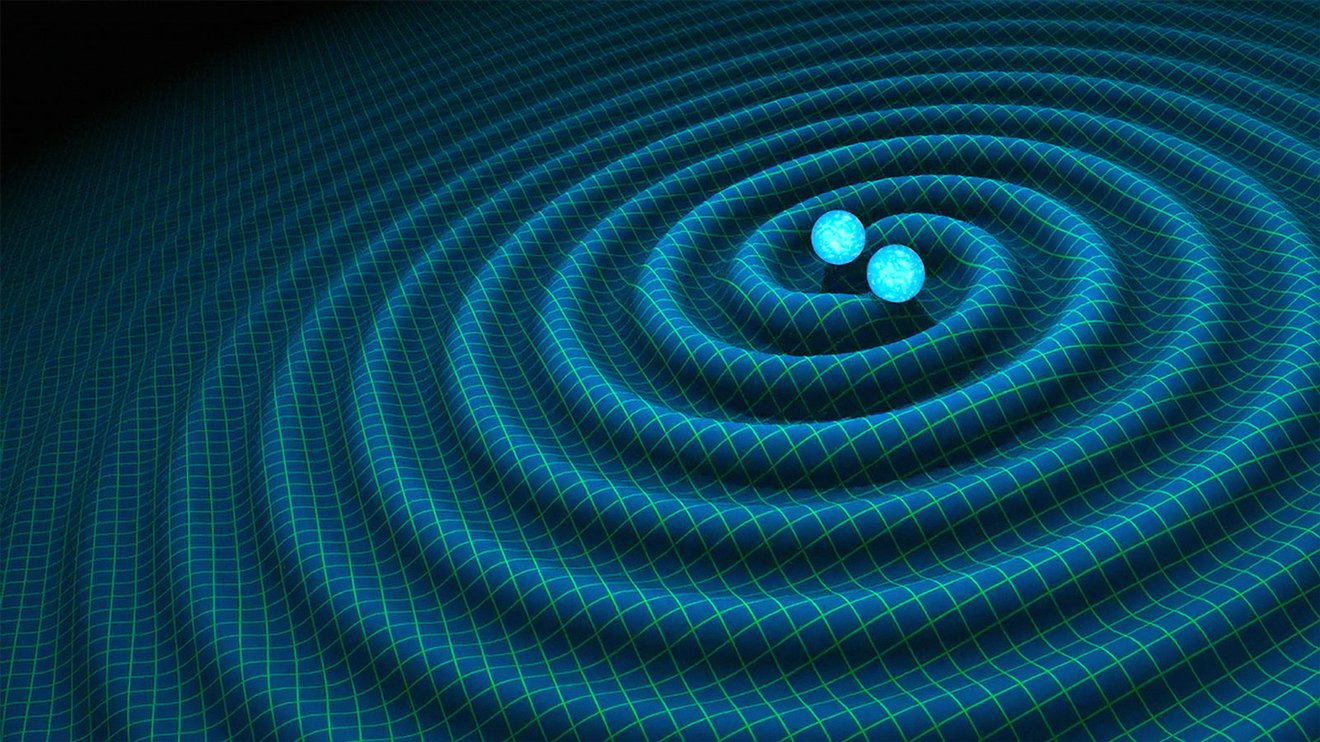
Albert Einstein: The Genius Who Redefined Physics
Albert Einstein, a name synonymous with genius, revolutionized our understanding of the universe. Born in 1879 in Ulm, Germany, Einstein's contributions to theoretical physics, including the theories of special and general relativity, have left an indelible mark on science and technology. His iconic equation, E=mc², is one of the most recognized scientific formulas worldwide. This article delves into the life, achievements, and enduring legacy of Albert Einstein.
Early Life and Education
Albert Einstein was born on March 14, 1879, into a middle-class Jewish family. His early childhood was marked by a delay in speech, which concerned his parents. However, this late bloomer would go on to exhibit extraordinary intellectual capabilities. Einstein's fascination with science and mathematics began at an early age, fueled by his curiosity and the influence of his uncle, who introduced him to algebraic concepts.
Academic Journey
Einstein's academic journey was not without challenges. He attended the Swiss Federal Polytechnic in Zurich, where he studied physics and mathematics. Despite his brilliance, he struggled with the rigid educational system and often clashed with his professors. Nevertheless, he graduated in 1900 and began his quest for academic positions, which proved difficult due to his unconventional approach and Jewish heritage.
The Annus Mirabilis: 1905
The year 1905 is often referred to as Einstein's annus mirabilis, or "miracle year." During this period, he published four groundbreaking papers that would forever change the landscape of physics. These papers addressed the photoelectric effect, Brownian motion, special relativity, and mass-energy equivalence.
The Photoelectric Effect
One of Einstein's most significant contributions was his explanation of the photoelectric effect, which earned him the Nobel Prize in Physics in 1921. This work introduced the concept of light quanta, later known as photons, and laid the foundation for quantum mechanics. The photoelectric effect is crucial in understanding how light interacts with matter and has practical applications in solar panels and digital cameras.
Brownian Motion
Einstein's paper on Brownian motion provided empirical evidence for the existence of atoms. By explaining the random movement of particles suspended in a fluid, he confirmed the atomic theory of matter. This work was instrumental in advancing the field of statistical mechanics and provided a deeper understanding of the microscopic world.
Special Relativity
The theory of special relativity, published in 1905, challenged the long-held Newtonian concepts of space and time. Einstein proposed that the laws of physics are the same for all non-accelerating observers and that the speed of light in a vacuum is constant, regardless of the observer's motion. This theory introduced the famous equation E=mc², which describes the relationship between mass and energy.
General Relativity and Beyond
Building on his work on special relativity, Einstein developed the general theory of relativity in 1915. This theory redefined gravity as the curvature of spacetime caused by mass and energy. The theory was confirmed in 1919 during a solar eclipse, when observations showed that starlight bent as it passed near the sun, just as Einstein had predicted.
Impact on Modern Physics
Einstein's theories of relativity have had a profound impact on modern physics. They have influenced our understanding of the universe, from the behavior of planets and stars to the dynamics of black holes and the expansion of the cosmos. General relativity is essential for the accurate functioning of GPS technology, which relies on corrections for time dilation effects.
Political and Humanitarian Efforts
Einstein was not only a scientific genius but also a committed humanitarian and political activist. He was a pacifist and opposed World War I, using his influence to advocate for peace and progressive causes. In 1933, he fled Nazi Germany due to the rise of anti-Semitism and emigrated to the United States, where he continued his work at the Institute for Advanced Study in Princeton.
Advocacy and Legacy
Throughout his life, Einstein used his platform to speak out against injustice and promote human rights. He was a vocal supporter of civil rights and worked to aid refugees, drawing from his own experiences as a displaced person. His legacy extends beyond his scientific achievements, encompassing his commitment to social justice and his efforts to create a better world.
Conclusion
Albert Einstein's contributions to physics and his broader impact on society are unparalleled. His theories have shaped our understanding of the universe and continue to influence scientific research and technological advancements. Beyond his scientific genius, Einstein's humanitarian efforts and advocacy for peace and justice serve as an enduring inspiration. In the next part of this article, we will explore Einstein's later years, his pursuit of a unified field theory, and his lasting influence on modern science and technology.
Einstein's Later Years and the Quest for a Unified Theory
After establishing his groundbreaking theories, Albert Einstein spent his later years pursuing a unified field theory, aiming to reconcile general relativity with electromagnetism. This ambitious goal consumed much of his time at the Institute for Advanced Study in Princeton, where he worked from 1933 until his death in 1955. Though he never achieved this unification, his efforts laid the groundwork for future physicists exploring the fundamental forces of nature.
The Challenge of Unification
Einstein's quest for a unified theory was driven by his belief in the simplicity and elegance of the universe. He sought to describe all physical phenomena through a single, overarching framework. However, the complexity of merging gravity with other forces proved insurmountable during his lifetime. Despite this, his work inspired generations of scientists, including those developing string theory and loop quantum gravity today.
Critique of Quantum Mechanics
While Einstein's early work was foundational to quantum mechanics, he later became a vocal critic of its probabilistic nature. His famous quote, "God does not play dice with the universe," reflects his discomfort with the uncertainty principle. Einstein engaged in debates with contemporaries like Niels Bohr, arguing that quantum mechanics was incomplete and that a deeper, deterministic theory must exist.
Einstein's Influence on Technology and Modern Science
Einstein's theories have had far-reaching implications beyond theoretical physics. His work underpins many modern technologies, from GPS systems to nuclear energy. The practical applications of his discoveries continue to shape our daily lives and drive technological innovation.
GPS and Relativity
One of the most tangible impacts of Einstein's theories is on Global Positioning Systems (GPS). The accuracy of GPS relies on corrections derived from both special and general relativity. Without these adjustments, GPS devices would accumulate errors of about 10 kilometers per day, rendering them useless for precise navigation.
Nuclear Energy and E=mc²
The equation E=mc² is not just a theoretical concept; it has practical applications in nuclear energy. This mass-energy equivalence formula explains the immense energy released in nuclear reactions, forming the basis for both nuclear power and atomic weapons. Einstein's insights into the relationship between mass and energy have thus played a pivotal role in shaping the modern energy landscape.
Einstein's Humanitarian and Political Legacy
Beyond his scientific achievements, Albert Einstein was a passionate advocate for human rights and social justice. His experiences as a refugee and his opposition to oppression fueled his commitment to humanitarian causes. Einstein used his global influence to speak out against injustice and promote peace.
Refugee Advocacy
Having fled Nazi Germany in 1933, Einstein understood the plight of refugees firsthand. He worked tirelessly to aid displaced individuals, raising funds and awareness for refugee causes. His efforts included supporting organizations that helped scientists and intellectuals escape persecution, ensuring that their contributions to society were not lost.
Civil Rights and Pacifism
Einstein was a vocal supporter of civil rights in the United States. He publicly condemned racism and segregation, aligning himself with prominent African American activists. Additionally, his pacifist beliefs led him to advocate for disarmament and international cooperation, particularly in the aftermath of World War II. Einstein's political activism underscores his belief in the responsibility of scientists to engage with societal issues.
Einstein's Cultural and Intellectual Impact
Albert Einstein's influence extends beyond science and politics into the realm of culture and intellectual thought. His name has become synonymous with genius, and his ideas have permeated various aspects of society, from education to popular media.
Einstein in Popular Culture
Einstein's distinctive appearance and profound insights have made him a cultural icon. He has been featured in numerous films, television shows, and books, often symbolizing intellectual brilliance. His image is frequently used to represent scientific achievement, and his quotes are widely shared for their wisdom and wit.
Educational and Philosophical Influence
Einstein's approach to science and his philosophical views have had a lasting impact on education and intellectual discourse. He emphasized the importance of curiosity, imagination, and critical thinking, values that continue to inspire educators and students alike. His thoughts on the nature of reality, time, and the universe have also influenced philosophical debates, bridging the gap between science and metaphysics.
Recent Developments and Einstein's Enduring Legacy
Even decades after his death, Albert Einstein's work continues to inspire new discoveries and technological advancements. Recent developments in physics and astronomy often trace their roots back to his theories, demonstrating the enduring relevance of his contributions.
Gravitational Waves and Black Holes
One of the most significant confirmations of Einstein's theories came in 2015, when the Laser Interferometer Gravitational-Wave Observatory (LIGO) detected gravitational waves for the first time. This discovery, a century after Einstein predicted the existence of these waves, opened a new window into the study of the universe, particularly the behavior of black holes and neutron stars.
Quantum Technologies
Einstein's early work on the photoelectric effect and his collaborations with other scientists laid the foundation for quantum technologies. Today, advancements in quantum computing and quantum cryptography are building on these principles, promising to revolutionize fields such as information technology and cybersecurity.
Centennial Celebrations and Digital Archives
In recent years, there has been a renewed interest in Einstein's life and work, marked by centennial celebrations and the digitization of his archives. These efforts have made his papers and correspondence accessible to a global audience, allowing new generations to explore his ideas and contributions. Exhibits and educational programs continue to highlight his scientific achievements and humanitarian efforts.
Conclusion
Albert Einstein's legacy is a testament to the power of human intellect and the pursuit of knowledge. His theories have reshaped our understanding of the universe, and his humanitarian efforts have left an indelible mark on society. As we continue to explore the frontiers of science and technology, Einstein's ideas remain a guiding light, inspiring innovation and discovery. In the final part of this article, we will delve deeper into Einstein's personal life, his relationships, and the lesser-known aspects of his journey that contribute to his enduring fascination.
Einstein's Personal Life and Relationships
Beyond his scientific achievements, Albert Einstein's personal life offers insight into the man behind the genius. He married Mileva Marić in 1903, and their relationship produced two daughters and a son. However, personal struggles led to a divorce in 1919, after which he married his cousin Elsa Löwenthal. These relationships often influenced his work and public persona, balancing his intellectual pursuits with complex emotional dynamics.
Family and Parenthood
Einstein cherished his children, though his famed brilliance did not always translate into domestic harmony. He admitted to being distant at times, prioritizing his research over family life. Despite this, his daughters and son played significant roles in shaping his worldview, with moments of playful curiosity mirroring his own scientific mindset. His later years saw a closer bond with his sister Maja, who provided emotional support during his most challenging periods.
Lesser-Known Contributions to Science
While relativity and the photoelectric effect dominate discussions of Einstein, several lesser-known works underscore his versatility. These contributions reveal a scientist unafraid to explore beyond mainstream theories, often collaborating with lesser-known peers to push scientific boundaries.
Stimulated Emission and Laser Technology
In 1917, Einstein introduced the concept of stimulated emission, a process where an excited atom emits radiation in response to incoming photons. This foundational idea later enabled the development of lasers, revolutionizing fields from medicine to telecommunications. Though overlooked at the time, stimulated emission is now a cornerstone of modern technology, illustrating how theoretical insights can yield practical revolutions decades later.
Bose-Einstein Statistics
Einstein's collaboration with Indian physicist Satyendra Nath Bose in 1924 led to the development of Bose-Einstein statistics, which describe the behavior of particles that obey quantum Bose-Einstein statistics. This work laid the groundwork for the discovery of the Bose-Einstein condensate, a state of matter achieved at near-absolute-zero temperatures. Such advancements continue to influence quantum computing and ultracold atomic research today.
Einstein's Legacy in Education and Culture
Einstein’s name has become synonymous with genius, shaping how society perceives intellectual achievement. His image and ideas permeate education, media, and global culture, ensuring his influence endures across generations.
Educational Icon
In classrooms worldwide, Einstein is often the first scientist introduced to students, symbolizing curiosity and innovation. His theories are taught as pillars of modern physics, and his quotes—such as “Imagination is more important than knowledge”—are frequently used to inspire young minds. Educational programs and competitions frequently bear his name, reinforcing his role as a model for aspiring thinkers.
Cultural Symbolism
Beyond academia, Einstein’s wild hair and thoughtful gaze have made him an enduring cultural icon. He appears in films, cartoons, and advertisements, often representing wisdom or intellectual prowess. His advocacy for peace and justice has also cemented his status as a moral and ethical guide, with his legacy frequently invoked in debates about science’s role in society.
Conclusion: The Enduring Impact of Albert Einstein
Albert Einstein’s contributions to science, technology, and humanity are immeasurable. From rewriting the laws of physics with special and general relativity to advocating for peace and refugee rights, his life exemplifies the intersection of intellectual rigor and social responsibility.
- E=mc² remains one of the most iconic equations in scientific history, underpinning nuclear energy and astrophysics.
- His theories of relativity revolutionized our understanding of time, space, and gravity, influencing everything from GPS technology to black hole research.
- Einstein’s humanitarian efforts, including refugee advocacy and civil rights activism, highlight his belief in using knowledge for the greater good.
As we continue to explore the universe and address global challenges, Einstein’s legacy serves as both a foundation and an inspiration. His ability to merge profound theoretical insight with a deep concern for humanity ensures that his name will remain timeless—a beacon of genius, ethics, and hope for future generations.


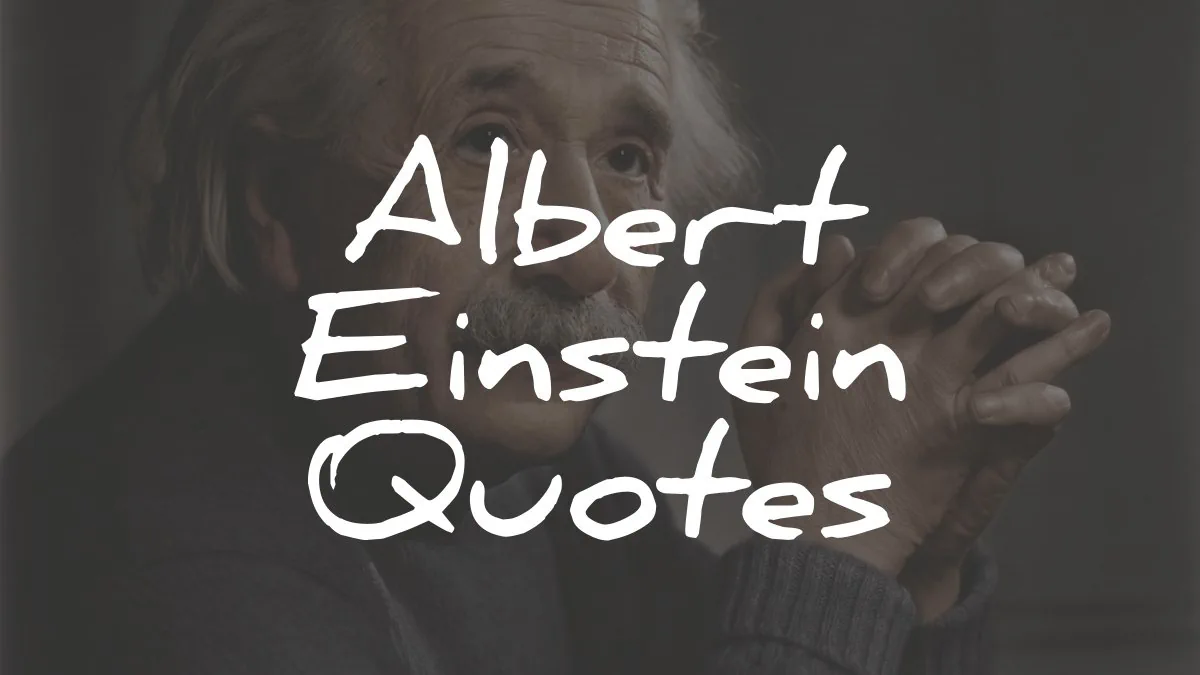

John von Neumann: The Genius Who Shaped the Modern World
Introduction: The Polymath of the 20th Century
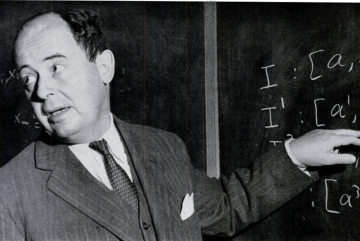
John von Neumann was one of the most brilliant and influential minds of the 20th century. A mathematician, physicist, computer scientist, and polymath, von Neumann made groundbreaking contributions across a wide range of disciplines—from quantum mechanics to game theory, and from computer architecture to nuclear physics. His work laid the foundation for many technologies and theories that define our modern world.
Born in Budapest, Hungary, in 1903, von Neumann displayed extraordinary intellectual abilities from an early age. By his mid-twenties, he was already recognized as a leading mathematician in Europe. Fleeing the rising tensions of World War II, he moved to the United States, where his work became instrumental in scientific and military advancements.
Early Life and Education
John von Neumann was born on December 28, 1903, into a wealthy Jewish family in Budapest. His father, Max Neumann, was a banker, and his mother, Margit Kann, came from a well-educated family. Young John (or János, his Hungarian name) showed prodigious talent early on, reportedly mastering calculus by the age of eight and conversing in ancient Greek by twelve.
Von Neumann attended the Lutheran Gymnasium in Budapest, one of the best schools in the city, where he excelled in mathematics and languages. Recognizing his son’s genius, Max Neumann hired private tutors to further nurture his abilities. By the time von Neumann entered university, he had already caught the attention of Hungary’s top mathematicians.
In 1921, he enrolled at the University of Budapest to study mathematics but simultaneously attended the University of Berlin and later ETH Zurich to study chemistry, at his father’s insistence—an attempt to ensure his son had a financially stable career. However, mathematics remained his true passion, and by 1926, he had earned his Ph.D. in mathematics with a thesis on set theory.
Contributions to Mathematics
Von Neumann’s early mathematical work spanned diverse fields, including set theory, quantum mechanics, and functional analysis. One of his major contributions was the development of the axiomatic foundations of set theory, which helped resolve contradictions in earlier formulations by Ernst Zermelo and Abraham Fraenkel.
In the late 1920s, von Neumann shifted his focus to the emerging field of quantum mechanics. His rigorous mathematical formulation of quantum theory, particularly his work on operator theory and the concept of Hilbert spaces, provided a solid foundation for the discipline. He collaborated with luminaries such as David Hilbert and later played a crucial role in the development of the atomic bomb through his expertise in mathematical physics.
Von Neumann and the Manhattan Project
With the outbreak of World War II, von Neumann’s expertise became indispensable to the Allied war effort. In 1943, he joined the Manhattan Project, the secret American initiative to develop nuclear weapons. His contributions were multifaceted—he worked on the implosion mechanism necessary for the plutonium bomb (tested in the Trinity explosion and later used in Nagasaki) and helped refine mathematical models for explosive lenses.
Beyond weapon design, von Neumann’s insights into shockwaves and fluid dynamics proved critical not just for the bomb but also for later advancements in aeronautics and meteorology. His ability to translate complex physical phenomena into mathematical algorithms made him an invaluable asset at Los Alamos.
The Birth of Game Theory
During the same period, von Neumann began formulating what would later become modern game theory—a mathematical framework for analyzing strategic interactions between rational decision-makers. His 1944 book, *Theory of Games and Economic Behavior*, co-authored with economist Oskar Morgenstern, revolutionized economics, military strategy, and social sciences.
Von Neumann’s minimax theorem demonstrated how players in zero-sum games could optimize strategic decisions, influencing fields as diverse as economics, evolutionary biology, and artificial intelligence. Decades later, his work would underpin advancements in algorithmic trading, political negotiation, and even cybersecurity.
The Von Neumann Architecture
Perhaps von Neumann’s most enduring legacy is his foundational work in computer science. In 1945, he drafted the *First Draft of a Report on the EDVAC*, which outlined the architecture of modern computers. The "von Neumann architecture" introduced the concept of a stored-program computer, where both data and instructions reside in the same memory system.
Before von Neumann’s model, computers were hardwired for specific tasks. His design allowed for reprogramming without physical modifications, making computers vastly more flexible and powerful. Nearly all modern computers—from smartphones to supercomputers—still adhere to this architecture.
Continued Influence and Later Life
By the late 1940s, von Neumann had become a prominent figure in American science, serving as a consultant to government agencies, corporations, and academic institutions. He worked on the development of the hydrogen bomb, contributed to early weather prediction models, and helped establish the field of cellular automata—a precursor to modern simulations in biology and artificial life.
Von Neumann was also known for his legendary intellect and memory. Colleagues recounted his ability to perform complex calculations mentally, recite entire books from memory, and engage in multiple deep conversations simultaneously.
However, his brilliant mind was tragically cut short. In 1955, he was diagnosed with cancer, likely due to exposure to radiation during his nuclear research. Despite his deteriorating health, he continued working until his death on February 8, 1957.
Conclusion of Part One: A Legacy of Genius
John von Neumann’s impact on science and technology cannot be overstated. His work reshaped multiple academic fields and laid the groundwork for innovations that define the modern era—digital computing, artificial intelligence, economic theory, and advanced weaponry.
In the next part of this article, we'll delve deeper into his contributions to computer science, his visionary predictions about technology’s future, and how his ideas continue to influence researchers worldwide. Stay tuned for more on the enduring legacy of John von Neumann.
Von Neumann’s Vision: Computers and Artificial Intelligence
John von Neumann’s contributions to computing extended far beyond the architecture that bears his name. He was among the first to foresee the transformative potential of computers, not just as calculating machines but as tools capable of simulating complex systems, from weather patterns to human cognition. His insights into machine learning and artificial intelligence (AI) were decades ahead of their time.
In the late 1940s and early 1950s, von Neumann explored the idea of self-replicating machines—a concept later formalized as "von Neumann probes" in theoretical space exploration. He pondered whether machines could emulate biological reproduction, an idea that would inspire early research into genetic algorithms and artificial life. His work on cellular automata, particularly the "von Neumann universal constructor," demonstrated mathematically how simple rules could generate complex, self-replicating patterns—a precursor to modern AI and complexity science.
The Birth of Numerical Weather Prediction
Another area where von Neumann left an indelible mark was meteorology. Before computers, weather forecasting relied heavily on empirical observations and intuition. Von Neumann recognized that the chaotic nature of atmospheric systems could be modeled using differential equations processed by high-speed calculators.
In 1946, he established the Meteorology Project at Princeton’s Institute for Advanced Study (IAS), assembling a team to develop numerical weather prediction models. Using early computers like the ENIAC, his team simulated weather patterns by breaking them down into mathematical equations. Though limited by the primitive technology of the time, this work laid the foundation for today’s highly accurate climate models and hurricane tracking systems.
Von Neumann and the Hydrogen Bomb
After World War II, von Neumann’s expertise in shockwaves and nuclear physics made him a key figure in the development of thermonuclear weapons. He worked closely with Edward Teller and Stanisław Ulam on the Teller-Ulam design, which became the blueprint for the hydrogen bomb.
Von Neumann’s mathematical prowess was critical in solving the problem of energy transfer between the fission "trigger" and the fusion fuel core—a puzzle that had stalled the project. His calculations ensured the feasibility of the H-bomb, tested successfully in 1952 with the Ivy Mike explosion. Though politically controversial, this work cemented von Neumann’s reputation as a strategist who understood the terrifying yet unavoidable role of nuclear deterrence in the Cold War.
Advising Governments and Shaping Policy
Beyond pure science, von Neumann became one of the most sought-after advisors in Cold War America. He served on the U.S. Atomic Energy Commission (AEC), advised the CIA and RAND Corporation, and influenced military strategy through his work on game theory. His concept of "mutually assured destruction" (MAD) underpinned nuclear deterrence policies, arguing that rational actors would avoid war if annihilation was guaranteed on both sides.
Unlike many scientists who later regretted their involvement in weapons development, von Neumann maintained that technological progress was inevitable and that the U.S. had to stay ahead of adversaries like the Soviet Union. His pragmatic, sometimes hawkish views put him at odds with peers like Robert Oppenheimer but underscored his belief in science as a tool of national security.
The Man Versus the Myth
Anecdotes about von Neumann’s intellect border on legend. He could recite entire books verbatim after a single reading, solve complex problems in his head faster than colleagues could with slide rules, and switch effortlessly between languages (he spoke Hungarian, German, French, English, and Latin fluently). At parties, he dazzled audiences by converting long strings of digits into binary or octal systems instantaneously.
Yet he was no recluse—von Neumann loved socializing, fine wines, and bawdy humor. His colleagues described him as charming and witty, though some found his relentless logic intimidating. When a friend lamented not understanding a difficult mathematical proof, von Neumann reportedly replied, "You don’t have to understand it—just learn it!"
Health Decline and Final Years
In 1955, von Neumann was diagnosed with bone cancer, likely caused by radiation exposure during nuclear tests. Confined to a wheelchair, he continued working even as his condition worsened. At one point, he dictated a scientific paper from his hospital bed while under heavy medication.
The illness forced him to confront mortality in uncharacteristic ways. Raised in a secular Jewish family, he shocked acquaintances by converting to Catholicism on his deathbed—a decision some attributed to fear, others to long-held but private beliefs.
He passed away on February 8, 1957, at the age of 53. President Eisenhower posthumously awarded him the Enrico Fermi Award for his contributions to nuclear science.
Debates and Controversies
Von Neumann’s legacy is not without controversy. Critics argue that his Cold War hawkishness and work on thermonuclear weapons accelerated the arms race. Others question whether his dominance in multiple fields stifled alternative ideas—his certainty in mathematical proofs sometimes discouraged challenges.
Yet even detractors admit his genius was unparalleled. When economist Paul Samuelson was asked whether von Neumann was truly the smartest person he’d ever met, he replied: "Yes, and it’s not even close."
Unfinished Work: The Limits of Machines
In his final years, von Neumann became fascinated with the parallels between computing and human cognition. He speculated that the brain operated like a digital computer, a debate that still rages in neuroscience today. His unpublished manuscript, *The Computer and the Brain*, explored how neural networks might process information—an idea that foreshadowed modern AI research.
Had he lived longer, von Neumann might have bridged the gap between biological and artificial intelligence. Instead, his scattered notes became a treasure trove for future researchers.
Conclusion of Part Two: The Architect of the Future
Von Neumann’s influence stretches far beyond his lifetime. From the algorithms powering Wall Street to the supercomputers predicting climate change, his fingerprints are everywhere. Yet his greatest gift may have been his ability to see connections between seemingly unrelated fields—physics, economics, and computing—long before others could.
In the final part of this article, we’ll examine how von Neumann’s ideas evolved posthumously, the institutions he shaped, and why contemporary scientists still describe unsolved problems as "questions von Neumann would have cracked." His story is a testament to how one mind can alter the trajectory of human progress.
Von Neumann’s Enduring Influence on Modern Science
Few scientists have left as indelible a mark across as many disciplines as John von Neumann. Decades after his death, his ideas continue to shape research in computer science, economics, biology, and artificial intelligence. In this final section, we explore how his work evolved beyond his lifetime, the institutions he helped build, and why his intellectual legacy remains unmatched.
The Digital Revolution and Beyond
The von Neumann architecture might have been his most tangible contribution to computing, but his vision extended much further. He anticipated concepts like parallel processing decades before they became feasible, suggesting that future computers might replicate the brain’s ability to perform multiple tasks simultaneously. Today’s quantum computing research—particularly in error correction and logical gates—builds directly on his mathematical frameworks.
Von Neumann also speculated about AI’s societal impact. In lectures in the 1950s, he warned of machines outpacing human control, foreshadowing debates about artificial general intelligence (AGI) and alignment. Unlike later theorists who dismissed AGI as science fiction, von Neumann considered it an inevitable consequence of computational progress—one requiring careful ethical foresight.
Cellular Automata and the Science of Complexity
In his final years, von Neumann’s most abstract work—on self-replicating cellular automata—proved surprisingly prescient. His theoretical models showed how simple programs could generate complex, lifelike behavior, laying the foundation for modern complexity science.
In the 1980s, mathematician John Conway expanded on von Neumann’s ideas to create the "Game of Life," a famous cellular automaton that demonstrated how basic rules could produce emergent complexity. Today, these principles underpin research in artificial life, evolutionary algorithms, and even synthetic biology. Scientists attempting to create digital organisms or model cancer growth still cite von Neumann’s pioneering frameworks.
Economics and the Mathematics of Decision-Making
Von Neumann’s game theory didn’t just revolutionize economics; it permeated fields ranging from political science to ecology. His Nash equilibrium—later refined by John Nash—became a cornerstone of strategic analysis, explaining phenomena from bidding wars to evolutionary competition among species.
Modern Silicon Valley owes him an accidental debt: auction theory, derived from his work, governs how online ad platforms like Google Ads allocate space. Meanwhile, behavioral economists now debate his assumption of perfect rationality, using AI to model how "bounded rationality" alters strategic outcomes—a nuance von Neumann himself might have enjoyed dissecting.
Von Neumann’s Institutional Legacy: The IAS and Beyond
The Institute for Advanced Study (IAS) in Princeton became a hub for 20th-century genius thanks partly to von Neumann’s influence. His presence attracted luminaries like Kurt Gödel and Robert Oppenheimer, fostering collaborations that pushed mathematics and physics forward.
His advocacy for interdisciplinary research also shaped institutions like the RAND Corporation, where his game theory studies informed Cold War policy. Today’s think tanks and AI ethics boards still grapple with questions he first posed: How do we model conflict between rational entities? Can algorithmic systems ever replicate human judgment?
The "Von Neumann Dividend": Accelerating Innovation
Historians of science coined the term "von Neumann dividend" to describe how his ideas catalyzed unforeseen breakthroughs. For example:
- **Cryptography* His work on pseudorandom number generation influenced modern encryption.
- **Neuroscience* His analogies between computers and brains inspired neural network research.
- **Space Exploration* NASA’s self-replicating machine concepts for Mars colonization echo his 1940s proposals.
Even failures bear his fingerprints—Google’s ill-fated "Project Maven" AI for drones relied on decision trees rooted in his game theory.
The Unanswered Questions: What Von Neumann Might Have Solved
Von Neumann’s death at 53 robbed science of a mind capable of integrating its scattered fragments. Colleagues often wondered which puzzles he’d have cracked if given more time:
1. **Quantum Computing* His operator theory might have clarified quantum decoherence decades earlier.
2. **Climate Modeling* His numerical methods could have refined today’s imperfect forecasts.
3. **AI Ethics* His pragmatic approach might have bridged the gap between technologists and policymakers.
Notably, he privately speculated about a "singularity" where artificial intellects would surpass biological ones—a term later popularized by Ray Kurzweil.
Von Neumann in Popular Culture
Though less famous than Einstein or Turing, von Neumann appears in niche cultural corners:
- **Literature* He’s a character in Thomas Pynchon’s *Gravity’s Rainbow* and Neal Stephenson’s *Cryptonomicon*.
- **Film* The 2023 Oppenheimer biopic briefly mentions his nuclear calculations.
- **Gaming* Civilization VI features him as a "Great Scientist" who boosts technology research.
Academics joke that "a von Neumann" has become shorthand for an impossibly versatile genius—as in, "We need a von Neumann to solve this problem."
Why We Still Need von Neumann’s Genius Today
In an era of hyperspecialization, von Neumann’s ability to merge disciplines feels increasingly rare. Modern challenges—AI governance, pandemic modeling, quantum encryption—require precisely his brand of cross-pollinating insight.
His archives at the Library of Congress reveal unfinished notes on topics from consciousness to entropy, suggesting he was sketching connections no one else could see. As AI researcher Marvin Minsky once said: "The world isn’t catching up to von Neumann’s ideas; we’re just rediscovering them."
Final Thoughts: The Measure of a Mind
John von Neumann redefined what it means to think. Before him, scientists mastered one field; he mastered them all and showed how they intertwined. His life poses haunting questions: Was his intellect a fluke of nature? Or could education nurture more minds like his?
As we stand on the brink of AI-driven upheaval, climate crises, and quantum leaps, we might wish for a von Neumann to guide us. But perhaps his greater lesson was this: The future belongs to those who dare to think across boundaries.
In the end, his legacy isn’t just the bombs, the theorems, or the silicon chips—it’s the audacity to believe one mind can map the universe. And in that, von Neumann proved himself right.
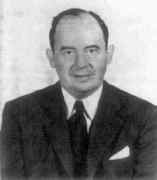
Albert Einstein: The Genius Who Redefined the Universe
The Early Life of a Revolutionary Mind
Albert Einstein was born on March 14, 1879, in Ulm, a small city in the Kingdom of Württemberg in the German Empire. His parents, Hermann Einstein and Pauline Koch, were secular Ashkenazi Jews. From an early age, Einstein exhibited an extraordinary curiosity about the natural world. A pivotal moment in his childhood occurred when his father gave him a compass. The unseen force guiding the needle fascinated him, planting the seed for his lifelong quest to understand the hidden laws of the universe.
Einstein’s early education was unconventional. He struggled with the rigid structure of traditional schooling, preferring independent learning. At age 12, he taught himself algebra and geometry, swiftly mastering advanced mathematical concepts. His rebellious nature led him to clash with authority figures, but his intellectual brilliance soon became undeniable.
The Road to Scientific Discovery
In 1895, Einstein applied to the Swiss Federal Polytechnic in Zurich but failed the entrance exam. Undeterred, he completed his secondary education in Aarau, Switzerland, and was admitted the following year. There, he met Mileva Marić, a fellow physicist who would later become his first wife. Though their marriage faced numerous challenges, their intellectual partnership was significant in Einstein’s early work.
After graduating in 1900, Einstein struggled to find an academic position due to his reputation as a non-conformist. He worked as a patent examiner in Bern, a job that granted him the mental freedom to explore scientific ideas in his spare time. The year 1905, known as his "Annus Mirabilis" (Miracle Year), marked the publication of four groundbreaking papers that reshaped physics forever.
The Miracle Year: 1905
Einstein’s 1905 papers addressed fundamental questions in physics, each contributing to a new understanding of the universe:
1. The Photoelectric Effect
Einstein proposed that light behaves as discrete packets of energy called "quanta" (later named photons). This idea, foundational to quantum mechanics, earned him the Nobel Prize in Physics in 1921.
2. Brownian Motion
He provided empirical evidence for the existence of atoms by explaining the erratic movement of particles suspended in fluid—a phenomenon known as Brownian motion.
3. Special Theory of Relativity
Einstein introduced the concept that the laws of physics are the same for all non-accelerating observers and that the speed of light is constant. His famous equation, E=mc², emerged from this theory, linking energy and mass.
4. Mass-Energy Equivalence
This principle demonstrated that mass and energy are interchangeable, a cornerstone of modern physics with profound implications for nuclear energy and cosmology.
The Rise to Scientific Stardom
Einstein’s work eventually gained recognition, and by 1909, he secured a professorship at the University of Zurich. His career advanced rapidly as he moved to Prague, returned to Zurich, and finally settled in Berlin in 1914, where he became a director at the Kaiser Wilhelm Institute for Physics.
However, his personal life was tumultuous. His marriage to Mileva deteriorated, and they divorced in 1919. That same year, his General Theory of Relativity—a refinement of his earlier work incorporating gravity—was confirmed during a solar eclipse. This validation catapulted Einstein to international fame.
The General Theory of Relativity
Einstein’s general relativity redefined gravity as the curvature of spacetime caused by mass. Unlike Newton’s concept of gravity as a force, Einstein’s model described it as the warping of the cosmic fabric. Predictions like the bending of light around massive objects and gravitational waves became pivotal to astrophysics.
Einstein’s Influence Beyond Physics
Beyond his scientific achievements, Einstein was a vocal advocate for civil rights, pacifism, and intellectual freedom. He fled Nazi Germany in 1933, renouncing his citizenship and settling in the United States, where he joined the Institute for Advanced Study in Princeton. There, he continued his work while engaging in political activism, including warnings against nuclear proliferation.
His legacy is more than equations—it’s a testament to the power of curiosity, creativity, and courage in the face of convention.
[To be continued…]
Einstein in America: Exile and Legacy
When Albert Einstein arrived in the United States in 1933, he was already a global icon. The rise of the Nazi regime and the increasing persecution of Jews in Germany forced him to leave Europe permanently. He settled in Princeton, New Jersey, where he joined the Institute for Advanced Study—an intellectual sanctuary that allowed him to focus on his work without the constraints of university bureaucracy. Though he intended to continue his research in theoretical physics, his influence soon extended into politics, ethics, and education.
The Manhattan Project and Nuclear Concerns
Einstein’s famous equation, E=mc², laid the theoretical foundation for nuclear energy, but he was not directly involved in the development of the atomic bomb. Yet, in 1939, he co-signed a letter to President Franklin D. Roosevelt warning of Nazi Germany’s potential to create nuclear weapons. This letter is often credited with sparking the U.S. government’s interest in atomic research, which eventually led to the Manhattan Project.
However, Einstein deeply regretted his indirect role in the bomb’s creation after seeing the devastation of Hiroshima and Nagasaki in 1945. He became an outspoken advocate for nuclear disarmament, co-founding the Emergency Committee of Atomic Scientists and warning of the existential dangers of unchecked militarization. "The unleashed power of the atom has changed everything save our modes of thinking," he famously remarked.
The Quest for a Unified Field Theory
In his later years, Einstein dedicated himself to the unification of physics—an elusive "Theory of Everything" that would reconcile general relativity with quantum mechanics. Though he worked tirelessly, this grand vision never materialized. Many physicists considered his quest quixotic, but his relentless pursuit demonstrated his belief in the fundamental order of the universe.
Einstein’s reluctance to accept certain aspects of quantum mechanics, particularly its inherent randomness ("God does not play dice with the universe"), put him at odds with peers like Niels Bohr. Despite this, his debates with contemporaries fueled deeper inquiries into the nature of reality.
His Personal Life in Princeton
Einstein’s second marriage, to Elsa Löwenthal (his cousin), lasted until her death in 1936. He lived modestly in Princeton, developing a reputation as an absent-minded professor—often seen wandering in his signature disheveled hair and baggy sweaters. His playful personality endeared him to the public; he enjoyed sailing, playing the violin, and engaging with local children who admired his wisdom and humor.
One famous anecdote tells of a young girl who asked him for help with her math homework. Rather than dismiss her, he spent an afternoon working through the problems, later joking, "Do not worry about your difficulties in mathematics—I assure you mine are far greater."
Einstein’s Political and Humanitarian Activism
Beyond physics, Einstein was a passionate advocate for civil rights, Zionism, and global peace. He supported the establishment of a Jewish homeland but envisioned Israel as a place of coexistence, not exclusion. His outspoken criticism of racism in America led to FBI surveillance under J. Edgar Hoover, who wrongly suspected him of communist sympathies.
He was also a vocal opponent of McCarthyism, writing, "The strength of the Constitution lies in the guarantee it gives that minority opinions will be heard." His moral clarity made him a symbol of intellectual freedom during the Cold War.
Last Years and Death
In 1955, Einstein experienced internal bleeding caused by a ruptured abdominal aneurysm. When doctors suggested surgery, he refused, stating, "I have done my share; it is time to go." He passed away on April 18 at the age of 76. His brain was removed (without initial family consent) for scientific study, and his body was cremated. His ashes were scattered in an undisclosed location.
Yet, even in death, his legacy endured. The discovery of gravitational waves in 2015—exactly a century after his prediction—reaffirmed his unparalleled contributions to science.
Einstein’s Cultural Impact
Few scientists have permeated popular culture like Einstein. His wild-haired visage has become shorthand for genius, appearing on posters, T-shirts, and memes. Yet, he is often misunderstood—reduced to a caricature rather than appreciated for his revolutionary ideas.
Universities still teach his theories, and space telescopes like the James Webb probe phenomena he first described. The term "Einstein" is synonymous with brilliance, but his true greatness lay in his relentless questioning of the universe’s deepest secrets.
[To be continued…]
The Scientific Legacy of Einstein’s Unfinished Work
While Einstein passed away in 1955, his theories continue to shape modern physics in ways even he might not have anticipated. The study of black holes, gravitational waves, and the expansion of the universe all trace their foundations back to his revolutionary ideas. Today's physicists still grapple with questions Einstein first formulated nearly a century ago, proving how far ahead of his time he truly was.
The Posthumous Validation of Gravitational Waves
One of Einstein's most incredible predictions was the existence of gravitational waves - ripples in spacetime caused by massive cosmic events. For decades after he proposed them in 1916, this concept remained theoretical. In 2015, the LIGO (Laser Interferometer Gravitational-Wave Observatory) experiment finally detected these waves from colliding black holes 1.3 billion light-years away, exactly matching Einstein's calculations. This monumental discovery opened an entirely new way to observe the universe.
Einstein's Continuing Influence on Modern Technology
Remarkably, many technologies we rely on today directly result from Einstein's theories:
- GPS systems must account for time dilation effects predicted by relativity to maintain accuracy
- Semiconductor technology and lasers (Nobel Prize-winning applications of his photoelectric effect work)
- Medical imaging technologies like PET scans, which rely on particle annihilation (E=mc² in action)
- Solar panels, which convert light to electricity through the photoelectric effect
These applications demonstrate how theoretical physics manifests in practical innovations that shape our daily lives.
The Ongoing Quest for Quantum Gravity
Einstein spent his final decades pursuing a unified field theory that could reconcile gravity with quantum mechanics. Though he didn't succeed, this quest continues today through string theory, loop quantum gravity, and other approaches. The recent successful image of a black hole's event horizon (another Einsteinian prediction) has provided new data for these investigations. Modern physicists view completing Einstein's dream of unification as the "holy grail" of theoretical physics.
Einstein as the Quintessential Scientific Mind
What made Einstein's thinking so uniquely powerful? Cognitive scientists have identified several key traits that contributed to his genius:
- Visual imagination: He conducted "thought experiments" (like chasing a light beam) that revealed deep truths
- Intellectual independence: He questioned basic assumptions others took for granted
- Persistence: He spent years refining relativity despite initial skepticism
- Interdisciplinary thinking: He drew connections between physics, philosophy, and mathematics
His approach to problem-solving continues to influence how we teach science and foster creativity.
The Human Side of Genius
Beyond the science, Einstein's personal philosophy offers timeless wisdom:
- "Imagination is more important than knowledge"
- "The important thing is not to stop questioning"
- "Try not to become a man of success, but rather a man of value"
These insights reveal his belief in maintaining childlike curiosity throughout life. His ability to explain complex concepts simply ("If you can't explain it to a six-year-old, you don't understand it yourself") demonstrates his mastery of both science and communication.
The Enduring Mystery of Einstein's Brain
After his death, pathologist Thomas Harvey famously preserved Einstein's brain without permission, leading to decades of questionable research. While initial studies found some unusual features (like extra glial cells in certain regions), modern neuroscience suggests his genius likely came from how he used his brain rather than its physical structure alone. The fascination with his brain itself reflects our cultural obsession with understanding extraordinary intelligence.
Einstein in the 21st Century
Today, Einstein remains more than just a historical figure - he's an enduring symbol:
- His face is one of the most recognized globally
- "Einstein" has become synonymous with genius
- Educators use his life story to inspire students in STEM
- Artists and writers continue reinterpreting his legacy
The digital age has made his once-radical ideas accessible to anyone with internet access, spreading his influence to new generations.
A Legacy That Continues to Unfold
Einstein's impact extends beyond physics into how we conceptualize our place in the universe. From the microscopic world of quantum mechanics to the vast structure of spacetime, his work defines the framework of modern physics. As astrophysicist Neil deGrasse Tyson noted, "Everyone knows Einstein was a genius, but few appreciate how his work touches nearly every aspect of our technological society."
While we've confirmed many of his predictions, others - like wormholes and time dilation effects - continue to challenge scientists. The James Webb Space Telescope and next-generation particle accelerators may reveal more Einsteinian phenomena we can't yet imagine.
His greatest legacy may be the example he set: a humble, curious thinker who revolutionized our understanding of reality while maintaining deep humanistic values. As we solve today's great scientific mysteries - dark energy, quantum computing, the origin of the universe - we're still following the path Einstein illuminated.
In the end, perhaps Einstein's most profound lesson was this: the universe is strange, wonderful, and full of undiscovered truths waiting for those who dare to question everything. His life reminds us that imagination, when paired with rigorous thought, can reveal the deepest secrets of reality. The continuing exploration of his work proves that true genius never stops giving - even a century later, we're still catching up to Einstein.