Maria Mitchell: America's First Woman Astronomer
Maria Mitchell was a pioneering American astronomer who shattered gender barriers in the 19th century. Her discovery of a telescopic comet in 1847 catapulted her to international fame, making her the first professional woman astronomer in the United States. Beyond her scientific achievements, Mitchell was a passionate educator and advocate for women's rights, leaving an indelible mark on both astronomy and gender equity in STEM.
Early Life and Education
Born on August 1, 1818, in Nantucket, Massachusetts, Maria Mitchell grew up in a Quaker family that valued education and equality. Her father, William Mitchell, was an amateur astronomer who nurtured her interest in the stars. By the age of 12, she was already assisting her father in calculating navigational positions for whaling ships, a task that honed her mathematical and observational skills.
Mitchell's formal education began at the North Grammar School, where she excelled in mathematics and science. Later, she attended the Unitarian minister Cyrus Peirce's school, which further fueled her intellectual curiosity. Her early exposure to astronomy and navigation set the stage for her future discoveries.
The Comet Discovery That Changed Everything
On October 1, 1847, Maria Mitchell made a discovery that would alter the course of her life. Using a telescope from her family's rooftop observatory, she spotted a telescopic comet, now designated C/1847 T1. This achievement was not only a personal triumph but also a historic moment for women in science.
The discovery earned her widespread acclaim, including a gold medal from King Frederick VI of Denmark. This prestigious award was a testament to her skill and dedication, as it was typically bestowed upon established male astronomers. Mitchell's comet discovery was a pivotal moment that opened doors for women in the field of astronomy.
The Impact of the Discovery
Mitchell's comet discovery had far-reaching implications. It challenged the prevailing notion that women were incapable of making significant contributions to science. Her achievement was celebrated not only in the United States but also internationally, inspiring countless women to pursue careers in STEM fields.
The comet, now known as "Miss Mitchell's Comet", became a symbol of her pioneering spirit. It also led to her election as the first woman Fellow of the American Academy of Arts and Sciences in 1848, a groundbreaking honor that further solidified her place in scientific history.
Breaking Barriers in Academia
In 1865, Maria Mitchell achieved another historic milestone when she was appointed Professor of Astronomy at Vassar College. This appointment made her the first woman in the U.S. to hold a college professorship in astronomy, a position she held until her retirement in 1888.
At Vassar, Mitchell was not only a professor but also the Director of the Vassar College Observatory. She used her platform to advocate for women's education and equality in the scientific community. Her teaching methods were innovative, emphasizing hands-on learning and critical thinking.
Advocacy for Women in Science
Mitchell was a vocal advocate for women's rights and gender equity in STEM. She insisted on salary equity when she discovered pay disparities at Vassar, setting a precedent for future generations of women scientists. Her advocacy extended beyond the classroom, as she was actively involved in the Association for the Advancement of Women, serving as its president in the 1870s.
Her mentorship of students like Christine Ladd-Franklin and Ellen Swallow Richards further demonstrated her commitment to fostering the next generation of women scientists. Mitchell's legacy as an educator and advocate continues to inspire women in STEM today.
Scientific Contributions Beyond the Comet
While Maria Mitchell is best known for her comet discovery, her scientific contributions extended far beyond that single event. She made significant observations of comets, nebulae, double stars, sunspots, and the satellites of Jupiter and Saturn. Her work as a "computer" for the American Ephemeris and Nautical Almanac involved calculating planetary positions used for navigation, a critical task in the 19th century.
Mitchell's publications included orbital calculations that established her priority for the comet discovery. Her meticulous observations and calculations were highly regarded in the scientific community, earning her a reputation as a rigorous and dedicated astronomer.
Legacy and Honors
Maria Mitchell's legacy is preserved through various institutions and honors. The Maria Mitchell Association, founded in 1902, preserves her home and operates the Maria Mitchell Observatory on Nantucket. This organization continues her mission of promoting STEM education and public engagement with astronomy.
Her contributions to science and education have been recognized with numerous honors, including an eponymous lunar crater named in her honor. Mitchell's life and work remain a source of inspiration for women in science, and her story is frequently cited in discussions about gender equity in STEM.
Conclusion
Maria Mitchell's journey from a young girl assisting her father with navigational calculations to becoming America's first woman astronomer is a testament to her perseverance and passion for science. Her discoveries, advocacy, and educational contributions have left an enduring impact on the field of astronomy and the broader scientific community.
As we continue to strive for gender equity in STEM, Maria Mitchell's story serves as a powerful reminder of the importance of breaking barriers and fostering inclusivity. Her legacy lives on through the institutions that bear her name and the countless women she has inspired to reach for the stars.
Maria Mitchell's Role in the Anti-Slavery Movement
Beyond her scientific achievements, Maria Mitchell was deeply committed to social reform, particularly the anti-slavery movement. Her Quaker upbringing instilled in her a strong sense of justice and equality, which she carried into her adult life. Mitchell used her platform as a respected scientist to advocate for the abolition of slavery, demonstrating that her influence extended far beyond the realm of astronomy.
Mitchell's involvement in the anti-slavery movement was both public and personal. She attended abolitionist meetings and lectures, often speaking out against the institution of slavery. Her correspondence with prominent abolitionists, including Frederick Douglass, highlights her dedication to the cause. Mitchell's advocacy was not limited to words; she also took concrete actions, such as boycotting products produced by slave labor.
Intersection of Science and Social Justice
Maria Mitchell's dual roles as a scientist and a social justice advocate were intertwined. She believed that education and science could be powerful tools for social change. Mitchell's work at Vassar College reflected this belief, as she encouraged her students to think critically about societal issues and to use their knowledge to make a difference in the world.
Her commitment to social justice also influenced her scientific work. Mitchell was a firm believer in the democratization of knowledge, advocating for making science accessible to all, regardless of gender or social status. This philosophy was evident in her public lectures and writings, which aimed to engage and educate a broad audience.
Maria Mitchell's Influence on Modern Astronomy
Maria Mitchell's contributions to astronomy have had a lasting impact on the field. Her meticulous observations and calculations set a high standard for astronomical research. Mitchell's work on comets, nebulae, and double stars provided valuable data that contributed to the broader understanding of the universe.
One of Mitchell's most significant contributions was her work on sunspots. She conducted daily observations and photography of sunspots, which were crucial for understanding solar activity. Her detailed records of sunspot activity remain a valuable resource for astronomers studying the sun's behavior and its impact on Earth.
Pioneering Use of Technology
Maria Mitchell was at the forefront of using new technologies in astronomy. She embraced the use of telescopes and photographic techniques to enhance her observations. Mitchell's adoption of these technologies allowed her to make more precise and detailed recordings of celestial phenomena, setting a precedent for future astronomers.
Her innovative approach to astronomy extended to her teaching methods. At Vassar College, Mitchell incorporated hands-on learning and the use of advanced equipment into her curriculum. This approach not only enriched her students' education but also prepared them for careers in science, where they could continue to push the boundaries of knowledge.
Maria Mitchell's Enduring Legacy in Education
Maria Mitchell's impact on education is as significant as her contributions to astronomy. As a professor at Vassar College, she was a trailblazer in women's education, demonstrating that women were capable of excelling in scientific fields. Mitchell's teaching philosophy was grounded in the belief that education should be rigorous, engaging, and accessible.
Mitchell's influence extended beyond her own students. She was a vocal advocate for educational reform, pushing for changes that would make science education more inclusive and effective. Her efforts helped to shape the landscape of women's education in the United States, paving the way for future generations of women scientists.
Mentorship and Empowerment
One of Maria Mitchell's most enduring legacies is her role as a mentor to young women scientists. She took a personal interest in the success of her students, providing them with guidance, support, and opportunities to conduct their own research. Mitchell's mentorship was instrumental in the careers of several notable women scientists, including Christine Ladd-Franklin and Ellen Swallow Richards.
Mitchell's approach to mentorship was holistic. She not only provided her students with scientific training but also encouraged them to develop their critical thinking skills and to pursue their passions. Her belief in the potential of her students was unwavering, and she worked tirelessly to help them overcome the barriers they faced as women in science.
Maria Mitchell's Cultural and Historical Significance
Maria Mitchell's life and work have had a profound impact on American culture and history. As the first professional woman astronomer in the United States, she challenged societal norms and demonstrated that women could excel in scientific fields. Mitchell's achievements have been celebrated in various forms, from biographies and documentaries to museum exhibitions and educational programs.
Her story is often cited in discussions about gender equity in STEM, serving as a powerful example of what women can achieve when given the opportunity. Mitchell's legacy is a reminder of the importance of breaking down barriers and fostering inclusivity in all fields, particularly in science and education.
Commemorations and Honors
Maria Mitchell's contributions have been recognized through numerous commemorations and honors. In addition to the lunar crater named in her honor, there are several institutions and programs that bear her name. The Maria Mitchell Association, founded in 1902, is dedicated to preserving her legacy and promoting STEM education.
Other honors include:
- The Maria Mitchell Observatory on Nantucket, which continues her work in astronomy and public education.
- The Maria Mitchell Women in Science Award, which recognizes outstanding women scientists.
- Numerous scholarships and fellowships named in her honor, supporting women pursuing careers in science.
These commemorations ensure that Maria Mitchell's legacy continues to inspire and empower future generations of scientists and advocates.
Maria Mitchell's Writings and Publications
Throughout her career, Maria Mitchell published numerous articles and papers on her astronomical observations and calculations. Her writings were not only scientific but also reflective, offering insights into her thoughts on education, gender equity, and social justice. Mitchell's publications were widely read and respected, contributing to her reputation as a thought leader in both science and society.
One of her most notable publications was her orbital calculations for the comet she discovered, which were published in Silliman's Journal. This work established her priority for the discovery and demonstrated her expertise in astronomical calculations. Mitchell's writings on sunspots, comets, and other celestial phenomena were also highly regarded, providing valuable data for the scientific community.
Influence on Scientific Literature
Maria Mitchell's contributions to scientific literature extended beyond her own publications. She was a strong advocate for the dissemination of scientific knowledge, encouraging her students and colleagues to publish their work. Mitchell believed that sharing knowledge was essential for advancing science and promoting equality in the field.
Her influence on scientific literature is evident in the work of her students and protégés, many of whom went on to make significant contributions to their respective fields. Mitchell's emphasis on clear, rigorous writing set a high standard for scientific communication, one that continues to be upheld in the scientific community today.
Maria Mitchell's Global Impact and Recognition
Maria Mitchell's achievements were not only recognized in the United States but also internationally. Her discovery of the comet and subsequent gold medal from the King of Denmark brought her global acclaim. Mitchell's work was respected by scientists around the world, and she corresponded with many prominent international astronomers.
Her global impact is a testament to the universal nature of science and the power of discovery to transcend borders. Mitchell's story has inspired women scientists around the world, demonstrating that excellence in science knows no gender or nationality. Her legacy continues to be celebrated internationally, with her life and work serving as a model for aspiring scientists everywhere.
International Honors and Collaborations
In addition to the gold medal from the King of Denmark, Maria Mitchell received numerous other international honors. She was elected as a member of several prestigious scientific societies, including the American Philosophical Society and the American Association for the Advancement of Science. These honors reflected the high regard in which her work was held by the global scientific community.
Mitchell's international collaborations were also significant. She worked with astronomers from various countries, sharing data and insights that contributed to the advancement of astronomical knowledge. Her collaborative approach to science underscored her belief in the importance of cooperation and the free exchange of ideas.
The Maria Mitchell Association: Preserving a Legacy
The Maria Mitchell Association (MMA) stands as a living testament to the enduring impact of America's first professional woman astronomer. Founded in 1902, just 14 years after her passing, the association has worked tirelessly to preserve Mitchell's home, advance her scientific mission, and inspire new generations through STEM education. Today, the MMA operates multiple facilities on Nantucket, including the Maria Mitchell Observatory, the Vestige of the Day (her birthplace), and the Mitchell House, where she made her historic comet discovery.
The association's work extends beyond preservation. It actively engages in public astronomy programs, educational outreach, and scientific research. Through summer internships, workshops, and public stargazing events, the MMA continues Mitchell's mission of making science accessible to all. The observatory remains a hub for astronomical research, with modern telescopes that build upon the foundation Mitchell established over a century ago.
Educational Programs Inspiring Future Scientists
The MMA's educational initiatives are particularly impactful. The Maria Mitchell Science Research Institute offers competitive summer programs where students conduct original research in astronomy, environmental science, and other STEM fields. These programs have launched countless careers, with alumni going on to work at NASA, major universities, and leading research institutions.
Key programs include:
- Research Experiences for Undergraduates (REU) – A National Science Foundation-funded program providing hands-on research opportunities.
- Girl Scouts Astronomy Badge Workshops – Encouraging young girls to explore science through interactive activities.
- Public Lecture Series – Featuring prominent scientists discussing cutting-edge research in astronomy and related fields.
These programs reflect Mitchell's belief in education as a catalyst for change, ensuring her legacy continues to shape the future of science.
Maria Mitchell's Influence on Modern Women in STEM
Maria Mitchell's life and career have had a profound influence on women in STEM today. Her story is frequently cited in discussions about gender equity in science, serving as both inspiration and a historical benchmark. Modern women astronomers, from Vera Rubin to Jocelyn Bell Burnell, have acknowledged Mitchell as a trailblazer who paved the way for their own careers.
Mitchell's advocacy for equal pay and opportunities resonates strongly in contemporary debates about workplace equity. Her insistence on salary parity at Vassar College set a precedent that remains relevant in today's fight for equal pay in STEM fields. Organizations like the Association for Women in Science (AWIS) and 500 Women Scientists continue to draw upon her example in their advocacy work.
Mitchell's Legacy in the MeToo and STEM Equity Movements
The MeToo movement and ongoing efforts to address gender discrimination in STEM have brought renewed attention to Mitchell's experiences. Her struggles against systemic barriers—from being denied access to professional networks to facing skepticism about her capabilities—mirror challenges that many women in science still encounter today.
Mitchell's response to these challenges—perseverance, excellence, and advocacy—offers a powerful model for contemporary women scientists. Her life demonstrates that progress is possible, even in the face of entrenched discrimination. This message is particularly important in fields like astronomy, where women remain underrepresented in leadership positions.
Maria Mitchell in Popular Culture and Media
Maria Mitchell's story has been featured in various forms of media, from documentaries to children's books, ensuring her legacy reaches diverse audiences. Her life has been the subject of:
- Biographies, including "Maria Mitchell: A Life in Journals and Letters" by Henry Albers.
- Documentaries, such as the PBS special "The Astronomer: Maria Mitchell".
- Children's literature, like "Reaching for the Stars: The Story of Maria Mitchell" by Catherine Bright.
- Theater productions, including plays that explore her scientific and personal journey.
These portrayals have helped to cement Mitchell's status as a cultural icon, inspiring not just scientists but anyone who values perseverance and equality. Her story is often included in Women's History Month celebrations and STEM education curricula, ensuring that new generations learn about her contributions.
The Power of Representation
Representation matters, and Maria Mitchell's visibility in media and education provides crucial role models for young girls interested in science. Studies have shown that exposure to female scientists in history increases girls' confidence in pursuing STEM careers. Mitchell's story, with its themes of curiosity, determination, and breaking barriers, is particularly effective in this regard.
Educators and parents often use Mitchell's life as a case study to discuss:
- The importance of mentorship in science.
- How systemic barriers can be overcome through persistence.
- The intersection of science and social justice.
Visiting Maria Mitchell's Nantucket: A Pilgrimage for Science Enthusiasts
For those inspired by Maria Mitchell's story, visiting Nantucket, Massachusetts offers a unique opportunity to walk in her footsteps. The island, known for its rich history and natural beauty, is home to several sites associated with Mitchell's life and work. A visit to these locations provides a deeper understanding of her contributions and the environment that shaped her.
Key sites to explore include:
- The Maria Mitchell Observatory – Where visitors can participate in public stargazing events and learn about ongoing astronomical research.
- The Mitchell House – Mitchell's home, preserved with many of her original belongings, including the telescope she used to discover the comet.
- The Vestige of the Day – A small museum showcasing artifacts from Mitchell's life and the history of Nantucket's scientific community.
- The Nantucket Atheneum – Where Mitchell worked as a librarian and engaged with the island's intellectual community.
These sites are not just historical landmarks; they are active centers of science education and public engagement, continuing the work Mitchell began nearly two centuries ago.
Planning Your Visit
For those planning a visit, the Maria Mitchell Association offers guided tours, educational programs, and special events throughout the year. Summer is an especially vibrant time, with astronomy nights, lectures, and family-friendly activities that bring Mitchell's legacy to life.
Visitors can also explore Nantucket's natural beauty, which played a significant role in Mitchell's life. The island's clear night skies, free from light pollution, offer exceptional stargazing opportunities—much as they did in Mitchell's time. This connection to the natural world is a key part of understanding her scientific journey.
Lessons from Maria Mitchell's Life and Career
Maria Mitchell's life offers numerous lessons that remain relevant today. Her story is a masterclass in resilience, innovation, and advocacy. Below are some of the most important takeaways from her remarkable journey:
1. The Power of Persistence
Mitchell's discovery of the comet was not the result of luck but of years of dedicated observation. She spent countless nights scanning the skies, often in challenging conditions. Her persistence paid off, demonstrating that great discoveries require patience and determination.
2. Breaking Barriers Through Excellence
In a time when women were largely excluded from scientific fields, Mitchell proved that excellence could break down barriers. Her meticulous work and groundbreaking discoveries forced the scientific community to recognize her contributions, paving the way for future women scientists.
3. The Importance of Mentorship
Mitchell's own success was partly due to the mentorship she received from her father. In turn, she became a mentor to countless young women, demonstrating the transformative power of guidance and support. Her mentorship model remains a cornerstone of effective STEM education.
4. Advocacy as a Scientific Responsibility
Mitchell believed that scientists had a responsibility to advocate for social justice and equality. Her work in the anti-slavery movement and her fight for women's rights show that science and activism can—and should—go hand in hand.
5. The Value of Public Engagement
Throughout her career, Mitchell emphasized the importance of making science accessible to the public. Her lectures, writings, and public observations helped to demystify astronomy and inspire a broader audience. This commitment to public engagement is a model for scientists today.
Conclusion: Maria Mitchell's Enduring Legacy
Maria Mitchell's life was one of firsts, fights, and enduring contributions. As the first professional woman astronomer in the United States, she shattered glass ceilings and redefined what was possible for women in science. Her discovery of the comet in 1847 was just the beginning of a career that would inspire generations of scientists, educators, and advocates.
Mitchell's legacy is not confined to the past. Through the Maria Mitchell Association, her educational philosophy continues to shape STEM programs today. Her advocacy for gender equity and social justice remains a guiding light in ongoing struggles for equality. And her story, told and retold in books, documentaries, and classrooms, continues to inspire young minds to reach for the stars.
In an era where women in STEM still face significant challenges, Maria Mitchell's life serves as a powerful reminder of what can be achieved through perseverance, excellence, and courage. Her journey from a small island in Massachusetts to the heights of international scientific recognition is a testament to the impact one determined individual can have on the world.
As we look to the future, Maria Mitchell's story challenges us to continue breaking barriers, advocating for equality, and fostering a love of science in the next generation. Her life reminds us that the stars are not just objects of study but symbols of what we can achieve when we dare to dream—and work tirelessly to make those dreams a reality.
Vera Rubin: The Astronomer Who Uncovered Dark Matter
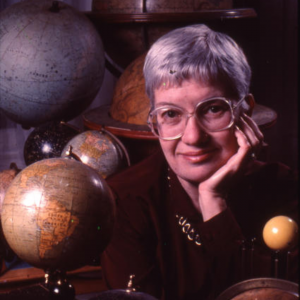
Vera Rubin, a pioneering American astronomer, revolutionized our understanding of the universe by providing the first direct observational evidence for dark matter. Her groundbreaking measurements of galaxy rotation curves revealed that invisible mass holds galaxies together, fundamentally altering cosmology.
The Early Life and Education of Vera Rubin
Born Vera Florence Cooper on July 23, 1928, in Philadelphia, Rubin developed an early fascination with the stars. Despite facing gender barriers, she pursued her passion for astronomy, earning her PhD from Georgetown University in 1954. Her thesis on galaxy motions, though initially overlooked, hinted at early insights into the supergalactic plane and deviations from the Hubble flow.
Overcoming Gender Barriers in Science
Rubin's journey was not without challenges. She was often discouraged from pursuing astronomy, a field dominated by men at the time. However, her determination and curiosity drove her forward. Her early work, though underappreciated, laid the groundwork for her future discoveries.
The Groundbreaking Discovery of Dark Matter
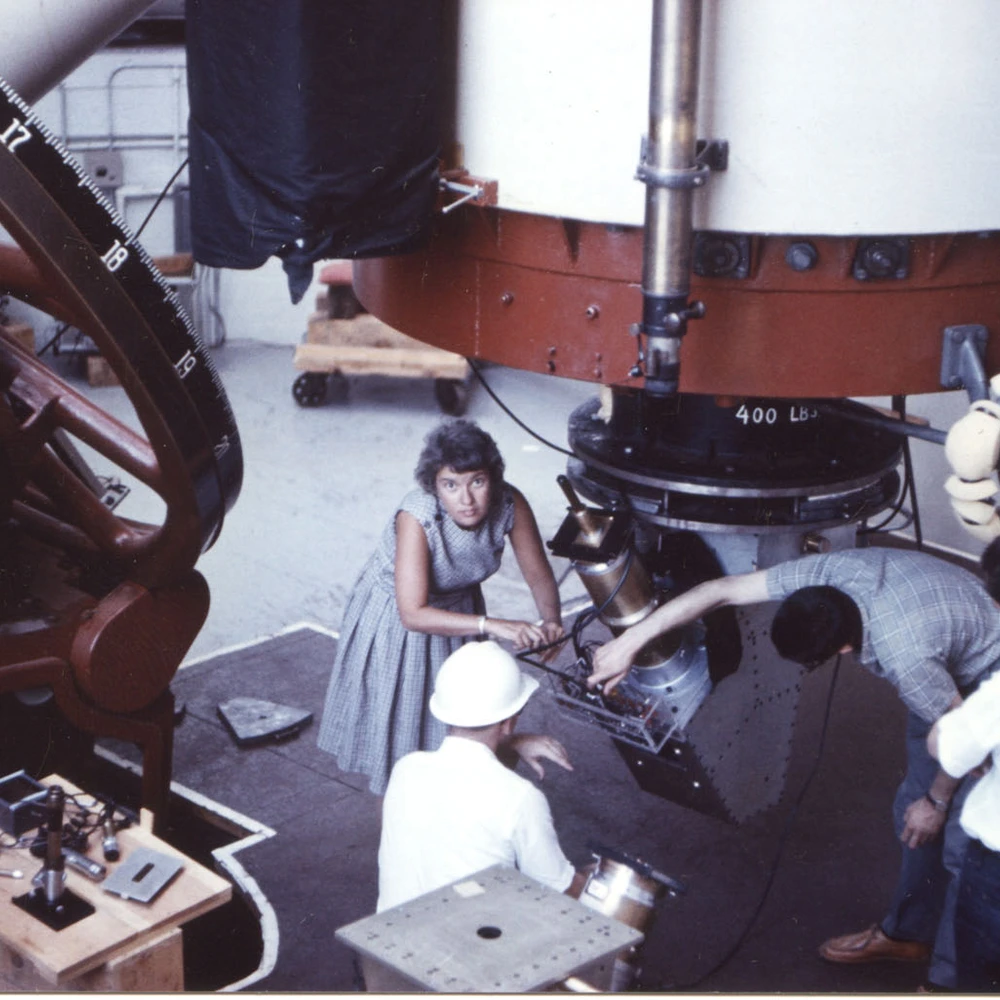
In collaboration with Kent Ford beginning in 1965, Rubin used advanced image-tube spectrographs to study the rotation curves of galaxies. Her observations at Kitt Peak, Lowell Observatory, and Palomar revealed something extraordinary: stars at the outer edges of galaxies orbited at unexpectedly high, flat speeds. This implied the presence of unseen mass, which we now call dark matter.
Key Observations and Findings
Rubin and Ford measured the rotation curves of over 60 spiral galaxies, including the Andromeda Galaxy (M31). Their findings, published in a key 1970 paper, showed that the outer stars of galaxies moved at speeds that defied predictions based on visible mass alone. This anomaly suggested the existence of dark matter, an invisible substance that exerts gravitational forces.
Confirmation and Impact
Their work was later confirmed by 21 cm hydrogen line radio observations, solidifying Rubin's place in astronomical history. Her discoveries shifted cosmology toward a new understanding of the universe, where dark matter plays a crucial role in holding galaxies together.
Legacy and Recognition
Vera Rubin's contributions to science are immense. She authored over 200 scientific papers and received numerous accolades, including the National Medal of Science (1993), the Bruce Medal, and the Gold Medal of the Royal Astronomical Society. She was also elected to the National Academy of Sciences in 1981.
The Vera C. Rubin Observatory
Her legacy continues through the Vera C. Rubin Observatory in Chile, set to begin full operations soon. This state-of-the-art facility will focus on time-domain astronomy and further studies of dark matter, ensuring that Rubin's pioneering work inspires future generations of astronomers.
Advocacy for Women in Science
Beyond her scientific achievements, Rubin was a strong advocate for women in science. She mentored many young scientists and was the first woman staff astronomer at the Carnegie Institution's Department of Terrestrial Magnetism. Her dedication to breaking down gender barriers has left a lasting impact on the scientific community.
Conclusion
Vera Rubin's discoveries have fundamentally changed our understanding of the universe. Her work on dark matter has driven modern cosmology and inspired countless scientists. As we look to the future, the Vera C. Rubin Observatory will continue her legacy, uncovering more secrets of the cosmos.
The Rubin-Ford Effect and Large-Scale Structure
Beyond her work on dark matter, Vera Rubin made another significant discovery in 1976: the Rubin-Ford effect. This phenomenon describes the peculiar velocities of galaxies, suggesting the existence of large-scale structure in the universe. These observations further solidified her reputation as a pioneer in astrophysics.
Understanding the Rubin-Ford Effect
The Rubin-Ford effect refers to the unexpected motions of galaxies that cannot be explained by the gravitational pull of visible matter alone. Rubin and Ford noticed that galaxies exhibited peculiar velocities, indicating the presence of unseen mass influencing their movements. This discovery provided additional evidence for the existence of dark matter and its role in shaping the universe.
Implications for Cosmology
The implications of the Rubin-Ford effect are profound. It suggests that the universe is not uniform but instead has a complex, large-scale structure influenced by dark matter. This discovery has driven further research into the distribution and nature of dark matter, as well as its impact on the formation and evolution of galaxies.
Vera Rubin's Advocacy for Women in Science
Throughout her career, Vera Rubin faced numerous challenges as a woman in a male-dominated field. Despite these obstacles, she became a strong advocate for women in science, mentoring many young scientists and breaking down gender barriers. Her efforts have had a lasting impact on the scientific community.
Breaking Down Gender Barriers
Rubin's journey was marked by perseverance and determination. She was often discouraged from pursuing astronomy, but her passion for the stars drove her forward. Her achievements paved the way for future generations of women in science, proving that gender should not be a barrier to success.
Mentoring the Next Generation
As the first woman staff astronomer at the Carnegie Institution's Department of Terrestrial Magnetism, Rubin mentored many young scientists. She believed in the importance of supporting and encouraging women in science, and her efforts have inspired countless individuals to pursue careers in astronomy and other STEM fields.
The Nobel Prize Debate
Despite her groundbreaking discoveries and numerous accolades, Vera Rubin never received the Nobel Prize. This oversight has sparked debates within the scientific community, with many arguing that her contributions to astronomy were deserving of the highest honor.
Arguments for the Nobel Prize
Many prominent scientists, including physicist Lisa Randall, have argued that Rubin's work on dark matter was deserving of the Nobel Prize. Her discoveries fundamentally changed our understanding of the universe and have driven significant advancements in cosmology. The Nobel Prize committee's decision to overlook her achievements has been a subject of controversy and discussion.
The Legacy of Vera Rubin
While Rubin may not have received the Nobel Prize, her legacy is undeniable. Her work on dark matter has inspired countless scientists and has led to the development of new fields in astrophysics and particle physics. The Vera C. Rubin Observatory, named in her honor, stands as a testament to her enduring impact on the scientific community.
The Vera C. Rubin Observatory: A Tribute to a Pioneer
The Vera C. Rubin Observatory, located in Chile, is a state-of-the-art facility dedicated to advancing our understanding of the universe. Named in honor of Vera Rubin, the observatory is set to begin full operations soon and will focus on time-domain astronomy and further studies of dark matter.
Advancing Dark Matter Research
The observatory will generate 20 terabytes of data nightly, providing unprecedented insights into the nature of dark matter and its role in the universe. By imaging the southern sky every few nights, the observatory will help scientists probe the mysteries of dark matter, dark energy, and transient astronomical events.
Inspiring Future Generations
The Vera C. Rubin Observatory is not only a tribute to Rubin's pioneering work but also a symbol of inspiration for future generations of scientists. It serves as a reminder of the importance of curiosity, determination, and the pursuit of knowledge. As the observatory begins its operations, it will continue Rubin's legacy, uncovering more secrets of the cosmos and inspiring countless individuals to explore the wonders of the universe.
The Nature of Dark Matter: Ongoing Debates
Vera Rubin's work on dark matter has sparked ongoing debates and research into the nature of this mysterious substance. While her observations provided conclusive evidence for the existence of dark matter, the exact nature of dark matter remains a subject of intense study and discussion.
Leading Theories on Dark Matter
Several theories have been proposed to explain the nature of dark matter. Some of the leading candidates include:
- Weakly Interacting Massive Particles (WIMPs): Hypothetical particles that interact weakly with normal matter and could explain the gravitational effects observed by Rubin.
- Axions: Lightweight particles that could make up dark matter and are being searched for in various experiments.
- Modified Newtonian Dynamics (MOND): An alternative theory that suggests modifications to Newton's laws of gravity could explain the observed anomalies without the need for dark matter.
The Search for Dark Matter
Scientists around the world are actively searching for dark matter using a variety of methods. From underground detectors to particle accelerators, the quest to understand dark matter is one of the most exciting and challenging endeavors in modern physics. Vera Rubin's pioneering work continues to inspire and guide these efforts, driving the scientific community toward a deeper understanding of the universe.
Conclusion
Vera Rubin's contributions to astronomy and cosmology are immeasurable. Her discoveries have fundamentally changed our understanding of the universe and have inspired countless scientists to explore the mysteries of the cosmos. As we look to the future, the Vera C. Rubin Observatory will continue her legacy, uncovering more secrets of the universe and inspiring future generations of scientists.
Vera Rubin's Enduring Influence on Modern Cosmology
Vera Rubin's work has left an indelible mark on modern cosmology. Her discoveries have not only reshaped our understanding of the universe but have also opened new avenues of research that continue to drive scientific inquiry today. The impact of her findings extends far beyond her lifetime, influencing numerous fields within astrophysics and particle physics.
Shaping the Standard Model of Cosmology
The Standard Model of Cosmology, also known as the Lambda-CDM model, incorporates dark matter as a fundamental component. Rubin's observations provided the empirical foundation for this model, which describes the composition and evolution of the universe. According to this model, dark matter constitutes approximately 27% of the universe's total mass and energy, while ordinary matter makes up only about 5%.
Inspiring New Fields of Study
Rubin's work has inspired the emergence of new fields dedicated to understanding dark matter. These include:
- Dark Matter Astrophysics: Focuses on observing the gravitational effects of dark matter on galaxies and galaxy clusters.
- Particle Dark Matter: Aims to detect and identify the particles that make up dark matter using experiments on Earth and in space.
- Computational Cosmology: Uses simulations to model the role of dark matter in the formation and evolution of cosmic structures.
The Vera Rubin Legacy: Awards and Honors
Vera Rubin's contributions to science have been recognized through numerous awards and honors. These accolades reflect the profound impact of her work and her role as a trailblazer for women in science. Her legacy continues to be celebrated, inspiring future generations of scientists.
Major Awards and Recognitions
Throughout her career, Rubin received several prestigious awards, including:
- National Medal of Science (1993): Awarded by President Bill Clinton for her outstanding contributions to the field of astronomy.
- Bruce Medal (2003): Presented by the Astronomical Society of the Pacific for a lifetime of distinguished achievement in astronomy.
- Gold Medal of the Royal Astronomical Society (1996): One of the highest honors in astronomy, recognizing her groundbreaking work on dark matter.
- Election to the National Academy of Sciences (1981): A testament to her significant contributions to scientific knowledge.
Tributes and Naming Honors
In addition to awards, Rubin's legacy is honored through various tributes, including:
- Vera C. Rubin Observatory: A cutting-edge astronomical facility in Chile dedicated to studying dark matter and time-domain astronomy.
- Vera Rubin Ridge: A geological feature on Mars named by NASA in recognition of her contributions to science.
- Vera Rubin Fellowship: A program supporting early-career scientists at the Carnegie Institution for Science.
- Asteroid 5726 Rubin: Named in her honor to commemorate her impact on astronomy.
Dark Matter in Popular Culture and Education
The concept of dark matter, popularized by Vera Rubin's work, has permeated popular culture and education. From documentaries to science fiction, dark matter has captured the public's imagination, highlighting the importance of scientific discovery in shaping our understanding of the universe.
Dark Matter in Media and Literature
Dark matter has become a staple in science fiction and non-fiction media. Some notable examples include:
- Documentaries: Programs like "The Mystery of Dark Matter" on PBS and "Dark Matter: The Hidden Universe" explore the science behind dark matter and its implications.
- Science Fiction: Books and films, such as "Dark Matter" by Blake Crouch and the movie "Interstellar," incorporate dark matter as a central theme, blending scientific concepts with creative storytelling.
- Educational Content: Dark matter is a key topic in astronomy courses and educational resources, inspiring students to pursue careers in science.
Public Engagement and Outreach
Vera Rubin was a strong advocate for public engagement in science. She believed in the importance of communicating scientific discoveries to the broader public, fostering a greater appreciation for astronomy and cosmology. Today, initiatives like the Vera Rubin Observatory's outreach programs continue this tradition, bringing the wonders of the universe to people of all ages.
Challenges and Future Directions in Dark Matter Research
While Vera Rubin's work provided compelling evidence for the existence of dark matter, many questions remain unanswered. The search for dark matter is an ongoing challenge, with scientists employing a variety of methods to detect and understand this elusive substance.
Current Challenges in Detecting Dark Matter
Despite decades of research, dark matter has yet to be directly detected. Some of the key challenges include:
- Weak Interactions: Dark matter particles are thought to interact very weakly with ordinary matter, making them difficult to detect.
- Background Noise: Experiments aiming to detect dark matter must contend with background noise from cosmic rays and other sources.
- Theoretical Uncertainties: The exact nature of dark matter remains unknown, complicating efforts to design effective detection strategies.
Future Experiments and Technologies
Scientists are continually developing new experiments and technologies to uncover the mysteries of dark matter. Some promising approaches include:
- Underground Detectors: Experiments like XENON and LUX-ZEPLIN aim to detect dark matter particles by observing their interactions with liquid xenon.
- Particle Accelerators: Facilities like the Large Hadron Collider (LHC) seek to produce dark matter particles in high-energy collisions.
- Space-Based Observations: Missions like the Euclid Space Telescope and the James Webb Space Telescope will provide new insights into the distribution and behavior of dark matter.
Conclusion: The Lasting Impact of Vera Rubin
Vera Rubin's life and work exemplify the power of curiosity, perseverance, and scientific inquiry. Her discoveries have fundamentally altered our understanding of the universe, revealing the existence of dark matter and its crucial role in cosmic structure. Beyond her scientific achievements, Rubin's advocacy for women in science has paved the way for future generations of researchers.
Key Takeaways from Vera Rubin's Legacy
As we reflect on Rubin's contributions, several key takeaways emerge:
- Dark Matter is Fundamental: Rubin's work demonstrated that dark matter is a essential component of the universe, influencing the formation and evolution of galaxies.
- Scientific Discovery Requires Persistence: Despite facing numerous challenges, Rubin's determination led to groundbreaking discoveries that have reshaped cosmology.
- Diversity in Science Matters: Rubin's advocacy for women in science highlights the importance of diversity and inclusion in driving scientific progress.
- The Search for Dark Matter Continues: Inspired by Rubin's work, scientists around the world are committed to unraveling the mysteries of dark matter, ensuring that her legacy endures.
In the words of Vera Rubin herself,
"We have peered into a new world, and have seen that it is more mysterious and more complex than we had imagined."Her pioneering spirit and unwavering dedication to science continue to inspire us to explore the unknown, pushing the boundaries of human knowledge and understanding. As the Vera C. Rubin Observatory begins its mission, we stand on the shoulders of a giant, ready to uncover even more secrets of the cosmos.