Tim Dup : L'énigmatique collaborateur derrière les projets éducatifs
Un mentor discret dans l'ombre des salles de classe
Dans un monde où les influenceurs et les célébrités monopolisent l'attention, certains individus œuvrent dans l'ombre, laissant une empreinte subtile mais profonde. Tim Dup – ou peut-être simplement Tim – est l'une de ces figures discrètes. Bien que son nom ne résonne pas dans les médias grand public, son impact se fait sentir dans les couloirs d'une école primaire de Virginie.
Un acteur clé du projet FCPS CARES
En mai 2025, un rapport du Fairfax County Public Schools (FCPS CARES) a mis en lumière le rôle d'un certain Tim. Ce dernier a joué un rôle déterminant en connectant un élève avec un animateur de télévision pour une interview, tout en apportant son expertise technologique et en inspirant de jeunes journalistes en herbe. Bien que les détails biographiques manquent, cette action ponctuelle révèle un engagement envers l'éducation et le mentorat.
"Il a non seulement facilité la logistique, mais il a aussi motivé les élèves à croire en leurs capacités." – Extrait du rapport FCPS CARES
Une identité floue, une influence tangible
Qui est vraiment Tim Dup ? Les recherches ne permettent pas de tracer un portrait complet. Est-il un professionnel des médias, un bénévole passionné, ou simplement un parent impliqué ? Les sources disponibles ne le précisent pas. Pourtant, son intervention à l'école Canterbury Woods ES montre qu'il possède des compétences techniques et un sens aigu du relationnel.
Absence de traces médiatiques
Aucune biographie officielle, aucun profil LinkedIn, aucune mention dans les médias nationaux – Tim Dup semble évoluer en dehors des radars traditionnels. Cette absence de traces contraste avec l'impact de ses actions, soulignant une approche résolument humble et tournée vers les autres.
Pourquoi son histoire mérite d'être racontée
Dans une société obsédée par la notoriété, Tim Dup – ou du moins le Tim du rapport FCPS – rappelle que l'influence ne se mesure pas toujours en nombre de followers. Son histoire, bien que fragmentaire, met en lumière l'importance des acteurs de l'ombre dans l'éducation et l'épanouissement des jeunes.
Peut-être un jour, Tim émergera-t-il de l'anonymat. Pour l'instant, il reste un mystère – mais un mystère qui, à sa manière, fait une différence.

Michael Collins: The Architect of Irish Independence
Michael Collins (1890–1922) remains one of Ireland's most pivotal figures, a revolutionary leader whose strategic brilliance and unwavering dedication shaped the nation's fight for independence. As a guerrilla warfare innovator and chief negotiator of the 1921 Anglo-Irish Treaty, Collins laid the foundation for the Irish Free State. His tragic assassination during the Irish Civil War cut short a promising political career, but his legacy endures as a symbol of resilience and vision.
Early Life and Influences
Born on October 16, 1890, in Woodfield, Sam's Cross, near Clonakilty, County Cork, Collins grew up in a family steeped in nationalist ideals. His father, a teacher and member of the Irish Republican Brotherhood (IRB), instilled in him a deep sense of Irish identity. Local figures like blacksmith James Santry further shaped his early perspectives on freedom and resistance.
Formative Years in London
In 1906, Collins moved to London, where he worked as a clerk in the Post Office. This period was crucial for his political awakening. He joined Sinn Féin in 1908 and the IRB in 1909, quickly rising to become the IRB treasurer for London and South England. His involvement in the Gaelic Athletic Association (GAA) also honed his leadership and physical discipline, traits that would later define his revolutionary tactics.
The 1916 Easter Rising and Rise to Prominence
Collins' role in the 1916 Easter Rising marked a turning point in his life. Serving as aide-de-camp to Joseph Plunkett at the General Post Office (GPO) in Dublin, he witnessed firsthand the brutal suppression of the rebellion. After the Rising's failure, Collins was imprisoned at Frongoch internment camp in Wales. Here, he emerged as a natural leader among the detainees, earning respect for his organizational skills and strategic mind.
Post-Rising Leadership
Released in December 1916, Collins returned to Ireland with a renewed sense of purpose. His experiences in Frongoch had solidified his belief in the need for a more structured and effective resistance. By 1918, he was elected as the MP for South Cork, a testament to his growing influence. His role in the First Dáil (1919) further cemented his position as a key figure in the independence movement.
Director of Intelligence and Guerrilla Warfare
As the Director of Intelligence for the Irish Republican Army (IRA), Collins revolutionized the fight against British rule. He organized "The Squad", a specialized unit tasked with targeting British agents and informants. His tactics, including the infamous Bloody Sunday in November 1920, where 14 British agents were assassinated, demonstrated his ruthless efficiency and strategic genius.
Evasion and Legacy
Collins' ability to evade capture, despite a £10,000 bounty on his head, became legendary. His guerrilla warfare strategies forced the British to evacuate numerous rural barracks, significantly weakening their control over Ireland. These efforts were instrumental in bringing the British government to the negotiating table, leading to the Anglo-Irish Treaty of 1921.
The Anglo-Irish Treaty and Provisional Government
As the chief negotiator for the Irish side, Collins played a pivotal role in securing the Anglo-Irish Treaty. The treaty established the Irish Free State, a significant step toward independence, though it included the contentious partition of Ireland. Collins supported the treaty as a pragmatic path to freedom, despite fierce opposition from figures like Éamon de Valera.
Chairman of the Provisional Government
Following the treaty's ratification, Collins became the Chairman of the Provisional Government, effectively serving as Prime Minister. In this role, he also took on the position of Minister of Finance, where he successfully raised funds through the Dáil loan. His leadership during this transitional period was marked by a delicate balance between maintaining order and addressing the divisions within the nationalist movement.
The Irish Civil War and Tragic Death
The Irish Civil War (1922–1923) erupted over the treaty's provisions, pitting pro-Treaty forces, led by Collins, against anti-Treaty factions. As Commander-in-Chief of the Free State Army, Collins faced the daunting task of uniting a fractured nation. His efforts were cut short on August 22, 1922, when he was ambushed and killed at Béal na Bláth, County Cork, by anti-Treaty forces. His death at the age of 31 marked a profound loss for Ireland.
Legacy and Commemoration
Collins' legacy continues to resonate in modern Ireland. His vision for a united Ireland and his strategic acumen are celebrated in various forms, from statues in Clonakilty to cultural depictions like the 1996 film *Michael Collins*, directed by Neil Jordan and starring Liam Neeson. Recent commemorations, such as the 2025 Ancient Order of Hibernians (AOH) History Tour, highlight his enduring impact and the ongoing relevance of his ideals.
In the next section, we will delve deeper into Collins' tactical innovations, his complex relationship with Éamon de Valera, and the lasting implications of his leadership on Ireland's path to independence.
Michael Collins' Guerrilla Warfare and Military Innovations
Michael Collins revolutionized Ireland's fight for independence through innovative guerrilla tactics that exploited British vulnerabilities. His strategic vision transformed limited resources into a formidable force, undermining British control systematically.
Intelligence Network and Covert Operations
As Director of Intelligence for the IRA, Collins built an extensive network that penetrated British forces. This covert operation system provided real-time intelligence, enabling precise strikes against key targets. His ability to remain undetected while coordinating these efforts was legendary.
The Squad and Targeted Strikes
Collins formed "The Squad", a specialized unit responsible for eliminating British informers and agents. Their most infamous operation, Bloody Sunday (November 1920), assassinated 14 British agents, severely disrupting British intelligence efforts.
- Assassinated agents tasked with suppressing Irish nationalism
- Disrupted British surveillance and communication lines
- Forced British forces into defensive positions
Forcing British Withdrawals
Through sustained pressure, Collins' tactics forced the evacuation of over 100 British barracks from rural Ireland. His strategy focused on attrition, wearing down British resolve while avoiding large-scale confrontations Ireland could not win.
"Collins' flying columns maximized limited resources in guerrilla warfare, crippling British control."Title
The Anglo-Irish Treaty Split and Political Divisions
The 1921 Anglo-Irish Treaty created a deep rift within Irish nationalism. Collins advocated acceptance as a pragmatic path to independence, while opponents viewed concessions as betrayal. This division sparked the Irish Civil War.
Pro-Treaty vs. Anti-Treaty Factions
The treaty split leaders into distinct camps: Collins and Arthur Griffith supported it as a foundation for future sovereignty, while Éamon de Valera and others rejected any partition or British ties. This ideological clash fractured the independence movement.
Collins vs. de Valera: Clashing Visions
Collins and de Valera's differing approaches created lasting tension. Collins argued the treaty bought time for Irish unity, while de Valera saw it as a permanent partition that legitimized British influence. Their conflict shaped Ireland's early political landscape.
- Pro-Treaty: Accepted Free State as stepping stone
- Anti-Treaty: Viewed any compromise as treason
- De Valera resigned as president over the treaty
Impact on the Irish Civil War
The treaty controversy ignited the Irish Civil War (1922–1923). Collins commanded Free State forces against anti-Treaty IRA holdouts, including the Battle of the Four Courts in June 1922. His death just weeks later left Ireland deeply divided.
Enduring Legacy of Michael Collins in Modern Ireland
Collins' influence persists through cultural commemoration, political discourse, and preserved historical sites. His complex legacy continues to inspire debates about Ireland's path to sovereignty.
Cultural Depictions and Biographies
The 1996 film *Michael Collins*, directed by Neil Jordan and starring Liam Neeson, cemented his global image as a revolutionary icon. Biographies dominate Irish studies, examining his childhood, strategic genius, and tragic demise.
Recent Commemorations and Events
In 2025, the Ancient Order of Hibernians (AOH) highlighted Collins' role during their History Tour of Béal na Bláth. Historian Dan Taylor noted:
"Collins' Treaty role, Civil War tensions, and vision for united Ireland remain central to understanding modern Ireland."Source
Preserved Sites and Artifacts
Michael Collins House in Clonakilty maintains artifacts from his life, offering insights into his early influences. Annual pilgrimages to his burial site reinforce his status as a national symbol of resilience and sacrifice.
- Election Wins: 27/73 Sinn Féin TDs present at First Dáil (1919)
- Government Roles: Minister of Home Affairs/Finance (1919–1921), Provisional Government Chairman (1922)
- Civil War Timeline: Four Courts seized June 1922; Collins killed August 22, 1922
The Death of Michael Collins and Its Aftermath
Michael Collins was ambushed and killed on August 22, 1922 at Béal na Bláth, County Cork, by anti-Treaty IRA forces. His death occurred just five weeks after assuming command of the Free State Army during the Irish Civil War. Collins' assassination marked a pivotal moment, intensifying the conflict and hardening divisions within the nation.
Immediate Consequences
Collins' death galvanized pro-Treaty forces to consolidate power, but it also deepened the trauma of civil strife. The Battle of the Four Courts (June 1922) had already escalated violence, and his loss removed a key moderate voice. The war continued until 1923, leaving Ireland permanently scarred by internal division.
- Free State forces gained momentum after Collins' death
- Anti-Treaty factions lost critical leadership and cohesion
- The war claimed over 3,500 lives and displaced thousands
"Collins’ assassination removed a unifying figure, allowing extremist voices on both sides to dominate."Historical Analysis
Political Legacy and Modern Ireland
Collins' vision for a united Ireland remains a cornerstone of Irish political discourse. His pragmatic approach to the Anglo-Irish Treaty continues to spark debate about sovereignty, compromise, and national identity.
Enduring Policy Impact
The treaty established the Irish Free State, which evolved into the modern Republic of Ireland. Collins' decision to accept limited independence, while securing crucial autonomy, laid groundwork for future negotiations. His belief that the treaty was a stepping stone to full sovereignty proved influential over decades.
- The Free State became a dominant political force
- De Valera’s anti-Treaty faction formed Fianna Fáil in 1926
- The partition issue remains unresolved
Contemporary Political Divisions
Irish politics still reflects the Treaty divide. Pro-Treaty descendants evolved into Fine Gael, while anti-Treaty ideals shaped Fianna Fáil. Collins’ legacy is claimed by both sides as a symbol of nationalism and strategic state-building.
Cultural Memory and Commemoration
Collins’ life and death have inspired cultural preservation efforts and artistic interpretations. His story endures through memorials, education, and periodic reassessments of his leadership during Ireland’s turbulent birth.
Films, Books, and Media
The 1996 film *Michael Collins* immortalized his role globally. Biographical works continue to analyze his childhood influences, guerrilla tactics, and political compromises. Academic journals frequently revisit his legacy in debates about revolutionary leadership.
Recent Commemorations
In 2025, the Ancient Order of Hibernians (AOH) highlighted Collins’ contributions during their History Tour of Béal na Bláth. Historian Dan Taylor observed:
"Collins’ Treaty role, Civil War tensions, and vision for united Ireland remain central to understanding modern Ireland."Source
Preserved Sites and Education
Michael Collins House in Clonakilty serves as a museum, while annual pilgrimages to his grave reinforce his status as a national martyr. Irish schools teach his role in the War of Independence, ensuring new generations grasp his importance.
- Election Wins: Elected MP for South Cork (1918); 27/73 Sinn Féin TDs at First Dáil (1919)
- Government Roles: Minister of Home Affairs/Finance (1919–1921); Provisional Government Chairman (1922)
- Civil War Timeline: Four Courts seized June 1922; Collins killed August 22, 1922
Conclusion: The Lasting Significance of Michael Collins
Michael Collins transformed Ireland’s struggle for independence through strategic brilliance, unwavering commitment, and tragic sacrifice. His innovations in guerrilla warfare, diplomatic pragmatism during the Anglo-Irish Treaty negotiations, and leadership in the early Free State established enduring paradigms for Irish governance and resistance.
Though his death at 31 denied him the chance to shape Ireland’s long-term future, Collins’ legacy persists. He remains a symbol of resilience, a master tactician, and a contentious figure whose choices continue to influence political and cultural narratives. As Ireland navigates contemporary challenges, Collins’ vision of unity and strategic compromise offers timeless lessons.
In examining Collins’ life, we confront the complexities of revolution, the weight of leadership in fractured times, and the enduring quest for a unified Ireland. His story remains not just a chapter in history, but a mirror reflecting the nation’s ongoing struggle to balance idealism with pragmatism.


Jason Dorsey: Generational Research and Business Expert
Jason Dorsey is a leading generational researcher, bestselling author, and acclaimed keynote speaker. His groundbreaking work helps businesses solve critical challenges related to generational differences in the workplace and marketplace. With a unique blend of data analysis and compelling storytelling, Dorsey provides actionable insights for improving employee retention and driving sales growth. This article explores his remarkable career, influential research, and lasting impact on modern business strategy.
Early Career and Foundational Success
Jason Dorsey's entrepreneurial spirit emerged at a remarkably young age. He demonstrated an early aptitude for understanding market dynamics and consumer behavior. This foundational period was crucial for developing the practical, results-oriented approach that defines his work today.
Youthful Entrepreneurship and First Book
Dorsey authored his first bestselling book when he was just 18 years old. This early achievement signaled his unique talent for translating complex ideas into accessible, impactful content. His youthful perspective gave him an early edge in identifying emerging trends.
He bootstrapped his first business while living frugally, even sleeping on a floor for two years to fund his venture. This hands-on experience provided him with a deep, practical understanding of the challenges facing business leaders. It grounded his future research in real-world applicability.
Building Inc. 5000 Companies
Dorsey's business acumen led him to found two separate companies that both earned a spot on the prestigious Inc. 5000 list. This achievement highlights his ability to build scalable, high-growth organizations from the ground up. His success is a testament to his strategic vision and operational excellence.
His leadership extended to corporate governance, where he served on the board of a public software company. This company was later acquired in a landmark $11 billion deal, further cementing his reputation as a savvy business mind. He continues to serve on boards backed by private equity and venture capital.
Expertise in Generational Research
Jason Dorsey is widely recognized as a pioneering generational researcher. He has dedicated his career to uncovering the motivations, behaviors, and expectations that define different age cohorts. His research provides a powerful framework for understanding today's multigenerational workforce and consumer base.
The Core of Generational Problem-Solving
Dorsey's central thesis is that most business problems stem from generational differences. Issues with employee retention, customer trust, and sales effectiveness often have generational roots. His research identifies these friction points and provides data-driven solutions to bridge the divides.
He has led over 150 original research studies for major brands, associations, and global leaders. This extensive body of work provides an unparalleled database of insights into Generation Z, Millennials, Generation X, and Baby Boomers. Each study is designed to deliver actionable strategies.
Unique Research Methodology
Dorsey's approach is unique because it combines rigorous behavioral research with data-driven storytelling. He transforms complex data sets into compelling narratives that resonate with executives and front-line employees alike. This methodology ensures that insights are not only understood but also implemented effectively.
His work moves beyond stereotypes to uncover the "why" behind generational behaviors. This depth of analysis helps organizations move from frustration to strategy, creating more cohesive and productive environments. The goal is always practical application and measurable results.
Leadership and Speaking Career
As a keynote speaker, Jason Dorsey is in high demand on the global stage. He delivers high-energy presentations that have earned standing ovations at executive events from Paris to Singapore. His ability to connect with audiences makes complex research accessible and engaging.
Compelling Keynote Presentations
Dorsey is praised for his dynamic presentation style, which blends humor, data, and real-world case studies. Leaders like Stephen Cannon, former CEO of Mercedes-Benz USA, have described him as a compelling blend of researcher, social anthropologist, and entertainer. This unique combination ensures his messages are memorable and impactful.
His keynotes are tailored to address the specific challenges faced by each audience, whether focusing on leadership, marketing, sales, or human resources. The presentations are designed to provide immediate takeaways that can be applied to improve business performance the very next day.
Recognition and Media Profile
Dorsey's expertise has garnered significant media attention, establishing him as a go-to expert on generational trends. His insights have been featured on major news networks and in leading publications, significantly amplifying the reach of his research.
- Major TV Appearances: Includes 60 Minutes, The Today Show, CNN, CNBC, and the BBC.
- Print Media: Featured on the front page of The New York Times.
- Industry Accolades: Called a "research guru" by the industry publication Adweek.
"Technology is only new if you remember it the way it was before. Otherwise, it is all you’ve ever known." - Jason Dorsey
This famous quote encapsulates his ability to distill complex generational relationships with technology into a simple, powerful idea. It highlights how lived experience fundamentally shapes our perception of innovation.
The Impact of Gen Z and the "Zconomy"
Jason Dorsey has become the preeminent voice on Generation Z's transformative impact on business. His latest bestselling book, Zconomy: How Gen Z Will Change the Future of Business—and What to Do About It, is the definitive guide to this influential generation. The book's insights are so vital it has been translated into seven different languages for a global audience.
Understanding the Zconomy
The term "Zconomy" refers to the massive economic and cultural influence of Gen Z as consumers, employees, and trendsetters. Dorsey's research moves beyond surface-level observations to provide a strategic roadmap for engaging this generation. He analyzes their values, financial behaviors, and communication preferences.
Gen Z is not simply "younger Millennials." They are the first true digital natives, a fact that fundamentally reshapes their worldview. Dorsey's work helps businesses adapt their marketing, product development, and workplace policies to attract and retain Gen Z talent and loyalty. This adaptation is critical for long-term success.
Key Gen Z Insights for Business
Dorsey's data reveals actionable strategies for connecting with Gen Z. These strategies are essential for companies operating in crowded, competitive markets. Ignoring these insights can lead to significant losses in market share and talent acquisition.
- Demand for Authenticity: Gen Z values genuine, transparent communication over polished marketing campaigns.
- Entrepreneurial Mindset: Many plan to start their own businesses, changing traditional employer-employee dynamics.
- Financial Pragmatism: Shaped by economic instability, they are cautious spenders and savvy researchers.
- Video-First Communication: They prefer receiving information and learning through short-form video content.
Research-Backed Solutions for Modern Business
Jason Dorsey's firm provides research-driven solutions for global brands and leaders. His consulting work focuses on turning generational insights into measurable business outcomes. The primary areas of impact are employee retention, sales growth, and rebuilding consumer trust.
Solving Employee Retention Challenges
High turnover, especially among younger generations, is a costly problem for many organizations. Dorsey's research identifies the generational mismatches in management style, communication, and rewards that cause disengagement. He then provides tailored solutions to improve retention.
For example, his work might reveal that Gen Z employees value frequent, informal feedback over annual reviews. Implementing a new continuous feedback system can dramatically increase job satisfaction and loyalty. These data-backed changes directly improve a company's bottom line by reducing hiring and training costs.
Driving Sales Growth Across Generations
Generational misunderstandings can create friction in the sales process. A sales strategy effective with Baby Boomers may fail completely with Millennial or Gen Z buyers. Dorsey decodes the purchasing triggers and communication preferences of each generation.
He advises sales teams on how to tailor their approach, from the initial contact to closing the deal. This might involve leveraging different social media platforms or reframing product benefits to align with generational values. The result is a more effective, multi-generational sales strategy that maximizes conversion rates.
Rebuilding Trust in Competitive Markets
Trust is a fragile commodity, and each generation defines and grants trust differently. Dorsey's research helps brands understand these definitions to rebuild or strengthen customer relationships. This is particularly important in industries facing skepticism or commoditization.
His strategies often involve authentic storytelling and transparent business practices that resonate with younger consumers. By aligning corporate actions with generational expectations, companies can build a powerful, trusted brand that stands out. Trust directly translates into customer loyalty and advocacy.
Delivering Insights Through High-Energy Engagement
The power of Jason Dorsey's work lies not only in the quality of his research but in his unmatched ability to deliver insights with high energy and engagement. He understands that for data to drive change, it must first captivate and motivate an audience. This principle guides every keynote and client engagement.
The Power of Data-Driven Storytelling
Dorsey does not simply present charts and statistics. He weaves data into relatable stories that illustrate key points and drive them home. This method of data-driven storytelling ensures that complex information is memorable and actionable for everyone in the room, from the CEO to entry-level staff.
His presentations are filled with surprising discoveries, humorous observations, and clear calls to action. This approach breaks down resistance and opens minds to new ways of thinking about generational dynamics. It transforms the audience from passive listeners to active participants in solving their business challenges.
"Jason's presentation was not only insightful but incredibly entertaining. He gave us a roadmap to better connect with our teams and our customers." - Fortune 500 Technology Executive
Global Recognition and Standing Ovations
The demand for Dorsey's speaking talent is truly international. He regularly receives standing ovations at major conferences and corporate events worldwide. His client list includes a vast array of industries, from automotive and finance to healthcare and retail.
This global appeal underscores the universal nature of generational challenges. Whether speaking in Paris, Singapore, or New York, the core issues of communication, motivation, and leadership transcend borders. Dorsey provides a framework that is both globally relevant and locally adaptable.
Media Influence and Public Thought Leadership
Jason Dorsey has effectively used media platforms to amplify his research and shape public conversation on generational topics. His credibility as a media-recognized thought leader extends his influence far beyond the clients he consults directly. This media presence solidifies his status as the top expert in his field.
Extensive Broadcast and News Coverage
With appearances on over 200 television shows, Dorsey has become a familiar face to millions. He is frequently called upon by major networks to provide expert commentary on trends related to youth, the workforce, and consumer behavior.
- News Programs: Regular expert commentator on CNN, CNBC, HLN, and BBC News.
- Prime-Time Features: In-depth segments on 60 Minutes and The Today Show.
- Business Analysis: Provides insight on market trends and generational economics for financial media.
This level of exposure demonstrates the high value media outlets place on his research and his ability to communicate it clearly. It also ensures that his data-driven perspectives reach a massive, diverse audience.
Shaping the Narrative in Print and Online
Beyond television, Dorsey's work is frequently cited in leading publications. His front-page feature in The New York Times is a landmark achievement that signifies his impact on the national discourse. Industry publications like Adweek rely on his analysis to inform their readers.
This comprehensive media footprint allows him to shape the narrative around generations in a positive, productive way. He moves the conversation away from stereotypes and toward evidence-based understanding and solutions. This thought leadership drives change at a cultural level, influencing how all businesses approach generational dynamics.
Actionable Framework for Business Leaders
Jason Dorsey's research culminates in a practical framework that leaders can implement immediately. This framework translates generational insights into daily business practices. It focuses on four key pillars: leadership, communication, marketing, and sales. Each pillar is supported by specific, data-backed actions.
Leadership for a Multigenerational Workforce
Effective modern leadership requires flexibility and empathy across age groups. Dorsey advises leaders to move away from a one-size-fits-all management style. Instead, they should adopt situational leadership strategies tailored to generational preferences.
This may involve offering flexible work arrangements valued by Millennials and Gen Z while providing the structured mentorship sought by Gen X. Recognizing that different generations are motivated by different rewards is crucial. A leader who understands these nuances can build a more cohesive and productive team.
Multi-Channel Communication Strategies
Communication breakdowns are a primary source of generational friction. Dorsey provides clear guidelines for optimizing communication channels for each cohort. This ensures critical information is both delivered and received effectively.
- Baby Boomers and Gen X: Often prefer detailed emails or face-to-face meetings for complex discussions.
- Millennials: May favor instant messaging platforms for quick updates and collaborative tools for project management.
- Generation Z: Typically responds best to visual, video-based communication delivered in short, concise formats.
Implementing a multi-channel approach that respects these preferences reduces misunderstandings and increases efficiency.
The Future of Generational Research
Jason Dorsey's work is inherently forward-looking, constantly evolving to address new trends. His research provides a proactive lens for viewing future workforce and consumer shifts. As Generation Z continues to mature and Generation Alpha emerges, his insights will remain essential for strategic planning.
Preparing for the Next Generational Shift
The principles of generational understanding are timeless, even as the specific traits of each cohort change. Dorsey's methodology equips organizations to anticipate and adapt to future demographic changes. This proactive stance offers a significant competitive advantage.
Businesses that learn to apply his framework today will be better prepared for the challenges and opportunities presented by the next generation. This continuous learning cycle is key to sustaining long-term growth and innovation. Dorsey positions generational intelligence as a core business competency.
Enduring Relevance in a Changing World
While technology and social norms evolve, the fundamental need to understand human behavior across life stages does not. Dorsey's focus on actionable data and practical solutions ensures his research retains enduring relevance. It moves beyond fleeting trends to address core human dynamics.
"Our research isn't about labeling generations; it's about unlocking their potential for better business and better results." - Jason Dorsey
This quote embodies the constructive, solution-oriented core of his work. It shifts the focus from problem identification to problem-solving, a value that never goes out of style.
Summary of Key Achievements and Impact
Jason Dorsey's career is a testament to the power of applying rigorous research to real-world business challenges. His achievements span entrepreneurship, authorship, and global thought leadership. The impact of his work is measured in improved retention rates, increased sales, and stronger corporate cultures for his clients.
Notable Career Milestones
Dorsey's journey includes several extraordinary milestones that highlight his diverse expertise.
- Research Leadership: Spearheaded over 150 generational research studies for global brands.
- Entrepreneurial Success: Founded two Inc. 5000 companies and contributed to an $11 billion acquisition.
- Bestselling Author: Authored multiple books, with Zconomy translated into seven languages.
- Acclaimed Speaker: Receives standing ovations for keynotes at major events worldwide.
- Media Authority: Featured on over 200 TV shows and the front page of The New York Times.
Measurable Business Outcomes
The ultimate value of Dorsey's work is seen in the tangible results achieved by organizations that apply his insights. These outcomes demonstrate a clear return on investment for engaging with his research.
Clients report significant improvements in employee retention, especially among younger generations. They experience more effective marketing campaigns that resonate with target age groups. Sales teams achieve higher conversion rates by tailoring their approach to generational buying behaviors.
Conclusion: The Definitive Generational Expert
Jason Dorsey has established himself as the world's leading expert on generational dynamics. His unique combination of entrepreneurial experience, rigorous behavioral research, and compelling communication sets him apart. He transforms complex generational data into clear, actionable strategies that drive business growth.
From his early start as a teenage author to his current role advising global Fortune 500 companies, Dorsey's career is built on a foundation of practical insight. His work addresses the most pressing challenge in modern business: navigating the diverse expectations of a workforce and marketplace spanning five generations. The companies that thrive in this environment are those that embrace generational intelligence.
Dorsey's legacy is one of bridging divides. He provides the research and the roadmap to improve communication, build trust, and unlock performance across all age groups. In an era defined by rapid change and demographic shifts, his evidence-based approach offers clarity and confidence for leaders at every level.
For any organization seeking to attract young talent, market to new consumers, or lead a multi-generational team effectively, the insights of Jason Dorsey are not just valuable—they are essential. His body of work provides the critical framework for building a stronger, more adaptable, and more successful business for the future.


Arturo Miolati: A Pioneer in Chemistry and Education
The name Arturo Miolati represents a significant, though sometimes overlooked, pillar in the history of science. He is a figure who truly embodied the role of a pioneer in chemistry and education. This article explores Miolati's life and lasting impact. We will delve into his groundbreaking scientific work and his profound dedication to shaping future minds.
Uncovering a Scientific Legacy: Who Was Arturo Miolati?
Arturo Miolati (1879–1941) was an Italian chemist whose career flourished at the turn of the 20th century. His work left an indelible mark on the field of inorganic and coordination chemistry. Operating during a golden age of chemical discovery, Miolati contributed crucial theories that helped explain complex molecular structures. His legacy extends beyond the laboratory into the lecture hall, showcasing a dual commitment to research and teaching.
Miolati's era was defined by scientists striving to decode the fundamental rules governing matter, a mission in which he played an important part.
Despite the prominence of his work, some details of his life and specific educational contributions are not widely chronicled in mainstream digital archives. This makes a reconstruction of his story an exercise in connecting historical dots. It highlights the importance of preserving the history of science. Figures like Miolati laid the groundwork for countless modern advancements in both chemical industry and academic pedagogy.
Historical Context and Academic Foundations
Miolati was born in the late 19th century, a period of tremendous upheaval and progress in science. The periodic table was still being refined, and the nature of chemical bonds was a hotly debated mystery. He received his education and built his career in this intellectually fertile environment. Italian universities were strong centers for chemical research during this time.
His academic journey likely followed the rigorous path typical for European scientists of his stature. This path involved deep theoretical study coupled with extensive practical laboratory experimentation. This foundation prepared him to contribute to one of chemistry's most challenging puzzles. He was poised to help explain the behavior of coordination compounds.
Miolati's Pioneering Work in Coordination Chemistry
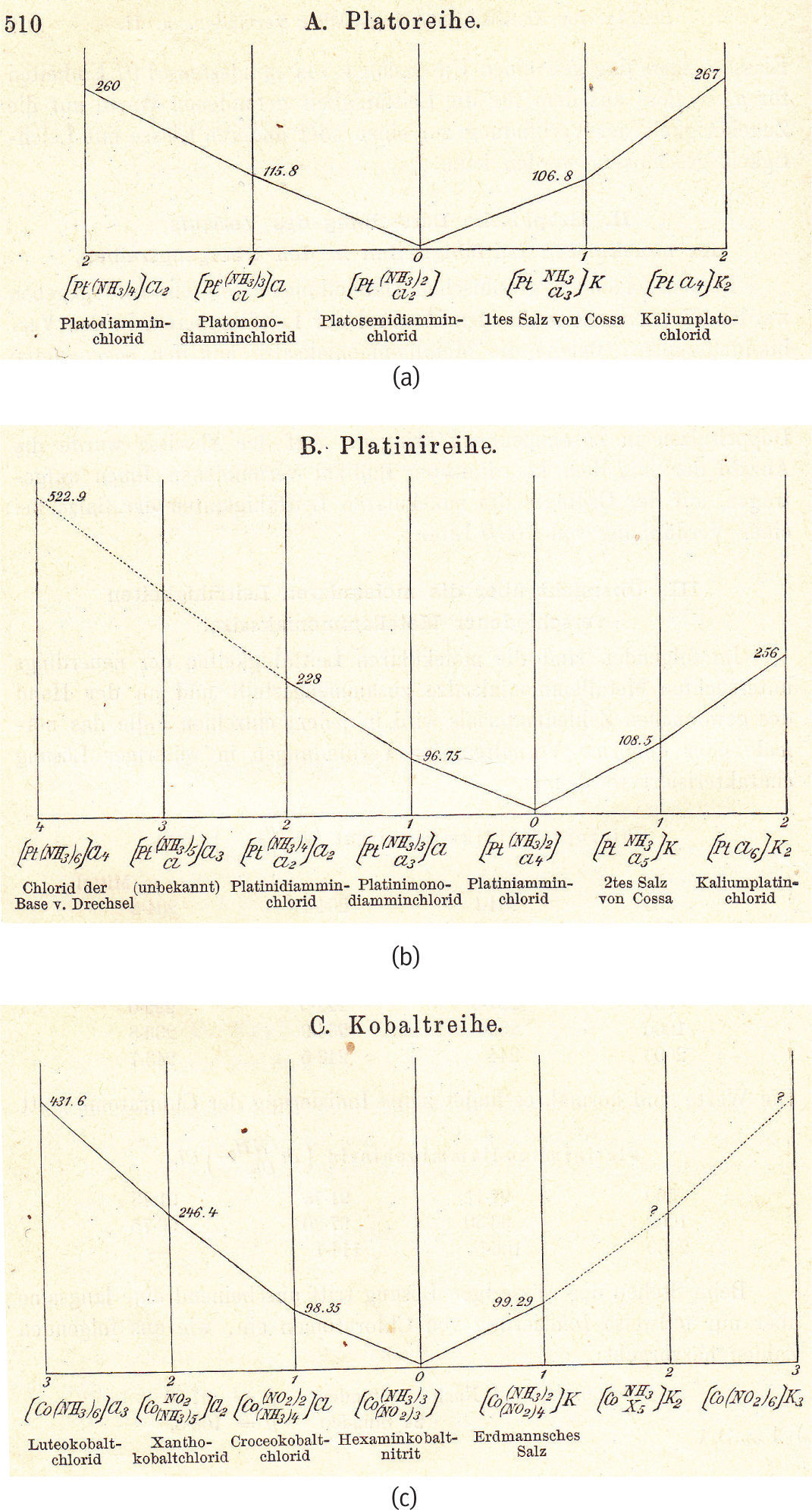
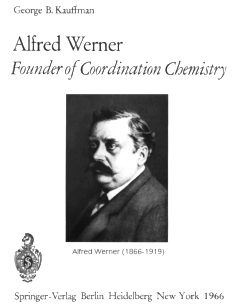
Arturo Miolati is best remembered for his contributions to coordination chemistry theory. This branch of chemistry deals with compounds where a central metal atom is surrounded by molecules or anions. Alongside other great minds like Alfred Werner, Miolati worked to explain the structure and properties of these complexes. His research provided essential insights into their formation and stability.
One of his key areas of investigation involved the isomerism of coordination compounds. Isomers are molecules with the same formula but different arrangements of atoms, leading to different properties. Miolati's work helped categorize and predict these structures. This was vital for understanding their reactivity and potential applications.
The Blomstrand-Jørgensen vs. Werner-Miolati Debate
To appreciate Miolati's impact, one must understand the major scientific debate of his time. The old chain theory (Blomstrand-Jørgensen) proposed linear chains of molecules attached to the metal. This model struggled to explain many observed isomers and properties. Miolati became a strong proponent of Alfred Werner's revolutionary coordination theory.
- Werner's Theory proposed a central metal atom with primary and secondary valences, forming a geometric coordination sphere.
- Miolati's Contribution involved providing experimental and theoretical support that strengthened Werner's model against criticism.
- Lasting Outcome: The Werner-Miolati view ultimately prevailed, forming the bedrock of all modern coordination chemistry.
Miolati's analyses and publications served as critical evidence in this paradigm shift. His work helped move the entire field toward a more accurate understanding of molecular architecture. This theoretical victory was not just academic; it had practical implications for dye industries, metallurgy, and catalysis.
The Educator: Shaping the Next Generation of Chemists
Beyond his research, Arturo Miolati embodied the role of educator and academic mentor. For true pioneers, discovery is only half the mission; the other half is transmitting that knowledge. Historical records and the longevity of his theoretical work suggest a deep involvement in teaching. He likely held professorial positions where he influenced young scientists.
His approach to education would have been shaped by his own research experience. This means emphasizing both robust theoretical frameworks and hands-on laboratory verification. Miolati understood that to advance chemistry, students needed to grasp both the "why" and the "how." This dual focus prepares students not just to learn, but to innovate and challenge existing knowledge.
Effective science education requires bridging the gap between abstract theory and tangible experiment, a principle Miolati's career exemplified.
Principles of a Chemical Education Pioneer
While specific curricula from Miolati are not detailed in available sources, we can infer his educational philosophy. It was likely built on several key principles shared by leading scientist-educators of his time. These principles remain relevant for STEM education today.
- Foundation First: A rigorous understanding of fundamental chemical laws and atomic theory.
- Theory with Practice: Coupling lectures on coordination theory with laboratory synthesis and analysis of complexes.
- Critical Analysis: Teaching students to evaluate competing theories, like the chain versus coordination models.
- Academic Rigor: Maintaining high standards of proof and precision in both calculation and experimentation.
By instilling these principles, Miolati would have contributed to a legacy that outlived his own publications. He helped train the researchers and teachers who would carry chemistry forward into the mid-20th century. This multiplier effect is the hallmark of a true pioneer in education.
Overcoming Historical Obscurity and Research Challenges
Researching a figure like Arturo Miolati presents unique challenges in the digital age. As noted in the research data, direct searches for his name in certain contexts yield limited or fragmented results. Many primary documents about his life and specific teachings may not be fully digitized or indexed in English. This underscores a wider issue in the historiography of science.
Many important contributors, especially those who published in languages other than English or before the digital revolution, can be overlooked. Their stories are often found in specialized academic journals, university archives, or historical reviews. Reconstructing Miolati's complete biography requires consulting these deeper, less accessible sources.
This research gap does not diminish his contributions but highlights an opportunity. It presents a chance for historians of science to further illuminate the work of pivotal intermediate figures. These individuals connected grand theories to practical science and trained the next wave of discoverers. Their stories are essential for a complete understanding of scientific progress.
The Impact of Miolati's Theories on Modern Chemistry
Arturo Miolati's work was not confined to academic debates of his era. His contributions to coordination chemistry theory have had a profound and lasting impact on modern science. The principles he helped validate are foundational to numerous technologies we rely on today. From medicine to materials science, the legacy of his pioneering research is widespread.
Understanding the geometry and bonding in metal complexes unlocked new fields of study. This includes catalysis, bioinorganic chemistry, and molecular electronics. Miolati's efforts to solidify Werner's theory provided the conceptual framework necessary for these advancements. Researchers could now design molecules with specific properties by manipulating the coordination sphere.
Catalysis and Industrial Applications
One of the most significant practical outcomes is in catalysis. Many industrial chemical processes rely on metal complex catalysts. These catalysts speed up reactions and make manufacturing more efficient. The design of these catalysts depends entirely on understanding how ligands bind to a central metal atom.
Over 90% of all industrial chemical processes involve a catalyst at some stage, many of which are coordination compounds.
Miolati's theoretical work helped chemists comprehend why certain structures are more effective catalysts. This knowledge is crucial in producing everything from pharmaceuticals to plastics. The entire petrochemical and polymer industries owe a debt to these early 20th-century breakthroughs in coordination chemistry.
Miolati's Published Works and Academic Influence
To gauge Miolati's influence, one must look at his published scientific works and his role within the academic community. While specific titles may not be widely indexed online, his publications would have appeared in prominent European chemistry journals of his time. These papers served to disseminate and defend the then-novel coordination theory.
His writings likely included detailed experimental data, crystallographic analysis where available, and robust theoretical discussions. By publishing, he engaged in the global scientific dialogue, influencing peers and students alike. This academic output cemented his reputation as a serious researcher. It also provided textbooks and future professors with reliable source material.
Key Papers and Theoretical Contributions
Although a comprehensive bibliography is not provided in the available data, we can outline the nature of his key contributions. Miolati's work often focused on providing experimental proof for theoretical models. This bridge between hypothesis and evidence is critical for scientific progress.
- Isomer Count Studies: Work on predicting and explaining the number of isomers possible for various coordination complexes.
- Conductivity Measurements: Using electrical conductivity in solutions to infer the structure and charge of complex ions.
- Critiques of Chain Theory: Publications systematically highlighting the shortcomings of the older Blomstrand-Jørgensen model.
- Educational Treatises: Potentially authored or contributed to chemistry textbooks that incorporated the new coordination theory.
Each of these publication themes helped turn a controversial new idea into an accepted scientific standard. This process is a core part of the scientific method. Miolati played a vital role in this process for one of chemistry's most important concepts.
Bridging Italian and International Science
Arturo Miolati operated as an important node in the international network of chemists. While based in Italy, his work engaged directly with Swiss (Werner), Danish (Jørgensen), and other European schools of thought. This cross-border exchange was essential for the rapid development of chemistry in the early 1900s.
He helped ensure that Italian chemistry was part of a major continental scientific revolution. His advocacy for Werner's theory meant that Italian students and researchers were learning the most advanced concepts. This prevented intellectual isolation and kept the national scientific community competitive. Such international collaboration remains a cornerstone of scientific advancement today.
The Role of Scientific Societies and Conferences
Miolati likely participated in scientific societies and attended international conferences. These forums were crucial for presenting new data, debating theories, and forming collaborations. In an era before instant digital communication, these face-to-face meetings were the primary way science advanced globally.
Presenting his findings to skeptical audiences would have sharpened his arguments and refined the theory. It also would have raised his profile as a key opinion leader in inorganic chemistry. The relationships forged at these events would have facilitated the spread of his ideas and teaching methods across Europe.
The Lost Chapters: Gaps in the Historical Record
The research data indicates a significant challenge: specific details about Miolati's life and direct role in education are sparse in digital archives. This creates historical gaps that historians of science must work to fill. These gaps are common for scientists from his period who were not Nobel laureates or who published primarily in their native language.
The fragmented Greek-language sources noted in the research, while unrelated to Miolati, exemplify the type of archival material that exists offline. Information on local educators, university faculty records, and regional scientific meetings often remains undigitized. Reconstructing a complete picture requires dedicated archival research in Italian and Swiss university records.
Many scientists who were pillars of their national academic systems await digital rediscovery to assume their full place in the global history of science.
Where Future Research Should Focus
To build a more comprehensive biography of Arturo Miolati, future research should target specific repositories and types of documents. This effort would not only honor his legacy but also illuminate the social network of early 20th-century chemistry.
- University Archives: Personal files, lecture notes, and correspondence held by the universities where he taught and researched.
- Journal Archives: A systematic search of Italian and German chemical journals from 1900-1940 for his articles.
- Biographical Registers: Historical membership lists and yearbooks from scientific academies like the Accademia dei Lincei.
- Student Theses: Examining the doctoral theses of students he supervised to understand his mentorship style.
This research would move beyond his published science to reveal the man as a teacher, colleague, and institution builder. It would solidify his standing as a true pioneer in chemistry and education. Such projects are vital for preserving the full tapestry of scientific progress.
Lessons from Miolati's Career for Modern STEM
The story of Arturo Miolati, even with its current gaps, offers powerful lessons for modern science, technology, engineering, and mathematics (STEM) fields. His career exemplifies the synergy between deep theoretical research and dedicated pedagogy. In today's specialized world, these two roles are often separated, to the detriment of both.
Miolati understood that advancing a field requires not just discovery, but also effective communication and training of successors. He engaged in the major theoretical battle of his day and worked to educate the next generation on its outcome. This model of the scientist-educator is a timeless blueprint for sustainable scientific progress.
Integrating Research and Teaching
Modern institutions can learn from this integrated approach. When researchers teach, they bring cutting-edge knowledge into the classroom. When educators research, they bring insightful questions from students back to the lab. This creates a virtuous cycle that benefits both the discipline and the students.
Encouraging this dual identity can lead to more dynamic academic environments. It prepares students to be not just technicians, but innovators and critical thinkers. Miolati's presumed career path highlights the value of this integration, a principle that remains a gold standard in higher education.
The Legacy of Miolati in Contemporary Education Systems
Arturo Miolati's influence extends into contemporary pedagogical approaches, particularly in how chemistry is taught at the university level. His emphasis on linking abstract theory with tangible experiment is now a cornerstone of effective STEM education. Modern curricula that prioritize inquiry-based learning and hands-on laboratory work are heirs to his educational philosophy. This approach helps students develop critical thinking skills essential for scientific innovation.
Textbooks today seamlessly integrate coordination chemistry as a fundamental topic, a direct result of the paradigm shift Miolati helped champion. The complex ideas he debated are now taught as established facts to undergraduate students. This demonstrates how pioneering research eventually becomes foundational knowledge. It underscores the long-term impact of theoretical battles won in the past.
Modern Pedagogical Tools Honoring Historical Methods
While technology has advanced, the core principles Miolati valued remain relevant. Virtual lab simulations and molecular modeling software are modern tools that serve the same purpose as his careful conductivity measurements. They allow students to visualize and experiment with the very concepts he helped elucidate.
- Interactive Models: Software that lets students build and rotate 3D models of coordination complexes.
- Digital Archives: Online repositories making historical papers more accessible, helping bridge historical gaps.
- Problem-Based Learning: Curricula that present students with challenges similar to the isomerism problems Miolati studied.
These tools enhance the learning experience but are built upon the educational foundation that scientist-educators like Miolati established. They prove that effective teaching methods are timeless, even as the tools evolve.
Recognizing Unsung Heroes in the History of Science
The challenge of researching Arturo Miolati highlights a broader issue in the history of science. Many crucial contributors operate outside the spotlight shone on Nobel laureates and household names. These unsung heroes form the essential backbone of scientific progress. Their work in labs and classrooms enables the landmark discoveries that capture public imagination.
Miolati's story urges us to look beyond the most famous figures. Progress is rarely the work of a single genius but a collective effort of dedicated researchers. Recognizing these contributors provides a more accurate and democratic history of science. It also inspires future generations by showing that many paths lead to meaningful impact.
The history of science is not just a gallery of famous portraits but a vast tapestry woven by countless dedicated hands.
The Importance of Archival Work and Digital Preservation
Filling the gaps in Miolati's biography requires a renewed commitment to digital preservation. Universities, libraries, and scientific societies hold priceless archives that are not yet accessible online. Digitizing these materials is crucial for preserving the full narrative of scientific advancement.
Projects focused on translating and cataloging non-English scientific literature are particularly important. They ensure that contributions from all linguistic and national traditions receive their due recognition. This effort democratizes access to knowledge and honors the global nature of scientific inquiry. It prevents valuable insights from being lost to history.
Key Takeaways from Arturo Miolati's Life and Work
Reflecting on the available information about Arturo Miolati yields several powerful lessons. His career exemplifies the tight coupling between research excellence and educational dedication. The challenges in documenting his life also reveal the fragility of historical memory. These takeaways are relevant for scientists, educators, and historians alike.
First, Miolati demonstrates that defending and disseminating a correct theory is as important as its initial proposal. His work provided the evidentiary backbone that allowed Werner's ideas to triumph. Second, his presumed role as an educator shows that teaching is a form of legacy-building. The students he trained carried his intellectual influence forward.
Enduring Lessons for Scientists and Educators
The legacy of Arturo Miolati offers a timeless blueprint for a meaningful career in science. His story, even incomplete, provides a model worth emulating.
- Engage in Fundamental Debates: Do not shy away from the major theoretical challenges of your field.
- Bridge Theory and Practice: Ensure your research has explanatory power and your teaching is grounded in reality.
- Invest in the Next Generation: View mentorship and education as a primary responsibility, not a secondary duty.
- Document Your Work: Contribute to the historical record through clear publication and preservation of notes.
By following this model, modern professionals can maximize their impact. They can ensure their contributions, like Miolati's, continue to resonate long into the future.
Conclusion: The Lasting Impact of a Chemistry Pioneer
In conclusion, Arturo Miolati stands as a significant figure in the history of chemistry and education. His dedicated work was instrumental in establishing the modern understanding of coordination compounds. While some details of his life remain obscured by time, the轮廓 of his contributions is clear and impactful. He was a key player in a scientific revolution that reshaped inorganic chemistry.
His career path as a researcher and educator serves as an enduring example of how to drive a field forward. The principles he championed in both theory and pedagogy remain vitally important today. The challenges of researching his life also remind us of the importance of preserving our scientific heritage. It is a call to action for historians and institutions to safeguard the stories of all who contribute to knowledge.
Arturo Miolati's story is ultimately one of quiet, determined progress. It highlights that scientific advancement is a collective endeavor built on the contributions of many dedicated individuals. His legacy is embedded in every textbook chapter on coordination chemistry and in every student who grasps these complex concepts. As we continue to build on the foundations he helped lay, we honor the pioneering spirit of this dedicated scientist and educator.
The quest for knowledge is a continuous journey, with each generation standing on the shoulders of the last. Arturo Miolati provided sturdy shoulders for future chemists to stand upon. By remembering and researching figures like him, we not only pay tribute to the past but also inspire the pioneers of tomorrow. Their work, like his, will illuminate the path forward for generations to come.

The Spirograph: Art, Science, and Biology
The Spirograph is far more than a classic drawing toy. It is a geometric device that generates precise mathematical curves known as roulettes. This article explores the Spirograph's journey from a creative plaything to a tool for scientific visualization and biological modeling. Its intricate patterns bridge the worlds of art, mathematics, and biology in a fascinating display of universal geometry.
Essential Elements and Modern Developments
The Spirograph's story is one of engineering ingenuity and timeless appeal. Its design principles have remained consistent, while its materials and cultural impact have evolved significantly over decades.
Invention and Global Release
British engineer Denys Fisher developed the Spirograph between 1962 and 1964. He famously used parts from the Meccano construction set to build his initial prototypes. Fisher unveiled his invention at the 1965 Nuremberg International Toy Fair. The commercial release followed that same year, captivating audiences with its blend of art and science.
First sold in 1965, the Spirograph was awarded the prestigious Toy of the Year accolade in the United States in 1967, cementing its iconic status.
Commercial Expansion and Variations
Kenner introduced the Spirograph to the American market in 1966. Over the years, several variations emerged, including the Spirotot, Magnetic Spirograph, and Spiroman. These versions experimented with different attachment methods and form factors. A significant corporate shift occurred in 1998 when Hasbro acquired the trademark, bringing the toy under one of the world's largest toy companies.
The 21st Century Reboot
The toy experienced a major worldwide relaunch in 2013 by Kahootz Toys. This modern version introduced key safety improvements. It replaced the original metal pins with a removable plastic putty for securing the rings. In 2019, Kahootz Toys was acquired by PlayMonster LLC, which continues to produce and market the toy today. The redesign was so successful that it was a finalist in two Toy of the Year categories in 2014.
Mathematical Foundation
At its core, the Spirograph is a geometric drawing device. It produces beautiful, complex patterns through the principle of roulettes. A small gear (or wheel) rotates inside or outside a larger fixed ring. The pen hole in the moving gear traces a curve called a hypotrochoid (for inside rotation) or an epitrochoid (for outside rotation). This makes it an ideal tool for educational visualization in geometry and kinematics.
- Hypotrochoids: Curves generated by a point on a circle rolling inside a fixed circle.
- Epitrochoids: Curves generated by a point on a circle rolling outside a fixed circle.
- Roulettes: The general family of curves traced by a point attached to one curve rolling on another.
Historical Context and Scientific Connections
The Spirograph exists within a rich historical continuum of mechanical toys and scientific instruments. Its significance extends beyond play into realms of scientific modeling and historical anthropology.
Link to Science and Biology
While primarily a toy, the Spirograph's output has meaningful scientific applications. The hypotrochoid and epitrochoid curves it produces are not just aesthetically pleasing. They can model natural phenomena. In biology, these precise mathematical paths can simulate cellular movements or molecular orbital trajectories. The curves mimic patterns found in nature, from the motion of organelles within a cell to the apparent paths of celestial bodies.
The mathematical principles behind the Spirograph provide a framework for modeling complex natural rotations and cycles at both micro and macro scales.
Historical Toy Precursors
Mechanical drawing and play devices have ancient roots. Archaeological evidence reveals a 3,000-year-old toy with wheels discovered in Lefkandi, Greece (10th-9th century BCE). This artifact demonstrates an early human fascination with rotational motion and mechanics. In ancient Greece around 500 BCE, yo-yos made from wood or metal were common playthings.
These historical parallels show a long-standing human desire to understand motion through play. The Spirograph is a direct descendant of this tradition, transforming basic mechanical principles into a tool for creativity and learning.
From Victorian Era to Digital Age
The Spirograph's immediate cultural ancestors are Victorian optical toys. Devices like the Phenakistoscope and Zoetrope used sequential images and slits to create the illusion of motion. The Spirograph replaced the pursuit of animated illusion with the creation of complex geometric art. It represents a key point in the evolution from purely mechanical toys to today's digital and STEM-focused play. Its continued popularity underscores a lasting appeal for hands-on, creative experimentation.
- Ancient Toys: Basic wheels and yo-yos demonstrating simple mechanics.
- Victorian Optical Toys: Devices creating illusion of movement from still images.
- The Spirograph Era: Mechanical devices generating permanent mathematical art.
- Modern STEM Toys: Digital and analog tools focused on science and coding.
This historical journey highlights how the Spirograph sits at a unique crossroads. It combines the tactile engineering of the past with the mathematical precision valued in modern science and education.
Modern Educational Applications in STEM
The Spirograph has found a renewed purpose in contemporary education. Teachers and educators now leverage its engaging mechanics to teach complex STEM concepts. It transforms abstract mathematical ideas into tangible, visual experiences for students of all ages.
Visualizing Mathematical Concepts
In mathematics classrooms, the Spirograph serves as a powerful hands-on tool. It provides a clear, physical representation of concepts like ratio, periodicity, and symmetry. By changing the gear sizes, students can directly observe how the number of teeth affects the complexity and repetition of the pattern.
This practical application helps demystify intimidating topics. Students can explore modular arithmetic and least common multiples through pattern creation. Seeing a curve close after a specific number of rotations makes these mathematical principles intuitive and memorable.
- Ratios: The relationship between gear teeth determines the pattern's lobes.
- Periodicity: Students observe how patterns repeat based on rotational cycles.
- Symmetry: The drawings exhibit rotational and reflective symmetry.
Bridging Art and Engineering
The Spirograph perfectly illustrates the connection between artistic design and mechanical engineering. It requires precision and an understanding of gear mechanics and kinematic principles. This makes it an excellent introduction to engineering design processes for young learners.
Modern Spirograph kits are often included in STEAM (Science, Technology, Engineering, Art, and Mathematics) curricula to foster interdisciplinary learning.
Students learn that beautiful art can emerge from precise engineering. This challenges the false dichotomy between creative and technical fields. The toy encourages a holistic approach to problem-solving that is essential in modern innovation.
Spirograph Principles in Biological Modeling
The mathematical curves generated by the Spirograph have surprising relevance in the natural sciences. Biologists and researchers have found that hypotrochoid and epitrochoid patterns appear in various biological structures and processes. This connection turns a simple toy into a tool for scientific insight.
Modeling Cellular and Molecular Motion
At the microscopic level, the movement of cellular components often follows curved paths. The orbital trajectories of electrons in molecules can be modeled using similar mathematical principles. Spirograph-like curves provide a simplified framework for understanding these complex motions.
For instance, the paths of organelles within a cell during cytoplasmic streaming can resemble roulette curves. While biological systems are influenced by numerous factors, these mathematical models offer a starting point for analysis. They help scientists visualize and predict movement patterns in a controlled way.
- Cytoplasmic Streaming: The movement of cytoplasm within plant cells.
- Molecular Orbitals: The wave-like behavior of electrons in atoms and molecules.
- Bacterial Motion: Some bacteria exhibit spiral or helical swimming paths.
Patterns in Nature and Morphogenesis
The natural world is filled with patterns that echo Spirograph designs. From the arrangement of seeds in a sunflower to the shell of a nautilus, logarithmic spirals and related curves are ubiquitous. These patterns are not random but follow specific mathematical rules.
Developmental biology studies how these patterns form, a process called morphogenesis. The Spirograph provides a mechanical analogy for how simple rules can generate complex forms. By adjusting a few parameters (like gear ratios), vastly different patterns emerge, similar to how genetic instructions produce diverse biological structures.
The study of these natural patterns falls under the field of biomathematics, which uses mathematical models to understand biological phenomena.
Cultural Impact and Lasting Legacy
Beyond its scientific utility, the Spirograph has cemented its place in popular culture. It represents a unique intersection of nostalgia, art, and intellectual curiosity. Its enduring appeal spans multiple generations and continues to inspire new forms of creative expression.
From Toy Box to Art Studio
Many contemporary artists have adopted the Spirograph as a serious artistic tool. They use it to create intricate large-scale installations and digital art. The trademark swirling patterns have become recognizable aesthetic elements in graphic design and illustration.
The toy's influence extends to fashion, textiles, and architecture. Designers draw inspiration from its harmonious, mathematically precise curves. This demonstrates how a child's toy can evolve into a legitimate source of professional creative inspiration.
- Graphic Design: Spirograph patterns appear in logos, posters, and web design.
- Textile Patterns: Fabrics and wallpapers featuring hypotrochoid designs.
- Architectural Elements: Spiral staircases and decorative metalwork.
The Digital Evolution
The principles of the Spirograph have successfully transitioned into the digital age. Numerous software applications and websites now simulate the Spirograph experience. These digital versions allow for even more complex creations by removing physical constraints.
Digital Spirographs can incorporate animation and interactive elements. Users can create patterns that would be impossible with the physical toy. This evolution ensures that the core concept remains relevant in an increasingly digital world.
The first computer program to simulate a Spirograph was likely written in the early 1970s, shortly after the toy's commercial success.
Modern programmers often use Spirograph algorithms as beginner projects for learning graphics programming. The mathematical elegance of the curves makes them ideal for teaching fundamental concepts in computer science and digital art.
Spirograph in Comparative Toy History
Placing the Spirograph within the broader history of toys reveals its unique position. It belongs to a category of constructive playthings that encourage creation rather than simple amusement. This distinguishes it from many other popular toys throughout history.
A Contrast with Ancient Play
While ancient toys like the yo-yo or spinning top focused on physical skill and dexterity, the Spirograph emphasizes planning and pattern recognition. Archaeological findings from ancient Greece and other civilizations show that most toys were simulations of adult tools or simple kinetic objects.
The Spirograph introduced a different kind of play value. It engaged children in systematic experimentation and geometric reasoning. This shift represented a growing recognition of toys as educational tools rather than mere diversions.
- Skill Toys: Yo-yos, tops, and juggling balls focusing on physical mastery.
- Simulative Toys: Dolls, miniature vehicles representing real-world objects.
- Constructive Toys: Spirograph, building sets that create new outcomes.
The Victorian Precursor Tradition
The Spirograph's closest relatives are the optical toys of the Victorian era. Devices like the zoetrope (1834) and praxinoscope (1877) also used rotary motion to create visual effects. However, these focused on the persistence of vision to simulate motion.
The Spirograph inverted this concept by using motion to create static art. This represented a significant evolution in the purpose of mechanical toys. It shifted from illusion to creation, from observation to participation, paving the way for modern maker culture.
This historical context shows how the Spirograph was both a product of its time and a visionary look forward. It synthesized mechanical precision with artistic potential in a way that few toys had attempted before.
Collectibility and Modern Manufacturing
The Spirograph has developed a dedicated following among collectors and enthusiasts. Vintage kits, particularly those from the original Denys Fisher or early Kenner eras, are sought-after items. This collectible status speaks to the toy's enduring cultural significance and nostalgic value for multiple generations.
Vintage Kits and Market Value
Original 1960s and 1970s Spirograph sets in good condition command premium prices. Collectors value complete sets with all gears, pens, and the original instructional booklets intact. The packaging design itself is often considered a piece of pop art history. The market for these vintage toys has remained steady, reflecting their status as iconic artifacts of 20th-century design.
- Denys Fisher Era (1965-1970s): The most collectible, especially with "Made in Great Britain" markings.
- Kenner Sets (US Market): Feature distinct American packaging and marketing.
- Special Editions: Rare variations like the Deluxe or Giant sets are particularly valuable.
Contemporary Production and Safety
Modern manufacturing under the PlayMonster brand has adapted to contemporary safety standards. The replacement of metal pins with reusable plastic putty was a significant change in the 2013 relaunch. Current kits also use BPA-free plastics and non-toxic inks. These adaptations ensure the toy remains accessible and safe for today's children while preserving the core mechanical experience.
The toy's safety evolution mirrors broader industry shifts, maintaining its mathematical integrity while updating its physical components for modern standards.
Future Directions and Digital Integration
The principles of the Spirograph are finding new life in cutting-edge fields. From algorithmic art to robotics, the geometric concepts it demonstrates continue to inspire innovation. This ongoing relevance suggests the Spirograph's legacy will extend far into the 21st century.
Generative Art and Computational Design
In the realm of digital art, Spirograph algorithms are foundational for generative art programs. Artists and programmers write code to create infinite variations of hypotrochoid curves. These digital creations can be more complex, layered, and animated than anything possible with the physical toy.
This genre of art focuses on systems and processes rather than fixed images. The Spirograph provides a perfect conceptual bridge between manual and algorithmic creation. This has made it a favorite subject for artists working at the intersection of art and technology.
Applications in Robotics and CNC
The precise, repeatable movements required by the Spirograph have direct parallels in robotics. Programming a robotic arm to draw Spirograph patterns is a common training exercise. It teaches fundamental concepts in kinematics and path planning. Similarly, Computer Numerical Control (CNC) machines use the same mathematical principles to control cutting tools.
By studying the toy's mechanics, engineers gain insights into gear interactions and precision movement. These insights translate directly to designing more efficient robotic systems for manufacturing, surgery, and exploration.
- Robotic Path Planning: Programming efficient, non-linear movement paths.
- CNC Machining: Controlling tools to create precise curved cuts.
- Swarm Robotics: Coordinating multiple simple robots to create complex patterns.
Educational Research and Cognitive Benefits
Recent studies in educational psychology have examined toys like the Spirograph for their cognitive benefits. Research suggests that hands-on geometric play enhances spatial reasoning, a crucial skill in STEM fields. The Spirograph provides a structured yet open-ended environment for developing these abilities.
Developing Spatial and Mathematical Intelligence
Using the Spirograph requires children to visualize outcomes before they occur. This practice strengthens mental rotation and spatial visualization skills. These skills are fundamental to success in mathematics, engineering, and architecture. The immediate visual feedback of the drawing reinforces cause-and-effect understanding related to ratios and geometry.
Educators note that children who engage with constructive toys often show greater confidence in tackling abstract math problems. The Spirograph makes the abstract tangible, providing a concrete reference point for complex ideas.
A 2014 study published in the journal "Child Development" found that spatial training through play can improve mathematical performance significantly.
Fostering Patience and Process-Oriented Thinking
In an age of instant gratification, the Spirograph teaches the value of process. Creating a complex design requires careful setup, steady hands, and patience. This focus on process over immediate result is a valuable lesson. It encourages mindfulness and attention to detail, skills that are transferable to academic and professional settings.
The toy inherently promotes a growth mindset—the understanding that abilities can be developed through dedication. Failed attempts lead to adjustments in gear selection or drawing speed, emphasizing experimentation and learning from mistakes.
Conclusion: The Enduring Legacy of the Spirograph
The journey of the Spirograph from a 1960s drawing toy to a tool for scientific and artistic exploration is remarkable. It demonstrates how a simple mechanical concept can have profound and wide-ranging applications. Its continued presence in toy stores, classrooms, and digital art studios is a testament to its timeless design and intellectual richness.
Key Takeaways and Summary
The Spirograph's story encapsulates several important themes in the history of science and play. First, it shows that play and learning are fundamentally interconnected. The most enduring educational tools are often those that engage curiosity and creativity simultaneously. Second, it illustrates how mathematical principles manifest across disciplines, from art to biology to engineering.
- Interdisciplinary Bridge: The Spirograph connects art, mathematics, science, and engineering.
- Evolutionary Design: Its core mechanics have remained relevant through analog and digital ages.
- Educational Power: It provides hands-on experience with abstract geometric and kinematic concepts.
- Scientific Modeling: Its output provides simple models for complex natural patterns and motions.
The Spirograph in the 21st Century and Beyond
As we move further into a digital world, the tangible, tactile experience of the Spirograph gains new importance. It represents a hands-on counterbalance to screen-based interaction. In an educational landscape increasingly focused on STEM and STEAM, the Spirograph remains a uniquely effective tool. It teaches precision, prediction, and pattern recognition in an engaging, visually stunning format.
The toy's underlying mathematics will continue to find new applications. Researchers in fields from computational biology to quantum physics utilize similar cyclic and harmonic analyses. The patterns will continue to inspire artists, designers, and scientists.
From a child's first wobbling circle to complex digital simulations, the Spirograph proves that beauty and precision are born from simple, elegant rules.
In closing, the Spirograph is more than a nostalgic relic. It is a living example of playful innovation. It reminds us that curiosity-driven exploration—whether with plastic gears or computer code—remains at the heart of discovery. Its swirling lines trace not just mathematical curves, but a continuous thread connecting human creativity, scientific inquiry, and the timeless joy of making something beautiful.