

Explore Any Narratives
Discover and contribute to detailed historical accounts and cultural stories. Share your knowledge and engage with enthusiasts worldwide.
The year is 10191 AG. A young duke’s son stands on a windswept landing field, tasting the desiccated air of a world that will either kill him or make him a god. He doesn’t know it yet, but his story—a saga of ecology, fanaticism, and cosmic ambition—would escape the pages of a 1965 novel to become the bedrock of modern science fiction. It would take 56 years, multiple failed adaptations, and a global pandemic for a director to finally capture its scale on screen. When Denis Villeneuve’s Dune premiered in October 2021, it wasn't just a film release. It was the culmination of a cultural siege that began with Frank Herbert’s typewriter.
Today, the Dune franchise is a sprawling, multi-billion-dollar empire rivaling the complexity of the Imperium it depicts. From its origins as a serialized magazine story to its current reign over global box offices and streaming algorithms, Dune’s journey is a masterclass in resilience and vision. It is the best-selling science fiction novel of all time. Its 2024 cinematic sequel grossed over $714 million worldwide. Its themes—environmental scarcity, the dangers of charismatic leadership, the commodification of faith—feel ripped from our headlines, not imagined for our distant future. This is not a simple hero’s tale. It is a warning, wrapped in a prophecy, buried in the sands of a desert planet called Arrakis.
Frank Herbert did not set out to write a space opera. A journalist with a voracious curiosity, he became fascinated by two things: the ecology of the Oregon dunes and the potential for human societies to be manipulated through religion and resource control. He spent five years researching. The result, published by Chilton Books—a publisher better known for auto repair manuals—in August 1965, was a dense, 412-page tome that defied genre conventions. It won the inaugural Nebula Award for Best Novel and shared the Hugo Award in 1966. The literary world recognized its power immediately. The mass market would take longer.
Herbert’s creation was shockingly intricate. He built a feudal interstellar society, 20,000 years in our future, where thinking machines are outlawed following a holy war called the Butlerian Jihad. In their place, humanity has specialized: the psychic, politically scheming Bene Gesserit sisterhood; the Mentats, human computers trained for logic; the Spacing Guild, whose Navigators use the spice drug to fold space. The entire economy of known space hinges on one substance: melange, or spice. It extends life, grants prescience, and enables interstellar travel. It exists on only one planet: the brutally arid Arrakis.
“The novel is a slow-burn political and ecological thriller,” says Dr. Emily Strand, a professor of speculative fiction at Oxford University. “Herbert trusted his readers to grasp a universe where the real magic system wasn’t wizardry, but economics, desert survival, and the long-game breeding programs of secret societies. He made the environment the central antagonist and protagonist.”
At its heart, Dune is the story of Paul Atreides, heir to House Atreides, as his family accepts the Emperor’s treacherous assignment to take over the spice mining operations on Arrakis from their bitter rivals, the Harkonnens. Betrayed and his house shattered, Paul and his mother, the Bene Gesserit Lady Jessica, flee into the deep desert. There, they encounter the Fremen, the planet’s native people, who have adapted to Arrakis through fierce discipline and technology like the stillsuit, a full-body garment that recycles every drop of bodily moisture. Paul’s training, Jessica’s secret breeding mission, and the Fremen’s messianic legends converge. Paul becomes Muad’Dib. And the galaxy trembles.
For decades, Dune’s complexity made it a graveyard for directorial ambition. Alejandro Jodorowsky’s hallucinatory, 14-hour vision in the 1970s collapsed under its own weight, though its storyboarded ideas leaked into Hollywood for a generation. David Lynch’s 1984 film, plagued by studio interference, was a critical and commercial failure that Lynch later disowned. The 2000 Sci-Fi Channel miniseries, while more faithful, was constrained by budget and television aesthetics of the time. The “unfilmable” label stuck.
Enter Denis Villeneuve. The French-Canadian director, coming off acclaimed films like Arrival and Blade Runner 2049, approached the material not as a fanboy, but as a architect. His 2021 film, released simultaneously in theaters and on HBO Max during the pandemic, made a pivotal decision: it would only be the first half of Herbert’s first novel. This allowed for a pace that felt less like a cliff-notes version and more like a deliberate immersion. The audience could feel the scale of the sandworms, the desiccation of the air, the weight of imperial politics.
“Villeneuve understood that the landscape is a character,” notes cinematic historian and author, Michael Brooke. “He used IMAX cameras not just for spectacle, but for intimacy against vastness. The silence in the desert scenes, the way the ornithopters move like insects—it’s a tactile, sensory film. He didn’t just explain the spice, he showed its color in the eyes of the Fremen and made you hear the sacred vibrations of the Voice.”
The gamble worked. The film grossed over $400 million globally and won six Academy Awards. More importantly, it created a visual and tonal blueprint that millions accepted as definitive. It proved that modern audiences would engage with a story where the primary conflict for its first half is bureaucratic maneuvering and ominous dreams. By the time Dune: Part Two arrived in March 2024, it was a cultural event. The story of Paul’s total embrace of his Fremen destiny, his riding of the sandworm, and the ignition of his holy war became a box office juggernaut. The sequel didn’t just continue the story; it exploded it onto a galactic canvas, setting the stage for the darker, more philosophically challenging narratives of the later books.
Villeneuve’s success unlocked the vault. HBO Max (now Max) fast-tracked Dune: Prophecy, a series exploring the origins of the Bene Gesserit ten thousand years before Paul Atreides. Video game studios revived projects; the open-world MMO Dune: Awakening entered closed beta testing in early 2025. The literary backlist, including the prequels and sequels by Frank’s son Brian Herbert and co-author Kevin J. Anderson, saw sales surges of over 300%. The Spice, it seemed, was flowing faster than ever.
But what is it about this particular universe, born from the analog anxieties of the 1960s, that resonates with such violence in our digital 2020s? The answer lies not in the hero’s journey, but in its subversion. Frank Herbert didn’t write a manual for creating a messiah. He wrote a meticulous autopsy of one.
To reduce Dune to a simple tale of a desert messiah is to miss its entire point. Frank Herbert was not building a hero. He was constructing a trap for the reader's imagination, luring us in with familiar tropes of destiny and revenge before pulling the rug out from under our moral certainty. The genius of the work lies not in Paul Atreides's ascent, but in the chilling ambiguity of his triumph. The 2024 film adaptation ends with Paul's Fremen armies victorious, his eyes glowing blue with spice, and a holy war—a jihad—unleashed upon the universe. It feels like a climax. In Herbert's design, it is merely the first, terrible symptom.
"I am showing you the superhero syndrome and your own participation in it." — Frank Herbert, on his central theme
Herbert's background as a speechwriter and journalist infected the novel's DNA. He understood the mechanics of persuasion, how myths are weaponized, how ecology dictates politics. His universe, set in the year 10191 AG, is a feudal anachronism cosplaying as a future. Computers are forbidden. Human minds—the logical Mentats and prescient Guild Navigators—replace them. The most powerful political force is a secretive, all-female cult, the Bene Gesserit, who for millennia have manipulated bloodlines and religion like a "biotech cartel" operating within a medieval power structure. This wasn't just world-building for spectacle. It was a deliberate cage, designed to examine how power consolidates when technology is both advanced and artificially constrained.
Here lies the core controversy that fuels endless online debates: Is Paul a villain? The question itself is a simplification Herbert would have despised. Paul is a tragic figure who sees the future with agonizing clarity. His prescience, granted by massive spice exposure, shows him that the Fremen's fanatical belief in him as their prophesied leader cannot be undone. The jihad is not a choice he makes; it is a tsunami he sees coming, a collective fervor he can channel but cannot stop. His victory over Emperor Shaddam IV in the first novel is pyrrhic. He gains the throne by holding the spice monopoly hostage, threatening to destroy it all. "He who can destroy a resource is the only one who has the power over that resource," Herbert wrote. This is not heroism. It is nuclear brinkmanship dressed in religious garb.
The true philosophical heavy lifting comes later, in the sequels Herbert felt were essential to his message. In Dune Messiah (1969) and Children of Dune (1976), Paul is a blinded, haunted emperor, trapped by the consequences of the unstoppable holy war he unleashed. His son, Leto II, makes the ultimate sacrifice to save humanity from stagnation and a far worse future threat known as Kralizec. Leto merges with sandworm larvae to become a near-immortal, despotic God Emperor, ruling with an iron fist for 3,500 years to force humanity onto a "Golden Path" of survival through scattering. This is Herbert's brutal calculus: sometimes, the only alternative to extinction is a benevolent tyranny so horrific it shocks a species into evolutionary survival.
"Paul does what he does because in his eyes, he has no other choice... [jihad] is just the start of things." — Paste Magazine, 2024 analysis
Villeneuve's films, thus far, have brilliantly set the table for this bitter feast. The ecological themes are foregrounded—the preciousness of water, the delicate symbiosis of sandworm and spice. The political machinations are clear. But the true test will be Dune: Messiah, tentatively slated for 2026. Can a blockbuster film audience, weaned on satisfying hero arcs, accept a story where the protagonist becomes a prisoner of his own myth, where victory is revealed as the ultimate defeat? The 1984 Lynch film and the 2000 miniseries both stumbled when touching this material. Villeneuve’s success hinges on making philosophical ambiguity as cinematic as a sandworm ride.
The financial ledger of Dune adaptations reads like a chronicle of ambitious failure, until it suddenly doesn't. David Lynch's 1984 film, with its $40 million budget, grossed only $30.9 million and was met with critical derision. Its bizarre choices—heart-plugs, weirding modules—diverged wildly from the text. Yet, it cultivated a cult fascination, a proof-of-concept that the novel's imagery could be rendered, if not its soul. The 2000 Sci-Fi Channel miniseries, constrained by a television budget, succeeded in narrative faithfulness but lacked the visceral, epic scale the story demands.
Denis Villeneuve’s approach succeeded by splitting the difference and trusting modern visual effects. By dividing the first book into two films, he granted himself the narrative space Herbert’s dense plotting requires. The premiere of Dune: Part One on October 22, 2021, was a gamble magnified by its simultaneous release on HBO Max. It worked. The film captured six Oscars, primarily in technical categories, proving its mastery of craft. But the real seismic shift came with Dune: Part Two on March 1, 2024. Unburdened by setup, it was a muscular, operatic war story that galvanized audiences and critics, raking in $714.2 million globally. The "unfilmable" tag was finally, definitively, retired.
This cinematic triumph has activated every other corner of the franchise. The 1979 Avalon Hill board game, long a holy grail for collectors, was reprinted in 2019 by Gale Force Nine. It’s a notoriously complex, asymmetric strategy game for 2-6 players where factions like the Bene Gesserit win through secret prophecies and the Fremen leverage their knowledge of worm-spawned storms. Its revival speaks to a demand for deep, tactical engagement with the politics of Arrakis beyond passive viewing. Video games, merchandise, and the HBO series Dune: Prophecy (2024) have created a saturated market. One must ask: in this flood of content, does the radical, cautionary heart of Herbert’s message risk being diluted into mere aesthetic—cool stillsuits and giant worms?
"The Bene Gesserit are feudalism’s most advanced laboratory... a biotech cartel." — Shelidon.it, literary analysis
No work spanning six decades emerges without accumulated critical baggage. Dune carries significant weight. The Bene Gesserit, while a powerful, female-only organization, derive their influence primarily from biological manipulation and secret breeding programs—a form of power that some modern readers find limiting, a reflection of what critics have called Herbert’s alleged "sexism and gynophobia." Is their portrayal a product of 1960s genre constraints, or a deliberate commentary on how even advanced women must operate within a patriarchal, feudal framework? The debate is unresolved and fuels academic papers to this day.
More glaring to a contemporary audience is the "white savior" narrative. Paul, a noble outsider, arrives on Arrakis, masters the Fremen ways better than they do, and leads them to liberation. Herbert was aware of this trope and actively subverted it in the sequels by revealing Paul’s journey as a catastrophic manipulation. But the first book, and the Villeneuve films which have yet to move beyond it, undeniably traffic in that imagery. The Fremen, inspired in part by Herbert’s reading of The Sabres of Paradise and its depiction of Muslim Cossacks, are a proud, resourceful culture nonetheless ultimately swept up in an off-world messiah’s destiny. The story’s critique of colonialism is nuanced—it shows the economic exploitation of Arrakis for spice with brutal clarity—yet its central plot can feel uncomfortably aligned with the very structures it seeks to examine.
These aren't reasons to dismiss Dune. They are reasons to engage with it more deeply, to read it against the grain. The Imperium is not a utopia; it’s a decaying, corrupt system where, as one analysis bluntly put it, "old-world feudalism cosplay[s] as futuristic order" and spice is the engine of "late-imperial capitalism." Paul isn’t here to save it. He’s here to break it, with terrifying consequences for everyone.
"Paul sees himself as the galaxy's problem." — Paste Magazine, 2024
The franchise’s current boom, therefore, exists in a fascinating tension. The spectacle sells the tickets. The merchandise moves units. But underneath it all, the original text remains a stubborn, complicated, and deeply pessimistic counter-narrative to the standard hero’s journey. It warns against the very fanaticism it so thrillingly depicts. As we await Villeneuve’s Messiah, the central question isn’t whether he’ll get the visuals right. It’s whether he can make a mass audience sit comfortably in the profound discomfort Herbert engineered—the unsettling truth that the most dangerous weapon in the universe isn’t a lasgun or a family atomics. It’s a story, believed by enough people, placed in the hands of someone who can see the future but is powerless to change its worst outcomes.
The true legacy of Dune is not measured in box office receipts or book sales, though those numbers are staggering. Its impact is etched into the DNA of popular science fiction that followed. George Lucas borrowed liberally for Star Wars—the desert planet, the mystical sisterhood, the chosen one narrative, even the word "spice" for a galactic commodity. James Cameron’s Avatar replicates the ecological consciousness and the outsider-integration-with-native-culture plot beat for beat. The video game series Halo features an interstellar feudal humanity and a mysterious, all-powerful ringworld substance. This is not plagiarism; it’s absorption. Herbert’s novel provided a mature, systemic template for world-building that moved beyond ray guns and bug-eyed monsters. It insisted that the future would be shaped by the same old forces: resource scarcity, religious fervor, and the corrupting allure of absolute knowledge.
"Herbert didn't just write a novel; he wrote a user manual for a type of science fiction that treats politics and ecology as hard sciences. Every writer who builds a universe with internal economic logic is walking a path he cleared." — Dr. Anya Petrova, Cultural Historian at the University of Chicago
The novel’s prescience about our own era is unsettling. Written in the shadow of the Cold War and the dawn of the environmental movement, its anxieties have ripened. Our world is gripped by water crises, commodity wars over rare minerals, and fervent ideological movements amplified by digital networks—a secular form of prescient messaging. The Butlerian Jihad’s ban on "thinking machines" resonates with contemporary fears about artificial intelligence and autonomous weapons. Dune forces a confrontation with the uncomfortable idea that progress is not linear, that humanity might consciously reject certain technologies to preserve its soul, only to create new, more Byzantine forms of control. It’s a story for an age of climate anxiety and algorithmic governance, proving that the best science fiction is never about prediction, but about holding a dark mirror to the present.
For all its brilliance, the Dune empire faces inherent contradictions that threaten its long-term coherence. The central tension lies between Frank Herbert’s fiercely intellectual, anti-heroic vision and the demands of a multi-platform franchise that must sell tickets, games, and streaming subscriptions. The Brian Herbert/Kevin J. Anderson prequels and sequels, while commercially successful in expanding the "Duniverse," are often criticized for flattening the philosophical complexity of the originals into more conventional space opera. They provide answers where Frank Herbert offered only terrifying questions, demystifying the Bene Gesserit and the Butlerian Jihad in ways that can feel like narrative fan service.
The commercial machinery also risks sanding down the story’s most challenging edges. Will the inevitable video games let you play as Paul and simply revel in the power fantasy of leading the Fremen to victory, completely inverting the book’s warning? Can the merchandise—action figures of a messiah whose story condemns messiahs—ever be anything but ironic? There is a legitimate concern that the very act of making Dune a ubiquitous, mainstream success neuters its core function as a subversive critique of power and fanaticism. The spice becomes just another branded commodity. The most damning criticism one could level at the modern Dune phenomenon is that it might succeed in making Herbert’s cautionary tale feel safe.
Furthermore, the narrative’s scope becomes a logistical nightmare. Herbert’s six novels span over 15,000 years, feature a protagonist who transforms into a giant sandworm despot, and culminate in a metaphysical scramble for humanity’s future. Translating this, particularly the radical weirdness of God Emperor of Dune, into consistently popular cinema is a challenge that makes adapting the first book look simple. The audience that flocked to see Timothée Chalamet ride a worm in 2024 might not return for a philosophical drama about his son’s 3,500-year tyrannical reign as a human-sandworm hybrid. Villeneuve’s planned trilogy may wisely end with Dune: Messiah, leaving the later, stranger books as sacred, un-filmable texts.
The path forward is a razor’s edge. The franchise must expand to live, but every expansion risks betraying the austere, warning heart that gave it life in the first place.
Concrete horizons are already mapped. All creative energy is focused on the culmination of Villeneuve’s trilogy, Dune: Messiah, with a targeted release in 2026. This film will be the litmus test. Its success or failure will determine whether Hollywood sees the value in funding stories where the hero becomes a hollow, regretful puppet of forces he unleashed. The Dune: Prophecy series will continue exploring the Bene Gesserit’s ancient war, a narrative strand that allows for expansion without directly tampering with the primary mythos. In the gaming sphere, the open-world survival MMO Dune: Awakening promises to drop players onto Arrakis to navigate the politics of spice harvesting and sandworm evasion, a concept ripe with potential if it can incorporate the franchise’s signature tension and despair alongside its survival mechanics.
The young duke’s son who first stepped onto the Arrakis landing field in 1965 now stands at the center of a 21st-century media empire. His warning about the dangers of charismatic power echoes in the very stadiums where his image is projected on IMAX screens. The spice must flow, indeed—but as the franchise’s machinery grows ever more efficient, one wonders if we are still listening to the message beneath the spectacle, or merely hypnotized by the blue-within-blue eyes of the next big thing. Herbert’s ultimate question remains, unanswered and urgent: can we recognize the hero we deserve as the catastrophe we’ve chosen?
:max_bytes(150000):strip_icc():focal(753x472:755x474)/florence-pugh-timothee-chalamet-zendaya-dune-2-tout-022824-6e2aae7409864103bfa4bb8ee621928a.jpg)




Your personal space to curate, organize, and share knowledge with the world.
Discover and contribute to detailed historical accounts and cultural stories. Share your knowledge and engage with enthusiasts worldwide.
Connect with others who share your interests. Create and participate in themed boards about any topic you have in mind.
Contribute your knowledge and insights. Create engaging content and participate in meaningful discussions across multiple languages.
Already have an account? Sign in here

Explore the epic journey of Star Wars from its humble beginnings to the current wave of streaming series and films, disc...
View Board
Thomas James Kirk III: A Star Trek Legend The Birth and Early Years of a Starfleet Ensign Thomas James Kirk III, often ...
View Board
Epic fantasy films captivate audiences with richly developed imaginary worlds and grand-scale storytelling, exploring un...
View Board
Plongez dans l'épopée de Dune, un mythe né en 1965, où écologie, politique et mysticisme s'entremêlent dans un désert ga...
View Board
From sacred hieroglyphs to modern blockbusters, explore magic's enduring grip on human culture, from ancient Egyptian sp...
View Board
Fantasy films continue to captivate global audiences with their enduring appeal, exploring universal themes and pushing ...
View Board
Ghib Ojisan is a beloved mascot of Studio Ghibli embodying warmth and wisdom, representing the studio's mission and valu...
View Board
Explore the resurgence of classic film franchises in our in-depth article, "Movie Franchise Reboots: Rediscovering Class...
View Board
Explore the captivating history and profound impact of science fiction films in our comprehensive article. Discover how ...
View Board
Explore how movies about AI have evolved from sci-fi to profound examinations of technology's impact on humanity, blendi...
View Board
David Brown: A Pioneering Figure in Modern Literature Digital media has transformed the literary landscape in myriad wa...
View Board
Explore the magic of the greatest film adaptations that have seamlessly transformed beloved books into cinematic masterp...
View Board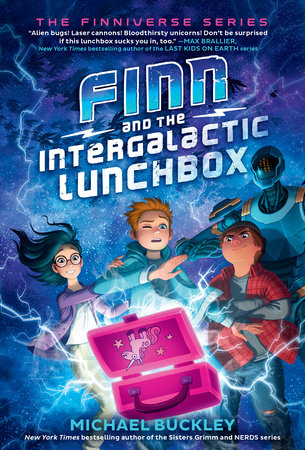
Michael Buckley: The Enigmatic and Talented Young Author Introduction to Michael Buckley Michael Buckley, a name that ...
View Board
1. **Meta Description (Part 1 - Early Life & Rise to Fame):** "Explore Dan Brown's journey from a small-town upbrin...
View Board
Discover the ultimate cinematic sequels that have elevated storytelling to new heights. From "The Godfather Part II" to ...
View Board
Discover Mikey Neumann's journey from Borderlands creative director to YouTube star. Explore his iconic roles, film crit...
View Board
The Last Guardian is an emotionally charged video game with a unique narrative and cooperative gameplay that follows the...
View Board
Discover the dynamic history of martial arts films, from Chinese opera roots to global blockbusters. Explore iconic star...
View Board
Discover the journey of Grace Helbig, from her rise as a YouTube sensation to becoming a pioneer in digital comedy. Expl...
View Board
Discover the inspiring journey of Daniel Hardcastle, aka NerdCubed, in the gaming world. From his humble beginnings to b...
View Board
Comments