




Pliny the Younger: Roman Lawyer and Witness to Vesuvius
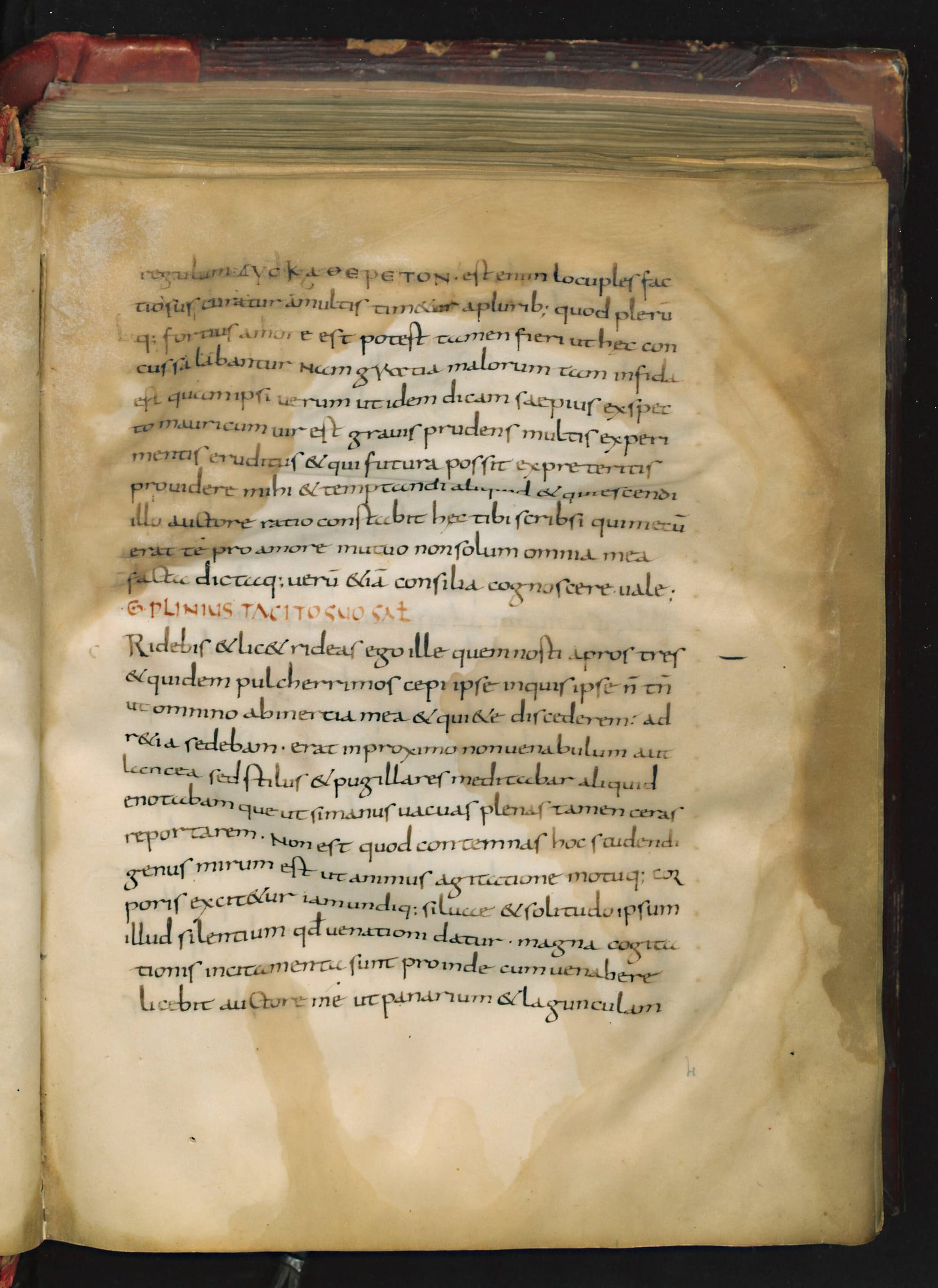
The eruption of Mount Vesuvius in 79 CE remains one of history's most devastating natural disasters, preserved for posterity through the detailed letters of Pliny the Younger. As a prominent Roman lawyer, author, and imperial administrator, Pliny left behind a remarkable collection of Epistulae that provide unique insights into Roman society, politics, and early Christianity. His correspondence with Emperor Trajan represents one of the earliest non-Christian accounts of Christian worship practices.
Through nine books of personal letters published between 100-109 CE and a tenth book containing official correspondence, Pliny created an unparalleled window into the High Empire period. His career spanned the reigns of three emperors—Domitian, Nerva, and Trajan—demonstrating remarkable political adaptability during one of Rome's most transformative eras. The approximately 247 surviving letters continue to inform modern scholarship in fields ranging from volcanology to classical studies.
Early Life and Family Background
Gaius Plinius Caecilius Secundus was born around 61 CE in Comum (modern-day Como, Italy) into a wealthy equestrian family. His father, Lucius Caecilius Cilo, died when Pliny was young, leading to his adoption by his maternal uncle, Pliny the Elder, the renowned natural philosopher and author of Natural History. This adoption proved formative, exposing the younger Pliny to Rome's intellectual elite and providing educational opportunities that would shape his future career.
Pliny received an elite education under the tutelage of Quintilian, Rome's most famous rhetorician, and Verginius Rufus, a distinguished military commander. This comprehensive training in rhetoric and law prepared him for his future role as one of Rome's most prominent legal advocates. By age 18, he had begun practicing law in the Roman courts, quickly establishing a reputation for his oratorical skills and legal acumen.
The Vesuvius Eruption: An Eyewitness Account
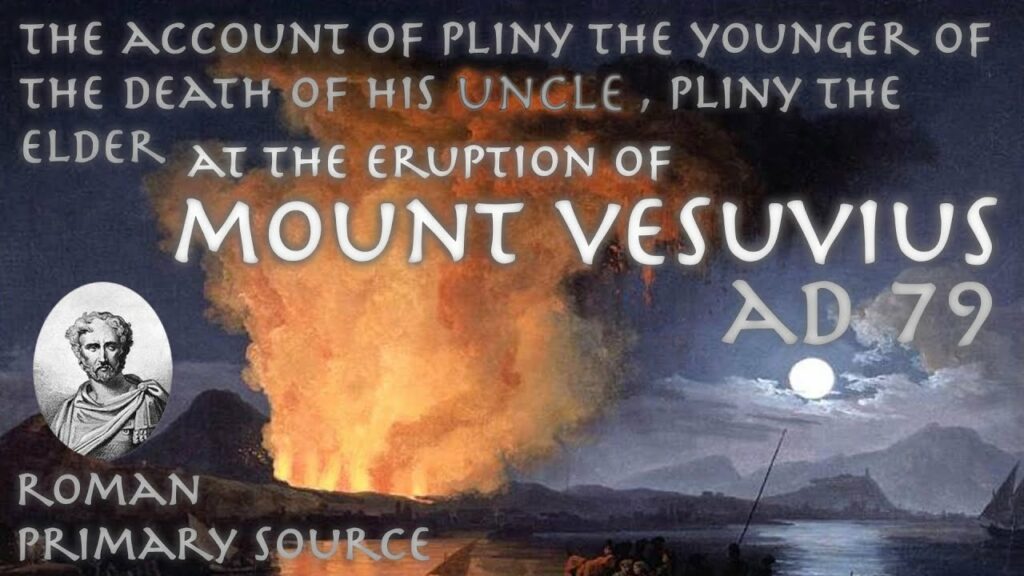
The most famous episode from Pliny's early life came in 79 CE when, at approximately 17-18 years old, he witnessed the catastrophic eruption of Mount Vesuvius from Misenum, across the Bay of Naples. In two detailed letters written to the historian Tacitus (Epistulae VI.16 and VI.20), Pliny described the eruption that destroyed Pompeii and Herculaneum and claimed the life of his uncle, Pliny the Elder.
His uncle, serving as commander of the Roman fleet at Misenum, had attempted to rescue victims by sea when he succumbed to toxic volcanic gases. Pliny's vivid descriptions provide crucial scientific data for modern volcanologists studying ancient eruptions. His accounts remain the primary non-literary source for understanding the timing and progression of this historic disaster.
Pliny's letters represent the earliest comprehensive eyewitness description of a volcanic eruption in Western literature, establishing him as an accidental pioneer in scientific observation.
Legal Career and Early Political Advancement
Pliny's legal career began in earnest during his late teens, and he quickly gained recognition for his skill in inheritance and extortion cases. His most famous early case involved the prosecution of Marcus Priscus, the former governor of Africa, in 100 CE. This high-profile case demonstrated Pliny's commitment to combating provincial corruption and established his reputation as a formidable legal advocate.
His career progression followed the traditional cursus honorum (course of honors), but at an accelerated pace due to his exceptional abilities and political connections:
- Tribune (c. 81 CE): Began his military service in Syria
- Quaestor (late 20s CE): Entry to the Roman Senate
- Praetor (93 CE): High judicial authority
- Consul (100 CE): Highest elected political office
This rapid advancement through Rome's political hierarchy occurred despite the turbulent reign of Emperor Domitian (81-96 CE), demonstrating Pliny's considerable political skills and ability to navigate dangerous political waters.
Surviving Imperial Transitions
Pliny's career spanned one of the most politically volatile periods in Roman history. He served under three very different emperors: the tyrannical Domitian, the short-reigned Nerva, and the respected Trajan. His ability to maintain influence through these transitions speaks to his diplomatic skills and practical approach to politics.
Following Domitian's assassination in 96 CE, Pliny strategically aligned himself with the new regimes, delivering his famous Panegyricus to Trajan in 100 CE. This speech, which extolled Trajan's virtues in contrast to Domitian's tyranny, helped cement his position in the new administration. The work survives as one of the most important political documents from the early second century CE.
Literary Contributions and Publication
Between 100-109 CE, Pliny published nine books of carefully edited personal letters totaling 247 individual epistles. These were not spontaneous communications but deliberately crafted literary works intended for publication. The letters cover diverse topics including:
- Roman politics and administration
- Social customs and daily life
- Legal cases and philosophical debates
- Personal relationships and villa architecture
The tenth book of letters contains his official correspondence with Emperor Trajan during his governorship of Bithynia-Pontus. This collection includes the famous exchange regarding the treatment of Christians, providing invaluable insight into early imperial policy toward the growing religious movement.
The Christian Question: Correspondence with Trajan
Pliny's letter to Trajan regarding Christians (Epistulae X.96) represents one of the most significant documents in the study of early Christianity. Written around 112 CE while serving as governor of Bithynia-Pontus, Pliny sought guidance on how to handle Christians brought before his court.
He described their worship practices, including their custom of meeting before dawn on a fixed day to sing hymns to Christ "as to a god." Trajan's reply established an important precedent: Christians should not be sought out proactively, but if denounced and refusing to recant, they should be punished. This exchange provides the earliest Roman administrative perspective on Christian worship practices.
Pliny's literary legacy extends beyond his letters to include speeches and poetry, though most of these works have been lost. His published correspondence remains his most enduring contribution to Western literature, offering a uniquely personal perspective on Roman elite society during the first century CE.
Governorship of Bithynia-Pontus: Administrative Challenges
Around 110 CE, Emperor Trajan appointed Pliny as imperial governor of the province of Bithynia-Pontus in Asia Minor. This appointment represented the culmination of his political career and demonstrated the emperor's confidence in his administrative abilities. As governor, Pliny faced numerous challenges including financial mismanagement, corruption, and infrastructure problems that had plagued the province for decades.
His correspondence with Trajan from this period (preserved in Book 10 of his letters) provides detailed insights into provincial administration during the High Empire. Pliny sought the emperor's guidance on matters ranging from public works projects to legal disputes, creating a remarkable record of how Roman imperial government functioned at the local level. The approximately 124 letters exchanged during his governorship reveal a conscientious administrator determined to restore order to a troubled province.
Infrastructure and Financial Reforms
Pliny encountered significant infrastructure problems upon arriving in Bithynia-Pontus. Many public buildings stood unfinished despite substantial expenditures, and the provincial finances were in disarray. His letters document numerous construction projects including aqueducts, temples, and public baths that required imperial approval and funding.
One notable case involved the construction of an aqueduct for Nicomedia, the provincial capital, which had previously wasted millions of sesterces on failed attempts. Pliny carefully investigated the project and submitted detailed cost estimates to Trajan, demonstrating his methodical approach to administration. His financial reforms focused on transparency and accountability, addressing the corruption that had previously undermined provincial governance.
Pliny's correspondence reveals a governor deeply concerned with fiscal responsibility, repeatedly emphasizing the need to prevent waste of public funds while completing essential infrastructure projects.
Military Command and Provincial Security
As governor of Bithynia-Pontus, Pliny also held military command, responsible for maintaining order and security throughout the province. Though not primarily a military figure, he demonstrated competent leadership in handling troop dispositions and addressing security concerns. His letters mention dealing with minor rebellions and maintaining discipline among Roman forces stationed in the region.
One significant challenge involved managing relations with local communities while upholding Roman authority. Pliny balanced military necessity with diplomatic sensitivity, often consulting Trajan on the appropriate use of force. This balanced approach reflected his legal background and understanding of Roman imperial policy toward provincial populations.
The Christian Problem: Administrative Response
Pliny's most famous administrative challenge involved determining the proper legal treatment of Christians in his province. His letter to Trajan (X.96) outlines his investigative procedure: anonymous accusations had led to numerous trials, and he sought clarification on whether merely being Christian warranted punishment.
He described his method of interrogating accused Christians, offering them the opportunity to recant by making offerings to Roman gods and the emperor's statue. Those who persisted faced execution, though Roman citizens were sent to Rome for trial. Trajan's reply established the important precedent that Christians should not be hunted down but could be punished if formally accused and refusing to recant.
- Anonymous accusations were not to be accepted
- Pardons were offered to those who recanted
- Stubborn adherence to Christianity warranted punishment
- Roman citizens received different legal treatment
Literary Legacy and Editorial Methods
Pliny's literary output reflects careful planning and editorial control rather than spontaneous composition. His nine books of personal letters were deliberately curated for publication, with each letter selected and possibly revised to present a particular image of their author. The collection represents one of antiquity's most sophisticated examples of self-presentation through epistolary form.
The letters cover an enormous range of topics while maintaining a consistent tone of moral seriousness and literary refinement. Pliny positioned himself as a model Roman aristocrat—educated, public-spirited, and morally upright. This literary self-fashioning has made his correspondence invaluable for understanding elite values and self-perception during the early second century CE.
Themes and Literary Techniques
Several key themes emerge consistently throughout Pliny's correspondence, reflecting his concerns and values as a Roman senator and intellectual. These include the importance of friendship, the proper conduct of public life, literary pursuits, and the management of private estates. His letters often serve as moral exempla, illustrating proper behavior through anecdote and reflection.
Pliny employed various literary techniques to enhance his narratives, including:
- Vivid description for dramatic events like the Vesuvius eruption
- Dialogue reconstruction in legal and political contexts
- Character sketches of contemporaries
- Philosophical reflection on personal experiences
His literary style demonstrates the influence of his rhetorical training, with careful attention to structure, pacing, and rhetorical effect. The letters were clearly intended not merely as personal communication but as works of literature that would establish his reputation for posterity.
Social Network and Patronage Relationships
Pliny's letters provide exceptional insight into the social networks that sustained Roman aristocratic life. His correspondence includes letters to emperors, senators, literary figures, and personal friends, revealing the complex web of relationships that defined elite society. As a patron, he supported younger men beginning their careers and assisted clients with legal and political matters.
His patronage extended to literary figures including the poet Martial, whom he helped secure a return to Spain after years in Rome. This support for writers and intellectuals reflects Pliny's commitment to literary culture and his understanding of patronage as both a social obligation and a means of enhancing his own reputation.
Correspondence with Prominent Contemporaries
Pliny maintained correspondence with many of the most important figures of his day, creating a network that crossed political and literary circles. His letters to Tacitus provide valuable information about both men's careers and intellectual interests. The exchange regarding the Vesuvius eruption, written at Tacitus's request, demonstrates their shared interest in documenting significant historical events.
Other notable correspondents included:
- Suetonius, the biographer, whom Pliny helped secure a military tribunate
- Calpurnius Fabatus, his grandfather-in-law, regarding family matters
- Various provincial officials throughout the empire
- Local aristocrats in Comum and elsewhere
This extensive network illustrates how Roman aristocrats maintained relationships across great distances and through changing political circumstances. Pliny's careful preservation of these letters suggests he recognized their value as documentation of his social and political connections.
Philosophical and Moral Outlook
Pliny's letters reveal a man deeply concerned with moral philosophy and proper conduct, reflecting the Stoic influences that permeated Roman aristocratic culture. Though not a systematic philosopher, he frequently reflects on ethical questions arising from his public and private life. His moral outlook emphasizes duty, friendship, and the proper use of wealth and influence.
This philosophical orientation is particularly evident in his descriptions of villas and country life, which he presents not merely as luxury but as appropriate rewards for public service. His attitude toward wealth reflects the Roman ideal of generous patronage rather than mere accumulation, with numerous letters describing his financial support for public works and individuals in need.
Stoic Influences and Practical Ethics
Pliny's time in Syria during his military tribunate exposed him to Stoic philosophers who influenced his approach to public service and personal conduct. His letters demonstrate a practical Stoicism focused on civic responsibility rather than abstract speculation. This philosophical grounding helped him navigate the political dangers of Domitian's reign while maintaining his integrity.
Key elements of his ethical outlook include:
- Commitment to public service as a moral obligation
- Balancing otium and negotium (leisure and business)
- Proper use of wealth for public benefit
- Loyalty to friends and patronage obligations
This blend of philosophical principle and practical accommodation characterized the successful Roman aristocrat during the early empire. Pliny's letters provide one of our most detailed portraits of how these values operated in daily life.
Historical Significance and Legacy
Pliny the Younger occupies a unique position in Roman history as both an active participant in imperial administration and a meticulous observer of his era. His career spanned approximately three decades of public service, during which he held over 15 major political and religious offices. This combination of practical experience and literary documentation makes his letters invaluable for understanding the daily workings of Roman government.
Unlike most Roman authors who wrote from a distance about political events, Pliny provides an insider's perspective on the transition from the Flavian dynasty to the adoptive emperors. His survival through Domitian's tyrannical reign and subsequent flourishing under Trajan demonstrates the adaptability required of Roman aristocrats during politically volatile periods. His writings capture this transition in personal terms rarely found in official histories.
Impact on Historical Scholarship
Modern historians consider Pliny's letters among the most important documentary sources for the early second century CE. They provide evidence for numerous aspects of Roman life that receive little attention in formal historical works. His detailed descriptions of legal proceedings, provincial administration, and social customs fill gaps in our understanding of how the Roman Empire actually functioned at an operational level.
Specific areas where Pliny's correspondence has proven particularly valuable include:
- Provincial governance and financial administration
- Roman legal procedures and courtroom advocacy
- Early Christian communities and imperial policy
- Volcanology and natural disaster response
- Social networks and patronage systems
Pliny's letters provide the most comprehensive surviving record of a senatorial career during the High Empire, offering insights unavailable from any other single source.
Modern Research and Digital Humanities
In recent decades, Pliny's letters have become important material for digital humanities projects and quantitative analysis. Researchers use network analysis to map his social connections, revealing patterns in Roman elite relationships. Text analysis software helps identify literary influences and editorial patterns across his correspondence, shedding new light on his compositional methods.
The letters also contribute to climate history studies, with his description of the Vesuvius eruption providing crucial data for reconstructing ancient volcanic events. Archaeologists working at Pompeii and Herculaneum regularly consult his accounts when interpreting material remains, creating a dialogue between textual and archaeological evidence that enriches both disciplines.
Debates in Contemporary Scholarship
Several ongoing scholarly debates center on interpretation of Pliny's letters and career. These include questions about the authenticity and editing of his published correspondence, with some scholars suggesting substantial revision between original composition and publication. Others debate his political motivations, particularly regarding his relationship with Domitian and subsequent condemnation of the emperor under Trajan.
Key areas of contemporary debate include:
- Editorial intervention in the published letter collection
- Political opportunism versus genuine conviction
- Accuracy of the Vesuvius eruption timeline
- Representativeness of his elite perspective
- Relationship between literary self-presentation and reality
These debates reflect the complex nature of using literary sources for historical reconstruction while acknowledging their artistic and rhetorical dimensions. Pliny's careful self-fashioning ensures that modern readers must approach his letters with both appreciation for their detail and awareness of their constructed nature.
Comparative Importance Among Roman Authors
While not as philosophically profound as Seneca or as historically comprehensive as Tacitus, Pliny occupies a distinctive niche in Roman literature. His letters provide the most detailed personal record of senatorial life during the early empire, complementing the broader historical narratives of his contemporaries. This personal dimension makes his work particularly valuable for understanding the human experience behind institutional structures.
Compared to other epistolary collections from antiquity, Pliny's letters stand out for their deliberate publication and literary polish. Unlike Cicero's more spontaneous correspondence, Pliny's letters were clearly composed with posterity in mind. This intentionality creates both opportunities and challenges for modern readers seeking to understand both the man and his times.
Influence on Later Letter Writing
Pliny's published correspondence established a model for literary letter collections that influenced later writers throughout European history. During the Renaissance, his letters became particularly admired for their elegant Latin style and moral seriousness. Humanist scholars studied them as models of epistolary composition and sources of insight into Roman civilization.
The tradition of publishing carefully curated personal correspondence continued through the early modern period, with figures like Erasmus consciously emulating Pliny's approach. This literary influence extends his significance beyond Roman history into the broader development of European letters and self-documentation practices.
Final Years and Death
Pliny's final years were spent governing Bithynia-Pontus, where he appears to have died around 113 CE. The exact circumstances of his death remain unclear, though it occurred while he was actively addressing provincial corruption and tax issues. His correspondence with Trajan provides no indication of declining health or intention to retire, suggesting he remained engaged in his administrative duties until the end.
Having no children from his two marriages—first to a stepdaughter of Veccius Proculus and later to Calpurnia, daughter of Calpurnius Fabatus—his direct line ended with his death. However, his literary legacy ensured his continued influence long after his passing. His extensive patronage of writers and public benefactions, particularly in his hometown of Comum, represented his commitment to civic responsibility and cultural patronage.
Material and Archaeological Legacy
Unlike many Roman figures, Pliny left behind limited archaeological evidence directly linked to his life. No definitive portrait busts have been identified, though several possible candidates exist in museum collections. His villas at Laurentum and Comum, described in detail in his letters, have been tentatively identified by archaeologists but not conclusively proven.
The search for his material remains continues to interest archaeologists, particularly at:
- Como, where he funded public buildings
- Bithynia, his final administrative post
- Rome, where he maintained a residence
- Laurentum, his coastal villa
Despite this limited physical evidence, his written legacy provides such detailed personal documentation that his life and career remain remarkably accessible to modern readers. The letters create a vivid portrait that compensates for the lack of material remains.
Conclusion: Pliny's Enduring Relevance
Pliny the Younger represents one of antiquity's most valuable historical sources precisely because he was not primarily a historian. As an active participant in Roman government, his letters document the daily realities of imperial administration from an insider's perspective. His careful self-presentation through published correspondence creates a nuanced portrait of elite values, concerns, and self-fashioning during the early second century CE.
His eyewitness account of the Vesuvius eruption remains indispensable for understanding one of antiquity's most significant natural disasters. His correspondence with Trajan regarding Christians provides crucial evidence for early imperial policy toward the new religion. His detailed descriptions of legal proceedings, social customs, and political maneuvering illuminate aspects of Roman life that more formal historical works often overlook.
Key Historical Contributions
Several factors ensure Pliny's continued importance for understanding the Roman world:
- Administrative Documentation: His governorship letters provide unprecedented detail about provincial management
- Natural Disaster Account: The Vesuvius description remains the primary literary source for the eruption
- Religious History: The Christian correspondence offers the earliest Roman administrative perspective
- Social History: His letters document elite lifestyles, values, and relationships
- Political History: His career illustrates senatorial life through imperial transition
These multifaceted contributions make Pliny's letters essential reading for anyone studying Roman history, literature, or society. They bridge the gap between institutional history and personal experience, providing human dimension to our understanding of the Roman Empire.
As both historical document and literary creation, Pliny's correspondence continues to inform and engage readers nearly two millennia after its composition. His careful curation of his own legacy has proven remarkably successful, ensuring his voice remains one of the most distinctive and informative from the ancient world. The combination of practical experience, observational skill, and literary talent evident in his letters makes him not merely a witness to history but an active shaper of how future generations would understand his era.












Comments