

Lost Tomb of Pharaoh Thutmose II Discovered in Valley of the Kings
The lost tomb of Pharaoh Thutmose II has been found, solving a mystery that has perplexed Egyptologists for centuries. Egypt's Ministry of Tourism and Antiquities confirmed the monumental discovery in February 2025 after years of careful excavation and study.
This major find in a Western Valley near Luxor provides an unprecedented view into 18th Dynasty burial practices. It is the first New Kingdom royal tomb uncovered since the legendary discovery of King Tutankhamun in 1922.
A Discovery Over a Century in the Making
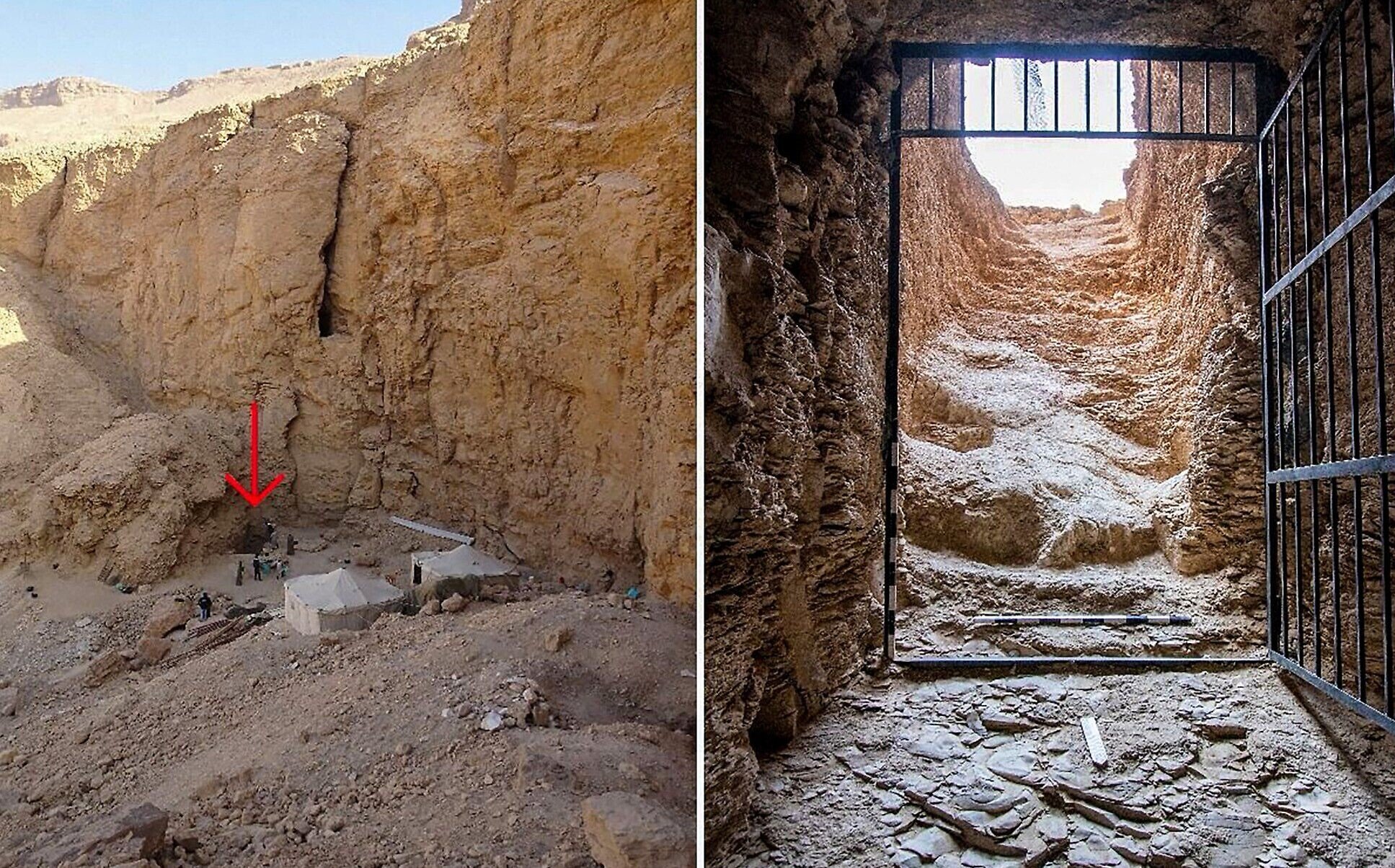
The tomb of Thutmose II was not found in the core of the Valley of the Kings. Archaeologists identified its entrance in October 2022 in the Wadi Gabbanat el-Qurud area, west of Luxor.
Led by archaeologist Piers Litherland, an Egyptian-British expedition worked to confirm the tomb's royal owner. The official announcement in early 2025 finally provided definitive proof after analysis of key artifacts.
Traces of a starry ceiling, a *khekher* frieze, and fragments of the funerary text *Amduat* were crucial early clues. These elements are hallmarks of a royal burial.
The tomb, designated Wadi C-4, rests approximately 1.5 miles from the main Valley of the Kings. This location is closer to the Valley of the Queens and indicates the reach of royal burial grounds in the New Kingdom.
Who Was Pharaoh Thutmose II?
Thutmose II was a ruler of Egypt's powerful 18th Dynasty during the New Kingdom period. Historical estimates place his reign roughly between 1492–1479 BC. However, his active rule may have been a brief 3 to 4 years.
His short reign was significant. He was the husband and half-brother of the famous Queen Hatshepsut, who would later rule as pharaoh. Historical sources suggest it was Hatshepsut who oversaw his burial arrangements.
Historical and Dynastic Significance
The discovery of his tomb helps fill a critical gap in the archaeological record. Thutmose II had been the only major New Kingdom pharaoh without a known tomb. His burial place was one of the last great missing pieces from this golden age of ancient Egypt.
Understanding his tomb sheds light on the transition between his predecessor, Thutmose I, and his successor, Thutmose III. The site provides direct insight into the evolution of royal mortuary architecture and ritual.
The Path to Confirmation: Seals, Jars, and Names
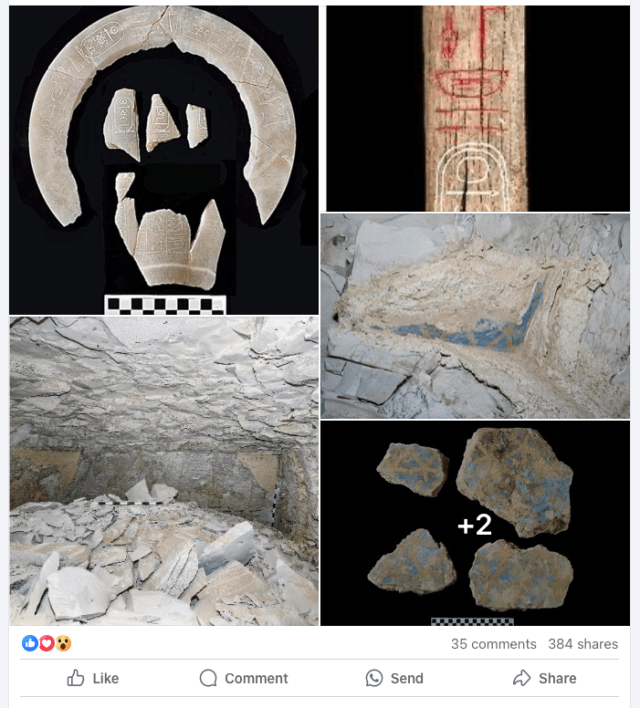
The key to identifying the tomb lay inside its flood-damaged chambers. Among the hardened debris, excavators found a collection of alabaster canopic jars. These sacred vessels were used to hold the internal organs of the deceased during mummification.
The jars were inscribed with the throne name of Thutmose II and a critical, clear title: "the deceased king." This provided the direct, irrefutable link between the site and the long-lost pharaoh.
Alongside these jars were fragments of burial equipment, including elements of jewelry and ceremonial objects. These items form a critical funerary assemblage that helps scholars reconstruct the rituals performed over 3,400 years ago.
A Tomb Sealed by Time and Flood
The tomb was not robbed in antiquity. Analysis shows it had remained sealed since the Third Intermediate Period. However, it suffered immense damage from repeated, catastrophic flash flooding over millennia.
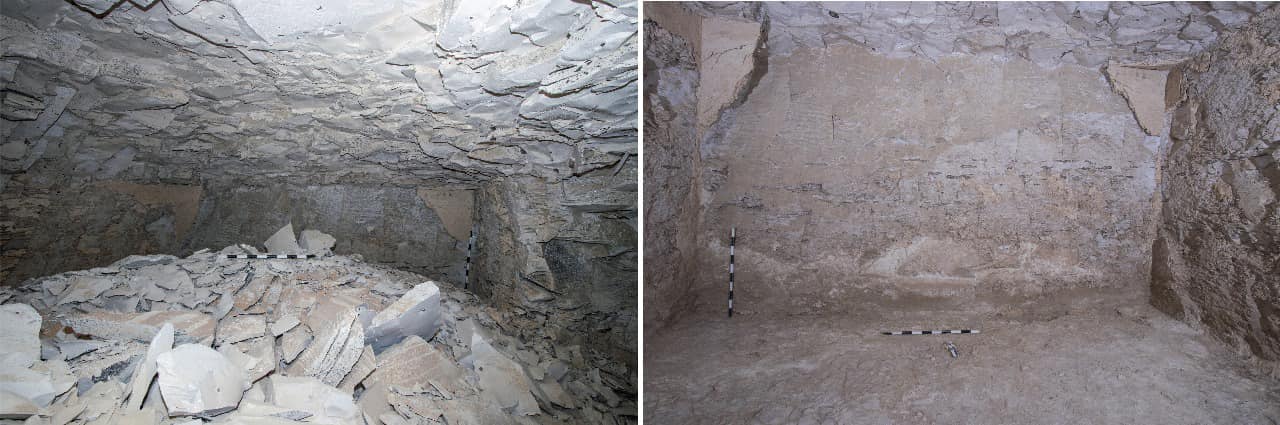
The flooding left behind debris that hardened to a concrete-like consistency, partially collapsing sections of the ceiling and burying artifacts. This made excavation extremely difficult but also protected the site from later looting.
The Tomb's Location and Architectural Clues
The fact that the tomb was found outside the main Valley of the Kings is of great historical importance. Its specific coordinates are 25°44′12″N 32°34′42″E.
- Location: Wadi Gabbanat el-Qurud.
- Proximity: Approximately 1.5 miles from Valley of the Kings.
- Designation: Site code Wadi C-4.
- Significance: Challenges assumptions about exclusive royal necropolis use.
The layout and decoration of the tomb provide invaluable data on early New Kingdom tomb design. Well-preserved wall paintings depict funeral rituals, divine symbols, and hieroglyphic texts. These decorations are not merely art; they are a guide to the afterlife and a statement of royal power.
What Was Found Inside?
The tomb's contents, though damaged, are revolutionary for Egyptology.
- Alabaster Canopic Jars: The primary evidence confirming the tomb's owner.
- Funerary Text Fragments: Parts of the Amduat, a guide for the sun god's night journey.
- Architectural Features: Remnants of a celestial starry ceiling and decorative friezes.
- Burial Goods: Traces of jewelry and ceremonial items from the original interment.
Dr. Litherland had predicted this tomb's attribution in a 2023 article. The 2025 excavation season provided the conclusive physical proof that confirmed his hypothesis. This systematic approach highlights the modern, science-driven nature of the discovery.
Archaeological Significance and Site Analysis
The discovery of the Tomb of Thutmose II represents a watershed moment for New Kingdom archaeology. This find provides the first major insight into the burial of a pivotal yet poorly documented pharaoh. Its architectural details and decorative program offer a missing link in the evolution of royal tombs.
Scholars can now compare its design directly with the tombs of Thutmose I and Thutmose III. This allows for a much clearer understanding of how funerary practices and royal ideology developed during a period of imperial expansion.
The Architectural Layout and Innovations
Initial reports describe a tomb that reflects an early stage in the development of the classic royal tomb blueprint. Unlike the later, deeply carved tombs with long, descending corridors, Thutmose II's tomb shows a different approach. Its plan in the Western Wadi suggests a period of experimentation.
The presence of a starry ceiling motif directly links the pharaoh to the cosmos. This symbolic feature aimed to ensure the king’s rebirth alongside the eternal stars. The khekher frieze, a pattern resembling tied reeds, adorned the walls as a protective element.
Early analysis of the wall paintings indicates a focus on funeral rituals and divine encounters. These scenes were intended to guide and protect the king in the afterlife, a core function of tomb decoration.
The challenging state of preservation, due to flooding, means much of the structure requires careful conservation. However, the fragments that remain are enough to reconstruct a highly significant artistic program from the early 18th Dynasty.
The Mummy Mystery and Royal Cache Connection
A central enigma remains: the mummy of Pharaoh Thutmose II was not found within this tomb. This fact is not surprising to Egyptologists. His body was discovered over a century ago among a collection of relocated royal mummies.
The Royal Cache at Deir el-Bahri (TT320) revealed his mummy in 1881. Priests of the 21st Dynasty had moved and reburied it there to protect it from ancient tomb robbers. This was a common practice during a period of widespread looting.
Debates Over Identity and Relocation
The identity of Thutmose II's mummy has been a subject of scholarly debate. Some experts have suggested his coffins may have been reused or his remains misattributed. Questions have even been raised about a potential connection to KV39 in the Valley of the Kings.
Piers Litherland, the lead archaeologist on the new tomb discovery, has indicated that further research into the mummy’s provenance is ongoing. The empty tomb provides a new context for these debates. It forces a re-examination of when and why his body was moved.
- Original Burial Site: The newly discovered Wadi C-4 tomb.
- Rediscovery of Mummy: 1881 in the Deir el-Bahri Royal Cache.
- Historical Context for Move: Likely during the 21st Dynasty for safekeeping.
- Current Implication: Tomb was sealed and forgotten after the mummy's relocation.
The discovery confirms that his body was moved centuries after his original burial. This action preserved his physical remains but severed the historical connection to his original, purpose-built tomb for over 3,000 years.
Conservation Challenges and Environmental Threats
The condition of the tomb highlights a major issue facing archaeologists worldwide: climate impact on cultural heritage. The tomb of Thutmose II suffered from repeated, violent flash flooding over millennia. This water carried silt and debris into the chambers.
Over time, this material hardened into a concrete-like matrix that is extremely difficult to remove without damaging the underlying artifacts and paintings. This posed a significant technical challenge for the excavation team.
A Race Against Time and Nature
The flooding also caused partial ceiling collapses within the tomb. These structural compromises make the site unstable and require careful shoring and conservation work. The Egyptian Ministry of Tourism and Antiquities faces the dual task of excavating and reinforcing.
This situation is not unique. Many sites in Egypt and across the Mediterranean are increasingly vulnerable to extreme weather events. The tomb of Thutmose II stands as a stark example of the need for proactive conservation strategies.
The hardened flood deposits, while destructive, also acted as a sealant. They protected the tomb from human looters, preserving its contents for modern scientific study.
Modern techniques, including 3D scanning and micro-excavation, are being employed to document and preserve the fragile remains. Every fragment of painted plaster and hieroglyphic text is being meticulously recorded.
Historical Context: Thutmose II's Reign and Legacy
Thutmose II's reign, though brief, was a critical juncture in Egyptian history. He inherited an empire that had been expanded by his father, Thutmose I. His primary role was to consolidate and maintain these territorial gains against rebellious vassals.
Historical records, though sparse, indicate he led a military campaign into Nubia and put down a rebellion in Syria-Palestine. His actions solidified Egyptian control and paved the way for the legendary conquests of his son, Thutmose III.
The Role of Queen Hatshepsut
Perhaps the most significant figure from his reign was his wife, Queen Hatshepsut. As his half-sister and Great Royal Wife, she held considerable power. Upon Thutmose II's death, his heir, Thutmose III, was an infant.
Hatshepsut initially served as regent but later assumed the full titulary of a pharaoh. Historical sources from the tomb's context suggest she was directly responsible for overseeing her husband's burial. This connects the tomb's construction directly to one of Egypt's most famous rulers.
- Political Significance: Thutmose II secured the dynastic succession.
- Military Action: Suppressed rebellions in Nubia and the Levant.
- Family Dynamic: Married to Hatshepsut; father of Thutmose III.
- Burial Oversight: Funerary arrangements managed by Hatshepsut.
The discovery of his tomb now offers potential insights into Hatshepsut's early reign. The style and content of the decoration could reflect her influence and the religious policies she would later expand upon during her own rule.
The 2025 Announcement and Global Impact
The official announcement by the Egyptian Ministry of Tourism and Antiquities in February 2025 was a global news event. It marked the culmination of three years of meticulous work, from the initial find in 2022 to the conclusive artifact analysis.
This discovery is a centerpiece of a resurgent era in Egyptian archaeology. It highlights the success of international collaborations, like the Egyptian-British mission, and advanced survey techniques in previously underexplored areas.
Place Among Other 2025 Discoveries
The tomb is not an isolated find. It forms part of a suite of major announcements from Egypt in 2025. These include the discovery of a New Kingdom fortress in Sinai, which sheds light on military and border control strategies.
Together, these discoveries paint a richer, more detailed picture of ancient Egypt's power and administration. They demonstrate how archaeology continues to refine and sometimes rewrite historical narratives.
This is the first New Kingdom royal tomb discovered in over a century, since Tutankhamun's in 1922. While other royal tombs from different periods have been found, this is the first from Egypt's most famous dynasty in the modern era.
The global media coverage reinforces the enduring public fascination with ancient Egypt. It also provides a significant boost to cultural tourism, a vital sector of Egypt's economy. The tomb is expected to become a key stop for future heritage tours in Luxor once conservation is complete.
Implications for Egyptology and Future Research
The discovery of Thutmose II's lost tomb opens numerous new research avenues for scholars worldwide. It provides a fixed, datable point for analyzing artifact styles, hieroglyphic scripts, and artistic conventions of the early 18th Dynasty. This single site will serve as a crucial reference for decades to come.
Perhaps the most profound implication is for our understanding of the geography of royal burial grounds. The tomb's location outside the main Valley of the Kings forces a reassessment of long-held assumptions. It suggests the royal necropolis was more expansive and fluid in its early development than previously thought.
Reevaluating the Royal Necropolis Network
Why was Thutmose II buried over a mile from where his father and son were laid to rest? This question is now at the forefront of Egyptological debate. Several theories are being examined.
- Security Concerns: A more remote location may have been chosen to deter tomb robbers.
- Topographical Symbolism: The specific wadi might have held religious or solar significance.
- Dynastic Politics: The influence of Queen Hatshepsut may have directed the choice of site.
- Evolution of Tradition: The Valley of the Kings may not have been the exclusive choice until later in the dynasty.
Further survey work in the Western Wadis of Luxor is now a major priority. Archaeologists will be searching for other elite or royal burials from this transitional period. The discovery proves these peripheral areas hold immense, untapped potential.
Technological Advances in Modern Archaeology
This discovery showcases the powerful role of modern technology in archaeology. Unlike the discovery of Tutankhamun’s tomb, this find was not a stroke of luck. It was the result of systematic, science-driven research.
The expedition utilized geophysical surveying tools, satellite imagery analysis, and geographic information systems (GIS) to identify promising areas. This methodology represents the new standard for archaeological exploration in the 21st century.
Digital Documentation and Preservation
From the moment of entry, the team employed high-resolution 3D scanning to create a millimeter-perfect digital model of the entire tomb. This model is vital for planning conservation and allows virtual access for global researchers.
This digital record is immune to further physical decay. It ensures that even if the fragile wall paintings deteriorate, their precise details are preserved forever. Spectroscopic analysis of pigments and materials is also underway, revealing the composition of ancient paints and the sources of stone and pottery.
These technologies transform the field from pure excavation to comprehensive digital heritage preservation. They allow for non-invasive study and provide datasets that can be re-analyzed as scientific techniques improve.
Impact on Understanding Hieroglyphs and Royal Ideology
The hieroglyphic inscriptions and funerary texts found in the tomb are a treasure trove for philologists. Each new royal tomb adds to the corpus of known religious spells, royal titles, and administrative formulas. The fragments of the Amduat text are particularly important.
The Amduat, meaning "That Which Is in the Underworld," is a guide to the sun god's journey through the twelve hours of the night. Its presence confirms the early adoption of this important theological composition in royal tombs.
Text as a Tool of Power and Eternity
For the ancient Egyptians, writing was magical and potent. The hieroglyphs in the tomb were not mere decoration; they were functional artifacts designed to ensure the king's successful rebirth. Studying the specific phrasing and spell selections provides direct insight into the theological concerns of Thutmose II's reign.
These texts also reinforce the ideology of kingship. They depict the pharaoh as an integral part of the cosmic order, destined to join the gods. The discovery allows scholars to compare these early 18th Dynasty texts with those from later periods, tracing the evolution of religious thought.
- Function of Texts: Magical spells for protection and transfiguration in the afterlife.
- Historical Linguistics: Provides datable examples of Middle Egyptian grammar and vocabulary.
- Religious Evolution: Shows the development of solar and Osirian beliefs in the New Kingdom.
- Ideological Messaging: Reinforces the divine nature and eternal destiny of the pharaoh.
The Tomb's Place in Archaeological History
To appreciate the magnitude of this find, it must be placed in historical context. The last time a New Kingdom royal tomb was discovered intact was in 1922 with Tutankhamun. Since then, several significant but non-royal or non-New Kingdom tombs have been found.
The table below illustrates the rarity of such discoveries:
- 1922 (KV62): Tutankhamun (18th Dynasty, New Kingdom) - Last New Kingdom royal tomb found.
- 1940 (Tanis): Psusennes I (21st Dynasty, Third Intermediate Period) - A rich but later burial.
- 2014 (Abydos): Senebkay (Second Intermediate Period) - A king from a much earlier, fragmented period.
- 2025 (Wadi C-4): Thutmose II (18th Dynasty, New Kingdom) - The new, groundbreaking discovery.
This century-long gap underscores why the discovery is so revolutionary. It connects modern archaeology directly back to the golden age of Egyptian exploration, but with entirely new tools and questions.
A New Chapter for the Valley of the Kings
The discovery rejuvenates the archaeological landscape of Luxor. For many, the Valley of the Kings was considered a fully explored site. The find of Thutmose II's tomb shatters that complacency. It proves that even the world's most famous archaeological zones still hold profound secrets.
Lead archaeologist Piers Litherland has indicated that the work is far from over. He suggests that more discoveries related to the burial complexes of this era are pending in the Western Wadis.
This promise ensures that the area will remain a focal point for international missions. The story of the Theban necropolis is still being written, chapter by chapter, tomb by tomb.
Conclusion: Key Takeaways from a Landmark Discovery
The identification of the lost tomb of Pharaoh Thutmose II stands as one of the 21st century's foremost archaeological achievements. It solves a historical mystery, provides a wealth of new data, and re-energizes an entire field of study. The find is a testament to perseverance, international collaboration, and scientific methodology.
The key takeaways from this landmark event are numerous and far-reaching.
Final Summary and Lasting Legacy
First, the discovery fills the last major gap in the burial record of the New Kingdom's great pharaohs. It provides an intact archaeological context for a king whose reign was pivotal but poorly understood.
Second, it highlights the critical importance of peripheral sites. The Western Wadis are now confirmed as an integral part of the royal mortuary landscape. Future exploration will undoubtedly follow this lead.
Third, the tomb underscores the urgent need for advanced conservation techniques to combat environmental threats to cultural heritage. The lessons learned here will be applied to other vulnerable sites across Egypt.
Finally, it captivates the global imagination, reminding the world of the enduring power and mystery of ancient Egypt. It bridges the gap between a legendary civilization and modern science, showing that history's greatest stories are still emerging from the sand.
The tomb of Thutmose II is more than a burial chamber; it is a time capsule from the dawn of the Egyptian Empire. As analysis continues, each scrap of pigment, each hieroglyph, and each shattered jar will contribute to a clearer, richer picture of a pharaoh reclaimed from obscurity and a dynasty that shaped the ancient world. This discovery does not close a book—it opens a new volume in the ongoing story of human history.





:focal(1134x648:1135x649)/https://tf-cmsv2-smithsonianmag-media.s3.amazonaws.com/filer_public/49/26/4926c5f7-b1c9-4b5c-842c-cfe6cdb13a1d/panoramica_1.jpg)
Comments